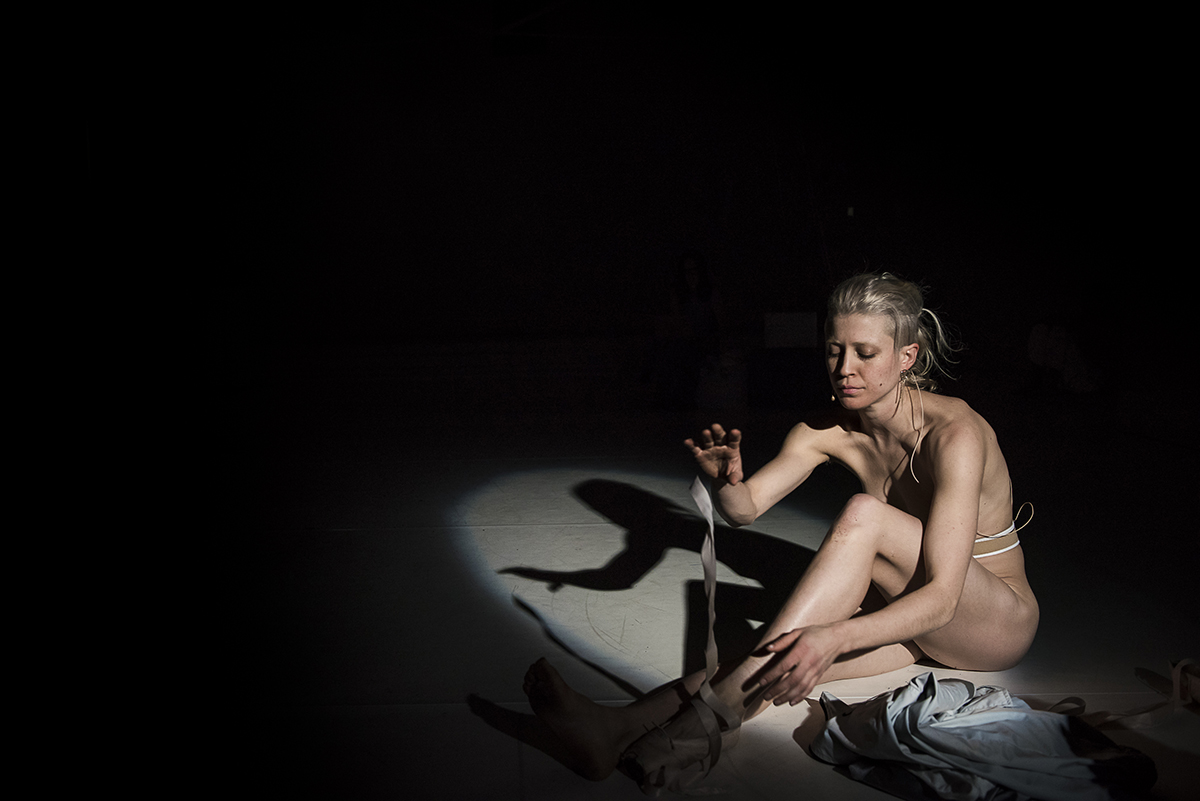
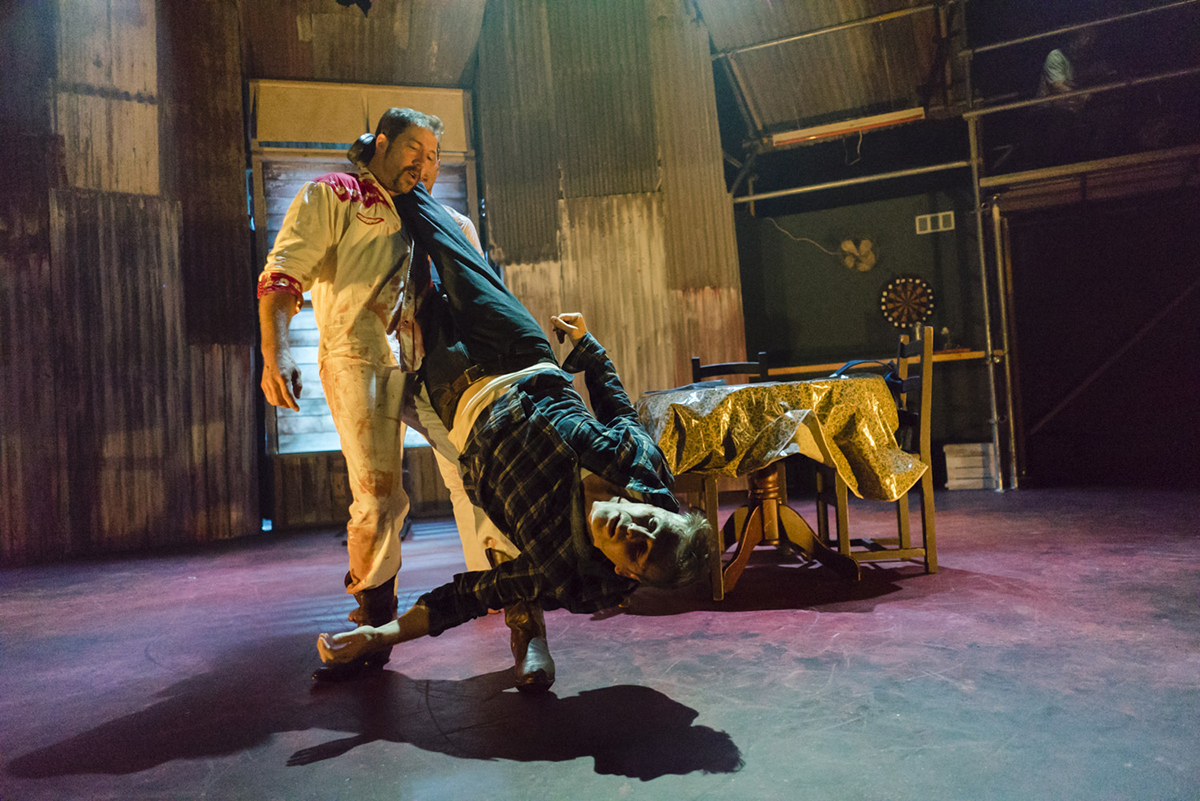
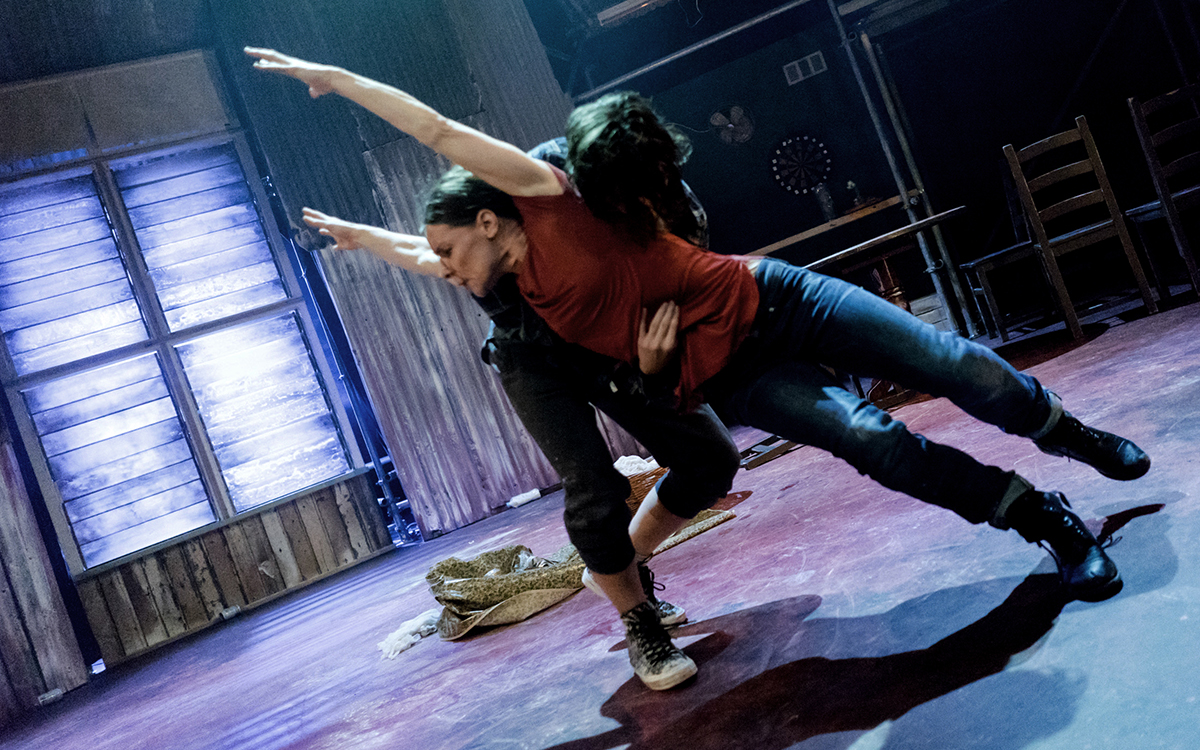
Entering the mysterious world of birdfoxmonster, we are encouraged to wash our hands before eating, which we duly do on moist, warm towels handed through an opening in a black wall by unseen persons. Then, all 30 of us gradually file into a darkened space towards a spotlit pumpkin stuck with forks wrapped around with spaghetti and spinach, which we pull out and eat. A soft, rumbling voice, somewhere between the Cookie Monster and (as a fellow audience member observes) Tom Waits, riffs upon the delights of spaghetti smothered in melting butter.
We are here for an unorthodox dinner designed by artists from Studio A (a Sydney-based organisation that fosters the professional development of artists living with an intellectual disability) and Erth, the live-theatre company known for creating up-close, exhilarating puppetry encounters for children. Gathered in this dimly lit space, with its promise of anthropomorphic characters, there’s more than a hint of having fallen down the rabbit hole.
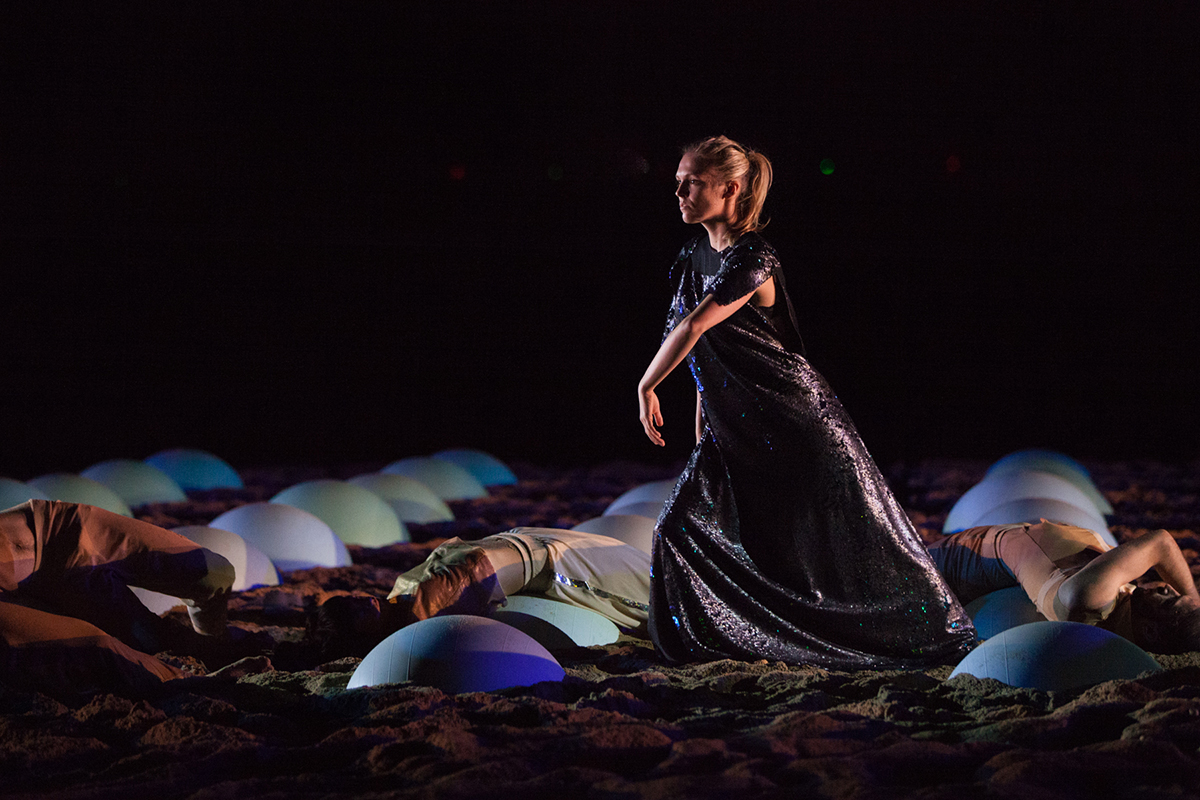
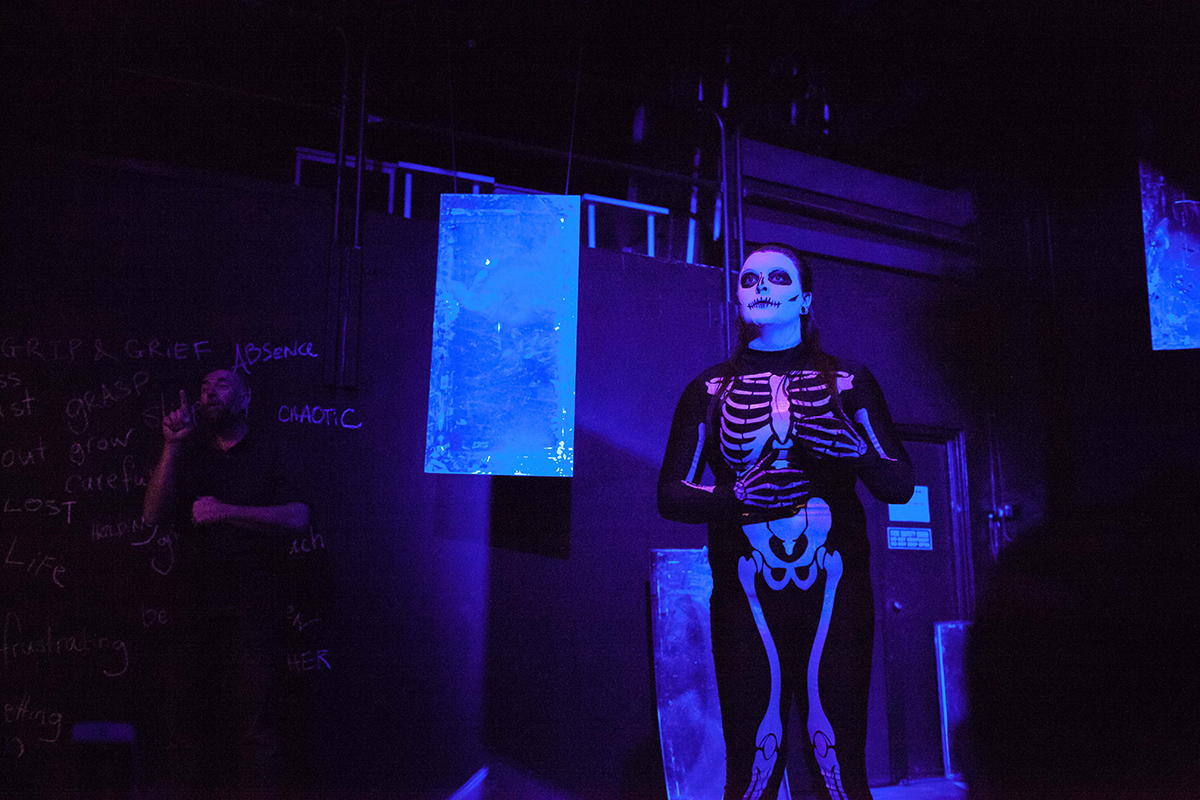
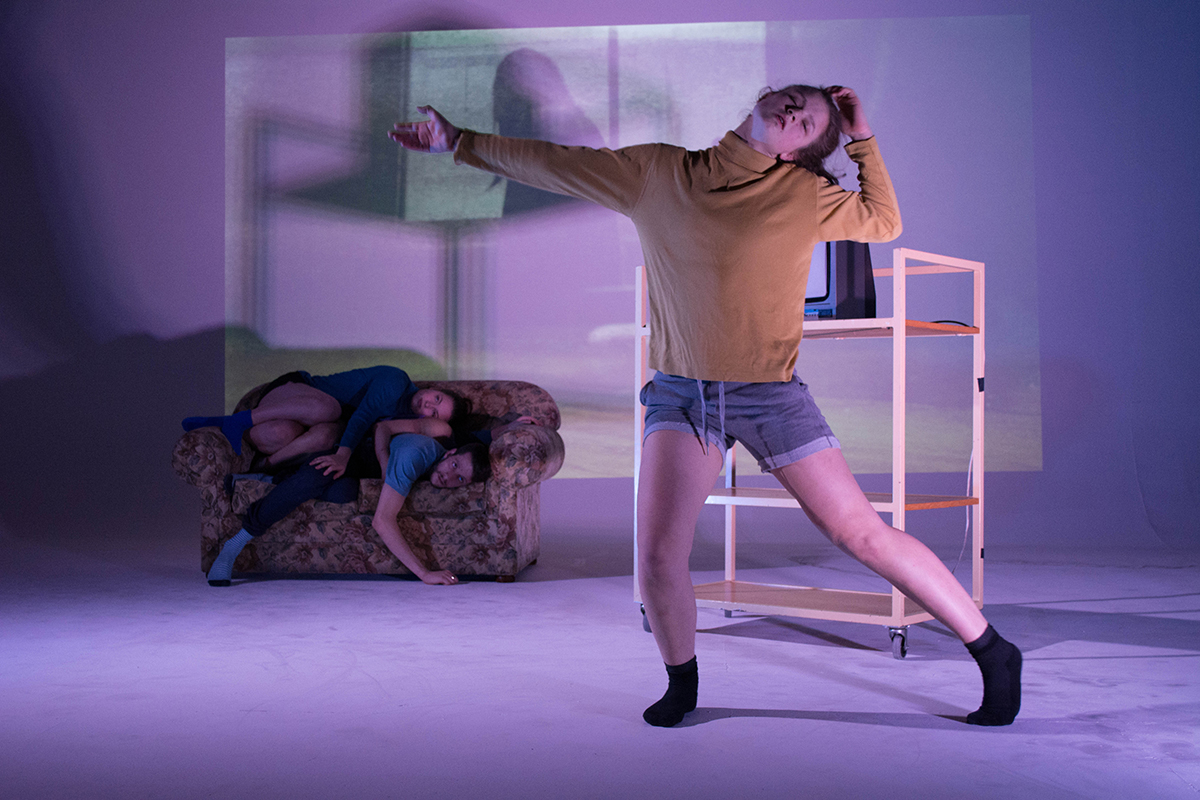
Entrees eaten, our attention is drawn through a subtle adjustment in lighting to a long, narrow table that bisects the rectilinear room, with projected text on either side directing us to take a place, to sit, to reach for our glasses and raise them in a toast. And so, with a sense of occasion, the performative dinner begins. Black-garbed and masked wait staff issue plates from opposite ends of the table to be passed from person to person until all are served; a nice touch that fosters a communal atmosphere among the participants. But there isn’t much time to talk, as three striking, even somewhat sinister, figures appear at the far ends of the table.
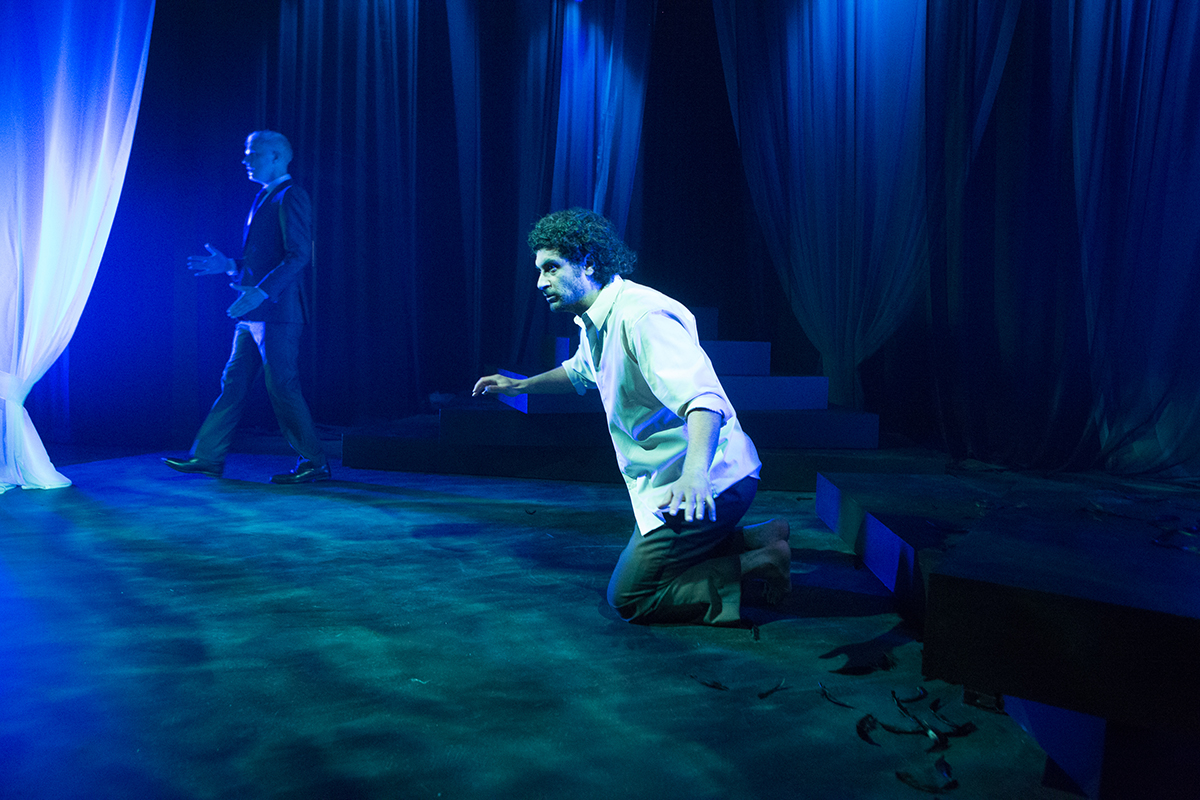
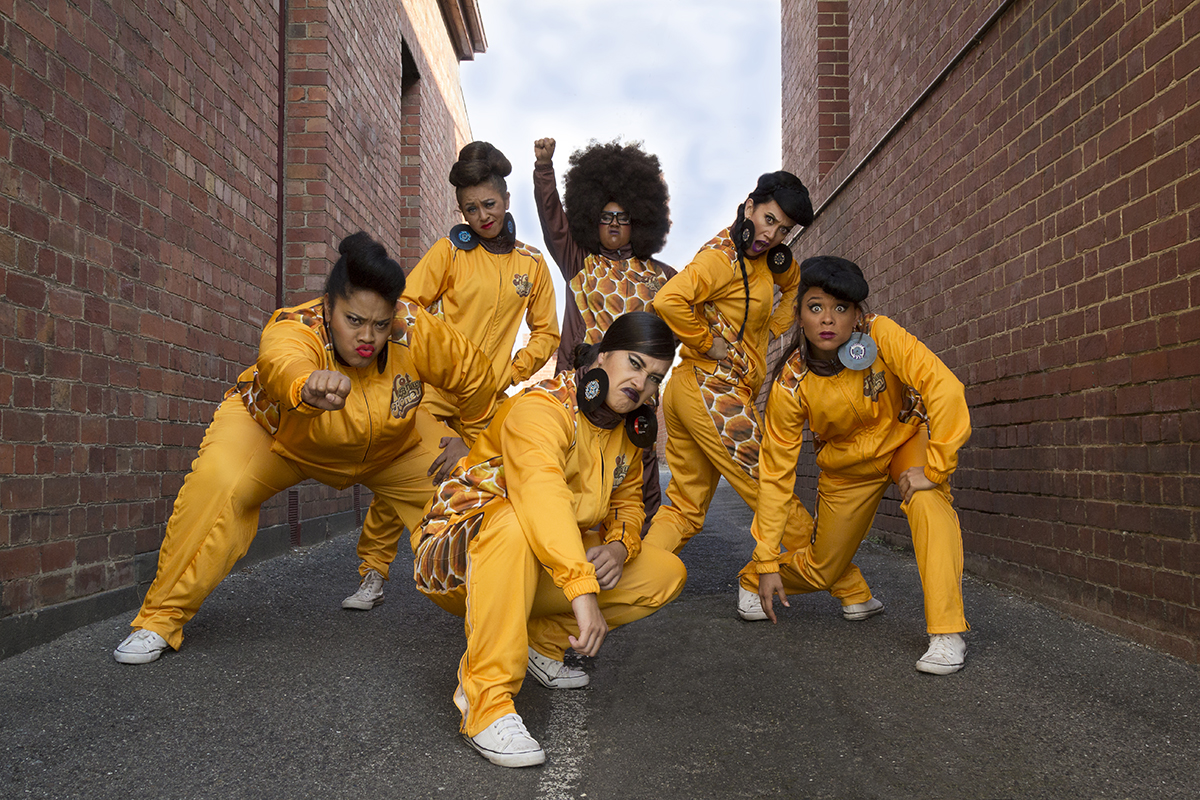
birdfoxmonster, Erth and Studio A, photo Zan Wimberley
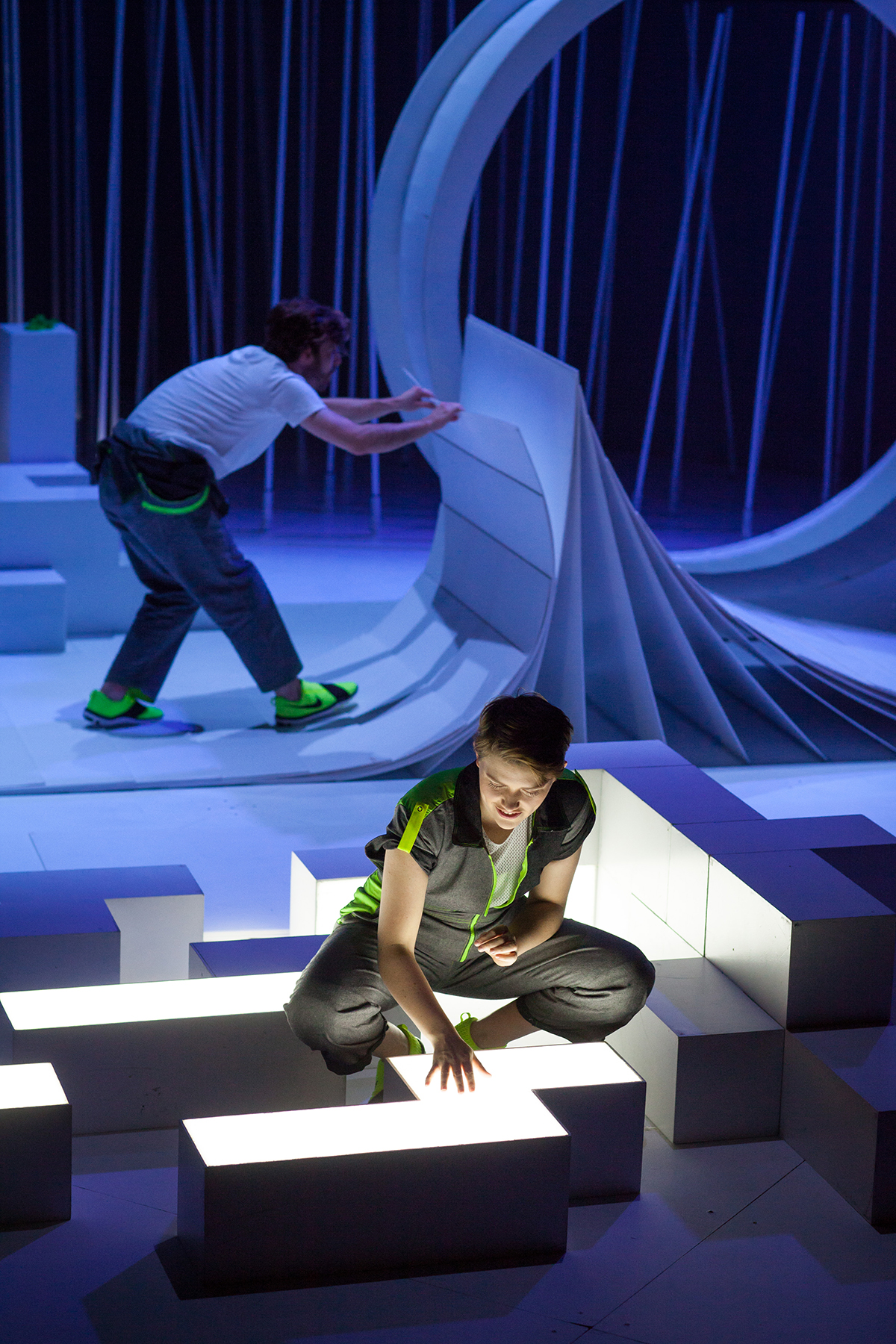
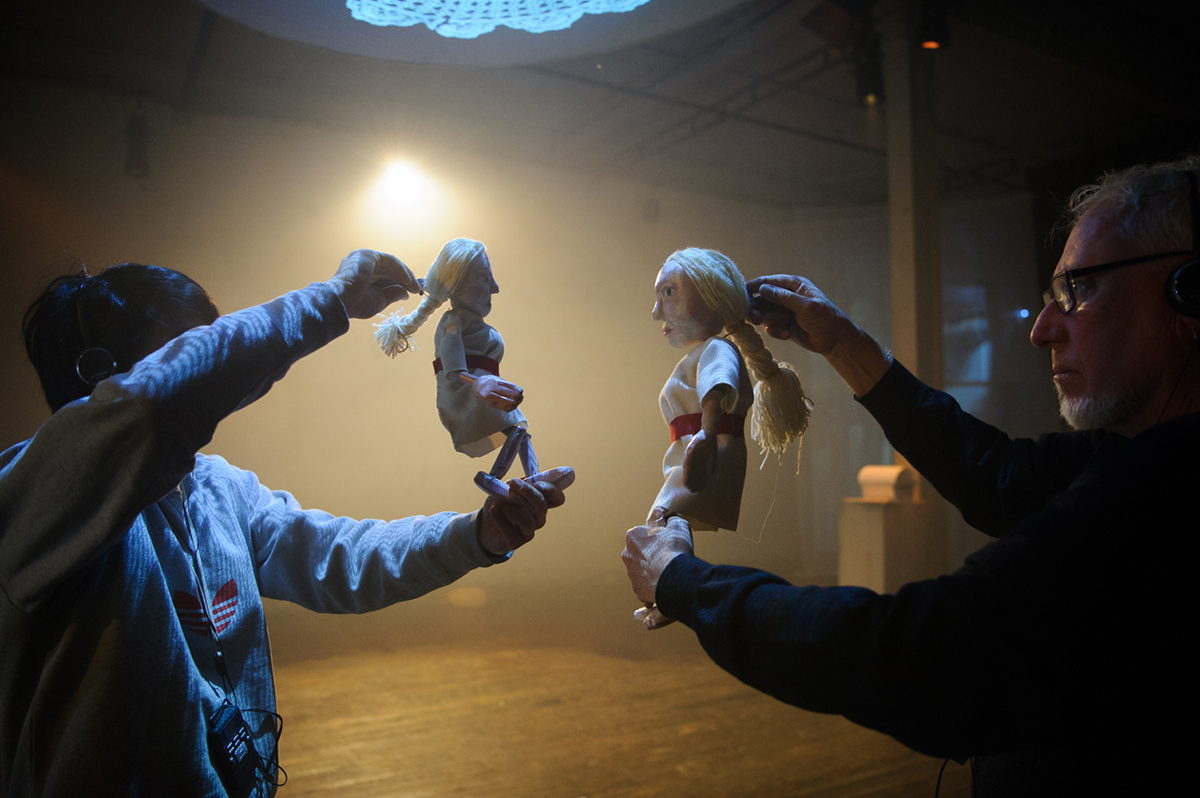
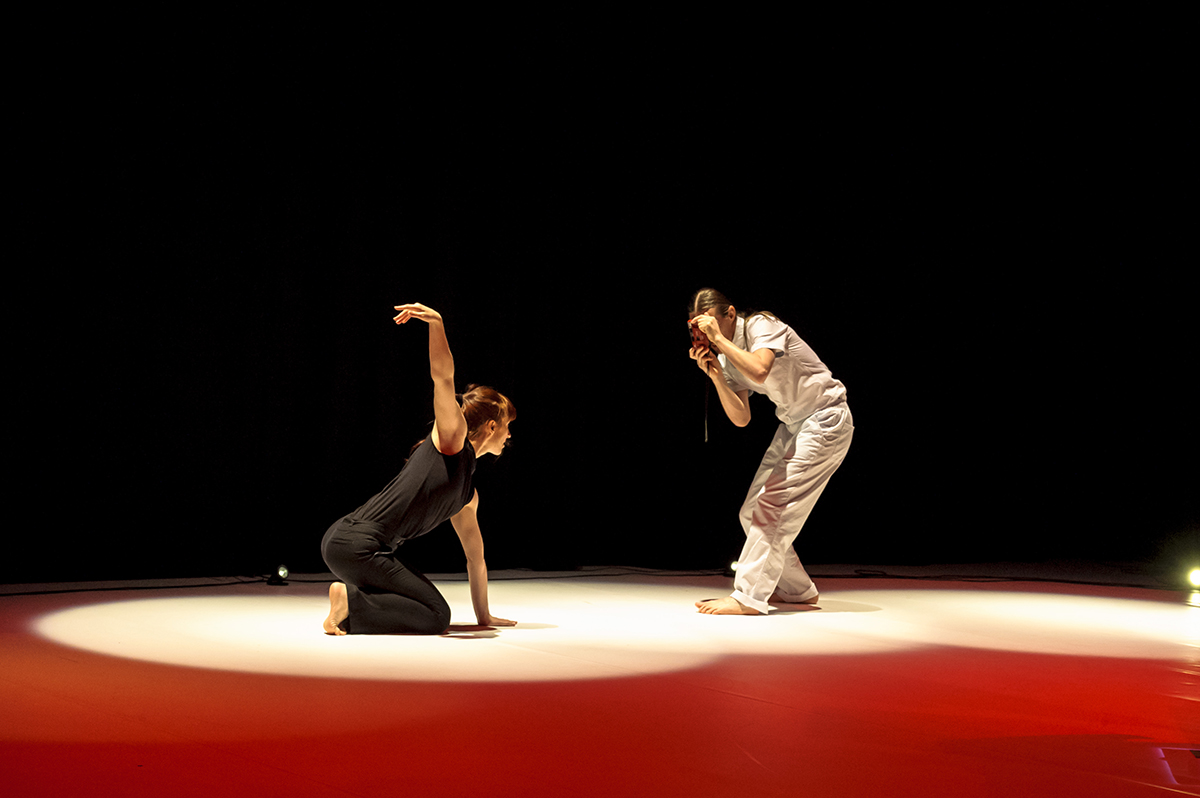
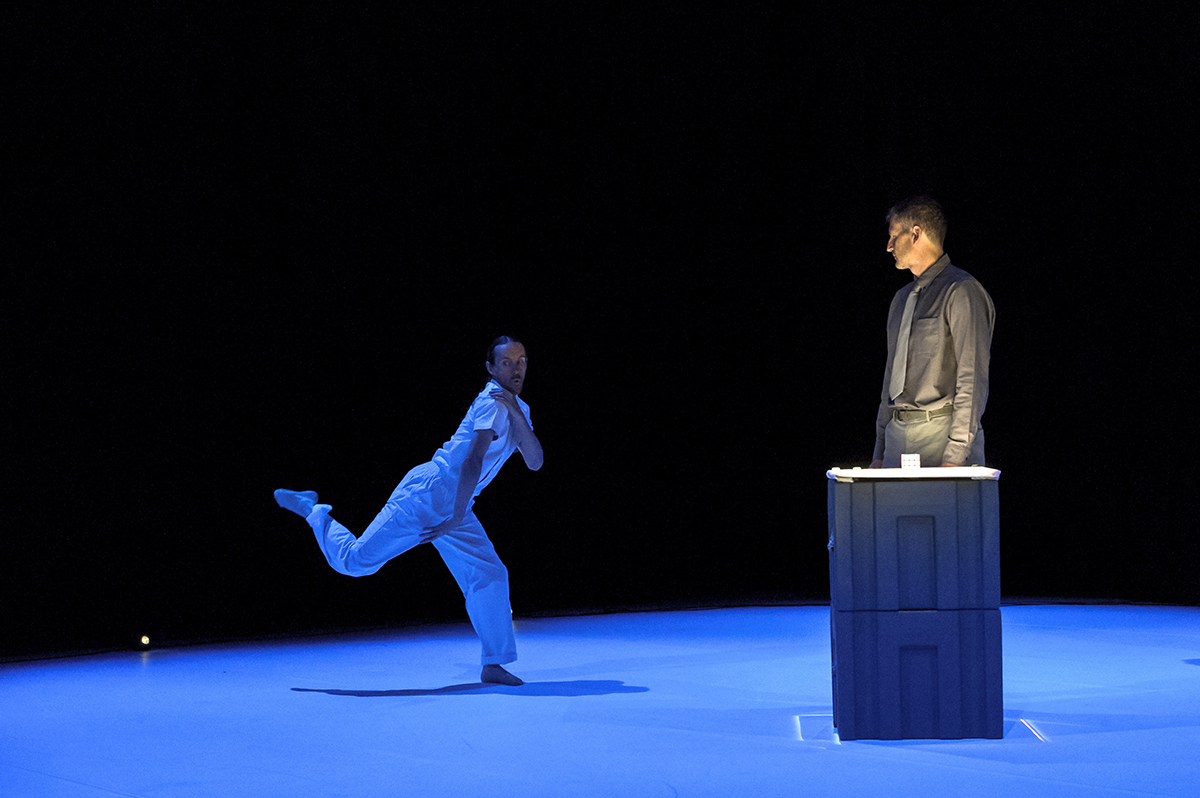
The first I see is red-robed, with a broad-brimmed hat framing a white fox-mask with dark eye holes. Then I become aware of a bridal figure in a white, sequinned owl mask, and an imposing black-clad monster with a boxy, geometrically patterned head. During the three-course meal, the table will by turns function as a canvas for projected animations, a dancefloor and a ceremonial aisle. As we work our way through dishes chosen for their significance to the three performers – fillet mignon for the Owl (Meagan Pelham), seasonal vegetables on seaweed for the Fox (Skye Saxon) and “Thom’s Burgers!”, slapped together at the behest of the Monster (Thom Roberts) – each of us will experience birdfoxmonster differently. There is so much to take in: a wealth of sensual clues with which to decode this immersive work of live art.
Early on, the Owl Bride and her Monster fiancé climb onto swings rigged either side of the table and crest languorously back and forth through the darkness, as if to hypnotise us into entering their personal fantasy realm. From this point on, I experience the work as a series of impressions that seem to mix memory, imagination and desire.
While we eat, the Bride dances down the length of the table repeatedly stamping, booty-shaking and descending into a graceful back arch, one arm extended. Animated flying hearts dance along the table too, as the music (composed by James Brown) pulses. For a little while, there’s a soundtrack of heavy rain, with a recorded conversation between two performers about the experience of being in the eye of a storm. The Fox circles the diners, howling. The table swims sinuously with digital artist Elias Nohra’s projections of animated fish, owls, romantic text and geometric patterns, all of them derived from the three artists’ drawings.
birdfoxmonster, Erth and Studio A, photo Zan Wimberley
The event climaxes in a wedding, with Fox officiating as the lanky Monster and petite Owl Bride step in stately time-honoured fashion to organ music along the wedding aisle of the table. Ceremony over, the Bride primal-screams hip-hop into a mike in the centre of the table, music pounding: a triumphal, full-bodied response to the solemnity of the occasion. Then, the guests wash the dishes at the same table, inhaling drifts of, alas, a purely olfactory dessert of blueberry pie.
Dining here was like entering some shadowy Max Ernstian realm where animal-headed gods conduct strange rituals within a formal setting, or perhaps the world of Australian artist Vali Myers, who decamped to Positano and adopted a large number of stray animals, developing a folkloric narrative of her life through her paintings and personal style. Through their three alter-egos, Pelham, Saxon and Roberts created an idiosyncratic mythology of self that imbued every last detail of the production, from the costumes to the delicately hand-painted crockery, resulting in a wonderfully rounded and transportive experience.
–
Erth and Studio A, birdfoxmonster, artistic directors, collaborators Scott Wright (Erth), Gabrielle Mordy (Studio A), artists, performers Thom Roberts, Meagan Pelham, Skye Saxon, principal support artist Emma Johnston, digital artist Elias Nohra, sound designer James Brown, lighting designer Frankie Clarke, production manager Solomon Thomas; Carriageworks, Sydney, 21-30 Sept
Top image credit: birdfoxmonster, Erth and Studio A, photo Zan Wimberley
This video essay by Conor Bateman parodies the film Turkey Shoot by recutting it as a fight between man and nature. This video has been made available for study purposes only. Eds
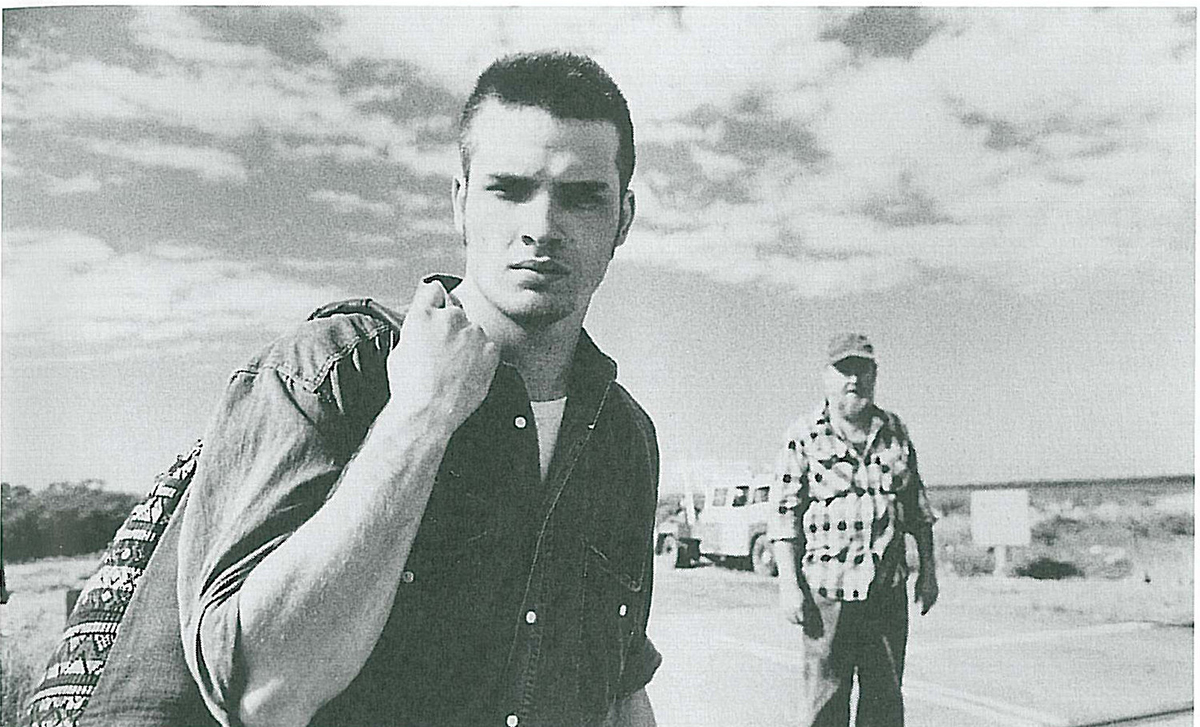
Brian Trenchard-Smith’s 1982 Ozploitation spectacle Turkey Shoot was widely panned on its original theatrical release. Writing for Variety, David Stratton said that “nobody connected with this travesty can take any credit,” while Michel Cieutat, in the cinephilic Postif, argued that “aside from the beautiful Australian forests and Olivia Hussey’s inexpressive visage —- which looks both youthful and wizened — there is nothing to be saved from this array of varied incompetencies.”
Overcoming the hurdle of critical sniping, the film went on to be released worldwide under a variety of new, region-specific titles, like the prescient Escape 2000 (US) and the politically subtle Blood Camp Thatcher (UK). The film’s broad appeal is fairly self-evident; Trenchard-Smith crafted an absurd bloodbath, one which dispensed with the complexities of plot fairly quickly. The political struggle the film depicts is as follows: a totalitarian government (uniformly white) rounds up any potential dissidents (uniformly white) and detains them in an off-shore labour camp run by a prison warden named Thatcher, where a select few inmates are offered a chance at freedom if they can survive a day in the scrub, on the run from heavily armed VIP guests, most of whom are decked out in British colonial khakis.
Many Australian films of the 1970s and 1980s depicted landscape as a mysterious unknown. Academic and filmmaker Ross Gibson has written extensively on the depiction of the Australian landscape in film, photography and painting (and even made an essay film about it, Camera Natura, in 1984). Many of the films he wrote about are now widely celebrated — Walkabout, Picnic at Hanging Rock, Mad Max — and feature a dwarfing of human figures within the landscape, which is seen as a hostile and unknown environment.
In a shift from this approach, Turkey Shoot depicted the northern Queensland landscape as an impassive backdrop to human conflict. The camera leers at exotic locales, attempting to convey a sharp contrast between natural beauty and man-made horror. The only point at which these two notions converge is in a sequence where a field is burned down, though here the emphasis is entirely on the people trapped inside the blaze, rather than the destruction of landscape itself.
In this video, I have taken sequences from Turkey Shoot which involve the hunting of prisoners but have cut out the prisoners entirely. What remains is a series of comedic vignettes where the colonial powers attack the landscape, seemingly without purpose. And, since the original film sees prisoners rise up against their captors, I ensured that the landscape got that same opportunity.
Notes
This video features text from Ross Gibson’s article “Camera Natura: Landscape in Australian Feature Films,” which appeared in 1983 in issue 22/23 of Framework, a journal published by Drake Stutesman and Wayne State University Press.
Turkey Shoot was directed by Brian Trenchard-Smith. It was produced by Filmco, Film & General Holdings and Hemdale Film Corporation. It was distributed in Australia on VHS by Roadshow Home Video (circa 1982) and on DVD by Umbrella Entertainment (2003). There is no local Blu-Ray release of the film.
Thanks to Ivan Čerečina for translation assistance in this piece.
Editors’ note
The title of Bateman’s video essay is also that of the 1989 Elvis Costello song which anticipated that when Prime Minister Margaret Thatcher died, “They’ll stand there laughing and tramp the dirt down.”
At its most transformative, the camera has the capacity to shape both time and space, preserving a simulacrum of life that will eventually supplant the real with the dream. “The eye,” avant-garde jazz musician Cecil Taylor warbles midway through a performance caught in The Silent Eye, is “the indivisible subterranean matrix.” The new work from filmmaker Amiel Courtin-Wilson is all about that lucid eye, the spectral death dance that cinema orchestrates between the physical and the spiritual.
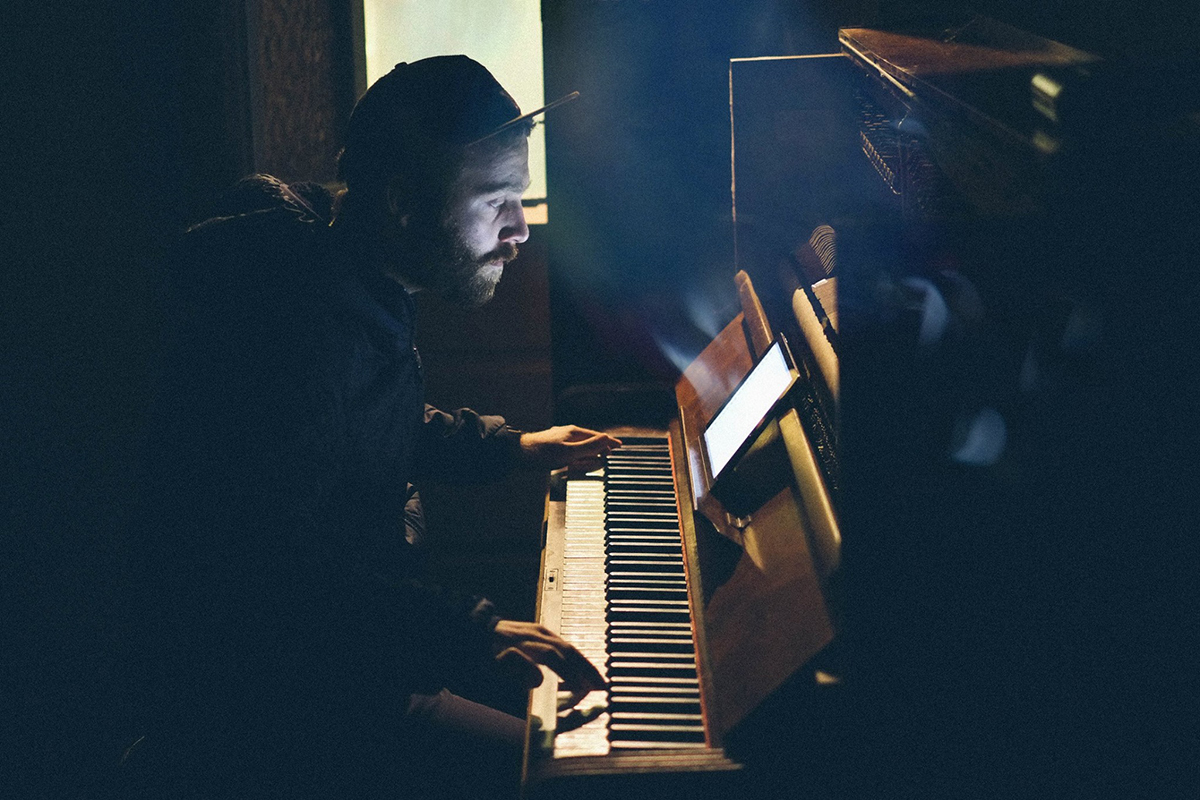
Filmed across three days in early 2016, The Silent Eye captures the legendary pianist and poet Taylor, 88, and Japanese Butoh performer Min Tanaka, 72, friends and artistic kindred collaborating free form in the former’s Fort Greene brownstone. Loosely demarcated into several improvised tracks and a spoken word interlude, it’s an ostensibly casual performance piece that comes to resemble less an informal session between two old pals than the communion of slippery entities on astral terrain.
The performance takes on a familiar rhythm: Taylor, expressively freestyling at his careworn piano while Tanaka responds in movement, weaving and contorting to the sounds, face fixed in motion rapture. It’s a game of tag in which Tanaka is alternately the jazzman’s cosmic marionette and his playful tease, each inviting the other into guessing the form the other will take. Taylor might grin as he maniacally pounds the keys, watching Tanaka bob like a demented meerkat, or ease back into reflective pause, drawing out the Butoh artist’s paradoxical capacity for stillness and grace.
Min Tanaka, The Silent Eye, Amiel Courtin Wilson
Courtin-Wilson’s gift for capturing the tension between the corporeal and the spiritual — honed across films like Hail (2011) and especially the woozy, somnambulist Ruin (2013) — is in full flight here, alchemising Taylor’s Brooklyn residence and ascribing an otherworldly aspect to these physically ageing men. Viewed in abstract silhouette, Tanaka throws celestial shapes; with his out-of-focus form; he might be stepping down the gangway of the alien mothership from Close Encounters of the Third Kind.
Though the film never leaves Taylor’s apartment, the space feels unbounded by walls. Director of photography Germain McMicking works with the natural winter light to suggest parallel dimensions bleeding into each other, the handheld camera pushing into corners of the apartment only to find untethered pockets of nothing, like a video game avatar gone off grid. At one point he stays transfixed on the tiny splinters in a double-glazed window, and the cracks form a circular portal to the sun that beckons us to head toward the light. Elsewhere, the camera catches glimpses of the pictures on Taylor’s wall, which serve as a kind of shrine to other ethereal spirits: Billie Holiday, Michael Jackson, Eartha Kitt, smiling in collusion from the other side. The tableau also conjures the spectres of history: faded portraits of long-gone jazzmen, a lithograph of a native American leader, and the weight of 20th century Japanese tumult on the lines in Tanaka’s face and gestures.
Shooting digitally on a 2K ARRI Alexa Amira, McMicking and Courtin-Wilson’s camera has the effect of transforming the intimate into the infinite, where a brief image of the outside skyline somehow feels diminished in comparison to the dance that plays out inside. A macro-tight shot on Tanaka’s profile collects a single drop of falling sweat that forms a refracted diamond, while what sounds like a passing subway car — a ghost train, perhaps — rumbles offscreen, spirited to another realm.
Amiel Courtin-Wilson, photo courtesy the artist
The film’s non-performance breaks are almost primal. In a disorienting sequence, the frame goes tight on Tanaka’s hand swaying in some phantom breeze, while the feedback of disembodied chords swirls around it like an ancient volcano threatening eruption. These aural interludes come not from Taylor but sound designer Rosalind Hall, whose collages — strangled, discordant saxophone set to exaggerated heartbeats and ambient noise — loom like some studio applause track that’s just reached the Earth having been dispatched a hundred million years ago.
Courtin-Wilson has developed an ambivalent relationship to narrative, from the subjective immersion of Hail through the disorientating audio-visual passages of Ruin and his recent video art piece, Charles (2015). Indeed, The Silent Eye is born of the art world: the project was funded by the Robert D Bielecki Foundation and premiered at the Whitney Museum of American Art last year. Courtin-Wilson has called it an in-between work, anticipating what he’s described as a time travel sci-fi biopic of Taylor. The Silent Eye’s transformative power certainly bodes well for that project. Courtin-Wilson gets cinema as art’s temporal vessel, the craft that navigates dimensions and disrupts our learned cognition.
That sensation of moving through time and space extends to the players themselves, whose physical forms can barely contain the spirits shimmying to bust loose. In one of many extraordinary scenes, Min Tanaka’s head tilts back to the sky mid-film, and Cecil Taylor’s chords recede into the sounds of heavy, overdubbed breathing, as though the weight of the physical realm is finally about to be lifted. It’s followed by a cut to a simple shot — ever so brief — of an empty chair and piano. In that moment, it’s enough to believe that Cecil Taylor has ascended.
–
The Silent Eye, director, producer, editor Amiel Courtin-Wilson, line producer Kate Laurie, director of photography Germain McMicking, editor Alena Lodkina, sound designer Rosalind Hall; Antenna Documentary Film Festival, Museum of Contemporary Art, Sydney, 14 Oct
Top image credit: Cecil Taylor, The Silent Eye, Amiel Courtin Wilson
Until recently I wasn’t aware that the glaring gaps in my worldly education included the Hungarian uprising of 1956, the cinema genre of football comedy and the family history of Canadian-born artist Deborah Pearson. But in the lead up to her performance lecture History History History I realised just that. Review praise and strong word-of-mouth won me over despite a lack of anchor points, and I now have both a working knowledge of all three subjects and a fine appreciation of Pearson’s very considered practice.
For those who haven’t seen it, a primer: one night in October of 1956 a black-and-white football comedy due for a screening in a Budapest cinema was cancelled due to revolution. Local students and, later, much of the remaining population rose up against USSR rule, and one early base of resistance was in the Corvin movie house, whose curved architecture made it an ideal place for defence against siege. The resulting civil conflict led to one of the century’s largest refugee crises, and among those who fled the country was Pearson’s own grandfather — who, coincidentally, was the star of that very same football comedy. Or not so coincidentally. History History History is a remarkable and nuanced meditation on connection and chaos, how history is both constructed and out of our control, both ever-present and irretrievable.
Deborah Pearson, History, History, History, photo Paul Blakemore
Pearson spends the duration behind a small desk with minimal props, while behind her the screwball caper The Wonder Striker (Márton Keleti, 1956) plays in its entirety. Pearson explains the story as it unfolds, but since she speaks no Hungarian the subtitles are provided by her mother. It isn’t long before our trust in the faithfulness of the onscreen translation is made to falter, as Pearson’s mother’s voice arrives in the audio mix, stumbling over a particular phrase and trying to find the best way to render it in English. Pearson’s pre-recorded words appear in the mix, too, and when The Wonder Striker disappears from the large screen (though it continues to play out on a smaller monitor) the film is replaced by documentary footage and archival images that tease out the movie’s context in both public and personal ways.
The Wonder Striker is a precious example of the precarious situation of popular entertainment under oppressive regimes — like most cultural work produced in such situations, it doesn’t fit into the dichotomy of propaganda versus sedition, but is somewhere in between. It was created during one of the thaws that saw Soviet censorship somewhat relaxed, but even so its outright political content is a surprise. It follows a bumbling low-level grifter (Pearson’s grandfather) as he travels to a soccer-mad South American republic that has just experienced a coup. He’s mistaken for a real-life Hungarian football star and press-ganged into playing during a match whose sidelines prove to be the stage upon which the political future of the country will be decided.
Deborah Pearson, History, History, History, photo Paul Blakemore
That this goofy work of Billy Wilder-esque comedy itself preceded real world revolution is fascinating enough, but its star’s life is just as compelling. An earlier, minor role as a character named Swing Tony had been an unexpected hit with the public and elevated him to national attention, but such attention isn’t so desirable when the cultural and political landscape is undergoing seismic upheaval. After fleeing as a refugee, he frequently returned to Hungary over the years but never seemed to resolve his own relationship with it. Pearson herself met him only on a few occasions, too, so there is a distinct sense that he is both a central figure in her family mythology while remaining as elusive and untouchable as the figure projected on the screen.
Whether it began as such I don’t know, but finally this is a work about translation, as hinted at early on by Pearson’s mother. As the film progresses, the subtitles begin to reflect contemporary reality, or fictions invented by Pearson, or take on a performative aspect that calls into question the whole work. This could seem an entertaining cop-out — the historian giving up on the task of inquiry — if it wasn’t such a strong reflection of how different kinds of history are themselves formed. Pearson doesn’t need to put too much overt emphasis on the fact that her mother and grandmother’s recollections of both The Wonder Striker and the man at its centre will never be purely objective, and that this part of her own history will always be seen through a distorted lens. So too will the circumstances of a cultural artefact’s original context be approachable only to a limited extent — this doesn’t invalidate the historian’s project, or make history purely subjective, but it’s a reminder that there’s no definite version of personal history, a “time that is frozen and moving,” as she puts it. Why should capital-H history be any different?
–
History History History, writer, performer Deborah Pearson, dramaturg Daniel Kitson, producer Greg Akehurst; The Substation, Newport, Melbourne, 19-23 Sept
Top image credit: Deborah Pearson, History, History, History, photo Paul Blakemore
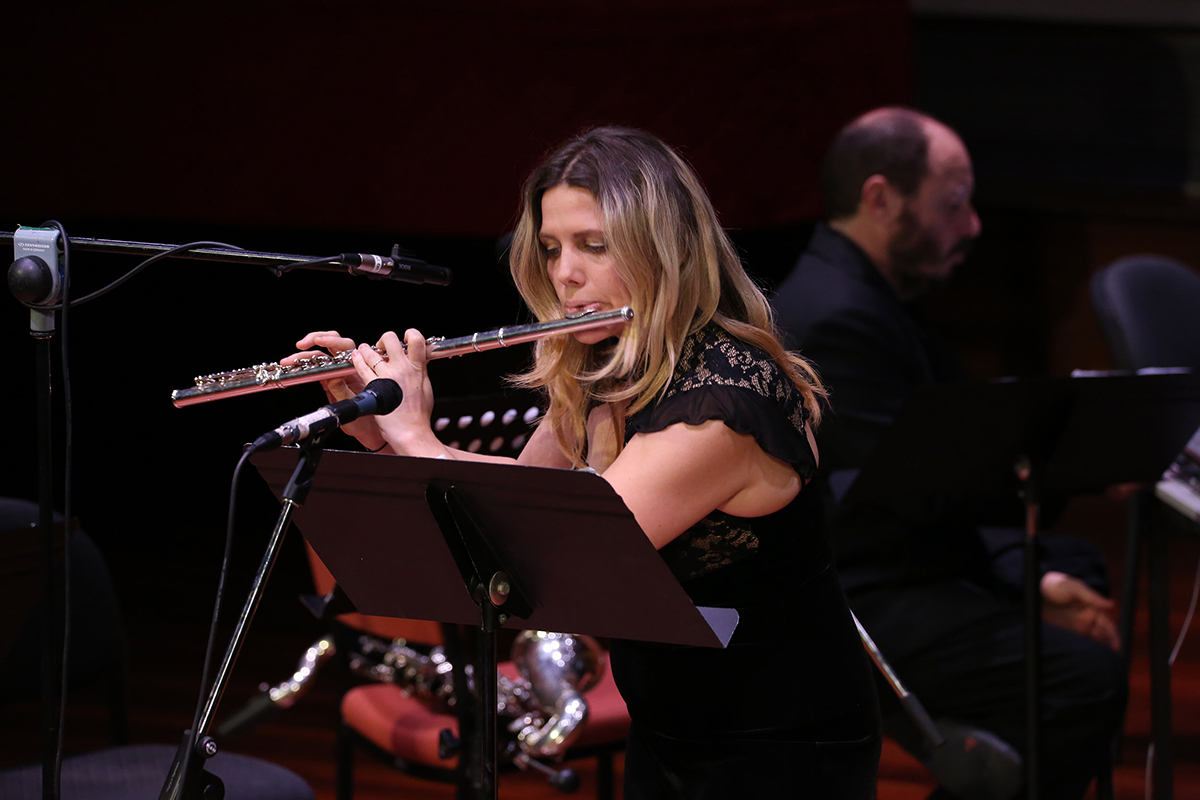
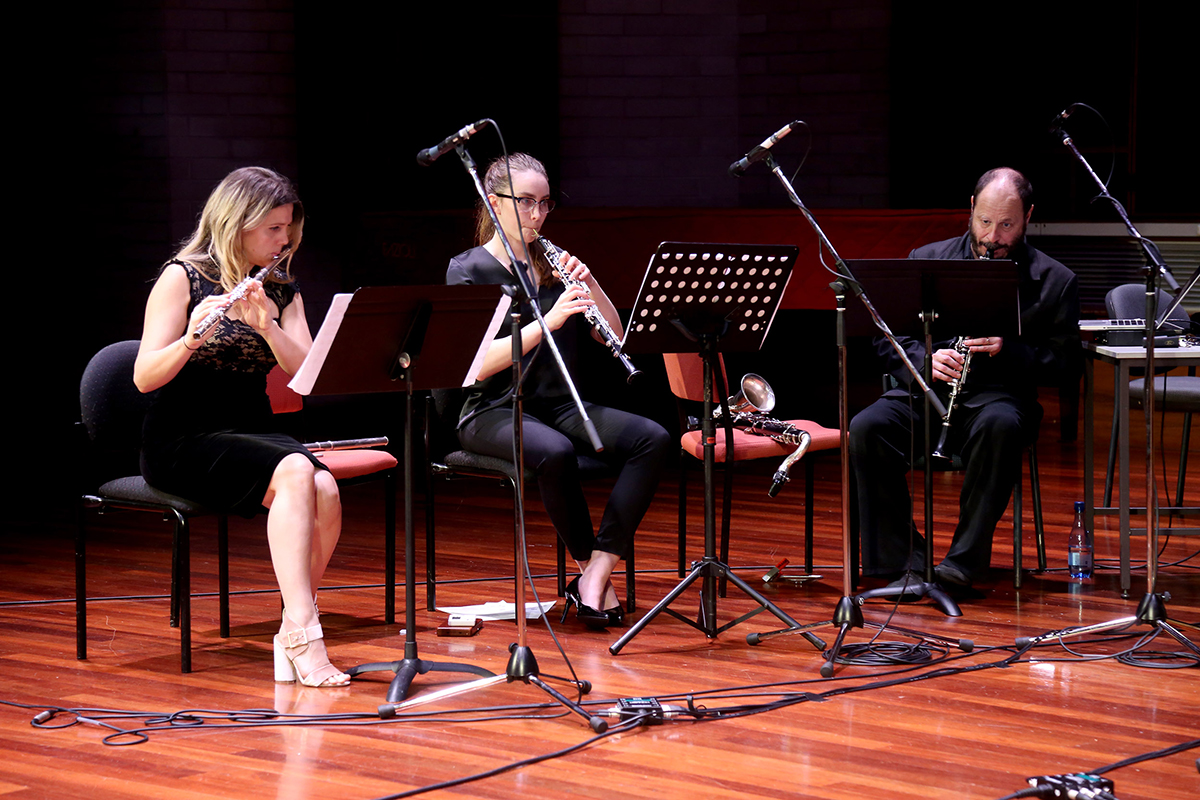
Reveries and dreamlike game-playing populated Ensemble Offspring’s Who Dreamed It?, a concert of five fascinating, formula-bending works by female composers. Three of the compositions were inherently theatrical, ensemble members engagingly meeting the demands with their usual casual aplomb, while the other two works were immersively contemplative.
Irish composer Jennifer Walshe’s contribution to the program, titled Everything you own has been taken to a depot somewhere, features flautist Lamorna Nightingale and percussionist Claire Edwardes glitteringly costumed in contrast with clarinettist Jason Noble attired for baseball. The work mysteriously progresses through a series of states in which the performers exercise their arms, variously gesture, speak or sing chorally in short bursts, as in part two, titled “Views On Computerwork Romance” in which, stretching vowels, they deliver the text “OK /Bye/Who.” Elsewhere, cards with words are held aloft while Noble signals, lines from a movie are performed, bubbles blown and, finally, any sense of cohesiveness dissolves, bringing home, if lightly, the sense of loss and delirium prefigured in the work’s title — although the name of the last piece, “His seizures stopped when he started collecting rocks,” is reassuring. I couldn’t possibly deliver a cogent interpretation for this calculatedly discombobulating 10-minute work, one that might have come out of Fluxus and is performed with a conviction that strengthens its evocation of a frustrating dream state. Walshe, a composer-cum-performance artist has made works for herself and others (many available on YouTube) with titles the likes of Language ruins everything, which are well worth a look.
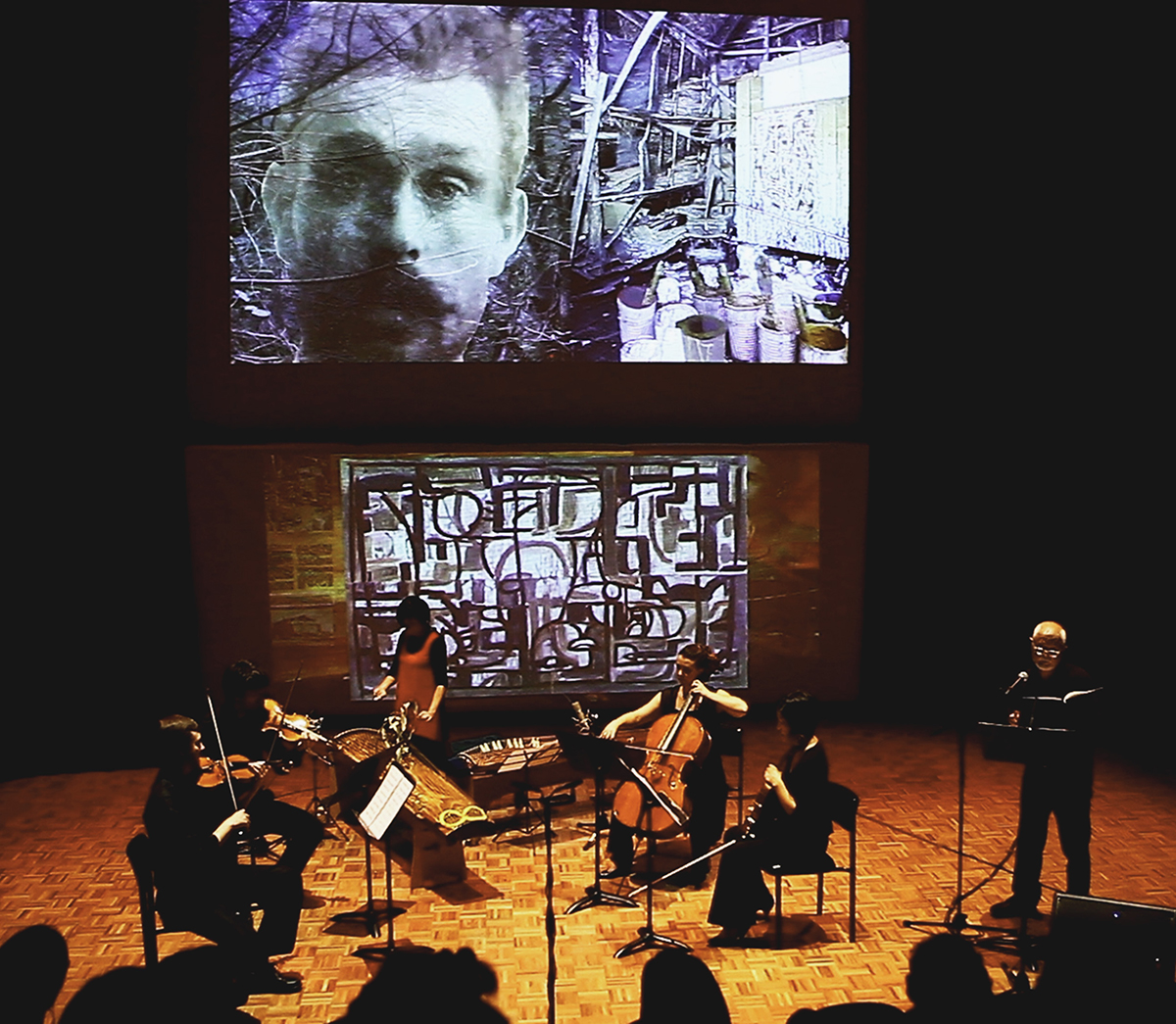
Veronique Serret, James Wannan, Who Dreamed It? Ensemble Offspring, photo Heidrun Löhr
Taiwanese composer (educated in Australia and New Zealand) Annie Hui-Hsin Hsieh’s Half-Open Beings and Australian Lisa Illean’s Cantor (After Willa Cather) proved to be quite complementary, both long-noted and suggestive of interior worlds. Over 14 minutes, Half-Open Beings, largely soft-edged and abstract, sinuously weaves its way to a rush of vibes, cowbell, high-calling clarinet and, via pizzicato strings and plucked double bass, dips back into a soft musing. I’d need another hearing to grasp its totality, but it stays with me like a half-glimpsed modernist painting.
Illean’s 13-minute Cantor is also ethereal, but warmer, romantic even, in its evocation of twilight via words from three poems by American poet Willa Cather, gloriously sung by Jessica Aszodi entirely at one with a large instrumental ensemble. Vowels are sensually extended, the voice glides up from mezzo depths to moments of passion and down, in the end, to lingering sadness. It’s a memorable work, not least for the “infusion” (as Illean calls it and reflecting the call-and-response cantor-led choral singing that inspired her) of sounds between instruments and between instruments and voice. I was surprised that I could barely detect the audio file of folk song, commentary and radio broadcast Illean had told me about when I interviewed her. I heard nothing other than a rustling and another distant soprano voice. Perhaps the ABC recording of the concert will reveal more; I wasn’t sure if I’d experienced the work in its totality.
Zubin Kanga, Who Dreamed It? Ensemble Offspring, photo Heidrun Löhr
Incipio, Bibo for soprano, clarinet and percussion by US-based Iranian composer Anahita Abbasi — performed between Half-Open Beings and Cantor — was another work for trio: Edwardes, Noble and Aszodi, each additionally equipped with a small bell with which they rang for tea, in the spirit of Lewis Carroll’s Alice books which had inspired the composer and provided the work’s text. Aszodi exuded child-like excitement in tightly scored, witty vocal and instrumental exchanges that climaxed existentially with Alice’s “Who in the world am I?”
Berlin-based Korean composer Unsuk Chin’s Akrostichon-Wortspiel (Acrostic Wordplay) shared the playfulness of the works by Walshe and Anahita Abbasi, and like Illean and Abbasi’s provided Aszodi with wonderful challenges, here not only with nonsense words (“a tool for singing,” and largely minus consonants, says Chin) but also with demanding flights across registers and styles of utterance — snarky, aggressive and supremely high-flying soprano. The large ensemble provided multiple contexts — ripplings running from harp to piano, mandolin and percussion; fabulous outbursts and deep song glides akin to falling into Abbasi-Carroll’s rabbit hole; and rapid rustlings in an eerie night-time soundscape (to Aszodi’s half-whispering). The wonderfully romantic 5th movement comprises a repeated sung motif descending in steps and taken up by the harp and others, the long notes drawn out by bowed vibraphone. In “A Game of Chance,” a rattled-off alphabet seemingly evoked a child learning with gritty gusto, while the final wild movement brought with it a voice rising from the depths, a trumpeting clarinet and a surging ensemble.
The 16-minute Akrostichon-Wortspiel — full of play and reverie — was an apt finale for an embracingly cogent concert, one too that premiered commissioned works from Abbasi, Hui-Hsin Hsieh and Illean. Ensemble Offspring performed superbly, playing the game with Aszodi with observable watchfulness between members, whether as a trio or, wonderful to witness, a sizeable team admirably coached by Roland Peelman.
Carriageworks & Ensemble Offspring, Who Dreamed It?, soprano Jessica Aszodi, conductor, Roland Peelman, violin Veronique Serret, viola James Wannan, cello Blair Harris, double bass Kirsty McCahon, mandolin Michael Hooper, percussion Claire Edwardes, clarinet Jason Noble, piano Zubin Kanga, flute Lamorna Nightingale, oboe Ngaire de Korte, harp Rowan Phemister; Carriageworks, Sydney, 23 Sept
Top image credit: Who Dreamed It?, Ensemble Offspring, Carriageworks, image Zan Wimberley
Stories about actresses have been a favoured mode of self-examination for the film industry since the earliest days. Going beyond meta commentaries on the artistic life, the archetype began to stand in for ‘woman’ herself. Fragile yet strong, mysterious yet overflowing with emotions, beautiful and yet ugly, the actress on screen became everything men wanted to say about women, in one alluring bundle of contradictions.
As searingly revealing as these portrayals were, with stars like Gloria Swanson, Bette Davis and Gena Rowlands offering up some of their greatest performances, male artists framed and directed the work. Men chose when to move in for a close-up, how to light the face, when to cut away. They chose how ‘messy’ to let things get, and where to end the story. If an actress wanted to say something that was not on the page, she could do so in the subtext, with her skill, but always within a framework established for her by others.
The star
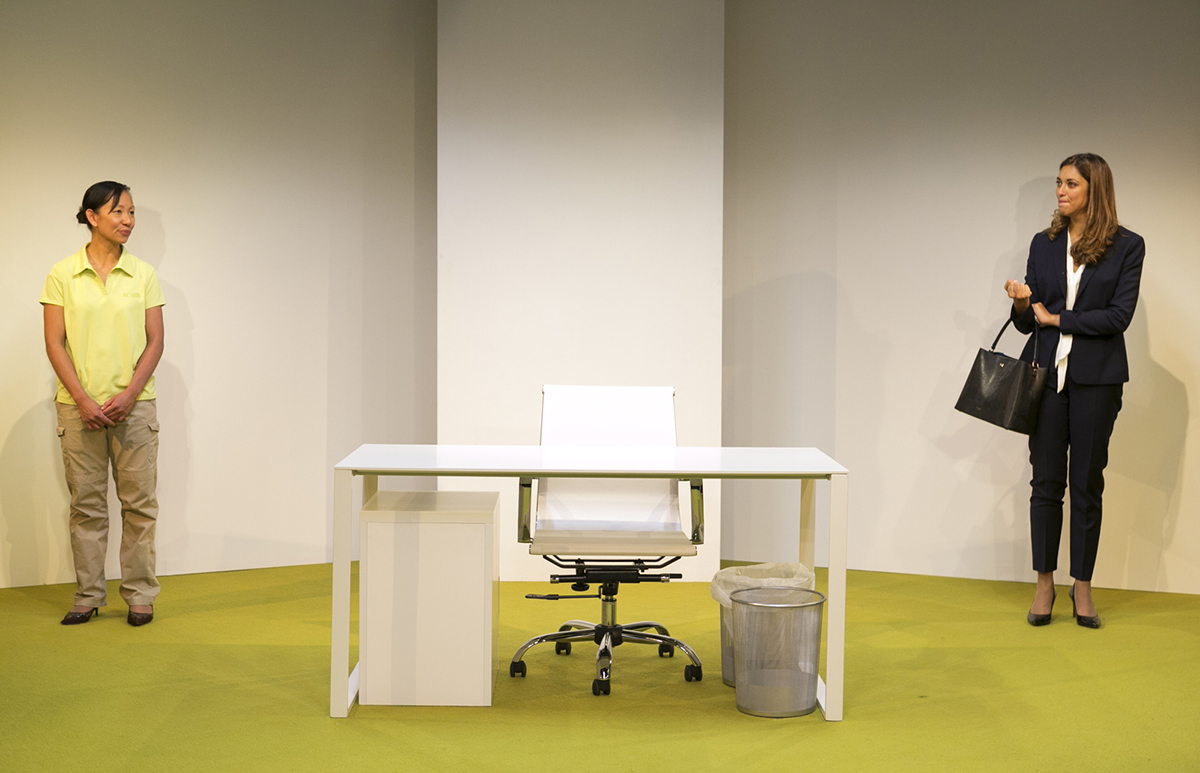
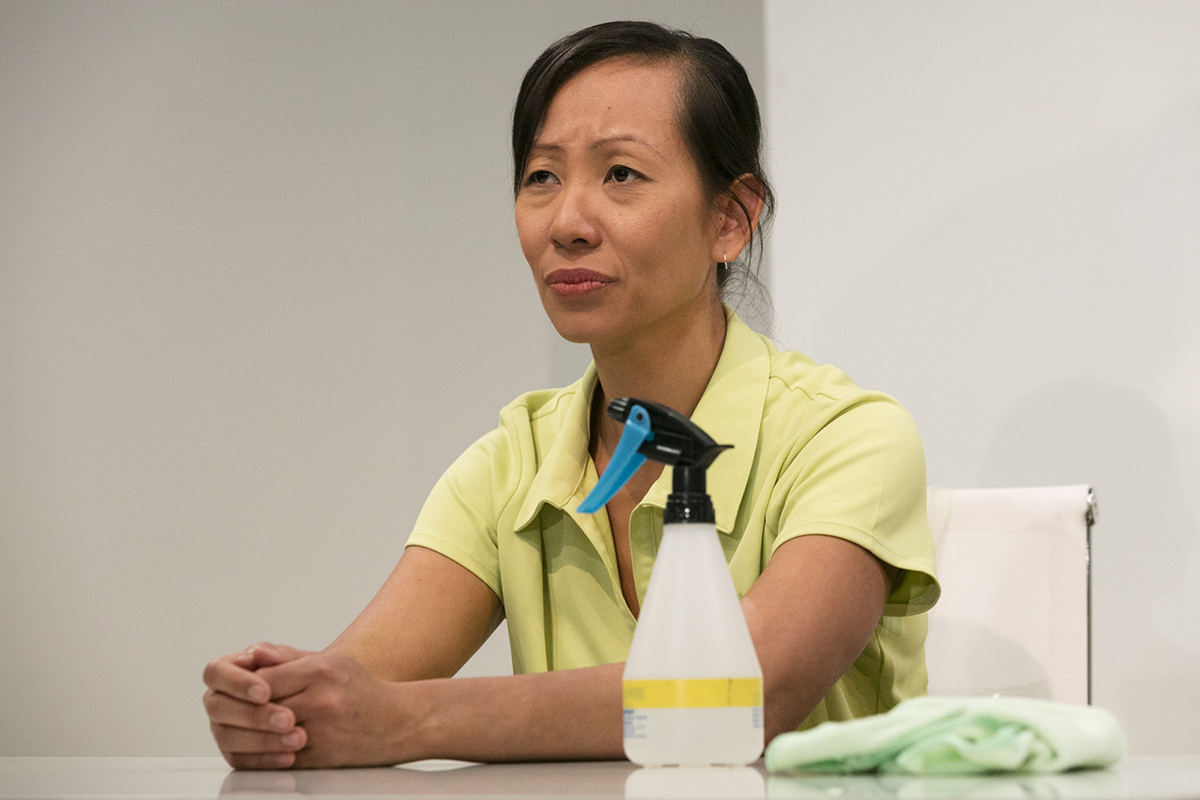
The Second Woman responds to that tradition by placing performer Nat Randall in a box on stage, playing a woman who’s waiting for her lover to visit. A single scripted scene is repeated over and over, with a different man playing the lover each time. The all-female production team, led by Randall and her co-director and co-writer Anna Breckon, includes two camera operators who are live-capturing everything so that it appears on a large screen next to the set. The sound is mic’d so Randall and guest can speak at a conversational level. We are given very little information about the character played by Randall but her glamorous 1960s style (messy yet fabulous hair, perfect make-up) tells us she belongs on screen. As she stands waiting, music swelling, we see her in glorious close-up, glowing with charisma and vitality despite her tortured circumstances. She’s a star.
The performance is scheduled to last for 24 hours, from 3 pm Saturday until 3 pm Sunday, but we have no idea if there will be any particular ‘ending’ to it. With a rolling audience of stayers and newcomers, it’s a popular event even in the early hours of the morning. By the time the last hour begins on Sunday afternoon the theatre is packed, with a line out the door of the Arts Centre and onto the footpath. Most won’t get in; there’s no way those inside are going to give up their positions now. There’s a sense of being part of something special.
Nat Randall, The Second Woman, photo Zan Wimberley
Repetition compulsion
The scene is inspired by lines and characters from the 1977 John Cassavetes film Opening Night, which starred Gena Rowlands as an actress in crisis. The story in The Second Woman is simple but idiosyncratic. A man named Marty arrives to visit a woman, bringing takeaway Chinese food. They talk and drink J&B whisky, although she’s already drunk. She draws him out on his feelings for her (“What a mess I am, begging again”) and he responds, listing some of her admirable qualities. But what she most wants is not something that occurs to him: that he would think of her as “capable.” Frustrated, she throws food at him and turns on the stereo. They dance for a minute to a disco song (“Taste of Love” by Aura), until she falls down drunk and then tells him to leave, handing him $50 that is perhaps for the meal or perhaps an insult (in reality it’s the man’s fee for performing in The Second Woman). They share a final moment and he leaves her alone. To clean up the noodles. To think. To wait. And then it all begins again… with the same words and actions, more or less, but with a new Marty.
The men
Short, tall, young, old, suave, awkward, cynical, sentimental; Randall encounters men of many varieties. Some are actors, some are obviously not; with others it’s hard to tell. One wears a suit, one a huge colourful sweater, the next a cape. One man has only one hand. One man brings flowers. One tucks the $50 into his hatband as if to say, “I will make lemonade from the lemons of your rejection.” Each has memorised the same script and is operating from the same set of instructions, although able to deviate in certain moments, such as whether he chooses “I never loved you” or “I always loved you” as his last line.
Trust
But Randall owns this space. She’s calling the shots, no matter how much her character’s behaviour might imply otherwise, and the audience’s appraisal of each performance is subtly dictated by hers. But this is not a study of subjugation. Acting doesn’t work like that. For something interesting to happen — something usable, in film terms (although that’s a complicated notion here, where every ‘take’ is shown and has an intrinsic value) — there must be mutual trust. Even the most unlikely of acting partners must be taken seriously, his oddest choices honoured, or it all falls apart. Randall is the star of the show, but it’s also her task to allow each man who enters the room his moment to be seen. In this, and in the careful calibration of her own performance in response to each scenario, she excels, never losing sight of what is being created.
Audience variables
There’s a discipline to this work that can’t be easy to maintain in the face of exhaustion and in front of a festival audience looking for a good time and not always capable of appreciating nuance. Even from the first few iterations of the scene on Saturday afternoon there was laughter where none seemed particularly warranted (maybe some of the audience knew the men on stage, maybe they’d already started drinking) and by the time day turned into night a carnival atmosphere took over, with cheers and laughter flowing freely. By around two in the morning things got a little wild. T-shirts were torn off, dancing got sillier, noodles were flung more exuberantly. The men on stage, and the men in the audience, it has to be said, became increasingly competitive. When a man seemed to win over Randall, and win over the crowd, it became a badge of honour. “That’s our boy, a fine ragout,” I heard a guy in the audience say proudly at one stage. Later, another man waiting for his own performance timeslot muttered to his friend, “This is my moment. I’m scared now though. How do I follow Diamond Shirt Guy?” How indeed.
In-jokes developed: how weirdly will she eat the noodles this time? How could we be surprised by that moment where she totters in her high heels again? The cult of The Second Woman grew at an astonishing rate. By noon on Sunday it would have hardly been surprising to go out into the foyer to find festival-goers wearing “What a mess I am” T-shirts and swigging from ironic bottles of J&B.
Nat Randall, The Second Woman, photo Zan Wimberley
Men and being
But through all the fun Randall and team, led by Breckon behind the scenes, maintain the integrity of their experiment. Patterns emerge. We see that the same moments — the paying of a compliment, a kiss on the cheek, the slow dancing — are uncomfortable for many of the men. Some of them struggle to express emotion of any kind, and we recognise how vulnerable they are. We begin to understand their attempts less as good or bad acting, but as either honest or dishonest. We’re not looking for gimmicks, we’re looking for something elusive and yet irrefutable. We’ll know it when we see it. Hence the work’s addictive quality, and the danger of binge-watching. (Thought you’d drop in for half an hour? Why not stay for six?).
Women and being
The Second Woman offers a fascinating insight into craft. You’d be hard pressed to find a film about filmmaking, for example, that so cleverly takes you inside the experience of directing (although the show’s live vision-switching can only roughly approximate actual editing). On a deeper level, it’s an exploration of the barriers of behaviour that divide us as human beings, and those too rare, brief moments when we let them go. The work’s feminist perspective allows us to challenge our preconceptions. Could it be that it’s more powerful to ‘beg,’ after all, than to stay silent and ask for nothing?
Happy ending
And, oh yes, the ending. The final Marty is the only female Marty. She brings champagne, and she pours it out too quickly so they have to drink a lot of froth but they enjoy it and the scene is strange and tender and undeniably something. Only some of those watching know that this is Anna Breckon, Randall’s partner as well as collaborator. It doesn’t matter. The audience, by now, is well versed in paying attention to important things that remain unspoken. And as they stand to applaud they’re happy because their actress is happy and can finally rest. And that last bit sounds like a dream but it really happened.
–
Dark Mofo 2017: The Second Woman, concept, performer Nat Randall, script, direction Anna Breckon, Nat Randall, video direction EO Gill, Anna Breckon, lighting design Amber Silk, sound composition Nina Buchanan, camera operation EO Gill, Lewa Pertl, Ella Richmond, Amy Brown, lead vision-switcher Anna Breckon, set design Future Method Studio, hair artist, make-up Sophie Roberts; Peacock Theatre, Salamanca Arts Centre, Hobart, 17-18 June
Top image credit: Nat Randall, The Second Woman, photo Kate Blackmore
This week we sadly farewell Lauren Carroll Harris who has completed her contract with us as Acting Assistant Editor. Lauren realised our ambition to incorporate video and sound works into RealTime, built new content into our redesigned website and initiated, among other things, the commissioning of video essays. Her sharp editorial skills, fine writing and constant stream of exciting ideas will be missed. Keith & Virginia
–
Top image credit: Jo Bannon, Alba, photo Paul Blakemore
I place the plastic clip on my finger and wait a few moments for the soft rush of sound to find its base rhythm. Soon, the wash begins to swell, remixing the resonant pitch and drop of my own heartbeat. Changes in movement and heart rate cause subtle shifts: the soundscape dips, stretches, slows down, speeds up. In George Poonkhin Khut‘s work, collaborators Gail Priest and James Brown have written music designed for augmentation by the listener’s own body. Simple instructions, asking the participant to take long, deep breaths, align the work with mindfulness principles, prompting thoughts about our biological responsiveness to sound and the kinds of bodily effects we might be subconsciously craving when we reach to put our headphones on.
Geared towards sonic futures of various kinds, those that like Khut’s work feel tantalisingly close to being an everyday reality, and those which are much more speculative, Gail Priest’s interactive and well researched exhibition is especially interested in what future artworks may sound like, and the role art can play in generating new sound-driven ecologies. The intimate and sensual cocoons of bio-remixed sound that Khut’s work generates — there are extra headphones so that others can listen in to your own unique soundscape as it unfolds — offer an exemplary response to Priest’s prompt, and a gentle introduction to the exhibition as a whole.
Shelter Fallout/Spark Harvest, 2017, installation view, Peter Blamey, Sounding the Future, UTS Gallery, 2017, photo David Lawrey
Central to the exhibition is Priest’s own project, also titled Sounding the Future, a mothership-like chair and control pad via which users can explore a range of future sound scenarios, falling into three key categories — the speculative, the scientific and the anecdotal. Sit on the stool at the centre of the space and you can lightly spin at 360 degrees, using a trackpad to click through a series of hypertexts as they light up on the floor around you. Here, the visual effects of blue and green text and a voiceover with subtly robotic inflections recalls 1990s cyberpunk aesthetics. I click through the option “city futures” then “sensory stack overload” and listen to a sci-fi scenario written by Priest where overexposure has led humans to develop sound allergies. Clicking through a different way, I learn about a problem that scientists are currently researching, where older railway workers have no noticeable hearing damage yet demonstrate trouble understanding speech. This is perceived as a reverb issue, with researcher Hamish Innes Brown describing it as a signal feedback glitch, the signal becoming “smeared in time.”
To be smeared in, or by, time is the universal fate of all entities living and otherwise, as Pia van Gelder and Tom Smith explore in their work Iron Star. Here they deliver an impossible scenario sounding the future of iron to its total demise a star’s death-state before becoming a supernova, at a time well beyond human existence; beyond the sun, beyond sound. Two screens sit side by side, the first telescopes out from what can be doubly read as iron ore and the universe itself at a close distance then scaling up in magnitude: delicate markings on a black background hand-drawn by van Gelder repeat to an awesome expanse. On the second screen, small stock photos flash in serial repetition through different categories: anchors, nail scissors, helmets, engagement rings. Smith’s score coldly inquires outwards; moments of intense rupture are bracketed by provisional calm. In one corner of the space, a small pile of iron filings grounds the work, and in the other, a wavelike sheet of chain metal drops from above creating a magnetic interplay between audio, image and object that transports gallery-goers to a richly evoked no-place at the dark fringes of philosophical and scientific understanding.
Iron Star, 2017, installation view, Pia van Gelder & Tom Smith, Sounding the Future, UTS Gallery, 2017, photo David Lawrey
The dual meaning at play in the exhibition’s title, where “sounding” can mean to produce sound as well as to test or ‘sound out’ an idea or concept, holds true in all the works. Peter Blamey’s installation Shelter Fallout/Spark Harvest presents a post-apocalyptic scenario where minimal wooden shelters — including a kennel for the dog, a welcome nod to the necessary centrality of non-human species in any conversation about futurity — are paired with solar technology, allowing possibilities for the manipulation of sound and light even in the barest circumstance. What kinds of cultures could develop from this starting point? Blamey’s work brings to mind media theorist Jussi Parikka’s concept of “medianatures” in its neat distillation of inseparable yet distinct conditions: biology and technology bound in an eternal state of coproduction. Developed from Donna Haraway’s “naturecultures,” medianatures help us to understand that the technology we use to produce sound is always at the same time matter from the Earth as well.
The documentation for this project, over three hours of material in all, is a substantial fictocritical project in its own right, available in an enhanced ebook that reproduces the hypertexts of Priest’s title work and as an adaptation on Radio National’s Soundproof program. The focused contributions of Khut, van Gelder and Smith, and Blamey offer three distinct sonic futures that illuminate aspects of this research; bio-sonic for George Khut, geo-sonic for Pia van Gelder and Tom Smith, eco-sonic for Peter Blamey — there are countless more. Gail Priest’s surprisingly upbeat show successfully expands possibilities for art-making and begins to redress the historical sidelining of sound across disciplinary fields.
Sounding the Future, curator Gail Priest, artists Gail Priest, George Poonkhin Khut, Pia van Gelder & Tom Smith, Peter Blamey; UTS Gallery, Sydney, 1 Aug – 22 Sept
Top image credit: Sounding the Future, 2015, installation view, Gail Priest, Sounding the Future, UTS Gallery, 2017, photo Gail Priest
Early in Second Chance Theatre’s Laika we hear yips from the eponymous dog calling out from her space capsule via the radio to her Soviet masters. In 1957, Laika became one of the first organisms launched beyond Earth’s atmosphere and the first to orbit the planet. She came to a sad end, terminally overheated by a technical malfunction, pre-empting plans to euthanise her.
Laika’s fate forewarned of the brilliance and brutality of the Soviet space program during the early years of the Cold War. Amid failing Five Year Plans for economic development, widespread goods shortages and faltering attempts to govern and modernise the then world’s largest nation — still recovering from 20 million war dead — Soviet scientists achieved incredible feats, regularly venturing into space years before their counterparts in the ‘free’ world. However, Soviet idealists proved the superiority of their regime by skimping on safety procedures and treating cosmonauts as no more than cargo.
Space is an inherently radiophonic subject, full of waves, including radio and the thermals that killed Laika. Communication with satellites was via radio and the majority of audiences for space travel feats (even for the Moon landing) heard about them via wireless. Not surprisingly then, the drama of apparently free-floating voices and sound effects features heavily in ‘space’ art, ranging from David Chesworth’s meditative opera Cosmonaut (2015), works by Laurie Anderson (USA Live, 1984), David Bowie (Space Oddity, 1969) and George Clinton (Chocolate City, 1975) and his techno successors.
Laika: A Staged Radio Play, Second Chance Theatre, photo David Cox Media
The director and author of Laika, Scott McArdle, lines his performers along the front of the intimate Blue Room stage, each standing crooner-style before a large valve microphone. Most dialogue is delivered directly forwards to the audience, with side glances and interjections serving to punctuate and further dramatise the writing. When Yuri Gagarin (St John Cowcher) — the first man to travel beyond the Earth’s atmosphere – comes on the scene, his helmet illuminated green and red from within, he sits to the side and slightly to the rear of the other performers, as the stage goes to black and they are individually spot-lit.
Although live foley sounds are employed for footsteps, clinking glasses and so on, McArdle and his ensemble largely eschew sound processing or spatialisation, which would be difficult in such a small space. There is none of the foley-making as theatre such as that superbly rendered by the Ennio Morricone Experience and Chamber Made Opera’s Phobia (2004). By contrast, microphone placement itself provides the scenographic structure. By having the actors simply stand at their microphones, the piece attains a certain abstract and Brechtian quality, while nonetheless feeling intensely personal.
Although Laika chronicles key events, sketching Machiavellian conflicts and moral challenges, the focus is on our dream of being embraced by space itself. The protagonist (Taryn Ryan) dreams of flying into the blue rim of the planet, while her boss (Arielle Gray), before a glowing projection of the Moon relates how, when interred in a gulag, he was hypnotised by this orb and determined thereafter to work to consummate his rapture. These small touches of melancholic reverie complete Laika as a compact, well-judged production — an immensely enjoyable example of how to modestly evoke sublime spaces.
–
Second Chance Theatre, Laika, writer, director, lighting designer Scott McArdle, performers Taryn Ryan, Daniel Buckle, St John Cowcher, Arielle Gray; foley Andrew David & cast, designer Sara Chirichilli, projection George Ashforth; The Blue Room Theatre, Perth, 12-30 Sept
Top image credit: Laika: A Staged Radio Play, Second Chance Theatre, photo David Cox Media
Singapore has just celebrated the 52nd year of its independence as a nation, it’s a multicultural society of immigrants and their descendants and its music draws on many traditions, particularly Chinese. The three members of SA the Collective grew up experiencing a mélange of musical traditions, not only from within Singapore but across the globe. They especially look to their Chinese ancestry in developing their music, which embraces experimental as well as classical Chinese styles.
Formed in 2011, SA the Collective comprises Andy Chia on dizi (Chinese flute), dijeridu, vocals and electronics, Natalie Alexandra on guzheng (Chinese zither) and electronics and Cheryl Ong on drums, percussion and electronics. All were trained from an early age on their Chinese instruments. The band’s name includes SA, which in Chinese means three, is from a northern dialect and was chosen to evoke the artists’ origins.
The ensemble travels widely, performing in locations as diverse as Museum Siam in Bangkok and the International Society for Music Education’s 32nd World Conference (Glasgow, 2016). They blend dijeridu and overtone singing with modified versions of traditional Chinese and other instruments, all of which they mediate electronically to create a unique and compelling sonic tapestry. A blend of genres, their music hints at rock, jazz and ambient drone, and can involve multiple rhythms and a blend of chromatic and pentatonic scales, often in long, swirling improvisations. Their use of looping to add layers of sound and extended instrumental techniques, such as bowing or tapping the guzheng instead of plucking, and channelling it through effects pedals, broadens and enriches their sonic palette. Their music can be quietly meditative, hauntingly beautiful, joyously danceable or overwhelmingly powerful and complex.
SA (仨 ) photo courtesy OzAsia 2017
The instrumentation is significant for the trio, not just for its sonic potential but for the mixing of musical traditions. Andy Chia said that while they are aware of the cultural significance of particular instruments and musical forms, “For us [in Singapore] everything is borrowed, the language we speak is borrowed… Our ancestry might be from China but we are not really connected with and are constantly borrowing from it.”
Cultural identity seems a perennial issue in Singapore. Cheryl Ong feels that Singaporeans are more Southeast Asian: “although we are by race Chinese, because our ancestry came from China, we don’t really carry that baggage of tradition anymore.” Their intention, as outlined on their Soundcloud page is “to create Musical Art that represents their modern identity as Chinese from a diaspora.” Their latest release, titled Flow, demonstrates how the trio weaves new music out of traditional forms and aesthetics, reinventing traditional Chinese music and bringing it into a high-tech, globalised world.
In planning their program for OzAsia in Adelaide, Cheryl says the trio will play some of their current repertoire and perform some improvisations. Andy suggests, “a lot of it has to do with the people that are there, the environment and of course ourselves, and in that sense these three elements will mix to create the sonic experience you will hear.” Their forthcoming OzAsia perfomances will be their only Australian appearances.
OzAsia Festival: SA the Collective, Moon Lantern Festival, Elder Park, 1 Oct, 5pm; Lucky Dumpling Market, Convention Centre Lawn, Adelaide, 2 Oct, 7pm
Chris Reid spoke to SA the Collective in Singapore courtesy of Culturelink and the Adelaide Festival Centre.
Top image credit: SA (仨 ) photo courtesy OzAsia 2017
These are challenging times for young graduates emerging as performers from our universities into a highly competitive market. Performing arts departments have become increasingly focused on preparing students with more than skills training, encouraging independence, business alertness and investing in self-devised graduating performances that might well go on to become fully-fledged professional productions shortly after graduation or fuel the creation of new works. This is especially the case for students who take to contemporary performance, physical theatre and live art.
I approached Frances Barbe, Lecturer and Course Coordinator for the Bachelor of Performing Arts degree at the Western Australian Academy of Performing Arts, to talk in particular about the Performance Making course subsequent to our review of Blueprint, a production created by three recent graduates staged at Perth’s The Blue Room Theatre in June. Jessica Russell, Phoebe Sullivan and Sean Crofton made Blueprint as their graduating production in 2016 and had now, as theatre professionals, re-mounted it. I was interested in the continuity between course work and ‘real world’ practice, and interviewed Wallace and Sullivan as well.
Frances Barbe replied to my invitation to talk, writing, “I think there is really interesting potential in courses like ours at WAAPA being incubation chambers for new Australian work. Particularly as artists struggle more and more to get support, the universities can be places that offer it.” Each year original, self-directed third year student works are shown at The Blue Room Theatre and now, Barbe writes, “we have a new partnership with Fremantle Arts Centre, a four-week residency offered to graduates to use in their first crucial year out. We are trying to find ways within the course and beyond it to support artists in ways that are meaningful.” I then spoke by phone with Barbe about the structure of the Performance Making course.
Breeding independence
Students continually develop and expand their skills across the three years, says Barbe, “initially learning how to perform from existing texts and study traditional works and artists. But I’d say over 50% of their work is about creating their own work — having a go at it, finding out how hard it is, failing at it and getting feedback in a relatively safe environment.” Students evolve towards becoming truly independent practitioners. Barbe explains the trajectory. “There’s a real progression. At the end of first year they do a group performance, typically directed or co-directed by staff in which we introduce the devising process. They research a theme, pitch a lot of ideas, observe how we shape those ideas and workshop a scene from a rough improvisation into a more developed scene. But we also at some point say, ‘No more ideas; now we’re going to direct you.’”
Students from WAAPA BPA Performance Making 3rd year end of year production TILT 2017, photo Stephen Heath
Going solo
“In second year, they create a solo and while we scaffold them through that creative process, they really find out if they have enough fire in the belly to create a seven-minute solo — a very much independently driven project. One might make a monologue, another a movement piece. We try not to prescribe style and once we see how a work is developing with one staff member taking them through the process, we might bring in mentors from different areas for a few extra sessions. In order to be non-prescriptive, we have to be very responsive in the Performance Making course.”
Site-specificity
In the second semester of second year the students make site-specific works with a professional guest director. “At this moment, our students are working with Barney O’Hanlon from the SITI Company from New York. They’re at Wireless Hill in Perth, a very important Indigenous site but it’s also linked to Morse Code transmission in World War I and later radio developments. The students are going through that process of listening to a site and creating a response to it.” Created by Anne Bogart, SITI Company combines teaching of the Suzuki Tadashi method which Barbe trained in, and Bogart’s Viewpoints improvisation methodology. “It’s really exciting to see the students doing Viewpoints with someone from the company who developed that for performers.”
Pitch, develop, show
Barbe says the three productions in first and second year “really set the students up for the third, in which is they spend much of it creating their own work, either alone or mostly in small groups. At the beginning of the year they pitch an idea and they’re assessed on it. The pitch can be a talk or performative or the showing of stimulus images. They get feedback from teachers but we also invite industry professionals — Blue Room staff, writers, directors and scenographer Zoe Atkinson. After the pitch there’s a creative development phase, a presentation of a certain percentage of the work and an assessment before going on to production.”
Once the works are finished, they appear at The Blue Room Theatre “where staff and audiences gather around and support the students and let them know how the industry works. It’s a really good way to get students thinking about their working lives after graduation.”
Skilling
I ask Barbe about skills training, having noticed in the course outline mention of directing, puppetry and Butoh. She explains, “acting, voice and movement run through the whole three years. There are units called Movement Fundamentals and Devising Physical Performance. In other semesters they do Directing and Playwriting as well. And I embed a series of master classes alongside the productions. In any one semester where there isn’t a unit on Voice, for example, I focus the master class series on vocal technique. The challenge with performance making is depth alongside diversity.”
Students from WAAPA BPA Performance Making, Noh Theatre Workshop, ITI Singapore, photo courtesy WAAPA
ITI, Singapore
One of the most attractive aspects of the Performance Making course is the opportunity to visit Singapore’s Intercultural Theatre Institute (ITI) and participate in a 10-week intensive exploration of a performance practice. Barbe, a specialist in Butoh, Japanese Theatre and intercultural performance, says it’s a transformative experience for students. “Typically, we go in January. In 2017, we focused on Noh Theatre with a master from the Kanze School in Tokyo. In 2018, it will be Kutiyattam, really beautiful Sanskrit theatre storytelling from Kerala in the south of India. The solo performer principally uses eyes, face, gesture. This stylising of emotion will encourage students to explore how to authentically convey heightened feeling.”
The students don’t become expert in a form that takes some 15 years to learn, but, says Barbe, over an immersive 10 weeks, 2-6pm daily after training all morning in voice and movement, it opens young Australian contemporary performance makers to thinking about presence, space and time and other ways of storytelling.”
Frances Barbe teaching, photo courtesy WAAPA
About Frances Barbe
Having viewed Fine Bone China (2008), a haunting work by Frances Barbe available on YouTube, I asked her about her own practice. She taught at the University of Kent from 2001 to 2010 and various training institutions as well as working as a freelance performer, choreographer and movement director in the UK and beyond, including Australia, where she made her last work, Exquisite (2016), performed at Brisbane’s Metro Arts. Working at WAAPA, she says, “is the first time I’ve really committed to teaching and working with emerging artists full-time.” Now in her 40s, she says she’s no longer impatient about making new work: “I’ll typically have two-week intensive creative developments in between semesters. The upside is having incubation time for your ideas and working with collaborators which I love to do.”
Of former Performance Making students Jessica Russell and Phoebe Sullivan, Barbe says, “They both had real strengths when they came to us but we’ve just seen them grow so much.”
Top image credit: Students from WAAPA BPA Performance Making 3rd year end of year production TILT 2017, photo Stephen Heath
Jessica Russell, Phoebe Sullivan and Sean Crofton’s Rocketman was the trio’s graduating performance for the Bachelor of Performing Arts in Performance Making degree in 2016. Further developed and retitled as Blueprint it excited interest when staged at Perth’s The Blue Room Theatre in June this year.
Our reviewer, Nerida Dickinson, outlined Blueprint’s fascinating scenario. “Successful in a competitive selection process, three candidates undergo a series of experiments to enable space travel and eradicate all the afflictions that have ever plagued humanity. Volunteering to establish the first colony on Mars, Alex (Russell), Lewis (Crofton) and Jane (Sullivan) maintain strict physical discipline while undergoing enhancements in breathing efficiency, boosted skin resilience and bones made unbreakable. Impatient for the application of genetic modification improvements, bickering and plagued by nightmares and regrets, the rigours of the enforced artificial confinement prove too much for Lewis and Jane, leaving a determined Alex to join candidates trained elsewhere.”
Dickinson praised the blend of physical theatre and text: “Impressive extended skipping rope sequences feature the performers delivering text without a hint of breathlessness, while vigorous, stylised aerobic workouts immediately precede extended ethical debates, the onslaught of words and scientific concepts mirrored by punishing physical exertion. The ensemble’s careful choreography offers visual impact from all directions.”
Via email, I asked Jessica Russell and Phoebe Sullivan about their training, their aspirations and the experience of mounting the self-devised Blueprint at The Blue Room.
Russell writes that after working together for a year and a half on Blueprint, “Phoebe and I have this running joke that we can’t get rid of one another. So while (for now, never say never) Blueprint has been put to bed, I’m sure we’ll work together again soon. Phoebe’s an incredible collaborator, but we also respect each other’s interests and practices as individual artists.” Sullivan thinks that Blueprint, a work about adaptations for space travellers’ bodies, might have a longer life: “The bio-engineering technology which the show refers to is constantly developing, and because of this, so too can Blueprint.”
After working behind the scenes on three productions at The Blue Room, Russell writes, “rather than becoming trapped solely in the arts, I’m taking some time out to read and research a whole array of ideas beyond theatre. Work comes from the world around us, you have to stay connected. Also, I’m trying to remember that making work takes time, rather than falling into the trap of making work solely for the purpose of making work.”
Sullivan is likeminded: “For me, trying to create anything semi-decent while stressed is like slowly pulling splinters out from underneath my fingernails, and I absolutely refuse to have a mental breakdown at the age of 25 and burn out completely by the time I’m 30.” She’s landed a three-month residency from pvi collective for the development of a new physical theatre work with “a lot of on-the-floor improvising to generate material… It’ll be exciting to fall back into a familiar process and refine it for myself even further.”
Learning from the work
I asked the pair about what they learned from mounting Blueprint. Russell writes, “It was an invaluable experience. Throughout the run, Phoebe and I had plenty of ‘Ohhh, it’s so obvious’ moments when we realised exactly where we’d edit or add to the work. We accepted those moments for the incredible learning they provided.” Sullivan believes “the show could definitely have done with more refining structurally in terms of the play’s narrative and the journey it needed to take our audiences on. Though, this is borne out of a personal response to the work, as opposed to being influenced by public opinion. Although I agree with some audience feedback from an artistic point of view, I’m not really looking to make a crowd pleaser; the same goes for reviewers.” Russell likewise thinks that taking on responses “is a fine balancing act,” but helpful in respect of achieving clarity: “What ideas are not translating to the audience, and what could be causing it — scene structure, character narrative, physicalisation?”
Preparedness
I asked about the pair’s preparedness for their first professional production. Russell writes, “WAAPA’s training was invaluable, I found myself putting teaching into practice almost subconsciously. I still carry my third year notebook, still filling it with notes on process and work, continually going back to the earlier pages to reread notes from my mentors. More than anything, WAAPA gave me a hunger to continue to learn in this industry, to take up opportunities that challenge me.” Sullivan says of the third year of her course, “It was thrilling being given free rein to tackle such large scale ideas concerning humanity, the environment and the survival of a species. The course certainly prepared me to be flexible and adapt to the oncoming changes. As well as being cost efficient in the process! The transition was made so much easier by the supportive team at The Blue Room Theatre.”
Jessica Russell, Phoebe Sullivan, Sean Crofton, Blueprint, The Blue Room Theatre, photo Marshall Stay
Skills & attitude
On the subject of the skills and the attitudes developed at WAAPA, Russell writes, “Apart from the drive to continue learning my craft, WAAPA has improved upon my skills tenfold. I have a much stronger sense of my work ethic and process, a belief in my abilities as both maker and performer, but also the self awareness that this is a long journey.” Sullivan comments, “It’s so funny how many conversations I’ve had with friends, who have also graduated with similar performing arts degrees, about how drama school fast-tracks your personal development so that you leave with a much more informed opinion of who you think you are. I only say ‘think’ because every time I claim to know who I am, I then do something which proves me wrong. Skills, resilience and courage are certainly tools you gain while studying at WAAPA and that really does set you up for the industry.”
Into the future
I wondered if the two performance makers saw their careers as developing in Perth or beyond. Russell, who trained as a dancer for a number of years, says that thanks to the course, she “became passionate about how movement interacts with text, how in contemporary theatre practice a movement director is an invaluable presence in any rehearsal room. I’m inspired by companies such as Punchdrunk and Frantic Assembly, so, with any luck, one day I’ll be at the helm of a similar company. I’m personally really drawn to the UK, but I believe there’s a huge stirring in Perth for physical theatre. Audiences are becoming hungry for new practices and styles, which both The Blue Room Theatre and WAAPA are accommodating so wonderfully.” Sullivan, attracted to the programs offered by STRUT Dance in Perth and inspired by the likes of Force Majeure and Chunky Move in Sydney and Melbourne, hopes “to create work that positively contributes to the discipline.” A Queenslander, she is now committed to Perth; “it’s transformed into home for me,” though London and Berlin and postgraduate study there beckon, if a while off.
For 18 months, Alvin Ng has sequestered himself in his studio apartment stuffed with panda bear paraphernalia. Much like his favourite animal, he’s a loner with doleful eyes. At least one of his friends is concerned, pushing Alvin to leave the house in a stilted Skype conversation. Defensive, Alvin retorts, “I’ve just started meditating.” It’s a strange response — his friend wants him to go out, not further in. But in Alvin’s Harmonious World of Opposites, the latter just might lead to the former. The debut feature from Sydney independent filmmaker Platon Theodoris — here, writing and directing — is a precisely executed character study with a comic and darkly fantastical bent. Shot on location between Sydney, Kalgoorlie and Jakarta, but essentially set in Alvin’s apartment, the film is every bit as curious as its protagonist.
Sydney performer and artist Teik Kim Pok plays Alvin, who spends his evenings scouring eBay for 1970s bakeware, drinks tea out of his commemorative Princess Di and Prince Charles mug, and goes to sleep in a bunk bed made up with panda printed sheets. He owns enough collectible spoons to max out one of those wooden display racks shaped like Australia. They say that a person’s home is a reflection of their personality, and this is perhaps especially true in the case of cinema; between all the panda plush toys and the retro knick-knacks, Alvin’s décor suggests that he is equal parts overgrown schoolboy and retiree. And his apartment is more than a quirky backdrop — it’s his whole world.
Well, not quite. Although Alvin hasn’t left his apartment in 18 months, he has found ways to access spaces that exist beyond its four walls. A hole in the floor, for instance, becomes a portal into the bedroom of the young woman who lives downstairs, Alvin nursing his crush on her in secret. Meanwhile, the internet enables him to talk to friends and work as a Japanese translator from the comfort and safety of his own home — but Alvin interacts with others only on highly idiosyncratic terms, carefully controlling the flow of the outside world into his own. When Skyping his client, he dons a button-up shirt and tie and uses a retractable white backdrop to simulate an office environment. The pair deliberate over the nuances of particular words with great earnestness, his client unaware that, just outside the webcam’s scope, Alvin is sitting on a big green exercise ball surrounded by panda plush toys.
Alvin can’t hide behind these elaborate mechanisms forever, though — something’s gotta give. When the sanctity of his world does come under attack, it’s on two fronts. First off, his foul-mouthed and vitriolic neighbour Virginia (Vashti Hughes) keeps banging on his door, wanting to complain about an apparent flea infestation. What’s more, her visits frequently interrupt him in the middle of his Peeping Tom routine, functioning as a kind of karmic comeuppance. Alvin might shut the door on her, but that doesn’t cease her ranting, nor does it stop her from coming back. And he must reckon with another, decidedly more mysterious intruder: a brown sticky substance that has begun dribbling from the ceiling of his apartment. He is curious and perturbed, the vaguely sinister goop an affront to his fastidious nature. It’s when he starts to search for its source that things start to get weird(er).
Teik Kim Pok, Alvin’s World of Opposites
His investigation leads him up into the attic and, it seems, another dimension — a neat plot twist borrowed from Being John Malkovich (1999). Alvin suddenly finds himself in a cluttered shanty, where a short-statured woman (Indonesian singer Dessy Fitri) sings and coos contentedly as she potters around with a crutch, keeping house. She becomes Alvin’s tour guide through her otherworldly realm (actually Jakarta), clutching his wrist and leading him across a rocky landscape and through an abandoned carnival — these wide open spaces appearing all the more bizarre after being cooped up with Alvin in his cosy, cluttered apartment for almost the entire film. The woman appeals to him with gesticulations and her singsong babble, but he stares blankly at her, uncomprehending. He nevertheless lets himself be dragged along, a mute tourist way outside his comfort zone, unknowingly moving towards the ooze’s origins, revealed to him in a satisfyingly surreal — and oddly uplifting — climactic sequence.
Alvin crawls through his roof cavity and into the fertile recesses of his psyche, escaping the toxic solitude of his apartment through a new, meditative mode of introspection. In Alvin’s World, confined spaces open up to reveal larger ones, Theodoris (harmoniously) blurring the boundary between physical and metaphysical. The film makes manifest the Tardis-like nature of the mind — its capacity to contain huge expanses; to become a mode of transport.
–
Alvin’s Harmonious World of Opposites, writer, director Platon Theodoris, performers Teik Kim Pok, Vashti Hughes, Dessy Fitri, cinematographers Hari Bowo, Vanna Seang, Platon Theodoris, editor David Rudd, production designe Mas Guntur, Shin-Shin, screening now on REVonDemand.
Keva York is a film critic and a PhD candidate at the University of Sydney, writing her thesis on Crispin Glover’s It trilogy.
Top image credit: Teik Kim Pok, Alvin’s Harmonious World of Opposites
“Oh, hasn’t she got really, really, really bright hair.”
In Alba, performer Jo Bannon unfurls herself into a dark physical and imaginative space humming with hinted presences of ghosts, angels and monsters, cathedral vaults and the massed attention of the faithful, the intimate space between a mother and child and the snug refuge of a hiding place under a table. She holds the contradictions of the work within her body: ritual versus gentle humour, high drama versus mundane domesticity, her many small, careful movements versus her few wide and stylish declamatory gestures. She is luminous. So are her props: a piece of cloth, a kettle, an iron, a puff of dust.
“You and the Pope was coming together.”
Bannon’s birth coincided with the Pope’s visit to Coventry and her mother constructs a family story where both these events are part of the same miracle. In Alba, Bannon gently martials religious inducements to wonder, faith and spectacle into markers of her own physical and familial identity. She uses her mother’s voice retelling the birth and associated visit as the armature on which she builds her provocation, presenting her self and her bodily difference from within her own sensibility, making her world ours. By the end, we have spent 35 minutes watching a woman wash and dry her hair. It has been enthralling, shot through with a gleaming electric turbulence, and we are left shimmering in the afterglow.
A productive Q&A after the performance touched on investing the ordinary with myth; the white-bread comforts of a working class home; problematics of presenting whiteness as an issue in identity and bodily difference. The audience had felt, in the simplicity of what was visually presented on stage, that they had seen something elemental. Jo Bannon mentioned that even though light feels like the main language of the show, bright light is problematic for her and there is friction and difficulty in her experience of its beauty.
The following are Jo’s words from our subsequent interview.
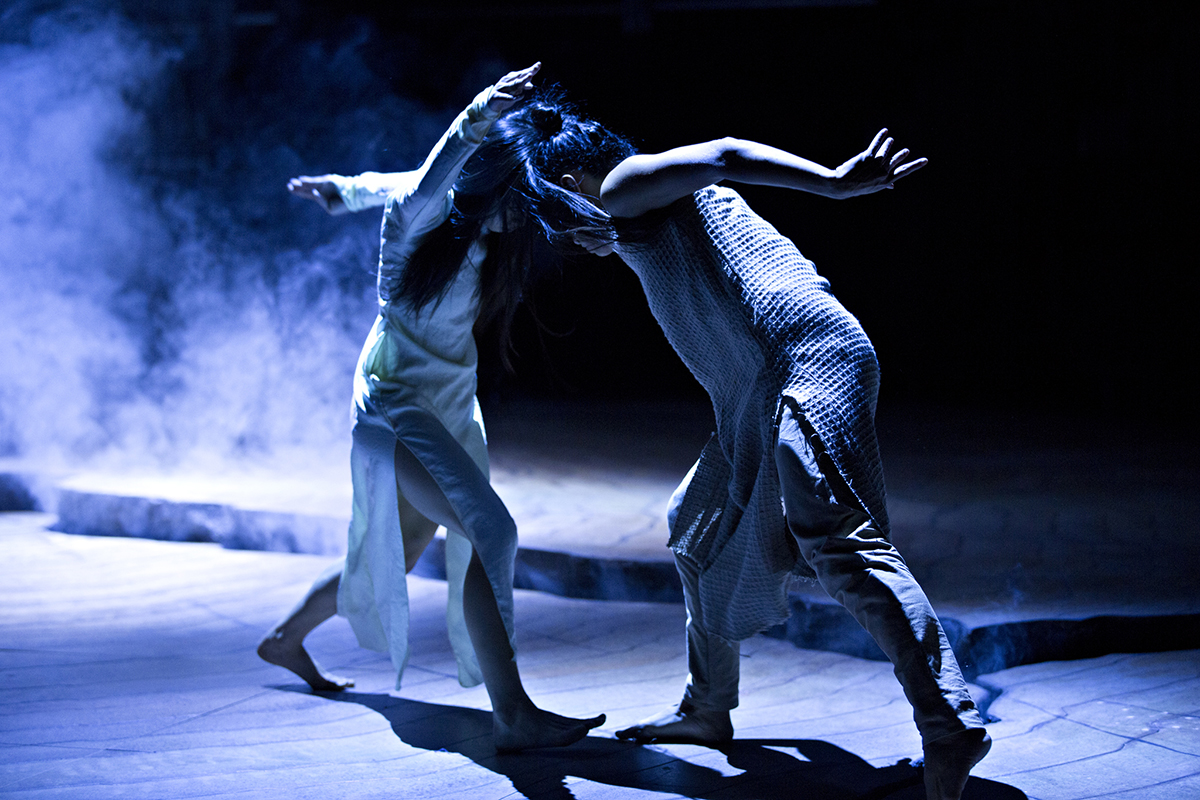
Jo Bannon, Alba, photo Paul Blakemore
There was always this intention of humour in the work but I didn’t, I wasn’t, I hadn’t landed in the work because I hadn’t performed it enough, I didn’t know its scope. And it was much more tentative when it was performed for the first time. Space has a lot to do with it. When we do it in a big venue it looks really beautiful and it has this feel of being more meditative, more discursive. On the spectrum of one end being that high mass church, quiet and lofty; the other end is domestic, kitchen, Mum. When we’re in a small venue there’s much more of that world. In big venues it’s much more of the church world. And for me there’s always a thing in the work of trying to perform it, pitch it, so that it slips around those two modes. How often that happens I suppose is open to interpretation. For me the interest in the work is something that’s between mundane and miracle and can’t quite settle in one tone or the other.
If I think about how I move about in that piece there’s a few references and one is Child. Like doddering about with my Mum at home just idling time away, these kinds of quite ordinary things. And then the way you operate in a home, which is ‘oh I’ll just get that and then I’ll go and…’ You’re quite precise but you’re also taking your own time and there was a hope or a proposal in the work from me to myself which was to make a stage world that I felt I could inhabit. And maybe a provocation there of turning a black space white. And so when I perform the work, when I’m doing it well or when it’s clicking in for me, I do feel very much like this is my white world and I can take my time and move this and this will go exactly there. So I guess there’s a friction between doddering and exactness.
For me there’s something about creating magic or miracle: like when you see magicians they have to be absolutely precise — that kettle has to go there, otherwise that beam of light won’t hit the smoke and it will be nothing. You wait for five minutes for this kettle to be placed and boil and whatever. And something about the labour of that feels the same as this decision of my Mum’s to do the labour to tell the story and to tell the story and to tell the story and imbue it with this kind of meaning. There’s something hidden and magical (hopefully) in the way things appear like the smoke. But also you’ve watched every step that leads to that point.
Also the other thing about the doddering is, it’s a practical thing in that I was also interested in how my body, how albinism within my body affects how I am in the world and therefore on stage. And I do have really restricted vision. Okay, I don’t have a Scoobydoo sheet over me; I can see more than under a sheet. But there is a way that I move in the world that is often about touch and knowing how far things are. It’s a way I’ve learned to navigate and it’s kind of subconscious. I was interested in exploring that skill or ability. And so it doesn’t feel surprising to me that I end up bobbing about the stage under a sheet because it’s quite a natural way of being, in a weird way, for me, because of my less accurate vision.
The biographical work I’d made before was Exposure and that was the first quite delicate, tentative foray into how I look in and how I look out. I never mentioned the word ‘albinism’ in that work although it’s implicit within it. Maybe I’m interested in my Mum’s story because it’s her words, her description, of this experience. So it felt useful to kind of go into my identity and how that feels to have albinism through someone else’s story of it.
Jo Bannon, Alba, photo Paul Blakemore
I worked probably for a year, off and on, researching and sitting in studios and not really making anything on stage, just thinking and writing, and there were some images that kept coming up. One was this image of a head on the table with the hair in front and as the head rises the hair covers the face. I kept thinking about this and then I made this silly Pope mitre hat. So these kind of fragments of visions happened but I didn’t really know what it was, their sitting together, but I continually kept working with white objects. It’s funny when you make a process when you look back. I look back at the beginning, at little videos I took in studios or things in notebooks and it’s very clear; it’s almost like a description of what the work is now. But, of course, you don’t know that then, you have to go through this kind of circular journey.
I think I was always aware of fighting this interpretation of albinism — if looking in the media, for instance, for examples of people with albinism — or depictions of albinism like The Ghost, The Monster, The Alien, The Vampire; we get into The Bullied, The Victim; and we get into The Angel, The Savant, The Mystical. And there’s not room in any of that for the human.
I remember working in the studio and thinking I’m gonna put this sheet over me and do some hoovering. And film it and see. Really like, I think I’ve gone mad, I don’t know what I’m doing here; and that doesn’t happen in the show but I think there’s an echo of it somehow. To literally embody this idea of a ghost, with a white sheet over yourself but then do something that cuts against that, of something funny and normal and boring like hoovering. So yeah, it starts with weird fragments, things like that.
Then I was on a residency in Belgium and I went to this big cathedral and there was this huge High Mass with seven priests, it must have been some saint’s day or something. They were carrying these objects, books and bowls, all the things that are used in a mass. And there was this kind of click: these are some of the same objects that I’m using in the studio.
As soon as that idea came, in my mind it was like, ‘Oh, you’ve been making a Mass.’ Not, ‘I will make a Mass,’ but ‘That’s what these things are, that’s why they’re here.’ And then there’s quite conscious decisions about, well in that case, what we have to start with, Communion comes near the end, so the sandwich comes near the end. Then things get filled in. I find it really satisfying making it like a puzzle. Just keep waiting and waiting and waiting to see the picture, like you’re putting a jigsaw together and then suddenly you can see what it is.
–
Alba, Jo Bannon; toured by In Between Time; Arnolfini, Bristol, 8 Sept
Top image credit: Jo Bannon, Alba, photo Paul Blakemore
On a chilly spring night in September, two tall churches blaze out from the dark in the town centre of Launceston, Tasmania. The first, St John’s Anglican, houses two participatory artworks. In one, Launceston Queen Bee performance artist Edwina Blush drops beads of honey into audience members’ palms. In the other, for local artist Kirsty Máté’s Knit, audiences sit in a circle knitting plastic bags into sleeping mats for the homeless. The second, the deconsecrated Presbyterian Chalmer’s Church, across the block, is lit with blue and purple and cast with the shadows of the young performers of Launceston’s Stompin interacting with the church facade twice nightly in Brisbane choreographer Liesel Zink’s site-specific SYCP2017.
The sight of these churches, otherwise conventional, Gothic spaces, repurposed for ephemeral, whimsical, site-specific contemporary art projects and thrown with vivid coloured light, perfectly captures the essence of Junction Arts Festival. Not merely staged in Launceston, it comes directly from the small but engaged community of its valley town. Junction is a grassroots festival that feels genuinely alive and without the PR gloss of many of its mainland counterparts.
Stompin Youth Choreographic Project 2017 developed with Liesel Zink performed at Chalmer’s Church, Junction Festival, photo Jacob Collings
The festival takes place at a moment when the state of Tasmania is at its own junction. As Australia’s poorest state, one third of the island’s residents rely on some form of welfare and the workforce is split largely between tourism and hospitality, logging, mining, and government (over 50% of the state budget comprises public service wages). While uber-rich arts patron David Walsh’s Museum of Old and New Art has tilted Tasmania’s reputation (and economy) into a more positive space, continued mining and logging threaten to extinguish the very environmental beauty that the state’s growing tourism sector is founded upon, not to mention its ecological equilibrium. In a place where colonial history feels close to the present and the contradictions of late industrial capitalism seem more visible than elsewhere in Australia, the thoughts and actions of artists — and the broader arts community — have surfaced as genuine stabilisers of the economy.
Where the impact of arts festivals in the major cities can be diluted by sprawling urban populations and competing events, regionally focused ones have the potential to really electrify their communities. Walsh’s Dark MOFO pitches itself as a Gothic festival at the end of the world, while Ten Days on the Island festival also draws international and local artists into its program. Junction has no such pretensions — it locates Launceston’s local community at the centre rather than the edge of the world. The difference is about more than marketing speak. Junction has strategically switched from spending money on mainland and international acts to largely filling its program with local, Tasmanian artists. Though this year’s program is smaller than before, it’s oriented directly to Launceston citizens, whose demographic seems to be distinctively family-oriented. By basing itself in the centre of Launceston, with a large program of free events (nightly music, live comedy, self-guided art tours, light shows, a big public bar), Junction has been able to draw to it a reservoir of goodwill from local artists and community members.
Paul Murphy, Traces, Junction Festival, photo Jacob Collins
Paul Murphy, Traces
The Nightlight program — a self-guided tour of site-specific art happenings in shops and other spaces surrounding Prince’s Square — provided the most interesting glimpses into Tasmania’s visual and community arts, including a wonderfully loopy community-photographic art project by Team Textiles called Masked Family Portraits, which lined the square’s north-eastern fence in a strange, friendly greeting to passers-by. In St John’s Church, the treatment of young Tasmanian designer and architect Paul Murphy’s Traces, hewn from styrofoam resembling delicate rose quartz and rendered in homage to seastack (geology) formations in Lake Pedder, was an illuminating example of how site-specific context can bring an artwork fresh energy and meaning. Cast with red light, the crystalline pillars formed their own, new conversation with the church’s vertical columns, and it became impossible to think of them installed conventionally in a pristine white cube gallery.
Uta Uber Kool Ja, Junction Festival, photo Jacob Collings
Uta Uber Kool Ja
Uta Uber Kool Ja provided the most lasting impression of the festival — of solidarity and community through live art. The concept, by actor Georgina Symes and performer and activist Nic Holas, is to use a hotel room as the stage for a new kind of intimate and immersive participatory performance, hurling the audience into an after party in the private suite of a rock star at Launceston’s Hotel Grand Chancellor. Desperately glamorous Uta Uber (Symes) is the centre of attention, and our host is her manager and confidant George (Holas) whom we meet in the hotel lobby before shuttling upstairs to the suite. We’re given glasses of bubbly and a warm welcome, but rather than the glitzy affair that’s promised, Uta has passed out behind the bedroom door on the other side of the suite. Once she rouses herself, it becomes clear she’s not the star she imagines herself to be. As she nostalgically recalls lost relationships with those more famous and important than her (Michael Hutchence), shines the dull glitz of her once-almost-sparkling career (her biggest hit made the top 20 behind the Iron Curtain) and launches a new remix with the lights out (dancing to the DIY strobe of a torch held by an audience member), we realise that Uta is a lot like a former child star — someone who’s been told she’s very special, only to be left dejected and prone to inflated overcompensations.
But the show has the utmost respect for Uta’s has-been status: a theme of overcoming failure — by building resilience and stitching together your family — comes into focus as the audience is brought into the bedroom, the suite’s inner sanctum. Uta’s journey is honourable for the very fact that she attempted it.
Given feather boas and trashy sunglasses to don, our transition into full-blown characters within the fantasy is complete. As we all pile onto the bed, Uta and George reveal themselves as Georgie and Nic, a breaking down of character that allows for a wonderfully self-reflexive epilogue in which Nic espouses the show’s values in a kind of late-night party polemic. “We’ve been telling people to ‘say yes’ at parties in every state in Australia for the last six years,” he says, addressing the ‘respectful’ debate around a certain postal vote at present. “And right now, at this moment in history, it may seem like all anyone is talking about is saying ‘yes’ or saying ‘no.’ I don’t assume what your politics are when you come to our party. If you’re a ‘no’ person, you are welcome here with Uta and I. If you are a ‘no’ person, I would like to let you know that standing in front of you is a person who would like you to say ‘yes.’ You’ve just met one, you can’t say you haven’t ever again. There are far more people who look and sound nothing like me, who don’t have the same freedoms and privileges I do, and they want you to say yes, too.”
Just as Uta Uber Kool Ja’s staging has changed as it has inhabited different hotel rooms across Darwin, Melbourne and Adelaide, its creators are nimble and responsive enough to allow each new moment to shift the show’s content. This particular installment of Uber became a declaration of love and togetherness — of uniting and saying (and voting) yes, even when failure is possible or the outcome you crave is not assured. A hit at mainland fringe festivals, Uta Uber Kool Ja showed me that contemporary performance can be presented to broad audiences in unusual spaces without sacrificing rigour or depth for funny, feelgood vibes. Launceston’s audiences were as respectfully disinhibited and keen to participate as any performance artist could wish for.
Hanky Map, Nightlight, Junction Festival, photo Jacob Collings
Local emergence
In his capacity as Creative Director, former Adelaide Fringe director Greg Clarke’s focus is on an outward-looking approach to programming that brings in the general public — indeed, most of the ticketed events sold out. It goes to show that there’s space in the arts ecology for all kinds of curatorial approaches. The mandate here is not a rigorously conceptualised and academic orientation to the insider art world, but a whimsical focus on fun, public-facing art projects that also relate directly to those making work in Launceston. That means for example, that Pronoun, an amateur theatre production of a fairly conventionally conceived stage-play about a trans teenager emerged from the work of students at Launceston College and was as rough-and-ready as you’d expect. But that’s where its charm lay — a more professional production would have likely used polished actors in their 20s rather than the actual teenagers who gave Pronoun its authenticity and rawness. In that sense, Junction has a more inclusive view of the arts ecology — including its local schools, colleges and high school teachers, and a brand new theatre company, Pronoun’s producer Relevant — than many big-city cultural events.
Earlier this year, Junction Arts Festival secured $1.25 million in state government funding until 2021. It’s good to know that Prince’s Square will light up again in September for the next four years. Illuminated in fluoro each night and designed by local emerging lighting designer and Launceston College student Ethan Stanley, Prince’s Square didn’t have anything as high-tech as Vivid Sydney, but it’s nice to think of its rainbow-lit trees as emblems of what small Australian cities could more frequently accommodate in terms of welcoming, lively art events, with the will and inclination of councils and policy makers and those within the arts keen to look beyond the east coast metropolis.
–
Junction Arts Festival, creative director Greg Clarke; Prince’s Square and surrounds, Launceston, 6-10 Sept
Lauren Carroll Harris was a guest of the festival.
Top image credit: Nightlight with Masked Family Portraits, Junction Festival, photo Jacob Collings
Conor Bateman observes how analogue and digital, real and constructed, bleed into a paranoid, video-game vision of 1970s San Francisco in David Fincher’s classic crime procedural, Zodiac.
Conor Bateman’s previous video essay, Cameraperson, can be watched here.
An urban Kali? What’s in it for me? Very briefly a student of Indian history, I read of Britain’s suppression in the 19th century of the thuggee, a 600-year-old cult whose members murdered, often for profit, in the name of a four-armed, variously black or blue-faced, bloody-tongued Hindu goddess wearing a necklace of skulls. At her grimmest in black, Kali is at her most radiant when glitteringly bejewelled and frocked in swathes of colour. She is, alternatively, a demonic figure driving us unsparingly into the void, or a glorious generator of new life, though her eyes are as piercingly fearsome in both incarnations. Like many an ancient god, she is, of course, both destroyer and maker, inherently spinning the wheel of life and encouraging philosophical acceptance.
An ancient diagram turns slowly in the film that opens the performance of Urban Kali, at its centre images of the goddess, each embodied by Rakini Devi, staring eyes and dancing fingers in close-up, all veiled behind shooting flames. This is Kali as mutable and mysterious and, ever so briefly, literally urban. Garbed in black, she stands against a building as passing cars blur ephemerally. The accompanying music too is contemporary urban, not faux Indian; it breathes like an agitated monster, signalling this is our Kali, now, but irrevocably ancient, as the ritualistic stage framing suggests. A lone skull sits front and centre. To one side is a vivid installation — a miniature pandal, a temporary street temple made for festivals — built around a tiny statuette of Kali. Mid-left, is an enigmatic tall fabric cone, dressed with a chain of skulls and red thread evoking the blood often seen on Kali’s tongue.
Rakini Devi, Urban Kali, photo Heidrun Löhr
Devi/Kali steps into this ceremonial space, hands aloft, drawing behind her a long swathe of red sari cloth. The thump and soft belling of the music confirm that hers is a procession in which the sari is laid as a path along which she treads with gentle steps and spare gestures before gathering it up as if, like blood, it’s a sacred substance. In tandem, the music intensifies, chugging, rattling, grinding and introducing the first of a series of unnervingly shrill chords alongside fluted cosmic winds. Kali, in black save for a gold-threaded skirt, features invisible, is still remote, elegant, but the sounds that surround her intimate danger. In the film that ensues, we are in jolting proximity with the goddess in close-ups of demanding eyes and red-daubed dancing feet juxtaposed with a growling meditative “Ommmm…” Devi’s voiceover celebrates love for the goddess — her feet, her skin (the deepest of close-ups) — and the void, the blackness, she embodies. We have come closer to Kali, and Devi, and nearer again when the goddess dances. Bands of soft colour vibrate across the screen before which Kali stands, one focused solely on her eyes. Staccato drumming settles into a regular pulse and the body, covered in black, breaks into wide-stanced, right-angled articulations, stampings, red-palmed hands turning in and out.
Kali might symbolise the inevitability of death, but not the rightness of murder. In an utterly chilling film sequence a pair of bloodied hands are suspended directly above a bucket of water in a dance of guilt-laden anguish as Devi explicitly details the horrors of female child murder in India, including the words of some of the perpetrators, victims of another kind. The ensuing dance, with Kali/Devi sliding on her back to the stage and writhing, seems to become a restorative expiation when she sits centrestage, the opening diagrammatic image projected onto the floor from above and her hands and feet turning eloquently in and out. The goddess turns slowly, rolls onto her front, feet and legs rise behind and head and torso lift to create an image of yogic grace. This might be Kali, the mother her many followers believe her to be, and whom we finally meet fully face to face in the last scene in a blaze of glory, framed by a huge image of an eternally deep cave — not black, but a soft haven, a macrocosm seemingly made from a close-up of gently ruffled cloth and textured with a lovely half-melody. Urban and atheist as I am, I might not believe in Kali, but I welcome the emotionally complex connotations that swirl about her and acknowledge that for a secular society she has the power to evoke the sheer scale of the epic recurrency, individual and social, of the glory and the trauma that constitute life and death. Rakini Devi has given me a Kali to keep and reflect on.
Rakini Devi, Urban Kali, photo Heidrun Löhr
Urban Kali is a voyage from dark into light, wonderfully costumed and filmed, finely scored (if at times overwrought) and quite delicately performed by Rakini Devi for all the work’s inherent drama. Not everything felt right. Several segues felt perfunctory and a too-long interlude before the final scene — with music angsting and an indeterminate image flickering on the conical sculpture — proved taxing. The sculpture itself seemed inadequately integrated into the production. I’ve since learned that the projected image in Urban Kali is a yantra, a sacred diagram, and that yantras integratively manifest across architecture, art and science as well as in religion and that the conical sculpture and other elements of the work are also yantras, at once sacred and secular. Devi writes of the cone: “The Kali yantra serves as both ‘receptacle’ and symbolic manifestation of Her attributes. The cone, as the central triangle diagram of many yantras, is symbolic of the female energy personified as the black void of Kali.”
While Devi’s approach to Urban Kali has been to provide a richly impressionistic, if deeply informed, encounter with the goddess, one from which I made my own sense of her, I think that the artist could have provided more information in the program for the audience to take away with them to meaningfully reflect on this fascinating work’s iconography and cosmology and share more of the extensive research Devi has generated for her Doctor of Creative Arts degree. We’re up to it.
FORM Dance Projects & Riverside Theatres, Urban Kali, creator, performer Rakini Devi, sound, film designer Karl Ford, lighting Frankie Clarke; Riverside Theatres, Parramatta, Sydney, 22-23 September
Top image credit: Rakini Devi, Urban Kali, photo Heidrun Löhr
The Samaya Wives’ wittily inventive The Knowledge Between Us, performed by Tara Jade Samaya and James Vu Anh Pham and filmed by Pippa Samaya took out the Outstanding Achievement in Dance on Film or New Media in the 2017 Australian Dance Awards this week. It had already won awards in Scandinavia’s 60secondsdance 2016 competition. I spoke by phone with Pippa.
Congratulations on the award. How did you come to making dance film?
I’m a photographer and I shoot a lot of dance. When I first discovered dance it was through Tara Jade, before she was my wife. I’ve known her since 2006, the beginning of her time as a dancer with ADT. I’d taken some photographs of her just out of interest and what I discovered blew me away and definitely started a journey. What really took me as photographer is that dance allows me to capture things that are outside of myself and it’s purely visual. Dance provided me a visual language for all those complex, inner emotional states of being human. It enabled me to express things that words can’t and allows a level of empathy that’s otherwise difficult to find. So I became somewhat obsessed with dance, and still am. Being a moving form, I think it was a pretty natural progression for me too to move into film.
Tell me about your first videos.
The very first was with Tara and I think it was for one of the first Rough Draft seasons at ADT. We put together, quite impulsively, a little half stop-motion, half film, called No Ordinary Moments. We just naturally went on from there. I’ve made a few things without Tara as well but we work together really well and increasingly we’ve made things together. That’s how Samaya Wives was formed very organically — just out of passion and love and curiosity.
I guess the name Samaya Wives is self-explanatory. You are each other’s wives?
Yes, exactly.
How did you come to make The Knowledge Between Us?
I’ve become increasingly interested in a more surreal approach to imagery. I think that’s where the idea of having a ridiculous number of books in it came about. We wanted to explore humankind’s obsession with knowing everything, the constant hunger for knowledge and how it can also stand in the way of that beautiful state of wonderment and awe of not-knowing. So we were sort of bouncing between those two things.
The making of it must have posed some interesting challenges.
Yes, very interesting. I researched all the area within a six-hour radius of where we were and I found this incredible location, a young volcano basin. I don’t know if we were technically allowed to go in there but we did, and as soon as I saw it, I said, “That’s the place. It has to be there.” Naturally, the dancers [Tara Jade and James Vu Anh Pham] were uncertain at first because they have to protect their precious bodies. There was a very, very steep descent to the bottom, so I had to do a bit of persuading and we all had to muster a bit of courage. We had massive suitcases full of books, which I ended up rolling right down to the bottom. It was quite an adventure but such an incredible natural space.
How long did it take to film?
Till sunset. Probably about three hours.
Was it improvisation-based, trying to find out what could be done or did you have a storyboard?
It wasn’t completely mapped out. We had some images we wanted to find: a few sketched out images like the one of Tara and Jimmy facing each other with the books between their chests. That and the one of them flying out from the stack of books turned out to be practically very difficult. But then there was a bit of task-based improvisation.
Why the short duration?
We made it specifically for a 60-seconds dance competition, which is held in Scandinavia It’s quite an incredible competition. That was what inspired us to make something so short. Before that we’d always made works of four minutes minimum. It’s quite a challenge to get something that’s poignant and has depth and flow and has a completeness about it and all in 60 seconds.
And it’s done really well, which must be very satisfying.
We won the 60secondsdanse award this year in the Denmark and Sweden sections. It’s extremely satisfying and very humbling as well.
That’s another of our favourites and, again, made with our good friend Jimmy. That was definitely a lot more improvised and shot in a studio, so I got to play with my lights. We had the idea about using paint and the concept itself was born of an actual experience of Jimmy’s. He’d gone through a very difficult break-up and it was essentially based around his process of picking himself back up, as the title suggests.
Beautiful filming of the footwork.
Thank you. I do love the macro-lens shots in that film.
The flared contrast between hands, the flow of the paint on skin and the fall of the black cloth on the body look digital at first glance.
That’s all for real, actually. There’s nothing added in. Obviously, I’ve edited it quite a lot but there are no added elements. It’s all in-camera.
When did you make it?
That’s quite a while ago, in my last year at university, 2014, doing a Bachelor degree in Commercial Photography at RMIT, which was very spread out because I kept having to take time off to travel and learn in that way, which I think is equally important. In the last year I came back and my major project was making the full-length documentary about contemporary dance, Dancing in the Now. It won an award last year. We shot Pick Yourself Up in one of the holiday breaks.
Read a 2015 article in which I respond to Pippa Samaya’s documentary Dancing in the Now and interview Tara Jade Samaya about its making.
Samaya Wives, The Knowledge Between Us, makers Pippa Samaya, Tara Jade Samaya, performers Tara Jade Samaya, James Vu Anh Pham, film Pippa Samaya; An Ubuntu Samaya Production
Top image credit: Samaya Wives, The Knowledge Between Us
It’s 1949 in fascist Chile, and the communist poet Pablo Neruda — an excellent performance from Louis Gnecco conveying affection, charm and arrogance — is on the run. He’s pursued by Gael Garcia Bernal’s opportunistic police detective whose near misses at capturing the lazily elusive poet only exaggerates his belief in imminent success, but delusion ensues. Pablo Larrain’s critically acclaimed film is a thoroughly enjoyable, big screen experience, intimately observed and fascinatingly opened out from claustrophobia political and domestic interiors into a snowy landscape that offers freedom, but at the loss of home.
Email us at giveaways [at] realtimearts.net by 5pm 8 September with your name, postal address and phone number to be in the running.
Include ‘Giveaway’ and the name of the item in the subject line.
Giveaways are open to RealTime subscribers only. By entering this giveaway you consent to receiving our free weekly e-dition. You can unsubscribe at any time.
In a world steeped in cynicism and buffeted by escalating crises, it’s difficult to fantasise peaceful and socially equitable futures. Too Close to the Sun’s The Bluebird Mechanicals [image above] conjures an exquisitely beautiful world, a museum-ish miniature of our own, doomed by hubris to imminent destruction, but blessed with the fertile imaginations of the production’s numerous makers.
The Singapore Art Museum’s After Utopia, about to open as part of Adelaide’s OzAsia Festival, creatively puts speculation back on the agenda at a time when rising inequality is met with growing arguments for a universal basic wage and entrenched homophobia must give way to marriage equality — utopianism by democratic degrees. In our ongoing Arts Education feature we focus on the influence of the Adelaide Central School of Art and on works by five luminous graduate filmmakers — kick off your watching with Michael Candy’s amazing Esther Antenna. Keith & Virginia
–
Top image credit: Talya Rubin, The Bluebird Mechanicals, photo Samuel James
As I write, I’m listening to works by Australian composer Lisa Illean. The music is long-lined, indeterminately ambient and its spare layering seemingly simple but quietly gripping in its yield of resonant, sometimes microtonal, complexities. The first work I heard by Illean, Lands End, was performed by the Sydney Symphony Orchestra in the first of its twice-yearly contemporary music series at Carriageworks in 2016 under the baton of the SSO’s principal conductor, David Robertson.
Robertson is known internationally as a supporter of new music for orchestra, but not in Australia, where the SSO program is infuriatingly backward looking. The two one-night contemporary offerings annually offered by Robertson and collaborator Brett Dean attract a large, eager audience, just as Sydney Chamber Opera does with new works in lieu of Opera Australia’s unstinting taste for the past.
Although so much smaller in scale than the SSO, and braver than the Australian Chamber Orchestra, Ensemble Offspring offers a more incisive vision, consistent commissioning and engagement with new media and theatrical idioms that an increasing number of composers see as part of their remit. Equality of opportunity figures strongly too, evident in the ensemble’s 2017 program, entirely comprising works by female composers.
The ensemble’s latest concert — Who dreamed it? — features world premiere performances of Cantor by London-based Australian Illean, Half-Open Beings by Taiwanese-born and Australian and New Zealand-raised Annie Hui-Hsin Hsieh and Incipio, bibo by Iranian-born Anahita Abbasi. These will be heard alongside Acrostic-Wordplay by Berlin-based South Korean composer Unsuk Chin, a major figure in contemporary music, and the enigmatically titled Everything you own has been taken to a depot somewhere, by radically innovative Irish composer Jennifer Walshe. An 11-strong Ensemble Offspring joined by the wonderfully adventurous, Chicago-based Australian soprano Jessica Aszodi, will be conducted by Roland Peelman.
Illean’s new work Cantor, looks likely to match the concert’s title; not only is there an etherial quality to her compositions, but as she told me, “I have three musical interludes which sit between the [three] songs and have quite a dream-like quality, and slip quite quickly into a very strange sound world and then back out again.” As well as vocal and instrumental components, Cantor includes a variety of sounds from field recordings and radio. Illean writes on the Ensemble Offspring website, “I will be probing the ways in which meaning can be quietly accrued through a piling up of sound scraps — borrowing from Paul Celan’s term ‘hoerreste’ (which one might roughly translate as ‘scraps of heard things’).”
I spoke by phone with the composer who had just arrived from London — where her career is burgeoning — for rehearsals with Aszodi and Ensemble Offspring, for the world premiere of Cantor.
Lisa Illean, photo courtesy the artist
What’s motivated you to write for voice?
This is the first time I’ve worked with voice. It’s something I find deeply fascinating, the way voice makes and un-makes itself and the way that it’s not entirely fixed. And it’s the way we communicate both with ourselves and with other people. It’s by far the most difficult instrument to write for, because each voice is very particular for a particular person, and it’s their body. So there’s a lot to consider and be sensitive and attentive to — particularly with this piece, which although it’s being performed next week by Jessica, who’s incredible, there’ll also be other singers [Cantor is soon to be performed by ensembles in the Netherlands, Canada, United Kingdom and New Zealand. Eds]. I always had her in mind, but I also wanted to create a piece that when others came to it there was space for them to bring their imagination and their voice and their person to it as well.
When composing Cantor, what were you looking for in the voice, what characteristics?
My main approach in this piece was to think about how porous the voice is, which is something I’ve been observing and experiencing in my own voice, thinking about how different mannerisms and subtle inflections are folded or absorbed into an individual voice. The parts of Cantor are essentially songs, kind of drawing on a very ancient tradition of songs of twilight, something like nocturnes. But I wanted to find a way where I could explore subtlety in the voice, which is something different, to do with subtlety of pitch. The texts for Cantor come from a collection of poetry by American writer Willa Cather and the poems I selected from her April Twilights [1903] are set where she was growing up, which was Nebraska at the end of the 19th century. What I’ve done in an imaginative way, and in no way comprehensively, is to draw on some of the vocal traditions which were brought by a huge wave of transatlantic migration to Nebraska in the 1890s. It’s a way of opening up the possibility for exploring traces of these in the voice.
Do you mean folksong traditions?
Yes, exactly.
And how do you evoke these?
It’s not mimetic. Some of it is wound into the musical line and into the notation. There’s also an audio file that accompanies the score that opens up an imaginative territory and gives quite a lot of space for the vocalist to find their way through what I’ve put down on the page.
So is the audio file scored into the work? What kinds of things does it include?
It’s not so much scored as including examples of these folk traditions, with me talking about particular aspects and where they relate to things I’ve notated in the score. It’s kind of like having a long conversation with someone. I’m reticent about being too specific about what they are because there’s quite a lot of space for that to change from performer to performer. To give one example, part of this arose out of a quite organic thing from the text as well. There’s one part of a poem which is set at dawn but has these very specific phonemes — a lot of ‘aaah’ sounds. There’s a connection between that use of sounds and a kind of holler [field worker songs. Ed].
These occur at particular times in the performance?
It’s more subtle than that; it’s woven throughout the entire line of the work.
Jessica Aszodi, photo courtesy the artist
What is the instrumentation?
It’s quite standard: flutes, alto-flute as well, clarinets, piano, percussion and one of each of the strings — violin, viola, cello, double-bass.
It’s notable in some of your work that you contrast tempered and microtonal tunings. Does that kind of layering occur in this work?
There are definitely microtonal aspects to the work but unlike some of my others, the instruments are largely not specially prepared, if a little on some of the strings. What you might have heard is more to do with the way that I tend to set up very simple lines within each of the instruments so there’s a sort of convergence of quite simple elements but creating a much more complex sonic result.
With the instruments there’s often also an idea that they’ve been coloured by something else. So, for example, in this work, the piano is still very much a piano but within it is an allusion to hammered dulcimer sounds, which I think is a particular characteristic. So each instrument brings its own voice to this sound world.
The works of yours I’ve heard seem fairly long-lined. You said in an interview I read that, atypically, there are sudden shifts in Cantor.
Well, I like how when you have a long line it has its own sense of drama in the way it unfolds and I guess, to use a visual analogy, imagine if you set up a film camera with a fixed gaze and allowed the world to move in front of it. You need a patient eye to watch something like that. Similarly, I think, when you’ve got long [musical] lines it encourages a patient form of listening. I was also interested with this piece in the idea of moving quite quickly into a territory and then snapping out of it. So I have three musical interludes which sit between the songs and have a dream-like quality and slip quite quickly into a very strange sound world and then back out again. I was also interested in sharp shifts between tempo and between rhythmic ideas. So there’s something which starts off sounding like it could be a fragment of a polka but very quickly becomes something much slower and more haunting.
It sounds like it will be quite beautiful. I’m intrigued by the title. A cantor, of course, is a singer but also a leader of singers. Does that relate at all to what you’ve written?
The title came first and when I first spoke to Ensemble Offspring about it, I had a strong image of someone throwing their voice out into the world. In working over the course of a year, on and off, on Cantor and thinking about texts and changing tack a number of ways, I think it’s shifted much more to do with a sense of throwing the voice out and then also of repetition. Obviously, there are a lot of different cantorial styles and one that comes to mind as a good analogy might be the tradition of Gaelic psalm-singing. There’s a cantorial voice and then congregational singing. You get an incredible swarm of responses and a very unusual, haunting sound.
So I started to think more about how it is when you try to respond to a voice. The response contains a kind of almost empathetic mimicry but also [represents] your own voice. Then it shifts into what it is for different traces of voices to find their way into another voice. That’s a line of thought from where Cantor started.
Having created a work for voice that will go on to be sung widely, have you other prospects in store for writing more for voice?
Yes. My next project, which I’ll begin when I get back to London, is for London-based soprano Juliet Fraser. I think that will be quite different in that it definitely won’t be a song-based exploration of voice, but it will be a kind of very deep, collaborative process, making something specifically with her voice in mind and also electronics and moving image. It’s fantastic having thought about voice quite a lot, to immediately be able to keep thinking about it and deepen my idea of how I approach it, working with another person and asking them to use their voice in particular ways, with all the dynamics of that relationship.
Carriageworks & Ensemble Offspring, Who Dreamed It?, soprano Jessica Aszodi, conductor Roland Peelman; Carriageworks, Sydney, 23 Sept
Top image credit: Ensemble Offspring, photo Ponch Hawkes
Nestled in the leafy suburb of Adelaide’s Glenside is a not-for-profit private school with a principal aim: to produce visual artists. Founded in 1982 by artist Rod Taylor and led by Ingrid Kellenbach, Adelaide Central School of Art (ACSA) has established itself as an institution of distinction in both teaching practices and student success. I spoke with three generations of graduates about their experience at the school and its enduring impression on their practices: Julia Robinson (Class of 2002), Anna Horne (2008) and Andrew Clarke (2015).
Approaches to teaching and learning that consistently arise at ACSA align with “growth mindset,” a concept developed by US psychologist Carol Dweck (Mindset: The New Psychology of Success, 2007), who suggests the way we approach challenges has an impact on how much we learn from them. Robinson, Clarke and Horne all point to the following as pivotal to their education and their careers since graduating: an intimate and collaborative environment that promotes creativity; the encouragement of experimentation, with the recognition that failure is part of learning; and, to build aptitude, the freedom and flexibility of choice when it comes to method and medium.
A sprat to catch a mackerel, 2017, Julia Robinson, installation view, Versus Rodin: bodies across space and time, Art Gallery of South Australia, Adelaide, photo Saul Steed
Julia Robinson
I meet Julia Robinson in her studio at Switchboard Studios in Norwood, where she works alongside other ACSA alumni and staff including Deborah Prior, Luke Thurgate, Zoe Freney and Jess Mara. She is stitching one of the Elizabethan era garments that cloak the sculptural gourds of her recent work. Robinson is best known for meticulously constructed works of art that reflect a history of ritual and religion across culture, time and place. Her work stems from an enduring interest in human responses to sex, death and the afterlife and she draws inspiration from a multitude of sources including myth and legend, poetry, the Bible and European folklore.
Since graduating from Adelaide Central in 2002, Robinson has been positioned at the forefront of Adelaide’s contemporary art scene, while gaining national acclaim. Already this year she has featured in a major exhibition, Versus Rodin: Bodies across space and time at the Art Gallery of South Australia, and a solo exhibition, Long Ballads, at Artspace’s Ideas Platform, Sydney. She is currently working towards the upcoming Tamworth Textile Triennial. Robinson’s conceptually and materially ambitious approach to art making is evident in her output. She attributes this to ACSA, proposing that her education afforded her “a strong framework for a rigorous practice.”
The school forms a significant part of Robinson’s life and practice, as both a former student and current lecturer. For her, “[ACSA] offers a strong sense of reality in regards to the life of an artist.” The diverse yet tight-knit community, the encouragement of critical thinking and verbalisation of ideas and the dynamic multidisciplinary approach by the teaching staff are, she says, defining elements of the school. The significance of being active in the wider arts community becomes evident to the students through the school’s dedication to employing practising artists as lecturers and supervisors. Seeing her teachers at work on site between classes and visiting their exhibitions at major institutions helped shape Robinson’s understanding of the ways to sustain a life in the field and aided in her motivation towards her own making under their direction.
A resistance to labelling was also important for Robinson, who was encouraged to relax a self-imposed definition of herself as a “painter” and embrace a broader approach to making. “I was creating these elaborate sewn sculptures but still identifying myself as a painting major on my enrolment form,” she says. “When Anna Platten, my supervisor, suggested I didn’t need to label myself that way, it was a freeing moment.”
Robinson says that ACSA has a strong reputation for building technical skill as the cornerstone of an artist’s practice. However, the school is also keenly focused on conceptual thinking, operating under the premise of the artist “thinking through making.” Since 2004, Robinson has helped build upon this dynamic firsthand through her involvement in the development of ACSA‘s Contemporary Studio Practice curriculum.
A Balancing Act, 2017, Anna Horne, installation view GAGPROJECTS, photo Grant Hancock
Anna Horne
Fellow graduate Anna Horne is an artist exploring materiality and process through sculpture. Her practice plays with balance and the force of gravity and focuses on the interplay between the familiar and the strange. Horne’s forms exist in a precarious state, possessing both an intense physicality and a latent energy: they are at once soft and hard, light and heavy.
In the artist’s studio, Horne gives herself over to the process of making. She works on multiple sculptures at once, allowing the forms to shape her direction. Industrial techniques such as fabricators are relied upon sparingly as Horne prefers to use her own hands in a manner that, she tells me, allows for a “certain amount of individuality and emotion to find its way into the work.” This process of repetition with subtle variation began during her time at the ACSA under the supervision of artist Roy Ananda, who promoted experimentation, autonomy in problem-solving and the creation of a visual language that was truly her own. “[Ananda] helped me tease out my personal process”, says Horne. “Nearly 10 years later, I still tap into ways of making that feel familiar from my time at ACSA”.
Much like Robinson, the shared studio has been critical for Horne. Along with fellow ACSA affiliates Amy Joy Watson, Mary-Jean Richardson and Roy Ananda, she shares a space at Fontanelle studios, now located across Port Adelaide and Bowden sites. Here, the artists continue the community experience of art school, sharing and talking through ideas and approaches. This environment naturally lends itself to collaboration, as evidenced in Horne and Watson’s 2017 exhibition in Adelaide’s Art Pod gallery, The Collaborators, curated by ACSA supervisor Andrew Purvis.
Horne has exhibited frequently since graduating. This year she has shown a body of work titled A Balancing Act at Greenaway Art Gallery and participated in the group exhibition Soft Spot, Hard Feelings at the artist-run Holy Rollers Studios, both in Adelaide. In 2016 Horne undertook an Asialink residency in South Korea, culminating in the exhibition Between the Lines at Gachang Art Space. The artist says that she owes her diligent work ethic to ACSA. The training taught her to be determined, stay focused and to make, exhibit and apply for as much as possible.
The Azure Alchemist, Andrew Clarke, 2017, image courtesy the artist
Andrew Clarke
2017 has been a similarly prolific year for 2015 alumnus Andrew Clarke. He has exhibited at BMG Art and Hill Smith Gallery in Adelaide and continues to operate Floating Goose Studios Inc, a studio and gallery space he founded in 2014 with fellow graduates Chris Carapetis and Leah Craig. Clarke creates large-scale figurative paintings that re-investigate the historical phenomenon of the grand narrative. Making use of a hybrid gestural language derived from a multiplicity of sources including the commedia dell’arte, baroque and 19th century French history painting, Clarke presents circumstances in which the characters performing the history become cognisant of their involvement in a fiction, subsequently acknowledging the audience and at times suffering existential crises.
Hearing of the school’s focus on technical skills, Clarke enrolled at ACSA with a keen interest in drawing and painting. He did not anticipate the intellectual rigour with which he would learn to approach his medium. “Drawing became a mechanical function, a universal system that anyone can learn to use. Once equipped with this skillset, we were taught how to operate that function on an intellectual level,” says Clarke. “We were encouraged to look at drawing as proposition, as poetry and as a form of language.” This approach was evidenced in the recent exhibition, The Drawing Exchange, curated by ACSA drawing lecturer Luke Thurgate and held across Adelaide Central School and the National Art School, Sydney. The exchange saw student and lecturer alike experiment with drawing next to each other in the space and across the spaces via the internet.
The focus on propositional works and the ability to verbalise ideas with his peers has been key to Clarke’s life as an artist beyond art school. “The critique process set me up for self-criticism and idea generation. I began to call my own ideas into question and learnt not to run with the first idea but to delve in deeper and to find complexity.” Positioning himself within a history of art was another revelation. “We were learning art history and practicing art history at the same time — learning divine proportion while measuring boxes with a stick; learning about Modernism while experimenting with Expressionist painting; learning about conceptual art while building a thoroughly conceptual practice”.
The growth mindset is about fostering a way of thinking that allows for constant development. For Robinson, Horne and Clarke, this came in the form of being thrown into a space where lecturers and peers alike were experimenting, problem-solving and proposing ideas. As Julia Robinson says, “you have to be a bit of a romantic to be an artist” and at Adelaide Central School of Art, students are with others of the same mind.
Joanna Kitto is Curatorial Researcher at the University of South Australia’s Samstag Museum of Art. She is co-founder and co-editor of fine print magazine.
Top image credit: Long Ballads, 2017, Julia Robinson, installation view, Ideas Platform, Artspace, Sydney, photo: Jessica Maurer.
Soft Centre, a new, big, bold 12-hour festival of electronic music programmed by Jemma Cole, Thorsten Hertog and Sam Whiteside has added depth and scale with light works commissioned by Whiteside and collaborations between musicians and performance artists curated by Alice Joel at the Casula Powerhouse Arts Centre in Sydney’s west.
A Made Up Sound, from the Netherlands, Brooklyn’s Via App and Australian artists Jasmin Guffond, hndsm/Louis McCoy, Harold, Makeda and Lawrence English are some of the experimental electronic musicians who will be performing in Soft Centre. As well, Jannah Quill and waterhouse will collaborate with performance artists while groups phile and Divide and Dissolve will play as one.
The festival draws together a wide range of experimental, queer, underground and politically conscious artists and promises to transform the building’s interior with “the extremities of electronic music” (press release) and rare works of scale. I spoke by phone with Alice Joel about her curation of the collaborative performances.
How did you go about forming the collaborations?
The Soft Centre team booked the music and DJ line-up and then gave me free rein to choose four artists from the line-up and curate collaborations between each of them with artists from other fields.
What’s your background that’s brought you to this kind of project?
I originally built sets and props for film and TV but got a bit disillusioned and started building things for live events in both galleries and music festivals. It’s always been about facilitating and building for artists, be it performance artists or dance troupes or DJs and I guess doing this for Soft Centre is the next logical step towards not just building spaces for artists but more about curating them into each other’s spaces, so to speak.
That’s a fairly exciting development for you, I imagine, bringing the artist out in you.
I have a vision about who might successfully collaborate with who, who can vibe off each other, whose practices complement each other and now it’s about facilitating whatever resources and ideas that they need. So I’m less of an artist and more of a producer, but definitely needing that bigger vision to see where everyone slots in and how it works in this unique space — Casula Powerhouse is so beautiful.
Sam Whiteside, who’s one of the directors of Soft Centre, has booked three light installation artists. So that’s a whole other element for all the artists to work within as well. There are so many variables.
Vanishing Point, House of Vnholy, photo courtesy the artists
Let’s talk about the House of Vnholy who will stage a performance with the live music of waterhouse. What prompted you to put those two together?
Most of the other artists I have a bit of a relationship with, but these two, both Melbourne-based, I’ve never met. It was really a leap of faith in terms of whether they could collaborate, because it’s not just about concepts of work, it’s also about personalities and working styles.
I had listened to everybody on the Soft Centre line-up. I listened to waterhouse (Jade Foster) and I was really familiar from Dark MOFO with the work of Matt Adey, the creative director of House of Vnholy. Even at a distance I could see that there were some things that definitely connected. Both are really occupied with rituals, with epic myths and with the Gothic. You can really feel that in waterhouse’s work. I had a feeling she might be up for a collab because she has a lot of accompanying visual material with her tracks online. I got in touch with Matt and he jumped at the chance. They had a few preliminary conversations and got along really well. Of all the collaborations they spent the most time in conceptual territory. Their relationship with Greek mythology will interpreted through music, dance, props and light, which is Matt’s forte. It’ll be a very striking and a quite still performance.
Passing Within & Singing for New Stars, Hossein Ghaemi, photo Anna Kucera
Where will that be staged?
In the main Turbine Hall, the biggest space at Casula. In so many raves or music events, the visual focus is so much on the front stage, whereas, particularly with waterhouse and House of Vnholy, we’re putting collaborations on a raised platform in the centre of the room to play with and distort the sense of the venue. The eyes of the audience will be drawn all over the space. It’ll re-address what it means to be at a gig. Matt and Jade are really playing with that.
The musician SIMONA is collaborating with Adonis and Beau Kirq in a performance described in the festival’s press release in terms of “The Dames of Dungeon Kink and two Cyber Goth Queens armed with boxing gloves.” Tell me about it.
SIMONA (Simona Castricum), Adonis (video, photo and performance artist Anastasia Zaravinos) and Beau Kirq are champions of queer underground culture — techno, party, kink and fetish culture. SIMONA is the DJ but she also does a lot of live drumming so Adonis and Beau will take their cue from her heavy beat in a very jarring, very physical performance.
Hossein Ghaemi, an artist who makes remarkable costumes, and his choir are collaborating with musician Jannah Quill.
Jannah‘s a DJ and a noise artist. Hossein has 10 dancers and 10 singers he’s costumed and has created a choral arrangement with Jannah who’ll be providing a techno soundscape for the collaboration. I’ve watched the work come to life over the past couple of days and it’s really incredible. Hossein is larger than life, crossing the line into very theatrical territory which, I think is pretty unique in a techno or electronic music festival space. There’s a real sense of play and scale and colour and light. It’s very joyful.
Tell me about phile’s collaboration with Divide and Dissolve, an unusual combination.
Divide and Dissolve [Takiaya Reed, guitar, saxophone; Sylvie Nehill, drums] are an incredible punk doom band who spend their time between San Francisco and Melbourne. They’re collaborating with phile [Hannah Lockwood, musician, producer; Gareth Psaltis, electronic musician, DJ] from Sydney. They’re very different music acts and will be creating a whole new sound together. We’ve scheduled them for five days of rehearsal. Divide and Dissolve are incredibly politically charged. Their whole thing is black supremacy as a response to white supremacy, but with black supremacy being a message of hope and reclamation for minorities and Indigenous peoples all over the world. Their performance will be very politically charged and, I think, a sombre moment in the festival. It will be less about the light and the space and a lot more about creating walls of sound that might be quite confronting for an audience, more a moment for reflection rather than partying.
Let’s talk about the light works commissioned for Soft Centre. Meagan Streader is one of the artists and has created some remarkable sculptural, installation and site specific light works over the years.
There are three light installations. The two by Sam Whiteside and Hyper Reelist [Jobe Williams] act as stages, not traditional stages but using the industrial interior of Casula to create really immersive light spaces. Meagan’s work will be installed in a wholly discrete, immersive space between the stages where people can be quiet and contemplate where they are.
Hyper Reelist is playing with the height of the space with light helixes that twist down and around the artists playing on one of the smaller stages, really connecting the audience with the players, erasing the line between them. Sam has built a giant six by four metre illuminated scaffold, very industrial and illuminated with white LED lights and strobes. It’ll be in the Turbine Hall with a lot of the DJs working from it.
What’s important to you and the Soft Centre team about the way you’ve worked with your collaborating artists?
It’s about giving them space to do whatever they want. They have full autonomy over their sets and what kind of noise they want to make and the space they want to take up. None of us is really 100% sure how this collection of live acts is going to pan out and that’s part of the allure.
Let’s hope it’s the first of many more such events. It could be a great template.
I hope so.
Obviously “soft centre” evokes “softcore,” in opposition to “hardcore,” but was there a more particular reason for the naming of the festival?
This is co-director Thorsten’s explanation: “I guess it’s kind of tongue in cheek. We push what most people would call ‘hard’, ‘challenging’ music and experimental performance/light art, which usually exist on the fringes because they aren’t easily digestible or don’t fit politically polite norms. But our community finds solace and peace within that. Spaces that champion the strange, murky and ‘hard’ are inviting, inclusive — it’s our ‘soft spot.’ I also think about lava cakes and how you have to dig to get to the delicious, gooey centre. The good stuff isn’t found on the surface, it isn’t always visible, you only find it if you dig.”
Are you expecting a good turn-out?
Yes, ticket sales are great. I think people are excited about the venue, about being out in Liverpool and Casula, which is a really beautiful area, and I think they’re excited about a gig that’s not only 12 hours, but really, really immersive.
–
Soft Centre, Casula Powerhouse Arts Centre, Casula, Sydney, 23 Sept
Top image credit: Sylvie Nehill, Takiaya Reed (Divide and Dissolve), photo courtesy the artists
The P J Kool images were made while the late Congolese musician Passi Jo was undergoing treatment for cancer at St Vincent’s Hospital in Melbourne, Australia, his adopted home. Passi Jo’s Congolese heritage, his affinity for dressing well and the unfortunate circumstances that necessitated him virtually living in his pyjamas for most of 2016, gave rise to this unique project.
We collaborated to create a series of playful images referencing La Sape, a sub-cultural movement that Passi Jo was a part of in his homeland and in Paris. Having been embraced by the Congolese community via marriage, it provided me, as his wife, with an opportunity to highlight this ‘cloth’ movement. Followed mostly by urban men, it is little-known locally but representative of many in the Congolese community in Australia and abroad.
La Sape is an acronym for the Society for the Advancement of People of Elegance, from the French La Societé des Ambienceurs et des Personnes Elégantes — those who create ambience, the atmosphere-makers. Passi Jo grew up in the Bacongo district of Brazzaville, Republic of Congo, “the true birthplace of Sape, the religion of style” (Daniele Tamagni, Gentlemen of Bacongo, 2009).
P J Kool: Red Suited Super Man, photo Pam Kleemann-Passi
The movement spread across the Congo River to Kinshasa, Democratic Republic of Congo (DRC, formerly Zaire) and was closely aligned with the Congolese music scene, especially in the 1970s and 80s. Sapeurs work hard to save their earnings so they can dress resplendently in expensive designer attire. This allows them to rise above the harsh daily reality of political, social and economic upheaval from years of civil war and oppression. They don the uniform of the international fashionistas in order to survive and feel inspired.
In this spirit, Passi Jo rose from his hospital bed and dressed for the camera to reconnect with and celebrate his culture, and be transported from a life defined by cancer to one of feeling the joy, style and swagger of living again. P J Kool showcases Passi Jo styled-up in checked and somewhat irreverent, politically incorrect pyjamas with affordable K-Mart and Target labels and price tags. Rather than being bed-rumpled, they were well-pressed and accessorised with sunglasses, walking sticks, hats and other flamboyant accoutrements not usually associated with sleepwear, but essential to complete the Sapeur look.
Because the pyjamas have the initial appearance of many of the expensive colourfully patterned designer suits worn by the Sapeurs, the images are imbued with a lightness of touch and subtle irony. It is a gentle humour, seeking the attention of audiences with a wish to extend engagement between and within the myriad cultural threads that make up Australia’s “kitendi,” a word meaning fabric in Lingala, a Bantu language of the Congo.
P J Kool: Monkey Business Suit, photo Pam Kleemann-Passi
Participating in the creation of these photographs enabled Passi Jo to share his culture with the hospital staff and other patients. Like the Sapeurs, he created atmosphere, ambience and colour in an often confronting and emotionally fraught medical environment. Though the images were carefully planned, they embody a more organic photographic process common to my work as an independent documenter of live performance, and as the rehearsal photographer with the Melbourne Theatre Company for 15 years. We both felt the strong performative element revealed Passi Jo’s vulnerability as well as his strength under exceptionally distressing circumstances.
Sadly, exactly three months after these photographs were made, Passi Jo died.
They are a true testament to his mental discipline and courage as he faced increasing physical fragility, and to a life dedicated to the arts of music, performance and personal style.
The P J Kool exhibition aligns creativity for both the subject, Passi Jo, and myself as the photographer. It combines illness and creative practice, highlighting the crucial role the arts can play in health and wellbeing, disease and illness. It’s an area of increasing interest for me as an artist, ripe with opportunities for others across the creative spectrum, but particularly in music, and greatly deserving of ongoing and sustained levels of funding and support.
This exhibition is dedicated to the life and work of a complex man, a devotee of Congolese Rumba and Latin rhythms, a born soukous star who lived to sing and perform, radiating joy globally on stage and in his recordings. Just like La Sape, Passi Jo was full of “contradictions and paradoxes.”
–
This essay by Melbourne artist, photographer and lecturer Pam Kleemann-Passi comes from the catalogue accompanying her exhibition of photographs and memorabilia, P J Kool — Dissecting Culture, Cancer and Cloth which she collaborated on with her partner, the late Passi Jo.
For more about the project and Sapeur culture, download the catalogue and visit the exhibition.
Top image credit: P J Kool: Fear No Evil, Seek No Evil… photo Pam Kleemann-Passi (Background painting: Candy Street, Bruce Earles, from the St Vincent’s Hospital Collection)
In the half-millennium since Thomas More wrote Utopia (1516), a political commentary that considered the characteristics of a fictional republic located on an island, “utopia” has come to mean an idealised state. Our ostensibly post-ideological world, beset by overpopulation, violent conflict, mass refugee movements and climate change seems a long way from any kind of utopian ideal.
In Singapore’s golden jubilee year of 2015, the exhibition After Utopia: Revisiting the Ideal in Asian Contemporary Art came at a time of reflection on Singapore’s development as a nation over the preceding half century. The Singapore Art Museum is developing an exemplary collection of Southeast Asian art, in which participating artists come from across the region. Works in After Utopia are from the museum’s collection, exhibited alongside new commissions.
Rather than benchmarching the current state of the world against More’s fictional state, the exhibition is grouped into sections based around broad parameters as outlined in the museum’s exhibition guide: “Other Edens,” which surveys the ideal as paradisal garden; “The City and its Discontents,” which considers the urban ideal and a failure to achieve it; “Legacies Left,” which looks at the aftermath of 20th century ideologically driven social planning and nation building; and “The Way Within,” which concerns our psychology, an inner utopia. OzAsia 2017 will present a selection of works from this 2015 exhibition.
Bomba, 2011, Kawayan De Guia, photo courtesy the artist and OzAsia 2017
Perhaps the exhibition’s most dramatic work is Filipino artist Kawayan De Guia’s Bomba (2011), comprising 18 mirror balls in the shape of falling bombs — mirror bombs — suspended above viewers’ heads like Damoclean swords, reflecting the fragility of peace and of civilisation itself. This work is newly relevant to the current drama unfolding on the Korean Peninsula and to terrorist bombings in venues such as concert halls. The exhibition guide indicates that “the Tagalog word ‘bomba’ broadly translates as ‘exposed’ and ‘naked,’ stripping bare the true intentions that lie beneath the grandiose words of politicians and world leaders.” Death lurks behind society’s glittering surfaces.
In “The Way Within” section of the exhibition, Cambodian artist Svay Sareth’s Mon Boulet (2011) comprises a video and an 80 kg metal sphere. Drawing attention to the desperate plight of refugees, the former war refugee documents his six-day performance in which he dragged the object from his home in Siem Reap to Phnom Penh.
For She Loved Fiercely, and She is Well-Loved, 2010, Geraldine Javier, photo courtesy the artist and OzAsia 2017
In “The Other Edens,” Filipina Geraldine Javier’s Ella Amo Apasionadamente y Fue Correspondida (For She Loved Fiercely, and She is Well-Loved) (2010) is a painting with assemblage — framed insets of embroidery and preserved butterflies — as if the work is itself a preserved garden, with a female figure, suggesting Eve or possibly a gardener, a naturalist or even the Madonna, pensively examining two young birds. It may be that, as the world’s human population expands and engulfs the planet, gardens and preserved specimens will be all that is left to remind us of nature. The painting is a self-portrait by the artist, suggesting the difficulties encountered by the female artist in the Philippines, and perhaps positioning women as the thoughtful guardians of nature.
“The City and its Discontents” is represented by two artists working with video. Malaysian Chris Chong Chan Fui’s video Block B (2012 -2014) observes city life in the form of high density urban dwellings in Kuala Lumpur that are home to heterogeneous social groups. Shannon Lee Castleman’s Jurong West Street 81 (2008; see an excerpt) is a multi-screen video installation that depicts residents in apartment blocks in Singapore videoing each other’s daily activities and then discussing the process over a meal. It’s a relational artwork that promotes community interaction. As well as revealing the nature of apartment living (80% of Singaporeans live in such apartments), Castleman’s work reflects on the wider issue of privacy subjected to surveillance and voyeurism.
Television Commercial for Communism, 2011-2012, The Propeller Group, photo courtesy the artists and OzAsia 2017
In “Legacies Left,” the Vietnamese-American collective Propeller Group’s Television Commercial for Communism (2011-12) is a multi-channel video installation that reveals how a high-profile advertising agency (the one behind Apple’s “Think different” campaign) quite seriously develops a TV commercial to rebrand and advocate communism. In the process, the makers discuss the criteria for a communist society and how an advertisement might be designed to counteract negative perceptions of a contentious ideology.
These works starkly contrast with Singaporean Ian Woo’s We Have Crossed the Lake (2009) a painting that suggests the lush foliage of a verdant garden in which we might wish to live. Grouped under “Other Edens,” it is an abstraction rather than a representation, as is the concept of utopia.
After Utopia is an eloquent exhibition that draws attention not only to our failure to achieve utopian ideals but also to the Singapore Art Museum’s philosophy of collection which, with this exhibition, indicates growing self-reflection in the region. OzAsia’s audience will be invited to consider the criteria for an ideal society, how well Australia meets them and how they connect us with Southeast Asia. The need for critical self-evaluation has never been greater.
–
Chris Reid visited the Singapore Art Museum courtesy of Culturelink and the Adelaide Festival Centre.
Top image credit: Mon Boulet, 2011, Svay Sareth, After Utopia, photo courtesy the artist and OzAsia 2017
Depending on your vantage point, watching for the next wave of bold voices in cinema before it crests is dizzying; there’s no single, let alone assured, pathway towards making films in this or any country. What this collection of young, up-and-coming Australian filmmakers shows is that the path into the cinema industry is peripatetic. One filmmaker attended art school, one studied industrial design, one completed a media and communications course in their undergraduate study, one attended a dance college and one did a postgraduate course at an esteemed film school. Their point of unity is their mastery of the short film format. In the breadth and depth of their talent, and in coming to filmmaking from different sensibilities, they are less concerned with conventional ways of making short films than in finding new ways to speak to audiences in diverse cinematic languages. Here, we share excerpts and short films by five artists exciting us with distinctly zigzagging approaches into filmmaking.
Anya Beyersdorf, Gayby (2014)
Education pathway: Masters of Arts (Film and Digital Image), Sydney College of the Arts (2015)
For too long, Tropfest has come to define a particular genre of short filmmaking: though it’s often called the world’s most famous and prestigious festival dedicated to short films, a reliable blueprint has emerged, in which shortlisted works’ comedic conceits are resolved in a single punchline revealed in the film’s final moment. In 2014, Sydney filmmaker Anya Beyersdorf broke the mould with her shortlisted film Gayby. In the context of the Australian film industry, which presently favours neatly defined commercial genres, Beyersdorf has a nonconformist approach to storytelling, integrating moments of magical realism into everyday locales. Often her films’ premises are founded in a real-world situation — in Gayby, a young boy at school bullied for being part of a queer family — which progresses into a dreamworld as the films grow increasingly whimsical and fantastical.
After Tropfest, Gayby was subsequently selected for St Kilda Film Festival, Rhode Island Film Festival and Palm Springs International Shorts Fest. Following her inclusion in this year’s Sydney Film Festival’s Lexus Short Film Fellowship, Beyersdorf’s next project is writing a feature and a short film for Bluetongue films, with Nash Edgerton and Jan Chapman producing.
Brooke Goldfinch, Red Rover (2015)
Education pathway: Bachelor of Arts (Media and Communications), University of New South Wales, and postgraduate study at New York University’s Tisch School of the Arts (2014)
Sydney writer and director Brooke Goldfinch’s Red Rover was made in 2015, but as a spooky end-of-days drama, it feels more attuned with the atmosphere of 2017 than could have been predicted. Red Rover zooms us into the society of two teen lovers who escape the cocoon of an American religious cult to find a world on the brink of apocalypse. A former journalist, Goldfinch’s skill is in creating and bringing us into very full and lucid storyworlds that connect a particular time and place with a character’s inner world, with a minimum of exposition and dialogue — which might be precisely what good cinema is all about.
The film won the Rouben Mamoulian Award for Best Director at the 2015 Sydney Film Festival’s Dendy Awards. After graduating from NYU’s prestigious graduate film program at Tisch School of the Arts, Goldfinch shadowed Ridley Scott last year as director’s attachment on Alien: Covenant, and her most recent short is Outbreak Generation https://www.youtube.com/watch?v=PXrPPcjTb9E, which played this year’s SFF Lexus Short Film Fellowship.
Lucy Gaffy, The Fence (2014)
Education pathway: Masters of Directing, Australian Film Television and Radio School (2012)
In this short 2014 film, AFTRS graduate Lucy Gaffy seizes on the moment in Australian history when mandatory detention was introduced. Shot from the perspective of Cambodian immigrants living in detention and working at a local factory, we see razor wire unfurl around them and their lives change accordingly: policy become personal. The success of The Fence is that it doesn’t manifest as a social issue documentary, but rather as an intimate, personal portrait of those stuck in the increasingly unbridgeable gap between detention and the outside world. The film has a strongly experiential quality that allows it to cut through macro issues of political rhetoric with a micro-level attention to the character subjectivity of migrant detainees. With few subtitles and a structure that slips forward and back in time, the film plunges us into a world in which old and new traumas are constantly thrown together.
The Fence won Gaffy her second Directors Guild nomination and went on to premiere at the prestigious Busan International Film Festival in South Korea. Gaffy has since been awarded Hot Shots funding through Screen Australia for her proof of concept short Dream Baby.
Perun Bonser, Blight (2017), excerpt
Education pathway: NAISDA Dance College (2005)
Western Australian writer and director Perun Bonser’s Blight is a supernatural outback crime/Western about black trackers uniting in solidarity against white police, and to my mind it’s one of the most interesting short Australian films of recent years. With a background and an education in dance, Bonser brings an astute understanding of space, place and his character’s presence within them and a context of films that explore Indigenous themes. It’s this Indigenous cultural knowledge that enables Bonser to subvert the conventions of the Western.
Bonser told RealTime that “the film is partly inspired by the many Indigenous warriors in Australia and the common belief that they were in possession of supernatural powers (maban), powers [such as metamorphosis] that made them impervious to injury. I’m a big fan of genre (horror, action, etc) and surreal Australiana (Picnic at Hanging Rock, Wake in Fright). I really want to utilise Indigenous mythology and spirituality in film to tell idiosyncratic Australian stories, inclining to the contemporary. I think Australia is rich in cultural resources, it’s a shame [they’re] not further utilised.” Blight was produced within Screen Australia and ABC’s Pitch Black short film initiative. We eagerly await the next movement in Bonser’s filmmaking trajectory.
Michael Candy, Ether Antenna (2017), trailer
Education pathway: Bachelor of Fine Arts & Industrial Design, Queensland University of Technology (2013)
Though it showed at Melbourne artist-run gallery, Bus Projects, earlier this year, Michael Candy’s Ether Antenna departs from the norms of video art in that it reaches toward narrative: its plot trajectory is undoubtedly odd but present, unfolding as a series of chapters in the life of 10 robots wandering around a peopleless Nepalese landscape. It’s a nimble and witty film that creates a world at the juncture of industry and ecology, roboticism and mysticism; like all the best science-fiction films about artificial intelligence, the robots have souls, but Candy’s are Buddhist and collected by an angel.
Drawing on Eastern philosophy and populated with bipedal, wheeled creatures built by Candy himself and journeying from a pure spring to a polluted riverbank, Ether Antenna is as experimental and wonderful as anything we’ve seen in any cinema this year, and its central character as engaging and empathetic as any Pixar creation. Having completed the film on residency at the Robotics Association of Nepal, Candy told RealTime that “there’s a lot of Nepali text in the film, as it was intended to be a Nepali film. Yet there’s only one scene with dialogue. What happens is one robot says, ‘What is this?’ and the other says, ‘I don’t know.’”
As for the overt layers of symbolism embedded throughout, Candy says that the “film itself is in three parts, [and] each chapter is divided by a solar powered prayer wheel within the chapter’s environment. Chapter one has the prayer wheel rotating clockwise, as all pilgrimages are completed with the gods on your right side…In the second chapter, everything is going wrong, thus the wheel is rotating backwards, and by the final chapter the wheel stands still as it rotates its body around itself since this chapter is set somewhere in the afterlife.”
Michael Candy continues to use industrial technologies to communicate ideas about ecology and spirituality in moving images: his website is a trove of thoughtful, accessible short videos and films combining low-tech inventiveness with intellectual curiosity and deep compassion, and suggesting new possibilities for filmmaking originating within contemporary art.
An addendum to a Chekhov play melds with the last moments of the Hindenburg airship and the inner psyche of windup birds to cumulatively explore the winddown of the world in The Bluebird Mechanicals.
Writer and performer Talya Rubin opens by pouring water into a glass diorama containing a toy writer at his toy desk. The tiny figure at a typewriter is trapped, immersed. This drowning-in-miniature is projected live on stage, a small tragedy broadcast and made grand in scale.
Rubin then weaves her way through the audience, asks if we’ve ever seen a Chekhov play, perhaps even a bad one — The Seagull, at school, she suggests, with a knowing nod. In any case, she’s about to rewrite the ending.
It transpires that the playwright Konstantin in The Seagull, troubled by his unrequited love for Nina, an ambitious actress who rejects him for a more successful writer, has written a play about extinction. Rubin and her collective Too Close to the Sun take up the Chekhovian narrative after Konstantin’s suicide. We are privy to imagined exchanges between the jilted writer and his ex-girlfriend, the makeup conversations that lovers Nina and Konstantin didn’t get to have. Rubin as Nina, like the submerged writer, inhabits a life-sized glass cabinet for these scenes. In this living diorama she is visited by a ghost, pursued by an owl and rows with the dead playwright on the lake that was central to their relationship. There is, in the end, with Nina’s drowning in the lake, a sort of watery transcendence compared with Konstantin’s offstage death in Chekhov’s play. At the same time The Bluebird Mechanicals offers Konstantin a voice beyond the grave, and more depth to the pair’s relationship.
The Bluebird Mechanicals, photo Samuel James
In between these scenes, Rubin confides that she’s had a dream about the ill-fated Hindenburg, the famous airship disaster of 1937. She can’t shake the idea that she has been destined to make a show about it. She transforms into a cynical and snarly Hindenburg tour guide, treats us to a slideshow of the attractions offered by the luxury blimp and suggests a glass of sherry, perhaps to sedate us as we hurtle towards oblivion.
It’s the toy bluebirds in the production that steal the spotlight when brought to life by Rubin. She listens, allows them to speak, and as their voices emerge — one is a fatalist while another is almost inanely positive — so too do their opinions on climate change. Bird brains they are not and though struggling with human speech they indicate humanity is “too stupid” or in too much denial to acknowledge that it is going down with the ship. The icebergs are melting, the waters are rising and we come to understand that we, collectively, are the Hindenburg, an overinflated folly headed for disaster. Diversions like off-blimp excursions and luxuries like crystal stemware will not save us, not then and not now.
And so The Bluebird Mechanicals unfolds, its imagery and layers of meaning interwoven and patterned as intricately as forms found in nature, like a school of fish or a flock of birds. The wunderkammer as linking device is well realised; the scenes are all animated from the inanimate — dioramas composed of lush landscapes and taxidermy or toys, miniatures and symbols of the natural world that together form a wunderkammer across the stage.
The Bluebird Mechanicals, photo Samuel James
The work flickers between the Chekhov, the Hindenburg and the birds towards an inevitable end. The vignettes are like shooting stars, each a luminescent moment in the dark. Sometimes though, these are over too quickly and we are left waiting in blackout while the set is adjusted, the transitions clunkily inhibiting the flow.
The joy of this work is felt in the performance and design. There are exquisite moments: a windup bear is set loose in a model forest, complete with powdered snow. This is projected as well, showing us that microcosms and the epic may coexist and suggesting there are always bigger concerns beyond our own. The sound and lighting design are precise and Talya Rubin is a mesmerising artist to watch, even in stillness, slipping uncannily and effortlessly between characters.
There is also a fourth character knitting the threads of this work together, a European woman who lives alone in a vast city and who reminds us of the many ways we have betrayed our planet. She’s a kind of seer, a sage who dares name what we do not. Towards the close, she tells us she had a vision of an urban world cracking open, the figures on the street like toys toppling into a void as the end came. If the Earth was just that, a toy world, then the damage we have done might not feel quite so devastating.
–
Too Close to the Sun, The Bluebird Mechanicals, writer, co-devisor, performer, visual concept Talya Rubin, co-devisor, director Nick James, sound designer Hayley Forward, lighting designer Richard Vabre, video designer Samuel James, set consultant Corinne Merrell, object/miniature designer Nancy Belzile, object/miniature makers Caitlin Ross, Alizee Millot, set builder, cabinet designer Mark Swartz; Metro Arts, Brisbane, 7-16 Sept
Top image credit: Talya Rubin, The Bluebird Mechanicals, photo Samuel James
On our recommended arts reading list for the week, smart creative thinkers offer new ways of looking at an increasingly incoherent world: from The Wire creator David Simon’s approach to political storytelling to Jason Di Rosso’s analysis of the figure of the migrant in Australian cinema, to the new Slow Art theory.
A Guardian piece on The Wire creator David Simon’s new project, The Deuce — about the rise of the porn industry in 1970s New York — offers a tour de force on the journalist and television innovator’s analyses on everything from the monetisation of the US presidency to the ways that sex work differs from other forms of labour (in that sex workers sell direct access to their bodies: “flesh is the commodity here”), and the role of storytelling in an increasingly divided and incoherent society:
“Simon is animated by the perpetual struggle between capital and labour and believes that, after the ravages of Ronald Reagan, Margaret Thatcher and globalisation, and the anti-establishment anger that produced Donald Trump and Brexit, the argument for unions and collective bargaining is as vital as ever…
“‘What I stumbled into seemed to be a ready-made critique of market capitalism, and what happens when labour has no collective voice, and that seemed to be apt for this moment because I think a lot of the lessons of the 20th century are going to have to be learned all over again thanks to Reagan and Thatcher and all the neoliberal and libertarian argument that has come after,’ says Simon, 57, unfailingly intense as he leans forward on a sofa.”
A recent local film has reignited discussion on the figure of the migrant in Australian cinema. Ali’s Wedding is a conventional, feel-good romcom except for one thing: its leads are both Muslims. RN’s Jason Di Rosso penned a sharp piece of analysis on Ali’s Wedding, arguing that in failing to take on the broader context of racism in Australian society, it lies at the more conservative end of the spectrum. The piece offers some fascinating background context to the uncertain place of migrants in local storytelling and a neat counterpoint to Steve Dow’s recent piece on the screen industry’s bleak commercial and creative imagination. Di Rosso writes:
“Australian migrant comedy, with its roots in pantomime and community theatre, has never quite emerged into a cinematic sub-genre in its own right. That said, you recognise it when you see it. There are the first generation characters, who speak in thick accents, sometimes comically misreading the new country, other times offering surprising insights. Then there’s the second generation, who straddle two cultures but are typically beset by an identity crisis.
“At the more radical end of the spectrum — in Paul Fenech’s TV shows like Fat Pizza, for example — the swirling tensions of race, class and generational change never resolve. Chaos reigns and the centre doesn’t hold. At the more conservative end, in films like They’re a Weird Mob [1966], a resolution always beckons. The new country is forgiven for its shortcomings, while the migrant’s arduous journey results in a measure of contentment. The Australian romantic comedy Ali’s Wedding sits in this latter category, and it has something significant to say.”
“The term ‘Slow Art’ may be a contemporary coinage, but Reed sees a prehistory to the idea. ‘At first I assumed that Slow Art was ahistorical — that it was what happened whenever the beholder and the beheld meshed,’ he explained. ‘I realized over time that, in fact, Slow Art is historical. It’s a product of modernity.’
“In essence, there was no Slow Art before about 250 years ago, because life was just slow in general. Reed argues that as capitalism and urbanisation sped up the tempo of civilization, and Enlightenment secularization stripped away forms of devotional practice that were experienced in church, the church-like experience of art took on a new, consoling function as a way to step outside of the breakneck pace of life.”
–
Top image credit: Ali’s Wedding
Two highly experienced performers, Rakini Devi, studying at the University of Wollongong, and Steve Matthews at the University of Sydney, are well on their way to completing doctor of creative arts degrees. They tell us what motivated them to deepen their practices with intensive research, reflection on their art and the making of new works. The demands on them have been considerable and often isolating but have been met with determination and joy. That universities can provide artists with time, space and intellectual challenges that sustain, extend and revitalise practices is more than simply laudable; it connects the academy palpably with the arts community and the broader culture as artists take their findings to fellow practitioners and audiences. Also in this edition, don’t miss a witty and disorientingly engaging video that takes you out on the road — Runtime by Laura Hindmarsh (one of the MCA’s 2017 Primavera artists). Keith & Virginia
–
Top image credit: Rakini Devi, Urban Kali, photo Karl Ford
The past is ever present in Sera Davies’ new documentary Namatjira Project, its tragedy haunting the frame, its possibilities opening up the future. In the film’s first moments, grainy images of Indigenous artist Albert Namatjira’s funeral in 1959 are intercut with scenes from a contemporary stage play, Namatjira (2010), celebrating his life. This moving film is the result of an eight-year collaboration between the arts and social change organisation Big hART and Namatjira’s descendants. It is also the story of a meeting between black and white cultures that is inspiring in its potential, even as it is coloured by an all too familiar Australian tale of exploitation.
At the heart of the film are two friendships. The first, between the artist Albert Namatjira and his mentor Rex Battarbee, is evoked through archival footage and voice recordings of the pair. Battarbee, a World War I veteran, severely wounded and traumatised by his experiences in France, embarked on a series of extended tours in outback Australia during the 1930s, looking for landscapes to paint. Namatjira encountered Battarbee’s work in 1934, when the artist exhibited in the remote Northern Territory town of Hermannsburg (Ntaria). Two years later, Battarbee returned and took several trips into the surrounding desert with Namatjira, teaching him the basics of oil painting. It was the only training Namatjira ever received, yet by the late 1930s, with Battarbee’s help, his extraordinary landscapes were being exhibited and sold in Australia’s major cities. Namatjira achieved considerable fame, met the Queen and was the first Indigenous person “granted” Australian citizenship — an “honour” the artist unsurprisingly regarded with ambivalence.
Albert Namatjira with family members. Picture: Pastor Gross, courtesy Strehlow Research Centre
The astoundingly frank racism of the era is shown in a newsreel detailing Namatjira’s visit to Sydney’s Taronga Zoo at the height of his fame in the 1950s. The presence of “a full-blooded native,” the newsreel narration proclaims, provoked a clear reaction in the animals — “especially the apes” who recognised a fellow “descendent of the jungle.” Despite such widespread attitudes in Australia at the time, Namatjira and Battarbee remained close friends until the former’s death in 1959.
Between these sounds and images of the past, the documentary traces the development of the contemporary Namatjira stage production by the writer-director Scott Rankin and Indigenous performer Trevor Jamieson, working with Namatjira’s family. The intimate artistic partnership between Rankin and Jamieson neatly mirrors the friendship between Namatjira and Battarbee, illustrating the wondrous possibilities generated when individuals from different cultures open their hearts, minds and knowledge to one another.
This is no simplistic feelgood yarn. Davies’ film is frank about how fraught the meeting of black and white cultures can be, and how difficult it is for even the warmest friendships to transcend the power imbalances and institutional racism woven into Australian life. The entire Namatjira Project — encompassing the stage work and film — has been driven by the desire of the artist’s descendants to regain control of Namatjira’s work. Despite copyright on his paintings being bestowed by Namatjira to his family in his will, the Northern Territory Public Trustee sold these rights to the Sydney-based Legend Press in 1983, for just $8,500. This single transaction has left Namatjira’s family in dire poverty, while the artist’s estate has generated millions of dollars.
Trevor Jamieson, Scott Rankin, Namatjira rehearsal, Big hART, photo Heidrun Löhr
The collaborations around the creation of the Namatjira stage production portrayed in Davies’ documentary are also difficult, informed as they are by the copyright controversy, the wider history of Indigenous dispossession and complex politics within the Aboriginal community. One of Namatjira’s relatives, for example, expresses disquiet to camera about Trevor Jamieson playing the artist, feeling that the actor comes from the wrong cultural background. Davies’ camera also captures the tense discussions with Namatjira’s relatives about the representation of the artist’s final years, during which he endured the pressure of having to support 600 members of his extended family. Clearly, the fruits of cross-cultural collaboration are potentially rich, but the process requires patience and understanding that can only be attained over time.
Namatjira Project echoes an earlier documentary in a similar vein, Catriona McKenzie’s Mr Patterns (2004; see RealTime 62), which traced the friendship between art teacher Geoffrey Bardon and the Central Australian artists of Papunya in the 1970s. The fruits of that friendship were also marred by exploitative practices in the wider Australian art world. Indigenous painting is one of this country’s great contributions to the visual arts, and like so much of our history, it is a field rich with little-known stories of cross-cultural collaboration — and the exploitation of Indigenous talent.
Big hART’s Namatjira Project relates a fascinating slice of our history through a complex, multilayered story. It is also a tale about cultures connecting in ways that can enrich, as with this project, but, when mishandled, can be highly destructive. The film shows us that non-indigenous Australia has much to learn, and how we might begin to open up to that process. Addressing historical wrongs like the selling of Albert Namatjira’s copyright would be an excellent place to start.
Namatjira Project, director Sera Davies, producer Sophia Marinos, featuring Trevor Jamieson, Derik Lynch, Kevin Namatjira, Lenie Namatjira, Scott Rankin; Big hART, 2017. Currently screening nationally.
Top image credit: Rex Battarbee, Albert Namatjira (circa 1950), photo Tamara Mara
Rakini Devi is a compelling presence — sometimes a very funny one — and a highly distinctive artist whose work stretches from the 1980s to the present in Indian classical dance, contemporary dance and performance, installation and collaborations with photographers, filmmakers and sound artists. Her latest performance, opening next week at Parramatta’s Riverside Theatres is central to the postgraduate degree, a Doctor of Creative Arts, which she is undertaking at the University of Wollongong and, she tells me in a phone interview, is near completion.
The University of Wollongong website explains, “The Doctor of Creative Arts is for those individuals with a track record of high level professional experience, who wish to extend their practice within a scholarly context… [It’s] based on presentation of creative work and supported by written documentation (dissertation) of the context and theories underpinning the work.” This interview with Rakini reveals her to be an ideal candidate for the degree. As she explains, her preoccupation with the seemingly terrifying Hindu goddess Kali has strong cultural and artistic roots and first manifested in her performance in the 1980s and then in subsequent works. Her extensive research into Kali could now be extended and deepened with university support.
Do you identify with the goddess Kali in any way?
It’s not so much that I identify with her but that she’s been a part of my history since I grew up in Kolkata. I’ve had a very hybrid upbringing — my mother was Burmese Buddhist, my dad is Indian, my uncle a Brahmin Hindu. I grew up very involved in all the different festivals, Hindu and Buddhist. I was educated in a Catholic convent with Irish nuns and after that at a college called Loreto, also run by Catholic nuns. I was always drawn to the spirituality of Catholic ritual and faithfully went on retreats with Jesuit priests and nuns. I was questioning spirituality from a very young age, asking my mother why she didn’t have to go to church and things like that. She said to me from very early on, “You choose when you grow up whichever direction you want to take. This is my faith and this is what I do.”
I was very attracted to the whole pantheon of gods and goddesses of Hinduism and to pujas (ritual offerings in the home) and the massive celebrations that happened in the cities, which I’ve replicated in my work. They involved huge, temporary roadside temples called pandals, which I’ve written about in my doctorate. They inspired me; they’re elaborate but the art is very naïve, very gaudy, sort of close to Mexican aesthetics, which I’m also drawn to.
The goddess Kali stands apart from the other gods and goddesses. She’s been regarded as a terrifying, inappropriately scary goddess compared with the others. In fact, in most other states in India, you won’t see images of Kali in homes; they’re too scared of her. She’s predominantly the main deity for Kolkata, if also made famous by being worshipped by bandits and thugs, like the Mexican Santa Maria. She’s always attracted me because of the wild iconography associated with her, which protests all of those things that are supposed to be decent and good and pure and conservative.
The British, of course, were horrified. They couldn’t understand the image of her standing naked in a cremation ground, garlanded with skulls, wearing a girdle of hands and holding a decapitated head. They didn’t understand that the decapitated head represents the seat of ego. The multitude of meanings in Kali iconography has fascinated me. Each part has a long history attached to it, including her tongue, which represents shame or defiance.
I’ve used the iconography of Kali over the past 27 years of my dance career in various forms: sometimes as a celebration of her in the classical form, at other times as an abstract form and in Urban Kali — my doctoral presentation — a culmination of all my past work, looking in particular at how I’ve used Kali over the past 10 years in my live art works.
Rakini Devi, Urban Kali, photo Karl Ford
Does Kali have a place in your classical Indian dance?
Kali didn’t play a specific role. I was more or less a personal devotee. Classical dance repertoire favours the more conventional gods and goddesses and the love between them. What it did teach me was how to use Hindu iconography, which is what classical Indian dance embodies. It grew out of the ritual temple dances and became what it is today. Indian classical dance has evolved through the years — it’s not the same as it was 2,000 years ago. It’s been revived, contemporised. It was only after I graduated and embarked upon working with my dance company in the 1990s and working with Australian dancers that I started to question how Kali might be relevant to my current life in Australia and to working in a cross-cultural sense. I started to look at different aspects and how I could represent this goddess I was so attracted to. I made my very first work in 1990 working from paintings of the goddess with three male dancers and it was called Graves, Slaves and Kalika — one of Kali’s names. It was an ambitious, naïve first production.
Did you attire yourself as Kali in that production?
I never try to replicate; I reference her. I use my own visual art and my body for the palette, taking from her elements that I want to exaggerate.
What kind of dance was involved in the performance?
I was working with graduates from WAAPA, using their contemporary dance training and basically ‘infusing’ them with Indian classical dance techniques. I never, ever attempt to transform a Western dancer into an Indian classical dancer; obviously that’s not possible. I used the strength of Western contemporary dancers, those things that really attracted me to the form — duets, contact, lifts, floor walk — when I studied contemporary dance for eight years.
Tell me about the subsequent works based around Kali.
After 1990 I had my company, the Kalika Dance Company in full swing. In 1995 I made one of my favourites, Kali Digambar. Digambar means “clad in space.” It was for a three-week season at PICA in Perth for four women, one male dancer and myself, an Indian classical singer and a didjeridu player. I performed as well as recited and sang in the orchestra. It was a work of full devotion to Kali and very special to me because I used sacred texts from hymns to Kali, with permission from Hindu priests who all attended the performance. I created a sort of sacred space with my own shrine I’d made from a replica of a roadside shrine. On film we had dancers in full Kali regalia immersing themselves in water. People thought it resembled something filmed in the 1930s. It was a quite beautiful work I’m still proud of.
In 2004, I made a work titled Kali Yuga at Parramatta Riverside in Sydney. I was teaching at the University of Western Sydney so I worked with 12 third-year students and five professional dancers all crammed into the Lennox theatre! I really wanted to play with the strength of numbers — 17 dancers masked in black with my characteristic painted red foreheads and third eye and again using a cross-cultural vocabulary. It was quite exciting.
Now, with Urban Kali, it’s like going full-circle. I had started in the 1980s doing a few solo works on Kali totally on my own and then I created my company, then worked with a big group, and now it’s down to me. I have to say it’s a bit scary.
Rakini Devi, Urban Kali, photo Karl Ford
Do aspects of Kali — the blood, the tongue or the four arms, or dancing on Shiva’s breast — play a part in Urban Kali?
It’s a very abstract work. I’m not literally enacting or dancing out anything in particular. But in my durational installations I’ve been using red wool coming from my mouth to represent the flow of blood or Kali’s tongue. But how can the body represent everything about her? To deal with that, I’ve separated the performance into three sections. The first is the blood ritual of Kali, represented in the unravelling of a 12-foot long red sari.
I started out thinking, I’m going to do the arms, then the head and the eyes. Then, I thought, no I don’t have to explain. It’s a work of art. It’s why I’m using film for aspects that would be ridiculous to try and show myself, that would look rather garish or kitsch if I tried to replicate them. These, like the wool as blood, appear as discrete movements of their own, which I’m not interacting with. It’s my concept translated into film and beautifully photgraphed and designed by Karl Ford.
There are two more sections, again very abstract, with me dancing in between the filmed sequences. In my gesturing, I reference all the iconographies of Kali, whether people recognise them or not. I like the mystery of performance.
Gestures with hands and fingers?
All in the hands; they’re all second nature to me because I’ve used them for so many years. When audiences give me feedback, they come up with all sorts of things they’ve seen that I never intended. That’s the most rewarding part of the performance. On the other hand, I hate it when people say, “Oh, here’s Rakini, she’s just going to do another little Indian classical dance.” Even though I’ve been grovelling on the ground, wearing a corset or whatever, they still reference me as the Indian dancer doing classical Indian dance, whereas what I’m doing bears no resemblance to the classical form.
For all the notions of darkness around Kali, it’s not a solely negative darkness, is it? It’s a necessary prelude to regeneration.
Absolutely. The darkness is the void but in Bengal where I come from, Kali is the mother. She is offering options. In Mexico people embrace death in their festivals and display skulls and skeletons — iconography that embraces death in a way it’s not in Christianity, or conservative Catholicism.
How do you translate this into feminist protest, which is part of your doctorate research around Kali?
In one of the film clips I reference female infanticide in India. It’s quite gruesome. In Melbourne, I had done a work called Disturbing Elements (2011), which was completely devoted to the issue and to suttee, the burning of widows. It’s part of the motivation behind everything I’ve done, not just during my doctoral research but long before I ever started academic study, referencing the injustices and misogynistic acts in India which I grew up with and which have now risen to scary proportions in India and elsewhere in the world. I feel Kali is perfect to use in protest against female shame.
Tell me about your doctoral research at the University of Wollongong?
It’s titled “Urban Kali, from sacred dance to secular performance,” and I’ll be submitting my final thesis towards the end of the year. I have only the final chapter to write.
And has this been a good experience?
It’s been a wonderful experience. I’ve had colleagues who’ve done a creative doctorate ask, “Aren’t you sick of it? Aren’t you stressed?” No, it’s a privilege to study. As an artist who’s struggled to do each and every project over the years, it’s such a luxury to be given three years to research a subject I’m absolutely passionate about. Mind you, having been steeped in this area of misogyny and atrocities for three years, I’m looking forward to the complete opposite. I say to [Professor] Sarah Miller, “I can’t wait to be funny again” and everyone agrees, “Yes, we can’t wait for you to be funny again.” But I never thought I would love research so much. The first year was traumatising just to get into the mode of academic writing, but once that was over I turned the corner, so my supervisor said, and I started to thoroughly enjoy the whole process.
It is a very isolating time. I’ve had wonderful guidance from supervisors, but it’s not something where you’re meeting people. It’s been a solitary journey but since most of my life has been about solitary research anyway it’s nothing different.
Has it given your body of work more body, more thought?
It has. And it’s changed my way of making work because I’m always cross-referencing — ‘is this relevant; is this not relevant?’ The editing process in making work changes as well. You’re not so precious about hanging on to things. When you’re younger, everything seems important. You’re emotionally attached to every single thing and you’re devastated if you can’t put everything into the work.
Will your research be valuable for artists and scholars?
I certainly hope so. There’s been a lot of writing about who Kali is and what she may be, but has her iconography been used in this way? No. That’s one of the things that’s called ‘a gap in the research.’
I’ve had people sneer at me, “Oh, why do you artists all feel you have to be academics?” And that’s not the case. I’ve been researching for over 20 years. Every work I made with dancers, I researched, I studied books, I made sure I cross-referenced. There’s a responsibility when you’re dealing with culture, you can’t just madly quote stuff and pick out what you fancy and just perform it.
Tell me about Karl Ford’s role in the collaboration on Urban Kali.
I’ve known Karl for about 15 years. The first time he created music for me was about 2003. He’s a sound artist and he’s also been doing film and photography. Karl and I share a passion — we’re both really nerdy horror movie fans. It’s a fantastic background for a Kali work. So we’ve had some intense working periods and then come home and watched a whole slew of gory slasher movies. I’ve always known that Karl’s sound was good but I never anticipated we’d be on the same page with film and photography. I love what’s happening on the film, but can I live up to it? That’s why I don’t want to interact with the film; I don’t want to be overshadowed by my own magnificence onscreen (LAUGHS).
Rakini Devi, Mexico City, 2014, photo Niña Yhared
–
FORM Dance Projects & Riverside Theatres, Urban Kali, creator, performer Rakini Devi, sound, film designer Karl Ford; Riverside Theatres, Parramatta, Sydney, 22-23 September
Top image credit: Rakini Devi, Urban Kali, photo Karl Ford
Keith Leung Kei-cheuk is GayBird, a prolific composer, performer, producer, visual artist and creator of new musical instruments who makes sound installations and audiovisual artworks. A classically trained composer, he has a masters degree in music composition and electro-acoustic music from the Hong Kong Academy for Performing Arts, and a Master of Philosophy (creative media) from Hong Kong City University. As his videos demonstrate, he composes and performs in the widest variety of musical styles and genres, his work can be hypnotically beautiful and often complex and elaborate, and he pushes every new-media boundary.
On his website, GayBird expresses an organic vision. “I don’t divide sound, music, art and technology in my creations, in fact I can’t.” He considers that musical evolution has been accompanied by the evolution of instruments and the combination of sound with visual material and installation, often involving audience interactivity.
GayBird’s Living for Machines is a combination of installation and performance in which the artist’s bodily functions and actions trigger the production of sound and visual effects. He wears largely unseen sensors and interacts at times informally with his audience — a handshake, for example, can have artistic results, but also allows the audience input and a degree of control. With GayBird as a working part of his installation, he is asking if machines work for humans or humans serve machines. By contrast, Gravitation in Time is a work for orchestra, robotic instruments and electronics, with notated scores for the orchestra. The conceptual, technical and musical diversity of his oeuvre is extraordinary, and he is an acute observer of the impact of technology in daily life.
GayBird in performance, photo courtesy the artist
“My background is as a composer. But I think nowadays when people listen it is not only to the sound. There are many different kinds of media [that can be used in collaboration] with sound and music. So my philosophy for making music and sound is not only for the sound itself. I always think about how to present sound, what kind of tools or instruments to use to perform sound, or even the environment — the space, what kind of set-up — about how to create an artwork. The visual component is a means of presenting the sound.”
For OzAsia 2017, and in line with the Hong Kong Arts Development Council’s interest in fostering collaboration, GayBird will work with Adelaide’s innovative Zephyr Quartet in his Music in Anticlockwise which will trace the history of music from the origins of the string quartet to the present day — in reverse. He will also create an installation entitled Home, involving objects and sound, to be located on the Goodman Lawns outside the University of Adelaide on North Terrace. The installation will form part of the celebration of the 10th anniversary of the establishment of the Confucius Institute in Adelaide, and will comprise rows of little houses with model pigs inside.
New instruments for new music
I spoke to GayBird in his apartment, which is filled with a fascinating array of electronic devices, including some early synthesisers, as well as instruments of his own creation. He says, “The instruments and the equipment absolutely influence the sound and the evolution of the music. I use a lot of new instruments and new inventions. This is my intention for creating new instruments and new installations — we create new instruments for new music.”
At the time we spoke, GayBird had not finalised the detail of the artwork to be used in Music in Anticlockwise but said there would be an installation to go with the music. “It will involve laser and light refraction… The performance with Zephyr will be divided into two parts. The first part will be my solo with the installation and some audiovisuals, and the second part my collaboration with Zephyr.”
On thinking about the collaboration, he says, “This distance between electronic music and the traditional string quartet is very interesting. I designed a timeline for the concert, from a future atmosphere and then back to the past to ask why do we really need technology in our daily lives. I will start with a new composition — more electronic, more digital — and then Zephyr will perform the Haydn String Quartet No 1, the so-called first string quartet in the world.”
GayBird in performance, photo courtesy the artist
Making Home
In discussing his intentions with the installation, Home, which features dozens of little homes emitting sound and (at night) light, GayBird says, “When Joe [OzAsia director Joseph Mitchell] invited me to write a proposal to make an outdoor installation, it was my first time in Adelaide and I tried to get a feel for the city. Then during the research process I found that all people are the same, no matter the region. I adapted a very ancient Chinese concept of home. This is very suitable for Adelaide, because I think it is a very humble city, very basic, everything is like home. The installation is based on the Chinese character for home: a rooftop and a pig under the rooftop because, in ancient China, a home is just a rooftop and then a pig underneath, providing food for the people. When people enter the installation area, they’ll hear a bell sound, the kind of sound you hear on entering home.”
OzAsia Festival, GayBird & Zephyr Quartet, Music in Anticlockwise, Nexus Arts, 6 Oct; GayBird, Home, installation, Goodman Lawns, North Terrace, Adelaide, 3–15 Oct
Chris Reid visited GayBird in Hong Kong courtesy of the Hong Kong Arts Development Council and the Adelaide Festival Centre.
Top image credit: GayBird in performance, photo courtesy the artist
Early on in Prevenge (2016), a nervous Ruth (Alice Lowe), the heavily pregnant central character, is escorted through a reptile shop by its sleazy proprietor, who’s clearly relishing her discomfort. They stop at a glass case containing a pregnant arachnid, which the owner insists on digging out to place in Ruth’s hands. “Is she dangerous?” she asks in a flat, tense voice. “Yes,” he replies, unaware of the fatal significance his words will assume a moment later, as Ruth embarks on a murderous vendetta at the urging of her unborn child.
English actor and screenwriter Alice Lowe was seven months pregnant during the shooting of her debut feature, a black horror-comedy about the roiling emotions of pregnancy, overlaid by themes of grief and social injustice. Like The Love Witch, Anna Biller’s flamboyant 2016 satire on feminine romantic ideals as filtered through a 70s B-movie lens, Prevenge takes a womanly archetype — the serene and radiant expectant mother — and transforms it into something calculating and dangerous. As Ruth systematically works her way through victims, each of her midwife’s (Jo Hartley) platitudes take on a lethal edge: “You have absolutely no control over your mind or body now.” Ruth comments it’s like a hostile takeover.
In a recurring visual motif, Prevenge references a snippet from the 1934 American thriller Crime Without Passion, where three Furies are shown swooping down to punish earthly moral transgressions, arms outstretched, long robes streaming, each livid face a rictus of laughter. Catching the film on TV, Ruth aligns herself with these beings, not only for the sake of entertaining passages where she campily imitates their Expressionistic gestures, but in the deeper, moral sense, of “the three sisters who lie in wait for those who live dangerously and without Gods,” as the 1934 film puts it. Ruth is driven to avenge her partner’s death, but with each slaughter she also makes a gruesome commentary on various social ills. There’s the sexually harassing pet shop owner, grotesquely selfish “weekend warrior,” “DJ Dan,” and the corporate manager smugly doling out austerity. These are people who screw others over. “I’m Fury,” says the unborn child.
Alice Lowe, Prevenge
The encounters with her victims function to some extent as seductions, with Ruth acting a part designed to draw out her target’s most loathsome self before the blade does its swift, inevitable work. With predominantly medium close-ups bringing us into a space of intimate awkwardness, each episode is a minutely observed satire of human awfulness. The dialogue in these scenes is full of deadpan irony, precisely timed so that the sordidness hangs in the pauses.
Like Ben Wheatley’s horror-comedy Sightseers (2012), about caravanning serial killers, co-written by and co-starring Lowe, Prevenge showcases the revenge of the socially disenfranchised, to which Lowe adds a layer of feminist anger. “I’m not grieving; I’m gestating…fucking rage.” Lowe is clearly adept at creating that rare entity: the horror film whose humour is inextricably tied to its bleakness.
Toydrum’s synth soundtrack, recalling classic 70s horror and Giallo cinema, heightens Prevenge’s hallucinogenic subjectivity as it shifts from flashback to kill scene to private moments of crisis. Without being self-indulgent, this is a deeply personal film, both for protagonist and director. From a horror filmmaker riffing on her own experience with great immediacy, something vivid and unpredictable is born.
–
Sydney Underground Film Festival, Prevenge, 2016, writer, director Alice Lowe, performers Alice Lowe, Jo Hartley, Tom Davis, Kate Dickie, cinematographer Ryan Eddleston, score Toydrum (Pablo Clements, James Griffith), editor Matteo Bini, production design Blair Barnette, Factory Theatre, Sydney, 15, 16 Sept
Top image credit: Alice Lowe, Prevenge
Over the last decade a wave of mature aged artists have undertaken creative doctorates which provide opportunities for making new works that will contribute vital research for their artform fields. Well-known Sydney-based acting and leadership teacher Steve Matthews, who took on a Doctor of Creative Arts in the Department of Theatre and Performance Studies at the University of Sydney without the support of a scholarship and juggled work and research, is completing his thesis around a deeply personal autobiographical performance made for the doctorate.
Personal solo performances comprised an important strand of contemporary performance and theatre-making in the 1990s and 2000s in Australia, not least from Aboriginal, NESB and female artists whose works had more than personal resonances. For Matthews, these makers have provided inspiration and have helped frame and influence his own work and thesis writing. We met with him to discuss his background in theatre and teaching and his experience of making a demanding personal work and meeting the considerable demands of the academy. He gave us an enjoyably frank and judicious account of the experience and an assessment, which any artist, of whatever age, scholarship or not, should consider before taking on a creative doctorate.
Where and how did you commence your career in theatre?
I started out as an actor in New Zealand in the early 1970s. I left school, there was no drama school and so I went to the local theatre, auditioned and started working professionally at the age of 18 in Wellington and regional theatres in New Zealand for a few years. I went to Wellington’s Victoria University as well, did an Arts degree and then I came across Francis Batten, who had been at the Jacques Lecoq School in France for a couple of years. He had convinced four French graduates to set up a professional company, Theatre Action in New Zealand, which was pretty amazing. I went to one of their workshops, along with Sam Neill, as it turned out. I was invited to join the company and virtually did my training on the job, moving from being a text-based interpretative actor to developing skills in performance-making. After Theatre Action, I set up my own companies and gradually moved into running acting and performance workshops in New Zealand.
I came to Australia at the end of 1988 and I was fortunate; chatting with someone at NIDA, who said, “we need an improvisation teacher.” That’s when I moved more into teaching, taught at the Actors Centre for 15 years, spent 1991-94 at Theatre Nepean, Western Sydney University, and 2004-08 at Charles Sturt University. More recently, as Principal Lecturer, I ran the Performing Arts department at the Adelaide College of the Arts in 2014-16, came back to Sydney and am now teaching at AIM and AFTT as well as doing some executive coaching and leadership development consultancy.
What motivated you to do a creative doctorate?
After 20 or so years of teaching, I was feeling I was doing a lot to facilitate other people’s creativity and I really wanted to do something for myself. The trigger was the death of my father. Ours was not an easy relationship. By the end of his life we had reached a place where it was good, but I was aware that there were aspects that I needed to explore. I had seen and been very inspired by Spalding Gray in the 1980s. I had also worked with Playback Theatre both here and in New Zealand, so the idea of working with personal stories got me really interested.
I’d been working in tertiary education where they keep raising the bar — ‘you need a masters,’ ‘no, you need a doctorate.’ So I was looking at a way of combining something in which I had a strong personal interest as a practitioner with working within a research community and, of course, gaining a qualification. I don’t think I really understood the extent and the depth of the work required both as a practitioner and as an academic.
What was the focus of your research?
It was definitely about creating my own solo performance. There was a big challenge in that. I wanted to work with my own lived experience and my own family story. The second thing was thinking this could be a really interesting practice-led research project. What was critical was finding two former practitioners who are now academics, Glen McGillivray and David Wright. Your supervisors are really key to your success. And it’s been a fantastic journey with them. It’s a challenge as a mature-aged student, becoming a student again when you’re more used to being in the lecturer-director position.
The two parts of the doctorate comprise “a substantial creative project” and a thesis or exegesis. I did the practice part a few years ago. Because I’ve had to do this along with full-time and part-time work — fitting everything else in — it’s taken probably longer than I would have liked to write the thesis. But the process has been good in terms of the challenge and understanding my own history and my own performance modality.
What did that involve?
In a solo autobiographical show you’re talking directly to the audience and dealing with real life experiences. You’re triggering and visualising all that material. I spent three months with a dramaturg. Improvising on the floor with the material was really interesting in terms of accessing and embodying those experiences. Some of it was cathartic. I’d written a scene — about the last time I saw my father — that was challenging to replay, but a necessary part of the process. I only gave the one showing at the university, followed by a Q&A session, but I had to get to a point where I was a bit detached from the material. Not completely, but I didn’t want to be acting out this material and feeling so emotionally vulnerable. Then, when the performance was shaped and crafted, in the end I was working with a script.
Why did you choose this degree at the Department of Performance Studies at the University of Sydney?
I’d started the doctorate at Western Sydney University but the performance school was closed down. It was just circumstance that I could take it up at the University of Sydney as one of my supervisers, Glen, was offered a job with the Department of Performance Studies. The department has a very supportive postgrad culture. There are seminars every Friday during the term. You present your next chapter or a paper, receive feedback and listen to everyone else’s research as well. It’s great.
Poster for Steve Matthews’ solo performance
What did your extensive research into Australian autobiographical performance do for you?
Initially I did it because I had no template around how to make a solo autobiographical work. I wanted to be challenged. I wanted to step into an area where I didn’t really know what I was doing. So, firstly, it involved going to see the work of a lot of different practitioners and then interviewing them, which I hadn’t planned to, but it made sense. It was just curiosity really. I attended performances by and interviewed nine solo autobiographical performers: William Yang, Tim Stitz, Meme Thorne, Deborah Leiser-Moore, Paul Capsis, David Page, Paul Dwyer, William Zappa and Michel Workman.
I’d written a book, Getting into the Act (1988), about improvisation, acting and performance-making and I’d been part of theatre companies devising material, but I had not written a play as such. The first thing for me was to understand the process of autobiographical writing. I checked into courses at the NSW Writers Centre and I came across a wonderful teacher, Patti Miller, who specialises in teaching life writing. So I went to one of her courses and this gave me the structure and some techniques for starting to write my own life stories. I also went to courses with the writers Beth Yahp and Jacquie Kent. These helped to give me the discipline and motivation to keep writing my stories. Initially I found myself focusing more on the playful, fun stories of childhood. It took a while to say to myself, ‘Okay, Steve, you’ve got to get into the darker stuff.’ The writing process continued for about three years. I went back home, did an interview with my Mum, got the suitcase full of family photos. Then I had about 80 pages of stuff, which I sent out to colleagues — dramaturgs, writers and a few academics — and said, “Be honest, just tell me what you think.” And they did!
They gave me some really valuable feedback around my writing style and what was working and what wasn’t. I realised that this was now the time to get up on the floor and to start working it. I was fortunate in that a colleague, Elaine Paton, who is a dramaturg and director, had already read some of the stories and had helped me transcribe the interviews, and said, “I really like this project. If you want someone to work with you …” So that’s what we did. We got a space at the University of Sydney, and I got a bit of money to pay her and we worked away. It was very challenging for me because I was still unsure about the material. I hadn’t really been working as an actor for a long time; I’d been working as a director and teacher. It took us a while to find a good working relationship, which we did. But it was an exhausting process. Really demanding.
Was it satisfying to perform the work in the end?
Oh, completely! Totally satisfying. Great feedback from the audience after the show. Always, you need more time. I think, too, it was not only the performing of the work that was demanding. I was writing it, producing it, compiling all the photographs, props, music, doing the marketing, everything. The lesson next time would be to get a bigger budget, delegate, have a longer rehearsal time. Having said that, I had a good production team in Elaine as director and dramaturg, lighting designer Ben Anshaw and multimedia designer Aime Neeme.
Who might your research benefit?
At the end of it I’m definitely in a position to help anyone who wants to do an autobiographical solo show, to workshop and direct it with them. I can now add this to the list of performance workshops I teach. It is so different from a solo show where you’re playing scenes from a scripted play, because of the personal nature of the material and the way to write, craft and perform it is quite different.
Steve Matthews
How was the doctorate workload?
Creative doctorates are still considered a little bit like the poor cousins of PhDs. It’s almost like you do twice the work — make a professional work and then thoroughly document and reflect on it. My expectation was that it was going to be more about the practice and less about the theorising. I haven’t minded doing it, but it’s been a helluva lot of work. It’s why I think having former practitioners as supervisors makes a big difference. But still I think the expectation is that it’s going to be like any other PhD.
How long was the performance?
90 minutes. I had to go into rigorous physical training — yoga, swimming — so I could sustain the energy required. I don’t regret any of it. It’s been a huge challenge and I’ve really loved it. I’ve had to really step up. It’s meant sacrificing a lot in terms of my personal life and professionally.
When will you complete the thesis?
This year. I’m determined. As well as extensive reflection on my own work there’s a chapter on the Australian performers I interviewed. Then there’s the literature review which looks at the development of this genre of solo autobiographical performance — I’m calling it a ‘genre’ because I think it’s quite specific — and how it developed through contemporary performance in America. Most of the literature is about what happened in America from the 80s onwards, and the UK as well. There isn’t much written about what’s happened here. There’s a book in it, but whether I want to spend another five years of my life writing it… (LAUGHS).
Top image credit: Steve Matthews, Can I Come Home Now?
It’s an inky night at the Gold Coast Aquatic Centre where I don my earphones ready to dive into PLUNGE, a new work from Seeing Place Productions, a site-specific, audio-immersive company based at the Gold Coast and founded by Kate Shearer. The tunnel-like entrance is lit with bands of primary colour as we’re ushered in by a chorus of tracksuited and capped divers. Like land-locked synchronised swimmers, the troupe fan out in phalanxes front and back to guide us through the pristine new centre which will be hosting water sports at the Commonwealth Games in 2018.
The sense of eerie intimacy generated by being in this major public site with such freedom of access is immediate. That together/alone frisson is reinforced by a lulling voice-over which weaves together a mesh of sound composition and interviews with real athletes, their coaches and parents. Then, live dialogue from the actors cuts through the soundscape as we watch from above or at floor level across large expanses of pool and cement.
PLUNGE delivers its spectacle quickly and with authority, starting with an introductory sequence behind a glass wall as two male swimmers try to psych each other out. This is followed by our female protagonist, a diver, whose story plays out atop the elegant white diving tower, climaxing with the pleasure for us of watching one, two, three, four and then five divers plunge effortlessly from the heights into the silver water below.
PLUNGE, Seeing Place Productions, photo courtesy the artists
The simple and accessible narrative has all of the classic sports story tropes — the boy who could, the former great on the decline, the child prodigy diving for her parents’ dreams rather than her own. But all the narrative clichés are forgiven for the lyrical quality of the language, the visual poetry and scale of the projected animation and the deftness of our positioning in relationship to the site. My only quibble is that the female diver’s story is never resolved.
It’s mesmerising watching elegant bodies dive into moonlit pools and witnessing heartbreakingly beautiful contemporary dance performed in dark, warm, steamy wading pools. Add to the mix the arresting black and white scaled-up projections onto the water and walls and the pull under and into the stories is irresistible.
PLUNGE felt like the culmination of the form that Shearer has been developing across Seeing Place’s prior siteworks like CAPSULE and ALL ABOARD! with a calibrated balance between audio, site and performers. PLUNGE included longstanding collaborators Guy Webster (sound) and Geoff Squires (lighting) with the addition of AV man-of-the-moment Nathan Sibthorpe, and showcased the choreography of local independent choreographer Alicia Harvie, the powerhouse energy of Hayden Jones (of Shock Therapy theatre company) and the talent of relative newcomer, actor Mitch Wood. Such collaboration is now characteristic of the performance work on the Gold Coast, privileging site and memory and a sophisticated popularism. Hopefully such work will take its place in the arts and cultural events to be programmed for the Commonwealth Games next year.
–
Seeing Place Productions, supported by Bleach Festival, PLUNGE, concept, writer, director Kate Shearer, AV designer Nathan Sibthorpe, sound designer Guy Webster, lighting designer Geoff Squires; Gold Coast Aquatic Centre, 20 Aug-2 Sept
Top image credit: PLUNGE, Seeing Place Productions, photo courtesy the artists
First seen at Sydney’s MCA, Energies: Haines & Hinterding is now on show at Perth’s PICA. Stephen Jones’ richly informative 2015 response to this subtly mind-bending show is a valuable introduction to the works of Joyce Hinterding and David Haines in this touring exhibition.
Jones guided RealTime’s Keith Gallasch (who added a few observations of his own) through curator Anna Davis’ finely staged assemblage of Haines and Hinterding’s 15 years of investigation into the forces that invisibly surround and pass through us. Lovingly crafted works evoke and embody everything from high science to technological wizardry to the occult.
Unseen Energies: Haines & Hinterding, PICA, Perth, 2 Sept-29 Oct
Top image credit: Installation: Earthstar, 2008, David Haines & Joyce Hinterding, Energies exhibition at PICA, photo Cam Campbell
Bio
I grew up with dance and criticism. My mother is a dance teacher who can spot a sickled foot at twenty yards. I learnt to dance, but was never a dancer. I studied creative writing at RMIT. I edited student publications and graduated thinking that I wanted to be a filmmaker. I like words and movement. I thought film was the perfect synthesis of these things. I started working on an animation project that I’m still, slowly, trying to complete.
I applied to participate in a a RealTime review-writing workshop at the 2014 Next Wave festival. I thought, “I can write about dance.” This thought had not occurred to me previously. I took part in the workshop and wondered why I had ever pretended I was anything other than a dance teacher’s daughter with a good grasp on syntax and rhythm and tone. Since then I have continued to write for RealTime. I am studying art history at The University of Melbourne, and am assisting as a sub-editor for the department’s .jpg Art Journal. I love dance and art and words and film, and I want to make it as a critic, whatever that means.
Exposé
I like criticism because it speaks to something directly and indirectly. It necessitates dialogue with a strange temporal logic to it. There is distance and there is the sense that the task at hand might be impossible; in fact, it certainly is, when looked at from a particular angle. If you assume that the role of the critic is to apprehend the object of critique exactly as it was in a given moment then you have misplaced faith in the tractability of language. No experience holds up when siphoned into words. But this is the real joy of criticism. In the translation from physical actuality to textual realisation, the thing becomes something else all together. This new thing is neither text, nor object or performance. It exists in the space that contradiction opens between the two. It’s the energy required to transmit ideas out into the world, and it’s the crackle of reception or interception as they make contact. For me, this exchange is thrilling.
Laura suggests you watch this work on a mobile device with your headphones. Eds
A map zooms in, and out, and in, setting us down in the English countryside. A superimposed yellow line stretches out along the narrow road as the specifics of locality warp and waver, the image now and then playing catch-up to the thrust of digital momentum, as in the works of Daniel Crooks. The narrator is also in motion, guided by a running app, unheard by us but which we are told provides “purpose but not direction.” All we hear is the artist’s voice, her breathing, and the slap of running feet on asphalt.
But are we being led on or left behind? An unnerving sense of remove pervades the information relayed from the running app’s temporally specific goal-setting and the GPS’s spatially specific renderings. While the narrator grows increasingly breathless trying to keep us updated, we struggle to discern the realities of the distance being covered, the destination being deferred. This sense of dislocation allows the work to map the points at which the perceived continuity of the digital realm stumbles and fails to integrate our lived experience. Each individual element is gesturing towards a time or space outside the immediate — each to their own elsewhere, so that the viewer is inclined to ask where we are, in relation to all of this.
The narration explicitly breaks from the rhythm of hedges and paths and roads, as Hindmarsh tells us that she is entering the unstructured space of fields and wildflowers. The image rotates from one flat-lined fence to another, helpless to follow beyond the roadways it has been designed to chart. The freedoms afforded by digital movement have a corresponding set of limitations.
We can locate ourselves for a time, in a space, through a screen. But every captured image, every recorded sound is a sign either side of the present, leading us to falter “out of breath, out of step, out of time.” Elyssia Bugg
This week, fascinating works for watching and listening. For our new Critical Audio series, Tasmania’s Sisters Akousmatica (image above) have made a playlist of sound works created by adventurous Australian female practitioners. And visual artist Gabriella Hirst does a double-act. Featured in our latest Critical Video series, she struggles against a relentless wind to practise her craft, and, as part of our ongoing Arts Education feature, reflects on her time at COFA (now UNSW Art & Design) and the National Art School and on the trajectory her career has taken from Berlin to London. In observations that suggest an organic vision of art practice, Hirst writes of cross-disciplinary practice that “research and adopted medium are in constant interplay” and that art schools yield art ecosystems. Also this week, Joanna Di Mattia offers an impressive account of Francis Lee’s God’s Own Country and kindred films that allow “straight audiences [to] deal with the realities of queer desire” and so see in queer bodies “actual flesh and blood human beings.” Keith and Virginia
–
Top image credit: Julia Drouhin, Pip Stafford (Sisters Akousmatica) at Next Wave, 2016, photo by Keelan O’Hehir.
In Francis Lee’s soulful debut feature, God’s Own Country (2017), an intimate camera tethers us to surly protagonist, 24-year-old Johnny Saxby (Josh O’Connor). Johnny works on his family’s small farm in West Yorkshire’s Pennine Hills. His dad, Martin (Ian Hart), is incapacitated from a stroke, leaving the majority of the physical work to Johnny, while his grandmother, Deirdre (Gemma Jones), takes care of Martin and the house. Everyone is invested, as they say, in simply “getting on with it.”
At the end of a day tending to the animals and maintaining the property, Johnny has little left to give to anyone, including himself. Most nights, he guzzles pints at the local pub, drinking to get drunk. Before we see him in the film’s opening scene we hear him retching into the toilet. Later that day, Johnny attends a cattle auction and engages in wordless, efficient sex with a man whose name he has no interest in knowing and whose mouth he doesn’t want to kiss. At the table, Johnny shovels his meals, functionally. We quickly understand that his life is devoid of any real intimacy or sensual pleasure.
With a focus on the tactile dimensions of its locale and its characters’ bodies, God’s Own Country depicts queer desire with emotional authenticity within a landscape and milieu — rural, working-class — that we don’t often see flourish on screen. Together with a suite of other queer-themed films at the Melbourne International Film Festival in August this year, including Luca Guadagnino’s Call Me By Your Name (2017), God’s Own Country develops a complex aesthetics of touch that invests the queer male body with subjectivity, individuality and an emotional life. God’s Own Country is boldly carnal but also advances a visual language attentive to sensuality. Given its location, it is an enormously physical viewing experience, comprising textures of wind, birdsong, grass, mud, close-ups on working hands and on desiring skin. What emerges is akin to a queer eroticism of the open land.
This eroticism is encouraged by the camera’s proximity to Johnny, which enables our acute attention to any change in his experience of the land and his body when it comes. His greatest test arrives in the form of Gheorghe (Alec Secareanu), a Romanian migrant worker hired to help with lambing season. Johnny gives Gheorghe a hostile welcome, calling him “gypsy” and practically shoving him into the caravan he’ll be sleeping in. But when they spend a few days alone together with the sheep at an outer paddock, sleeping side by side in an abandoned cottage, a romance develops. Gheorghe, also a man of few words, nevertheless provides Johnny with a new language for expressing desire and experiencing pleasure, which ricochets throughout all aspects of his life.
God’s Own Country
While we understand Johnny as an angry young man, his resentments are not connected to his sexuality. Lee’s script doesn’t provide any overt homophobia or antagonism for Johnny to deal with. He is out within his community and his family is more concerned that he might leave the farm than they are with who he fucks. His unhappiness runs deeper, attached to the limitations of the land on which he is obliged to remain living. Lee’s representation of that landscape is almost completely devoid of wide shots and romantic vistas, and removes any sense of this as a space of bucolic beauty. It is, mostly, brutally isolating. As Gheorghe says to Johnny, “It’s beautiful here, but lonely, no?”
Lee hasn’t set out to make a political statement with God’s Own Country, telling me during MIFF that he “wasn’t consciously thinking about a canon of queer cinema or other queer relationships on screen.” His only interest was in representing the truth: “If it felt right and if it felt that they would do that then that’s what they did.” Part of that truth involves acknowledging the fact that gay men have sex with other men; that sex is an act of self-discovery. Like a number of recent films, including Andrew Haigh’s Weekend (2011) and Olivier Ducastel and Jacques Martineau’s Paris 05:59: Théo & Hugo (2016), God’s Own Country doesn’t apologise for this or seek to police straight audiences’ comfort levels.
Lee orchestrates Johnny and Gheorghe’s first sexual encounter as an urgent, visceral, early morning roll in the mud. Each man’s skin is illuminated by the flat, grey moonlight. Neither expresses what he wants with words, only grunts. But it isn’t anything like Johnny’s other brusque encounters. Shot with an earthy frankness, this sex scene contains real heat and alchemy — two bodies hungry for each other, groping to figure out how they fit together.
But there is a shift in later sex scenes to a more quiet intimacy, focused on kissing, touch and togetherness, which expand Johnny’s understanding of what sex can be. One night in the cottage, Gheorghe resists Johnny’s urge to go straight for his penis. Instead, he slows things down, caressing his face, touching his bare chest and kissing his initially reluctant mouth. Lee captures this up close, catching us inside their embrace. When Johnny returns Gheorghe’s touch, he claws at his skin with a palpably ferocious need. As Lee explained to me, “I had to see that change in Johnny physically, and the most incredibly brilliant way of seeing that is seeing how he has sex.” In this way, Johnny’s body is vital in the telling of his story, especially given the film’s deliberately sparse dialogue.
BPM
The importance granted to the body as a vehicle for storytelling in queer narratives was evident in a number of other films that screened with God’s Own Country at MIFF. Along with Call Me By Your Name, Robin Campillo’s BPM (2017) also explores character subjectivity through touch. The film, which draws on the director’s experiences as an activist with ACT UP Paris in the early 1990s, has a large group of characters and concentrates on new lovers, the HIV-positive Sean (Nahuel Pérez Biscayart) and negative Nathan (Arnaud Valois). Campillo’s film contains a number of candid, erotic sex scenes. Arguably most significant among them is the first between Sean and Nathan, in which they negotiate what it is and isn’t safe for them to do with their bodies given their serodiscordant status.
After sex, as they lie in each other’s arms, touch empowers the discovery of character backstory. As Nathan’s hand moves down Sean’s bare back, Sean recounts his first sexual experience when he was 16 years old with the married man who infected him. As we follow Nathan’s hand, the image of the new lovers in bed dissolves into a recreation of that fateful encounter, and then seamlessly back again. Sean’s body’s story brings him closer to Nathan and the audience closer to his story.
In God’s Own Country, Lee presents the men in various states of undress in a way that is completely consistent within the film’s emotional context. The film exists very much within the European and arthouse tradition, where male full frontal nudity is neither uncommon nor extraordinary. Here, the couple’s shared nakedness communicates something else — a specific story, about each man’s vulnerability and willingness to bare himself physically and emotionally to the other. With Gheorghe, Johnny is comfortable, perhaps for the first time in his life. He finally starts talking, sharing that his mother left the family when he was a boy. Gheorghe says little but responds with touch — an eroticised lick of Johnny’s grazed palm, a gesture that seems to soothe all his other wounds.
Call Me by Your Name
Similarly, in Call Me By Your Name, eroticism is composed from the profound weight of touch and its absence. Guadagnino, cinema’s current master sensualist, builds tension in the audience that rivals that experienced by 17-year-old Elio (Timothée Chalamet) and his father’s 24-year-old research assistant, Oliver (Armie Hammer), through languid pacing and low, observant camerawork. We yearn, as Elio and Oliver do, for a resolution to the pressure. But ultimately, when release comes, Guadagnino is less interested in showing us bodies thrusting than in hands reaching, limbs locking, toes tangling, a hungry bite on the shoulder or a finger tracing open lips. In Call Me By Your Name, Elio and Oliver’s bodies slowly curve in, like the Greco-Roman statues Elio’s father researches, to meet each other. A tender, yet extremely sexy foot massage is evidence of deep compassion between Elio and Oliver, and that they are falling in love with every single piece of each other.
Such sensual, tender moments of desire between men are important private moments to witness unfolding onscreen. With their emphasis on the body and what that body tells us about how queer people exist in the world, they remove queer desire from the realm of the private and unknown. Representation, or its absence, limits or expands our knowledge of people’s lives — especially those whose lives are perceived to be radically different from our own. To paraphrase British film critic and academic, Richard Dyer, how we see people determines how we treat them. Visualising sexual and sensual touch between queer bodies bestows these bodies with value, agency — and dignity. When straight audiences deal with the realities of queer desire, they deal with queer people as actual flesh and blood human beings. God’s Own Country, like other recent queer-focused films, also asks us to take a step further — to acknowledge and respect what is different.
–
God’s Own Country, writer, director Francis Lee, performers Josh O’Connor, Alex Secareanu, Ian Hart, Gemma Jones, cinematographer Joshua James Richards, editor Chris Wyatt; distributor Rialto Distribution; Melbourne International Film Festival, Forum Theatre, 5, 7 Aug; currently in limited release
Top image credit: God’s Own Country
For our first Critical Audio selection, we invited Tasmanian radiophonic curators Sisters Akousmatica to create a playlist of risk-taking radio and broadcast art by Australian women.
Sisters Akousmatica
Radio exists everywhere — whether we access it via transmission, or not. Its magic is that it is available to just about anyone, anywhere, and is a potent site for both potential radical action and, very simply, communication between people. Radiophonic technology provides an invisible spectrum of possibilities to invade visible territories. In this context, as a constellatory mode of collaborative performance, we created Sisters Akousmatica, a collective radiophonic project to carry voices of women and gender-diverse artists into the public realm. This tracklist involves radio and transmission artists, some of whom we’ve worked with, and whose work has made an indelible mark on the field in Australia, and internationally.
Our first track is by artist and ABC RN radio producer Miyuki Jokiranta. A raw field recording, it’s a poetic combination of sounds that appear to play together, spontaneously, as if directed by an invisible conductor. Field recordists look for the exciting, impromptu and magical moment that vibrates their ears during their sound treasure hunt.
Camilla Hannan’s Stargazing for Beginners: Creating Stars is the final episode of an audio series by ABC RN’s Soundproof. In “an age when humanity’s environmental devastation can be seen across the planet,” Camilla questions the repercussions of our present actions for the future by taking a storytelling approach to explain how stars are created. Speaking with astronomers, Camilla evokes an unknown universe of black holes, world-ending meteors and cosmic space-junk disturbances.
Electromagnetique installation, 2006, Joyce Hinterding, photo courtesy the artist
Sydney artist and lecturer Joyce Hinterding’s Electromagnetique Mix is an audio work using live and recorded sound, video projection, custom built VLF (very low frequency) antenna and audio equipment. The soundtrack surrounds us with detailed electromagnetic sounds — we become tiny insects in an incommensurable universe, lulled by hidden activities. Radio is a musical instrument. It’s often seen as just a vessel for content, but with radiowaves, radios can make sounds in and of themselves. Hinterding reveals the presence of invisible forces through audible resonance via a large-scale handmade copper coil picking up low-frequency radiation from within architecture, the city and from the Milky Way.
Nina Buchanan’s Everything is Faster is an exclusive analogue synth experiment for Ears Have Ears on FBi Radio Sydney. The musician and composer semi-improvised the piece at an irregular pace, disturbing the expected dynamic of an electronic soundtrack and meandering between exploding nebulous sonic magma and vibrant single notes. Slowness leads us toward relaxing sounds after the speedy storm. A melody appears and stretches until your heartbeat has calmed down.
For our Next Wave Festival broadcast project in 2016, Melbourne-based artist eves used field recordings of crows, the waves and Beech Forest cicadas. She also used analogue delay, reverb, a looper and a signal tester whose frequency could be changed to provide constant sine tone, modulated through a pedal chain affecting pitch, harmony and octave. The haunting, improvised soundtrack was broadcast in the rain under Inge King’s sculpture, Forward Surge, at Melbourne’s Arts Centre. The cello introduced a far away hypnotising and lyricless voice in suspended silence, hanging beneath the great black waveforms on the lawn.
Rosalind Hall, photo courtesy the artist
In the same project, Melbourne-based musician and composer Rosalind Hall broadcast an abstract and minimal piece in the Arts Centre Testing Ground garden, surrounded by birds and drops of rain, using a laptop loaded with sampled and processed sounds all of her own creation. Deploying multiple microphones on her saxophone and throat to amplify her nervous pulse and labouring breath, with speakers, volume pedals and equalisation to form undulating feedback, Rosalind created a soundscape of dependency between body, instrument and presence.
In the final work, made by Tasmanian-born artist Sally Ann McIntyre, extinct birds cry across terrestrial transmission, calling to our animal senses, becoming loud and then lost again amid radio static, VLF recordings, the magnetic sounds of bats and tinkling wax recordings. Ending with the extinct Huia bird refrain, this soundscape builds a haunted ecological state, a record of both real and imagined memories and a new sound archive.
–
Top image credit: Pip Stafford, Julia Drouhin (Sisters Akousmatica), Next Wave Festival 2016, photo by Keelan O’Hehir.
To my eye, no doubt informed by my own career in the arts, Force Majeure is a no-holds-barred satire of the artistic life. It’s as broad as you can get and refreshingly direct, an elegant slice of Gothic slapstick. Sydney-born, London-based artist Gabriella Hirst speaks to the gap between expectation and outcome, between what we imagined and planned for and what we find ourselves enduring, day-to-day.
Stage one is development. The artist prepares her materials. Thinks. Waits for inspiration. She’s alone in a desolate place. The locked-off frame reveals a clifftop and the ocean far below. It’s windy and the sound recording distorts a little, as tends to happen outdoors. The blank paper on the easel in front of her dominates her thoughts as much as the landscape itself, her subject. It’s not easy to be here, in this moment. It hurts. The only cure is to begin. She’ll pick up her palette and brush. She’ll make a mark on the paper, soon. She is an artist so she’d better begin. Everything is ready. Everything is as it should be. Art is about to ensue. It’s all fine. It’s fine. Any minute now.
We shift with a jolt into stage two, production. It’s a sudden cut, the only one used in the piece, and we find the artist absent from the frame. Her easel has fallen over and she enters the frame to rescue it. The wind is overpowering now, the distortion unpleasant. What was born in innocence comes to bloody fruition, revealed in its true shape. A living nightmare. Chaos. Unpredictability. The elements are indifferent to her suffering. Her smock billows around her as she battles a dark cloud that threatens to engulf. She persists, yet can’t even get the easel to stay upright, let alone think about what she’s doing, let alone create. She’s stopped asking herself, ‘What do I feel? What do I want to express?’ Now she only wonders, ‘Can I carry on?’ But of course she does. There’s no choice.
‘Artist’ is an identity with a set of established behaviours attached. Work hard. Explore. Endure. Go deeper. But what if you can’t get out of the starting blocks, so to speak? What if your trajectory is not from triumph to triumph, from project to project, but to oscillate between depressed anticipation and the quagmire of making, with nothing in between? What if, after all, there’s no safe space? No way to avoid the messiness? And just think, everything you’ve schemed over and hoped for might be a mistake. It might be blown away without warning. Your position is more precarious than you’ve been willing to admit up until now. But you’ve got to laugh. Briony Kidd
Since graduating from both COFA (College of Fine Arts, now UNSW Art & Design, 2010) and the National Art School (Honours in 2012), Sydney-born artist Gabriella Hirst has established an international practice extending her training in painting and drawing into conceptual modes of video, performance, sculpture and installation. Via email she told RealTime about her trajectory since her art school days in Sydney, her creative impetuses and what living, studying and working in Paris, Berlin and London has brought to her art-making practice.
The road to performativity
I completed a BFA in painting at COFA in 2010, and then went on to do Honours in drawing at NAS in 2012. I had started out pretty singularly focused on painting, on being a ‘painter’s painter,’ but slowly my focus shifted towards a more performative, less material-specific way of working. I think this started when I went on student exchange to Italy to a research-heavy laboratorio-based uni during my undergrad, which COFA enabled. But I would say that it was not until Honours (in Drawing, in a very expanded sense) at NAS that I became more comfortable with working in a cross-disciplinary manner where research and adopted medium are in constant interplay.
Art schools & arts ecology
It’s also so brilliant to see the communities that have been formed by those with whom I spent those formative art study years. I’m geographically separate right now, but when I visit and am in touch through friends it’s obvious from my point of view that such a huge part of the arts ecosystem starts out within the art schools. It seems so simple but art communities thrive on communication and a healthy art school system provides the time and space for those conversations to start, and those conversations become exhibitions or publications, or bands or radio stations or festivals without which a city’s cultural life is unimaginable. The more years pass, the more I see my former art school colleagues at the helm of the Australian cultural community, the more I value these original meeting places and believe they need to be supported and valued.
Into the world
I was very lucky to receive the Marten Bequest travelling scholarship [in 2013], which enabled two years of living overseas, during which time I undertook a residency in Paris and then gradually moved to Berlin. Those first two years in particular I was like a sponge just taking everything in, jumping all over the place to do projects with people I met by chance. I stayed in Berlin for almost three years and I really got stuck into work. Contrary to what some may imagine the city to be like, Berlin really allowed me to focus on my research, to dig in. I moved to London in September to begin studying again and this has been super-transformative. Being here, more than anywhere else, has already pushed me to experiment and untangle my work — a combination of the class being made up of a dynamic group of artists and London’s crazy pace.
The appeal of the failure of representation
For a while something that occupied my work was my experience of distance — how the perception of physical distance is condensed and stretched. In relation to this I started looking into star-gazing and archeology, a longing to bring closer what is intangible, and through these routes I became interested in Romanticism and the failure of representation, but taking all of the grandiosity of these traditions with a large grain of salt, focusing on the humour or at least the absurdity of these gestures. I tend to get stuck on super-poetic narratives that I come across and pull material out of them to reinterpret or inhabit.
The failure of representation in general is an ongoing concern and sooner or later all the video versions of Force Majeure will corrupt and disappear too. So you can take the edges of one way of doing or making and see how they blur into another field or format, and then you see this fatigue in human effort and activity (in the Western art historical canon at least) that just keeps on going and going. It’s not even failure because failure requires an end, when at best you just have a momentary pause, and then someone picks up a new tool and tries to accomplish the same thing with that.
–
For more about Force Majeure, which was shot on the island Rügen in northern Germany where Caspar David Friedrich went to paint in the early 1800s, visit Gabriella Hirst’s website which shows the ‘finished’ paintings installed with the video.
Force Majeure was commissioned by the Australian Centre for Contemporary Art (ACCA), Melbourne, for the exhibition NEW16 curated by Annika Kristensen, 5 March-8 May, 2016.
We’re in a car, travelling down a quiet road that takes us far from urban sprawl and into the bush. For horror aficionados, this is a familiar beginning. Inside the car, typically a couple (or a family or friends) banter. Classic rock plays on the radio, underlining the upbeat mood, the normality. During the drive, characters and relationship dynamics are sketched out before arrival at cabin or campsite signals events will sooner or later take a nasty turn. In the opening scene of Funny Games (2007), Michael Haneke both disrupts and highlights the false naturalism of this trope by blasting a jarring thrash metal track by Naked City over the journey of his central family to their lakeside holiday house.
In his debut feature, the horror-thriller Killing Ground, Damien Power opts for the more conventional approach. The young couple in this car are Sam (Harriet Dyer) and Ian (Ian Meadows), on their way to a secluded campsite to celebrate New Year’s Eve. During their playful exchange we learn they’re in love and that he’s a doctor. They have a bright future; in other words, ripe for destruction. They arrive at a campsite that’s starkly beautiful but unsettlingly still, from the creek’s mirror surface to a solitary tent pitched a little way along the sandy bank.
The film introduces another duo: “German” Shepherd (Aaron Pedersen) and “Chook” Fowler (Aaron Glenane), ex-cons living together in the small town close to the reserve where Sam and Ian are camping. German has already appeared, giving Ian directions to Stony Creek campsite, his dog and ute recalling those of Bradley Murdoch, the man convicted of the 2001 murder of British tourist Peter Falconio. Like Mick Taylor, the outback bogeyman modelled on Murdoch and serial killer Ivan Milat at the centre of Greg McLean’s Wolf Creek (2005), German and Chook are pig hunters from a lower socioeconomic background who represent a sinister aspect of Australian larrikinism.
Killing Ground
These are the agents of chaos set to shatter the terrible innocence of middle-class campers; again, familiar horror territory. In this context of stereotypically white Australian masculinity, Pedersen’s identity as an Indigenous Australian raises a question as to its significance to the narrative. But since Power did not write the character as explicitly Indigenous and nor does Pedersen’s performance make reference to it, any meaning attached would appear to be brought to it by the individual viewer. Steve Dow, writing for The Saturday Paper, found it significant; the US writer of a rogerebert.com review who initially referred to German as “poor white trash” clearly did not.
Indigeneity and colonialism are present more generally as themes, however. One camper at Stony Creek tells his family that they are sitting close to the site of an historic massacre of the local Koori tribe by settlers, to which his daughter responds, “I don’t like it here.” In the film’s opening scenes, Simon Chapman’s pellucid cinematography, combined with Leah Curtis’ ethereal score, evokes a landscape of unease, exquisite yet oppressive. In the film’s more striking passages, Power makes use of the lost child motif, an emblem since colonial times of white Australia’s fear of the bush. All these elements suggest a place that’s tainted, inimical.
It remains ambiguous as to whether this unquiet place attracts terrible things, or is the cause of them. What is clear, is that in this instance the terrible things take the form of sexual violence against women. Power seems to have concluded that the most effective way he could communicate ‘atrocity’ onscreen was through the depiction of rape — or at least its graphic prelude and aftermath. Male characters suffer too, but they’re not violated in the way that the film’s women are; the ways in which men’s and women’s bodies are presented is markedly different. Instead of addressing sadistic misogyny in an insightful way, as Karen Lam does in her supernatural horror film Evangeline (2013) or Maki Suzui in Kept (2014), Killing Ground uses sexual violence as a kind of shorthand for the evil that arises from a land blighted by colonialism, reducing rape to a narrative symbol.
Killing Ground
Pedersen and Glenane inhabit their roles with skill and menace, but these characters aren’t detailed enough for us to glean more than the bare fact of their predatory natures. Warped Australian masculinity and the twisted mentor-follower relationship are explored in far more depth in the arguably more horrific films The Boys (1998), Animal Kingdom (2010) and Snowtown (2011). Wolf Creek, an obvious antecedent to Killing Ground, provides a much tauter image of Ocker misogyny, as well as evoking a sickened place in the Australian psyche; though brutal, it holds back on explicit sexual violence.
Killing Ground’s depiction of an unquiet landscape, non-linear layering of timelines and fine acting promise a profundity that is never fully realised, instead only hinted at through various tropes — hunter-serial killers, white middle-class holidaymakers, lost children, cursed land — and ultimately overshadowed by gratuitous depictions of rape.
–
Killing Ground, writer, director Damien Power, performers Aaron Pederson, Harriet Dyer, Aaron Glenane, Ian Meadows, cinematographer Simon Chapman, composer Leah Curtis, editor Katie Flaxman, production design Claire Granville, distributor Mushroom Pictures, 2016
Top image credit: Killing Ground
Spirit of 47, the theme for this year’s Edinburgh International Festival, refers to the inaugural festival, which imagined providing a city in the depths of post-war austerity with a sense of community and celebration, and unity with Europe. It’s also, perhaps, an unsubtle reminder of European alliances now under threat, given Brexit, which hangs like a thick fog across the United Kingdom, not least Scotland which has opposed it.
Festival guest, New York novelist and academic Paul Auster, quoted from his New York Trilogy: “Stories happen only to those who are able to tell them.” He was describing the intersections between his personal biography and his books, but the words encapsulate a perspective common to the performing arts — that we are here to tell our stories. This desire becomes problematic with a world in flux, as things become more difficult to understand, explain and retell. Works I saw in the first week of the festival had central figures attempting to re-write histories in new ways, to re-examine the ways that we tell ourselves ‘what has happened.’
Minefield, promotional image courtesy Edinburgh International Arts Festival
Lola Arias, Minefield
Minefield features three men who, in 1982, fought for Britain during the Falklands War and three who fought for Argentina during the Malvinas war. It was, of course, the same war. These men, once enemies, are now co-creators of this work directed by Lola Arias. One by one they introduce themselves, talk about their reasons for enlisting and tell their battle stories. They speak in their native tongues with alternating sets of surtitles. Standing within a white cyclorama, they film each other, provide live foley (the crunching of stones accompanies a story of hiking across dry terrain) and even form a Beatles cover band.
But the stories sit in opposition: two versions of history, two ideas of sovereignty. An Argentinian voice yells at a Brit, “Get back, get back, get back to where you once belonged.” One calls, “Where are the British dead in this play?” The crux of the piece is archival interview footage of one of the British soldiers soon after his return to Britain. He breaks down in tears, “Have I just killed someone who was trying to surrender?”
The director has obviously cast with an eye to audience engagement and intensively coached the players — there is none of the aesthetic of the ‘amateur’ here. These men are charming, comfortable on stage and negotiate an immensely complex pattern of movement. It all makes for a dizzying theatrical experience (see a trailer). But is it too entertaining? Too neat? The performers seem able to move all too easily from “if I met a British soldier before I would slit his throat” to “and now I would buy him a beer.” It suggests that theatrical collaboration can heal all wounds. The men have found new ways to speak about a painful past, with forgiveness fitting elegantly into a theatrical denouement, but feeling too simple in such a deeply complex personal and political landscape.
Martin Creed, Words and Music
Martin Creed leaves us alone for a while with an enormous PowerPoint image flashing, “YES. NO. YES. NO.” In stark black and white, it dominates the stage. Eventually Creed clumsily makes a clumsy entrance through the auditorium. He has been sitting behind us, watching us watch. He walks centrestage, beneath the sign, looks up, gives us a devilish grin and quips that perhaps he has already begun.
What follows falls somewhere between performative lecture and rambling gig. Creed, a musician and Turner Prize-winning visual artist and no stranger to controversy, will not tell us exactly what Words and Music is all about. Personal narratives emerge — he recently received a large-scale public sculpture commission in New York, and wanted the the words “Peace, Love and Understanding” to tower over a park. However, the project was thwarted when the fund could only pay for one word. He chose “Understanding,” not least for the visual pleasure of seeing people standing beneath it.
But he doesn’t dwell on anything too long, flitting between feelings about the art world, the fences between countries, a friend’s wedding, and saying ‘yes’ but feeling ‘no.’ There are musings — “Life’s live, isn’t it?” His trousers are important — he has made them himself — improvised, not looking really like trousers are meant to look, but nonetheless doing the job. A near enough approximation. It’s like hanging out with a slightly batty uncle. There are songs, projected doodles (quite literally, with Creed showing us a dick pic he has sketched) and attempts at humour. The performance — slow and greeted icily by the late night audience I was part of — relies heavily on Creed charming us into trusting him, that associations between the sublime and the ridiculous might somehow add up to a cogent account of the quandaries of modern existence. Somewhere in Words and Music there is a warning about the dangers of binaries, the failures of language and a celebration of things that fall between definitions.
Neve Macintosh, Sharon Duncan-Brewster, Meet Me at Dawn, Edinburgh International Arts Festival, photo Murdo McLeod for The Guardian UK
Zinnie Harris, Meet Me at Dawn
Onstage at Traverse Theatre is a conversation conducted by two women, lovers who have washed up from a mysterious accident onto an island in Zinnie Harris’ Meet Me at Dawn. They are in shock, piecing together the moments that led to their arrival. Their memories are slowly gaining clarity, but the realities they recall don’t always make sense. For an hour the performers perch atop a monolithic island designed by Fred Meller. Slowly, facts (or fantasies) are fed to us. We are inside a kind of fairytale which asks, what would you do if you had one wish that allowed you one day with someone you loved who had died? Would you sit in grief, mourning their imminent departure in their presence, or simply while away the time, spending your last day together as any other?
Orla O’Loughlin’s direction is spacious; a heavy atmosphere unfolds slowly across an hour. Much of the performance happens with the actors facing the audience, but not directly addressing us, as their characters ruminate philosophically about love, memory and second chances.
In a work that is poetic and deliberately repetitive, always circling back to the romance central to it, the performances are superb. A lesser director may have steered Meet Me at Dawn towards cliche or sentimentality, but the story is told with gentle sophistication. It’s a drama about grief and 10 minutes in we realise that it won’t have a happy ending, but we are held by a deeply passionate and beguiling ritual of farewelling.
What struck a chord with me in these three works was the struggle of very different individuals to fully grasp the stories they were telling or the realities they were living out, whether actual former soldier enemies seeking reconciliation and forgiveness through theatre, a famous visual artist stumblingly turning to performance to share a lateral worldview, or two characters in a play, sorting out their author’s understanding of love in the face of death. Scotland, deep in political flux about independence and Brexit, is in the process, too, of having a new and uncertain story to tell.
2017 Edinburgh International Festival: Minefield, writer, director Lola Arias, The Studio, 6-9 Aug; Traverse Theatre Company, Meet Me At Dawn, writer Zinnie Harris, director Orla O’Loughlin, Traverse Theatre, 4-27 Aug; Martin Creed’s Words And Music, The Studio, Edinburgh, 4-27 Aug
Top image credit: Martin Creed, Words and Music, Edinburgh International Arts Festival, photo Murdo McLeod for The Guardian UK
Cold time, in these southern trees the sap is running now, so I cut bark for coolamons with my son. I’m working on a shield as I begin to prepare for the season of Law, ceremony and initiation, fast approaching in the next few months. It is a propitious time for me to view Aaron Petersen’s documentary Zach’s Ceremony, which follows the journey of a young Aboriginal boy and his father from 2005 to 2016, when the boy becomes a man and goes through ceremony, comes into Law.
I approach the film with trepidation, glimpsing on the internet excited claims of “never-before-seen footage of secret initiation ceremonies!” I worry that Men’s Business images will be shown to women and children, that our gendered controls of sacred knowledge, designed to protect the agency of both sexes, will be compromised. My fears are allayed as I find that only the pre-ceremony business involving the whole community is exposed. But the film opens another can of worms for me, in its exploration of the destructive intersections between Western masculinity and Aboriginal manhood.
Alec Doomadgee, Zachariah Doomadgee, Zach’s Ceremony, still courtesy Umbrella Entertainment
Alec Doomadgee, a Waanyi, Garawa and Gangalidda man from the Gulf country up north, culture man and role model, is attempting to act as a one-man-village raising his son, Zach. Struggling alone in the city to provide the nurturing support traditionally undertaken by multiple aunties, uncles, parents, grandparents and older siblings, Alec is confounded by a conflicting imperative to forge his son into a fine example of the contemporary ‘Indigenous success’ mythology — an enterprising, neoliberal individual who is equally at home in lap-lap or blazer. But this story is not about him — it is about a boy who longs to come into his own knowledge and identity from the unenviable position of being the son of a great man.
His father’s presence looms large both in Zach’s life and onscreen, in a struggle that is sometimes awkward, sometimes poignant. The film is not narrated, although often it feels like Alec is attempting narration in front of the camera, or to curate his family’s story in the public domain. It is difficult for any Aboriginal person, though, to avoid tour-guide registers when coming under the white gaze. That is how we survive in this colonial economy. An animated montage of the history of Indigenous dispossession in Australia would work as a standalone introduction to Indigenous issues for novices, but is an unobtrusive and unifying element of the film.
I wondered in the opening sequences how gender would be framed. I had a moment of worry when the first mention of a woman, Zach’s absent mother, is quite damning and followed instantly by a cut to images of simpering, bikini-clad models signalling the rounds at Alec’s boxing title match. Following his victory, Alec preaches a ‘you can do anything if you work hard enough message’ to young Zach. After this, the difference between this competitive Western masculinity and Aboriginal manhood is made shockingly clear when we see father and son on their traditional lands back up north.
Zachariah Doomadgee, Zach’s Ceremony, still courtesy Umbrella Entertainment
This monumental shift recurs whenever they return to that remote community. Alec’s code-switching to Aboriginal English always signals a reversal from masculine bravado to a humble gentleness grounded in connection to place and people. Zach’s own shrill adolescence flips over into a rumbling, steady repartee with his cousins. Powerful local matriarchs, unrestrained by the straitjacket of Western throw-like-a-girl femininity, fill the screen and the viewer’s heart with their enormous strength and wisdom. The ceremony the filmmakers are privy to involves these glorious old ladies leading a complex process of handing over the boys for their transition into Aboriginal manhood. Talking head shots of clan elders in a variety of locations maintain interest, while some occasional gritty hand-held realism is sensitively included without overuse.
We see the chasm between traditional roles and Western masculinity when Zach emerges transformed from ceremony and returns to his father’s house in Sydney. Having been through ceremony together, there is a loving and playful intimacy that he shares with his little brother, a softness and deep capacity for care that is what true manhood is all about. But Zach reverts during his 16th birthday party to that lawless, unaccountable maleness that Anglo modernity bestows on all young men, and the viewer is at once devastated as well as relieved not to be left with a simplistic, romanticised message of ‘walking in both worlds.’
Zach’s Ceremony is ultimately not as uplifting as the adults speaking for and through Zach try to make it. But there is a truth in Zach’s eyes and words (and even his sneaky Dave Chappelle references) that triumphantly subverts the powerful genres and agendas whirling around his image, making us connect with him intimately and care deeply about his fate.
The DVD of Zach’s Ceremony will be released by Umbrella Entertainment in July.
–
Zach’s Ceremony, director, editor Aaron Peterson, writer, producer Sarah Linton, cinematographer Robert C Morton, music Angela Little, art direction Brendan Cook, associate producer Alec Doomadgee, executive producer Mitzi Goldman, distributor Umbrella, 2016.
Dr Tyson Yunkaporta is a Bama fulla currently working as a senior lecturer at Monash University, with research interests in Aboriginal cognition, methodologies, memory and pedagogy.
Top image credit: Zachariah Doomadgee, Zach’s Ceremony, still courtesy Umbrella Entertainment
In the 2017 OzAsia Festival two acclaimed theatre productions from Singapore — W!LD RICE’s Hotel and Checkpoint Theatre’s Recalling Mother — probe Singaporean history, identity and family interaction in vastly contrasting ways, one epic, the other intimate. Previously a British colony and then briefly part of the Federation of Malaysia, Singapore became a sovereign nation on 9 August 1965. Chris Reid spoke to members of both ensembles on 10 August, the day after huge National Day of Singapore celebrations.
Hotel, Wild Rice, photo courtesy OzAsia 2017
W!LD RICE, Hotel
First staged in 2015, Hotel presents Singapore’s history from 1915 to 2015 through the interaction of a succession of groups of people in a room in a hotel not unlike the famous Raffles. Shown in two five-hour parts over successive nights, the play reveals Singapore’s turbulent history, rapid social and political evolution and diverse culture through the eyes of the play’s characters. I chatted with co-director Glen Goei and co-playwright Alfian Sa’at about the development of Hotel and its politically and socially charged themes.
Glen Goei tells me about the scale of the work: “It has a cast of 14 actors who play over 100 roles in nine languages including Japanese, Cantonese and Malay. There are two writers and two directors. Although an unusually long play, each scene is on average 20 minutes, very bite-size, very palatable, very accessible, like binge-watching… If you commit to the two parts, you will be rewarded because some characters re-emerge, older but wiser.” Set at 10-year intervals, the successive scenes reveal Singapore’s development in the context of world history in a text that is predominantly in English and a production strongly imbued with Western theatrical traditions.
A variety of families and groups occupy the hotel room, revealing Singapore’s ethnic and cultural diversity, highlighting the multiple traditions that constitute modern Singapore, rather than glossing over them. Alfian says, “We should not let any one identity try to dominate our understanding of the country and we should have a dialogue about our differences.” Glen adds, “Imagining we are one cohesive whole is unrealistic.” Noting that Singapore existed long before Sir Stamford Raffles established the British colony in 1819, he says, “Let’s celebrate differences. Singapore is a true melting pot… The Indigenous people who were here 500 years ago were the Malays, they were 100% but now form only 15% of the population.”
As in Australia, immigration numbers and the presence of foreign workers are issues in Singapore. Glen notes, “We are allowing 100,000 people in every year… The population is 5.6 million of which really only about three million are native Singaporeans — as in being born here — and that population isn’t growing.” Ethnic diversity and continuous immigration and emigration means that Singapore’s sense of tradition is in flux. Alfian thinks that “we are living in an eternal present and in a society that is quite amnesiac in a way.”
The Adelaide production will be Hotel’s international premiere, providing its makers with its first feedback from a non-Singaporean audience. Glen comments, “I think that Adelaide audiences will be pleasantly surprised at how their experiences will resonate with ours because of similar colonial histories and, right now, problems of immigration and race. I’m hoping Adelaide audiences will go away from Wild Rice feeling something profound. At the end of the day, the themes are universal.”
Alfian frames the key questions that Hotel asks: “What sort of society do we want to be: an open society or a closed one? How do we deal with difference within and outside of our borders? What are our responsibilities as global citizens? Are we aware of some of the privileges that we have? To borrow a line from revolutionary philosopher Frantz Fanon, what do we owe to support the wretched of the earth?”
Recalling Mother is a highly unusual work for two actors who play themselves and their mothers from a script that, since the 2006 premiere, has been rewritten for each production in 2009, 2015 and 2016. The dialogues between mother and daughter reveal generational differences and the most recent iterations of the play reveal how the daughters have had to take increasing responsibility for their mothers as they reach old age, become dependent and when minds can fade. The play shows how Singaporean social and familial norms have evolved during the nation’s recent history, for example Noorlinah Mohamed’s mother never went to school while Noorlinah herself has completed her PhD.
I spoke to performer-writers Claire Wong and Noorlinah Mohamed about the play’s focus. Noorlinah says that, “Recalling Mother is not just stories of daughters and mothers; it’s also about our mothers, and we are discovering new things about them as they grow older. Recalling Mother is a durational performance of life [in which] I ask, how do I make meaning of this journey for myself.”
The play is intended in part to encourage inter-generational communication often made difficult by Singapore’s linguistic diversity. This is the case, says Claire, for themselves — her mother speaks Cantonese and Noorlinah’s Malay — and especially affects the relationship between people in their 20s and their grandparents. “Grandparents might speak Cantonese, but the young ones have been schooled in Mandarin because of government policies to standardise the Chinese language.” The Government’s Bilingual Policy encourages proficiency in English and an ethnic mother tongue, such as Mandarin, Malay or Tamil. Noorlinah adds, “people in their 70s and 80s communicate little with their grandchildren. Their worldview is very different because they think in the way they speak their language.” Both actors work with young people who, says Claire, “tell me that there is a great reluctance for their grandparents to talk about different parts of their lives, for example they lived through World War II and the Japanese occupation but will just not talk about it.”
Addressing the recurrent rewriting of their script, Claire explains, “we decided not to keep to the original because we were interested in connecting with the ‘now’ each time we performed it. It’s a living text: we write a new script each time, it’s like a journal. The performances are like pauses in our lives.” She adds, “we considered the question of whether we wanted to incorporate excerpts of the 2009 version which had been videoed, but eventually we used audio bits from earlier performances. There is a consciousness of a sense of documentation, which is verbatim, and of non-performance: we are recalling our mothers.”
The question and answer session at the end of each performance provides an opportunity for audience members to share their own experiences of family life. Claire says she and Noorlinah see “Recalling Mother as a continuous conversation. It was conceived as a conversation and it continues to be even after the formal conversation that we have presented in the theatre space is finished. We didn’t originally foresee the question and answer session as part of the play, but we realised from early incarnations how it opened up space for people to voice what they have inside.” Noorlinah adds, “people in Singapore don’t normally open up, but we have been surprised at how much they have. That has been very humbling for us.”
Recalling Mother has played in New York and Brisbane, and though it is about a culture very different from a Western one, Claire feels that, “the more specific [to the culture] the play is, the more real and authentic it is for the audience. There is a universality to it.”
–
Chris Reid spoke to Glen Goei, Alfian Sa’at, Noorlinah Mohamed and Claire Wong in Singapore courtesy of Culturelink and the Adelaide Festival Centre.
Top image credit: Hotel, Wild Rice, photo courtesy OzAsia 2017
Our reviewer Tyson Yunkaporta was full of praise for Zach’s Ceremony, a coming-of-age story that follows for the first time onscreen a young Indigenous man from childhood to initiation into his society, while avoiding “a simplistic, romanticised message of ‘walking in both worlds.’” Aaron Peterson’s documentary speaks of “a boy who longs to come into his own knowledge and identity from the unenviable position of being the son of a great man… There is a truth in Zach’s eyes and words that triumphantly subverts the powerful genres and agendas whirling around his image, making us connect with him intimately and care deeply about his fate.”
3 DVDs courtesy of Umbrella Entertainment.
Email us at giveaways [at] realtimearts.net by 5pm 8 September with your name, postal address and phone number to be in the running.
Include ‘Giveaway’ and the name of the item in the subject line.
Giveaways are open to RealTime subscribers only. By entering this giveaway you consent to receiving our free weekly e-dition. You can unsubscribe at any time.
Top image credit: Alex Doomadgee, Zachariah Doomadgee, Zach’s Ceremony
In this edition, we have more about Adelaide’s forthcoming OzAsia Festival, introducing you to idiosyncratic Hong Kong visual artist Doris Wong Wai Yin (installation image above). In our ongoing Arts Education feature, Nat Randall anticipates her 24-hour performance of The Second Woman for Performance Space’s Liveworks and looks back to her formative years at the University of Wollongong.
Democracy is being eroded on all sides: Australian copyright is under threat from the Productivity Commission, media ownership looks set to fall into fewer hands, the same-sex marriage postal vote creates an appalling precedent for non-compulsory voting and Immigration Minister Peter Dutton’s assault on pro bono lawyers defending refugees is unconstitutional. This at the very moment he is maltreating those for whom all Australians have a duty of care. Call the Government out. Keith & Virginia
–
Top image credit: A Place Never Been Seen is Not a Place, Doris Wong, photo Kwan Sheung Chi, courtesy OzAsia 2017
Though human history is far too chaotic to move in predictable cycles, there’s a poetry to the notion that dance history has something of that rhythmic flow to it. In Melbourne, at least, the period of 1995 to 2005 saw a flurry of activity as new companies formed — the likes of Chunky Move, Lucy Guerin Inc and Phillip Adams BalletLab — whose influence is still obvious today. Then came a time when dance activity was no less energetic, but the stable of companies mostly remained the same. Who would fill the generational gap? A pair of recent works at Arts House delivered an encouraging reply.
Both Stephanie Lake’s Pile of Bones and Melanie Lane’s Nightdance are clearly made by choreographers young enough to have spent more than a few nights at clubs, dance parties and outdoor festivals. The ecstatic, spontaneous rituals of these experiences are baked into the choreography, and this is one of the notable features that seems to be cropping up in work by dancemakers their age and younger. It’s a generous act, looking to harness the energy of a shared dancefloor, and a world away from the cerebral spikiness of purely form-based dance.
Jack Ziesing, Samantha Hines, Marlo Benjamin, Pile of Bones, Stephanie Lake Company, photo Bryony Jackson
Stephanie Lake, Pile of Bones
Lake’s choreography in particular has long been inflected with emotional expressiveness detached from narrative. Pile of Bones furthers this by producing a set of evolving relationships that a viewer can supply their own meaning to, whether through imagination or experience. A powerful opening sees its four dancers as one organism, emerging into narrow light like something ejected from primordial darkness. As the forms split, their physical complexity multiplies too, though they’re still a long way from the human — think a Francis Bacon painting without the ick factor.
Whether animal, vegetable or even molecule, these figures develop in an evolutionary rush, and soon enough the universe has expanded to the point that they can become small, more still, under the majesty of the night sky in the Australian bush — though, again, this is one viewer projecting onto the sound and movement that composer Robin Fox and Lake have built. The next person along might read something entirely different into the stage pictures this work strives towards. They might not read anything, which is always the danger of choreography that seems so pregnant with meaning but never gets literal about it. However, there’s no doubting Lake’s ability to produce both robust and thoughtful dance.
Melanie Lane, Lillian Steiner, Gregory Lorenzutti, Night Dance, Melanie Lane, photo Bryony Jackson
Melanie Lane, Nightdance
Melanie Lane’s Nightdance is even more fearless in its personal vision. There was a moment late in the piece when I was forced to put my note-taking aside and just accept that I had no frame of reference for what I was seeing. You’ll know it if you were there. It’s a work that shouldn’t be spoiled, but that doesn’t prevent discussion — there are no twists, as such, but it’s an hour of frequent surprises.
An extended, hypnotic opening sequence sees three dancers undulating in an ochre haze, the animal eroticism to their movements balanced by the technical precision with which they’re performed. The trio almost never uncouple their gaze from the audience, lending a presentational aspect that’s part sex show and part mating display, and the libidinally-charged set-piece establishes the tone for what will follow.
Nightdance isn’t about sex, exactly, but its evocation of nocturnal life — from the bed to the dancefloor — necessarily yokes sexuality to its performance. To a driving beat a succession of memorable figures emerges on stage, transforming the space as they do so: now a drag club, now a fetish den, now a rave. There’s a polymorphous perversity to it, not merely in the free-floating desire that hovers over everything but in the instability of the visual image itself. At one point a figure is so bedecked with sequins that they almost appear to be composed of digital pixels, while another sequence features a dancer I didn’t even realise was there for a long time.
I’m still trying to make more sense of the finished work, but this is Lane’s triumph — Nightdance is filled with secret dramas and impenetrable mysteries the way that any dancefloor is, and it’s stitched together with the tight but invisible logic of a dream. And like a dream, when you’re in it you don’t question why this carefully but inexplicably costumed character appears at one point, because there’s an emotional sense to it that’s beyond waking thought. That Melanie Lane successfully puts her audience in that state is a rare triumph, and one that won’t be forgotten.
–
Pile of Bones, choreographer, director Stephanie Lake, performers Marlo Benjamin, Samantha Hines, Harrison Ritchie-Jones, Jack Ziesing, composer Robin Fox, lighting design Matthew Adey, costume design Harriet Oxley; Arts House, 15-19 Aug; Nightdance, choreographer, director Melanie Lane, co-creators, performers Lilian Steiner, Gregory Lorenzutti, Melanie Lane, sound design, composer Chris Clark, lighting design Ben ‘Bosco’ Shaw, costume design Ryan Ritchie, Benjamin Hancock, Sidney Saayman; Arts House, North Melbourne, 24-27 Aug
Top image credit: Melanie Lane, Sidney Saayman, Lillian Steiner, Night Dance, Melanie Lane, photo Bryony Jackson
Doris Wong Wai Yin makes art to explore the nature of art and her own nature and presence in the world. Her first exhibition in Australia, at Nexus Gallery in the 2017 OzAsia Festival, will offer just a glimpse of the very substantial body of work she has produced since she graduated from the Chinese University of Hong Kong in 2004 and completed her Master of Fine Art at the University of Leeds in 2005.
Wong uses painting, sculpture, collage, installations, photography and performance — whatever suits her purpose — and has exhibited in Taiwan, Japan, the USA, Singapore, the Netherlands and Guangzhou as well as Hong Kong. Strongly conceptual, her work up to 2012 was characterised by an exploration of what constitutes art, while the work I decide to make 100 Paintings to learn and unlearn PAINTING 1-111 (2014) specifically addressed the one artform. Many of her works have been made in collaboration with her partner Kwan Sheung Chi, for example, videos in which both perform, such as Everything Goes Wrong for the Poor Couple (2010), with its stuttering black and white 16mm film-style footage, part of a 34-hour, five-day performance and installation.
To Defend the Core Values is the Core of the Core Values (2012), Doris Wong Wai Yin, photo courtesy OzAsia 2017
There is often humour and wit in her work, but as is clear from her essay on her six-month residency at the Asia Art Archive in 2011, she is concerned with the wider role of art in society. During that residency, she created a new archive of Hong Kong art, drawing on alternative sources of information such as failed applications for residencies which she includes to identify the potential value of unrealised artistic work. She thus questions the accepted history of Hong Kong art and challenges more generally the traditional sources of art history. And so the issue of Hong Kong’s identity emerges from the investigation of its art history.
Another strategy is for Wong to invite audience participation. For example, in To defend the core values is the core of the core values (2012), made with her partner, participants could win a solid gold coin embossed with the phrase “Hong Kong’s Core Values” by expressing what those might be. The work comments on Hong Kong’s commercial profile internationally and its people’s pre-occupation with material wealth, at the same time asking fundamental questions of a post-colonial society that is in political and social transition.
Wong temporarily stopped making art about five years ago, explaining, “Just after my marriage… I was so confused about the duties, whether I should cook the meals or something.” Shortly thereafter, the birth of her son also had a significant impact. The baby was small and she and her husband were frightened that their son, who they named Kwan Man, might not survive, but he did (the couple created for him a distinctive long-term project, Man’s Future Fund yielding new works for sale each year). “This was the first day of my life I believed the power of belief… It was a very intense lesson, the first time we really experienced what life and death is.”
Wong’s art changed as a result and there is now a much more personal, even spiritual, aspect to it. For her Wish You Were Eternal (2016), she cut up paintings she made from 2005 to 2016 and placed the fragments in a series of timber pyramids, thus enclosing her own art history in objects that suggest crates but, in evoking Egyptian burial chambers and the transportation of the deceased to the afterlife, invite historical investigation. She had planned this work for two years and engaged a psychic medium to detect messages that might lie within it. The medium identified the Hindu goddess Kali who symbolises destruction and rebirth. It seems that for Doris Wong the transition to motherhood was profound and this work symbolised that transition; it publicly enacted the rebirth of her art and preserved and historicised her previous artistic self.
A Place Never Been Seen is Not a Place, Doris Wong, photo Kwan Sheung Chi, courtesy OzAsia 2017
Wong’s work for OzAsia 2017 exemplifies OzAsia Artistic Director Joseph Mitchell’s “focus on very personal and intimate stories told from Asia”. Titled A Place Never Been Seen is Not a Place, Wong’s installation is based around a telephone booth and videos, including an image of the Earth rotating inside an unusual object. The phone will ring, inviting audience members to answer. Spoiler alert: Wong says, “if you answer there will be someone reading a page of a book… the book is called Conversations with God.” The installation “is about how I perceive the relationship between myself and the universe… The first step of your healing is confronting your fears.”
Chris Reid visited Doris Wong in Hong Kong courtesy of the Hong Kong Arts Development Council and the Adelaide Festival Centre.
Top image credit: Doris Wong Wai Yin at her Hong Kong exhibition, A Place Never Been Seen is Not a Place, photo courtesy OzAsia 2017
A pink, neon-lit motel room nestles in a foreshortened cube on a stage. A blonde-wigged woman, Virginia, waits patiently. A selected but unrehearsed male member of the public enters the set as Marty, her husband, and plays a scene with her. It’s a domestic, verbal war of minute dramatic shifts and long-simmering resentments: the couple argue, they dance. Virginia demands her partner’s compassion and Marty brickwalls her. The scene lasts around three to six minutes, depending on how the pair interact. Two camera operators capture the action in six shots and a projector beams their live edits onto a screen beside the set. Marty has been given a script beforehand and one crucial moment of agency: to vary his final line of dialogue, choosing between “I love you” and “I never loved you.” Virginia hands him $50 (his fee for performing), he departs, and the loop starts anew with a new audience member.
This is The Second Woman, in which Sydney artist Nat Randall invites 100 men to act opposite her in a scene from John Cassavetes’ Opening Night, replayed live over 24 hours. The 1977 drama featured Cassavetes’ real-life partner, Gena Rowlands, as Myrtle, an ageing stage actress cast as Virginia in a play about what she calls “the gradual lessening of my power as a woman as I mature.” Myrtle is worn, alone, drinking heavily but stoic in her devotion to her character and the play, and the film, described by scholar George Kouvaros as a story about “the figure of the female performer in crisis,”, continually violates the boundaries between on-stage, on-screen and real life.
The Second Woman continues Randall’s trajectory of making risk-taking and experimental work since graduating from the University of Wollongong in 2008 and working with live performance groups Hissy Fit and Team MESS. Randall performed The Second Woman at 2016 Next Wave Festival and at Dark MOFO this year (read Briony Kidd’s review). I spoke with her and collaborator, filmmaker and dramaturg Anna Breckon as they prepared for the work’s third outing at Performance Space’s Liveworks Festival of Experimental Art in October. “It began with our interest in multiple levels of performance,” says Breckon of the project’s evolution, citing Opening Night’s “trickiness” as a film, and its many reference points to Hollywood backstage dramas and 1950s melodramas like All About Eve.
The Second Woman (video still), Dark Mofo, 2017, image courtesy the artists
Performing intimacy
“Watching Opening Night,” says Randall, “I was attracted to the different layers of performativity and the slippage between three relationships that Gena Rowlands had with Cassavetes,” who was the director of the film, her husband in real life, and plays ex-husband Maurice in the film and ex-husband Marty in the play within the film. “They had these three levels of intimacy and performed that intimacy, and I hadn’t seen anything like it. I was so taken with this inability to locate [just] one emotion from the three levels, and the possibility of [translating it into] live performance. That was the genesis for me.”
Having dealt with the bureaucratic hurdles involved in staging a round-the-clock performance in Sydney — Carriageworks’ venue licence had to be modified to allow 24-hour operation, which was only approved by the council the week of the Liveworks program’s launch — the pair are now free to focus on “opening up” Randall’s performance.
“After doing it twice, it’s difficult to bring freshness. Anna and I are working towards opening me up as a performer to be much more responsive to each participant and whatever energy or intention they bring into the room. I’ve been attempting to be more open, but I return to ‘lockedness.’ You just return to crutches when you’re exhausted.”
Myrtle’s defining struggle in Opening Night is also to stay present against the lock of habit and the slope of indifference. She says, “When I was 17 I could do anything. It was so easy. My emotions were so close to the surface. I’m finding it harder and harder to stay in touch.” Perhaps the relationship between Opening Night and The Second Woman is growing closer as the latter evolves across its iterations.
“I read the dynamic [in the scene] between the two as the end of intimacy,” says Randall, “where Anna reads it as too much intimacy; but whatever it is, it’s the end of an intimate space between a man and a woman.”
One man or many?
The surprising element for Randall has been the blurring of a stream of different men into a single man. The memory of one Marty to the next passes across performances: the many iterations of the male character merge into one and slide from scene to scene interchangeably. What emerges from the format of a repeated script is a passage, made deeper and wider in each restaging, in which a single male character is rewritten along fairly similar lines by a succession of non-actors, who tend to perform learned and stereotypically alpha-male behaviour. It’s that fastened positioning between Randall and her procession of onstage counter-agents that the pair are now working to revitalise as Liveworks approaches.
“The work’s model of repetition allows difference through sameness and sameness through difference,” says Randall. “The generic rises to the fore when you consider a spectrum of men over 24 hours. A sameness and predictability and boredom emerges, but also this quite melancholy space. It’s interesting how many of the men play at the same level, [even though] there’s no character summary or emotional preparation [given to the participants].”
The Second Woman (video still), Dark Mofo, 2017, image courtesy the artists
From the University of Wollongong…
Contemporary art in Australia has taken a distinct postgraduate turn in recent years, with artists increasingly making work within Masters and PhD programs under the banner of creative research. Since her undergraduate days at the University of Wollongong — which has a reputation for producing inventive live art practitioners like Malcolm Whitaker, Dara Gill and the Team MESS, re:group and Applespiel collectives — Randall has forged a divergent path by primarily participating in residencies and festivals. Her practice has been founded on constantly and collaboratively devising work with other artists and curators — and, ultimately, audience members.
“I haven’t established my practice within an institution. What I got from the University of Wollongong was a really robust sense of the history of performance art and theatre through a really incredible dramaturgy course which was compulsory for every one of the performance practitioners. That theoretical framework was so important and fed into the practical parts of the course. We did conventional acting but we also had movement and voice classes. The practical was intrinsically tied to the theoretical. There are not many places that do that. It’s very contemporary. And you are trained to be resourceful for when you get out of the school, to be proactive in creating your own work that challenges the canon.” For Randall, it has meant devising work “to challenge what it means to be a woman and to be queer today.”
While everyday performativity is central to John Cassavetes’ films, a broader iteration of it comes into view in The Second Woman where repetition, duration and video-framing push cinema into a large-scale live art framework. Anna Breckon brings her knowledge of cinema to the partnership, while Nat Randall brings the participatory and durational components. “I don’t know how to make work by myself. It’s always collaborative,” she says, and the audience completes that collaborative circuit.
“There’s been this weird collective journey that we didn’t anticipate,” says Randall. “The audience has been on this journey with us and wants to finish it with us. For the first iteration, I thought, ‘who the hell will turn up at three in the morning’ [to watch performance art]. But people come and they stay. There’s something quite special about that collective viewing at a time when nothing’s happening in the city.”
–
Performance Space, Liveworks Festival of Experimental Art, The Second Woman; Carriageworks, Sydney, 6pm, 20 Oct – 6pm 21 Oct
NOTE: Tickets are $15 and available on the door only. Ticketholders receive a wristband allowing them to enter and exit the theatre over the 24 hours until the theatre reaches full capacity.
Top image credit: The Second Woman (video still), Dark Mofo, 2017, image courtesy the artists
Meeting strangers can be anxiety-inducing or fun or a mix of each, depending on your degree of introversion. An audience member, seated in the semi-dark, faced with actors usually feels quite safe (short of the fear of unanticipated participation), but when the performers are playing themselves and revealing sometimes disturbing features of their lives, you might feel some real-life discomfort. It’s less likely these days after nearly four decades of what was once disparagingly labelled “confessional” performance in the 1980s, but it’s a not uncommon feeling and one that in fact makes (let’s call it) “reality theatre” attractive, especially when it’s tied to a social, cultural or political issue or community that we have limited understanding of and for which we feel concern.
Shopfront’s Harness Ensemble of performers with a disability and the Australian Theatre for Young People have come together to make Dignity of Risk. In ATYP Studio 1, the multiracial, mixed ability group of 11 young women and men (possibly late teens to late 20s) stand or sit facing us in low light while we listen to their recorded voices in a stream of utterances, each no more than a sentence long, offering clues about how they view themselves and the world. Aptly, the first concern is with appearance, how they think they look and feel about being looked at. Some care, some don’t. The next time they speak it’s live and we begin to match voices with bodies and as more of these utterances are presented and with more detail and in occasional solo passages, we build a cumulative sense of each performer, not a complete picture, but enough to register dimensions of a personality from fragments of appearance, movement, information and interaction.
Ensemble, Dignity of Risk, ATYP/Shopfront, photo Tracey Schramm
Essentially, Dignity of Risk is a first meeting, and, if it stays with us, might affect our attitudes to the people these 11 actors represent to varying degrees. A true meeting would require our interaction with them and people like them. Perhaps that will come, and should, in an empathy-challenged Australia. These actors generously open up to us so that, in turn, we might be openly receptive and inclusive.
Litanies of “Don’ts” and “Wishes,” from the humble (“When am I allowed to get drunk?”) to the unusual (to be a 40-year-old out-of-touch-with-fashion dad, perhaps a desire for normality) and others reveal that those with and without disability share everyday anxieties and the weight of depression. We hear of suicidal impulses, bipolarity, the stress of a broken marriage and the hurt of racial prejudice and cruel utterances like, “If I’d been your parents I would have killed you at birth.” These are tempered with good humoured self-deprecation, amusing anecdotes and bouts of party dancing to James Brown’s artful electronica and Fausto Brusamolino’s cascading colours.
One of the strongest scenes comes late in Dignity of Risk as each of the actors jostles for a place in a hierarchy of disadvantage. The engaging and lanky Caspar Hardaker feels he’s been victimised for being a straight white male, which rouses a laugh from his comrades, but he returns to it with conviction, revealing the extremity of his depression. After itemising her considerable medical and other challenges, a relatively quiet Teneile English wryly declares herself the most advantaged because she’s got a very good, well-paid job. It’s a lovely swerve and comes out of a scene in which the actors are actually talking to each other rather than to us.
Another unusual moment features Mathew Coslovi standing centrestage and simply changing from his clothes into an identical set with an air of conviction about the rightness of the task. Riana Shakirra Head-Toussaint (a lawyer and disability activist) in a wheelchair and Jake Pafumi perform a striking role-reversal duet in which Pafumi first does the pushing but is soon pulled along by Riana and then rests on and arches out from her lap. Later, when the set’s soft curtain falls to the floor, Pafumi picks up one end of it and progressing across the stage, gently wraps it around himself in an act of unemphatic cross-dressing.
Ensemble, Dignity of Risk, ATYP/Shopfront, photo Tracey Schramm
Designer Melanie Liertz’ set comprises sleek black, reflective flooring framed by the semi-transparent curtains mentioned above. These are dreamily lit, falling away to reveal long narrow panels of firmer material splashed with dark colours, suggestive of a wider, perhaps tougher world, although the correlation isn’t clear, especially when the performers move slowly in and around this second curtain, stroking, lifting and letting the panels fall. Liertz’ design, Busalomino’s lighting and Brown’s tautly composed and rhythmically diverse score collectively complement the cumulative layerings that constitute the personalities of the performers. Margot Politis’ choreography has its moments — the wheelchair duet and pummelling fists and stamping in another scene and in Holly Craig’s solo — but hasn’t realised a consistent, simple vocabulary apt for the work, resulting in an unrevealing looseness in an otherwise tightly ordered production.
Holly Craig, who expresses her concerns about being able to look after her dog and knows that she has to be in care, affectingly brings home the complexity of the issues that drive Dignity of Risk. The production’s title is the same as the medical and social policy protocol “Dignity of Risk” which is about respecting each individual’s autonomy and self-determination (or “dignity”) to make choices for himself or herself, despite (“reasonable” is sometimes inserted here) risks. Sometimes Duty of Care clashes with Dignity of Risk, as in the case of sports people with disabilities.
The extent to which the performers with a disability other than Holly might be at risk had to be largely guessed at. Given the title of the work, I wanted to ask, what risks, physical, emotional or intellectual, might these people actually take to maintain or achieve dignity; but this issue is not seriously canvassed. Instead, the production asks us, at the very least, to listen and to accept the right of people at risk to dream, express and test their limits just as their fellow cast members without disabilities do.
While I felt that the notion of “risk” was insufficiently probed, that movement could have been more considered and the theatrically well-worn litany structure, while working well initially, limited a sense of conversation, Dignity of Risk nonetheless granted me a revealing first encounter with a fascinating group of strangers. Their frankness, moments of eccentricity, anxiety and passion and their determination opened me to their various worlds. Under Natalie Rose’s direction they seized the stage with fluency and confidence — that’s risk-taking.
–
Dignity of Risk, devised by Shopfront Harness Ensemble and Australian Theatre for Young People, director Natalie Rose, dramaturg Jennifer Medway, Mathew Coslovi, Holly Craig, Teneile English, Caspar Hardaker, Riana Shakirra Head-Toussaint, Steve Konstantopoulos, Wendi Lanham, Briana Lowe, Sharleen Ndlovu, Jake Pafumi, Dinda Timperon, set & costume design, Melanie Liertz, choreographer Margot Politis, sound, AV Design James Brown, lighting design Fausto Brusamolino, ATYP Studio 1, The Wharf, Sydney, 9-26 Aug
Top image credit: Jake Pafumi, Riana Shakirra Head-Toussaint, Dignity of Risk, ATYP/Shopfront, photo Tracey Schramm
Two things born of fire preoccupy US filmmaker Bill Morrison in his new documentary: a city’s history and cinema itself. Dawson City: Frozen Time (2016) surfaces the archives of the photographs and early silent films from a chilly Canadian Gold Rush town to present a new vision of North American history and myth. The documentary follows Morrison’s earlier works montaged from rescued footage in varying states of decay and after being shown at the New York Film Festival last year, has finally entered the orbit of the Australian festival circuit, which has offered a select but fine collection of essay films this year.
First came Raoul Peck’s I Am Not Your Negro (2016) at Sydney Film Festival, which brought to life the words and spirit of James Baldwin to posit that the shame and responsibility for contemporary racism is on white people not black people — that white supremacy is not a blot on the surface of the USA but a brick laid in its foundation and a moral affliction for the dominant culture that makes black people its monster. Then at the same festival came a retrospective screening of For Love Or Money (1983), an almost-lost feminist history of women’s labour in Australia made entirely from archival materials. An exemplary and collectively authored work of the essay film genre, it was all the more striking given the absence of a continuous tradition of that strain of filmmaking in this country.
First Avenue in Dawson City (1898) courtesy of Vancouver Public Library, Dawson City: Frozen Time, courtesy of Hypnotic Pictures and Picture Palace Pictures
Dawson City: Frozen Time submerges itself in the archive to nudge to other parts of film history: it is in some moments a gold rush drama and in others a Western in the way that it summons an icy frontier, slowly encroached upon by tiny, impoverished, determined settlers. In Yukon, Canada, Dawson City was properly colonised in 1896 and experienced a fever dream of messy capitalist growth spiked by gold mining. For the final years of the 19th century, gold dust was the central currency traded in its brothels, bars and, yes, cinemas. Among the rickety buildings that sprang up in this period were theatres of silent films entertaining exhausted, drunken workers whose families had only just been sent for. Given the town’s remoteness, it lay at the end of the film distribution line: studios refused to pay for the cost of freighting cans of abundant — and dangerous — celluloid film back to California, and the town became a tomb for entertainment industry detritus.
Tonnes of reels past their economic use-by date were stashed in the basements of Dawson City’s frontier buildings, and were liable to burst into flame on account of their highly combustible nitrous base. As such, fire marked the foundations of both the town and early cinema: around once a year, until acetate stock was introduced, a nitrate fire would rip through the streets and colonisation would begin again. Cinema proprietors came to dump film reels by the tonne into the Yukon’s great ice floes: down the river they went, along with archived knowledge of the period’s early silent films.
Over the course of two hours, Dawson City: Frozen Time unfurls a slow-encroaching mystery to reveal the source of the visual material it uses: a self-reflexive discovery of a strange, surely impossible stash of celluloid, preserved in the Yukon permafrost and forever linking the concurrent birth of the gold rush, silent cinema history and the founding myths of this colonial town pitched so perilously in Indigenous snow. Along the way, we learn of Dawson City’s other connections to cinema: the film City of Gold (1957), documenting the Klondike Gold Rush, was the first to use the now-ubiquitous convention of zooming and panning over still photographs, laying the basis for Morrison’s own approach in form and aesthetic as director, writer and editor.
DAAA Swimming pool, courtesy Dawson Museum, Dawson City: Frozen Time, courtesy of Hypnotic Pictures and Picture Palace Pictures
It is of course extraordinary to think of the absence of any notion of cultural heritage in the early days of cinema: that film was so costly to make and transport, but would still be thrown into landfill or a river once its immediate economic value was spent. Nobody thought of keeping cultural objects for posterity. But Dawson City: Frozen Time is much more than a cinephile’s film. Bill Morrison ensures the inhabitancy of the region’s Indigenous people is quietly but tangibly felt, tracking moments in the life and death of Chief Issac of the Han-speaking Tr’ondëk Hwëch’in nation, Mayor of the township of Moosehide, where his people were dislocated, five kilometres downriver as Dawson City ballooned in population. The fragility and waste of the colonial project becomes a ghostly presence throughout the documentary, with overhead photographs later in the film showing how mining has carved the Yukon landscape into gloomy, grey pits of ever-greater scale. The ever-changing geography that cinema crosses becomes a way for Morrison to hint at boundless thematic rivers, depending on what viewers themselves bring to the viewing.
Dawson City: Frozen Time’s most intense quality is its richness, both visually and historically. Every little part of it is inflected with the weight of more than a century of time, every frame full with Morrison’s distilled intentionality. It is a long film, but to spend 120 minutes with it is to be pulled directly into its quiet, largely greyscale world. The flickering, floating footage on which it is almost completely founded, developing from black-and-white to colour, from silence to sound, doesn’t just lend the film its spectral feeling, but writes a new, modest chapter in the much-mythologised story of cinema and frontier America.
–
Dawson City: Frozen Time, director, writer, editor, producer Bill Morrison, producer Madeleine Molyneaux, composer Alex Somers, Melbourne International Film Festival, Kino Cinema, 13 Aug; Sydney Underground Film Festival, Factory Theatre, 17 Sept
Top image credit: Dorothy Davenport in Barriers of Society (1916), Dawson City: Frozen Time, courtesy of Hypnotic Pictures and Picture Palace Pictures
You cannot press ‘pause’ on a sound. Well, you can, but once paused, it is no longer the same sound. The duration, and thus the timbre, the tone, the effect of a sound, is altered. Indeed, if paused, a sound simply becomes a void. An image can be frozen in time, lifted out of the many images around it and examined in detail, but a sound cannot; pressing ‘pause’ on a tape player will only create silence, or perhaps the gentle humming of an idle speaker.
Michel Chion often writes about pausing sounds, and the way that sounds transform in different conditions, different scenarios. A French writer, composer, filmmaker, and sound theorist, it is impossible to capture Chion’s body of work in a single essay, impossible to cover everything of interest in a single conversation. He refuses to call himself an authority, but his output would suggest otherwise, as his books, and their translations, are widely read and taught at universities across the globe. In Sound: An Acoulogical Treatise, recently published in an English translation by James A Steintrager, Chion writes that “observing sounds is like observing clouds rapidly streaming.” This nod to the ephemerality of nature evokes a world across its spectrum, from tranquility to wild havoc. Sound is always coming and going around us, constantly shifting and forming new shapes and reverberations. It is respiration, it is the ebb and flow of the sea, an introduction and a disappearance, a negotiation of harmonic spectra. It is both natural and artificial, a product of deliberate design and construction.
Sound exists in time, and so always exists. Chion’s expression “frozen sounds,” he tells me, “considers that it’s impossible to freeze sound because it is in time.” He is in Melbourne for a series of performances and lectures in late August, curated by Liquid Architecture, the Melbourne International Film Festival and the Australian Centre for the Moving Image. Of keen interest to him, as well, is the texture of recorded sound, something he began experimenting with decades before the digital renaissance. As situations, surroundings and perspectives change, so too do the sounds. Listening back to the recording of our conversation, which took place in a busy, and noisy, café in Melbourne, I’m aware of the discordance between experience and recording. Joined by his wife Anne-Marie Marsaguet, we were surrounded by — as Chion might call it — “bruit,” a French descriptor for anything that interferes with our aural receptors, that we don’t necessarily want. (The French language can be more descriptive, he says to me.) Certain sounds are enlarged and others dulled in a distracting litany behind our voices echoing back to my phone’s recording point. In one sense, it’s unpleasant, but there’s much to be gained from a close study of it. I hear a bird chirping loudly somewhere above us, and remember a particular moment, as Chion mentioned Alfred Hitchcock’s The Birds and gestured to the sound, smiling.
Michel Chion, Joel Stern, photo Keelan O’Hehir
“If I had to describe me, it’s difficult,” says Chion. “I would say that I am a searcher.” He also admits to being a writer of books, an historian and an observer of phenomena. Observing is a neutral term and a multisensory one, not restricted by Western civilisation’s typical ocular bias, but importantly not excluding sight. “I am trying to be a scientist. A scientist of listening,” he says, but later he seems to reconsider this, and rephrases. He is an observational scientist.
For Chion, the experience of seeing and listening together is an essential part of everyday life. And this life experience can be found in the cinema, the world refracted on the silver screen. These experiences are about being attuned to the spaces and sounds in the audiovisual, polyphonic expanse around us. “We cannot, from morning to night, be actively listening. We have to be sensitive [to what’s important].” But it’s a fact, says Chion, that the inner ear redirects itself towards the dynamic sound phenomena around it. A film’s sound, emanating from speakers, only truly takes place when it reaches the ears, something he states in Film: A Sound Art, his book translated into English in 2009 by Claudia Gorbman.
Chion’s performance in Melbourne on 17 August included the world premiere of a work of musique concrète, The Scream, and was followed by his famous Requiem and the 80-minute Third Symphony, the most sensorially dynamic of his three concert pieces that enlarge the visual space of the screen with sound from surrounding speakers. In Audio-Vision: Sound on Screen, also translated by Gorbman, he writes, “Cinema is not solely a show of sounds and images; it also generates rhythmic, dynamic, temporal, tactile and kinetic sensations that make use of both the auditory and visual channels.”
His compositions aim to create this kind of cinematic affective sensation, too. By contrasting the meaning of words with images and sounds, he creates a fluid shift between alignment and chasmic disagreement. “What is important for the experience is totality,” he says of these compositions. “You can, with an orchestra, or with a movie, rebuild a soundscape. But it’s completely artificial, made with different sounds, at a different time.” He thinks of his compositions in the same way, as new experiences. “As a composer I define musique concrète as an art of fixed sounds, but fixed sounds are not the recording of precise sounds, pre-existing sounds. They are new objects.”
Michel Chion, Anne-Marie Marsaguet, photo Keelan O’Hehir
The sound of David Lynch
Chion has been a key thinker about these soundscapes for decades and even his older writings remain relevant. With this in mind, I ask about the soundscapes of someone with whom he is very familiar.
“There are extraordinary moments, and it’s very experimental. The most important thing in David Lynch’s case, is that he has a feeling of space and time,” Chion says of Twin Peaks: The Return. “And if you have a feeling of space and time, you can express it with time and image.” He describes the opening scene of Lynch’s Lost Highway (1997) that he uses while teaching, where husband and wife, Fred and Renee (Bill Pullman and Patricia Arquette), engage in slow conversation, with deliberate pauses in their dialogue. For Chion, the scene is an image of eternity. Moments that appreciate time in this way — as a sort of anti-narrative — are becoming extremely rare. “Today on the TV there are no more intervals, because of commercials and with remotes, people change channels. That people keep going to the movies, especially slow movies, is in my opinion to rediscover what is important in an interval. So, even if in David Lynch movies there were no strange situations or no strange sounds, his sense of tempo and space would be very strange, very specific.”
It’s clear that this sense of temporal experience is key for Chion. Throughout our conversation, the concept he returns to the most is not sound but time. Waiting, he says, is an essential part of our existence and we need to appreciate the interval. Slow down and observe the world; he and Marsaguet smile. “To let the cosmos exist.”
–
Melbourne International Film Festival, Michel Chion, The Voice in Cinema, ACMI, 16 Aug; The Audio-Spectator Concert, ACMI, Melbourne, 17 Aug; Presented by Liquid Architecture, Melbourne International Film Festival, ACMI and Institut Français.
Top image credit: Michel Chion, photo courtesy the artist
Rhiannon Newton’s Doing Dancing makes me think about being, through time. Given her interest in the way dance “insists on disappearing,” as the artist writes in her program note, it feels appropriate that the work seems to dissolve in my grip, prompting questions and ideas that too have a delicious way of slipping through my fingers.
The work’s audiovisual installation is on show at Firstdraft gallery for several weeks, punctuated by three performances and/or making sessions that generate new material for it. I attend two of these. During one, Newton works alone, with Benjamin Forster operating recording and playback software he has built; during the other, she works with Forster and six other dancers.
The sessions follow a repetitive, almost circular structure: a performer reads a piece by Gertrude Stein, and then improvises a dance for a set period. Both the reading and the dance are recorded, and the video of the dance is projected in real time onto a nearby wall. This process is repeated over and over (the Stein text almost identical each time), by different dancers or, in the solo session, by Newton herself. And with every repetition, the recordings of previous iterations are also present: we hear each reading over (or alongside) audio recordings of previous readings, and see each presently unfolding dance projected onto previous dances.
The Stein text is a written portrait of Isadora Duncan, edited for this work by Newton. It is an extended cascade of phrases that meditate on being, oneness, likeness and dancing. The phrases dovetail and overlap; they sound like each other but bifurcate constantly, disorienting you just at the moment that you think you will figure out “where you are.” While the human body is so easily (and widely) understood as something solid and bounded, this text makes me ponder whether the persistent existence of a body through time might actually involve an infinite number of unique moments, and an infinite number of potential movements, actions and expressions, held tenuously together.
Doing Dancing, Rhiannon Newton, image Benjamin Forster
Watching the dancers improvise their way playfully and attentively around the circular rug laid out on the cement floor, thinking-and-moving, thinking-through-moving, I find myself thinking about moving as a process of going forwards through time — of always leaving a significant ‘now’ behind you. Watching the layered video, in which so many Rhiannons spill across and away from each other, and hearing all at once the eight different ways she has spoken a particular phrase, I reflect on the single body’s ability to trace a multitude of potential dances (and pronunciations of a word) over time.
Such ideas, I gather, are persistently interesting for Newton: her earlier work, Assemblies for One Body (2011), explored what “remains” of dance as we move forward through time, and how repeating a dance might allow us to examine that. The later Bodied Assemblies (2014) explored, among other things, the body’s capacity to be uniquely itself (to be radical, different), and equally its capacity to be like something or someone else.
“Dance insists on disappearing,” she writes, and indeed, over time, the accruing, translucent video layers grow wafer-thin. While the projection initially feels almost as solid as another physical place, in which the present dancer is in the company of one or two past selves, it transforms layer by layer into a vast and shimmering retrospective that vanishes even as it expands.
Being is so elusive, so diffuse, I marvel. And yet, watching Newton or Julian Renlong Wong or Miranda Wheen dance in the flesh, in the waning afternoon light, shouts from a nearby sports match drifting in through the open window, it strikes me that, just now, a dancing body doesn’t feel complicated at all. These dancers, who perform as themselves — who are always themselves, here with us, doing dancing — possess roundness, weight, hair and breath. They feel solid, significant, and all of this feels wonderfully straightforward.
Doing Dancing gives ample space to such double perspectives. It also allows for experiences like the one I have at the end of the group performance, when the room breaks into applause and I get the strange feeling that I don’t know who I’m clapping for — or, that I’m clapping for no one in particular. Of course, on one level I know. But it feels like, in doing this work, the artists are facilitating the emergence of something else: something that is at once all of them, and none of them. The work has an inbetweenness, maybe even a vanishing, at its centre. And even so, it makes dancing, and the ‘here and now,’ feel entirely weighted, persistent, sensuous.
–
Doing Dancing, Rhiannon Newton with Benjamin Forster, group performance with Brooke Stamp, Lizzie Thomson, Ivey Wawn, Miranda Wheen, Julian Renlong Wong, Trish Wood; Firstdraft gallery, Sydney, 2-25 Aug
Top image credit: Doing Dancing, Rhiannon Newton, image Benjamin Forster
Salt, like memory, preserves through a process of permeation — altering the structure of its ‘host’ while acting to retain some essential, singular quality. In the landscape of Sonya Lacey’s By Sea, salt fills the gaps and fissures opened up by the erosion that it has set in motion. The architectural space through which the camera glides shows the cumulative result of this process. Each passageway is translucent, constructed of cast salt that appears blemished and brittle when in close-up and in focus.
This imagery sits in uneasy accord with fragmentary narrative pieces afforded to the viewer by voice-over. These shards of information refuse distillation, their loose ends and peculiar tangents circuitously housing the world of the film within a larger set of metaphysical dimensions. We hear of glimpses of life inside a seaside apartment complex where each building forms a letter shape, so that an aerial view elicits the phrase “Par Mer.” We are told that the building is less legible on the inside, that no one knows for sure what it might be like to inhabit anyone else’s living quarters. Despite these challenges, the narrator says, “We resolve to share our partial information.” In these instances, the work’s eerie sense of profundity amplifies such notions beyond the geometric specifics of any one apartment, just as it echoes the conditions and confines of our subjectivity as individuals.
By Sea was inspired by the writings and short films of New Zealand poet and experimental filmmaker Joanna Margaret Paul, which, like Lacey’s work, often take the form of intimate meditations on the experience and minutiae of place. Such a focus is apparent in a 1985 issue of Cantrills Filmnotes, in which Paul wrote that “in a landscape or garden one discerns messages from within.”
Initially, the message-writ-large seems to elude those inside Par Mer. But the specifics of interiority — the slight tilt, the curved walls, the sound of a Supremes cassette, the salt in the flaws — cumulatively come to contain something that exceeds the reach of a two-word phrase read from above. We are told that coastal attrition is threatening to sweep Par Mer off the map. Yet it seems that if this were to eventuate, or if it already has, the granular particulars will preserve, for a select few, what it was like to experience their unique reality from within. Elyssia Bugg
Three guitars are held aloft, one played by the musician’s tongue, and all of them are blasting out Acid Mothers Temple’s euphoric brand of psychedelia. It’s the kind of blistering sonic lather that is rarely encountered at 6pm on the stage of Melbourne’s State Theatre. But tonight, and for a majority of Supersense’s “festival of the ecstatic,” the theatre and the Arts Centre that houses it, are doing their best to portray a different kind of space — one that is transformed and transformative.
Audiences descend into the belly of the Arts Centre via stairwells and passageways that gurgle and heave with a soundscape that anthropomorphises the building, suggesting digestion. Yet what is being absorbed, and by whom or what, is a question that arises repeatedly over the festival’s weekend.
Memory Field
A thematic concern with dream, memory, the alien and otherworldly pervades the Supersense program. Amid these, and perhaps despite its name, Memory Field feels very present. A duet between Bangarra dancer Waangenga Blanco and PVT drummer Laurence Pike, Memory Field begins in a haze of static and a pool of light. The stage is divided in two, Blanco caught in the spotlight on one side, Pike sculpting the soundscape from behind his drum kit on the other.
Blanco incorporates elements of traditional movement from the Torres Strait in his choreography. This vocabulary is woven through the tormented lyrical style, as the dancer makes angular contact with the floor to crawl, roll and claw his way around the perimeter of the light’s broad circle. Over the course of the performance, his charting of the light’s limits turns its initial enquiring focus outwards, the movement actively labouring beneath the weight of increasing distress.
Blanco’s circular journey is met beat for move by Pike’s restless score, which teeters, staggers and shudders through the Playhouse. As the circle, or memory field, finally tightens around Blanco’s writhing body, a tightness takes hold of Pike’s obstinate patter, uniting the performance elements in a claustrophobic embrace.
The way in which the artists sustain this seamless tension gives the piece’s exploration of memory (perhaps of ancestral culture) an ominous quality. This in turn reflects the oppressive cyclicality embedded in the act of remembering when the past itself is unforgettable. In a way that is uncommon throughout much of the festival program, Memory Field thus refuses transcendence. Instead it sets past and present in a deadlock, and holds the audience at this impasse, in a manner both challenging and memorable.
Lullaby Movement, Sophia Brous with Leo Abrahams and David Coulter, Supersense, photo Mark Gambino
The Dream Machine
Touted as “the world’s first work of art you look at with your eyes closed,” The Dream Machine seems to come with the implicit promise of upending artistic convention. Conceived in the 1960s by Ian Sommerville, Brion Gysin and William S Burroughs, the work was originally intended to transport the participant into the phantasmagorical, using a record player and flickering light.
For Supersense’s reimagining of the work, an ensemble of artists from across the program, including guitarist Dave Harrington, saxophonist Arrington de Dionysio, harpist Zeena Parkins and the festival’s curator Sophia Brous, have been assembled to provide a live soundtrack for mass delirium. The audience is sprawled across the stage of the State Theatre, eyes closed, when the strobing begins. The music crests and light explodes across the hallucinatory field behind my eyelids. Hot shades of orange and pink burst and blur, following the blazing pace and squeal of Dionysio’s saxophone veering across the multi-instrumental clamour. I surrender to the tide of colour and sound, slightly nauseated, but mostly thrilled.
We are given brief respite when Parkins and cellist Oliver Coates perform an interlude that is striking for the sudden sparsity that is felt sonically and visually. This transitory lull achieves a sense of subtlety otherwise lacking in the performance. For while The Dream Machine’s hallucinatory powers are novel, its dynamics feel less innovative, the score relying heavily on two distinct peaks that intensify the visions one sees while listening. These render the work somewhat predictable, with the audience anticipating the return. That said, as I open my eyes to the sound of Brous muttering poetry, her breath catching on the edges of the score as it winds down, reality feels just a little too sharply focused, suspending a desire to keep dreaming in its wake.
The Ecstatic Music of Alice Coltrane, Supersense, photo Mark Gambino
The Ecstatic Music of Alice Coltrane
We return on Saturday night for a different kind of transcendent experience. Again, we sit on the State Theatre’s stage, but this time the aesthetics of ecstatic intimacy are challenged by the numbers in attendance. The space’s transformation into a long hall hemmed in by white curtains forces disgruntled patrons to spill out beyond the peripheries of the space.
The overcrowding is mostly forgotten as the Sai Anantam singers vividly animate the legacy of Alice Coltrane, musician and founder of the ashram from which they’ve travelled. During the performance, transitions from prayers on high to deep, gospel grooves occur repeatedly, each time drawing the listener a little closer to a conception of the divine that intertwines the cosmically vast with the exquisitely personal. This feeling of totality is encapsulated in the breadth that the synthesiser’s ascending glissando lends to chants of victory, peace and bliss.
However, the Arts Centre’s limitations continually impede inclusivity. Invitations are extended for the audience to make use of the songbooks they are handed on entry and the performers’ sound levels turned down to allow the voices of the audiences to fill out the arrangements. But by design, the space favours loud, grandiose and amplified sound, muffling audience input. Consequently, when a handful of people do take up the invitation to sing, their unamplified voices fail to rise up in elation as they would, one assumes, in Coltrane’s ashram.
Arts centres like Melbourne’s only function efficiently when their Western, metropolitan bias is the default setting. A festival like Supersense directly and indirectly problematises this notion, as its access-all-areas approach denies the space any claim to passivity. Yet in such an initiative, the most effective interventions tend to be ones in which the performers instigate subversion, while the arts centre plays itself. Where an artist like Keiji Haino benefits from being able to pump his screeching sonic miasma into every acoustically submissive corner of the Playhouse, the songs of Alice Coltrane are lost in the ungainly process of imitation that the space undergoes in trying to create context for work that sits outside of its cultural ambit.
In this way, it’s unfortunate that the crowd seemed resistant to joining the Sai Anantam singers in song, but it’s also unsurprising. One doesn’t enter a spiritual state of ecstasy through a side door or the back stage. Such a reaction relies on more than externalities. It must originate, primarily from within.
Deborah Kayser, Peter Knight, Matthias Schack-Arnott, Overground program, Supersense 2017, photo Mark Gambino
Overground
This is perhaps why Overground, the “festival within a festival,” most closely resembles something of the ecstatic. Featuring performers from inside and outside the main program in an afternoon of collaborative improvised works, the festival transpires in the Arts Centre’s foyers. In these spaces, encounters between artists and works may be accidental and ephemeral, the results unexpected and electrifying.
Such is the case in an hypnotic collaboration between Deborah Kayser, Peter Knight, Matthias Schack-Arnott and Cleek Schrey. Schrey, who on Friday night had conjured the falling walls of biblical Jericho through the refrains of Appalachian folk song, here seems to use his instrument to summon the demonic. The tortured whining and sighing he elicits from his hardanger fiddle urges on Kayser’s wraithlike moans, so that for a time, the scene wavers on the brink of becoming a séance.
Curated in collaboration with The NOW Now and Liquid Architecture, Overground eschews assimilation of any one element into another. Instead, it instigates fluid, responsive exchange between the artists, the audience and the site’s specifics. In doing so, the pretensions of the Arts Centre and its audience are dispersed, opening both up to the possibility of rapture.
Top image credit: Memory Field, Waangenga Blanco, Laurence Pike, Supersense, photo Mark Gambino
The APRA-AMCOS and Australian Music Centre’s 2017 Art Music Awards ceremony at Sydney’s City Recital Hll engendered a genuine sense of occasion, opening with a richly expressive and welcoming didjeridu performance by Mark Atkins and closing with an affecting performance of “Koolja” by the stellar Narli Ensemble comprising Stephen Pigram (voice, guitar), Errki Veltheim (violin), Stephen Magnusson (guitar), Mark Atkins (didjeridu), Tristen Parr (cello) and Tos Mahoney (flute).
AMC Chair Genevieve Lacey spoke of how “humbling and fortunate” it is to be a musician and to “reveal what tears at us” in troubling times in which, she says, we should turn for inspiration to the recent Uluru Statement from the Heart. She paid tribute to outgoing APRA-AMCOS CEO Brett Cottle, who emphasised the importance of experimentation and community and in turn praised as “selfless and hardworking,” the indefatigable AMC CEO John Davis, whom other award winners also praised.
Narli Band, Art Music Awards, 2017, photo Tony Mott
Another champion of Australian music, ELISION artistic director and managerial force to be reckoned with, Daryl Buckley, received the Award for Excellence by an Individual. For some 30 years, he has promoted Australian music-making and composition principally by sustaining the ELISION ensemble, which he described as “a family of equals,” and expanding its international reach, at times against considerable odds.
Many compositions, including three operas, by the profoundly inventive Liza Lim have been premiered by ELISION. This year she won two awards, including Instrumental Work of the Year for the ecologically and anthropologically-inspired How Forests Think, which the ensemble thrillingly premiered at last year’s Bendigo International Festival of Exploratory Music (BIFEM), featuring sheng player Wu Wei and conducted by Carl Rosman. The work is dedicated to John Davis.
Lim also won the Vocal/Choral Work of the Year for the opera Tree of Codes premiered by Ensemble MusikFabrik and Cologne Opera, conducted by Clement Power and directed by Massimo Furlan. Excerpts from the production reveal surreal staging (including something of the heft of the score). Lim spoke of the joy of being able to produce “a work of scale,” and, at her reckoning, “one every seven years.”
Marshall McGuire played Lim’s Rug Music, which draws deeply on the harp’s resources, while cellist Tristen Parr strikingly played Cat Hope’s Shadow of Mill (1st movement) with a bow in each hand.
Melbourne’s Speak Percussion won the Award for Excellence by an Organisation, pianist Peter de Jager (who impressed so much with his monumental Xenakis concert in BIFEM 2016) received the Award for Performance of the Year, and Lyle Chan was awarded Orchestral Work of the Year for Serenade for Tenor, Saxophone and Orchestra to words by Benjamin Britten about a pre-WWII relationship.
Tura New Music won the Award for Excellence in a Regional Area for its unique remote WA touring and development program. Artistic Director Tos Mahoney spoke of the importance of “learning, not just delivering” in the organisation’s contact and collaborations with Aboriginal peoples.
Ten Part Invention, Art Music Awards, 2017, photo Tony Mott
One winning group stood out for the highly unusual nature of their collaborative achievement. The Award for Excellence in Experimental Music went to Clocked Out (Erik Griswold, Vanessa Tomlinson) with Bruce and Jocelyn Wolfe, who accepted it on the night, for The Piano Mill Project. Sited near Stanhope in Queensland, it’s described on the project’s website as “a square structure clad in copper, designed by architect Bruce Wolfe and purpose-built to house 16 pianos — eight on the first level and eight on the mezzanine. The walls consist of large-scale louvres, which can be opened and shut to alter the Mill’s acoustic.” Griswold has composed a score for the collective pianos which are of various ages and conditions. You can see the Mill and hear its distinctive sound on the project’s website.
Jazz drummer and until recently leader of Ten Part Invention, John Pochée received the Award for Distinguished Services to Australian Music. Peter Rechniewski’s glowing tribute, a short documentary and the artist’s speech revealed not only his innovations and his democratic spirit but also a life in which Pochée could happily combine playing exploratory jazz side by side with working for club bands and for visiting artists like Shirley Bassey, for whom he was a favourite. This segment of the evening gave us a fascinating glimpse of Sydney cultural life from 1950s clubs El Rocco and Mocambo to Pochée’s 1986 creation of Ten Part Invention — in which everyone was a composer — and on to the present with the band’s current lineup paying tribute to Pochée with a performance of And Zen Monk, composed early in the band’s career by Roger Frampton, embracing its quickfire subtleties and executing it with big band verve.
Daryl Buckley, Art Music Awards, 2017, photo Tony Mott
Andrea Keller won the Award for Excellence in Jazz and performed her “Darest Thou Now” with impressively supple singing from Gian Slater, while Tom O’Halloran won Jazz Work of the Year for the furiously complex album Now Noise, performed on CD by Memory of Elements.
These and other awards given out on the night collectively illustrate the wellbeing of adventurous Australian music-making across forms, cities and regions, paying tribute to the durability and influence of long-term contributors like John Pochée, Daryl Buckley and ELISION, Liza Lim, Clocked Out, Speak Percussion and Tura New Music who have engendered a new Australian musical landscape. The 2017 Art Music Awards, in a crisp two-hour ceremony with bravura performances curated by Gabriella Smart, did them proud.
Top image credit: Richard Whalley, Greg Stone, Helen Thomson, Hir, Belvoir Street Theatre, photo Brett Boardman
Chloe Wong & Dance Lab
As part of the 2017 OzAsia Festival, Hong Kong dancer, dance teacher and choreographer Chloe Wong will be one of 11 choreographers from Australia, Taiwan, Hong Kong and Singapore undertaking a five-day residency, titled Australia-Asia Dance Lab, at LW Dance Hub in the Lion Arts Centre, Adelaide. Under the overall guidance of acclaimed choreographer Leigh Warren, the residency will enable participants from diverse backgrounds to collaborate in an experimental dance laboratory, and audiences will be offered the unique experience of being able to see them exchanging ideas and developing work together. I recently spoke with Chloe Wong in Hong Kong.
A 2006 graduate from the Hong Kong Academy for Performing Arts majoring in Modern Dance, Wong undertook a Masters degree program in the US and has extensive experience as both dancer and choreographer. Her solo and ensemble works have been performed in Asia, Europe and America and she is engaged in a three-year exchange in Japan.
Wong has a distinctive often theatrical approach to choreography, making extensive use of props and dialogue. In Heaven Behind the Door (2014), the dancers use an overhead projector to shine a beam of light through a glass bowl around the darkened stage, focusing the image of shimmering water over other dancers and onto the stage backdrop to create a visual effect that suggests a watery searchlight. The work was developed in 2014 at the time of the pro-democracy Umbrella Movement. Demonstrators carried yellow umbrellas and the protest extended more than two months. “It moved me a lot,” says Wong, having witnessed many ordinary people become very vocal and protective of their freedom, confirming her belief that if people act to protect their own space and identity, they can be very powerful. Hong Kong is a society in transition, which raises the question of identity, an important theme in Chloe Wong’s work, especially when it’s repressed, as wittily demonstrated in the 2012’s The Red Cage, performed and choreographed by Wong, conceived with art director Moon Yip and subheaded “NO Brainwashing!”
Chloe Wong likes to work with other dancers in exchange programs, acknowledging each participant as an individual and what they bring to a workshop. Her own work, she says, is about enabling every individual to express their beliefs, with sharing an important part of the process. Her choreography develops organically, evolves over time and may be redeveloped with each new production.
Having previously worked with Australian dancers, Wong is excited to be doing so again. The other choreographers in Dance Lab are Alison Currie, Richard Cilli, Natalie Allen and Lina Limosani (Australia), Victor Fung (Hong Kong), Yu-ju Lin, Kuan-Hsiang Liu and I-Fen Tung (Taiwan), and Christina Chan and Ricky Sim (Singapore). “You just don’t know what will happen in the workshop… it’s the same as life,” she says.
As there is no plan to create a finished work or present a final performance, Dance Lab is an experiment without a predetermined outcome, and thus places no constraints on how the 11 participants might interact over the five days. At the end of the Lab, the artistic outcome will be the sharing of ideas between the participants. Wong suggests that working with other dancers “is a challenge, like making friends,” and she has no specific plans for the residency, preferring as she normally does to work spontaneously with the others involved.
Given Dance Lab’s open-ended, exploratory nature, offering such a workshop is a courageous innovation by the OzAsia Festival, but one optimistically supported by numerous agencies suggesting expected benefits for the contributing countries and their artists in the long-term.
As well as being able to visit the Dance Lab workshop, the public are welcome to attend a public discussion (details below).
Dr Wilfred Wong Ying Wai, Hong Kong Arts Development Council
Collaboration and cultural exchange are central to the OzAsia Festival. In 2016 the Adelaide Festival Centre signed a memorandum of understanding with the Hong Kong Arts Development Council (HKADC) to provide for shared programs to be delivered in 2016 and 2017. Hong Kong choreographers Chloe Wong and Victor Fung, new media artist and composer Gaybird and writer Dorothy Tse appearing in OzAsia 2017 are supported by HKADC.
I spoke to HKADC Chairman Dr Wilfred Wong Ying Wai, who emphasised the importance of enabling collaboration between Hong Kong artists and artists in other countries. He suggested that, in a world where artists collaborate, “it is important to have a wider network cultivated for Hong Kong as a whole… It is not just showcasing how good we are, it is also helping our artists to go to the next level… OzAsia has a very special meaning because it is a festival that really focuses on Asian art.”
Dr Wong noted that there has there has been much development in the arts in Hong Kong over recent years. “There is more of an attempt to identify who we are. In the past, all our artists are very happy to just go along with [for example] classical western music and do their best and hopefully be the best … But now, in the last 20 years, there is a search — what is local, who do we represent? What is the Hong Kong identity? There are a lot more creative works emerging in this area, particularly in the visual arts and dance.” He suggests that Hong Kong’s significant artistic development reflects a change in social values: “We have become much more artistic and cultural. We know that enjoying life is as important as making a living.”
–
OzAsia Festival: Australia-Asia Dance Lab, open workshop, 10.30am-12.00pm, Tue 26-Sat 30 Sept, 1.00–4.30pm, Sat 30 Sept, Lion Arts Centre; public forum, The Mill, Adelaide, 5.30 pm, Fri 29 Sept
Australia-Asia Dance Lab has been jointly funded by the Government of South Australia, Arts SA, DanceHub, The Mill, the Hong Kong Arts Development Council, Culturelink Singapore and the National Arts Council Singapore.
Chris Reid visited Chloe Wong and Dr Wilfred Wong Ying Wai in Hong Kong courtesy of the Hong Kong Arts Development Council and the Adelaide Festival Centre.
Top image credit: Chloe Wong, The Red Cage, 2012, photo courtesy OzAsia 2017
American playwright Taylor Mac’s Hir moves relentlessly from seemingly low farce to near tragedy, blessedly without a gun in sight, but with a needy young soldier returned from Afghanistan seeking a hero’s welcome and patriarchal order. He’ll get none of it. His working class family has changed, possibly America too.
The apparent chaos that greets him and us — an ordinary loungeroom and kitchen epically awash with scattered clothes, rubbish and unwashed dishes — is in fact a new order. The audience gasps, the ex-soldier, Isaac (Michael Whalley), screams and subsequently vomits at every instance of change. His father, Arnold (Greg Stone), appears to be a cross-dressing clown who can barely speak. His mother, Paige (Helen Thomson), has abandoned domesticity and mastered the lingo of feminism and LGBTQI politics, wielding it with a mix of wicked panache and amusing uncertainty and allowing Mac to satirise aspects of queer rhetoric, including that ever-lengthening acronym.
Worse, Arnold, who used to beat his wife and children, has had a stroke and is subject to Paige’s vengeance — dressed as a woman, fed mush, hosed down and kept cold with the aircon on (Paige’s taming of the stink of male sweat). There might not be a gun in Hir, but the competition over the control of the temperature is dangerously akin to its threat. Worse again for Isaac, his sister is now transgender Max (Kurt Pimblett), hence the play’s title, Hir, crossing his and her, and the injunction that Isaac use ‘zee’ as the preferred pronoun for Max (the arguments about transgender identity are an education). Can Isaac adjust to this new domestic order, how viable is it, especially for Max, and where does Arnold fit in, if at all? These are the questions that Mac’s characters must face as the greater part of the play unfolds and darkens between explosive bursts of comic conflict.
Although it’s clear that patriarchy has no place in this household (Arnold’s debilitating stroke is as symbolic as it is actual), the complexities of gender orientation and typecasting will endure. Paige notes that with Isaac’s arrival male moodiness is on the rise and that Max is inclining to a masculine polarity. It’s indicative of the play’s character and moral complexities that Isaac, instead of demanding the return of his sister, opts for masculinising Max, whereas Paige clings to the teenager’s gender ambiguity and their life together, which includes the “cultural Saturdays” she insists Isaac join — “[Our family] never loved art,” he retorts. Paige declares that Max has saved her life, which indicates how culturally and morally pivotal Max is to the play, even though Paige and Isaac are its actual plot drivers. While intelligent and sharp-witted, Max is too young, too easily bossed about to shape events, although a final gesture might suggest at least a developing empathy for defeated manhood. The question remains, will Max be constrained by Paige’s vague fantasy of abandoning the home and setting off into the greater world? The adolescent’s own dream for now goes no further than tentatively imagining joining a queer anarchist commune.
What is that greater world? There’s little reference to it, beyond Paige’s mention of impoverished, drug-addicted veterans hanging about the streets. Max is not palpably part of an LGBTQI community. Paige has a job with a non-profit that is clearly not part of her projected future. Hir’s isolated working class family is a microcosm of a society undergoing the transformations wrought by the weakening of patriarchy and the concomitant rise of feminism, queer culture and transgender identification. It’s strongly felt, hotly argued; there is violence, there is banishment and, finally, lingering uncertainty. Paige’s determination to pursue her vision is at once valid, given all she has suffered and been joyously liberated from, but it’s also obdurately limited, not least for Max.
The progression in the first act of Hir, from the riotous comedy of its opening and subsequent deliriously tense arguments to a not at all funny final scene with Isaac and Arnold alone (in which the son menacingly talks the father through a litany of the man’s brutalities), is indicative of the overall momentum across the whole play and its comedy-drama dynamic, from comic disruption to dark ponderings. Hir is not a classically redemptive, procreative comedy. Mac humours his audience, with a jolt, into being open to social transformation but also to its obstacles and the play ends without laughter. Arnold’s stroke, Max’s transgender status and Paige’s acceptance of that identity and of her own potential have wrought enormous change, its consequences only just being fully felt at Hir’s end.
Kurt Pimblett, Greg Stone, Richard Whalley, Hir, Belvoir Street Theatre, photo Brett Boardman
Director Anthea Williams and her cast honour the play’s distinctive drive from laughter into darkness with precise comic crafting and subtle characterisations that render the seriousness of daunting issues intelligible. Helen Thomson seems to blend Phyllis Diller’s deadpan bluntness and Samantha Bee’s vocal and gestural animation, reeling off Paige’s declarations and assaults with quick-fire screwball comedy verve, but, when events require it, revealing the woman’s fearsome determination, cruel as it can be, to never, in any way, return to her previous subjection.
Isaac, who, despite knowing too well his father’s sins, yearns for the status quo, is manipulative, hypocritical (he was a dishonourably discharged ‘hero’) and possibly suffering, as his mother suggests, PTSD (he was on a mortuary detail in the war, collecting body parts). Michael Whalley finely delineates Isaac’s homecoming astonishment, its convulsive physical consequences and his inherent rectitude, inflected with escalating desperation and with hints of trauma stress.
The role of Arnold limits Greg Stone to a narrower but no less impressively realised ambit in which he delineates a lost soul, uttering single words he’s heard, ordered about like a pet dog, confused about but embracing his cross-dressing and now and then revealing a surfacing undercurrent of anger and momentary knowledge of his plight. As required by the playwright, a transgender actor, Kurt Pimblett, plays Max with a vividly apt mix of teen confidence and confusion, caught between hir mother and brother and hir own impulses (sometimes to just to go to bed and masturbate), or attempting to extricate hirself from what Paige assumes are shared attitudes.
With Hir, Taylor Mac, who crafts many kinds of plays and performance art, has chosen to take on the American dysfunctional family genre which reaches from Eugene O’Neill to Tennessee Williams, Arthur Miller, Edward Albee and Sam Shephard, but rendered it fiercely comic, to a point, and white working class. In a program note, Mac invokes Stockton, California, the town he grew up in, as the model location for Hir. Presumably, this and like towns across the country are Trump territory, but Mac doesn’t make the connection. It’s as if the radical but difficult transformation he portrays will ensue regardless of politics. But is the microcosm of change that is Paige’s dissolving family representative of a macrocosm that includes, say, Black and Hispanic Americans? That’s too big a question for this play, though doubtless one that will be raised. Instead, Mac has focused on a class where change would seem least likely incipient and shown it painfully taking shape, like a prophetic test case.
Paige recalls being raped by a drunken Arnold. She likes to think that her subsequent dismissive shrug triggered his stroke. Hir is that kind of funny — a grim, scabrous, point-scoring battle of ideas and drives. Mac’s ending feels a tad underdeveloped and a couple of passages in the second act, one with Max struggling to play banjo, the other Paige’s spectacularly camp “therapeutic shadow play theatre,” felt somewhat awkwardly integrated if still rich in, respectively, frustration and release.
Hir is an invigorating experience, as didactic but also less so than you might expect, and utterly timely. I was reminded of Nakkiah Lui’s Black is the New White, staged by the STC earlier this year, which appropriated the Australian family comedy-drama à la Williamson, increasingly testing its limits with white and black middle class families facing home truths and crossing boundaries, social and sexual. It’s a gentler play than Taylor Mac’s, but imbued with a tough kindred spirit.
–
Belvoir, Hir, writer Taylor Mac,director Anthea Williams, performers Kurt Pimblett, Greg Stone, Helen Thomson, Michael Whalley, set, costume designer Michael Hankin, composer, sound designer Steve Toulmin, lighting designer Sian James-Holland; Belvoir Upstairs, Sydney, 12 Aug-10 Sept
Top image credit: Kurt Pimblett, Michael Whalley, Hir, Belvoir Street Theatre, photo Brett Boardman
How do film editors think? Dr Karen Pearlman’s new short film, Woman with an Editing Bench, is a 15-minute biopic about Russian film editor Elizaveta Svilova, unsung creative collaborator on the classic essay documentary Man with a Movie Camera (1929). That film’s pioneering approach to the storytelling strategy of montage has become a pillar of film theory, but Svilova’s contribution has been eclipsed by those focusing on director Dziga Vertov. Though it’s alarming to think that a woman’s role has been historically so under-credited, Woman with an Editing Bench does more than reclaim a piece of cinema’s founding story: it aims to understand editors’ broader role in the process of co-writing and producing films.
A key scene in the film shows Svilova (Leanna Walsman) and Vertov (Richard James Allen) working furiously and collaboratively: cutting and recutting celluloid strips of film, scrawling diagrams that block movement and key plot points, and redrafting scenes together, on-the-fly. From two minds a new kind of film emerges, Man with A Movie Camera.
Film as research
Where Woman with an Editing Bench differs from most other new short films is that it also qualifies as an original contribution to scholarly thought, having been produced through Macquarie University’s Creative Ecologies Lab, a haven within the academy for around 20 artist-scholars working in dance, performance, music, creative non-fiction and film. “Woman with an Editing Bench is a creative research output at Macquarie University, which put substantial funding into it as well as providing the studio, camera, the lights, the technical facilities,” says Pearlman. “Where I teach Screen Production is the old AFTRS building. So we have these fantastic, world-class facilities for creative research and practice. Parts of the facilities are reserved for the student and staff researchers.”
Pearlman’s own path through academia is that of an artist-scholar. She came to Australia from the US as a dancer, but “pretty quickly realised that my entire cultural context and history in New York was not going to work here. I retrained and did two Masters degrees in editing and production and a Doctor of Creative Arts in about seven years.” The book resulting from her doctorate, Cutting Rhythms: Shaping the Film Edit, is in its second edition through Focus Press, and Pearlman is now a lecturer teaching filmmaking in Macquarie’s Screen Practices and Production course, after having spent six years at AFTRS as head of Screen Studies. Continuous throughout all her work is the idea that a well-edited film is a film that moves well.
“It can’t be just a good film,” says Pearlman of her approach to making cinematic projects within the university structure. “It has to make a new contribution to knowledge. So there’s been a whole lot of research questions that have led to Woman with an Editing Bench, and one is around distributed cognition. It says that you don’t just think in your brain, you think in your brain and your body and in the world, and that cognition is distributed and felt and intuitive, and it’s not just reasoning: it’s thought and action together. So I’ve been looking at film editing as an instance of distributed cognition.”
For Pearlman’s research, that meant asking: how does the editor think through the process of editing? “And how does the film think with the editor and how does it change? The editor doesn’t make any decisions apart from the filmed material. The thinking is integrated with sourcing, selecting, trimming, composing — it’s thinking with the material, it’s thinking in practice.
“I started looking at the historical record of Dziga Vertov and his editor Elizaveta Svilova through the lens of distributed cognition. Using the film Man with a Movie Camera, my claim is that I can use Svilova’s techniques to reveal her thoughts. Dziga Vertov is well documented. He gave interviews, he wrote a lot, you can have a career as a Vertov scholar. But Svilova’s thoughts are virtually undocumented. But fortunately what we do have is Man with a Movie Camera. We can see what her processes are — literally what actions she was taking as an editor, and can say, that’s her thinking. I brought her clips into my editing software and analysed them frame by frame, looking for her sense of rhythm and juxtaposition, the structures she designs, the way she shaped the flow of the story, the strobing technique that was so hard to achieve back then [with analogue technologies].”
In other words, Pearlman found Svilova’s blueprint. “In the creative process, I’m embodying Svilova’s process, I’m thinking with her thinking. So my claim is that Woman with an Editing Bench recuperates her thoughts and puts them onscreen and that’s the new knowledge it contributes. The filmmaking has absolutely confirmed my hypothesis that editing is an instance of distributed cognition.” The lessons learned in the process of crafting her film have now created new pedagogical tools that Pearlman builds into her teaching in the university’s screen studies course. She’s since written a book chapter and several peer-reviewed papers on the subject of editing as distributed cognition, and the research is ongoing, with further films to come.
In this sense, Pearlman’s output reveals an important function for creative practice in universities: to test the theories that are developed in scholarship about how meaning is created in film, images and sound. The film resulting from this process is very different in feel and form from the short films coming out of Screen Australia’s short film funding programs, and has screened at international film festivals, been collected for research and preservation by 10 international film archives and acquired for educational distribution by Ronin Films.
But how to make short films that function as both a piece of creative research and a complete artwork to viewers who aren’t approaching them academically? “At a basic level, all creative works are questions. If you already knew the answer, you wouldn’t make one. You’re not going to remake the thing you made last year. So in creative practice research, you have a chance to articulate those questions in a really rigorous and sound way. I worked as a dancer for a long time, and for choreographers, there’s no requirement that they articulate what they’re trying to do. Not everybody needs to do it this way, but for me, it’s incredibly enriching and enlivening for my practice to do research and to theorise it — thinking about editing, thinking about history, thinking about film, thinking about women, thinking about cognition. It’s wrong to think that theorising your work will interrupt your intuition. Intuition is richly valued, and so is scholarly enquiry.”
Woman with an Editing Bench, writer, director Karen Pearlman, director of photography Kieran Fowler, production designer Bethany Ryan, costume designer Anna Cahill, editor Karen Pearlman, music Caitlin Yeo; 15 mins, Physical TV Company, 2016
Top image credit: Karen Pearlman, photo by Samuel Lucas Allen
Either Or is the latest concert program from the long-running Soundstream Collective, helmed by Adelaide-based composer and pianist Gabriella Smart. On this occasion, the Elder Conservatorium’s Elder Hall hosted a diverse program of solo and small ensemble works for traditional instrumentation and electronics, taking as its unifying (albeit loose and thoroughly abstracted) theme the construction of language.
Disappointingly, Irish composer Gerald Barry’s one-act opera for soprano and piano, La Plus Forte, based on Strindberg’s short play The Stronger, could not be performed, soprano Allison Bell having fallen victim to the vagaries of Adelaide’s weather. If the revised program felt at times insubstantial without the opera’s inclusion, additional works by Erkki Veltheim, Elena Kats Chernin and Alvin Curran nevertheless proved canny substitutions.
The evening’s first bracket opened with Cat Hope’s Stella Degradation for viola and cello. Taking its inspiration from Xenakis’ Terretektorh (1955-56) and a version of its accompanying score, the work emphasised glissandi, drone and noise, quiet passages of lightly bowed glissando giving way to abrupt bursts of dissonance. Reading graphic notation on iPads and bathed in crepuscular blue light, performers Erkki Veltheim (viola) and Ewen Bramble (cello) performed with considerable control and virtuosity.
Erkki Veltheim, photo courtesy Soundstream New Music
An over-reliance on the upper registers of the instruments, however, proved irksome, preventing the harmonic characteristics of the lower registers — an important compositional interest of Hope’s, as displayed in the recent work-in-development showing of her new opera Speechless at Vitalstatistix in Adelaide — from being sufficiently explored.
With a structure skillfully and affectingly built over its six-minute duration, Leah Blankendaal’s composition, titled We were met by ordinary devotion, was a concert highlight, with its exceptional marriage of clarinet and electronics. Mitch Berick’s richly tonal high solo clarinet, recalling Messiaen’s birdsong transpositions, contained a distinctive recurring motif that, sampled live and relayed with modulated treatments, fractured and complexified, Blankendaal’s lightly abrasive sonic layering gradually giving way to low rumbles as the work concluded.
The use of austere lighting enhanced the performance’s overall effect, Berick illuminated by a single spot centrestage, Blankendaal stage right, lit solely by the glow of her laptop. A Soundstream Emerging Composers Forum commission, We were met with ordinary devotion perfectly demonstrated Blankendaal’s considered choice of instrumentation and treatments while intriguingly exploring ideas of pregnancy, female autonomy and body ownership (the title is taken from Maggie Nelson’s memoir The Argonauts) through the morphing, growing form of the work.
The first bracket of the program concluded with Errki Veltheim’s The Continuity Hypothesis, an ambient ensemble work for electronics, woodwinds, electric keyboard and cello, underscored by what Veltheim described in his introduction as a “machine soundscape” (think of those ominous, industrial chugs and drones that bookend Pink Floyd’s “Welcome to the Machine”).
As well, Veltheim nodded to absurdist theatre and language acquisition theory, warning the audience to expect “not a piece of music but a listening experience.” In his program notes, he states that the work involves each performer being given a “vocabulary of short musical gestures that mimic the phonemes observed in infantile babbling, adapted for each instrument through specific techniques such as slap-tongues for the bass clarinet, muted pizzicato for the cello and sampled sounds on the keyboard.”
Gabriella Smart, photo courtesy Soundstream New Music
However, the work’s near-half hour duration and unvaryingly languid pace challenge without reward, becoming an exercise in audience endurance rather than a dynamic expression of the composer’s interest in “the relationship of (language) processes to the semiotics of musical composition and performance” (program).
Veltheim returned to the stage following the interval to perform his Turing Test for improvised viola and electronics. Following a similar compositional approach to that of Cat Hope’s work, the first half of Turing Test — named for Alan Turing’s famous experiment designed to gauge the ability of a machine to think like a human — was characterised by dissonant glissandi, occupying the entire range of Veltheim’s viola.
The electronic accompaniment arrived abruptly a couple of minutes in, somewhat unsubtly relaying captures of the viola across stereo delay with granulated textures and pointillist tones. With Veltheim’s bow visibly shredded, the second half offered some reprieve with an exploration of drone and an emphasis on the harmonic qualities of the viola’s tone, which nicely melded with the electronic treatments.
Two works for solo piano concluded the program — Elena Kats Chernin’s Piano Memories (1st movement) and Alvin Curran’s For Cornelius — equally impeccably performed by Gabriella Smart. Both offered a welcome contrast to the erratic atonalities of Veltheim’s works, accentuating complex yet frequently spacious tonalities, and strongly reminiscent of Erik Satie’s Gymnopédies and Ryuichi Sakamoto’s works for piano. Kats Chernin’s Piano Memories — inspired by the ‘silence’ of the now-retired piano at the old Alice Springs Telegraph Station — came across as the lighter of the two works, with phrasings tending to drift solemnly before gently slipping away.
Curran’s For Cornelius — dedicated to the memory of English experimental composer Cornelius Cardew — developed along similar lines, its comparably pensive mood underscored by subtle dissonances that made for an uneasy, funereal first half. Contrastingly, the second half saw an abrupt shift to pounded open chords, cascading aggressively with sustain but impressively controlled by Smart.
Given La Plus Forte’s regrettable omission from the second half of Either Or’s program, Gabriella Smart and company must be commended for curating a replacement suite of works at such late notice that complemented the rest of the program in terms of relative tone and consistency. Of the newer works presented, Blankendaal’s beautifully realised We were met by ordinary devotion was the most successful, the other works demanding greater expression, depth and momentum to realise their full potential.
–
Soundstream Collective, Either Or; Elder Hall, Adelaide, 9 Aug
Tristan Louth-Robins is a sound artist based in Adelaide. Writer and playwright Ben Brooker is RealTime’s Adelaide reviewer for contemporary performance, theatre and dance.
Top image credit: Mitch Berick, photo courtesy Soundstream New Music
Few operas are written in Australia and even fewer are publicly workshopped as part of the development process. Cat Hope, Professor of Music at Monash University, and Head of the Sir Zelman Cowen School of Music, is developing a major new operatic work, titled Speechless. The audience response to the opera’s first outing over two nights as part of Adelaide’s Vitalstatistix incubation program was overwhelmingly positive.
Hope describes Speechless as “an experimental noise opera — in three acts, for four soloists, the Australian Bass Orchestra and choir.” Distressed at the inadequacy of the response to Gillian Triggs’ 2014 Human Rights Commission report, The Forgotten Children: National Inquiry into Children in Immigration Detention, Hope based the graphic score and thematic material for Speechless on elements of the report.
This intense and dramatic work of roughly an hour’s duration involves four outstanding soloists — Alice Hui-Sheng Chang, Kusum Normoyle, Judith Dodsworth and Sage Pbbbt — with two Adelaide community choirs, Hoi Polloi and Born on Monday, and the Australian Bass Orchestra (formed by Hope in 2014) playing cellos, double basses, bass guitars, bass brass (trombones, tuba and euphonium), bass drums, electronics (including a theremin), and a harp, all held together by conductor Aaron Wyatt. While the orchestra all play below middle C, the choir and soloists extend into the upper registers, creating a dialogue across the treble and bass staves that suggests children being tossed around on stormy seas. In other contexts, this might be considered experimental music, that is, music intended to explore sonic or instrumental possibilities. Importantly, there is no dialogue in the opera. The extensive range of vocal sounds, from hissing and muttering to screaming, do not convey speech, reflecting the opera’s title. Hope’s intention is to convey the silencing of protests against detention, and the opera is thus both a personal statement and a highly successful musical innovation.
I spoke with Cat Hope about the workshop performances of Speechless.
Cat Hope and score for Speechless workshop, photo courtesy Tura New Music
Your program note makes clear how the situation of children in detention has inspired the opera, but that you did not want to be didactic. The resulting work is emotionally intense without being so. How well do you think it worked in expressing your concerns?
The opera is about my concern for people who have been rendered speechless by decisions made by the Australian government: refugees, children (as refugees from domestic violence) and Indigenous communities. I was aware that any attempt to communicate this was a big risk — how to make a work on a very specialised topic without any narrative, words or action, and not be programmatic? Are the tools of my music enough? And, is the intent communicated or is it all too abstract? I think that once the context is provided (through the program note, for example) people find their own connections, their own narratives and meanings. It can be different for each listener, no one is being told how to feel or react. The work is driven by my response to important issues of our time. The singers need to find meaning in it for themselves. I think we succeeded in that performers and audience alike found that meaning.
Speechless is a large-scale work that combines a unique ensemble — a bass orchestra — with community choirs, soloists using extended vocal techniques and graphic scores. It already seems highly resolved, but having seen it in performance, how do you now feel about it musically?
I came to the workshop process with 50 of the 55 minutes we presented written, then added a new interlude, and made some significant changes once I got there. I had engaged many operatic devices and plotted the structure out quite carefully. But I have worked with the Australian Bass Orchestra, and low frequency instruments more generally; I knew more or less what to expect. I chose my collaborators carefully, and made sure that there were people leading sections who know my music, who understood it and, when required, could bring their own style to the piece. It was a very moving moment, one that I will never forget. There are still some changes I would like to make that will take longer than we had between rehearsals.
What was the impetus for the creation of the Australian Bass Orchestra and why did you incorporate a pre-existing musical concept into Speechless?
I formed it to perform low frequency music that was not driven by any style or instrument plan and could be formed in any place with any players of any instrument with a bass range. It is a sporadic project that only occurs when an opportunity arises. I thought a lot about how to handle the complex topic of the opera, and realised the concept of the bass orchestra would suit. As with the engagement of the community choir, it was important to me that the work speaks from, as well as in, the place it is performed. Local performers bring that. Given how important it was for me to not speak on behalf of anyone, it seemed the right place for an orchestra like this to be engaged.
Cat Hope with conductor Aaron Wyatt and soloists Alice Hui-Sheng Chang and Kusum Normoyle, Speechless Workshop, photo courtesy Tura New Music
Were the soloists selected to introduce their individual vocal techniques into the overall composition? Is there flexibility in the score to enable performance with other soloists?
It was important that the singers each came with their own style, and their parts reflect different qualities they bring — not them personally, rather their approach to music. The soloists coming from an improvisatory practice have more freedom; Kusum Normoyle has her own “scream” part, while the operatic soloist, Judith Dodsworth, has a poignant “aria” moment. I have thought a lot about what makes this work an opera, and how opera reflects issues and music of the day. Music of the day is a varied and complex thing: pop music, improvisation, classical, jazz, sound art and so on… So I chose the four singers from this pool of contemporary practice, and my score enables them to interpret it from within their own realm of experience.
You have considerable experience in the use and development of graphic scores. Are they effective in encouraging the performers to extend themselves and to be active interpreters of the material?
Graphic notation has enabled my compositional practice for a couple of reasons. It’s the best way for scoring the elements core to my composition: drone, glissandi, texture, aleatoricism and the absence of pulse. Its openness can remove implication of style, another thing that is important in all my music. You know how jazz charts often use a special “jazz font”? You almost have to play it differently when you see that. Most music is not notated at all these days. This kind of graphic notation — coordinated and carefully plotted — can be followed by any musician. As you say, it enables active interpretation, which is key to the theme of the work. But you need a musician’s skills to get the best out of it. I am particularly excited about how well our Decibel ScorePlayer iPad application, the mechanism we used to deliver the score to the performers, managed with such a large, spread-out group. Everyone had their own part, but could still see the others, and the score was controlled and led by the conductor. There were even lighting and audio cues in the score. We really pushed the graphic notation copying and typesetting process during the development period, and by the end, we had real time edits going on as the orchestra was playing the score, ready for the next day’s rehearsal.
Including local choirs engages the community, as does your Speechless blog in which you reflect on the process of development. Is this broader strategy of engagement valuable in reinforcing the opera’s message for the public?
Jeff Khan, Artistic Director of Performance Space, mentioned after the performance that the presence of a choir made it seem like a “citizens’ address,” which I think frames it perfectly. Community choirs are often formed for reasons other than musical interest, and more for wellbeing and bringing people together. I found these choirs to be more open-minded about experimentation and extended techniques than a formal choral group singing, say, The Messiah. They wanted to empower themselves somehow, to communicate about this issue of the lack of voice. Some came from troubled circumstances and the project really offered them something.
Speechless workshop, photo courtesy Tura New Music
Presenting a work like this involves coordinating and supporting large numbers of performers, crew and venue staff. How important is it to have organisations like Tura New Music and Vitalstatistix to provide a platform for public workshopping?
I was very fortunate to have them partner this workshop period. As you probably know, most operas come to life with the composer holing up and writing the work, then the performance being locked in after with a very short rehearsal period. In this case, we were fortunate to have just under two weeks to try things. I only had the full orchestra for four rehearsals, but I was able to work with the choir, the soloists and the orchestral leaders — Tristen Parr, strings; Aviva Endean, winds; Tina Havelock Stevens, percussion; and Stuart James, electronics and everything else — leading up to and in between the big rehearsals. This was important as it gave everyone time to process what for many was pretty out there new material and a different way of working. The Vitalstatistix venue was perfect for this; they made us feel very welcome, and Tura kept everything running smoothly. I am very pleased with the way it worked out, and can’t wait to see and hear a fully staged production.
–
Speechless, composer, director Cat Hope, for Australian Bass Orchestra, choir, vocal soloists, producer Tura New Music, development partner Vitalstatistix, 2017 Incubator Residency Program.
Top image credit: Cat Hope and Susan Studham (stage manager) at production desk, Speechless workshop, photo Deborah May
Multidisciplinary Melbourne artist Charlie Sofo makes tender artworks in which modest ambitions are rescued from the totalising power structures in which we live our daily lives.
In Split (2014) a series of slides silently and repeatedly opens like pairs of dining room drapes, revealing digressions in taste and style from landlords who happen to share common façades. It’s impossible to tell the spirit with which the borderlines are maintained. In one image the owners of two ornate terraces appear to have made complementary — or are they rival — colour choices. The funniest slide reveals a dark grey paint job that has skidded way over the boundary line. The effect of these images — visual match-cuts where the compositional structure repeats each time — prefigures the video’s concern with human agency and heightens the drama and satisfaction of each new reveal.
Sofo’s practice draws comparisons with Patrick Pound, another Melbourne-based collector of images who works across media. Yet where Pound is geared towards universals, uncovering patterns untethered to particular times and places, the borders of Sofo’s works are hyper-local: his beat is the neighbourhood/the suburb/the walk to the shops.
We humans like to watch and mimic and judge, share jokes and intimacies. We like to keep up with the Joneses. And the “curatorial cadence of the homeowner,” in the words of architectural critic Sylvia Lavin, is how larger cultural and political values begin to show themselves. Owning property is in itself politically loaded, as are the tactics we use to police and control space. Suddenly the atmosphere of the video seems to shift.
Where at first the façades represent idiosyncratic, even cute examples of individual creative expression, en masse the effect becomes parochial, a strict maintenance of borders that edges on the tyrannical. Sofo treats the figure of the homeowner with great empathy while giving shape to the contours of this difficult double bind. Emily Stewart
A brilliant white five-stepped amphitheatre dominates an otherwise deeply dark performance space, the orchestra suspended immediately behind and above. If Britten’s The Rape of Lucretia is a curious melding of Greek Tragedy and mediaeval Catholic morality play, this set inclines to the former but also evokes a space for debate, a symposium in which tensions between pagan and Christian values play out as we attend to the dictums of the opera’s two Christian narrators while witnessing ever evolving psychological tensions.
Sydney Chamber Opera tackles head-on the long acknowledged infelicities of Britten’s opera, an inherent sexism compounded by its Christian narrational framework and a much-debated ambiguity: is the Roman Lucretia raped or seduced by Tarquinius, son of the city’s despotic Etruscan ruler? Directors Kip Williams and Elizabeth Gadsby leave us in no doubt about the latter and overtly subvert the work’s sexism.
Conductor Jack Symonds, singers and chamber ensemble reveal the full range and heft of Britten’s score — gloriously intimate, seductive, martial, probing, emotionally nuanced and grandly impassioned. Authoritatively played and sung, it’s a sublimely cogent listening experience, one that provides a firm foundation for a challenging directorial response to the opera.
L-R Nathan Lay, Jane Sheldon, Jessica O’Donoghue, Jeremy Kleeman, Anna Dowsley, in The Rape of Lucretia, Sydney Chamber Opera, Carriageworks 2017, photo Zan Wimberley
The company’s well-publicised solution to the work’s problems entails a kind of gender role reversal to heighten, for example, our sense of the brutality of the male characters’ drunken sexism. Three casually modern-dressed female performers, lightly attired with props (a crown, a cloak, a breastplate) play the male characters, lip-synching the singers of their roles, who largely hover nearby and sometimes move in parallel with their actors, individually or in carefully choreographed clusters across the amphitheatre.
The men likewise perform the female roles, albeit in relatively elaborate costumes which make much more, possibly too much, of the gender swap, turning gesture into transformation. At its best the device works as intended, underlining the binary absolutes that drive the tragedy and delivering a Brechtian distanciation. There are moments of affecting mime with male bodies expressing heightened vulnerability.
At other times, it’s distracting, the focus on the lip-synching actor lost amid stage movement and variable light levels. At its most potent, largely later in the production, actors’ and singers’ bodies become so closely entwined that there’s an almost Bunraku effect, in which the actors become avatars for their singer-characters or, most affectingly, a melding of genders, for example in the staging of Tarquinius’ assault, the singer Lucretia is as much threatened as the man who is playing her. Finally, the device disappears, giving each key character sole possession of body and voice to bring home the full power of the opera’s closing stages.
The splitting of body and voice makes it difficult for a performer to consistently develop character, especially Lucretia, whose response to Tarquinius and subsequent suicide (a rather literally staged account of the wrenching “Blood washes my shame away”) require a clear emotional through-line. There’s no doubting the acting of the lip-synchers, like Jessica O’Donoghue’s haughty, prowling, sword-wielding Tarquinius or Jeremy Kleeman’s distraught Lucretia, but the discontinuity between the latter and Anna Dowsley’s sung Lucretia when the soprano fully takes the stage is telling, undercutting the full weight of the tragedy. We know the voice, but not the body as Lucretia. The execution of the device is at times brilliantly realised but its effect is only partly revelatory.
The handling of the Male and Female Chorus by the directors implicates them deeply in the drama; they’re not the physically detached commentators Britten insisted on. They move among the other characters, paying not only close attention but sometimes becoming third partners in the physical pairing of the singers and their actors and, if not acknowledged by the others, sharing in the evolving tragedy. But they diverge, the Female Chorus spatially aligning herself with Lucretia, while the Male Chorus, in the production’s boldest stroke, transforms into a mitre-crowned priest conducting a mass, bathed in red light and dominating the amphitheatre.
This directorial strategy corresponds with and underlines the Female Chorus’ potential loss of faith when she sings “Is it all? Is all this suffering in vain?” with passionately existential plangency and conjuring images of ocean, desert and wilderness, in contrast with the Male Chorus’ predictable re-assurance, a blanket hope offered from a position of power but unable to reveal what Christ’s sacrifice and God’s forgiveness have to precisely say about Lucretia’s fate.
L-R Anna Dowsley, Jeremy Kleeman, Jessica O’Donoghue, Celeste Lazarenko in The Rape of Lucretia, Sydney Chamber Opera, Carriageworks 2017, photo Zan Wimberley
Prior to the Female Chorus’ expression of loss, the Romans’ collective shock and grief is expressed with great power by singers and orchestra in the complex weave of the work’s penultimate song, “This dead hand lets fall,” framed by Christian ceremony and the white amphitheatre awash with blood. Their demanding “Is this it all?” declines into a softly resigned “This is all…” which prompts the Female Chorus’ retort, “Is it all?” This is a formidable challenge, which Jack Symonds believes musically represents Britten’s position and which the directors have made visually explicit, countering the Male Chorus’ calm answer, “This is not all” and “He is all,” with an image of all-encompassing Christianity. Within this sits Lucretia, to whom the Female Chorus, refusing to wear the church’s purple, slowly reaches out, dangling her small golden crucifix as if about to drop or, less likely, offer it. It’s an affecting and bold take on Britten’s vision.
By strikingly foregrounding The Rape of Lucretia’s contradictions and inventively resolving them within the logic of the production, largely non-naturalistically but for the most part without loss of feeling, Sydney Chamber Opera has produced a challenging account of the work. Its strength lies in its ensemble playing, musically and theatrically, with singers skilfully responding to the acting demands of non-stereotypical characterisations, lip-synching and complex blocking. Damien Cooper’s subtly graded lighting of David Fleischer’s embracing set amplifies the production’s pyschological nuancing. Jack Symonds believes Britten’s opera more than stands alongside its grand peers. Certainly this production, while in the end veering towards hyperbole, grants the opera an unexpected sense of scale if forgoing organic character evolution, not least for Lucretia.
Anna Dowsley’s singing nevertheless provided lucid aural continuity, from the liquid beauty of “Flowers bring to every year….” (woven with solo oboe) and the near mad fierceness of “Give him this orchid” to the horrified sense of almost numb suspension in lines that poignantly hover between song and speech in “Last night Tarquinius ravished me.” Sydney Chamber Opera’s The Rape of Lucretia is a memorable provocation, made by collaborators determined to free the opera’s greatness of its formal and cultural limitations, quite a task, but an admirable attempt in which the work’s raw power and fine subtleties were frequently felt.
–
Sydney Chamber Opera with Victorian Opera, The Rape of Lucretia, composer Benjamin Britten, musical director Jack Symonds, director Kip Williams, co-director, costume designer Elizabeth Gadsby, performers Anna Dowsley, Nathan Lay, Celeste Lazarenko, Andrew Goodwin, Jeremy Kleeman, Simon Lobelson, Jane Sheldon, Jessica O’Donoghue, set design David Fleischer, lighting design, Damien Cooper; Carriageworks, Sydney, 19, 21, 22, 24, 25, 26 Aug
Top image credit: Jane Sheldon, Jessica O’Donoghue, Nathan Lay and Anna Dowsley in The Rape of Lucretia, Sydney Chamber Opera, Carriageworks 2017, photo Zan Wimberley
The virtual reality packages at this year’s Melbourne International Film Festival (MIFF) were everything the rest of the festival wasn’t. For a start, there were no queues around the block to get into the venue — in fact there was no queue at all. Eight of us in the session I attended assembled in a nondescript office foyer in Melbourne’s CBD, from where we were led into a darkened room with a circle of swivel chairs. There was none of the shared anticipation of a big festival event. Instead, we simply sat down, donned headsets, put on earphones and became immersed in our own, solitary worlds.
There has been much talk in recent years about a looming VR revolution, as technological capabilities, costs, and standardisation of equipment have all reached the point where content producers and funding bodies have begun to pay serious attention to the form. My first encounter with virtual reality was a viewing of Lynette Wallworth’s wonderful Collisions at ACMI earlier this year. That work was based on the recollections of Nyarri Nyarri Morgan, an Aboriginal man who witnessed one of the nuclear tests conducted in the South Australian desert in the 1950s. At the time, he had no idea what he had seen. I emerged from that experience feeling I’d witnessed the future of cinema — or the birth pangs of a whole new medium. After experiencing four additional works at MIFF, however, I’m not so sure VR is quite the radical new form it initially appears — or that it is necessarily effective for storytelling. Collisions worked because it allowed viewers to experience something of Nyarri Nyarri Morgan’s dramatic memory of the nuclear blast and its impact on the surrounding landscape. The rest of the work was a philosophical rumination on this experience, rather than a detailed story. In contrast, three of the four VR works seen at MIFF were very much driven by narrative journeys, and were less effective as a result.
Longing for Wilderness
First in the package was the three-minute Longing for Wilderness by Marc Zimmermann. It began at pavement level, bitumen stretching in every direction, buildings walling me in. The harsh sound of a car alarm blared in the middle distance. Then, slowly, I started to move. Initially, I was facing the flashing lights of the car emitting the alarm, so the movement carried me backwards, away from the vehicle. As I grew accustomed to the VR environment, I swivelled in my chair to face the direction I was travelling. The buildings around me thinned out as trees replaced brickwork. Overhead a brilliant galaxy of stars became visible as the city lights faded. Eventually I was propelled over a vast canyon, suddenly suspended over a landscape of jagged, snow-capped mountains that plunged steeply into thick forests in valleys below. It felt like an illustration from a child’s fairy tale — that is, it felt wholly unreal. After a few moments of turning this way and that to explore the 360-degree vista, the scene faded to black. Technically impressive, the work felt entirely obvious, the clichéd daydream of an urbanite with no real experience of places beyond humanity’s realm.
Sergeant James
Moments later I was in the next work — Alexandre Perez’s seven-minute Sergeant James – set in a cramped space topped by wooden boards, surrounded by narrow openings on three sides. Toys spilled out everywhere beyond the enclosed space. It took some time, and a lot of looking around, to realise I was under someone’s bed. A figure entered — glimpsed as a pair of feet — while James, the boy whose room I was in, jumped up and down, bending the boards over my head. When his mother turned on the lights, James said he was worried that someone was under his bed. Telling him not to be silly, mum flicked the lights off. In the darkness, the toys slowly came to life.
The effect was mildly creepy, partly because in the immersive environment you weren’t sure where the next slithering toy snake, or rampaging mechanical locomotive, was going to come from. But again, the scenario simply felt too hackneyed to really be effective. By the time James rolled off his bed, hit the floor and pointed his toy gun directly at me, the reflexive joke felt like it had gone on several minutes too long.
The Extraction
The one Australian work in the selection was Khoa Do and Piers Mussared’s six-minute The Extraction, set in a Melbourne of the near future. Or more precisely, inside an armoured vehicle of the near future. I was in the position of a woman who had just been “extracted” (from what, or from where wasn’t clear), while two guards talked in concerned tones about the blood on my legs. The picture kept flickering, as if the character herself was viewing this world via a screen. There was much shouting as one guard realised the other was an enemy and shot him dead. Moments later the vehicle was attacked, and b-movie zombies ripped open the metal walls. The scenario was confused and, again, horribly clichéd, with the zombies looking more like rejects from a high school Halloween ball than figures of terror.
Step to the Line
The only work in the package that attempted to do anything remotely innovative with the VR form was, curiously, also the most conventionally filmic. Ricardo Laganaro’s Step to the Line was a twelve-minute documentary about a rehabilitative program in a maximum security prison in California. A series of jump-cuts took us from the wide-open desert spaces outside, to the close, metallic surrounds of the prison. I was there next to prisoners as they went through their program, privy to their conversations and up close to the soul searching provoked by their experience. I stood beside a prisoner as he recalled being molested as a child by his babysitter, who was herself a teenage mother. Later, the same man discussed the death of his fifteen-year-old son while he was incarcerated, and thus unable to help his boy. In between these conversations, I visited the man’s tiny cell, pressed up against the wall while he stood beside me, looking into my eyes. It was a powerful deployment of the sense of proximity engendered by the VR experience, and a thoughtful confrontation with a world most of us know little about.
The sense of empathetic connection with a foreign environment and its subjects in Step to the Line was powerfully heightened by VR’s immersive qualities. Like Wallworth’s Collisions, Step to the Line used the technology to create a sense of being there, experiencing what others have experienced, rather than attempting to tell a conventional story. Otherwise, it relied on ingredients seen in many effective documentaries – an open, reflective engagement with arresting characters in an unusual situation, and the avoidance of pat solutions to the issues depicted. Conversely, the other VR offerings in the package demonstrated that a cliché is still a cliché, even when virtually rendered.
VR: a world unto itself
Experiencing VR in the midst of a film festival provided a good opportunity to think about the new medium in relation to conventional cinema. When you first put on a headset, VR feels incredibly, almost overwhelmingly “real” – yet watching it alongside more conventional films, it actually felt more like an otherworldly experience. Cinema — or at least a certain kind of cinema — provides a representation of the world we inhabit. VR is a world unto itself, a world that feels quite separate from this one — and this feeling is physical, as well as mental. Having my senses and mind in one place, and my body in another, was quite discomforting after a time and I became nauseous and hot, a feeling intensified by viewing four works in a row. For this reason, I find it hard to imagine long-form VR storytelling being a pleasurable experience.
Telling stories in a 360-degree environment also demands that the viewer’s gaze be strongly directed, while the potentially significant differences in what each viewer sees means that the stories must be based on broad brush strokes and easily recognised generic tropes. This is why the medium works best, I think, when it relies primarily on immersing us in a sensory experience — the witnessing of an atomic bomb test, the inside of a prison — rather than a three-act narrative arc.
VR is also a starkly individualised, almost solipsistic experience. There is sometimes a certain connection with the characters in the VR world, as in Step to the Line. But the nature of this world made it hard, at least for me, to relate these figures back to flesh and blood people. Perhaps my perceptual apparatus is yet to adjust. Or perhaps VR is the quintessential representational technology of our time: disorientating, self-centred, exciting, world-changing — and rife with dissociative potential.
–
VR Package 1, SpACE@Collins, Gear VR Cinema, Melbourne International Film Festival, Melbourne, 3-20 August 2017
Top image credit: Step to the Line
In the beginning there is light. Seven performers assemble downstage. They look into the light and introduce themselves. They tell us who they are playing tonight. They share their private worries, secret desires. There’s collective unease. A sense of impending doom, somehow. The performers move into position. They don deconstructed garb — stylised versions of Elizabethan period costumes. The play Hamlet commences. With a sprinkling of ash and dust, we are transported to Denmark. Claudius is taking his late brother’s crown; he has already taken Hamlet’s mother, Queen Gertrude, as his wife.
But this is not your conventional coronation. There is an extra layer of menace to the one inherent in Shakespeare’s play: the countdown to zero is on and the end of the world is nigh.
The Hamlet Apocalypse, Danger Ensemble, photo Morgan Roberts
Peta (Peta Ward) as Laertes cues us to the coming apocalypse. She breaks character (the actors enact the play’s roles but also versions of themselves, using their first names) interrupting the court scene to get stuck into the edible props, the stash of wine. She states, apropos of nothing, that she will never be a wife, never have children. We understand then the stakes are life and death and this ensemble has chosen, despite its imminent demise, to follow through with the performance although, sometimes, the brave facade slips and they squabble, as well as buck each other up. Thomas Hutchins, who plays Claudius, is a kind of self-appointed director, demanding the actors re-work unsatisfactory scenes. He’s the kind of guy who reminds you when you’ve forgetten to add a flourish. Thomas seems to especially pick on Mitch Wood, the young performer playing Hamlet, later confessing that his has been his own dream role.
For other characters though, the task of performing is futile. As the countdown continues, they falter and withdraw from the ensemble. Chris Beckey, playing Guildenstern, refuses point blank to commit to this absurd farce and retreats upstage to say his goodbyes in private. Peta as Rosencrantz, the Lano to Guildenstern’s Woodley, stands in for him during their shared scenes. When she doesn’t know his lines, she ad-libs, “Shakespeare, Shakespeare,” with a flourish. We get the gist. There will be moments of dark humour as well as pathos at the end of the world, it seems.
The Hamlet Apocalypse, Danger Ensemble, photo Morgan Roberts
Time rolls on, furious as the four horses of the said apocalypse. No one can outrun or ‘out act’ it. The countdown is heralded by blinding spotlights and a jarring sound design. Together these, by Ben Hughes and Dane Alexander respectively, produce a terrifying effect. The Hamlet Apocalypse is physically spectacular as well; Stephen Mitchell Wright’s direction is incredibly precise, the performances heavily stylised, built on sustained movement techniques and evoking something of Antonin Artaud’s notion of performing bodies as animated hieroglyphs. The pacing of the action during the countdown is demandingly erratic and the cast appear to be white-knuckling it too.
Towards the end, there is a moment where Caroline Dunphy, playing Gertrude, breaks character to tell us about her real life son, what it has meant to be his mother and of her hopes for his future. Not only do we get a glimpse of the actor’s personal life here, but her statement has great bearing on where her character is at in the play.
The Hamlet Apocalypse, Danger Ensemble, photo Morgan Roberts
And therein lies the joy and terror of this work. Sometimes the thoughts of the performers echo and amplify the epic themes in Shakespeare’s text and at other times they eclipse it. Either way, these little overshares are always heartbreakingly human and honest.
Even in the last moments, after the cast have counted down to “one,” the show must go on, resulting in a furious, fractured montage of the final scenes of Hamlet. Action is distilled into pure imagery, which feels like the end of Sarah Kane’s work Blasted.
The Hamlet Apocalypse, Danger Ensemble, photo Morgan Roberts
And when it’s over, once more the performers step into the light. They offer their final reflections, both as the players and themselves. Nicole Harvey as Ophelia is grateful to the point of tears that she was able to finish the show for us. And Mitch as Hamlet wonders whether it is better to be or not to be, of course.
The Hamlet Apocalypse is a startling and beautiful rumination on what it means to live now. It asks what we will treasure and regret most when the world folds in on itself. We can never know what will happen until we each experience death for ourselves, but we can ensure we make the most of our time during the countdown.
The Danger Ensemble, The Hamlet Apocalypse, director, performers Chris Beckey, Caroline Dunphy, Nicole Harvey, Thomas Hutchins, Polly Sará, Peta Ward, Mitch Wood, designer Steven Mitchell Wright, lighting designer Ben Hughes, sound designer, composer Dane Alexander, costume designer Oscar Clark; Judith Wright Centre of Contemporary Arts, Brisbane, 9-19 Aug
Top image credit: The Hamlet Apocalypse, Danger Ensemble, photo Morgan Roberts
Dancenorth delivers an intensely moving, lithe and at times visceral short work with Tectonic, touching on place, history, nature, colonialism, industrialisation, climate change and rising sea levels, on a site that underpins the premise spectacularly.
Tectonic is presented in two parts. In the second, a traditional song and dance cycle by the Urab Dancers from tiny, slowly sinking Poruma Island in the Torres Strait introduces us to the friendly people at the heart of this increasingly universal story of impending catastrophe and potential displacement. Their presence, part of an ongoing collaboration with Dancenorth, renders Tectonic personal. Ancient patternings of rhythm and gesture echo back and forth between the two parts of the event.
Townsville’s unique beach site slopes down to the water, overlooking the Coral Sea and Magnetic Island. 180 colour-coded fitballs are uniformly half buried in the sand to form an enormous grid delineating the performance area. Dramatic side lighting constantly changing the visual sense of depth and colour, the resonant soundtrack and a tropical night sky with a slight wind moving the palm fronds, all collude ethereally to focus the senses on the dance.
At first, a figure in shimmering black and green, suggestive of elemental forces, stands near the tideline, her back to the action, imposing even at a distance. As the other six dancers, in loose flesh-coloured trousers and tops, enter the grid of balls, it becomes clear that there is a relationship between the far figure and the others, a kind of orchestration occurring via her gestures. At first this appears synergistic, the dancers bouncing on and flipping from the fitballs.
As the figure (an imperious Samantha Hines) edges closer in barely perceptible increments, the mood darkens. Suggestions of fear, aggression, exploitation and sickness appear and the dark figure now seems invasive and polluting, a harbinger of industrialisation. Sand runs through the dancers’ fingers like time running out. They frantically bound across the fitballs, dive-bombing into the ground and rising up to repeat.
Tectonic, Dancenorth, photo Amber Haines
The central figure begins to remotely and remorselessly lift and drop the others, allowing them to almost stand before a flick of her hand fells them, onto their backs, splayed over the balls, gradually moving them all the way back to the shoreline. Once on the far side of the grid, they strip and slowly disappear into the water and darkness.
The work includes an outstanding duo by Ashley McLellan and Jenni Large, which is so close, intense, despairing and evocative of death that I’m anxious for the children nearby in the audience. The Dancenorth ensemble is fearless and expressive, and I see no flagging of energy between a show early in the run, and one at the end. The unhappy conclusion of the first half of the show is tempered by the cultural vitality presented by Urab Dancers in the second half. They continue to dance and sing even though the sea has advanced 30 metres in a decade to literally lap at the back doors of their homes. Their spirit suggests that if we act as a global village, we can work to reverse the havoc wrought by rampant industrialisation, everywhere.
The public flocked to (and in some cases, stumbled upon) the free show’s twice-nightly sessions and milled along the foreshore, children on shoulders, smartphones recording the moment for social media. Dancenorth Artistic Director and Tectonic choreographer Kyle Page has taken public accessibility for contemporary dance to a new level, with a diverse audience of some 7,000 people engaging with the work on the Strand during its week-long run, part of the biennial sculpture project Strand Ephemera and coinciding with The Australian Festival of Chamber Music.
–
Dancenorth, Tectonic, choreographer Kyle Page, dancers Harrison Hall, Mason Kelly, Jenni Large, Ashley McLellan, Georgia Rudd, Samantha Hines, Jack Ziesing, Urab Dancers of Poruma Island, costumes Andrew Treloar, sound design Alisdair Macindoe, lighting design Tom Wright; The Strand, Townsville, 29 July-5 Aug
Top image credit: Tectonic, Dancenorth, photo Amber Haines
Public art feeding into fake history, new critical voices on film emerging from MIFF and words that sound like the future: three vital art reads, recommended by RealTime staff.
“The president has very effectively appropriated the term ‘fake news’ for his own ends. I hope, then, that I am not walking into a trap when I say that the important thing to stress about the contested monument to Robert E Lee is that it represents ‘fake history.’ Moreover, its particular brand of fake history is engineered to do exactly what it is doing now.”
Melbourne International Film Festival has wrapped again, leaving the lasting imprint of a handful of sharp, young writers who formed this year’s Critics’ Campus, shepherded by RealTime contributor Luke Goodsell. The MIFF blog makes for thoughtful reading in a media ecology with less space than ever for criticism; here’s Kai Perrignon on Claire Denis’ perverse romance Let The Sunshine In:
“There’s a tonne of sex implicit in Claire Denis’ new film Let the Sunshine In, but we only ever see it once, in the very first scene… [B]itter dissatisfaction — hilarious and real and uncomfortable — is the mode of choice for Denis’ latest, a breezy elliptical exercise from the usually sombre director. Let the Sunshine In is a rom-com without the sentimentality. A series of seductions and heartbreaks, the film follows Binoche’s indecisive and frustrated divorcee Isabelle as she pings from suitor to suitor… Agnes Godard’s lonely camerawork turns the film’s multitude of conversations into a series of melancholic singles, which isolate Isabelle and highlight the deep sadness of her travails. When this pain is felt, it burns.”
A new digital publication accompanies the Gail Priest-curated group show Sounding The Future— an exhibition at UTS Gallery that audibly imagines the future. Amid almost 100 pages of critical writing are audio streams, extensions of the artworks, interviews with the artists and speculations on what tomorrow might bring:
“An hour out of Seoul, we are standing in the middle of a six-lane highway — not a car in sight. Evenly spaced in the near distance are at least a dozen glitteringly new high-rise developments and to the right an edifice that looks like a spaceship — locked-up and uninhabited. This is Songdo Future City, part of the massive redevelopment of the Incheon Free Economic Zone of South Korea, including the islands of Yeongjong and Cheongna. But it’s a ghost town.”
–
Top image credit: Gail Priest, Sounding the Future installation view, 2015, photo Samuel James
In the opening moments of its first season in 2013, Top of the Lake sets itself at the fringes of a brutal story — a young girl, alone, seems to be contemplating suicide in a lake. Wide shots of a mountainous region are filled with a dense low-hanging mist, the landscape almost white, which then lifts as the day breaks and reveals the ground’s rusty covering of grass. The young girl, 12-year-old Tui (Jacqueline Joe), was pregnant, but couldn’t explain how she became so, and the explicit details of a local paedophile ring remained unknown until the final episode. This was a television series distinctly attuned to the atmosphere of a remote wilderness. With a mystery at its core, it was clearly dedicated to beauty concealing violence and corruption masked by visual tranquility.
Top of the Lake: China Girl, the new season from creator Jane Campion and co-writer Gerard Lee, immerses the viewer in a much darker atmosphere, and in the opening moments of the first episode, the brutality of Campion’s Sydney is immediately unveiled. In darkness and in silence, a man and woman take a heavy suitcase from a brothel, Silk 41, walk through a cemetery on a bayside cliff and throw it into the water, where the camera cuts to it plunging through the ocean’s mesmerising blue depths. Sea life swims calmly past. A little later, a thick lock of hair escapes from a crack in the suitcase. It’s a sinister opening.
Set approximately four years after the end of the first season, China Girl falls into some repeated narrative tropes. A central mystery is investigated by Robin Griffin (Elisabeth Moss) at a new precinct as Detective Senior Constable. There’s another sexually menacing antagonist with long hair and a foreign accent, this time the German intellectual Alexander (David Dencik). There’s another male senior colleague who is not always supportive, and more cold, sterile rooms in a police station. This time, the criminal investigation probes a death in Sydney’s migrant sex worker trade — a storyline heavilycriticised by sex workers in Australia, for prolonging and enabling harmful stereotypes — and a troubling illegal surrogacy industry. In its Sydney setting, Top of the Lake’s pacing and visual composition are driven by the native speed of a highly populated capital city. Integrating these factors into the narrative, Campion and collaborative director Ariel Kleiman demonstrate skill in the conceptual use of screen space to evoke the claustrophobia of a busy mall and crowded beach.
Elizabeth Moss, Alice Englert, Top of the Lake: China Girl
In terms of story, too many easy coincidences beggar belief. In the first season’s setting of the small New Zealand town of Laketop, a small cast of players was believable, but not so in Sydney. Given Campion’s catalogue of rich narratives that usually don’t shy away from complexity, this is really disappointing. Yet I can forgive the absurdity and even clunkiness of some of the plotting, and the unlikely conclusion, because Campion gives Elisabeth Moss another opportunity to portray Robin Griffin. Her face brims with sensitivity, intense trauma, fear, strength and naïve hopefulness. Where the writing might lack nuance, Moss brings to the series a devastating emotional reality. I have barely stopped thinking about her since watching it.
Robin has returned to Sydney, a hometown no longer her home. She is not warmly welcomed at the workplace, but her small apartment welcomes her nightmares. It is not a place of refuge; the gothic sensibility, key to so much of Campion’s work, resides here. The motif of a body of water as a possessor of power rises up as a consistent thread between the first and second seasons; the ocean is often filmed in close-up, the camera attuned to its beauty and darkness. The sea rings out with that eternal note of sadness evoked by 19th-century poet Matthew Arnold in “Dover Beach.” Water enthralls, in centuries of literature and mythology, and Campion has clearly been drawn to its visual and sensual effects ever since her feature debut, The Piano (1993). As the body in the suitcase is taken in and then offered up by the ocean current, drifting onto Bondi Beach, the second season earns its right to the aqueous resonances of the title.
The series still rings with the reserved anger that Robin feels, every day, towards the systemic professional and personal discrimination and harassment she experiences as a woman. I lost count of the number of these moments; there are too many, not because the writing is obvious, but because this is what it is like for women, especially in certain professions and cultures. Her male subordinates still treat her with aggressive disrespect and resist her skill as a detective. Robin’s senior, Adrian Butler (Clayton Jacobson), doesn’t believe that Al Parker (David Wenham) sexually assaulted Robin back in New Zealand, and has an essential inability to understand female experience. Another consistently harasses her for a date, ignoring her refusals, and there is an explicit sense that women must constantly fight to be heard. A reluctant case partnership with Miranda (Gwendoline Christie) provides both comedy and distress, as the two women somewhat awkwardly and frustratingly navigate their way in a world that men are hesitant to give up.
Elizabeth Moss, Gwendoline Christie, Top of the Lake: China Girl
Robin has also returned to Sydney to find her daughter, Mary (Alice Englert), given up for adoption 17 years earlier. Reuniting the two brings up Robin’s past as rape victim and birth mother, and along with the show’s focus on surrogacy, Campion also offers variegated accounts of difficult parental experiences, a theme made stronger by Nicole Kidman playing Mary’s adoptive mother Julia, who has separated from her husband and now lives in a secure lesbian relationship. A recalcitrant teenager, Mary resists Julia because of it and searches for comfort in Robin, a decision that no one prepared for.
Dynamics between mothers and daughters are always fraught, and Campion weaves in a lot of thorny material here that intensifies maternal tension. The show sides with both mothers and judges neither. In conversation at the Melbourne International Film Festival in July, Jane Campion commented on her desire to confront the strong and powerful drives in motherhood which both Robin and Julia fear and struggle with. Their unwanted and unpleasant relationship, imposed by Mary, is the show’s most daring, and exciting, provocation.
While there is not a lot of detective work in Top of the Lake: China Girl, which the creators acknowledged at MIFF, there is an increase in dramatic moments. This means that the show proceeds at a faster pace, akin to the conventions of an episodic procedural series, but lacks some of the first season’s more restful, reflective moments. Part of that season’s satisfaction was the slow terror with which the plot unfolded, but the elements that tie this new case together are a little too simply determined, and tonally, its fluidity could be experienced as erratic.
Beyond depicting the lives of sex workers as essentially and stereotypically dangerous, Campion’s feminist focus figures the world as a treacherous place for all women, as long as men are blind to their own misbehaviours. That is the show’s strength.
As a crime series, Top of the Lake: China Girl is uneven and tonally a little scattered. But even in its first season, the show was always more interested in a psychological examination of characters and relationships. The second season amps this up, and the key characters are its real focus, with the criminal scenario diffused. Given its focus on a dynamic group of women, the series makes a necessary contribution to Australia’s screen culture right now. The final episode of Top of the Lake: China Girl ends on a true cliffhanger; an unknown figure stands behind a closed door. Unlike the finale of the first series, it seems almost certain that we can expect to see some of these characters again.
–
Top of the Lake: China Girl, co-creator, co-writer, director, executive producer Jane Campion, co-creator, co-writer Gerard Lee, co-director Ariel Kleiman, performers Elisabeth Moss, David Wenham, Gwendoline Christie, Nicole Kidman, Ewen Leslie, Alice Englert, Clayton Jacobson, executive producers Emile Sherman and Jamie Laurenson; distribution Foxtel, from 20 Aug
Top image credit: Elizabeth Moss, Top of the Lake: China Girl
Advanced learning and research have become vital to artists in all fields, including those making work for film, television and new media platforms. The Australian Film, Television and Radio School’s new two-year full-time Master of Arts Screen, offered in 10 disciplines from directing and screenwriting to animation and producing, is focused on nurturing a new generation of filmmakers. Motivated by a practice-based research question, students are supported by small class sizes (no more than six per discipline), one-on-one mentorships, industry practitioner teachers and guest speakers, excellent resources, professional placements and funding for individual screen projects There’s also a part-time Master of Arts Screen: Business and Leadership, focused on creative approaches to business planning, strategy and public policy.
Postgrads in work
The school has a proud record of outstanding graduates. Always interested in Australian animation, I noticed on the AFTRS website the progress of recent postgraduates working in the field: Patrick Clair, Emmy award-winning titles designer for Man in The High Castle (2016) and True Detective (2014); Sandy Widyanata, feature film director, Monument 14 (in development); Ben Wright, Layout Artist, Animal Logic (Happy Feet 2), Flying Bark Animation (Maya the Bee); and an earlier success, Sejong Park, who received an Oscar nomination for his 2004 short animation Birthday Boy.
UWS Theatre graduate, actor and writer-director Brendon McDonall completed an AFTRS Master of Screen Arts in 2014 and had been a finalist for the Dendy Awards for Australian Short Films in 2013 for All God’s Creatures. Beautifully and adventurously crafted, All God’s Creatures (2012; watch it here) is about the relationship between two young brothers following the death of their father and won the Iris Prize, Cardiff’s International Gay and Lesbian Short Film award, in 2014. McDonall used the £25,000 prize money to make a new short film, Spoilers (2016) in Wales. His film The Dam (2016), about two elderly men visiting the dam that defined their young lives, has just won Best Student Short at RiverRun International Film Fest 2017, one of the oldest film festivals in the USA. In an interview, McDonall talks about the making of Spoilers, in which he applies the notion of the spoiler alert to real life.
MA Screen: inside the program
I spoke with Nell Greenwood, Course Leader for AFTRS’s MA Screen program, who has an extensive career in directing and writing (with awards) in England, Ireland and Australia and was previously Head of Screenwriting at AFTRS. She explains, “I started off here as a way of taking some time out but I’ve fallen in love with teaching. I find it such a sustaining thing to do. I gain so much from being with the students and facilitating the journeys they’re on, that I’m now a full-time educator. I still teach a bit of screenwriting but my main area is around research and creative practice.”
What do you mean by research?
In the Masters program we really focus on practice-based research. We don’t actually offer an MA in Research; we have two Masters degrees by course-work: Master of Arts Screen and Master of Arts Screen: Business and Leadership. Research, enquiry and critical thinking are integral to both those programs. In our MA (Screen), which is a two-year full-time program offered in 10 disciplines, students complete a substantial practice-based research project.
This is the work they create in their second year?
That’s right. In the first semester of the second year students make a major creative project, supported and informed by a practice-based research question. This project is something they’ve been developing from the first week they arrive here in their first year. We describe the research question as an “area of creative enquiry.” It’s really about students tapping into a particular area of interest, a passion they may have for some area of practice or some question about how the film industry works, and then using that to drive their own practice.
Do they usually arrive with an idea of what they want to do or is it a chance to challenge and explore and push themselves?
It really varies. Some students arrive with a set project they have in mind. For others, as you say, it’s a chance to be challenged, to push themselves and to really start engaging in a more meaningful way with the whole idea of a reflective practice and to ask questions. What are the impulses and passions that drive my practice? Do I have any burning questions about the stories I want to tell or how I tell them? But it can be a slow process in terms of people teasing that out in a meaningful way.
How do you get students to be introspective and open to a process like this?
There are a couple of strategies. As you can probably appreciate, we’ve got students from a diverse range of backgrounds and there’s a real variety of learning styles. We find a more socratic, seminar based approach is effective — asking students questions and encouraging them to start gently probing their own practice. We ask everyone to keep a reflective journal. That process of diarising is something we talk about quite explicitly in the first couple of weeks when students are just teasing out the notion of what reflection is: why you do it, why it’s valuable. We get industry practitioners to come in and talk about their own reflective practice so it doesn’t seem like just something you do in the ivory tower of film school but something that will continue to have meaning for you when you get out into the industry. Finally, all exercises and class work are structured around the spirit of inviting students to make as much work as they can, to keep doing, to fail fast and fail hard and in this process of doing to keep gently testing and asking questions of how they work, why they make the choices they make, what they do well, what they love, what they do less well, and love less!
In their first year, what chances do they get to fail or succeed? What are the practical dimensions?
The first year is structured around intensive, practice-based coursework. The second year allows students to pursue a major creative project supported by an area of practice-based research. The coursework in the first year comprises four subjects: two discipline-specific subjects — Theory and Practice — and two shared subjects — Research & Development and Cinematic Storytelling. Cinematic Storytelling is a screen studies subject, a combination of lectures, seminars and screenings in which students interrogate a range of historical and contemporary Australian approaches to powerful cinematic storytelling.
In Research and Development, students develop their research question and test the project they will realise in year two through a series of tutorials and creative workshops in which we set students particular challenges or provocations that they have to respond to through practice. These are usually quick, high turnover exercises, and we find these low-stakes exercises encourage students to take more risks and play with and test ideas and act as a useful foil to the much slower pace of the research process. We set an exercise last semester where students had to make a one-minute film in response to the provocation of testing your research question within the physical environment. One of the students, whose area of creative enquiry is exploring the differences between sound and noise, headed out to the park and recorded the sound of trees and made a strange but powerful film, that had a surprising kind of menace to it!
Then within the discipline specific strands all the teaching is practice-based. It’s about getting out and doing stuff, whether it’s a VR workshop, a green-screen exercise or working with actors. There are three major collaborative exercises in the first semester — plenty of opportunity to test, hone and refine skills. The semester culminates in an ambitious exercise where students have to reimagine a scene from Macbeth with a VFX component. The theory subject acts as a quieter reflection space where students can contextualise their practice.
Foal, writer-director Vanessa Gazy, Master of Screen Arts, 2014
What’s the timeframe for students making their main work?
Students are actually developing projects in first year and if they’re going to get proper post-production, we encourage them to think about shooting fairly early in the second year. In last year’s masters program, two students shot feature films. They were particularly well-organised and able to develop their projects and their scripts through the first year and then start shooting pretty smartly in semester three to complete as much of the film as possible by the end of the course.
If someone is directing, is another Masters student, say, in sound or music or writing involved with them? Or are these fairly discrete areas of operation?
Interesting question. Previously the Masters was more writer/director-focused and the director had to work with whoever was available. In this new iteration of the Masters, because we’re offering it in 10 different disciplines, the expectation is that students will collaborate and work together. I think one of the things that students find so valuable about their experience of the MA is that opportunity to build lasting collaborative networks, to find the peers and sympathetic creative partners whom they can continue to work with throughout their careers.
Who are these people who do the MA? Are they AFTRS graduates turned postgraduates or are they coming from all over the place?
They’re really coming from all over the place. I think in this current bunch we have two who’ve come from our BA program but that’s possibly because the BA is in its infancy and we’re only just running our third year now. On the whole it’s a diverse range of people. In this particular cohort of the Masters, we have a 22-year-old coming straight out of QUT and professionals in their 50s who are looking for an opportunity to take some time-out and reflect on where they’re going and possibly give their careers a bit of a shot in the arm and reinvigorate their practice. It’s exciting and makes for a really dynamic and interesting cohort.
Who are some of the staff contributing to the program?
We have a fantastic faculty. Our Head of Directing at the moment is leading film and television director Rowan Woods. Our Head of Editing is Roland Gallois who has fantastic industry experience and is able to bring that very direct and contemporary way of looking at work and is also very generous and supportive. Stephen Murphy is Head of Sound. He’s also President of the Screen Sound Guild and an experienced sound person and teacher. Rachel Landers, our Head of Documentary, has extensive teaching experience and industry credits. Susan Danta is leading our newly reinvigorated animation and VFX department.
What are the career expectations at the end of the program and what do you provide the students with as they move out into the world?
This is something we’ve thought really hard about in terms of transitioning our students out into the industry so they can have sustainable careers. They’ll have a portfolio of work, the final project they’ve made and also the exercises they’ve done in semester one. So there should be a good range. The course ends with a four-week professional attachment, which is found for them in consultation with their head of department so they can sit down and actually think about where might be the best place for them to spend time in the industry to really get a foothold. The ideal would be, of course, that the placement goes really well and they’re offered some kind of position at the end of it.
In the end it’s more than just having a finished work; it’s about research and reflection?
We’re really keen on the whole ‘research’ dimension and that students get a broader understanding of their own practice and process. It’s one of the most valuable skillsets of all in terms of sustaining a career in a landscape that’s always changing. We don’t know what’s going to happen in the next five years, do we? An adaptable skillset can allow them to be more versatile.
Feature films, TV series, VR, podcasting …
Interactive web series…
Tell me about the MA (Screen) student as producer.
The emphasis is very much on the idea of the producer as a kind of creative shepherd, someone who knows how to facilitate and manage teams. There’s a lot of focus on being able to recognise what kind of leadership style works for you and how you do best at managing creative teams. Producers are really key in our collaborative cycle in the MA. They’re actually given quite a lot of autonomy in being able to lead and problem-solve within the set of exercises we set up for them in semester one. It’s a challenging experience but they get authentic real-world experience having to deal with tight limitations and being able to deal with a range of creative personalities.
It must be fascinating for you and fellow staff to constantly negotiate these relationships between collaborators. I imagine that must take up quite a bit of consultative time?
It really does. In fact, we just had some professional development for all of us on creative collaboration. People assume it’s a skill that you’ll just pick up but I think it needs to be quite consciously discussed and observed within the cohort: how does collaboration work; what is the best way to really bring these very different people together in the service of a single vision? And whose vision is it and who is the keeper of the flame? I think they’re provocative questions that will probably shift from project to project.
The Master of Screen Arts, Business and Leadership is something quite different.
It’s part-time over two years and it’s a transformative program in terms of allowing people to upskill in creative leadership and their understanding of business. During that time, they develop a business plan or some kind of model for a future creative business. They also develop skills around strategy and innovation and do work around public policy. So, again, like the other MA program it’s very forward-looking.
Finally, tell me about the Graduate Certificate Screen students coming in on weekends, sharpening their skills or moving beyond “emerging” into something else.
The Graduate Certificate Screen is a part-time course offered at a slightly different skill-level. Whereas the Masters is a degree that will get you to that head-of-department position, a Graduate Certificate will take you from one skillset to another — another course of study or some other career pathway. We look at: screen practitioners who want to build skills in their discipline and people who want to transition from one field to another. It could be a journalist who wants to become a screenwriter or a scientist or architect who might want to explore documentary. It has that kind of appeal whereas with the Masters we really do expect people to have some kind of established skillset in their discipline already.
Top image credit: Brendon McDonall and crew on The Dam
There are many uncalculatedly dramatic moments in the complex four-screen, high definition video work Watershed showing in the exhibition titled The Derwent. One of the most poignant occurs when the relative calm of the drifting vision of Tasmania’s Derwent River is disturbed by the noisy passing of a boat ferrying passengers to the Museum of Old and New Art (Mona). The wake rolls closer and the stillness is disrupted, and there’s even a moment of anxiety that everything might be upended and immersed. To read this moment as an unintentional metaphor for the museum’s impact upon Hobart is irresistible, but it also reveals something greater about The Derwent as a complex exhibition: this conglomerate of video work, IT creativity, static visual art and archival materials is a dissection of time and human impacts.
Rivers are born of networks that flow from higher altitudes, linking mountain and plateau to the ocean. The Derwent River is one of the most distinctive geographical features of Hobart, and to some extent defines the city as much as kunanyi (the Indigenous name for Mt Wellington) beneath which the city nestles. Since 2011, local artists David Stephenson and Martin Walch have developed a project that documents and explores the Derwent, its many tributaries and the lakes that feed it. The resulting exhibition features three works by the pair, complemented by a selection of archival materials that grant glimpses of the Derwent over many decades.
The first work, Time Slice (Derwent Time Lapse Array: 1/8/2015 – 31/7/2016) comprises visual data gathered at regular intervals over a year by 12 cameras placed along the river from the highlands to the estuary where the river becomes ocean. The cameras recorded every five minutes, resulting in a tsunami of over two million images that eventually became a 12-channel animation showing the passing of each day. Software was specifically written to facilitate this display, the whole thing running off a group of Raspberry Pi programmable devices. The outcome is time’s passing visualised as steady flowing digital molasses: the pixels ripple and crease as a year is truncated into 140 minutes that seem to speed up and slow down at the same instant; the pace of what we see is not hurried or frantic, and even has something calming about it.
The second work, Matrix, also relies on the huge data trawl caught by the still cameras to create a series of print works that arrange the many images into grids, which end up resembling the periodic table itself; and it is fair to say that what is being displayed here are the elements that make up the work. These images hint at the scale of the data used and convey a symbolised vastness, making a neat parallel with Time Slice.
The climax of the exhibition – and it certainly feels like one – is the four-screen work Watershed. This is where Stephenson and Walch did their hard yards, heading to inland regions of the river system and taking to the water on a portable raft that supported four cameras, each pointed in a different direction. It’s not that complex an idea, but its implementation must have been challenging. Still, the results do something that claims the word ‘immersive’ back from game developers and techno-fetishists.
The captured images of water and land are spread out over the four screens, each shot allowed its own space. They’re not stitched together and editing decisions are minimal, yet something deeply engaging does emerge: that which surrounded the artists on location is flattened out in the gallery space and this simple manipulation gives an odd sense of hypnagogia (that space between sleeping and waking): what is clearly real becomes unreal, despite the high definition meticulousness of each image. It’s the sheer beauty of the drift that draws you into the film, but what encourages you to stay for the 70-minute duration is the symbolic narrative that emerges. As the cameras meander across a foggy lake filled with stark, dead trees, the sense of being inside the vision grows. Further down the river system, more signs of humanity impinge and the story of change emerges: we see colonial housing, a paper pulp mill and a zinc manufacturing works, until the disruptive churn of the ferry breaks the spell.
Time and place are manipulated in Watershed in a truly human way, making the vastness of nature accessible and inducing a sense of genuine wonder.
–
The Derwent, artists Martin Walch and David Stephenson; Tasmanian Museum & Art Gallery, Hobart, 28 July-5 Nov
Top image credit: The Derwent Project, David Stephenson & Martin Walch, HD video images courtesy the artists
ADT, Be Your Self
Australian Dance Theatre’s Be Your Self only premiered in 2010 but its first performance in Melbourne was a reminder of how much an art form can shift in a relatively short time. It’s a bravura work, riddled with ambition and rewarding on multiple levels, yet every so often a moment arises that has a viewer thinking: oh yeah, that’s what dancers were doing back then. This isn’t a criticism. If anything, it puts into relief the many sequences and images in this work that are as fresh as anything debuting in 2017.
It’s a piece that juxtaposes the organic and the mechanical, with a soundtrack machine-gunning from power drills to hoarse coughing and bodies that go from almost superhuman feats of athleticism to become fragmented and devoid of human identity. The realisation of some of these themes is already a bit dated — masks of faces on the backs of heads aren’t as uncanny as they might once have been, and muscle-locking to produce an artificial strobe effect doesn’t feel fresh. The work as a whole doesn’t suffer, however, because Be Your Self is stuffed with so many ideas per square inch that there’s no time for your attention to drift elsewhere.
Be Your Self, ADT, photo Chris Herzfeld and Camlight Productions
The work begins with a dancer performing a simple leg extension while another performer provides a precise medical description of the various biological processes that are occurring along the way. It’s an onslaught of information for such an unimpressive move, and immediately announces the unconvertibility of dance into mere language.
What follows is hugely physical dance: I don’t think I’ve ever seen such a muscular production in Melbourne, where dancers tend towards leaner frames, and the strength on display here is at times jaw-dropping. If the choreography emphasises the ability of a highly trained body to accomplish things mere words cannot capture, by the work’s end these bodies have become so isolated in terms of muscle groups and formation that they are literally in pieces. Emerging from almost invisible slits in an angled wall, they are dismembered limbs and decapitated heads bleeding out across the space. Like much that preceded it, this sequence is both lurid and hypnotic, all the more so for a welcome lack of editorial direction by choreographer Garry Stewart, who presents these rich stage pictures without hammering home how they should be interpreted.
The Melbourne production was critically underrated, in my mind, and there’s much here that lingers. It’s a work both of its time and outside of it, both intensely material and quietly abstracted.
Arena Theatre, Trapper
Arena Theatre’s Trapper bears a different but just as curious relation to time. It’s a new work that’s somehow redolent of the past, or at least past visions of how the future looked.
It’s a gorgeous production, inviting to the eye. It seems as if every element of Jolyon James’ ever-moving set can be illuminated from within, and lighting designer Paul Lim and video designer Sean Healy further add to the sense that the physical environment on stage is as fluid as pixels on a screen. It’s the ideal space for a work exploring identity in the internet age, and the unfolding of the work is as jagged and disconnected as any other hour spent online.
The bulk of the piece comprises an original series of spoken word works by a range of writers, given (often overlapping) expression by four performers. There are physical sequences that break up and sometimes continue through the oration, but the poetry here appears to be the foundation for the work. I don’t know that it speaks to its subject in a way that 2017 needs.
Trapper, Arena Theatre, photo John Fish
A girl discovers that maintaining her digital identity takes all day, leaving her with no time to get things done IRL. A boy delivers a Fight Club-style tirade against social conformity, determining that “psychotic is someone who’s just found out what’s going on.” The internet opens up windows to the world, but it can also define the walls of our prison.
While it’s visually lavish, the movement in the work is slow and measured, and conceptually it proceeds with just as much deliberation. The experience is one of contemplation, not distraction, giving it the air of a work grappling with the digital age when it was in its infancy rather than several decades down the track. I saw the work during a matinee full of school students, and I don’t know how much of the slam poetry married up with their own navigation of the digital world today — then again, I’m hardly the target for a work like this. It’s probably me that isn’t speaking to today.
See a video interview with Garry Stewart here and read about his research here. Watch a video of Trapper in rehearsal here.
–
Australian Dance Theatre, Be Your Self, concept, direction Garry Stewart, choreography Garry Stewart & dancers, performers Cathy Adamek, Jana Castillo, Zoe Dunwoodie, Harrison Elliott, Thomas Fonua, Chris Mills, Matte Roffe, Tara Jade Samaya, Felix Sampson, Kimball Wong, set design Diller, Scofidio + Renfro, sound design Brendan Woithe, lighting design Damien Cooper, video design Brenton Kempster, costume design Gaelle Mellis, dramaturgy Julie Holledge; Sumner Theatre, Southbank Theatre, 2-5 Aug; Arena Theatre, Trapper, creators Christian Leavesley, Jolyon James, director Christian Leavesley, performers Rachel Perks, Hamish Irvine, Daniel Schlusser, Naomi Rukavina, text Angus Cerini, Emilie Zoey Baker, Christian Leavesley, Jolyon James, design Jolyon James, sound design, composition Ania Reynolds, video design Sean Healy, lighting design Paul Lim, costume design Matilda Woodroofe, movement direction Ashlea Pyke; Fairfax Theatre, Arts Centre Melbourne, 2-5 Aug
Top image credits: Be Your Self, ADT, photo Chris Herzfeld and Camlight Productions; Trapper, Arena Theatre, photo John Fish
Benjamin Britten’s chamber opera The Rape of Lucretia is as powerful as many a grand opera. Its spare, haunting instrumental scoring and deft character portrayals briskly engender a melancholy mood (Ancient Rome under Etruscan rule), a deceptively seductive night-time ambience (susurrating harp and strings), brutal tensions (men arguing over which of their wives are whores) and escalating suspense (as the Etruscan Tarquinius sets out to seduce Collatinus’ wife Lucretia whom the Romans believe to be resolutely chaste). Ronald Duncan’s libretto, if at times archly showing its age, is economically evocative and aptly aphoristic for a moral drama — “Life is dark except when wine sheds light” — and psychologically striking as in the only utterance Lucretia makes about Tarquinius’ effect on her: “In the forest of my dreams you have always been the tiger.”
Despite a morality play framework with two Christian narrators — a Male Chorus and Female Chorus — guiding our judgment, the opera has the emotional weight and force of a Greek tragedy. But the formal mix is uncomfortable. What are we meant to make of Christian moralising that is as fundamentally limiting for women as the pagan culture it criticises, let alone left wanting in grasping the scale of the tragedy witnessed. I spoke by phone with Sydney Chamber Opera Artistic Director Jack Symonds in a rehearsal break about the substantial challenges of staging the opera. Clearly, Symonds and collaborators have come up with some fascinating strategies to be at once true to and critical of it, but better than that, revealing something more complex in Britten’s attitude to the fate of his heroine.
What attracted you to staging The Rape of Lucretia?
I think it’s one of Britten’s greatest operas and, importantly, I knew that with the right team we could solve its seemingly intractable problems in a very creative way. And that’s the kind of thing that attracts me to a piece really. Something that needs a ‘solve’ and can take a very creative ‘solve’ and that is so rich in musical possibility that you almost can’t say no.
The opera is like a blend of Greek tragedy and a mediaeval Catholic morality play. Is that one of your intractables? How will you frame your production?
I think that two points that Kip Williams and Elizabeth Gadsby, director and associate director respectively, have picked up on — and something we discussed when we first talked about this piece many years ago as the two, not ‘problems,’ but issues one has to look at — are certainly the Christian element and the portrayal of gender roles in the piece. This team has tackled these very much head-on, especially the gender matter.
Essentially, for all his greatness as a composer, Britten never questions gender roles in The Rape of Lucretia. The women sit at home in cotton dresses spinning and waiting for their husbands and these men sit around discussing all women as whores. What Kip and Elizabeth have done is to split up the action and the characters into performing and singing characters by lip-synching gender reversal. This creates an incredible dialogue between the musical content and the performed element. For instance, the three women who play and sing Lucretia and her two maids also perform Tarquinius, Collatinus and Junius by lip-synching to the male singers, and, of course, it’s vice versa for the men. The net effect is both a questioning of and a distancing from the work in terms of how we look at these roles, asking who is complicit in ideas about how men and women behave and the nature of the events that lead to the rape of Lucretia.
How are you approaching the Christian framework of the opera?
I’ve wrestled with it since I first knew the opera. It’s very hard to know what Britten was driving at with this element. He insisted on its inclusion against the advice of all his collaborators — against the director, the librettist and some of the performers. He insisted on this ‘Greek chorus’ of two characters, called Male Chorus and Female Chorus. It’s strange that he needed to have this morality framing. A lot of my thoughts on it come back to the detail in the music and the way I hear it and certainly the way we’ll perform it. Britten questions the morality deeply by asking us whether or not we should in fact be judging this story within a Christian moral framework and what the implications are for all of us if we just apply a received idea of Christian tradition onto a time and a place that was certainly pre-Christian.
The ultimate question asked about the rape and suicide by the Female Chorus towards the end is, “Is this all?” and “How can this happen?” Britten’s music here is incredibly pained, not the beatific halo of Christian morality we might have expected. It’s the same with the Male Chorus who answers her with a parable of how Jesus’ death and resurrection absolved us all of sin, but Britten himself in the music, doesn’t absolve us. He leaves us with an enormous question.
That’s very interesting. I‘d noticed it in recordings, especially the words and singing of the Female Chorus but thought the Male Chorus’ attitude was conventional, even dismissive. But the scoring of instruments so often provides a narration of its own, which I’ll be listening out for in your interpretation.
I think it’s the first chamber opera that deserves the name in that rather than simply being an opera for small forces Britten makes it into a piece of chamber music and zeroes in on the tiniest details of the drama through soloistic instrumentation. While that might seem rather academic, what it actually allows him to do is be freed from the constraints of grand opera. The opera immediately preceding The Rape of Lucretia is Peter Grimes and two more different works couldn’t possibly be imagined. Peter Grimes is essentially an updated 19th century opera. It’s an extraordinary piece and fully deserves people’s love of it, but it’s a 19th century mechanism with 20th century add-ons. The Rape of Lucretia is actually a modernist piece, I think, a completely different take on what an opera can be — a chamber opera with chamber music with which to create a whole new world of operatic possibility.
The Rape of Lucretia, rehearsal image by Samuel Hodge
It’s a remarkable through-written musical and theatrical ensemble work and the solution your team has come up with in terms of gender is interesting because you’re building on something that’s already in the work — the way that the Male and Female Corus sing some of the thoughts of the characters who become silent. So the Chorus pair provide both a moral commentary but also passages of psychological interiority.
That’s right. The way they take sides and the placement of them in the drama means that in this production, rather than being two meta-theatrical figures, they become two of eight players who assume various roles during the production to act out this drama. This frees it from being sort of an embarrassing dumb-show of Roman tragedy, which is a danger.
The music is superb. The night music and night language of the libretto in the music of Acts One and Two is astonishingly seductive but relies on very spare instrumentation, notably in the presence of the harp.
It’s certainly a soloist piece. It’s a wind quintet with a string quartet with double bass, percussion and harp and piano played by the conductor. And what Britten does is use the wind quintet as a wind quartet and the string quartet as a string quartet, as they would play in a chamber music concert. Then he finds all manner of different combinations between them to bleed the edges in sound, with superb technique, to completely re-imagine what we hear in the instrumental accompanying of the singers. Indeed, the harp plays a big role in that it can blend with all these instruments. Sometimes it virtually seems a harp concerto, the writing for it is so relentless. And the piano recitative played by the conductor has a strange relationship with the form of the work — in no other Britten opera is there that kind of relationship. The piano never plays with the orchestra. It’s like a separate world, literally a chamber piece. Sometimes it’s like the rehearsal pianist never went away and you wonder why it’s there. But the punctuation in the recitative is a wonderful way of dividing up the colour palette.
Finally, the almost entire percussion part is made up of timpani and its constant ominous presence, doubled by the other instruments, means that Britten is able to use the sparest resources to create the fullest symphonic effect when he wants. It’s typical of this composer that he’s completely sparing, almost calculatedly finding combinations building up from one to two to three all the way up to the twelve instruments. And that’s a joy to work with. That’s what musicians want to play when they do this kind of work.
There are some remarkable passages, like Tarquinius riding his horse into the Tiber with amazing rhythmic shifts and some beautiful Act Three singing. Who’s singing Lucretia?
Anna Dowsley who is a wonderful mezzo-soprano. She was Young Artist and Principal Artist with Opera Australia for a number of years. She did three of our earliest pieces in 2011 and 2012. It’s great to have her back and in a role that suits her. She has a wonderful sense of gravity but without ever becoming bathetic. She’s able to really carry this role convincingly and able to act as a man superbly. This is a co-production with Victorian Opera and we’re welcoming two of their baritones, Jeremy Kleeman and Nathan Lay, making their company debuts with us. Male and Female Chorus have the biggest roles in the piece, so it’s great to have Celeste Lazarenko and Andrew Goodman. Andrew is a wonderful Evangelist in Bach’s Passions so to have him in this role as a modern evangelist is beautiful indeed. It’s an incredible cast who are very hard-working. When they signed up to play some of these smaller parts, little did they know that they’d be onstage for the full two hours acting all sorts of different parts. This is very much an ensemble piece.
Tell me about the partnership with Victorian Opera.
This is very much a Sydney Chamber Opera team for The Rape of Lucretia — the kind we would have assembled ourselves but having Victorian Opera involved means we can imagine a more ambitious production, show more people our work and potentially have a national reach.
–
Sydney Chamber Opera with Victorian Opera, The Rape of Lucretia, composer Benjamin Britten, musical director Jack Symonds, director Kip Williams, co-director, designer Elizabeth Gadsby; Carriageworks, Sydney, 19, 21, 22, 24, 25, 26 Aug
Top image credit: The Rape of Lucretia, rehearsal image by Samuel Hodge
Onscreen, bleeding, dark red fingers in close-up. A man, suspended by ropes from a vertiginous cliff face, cries aloud he wants to go home. Onstage, Australian Chamber Orchestra violins and cellos briskly build from a Vivaldi concerto and segue via The Four Seasons’ “Winter” into the striking ebullience of “Summer.” Then presto, in both the fast musical and magical senses: Mountain, a melding of live performance and cinema without interval has this audience member briefly shielding his eyes when the high-altitude footage and sublime sounds drive home a dash of vertigo.
First performed in Australia at the Sydney Opera House this year during the city’s winter Vivid festival, Mountain combines the compositions by the orchestra’s artistic director, Richard Tognetti, with works from Vivaldi, Grieg, Beethoven and Chopin, as well as contemporary pieces by Estonian Arvo Pärt and Peter Sculthorpe. These have been specifically assembled to enhance an array of extraordinary footage of mountains from around the world. Directed by Jennifer Peedom of Sherpa (2015) fame, with Renan Ozturk as principal photographer, Mountain is itself enjoying commercial life in cinemas, with an ACO soundtrack.
The concert version has the added benefits of staging director Nigel Jamieson’s oversight, Damien Cooper’s lighting design subtly attuned to the work’s fluctuating moods, from majestic through mournful, and the immediacy of live playing in a sonically superior venue, amid the blond wood panels of the City Recital Hall. Close-ups of oozing, bright red lava flows are made that much more visually arresting thanks to to floor lighting from beneath the musicians and Tognetti’s own mountainous shadow playing his violin, rising above the screen.
In an era when the language of cinema captures the popular imagination more than the difficult but arguably equally rewarding language of classical composition, it might be asked whether the listening experience itself suffers in projects like this. Certainly, the cross-pollination of art forms creates, as Tognetti told me on the phone recently, a “synergistic synaesthesia,” in which audience members may hear more with their eyes and see more with their ears.
But are we still paying conscious attention to the call and response within the orchestra, the lines of auditory inspiration, when our eyes are so busy drinking in daredevils launching themselves off clifftops on bicycles and skis? On the other hand, can we afford not to be experimental, given aging audiences? Australian Bureau of Statistics surveys consistently show that people in the first decade of retirement are twice as likely to attend a classical concert in a year than 18 to 24-year-olds.
This is “a new art form that hasn’t been over-explored,” says Tognetti: live bespoke film edited to accompany a performance, which should be differentiated from an orchestra cashing in on popular movies by recreating pre-existing soundtracks. These sorts of multi-sensory experiences, anecdotally, do attract more diverse audiences than older, traditional concertgoers, but whether curious newcomers will stay on to join the ranks of the ACO’s subscriber base of 10,000 steady and loyal regulars is yet to be seen.
A mixing of audiences was most apparent during the ACO’s live performance of The Reef, set to a filmed backdrop and seen by more 12,500 people in nine concerts around the nation in 2012-13, and restaged in March this year at London’s Barbican. Surfers with sun-bleached hair were scattered among paler audience members.
Mountain, image Jen Peedom
Onstage, string bows were gently drawn across crystal drinking glasses partially filled with water to create exquisite sounds, while on a huge screen behind the musicians, a man on his surfboard glided through a wave barrel in slow motion, a close-up lingering on his ecstatic face. The performance segued from the avant-garde of George Crumb to Brisbane-born composer Brett Dean’s Peripeteia, building to a frenetic Shostakovich chamber symphony. Simultaneously, the sensuous video work of Tognetti’s erstwhile surfing buddy, the London-born, Sydney-raised ocean photographer Jon Frank, projected the lip of a wave kissing its trough. The audience was plunged into a musical and visual consummation.
Tognetti is wary of competition on stage that can “nullify certain senses,” and concedes the ACO was less successful with its 2013 concerts of The Crowd, with music played to footage of people in urban spaces and audience responses to the experience ranging from “incredibly distracting” to “totally immersive.” It’s excellent that the ACO is listening, although The Reef didn’t set out to attract a surfing audience, any more than Mountain has a mountaineer demographic in its sights. “There would have been, of course, some classical music lovers who thought it might have distracted from the pure musical experience,” says Tognetti, “but it’s not like they don’t have enough opportunities for pure musical experiences. And so, don’t buy a ticket — or, no, please buy a ticket, but keep your eyes closed.”
For the most part, I couldn’t keep my eyes closed during Mountain. I then went home and streamed the Vivaldi pieces running in my mind’s loop as earworm. Mission accomplished: sight and sound enhanced each other, even if the experience was greatly different from the singular auditory fidelity that concentrated my mind on, say, the works in the ACO’s recent and more boutique Mozart concert.
There was one irritating and distracting aspect of Mountain, however: pre-recorded narration by US actor Willem Dafoe, which may be a useful feature in the commercial release of the film, though with its paternalistic Disney overtone, I’d doubt it. Not only bobbing up between movements but during the playing of the music as well, Dafoe’s sermons about the mightiness of mountains proved redundant and distracting.
I wondered, when speaking to Tognetti, whether concert newcomers attracted by cinema might feel at all intimidated by traditional classical audience deportment. I didn’t hear any clapping between movements during Mountain, but a few surfers may have applauded at such moments during The Reef. “Clapping doesn’t worry me at all between movements, and it’s encouraged in The Reef and hopefully Mountain,” says the maestro. “Go for it!”
–
Mountain, a cinematic and musical odyssey, writer, director, producer Jennifer Peedom, musical director, composer Richard Tognetti, principal cinematographer Renan Ozturk, staging director Nigel Jamieson, lighting design Damien Cooper; City Recital Hall, Sydney, 12, 15, 16 Aug; Sydney Opera House, 20 Aug
Interested in the connections between art forms and sometimes puzzled by the understatement of the importance of arts in Australian life, Steve Dow is a Melbourne-born, Sydney-based writer across visual arts, stage, screen and music, who also contributes to The Saturday Paper, Guardian Australia, The Australian Financial Review, Art Guide Australia, The Monthly and Limelight magazine.
Top image credit: Mountain, Australian Chamber Orchestra, photo Maria Boyadgis
Intestines explode, evil lurks in cul-de-sacs, a soapie star is devoured by her unborn child — this is the faux-nightmarish suburban world of, as David Stratton (a fan of Philip Brophy’s Salt, Saliva, Sperm and Sweat [47min, 1988]) puts it, “the yucky, schlocky, tongue-in-cheek horror film, Body Melt (1993).”
It’s a gloriously odd, low budget feature that diverges from the arc of Australian cinema in its refusal to embrace what is normally thought of as realism onscreen. The houses look like two-dimensional pop-ups, the acting, slime and gore are over-the-top and the people and the props look plastic. It’s all real in the mind of writer-director-artist Philip Brophy.
In the second ever edition of RealTime, John O’Neill spoke to Brophy about why he rejects naturalism as a mode of performance, why he prefers casting soapie actresses and extras from health insurance advertisements to ‘real’ actors and why he criticises what he sees to be the prevailing “ABC-drama aesthetic.”
Philip Brophy’s 1997- 2001 Cinesonics series about films and their soundtracks was commissioned by RealTime (not yet archived on our site but available on the writer’s website), as is the AudioVision series (2012-present).
Body Melt: Acting Degree Zero
RealTime #2, August 1994
Art-splatter auteur Philip Brophy tells John O’Neill why he casts his films in the ad breaks
Body Melt (1992)
Philip Brophy cast his first feature film, the schlock horror movie Body Melt, from television advertisements. “If I see most actors in an Australian movie I groan; I think ‘Oh, God’,” he says. “What I’m groaning at is what most people see as a sign of quality; some sort of ABC-drama aesthetic. I’d rather some Martians just came down and blew them all away.”
And, in a sense, that is what happens in Body Melt. Brophy’s film is centred on a cul-de-sac in an archetypal Australian suburb, Pebbles Court, where the residents have swallowed both the promotional hype and pills of a drug company that promises “cognition enhancement,” not at all unlike Prozac. The only problem is a willfully mis-held missing ingredient. As a result, the pills lead to horrific mutation and essentially turn people inside out. A jilted, similarly mutated genius who lives in the country town of “Nowhere” is ultimately revealed to be responsible.
The art of performance was, for Brophy, at its highest point in a scene where a young married couple, played by Brett Climo and Lisa McCune (a Coles New World girl from television advertisements and now a star in Blue Heelers), are confronted with the consequences of the drug. McCune’s character, eight months pregnant, discovers her unborn child is feeding off her. The genesis of the sequence was a television commercial for health insurance starring another, since successful theatre and film actor, Zoe Carides.
“She did this amazing ad that is just so disgusting,” says Brophy. “She’s down because she’s just had a baby in hospital. It’s all white. It’s just got this sterility to it. She’s handed her baby which she sees for the first time and then she’s unsure what to do. They’ve got this music with a woman who sounds like she’s orgasming while she sings piano breathlessly and there’s a tinkling piano. It’s a soft-rock ballad and then, suddenly, the baby smiles and Zoe breaks into tears and touches the little baby’s forehead with her forefinger. I thought: ‘Great, this is the person to drop her placenta.’”
Carides was unavailable but McCune (Cheryl in the film) was an equally “nice” stand-in whose performance enhanced the original. “Doctor,” she asks on the phone. “Is it possible to drop your placenta one month prior to birth?” Her unborn child then appears to rape her before the placenta suffocates her husband.
Brophy’s previous film was the 47-minute Salt, Saliva, Sperm and Sweat which is now available on video. Ironic and funny, it is driven by a synthesised musical soundtrack and Brophy’s actors, principally Jean Kitson and Phillip Dean, utter just 11 lines. They include: “Well, God, piss on me,” and “Knock your scrot on that dick-twister.”
“It’s virtually a form of puppetry,” says Brophy of film acting generally, and of Salt, Saliva… in particular. “It’s not that far from pornography: ‘Okay, pan back, right. Okay jerk off a bit to get an erection. You up yet? You up? Ok, quick, go in now. You scream. You scream. You scream.’ It’s not far removed from a dramatic situation where a director’s told the actor: ‘Ok, you come back to this mark. You stand there. You say that line, then turn. We’ll do the focus-pull on the lenses at that point, we’ll shift the reflector boards around and you move across there as the track comes back.’ Whether they’re saying: ‘I think we should get a divorce’ or having their head dunked into a bowl of shit (as occurs in Salt, Saliva…), the content of that action becomes slightly nullified or overridden by the mechanics of the whole situation.”
Salt, Saliva, Sperm and Sweat is a series of days in the life of “The Man” played by Phillip Dean. “Phillip always struck me as being like one of the Thunderbirds. I don’t like actors who are in my face, the whole Method approach. This emotional outpouring; this angst-ridden identification with the onscreen person etc,” Brophy says. As a result, Dean’s most contemplative and demanding performance moments occur while shitting — which Brophy acknowledges a great character actor like Robert de Niro could do well. But naturalism is a style to which Brophy doesn’t aspire.
“That’s only one option of how you can actually look at these strange, granular, floating, abstract, pseudo-photographic, ghostly images of people on a screen,” he says of realism. “In essence they are highly iconic and hieroglyphic anyway, just by their photographic status, despite their fleshy appearance.”
The consequence is that for Body Melt he has cast soap stars and other actors for their preconfigured iconography, and the icon that looms largest is Gerard Kennedy of Division Four and Homicide fame. “It goes back to this artificial logic of the whole film,” Brophy says. “Why have a cop in a film who is really only a plot device and try to pretend that somehow the person’s a character. Why not just go straight to an iconic instance of copness?”
Brophy also casts on the basis of voice. “The bulk of all changes in anyone’s expression doesn’t particularly come from their face,” he says. “I think the face is just a slight adjunct to the much greater range of tonal differences that happen in projection: shifts in pitch, paraphrasing, beats and what not. The projection, quality and delivery of the voice gives a much more precise impression of what the character is. The face doesn’t move around as much. This is marked when you’re watching something on a screen where the face just hovers there in a sense and is very often quite internalised in its projection.”
Body Melt was shown at the Melbourne Film Festival in June 1994 where, according to Brophy, it achieved the highest attendance of any film show. It has been sold to distributors in New York, England, Canada, Mexico, Turkey, Cyprus, Malaysia, the Phillipines and Thailand, and negotiations continue with Europe and Japan. In Australia, Brophy and producer Rod Bishop are organising theatrical release themselves.
–
John O’Neill was formerly Head of Events NSW and is now a Company Director for Komosion, Surfing NSW and Adopt Change.
Top image credit: Body Melt (1992)
Rachel Storey’s Palace of Memories is a brief, fascinating three-part documentary about Barrangal Dyara (Skin and Bones), a massive art project by Aboriginal artist Jonathan Jones that sought positive ways to close the gaps in Australia’s collective memory of history, both Indigenous and non-indigenous.
Presented by Kaldor Public Art Projects this year, the installation Barrangal Dyara resurrected the forgotten history of colonial Australia’s most astounding architectural achievement: the massive Garden Palace for the Sydney International Exhibition in 1879. Commissioned by Sir Henry Parkes, the “Father of Federation,” the Garden Palace was heralded as something that would put Sydney on the world map. It housed government documents, census data and convict records, as well as huge exhibits from museum collections, including the earliest colonial acquisitions of Indigenous artefacts. Within three years it burnt to the ground under mysterious circumstances, and in a remarkably short period it vanished from the colony’s collective memory taking with it records, aspects of which have been otherwise erased and denied since Federation.
Jonathan Jones, photo courtesy the artist
But this is not the angle explored by either Jones’ art project or Storey’s ABC documentary. Both offer a gentle, reconciling journey of nostalgia for Australia’s forgotten places and cultural achievements. Jones honoured the architectural achievement of the Garden Palace by placing thousands of gypsum replicas of Aboriginal shields where the enormous building’s foundations once lay in Sydney’s Botanic Gardens. In doing so, he also dignified the earliest collections of Aboriginal material culture destroyed by the fire — the very first artefact acquired by Captain Cook in Australia was a shield. However, Jones subtly challenged the ‘primitive savage’ stereotypes that informed those first collections, which wrongly perceived such cultural items as shields as mere weaponry and framed Aboriginal people as violent, placeless nomads with only a rudimentary culture and society.
Jones’ installation emphasised the shield’s ceremonial purpose. He invited Bangarra Dance Company to perform onsite and installed soundscapes of Indigenous languages and audio of a traditional grinding stone rather than the ubiquitous didgeridoo, illuminating the little-known fact that our First Nations peoples were grinding flour for bread tens of thousands of years before the Egyptians. Then came the installation’s centrepiece — kangaroo grass beds placed at the site of the old building’s dome, which originally housed a statue of Queen Victoria. Kangaroo grass was the native wheat planted and harvested for thousands of years in Australia — another forgotten piece of history revealed in this documentary by Bruce Pascoe, author of the definitive work on this topic in his book Dark Emu: Black Seeds, Agriculture or Accident? (Magabala Books, 2014). An aerial shot reveals that the grass beds have been planted in the shape of an Aboriginal symbol of two people facing each other by a fire, thereby inviting viewers to participate in a dialogue about invisible histories, shared histories.
The Garden Palace burning 1882, Sydney’s Phoenix Collections
In the Western academic tradition, the term ‘memory palace’ refers to a memorisation technique promoted by ancient Greek philosophers, in which visualised structures and landscapes in the mind helped scholars store vast amounts of information. In Aboriginal cultures, song-lines and Dreaming stories worked in the same way for thousands of years as internalised maps of memory for ancient knowledge. Rachel Storey’s documentary offers insight into a process by which Aboriginal and non-Aboriginal people together might reclaim and retain cultural and historical memory through a deeper understanding of and connection to place.
Palace of Memories explores these elements with surprising depth and sensitivity for such a brief documentary. It’s also a well-executed piece of neuro-linguistic programming, first offering the non-Aboriginal viewer the satisfying reminiscence of a proud piece of forgotten history, followed by an Indigenous critique. Conventional talking heads convey the feel-good content and informal interviews in outdoor locations soften the more challenging messages. Narrated diary entries from the era evoke colonial nostalgia, with fades to historical photographs and watercolours. This sanitises the violent reality of the fire, which Jones calmly reframes as a “cultural burn,” a metaphor for Aboriginal firestick farming — burning off grasses in an act of regeneration and renewal. In this way, Storey piggybacks an Indigenous political message from the documentary’s nostalgic foundation, as Jonathan Jones softly asks, “What else have you forgotten?”
Barrangal Dyara, Jonathan Jones, Kaldor Art Projects, photo Peter Greig
Hand-held sequences of rapid shot duration depicting the installation process build tension to give us a sense of Jones’ personal investment in his artistic vision. These elements combine to produce the feeling of enthusiastic, equal participation in an intriguing shared journey of historical revisionism, free from grief, guilt or recrimination. The documentary, like the artwork it examines, is a celebration, containing both truth and reconciliation while carefully avoiding a truth-and-reconciliation agenda.
–
Palace of Memories, writer, director, producer, camera operator Rachel Storey, editor Stuart Miller, camera operators Gemma Deavin, Micah Walker, episodes 1-3, ABC iView until 31 Oct, 2019
Top image credit: Barrangal Dyara, Jonathan Jones, Kaldor Art Projects, photo Peter Greig
From the Sundance Institute and New Zealand Film Commission comes a small, lovely film about cinema’s hidden history in Afghanistan. With the country’s future still on a precipice, a group of men come together to rescue and restore thousands of hours of celluloid film footage — some concealed, some burned during the Taliban’s reign — in the at-risk national archive. At the helm of the restoration project is Ibrahim Arify, the new Director of Afghan Films, established in 1968 by Mohammed Zahir Shah with the assistance of US funds. Arify is a serious and fastidious figure who watched with sorrow from afar over the decades as his homeland succumbed to rolling invasions. Though there are tonnes of unprocessed film that will deteriorate without intervention, the archive project is framed from the beginning as being about more than the delicacy of a dying medium: it signifies the reclamation of his country. “It’s crucial we find our cultural heritage again,” says Arify. “Our own culture. Not Arab, not American, not Russian. We need our own culture. We need to be able to see Afghan films across the country.”
A Flickering Truth
The film’s structure unspools as a long trawl through warehouses overflowing with newsreels, unprocessed negatives and forgotten films. Bullet holes in the walls cast thin beams of light across the dusty film cans. Some of them are unsalvageable, their celluloid chemicals have long since bled into the ground, but director Pietra Brettkelly makes good use of the resulting twisted, abstracted images (part of the film’s pleasure lies in Jacob Bryant’s graceful cinematography, which combines these interstitial montages with skilled handheld camerawork that invites a low-budget cinematic intimacy).
Every day yields new discoveries, which we see thrown onto a wall, a projector ticking away behind us and the faces of Arify and his team full of wonder and pain. US President John F Kennedy visits the Shah in the 1960s. The mountains of Helmand, a distant province now run by the Taliban, hover across the wall. We see the Palace of Forty Columns, surrounded by flowering trees, now destroyed. We see Kabul in all its seasons; King Shah’s wife and family diving into a pool of shimmering blue; President Daoud in 1973 flanked by terrifying rows of marching soldiers. We see dramas of lost love beginning with the archive’s oldest film Love and Friendship (1946) and House of History (1992), in which Kabul appears like a black-and-white war-stricken dystopia. And we see an abundance of army footage: soldiers dropping out of planes in parachutes and tanks rolling across Kabul in 1978 for the Saur Revolution. Among the unedited negatives, Arify finds one labelled “The Execution of President Dr Najib” from 1996. “This is a critical piece of evidence,” he says, motioning to the flickering image on the wall. “Should anyone question who killed President Najib, we can show them the Taliban did it.” All of it was captured by the cameras of Afghan Films.
A Flickering Truth
A picture begins to build: a fragmented chronology of an almost-nation, in which history is savagely, daily contested. In the West, nostalgia is ever-present in popular culture, in the ironic forms of cassette-shaped iPhone cases, Jurassic Park T-shirts and cafes with menus devoted to childhood cereals. With its visions of grand, long-destroyed cities and almost-lost romances, A Flickering Truth trades in an altogether different kind of nostalgia. Each clip of archival footage shows not just a relic of Afghanistan’s lost history, but a snapshot of its many, potential lost futures. The film is eulogistic in tone (aided very much by Benjamin Wallfisch’s floating score), while reaching for optimism.
As Ibrahim Arify’s efforts culminate in a film festival, named We are who we are not, and a mobile cinema touring to rural schools (avoiding Taliban-controlled provinces), the film lands on images of children watching the rescued material, thereby projecting hope for social cohesion at last. The memory and threat of violence remains vivid — one former actress recalls shooting a film with the very real fear that “music, cinema, culture would cease to exist” in Afghanistan. But A Flickering Truth connects the archive to a much broader project: cinema as inextricable from history and from hope itself.
–
A Flickering Truth, 2015, director, writer Pietra Brettkelly, cinematographer Jacob Bryant, original music Benjamin Wallfisch, editors Irena Dol, Margot Francis, Ken Sparks, Jacob Schulsinger, Cinzia Baldessari, Cushla Dillon; in Dari and English, distributor Umbrella Entertainment
Top image credit: A Flickering Truth
In Afghanistan, a group of cinephiles gather to rescue the country’s film archive, much of which was burned by the Taliban. This 2015 documentary, New Zealand’s Oscar candidate, unspools rarely seen archival films and footage of the Afghanian Shah, JFK visiting in the 1960s and once grand cities destroyed by the USSR, the US and the Taliban. RealTime’s reviewer calls A Flickering Truth “a eulogistic, cinematically-shot documentary” that speaks to the role of film in building a new cultural narrative of hope and cohesion for a war-torn country.
Three DVD copies courtesy of Umbrella Entertainment.
Email us at giveaways [at] realtimearts.net by 5pm 18 August with your name, postal address and phone number to be in the running.
Include ‘Giveaway’ and the name of the item in the subject line.
Giveaways are open to RealTime subscribers only. By entering this giveaway you consent to receiving our free weekly e-dition. You can unsubscribe at any time.
In our ongoing Arts Education & Training feature, we focus on recent graduates embarking on their careers and reflecting on the university faculties and courses that helped shape them. Visual artist Gwan Tung Dorothy Lau (with her doppleganger in the image above) specifies QUT’s opening her up to a range of practices and encouraging experimentation as pivotal to her development. A UNSW School of Arts & Media Alumni Residency Program maintains connections with graduates, like the team of singer Sonya Holowell and designer Elia Bosshard, by supporting them to develop early career projects with real outcomes. Both profiles make for fascinating reading about the thinking of emerging artists. And Maggie Tonkin’s new book Fifty, Half a Century of Australian Dance Theatre, will be an invaluable asset for teachers, students and researchers in Australian dance. We’re giving away two copies to some lucky subscribers. Keith & Virginia
–
Top image credit: Gwan Tung Dorothy Lau, Para-Selves #1, 2016, digital manipulated photograph courtesy the artist
Black Hole Theatre’s The Book of Revelations invites audience members into a “performance installation” that imagines the interior world of someone experiencing dementia, a character named Ada. Writer Alison Richards, in the central performance as Ada, is both the inhabitant of this world — its progenitor — and victim of its surreal alarms. It’s a world where the variegated elements of an apparently vivid personality are splitting off from each other and in the words of director Nancy Black, “as they fall, each element exists, sparkles from time to time, but the fragments don’t cohere.” As the title suggests, The Book of Revelations presents this disintegration as a series of fantastical appearances, materialising from everyday existence, alternately wondrous and terrifying.
Audience members wander around the smoke-filled set, peeking at and into arrangements of furniture, pictures, household stuff. An installation of cabinets houses a box of cutlery and one of photo slides; a set of cords dangle reading glasses and a hairbrush from the ceiling. We spot objects that must have more personal significance — a tiny fuzzy peach clings to the top of a column while a massive human-sized one lurks next to a park bench on the other side of the room. There are also peaches in the cabinets. Motifs proliferate but are distorted in shape or scale — the criss-crossed web of a rope ladder reappears in a slanted frame on the floor; doily patterns pop up here and there.
Bao Ghislain, Rod Primrose, The Book of Revelations, Black Hole Theatre, photo Sarah Walker
The repeated warping of forms gives us a sense of Ada’s fracturing perceptions. Although her world has more ‘through the looking glass’-style topsy-turvy than rawness or true horror, the production doesn’t treat the symptoms of dementia fancifully. We recognise anomia (the inability to recall words) as Ada lapses into a frustrated, “it’s on the tip of my… the tip of my….” People with dementia can also experience hyperacusis, a sensitivity to certain frequency and volume ranges of sound, making everyday noises seem unpleasantly or painfully loud. Through headsets, the audience hears ordinary sounds of daily life quickened with an hallucinatory quality and the occasional auditory shock. Bird twitters might be interrupted by the scream of a train grinding on tracks, a fly buzzes annoyingly, an opening door brings on thunder.
“He has brought me a peach from the tree in my garden, the last of summer.” The question of what is real and what is fantasy, what is happening now and what is reminiscence, what can be done and what is hopeless, constitutes Ada’s conundrum. As she moves around the space — which could variously be her immediate external world, a landscape of events from her past or in her own mind — each object she encounters has the potential to conjure a memory, or a monster. An old bed is lit from below with a childlike carousel scene; a letterbox throws out a stream of colourful images that seep and morph over Richards’ transfixed face.
Alison Richards, The Book of Revelations, photo Sarah Walker
As Ada speaks she breaks into song, almost involuntarily (Richards is a classical singer); maybe the voice sings when speech is inaccessible, or insufficient. There is paranoia, helplessness, collapse: Ada asks, “Is this the end?” before deciding, “I’ll go on,” and then returns wearily to the Beckettian question. A chorus of disembodied voices responds: “not yet not, yet not, not yet not yet.” Richards’ interactions with audience members are mostly light-hearted and/or cheesy, but some are genuinely affecting — when, on her knees, she reaches out for help, will the woman who’s right there take her arm? And Richards’ finds unexpectedly moving words for Ada’s exhaustion: “As I turn I burn /and turning see /a thousand others burning just like me.”
The work of puppeteers Rod Primrose and Bao Ghislain makes a striking contribution to the show. Towards the end of Ada’s ordeal, a mass of glossy, claret-coloured strips of celluloid emerges from a chest and hovers upward, assuming a benign seaweedy form: is this another monster? Or an angel? When Ada eventually runs from the room, she’s refigured in the form of two miniature rod-puppets who swoop and dance, mesmerising audience members. The larger one strokes the swollen, chalky cheek of the smaller one, suggesting a nostalgic relationship between older and younger selves.
It’s a scene that epitomizes the overall impact of The Book of Revelations – the various design and production elements were inventive and gave quiet surprises, although at times I wanted a few drops of Beetlejuice surreality to darken the imagery. At times the sad, difficult aspects of dementia were movingly drawn – it must be a sad, difficult experience – but there were other revelations here too.
–
Black Hole Theatre, The Book of Revelations, writer, performer Alison Richards, director Nancy Black, composers, sound designers Faye Bendrups, David Franzke, Christine McCombe, Dagmara Gieysztor, lighting design Bronwyn Pringle, video & animation Lindsay Cox, puppet design & construction Rod Primrose, puppeteers Rod Primrose, Bao Ghislain; fortyfivedownstairs, Melbourne, 19-30 July
Top image credit: Alison Richards, The Book of Revelations, Black Hole Theatre, photo Sarah Walker
Mary Anne Butler’s The Sound of Waiting is a response to former Leader of the Opposition in the Australian Government Tony Abbot’s comment in 2010 that “Jesus knew there was a place for everything, and it is not necessarily everyone’s place to come to Australia.” An allegory for a world that has closed its door on humanity, The Sound of Waiting uses magic realism to deep-dive on the question: as a global community, where do we go from here?
With just two characters, a refugee called Hamed, and an Angel of Death, Butler’s script is economical but her words have wings. Under the direction of Gail Evans (who directed Butler’s award-winning play Broken [2015]), Kyle Walmsley is devastatingly effective as the suited Angel of Death, his narcissism monumental. At the other end of the spectrum is Hamed Mokri, convincingly played by Osamah Sami, who embodies the trauma of millions of faceless refugees the world over.
The minimalist set by Kris Bird and lighting design by Jessie Davis evoke the enormous landscape of Butler’s imagination. With a stack of blocks, sheer voile backdrops and white, red and blue filtered light, The Sound of Waiting appears as beautiful as it is terrible. It takes you from war to sea, and below into its inky depths. You can’t look away.
The Sound of Waiting, photo Glenn Campbell courtesy Brown’s Mart Theatre
The play opens with a soliloquy from the Angel of Death: “There is a space between sea and sky… the whisper between hope and despair… And if a person can reach in there — if they can grab that tiny sliver of light-capped possibility — then the rest of their life… will become golden-edged with opportunity.” Through the eyes of one refugee, Hamed, pitted against the Angel of Death, Butler explores that tiny space.
In a war-torn city, a bomb blast flings body parts of Hamed’s wife and small son past him in the street. He though is saved by the simple act of bending to tie his daughter’s shoelace. He notices that his son’s dismembered foot has one tiny stubbed toe. His wife’s scarf is caught on a bloody jaw bone. These details plunge us head-first into Hamed’s heartland. Based on an amalgam of asylum seeker stories, the drama is profound.
Hamed is barefoot and dishevelled, but it’s clear that he’s been a successful man. He clings to hope and logic in a world where life has been reduced to chance. We follow him as he deals with grief, escape plans, false documentation and officialdom. He and his daughter join the “river of refugees running to the ocean” and pack onto a boat. Hamed is every father — we ache at his loss, his desperation, we laugh at his jokes. We know this “leaking coffin” is his only hope.
The Sound of Waiting, photo Glenn Campbell courtesy Brown’s Mart Theatre
Presiding over Hamed’s suffering is the Angel of Death, faithful minion of the Host. White light accentuates his chiselled features. His neat grey suit has black feather epaulettes. We are inexorably drawn into the mindset of this figure, who pumps and thrusts and flies with practiced perfection. The Angel of Death is steely, magnificent, unmoved — and all too familiar. The loss of lives will guarantee his continued status. He has been charged with responsibility for ensuring Hamed’s demise. His words conjure a storm in which the sky teems with murderous angels, waves crash, the leaking vessel sinks and life jackets dissolve like tissue paper. As lives are lost, black feathers rain from the sky. The Angel rejoices, but Hamed hangs on. Undeterred, the Angel takes the shape of Hamed’s loved ones and lures him to the bottom of the ocean.
We know how this ends. Some lives weigh more than others. The outcome is pre-determined. There can be no survivors. There’s nothing we can do. And yet, when Hamed gives up, we find ourselves willing him to live. We want the Angel of Death to show mercy. We feel the energy shift. The Angel loses his bearings. Has Mary Anne Butler managed to draw us into that tiny space where new choices can be made? The Sound of Waiting should be on every stage in every city and town in Australia.
–
Knock-em-Down Theatre and Brown’s Mart Productions, The Sound of Waiting, writer Mary Anne Butler, director Gail Evans, set, performers Osamah Sami, Kyle Walmsley, costume designer Kris Bird, sound designer Matt Cunliffe, lighting designer Jessie Davis; Brown’s Mart Theatre, Darwin, 25 July-6 Aug
Top image credit: The Sound of Waiting, photo Glenn Campbell courtesy Brown’s Mart Theatre
“Cable television is the new arthouse,” David Lynch said recently, and he if anyone should know. The statement is borne out by the Series Mania festival at the Australian Centre for the Moving Image, the first local edition of an event that has run in Paris for years. The packed program featured previews of several brand new Australian TV shows, such as the Melbourne-made Sunshine, set in the South Sudanese community. There’s also much intriguing international content, such as the thrillers Your Honor and Supermax, from Israel and Argentina respectively. First and foremost, however, I’m here to meet the legendary Vince Gilligan ― creator of Breaking Bad, co-creator of Better Call Saul and the festival’s guest of honour.
Of the handful of genuine innovators in current American television, Gilligan may be the hardest to pin down. While he tends to present himself as a straight-up genre storyteller, TV history has seen few hits more unlikely than Breaking Bad, a slow yet grotesquely violent melodrama in which a repressed Albuquerque science teacher deals with his cancer diagnosis by becoming a meth kingpin. Intricately plotted and often unbearably suspenseful, the show also proposed the most corrosive view imaginable of patriarchy and capitalism, whether or not Gilligan and his team gave these abstractions a moment’s conscious thought.
Better Call Saul is closer to art for art’s sake. Having conquered the universe, Gilligan and his collaborator Peter Gould set out to give themselves a treat, plunging into the earlier years of Breaking Bad’s most beloved comic character: shonky lawyer Saul Goodman (Bob Odenkirk), known in his younger days as Jimmy McGill. Like the small-town showman played by Jack Black in Richard Linklater’s great true-crime comedy Bernie (2011), Jimmy is both a folksy hustler and an artist after his own fashion, ruled by an imaginative temperament which impels him to colour outside the lines.
Rhea Seehorn, Bob Odenkirk, Better Call Saul
In truth, Jimmy’s creative and destructive tendencies are impossible to separate: the resulting moral ambiguity lies at the heart of the show, and is only heightened by our knowledge that the character is doomed to devolve into the ruthless dirtbag Saul, who routinely proposes killing people or as he euphemistically puts it, sending them to Belize. In this sense, Saul is as much tragedy as comedy. But is Jimmy solely to blame for his own moral decay, and does he deserve all the suffering he’s in for?
Gilligan’s equivocal reply suggests the question is still in play. “Jimmy McGill is a sweet guy who is a bit of a rascal, but by and large, especially in the early days of Better Call Saul, many of the morally questionable things he does are to help people in need, friends and clients and whatnot. And it’s kind of a shame that he’s going to have to become this calcified individual with a smaller heart, if you will, and someone who does not seem to care as much about doing the right thing, once he becomes Saul Goodman.”
Not that this transformation looks like occurring any time soon. Breaking Bad was known for its deliberate pacing, but Saul pushes this even further, as if testing its ability to create fascination through the mundane. Recent episodes have featured a lengthy set-piece centred on a Bingo game in a retirement home, and a scene in which Jimmy’s fellow lawyer and paramour Kim Wexler (Rhea Seehorn), preparing a legal document, hesitates endlessly between a semi-colon and a full stop.
“We try to have a pretty accurate internal clock,” Gilligan says when asked about the philosophy behind this. “Are things slowed down enough to be even more interesting, because people are used to the opposite? Or at a certain point, is it too slow, so it suddenly becomes dull? I guess the answer is slightly different for each individual viewer, but we try to use that slower pacing, ironically, to increase tension rather than to lessen it.”
Like Breaking Bad before it, Saul is full of enigmatic visual symbols, especially in episodes directed by Gilligan himself. The grid patterns that recur from shot to shot could represent either Jimmy’s chequered moral nature or the cramped spaces, physical and spiritual, in which he’s forced to function. Gilligan, however, is having none of it. “I’m not sure I was aware of that,” he says politely. “I’m going to look for that now. I mean, we’re always looking for interesting framing, and maybe that grid pattern is something that subconsciously appeals to us.”
Bob Odenkirk, Better Call Saul
Not much more emerges when I try to find out if any novelists have influenced Gilligan’s approach to storytelling, given his pioneering use of multiple seasons of TV to tell a single story with a beginning, middle and end. “Well, I hear a lot about Charles Dickens,” he starts out, before admitting that he’s read only A Christmas Carol. “I need to read more Dickens,” he muses. “Such a wonderful writer, and one that I am woefully not as well-versed in as I should be.”
Before meeting him, I’d imagined Gilligan as a version of Kim, a perfectionist who agonises over details. In the flesh, he’s more like another character from the Breaking Bad universe, the criminal mastermind Gus Fring (Giancarlo Esposito), maintaining an air of calm courtesy while preserving his secrets. The closest he gets to personal revelation is when I ask about his collaboration with Gould, and if the pair have different strengths. “He’s much more of a grown-up than I am,” Gilligan says. “He’s not as emotionally volatile as I am capable of being, and I think that’s a good thing.”
The volatility may not be obvious on the surface, but Gilligan’s advice for Australian TV makers could only come from an artist of stubbornly individual temperament. “Take a look around, see what everyone else is doing, and go in the opposite direction. That is advice, I think, that works in any country, in any culture.” Rules, in other words, are made to be broken ― even, perhaps, in Belize.
–
Series Mania, Australian Centre for the Moving Image, Melbourne, 20-24 July
Special thanks to Imogen Craddock Kandel and Katrina Sedgwick.
Top image credit: Bob Odenkirk, Peter Gould and Vince Gilligan on set of Better Call Saul, photo Jacob Lewis/AMC
The recent Meshuggah album The Violent Sleep Of Reason (2016) was largely recorded live in a studio. As per their usual compositional method, the Swedish musicians sketch out a riff, rhythm or pattern using drum machines, sequencers and samplers. These composed micro-units are then appended to others, molecularly braided within metric patterns of cross-synching time signatures. The approach is machinic in the true sense: an elemental fuel (the riff) is inserted into a generator which outputs structured forms (the song). Those finger-tapped tattoos and hummed bass-lines replicate and self-procreate to produce echoes, versions, duplications and variations which are concreted into sonic mountains and aural canyons. The resulting soundscape is simultaneously molten and glacial: a hot throbbing blanket of bottom end and a chilling shower of high frequency shards.
Like all Meshuggah records since Nothing (2002), The Violent Sleep Of Reason intensifies the tropes of Nu Metal by existing despite the music’s ostensibly impossible construction. The tracks’ micro-managed building blocks and their monolithic concatenations have been rehearsed and recorded as real-time performances. Two things are worth highlighting here. The first is that this mode of impossible composition has spurred Modernist music composition for over a century. From the timbral expansion of the orchestral palette to the gestural extension of instrumental technique to the graphic extrapolation of score manuscripts, the human composer has long sought how to generate maximal music beyond one’s means. Meshuggah — drawing heavily on the stupefying mathematics of bands like King Crimson (circa 1992’s Thrack) — channel this drive into the dialectics of metal and its myriad inflections. The second point is that while Meshuggah had to date mostly used digital tools to simulate this type of compositional complexity for their recordings, they only ever did so in order to confront themselves with the near-impossible task of physically performing such work in front of an audience, utilising the most traditional of tools: a drum kit, a bass guitar and two guitars with lots of distortion. In doing so, they have consistently promulgated an aggressive Ludditism predicated on generating maximal experiential effect.
Meshuggah performing
Live sonic assault
Seeing and hearing Meshuggah live is like having this intense proof-of-concept wrack your body. The sheer sonic assault of the band’s unique blend of frequencies is unavoidable. Snares and kicks crack like welding sparks, dancing atop an undulating field of bass frequencies. Unlike techno’s pleasurably relentless conveyer belt of discrete sub-sonic detonations and eroticised bass palpitations, Meshuggah’s refinement of hi-tech metal production constructs a dense merger of multiple lo-end bandwidths, coalescing into a unified yet layered meta-blob of noise. Bowel-massaging bass is felt from down-tuned eight-string guitar rumbles, muscular shuddering bass guitar throbs, and lingering booms of the kick and toms.
With the superior mix and presence of their live sound on their March tour to Australia (lower in volume yet raging with more elemental presence than their previous tours here) their songs appear as architecsonic objects, like black diamonds being compressed from subterranean coal right before your ears. Their sound is a unified mass: it takes you nowhere, but rather stays in a fixed position, slowly rotating with tectonic gravitas.
Restricted access
Words flail in attempting to effectively describe Meshuggah’s acoustic physics and its magnetic pull. Yet I remain convinced that the band’s focus on aural craftsmanship and their determination to amplify sensorial extremes are the prime factors in ensuring their live performance sculpts music in post-human guise. The resulting effect is so overwhelming it invites pleasure through our not being allowed into the music. I can’t think of any other band or performer who so fastidiously constructs music bent on repelling identification and access, yet at the same time inspiring awe through granting the listener a post-human experience. Meshuggah have long traded in post-human operations (boggling time signatures, impossible executions, abstracted musical grammar, alienating precision etc). Their live performances build a spectacular arena wherein a human audience is stimulated by a post-human performance predicated on dispelling every device employed to connect to an audience. For some this is preposterously arrogant; for others, it is absurdly self-defeatist. For me, it is liberating to witness such vibrant atonality born of a dark Schoenbergian Sabbath. The pleasure of music is often described in empathetic humanist terms as that which occurs when the listener surrenders to the music to attain ecstatic union. When Meshuggah unleash tracks like “Future Breed Machine,” “Bleed,” “I Am Colossus” or “Clockworks,” I feel like I have been vaporised into nothingness, obliterated in and by sound.
The look
This brings us to the sight of Meshuggah and their visual presentation on stage. The world tour promoting The Violent Sleep Of Reason features an elaborate lighting design by Edvard Hansson, who has been working with the band for over five years. Superficially described, it’s a brutalist onslaught of laser lines, bank flashes, tilting shafts and sweeping beams, all tightly synchronised to the cryptically encoded polyrhythms of the pummelling music. This type of hyper-synchro synaesthesia has long formed a tunnelling surge typical of Modernist progression: everything gets louder, faster, tighter, brighter, as if hurtling toward an ultimate point of cosmological fusion. The concept is interesting, but for over half a century this pursuit plots markers along the same linear vector, each competing with the other solely to be one node ahead. Lighting technologies for stagecraft (especially in the faux pyrotechnics of rock concerts) urge designers to charge along this vector, creating a glut of visual bombast that is pleasurable but tiresome in its lack of critical thinking in audio-visual assemblage and narration. Conversely, Hansson’s lighting design proceeds from digesting the molecular and modular mechanics of Meshuggah’s compositional technique to produce a flashing, illuminated chart of how the music’s rhythms are energised by its interlocking logic. Think of it as a thousand nano signal lamps translating musical notation to simulate photic retinopathy.
Drums, fingers, light
Standing in the audience, it is as if one is being pricked in a mysterious constellation of acupuncture points, matched to the drummer’s patterns and the other instruments’ blocking and forming. The amazing reveal is that Hansson is performing the light cues and their flashing with his fingers, manually tapping hieroglyphic tattoos in perfect synch with drummer Tomas Haake’s playing. For many, this reveal is astounding, based on the presumption that such complex lighting could only be programmed by MIDI authoring and computer processing (recalling that MIDI was employed in stagecraft in the late 80s, eventually transforming into MSC — MIDI Show Control — in the early 90s). But considered corporally and cosmologically, Haake’s hands control Hansson’s fingers, in turn triggering blasted light code signalling the ECG readout of the post-human corpus embodied by Meshuggah’s being. Thus the body, so the drum kit, hence the lighting. In a glut of Max/MSP/Jitter realisations, two humans synched by nerves and muscles power this audiovisual spectacle.
–
Meshuggah, Australian Tour, 11-17 March
See the following:
Meshuggah live in Lyon, 27 Nov, 2016
Edvard Hansson’s lighting concept animation for “Born In Dissonance”
Edvard Hansson performing the lighting, Paris, 2 Dec, 2012
Top image credit: Meshuggah, photo courtesy the artists
The SAM Alumni Residency Program at the University of New South Wales offers recent graduates the opportunity to stay in touch with the institution where they were taught and trained by supporting them in the making of new work. At a time, not least in Sydney, where equipped and serviced workshop spaces are a rarity, this is a welcome development from the School of the Arts & Media (SAM) in the Arts & Social Sciences Faculty, one that provides academic advice, the resources of the UNSW Creative Practice Lab and the Arts & Social Sciences Technical Resource Centre.
This year’s recipients include the duo Sonya Holowell and Elia Bosshard, UNSW Music graduates who are working on an experimental staging of American composer Morton Feldman’s Three Voices (1982), a work that to this day still feels vitally new when heard, let alone seen. Holowell and Bosshard’s production will also, as our interview with the artist reveals, implicitly engage with Holowell’s Aboriginality.
In Three Voices, a live soprano voice is ‘shadowed’ by two recorded voices (the same singer) in a haunting weave of floating vowels until the late entry of a line from Frank O’Hara’s poem “Wind,” the words forming, mutating and dissolving in a rippling reverie (hear an excerpt of Holowell in performance). Written in memory of O’Hara and painter Philip Guston and dedicated to experimental singer Joan La Barbara, the 50-minute work is about to be performed at this year’s Sydney Fringe Festival by Holowell in the event’s newly-adapted industrial warehouse space which offers the singer and her designer collaborator Bosshard some wonderful acoustic and spatial possibilities. Holowell and Bosshard plan to subsequently tour this rarely experienced piece, seeing their account as the foundation for their company, Cache in Point.
Both artists have furthered their learning. Holowell, who has a Bachelor of Music Performance degree (UNSW, 2012), majoring in classical voice performance, recently completed a second degree in Electronic Sound Production at Sydney TAFE. Bosshard too has a Bachelor of Music Performance degree from UNSW (2011) as well as Honours in Music Performance from ANU (2012) a TAFE Certificate IV Design (2014), and for a time studied Design for Performance at NIDA (2015-16), “but withdrew before completing the degree to follow my own artistic inquiries.”
In an email exchange, I asked Holowell and Bosshard about the importance of their education and training, the value of the residency and what motivated them to take on Feldman’s Three Voices, not least in terms of Holowell’s indigeneity. Their account of the work in terms of hypnagogia is particularly interesting.
How important were those years at UNSW to you and in what ways did they endure in your careers?
SH Those were crucial years! Firstly, they disproved the misconception I had that not finishing high school disqualified a person from tertiary studies and academia. It was also during my studies that I became exposed to the genres of music I now love and specialise in — new, early and experimental music. I met Elia, and our collaboration has proven to be the most fulfilling, complementary and exciting partnership I could have imagined! I fell in love with UNSW, with its music faculty and its progressive, embracing attitude towards music and education, its nurturing of students and its genuine commitment towards supporting Indigenous Australia, closing gaps and striving for reconciliation.
I was invited back to lecture at UNSW in new music performance, which has been an honour and an inspiration. My second degree in electronic sound production at TAFE has given me skills to be self-sufficient with music software, empowering me with sound-making and shaping tools to realise all kinds of visions. I would love to do postgraduate work in the near future. I’ve been brewing some ideas of how I can bring together (or at least prioritise) the broad range of interests that I have and want to explore, but for now, post-genre music and reconciliation are the two stand-out areas I’m drawn to pursuing in research and practice.
EB Studying at various institutions really provided a deep understanding of the traditions and lineage of classical music, theatre and arts, and the sets of rules or expectations that develop in parallel with various artistic perspectives of a period. Particularly important in my studies was getting to know the “repertoire” — works that are regularly in performance somewhere in the world. For me the most interesting aspect has been exploring ways to extend or subvert these standards. At times I feel it’s led me to have quite a cynical perspective, but then why study or build anything if not to be challenged and ask questions? I’ve worked with many people I also studied with and was very fortunate to cross paths with Sonya again after I studied at ANU. It’s been a fantastic partnership and friendship since then.
Why did you apply for the SAM Alumni Residency program?
SH & EB We already had Three Voices in motion for the Sydney Fringe Festival and knowing that UNSW was offering resources such as a studio space, equipment, technical support and funding, really provided an amazing opportunity for us to refine and fully realise the vision we have. UNSW is also close to both of our hearts, having had really positive experiences in our undergraduate studies, and so we were excited to deepen our connection with, represent and make a contribution in turn to the arts culture of UNSW.
What does the residency allow you to do?
We have the black box Studio One space for three weeks and full access to sound and lighting facilities, workshop costumes and props, research facilities, all kinds of assistance from staff and the freedom to use our space as we wish. We will be constructing and testing ideas around the set design, sound and lighting for Three Voices, conducting a lecture for music students and holding a promotional event. In our final week we will have an open workshop-performance for anyone who would like to attend. The residency also provides funding towards the costs of artist fees and production.
What drew you to Feldman’s Three voices musically?
SH Elia introduced me to the piece a couple of years ago and I instantly knew it was something I could translate. I realised I had a real affinity, not just for Three Voices but for much of Feldman’s general ideology and aesthetic. The spotlight it shone on sound, tone and interval felt to be offering me a platform to explore those things I too am naturally drawn to exploring in music. This work would provide both a great challenge in focus and endurance, but also an opportunity for restfulness and, in a sense, improvisation. I like it that vowel-shape (and therefore colour) is left to the performer’s discretion, as is tempo. What Feldman does with rhythm in the piece is amazing; there is a real implicit groove at times that I love dropping into. The grooves provide reprieve, almost like oasis points for me to stop and drink, or rest, in the piece’s long journey. It’s a relentless piece, so any means of finding rest (or a sense of it) is both necessary and really potentially quite enjoyable. I love that, because the piece is soft and un-striving, I have the opportunity to co-experience the meditation and the moment with the audience; it’s an experience I find fairly rare in the world of pre-composed music performance, but often more achievable in improvisation.
What theatrical and design opportunities did Three Voices suggest to you?
EB The complexity of this piece is that it appears to be quite simple to the listener and yet is full of meticulously notated contradictions. An example would be repeated, energetic rhythms that create a feeling of pause or freeze. Listening to it I’m constantly shifting focus from following one voice to embracing the effect of the ensemble of three. The design is based on shapes inspired by the phrasing, rhythmic material and construction of the voicing, particularly how the three voices are arranged individually, as an ensemble or a one-against-two structure.
Morton Feldman was very much integrated in the visual arts scene of his time and had a long friendship with the painter Mark Rothko, so we were naturally drawn to his large paintings in the Rothko Chapel. In the design I’m striving to find a delicate balance between a monolithic monument and afragile and intricate structure. It’s similar to framing a painting for display, in exploring how to give space and simple context to view the central work within. So the design will be spatially and sonically immersive, with the audience surrounded by three sound sources and seated within a circular set structure of thin vertical threads. A fluid lighting design will liven this space and challenge how we perceive the live performer and surroundings.
SHThe work exists in a transitory sort of space, where time is suspended. It is constructed of shifting material, of dualities of conceal and reveal, community and isolation, harmony and discord. These dualities imply a need, or search, for reconciling and balance. We noticed a lot of parallels between the shifts and evocations of mood in the work and the way that I have felt, both in reconciling my conscious knowledge of my indigeneity but also in living with the unconscious lifelong spiritual knowledge of it.
There is also a certain experience that is unique to those affected by the Stolen Generations, particularly as the complexities of effects are passed down generationally. A dissociated, dislocated trauma. A restrained confusion. An arrested development. A subdued and subverted intensity. A quiet storm. Of the fight, flight and freeze responses to trauma, it is the freeze. Even in the lyrics of Three Voices — “who’d have thought that snow falls” — we realised that this work provided a strangely perfect vehicle for embodying the quiet reconciling we attempt in varying states of conflict, freedom and consciousness.
We liken this hidden space to hypnagogia, the state of consciousness between waking and sleep. It’s an interesting analogy for the de-realisation experience in trauma, which causes us to shift out of reality as a coping mechanism. Our account of Three Voices is not an explicit narrative or representation of any of this, but it is breathed with it. While heavily informed by experience and psychology, the result is far removed and abstracted from those influences while remaining fortified by them, becoming a narrative of identity as it journeys through obscurity and assertion.
….
Dancer Anya McKee was the residency recipient in 2015 and performance-maker Mish Grigor in 2016. The other 2017 recipient is the political theatre company Filibuster (Nick Atkins, Kevin Ng, Ryan McGoldrick). They’ll make a new show drawing on their hosting four Long Table performances from August to November at Customs House as part of City of Sydney’s Late Night Library series, addressing the mess that democracy’s in.
Thanks to Peter Nelson of Fine Music FM for the recording of a Sonya Holowell concert performance of Three Voices.
Sydney Fringe Festival sydneyfringe.com, Cache in Point, Three Voices, HPG Festival Hub Stage One, 225 Euston Rd. Alexandria, 12, 13 Sept, 10.30pm
Top image credit: Sonya Holowell, Elia Bosshard
We first spotted the work of Gwan Tung Dorothy Lau in the catalogue for this year’s HATCHED National Graduate Show at Perth Institute of Contemporary Arts. Her work titled Para-Selves consists of a series of striking double and triple images of the artist herself in various guises. The intriguing aspect of these digitally manipulated portraits is the subtle changes in expression and gesture, which make the subject appear as if she is adjusting her own image or presenting a number of versions of herself — one aggressive, another passive, or as Lau describes them, “physical interactions with my doppelgangers” — within the same frame. Lau says, “Para-Selves interrogates how these conflicting representations can paradoxically co-exist.” As well as building on this photographic self-portraiture series, she has also created installations and wearable art.
Dorothy Lau received her Bachelor of Fine Arts (Visual Arts) with distinction at Queensland University of Technology in 2016. She is currently undertaking a Master of Fine Art degree with RMIT and Hong Kong Art School. An active member of Brisbane’s local art scene before her recent relocation to Hong Kong, she was involved in an artist residency at House Conspiracy event space in Brisbane and contributed to curatorial programs with several Brisbane artist-run initiatives. She has exhibited internationally at PMQ (Hong Kong) and London Gallery West (UK) in addition to Melbourne, Sydney and Perth galleries.
In an email exchange, I asked the artist about her work and how her education has influenced it.
Para-Selves #3. 2016, Gwan Tung Dorothy Lau, digitally manipulated photograph courtesy the artist
What motivates your art-making?
Using an auto-ethnographic approach, my works initially draw from the feelings of confusion and frustration that derive from assessing my cultural identity. I have dual citizenship; I was born and raised in Hong Kong and spent the last six years in Australia to further my education. I observe the ways my cultural identity influences my experience in Brisbane and Townsville. These are important starting points but I believe that my works should not merely document and interpret my experience, or present a therapeutic process, but rather I employ this self-inquiry to relate to a greater social context. I examine the way my actions oscillate between conforming to and excessively defying generalised portrayals of East-Asian culture. By figuratively depicting that observation, I attempt to evaluate and critique the influences of Western social expectations on cultural minorities. While I provide a personal and intimate account of the notion of displacement, I acknowledge that this is a bigger social issue and experienced by millions of people in similar situations. I am now pursuing postgraduate studies in Hong Kong and relocating temporarily to see how my exploration of cultural identity will develop once it is removed from a Western context.
Who are some of the artists who’ve inspired your work?
Some key influences are Mona Hatoum, Cindy Sherman and [leading Chinese contemporary artist] Cui Xiuwen. Their works respectively inform the conceptual, methodical and formal aspects of my practice. I’ve also studied the work of Australian contemporary artists who deal with the issue of identity such as Michael Cook, Christian Thompson and Thai-Australian artist Nathan Beard. This research helps me locate my works contextually in the contemporary art landscape while also giving me insights into the rationale behind my creative decisions.
How important to your art has your university education and training been?
My undergraduate education at QUT was fundamental to developing my practice and my understanding of contemporary art. Rather than initially training our technical skills in a specific discipline, we got to develop our practice conceptually across a range of mediums and methodologies. In my first year, I experimented with all sorts of processes and materials from using clingwrap and cardboard to chopping up metal pieces using the big machines in the workshop. I think the freedom and encouragement to experiment I was given in the initial stages of the degree was critical, as it allowed me to explore art beyond traditional painting, which, to be frank, was the only medium I was invested in before going into the course.
Being exposed to thematically curated collections of modern and contemporary art during seminars and lectures also broadened my definition and understanding of what art can be. So, initially I was allowed to go crazy and be ambitious with materials and processes. The group critique sessions and individual consultations then demanded I review what was working and what wasn’t, and where my works were situated contextually, and gradually assisted me in developing a clearer understanding of what I was doing. It wasn’t until my final year that I finally started to comprehend what themes I felt most compelled to explore in my art. The guidance and critique from the teachers were crucial. I still try to evaluate my works in a similar way after graduating. My BFA at QUT basically shaped my practice.
Para-Selves #4, 2016, Gwan Tung Dorothy Lau, digitally manipulated photograph courtesy the artist
In your show coming up later this year at Brisbane’s Artisan Gallery, you’re presenting a very different but equally paradoxical work. A sculptural piece that when worn (as in earlier showings) could be interpreted as cumbersome baggage or even some kind of enveloping entity. Then again, it’s soft and covered in pretty pink material. Even the title Gloom is contradictory.
It actually predates Para-Selves. While that series directly confronts the confusion of cultural identity, Gloom embodies a more passive response. It presents the difficult process of introspection as a burden to the body. I created Gloom as a wearable artwork using a mixture of garment-making methodologies, developed from my experience working for a fashion designer, and domestic crafting processes. The material choice of pink embossed fleece and yarn, and the craft aspect of the work connect to childhood, which I associate with safety and certainty. The work presents my desire to retreat from the feeling of displacement and reconnect to the past.
I had previously shown Gloom on a mannequin at my graduate show and on a white chair next to a dining table in a traditional Queenslander house during my residency with House Conspiracy. I was aware how differently the work operates in these situations. Gloom was my first venture in wearable art. I think there are a lot of possible extensions.
–
Gwan Tung Dorothy Lau, Gloom, Ivory Street Window Gallery, Artisan Gallery, Brisbane, 4 Oct-5 Nov
Top image credit: Gloom, 2016, Gwan Tung Dorothy Lau, photo courtesy the artist
When I graduated from art school, there was a lot to be part of in Sydney’s art community — a packed itinerary of new ARI shows opening on weeknights and art events on Friday and Saturday nights. Things feel radically different five years on. Gutted by funding attrition, gentrification and the hardships associated with managing Sydney’s ever-climbing living costs, the city’s art community lacks just that: structures for a community, like a hub and a reliable itinerary of events. In this picture of decimation, PACT Salon is an important addition: it promises an after-dark art party that’s more experimental, more inclusive and more grassroots than the Museum of Contemporary Art’s ARTBAR. The Big Bounce, the first night of the quarterly series in January, made good on that promise; its curator, Matt Cornell, a dancer, created a loose night of happy, shared energies — a dance class, compelling conceptual performances, cheap drinks — combining smart art-thinking with party vibes.
Skeletons and Self-Portraits was a more earnest affair. Though the promotional material spoke of a somewhat scattered constellation of subjects — all women artists, feminism, mental health, identity defined against others’ perceptions, a masquerade costume theme — the real, albeit undeclared, point of unity was an exploration of the identities of artists with different physical and invisible disabilities. Curated by writer, actor and motivational speaker Emily Dash, this was a night of monologues (Cheryn Frost’s Confessional), performance (Georgia Cranko’s On Grip and Grief), solo dance theatre (Kay Armstrong’s The Last Half), spoken word and pop performances (Jessica Wiel’s song “Innocence; Addicted; Feelings,” among several others by the artist) that focused on what it feels like to be a person with a disability in a careless society.
Skeletons and Self-Portraits made me think of Stella Young, the deceased activist and writer, who insisted with sharp, nimble humour that her body was not disabled — that this notion was constructed by a callous, neoliberal society without the services or inclination to include all its members. In focusing on how big-picture injustice structures individual prejudice, Young opened up a cultural conversation about what a society that prioritised support needs might look like. Skeletons and Self-Portraits also made me think of a likeminded figure in the art world, the UK’s Claire Cunningham (read RealTime review), who became a dance artist after realising that the field needed new aesthetic perspectives that moved away from the able-bodied consensus: that she could take her crutches and use them to find a fresh physical vocabulary for the stage.
These attitudes were not evident in Skeletons and Self-Portraits; perhaps its aim was more about merely giving curatorial control to those who are often invisible in the art world. I was a little perplexed by the fact that the most ‘contemporary art’ aspect of the program, zin’s interactive Glitterbox (a huge glowing cube in which audiences choose their favourite song to dance to in a storm of glitter), was malfunctioning after adaptations were made following its first outing at Sydney Festival, and seemed thematically distant from the night’s other works. And I was ethically troubled by a work by Louise Kate Anderson. Billed as an installation to confront mental health stigma with audience members able to ask the artist anything about herself, it detoured from personally-framed conversations toward something of a DIY therapy event in which declarations about deeply complex issues were made and diagnoses offered with seeming authority and without professional expertise. It worried me that giving over a part of the event without clear curatorial guidelines resulted in misinformed (though well-intentioned) discussions that provided mental health advice from the artist and audience members without considering the experiences and safety of those present.
As a community art event premised on self-expression and self-representation, Skeletons and Self-Portraits worked best as a platform for those who still often don’t have one. The night’s most interesting flashes of insight, though incidental, spoke to the possibilities of an art world that foregrounds access and inclusivity. First, the event’s Auslan translator, Sean Sweeney, struck me as the strongest performer: he was focused, present, connected, emphatic when called for and subtle at other moments. And second, Emily Dash’s videos of her own spoken word poems, I Am Not a Work of Art and The Cards I’m Dealt, featured closed-captions with functional descriptions like “music continues.” This made me wonder about the prospect of video artworks that leave behind sound altogether and describe fictitious audio elements, for viewers of all abilities — and on a level playing field — to imagine themselves. In these two moments, Skeletons and Self-Portraits inadvertently opened up two unexplored rivers of communication and thinking for disability arts in Australia. The usual audience of artists and followers seemed largely absent, suggesting that the artistic conversation didn’t reach as widely and effectively as it might have, but despite the program’s shortcomings PACT managed to open up its doors to a clearly underserved sector of the art-going community.
–
PACT Salon #2, Skeletons and Self-Portraits, curator Emily Dash, PACT, Sydney, 29 July
Top image credit: Georgia Cranko, On Grip & Grief, Skeletons & Self-Portraits, PACT, photo Tiyan Baker
Composer and performer (and, declaration, fellow staff member) Lindsay Vickery’s latest project is GreyWing, an ensemble founded last year with a core membership of himself on saxophone, clarinet and electronics, Catherine Ashley on harp and Jameson Feakes on guitar. In Tura New Music’s Scale Variable series, Vickery’s program for a concert titled Rio 1917 drew on artists from his local and international connections and his role as Coordinator of Composition and Music Technology at the Western Australian Academy of Performing Arts. Performers and composers included WAAPA staff members (composer Pedro Alvarez, guest keyboardist Stewart Smith), former students (GreyWing members Ashley and Feakes and guest flautist Kirsten Smith) and WAAPA-trained composers Sam Gillies, Alexander Turley, Ellie Cumming and Eduardo Cossio.
Vickery’s starting point for his programming was the visit to Brazil by French composer Darius Milhaud in 1917 where he worked with that country’s greatest composer, Heitor Villa-Lobos. The latter’s lovely Modernist pastoral, Sexteto Mistico, opens the concert. New works by Gillies, Turley, Cumming and Vickery use details of Villa-Lobos’ piece as the inspiration for new works (although the musical similarities are indirect), and further South American influence is presented in compositions by Chilean expatriate Alvarez, Peruvian expatriate Cossio and Brazilian Felipe Lara.
Kirsten Smith, Rio 1917, WAAPA, photo Bohdan Warchomij courtesy TURA New Music
Given the central place of musical Modernism, Surrealism and Impressionism in the programming, this is definitely not a Latin music concert as the phrase normally suggests. The material is extremely diverse, ranging from the slightly Gothic, Bernard Herrmann-esque feel of the Villa-Lobos sextet, through to some surprisingly approachable pop fusion in the mode of The Necks (Turley’s Nocturnal), while others are virtuosic explorations of formal instrumental challenges (Lara’s fabulous Parábolas na Caverna for flute). There are even pieces which approach acoustic noise-music (the controlled chaos of Cossio’s Ghost). Although several pieces draw on or evoke the pastoral, or music which would seem to suggest landscapes — Villa-Lobos’ sextet and Turley’s contribution, as well as Cumming’s pastiche-like Változó Évszakok, which evokes the repetitive canons of Philip Glass’ minimalism and even something of a John Barry feeling of light classical fusion. Overall however the effect of the programming is of rather extreme shifts in style as we are moved across a wide field of musical approaches.
Within this array, one highlight was Kirsten Smith’s grappling with Lara’s Parábolas, which demanded quick leaps from austerely minimal playing into rapid-fire, tongued sections accompanied by vocal interjections — almost a Berio Recital I (For Cathy) meets Ennio Morricone in its somewhat 1970s ambience. Smith is a physically expressive performer, her seesawing body describing parabolas in space while the music does the same. Still, I’m not quite sure she entirely nailed this very difficult piece, which could have used a dash more charisma and totalising precision. Cossio’s composition, with its intense rolling up and down of energies in a densely textured structure, was also striking, foregrounding the ensemble playing.
The standout work was Vickery’s own Liminario, which closed the program. Much of the composer’s previous work has involved feedback loops with MAX MSP computer processing, in which real time sound is processed, each new sonic addition changing the way sound further evolves or is processed, or sometimes how the score itself unfurls before the performer (Vickery has also reworked the variable scores of Karlheinz Stockhausen and others for notebook display and control; see here).
Ensemble, Rio 1917, WAAPA, photo Bohdan Warchomij courtesy TURA New Music
Liminario though is an acoustic piece, with neither amplification nor computer processing. The music is aggressive and stabbing. The wind instruments especially (flute, oboe and clarinet) smash and squeal in hard strikes of four, which recur to bracket sections. Despite these harsh structural elements, the work is very much an ensemble piece, with material widely shared. The specific tonalities of each instrument — including harp, electric guitar and celeste — all have their stand-out moments as the work moves across drone-like intermissions between the wind interjections. Spaces within the music begin to reduce as volume and harshness increase, bringing us to an almost Penderecki-like explosion at the conclusion.
The presence of amplified guitar and string-bending means that reverberating electronic sounds are present and Vickery’s love of somewhat chaotic yet mathematical structures is certainly still audible. But from my own knowledge of Vickery’s oeuvre, this feels like quite a change. The arch sounds and carefully measured and restrained quality of the quieter sections positions the piece close to New Complexity and other styles which, rather than rejecting the Modernism of Milhaud and Villa-Lobos, have returned to these concepts and extended or transformed them — quite unlike the ostinato-dominated postmodern minimalism of Glass, which Cummings’ piece briefly evokes. I look forward to seeing if Vickery and his collaborators will treat this program as a precedent for future performances, and which of its not altogether compatible components will re-appear.
–
Tura New Music Scale Variable Concert 2: Rio 1917 by GreyWing: Lindsay Vickery, Catherine Ashley, Jameson Feakes; guest artists Kirsten Smith, Niamh Dell, Stewart Smith; WAAPA, Main Music Auditorium, Perth, 22 July
Writer and freelance art critic Jonathan W Marshall is Coordinator of Research Higher Degrees at the Western Australian Academy of the Performing Arts.
Top image credit: Jameson Feakes, Rio 1917, WAAPA, photo Bohdan Warchomij courtesy TURA New Music
I read Adelaide writer and academic Maggie Tonkin’s Fifty, Half a Century of Australian Dance Theatre, in two shifts, thoroughly engaged by the ease of its informal account of the history of the country’s longest-lived (if frequently against the odds) contemporary dance company and the best known internationally. Tonkin makes no claim for the book as a formal history; it’s essentially an aesthetic response with, she writes, “a focus exclusively on the artistic achievements of the ADT and its many works.” Fifty admirably tracks artistic influences, lineages and legacies. Works are briskly evoked, ample large photographs are provided and reviews cited, but, where apt, ticket sales, deficits, funding ups and downs and sponsorships are also invaluably noted, pointing the way for future researchers and enriching our sense of the practical complexities involved in art-making.
A special part of Fifty’s appeal for me is that ADT formed when I was in my early 20s. I witnessed not a few works from the late 1960s until 1986 when I left Adelaide, and have seen subsequent works since when (too rarely) toured or I returned for festivals. Fifty conjures a living history.
Although emphatically not “a settling of old scores,” Fifty does not stint on recounting the effective dismissals of four artistic directors by successive boards and detailing the eventual constitutional reform that had to be implemented by the time Garry Stewart became Artistic Director and a member of the company’s board. What Tonkin doesn’t mention is that similar problems were experienced by a swathe of South Australian arts organisations and companies across these 50 years, but that would require a deeper cultural and political reading beyond this book’s remit. The pain felt by those four ADT artistic directors still palpably lingers on the pages of this largely interview-based book.
Tonkin’s consistent approach to her material throws up striking continuities in ADT’s history from directors with very different visions. Multimedia and cross-artform collaborations are there from the beginning, dance as ‘theatre’ (though rarely as narrative) is variously and vigorously realised, ballet classes persist throughout and non-dance body regimes (from Alexander Technique to yoga, martial arts and also meditation) are successively introduced. Overseas choreographic influences are marked but Australian makers, many now prominent, are persistently nurtured. Touring is frequent, with bouts of enormous overseas success. Big collaborations in theatre, opera and spectacle reach wider audiences. Classes and community projects flower from time to time.
This Train, 1970, choreographer Elizabeth Cameron Dalman, photo Jan Dalman
Taking shape
How much of ADT’s history can be read in its beginnings? Founder Elizabeth Cameron Dalman provides her own account of her artistic directorship, emphasising a then rare commitment to Australian dancers and choreographers, composers, visual artists and the projection and computer art of Stan Ostoja-Kotkowski (see Stephen Jones’ Synthetics, MIT, 2011) in seminal multimedia productions. Social issues, the Australian landscape and Aboriginal culture preoccupied Cameron Dalman, as did Asia, where the company first toured. In naming the company, she writes, two words were critical, Australian and theatre: “We believed that by using the word theatre it would allow us to push the boundaries of dance performance and lead us into new fields of movement and dramatic experimentations. It also connected us strongly to artists of other disciplines who were breaking new ground in their art forms.”
Cameron Dalman was particularly influenced by José Limón whose work she’d seen in London in 1957 and especially the Colombian choreographer Eleo Pomare whom she worked with in Holland and brought to Australia and whose work astonished us with its vivid theatricality in the 1972 Adelaide Festival. The company toured successfully, gained Australia Council funding but at the cost of having board members selected by the Council. After a final performance in a late 1975 Sydney season, Cameron Dalman and the performers found letters in their dressing rooms announcing, with five days’ notice, her dismissal and the dancers’ contracts terminated. As with subsequent sackings we’re not made privy to the board’s motivation.
A new ADT
Two years later in 1977, English choreographer Jonathan Taylor, ex-Ballet Rambert, launched a new ADT with new dancers and a strong UK choreographic input which would include Glen Tetley and Christopher Bruce as well as US guests but also, as Cameron Dalman had done, nurturing Australian talent from within and outside the company, including Graeme Watson, Jacqui Carroll, Barry Moreland and Ian Spink. Tonkin details the company’s output, which in the English repertory manner, was prodigious, with the company servicing both Adelaide and Melbourne (thanks to joint states funding), touring here and overseas (opening the Edinburgh Festival in 1980; eight-week European tour in 1982) running workshops and an influential children’s project, appearing on live TV broadcasts in Australia and Europe and making films. As with Cameron Dalman there was a sense of engagement with the zeitgest: sexual politics, punk and contemporary classical Australian music and, in collaborations with event wunderkind Nigel Triffit, spectacle. Wildstar (1979), based on The Tibetan Book of the Dead, ran for two and half hours, the company reaching out with it to a receptive, wider audience here and overseas.
Whatever the reasons for Taylor’s effective removal, doubtless drops in funding levels, limited box office in a small city and Victoria pulling out of joint funding (a merger with Sydney Dance Company was then mooted) were all contributing factors despite the company’s critical and touring successes. It’s fascinatingly revealed that when Taylor’s contract was not renewed, the company lost its repertoire — Taylor owned his works and overseas ones were licensed to be directed by him.
Controversial caretaking
A caretaker period ensued in 1985 overseen by 1986 Adelaide Festival Artistic Director Anthony Steel and a former Nederlands Dans Theater dancer and rehearsal director for Jonathan Taylor, Lenny Westerdijk, once again revealing the company’s persistently adventurous spirit. Their program included Nigel Kellaway’s controversial Fantastic Toys, to a score by Sarah de Jong, and for the festival, A Descent into the Maelstrom, a large-scale collaboration between American choreographer Molissa Fenley, the Phillip Glass Ensemble and ADT with a notable set design by Eamon D’Arcy. Debate about these works “heated up the critical climate.”
Tu Tu Wah, 1991, choreographer Leigh Warren, photo Jeff Busby
Pedagogy & postmodernities
Leigh Warren, who’d spent six years with the Nederlands Dans Theater and is a choreographer whose pedagogy is always spoken of highly by Australian dancers, became the next artistic director. In one of many moments in the book with an ironic edge, Tonkin notes that of the previous company of dancers Warren did not ask Garry Stewart to stay on: “experience told him that the training regime [Stewart] would bring to the company would not work for him or his physicality.” For choreographers, Warren brought in Graeme Watson, New Zealand’s Douglas Wright and Nanette Hassall to make new works, including in 1987 the latter’s Open Weave to a live score by Robert Lloyd and a design by Mary Moore of horizontal poles ‘dancing’ above the performers. Other choreographers who were commissioned included Helen Herbertson, Michael Whaites, Sue Peacock and Kate Champion.
The challenges of postmodern dance for the performers compelled Warren, writes Tonkin, to institute “formal composition classes based on those he had taken at Julliard.” José Limón was once again a key influence, but also William Forsythe. As in all phases of ADT’s history to the present, classical ballet training continued to provide precision and strength, this time alongside Alexander Technique.
In another recurrent trend, the company successfully expanded its reach in collaborations with the State Theatre Company in Cabaret in 1991 and with Opera South Australia in Gale Edwards’ production of Nixon in China in 1992. Not long after, and despite a tour to Asia and the first Australian premiere of a work by William Forsythe, Warren’s contract was shortened as the board determined to go in a new direction. Warren poignantly reflects on his standing as a choreographer at the end of his tenure: “I often ended up making work to balance the program around the guest choreographers, so nothing would impede their absolute freedom to make whatever work they wanted. I made more conservative work to counterbalance their experimentation, and as a result, I was criticised for creating works that were too middle of the road.” This is an underestimation of Warren’s best work.
Choreographer as director/collaborator
After another caretaker period led by Bill Pengelly and with a touch of rebranding the company became Meryl Tankard’s Australian Dance Theatre and with the choreographer who had performed for six years with Pina Bausch, often in key roles, came an approach to collaborating with dancers, and actors in her company, that was “more democratic and inclusive,” something, says Tankard, that emerged from working with student actors at NIDA. As subsequently with Garry Stewart, the choreographer becomes director and co-collaborator with her performers, even though the latter often didn’t know the overall direction she was taking them. Dancer Tuula Roppola is quoted as saying, “[Meryl] always treated us as creative artists. We were never just doing steps or movement; we were always working with intention behind the movement.”
As well as hugely successful productions like Furioso that travelled the world with its striking aerial work and physical intimacy, and, with partner, photographer Regis Lansac, generating multimedia performances and working innovatively with live music, Tankard and ADT also collaborated extensively with Opera Australia on Gluck’s Orphee et Eurydice. There was an Australian Ballet commission, Deep End, for Tankard, the company won critical praise and numerous awards and toured globally. But the end was nigh. Tonkin writes, “paradoxically, it was this heightened international profile … that would be held against her.” Even though Tonkin details at some length the likely motives for the sacking (just after the success of Possessed at the 1998 Adelaide Festival) and subsequent events (in the press, in parliament), it remains difficult to all but guess what actually happened, especially given that Tankard was legally silenced. What ensues is remarkable — a mooted proposal for the Australian Ballet’s Artistic Director Ross Stretton to take over (Dalman and Tankard protested this likely destruction of ADT’s heritage), while retaining his AB position, or for the company to merge with the financially troubled WA ballet. Neither happened, but what kind of company did the board imagine was their cultural responsibility?
Songs with Mara, 1993, ADT, photo Regis Lansac
A new body of dance
Garry Stewart’s tenure has seen a heightened multidisciplinarity and the implementation of extensive and intensive skills training that had made Leigh Warren wary. These became integral to ADT’s practice. Stewart tells Tonkin, “As we toured, the vocabulary became seamless in the way in which entrained technique does. It transcended into a domain I wasn’t expecting, ending up saturating [the dancers’] bodies and becoming a consummative cohesive vocab rather than a series of skills.” One result was that distinctive moves were named after the dancers who “pioneered” them, for example, a Flying Craig after Craig Bary. As with Tankard, Stewart collaborates intensively with his performers, crediting them as co-choreographers.
It was Stewart’s Birdbrain that initially made the ADT internationally prominent, starting out in Galway in Ireland, where a nervous Stewart walking the streets, assumed failure, and then on to Seoul and later Sydney, Toronto, New York and Ottowa. Why did ADT succeed in Europe at a time when choreographers — Jerome Bel, Xavier Le Roy — were stripping dance of virtuosity and speed, “critiqu[ing] the notion of dance’s attachment to constant kinesis.” Stewart says, “At that time my work claimed an oppositional space with its hyper-virtuosity that, however, seemed to capture the audience’s imagination,” adding, that to have “Derrida, Swan Lake and breakdance and very contemporary — almost pop video — graphics and semiotics and virtuosity altogether in the same sentence was an unusual amalgam. With Birdbrain we seemed to crash through the domain of postmodernist minimalism with a certain naive bravura, I guess.” Stewart attracted major overseas commissioning partners and, once certain of his work, reached out to international arts collaborators in photography, robotics, video engineering and design, giving ADT a cosmopolitan edge underlined by the intellectual and scientific scenarios that Stewart gives life to in his works.
Stewart has enjoyed huge success and, compared with his predecessors, stability and certainty. His Ignition program breeds new choreographers, there’s an ADT youth ensemble, diversification has yielded installations, films and new community projects and the ambition to create an international choreographic centre. But as Tonkin reports, it’s never easy: “extensive international touring is the only way ADT can stay within budget because it generates a fee without box office risk, whereas touring within Australia is made prohibitively expensive without special funding.” Local box office is small, interstate venues are cautious. Consequently, ADT’s international reputation exceeds its national one. But the company serves Australia superbly and Adelaide in particular where Stewart and the ADT are so clearly building a dance culture on and beyond the stage, as in its Embedded program of dance in public spaces, recalling in spirit performances by Elizabeth Cameron Dalman’s ADT nearly 50 years ago and giving cogency to the stirring book that is Maggie Tonkin’s Fifty.
Fifty is another welcome addition to Wakefield Press’s list of finely designed and produced dance books — Alan Brissenden and Keith Glennon’s Australia Dances, Creating Australian Dance 1945-1965, Erin Brannigan and Virginia Baxter’s Bodies of Thought, 12 Australian Choreographers (co-published with RealTime), Alex Makeyev’s Captured, Leigh Warren and Dancers, and The Ballets Russes in Australia and Beyond, edited by Mark Carroll. In a country with limited, let alone accessible, documentation of the performing arts, Fifty is an important addition to the record.
Although focusing principally on ADT’s artistic achievements, Maggie Tonkin skilfully, consistently and accessibly contextualises them in terms of the unpredictable financial and political forces that always threaten to keep art in check. Some things go unmentioned, such as the competition at times for funds between ADT and Leigh Warren and Dancers in a small city with a limited arts budget — and most of the reviews cited are apt for a celebration but reveal little of Adelaide’s critical dark side. Fifty’s recounting of the effectual sackings of four artistic directors, however, is chillingly inescapable, texturing the joys of success and visionary self-belief with harsh realities. But what stands out in the end is ADT’s prodigious productivity, so many productions, so many commissions, so many wonderful works and dancers (from Jennifer Barry and Cheryl Stock to Antony Hamilton, Larissa McGowan and Kimball Wong and all listed in the excellent addenda). Words and images convey the passing of generations and the emergence of careers and above all the durability of Elizabeth Cameron Dalman’s vision. Every few pages, I would pause, to recall a work or wish to see one never experienced. It’s that kind of book.
–
Maggie Tonkin, Fifty, Half a Century of Australian Dance Theatre, Wakefield Press, Adelaide, 2017, RRP $75.00
Top image credit: Furioso, 1993, ADT, photo Regis Lansac
We’re giving away two copies of Fifty, a beautifully produced large format book, featuring numerous images of the Australian Dance Theatre in action and celebrating an enduring legacy of innovative performance.
In his review, Keith Gallasch writes, “…what stands out in the end is ADT’s prodigious productivity, so many productions, so many commissions, so many wonderful works and dancers (from Jennifer Barry and Cheryl Stock to Antony Hamilton, Larissa McGowan and Kyle Page and all listed in the excellent addenda). Words and images convey the passing of generations and the emergence of careers and above all the durability of Elizabeth Cameron Dalman’s vision. Every few pages, I would pause, to recall a work or wish to see one never experienced. It’s that kind of book.”
–
Maggie Tonkin, Fifty, Half a Century of Australian Dance Theatre, Wakefield Press, Adelaide, 2017, RRP $75.00
Two copies courtesy of Wakefield Press
Email us at giveaways [at] realtimearts.net by 5pm 16 August with your name, postal address and phone number to be in the running.
Include ‘Giveaway’ and the name of the item in the subject line.
Giveaways are open to RealTime subscribers only. By entering this giveaway you consent to receiving our free weekly E-dition. You can unsubscribe at any time.
We kickstart our annual Arts Education and Training feature, running August-September, with profiles of two inspiring Adelaide-based artists: musician and composer Dan Thorpe (above) and choreographer and Artistic Director of the Australian Dance Theatre, Garry Stewart. Each is engaged in innovative postgraduate research — Thorpe at the University of Adelaide’s Elder Conservatorium and Stewart at UNSW Art & Design — arising directly from their artistic practices and informed by deep reflection on subjects such as queerness, technology, neuroscience and emotion in relation to performance. Whether for an emerging artist like Thorpe, already garnering numerous commissions, or an established artist with an international reputation like Stewart, postgraduate opportunities offered by universities have become, over the last decade, integral to many artists’ creativity. There’ll be further profiles of fascinating artists and articles about courses and degrees over coming weeks. Keith & Virginia
–
Top image credit: Dan Thorpe, photo Mariah Anzil for Vaein Zine
Australian Dance Theatre (ADT) Artistic Director Garry Stewart tells me in an email exchange, “My current Research MFA at UNSW Art & Design actually comes out of Be Your Self,” a work that premiered in the 2010 Adelaide Festival. Stewart wrote a fascinating account of this work’s gestation in 2009 for RealTime. In consultation with scientists and theorists, Stewart drew on the tensions between the rational language of physiological and neurological accounts of the body and the phenomenological experience of the body that we control but which at the same time exerts itself autonomously over us. Be Your Self is a remarkable evocation and probing of this wondrous, sometimes alarming dynamic which is given its full visceral weight in the production — hearts attack bodies, bones grind, tendons crack and inner liquids burble via a score tightly synchronised with movement and triggering the lighting.
Be Your Self, a co-production with Grand Theatre de la Ville de Luxembourg, La Rose des Vents Villeneuve d’Ascq, Le Rive Gauche Centre Culturel de Saint-Etienne-du-Rouvray, Centro Cultural Vila Flor and Arts SA’s Major Commission Fund, has played in 16 cities across Europe and the UK, appeared in Sydney in 2012 (see the RealTime TV interview with Stewart at that time) and is about to open in Melbourne and then tour as Be Your Self (Redux) to seven suburban and regional centres, from Frankston to Townsville. Stewart’s consistent success in achieving international partnerships and extensive touring for his major works for ADT — and which he keeps in repertoire — makes him unique among Australian contemporary artistic directors and choreographers.
Stewart is a tireless researcher and innovator. His collaborators across a number of productions include a roboticist, a video engineer, architects, a physiologist and a neuroscientist. He’s made short films and installations and investigated the relationship between dance and live drawing. He was Thinker-in-Residence at Deakin University in 2012-2013. He writes, that after developing a number of video installation works, “I really wanted to take the opportunity with the MFA research to investigate the form more fully and be challenged in the process of doing so.”
Proximity (2012), ADT, photo Chris Herzfeld Camlight Productions
Neurological mapping
We’ll shortly come to how Be Your Self triggered Stewart’s MFA research. First in our exchange, he mentions how his subsequent work, Proximity (2012), “sits in similar conceptual territory. We used live video cameras and live video effects to suggest that the neurological mapping systems we use to negotiate the world are actual connections between humans and the world.” Stewart’s approach to neurological mapping is infused with French philosopher Maurice Merleau-Ponty’s phenomenology of perception, as is clear in the choreographer’s account of our everyday map-making:
“Your brain creates innumerable maps of your body, both its surface and interior. These operate in concert to comprise our body schema — the sense of our body’s mass, density, position, direction, weight, velocity etc. They are elastic and also incorporate your clothes as you put them on, the pen you are writing with, along with the surface of the paper you are writing on and your car as you drive. This is how you instinctively get to know where your car is in relation to the surface of the road and also to other cars and objects as you drive. Our body schema maps the car into its sense of physical self. We sense if the rear of the car is going to hit something. We instinctively judge how much force we need to put on the brakes when we see another car or pedestrian in front of us. Our body extends its map to encompass the car as a component of itself. It’s the same in sex or holding someone’s hand or even simply looking at someone. We integrate objects within our field of vision into our sense of bodily self.”
Mood Machine (2015)
Emotional expression as choreography
Now, with his “continuing interest in the areas of phenomenology, neuroscience and the shifting nature of choreography,” Stewart is focusing on the body and emotions. He had written in 2009, “Owing to the deeply fundamental way in which we have internalised Cartesian duality and also the prevailing rationalism inherent in Western philosophy and scientific thinking, human emotions have been relegated to secondary status. Conventionally, emotions and feelings are the antithesis of logos and are associated with the feminine and hence are subordinate to the objective logic of rational, male line of thinking.”
Be Your Self’s influence on his research, Stewart tells me, came in the form of “the two-minute video sequence shown in the middle of the work which is a short essay on our expressions of emotion as patterned choreographed sequences.” I had also noted in my review of Be Your Self in 2012: “unusually for contemporary dance, changes of mood are facially, if fleetingly, expressed.” A 2015 commission for Stewart from the Adelaide Film Festival resulted in Mood Machine, a 12-minute film in which a vast range of human expressiveness is compellingly compacted. Clearly, Stewart’s interest in emotion was taking him over a long period deeper into research and the making of new works around the subject.
In a logical extension of the map-making behaviour explored in Proximity, Stewart explains that “we recognise emotions in others through witnessing repeatable and entrained physiological responses that we associate with specific emotion states. Emotions aren’t just nebulous feeling tonalities, but are intrinsically associated with a whole compendium of physiological outcomes that are attached to each motion state. What would happiness be without smiling which causes the upturn of the corners of our mouths, the lift in our eyes and its sense of lightness. Extreme anger produces tension throughout the body and extreme fear results in the dilation of the pupils and shaking.
“The neurological and physiological patterns that underpin emotion expression are choreographies. They are relevant to a discourse of choreography when viewed as a methodology for underlying patterns to emerge. Some time ago I read an essay by Michael Klein and Steven Valk, who had worked as researchers for William Forsythe on the broader phenomenon of pattern generation in nature as an analogy for the choreographic. So I was curious how the repeated neuro-physiological processes of emotion generation embody a dynamic, broader definition of choreography.” Stewart’s thesis and an accompanying installation, he writes, “will focus on this corporealisation of emotions as the raw material for the choreographic.”
As well, his research opens up another possibility. “Against the robust macro choreography of my stage works, I was interested in taking an opportunity to think about the micro-scale of human movement as dance. To some extent this recalls Steve Paxton’s notion of the ‘small dance’ which underlies the act of standing still, but also Erin Manning’s more recent conjecturing on incipient movement and what she refers to as ‘pre-acceleration’ — the welling up of movement before it fully arises through action.”
Just as Stewart’s thinking opens up new philosophical and aesthetic vistas, and the artist continues on as researcher and innovator, so does his organic attitude to his works as perpetually evolving. “I watched a run of Be Your Self yesterday and I haven’t seen it in some time. For me the work seemed completely relevant and germane. It still feels in some ways quite new. This is also because we have new company members since 2010 as well as the fact that it’s difficult for me to leave my work alone. My works are never fully ‘complete.’ To continue to have vibration or aliveness they need to be in an ongoing process of evolution.”
Be Your Self (Redux), image courtesy ADT
Be Your Self (Redux)
This flexibility applies to touring a large work like Be Your Self to small stages. “We just took out the set, making Be Your Self very mobile and more affordable for smaller venues that want to experience the company and this work but where a two-day bump-in with a complicated set makes that challenging. The main use of the set is quarantined to the final scene, which we’ve eliminated. That scene acts as a kind of coda to the work but we found that the work can exist and be powerful without it. It now finishes with a final speech about the phenomenon of having a body as a site of meaning and experience. It’s a beautiful, poetic summation and is delivered alongside an extraordinarily expressive solo performed by the stellar Kimball Wong.”
This apparently upbeat new ending for touring to smaller venues suggests a different vision from the original in which humans come apart, form new shapes or decompose in “an enveloping black void,” as Stewart put it in our 2012 interview, suggesting “a loss of meaning” or “confusion around notions of the body” — but “nothing definitive.” In my review at that time I read the work’s coda as a dark reverie on mortality or even regressive human evolution — doubtless a tad literal of me and less than ‘philosophical.’ For this email exchange I had first asked Stewart if the ideas that informed the work had changed since it’s 2010 premiere; he said no. By juxtaposing my experience of the original version of Be Your Self with the ‘redux’ version when it plays in Parramatta, I might discover the nature of the evolution of my own thinking and emotional response since then.
…..
Read about the UNSW Master of Fine Arts degree here. The two-year full-time or four-year part-time course includes “supervised research and investigation into an approved area of Fine Arts or Media Arts including experimental arts, emerging technologies, creative robotics, digital imaging, interactive and immersive media, creative robotics, sound, drawing, performance” and much else.
–
Australian Dance Theatre, Be Your Self, Southbank Theatre, Melbourne, 2-5 Aug; Be Your Self (Redux), Townsville Civic Theatre, 15 Aug; Northern Rivers Performing Arts (NORPA), Lismore, 18-19 Aug; Empire Theatre, Toowoomba, 24 Aug; The Art House, Wyong, 30 Aug; Riverside Theatres, Parramatta, 2 Sept; Frankston Arts Centre, 8 Sept; Mildura Arts Centre, 12 Sept
Top image credit: Garry Stewart & ADT Dancers, promotional image for Be Your Self by Chris Herzfeld Camlight Productions
“This is a history people really want to learn and know about, and there is a desperation, I think, to look beyond Australian film history’s dominant white-straight-male narrative,” says Alexandra Heller-Nicholas, co-curator of Pioneering Women retrospective at Melbourne International Film Festival. Programmed with MIFF Artistic Director, Michelle Carey, the retrospective presents 10 ‘should-be classics’ made by women in the 1980s and 1990s that got little initial traction in the annals of Australian cinema.
Retrospective programming at film festivals in Australia can be an unrelenting echo chamber with lauded filmmakers chosen for their star power. Over the past two years, the Sydney Film Festival has featured retrospectives on Martin Scorsese and Akira Kurosawa, sure to be a hit with Sydney audiences living in a city with a retrospective scene facing extinction. But the value of this type of programming is becoming reductive. Presented with the National Film and Sound Archive (NFSA), Pioneering Women seeks to reframe the meaning of a retrospective by acquainting audiences with the unfamiliar, as it becomes clearer that festivals have an important role to play in bridging the gap in female representation.
“There’s so much discussion at the moment about the gender disparities facing Australian women filmmakers,” says Heller-Nicholas. “Ideally, I would like our program to play a part in providing a historical foundation for that discourse: we know women can make rich, diverse, unique cinema not as some vague ‘maybe,’ but because we have concrete evidence.”
Festivals step up
Much of the discussion about gender in cinema has focused on getting more women behind the camera in key creative roles. But beyond the realm of production, festival exposure is also a vital acknowledgment of female filmmakers’ presence in the Australian film landscape. “There are so many strong women filmmakers out there that if you’re not including a serious number of films by women, it’s now weird and obvious,” says Heller-Nicholas. As Kate Robertson wrote in last week’s RealTime, “… there continues to be critical — and importantly, public — interest in women filmmakers, with film festivals now providing the backbone of structural support.” This momentum is especially gathering in Melbourne, for instance with last year’s Gaining Ground stream at MIFF, the new Melbourne Women in Film Festival and the Girls on Film Festival, which recently drew on popular interest to crowdfund a program to offer “movies chosen by feminists, made by feminists, with a bunch of other feminists…so that people can feel the excitement that comes from seeing the stories of women and girls taken seriously.” In 2015, Screen Australia invested $5 million in the Gender Matters initiative to address imbalance in the local film industry but, beyond incentives for distributors, no funding was allocated to support female filmmakers in festivals. A gap remains in the plan between getting more films made by women and ensuring they see the light of day. Or is Screen Australia letting history repeat to ensure there’s a Pioneering Women program of forgotten films in 2040? Film festivals are increasingly making moves to stop this cycle.
A legacy almost lost
Heller-Nicholas says there’s no simple answer as to why the films in the Pioneering Women program didn’t make waves upon initial release: “It’s a different answer from film to film – they are all so distinctive. Celia [directed by Ann Turner, 1988] at the time really confused critics with what we see now is its remarkable playfulness and spirit of experimentation with genre – it employs horror codes and conventions, but is not really a horror film per se so it really stumped a lot of critics and distributors regarding how to actually push it,” said Heller-Nicholas.
This upending of expectations meant that many of the films, despite their greatness, “came out at precisely the wrong moment: people wanted Australian cinema to be upbeat, even perky, romantic, or, in the case of Romper Stomper [1992], certainly high energy. Broken Highway [Laurie McInnes, 1993] is consciously and deliberately none of those things: we can see it for the dark, brooding Australian Gothic noir it is today, but at the time it was simply out of vogue.”
The legacy of these films began to manifest in the stories that others told in their wake. “The late 1990s saw an absolute explosion of women’s filmmaking in Australia: when I was working on my website, Generation Star Struck, which is a mini-database of Australian women’s filmmaking from this period, I was genuinely astonished by how many women released feature films during this period,” Heller-Nicholas said. “They’re quite diverse both in terms of what they are about and the kinds of women making them, and I think in the broader sense the legacy is that they created a strong precedent for ‘other’ voices to speak through making movies – not just women filmmakers, but non-white filmmakers, queer filmmakers and so on.”
“Moffatt’s reputation is broadly linked more to her photography than her film work, and in the case of the latter her shorter works (Night Cries [1989], Nice Coloured Girls [1987], Heaven [1997]) are generally better known than this, her sole feature film. But what a film it is: combining the white and Indigenous ghost stories she heard as a child into a three-part anthology, Bedevil is not only a crash-course in why Moffatt is still one of the nation’s most distinctive and talented visual artists but – at a time when the ‘women in horror’ movement is making massive steps forward – it is to my knowledge the first horror anthology made by a single woman director.”
“Discovering Broken Highway for me was like being punched: I had no idea that this film existed, and it radically changed the way I thought about women filmmakers in Australia and the work they had done historically. A dark, introspective film, it is a noir-imbued Australian Gothic tale by way of the Western, and – shot in sharp, consciously gloomy black and white – it speaks of a destructive masculine mythology built into our culture like few other films I’ve ever seen.”
“This film feels like an old friend, seen many times on television and clapped-out video tapes. The very idea of a NFSA restoration is genuinely thrilling! So many people I know remember this movie in some vague way, even if not by name then certainly ‘the one about the Hobyahs!’ A career-defining turn by then-child star, Rebecca Smart, and evidence that Turner is a filmmaker of extraordinary talent, why both of them aren’t household names today and on our film and television screens with deserved regularity I’ll never know.”
“Along with Broken Highway, this was one of the real hidden treasures we uncovered. A 50-minute feature, On Guard was promoted as a lesbian feminist terrorist heist movie about the ethics of IVF made by an almost completely all-woman cast and crew: what’s not to love? It’s clearly made with a lower budget than some of the other features in the program, but from this grows a raw energy that is absolutely contagious. It came out a year after Lizzy Borden’s Born in Flames [1983] that played MIFF last year, and the two films are perfect companions.”
–
The other films in Pioneering Women are Starstruck (Gillian Armstrong, 1982), Tender Hooks (Mary Callaghan, 1989), High Tide (Gillian Armstrong, 1987), The Big Steal (Nadia Tass, 1990), Only The Brave (Ana Kokkinos, 1994) and Floating Life (Clara Law, 1996).
Pioneering Women, Melbourne International Film Festival, co-curators Alexandra Heller-Nicholas, Michelle Carey, presented in association with National Film and Sound Archive, ACMI, Forum Theatre and Kino Cinema, Melbourne, 4-12 Aug
Top image credit: On Guard (1983)
Dan Thorpe, 2016 winner of the inaugural APRA-AMCOS Art Music Fund Award and, in the same year, winner of the Adelaide Critics’ Circle’s emerging performer award, is establishing himself as an innovative and accomplished composer and performer, nationally and internationally. In 2015, he devised and performed the music and produced an accompanying video for Concrete Collective’s dance work personwhowatchestoomuchtelevision (see the 2015 RealTime review) and then successfully toured the production to the USA. He has released a number of albums, received significant commissions and frequently collaborates with other musicians and composers.
Education, thesis, teaching
A classically-trained pianist and piano teacher, Thorpe graduated in 2013 with a first class honours in Sonic Arts and Composition at the Elder Conservatorium in the University of Adelaide, where he is completing a Master of Philosophy degree. His thesis is titled “Desiring Machines — Queering Methodologies in Reactive Performance.” In the exegesis he discusses performer interactivity with musical software used in performance and considers whether that interaction can be proactive rather than reactive.
He notes that the currently accepted paradigm, based on performer reactivity to a pre-determined design, symbolises institutional control more broadly. “There is a queer necessity to imagine and enact possible futures outside of these limits, to explore the not-here-yet, of which queerness offers us a glimpse.” In devising software that is “editable, extensible and manipulable” by users, he indicates he is developing “a personal, queer resistance to this technological and social paradigm.” As part of the project, he has devised software that draws scores based on input from the performers as they perform. For example, in personwhowatchestoomuchtelevision, the dancers wore accelerometers that traced their movements and generated a graphic score for the accompanying musician. The musician thus follows the dancer — instead of the dancer’s body being controlled, the body exerts control.
Thorpe currently teaches an industry readiness class on digital production in the Popular Music and Creative Technologies program at the Conservatorium and is a tutor in the University’s Indigenous Tutorial Assistance Scheme. He is also working as copyist/composer’s assistant on a new opera Speechless from Cat Hope (Head of the Sir Zelman Cowan School of Music at Monash University) which was recently workshopped at Vitalstatistix in Port Adelaide.
In June, Thorpe completed a five-week residency involving weekly concerts at Adelaide’s Format Gallery, a key venue for contemporary music and art. In the first, he performs solo on his own well-used upright piano that has been wheeled into the gallery’s café, off busy, noisy Hindley Street. There are two works: California Fragments and Homecoming (three years later), both for prepared piano and electronics. Thorpe introduces them by saying they are born of sadness and pain — these are very personal pieces. California Fragments is quiet and introspective, performed with exaggerated physical gestures that contrast with the gentle music, as if he’s conveying multiple emotional states simultaneously. Such work seems intended for a small, intimate setting or private contemplation, and the piano seems an extension of his persona. But the electronically mediated sound is a crucial element — it’s as if his thoughts have been recorded and broadcast in parallel with his playing. Thorpe combines the two kinds of sound artfully, the juxtaposition of the aging piano, which symbolises a long musical tradition, with the newest electronic media offering a metaphor for cultural dissonance and transition. These works are more than musical, more than personal and consider contemporary musical culture and aural cognition.
For concert three, Thorpe, on piano, electronics and electronic keyboards, is joined by Mat Morison on sampler, electronics, synths and vocals in two half-hour sets of high-energy free improvisation. During the interval, he tells me that the second set will be “more ethereal” than the first, but after starting off that way the dynamism builds again, seeming to grow organically. For the second set, Thorpe removes the front of the piano so he can dampen the strings with his fingers. He hits the keys with such vigour that he bruises his hand — performance seems a cathartic experience for him. Thorpe and Morison make magic together, creating a long, elaborate dialogue across sonic forms, each offering musical gestures or phrases to which the other responds to weave a dense tapestry of sound, with Thorpe throwing in fragments from classical composers, again artfully mixing traditions and genres. The audience filling the small café sits enraptured.
The fourth concert comprises a thoughtful selection of works by a range of significant composers, including Anne Boyd’s Angklung for piano, Missy Mazzoli’s Orrizonte for piano and electronics, Erik Griswold’s delightfully evocative Bellbirds (Mt Nebo) for piano, Alex Temple’s Inland for piano and melodica, with Thorpe playing both instruments simultaneously, and Cat Hope’s Chunk, an overwhelmingly intense work involving two simultaneously realised graphic scores, one for piano and one for disklavier, performed by Thorpe on piano and computer. He is joined by Melanie Walters (flute), with whom he often collaborates, to perform a version of his own work False Cognate, for bass flute and electronics, and he finishes the set with Sydney composer Kezia Yap’s Lightjar which he commissioned from her, a delightful piece for piano and electronics.
Through the PA, Thorpe later broadcast his Debussy Remixes, for which he electronically morphed out-of-copyright recordings of Debussy’s piano music, thus filtering traditional piano literature through new media. It’s like listening to someone else’s experience of listening to or remembering Debussy. Debussy Remixes can also be seen as a metaphor for the changing nature of musical composition, performance and transmission, which involve appropriation and re-presentation.
Throughout his Format residency, Dan Thorpe illustrated the potential for performers to work interactively, both with software technologies and with each other, within various compositional frameworks. His residency also brought to Adelaide works that might not otherwise be performed, and especially showcased his own compositional interests, philosophy and energetic and innovative approach to performance.
Dan Thorpe, photo Broken Chip
The interview
Firstly, you perform a wide range of music — solo piano, solo electronica, ensemble performance of variouskinds, and you have collaborated in 2015 with Concrete Collective in a dance work. Are there particular fields of music and performance that interest you? What are you focusing on in the near future?
In the near future and, also, in the past and present of my career what interests me is storytelling. I think there’s plenty of genres you can do that through, and maybe that’s the question you’re asking, but for me the story is primary. And I guess how I tell them depends on the story in question! At the moment, I’m working on pieces for the MSO’s Cybec Program, Decibel Ensemble and Gabriella Smart. As for what they’re about, I’ll have to cheekily suggest you come along and listen! I’m also constantly writing for myself, and nothing has changed there.
Do you think the Adelaide contemporary music scene, and the Australian scene, offer adequate support to young composers who are developing new music? You have performed in San Diego, Los Angeles and New York — is there more public support, more receptiveness to new music elsewhere?
I can say, in my case, I feel very supported by my colleagues and audiences; but materially making ends meet as a young artist is so far from possible. I feel like there are limited opportunities, but not particularly through the fault of any organisations or audiences than an across-the-board failure by governments in this country to show anything other than utter contempt for young people, culture and the future of the country on any level, not just in our little pond of dissatisfaction in the arts.
As for the States, well, this is a tricky thing to talk about without acknowledging that my experience of the US is as a touring artist. I feel like my conversations with young composers are very polarised… the rich ones, certainly, still struggle existentially but as for the ones from the equivalents of Adelaide’s outer-north, my home turf…? It honestly feels like the stakes (and chance of failure) are higher, but for some the pay-off far surpasses what we would ever consider here. There’s certainly a public, and a culturally engaged one, in major urban centres; but these also exist in Australia.
You said your music comes from the body, and some of your work at the Format residency has been verypersonal. Is this intuitive approach effective aesthetically?
I think we need to talk about the idea of intuitiveness. There’s very little about a queer body that is intuitive, because we’re taught about our bodies through overwhelmingly straight frames. I would argue that my work that deals with my body is my most exploratory; I use the privilege of making art to find new ways of expressing and understanding my body in a society where that sort of understanding is meant to be suppressed.
As for the aesthetic effect… I mean, it’s not primary for me. I want to give audiences a sensation of what it’s like to be in a queer body when I perform my work. I want to invite them, through my own vulnerability, to be vulnerable. A dear (queer) friend once described this, jokingly, as being a “messy faggot,” which is something I’ve become fond of. I think there’s traditional, masculine expectation to be a certain degree of emotionally/sexually/physically ‘tidy.’ I want to invite audiences to be messy with me, to allow contrary feelings to exist at the same time, to allow their bodies to contain questions instead of answers, to find catharsis in the way the work discomforts them. Maybe that’s how a queer body feels, maybe it’s just how I want to feel about my queer body; it’s kind of immaterial, both can exist simultaneously and maybe it’s important that they do.
You spoke of the connection between music and sexuality. Is there a new music scene based aroundsexuality and is the aesthetic different? When you write or perform, are you addressing a particular audience?
Queerness is something that’s thrust on us by a society concerned that we’re not straight; making a decision to own an identity that should mark you for exclusion is bound to create community. Whether there’s a specific queer new music scene is vaguely like asking if the Gay Agenda is a Google group… queer people go to things that speak to their experience because very little does; maybe some of my audience comes for that reason. Maybe some of my audience comes because they want to hear something that makes them think but they’re pretty repelled by the politics of the aristocracy that define concert halls. Maybe some just like coming to the pub and I’m an added bonus/inconvenience. That said, if someone wants to start the Gay Agenda mailing list, sign me up.
Has the Format residency been valuable for your own development as a composer and performer?
Sure! I love to play, and I especially love to play with my friends, and Format gave me an incredible opportunity to do that. The residency itself also gave me a chance to reflect on my Carclew-funded trip to the States, where I wrote a lot of the work I premiered during my residency. I think it’s safe to say that having time, space and money to explore your practice is the most important thing any young artist can have access to, and I’m incredibly grateful to Carclew for the opportunity they provided by funding me.
–
Read more about Dan Thorpe, including his albums, at www.danthorpe.net. Information about courses and degrees at The University of Adelaide’s Elder Conservatorium can be found here.
Top image credit: Dan Thorpe, photo Dennis Grauel
Opposite ends of the business spectrum revealingly meet in Michelle Lee’s frantic fable of life shaped at every turn by neoliberalism — or opposition to it. Brash, recklessly ambitious and single, Indian-Australian Nisha (Kristy Best) is a young executive officer with a major Australian rice marketer; her ambition is to break into Indian distribution after floods there have apparently threatened supply. Older, wiser and a single mother, first generation Chinese-Australian Yvette (Hsiao-Ling Tang) is a failed importer of fake Prada products; now she’s a cleaner bickering with Nisha about the extent of her duties, which she drolly redefines as a set of mutual obligations.
In soft pastel early evening light, the pair recurrently meet, forming a highly tentative friendship, each of them essentially lonely, conveying the battles they’re engaged in, but not by telling. When Yvette argues with her law school student daughter, Sheree, who’s being prosecuted for throwing food at the Coles CEO in protest at wastage, Nisha/Best becomes Sheree; just as Tang/Yvette becomes Graeme, Sheree’s boss, a bland, pragmatic downsizer, whom she fatefully overrides at a board meeting, lying about her contact with the Minister of Agriculture in order to push into India.
The performers execute these and other roles with gestural and vocal finesse. Johnny Song, Yvette’s unsympathetic warehouse landlord is listed in the script as a Chinese-Australian bogan, but in production he’s an hilariously convincing bro, all dancing pointy fingers and elbows. Costume changes minimally gesture transformation: Tang’s Gretel Patel — Nisha’s opponent in India — swans about with a trailing scarf; the Coles CEO’s grimly cocky son is Best in a hoody. Other characters include Tang as Avineet, Nisha’s too smooth boyfriend and successful operator of a food truck business while disdainful of Nisha’s ambition. Valerie (Best), the amusingly tough Russian boss of the cleaning business, enjoys mocking the rice company executives with Yvette. It’s a rawly competitive world where clipped, blunt joking and knowingness cover ignorance and allegiances are provisional.
Scene setting and segues into these multiple characterisations are sparely framed and signalled: “This is the part of the story where we first meet;” “Take the stair to ground floor. Get into the car. Made-in-Melbourne daughter, she pissed off.” “This is the part where we eat.” Otherwise we are plunged into encounters. On opening night at The Stables, the frenetic pace and a performance pitched at max by Best, left not a few of us chasing the narrative early on, a problem not solely attributable to the performers in a work with brisk transitions barely minutes in.
I began to wonder just how having two actors play all the roles benefited the play; taut economy of action and performer virtuosity are insufficient. Stripped of the minimal framing device and distributed to a larger cast, how different would the work be; what might be lost? At its best, the writer’s structural conceit is realised as a nigh surreal, sometimes farcical, sometimes melodramatic world of relationships playing out in terms of class, race, generations, gender and power, and all embodied in two characters who feel the enormous weight of the world pressing down on them and who, in effect, cast each other in the roles of those with whom they struggle. This is not literally the case, but it is what’s felt and is, to varying degrees, successful in suggesting a haunting connectedness across cultures and hierarchies and from global business to personal crises — Nisha’s wracking concern for her Didima (grandmother) who has dementia and Yvette for her about to be gaoled daughter Sheree (a plight melodramatically ramped up with a late, unwelcome confession from Yvette about her separation from the girl’s father).
Business (even with food trucks) and relationships don’t end well in Rice and punishments are assigned, as if some kind of slate has to be wiped clean. Thai-Australian playwright Disapol Savetsila’s Australian Graffiti, which I reviewed last week ends with a slightly more optimistic but similarly provisional ending in another tale of failed business. In Australian Graffiti it’s racism and traditional familial expectations that block cross-cultural harmony. In Rice, cross-cultural encounters are largely functional and don’t run deep; the exception is Nisha and Yvette who share much and learn a lot about each other and without the intrusion of racism. But, after a tender final meeting, they toy with us, telling of time spent together beyond the workplace, but promptly reveal it’s a lie. There’s no room for sentimentality. Is this the reality of multicultural Australia — a failure of cross-cultural intimacy? Distance from one’s inherited culture is also emphatic in Rice: Nisha is unprepared for India (weather, food, protocols), Yvette refuses to live in a heavily Chinese-Australian suburb.
Rice’s persistent wit, its satirical bravura and its cultural and economic scope cannot be reduced to a warmhearted account of an unlikely friendship, as some reviewers have done. Step back from the immediate experience of the production and what stays with you is existential and social unhappiness, the brutal individualism of neoliberalism and the anger of the play’s helplessly bitter “fuck you” moments. But tonally, Michelle Lee cleverly balances angst and humour and in this is well-supported by Best, Tang and director Lee Lewis and a spare almost otherworldly office design by Renee Mulder with lighting by Jason Glenwright that matches the sense of fable that the writing conveys — fantastical, while all too real.
–
Griffin Theatre Company, Rice, writer Michelle Lee, director Lee Lewis, performers Kristy Best, Hsiao-Ling Tang, designer Renee Mulder, lighting design Jason Glenwright, composer, AV designer Wil Hughes, associate sound designer Tony Brumpton; The Stables, Sydney, 21 July-26 Aug
Drawing heavily on pop culture and science, Gabrielle Nankivell’s Split Second Heroes conceives of the visible colour spectrum as a science-fictional site of personal struggle and self-discovery. Unusually for a work of contemporary dance — even one that leans towards Pina Bausch-like dance-theatre, if without its multivalent meanings — the bodies on stage represent emotionally distinct characters.
There is Black (Nankivell), a risk-taking sort with a penchant for danger and things that go fast (racehorses, sports cars). There is White (Luke Smiles, also composer and sound designer), an astronautical engineer, locatable perhaps on the autism spectrum by way of his awkward sociality and repetitive behaviour. And there is Grey (Vincent Crowley), achromatic narrator and intermediary, who relates, in the familiar but detached manner of a TED-talk speaker, the unlikely love affair that blooms between his seemingly antithetical counterparts.
We meet Grey first, as monochromatic as Benjamin Cisterne’s set in pallid, jacketless corporate wear and sneakers. Encircled by floor lights, he strides to a sort of rostrum-cum-control panel — two vertically-stacked industrial packing crates — from where he is able to stop and start the dancers, and even, with both a prismatic cube and joystick-like device, manipulate their movements and placement in the space.
Split Second Heroes, photo Chris Herzfeld Camlight Productions
Black and White, their distance at first conveyed in highly individualised and expressive solos, gradually converge, Grey describing their depolarisation in terms both whimsical and (pseudo-)philosophical. Each milestone in the relationship — tracing a path of Black’s emotional softening and White’s flight from routine — is marked by Grey’s producing of a representative toy or Lego sculpture (or, in one case, a functional Polaroid camera).
There is a sense at first that the trio, even the ostensibly neutral Grey, are in competition (for dominance of the spectrum?), for example running laps of the space following a rocket launch-style countdown. Black’s athletic, combative choreography is a blur of martial arts-style kicks, blocks and strikes. White’s movements are jerky and robotic, defensive rather than belligerent. Gradually, though, various accommodations are reached, Grey ultimately withdrawing to a place of objectivity, Black and White becoming partners rather than rivals in the intergalactic adventure first signalled by the work’s opening countdown. “I will miss Black and White,” says Grey, as though speaking — not entirely lamentingly — for a broader loss of the old, inflexible certainties.
As in previous collaborations between Nankivell and Smiles, most notably School Dance (2012), Split Second Heroes is rich in Gen X nostalgia. Smiles’ score, making effective use of multiple stereo channels, recalls early video game music, while the pre-digital moment is also evoked by the centrality of the Polaroid camera and Grey’s props (Lego, the arcade-style joystick, even the cube with its Rubik-like colouration). It was, substantially, the 80s too that gave us the figure, captured by Smiles’ White, of the nerd as (anti-)hero.
Split Second Heroes, photo Chris Herzfeld Camlight Productions
It’s a pity then that Nankivell’s text — rather flatly delivered by Crowley — proves frustrating. Though seamed with a non-scientist’s enthusiasm for the workings of the physical world, it too often comes off as trite rather than profound (I kept thinking of what the philosopher Daniel Dennett has dubbed “deepities” — statements that, on one level, are true but trivial and, on another, sound important but are essentially meaningless).
Grey’s control panel is similarly misconceived, too small and fiddly to register fully in each moment, and strangely causally inconsistent — sometimes the pressing of a button or moving of the joystick seems to do something, for example, trigger a piece of music or choreographic shift, and sometimes there’s no obvious effect.
More successful is Will O’Mahony’s dramaturgy, which effectively centres the work’s constituent parts and provides a stronger narrative through-line than seen in much contemporary dance with its discontinuous performance ideas. Perhaps this in itself is a kind of nostalgia, a return — both pleasurable and faintly unsatisfying — to the privileging of story over idea and image.
–
Gabrielle Nankivell, Adelaide Festival Centre & inSPACE, Split Second Heroes, concept, direction, text, choreography Gabrielle Nankivell, performers Vincent Crowley, Gabrielle Nankivell, Luke Smiles, score, sound design, interactive software design Luke Smiles/motion laboratories, dramaturgy Will O’Mahony, set, lighting design Benjamin Cisterne; Space Theatre, Adelaide, 27-29 July.
Top image credit: Split Second Heroes, photo Chris Herzfeld Camlight Productions
In last week’s interview with OzAsia Festival Artistic Director Joseph Mitchell, he spoke about major performance works in his festival. This week we’ll look briefly at three Australian collaborations that reveal an increasingly complex and exhilarating weave of cultures, before moving on to the festival’s music and visual arts shows in coming weeks.
In Between Two
Mitchell emphasised the importance of the personal in his 2017 OzAsia programming, even in large-scale works. One of the standouts of the 2016 Sydney Festival was In Between Two. I wrote in my review, “In a logical but equally lateral extension of the modus operandi favoured by photographer and solo performer William Yang, In Between Two [dramaturgs Yang and Annette Shun Wa] features two artists in conversation, with their life stories, projected photographs, video and live music.”
The performers — both are musicians and they accompany each other — are Chinese-Australian spoken word and hip hop artist Joel Ma aka Joelistics and Filipino-Dutch-Australian guitarist, producer and songwriter James Mangohig who generously and engagingly share their family histories, having first swapped them with each other as they became friends and “each other’s therapist.” They tell fascinating tales about heritage, love, drugs, religion and politics. Among them is Joel Ma’s account of his beautiful, energetic Chinese grandmother who came to Australia from Hong Kong when she was 17, had several children and co-founded Sydney’s legendary Chequers nightclub in the 1930s (there are wonderful photographs and film footage). I saw In Between Two as “expanding our sense of what it means to be Asian-Australian, to achieve a sense of cultural heritage, to escape the strict dictates of religion and family but also to reconcile and be able to turn life into art with music and wit.”
Marienbad, 2012, (detail), John Young, Macau Days, image courtesy of Chancery Lane Gallery, Hong Kong
Macau Days
This mixed-media exhibition about Macau — administered and then colonised by Portugal from the mid-16th century until 1999 and handed back to China (with some autonomy until 2049) — features paintings by the Australian Hong Kong-born John Young, poems and prose by Brian Castro (also born in Hong Kong) and soundscapes by composer and media artist Luke Harrald evoking the lives of Chinese and Europeans across centuries of the region’s history. This is an intruiging combination of talents focused on a place most of us know little about beyond James Packer’s casino problems.
Fairweather, image Erik Griswold
Fairweather
Born in Scotland, Ian Fairweather (1891-1974) is widely regarded as one of Australia’s greatest painters. First-hand experience of Asian art, especially Chinese calligraphy, and Australian Aboriginal art transformed his painting in an astonishing life of travel across Asia, involvement in both World Wars and often impoverished life in remote coastal Queensland locations where he made some of his best-known work on brown paper or cardboard, often leaving it open to the elements. His greatest concern was to simply keep painting.
Composer Erik Griswold, author and narrator Rodney Hall and video artist Glen Henderson will stage Fairweather, their response to his art and life, with koto virtuoso Satsuki Odamura and Adelaide’s Zephyr Quartet. You can see part of a 2013 performance here and hear an ABC interview about the work in which Hall emphasises that the collaborator’s creation does not aim to tell the story of the artist’s life, “it’s the opposite of storytelling,” rather “it’s about an accumulation of extraordinary incidents that lay bare the depth of his character and his alienation.” Hall adds that he’s running “a campaign against the plethora of stories we’re surrounded by.”
For Griswold, Fairweather’s appeal lies in “the musicality of his paintings, the rhythmic quality of line and colour.” When looking at the paintings, he says, “I could almost hear these musical patterns.” For Griswold and Henderson the fusion of Western and Asian techniques are central to their response. Fairweather promises to a be fascinating collage of image, text and music.
Hot Brown Honey, promotional image Danika Yakina
Hot Brown Honey
Black Honey Company are on a roll. Teik-Kim Pok in his review of their latest work in May this year (a co-production with Campbelltown Arts Centre and Brisbane’s La Boite, where it will play 10-21 October), wrote, “One the Bear is a stunning gathering of artistic talents and a timely allegorical warning about cultural commodification and its oppressive narratives. And Candy Bowers and Nancy Denis’ skilful, iconic buffoonery excites hope for life beyond this production for the artists’ bear alter-egos.”
After successful seasons in 2016 at the Edinburgh Fringe and Melbourne’s Arts Centre and in June this year at the Sydney Opera House, Kim ‘Busty Beatz’ Bowers and Lisa Fa’alafi’s Hot Brown Honey will appear in OzAsia with its giant beehive set and matching honey cell-patterned costumes in a political burlesque featuring women of colour from Africa to the Pacific to Australia wickedly protesting white patriarchy.
Top image credit: Joelistics, In Between Two, photo Prudence Upton courtesy OzAsia 2017
This week, Australia rendered uncanny by ‘white dreaming,’ four decades of Adrian Martin’s incisive writing on film culture and a digital collection of archival portraits of local artists fill gaps in our cultural narrative.
Mainstream Australian culture’s insistence, in the past week, on continuing to traffic in the cheap comedy of Chris Lilley’s blackface nonsense, warrants a return to a brilliant piece on ABC online in June by Stan Grant on the ways in which Indigenous culture is always both present and absent in Australian ‘white dreaming’ stories. Palace of Memories, a documentary on artist Jonathon Jones’ work on the Sydney Garden Palace, pulls Grant into a “an eerie world, a world of loss and memory; a world both familiar and yet strange.” He then presents possibly one of the most cogent arguments anywhere for Picnic at Hanging Rock as “a white dreaming story, an initiation into the land itself” and a key moment acknowledging the eerie presence of Indigenous custodianship and the myth of terra nullius:
“The girls are forever lost, the school headmistress commits suicide and those who are left have been forever changed, no longer ‘British’ but now altered into something else — becoming Australian. [Scholar David] Tacey says the film creates a ‘grinding tension between the colonial overlay of society and the unconscious substratum of ancient and denied realities.’ Tacey sees Australia as immature, inauthentic. ‘This spirit of place,’ he writes, ‘is not mystical, it is social and geo-political.’ Picnic at Hanging Rock and Palace of Memories are each a meditation on what scholars Ken Gelder and Jane Jacobs have dubbed ‘Uncanny Australia.’ In their book published in the late 1990s, they posed questions about how ‘Aboriginal sacredness manifests itself in the public domain of the modern nation.’ They saw Australia as ‘unsettled,’ disturbed by the recognition of the ‘Aboriginal sacred.’”
Acclaimed Australian scholar and critic Adrian Martin (also a RealTime contributor in the 1990s) has launched a site archiving the accumulation of four decades of reviews, interviews, actor profiles, book reviews and essays about cinema. It’s an extraordinary resource for lovers of film, presented in the low-tech glory of 1990s-style HTML. Here is an especially entertaining and astute take on that beloved Aussie classic, Babe, by George Miller, futher pinpointing the uncanny incongruity identified by Grant in cultural objects made for the global market:
“Babe is not bland, but it is bizarre. A student of Australian culture might take it as the perfect picture of our national, cultural schizophrenia – since it overlays a nostalgic evocation of British pastoralism with a thick layer of sentimental Americana. It is especially disconcerting to see a local comic icon such as John Doyle (of Roy and HG fame) dubbed with an American accent.”
The National Film and Sound Archive has released a new collection of audio-visual and audio portraits of Australian artists from the 1950s to the 80s; each portrait is available to researchers and organisations for a fee. There are pieces on Emily Kame Kngwarreye, Rosalie Gascoigne, Margaret Olley, Olive Cotton, Banduk Marika and Martin Sharp. There’s also some really interesting archival material: home movies from Philippe Mora of the Melbourne art scene in the 1950s and newsreels from the 1960s that cover the controversy surrounding the Blue Poles acquisition and the year when no Archibald Prize was awarded. This is the sort of stuff you’d otherwise have to travel to Canberra to look at — a fantastic resource for artists, writers and culture lovers. A documentary on filmmaker and photographer Tracey Moffat and members of Boomalli Artist’s Cooperative is a particular highlight:
“Moffatt talks about growing up as ‘the only Aboriginal kid in the school photograph’ in the suburbs of Brisbane. She says: ‘In the different mediums I work in, photography and film, I’m basically concerned with contemporary Aboriginal society. Be it people living in a traditional way or living in the cities and … I’m wanting to depart from a documentary or ethnographic mode. I just feel that nowadays people tune out when they think ‘here we go again, another predicable documentary about Aborigines.’”
Top image credit: NFSA Archival image, Boomalli: Five Koori Artists — Tracey Moffatt, 1988
Adelaide’s OzAsia Festival proves more than ever to be vitally enticing with a program featuring great artists and works unfamiliar to Australian audiences. This week in an interview with Artistic Director Joseph Mitchell we focus on key performance works including those from Japan by theatre-maker Kuro Tanino, conjuring haunting inner worlds, and leading composer and experimentalist Keiichiro Shibuya, probing the mind of a virtual performer, the massively popular Miku Hatsune (image above) in The End, an opera he’s written for her. An acclaimed five-hour play from Singapore’s W!LD RICE courses through 100 years of the city state’s history. Next week we look at inventive Asian-Australian collaborations and, later, the festival’s fascinating visual arts showings. As Peter Dutton takes control of state power and foreshadows the end of compulsory voting with his referendum by postal vote — in the age of the internet! — OzAsia invites a greater sense of distance from what it is to be, often all too lazily, Australian. Keith & Virginia
–
Top image credit: The End, Keiichiro Shibuya + Hatsune Miku, photo Kenshu Shintsubo courtesy OzAsia 2017
If there has ever been a necessary moment for Australians to be ‘taken out of ourselves,’ to evaluate our cultural and political place in the world as geopolitical tectonic plates shift us away from the US, it is now. Once ‘outside’ we can open up to and appreciate cultures substantially different from our own, look back at ourselves and acknowledge the art growing here that tells us how Asian-Australian our culture has become, alongside and entwined with our European and Indigenous heritages. With an intensive program, at once accessible and provocative, Adelaide’s annual OzAsia Festival continues to temporarily relocate and enduringly reshape our collective imagination with intensive and seductive programming.
When we meet in Sydney prior to the launch of the 2017 program, I ask OzAsia’s Artistic Director Joseph Mitchell about the progression of his programming over his three festivals since 2015. He tells me that after “breaking down the fourth wall” with immersive contemporary Asian works (including visual and performance art) in his first festival, in his second he focused on works that commented on their countries of origin (including the strange cultural and economic relations between America, Japan and Korea in Toshiki Okada’s wonderfully absurdist God Bless Baseball), “along with a brushstroke picture of the city/rural divide” (as in the wildly funny and socially critical Chinese production Two Dogs, an exemplar of the merging of traditional and modern popular performance).
In his third festival, Mitchell says he’s “going in deeper with a large focus on very personal and intimate stories told from Asia and with more Asian-Australian collaborations, in the arcs of dance as well as in theatre.” As our conversation continues, it becomes clear that the ‘personal’ will be framed within mythology, history and gender as will a focus on artists who are setting the agenda for furthering 21st century Asian and global culture.
Next week we’ll survey collaborative Australian and other works in the festival’s program and, shortly after, the visual arts component. This week Mitchell and I focus on the major theatre and music components.
Until the Lions, Akram Khan Company, photo Jean Louis Fernandez courtesy OzAsia 2017
Akram Khan Company, Until the Lions
At first glance, British choreographer Akram Khan’s acclaimed Until the Lions, a dance adaptation of a story from the Mahabharata, seems an unlikely ‘personal’ tale. Mitchell explains, “It is a big work, with a big set, but it’s a particularly individual story. The creators, Khan and poet Karthika Nair, have focused on a story they convey from a female perspective about a princess, Amba, who is abducted by a general, Bheeshma, and she seeks venegeance.” Nair had gathered stories about often unacknowledged female characters from the Mahabharata in her book of poems Until the Lions, which became the title of her collaboration with Khan. In an unusual twist, Amba kills herself, is reborn and changes gender to defeat Bheeshma. Nair has explained the title: it’s based on an African saying about who gets to tell the story after the hunt — usually the hunter; but the tale is not properly told until the lions speak; as it should be for the women in the male-dominated Mahabharata.
Although British reviewers have praised the work for its adroit abstraction and use of symbolism, Mitchell says, “dance theatre is such a loose term, but Until the Lions is a narrative told through dance in 55 minutes. “As with a play, “you need to watch and decode to understand.” A YouTube trailer offers glimpses of an engaging blend of the literal and its abstraction, particularly in fight scenes.
Recalling Mother
Mitchell describes Recalling Mother as conversational performance but also as another very physically expressive work. Singaporeans Claire Wong and Noorlinah Mohamed are friends who explore their relationships with their non-English speaking Cantonese and Malay mothers, taking turns to play each other’s mother in mother-daughter dialogues. Mitchell tells me that when the work was first performed almost 12 years ago, the emphasis was on comedy and the language and culture-clash tensions “between tradition and Singapore’s slightly hybridised Western identity. The humour is still there, but the artists don’t remount the play so much as recreate it now that one of the mothers has dementia and the role of carer and a sense of mortality have entered and intensified the sentiment. The show runs for 75 minutes but with a Q&A which the artists see as part of it, because they feel audience members need to debrief about their own relationships with their mothers.”
In an interview, Noorlinah Mohamed said of Recalling Mother, “It is perhaps the first and only theatrical project, that when restaged, is always revisited as a new creation. The work is a living durational performance where life and art parallel and inform each other.”
Keiichiro Shibuya + Hatsune Miku, Vocaloid Opera: The End
The sense of the personal might seem to evaporate when contemplating two works by a Japanese artist which feature non-human performers: one with a vocaloid (think singer + android) and a robot. Of Asian artists setting the agenda in performance, Mitchell sees Japan’s Keiichiro Shibuya, “with his bold sense of provocation,” as the standout exemplar. He has created The End, an opera for theatre without live singers or an orchestra for virtual pop idol Hatsune Miku. Mitchell says, “she is one of the biggest pop stars in the world. She has some 100,000 pop songs about teen love and relationship breakups, composed by professional teams but also by hardcore fans via purchased software. Shibuya had been a fan and when his wife, a leading fashion designer, died and he spiralled into depression, he latched onto thinking about the nature of death and how Miku will never die. He thought, ‘What if I go into her psyche and find out who this vocaloid is, loved by the world?’ So he asked the novelist, playwright and Artistic Director of chelfitsch, Toshiki Okada, to write the libretto and approached Louis Vuitton to design Miku’s outfits for a giant opera. It’s the most elaborate of her set-ups for an appearance and involves four screens and a mini-screen behind which Shibuya plays the music live.”
Mitchell notes that “When The End debuted Miku’s fans turned out: they were nervous, keen to support her doing opera, hoping she’d last the distance, but had faith in her and were very excited to see her dressed by Vuitton. It went to Europe last year, a bit outside her realm, but created a fusion of arts lovers and fans.” He does believe The End “has to be a dividing piece in terms of the operatic voice. However, the score and the libretto have all the hallmarks of great operatic tragedy and self-insight. At a time of the Australian Government review of opera, a decline in audience numbers and the large cost of the subsidy involved, we need to think about the artform and let it evolve; this work points a way.”
Australian Art Orchestra: Keiichiro Shibuya, Scary Beauty
Shibuya makes another appearance in OzAsia 2017 with Scary Beauty, again with a non-human performer — Skeleton, a singing robot with its own neural network — and, again, imagined as a large-scale work. But, says Mitchell, that would have taken years to develop, so the artist was commissioned to present a version of the work with the incisively adventurous Australian Art Orchestra, led by Peter Knight, as part of an afternoon of three discrete concerts featuring Shibuya, guzheng player Mindy Weng Wang and, in Seoul Meets Arnhem Land, Ecstatic Beauty, the pairing of Korean ‘street opera’ singer Bae Il Dong and Daniel Wilfred from the Wagilak clan in the Northern Territory.
Joseph Mitchell sees a widespread preoccupation with robots as workers and service providers as ignoring the rise of AI, which demands of us a better sense of what it is to be human; that, he thinks, can come through art and the challenges offered by works like Skeleton. This cluster of concerts should be a festival highlight, invoking living heritage and evoking possible futures.
Hotel, W!ld Rice, photo courtesy OzAsia 2017
W!LD RICE, Hotel
The personal is given an epic dimension in W!LD RICE’s Hotel, 100 years of Singapore’s history performed over five hours. Mitchell describes himself as a slow decision-maker, but within minutes of seeing Hotel he knew he had to program it: “We have to do this, no matter what. It’s one of the best theatre works I’ve seen in the last few years and has never had a bad review. You can see it all at once or in parts and is a bit like watching a Netflix series — there are 11 stories of some 20 minutes each, with characters and incidents overlapping, characters ageing across 40 to 50 years and told through the lives of ordinary people — from British colonialism to the Japanese occupation, independence and the explosion of today’s queer culture.” The hotel is unnamed, but it’s easy to guess it’s Raffles and all that it has symbolised. Mitchell feels that, like Australia’s widely played Secret River, Hotel is a story that needs to be told. Read more about Hotel, Mitchell’s first large scale work for OzAsia, here.
Niwa Gekidan Penino, The Dark Inn
Although enamoured of earlier works by Kuro Tanino and determined to program him in OzAsia, the auteur’s most recent work, The Dark Inn, proved to be Mitchell’s ideal choice. “The early work was really ‘out there.’ Kuro’s a trained psychiatrist who has worked with a lot of people who don’t see the world the way we do, so he created theatre from their viewpoint. The sets were crazy, with strange dimensions: there were penises across the stage. I saw The Dark Inn in Kyoto last year and agree with people who think this is Kuro’s masterpiece. It won the Kishida Prize for Drama.
“A dwarf father and his tall son are travelling puppeteers booked to play in a country bathhouse but arrive to find a disparate bunch of characters who are not expecting them. In the kind of revolving, multi-level set Kuro’s famous for, with a Japanese bath, steam, inquisitive characters and odd conversations, the play is more about inner states of mind than a straight narrative.” Mitchell adds, “After appearing in major US and European festivals, this is Kuro’s first visit to Australia and is a great opportunity for audiences and those attending the Australian Theatre Forum during OzAsia to see new directions offered by this kind of work.”
Darlane Litaay, Tian Rotteveel, Specific Places Need Specific Dances, photo courtesy Indonesian Dance Festival & OzAsia 2017
Specific Places Need Specific Dances
The collaborative dance work Specific Places Need Specific Dances foregrounds personal desire. Darlane Litaay from Papua New Guinea and Tian Rotteveel from Germany, investigate “waiting in different places, sharing culture and exchanging daily habits” (program). Each visits the other’s home country out of curiosity, says Mitchell, “Darlane to experience Berlin’s underground club and dance scene, Tian to see traditional male garb and in particular the penis horn. To Western eyes, these can appear sexual and as empowering the male figure. There are readings you can take from this work about exchange, sexuality, queer culture and male identity. For me, this is a work which sits at the cutting edge of contemporary dance.” Two more artists, in their Adelaide premieres, confirm Mitchell’s commitment to dance that draws on tradition and local cultures while venturing in new directions.
Aakash Odedra Company, Rising
Aakash Odedra will perform a self-choreographed contemporary Kathak piece and works made for him by Akram Khan, Russell Maliphant and Sidi Larbi Cherkaoui. Maggi Philips wrote of the performance at the 2015 Perth Festival, “Odedra’s presence and collaboration with an impressive list of contemporary choreographers delivered a sense of celebration awakened in a performance which gathered strength from tradition and experimentation alike, yet was humble and projected humankind as simply strange and remarkable in a world of mystery, beauty and pain.”
Eisa Jocson, Macho Dancer
Eisa Jocson, who has appeared in Performance Space’s Liveworks in Sydney and Melbourne’s Asia TOPA, performs her eerie, gender-bending solo work Macho Dancer, drawn from her personal observations of Filipino club dancers. She said in an interview in RealTime, “Macho dancing is performed by young men for both male and female clients. It is an economically motivated language of seduction that employs notions of masculinity as body capital. The language is a display of the glorified and objectified male body as well as a performance of vulnerability and sensitivity.”
I wrote of this striking performance in 2015, “Jocson becomes a young, gum-chewing male dancer passing though a series of telling phases in which he is variously proud, defiant, calculatingly erotic and sulky; at one point he stops dancing and withdraws into upstage shadow — a tease or a moment of existential doubt?”
We’ll tell you more about Joseph Mitchell’s third OzAsia Festival in coming weeks, but already I feel a sense of eager anticipation building around the prospect of entering the idiosyncratic worlds of Akram Khan, Keiichiro Shibuya, Kuro Tonini, W!LD RICE and Darlane Litaay and Tian Rotteveel, with their offers of opportunities to redefine art and self.
Top image credit: The Dark Inn, Niwa Gekidan Penino, photo Shinsuke Sugino courtesy OzAsia 2017
Natalie Abbott’s (re)PURPOSE: the MVMNT stages a whimsical and somewhat desultory encounter with The Dying Swan, Mikhail Fokine’s classical ballet solo from 1905. Not that this is in any sense an illustration or adaptation. Abbott is less interested in the work itself than in contesting the discourse that defines the work’s classic status.
Entering the upstairs studio at Dancehouse, we are greeted by the sound of Camille Saint-Saëns’ Le cygne, performed by Miles Brown on a theremin. Once everyone is settled, Natalie Abbott and Cheryl Cameron, both naked, appear from behind the audience and creep slowly across the stage. These may well be dying swans, of a sort: one relatively young and one relatively old. They shuffle forward, both slightly hunched, moving stiffly, keeping close to one another. Their arms waft in a parody of balletic grace.
Completing their entrance, Abbott and Cameron lie face down on a sheet of silvery foil spread on one side of the stage area. The lights change to sepulchral blue and Geoffrey Watson enters through a door at the back of the stage, clomps over to the prone dancers and upends a bag of potting mix. The swans are laid to rest.
But (re)PURPOSE is less about the performance of death itself than the tragic obsession, perverse in a deep cultural sense, with the performance of death by young female dancers. Cameron and Abbott dust themselves off and read a scripted dialogue in which Abbott asks Cameron to kill her in the next scene. Cameron is not keen on this and the two argue. Cameron shouts. She knows what’s going on. She knows what’s happening. And so do we: wicked Madge or some other older woman must liquidate the heroine. This is ballet’s fairytale logic.
Like much recent independent dance in Melbourne, (re)PURPOSE is a loosely organised and thoroughly decentred work that staggers from one suggestive but half-realised performance idea to the next, revelling in dramaturgical disunity and the guilelessness of its own awkward and misconstrued but unmistakably generous invitation.
It is cheerful, but a bit complacent. We are presented with two bodies, but there is nothing immediately striking in the contrast, or in the way the two bodies are orchestrated. There is little of the rigour we saw in MAXIMUM, a work by Abbott from 2014 which examined the different physicality of a female dancer and a male bodybuilder.
It is not Fokine’s Swan that is being danced here, but we do at last catch sight of the familiar ballet, emerging briefly from behind the pile of bright ideas. Abbott climbs into a long white tutu and a pair of pointe shoes and performs a few stuttering bourrées. The lights go down and Watson takes control of a small spotlight and begins haranguing her through a bullhorn.
Yes, there are a lot of props, and a lot of different kinds of performance material, including a transcript of a phone interview with Marilyn Jones, a former principal artist and then Artistic Director of Australian Ballet. But to what end? This is choreography which aspires to the condition of critical apparatus, and yet it struggles to convey the necessary intimate knowledge of history and aesthetics and culture.
–
(re)PURPOSE: the MVMNT, choreographer, performerNatalie Abbott, performers Cheryl Cameron, Crystal Yixuan Xu, Rachael Wisby, Geoffrey Watson, dramaturg Frances Barrett, sound designMiles Brown, Alex Cuffe, lighting design Jonathan Wedgwood; Dancehouse, Melbourne,5-9 July
Top image credit: Natalie Abbott, Cheryl Cameron, (re)PURPOSE: the MVMNT, photo Gregory Lorenzutti
Good Little Soldier, a work by Australian performance-maker Mark Howett first presented in Berlin and newly staged in Perth by Ochre Contemporary Dance Company and The Farm, deals with post-traumatic stress disorder in soldier veterans. After an opening scene set in an outback kitchen, we are briefly thrown back to Frank’s wartime experience in which he and his comrades capture a woman and a boy. Frank releases the boy to assist his colleague in pinning the woman to the floor. A bomb explodes and only Frank survives. The way in which his own family (wife Trish and son Josh) can be read as his enemies returned to haunt him is thus made clear.
Otherwise the work offers few allusions to either wartime experience itself or to how Frank recalls it. It is rather an exploration of the physical and emotional abuse that he inflicts on his family as a result of his trauma. The focus is therefore quite different from works like Angus Cerini’s Debrief (1999) or the National Theatre of Scotland’s Black Watch (2006), both of which included accounts of battlefield experiences and interviews with veterans about how events were replayed in their memories. One of the most terrifying stories Cerini related was how one man awoke with his hands around his wife’s throat. Good Little Soldier is in this sense an extended dramatisation of such later, domestic events. But what is actually occurring in Frank’s mind, or indeed the others’ minds, is only darkly refracted — rather than explicated — through his abusive behaviour.
Good Little Soldier, Ochre Contemporary Dance Company & The Farm, photo Peter Tea
The strength of the piece lies in the way it segues between domestic situations which could plausibly be occurring in a ‘real’ world, into unambiguously hallucinatory scenes. Frank is silhouetted against the window as his ghostly, white-attired dead comrades climb down the walls and suspend his squirming body in the air (crawling down walls has been a choreographic trademark of The Farm since Lawn, 2004; watch trailer here). In another striking sequence, Frank, spotlit from above in the darkness, pushes violently against Trish, before she is replaced by each of the ghosts, and then Josh, in a circling wrestling competition that cannot be resolved — the characters endlessly swapping places and matching each other. Choreographically, the piece is dominated by awkward, violent grappling and pushing: a messy rolling and bumping of bodies which form clumsy, writhing piles or temporarily balanced, off-centre structures, before tumbling down. As with Lawn and other works from The Farm, dancers hang off each other from unusual points, such as the head and neck. Faces seem more sites to push fingers into, or to wrap palms across, rather than sites of expressivity.
Good Little Soldier is episodic with each semi-pedestrian set of gestures, or slapping and physical configurations, caught in repetitive cycles. This has a nasty, imprisoned feel to it, but the production is otherwise somewhat flat emotionally. Frank finally raises his hand to strike Josh, and at one point he dons Trish’s dress before slamming himself repeatedly against the wall. These two acts of shocking violence against his loved ones, and, by implication, against himself (to hit Trish is also to hit himself), act as markers within the protagonist’s breakdown. But otherwise the transition from opening to conclusion is horizontal and open-ended. Each scenario is established before being repeated with minor variations, ending with an exhausted collapse, or a character’s departure. Dramatic development within scenes is rare, and their arrangement largely discontinuous. Therefore the affective content depends heavily on the superb music of Dale Couper and Matthew de la Hunty, together with Laurie Sinagra’s sound design — as is consistent with The Farm’s overall multimedia aesthetic.
Good Little Soldier, Ochre Contemporary Dance Company & The Farm, photo Peter Tea
Speakers are secreted beneath the seating banks such that leviathanic bass rumbles grind throughout the venue, engulfing audience and performer alike. This sense of the corrugated iron shed which the family inhabits as being something we too are trapped inside, is accentuated by regular entrances and exits through the auditorium, or a moment where a drunken Frank thumps under the seating, asking Trish to let him into the house. Couper and de la Hunty’s immersive score runs from low frequency noise music (signifying the war and moments where Frank slips into trauma), through to pulsing synthesisers recalling 1970s kraut-rock, distorted blues/country-and-western guitar solos, as well as manic junk percussion akin to early Hunters and Collectors (which featured Greg Perano on broken water heaters). The overall effect is like a more than usually theatrical gig from The Birthday Party.
The overall dramaturgy of Good Little Soldier feels at best loose. The expressivity of the work echoes instead the slightly rough aesthetic of the outback-style design, post-punk music and deliberately fumbling choreography. It functions more like a series of related installations. This is arguably the most ‘German’ aspect of the show (referred to by Mark Howett in a RealTime interview), placing it firmly within Hans Thies Lehman’s category of post–dramatic theatre. Good Little Soldier is best seen as a striking collection of thematically related set-pieces, giving the performance an absorbing sense of danger and possibility.
You can watch the Berlin production of Good Little Soldier below:
–
Ochre Contemporary Dance Company & The Farm, Good Little Soldier, concept, direction, lighting Mark Howett, choreography, text, performance Gavin Webber, Grayson Millwood, Ian Wilkes, Raewyn Hill, Otto Kosok, performers, music Dale Couper, Matthew de la Hunty, sound design Laurie Sinagra, dramaturg Phil Thomson, set, costume Bryan Woltjen; Subiaco Arts Centre, Perth, 9-30 July
Top image credit: Good Little Soldier, Ochre Contemporary Dance Company & The Farm, photo Peter Tea



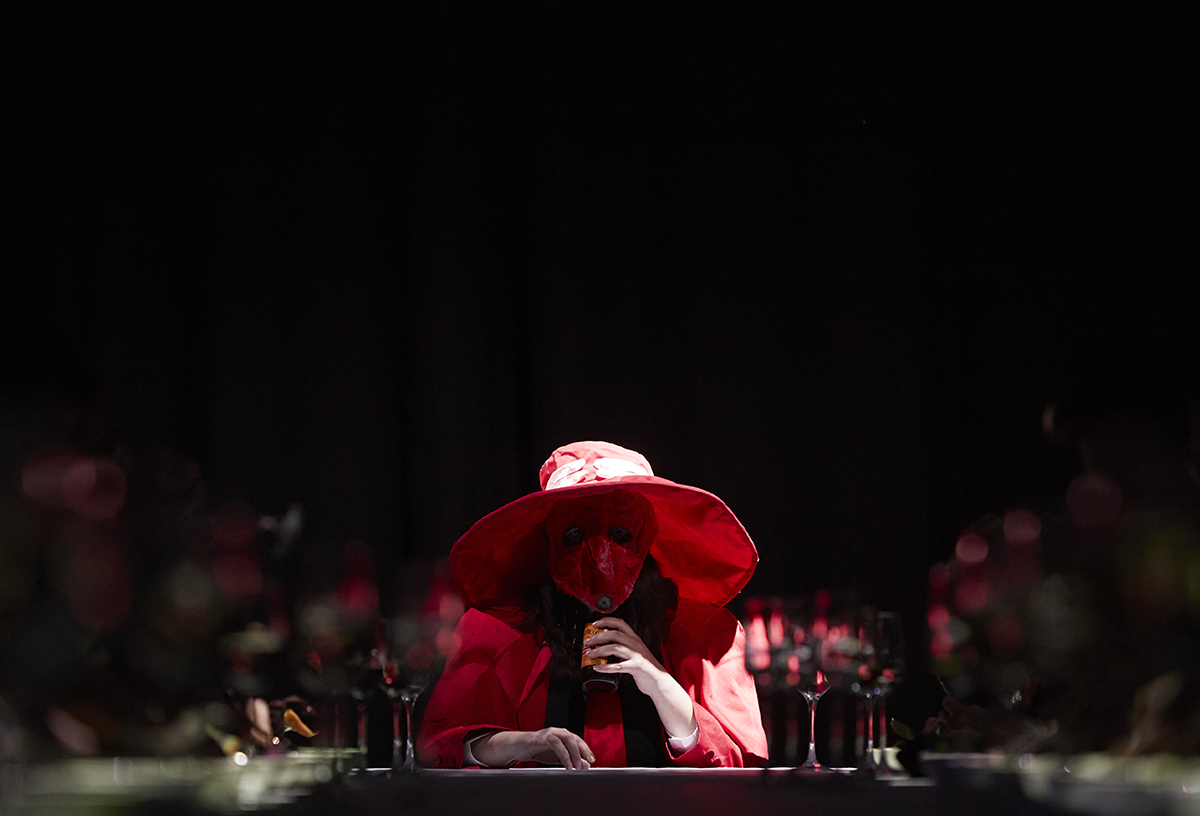
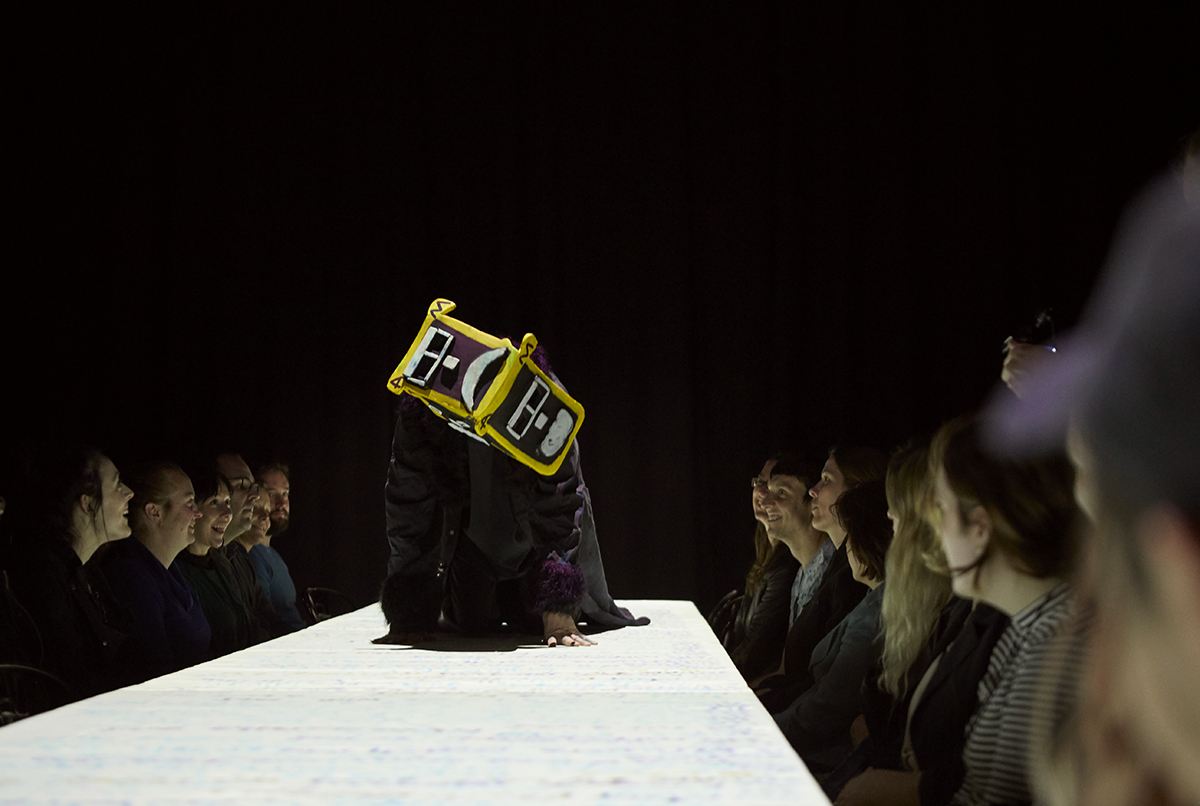
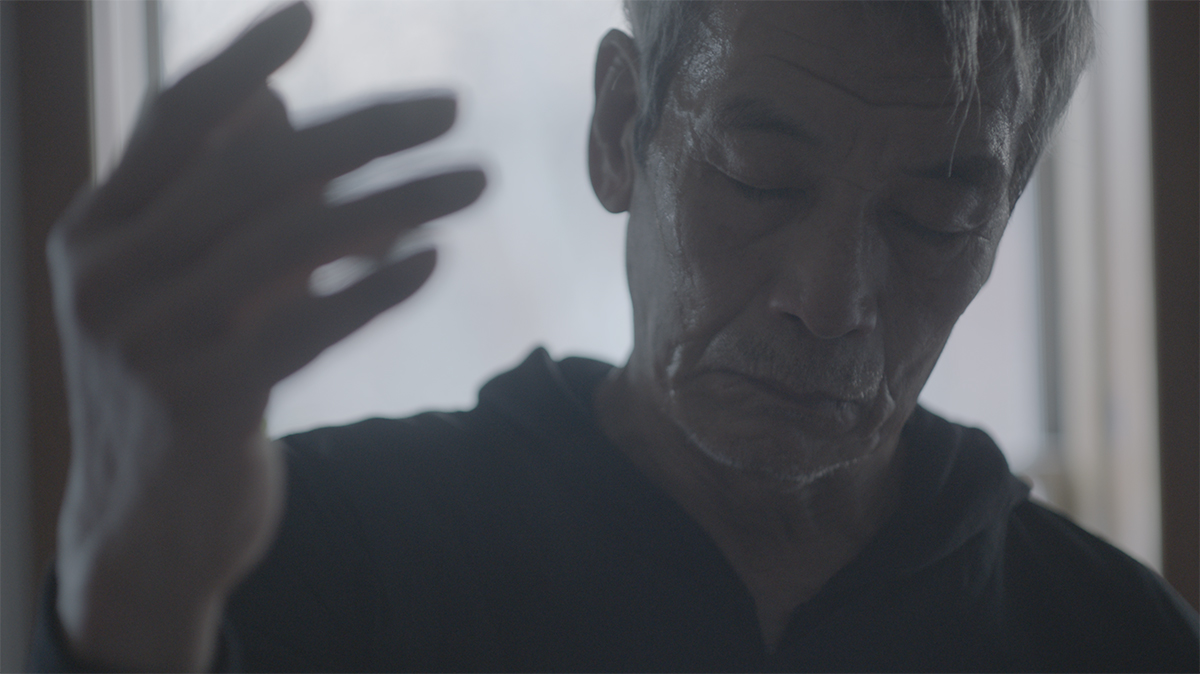
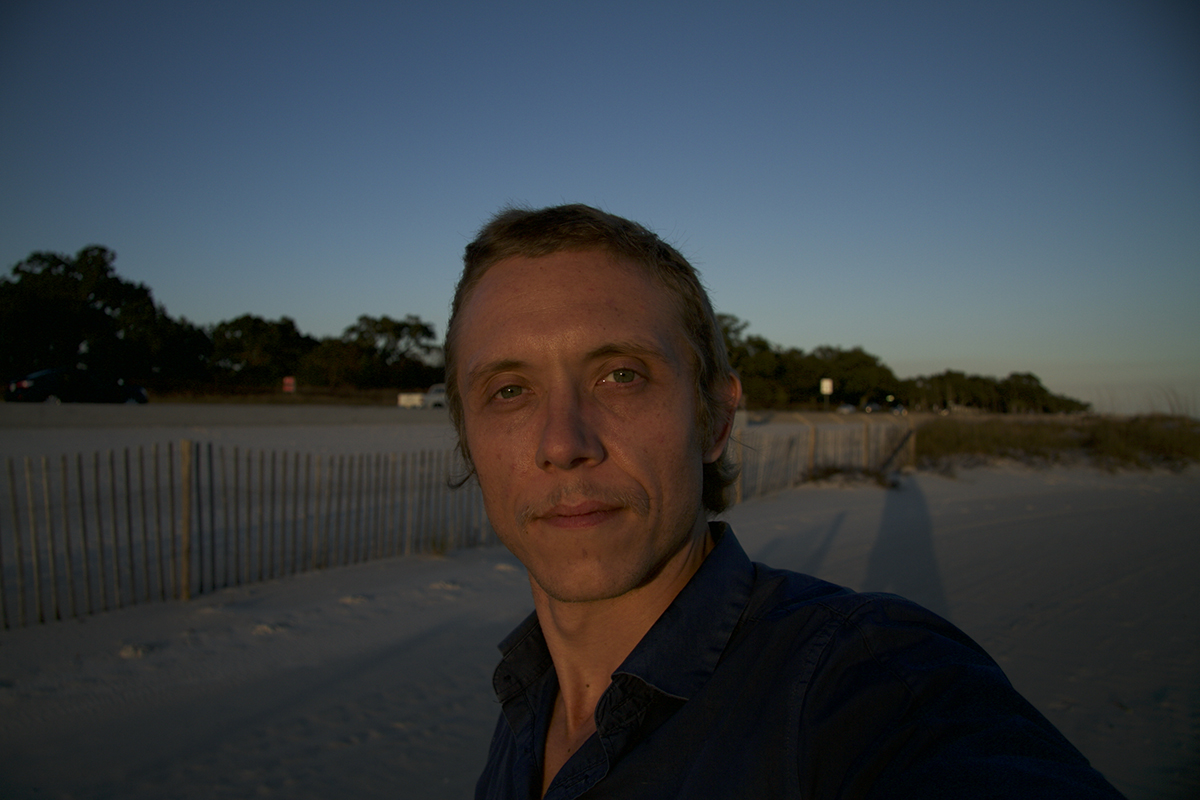
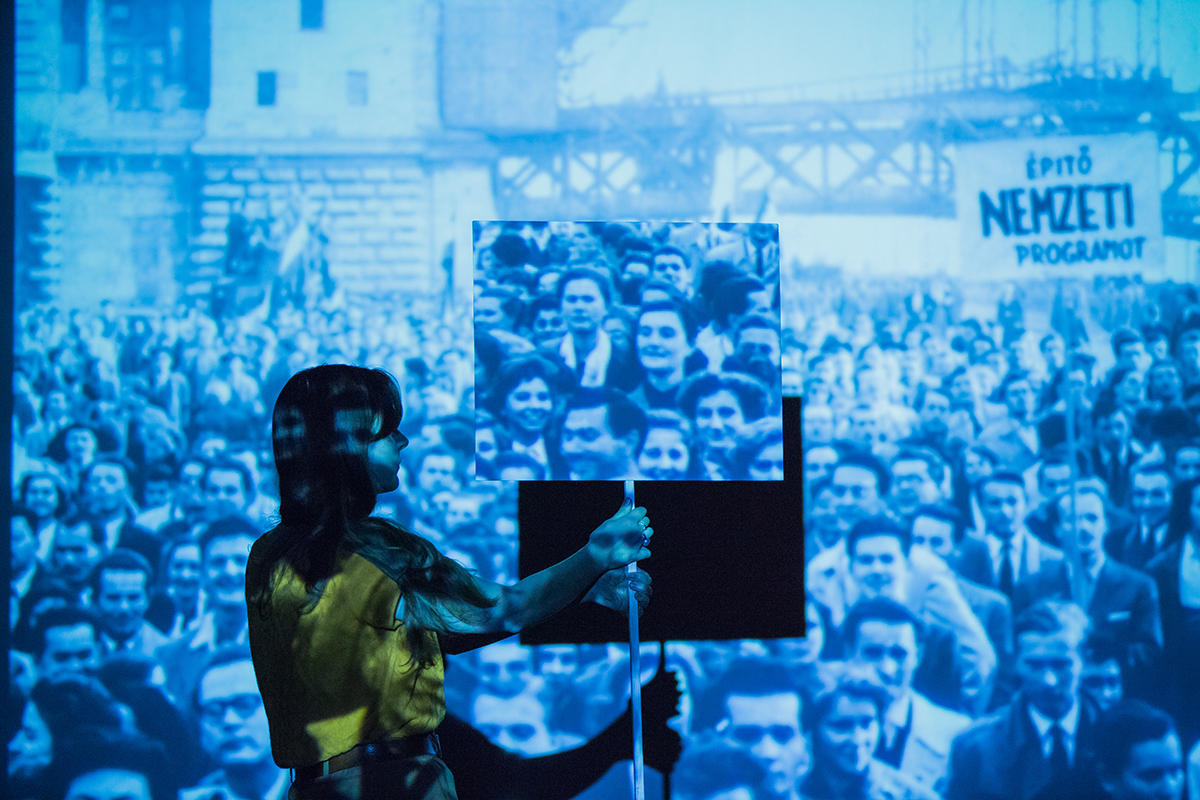
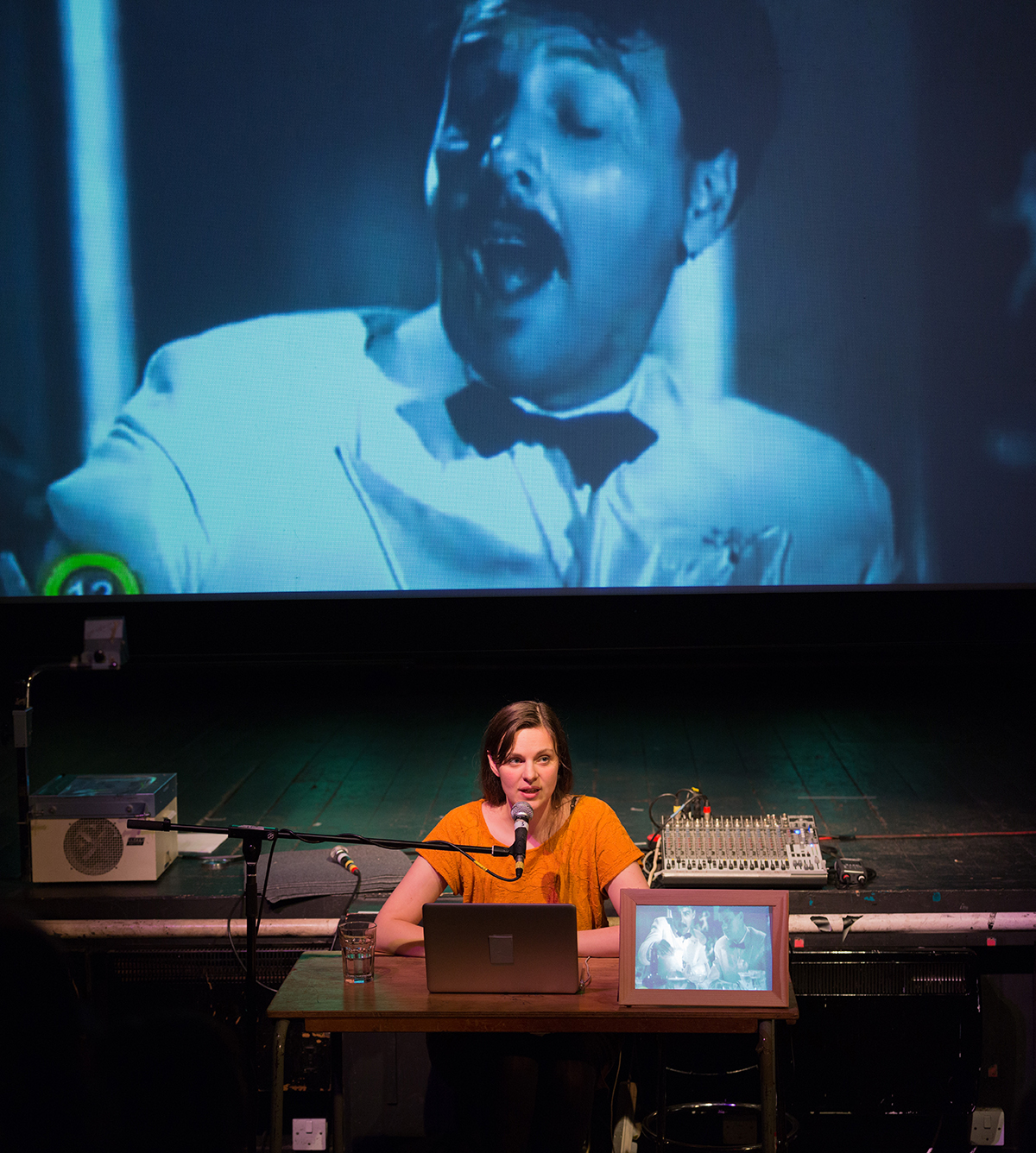
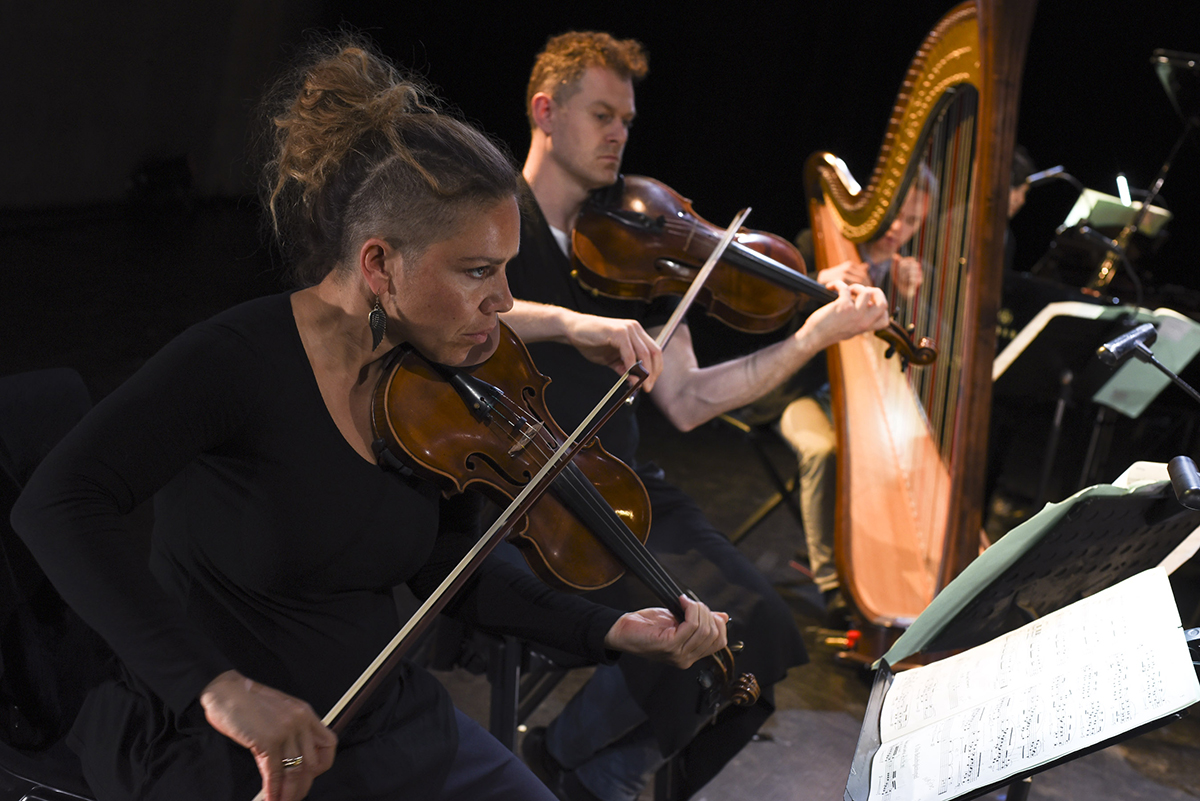
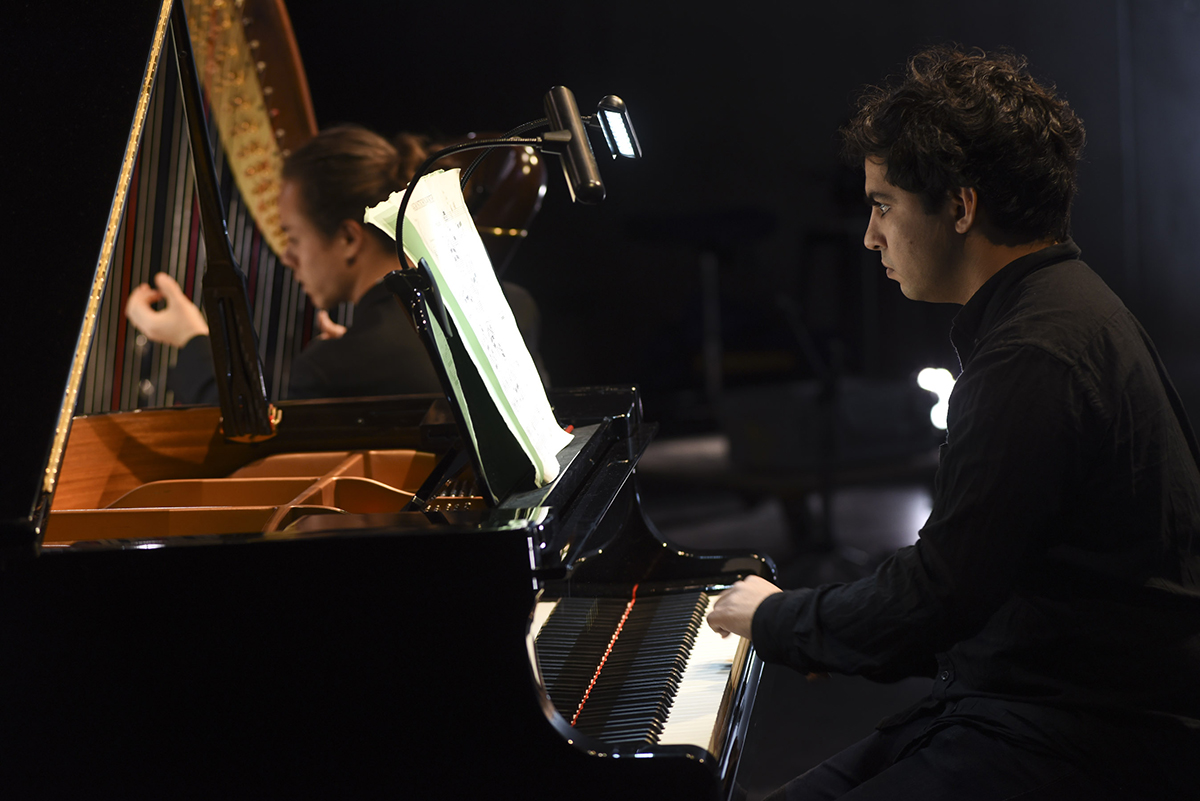
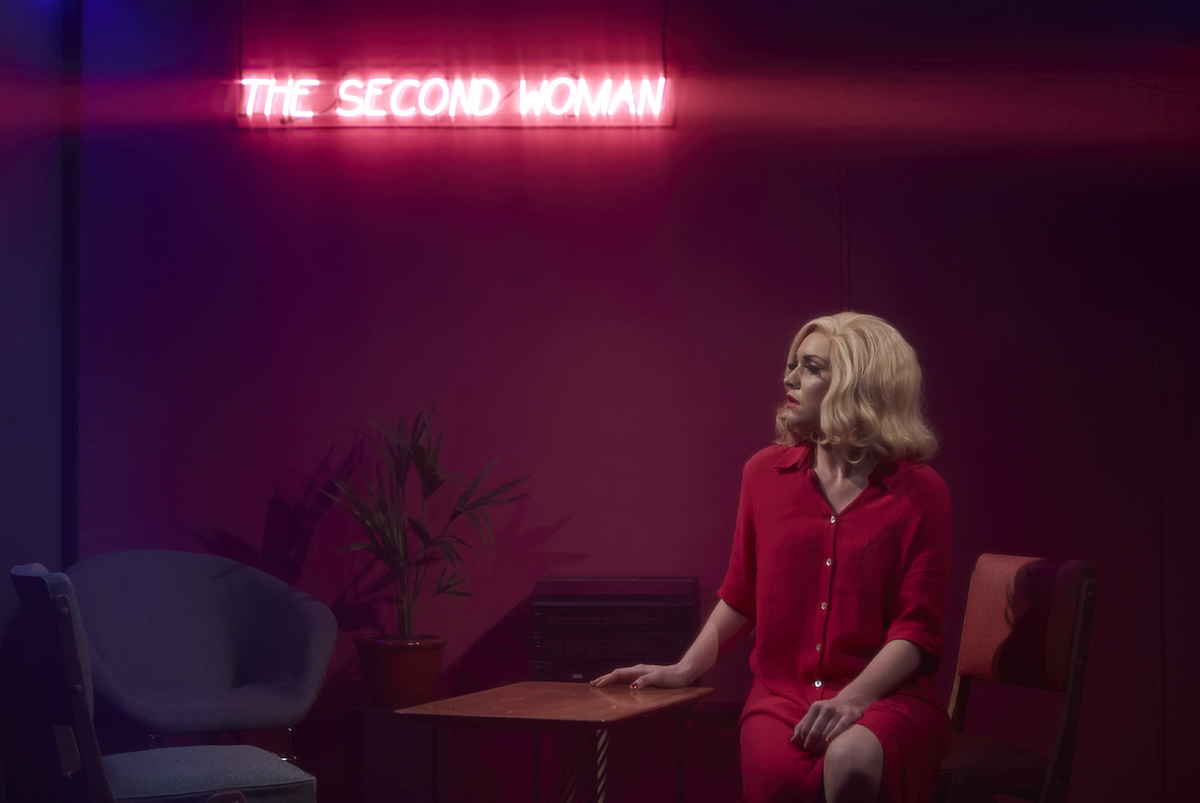
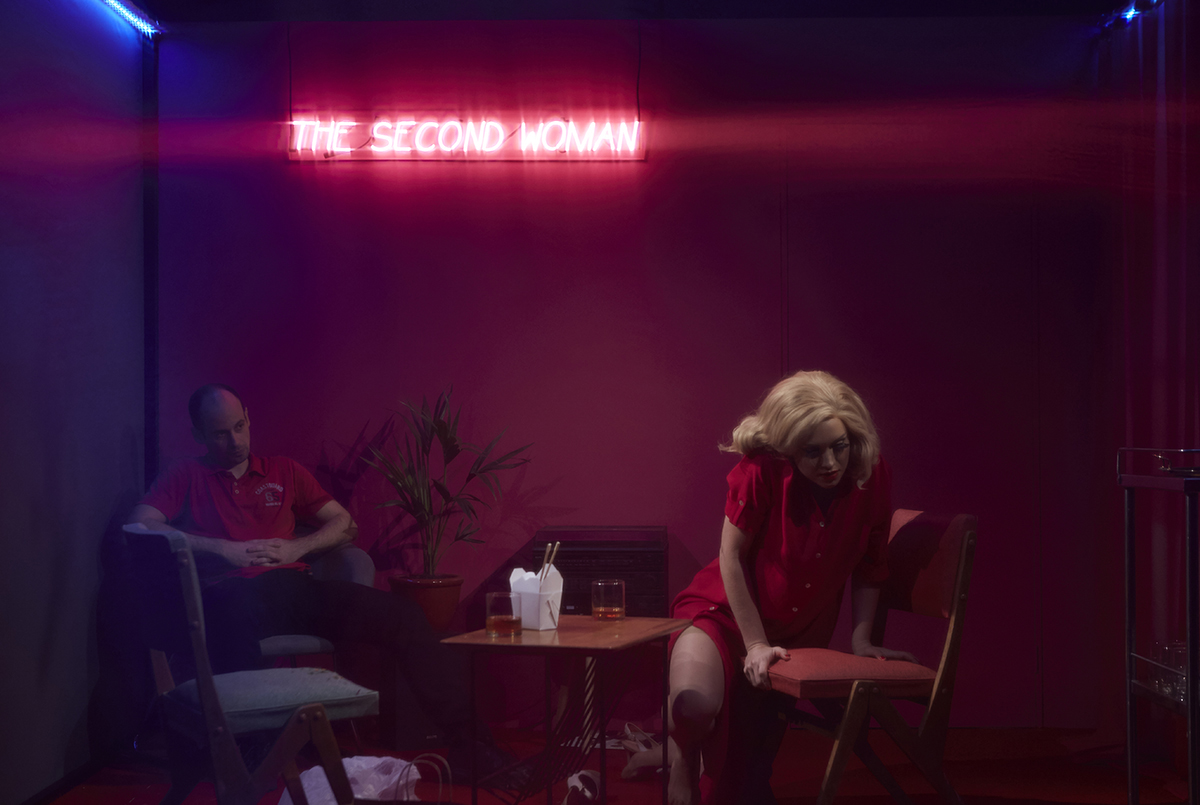
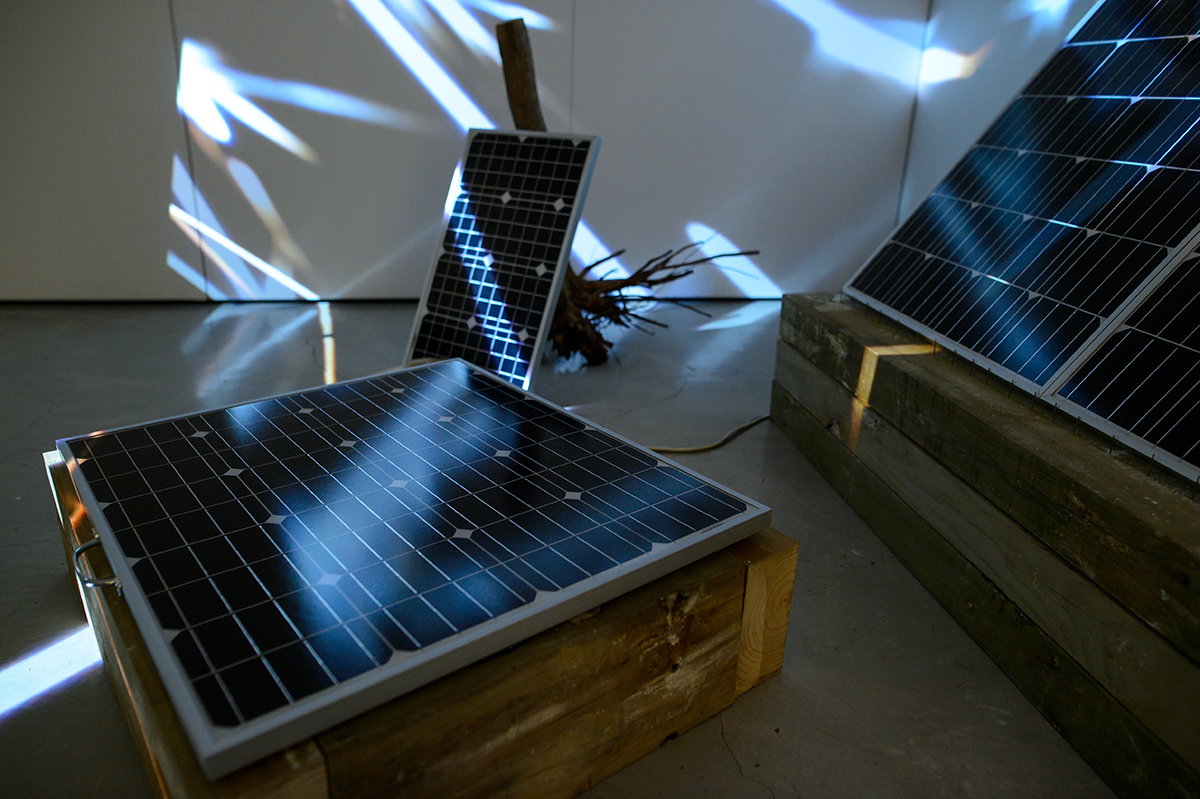
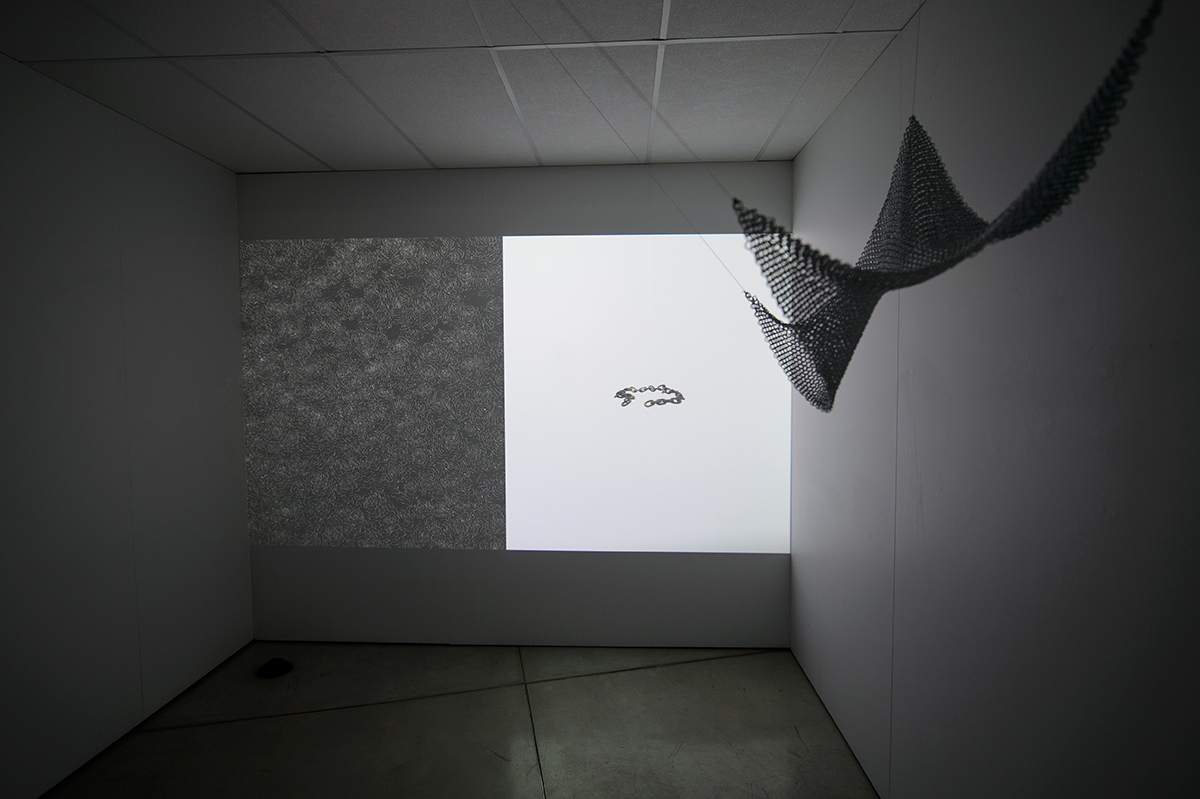
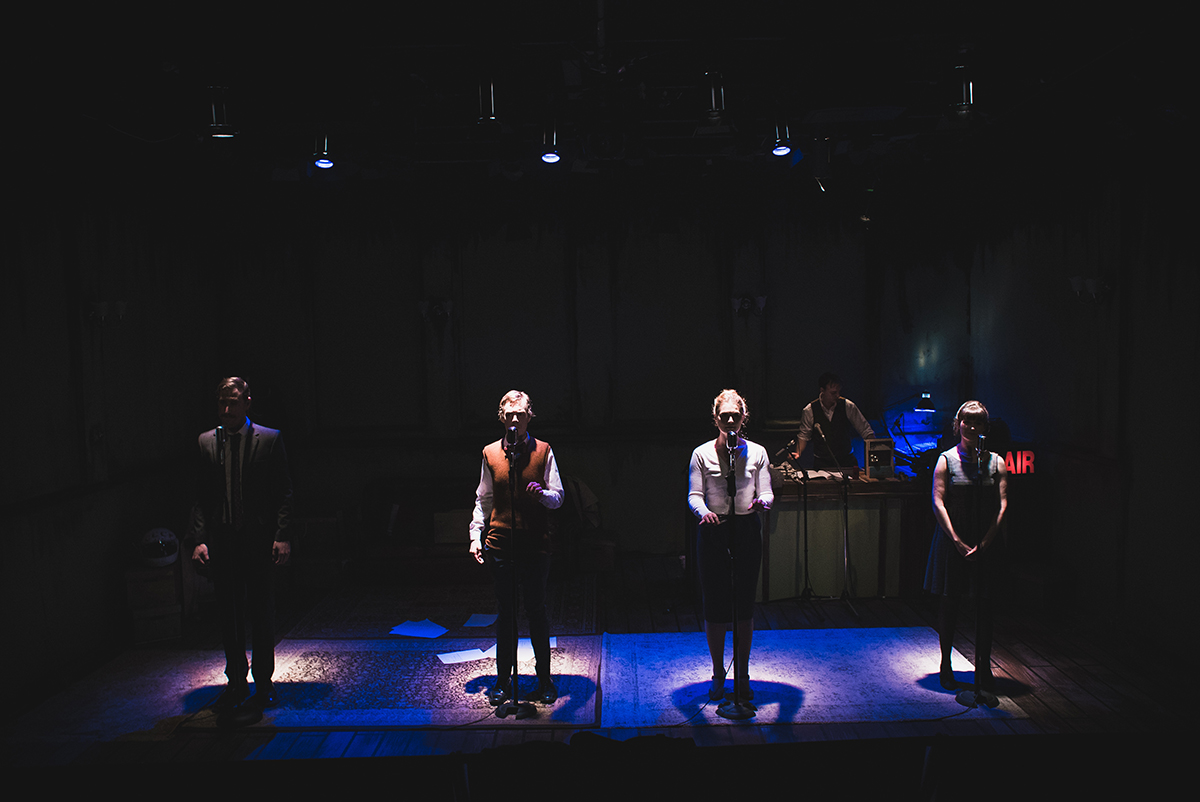
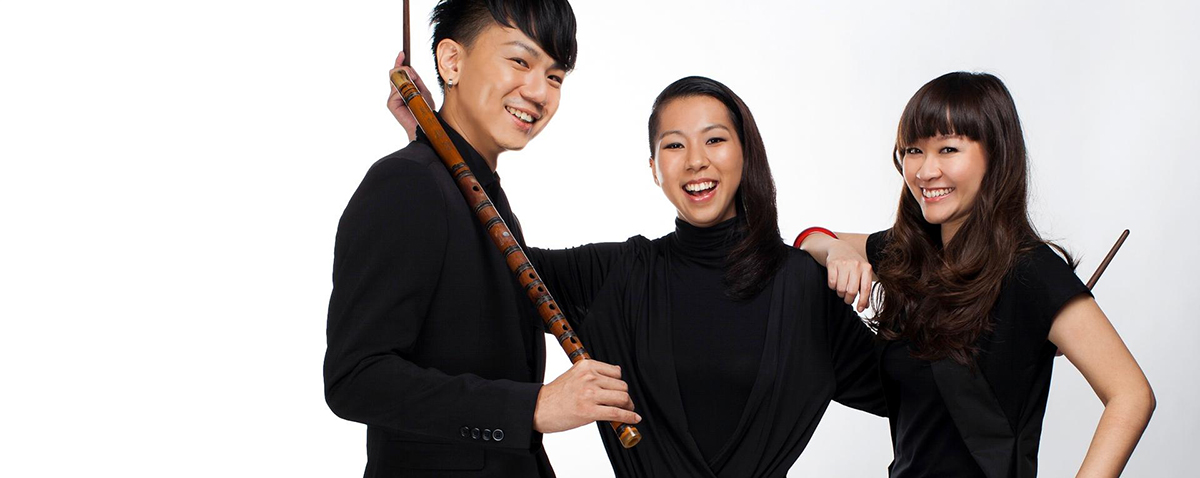
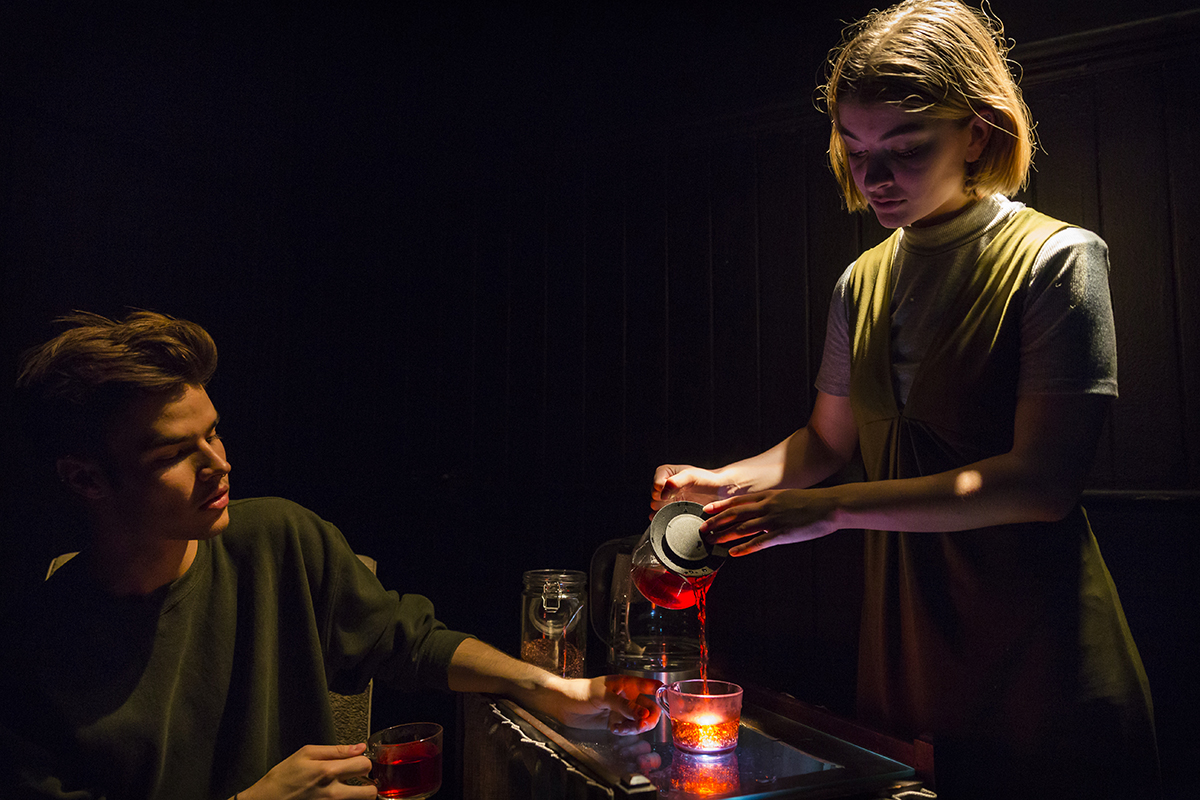
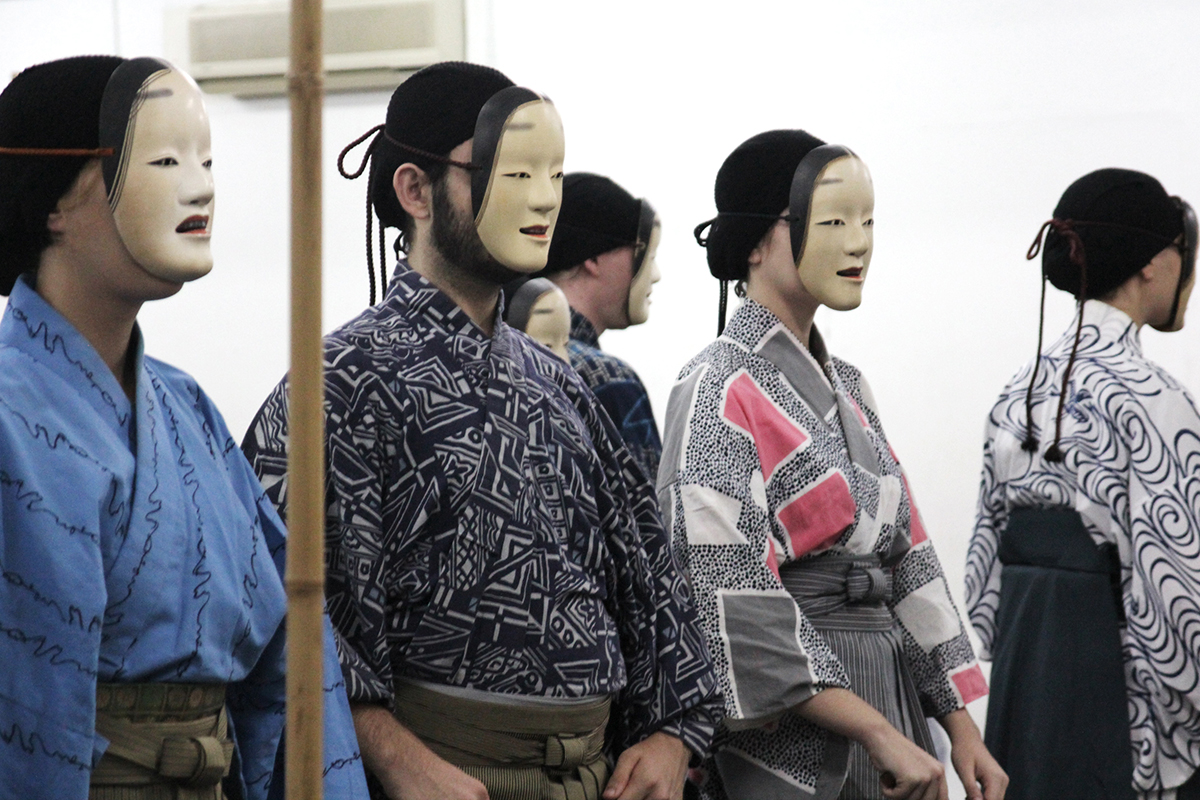
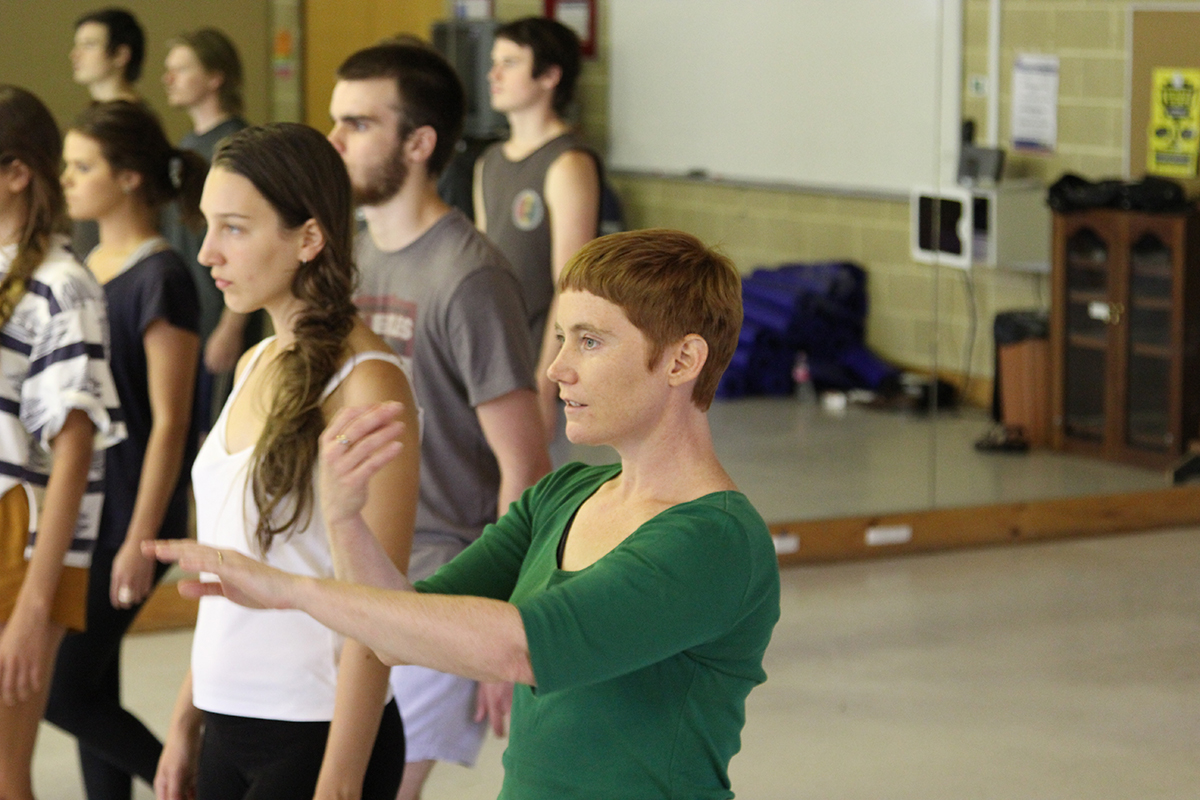
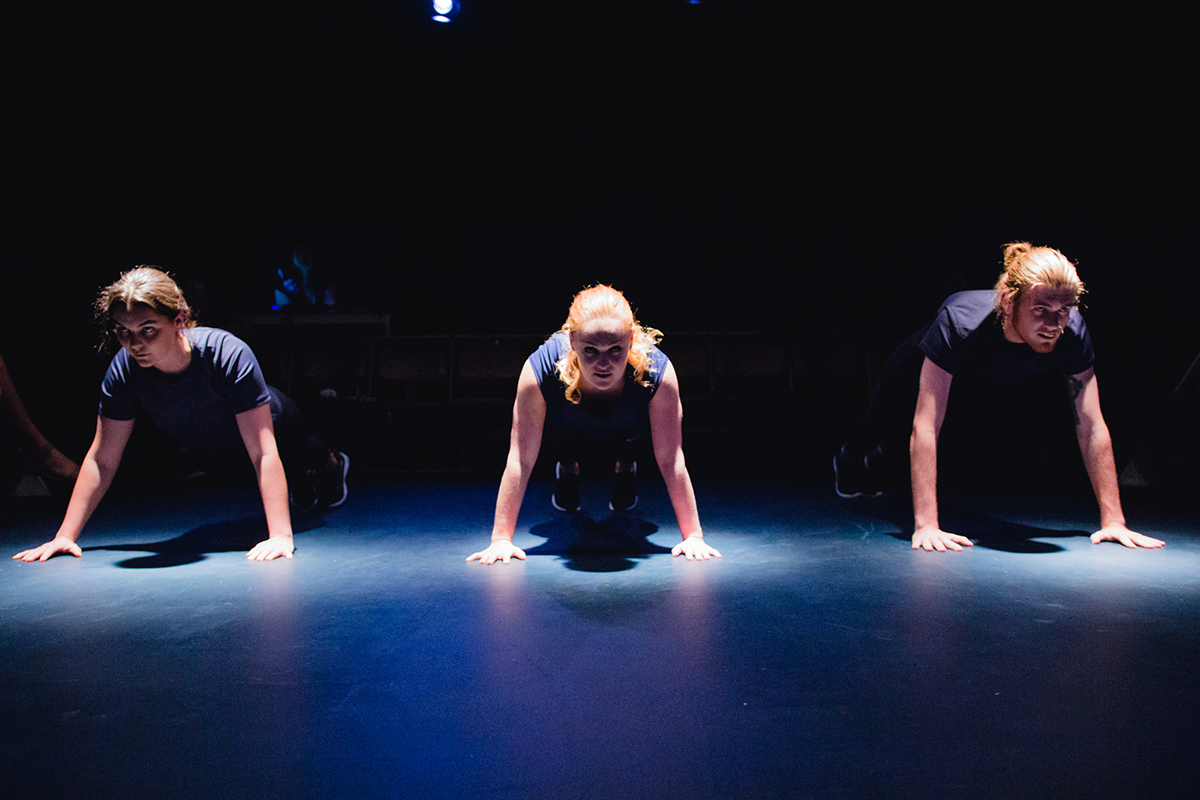
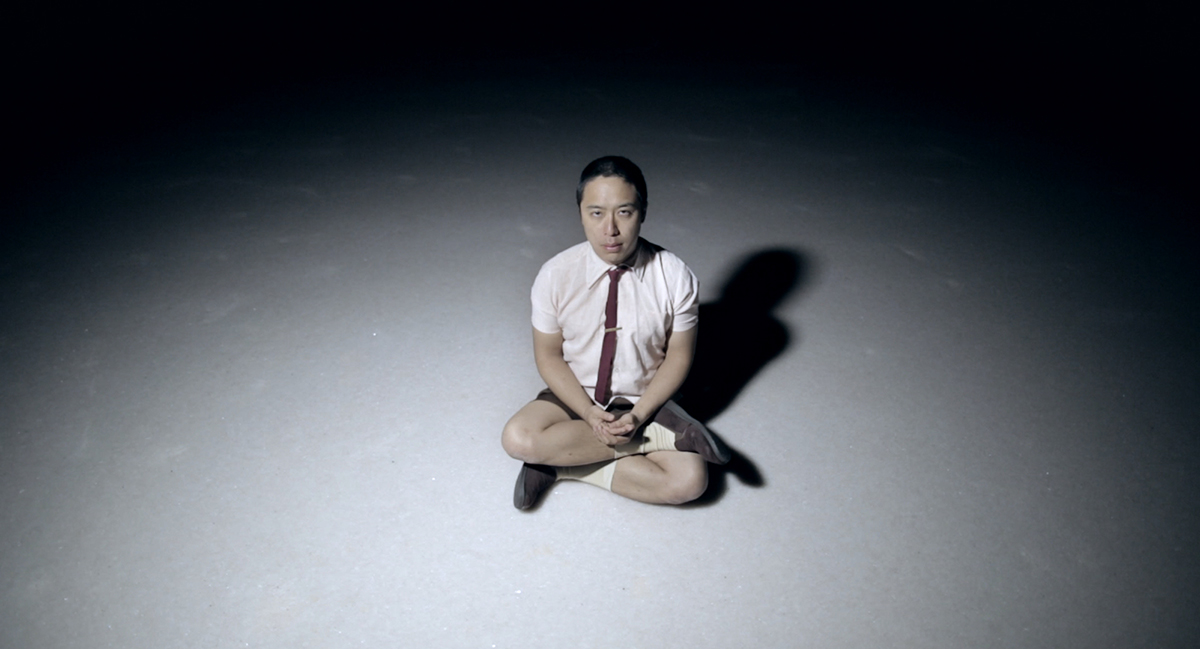
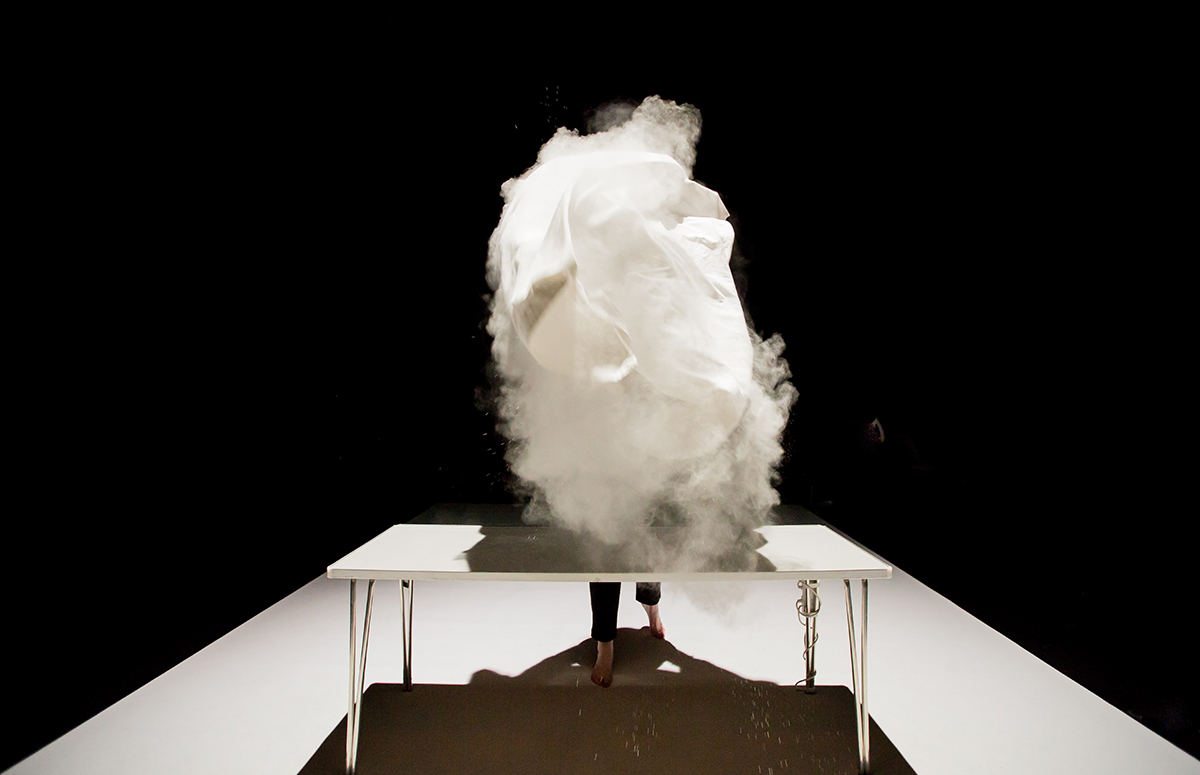
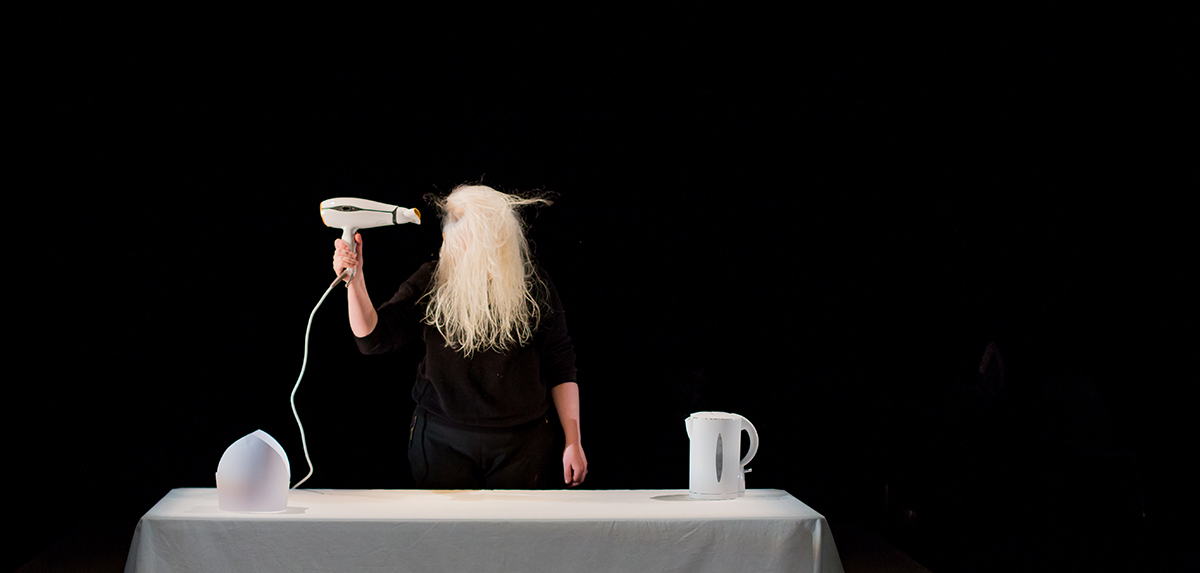
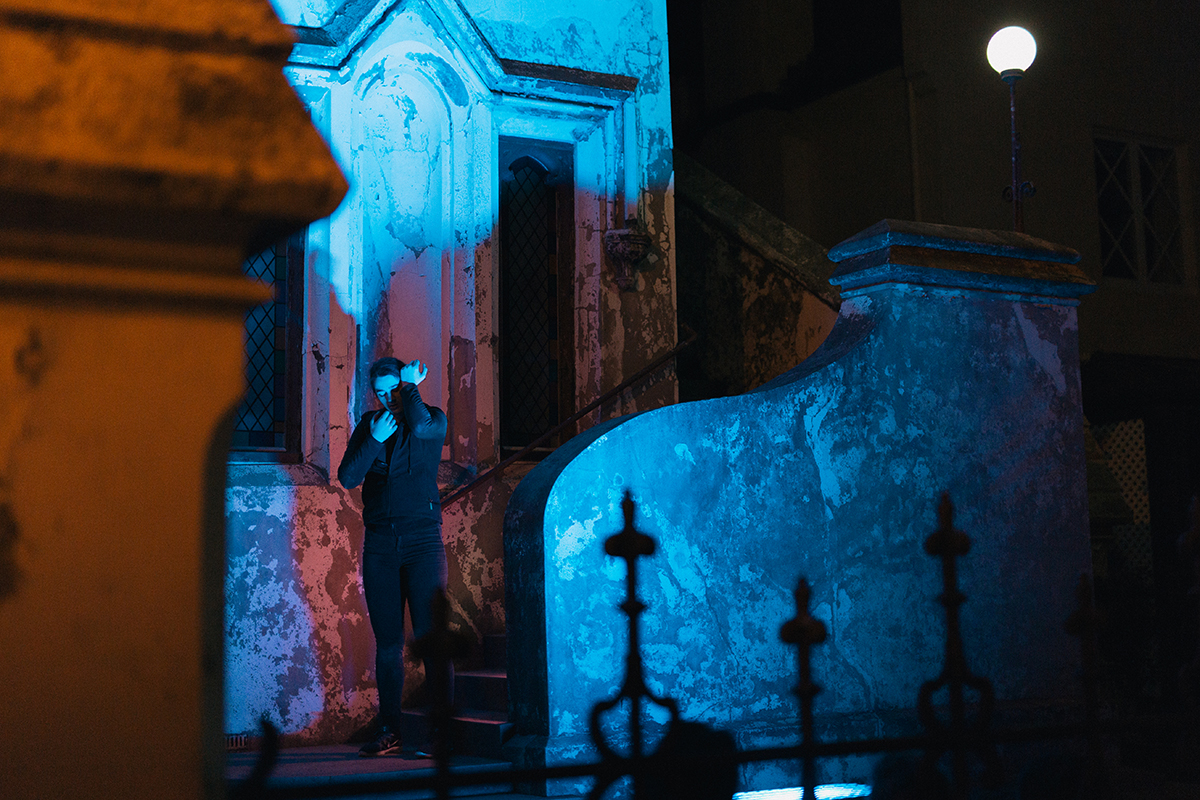
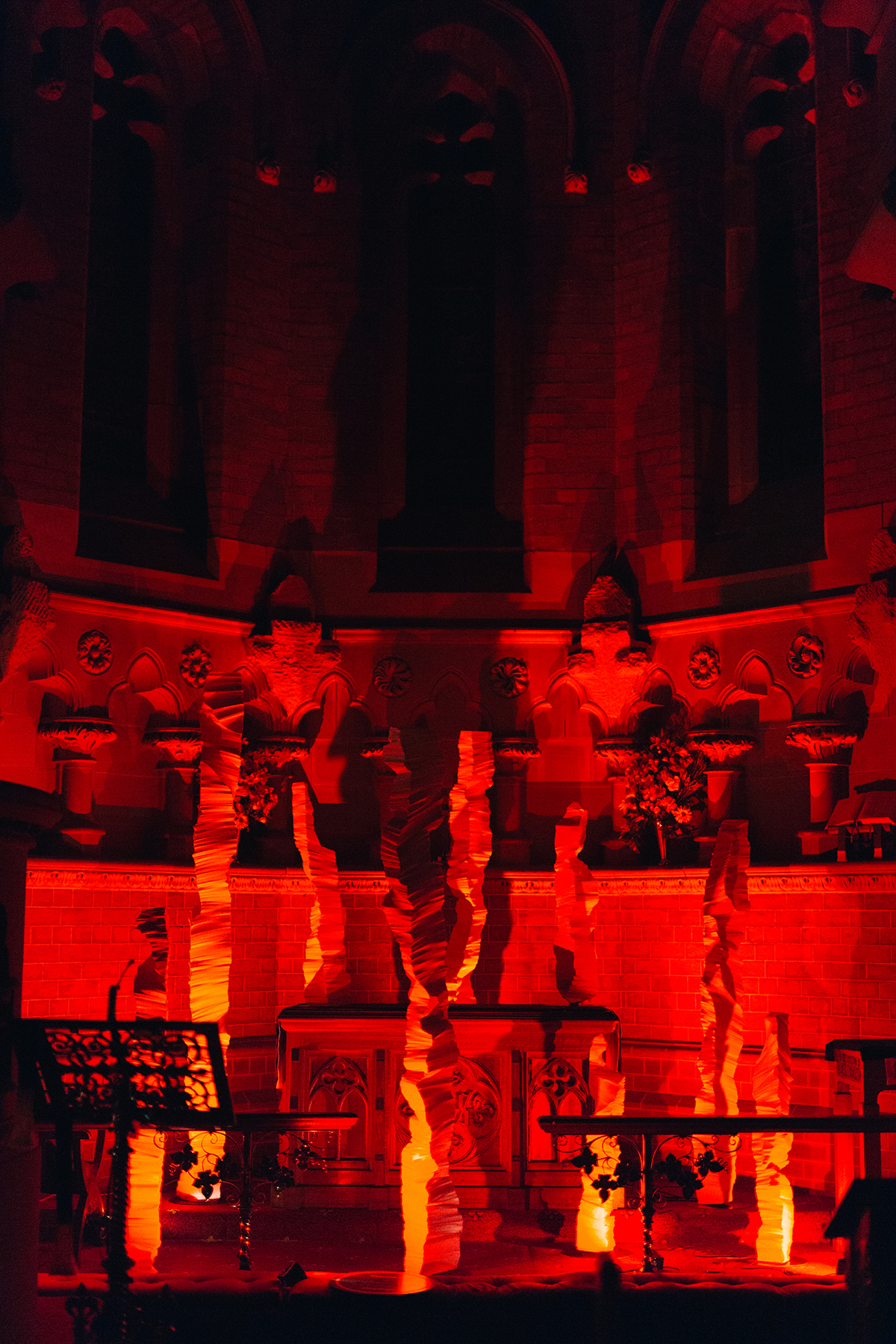
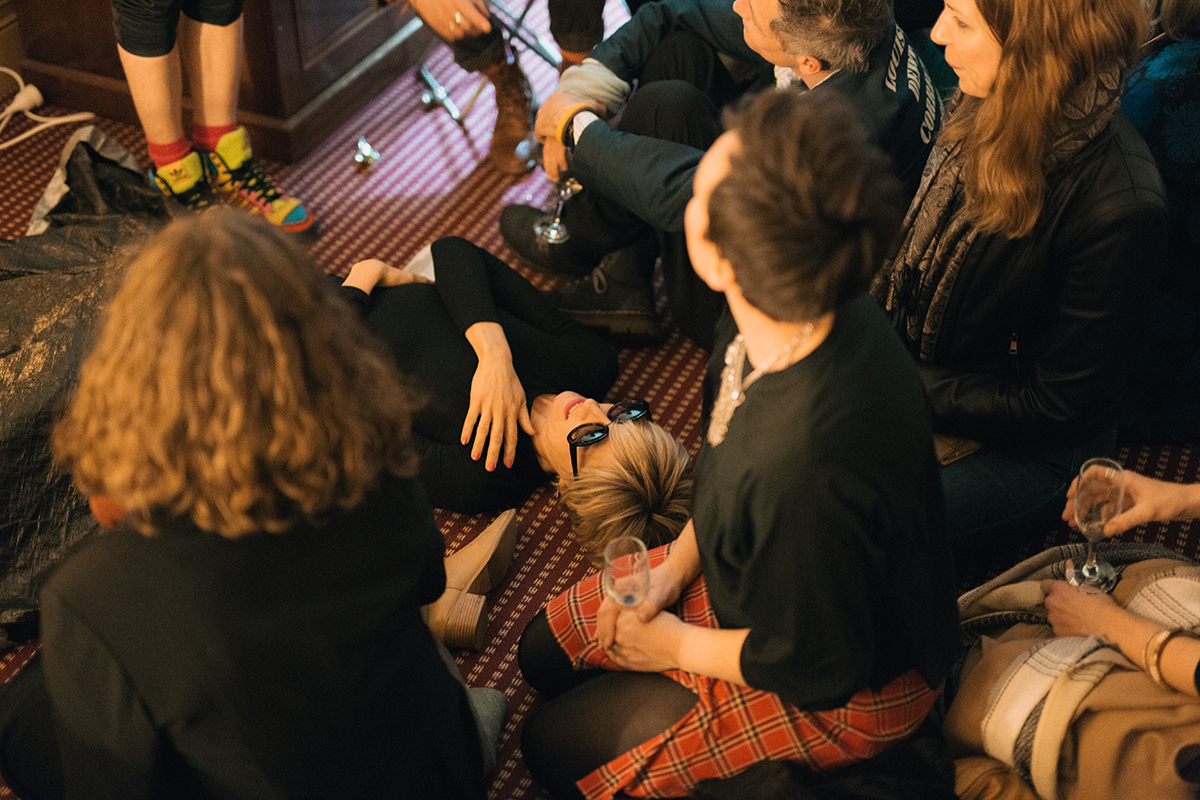
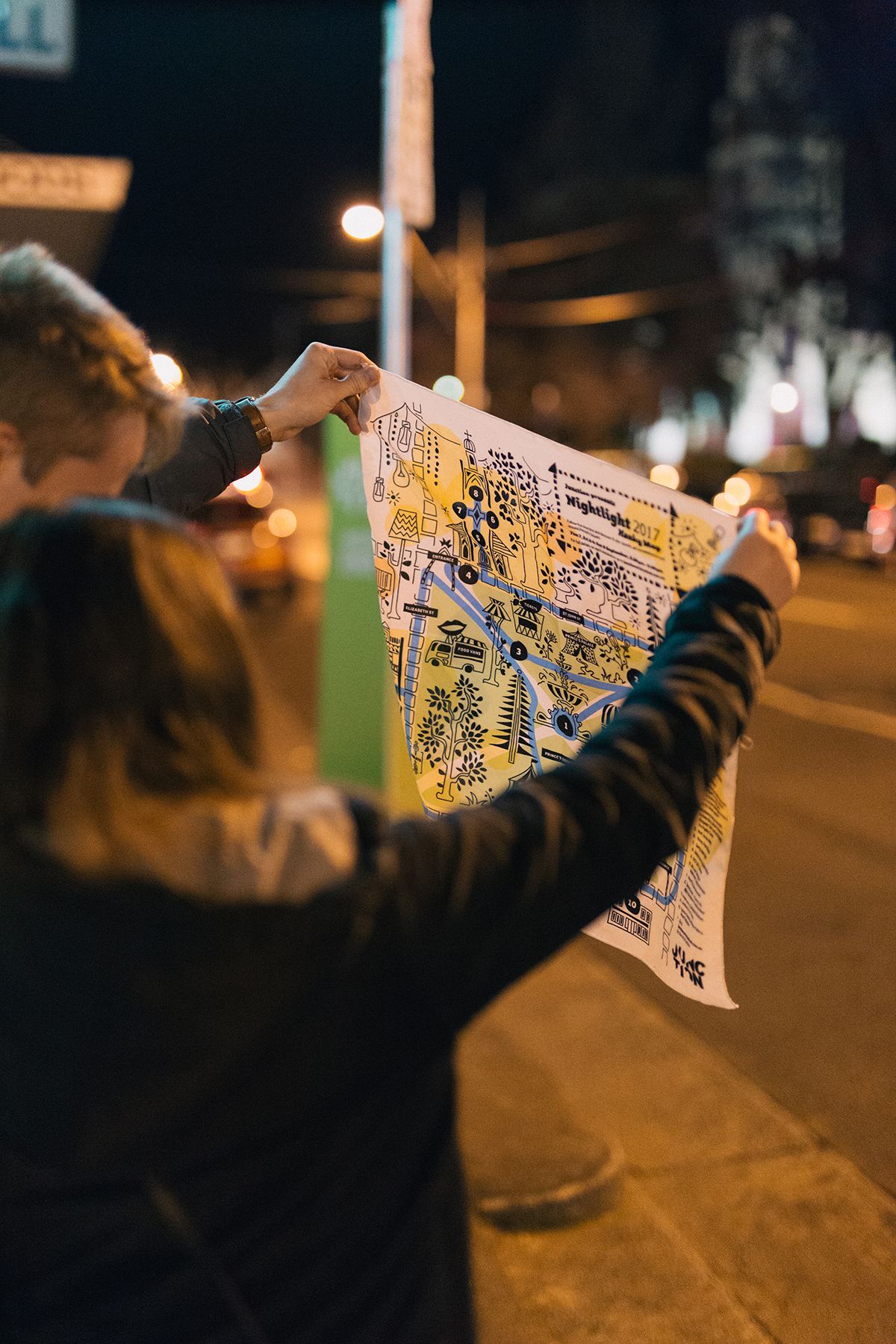
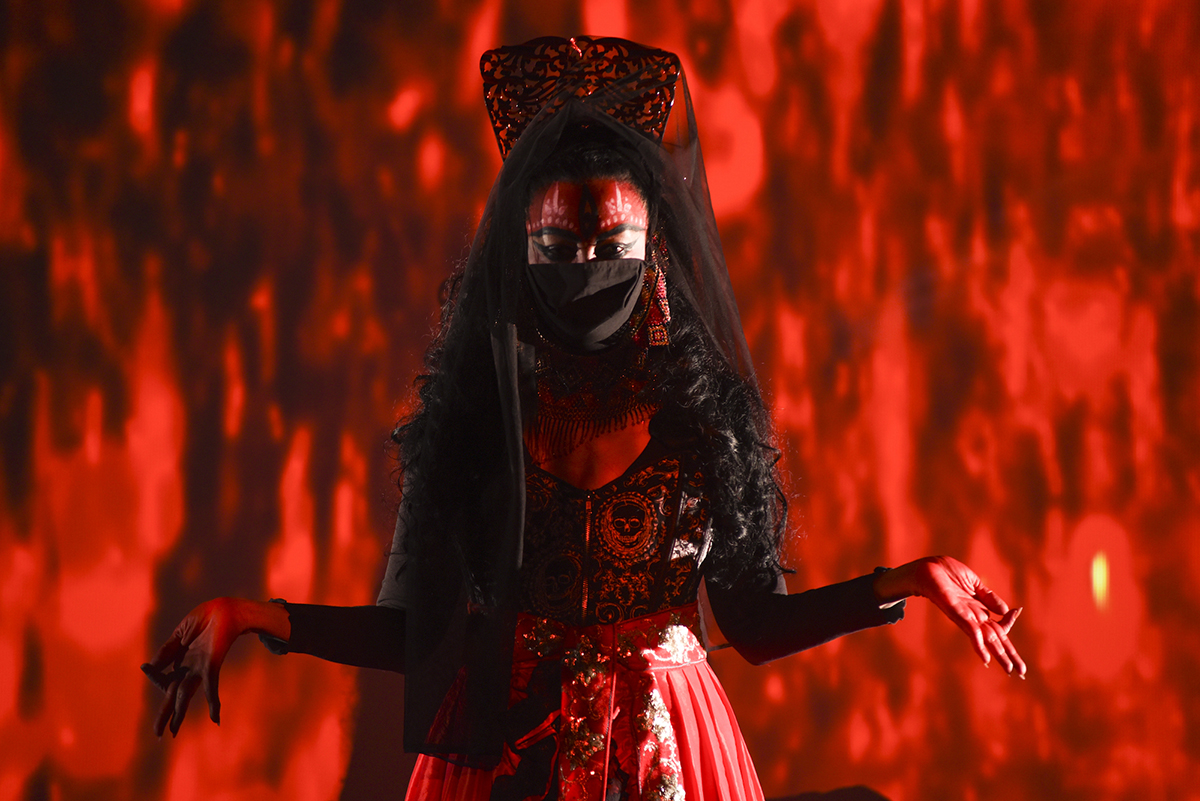
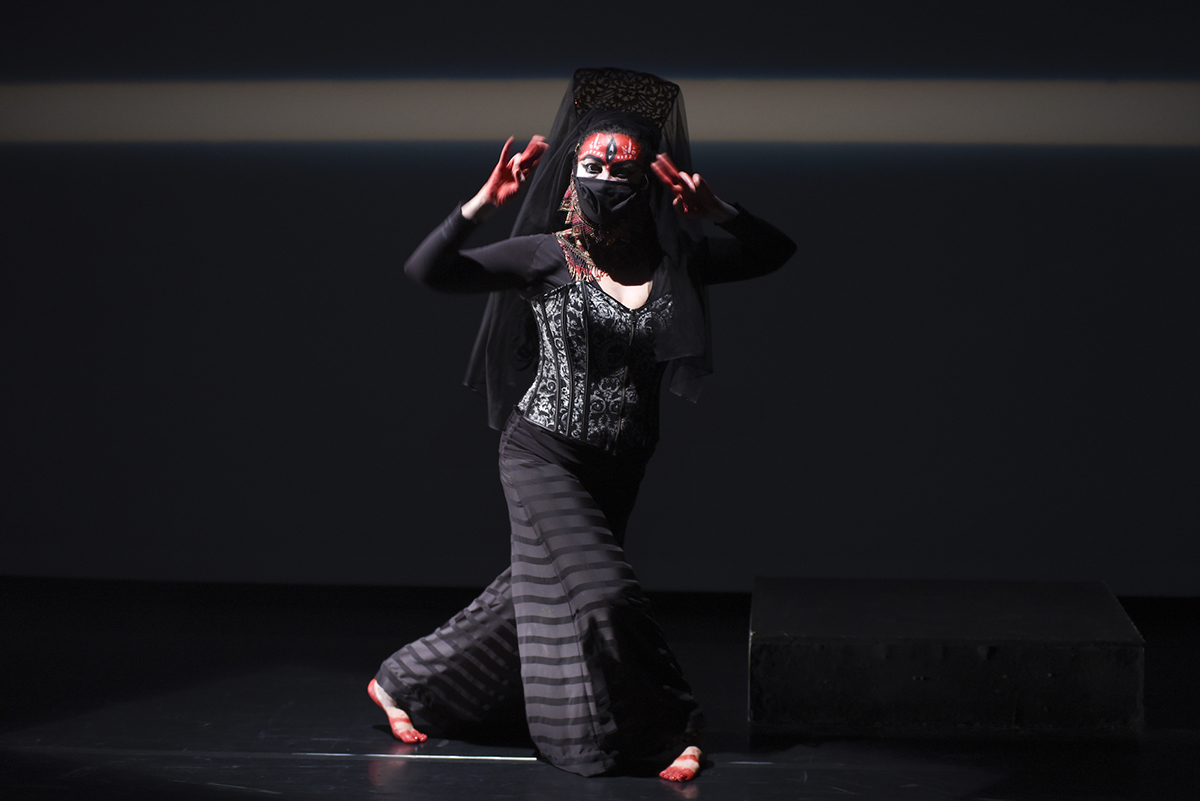
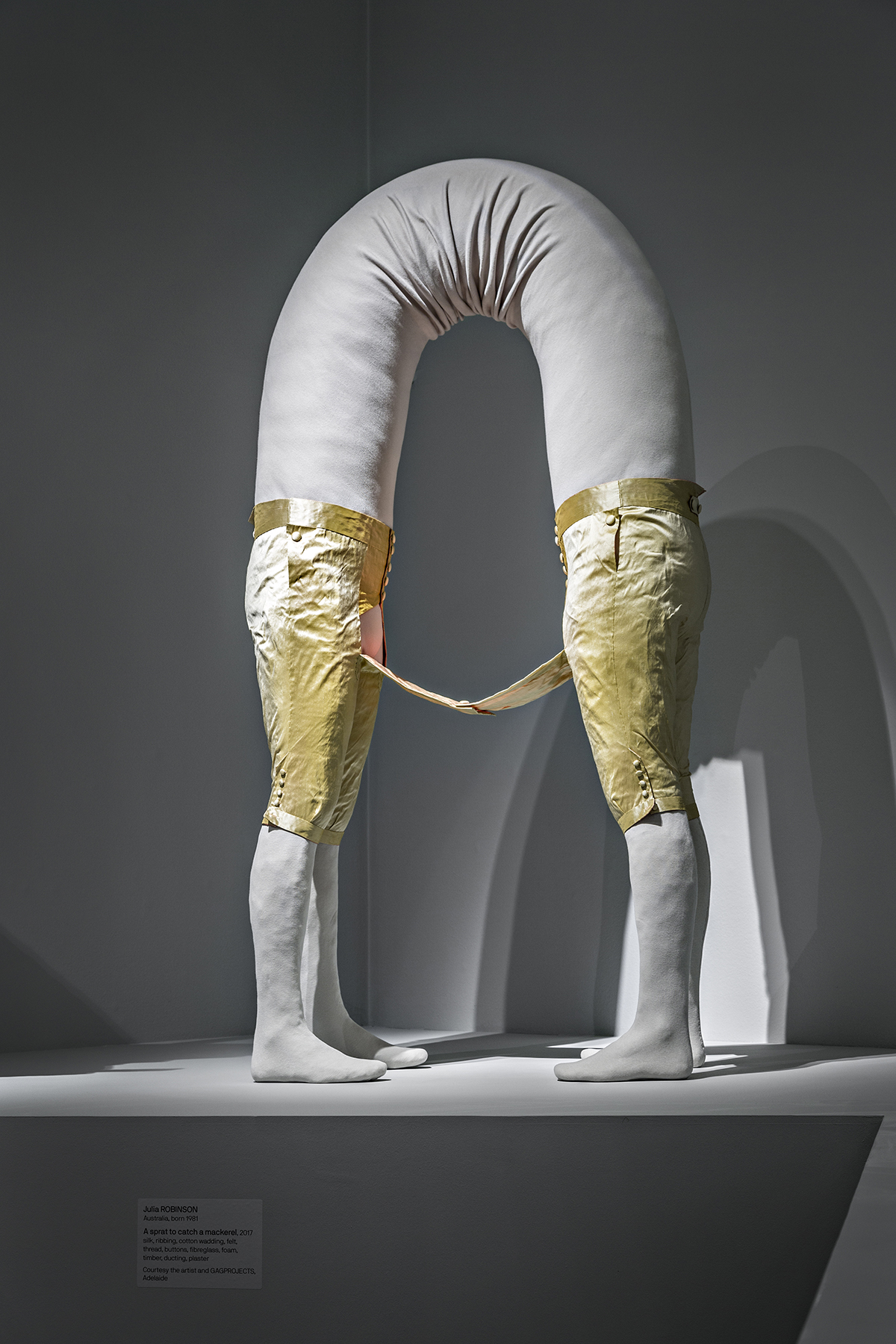
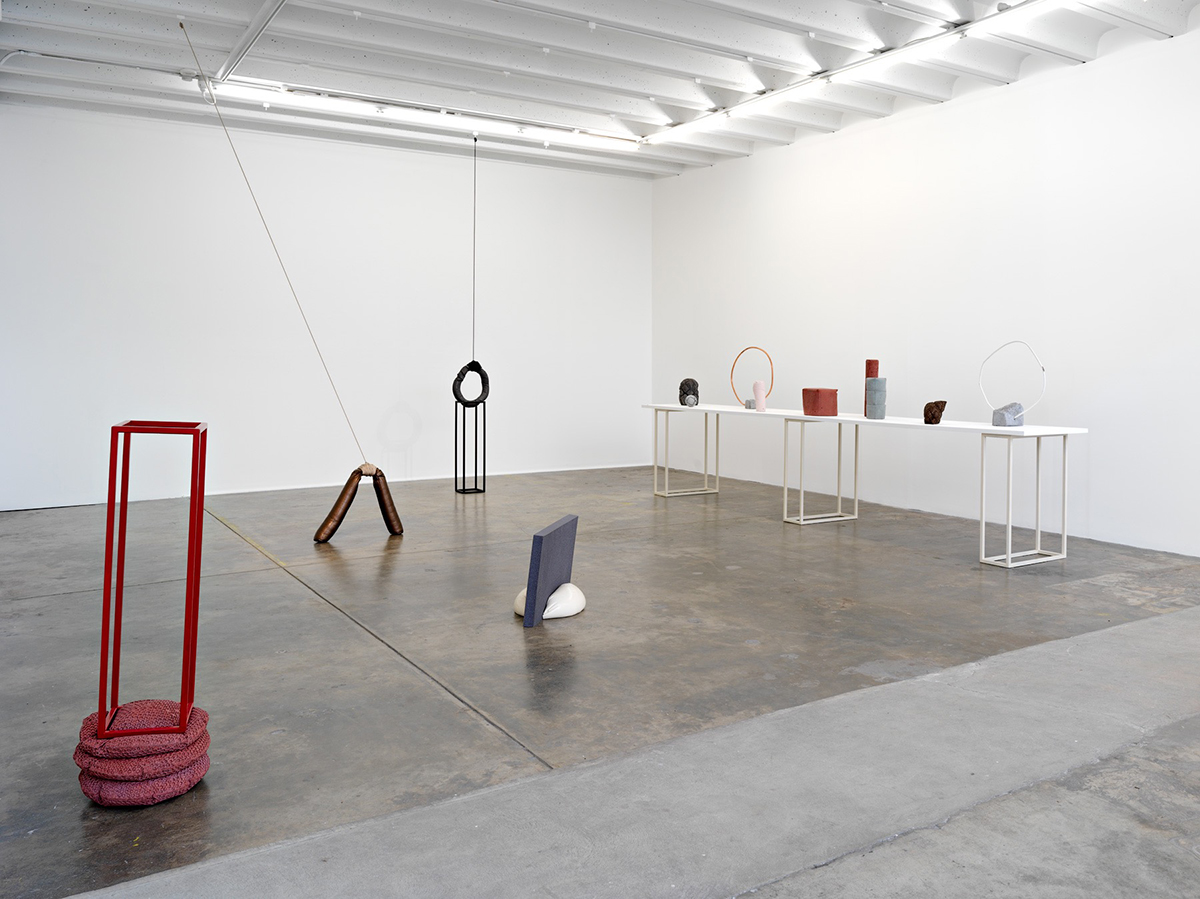
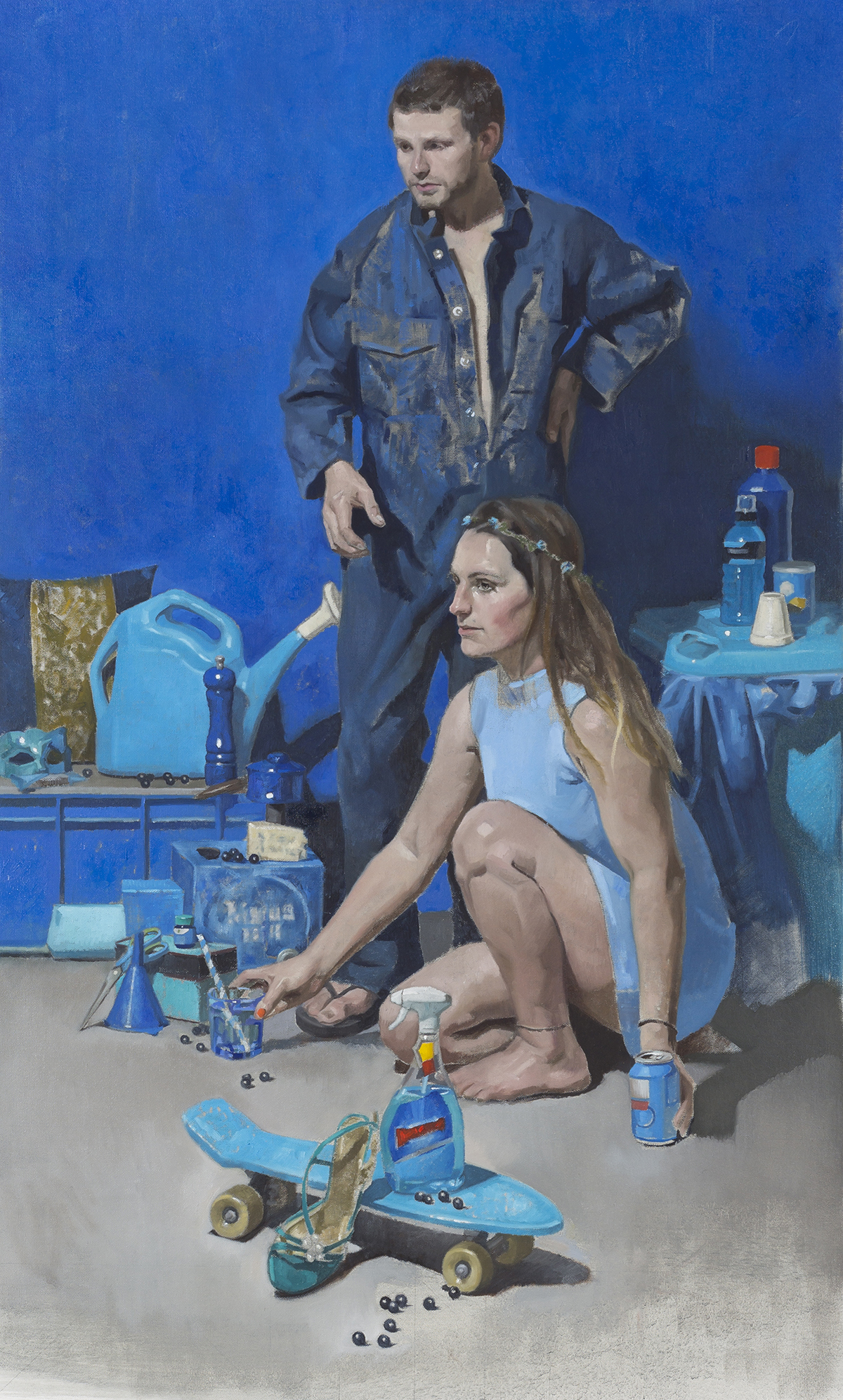
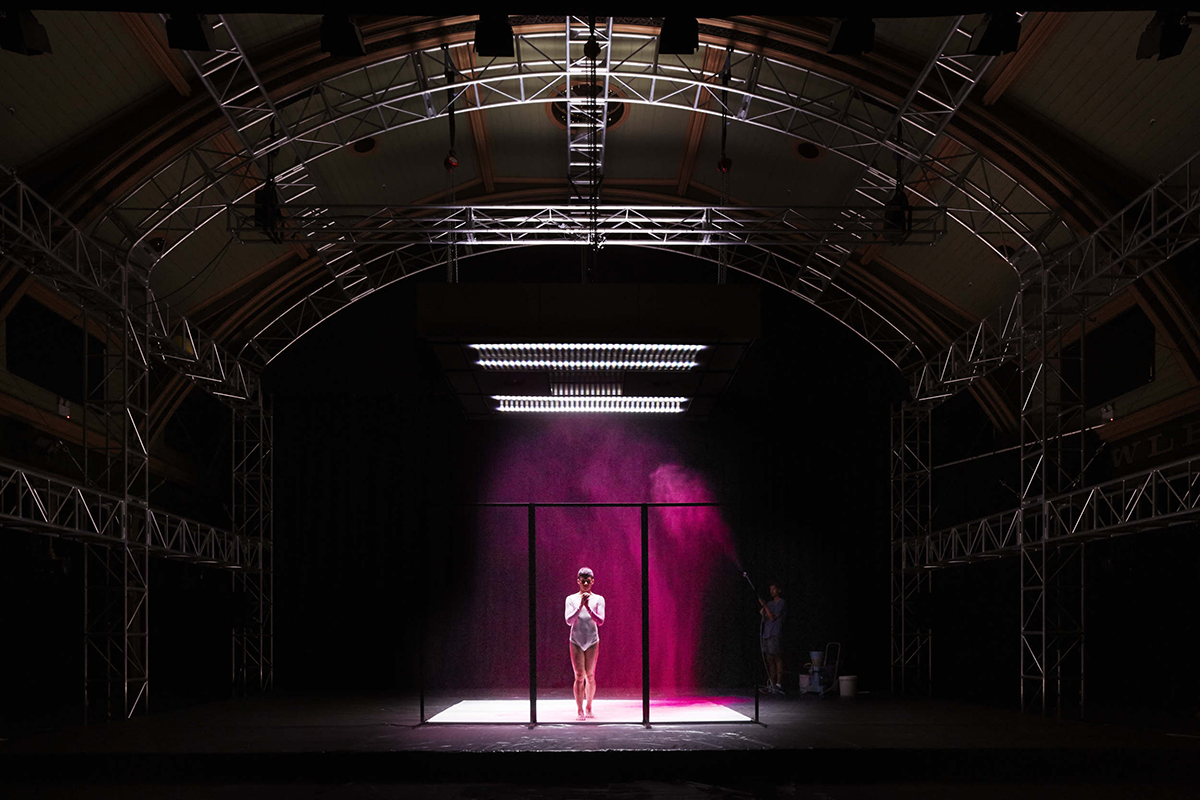
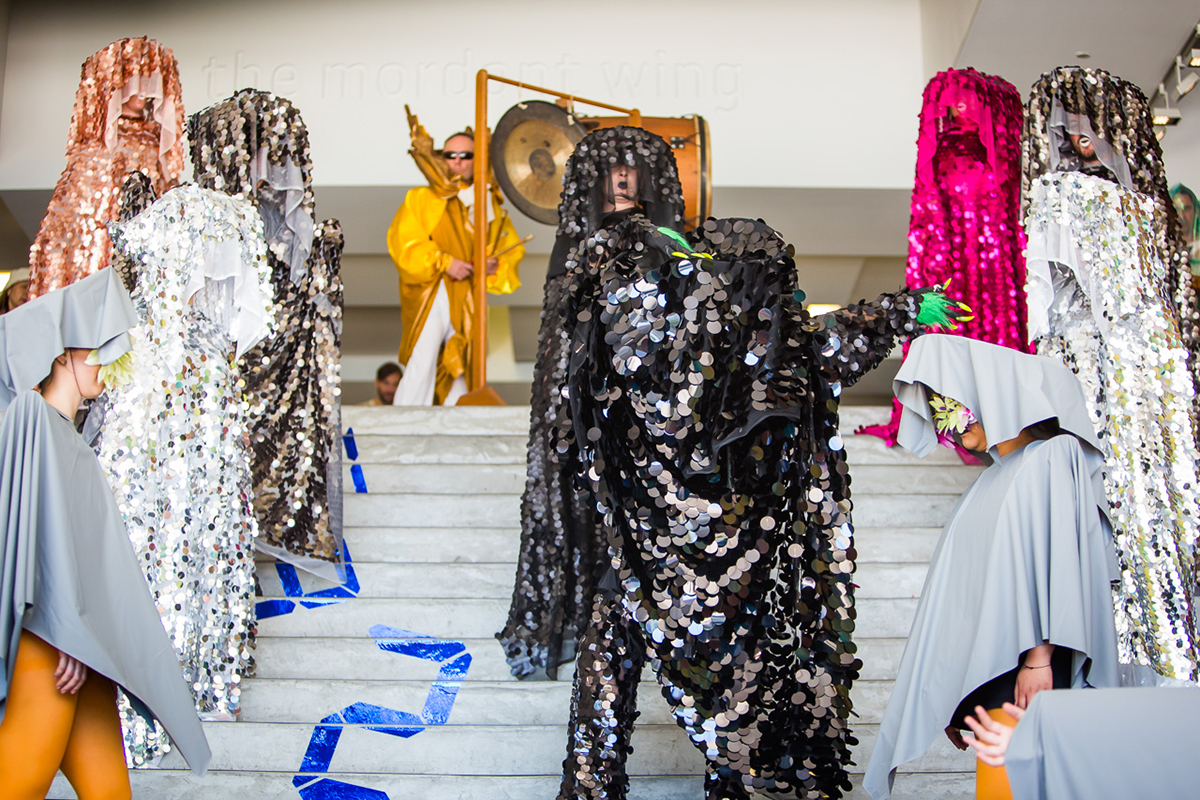

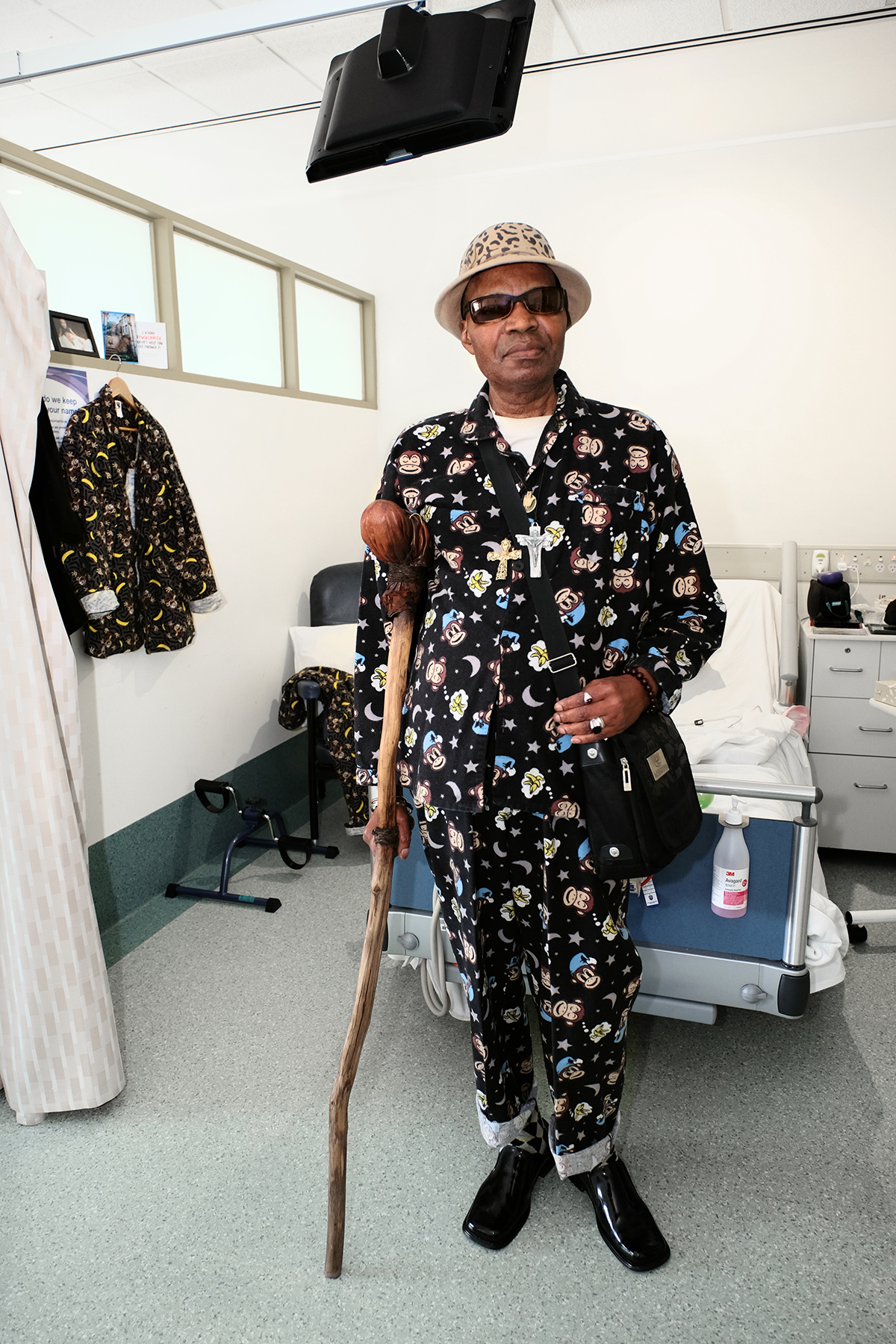
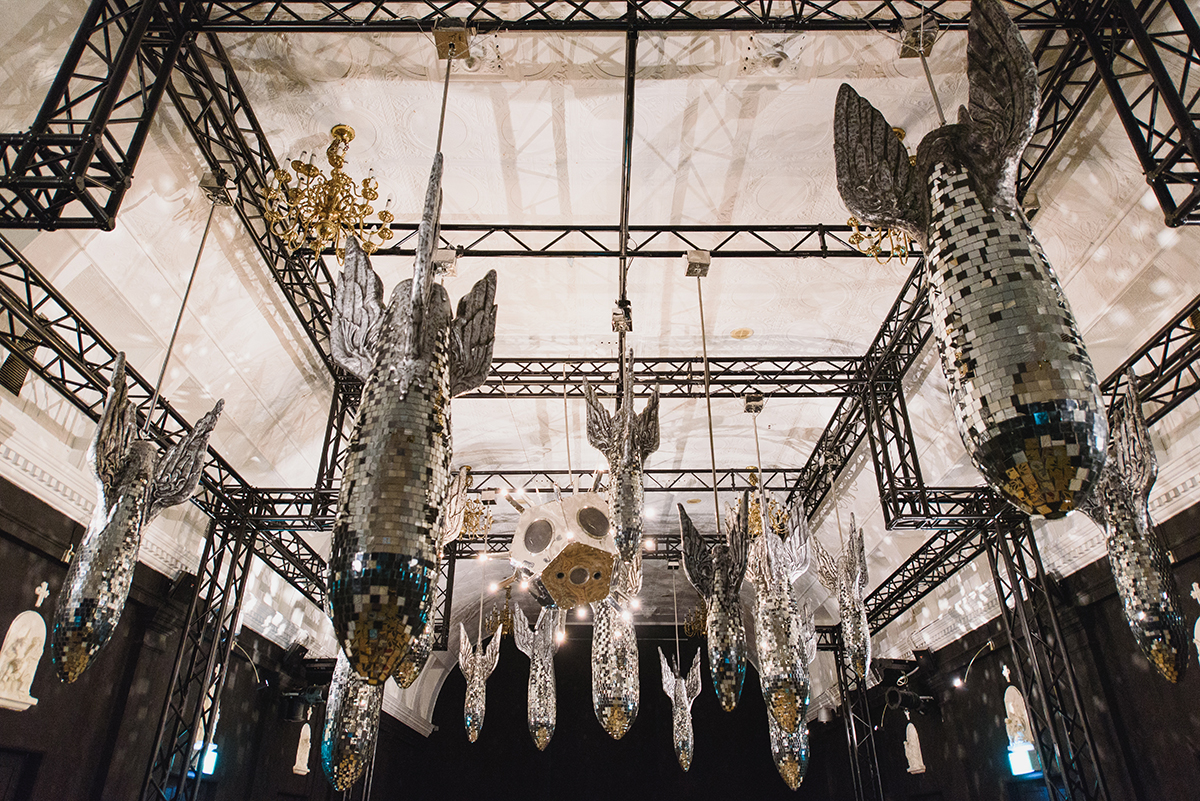
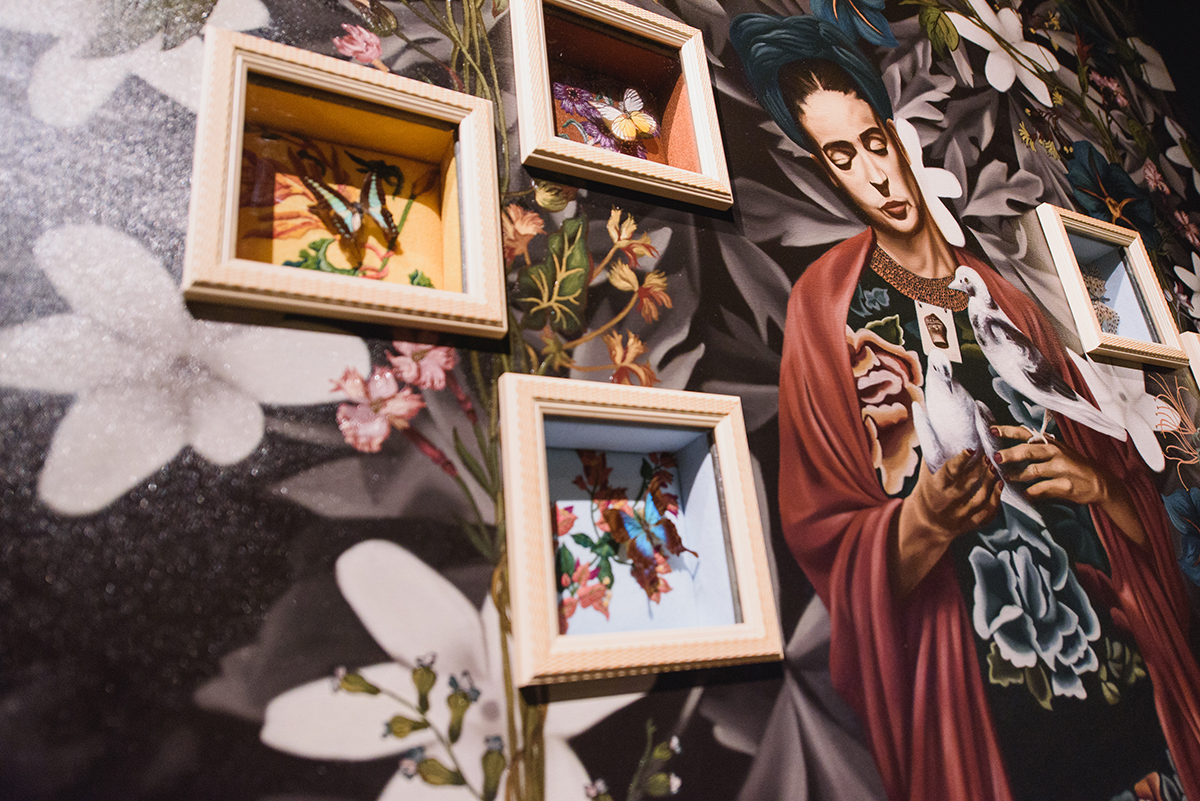
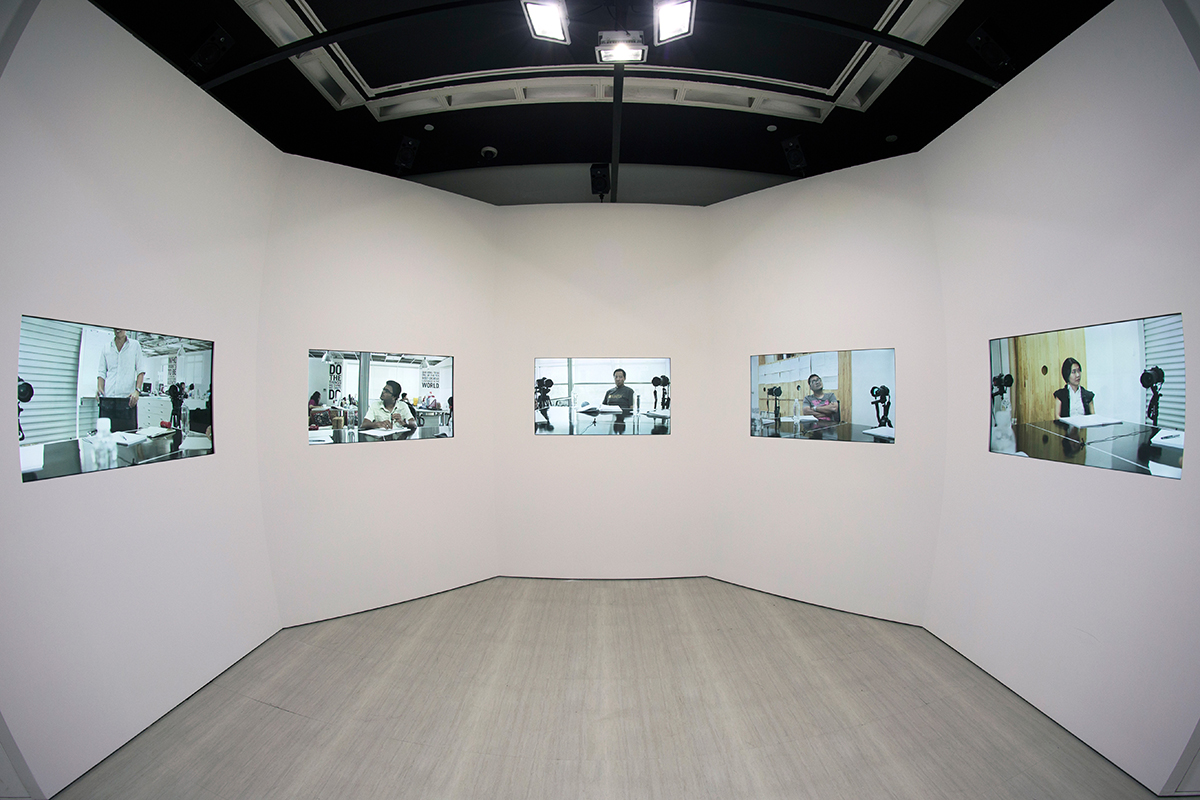
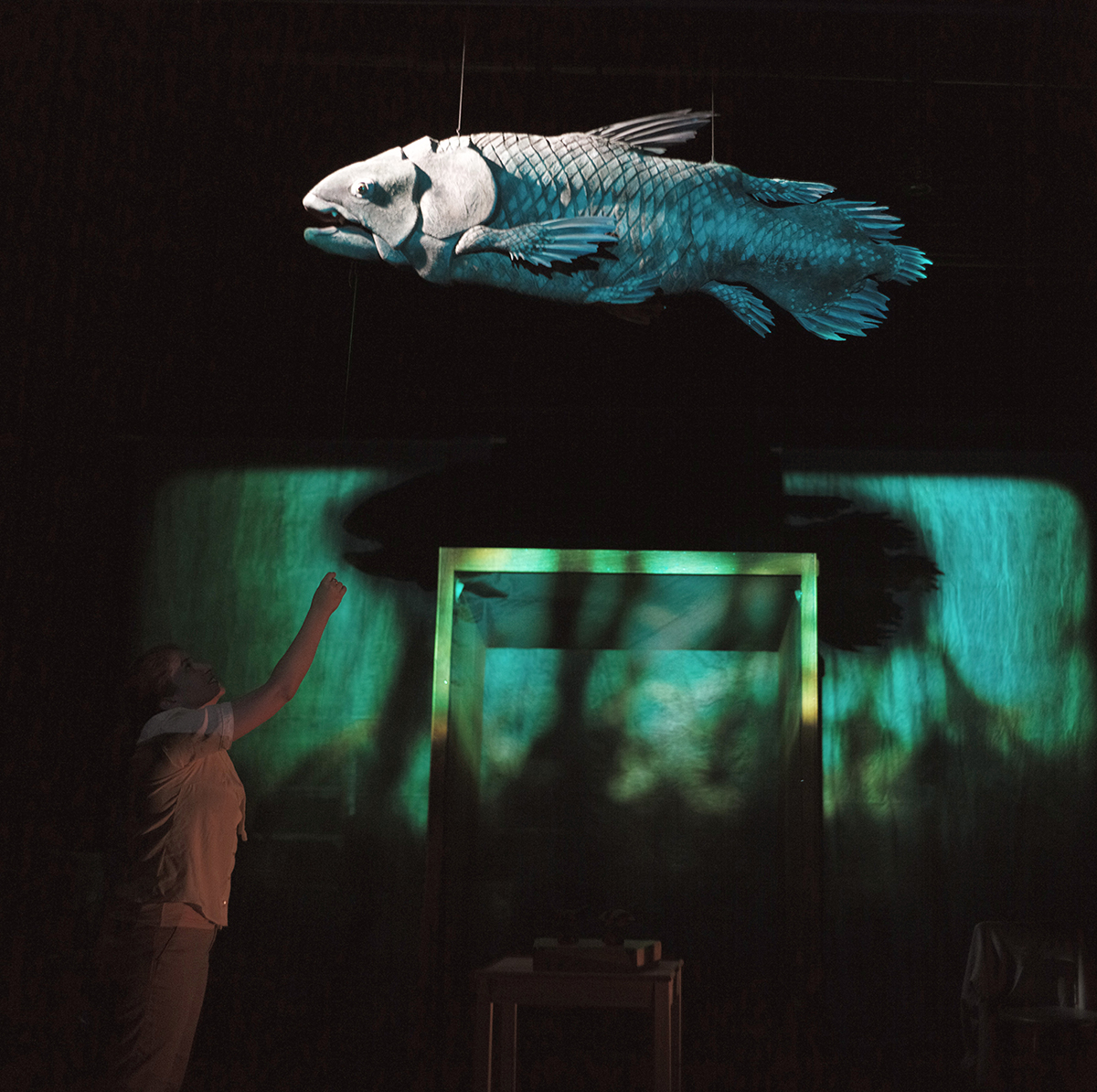
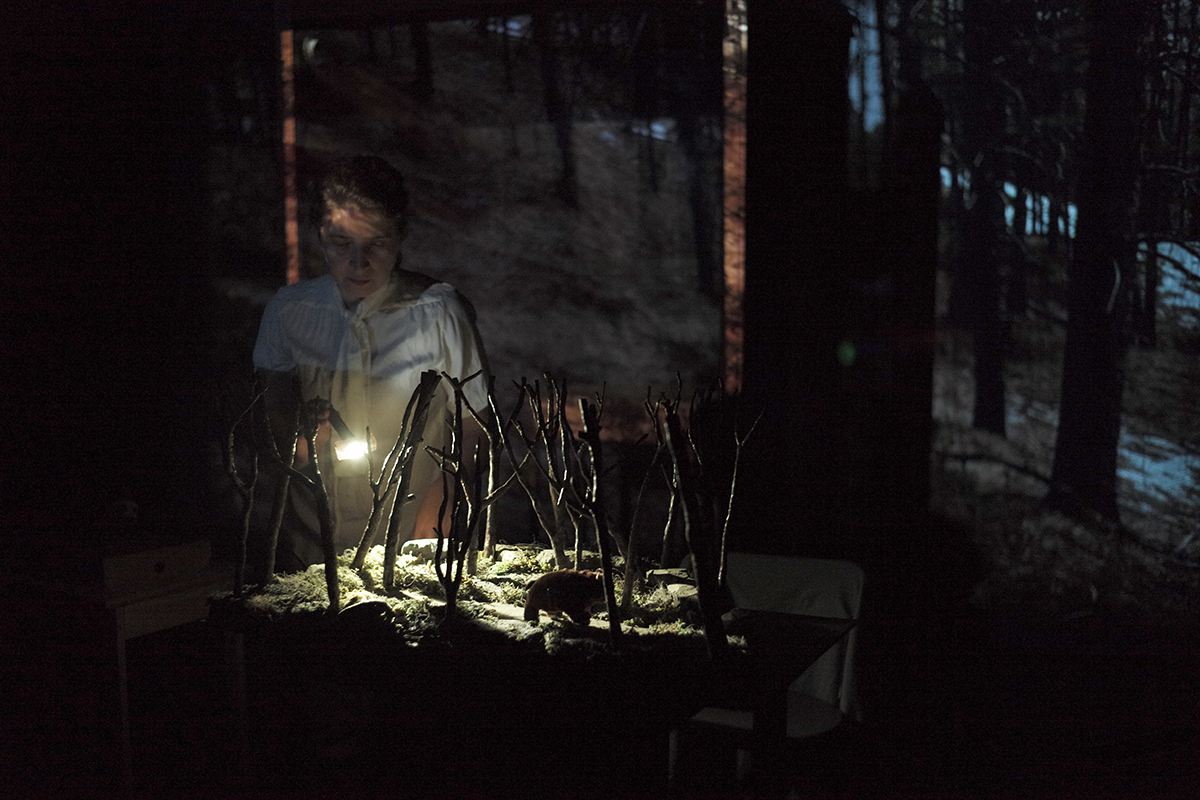
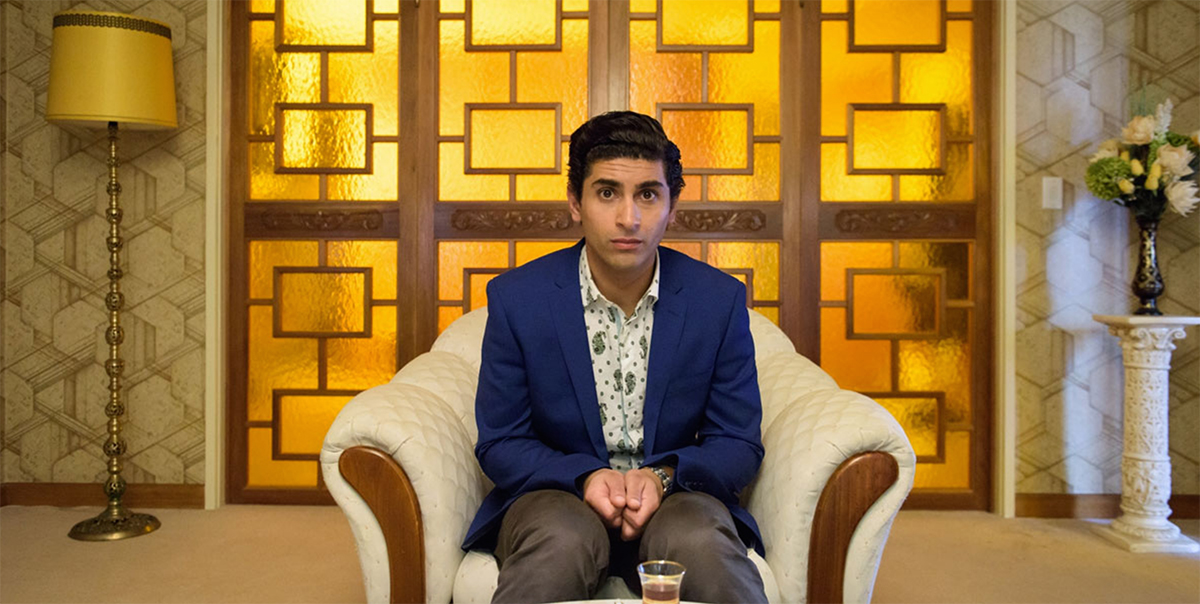
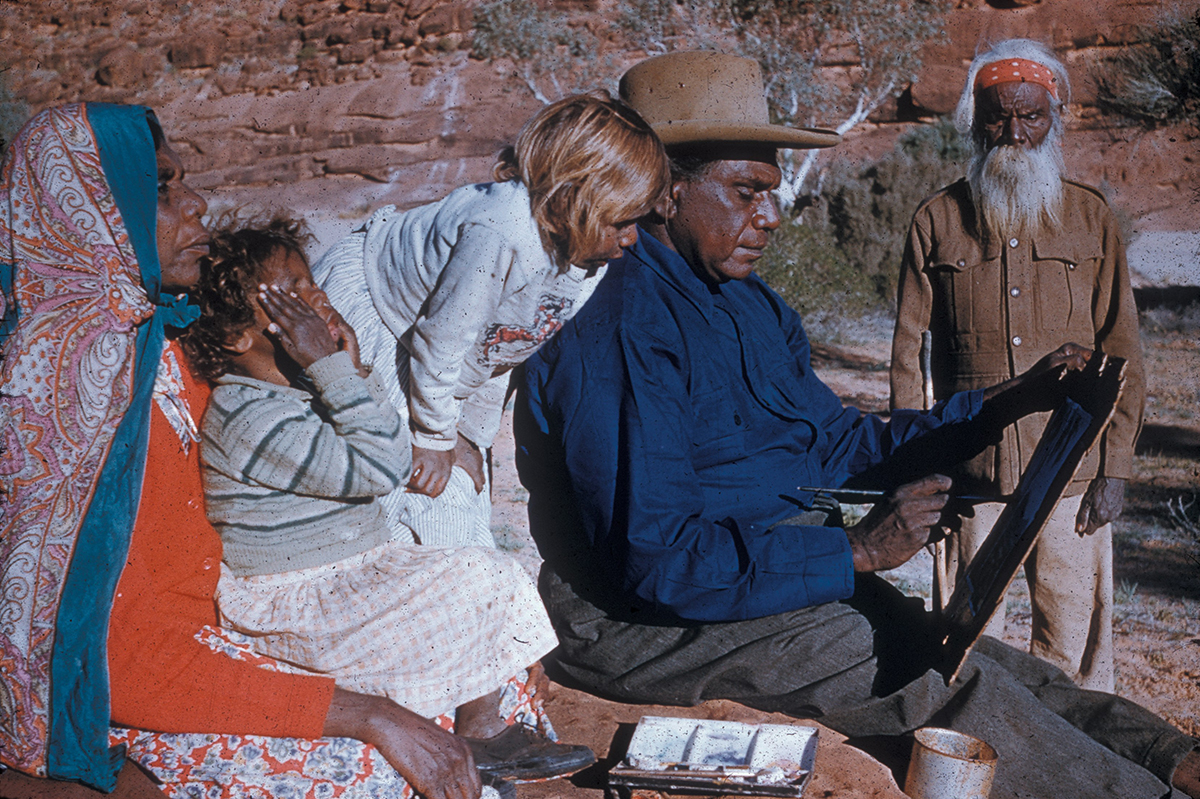
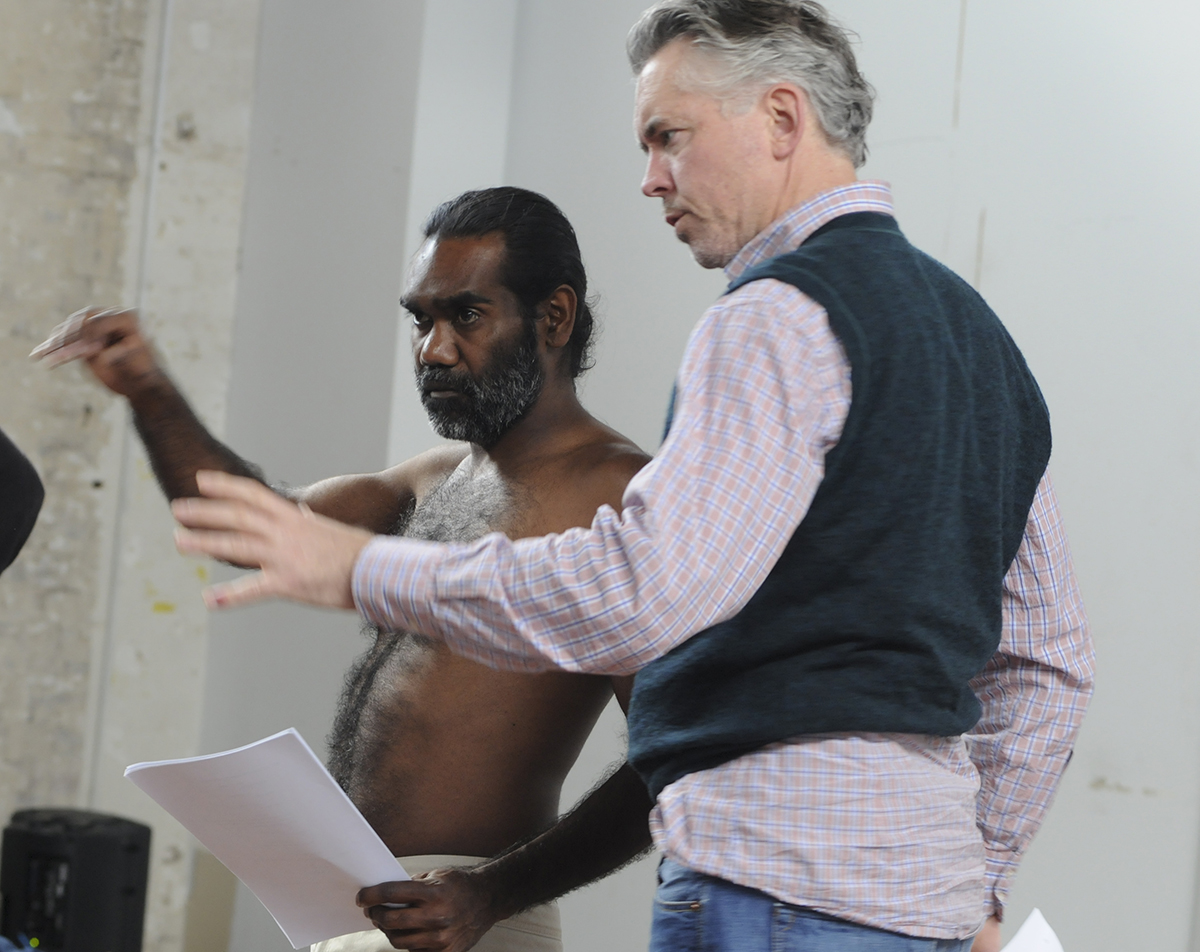
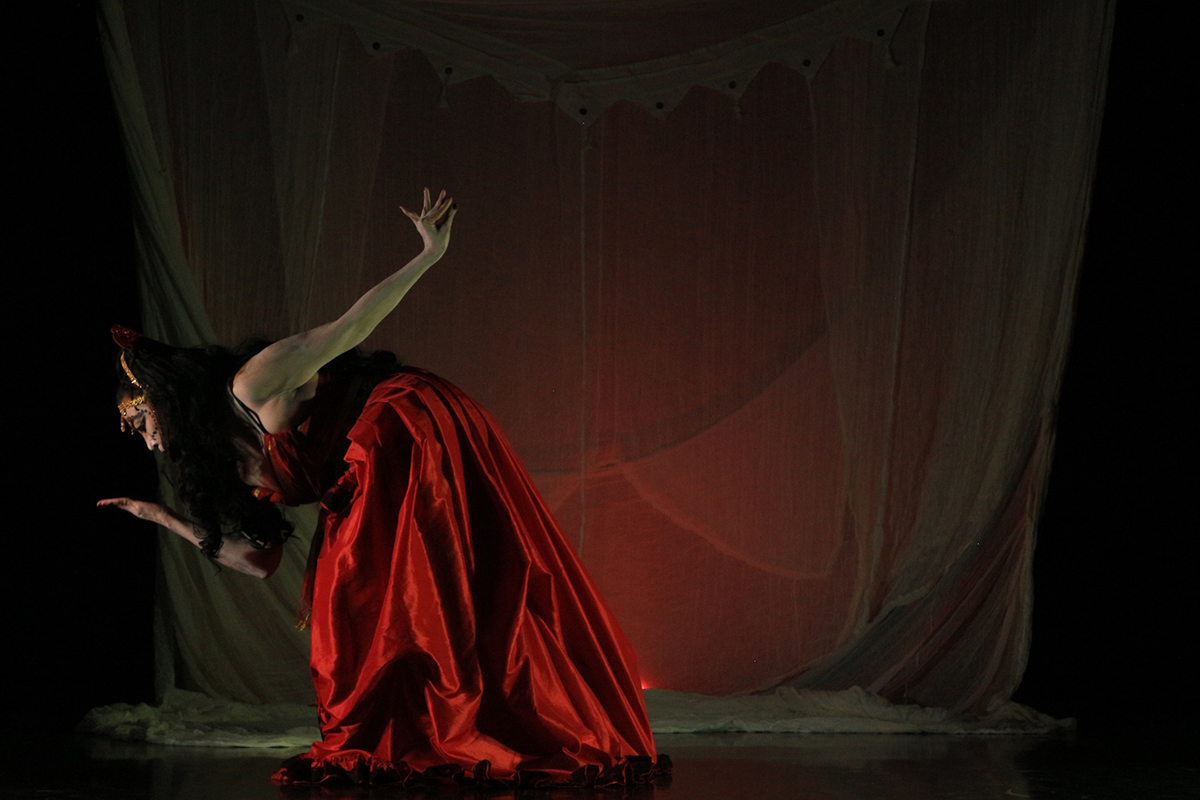
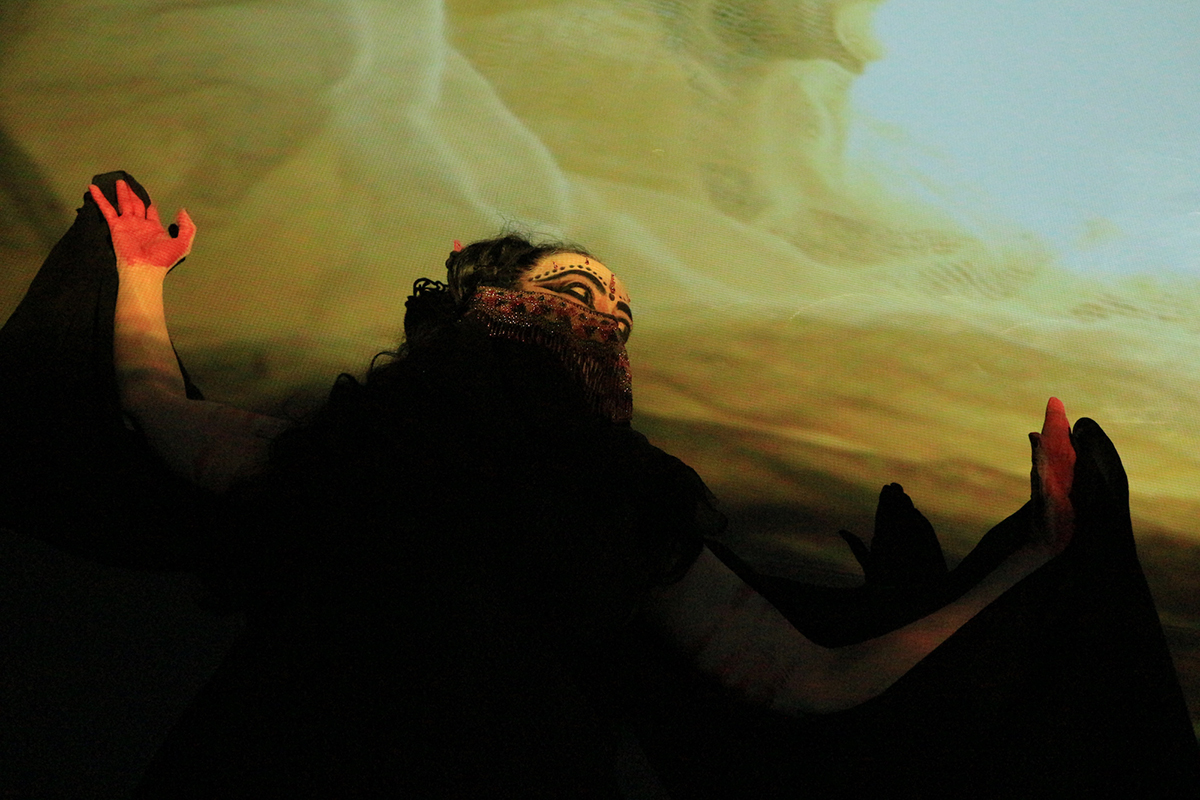

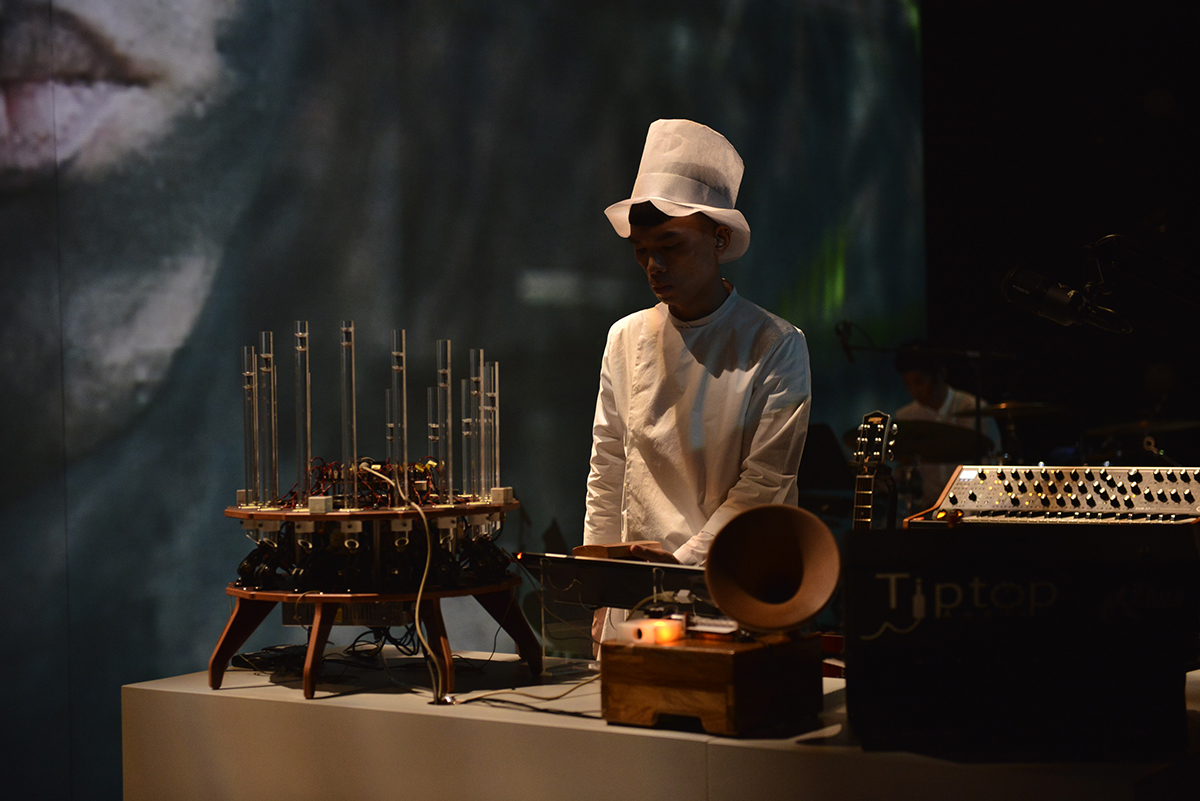
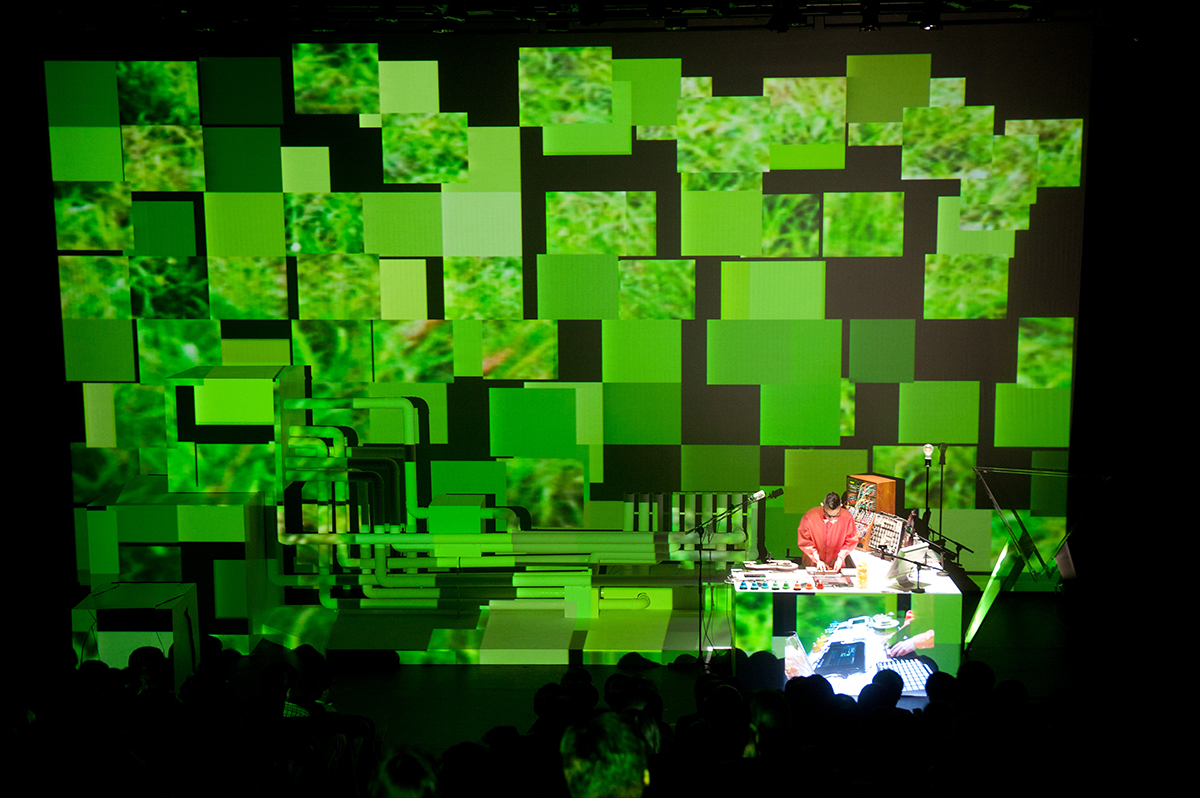
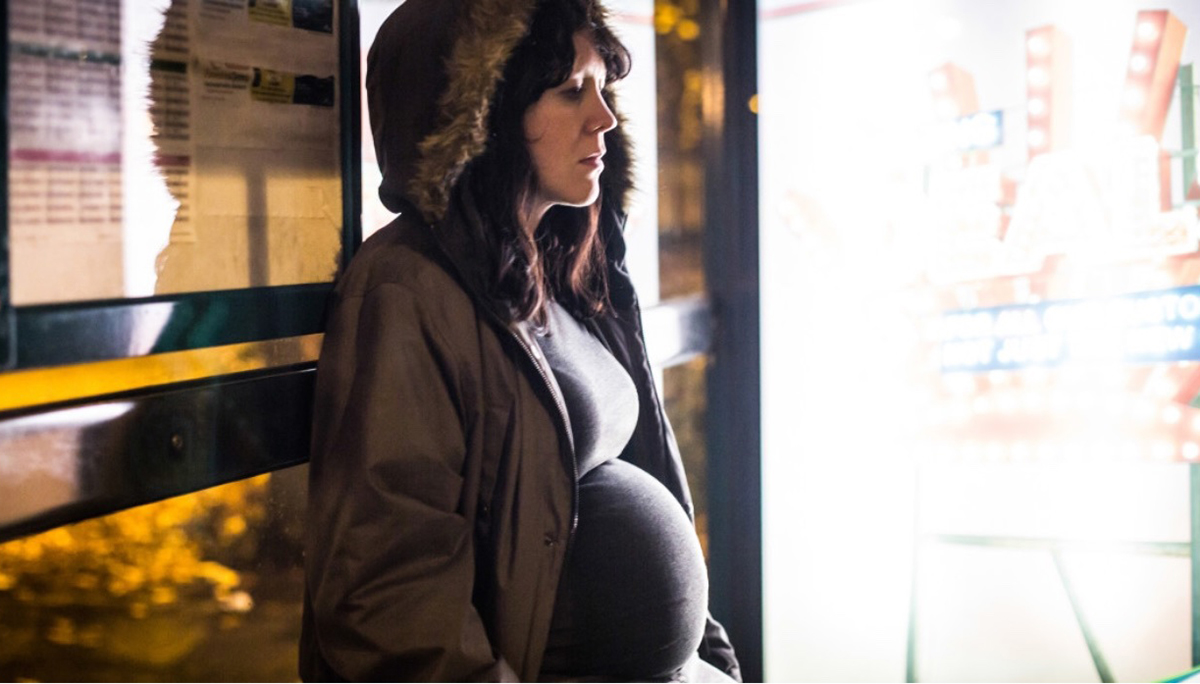
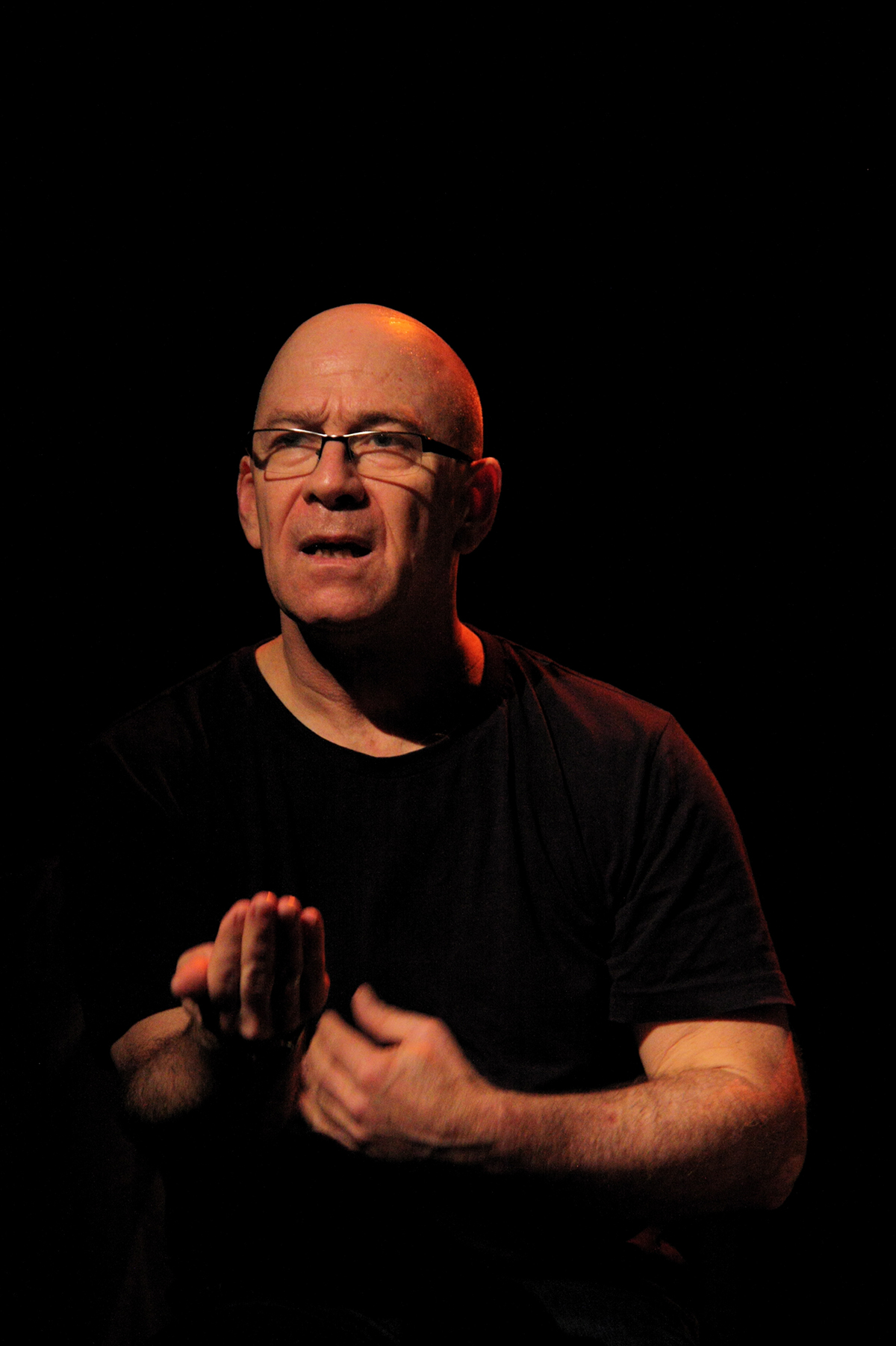
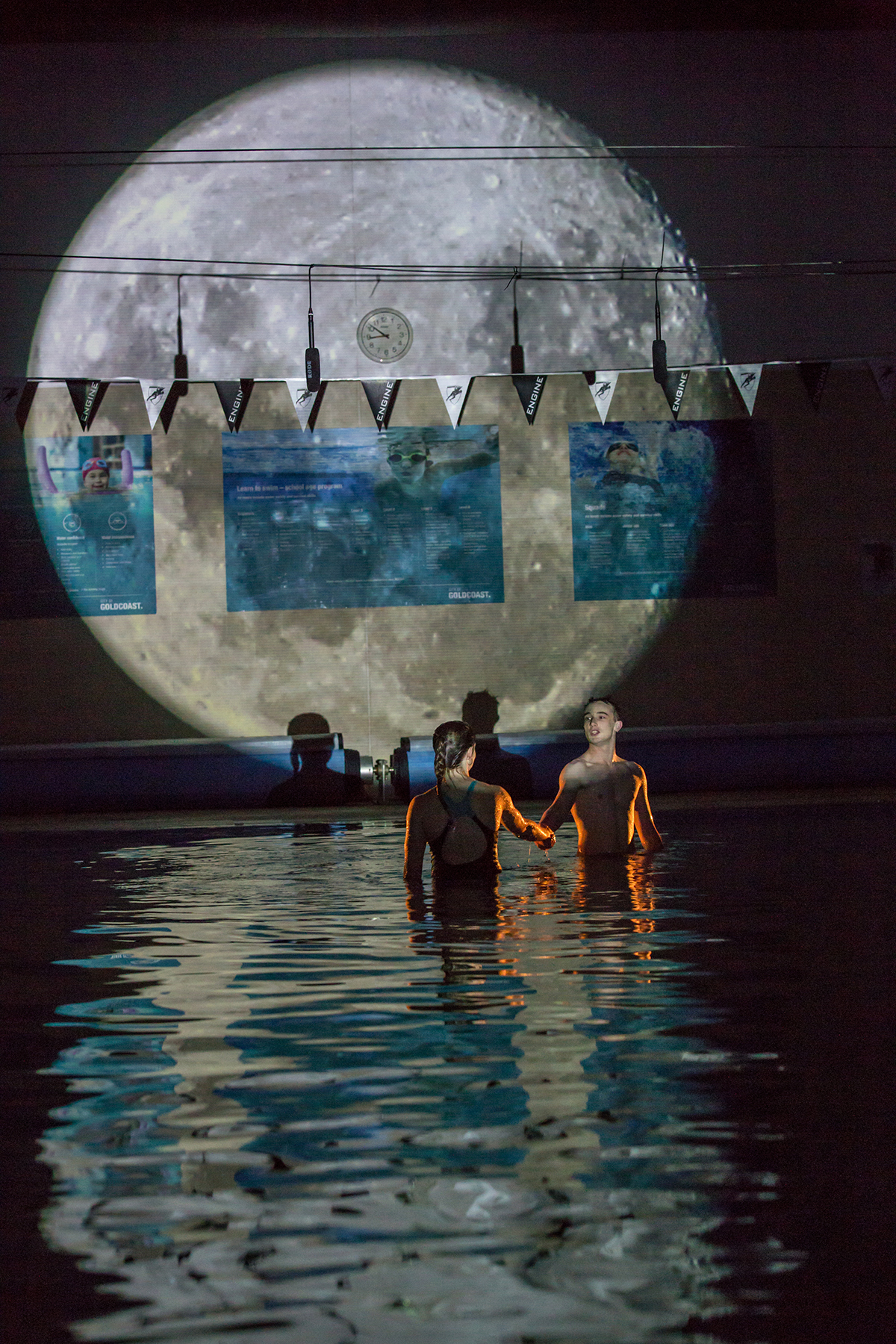
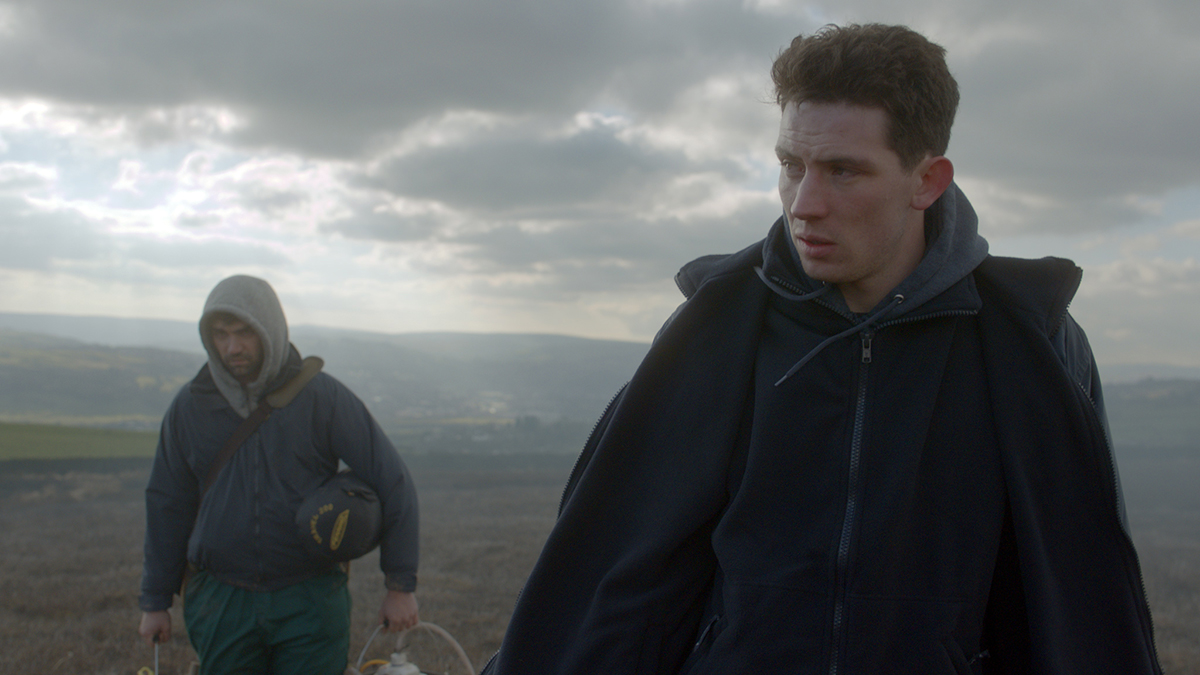
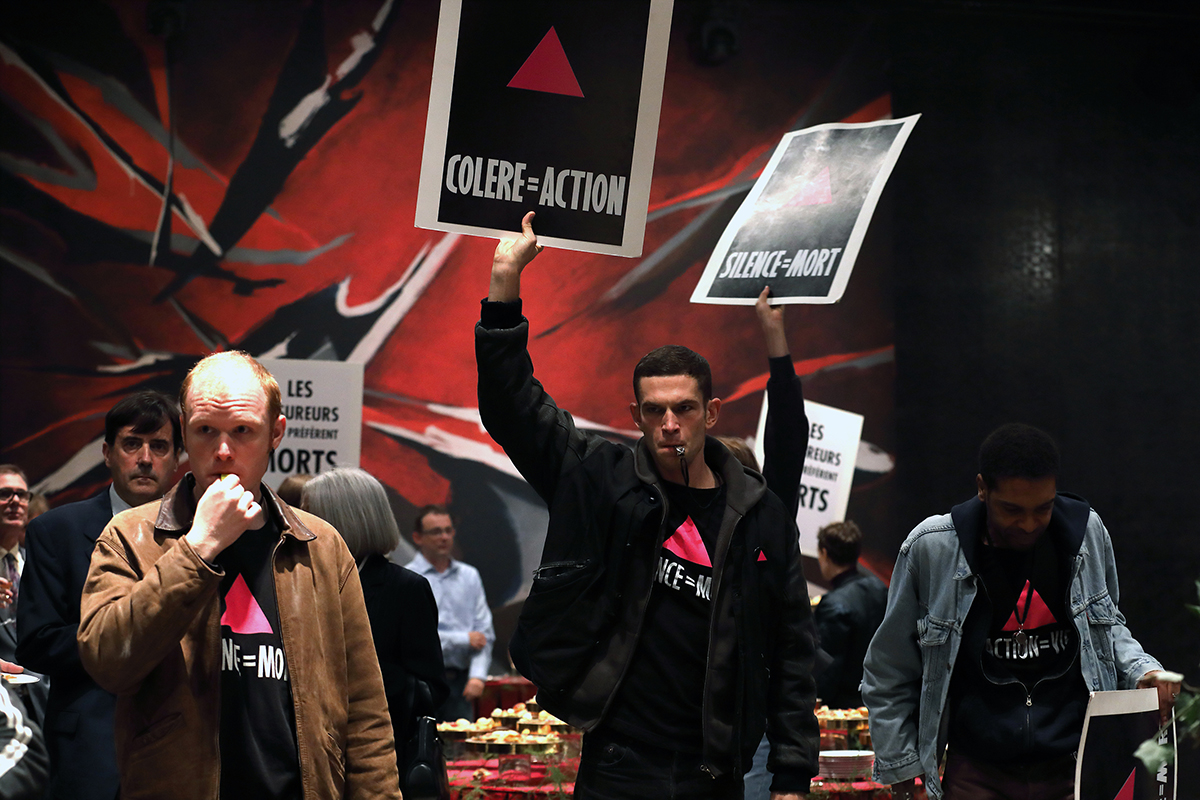
 For our first Critical Audio selection, we invited Tasmanian radiophonic curators Sisters Akousmatica to create a playlist of risk-taking radio and broadcast art by Australian women.
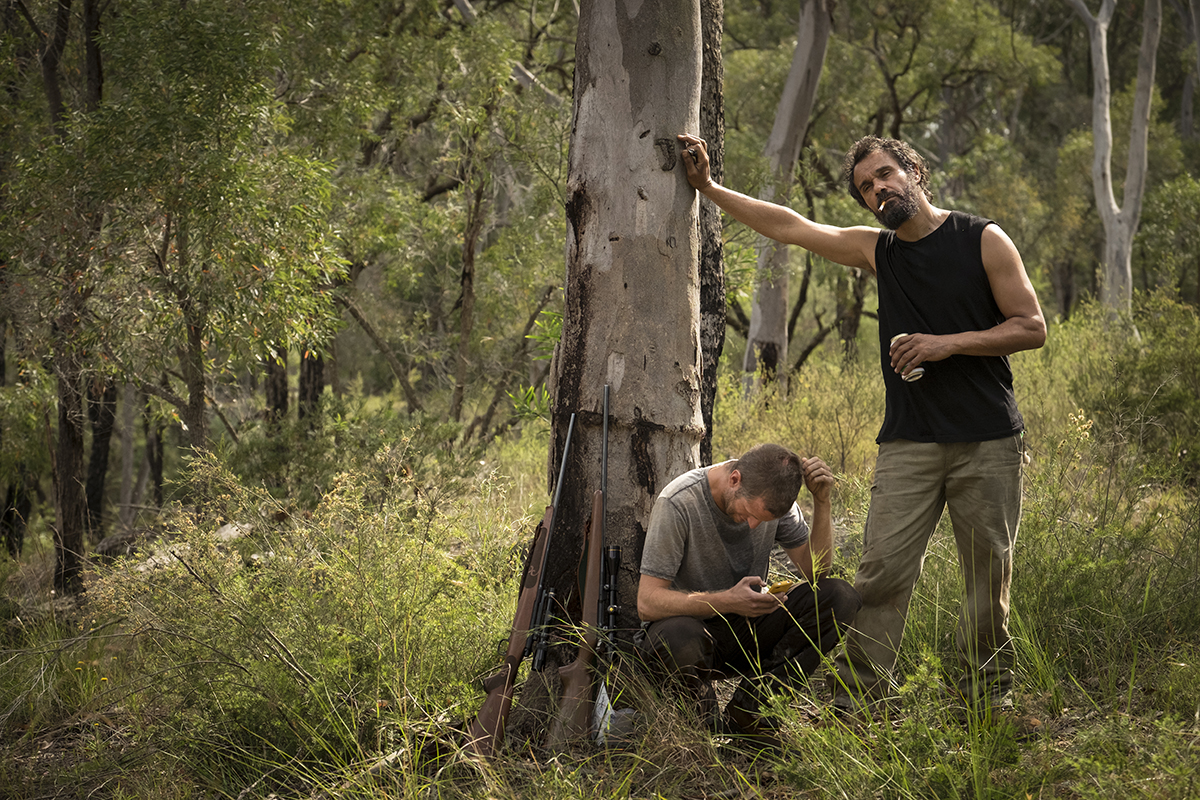
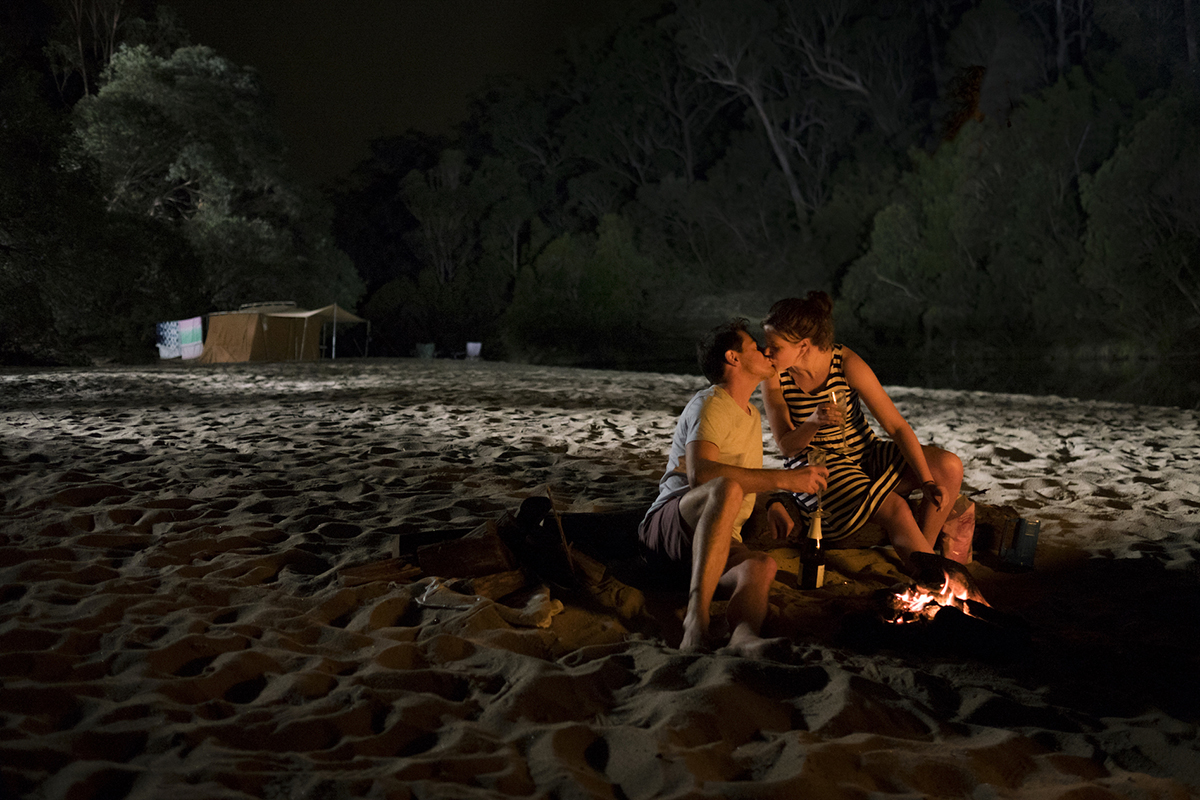
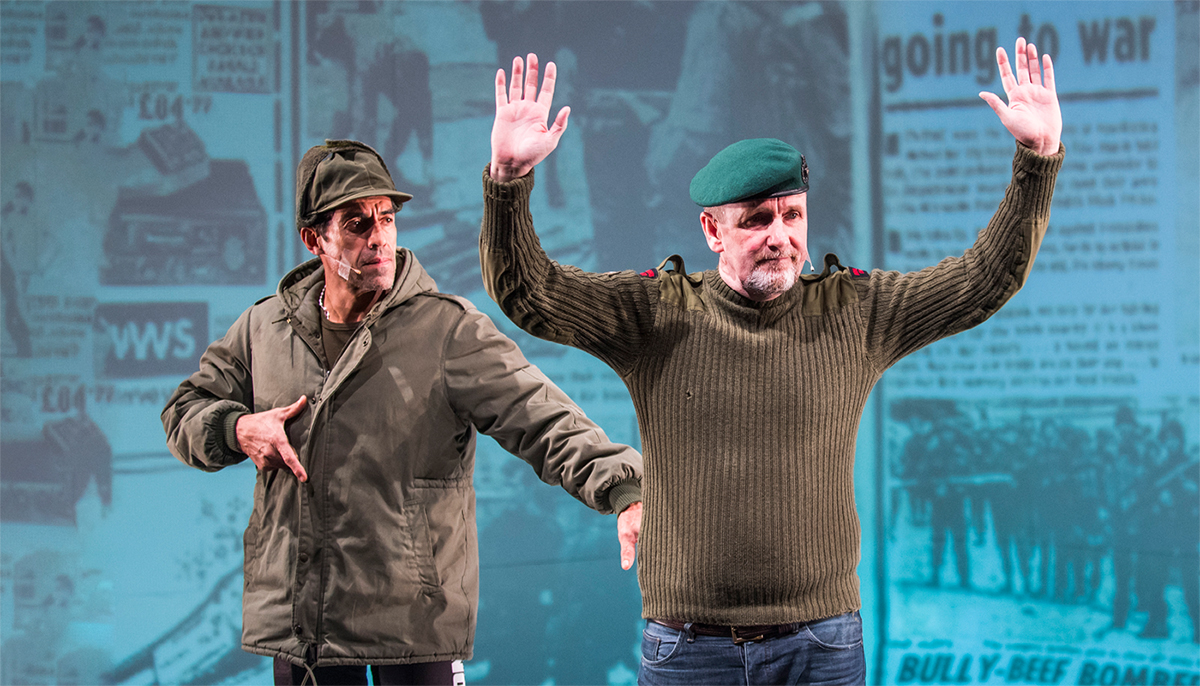
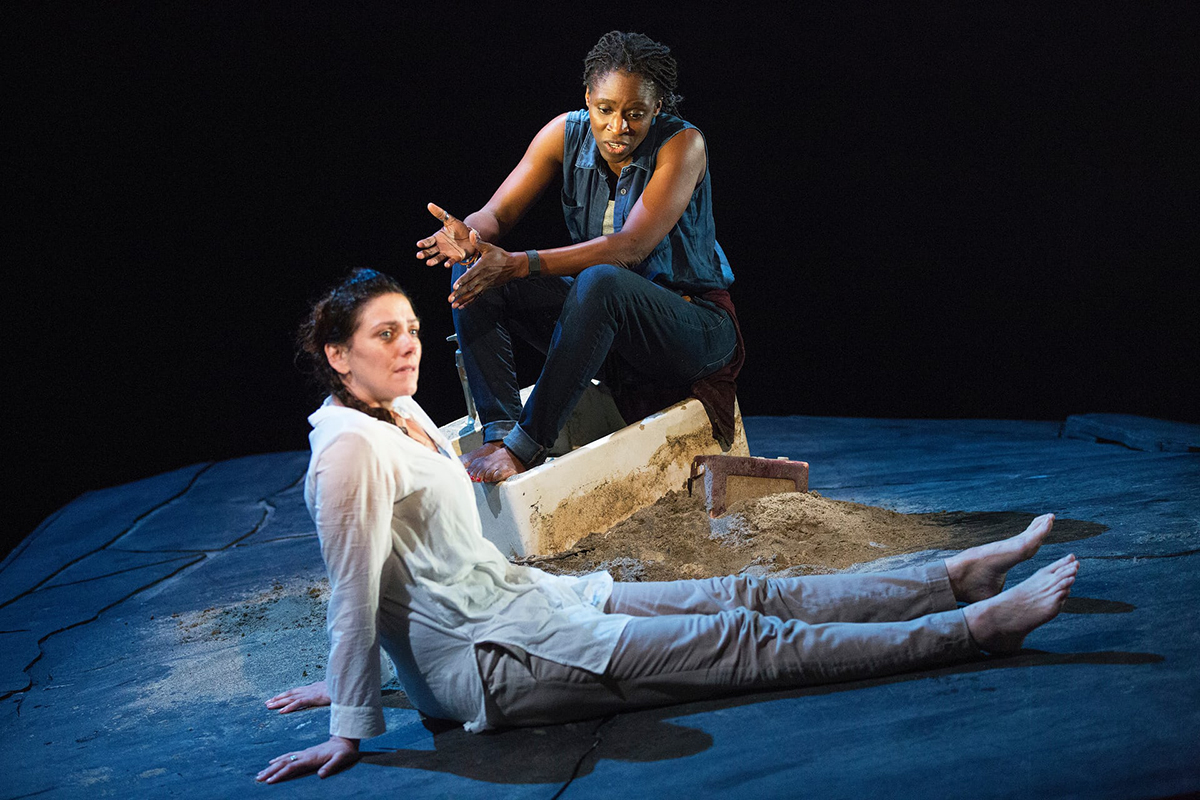
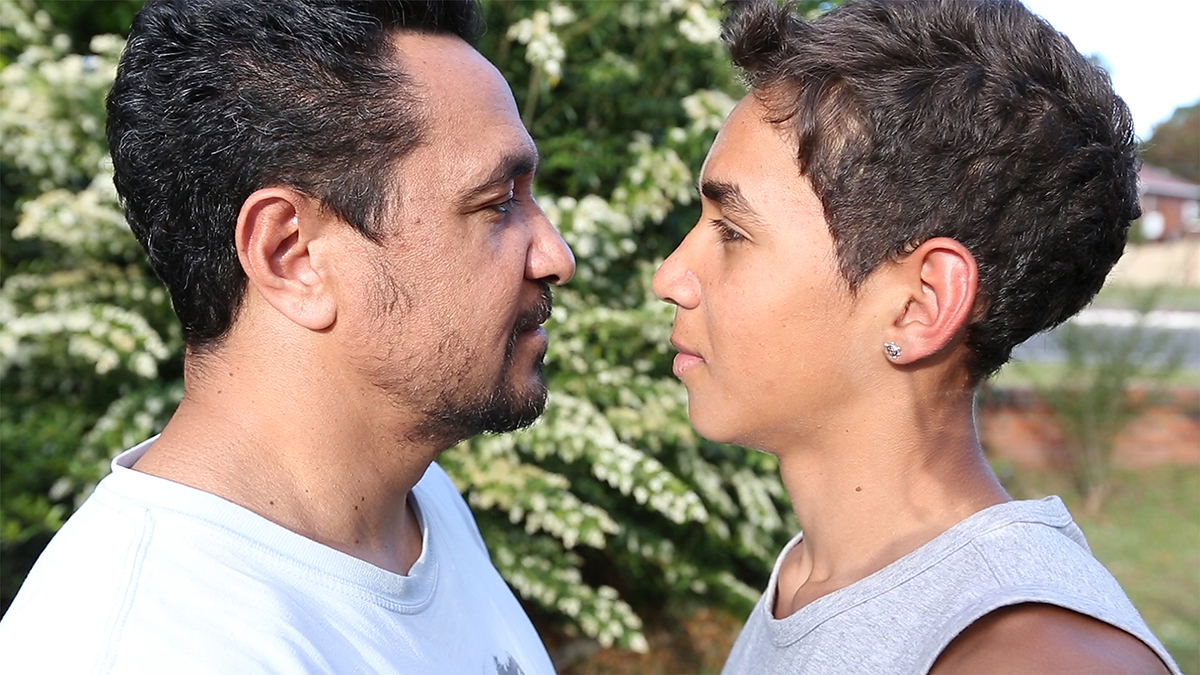
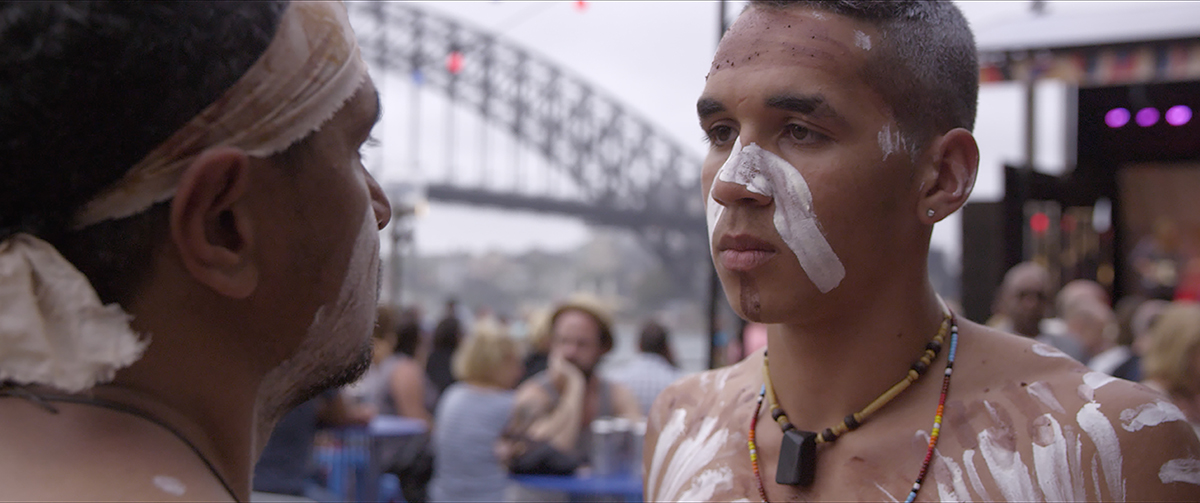
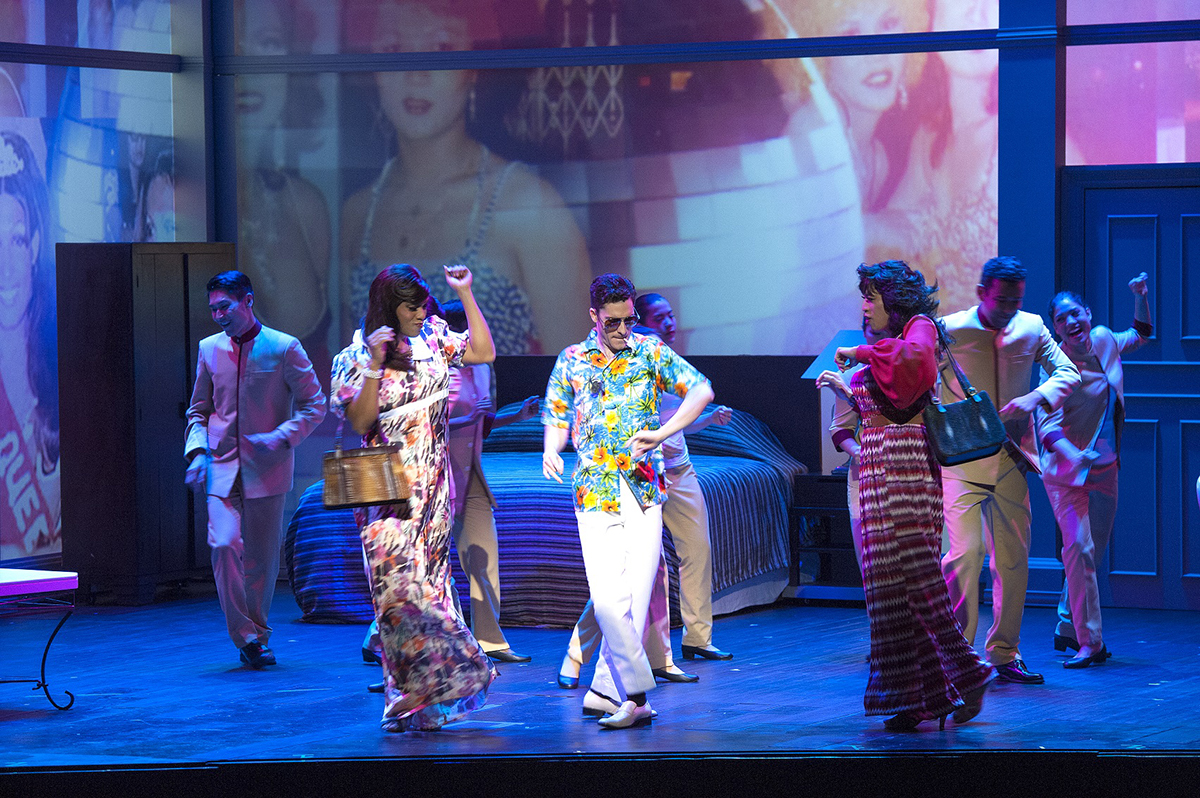
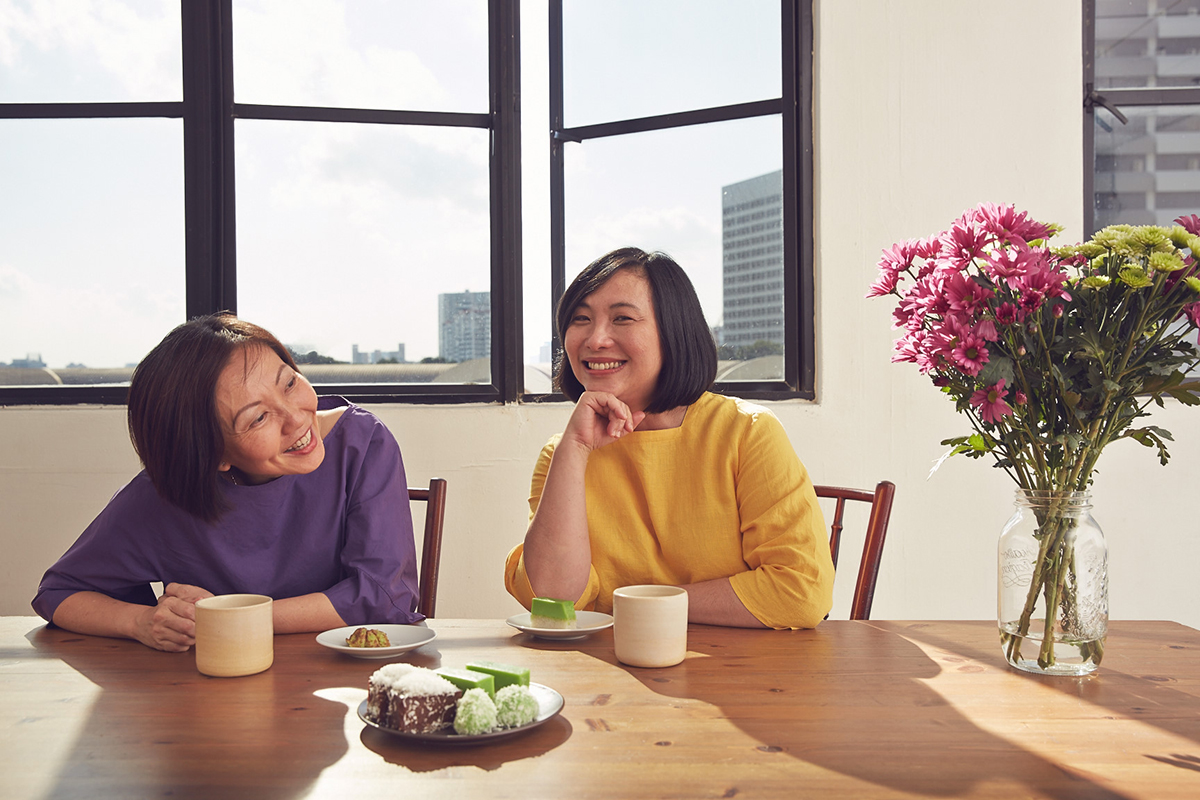
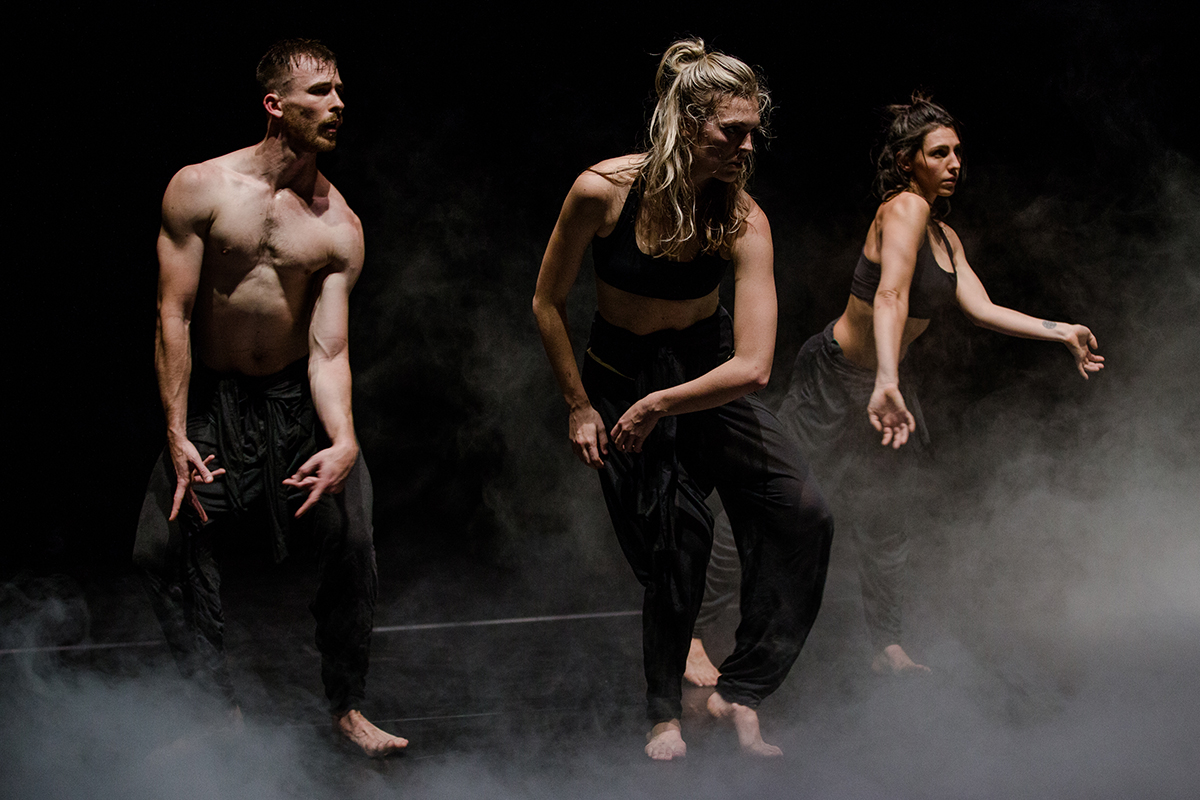
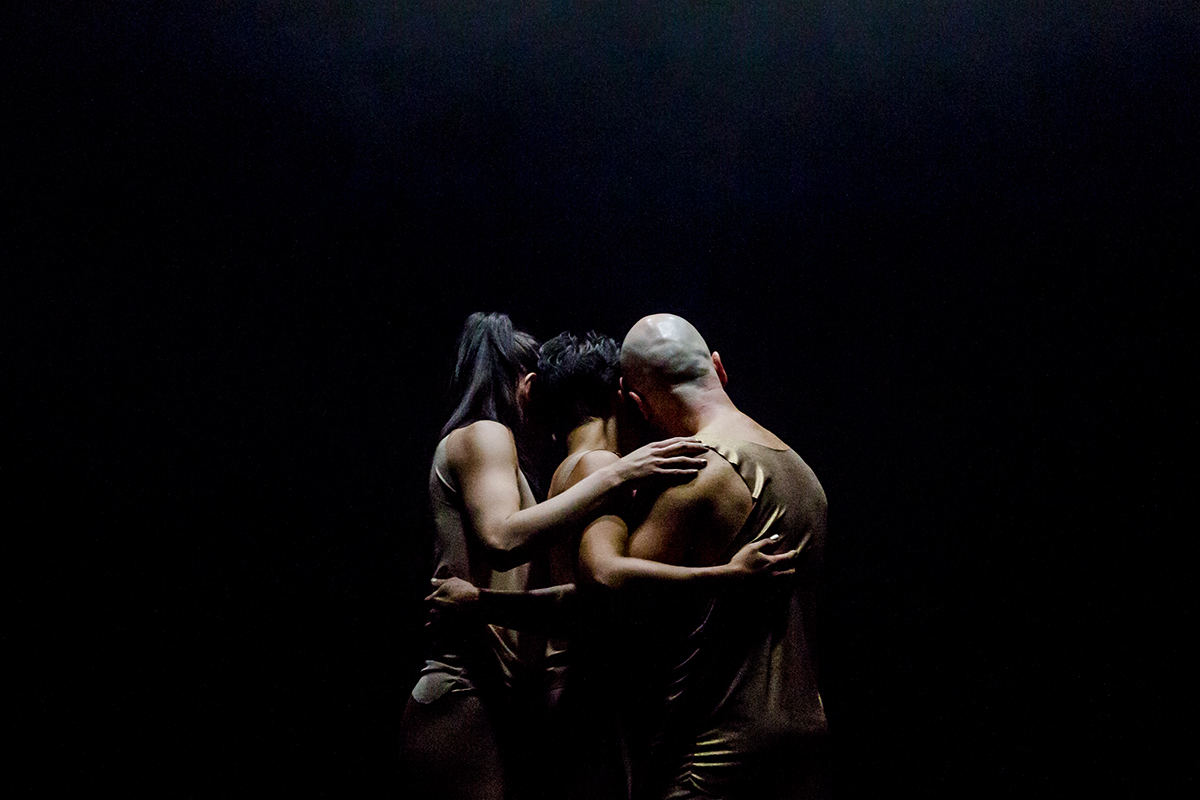

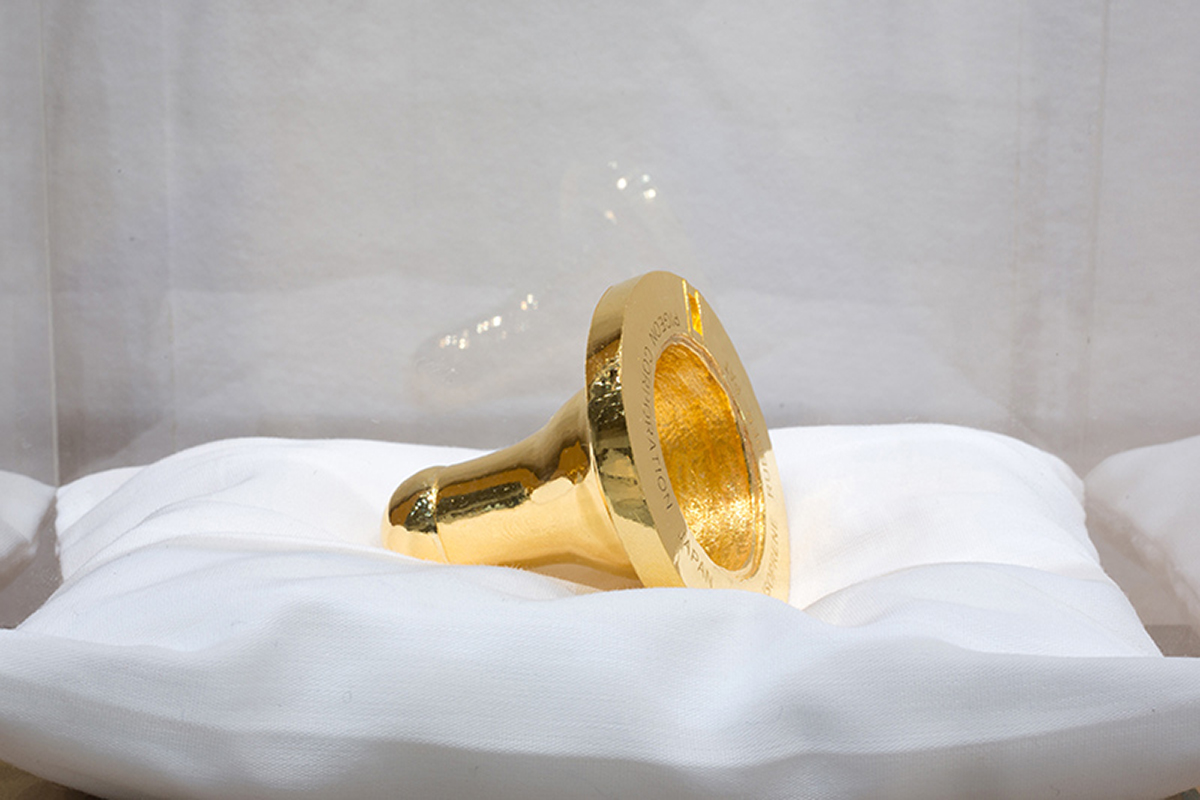
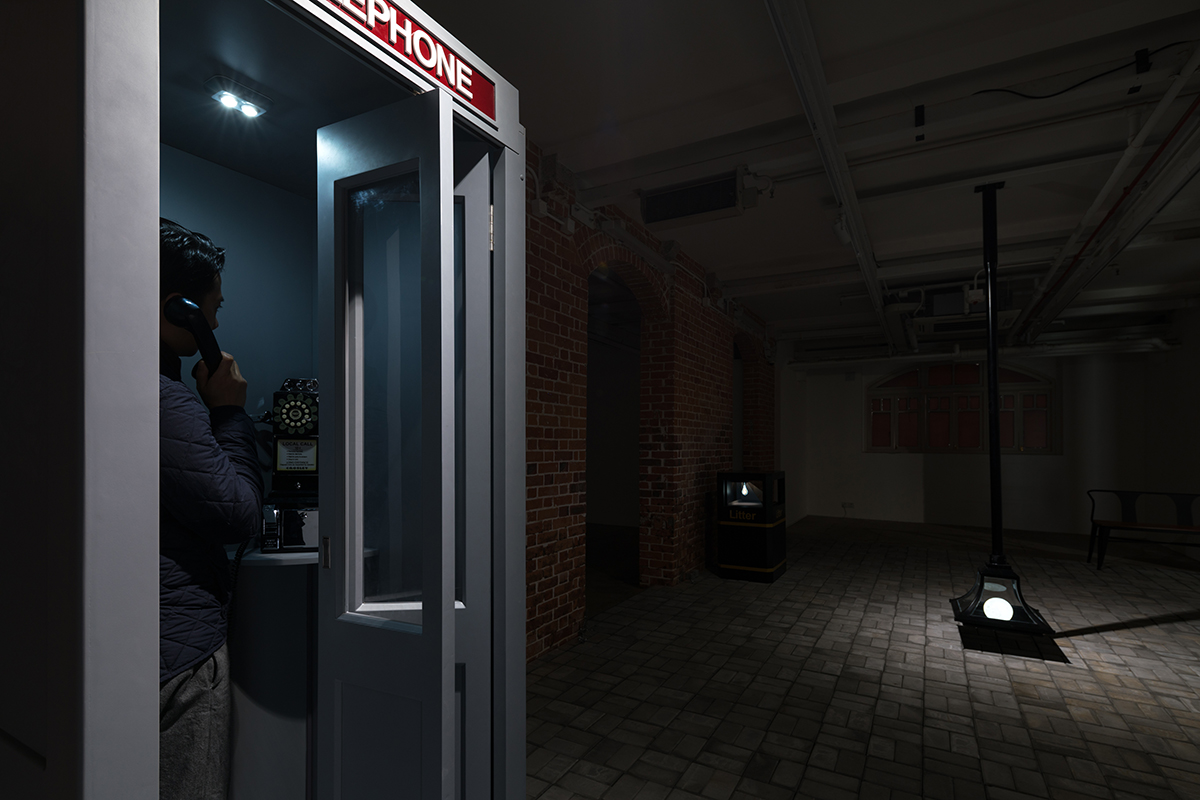
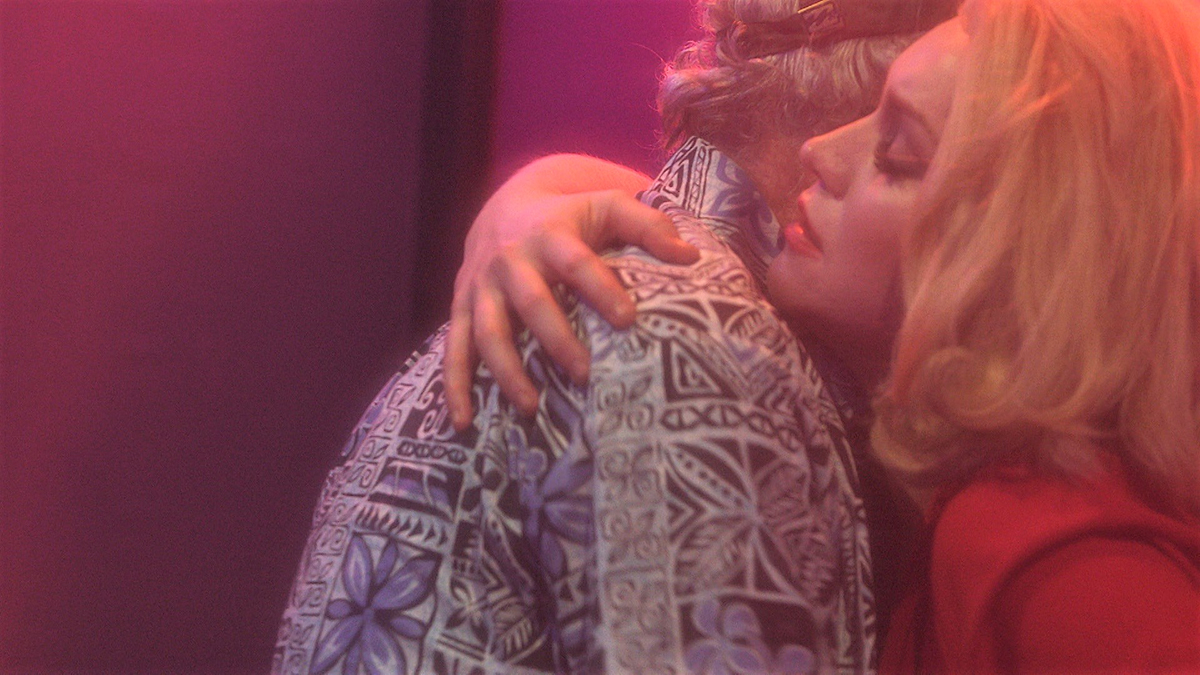
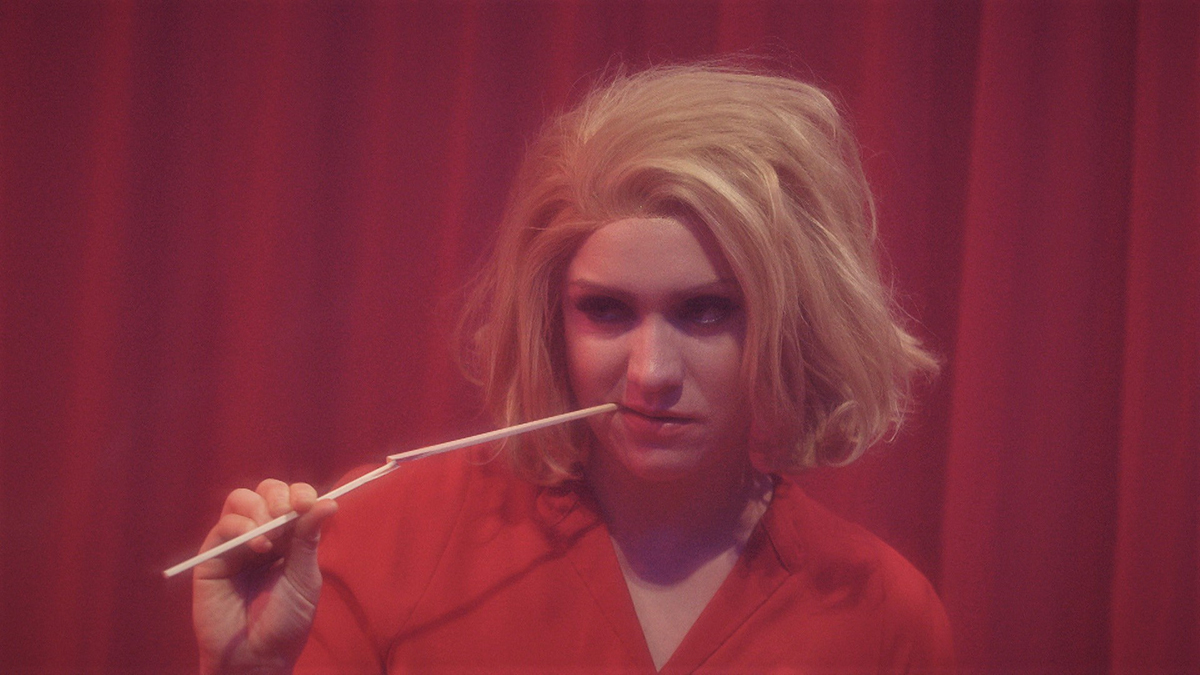
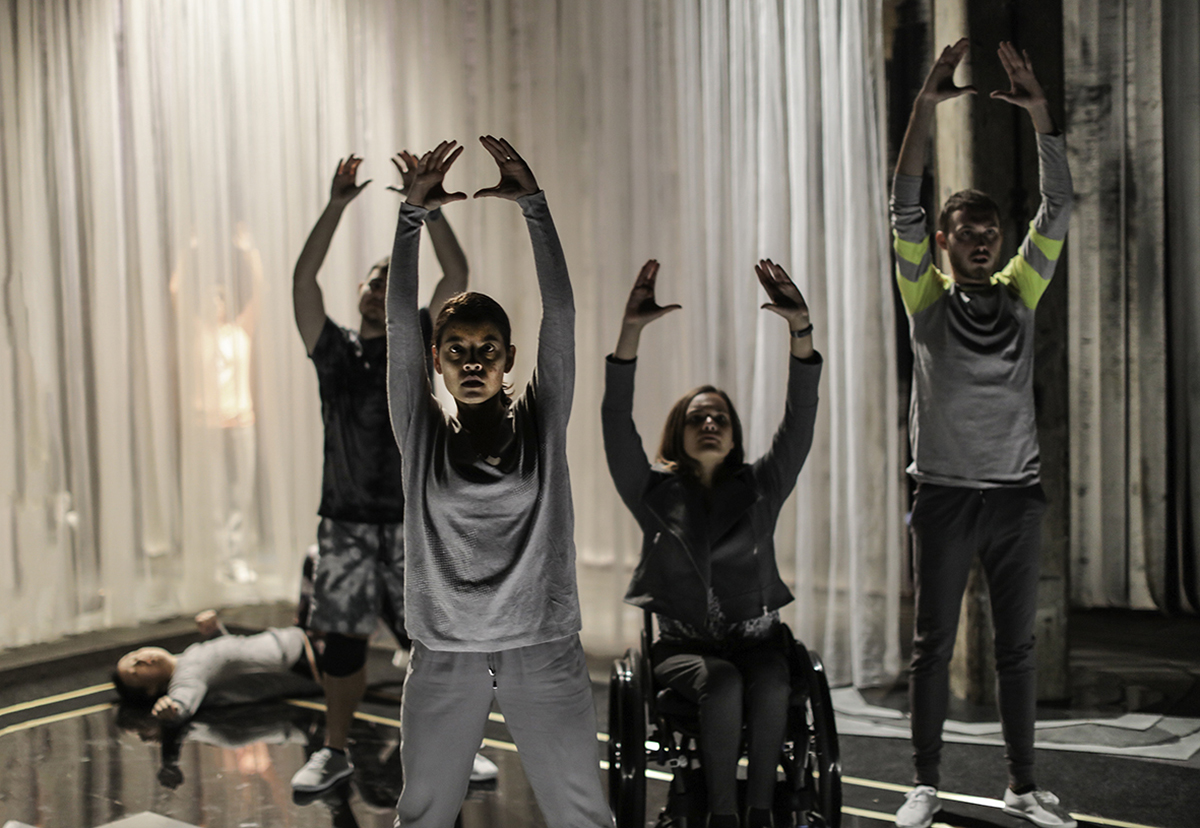
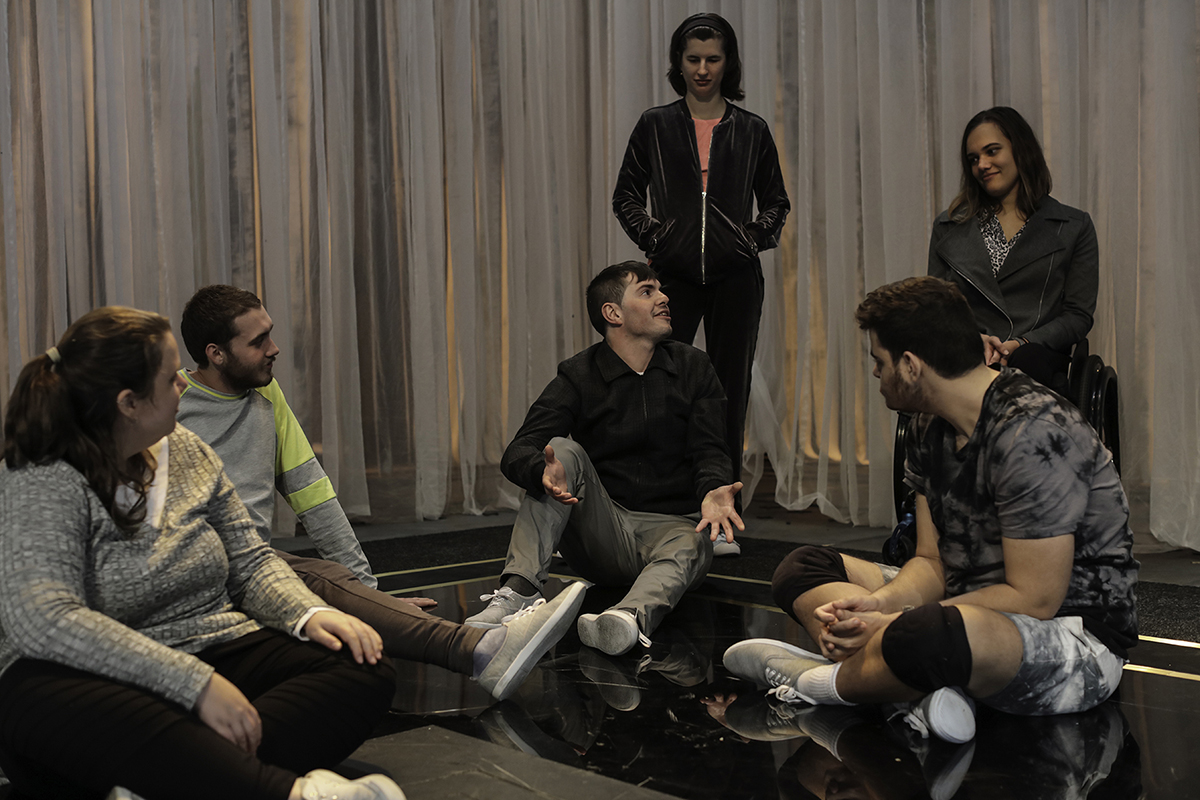
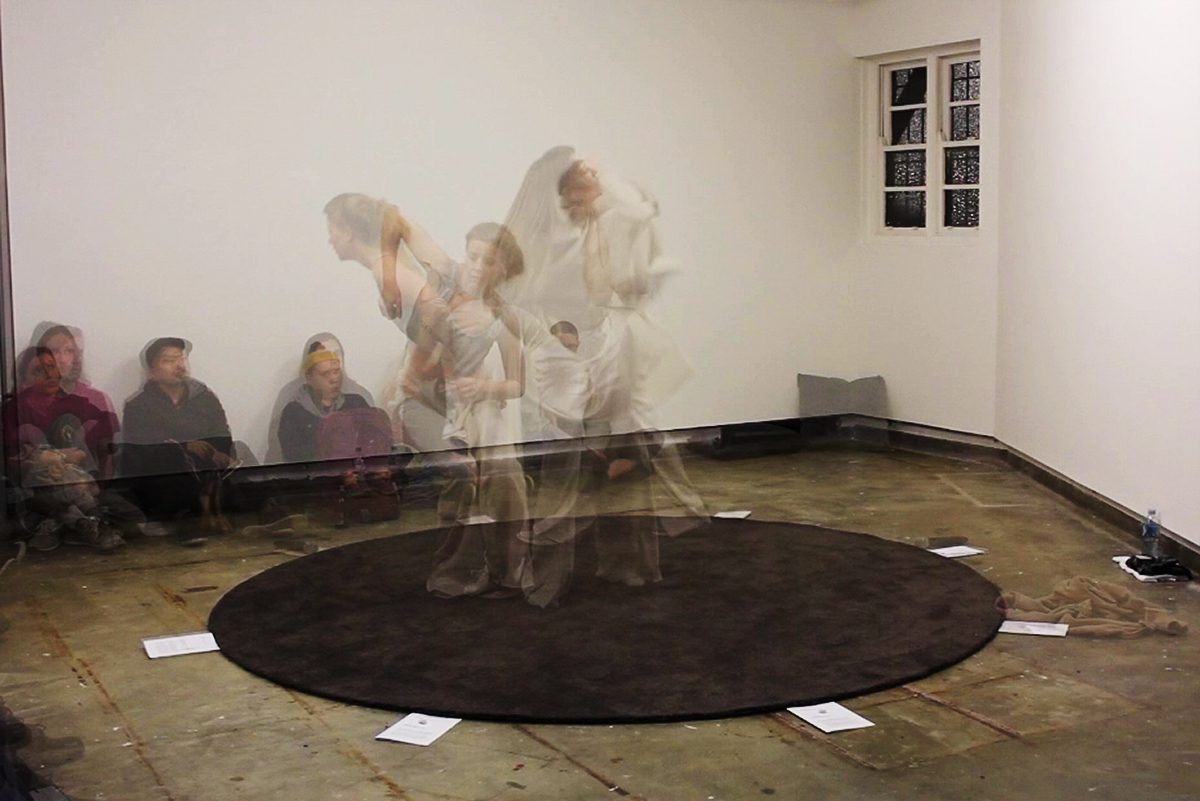
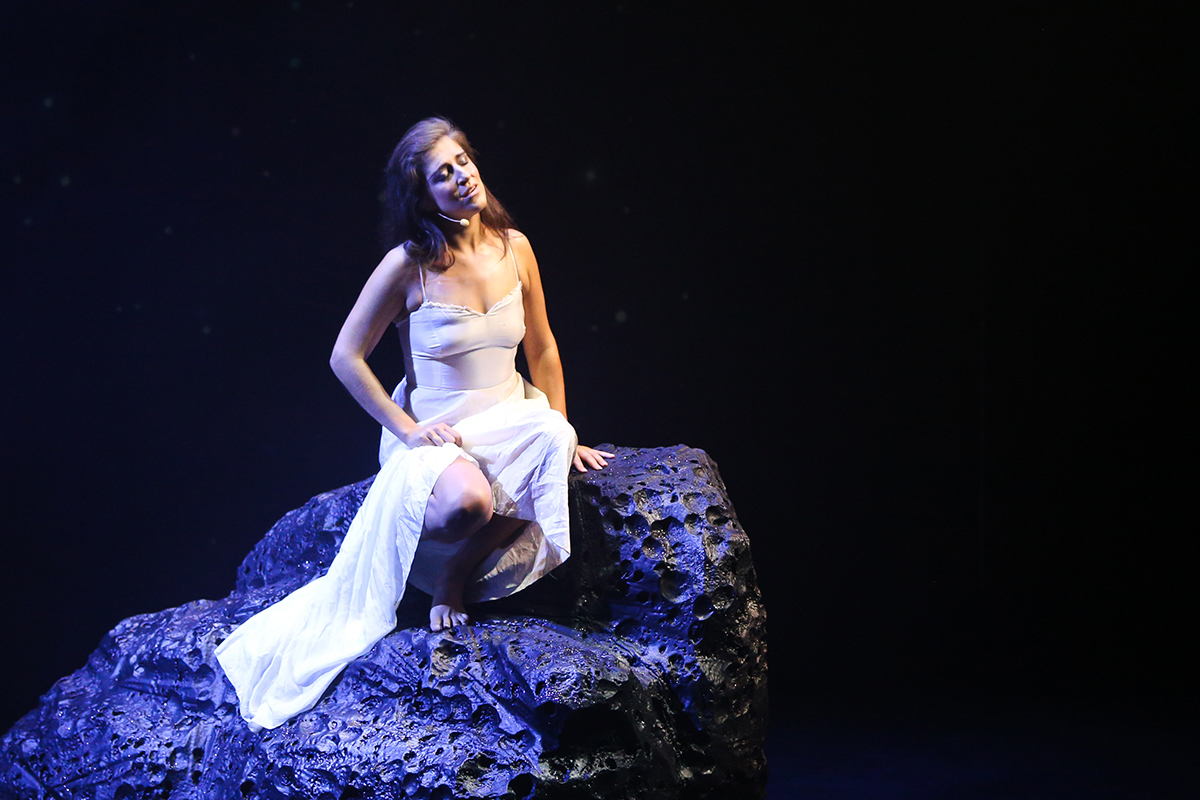
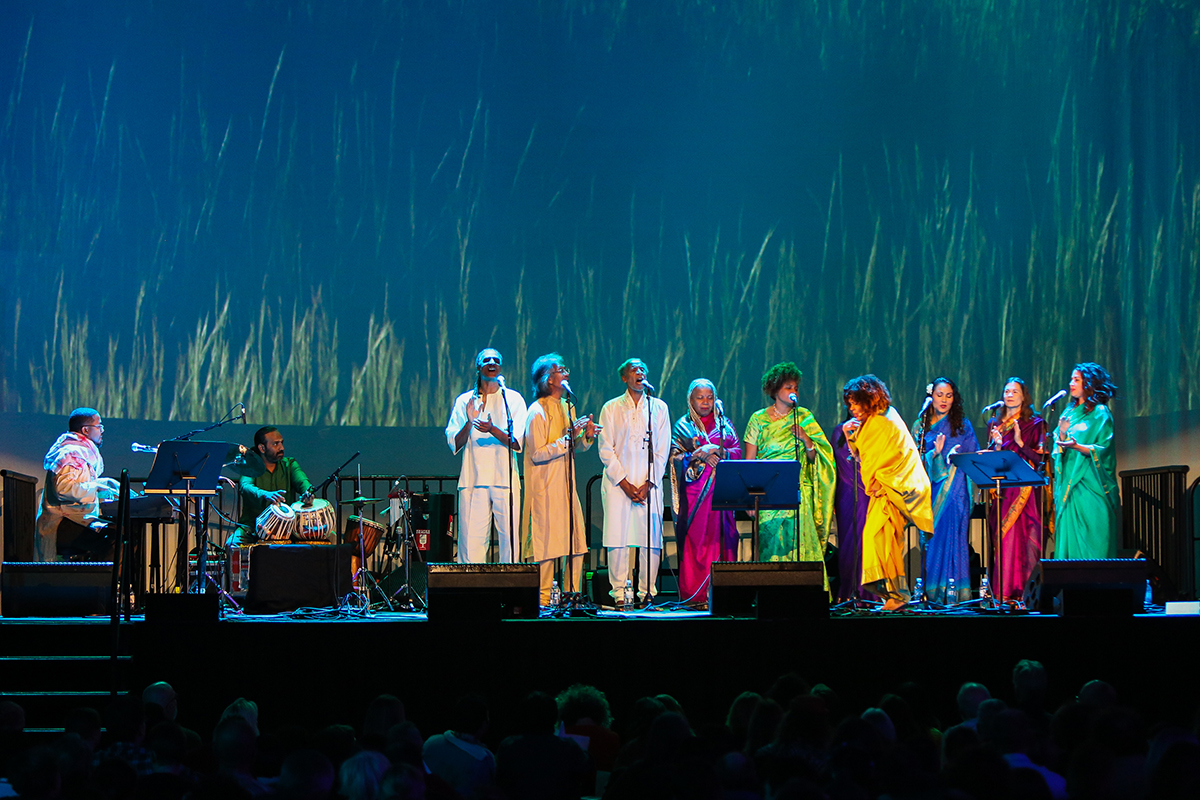
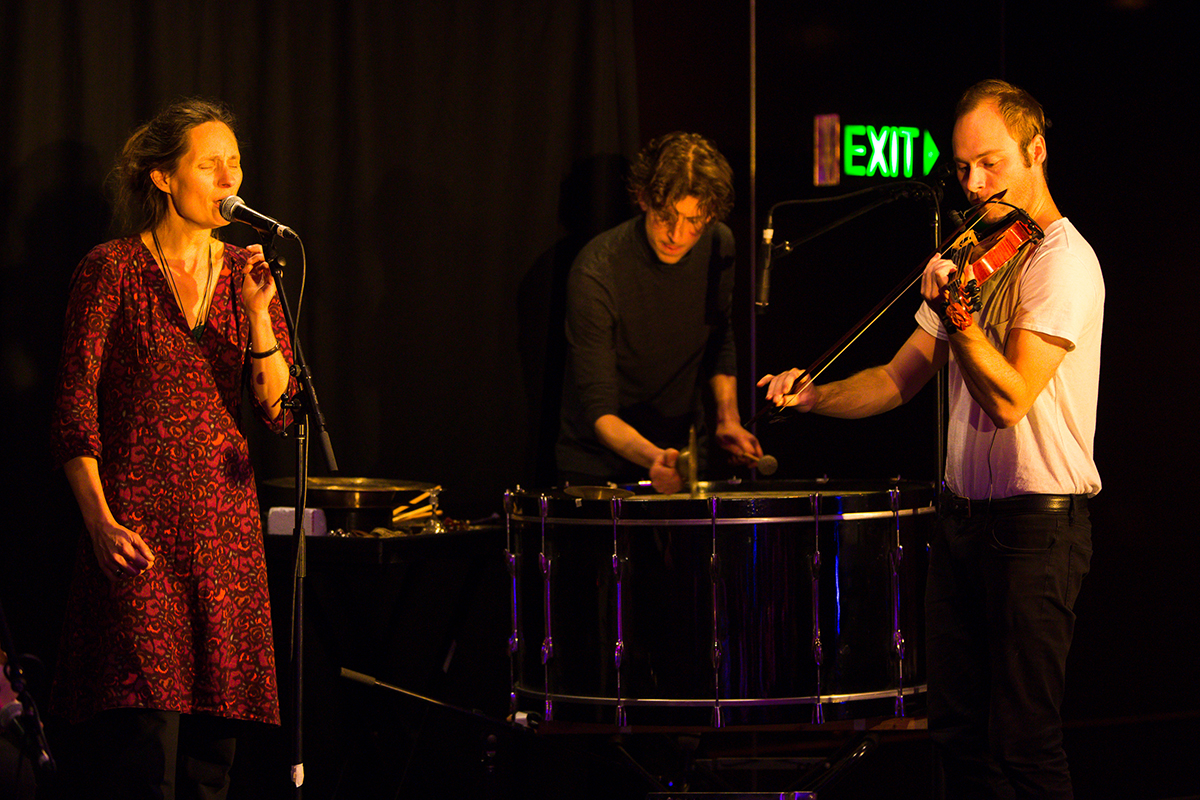
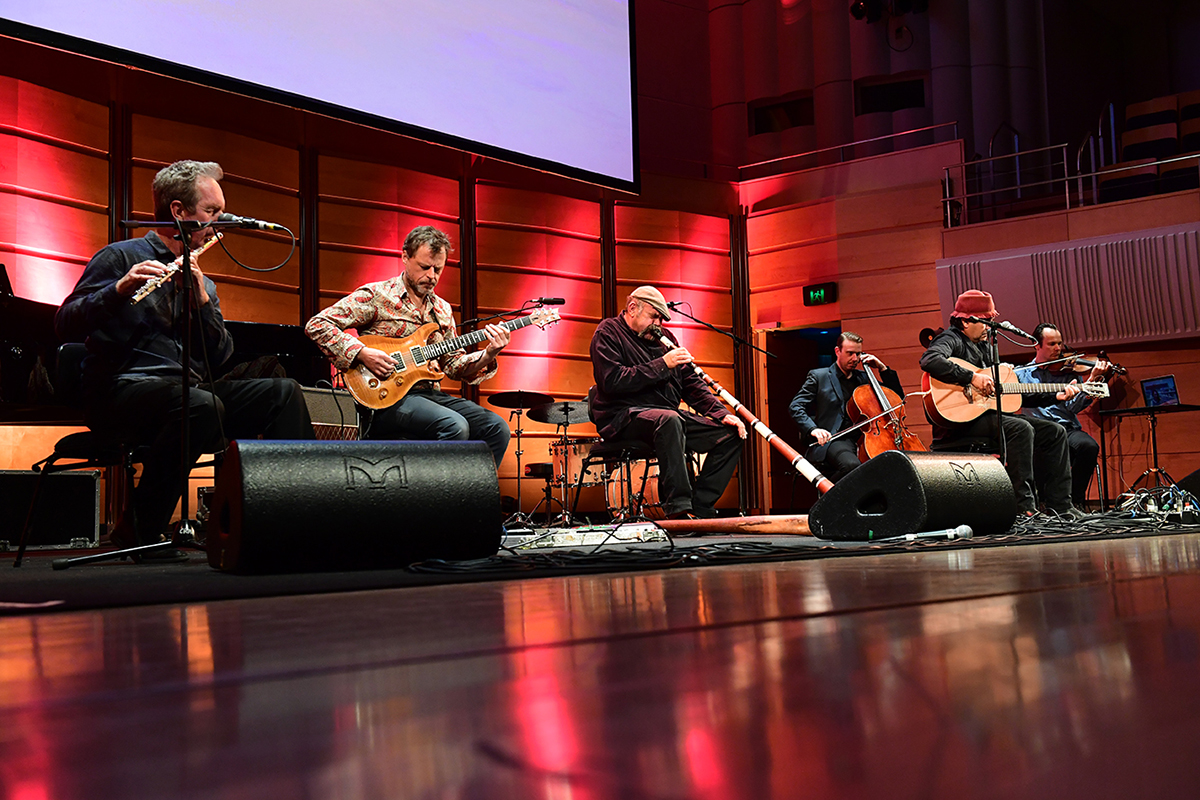
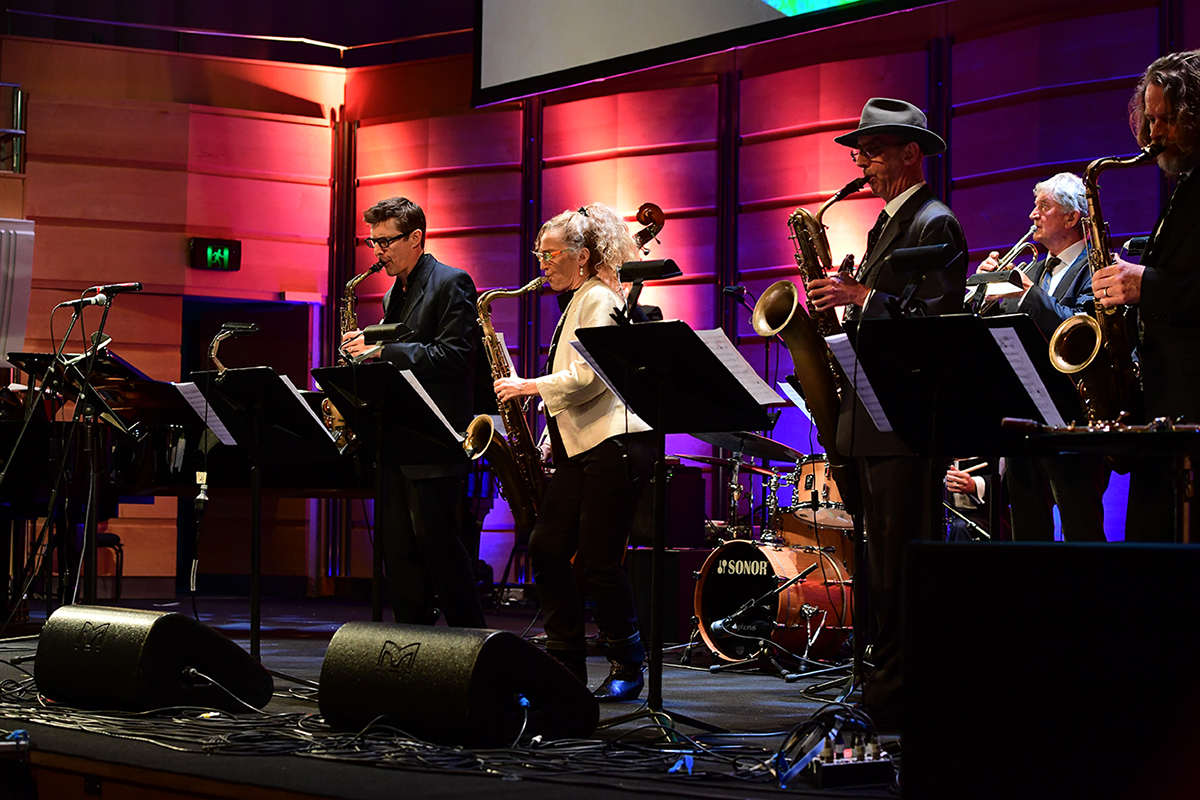
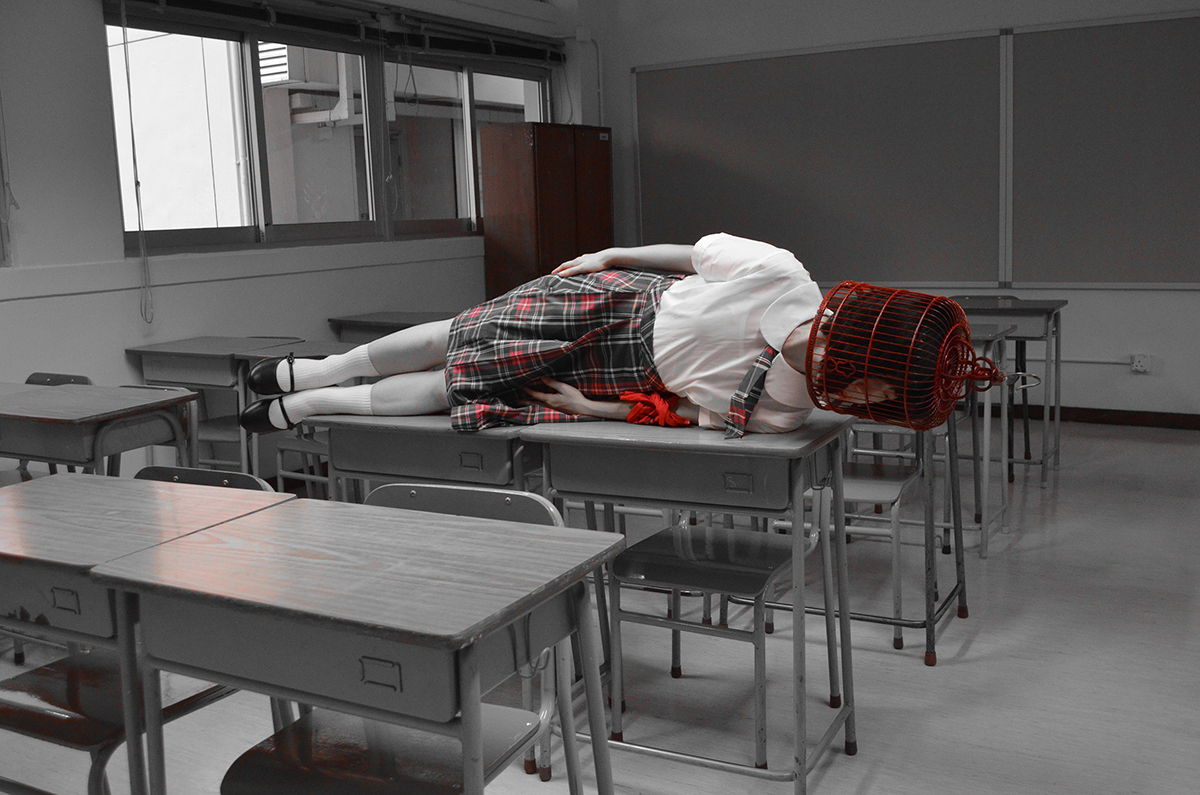
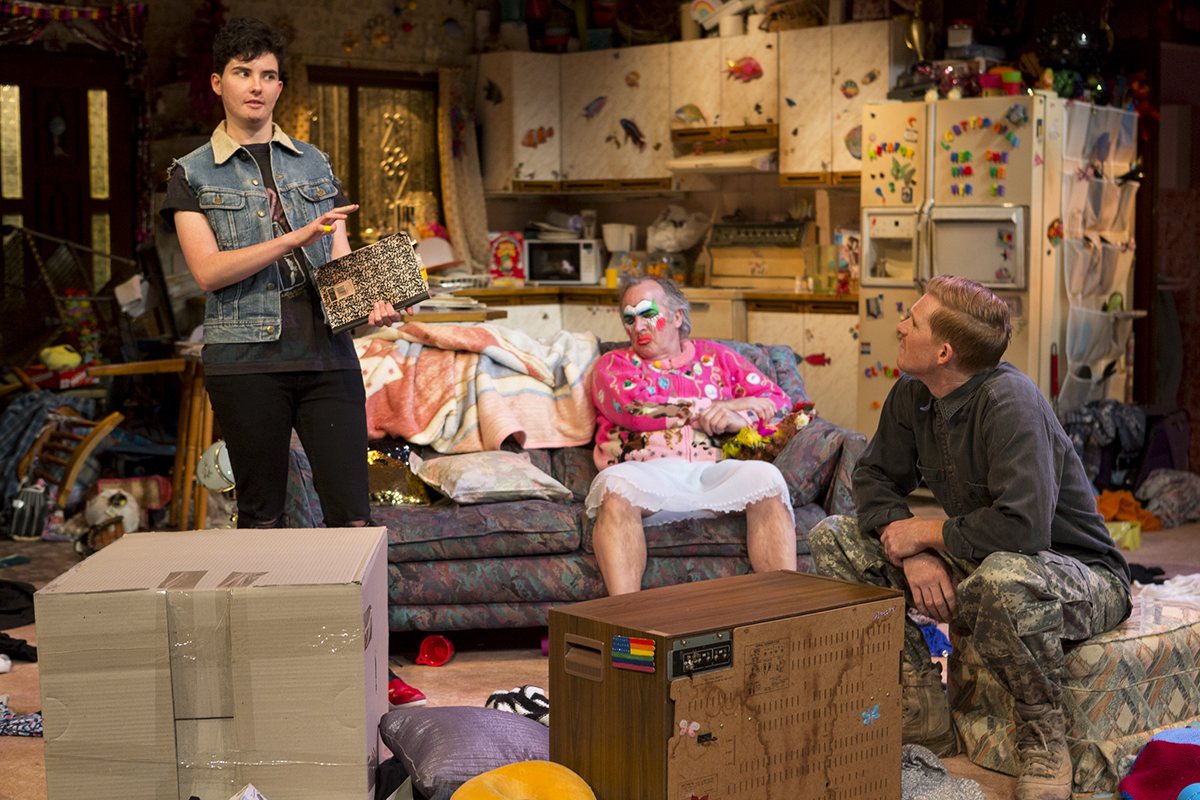
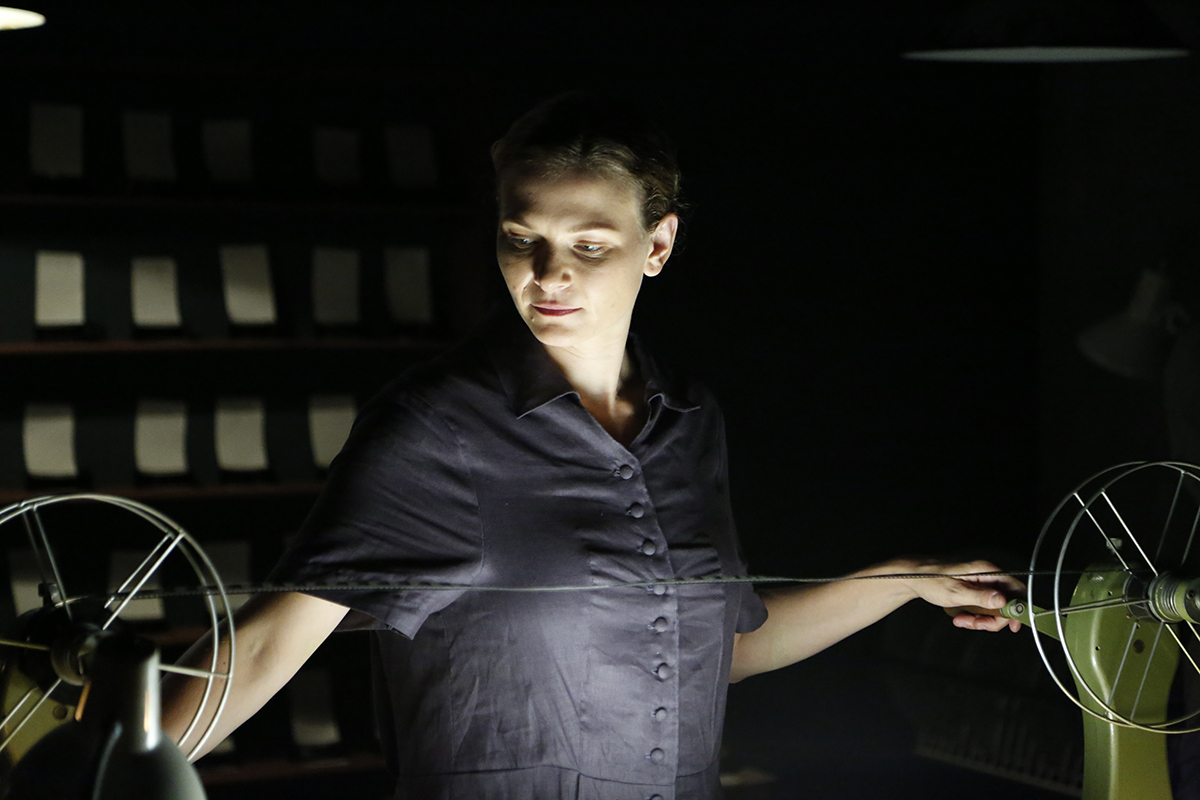
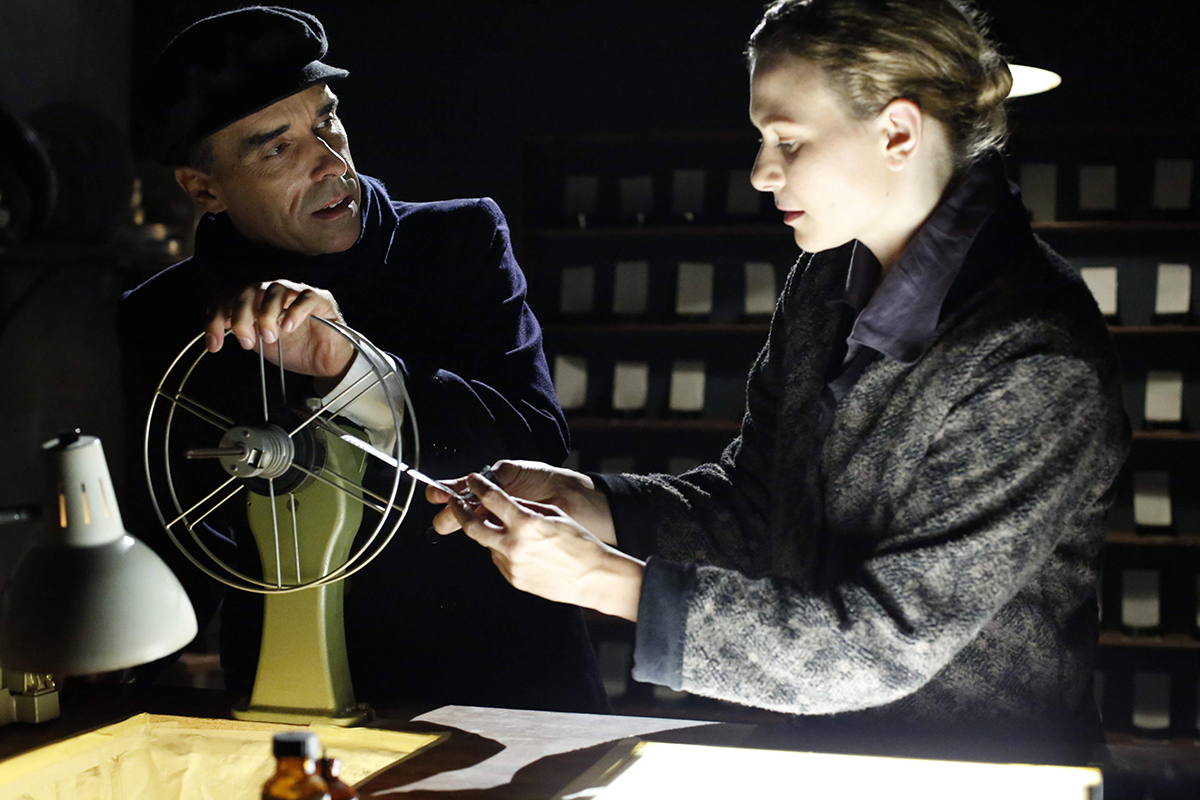
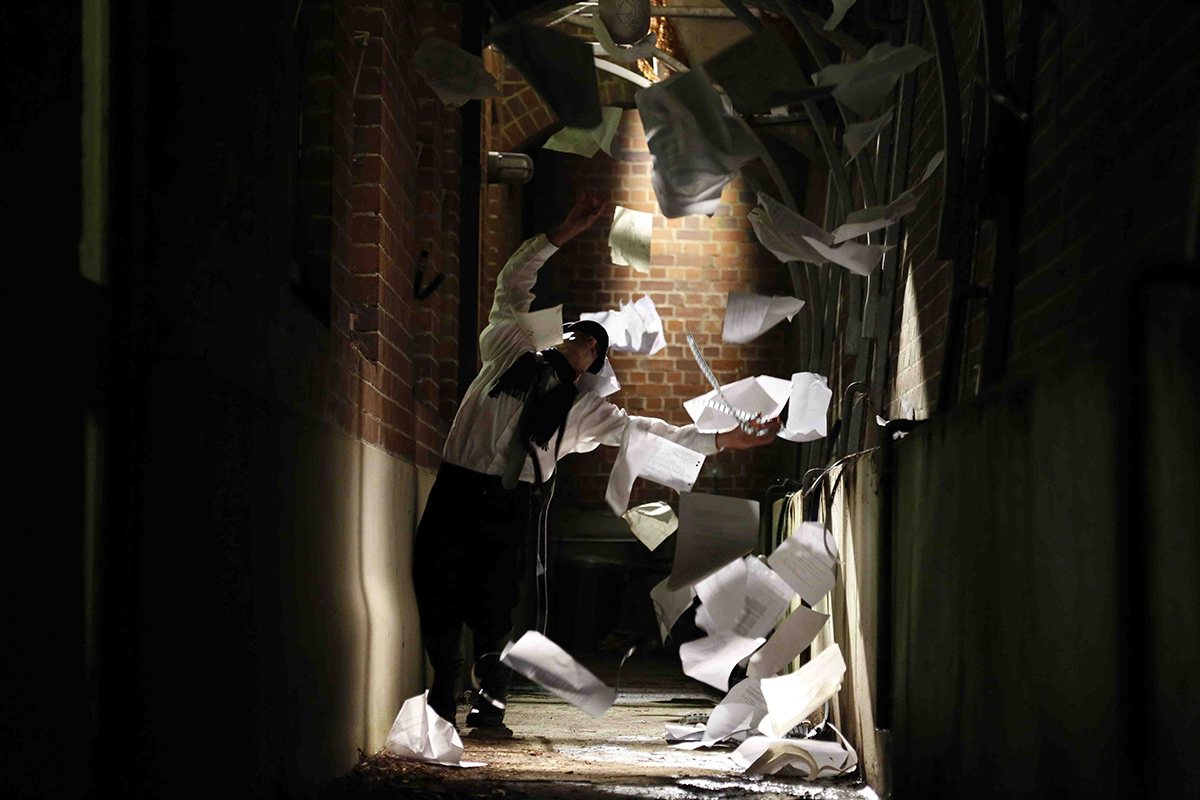
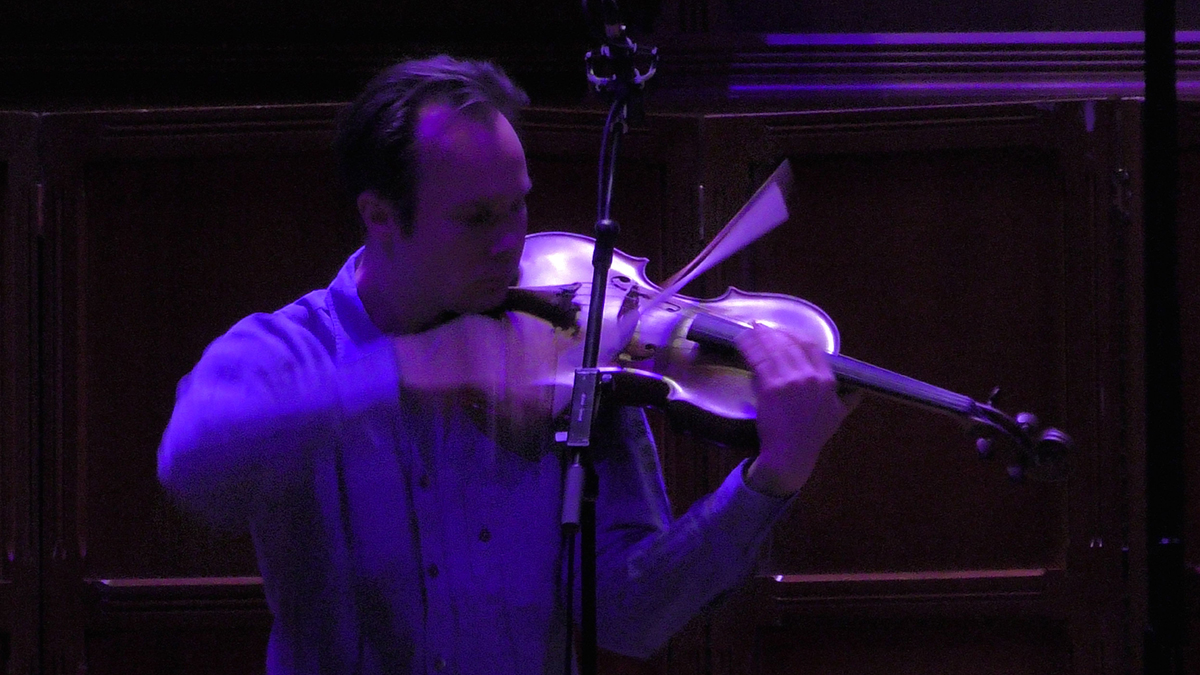
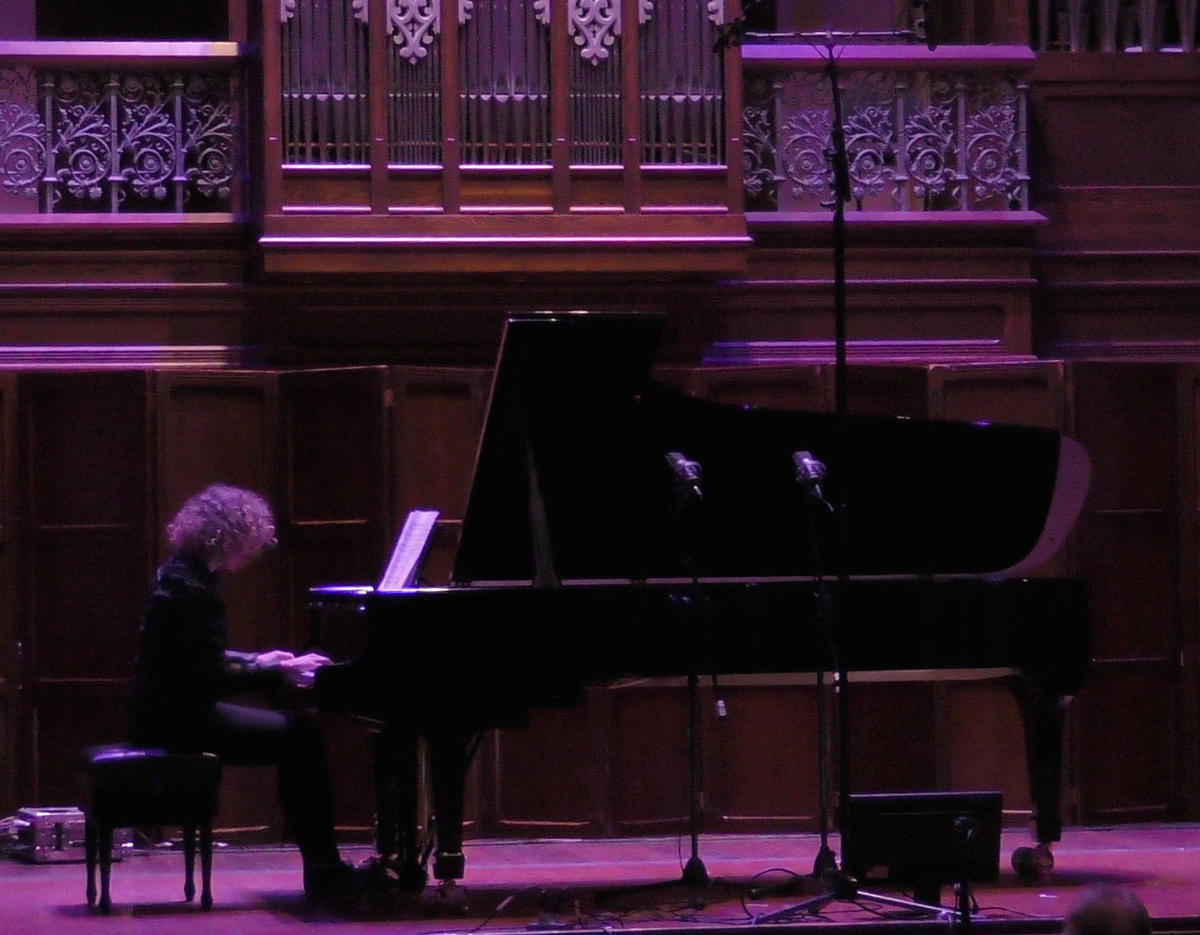
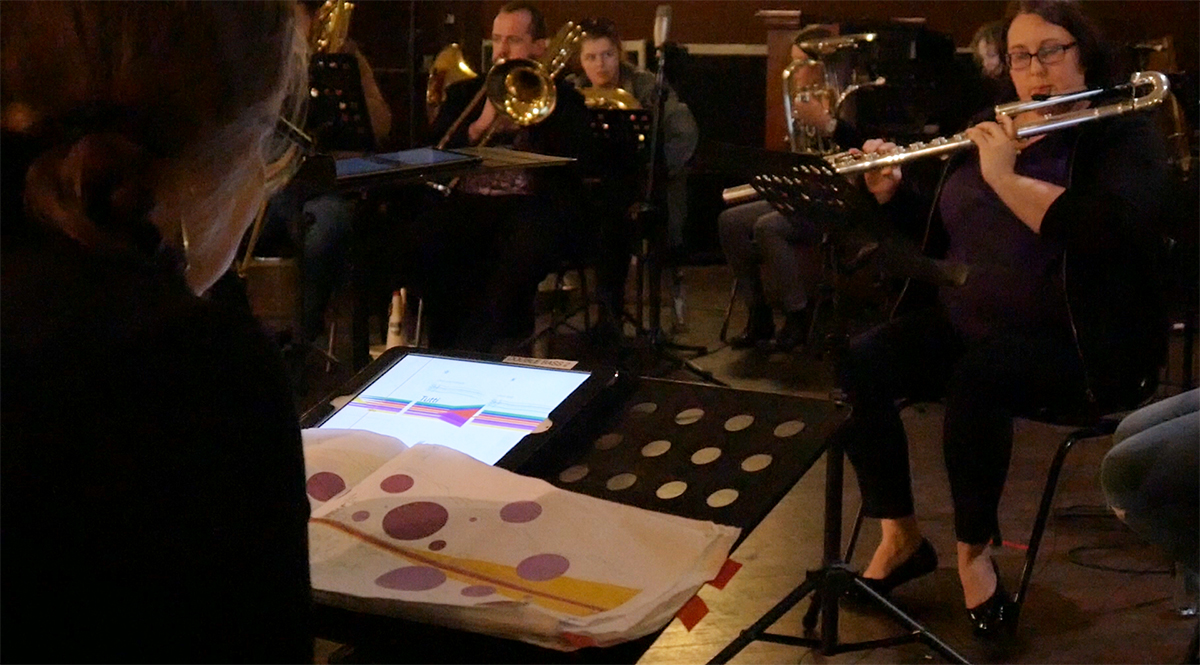
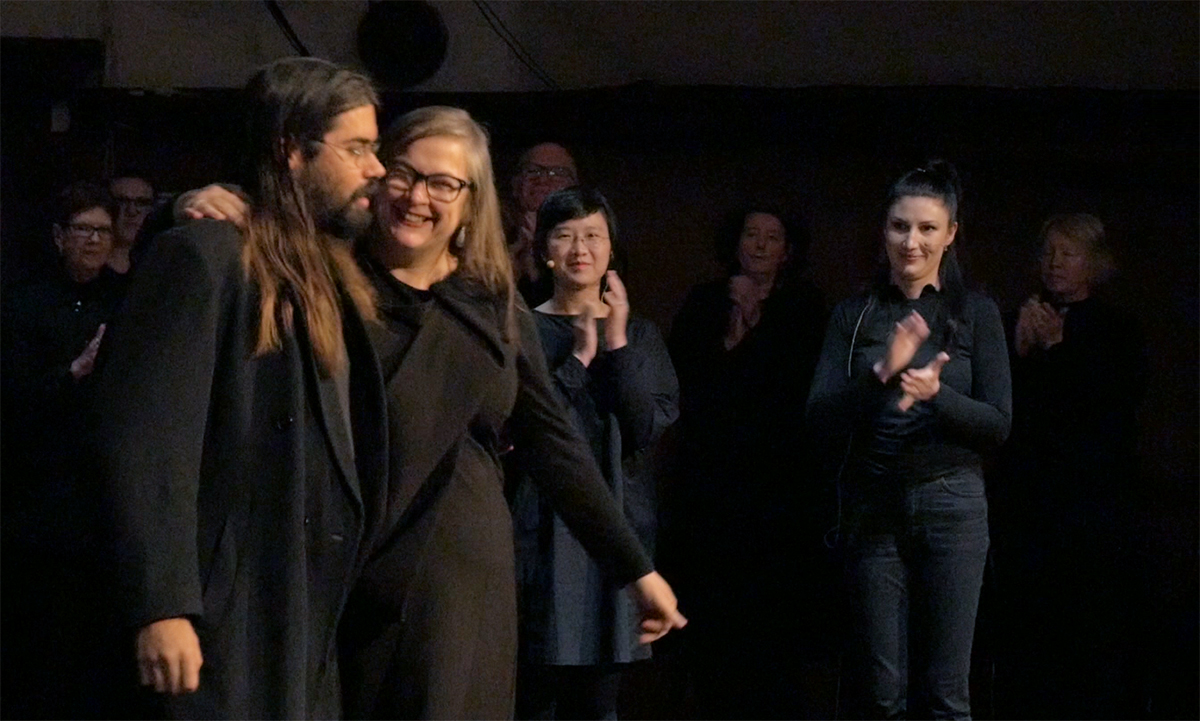
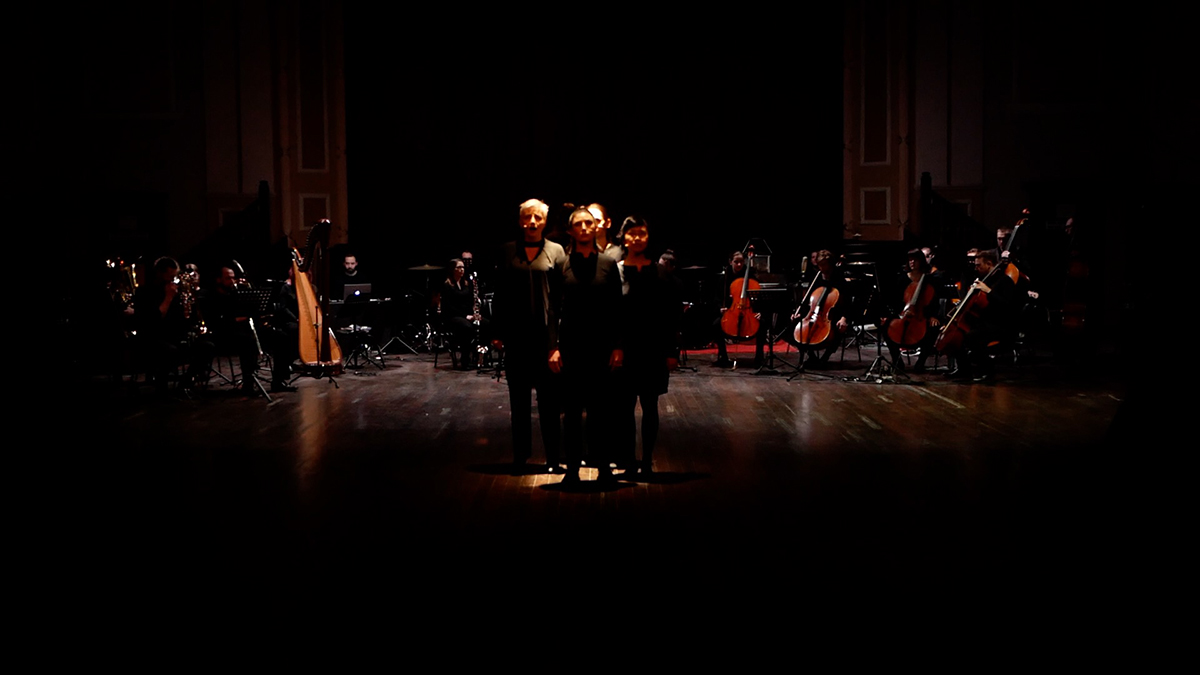
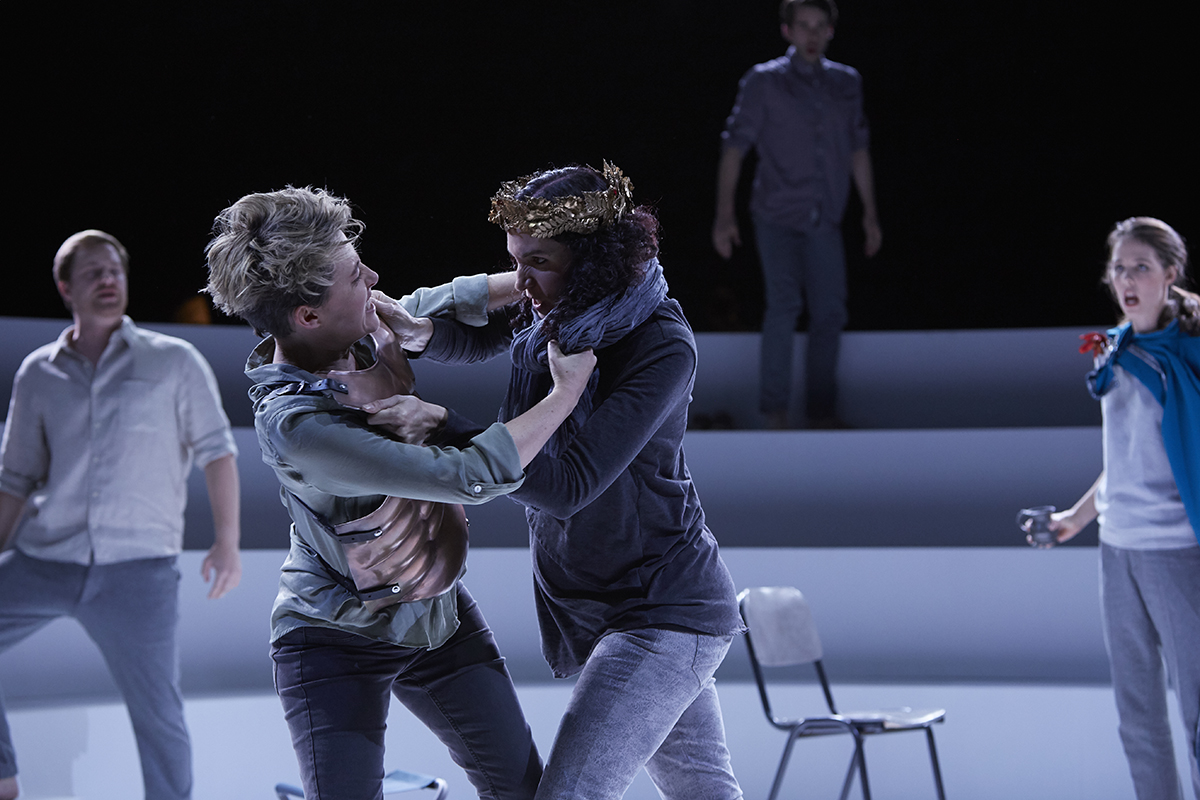
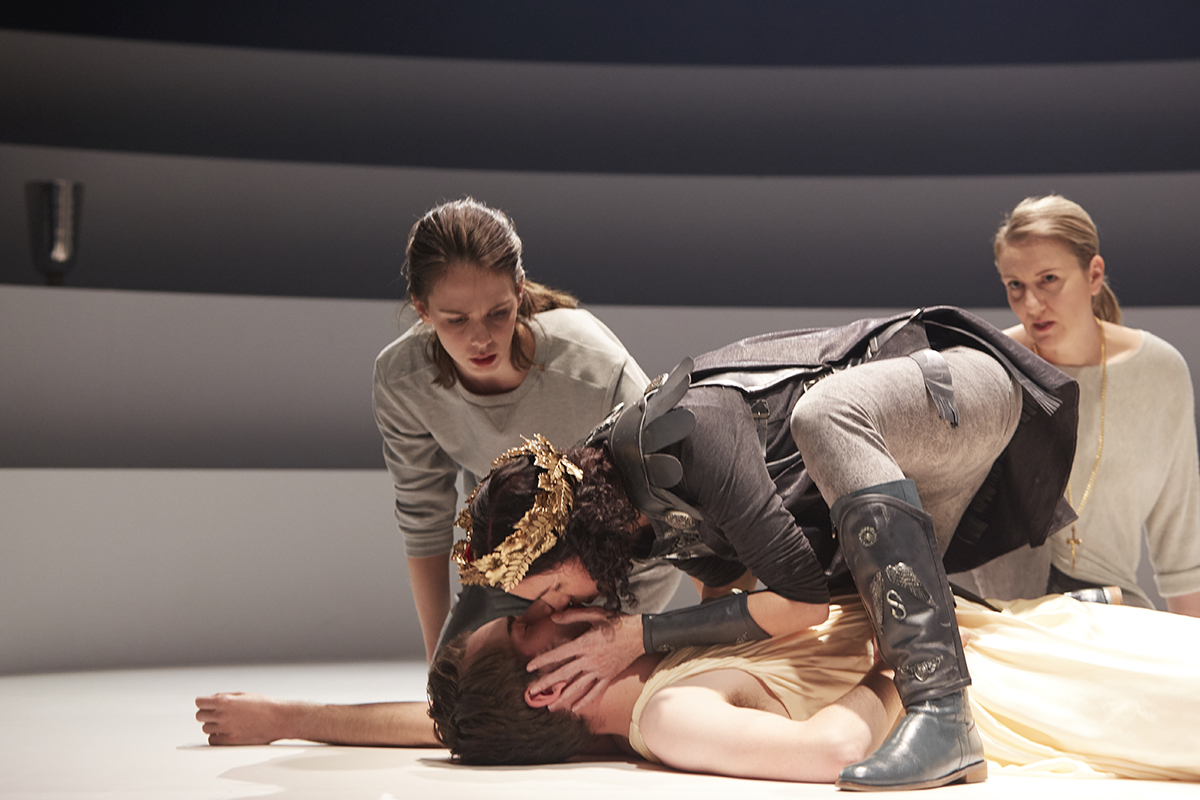
 Longing for Wilderness
 Sergeant James
 The Extraction