In a time when so much arts critical writing is under threat, Lauren finds inspiration in seeing how things were done in the past. The digitised version of UK’s Performance Magazine (1979-1992) was launched in Hull in March and will have a London launch on 27 April. The resulting website is a huge trove of energy and information, archiving 15 years of live, performance, technological and weird art. Even just at the level of design, it’s a wonderful resource, but it also shows how artists of yesterday answered questions that are still being pondered today. Consider this writer’s contemplation in issue 5, 1980, of what technological art can achieve in a “country of unichannel monochrome.”
“When artists use new technology, are they being gimmicky, boring, or are they just doing what comes naturally? If you put video art on television will everyone switch off? Will performance art, as the New Musical Express suggests, be the pop ‘thing’ of the eighties. Have the long succession of tapes watched in back rooms of small galleries merely provided groundwork for the Kenny Everett Video show, Top of the Pops and Saturday morning children’s fun shows? These are questions I ask myself as I stand perusing the ‘Computer Art’ display (this exhibit out of order) in the Science Museum on a Sunday afternoon, prompted by memories of keen technology fever as a bright eyed ten year old innovation fanatic sweating over suggestions of ‘Three-Dee Colour TV’ in a country of limited unichannel monochrome.”
The Games
The ABC iView gods have bestowed something amazing upon us: John Clarke’s classic mockumentary sitcom The Games (Series 1, 1998). Each episode critiques a standard format of political performance and language—the press conference, the talkback radio interview, the government TV advertisement. All up, it amounts to a forensic dissection of the bullshit theatre of contemporary politics.
Poet of Science, Diane Stanley
Who are our cultural heroes? And how do writers and artists represent them? Maria Popova’s website Brain Pickings has a great piece on the beautifully illustrated children’s book Ada Lovelace, Poet of Science, by Diane Stanley for ages 4-8. The illustrations, by Jessie Hartland, are witty and deft in their characterisation of the world’s first computer programmer and her contributions to science and technology. Here’s a bite of Popova’s commentary:
“One of the most interesting and timeless aspects of Lovelace’s story is that her foray into programming bore the mark of what Albert Einstein called ‘combinatory play,’ which he considered the key characteristic of how his mind worked and which bespeaks the combinatorial nature of all creativity—the ability to connect the seemingly unconnected by cross-pollinating questions and insights across disparate domains to create something entirely novel.”
–
RealTime issue #138 April-May 2017
Passenger
photo Gerard Assi
Passenger
It’s often claimed (wrongly) that the first film ever screened was the Lumiere Brothers’ Arrival of a Train at La Ciotat Station (1896). It’s often claimed (wrongly) that the first narrative film was the 1903 Western, The Great Train Robbery. And it’s often claimed (rightly) that trains and early cinema had a complex symbiotic relationship. The historian Wolfgang Schivelbusch in The Railway Journey (1979) has most thoroughly explored the way that the long-distance train journey opened up new experiences of the world as a panorama framed by the window, while cinema’s expansion of the optical unconscious is the subject of innumerable dissertations. Film transports us; the train window collapses time and space.
The makers of the recent Melbourne work Passenger are playing with and against this longstanding association. Though there’s not a camera or projector in sight, it’s closer to live cinema than theatre. The audience boards a bus rather than a train (though given the Western iconography that swirls around the work, it’s tempting to call it a stage coach). As the vehicle takes a leisurely tour around the city’s windswept West and market-driven Docklands, two passengers strike up a conversation and we’re party to their unfolding exchange.
Unless staring at the back of someone’s head is your thing, as you listen your gaze will inevitably be drawn to a window, where Melbourne’s cityscape plays backdrop to the ordinary dramas of the day and, occasionally, a cowgirl spurring her black steed into a trot or a grizzled farmhand with a shovel on some grim mission.
Passenger
photo Gerard Assi
Passenger
The Western is perhaps cinema’s most mythic of genres because its iconography is so cemented, its dramas so ritualised and its themes so familiar that even the slightest deviation from the usual is heralded as some daring triumph. Here the opposite is the case. While images redolent of the genre appear, for almost all of the journey they are barely glimpsed shadows, while the meandering conversation we’re listening to seems haphazard and awkward. The two strangers haltingly discuss job frustrations, Russian oligarchs, the murder of a homeless man, the price of milk. The text by Nicola Gunn has a very contemporary skittishness, while the performance plays out with the extreme laconicism of a Ranters Theatre work (one of the players, Beth Buchanan, is a key member of that company).
But such is the gravity of the Western genre that even anti-Westerns still end up as Westerns. While Passenger’s juxtaposition of striking cinematic visuals with underplayed and undramatic dialogue gives much of this production a jarring sense of disconnection, in its final minutes the action swells to match the Morricone-esque score that has intermittently risen on the bus speakers.
Everything that’s been said so far, it turns out, is tightly wound into a revenge scenario that ultimately takes the players out into the cinematic world on the other side of the window. Where most of the trip’s visuals thus far have been contingent on whatever is taking place on the street today, this final sequence fulfills the promise of cinema’s mise en scène, in which everything within the frame is under a filmmaker’s control. It’s a moment of minor magnificence at the end of a work in which the opposite had seemed the case.
Lz Dunn and local collaborators, AEON, Dance Massive 2017
photo Bryony Jackson
Lz Dunn and local collaborators, AEON, Dance Massive 2017
Lz Dunn’s Aeon is another peripatetic journey through the city with an even greater confidence that pays off richly. Audience members turn up to a secret location where they are equipped with a personal, hand-held speaker and sent off into nearby parkland at dusk. There are no performers, no-one to guide. The freedom is utterly unnerving, but quickly overrun by the equally startling sense of animal group dynamics.
Some members of the crowd wander off but never too far, while the mass itself seems to follow an instinct larger than any of its members. The sounds emanating from our hands often evoke bird calls (Dunn’s earlier iterations of similar work have drawn more directly on the study of bird flocking patterns), but here she has stripped away most literal references to flight in favour of producing an experience that’s nothing less than human murmuration.
It’s vital that there is no spoken component to the experience, and indeed that there’s little literal explanation of what’s going on. At the core of Aeon is a non-verbal experience of the animal aspects of human community, and with that comes a growing attunement to the details of the bushland in the fading light.
Later, non-avian visitors to this park are referenced as runners hurtle by and partially clothed bodies gyrate under bushes. The work ends with a blind dive into Lawrence English’s overwhelming soundscape, which at times is deep and loud enough to deliver a full-body massage. Arriving back into the now-night, it feels like some kind of wordless rite has been enacted, an Orphic passage, an animal transformation. Something vast enough to merit the work’s title, at least, while to an outsider it might all just look like a walk in the park.
Lz Dunn and local collaborators, AEON, Dance Massive 2017
photo Bryony Jackson
Lz Dunn and local collaborators, AEON, Dance Massive 2017
Passenger, devisors Jessica Wilson, Ian Pidd, Nicola Gunn, text Nicola Gunn, directors Ian Pidd, Jessica Wilson, composition Tom Fitzgerald, conceptual & devising contributions Bec Reid, Jeff Blake, performers Beth Buchanan, Jim Russel, Neil Thomas, Jamie Crichton; Footscray Community Arts Centre and Arts Centre Melbourne, 23-26 March; Dance Massive, Aeon, concept, artistic leader Lz Dunn, sound Lawrence English, choreography Shian Law, dramaturgy Lara Thoms; Arts House, Melbourne, 17-19 March
Transformer, Robbie Thomson and M.E.S.S. The Substation
photo Theresa Harrison
Transformer, Robbie Thomson and M.E.S.S. The Substation
When Brad Spolding took over as director of The Substation in 2015, everyone told him there was no way he could transform the struggling venue into a hub of experimental art. Located in a 100-year-old building in the heart of Melbourne’s western suburbs, naysayers warned that people weren’t going to travel from the other side of town to catch cutting-edge work. In the year or so since his first program launched, Spolding has proven them wrong. He didn’t need to lure the art-curious out west. There were already there.
“Yes, we get people who come to sound art gigs regularly but our biggest repeat ticket buyer lives within five kilometres of The Substation,” he says. “That was something I wouldn’t have expected. Often I’m looking around the room during a show with 300 people watching and I’m thinking ‘who are these people?’ We’ve got 70-year-olds and people from really different cultural backgrounds and I think that does talk to the West.”
It’s even more surprising given how difficult it is to sell Spolding’s programs in simple, easy-to-pigeonhole terms. Scanning any given season will throw up a bunch of works that might have you asking, “Is this a concert? A dance piece? Visual art?” You’re thinking all wrong. From day one, Spolding’s programs have gravitated towards the works that sit between categories.
These days, he says, The Substation “doesn’t have a theatre program and a music program and a visual arts program. There’s a program and people are invited to come and experience works throughout the whole year across artforms. We don’t talk about our program in terms of practice.”
The Cell, Brook Andrews, coming up at The Substation
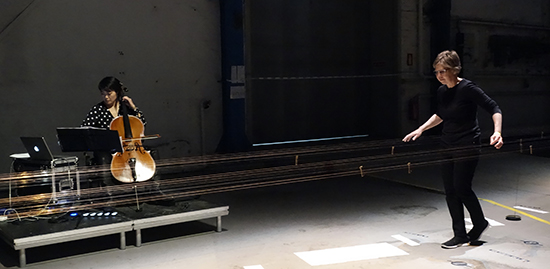
A random selection of recent works illustrates this: US artists Ellen Fullman and Theresa Wong’s Long String Instrument situated its audiences around, and aurally within, a gigantic structure of resonating metallic strings with accompanying cello and electronics. Lee Serle’s Multimodal saw audience members led by dancers through an experience of sound partly via olfactory means. The Rabble’s Cain and Abel was a work of visceral theatre that just as frequently took on the dimensions of a visual art installation.
“My interest in The Rabble is that they’re amazing theatre-makers, but it’s really the thought and preparation that they put into the aesthetic of their work. They work like visual artists. They think about every little visual element of the work and how it all sits together and how it progresses. That’s how they make sense for me as a resident artists at The Substation.”
Spolding can be reluctant to describe his role in curatorial terms. He’s more prone to saying his job is to “get out of the way” of the audience-art encounter. He has no interest in exclusives—‘only Melbourne performance!’—or in any proprietorial relationship with work that is developed or debuted in the building. Why put further limits on people already stretching themselves so far? “It’s tougher now for independent artists than ever before, and it still constantly amazes me that any of them manage to do anything.”
The Megaphone Project, Madeleine Flynn & Tim Humphrey, The Substation
photo Theresa Harrison
The Megaphone Project, Madeleine Flynn & Tim Humphrey, The Substation
Spolding’s past as a producer—most recently as Executive Producer at Ilbijerri Theatre—lends itself to a focus on audience experience. He points to last year’s Melbourne Festival production of Robbie Thomson and M.E.S.S.’s Transformer as the kind of work he feels really nailed it. “I thought a lot about the way we staged the show. We commissioned the work right from the beginning and said, ‘You’ll be in the middle of the audience on a megadeck on wheels. What you do up there is up to you, but we’ll hopefully sell 400 tickets or whatever and the audience will be able to see everything you’re doing.’”
At the same time, that producing history also affords him a sense of The Substation’s position within a larger city context, and he’s often thinking about “how we can play a part in a big city with a bunch of other presenters, so that artists can come into different presenting venues and practise in different ways. You go to other big cities in the world and that’s exactly how it works. It’s not like an artist belongs to a venue. Artists practise in different ways in different venues.”
Spolding says that The Substation’s suburban positioning puts it in a different position from venues that are either nestled within the infrastructure of the CBD or operating in regional areas. While the work he programs is without doubt on the edge of contemporary practice, it almost always has some clear entry point for people who might otherwise not have much history with avant-garde art. Again, Spolding doesn’t see it as his role to ‘translate’ such work to unfamiliar audiences—that would be getting in the way, after all—but most work in the venue presents an image, a phrase or a concept that rings out. “I would also say the work I’m drawn to, it’s not that it’s uncomplicated but there’s a part of it that’s easily picked up by audiences. We just presented Urban Theatre Projects’ The Tribe in a backyard in Newport. It’s a text-based theatre show but it’s fairly complex in the way it talks about the Lebanese community and immigration. But because it’s presented in someone’s backyard, local people are like ‘Oh!’ There’s an element to it that they can grab onto.”
By his own admission, it’s all working better than he’d hoped. In barely more than a year the space has established itself for regular art-goers alongside other similarly reinvented presenting venues such as Theatre Works, but just as importantly it’s found new fans among its neighbours. “The most exciting part of my job is bringing in those people from the surrounding five kilometres to see Robbie Thomson play a Tesla coil. I can see them being really excited by it, because it’s a new experience, they’re new audiences, they’re really taking a punt, have no idea what they’re going to see perhaps, but when we go back and look at who our repeat ticket buyers are, a lot of them are coming from really close.”
You can stream the big hits of the 2017 Sundance Film Festival right now, before the Australian film festivals kick into gear. Once, it would be a long wait to hear if any Sundance hits had made the festival cut. American indies are a mainstay of film festivals in Australia because they draw crowds and switch people on to the wider scope of a festival program. As the film industry deals with the changing viewing habits of audiences, so too are Australian film festivals.
Local festivals are slowly losing access to films that were once guaranteed to be ‘sold out’ due to the aggressive buying tactics of the major streaming services: Netflix and Amazon. As these films disappear, Australian film festivals face the creative challenge of programming to audiences who have every excuse to stay at home. The streaming giants don’t like to share their films with festivals unless they’re premieres, and Australia rarely gets a shot at those.
Shifts in how we engage with technology accelerate cultural change and Australian film festivals are now facing the might of streaming services nudging in on their turf. Is this shift suffocating local film festivals? Or are we entering a new age in which festivals will revitalise cinema when many naysayers are proclaiming its demise?
The Big Sick
What are the streamers buying?
The 2017 budget for streaming giant Netflix is a reminder of their might: $US 6 billion. Close behind is Amazon, spending $3 billion in 2016, which they’re expected to triple this year. But what are they buying? Aside from their crop of original television series, they’re producing and buying films for distribution to their subscribers—and they’ve got a taste for indies. At Sundance 2017, Amazon inflamed the bidding war for The Big Sick, a comedy based on the lives of writers Kumail Nanjiani and Emily Gordon that buzzed with positive word of mouth following the premiere. Amazon bought The Big Sick for $12 million. The major difference between Amazon and Netflix is that Amazon partners with cinema distributors to ensure the films it invests in get theatrical releases. Amazon has collaborated with Lionsgate to distribute The Big Sick in America, while Roadshow will handle the roll-out in Australia.
Award-winning streamers—anti-cinema?
Sundance saw another milestone reached this year when the highest honour at the festival, the Grand Jury Prize, went to Macon Blair’s I Don’t Feel at Home in this World Anymore (2017), a Netflix original film. Netflix doesn’t play ball with cinemas. CEO, Reed Hastings, who didn’t hold back during a recent interview, asked, “How did distribution innovate in the movie business in the last 30 years? Well, the popcorn tastes better, but that’s about it.” He defended his stance by adding, “We are not anti-theatre, we just want things to come out at the same time.”
Netflix releases its films exclusively to subscribers globally on the same day. I Don’t Feel at Home in this World Anymore premiered at Sundance in January and was released globally a month later. Netflix does give its films a cinema run in America thanks to a deal with iPic Entertainment, a small chain with 15 cinemas. Under the deal, iPic shows 10 Netflix movies on the same day as their online releases. Audiences who turn out to see these films in a cinema are small, but the deal allows the company to qualify its titles for the Academy Awards. To date, Netflix has netted seven Oscar nominations and won its first this year for the short documentary White Helmets. A deal in Australia has yet to be struck to put Netflix films in cinemas.
In the past in Australia, there would be a wait to see the Grand Jury prize-winner from Sundance at a major film festival. Sydney Film Festival (SFF) and Melbourne International Film Festival (MIFF) are fed with the films from prestigious international film festivals. The wait time is getting shorter, and in some cases, completely bypassing festivals. What does this mean for Australian film festivals?
Manchester by the Sea
Snapping up festival fare
American indies are still a staple of film festival programming in Australia. These films are a major lure for crowds because they’re an easy sell compared with an eight-hour Romanian black and white film. They sit in the eye of the zeitgeist because people must see these films to have a stake in the conversation; plus, there’s the ‘see for yourself’ factor around any major award winner out of any festival. SFF often nets the Palme d’Or winner from the Cannes Film Festival, for instance Amour in 2012 and Winter Sleep in 2014. SFF has developed a reputation for being able to fast-track films from the French Riviera to Australia because they pull crowds, and Sundance has the same power.
Streaming services are sucking these titles out of festival consideration because they want subscribers to see these films for the first time at home; it’s what subscribers are paying for. In recent years, competition to secure American indies has been tight and it looks likely to dry up if the streaming buying power isn’t going away. From Sundance 2017 Amazon paid $6 million for a Grateful Dead documentary, $3 million for a comedy called Landline and $2 million for a documentary about the terrorist group ISIS called City of Ghosts. Netflix bought the international rights for Australian filmmaker Cate Shortland’s Berlin Syndrome and two documentaries: Casting JonBenet and Chasing Coral.
The service also bought the rights to a documentary titled Joshua: Teenager vs Superpower, about a Hong Kong college student who helped inspire a 79-day protest that shut down the city’s financial district in 2014. In 2016, Amazon paid big to secure the rights to Manchester by the Sea after it played Sundance and kept it locked away all year, avoiding all Australian film festivals and rolling it out for awards season where it became the first film funded by a streaming service to win multiple Oscars.
The shortening release window
In Australia the release window is also shortening for when a film plays a festival and when it’s general release. SFF just released the first-look titles for their 2017 program and one of the big-ticket items is David Lowery’s A Ghost Story, which premiered at Sundance this year and was snapped up by Madman for distribution in Australia. Hours after A Ghost Story was announced as part of the SFF program, Madman dated it for a general release: 13 July, one month after SFF ends. Unless you’re the kind of person who has to be the first to see it, A Ghost Story can be skipped in favour of something not slated for release in the next month, if at all. Of course, there are exceptions: Kelly Reichardt’s Certain Women played SFF in 2016 and failed to get a distributor despite critical acclaim, good word of mouth and an outstanding cast—Kristen Stewart, Laura Dern and Michelle Williams. The Australian Centre of Moving Image in Melbourne and Golden Age Cinema in Sydney have announced they will screen Certain Women for a limited season in mid-April 2017.
Lily Gladstone, Certain Women
MIFF’s Michelle Carey: What challenge?
The Artistic Director of MIFF, Michelle Carey, doesn’t view the rise in streaming services as a hindrance to the way film festivals in Australia deal with indies. “We are still screening as many American indies as we ever have,” Carey said. “In fact, I would say there has been a resurgence in this genre, if one were to call it that, but less at the Netflix/high profile Sundance end of the scale and more at the truly independent or auteur end of the spectrum. I’m thinking here of filmmakers such as Alex Ross Perry, Eliza Hittman, Dustin Guy Defa or the Safdies.”
Streaming services like Netflix and Amazon operate like Hollywood studios when it comes to producing and buying power. A film can be made independently but once a million-dollar cheque is signed, it becomes part of the system. Joe Swanberg, one of the princes of indie filmmaking and a one-time special guest of MIFF, will have his new film, Win It All, released by Netflix in April.
A new wave of independent filmmakers—who are discrete from the system—are rising in the ranks and their playgrounds continue to be film festivals. But just how much of a draw are American indies anyway?
“High profile American films do draw large audiences, perhaps because they often arrive at Australian festivals surrounded by a lot of buzz and with PR muscle behind them, moreso than films from other countries,” Carey says. “No one does buzz like the Americans! But one could also say the same thing about a new Olivier Assayas, Park Chan-wook or Claire Denis film. They would probably get just as big an audience at festivals.”
Having that mix of auteurs and up-and-comers will present the vital challenge to film festival programmers when there’s a James Franco-sized hole in their schedule. Carey points out the perceived gap may be a myth: “There hasn’t been a discernible absence of any sort of films, so it hasn’t really left a gap to be filled. We try to program as diverse a range of amazing films as possible and our festival is large enough that even more niche propositions can get great, responsive audiences.”
Flying the flag for cinema & festivals
In a recent op-ed piece for IndieWire, the co-founder and CEO of Alamo Drafthouse cinemas, Tim League, spoke out against the comments of Netflix’s CEO, cited earlier, stating, “We are in very different businesses. Netflix is in the business of growing a global customer base by being the best value proposition subscription content platform. But here’s my business: cinema. Cinemas are in the business of offering an incredible, immersive experience that you simply cannot duplicate at home. Our job is to put on a show and provide a great value proposition for getting out of the house, turning off your phone and enjoying great stories in the best possible environment. At our best, cinemas should also be local community centres with a real, tangible relationship to their surrounding neighborhood.”
Michelle Carey shares a similar outlook. “Festivals must continue to present films in the best way possible so the power of story, image and sound can wholly envelop the viewer and transform them. And the other fundamental thing about festivals is that they are about the experience of sharing a film with a large crowd, encountering films one would not find otherwise, meeting the filmmaker in person, hearing the often extraordinary back-stories to these films.”
What thrives in the face of the challenges film festivals face against the streaming giants is an unrivalled passion for cinema.
It’s not often a new art project is also a huge infrastructure project for a city. Since public art has become a standard part of both the art world and urban planning in Australia, we’ve become accustomed to art happening in small, unusual spaces. In laneways (as supported by City of Sydney), empty shopfronts (with Renew Newcastle having leapt beyond its home city), overlooked walls (the Elizabeth Street Gallery Project) and malls, you can encounter art by just moving about the city. But what is the next step for public art’s integration into the functioning of Australian cities? And can art act as a type of public infrastructure outside major galleries and museums?
Wynscreen provides one possible answer to those questions, as well as a seductive projection of what cities could be like. A media art installation incorporated into Wynyard Station, Wynscreen opened in December last year and has since become integral to the daily commute of many harried travellers. A large-scale screen, installed on a mezzanine between escalators, Wynscreen exhibits two specially-commissioned video artworks each day to more than 30,000 passers-by in Sydney’s CBD.
While Vivid Sydney projects moving images for an audience on the streets once a year in the form of a festival of light and projection, Wynscreen differs in offering a permanent space built into the architecture of a major transport interchange: it’s not simply decorative and it’s not going anywhere.
“It’s a unique screen in Sydney and Australia,” says Alessio Cavallaro, an associate of Cultural Capital, the project’s creative producers. “There are other screens in Australia that show some art content, but this is the first screen that we’re aware of that is solely dedicated to artwork without any commercial interjections. We were excited to be part of such a landmark project, with its unique formal challenges, its scale and potential to commission a really interesting range of new artworks specifically to surprise and intrigue audiences in that transit space.” The purpose-designed screen is three metres high, 22 metres wide, gently U-shaped and curved at the edges: its uncommon trapezoid shape, as well as the space in which it is situated, make the project super site-specific.
The artists commissioned by Cultural Capital responded to three thematic platforms—time, travel and place—in their own diverse ways: some with abstraction, some figuratively, some performatively, some text-based. Among them so far have been a video of grand gestures and dance by Sue Healey and a work by Gary Deirmendjian featuring figures moving imperceptibly slowly. The screen and its surrounding space hadn’t been constructed at the beginning of the commissioning process, so artists responded solely to the curatorial brief and architectural drawings.
Bluster Town, Ross Gibson, Wynscreen installation
photo Amanda Jelicich-Kane
Bluster Town, Ross Gibson, Wynscreen installation
One of the current works is a text-based work of public poetry called Bluster Town by Ross Gibson, Centenary Professor at the University of Canberra. The basis of the work is a number of words: suburbs in Sydney, Indigenous placenames and descriptions of natural phenomena. Letter by letter, the words form across the screen in three rows. As an array accumulates horizontally, the shape behaves like a slowed bluster of movement, like wind blowing leaves across the ground or light sparkling on the harbour. “It’s a very impressionistic and evocative work in that regard,” says Cavallaro. “It doesn’t offer a narrative or literal significance, except that the viewer might make poetic associations between different words that allude to the dynamic character of Sydney.”
That notion of associative thinking applies to all the works at Wynscreen. Given the location of the screen and that it’s not a conventional gallery, it is experienced impressionistically by diverse audiences day and night, glanced at fleetingly rather than studied. Generally, a work depends on a viewer spending time with it—say, watching a half-hour video from start to finish. But the works on Wynscreen build a relationship with viewers over incidental encounters—in accumulated moments of passing by the works over the course of weeks.
“Most of what we refer to as public art is usually a sculpture, large-scale painting or 3D object,” says Cavallaro. “This project enlivens the space in a way that static works can’t do. Here, you’ve got the rhythms of the moving imagery, the changing shapes and colours. The flow motions of passers-by adds to the energy in the space and combine to create an experience of elastic architecture,” he says, of the way the screen appears to animate the surrounding building.
In extending the space in this way, Wynscreen takes on a function: to help make a small part of Sydney, an often stressed and stretched place of rushed rhythms and sapped energies, more enjoyable for its inhabitants and visitors by building experiential public art into urban infrastructure.
History’s Page, James Price, Wynscreen installation
photo courtesy the artist
History’s Page, James Price, Wynscreen installation
Beyond pointing to the possibility of a different type of city, the project has the potential to grow and develop the audience for contemporary art among the general public. “Our aim has been to present engaging works that raise the curiosity of audiences in an inspiring way,” says Cavallaro. “It shouldn’t be an unusual event to encounter moving image in a public space. Media screens have been around for a long while in Japan, USA, Europe, and represented in films such as Blade Runner. These concepts and precedents have informed the design of Wynscreen. Sydney is beginning to establish itself as a world city that features permanent public media art projects.”
Sydney has all the pressures of other big cities. What’s Wynscreen’s role and function within that matrix, I ask. “Ideally, Wynscreen will become a regular art destination within the social and cultural fabric of the city, in much the same way that one actively visits MCA or AGNSW. Recurrent Wynscreen viewers have already experienced wonderful works by Sue Healey, The Lycette Bros., doeanddoe, Gary Deirmendjian, Ross Gibson and James Price. They clue into the rotational programming pattern and, hopefully, will keenly anticipate the next works after a month or so. So it’s not only regular commuters or casual passers-by but also the art-curious audience who will make the time to pause at the same level as the screen, or look down from the dress circle view at the Clarence Street entrance level to get the full panoramic sweep. It’s that kind of art-engaged audience that we want to develop, an audience that will intimately, irresistibly engage with moving image art works in a very public place, and have their own dialogue with the works.” The Instagram hashtag that has sprung up in response, #wynscreen, is evidence of that very public dialogue.
“Wynscreen is about setting a precedent,” says Cavallaro, “and has had a very positive response from passers-by. Perhaps other groups have had ideas to stage screen-based public art, but may have been a little trepidatious. Wynscreen has become a kind of proof-of-concept. That has been another exciting and rewarding aspect for all involved in this project. Wynscreen can now function as inspiration or catalyst to those who are interested in presenting permanent public media art installations: property developers, corporations, government agencies and cultural institutions.”
presence, Gary Deirmendjian, Wynscreen installation
photo courtesy the artist
presence, Gary Deirmendjian, Wynscreen installation
From 15 April to 31 May, Wynscreen will showcase commissioned artworks by Nicole Foreshew and Pilar Mata Dupont.
Read an interview with doeanddoe, makers, with Michelle Morcos, of Woven Moments which was shown on Wynscreen in February this year.
photo Scott Belzner for Nikon Australia courtesy Bleach Festival 2017
Frank Enstein, The Farm
Frank Enstein is the first children’s show produced by the newest dance company in Queensland, The Farm, based on the Gold Coast. All animals are equal is the ethos of choreographer-dancers Gavin Webber and Grayson Millwood whose past collaborations have included the perennially touring Lawn (2004) and other iconic works programmed across festivals in Europe. The Farm has been a highly active cultural agent in the blossoming performance scene on the Gold Coast. In the legendary durational work Tide, Webber and dancer Joshua Thomson grappled with each other in office furniture embedded into the coastal estuary at Currumbin for 48 hours.
A collaboration with Perth dance company Co3 in Western Australia, Frank Enstein is one of the flagship works at the 2017 Bleach Festival, which is gearing up for a massive year of programming for the 2018 Commonwealth Games.
Loosely based on Jon Scieszka’s Frank Enstein series of children’s books about a child genius, the performance makes our mad scientist older and yearning for love and companionship. Young actor and filmmaker Daniel Monks who has only recently moved into dance and has a mobility impairment, which plays out on the left side of his body, is the emotional lynchpin of the show.
Frank Enstein, The Farm
photo Scott Belzner for Nikon Australia courtesy Bleach Festival 2017
Frank Enstein, The Farm
Rather than the zany science made by the book’s younger protagonist, the show focuses primarily on the growing love affair between Monks as the lonely scientist who has created a series of human dance monsters from lightning (including one accidently born out of a garbage bin) and an eccentric young girl on a picnic with her dog outside the scientist’s garage-lab. She stumbles upon his experiments during the lightning storm and decides, despite her frizzy hair and his experiments, that he is the one for her.
The show feels a bit like sophisticated panto—think Rocky Horror for kids with snatches of dialogue, lots of mugging, sharp entrances and exits and three signs at the back of the lab that flash to change the direction of the show: “Work, Party, Romance.” The strength of the work lies with the characteristic explosive choreography Millwood and Webber are renowned for and some haunting choral scenes where the other dancers move to echo our hero as he mobilises his weaker left arm and is lifted and manipulated.
Like Circa’s When One Door Closes, the show features not only backpack vacuum cleaners but also a dustbuster solo from Co3’s whipsharp Zachary Lopez as the dance creature who emerged from the bin, half 80s-powersuited woman and half unitard-dance monster.
The show is lots of fun and the audience of mostly young boys with their families snorted their way through the gags and the virtuosic choreography. The messages of self-acceptance and worthiness were heartfelt and sincere. Yet the show lacked the edge, the lingering specificity of the best of Webber and Millwood’s work where you feel as if you are looking through a peep-hole into a complete universe, sharply rendered, just for you.
Frank Enstein, The Farm
photo Scott Belzner for Nikon Australia courtesy Bleach Festival 2017
Frank Enstein, The Farm
Bleach Festival 2017: The Farm & Co3, Frank Enstein, directors Grayson Millwood, Gavin Webber, devisor-performers Brianna Kell, Zachary Lopez, Talitha Maslin, Daniel Monks, Andrew Searle, lighting design Mark Howett, set design Vilma Mattila; The Arts Centre Gold Coast, 31 March-1 April
In Olivier Assayas’ Personal Shopper, Kristen Stewart plays Maureen, a woman in limbo. In Paris, she spends her time with senses attuned for some sort of sign from her recently dead twin brother while working in a desultory way as a buyer of couture for a high profile actress. To be in limbo is to wait; “waiting” is Maureen’s default description for her current situation whenever friends or acquaintances ask.
Personal Shopper evokes the insurmountable greyness of grief; the drabness that descends after someone vital is gone. This is a world defined by what’s missing. While Assayas cleverly incorporates aspects of the crime thriller and supernatural horror, it’s the hollowness of bereavement that’s the crux of the film. Almost all Personal Shopper’s emotional impact in this regard emanates from Stewart’s performance. Contained, weary, grungy, sad, she performs her professional duties with the efficiency of her similarly employed character in Assayas’ 2014 feature Clouds of Sils Maria, minus the alacrity.
There’s something very believable about her, a lack of affectedness in her fast-paced, rather flat vocal delivery that stops just short of monotony. Lank-haired, she slouches, unenthusiastic, occasionally surly—not petulant, but a young woman patently weighed down. Stewart clearly fascinates Assayas, who slyly alluded in Clouds of Sils Maria to mass media intrusions into the star’s personal life, while here strongly capitalising on her reputed taciturnity and guardedness.
In keeping with Stewart’s understated demeanour, the camera follows her closely in casual documentary style, lulling the viewer into a sense of the quotidian, until out of this very mundanity arises a jarring incident that triggers an escalation in narrative suspense and, ultimately, terror.
Viewed in terms of the horror film, Personal Shopper is unusual in presenting various genre archetypes in a relatively everyday light, while rendering seemingly unremarkable subjects uncanny. Maureen refers to herself in a matter-of-fact way as a “medium.” Her nocturnal attempts to connect with her brother’s spirit in the ramshackle Parisian mansion in which he lived are initially presented as business as usual, the camera following her at close quarters in the same way it does when she’s flipping through the racks for her elusive boss at yet another luxury boutique.
Kristen Stewart, Personal Shopper
Interestingly, Assayas bypasses contemporary cinematic ghost tropes (the pallid, hollow-eyed, alarmingly agile spectres that leap out of the shadows in a lot of mainstream Japanese, American and Korean horror) in favour of the quaint rituals and iconography of the mid-19th to early 20th century spiritualist movement with its tapping, spirit photography and ectoplasmic eruptions. In her frustration at not being able to contact her brother, who had promised to leave her a sign, Maureen seizes upon passing conversational references to various spiritualist luminaries like Swedish proto-Abstractionist painter Hilda af Klint, who claimed the making of her groundbreaking works was directed by spirits.
As Maureen delves into spiritualist history via online search engines while fielding text messages and Skype calls, the film increasingly becomes a mash-up of 19th century arcana and the restless distraction of the digital era. Rubbing shoulders with Olde Worlde apparitions are the disembodied presences of modern communications technology, enticing us with signs of life, but ultimately just as capable as the 19th century seance of isolating the participant in a haze of uncertainty. Who are we really ‘talking’ to? Is there anyone there at all?
By referring to these two eras, Personal Shopper underscores the essential loneliness and yearning of grief, with its corresponding susceptibility to the lure of “invisible presences,” as Maureen terms them. Kristen Stewart’s performance makes the film’s themes acutely relatable.
–
Personal Shopper, writer, director Olivier Assayas, cinematographer Yorick Le Saux, editor Marion Monnier, sound design Nicolas Cantin, Nicolas Moreau, Olivier Goinard, production design Francois-Renaud Labarthe, distributer Rialto, 2016
The death this week of satirist John Clarke is mourned by all who appreciated the wry eye he cast on the increasingly self-parodying state of Australian politics. The vision presented in his classic series The Games (1998, 2000) was beyond prophetic: Australia itself seems to be a mockumentary, stuck in a perennial state of bureaucratic paralysis and privatisation led by the interests of developers and big business. Clarke and Dawe’s The Energy Market Explained, released scarcely a month ago, articulates everything about Clarke’s capacity for towering intellect, satirical edge and creative thinking, that we will miss so much. Lauren
An incisive writer and an idiosyncratic screen presence, John Clarke was a rare being—a virtuosic performative language analyst. Without physically or vocally mimicking politicians and bureaucrats, he joyfully captured and unravelled the relentless illogic of their hard-selling, self-serving utterances. At the same time, as he did with the documentary formula of The Games, an Australian classic, he and Bryan Dawe dismantled the TV interview—”a unique form of comic miniature,” wrote Max Gillies, “[a] take on the vaudevillian cross-talk act [which] matured like a fine whisky.” All of this was executed with disarming conversational ease, as if Clarke (a perfectionist) and Dawe were improvising. Joining the pair on Thursday nights in a country too, too thin on sharp political satire on television, we could briefly enjoy feeling complicit in striking a blow against a politician and whatever evil they were serving up in the name of the public good. Keith & Virginia
–
RealTime issue #138 April-May 2017
Yumiko Yoshioka, Evocation of Butoh, Asia TOPA 2017
photo Mifumi Obata
Yumiko Yoshioka, Evocation of Butoh, Asia TOPA 2017
The performance of extreme or heightened states is and always will be a fascination. It could be an exhibition of unleashed passions or a feat of physical endurance. It could be a celebration of deeply sensual experiences or a ceremony of spirit possession. It could be ecstasy or it could be trance-like dissociation. The thrill for the audience is the same: the spectacle of mind and body suspended by a thread above an insensible abyss.
And ever since Dionysus walked into Thebes with jangling bells and ivy garlands, this fascination has been a key theme of cross-cultural exchange in the performing arts, West to East and East to West. The history of ritualised and formalised performance traces hemispherical flows, movements back and forth, from religious dance-drama through theatres of cruelty to experiments in psychophysical transformation and beyond.
So it should be no surprise that this theme is so prominent in the program for Asia TOPA, a festival highlighting Australia’s many cultural and artistic relationships with Asia.
Evocation of Butoh: Yumiko Yoshioka, Before the Dawn
One necessary site of exploration is Butoh. This highly physical Japanese art form developed around a key axis of East-West thinking and practice, with ideas drawn from Artaud and Genet among others translated into a post-war Japanese context. Here, extremity is manifested in the need, as Yukio Mishima once said, to scrape all vestiges of habit or convention from the dancing body.
The Evocation of Butoh program at La Mama, produced by Yumi Umiumare, presented five short Butoh dances from local and international artists, as well as a series of workshops. The high point of this mini-festival was an engrossing performance by well-known Japanese choreographer Yumiko Yoshioka—now based in Berlin—titled Before the Dawn (2002).
Yoshioka confronts us with a catalogue of nightmare imagery, including twitching limbs, puppet-like prancing, shadow play, extravagant gurning and erotic grotesqueries, all of which she gives a unique comic inflection. The recurring scene where Yoshioka uses her hands to mime a pair of demonic swans pecking at her face lingers long after the performance has finished. There are also two neat piles of sand on stage, a vision somehow resonant with Hiroshi Teshigahara’s 1964 film Woman in the Dunes.
Yoshioka has a masterful eye for the composition of striking stage pictures with a kind of cinematic stylishness and enthralment. And the fact that Before the Dawn still seems fresh despite the recent deluge of mainstream horror films with Butoh-inspired aesthetics underlines the ongoing vitality of the form.
Dancing with Death, Pichet Klunchun, Asia TOPA 2017
photo Mark Gambino
Dancing with Death, Pichet Klunchun, Asia TOPA 2017
Pichet Klunchun, Dancing with Death
Dancing with Death is a subdued and somehow unconcluded piece in which choreographer Pichet Klunchun uses his own attempt to transform classical masked Thai Khon dance into a more contemporary internationalist style as a metaphor for the political situation in Thailand.
The work begins with brightly costumed and masked figures darting around the stage like a troupe of Phi Ta Khon ghosts. This merry prelude with its folk-style capering soon gives way to something more austere and muted as the colourful spirits recede into the wings, replaced by six dancers in mundane costumes of white, beige and brown.
Dancing with Death, Pichet Klunchun, Asia TOPA 2017
photo Hideto Maezawa
Dancing with Death, Pichet Klunchun, Asia TOPA 2017
The centrepiece of the work is an enormous undulating track, roughly oval-shaped, elevated, set well back from the audience and dimly lit. This represents a kind of limbo around which the dancers walk or skip or sprint. (A state of limbo is one way of describing Thailand since the political crisis of 2013.) Sometimes the dancers pause to peer over the edge of the track or gesture plaintively to one another or to the gods above. Sometimes there is unison or a glimpse of Khon technique, but always there is the discipline of the track.
This is an endurance piece, with the dancers eventually exhausting themselves and dropping out of the loop until there is only one left, Kornkarn Rungsawang, jogging indefatigably around and around. On the night I saw it, the audience somehow missed the cue that indicated the performance was over; we ended up watching for at least an extra 10 minutes until Arts Centre staff intervened. For Rungsawang it must indeed have felt like being trapped in a zone of infinite uncertainty.
Attractor, Asia TOPA 2017
photo Gregory Lorenzutti
Attractor, Asia TOPA 2017
XO STATE DUSK: Dancenorth, Lucy Guerin Inc, Senyawa, Attractor
The XO State series transforms the stage area of the State Theatre into a performing arts club where punters can buy food and drink and see one major performance and several short ones every night. Choreographed by Gideon Obarzanek and Lucy Guerin with music by Javanese duo Senyawa, Attractor is the first of the major performances in the series.
The music is an eerie kind of experimental hardcore, with amplified and distorted riffs played by Wukir Suryadi on crude homemade stringed instruments [built out of redundant farm equipment. Eds], and with theatrical growls and shrieks provided by Rully Shabara. The pair forces an associative link between the throat-shredding vocal acrobatics of contemporary heavy metal and pan-tribalist world music.
The eight dancers from Dancenorth illustrate this link, taking us at high speed from the rock concert mosh pit to the worship of strange new fetishes. This leads us to the depiction of a moment of communal awakening as a clan of some 20 extras emerge from the audience to join the dance. These volunteers—taking direction via earpieces—provide a sort of chaotic backdrop to the lunging and stamping of the ensemble dancers.
It’s a fine performance with an irresistible energy; but it is impossible to believe that the performers, let alone the volunteers, really achieve the ecstatic release promised in the program notes. The choreography is too shrewd, too aware of itself. And so perhaps in this instance the rhetoric of extremity and sublimity has more to do with marketing than creative practice.
TAO Dance Theater, ‘6,’ Asia TOPA 2017
photo Mark Gambino
TAO Dance Theater, ‘6,’ Asia TOPA 2017
TAO Dance Theater, ‘6’ and ‘8’
That is not something you could say of Chinese choreographer Tao Ye, who is committed to an artistic process in which the individuality of his dancers appears to disappear entirely. In the two pieces by Tao presented as part of Asia TOPA, the dancers are placed in a line and perform identical movements, and in both pieces their faces are obscured. Personality disappears into a larger organic unit, submerged by the all-but-perfect sameness of the performances.
In ‘6,’ the dancers stand toward the back of the stage at a slight angle to the audience. Rooted to the spot, they toss themselves back and forth like bottom-dwelling weeds in a dark oceanic trench, each one bending from the waist, rolling and whirling arms, torso and head. With a nerve-jangling score by folk-rock composer Xiao He and moody lighting by Ellen Ruge, the piece evokes feelings of danger and mystery. In the second work,’8,’ the dancers lie on the ground and ever so gradually shift themselves backwards. It’s a little like watching a fractal unfolding as the complex series of pelvic lifts and leg twists repeats and the dancers recede upstage.
The thought of the effort required to master these repetitions is overwhelming, but perhaps this is the point—to let go of the part of yourself which feels overwhelmed. “My pieces take a horrendous amount of time to rehearse,” says Tao. “They may not have much of a message to convey but are certainly a process.” And it’s a remarkable process, but it’s fascinating how the absolute discipline demanded by Tao Ye can also seem like the most dangerous kind of liberation, like the ecstasy or rapture of a zealot.
Takao Kawaguchi, About Kazuo Ohno, Asia TOPA 2017
photo Naoto Iina
Takao Kawaguchi, About Kazuo Ohno, Asia TOPA 2017
Takao Kawaguchi, About Kazuo Ohno
Repetition is also the theme of Takao Kawaguchi’s homage to Kazuo Ohno, presented at Dancehouse. Ohno was one of the founding figures of Butoh and there are extensive archives documenting performances throughout his career. The works which Kawaguchi recreates, drawing on archival footage, include Admiring La Argentina (1977), My Mother (1981) and Dead Sea, Ghost, Wienerwaltz (1985).
Here we have a simple contrast between two different heightened states of being. On the one hand, we have the Butoh master, creating visceral and highly personal modes of self expression. On the other hand there’s the archivist, the one who is passionate about repetition and puts his faith in video recordings and photographs.
And yet the contrast is not really so simple. Unlike Tao Ye and his dancers, Takao Kawaguchi does not appear to believe in the possibility of perfect repetition. Because he uses audio from the original performances as part of his sound design, we can’t help but notice small discrepancies in Kawaguchi’s performance. For example, we hear the sound of Ohno landing, after a short leap, moments before Kawaguchi himself lands. This gives everything in About Kazuo Ohno a slightly melancholic air. It is a special kind of mourning for the master, and an acknowledgement that the archive must always be incomplete.
The final image of the performance is a short video of a carved puppet of Kazuo Ohno held by his son Yoshito Ohno, swaying gracefully to the sound of Elvis Presley’s “Can’t Help Falling in Love.” The passions of the past become curiosities for the future, and what was once so extremely alive is now a drab little puppet. It is, in any case, a sad and tender moment.
From Supersense to Asia TOPA
What is the position of the audience in these performances or depictions of extreme states of being? Are we only fascinated observers, admiring from a safe distance? Or are we vulnerable? Can the performance of heightened states catalyse an extreme transformation?
Performing arts events are, of course, communal experiences, and there is always the possibility of emotional contagion or affective resonance; but the transmission of intense or heightened feeling is difficult in the context of a large cosmopolitan arts festival where performances are inevitably contoured by multiple layers of bureaucracy and the pressures associated with touring. Does this mean we inevitably encounter these performances as high culture voyeurs, browsing exotic experiences, thrilling to the sight of other people in extremis?
Perhaps it does. Here it is worth noting that Asia TOPA is essentially the child of Supersense, a one-off event held at the Arts Centre Melbourne in 2015. It was billed as a festival of the ecstatic, dedicated to exploring extreme and sublime horizons of human experience. A number of the artists at this year’s Asia TOPA festival, like Senyawa and Tao Ye, were also programmed as part of the earlier festival, and many of the organisers behind the scenes are the same.
The centrepiece of Supersense was Kuda Lumping, an extraordinary ritual trance performance involving a troupe of Indonesian dancers and a shaman from Batu in East Java. During the three-hour spectacle, the performers, apparently possessed by ancestral spirits, carried out extraordinary physical acts of strength and endurance, such as eating glass and hot coals.
The Supersense festival was promoted as an opportunity to experience the excitement and impact of ecstatic performances. “Supersense is an emporium for ecstatic experience,” declared Sophia Brous, curator and artistic associate at Arts Centre Melbourne, “a durational festival-as-theatre that will fill audiences with wonder.”
Some of this language of shopping for new marvels is still present in the marketing for Asia TOPA, particularly in the XO State program, curated by Gideon Obarzanek, the director the Kuda Lumping spectacle. But Asia TOPA promises to be bigger than this. Yes, there is still a certain amount of wilful confusion between the presentation and the representation of extreme states, and some convenient ambiguity about whether it is possible for audiences to participate in the ecstasies of the performers or whether we’re simply being invited to gawp at them. But the shift in emphasis allows for a more critical engagement with the theme of heightened states.
Takao Kawaguchi, About Kazuo Ohno, Asia TOPA 2017
photo Naoto Iina
Takao Kawaguchi, About Kazuo Ohno, Asia TOPA 2017
Think of About Kazuo Ohno, for example. Although Kawaguchi is committed to upholding the legacy of the Butoh master, his performative relationship to the heightened and stylised emotionalism of Ohno is deliberately ambivalent. He confronts the audience with intellectual problems as well as intensive or affective ones.
There is no doubt that Asia TOPA could include more of these sophisticated critiques of the performance of ecstatic experiences and transformations. There is, after all, plenty in our collective fascination—both West and East—with ancient ceremonies, spirit possession and transcendental experience that demands examination.
–
Asia TOPA: Evocation of Butoh: Before the Dawn, choreography Yumiko Yoshioka, music Zam Johnson, Kenichi Takemura, lighting Joachim Manger, La Mama Courthouse, 11-12 March; Dancing with Death, choreographer, director, designer Pichet Klunchun, lighting Asako Miura, sound Hiroshi Iguchi, costumes Piyaporn Bhongse-tong, dramaturg Lim How Ngean, Arts Centre Melbourne, 2-4 March; XO STATE DUSK: Lucy Guerin Inc, Dance North, Senyawa, Attractor, choreographers Gideon Obarzanek, Lucy Guerin, music Senyawa (Rully Shabara, Wukir Suryadi), lighting Ben Bosco Shaw, costumes Harriet Oxley, audio design Nick Roux, Arts Centre Melbourne, 22-26 Feb; TAO Dance Theater, ‘6’ and ‘8’, choreography Tao Ye, Music Xiao He, lighting Ellen Ruge, Ma Yue, Arts Centre Melbourne, 22-24 Feb; About Kazuo Ohno, concept, performance Takao Kawaguchi, choreography Kazuo Ohno,Tatsumi Hijikata, dramaturgy, video, sound Nato Iina, lighting Tosho Mizohata, costumes Noriko Kitamura, Dancehouse, Melbourne, 25-6 Feb
Deep Sea Dances, Rebecca Jensen and ensemble, Dance Massive 2017
photo Gregory Lorenzutti
Deep Sea Dances, Rebecca Jensen and ensemble, Dance Massive 2017
The American writer Claudia La Rocco, currently a columnist for Artforum, was in Melbourne recently as a guest of Dancehouse, running a series of workshops on writing and performance.
In The Best Most Useless Dress, a collection of her essays, reviews and hybrid responses, there is a long essayistic poem called “On Taste” which describes her participation in a collaborative dance performance that premiered at the BFI Gallery in Miami in 2012. It opens with these lines:
The carpet is impossibly white?
The tower is a double crescent
There is a way in which the translator must love failure?
The thin line of light splitting the morning sky
Certainly critics must be, on some level, fascinated with the difficulty of translating the experience of a performance into words. This is uncontroversial. But what about choreographers? Is the love of failure the same? Are they, too, driven by the impossibility of a perfect translation from life into art?
Tangi Wai, Victoria Hunt, Dance Massive 2017
photo Bryony Jackson
Tangi Wai, Victoria Hunt, Dance Massive 2017
Victoria Hunt, Tangi Wai…The Cry of the Water
Tangi Wai is a dim and distant and sometimes disappearing work. Everything happens in darkness and a long way from the audience. This could signal a kind of emergence, as though the Maori mythology and cosmology invoked by director and choreographer Victoria Hunt were rising from the deep past into the present; but it could equally be the opposite, a mourning song for old spirits now departed.
Everything here is so indistinct and overshadowed that either reading is possible. This is a work which demands a speculative leap to finish the translation.
It begins with a complete blackout. Then there is a single white light, some 30 metres away at the other end of the vast Meat Market pavilion. More lights begin to flicker around the space. There is a low rumble, which slowly builds in intensity. Eventually, we see a woman in the distance, surrounded by clouds of watery mist, long bars of white light sliding over her and moving toward the audience.
At this point Tangi Wai begins to look like a kind of birth story. The woman thrashes around, partially naked, a kinetic solo suggesting either ecstasy or agony. The bands of light come faster and faster, like peristaltic contractions. We glimpse something that might be an umbilical cord—and then there is more darkness. In the next scene, a new dancer creeps mouse-like across the stage, zigzagging toward the audience. Is this the child that was promised?
The program notes provide some insight into the kind of traditional materials that Victoria Hunt is working with. Under the heading “Progeny,” she writes:
Lifting out of the bones, flesh and
skin like thin streams of mist,
floating into the atmosphere.
The terrifying and merciful portal
of Hine-nui-te-po.
Hine-nui-te-po, goddess of night and earth, is the ruler of the underworld in Maori mythology. The note doesn’t clarify the spectacle, but it does suggest something of the great mystery that stands between the mythology and our sense of Hunt’s stage translation.
Creature, József Trefeli and Gábor Varga, Dance Massive 2017
photo Gregory Lorenzutti
Creature, József Trefeli and Gábor Varga, Dance Massive 2017
József Trefeli and Gábor Varga, Creature
Stomp. Ting. Stomp. Ting. In they come, József Trefeli and Gábor Varga, wearing big black pumps with little bells on them. The audience sits in a square around them. Immediately, the two performers begin arranging and rearranging various accessories used in traditional European folk dances, including long sticks and stock whips, creating runic figures at the centre of the square.
As they work they also dance, with much energetic stamping and scuffing and clapping.
All this is a long—but delightful—prelude to the revelation of two creatures. It is a costume transformation. Trefeli and Varga climb into matching bodysuits covered with short streamers and place long brown cylinders over their heads. These costumes appear to be made from recycled materials; fragments of old typography, for example, can be seen on the streamers, as if a banner of some kind had been cut into strips. And, indeed, the whole performance can be read as a kind of salvage operation, reclaiming folk heritage from ethnographers and anthropologists.
Staged on an indoor basketball court where the report of every stomped boot and cracked whip seems to linger for a long moment, Creature is as much aural as visual pleasure. Indeed, the work also features chanted lines in Magyar (both men have Hungarian ancestry), the language that British author Patrick Leigh Fermor once described as the most dashing of all European languages: fast, incisive and distinct.
Creature is an ultimately very stylish attempt to translate the exoticism of European folk materials into contemporary dance. Does this translation also fail? Yes, but there is nothing melancholy in this piece. Where there are difficulties, Trefeli and Varga offer them to the audience in the form of cheerful obscurity. It is as if the thing that is lost in translation returns to us as an enigmatical creature with a long brown snout, a kind of mascot for all future acts of choreographic conversion.
The space for Bodied Assemblies is an intimate one. The lighting is low and warm and the stage area the size of a large dinner table. The seating is in the round. In one corner there’s a varied array of percussion instruments, including a gong.
The three dancers, already waiting prone as we take our seats, begin to stir as the soft sound of the gong builds to a deep roar. Bhenji Ra slowly moves around the stage on all fours, Julian Renlong Wong examines his navel and Ivey Wawn stares up into the lights. By the end of the piece, an hour later, they are all on their feet, shaking and grooving as if they were on the dance floor of a private club. Wawn is still centrestage, her platinum blonde buzz cut glowing against the dark background, smiling and whooping as she looks upward.
Newton herself describes the dance as an intricately structured series of collective actions. What are these structures? The three performers creep and murmur, feeling their way into new patterns or playing little games as they move through the stages of their awakening. At one point, the dancers start describing their own bodies, the audience and the room around them in short two-word phrases. These phrases are then taken up arbitrarily as movement improvisation cues by the group.
There is also a dynamic score by percussionist Bree van Reyk, performed here by Leah Scholes, a fine accompaniment to this experience of collective awakening.
James Batchelor, Deepspace, Dance Massive 2017
photo Gregory Lorenzutti
James Batchelor, Deepspace, Dance Massive 2017
James Batchelor, Deepspace
The Australian Antarctic Arts Fellowship provides artists with a unique translation opportunity. Artists with a non-science background are offered a place on a government icebreaker, and the chance to experience Antarctica. The challenge for the artist is to communicate this unique experience to others.
Last year choreographer James Batchelor explored the Southern Ocean, and Deepspace is his response. This is a work that reflects more on themes of confinement and restriction than on frigidity and vastness. The long warehouse space in North Melbourne, with its white walls and polished concrete floor, is reminiscent of the closed world of a ship’s hold. Sound designer Morgan Hickinbotham sits with his laptop on a mezzanine at the far end of the warehouse, overlooking the performance space. You can almost imagine that he’s on a ship’s bridge.
Batchelor and Chloe Chignell run their hands along the walls, dodging audience members, emphasising the fact of confinement. There are several passages depicting the constant heave of the ship, and there is a strange erotic ritual in which Batchelor stands over the kneeling Chignell, both holding large white polygonal sculptures. Is this a comment on boredom as aphrodisiac?
What is perhaps missing in this translation is a sense of the unseen immensity beyond the wall of the hull. I thought I saw it once, when Chignell was standing on Batchelor’s shoulders against a wall, wiggling her fingers. It looked for a moment like a black fissure in a glittering wall of ice.
Deep Sea Dances, Rebecca Jensen and ensemble, Dance Massive 2017
photo Gregory Lorenzutti
Deep Sea Dances, Rebecca Jensen and ensemble, Dance Massive 2017
Rebecca Jensen, Deep Sea Dances
Seventeen dancers sweep through a warehouse space lit by streetlights outside the clerestory windows, surging and then drifting, rising and then sinking, caught up in a delicate pattern of ebb and flow. There are beautiful, quick, undulant phrases, like “grinding water” or “gasping wind,” as Wallace Stevens has it; and there are moments of poised calm.
Who is this amazing choreographer and what has she done with Rebecca Jensen? It is early 20th century dance innovator Doris Humphrey and the piece is Water Study (1928). And whatever you may think of Jensen’s own work, it is surely a minor bit of brilliance to begin the evening with a revival of this early experimental masterpiece. The Dance Massive festival can sometimes feel like a place where dance falls out of dialogue with its past and embraces pure contemporaneity. Wouldn’t it be a good thing to see more independent artists presenting recreations alongside their own work?
This question of the relationship of contemporary dance in Australia to its history feels like an urgent one. It’s a question which is raised also in Shian Law’s Vanishing Point and Martin Hansen’s If It’s All in My Veins in the Dance Massive program. Perhaps we are approaching a turning point? It would not be a bad thing if we saw a new enthusiasm for the lost worlds of avant gardes past.
The other thing to note about Water Study is how compact it is. Performed by Jensen and her team it runs for less than 10 minutes. There’s more than one work in this year’s festival that would benefit from cutting and condensing, dances where a relatively small amount of material is padded with extraneous business and repetition, drawing out to tedious length something that might have been an effective 10 or 15-minute show.
This of course is not just a problem for independent choreographers; it is a problem for presenters and commissioning partners. Why are there no double or triple bills in the festival? Why is the independent sector obsessed with long works?
In any case, Jensen should be applauded for smuggling in a second piece. (No mention is made of Humphrey in the program notes or on the festival website, perhaps because the copyright still has eleven years to run.) But Jensen’s own piece is nonetheless longer than it needs to be.
Where Water Study can be read as a graceful translation of the way water moves in large-scale flows, in Deep Sea Dances we see the competitive interactions and chaotic dynamics in undersea ecosystems. This is a fine enough idea and leads to some interesting improvisations, and Jensen’s nostalgia-tinged sea-punk aesthetic is not entirely unappealing, but there’s no reason for inflating this piece beyond half an hour.
–
Dance Massive 2017: Victoria Hunt, Tangi Wai…The Cry of the Water, Meat Market, 14-18 March; József Trefeli and GáborVarga, Creature, Carlton Baths, 17-19 March; Rhiannon Newton, Bodied Assemblies, Dancehouse, 14-17 March; James Batchelor, Deepspace, Meat Market, 20 March; Rebecca Jensen, Deep Sea Dances, Meat Market, Melbourne, 22-26 March
Ros Bandt’s tarhu—a handsome, long-necked East-West hybrid stringed instrument which can be plucked or bowed and has resonant sympathetic strings—is the artist’s means for conjuring a cogent, sonically immersive world view which draws together voices human, animal, instrumental—lyre, harp, viola da gamba, shofar—and electronic. Hence the title of this two-CD set of works made across the last decade: Tarhu Connections. Above all, player and tarhu are always in the world—an ancient cistern beneath Istanbul’s Yerebatan Palace ringing with dripping water, the talkative streets of Hania in Crete, a rural path along which goats trot, their bells tinkling, a room in Venice where the sound of rain accompanies softly plucked strings.
These sounds and spaces are heard on the set’s first disc, Mediterraneo, in which a sense of cultural preservation dominates—of ancient towns and fields, the Greek lyre, Hesiod intoned, a shepherd’s flute, a lullaby—but with a sense of continuity. A modern poet reflects on the persistence of the spirit of a neolithic goddess as a fierce wind whips about and, in a piece of high drama titled Four Murders in Four Minutes, Bandt apocalyptically evokes Medea via amplified tarhu and electronics (Jon Drummond)—tarhu groaning, mad chatterings, distant cries, high bells, a great wave of sound and a gasping sense of air sucked out of a cavernous space. “From the Shofar,” which “mourn[s] the desperate plight of the dispossessed Jewish culture over millennia,” was recorded from within the ram’s horn, yielding a thunderous soundscape through which the tarhu empathically grinds and growls.
These bursts of passion in an otherwise contemplative disc foreground the darker energies of the Mediterranean. Change too is noted: shepherds no longer play flutes (but Bandt does). On the final track, once the goats, now frisky, have been fed, the sound of their keeper’s SUV is heard roaring off into the distance.
Yerebantan Sarayi Palace cistern
photo courtesy the artist
Yerebantan Sarayi Palace cistern
Throughout, the tarhu is an eloquent full-throated voice and harmonious partner, capable of diving to remarkable depths, gliding high or gently droning, always soulful, enhanced by resonant settings like the Yerenaten Cistern (harp and tarhu dialoguing) or merging with a density of sounds—walkers and talkers, a band, a priest, pigeons—in ancient streets. Mediterraneo exudes a sense of wholeness, of a shared journey and commitment to cultural preservation, in a very contemporary way, with an instrument that is a modern hybrid (invented and crafted in Australia by Peter Biffin) of the Turkish tanbur, the Persian kamancha, the North Indian Vina and the Western violin and double bass—alongside soundscapes and electronics.
Pacifica, the second and more diverse disc of works, offers a quite different experience with its focus on protection of the environment and collaborations with Asian musicians. “Silk Bamboo Wind” is an immersive constellation of notes—from tarhu, psaltery, Vietnamese zither and recorders—jangling and tumbling as if in a state of restless suspension through which bird-like creatures fly. In “Sheng and Tarhu in the Bush,” the always impressive Chinese Sheng mouth organ, played by Wang Zeng Ting, engages lyrically in shared and overlapping short and longer phrasing with the tarhu. Recorded in Victoria’s Goldfields, it recalls the Chinese presence during the 19th century Gold Rush, which is also evoked in “Fields of Gold,” a melancholy response to tombstone texts underpinned with insect clatter and briefly interrupted by a burst of kookaburra laughter.
Ros Bandt plays lyre at Delphi
In “Hydra,” elephant sharks are recorded eating pippis in an aquarium: the water laps, there are pings, bubblings and grindings and what seem like surges of static. “Whalesong,” made in a Japanese radio studio as an elegy for the creatures” features long, gliding notes and multiple voices that recall recordings of whales singing, here in a vast, oceanic sound world beyond our landlocked comprehension. Bandt writes, “The [bowed] sympathetic strings of the tarhu become the inner voices and feelings of the whales as they are regularly rounded up and dragged behind ships half alive, close to where I am.”
Animal life figures strongly in Pacifica, Bandt, performing in “ancient acoustic habitats” (in Delphi and a Victorian forest), plays tarhu and Greek lyre, lovingly duetting with recorded lyrebird song. “Rapturous” is “a fast ride with an eagle” in the US: “the granulated eagle calls are stretched to represent the psycho-perceptual orientation of the eagle, solitary, looking down over the land.” Tree life is also intriguingly acknowledged in “Rimu,” the tarhu singing delicately with the burblings high and low of an ultrasound recording of one of New Zealand’s ancient native conifers (they can live to 1,000 years).
Pacifica’s moment of drama comes in the form of “Stranded on Ice;” the context, Global Warming; the instance, polar bears’ loss of habitat. Jim Atkins’ electronics and Bandt’s raw tarhu bowing in widely spaced strokes and her use of randomly precussed glass, generate a nightmare world populated with feral cries in a vast directionless space.
The disc ends serenely with “Windharps remix,” nine harpists playing Australian-made instruments recorded in wind, variously in Istanbul, Lake Mungo and Kyneton. The tarhu flies contemplatively amid murmuring voices and cascading harps, as if to play forever. With its sense of the weave of time, culture, nature, it’s a signature conclusion to Tarhu Connections, a CD set that embodies Ros Bandt’s distinctive commitment to elaborating a musical, cultural and environmental world view with ancient practices sustained and renewed through cross-cultural collaborations.
You can hear Ros Bandt talk about Tarhu Connections and listen to excerpts from the discs here and here.
All profits from the CD sales of Ros Bandt’s Tarhu Connections go towards educational programs for refugees in the Young Citizens of the World program, in Hania, Crete. For more information, please visit the Creative-Intercultural-Dialogue website.
The Family, Eildon children lined up according to height, The Family
Pop’s fascination with cults shows little sign of waning, from recent American documentaries like The Source Family (2012) and Jonestown (2013) to deep-dive true crime podcasts, the Manson family’s enduring appeal, superstars with messiah complexes, like Kanye West, and the chic imagery appropriated for fiction films like The Sound of My Voice (2011) and Martha Marcy May Marlene (2011). With its provenance in Melbourne International Film Festival’s production funding program, Rosie Jones’ new documentary explores one of Australia’s most infamous New Age sects, The Family. Led by magnetic mother figure Anne Hamilton-Byrne, this would-be utopia made headlines for allegedly stealing and mistreating children from the late 1960s through the early 1990s.
A yoga teacher turned charismatic enchantress, sect co-founder Byrne believed herself to be a maternal messiah, and set about acquiring her own family of identikit foster kids for her retreat at Lake Eildon, in rural Victoria. “Aunty Anne,” as the kids knew her, readied her cosmic minions for the new awakening via a mismatch of religious philosophies and the promise of intergalactic ascendancy, which Jones and her animators convey with evocatively loopy psychotropic graphics. Her allure, her followers argued, marked her as a powerful woman and thus a prime target for Australia’s dual enforcers of middle class morality: the police and the mass media.
The Family commences with the 1987 police raid on the sect’s compound and plays out like a thriller, complete with a climactic Hollywood stakeout, that feeds into the collective lust for justice that’s become the staple gambit of hit Netflix series. It’s a savvy move: the entertaining slickness of Jones’ approach—an aesthetic collage of high-end true-crime recreation, creepy home movie footage and emotional survivor interviews—bends this weird and woolly narrative into what passes for an audience-satisfying resolution, keenly designed to prompt indignation and wring tears.
Five of the boys raised at Lake Eildon, The Family
Intercut with the police hunt for Byrne is the soul of Jones’ picture—interviews with the shell-shocked survivors who speak with an often haunted affect, which the director accentuates with subtly edited talking-head clips staged against eerie mall photo backdrops. The Family doesn’t miss a stock footage opportunity to cast Byrne and her sect-keepers as malevolent horror movie ringleaders, from disturbing LSD dabbling to Children of the Damned (1964) inserts to an hallucinogenic montage cut wonderfully in the freakout, brainwash style of The Parallax View (1974).
There’s no doubt the childrens’ story is the tragedy of the piece, yet the film at times risks trite othering of those outside the established norms, often ceding its voice to men of ‘reason’ like lead investigative detective Lex de Man—an archetypal Aussie copper whose relentless pursuit of Byrne and subsequent emotional response betray a weird undercurrent of patriarchal triumph. In doing so The Family dances around a larger tale of mental illness and a failure of women’s health care—in which thousands of often teenage mothers were shamed into giving up unplanned babies for adoption—that not only furnished the sect with fresh blood, but arguably positioned Byrne as a preferable option to unpredictable, often abusive, foster care.
Jones’ doco infers that Byrne was pure evil, but uncovers little evidence that her motives went beyond delusional good intent at best, and psychologically damaging exploitation at worst. Granted, administering LSD to kids isn’t the ideal way to realise one’s visions of utopia, but what’s left uninterrogated in The Family is Byrne herself, whose own troubled history might have added a crucial dimension to the story. When the film finally does get to Byrne, an hour in and with sympathies firmly and unshakably entrenched, it’s astonishing: the impoverished, orphaned daughter of a Melbourne railway yard worker and an institutionalised, paranoid schizophrenic mother, her life could make for its own documentary—and in another film, perhaps an American one, Byrne’s ascent from state ward to doyenne of her own mini empire might have been a tale of overcoming adversity (albeit of the cautionary rise and fall variety.) Yet by dumping Byrne’s story into less than a minute of montage, Jones carefully eschews such complexity, where a more formally adventurous work might have wandered at a remove.
But grey zone morality isn’t The Family’s mandate. The film is always at its most poignant when it focuses on the stories of the survivors, whether conveyed in grainy police interview footage or clips of the weary, but inspiring, adults they’ve struggled to become today. Still, one wonders at the possibilities if Rosie Jones had been permitted access to Byrne, still alive at 96, suffering dementia and reportedly nursing a plastic doll in an aged care home, perhaps somewhere, deep down, communing with a pan-dimensional being from the future.
Leeanne, one of the children raised at Lake Eildon and Anne Hamilton Byrne
The Family
Leeanne, one of the children raised at Lake Eildon and Anne Hamilton Byrne
The Family, director, writer, co-producer, Rosie Jones, cinematographer Jaems Grant, editor Jane Usher, art director Georgina Campbell, producer Anna Grieve, 2016
Wang Shuai, Between 8 & 9, Chamber Made Opera, Asia TOPA 2017
photo Jeff Busby
Wang Shuai, Between 8 & 9, Chamber Made Opera, Asia TOPA 2017
Adrian Tien’s Semantics of Chinese Music (2015) is a cultural-linguistic study of concepts related to the presence, absence, articulation, interpretation and perception of music. The book also considers Master Xu’s 24 virtues of guqin music, which include likely contenders such as “harmonious” and “pure,” but also more abstract aesthetic virtues like “luminous, lustrous,” “warm, moist, moderate, smooth, sleek,” “ancient, archaic, nostalgic,” “placid, plain, simple, quiet, unsophisticated” and “distant, far and profound.” These are concepts that listeners, performers and music critics alike could take note of. With these as the starting point for an intensive collaborative process with musicians from the Sichuan Conservatory of Music, Chamber Made Opera creates a dynamic space of translation and creation.
The audience is admitted to a salon of round tables upon presentation of a coloured card, each defining one of the Chinese musical concepts in Natural Semantic Metalanguage (NSM). Developed in Poland and Australia in the 1970s, NSM reduces language to primitive and universal concepts that are translatable into all languages, such as “I, you, someone,” “this, the same, other/else” or “good, bad.” Once past their phenomenological abstraction, one is struck by how the definitions appeal to musical experiences that almost anyone can recognise, but which are rarely articulated in Western musical practice. My card (a deep rust) described “q?”:
“[a] when people hear this, they can feel like someone can feel when it is like this: [b] this someone sees something somewhere for some time—this something is moving during this time; sometimes it is above the place where it was a very short time before; sometimes it is below the place where it was a very short time before; [c] this something is in many places during this time; [d] this someone can think about it like this: ‘it is like a line, this line has many parts, all these parts are like parts of something round’.”
Between 8 & 9, Chamber Made Opera, Asia TOPA 2017
photo Jeff Busby
Between 8 & 9, Chamber Made Opera, Asia TOPA 2017
Q? resonated with me as a music critic, one whose job it is to articulate “how someone can feel when it is like this.” The definition even follows the critical template of offering a description of a phenomenon and then an observation about it. I was prompted to contemplate the lazy susan in front of me with its arcane lines, circles and arrows as our performer, the virtuosic vocalist Carolyn Connors, assembled sculptures with magnetic sticks and blocks drawn from a trolley. With a green silk cloth and five sticks she created a miniature forest, then a house by a lake with a rising moon.
Each table is presided over by a different performer and the sculptures are accompanied by fleeting musical vignettes on sheng (Wang Zheng-Ting), erhu (Guo Si-Cen), percussion (Wang Shuai), keyboards (Madeleine Flynn), brass (Tim Humphrey) and vocals (Kang Yan-Long, Zhu Hui-Qian and Carolyn Connors). The students and alumni from the Sichuan Conservatory of Music deserve special mention for their masterful performances. Yan-Long and Hui-Qian stunned audiences by singing to each other across the tables in full voice. These more traditional vignettes were smoothly incorporated into the more familiar Chamber Made Opera fare of extended vocal techniques and electroacoustic experimentation, such as when Connors improvised with the other performers while precisely imitating the instruments’ timbre and articulation.
Guo Si-Chen, Between 8 & 9, Chamber Made Opera, Asia TOPA 2017
photo Jeff Busby
Guo Si-Chen, Between 8 & 9, Chamber Made Opera, Asia TOPA 2017
The creative process for Between 8 and 9 was intensely collaborative, led by Madeleine Flynn and Tim Humphrey with Anna Tregloan (installation and costume design), Jim Atkins (sound facilitation), Bosco Shaw (lighting), Felix Ching Ching Ho (dramaturg) and Tim Stitz (creative producer) deserving special mention for the production’s use of space as a reflection on the themes of harmony and community. While the trolleys, tables and lazy susans resemble the public space of a teahouse, each table is a node within a broader community of music-making and music-listening. One can turn inward, focusing on the performer opposite and the intent stares of one’s neighbours, or turn outward, taking in the diverse sounds filling the room. Concealed speakers in each lazy susan thickened the sonic atmosphere with fragmented echoes of performances from other tables, drawing lines of attention across the space much like the circles, lines and arrows decorating the table tops.
Zhu Hui-Qian, Between 8 & 9, Chamber Made Opera, Asia TOPA 2017
photo Jeff Busby
Zhu Hui-Qian, Between 8 & 9, Chamber Made Opera, Asia TOPA 2017
The audience are not bystanders, either. For me the most powerful moment in the performance occurs when a guest at each table is encouraged to spin the lazy susan, each push eliciting a word or note from the performer. The combined rhythm of each table’s irregular pulse creates a musical mobile suspended and spinning in the room.
It is difficult to create an environment for cross-cultural collaboration where all parties feel comfortable contributing ideas, but Chamber Made Opera and the Sichuan Conservatory of Music have triumphed in building this interactive stage for the communal contemplation of forms.
–
Asia TOPA: Between 8 and 9, Chengdu Teahouse Project, Chamber Made Opera in partnership Sichuan Conservatory of Music, Castlemaine State Festival & Melbourne Recital Centre; Melbourne Recital Centre, 30 March
Early on in Anti—Gravity, a stage moment distils the feeling that will haunt me throughout this performance. On a stage busy with props that will only later come into use—screens, a large transparent box, a lift, rocks, a laptop—Sarah Ronnie Bruce stands on a small podium, occasionally releasing clouds of stage fog, and slowly speaks a list of Italian words that run along the theme of water, humidity, mist, condensation and so forth. As I struggle to understand (Bruce speaks with the incorrect syllable stresses of someone who doesn’t merely have an accent, but genuinely does not understand the words she is saying), I wonder how many others in the audience could possibly understand, she pronounces one word correctly, with a hint of a regional accent: “meccanico.”
Language, in its fullness, is not mere semiotics; it carries traces of place, of time, of climate, of person, of entire childhoods and entire cultures. The word means “mechanical.” It’s not an important word in this performance, but its perfect articulation, that draws out a fullness of lived life, exposes the perfunctory emptiness of the word shower that precedes and follows it. It will be like that with the entire production, despite my best attempts to see otherwise.
Anti—Gravity is as elegant and empty as any list of words in a foreign language, pronounced incorrectly by a non-speaker to an audience of non-understanders. It is of no use to argue that the surface is the point: we are not in Warhol territory here, superficiality is not the point, merely the unintended effect. With Chunky Move, Anouk van Dijk has created stunning, searing works by physicalising the complex felt reality of displacement, belonging and foreignness. Singaporean visual artist and filmmaker Ho Tzu Nyen deconstructs and rebuilds semiotic worlds with a serious appreciation of how much history, politics and experience are bound up with iconography. Both artists understand that a thing is never just a thing, but will always leave behind an entire associative and felt trail. And yet, the meticulous specificity that characterises the work of both artists is present in the execution of single gestures but does not extend to the raison d’etre of this collaboration, leaving viewers frustrated as we try to grasp the purpose of Anti—Gravity. We are circling the same spot, rather than moving conclusively forward, as amazing technical skill and aesthetic finesse come together not in a considered reflection or urgent feeling, but into a series of well-executed stage gestures that point to nothing beyond their own surfaces: clouds, moving bodies, balance and weight, a stage lift from which Tara Jade Samaya will launch a bucket of paper helicopters.
Anti—Gravity, Chunky Move, Dance Massive
photo Pippa Samaya
Anti—Gravity, Chunky Move, Dance Massive
There is much to observe and relish in Anti—Gravity. Samaya, one of Australia’s exceptional dancers, balances on a tall plinth, her body appearing to be without a centre of gravity, like a cat. Luigi Vescio, on an astro-turfed platform, carries rocks of varying weight, metonymically lending weight to the seemingly weightless bodies around. In a sequence of heart-piercing beauty, a duet of balance and care is reflected, sometimes in a mirror, sometimes in the body of a woman behind the mirror, dancing alone yet perfectly mirroring the movements of the female dancer holding the male dancer above ground. Van Dijk’s countertechnique is on full, glorious display in these slow movements, relishing the way gravity can be used as a force to rest on, rather than resist.
As the tempo speeds up, the six dancers come together into an arm-locked line of jumps and beats, a folkloric dance of sorts—and here again, that same semiotic emptiness of not-a-precise thing. Even in the abstracted white box of the art world, even in the international performance circuit, the ground above which the cloud of abstraction rises needs some form of banal reality.
The see-through box opens and a meteorological balloon, a large white thing, bounces out. With one dancer hanging off, another tilting the box forward and backward, the box becomes the centrepiece of a choreography of catching equilibrium. But what weather is this balloon pointing towards? Are these the invented clouds painted onto the decidedly un-humid landscape of 19th century Victoria, transposing the really-existing clouds from Van Dijk’s native north-western European landscapes into early colonial paintings? Are these the clouds that settle on Ferntree Gully in suburban Melbourne, a reminder that suburbia is not uniform despite our best attempts to make it so, and that Australia is not all desert?
Anti—Gravity, Chunky Move, Dance Massive
photo Pippa Samaya
Anti—Gravity, Chunky Move, Dance Massive
I am not asking naïve questions. Semiotics is not Esperanto. The clouds painted above an Italian altar and the clouds hiding the tops of Gao Ranhui’s misty mountains may both be pointing at the heavens, but it is not the same heavens they are pointing at. The fog that unexpectedly comes out of Ho Tzu Nyen’s visual installation in the Guggenheim Museum is different from the stage fog observed from our seats in Malthouse Theatre.
Hubert Damisch, whose five-chapter Theory of /Cloud/ (2002) has been the inspiration for Ho’s work, would have written a five-slide PowerPoint if things were that simple. The semiotic purpose of cloud historically has been to point to the ethereal realm, to be the last and most faintly physical layer separating our solid world from the world of abstraction, gods, virtue and death. Since this is precisely what Anti-Gravity purports to be about—the tension between the gravity-bound life we willy-nilly live and the weightless abstraction that eludes yet inspires us—getting the real-world part of a cosmology is important, otherwise what is the abstraction abstracting? So much common ground exists between these two artists, both keenly aware that the British sky and the sky in Asia-Pacific are not the same. Ungrounded, Anti—Gravity cannot soar.
–
Asia TOPA: Anti—Gravity, concept, direction, choreography Anouk van Dijk, co-creator, concept Ho Tzu Nyen, visual design Ho Tzu Nyen, Paul Jackson, Anouk van Dijk, lighting design Paul Jackson, composition, sound design Jethro Woodward, costume design Harriet Oxley, performers James Batchelor, Marlo Benjamin, Sarah Ronnie Bruce, Tara Jade Samaya, Niharika Senapati, Luigi Vescio; Malthouse Theatre, Melbourne, 17-26 March
At the Whitney, a protest against Dana Schutz’ painting of Emmett Till
photo by Scott W. H. Young @hei_scott, via twitter
At the Whitney, a protest against Dana Schutz’ painting of Emmett Till
The furore last week about “the presence of blackness” at the Whitney Biennal in New York saw a painting by a white artist, Dana Schutz, of the body of a lynched black man—Emmett Till—in a coffin, met with calls for censorship of the artwork and even its destruction. Hyperallergic provided some of the sharpest commentary, including this article by Coco Fusco. For Lauren, the debate points to deeper questions about the art world—the relationship between identity politics and art institutions—that are equally vital in the Australian context, especially given that identity is one of the key themes of Sydney’s new biennial, The National.
“I find it alarming and entirely wrongheaded to call for the censorship and destruction of an artwork, no matter what its content is or who made it. As artists and as human beings, we may encounter works we do not like and find offensive. We may understand artworks to be indicators of racial, gender and class privilege—I do, often. But presuming that calls for censorship and destruction constitute a legitimate response to perceived injustice leads us down a very dark path. Hannah Black and company are placing themselves on the wrong side of history.”
Immigrant at Palm Beach 1986
photograph by Robert McFarlane courtesy ABC
Immigrant at Palm Beach 1986
Catch it now on ABC iView, Mira Soulio’s impressive documentary, The Still Point, about the art of leading documentary photographer, Robert McFarlane, many of whose images—of Charles Perkins, Bob Hawke, Judy Davis, Geoffrey Rush and lesser-known but just as important Australians—you’ll recognise.
Soulio’s film is packed with examples from McFarlane’s enormous body of work across 50 years, demonstrating the range of his practice, his social and political concerns and his capacity to make powerful images in the moment with available light. There is never a sense of his subjects posing for the camera—they’re socially engaged, protesting or lost in thought. McFarlane’s works appeared in newspapers and magazines, he documented countless theatre productions and many of his images have been collected by national institutions.
In the film, McFarlane reflects on his motivation and craft while friends (a fellow photographer, a curator, an ex-wife) and subjects (including Robyn Archer) comment on the compassionate character of his art. Soulio economically weaves a single, affecting biographical thread through the 28-minute film—about the photographer’s relationship with his late son, Morgan. Soulio’s other film about a significant Australian photographer, Trent Parke: The Black Rose, is a powerful account of family trauma seen through photography. For more about the making of The Still Point read an extensive interview with Soulio on ProCounter Australia.
–
RealTime issue #138 April-May 2017
This immersive double CD features the music, voices and soundscapes of the Mediterranean and the Pacific, brought together through Ros Bandt’s playing of the tarhu in collaboration with myriad musicians.
“Ros Bandt’s tarhu—a handsome, long-necked East-West hybrid string instrument which can be plucked or bowed and has resonant sympathetic strings—is the artist’s means for conjuring a cogent, sonically immersive world view which draws together voices human, animal, instrumental—lyre, harp, viola da gamba, shofar—and electronic. Hence the title of this two-CD set of works made across the last decade: Tarhu Connections. Above all, player and tarhu are always in the world—an ancient cistern beneath Istanbul ringing with dripping water, the talkative streets of Hania in Crete, a rural path along which goats trot, their bells tinkling, a room in Venice where the sound of rain accompanies softly plucked strings.”
In writer-director Julia Ducournau’s feature film Raw, a young woman, raised as vegetarian, loses her innocence (and mind) when she commences studies at a veterinary college. Our reviewer, Katerina Sakkas, calls it a work of serious horror, “multilayered, rich and strange,” with abundant references to classics such as Carrie and American Mary.
We have 5 T-shirts to give away, each with a with double pass courtesy of Monster Pictures.
Available all states except Tasmania.
Email us at giveaways [at] realtimearts.net with your name, postal address and phone number to be in the running.
Include 'Giveaway' and the name of the item in the subject line.
Giveaways are open to RealTime subscribers only. By entering this giveaway you consent to receiving our free weekly E-dition. You can unsubscribe at any time.
Offer closes Friday April 28.
RealTime issue #138 April-May 2017 pg.
Backbone, Gravity & Other Myths, Adelaide Festival of Arts, 2017
photo Shane Reid
Backbone, Gravity & Other Myths, Adelaide Festival of Arts, 2017
Gravity & Other Myths, Backbone
Self-described as “acrobatic physical theatre,” Gravity & Other Myths’ muscular, stripped-back mode of contemporary circus has become a staple of the international fringe festival circuit since the company’s formation in Adelaide in 2009. Backbone, commissioned through the Major Festivals Initiative, marks the ensemble’s first work of scale and its Adelaide Festival debut. As such, the work has a deserved celebratory air. Parsing notions of what strength means and the various ways in which it is derived and measured, Backbone is a marathon of dexterity and endurance, answering director Darcy Grant’s question, “Are we strong enough to carry it?” in the affirmative.
The work starts with something like an in-joke. The stage is strewn with bodies, standing among them a knight in a full suit of armour and brandishing the sword with which he (or she) has just, presumably, slain them. It looks like the beginning of some high-concept piece of dance-theatre, as though this is what is expected of the company now that it has reached the big league. But then the bodies slowly animate, milling around and making small talk; familiar, phatic pre-rehearsal routines. The house lights remain on as costume racks are shuffled about, a series of different-length swaypoles erected upstage. Two musicians wait patiently on a dais.
Out of the hum of activity come distinct shouts of “ready!”—a preface to the evening’s first tests of physical aptitude as performers assemble into human columns up to four bodies high. There are somersaults and backflips and particularly athletic takes on a classic breakdancing move, the worm. It all feels like a primer for audiences who are not circus-savvy—a sort of physical lexicon—but it is also a display of concept, as direct a rendering of the idea of strength as any the work will offer, as well as a necessary preface to the mode of the work, each scene building in complexity from a base that Grant has described in an interview with RealTime as “circus Theatresports.”
The surface of the playing area is gradually covered with what looks like red-coloured earth, but is in fact a synthetic, granulated material that both frames and accentuates the movement of the performers as it becomes airborne. It’s ritualistically poured out of steel buckets—which then double, upended on the heads of the performers, as visual echoes of the knight’s helmet—and produces, in combination with Geoff Cobham’s lighting design that incorporates huge reflector panels, an elemental effect, suggestive of the idea of strength that’s tied to working the land. But other, more radical representations of strength are in play too, most obviously when the female performers—sometimes dressed in boiler- and pant-suits—dominate the work’s physical and conceptual spaces. There are moments, too, when the idea of strength is problematised, shading into violence and cruelty: a running fly-kick to the chest recurs throughout the work and performers are sometimes cajoled and struck as they attempt tricky balancing acts. In one uncomfortably funny scene, the familiar theatre game of counting as a group is subverted into an exercise in withstanding physical punishment as the ‘losers’ are struck across their exposed torsos by a fast-moving rope unleashed by the ‘winners’ as they perform a synchronised handstand.
It is, however, the displays of pure circus skill that linger in the mind—the adagio lifts and throws, the human columns that, at their extremities, seem to graze the ceiling of the Playhouse stage, and, especially, the work with swaypoles that culminates in the suspension of a performer, perhaps 15 feet in the air, on a single pole. Some of the material that hews closer to a sort of representational dance theatre—such as a scene in which a cargo net full of rocks is held aloft by a slowly diminishing group of performers while the others gather around and beneath it—looks a little weak in comparison.
Darcy Grant’s fluent direction and Elliot Zoerner and Shenton Gregory’s live score—an eclectic mix of drum loops, free jazz, club beats and flourishes that evoke Satie and traditional Arabic music—provide the foundation even when individual moments fall flat. For audiences who expect contemporary circus to trade on more than displays of skill there is sufficient conceptual and image-making invention here. But undoubtedly Backbone’s greatest strength is its physical virtuosity, matured to often breathtaking effect in the ensemble’s longstanding working relationships (up to 15 years) as well as their deep craft and trust in each other’s bodies.
L-E-V, Killer Pig, Adelaide Festival of Arts 2017
photo Shane Reid
L-E-V, Killer Pig, Adelaide Festival of Arts 2017
L-E-V, Killer Pig and OCD Love
As with Backbone, Israeli dance company L-E-V’s double bill of short works, Killer Pig and OCD Love, vibrates with an uncompromising physicality. Choreographed by Batsheva alumnus Sharon Eyal and inflected with frequent collaborator Gai Behar’s Spartan, warehouse rave-like aesthetic—all dry ice and soupy light—both works foreground the dancers’ athleticism and exactitude. Long-limbed and sharply beautiful, they look—in Odelia Arnold’s drab, form-fitting undergarments and in concert with Ori Lichtik’s techno score—like models who have wandered in off the set of some dystopian reimagining of a Robert Palmer music video.
The first work, Killer Pig, is described in the program notes as “a glimpse into the place where the group originated.” The movement, hard-edged and robotic, begins sparely, working inwards from the arms and legs, taking in the shoulders and, finally, the pelvis and the heart, indicated by a dramatic two-handed plunging gesture. Positions and jumps from classical dance are transfigured and subverted, both an acknowledgment and disavowal of the company’s roots. A self-choking gesture hints at this dichotomy. Elsewhere, the choreography evinces a leering, almost monstrous quality—arms akimbo, shoulders raised, head thrust forwards—suggestive of a sense of inexorable growth, for good or ill. After a middle section of accomplished solos, Lichtik’s swampy, bass-heavy score—replete with DJ-style flanging and filtering—cranks up, pushing Eyal’s choreography towards its signature tribalistic group work.
L-E-V, Killer Pig, Adelaide Festival of Arts 2017
photo Shane Reid
L-E-V, Killer Pig, Adelaide Festival of Arts 2017
The second piece, OCD Love, takes as its point of departure the slam poem “OCD” by Neil Hilborn, a video of which went viral in 2013 (current number of YouTube views: 12,694,040). Its leitmotif is a ticking clock that recalls, in its unerring regularity, Hilborn’s description of OCD’s “tics” and “constantly refreshing images.” The dancers continually draw our attention to what appear to be small points of focus offstage—presumably representative of the OCD sufferer’s familiar obsession with minutiae—while the debilitating nature of the condition is embodied as the dancers clasp their hands behind their backs. Perhaps, though, this is too literal a reading of Eyal’s choreographic vocabulary, which, as the work wears on, clarifies as a response to rather than rendering of Hilborn’s poem, positing the experience of OCD as a metaphor for love—its fixating and fine-grained quality, its capacity to possess and distort. A duet by two female dancers sums it up, full of mirroring and shadowing at first, then modulating into ecstatic coordinated leaps and, finally, dissolving into enmity and estrangement as one pokes the other in the eye.
In Hebrew, “lev” is the word for heart. It is perhaps a grave irony, then, that this is exactly the quality missing from these works. Each proves wearying in its relentless virtuosity, its monotonous insistence on weirdly machine-like erotics—the sexless sexuality of the high-end catwalk repurposed as underground art party exhibitionism. There is something inward-facing about Eyal’s choreography, a narcissism that invites voyeurism but not engagement. Lichtik’s unbroken and unsubtle scores—anonymous, pounding techno in the first work, sentimental washes of synthesised strings, played live to no obvious effect, in the second—compound a sense of bludgeoning, of being performed at rather than to.
These are also works whose superstructure is largely without shape, that accrue only in terms of the physical demands placed on the dancers. As the curtain fell at a seemingly arbitrary point during Killer Pig I found myself thinking of Theodor Adorno’s dictum: “The finished work, in our times and climate of anguish, is a lie.” When the same thing happened at the end of OCD Love, it simply registered as a failure of imagination, or perhaps a concession—what does it matter where these works begin and end, fading in and out of view like a good-looking stranger at a party?
Gala, Jérôme Bel, Adelaide Festival of Arts 2017
photo Tony Lewis
Gala, Jérôme Bel, Adelaide Festival of Arts 2017
Jérôme Bel, Gala
If Killer Pig and OCD Love represent what happens when a surfeit of technique meets a deficit of spirit, then Jérôme Bel’s Gala presents as the opposite. As in previous works Disabled Theatre (2012) and Cour d’honneur (2013), Bel foregrounds local, non-professional performers in keeping with his long-term project of “deconstructing the institutional representation of dance” [program]. Here, Bel’s performers are, for the most part, amateurs who perform what look like partly or wholly improvised group and solo routines in a variety of classical and contemporary styles, each one identified by signs written in felt-tip pen on the pages of an old calendar: “ballet,” “waltz,” “Michael Jackson.”
The cast is diverse to the point of appearing “tick-boxy”—two children, a woman in an electric wheelchair, men and women of various ages, body types and ethnicities, one person with Down syndrome and a transgender performer. To the music of Giselle they execute haphazard ballet leaps with gusto, then combine into wonderfully incongruous pairings for the duets. In the section entitled “Company Company,” they swap costumes—a colourful, apparently self-selected miscellany of tutus, leotards and everyday clothes, glittering here and there with flashes of sequins and fluoro activewear—and earnestly attempt to follow one member of the group as they perform an improvised solo to a pop song. The results are lively and funny, not least because it is easy to see our own bodies reflected in those on stage in their effortful, intensely human striving, in their inevitable falling short and ultimate embrace of amateurism in its truest sense—a kind of love.
Bel has said that its his intention to “destroy the dream of the audience.” Gala opens with a long, silent slideshow of theatres from around the world. In this context even the grand ones—the Royal Opera House, the sweeping amphitheaters of ancient Greece and Rome—appear unimpressive, the photographs, many of poor quality as though hastily downloaded from the internet, reduced to the numbing banality of family holiday snapshots. The images flatten out, the theatres depicted in them draining of interest and individuality. Curiously, the rest of the work suffers a similar fate. While it is hard not to applaud the efforts of individual performers, the work’s diverse representation of bodies begins to resemble something like the United Colours of Benetton, offering diversity not as a departure point for exploring each body’s uniqueness but as a kind of homogenising fait accompli. None of the solo or group routines is allowed to develop beyond the superficial. Why, I wondered, isn’t Bel more interested in who these people are and what they can do than in using their presence alone to thumb his nose at a dance establishment that has, in any case, already received its fair share of post-structuralist critique? And why embed professional dancers like Larissa McGowan in the ensemble? Is Bel, for all his talk of destabilising old hierarchies, unable to resist having two bob each way?
Gala, Jérôme Bel, Adelaide Festival of Arts 2017
photo Tony Lewis
Gala, Jérôme Bel, Adelaide Festival of Arts 2017
Adelaide Festival 2017: Gravity & Other Myths, Backbone, director Darcy Grant, designer Geoff Cobham, composers, musicians Elliot Zoerner, Shenton Gregory; Playhouse, Adelaide Festival Centre, 14-19 March; L-E-V, Killer Pig and OCD Love, creators Sharon Eyal, Gai Behar, sound artist Ori Lichtik, costumes Odelia Arnold; Her Majesty’s, 18-19 March; Jérôme Bel, Gala, conception Jérôme Bel, assistant Maxime Kurvers; Scott Theatre, Adelaide, 15-18 March.
Rehearsal, Long Tan, BRINK/State Theatre Company of SA
photo Kate Pardey
Rehearsal, Long Tan, BRINK/State Theatre Company of SA
The Battle of Long Tan lasted just a few hours and yet it has, in the 50 years since it was fought, acquired the force of myth. It was Australia’s most costly engagement of the Vietnam War. For 105 men from 6th Battalion, Royal Australian Regiment (6RAR) and three soldiers from New Zealand’s 161 Field Battery, the afternoon of 18 August 1966 was one of bitter struggle against the odds; for others, it was a rare success that salvaged a moment of triumph—albeit at the price of 18 Australian and at least 245 Vietnamese dead—from a profoundly divisive war.
Presented by Brink Productions in association with State Theatre Company of SA and receiving its world premiere in Adelaide this month, Long Tan explores the battle’s human dimension and the effects of trauma on memory and testimony.
Combining Verity Laughton’s “semi-verbatim” script with Luke Smiles’ immersive sound design, the work is being presented alongside Malcolm McKinnon’s audio-video exhibition, Ripples of Wartime, which documents the stories of veterans, refugees, doctors and family members of those who fought. I spoke to Laughton on the phone as the production entered its fourth week of rehearsal.
Given that it happened 50 years ago, and that Australia is engaged in current conflicts worthy of debate, why did you want to write about the battle of Long Tan now?
I guess it’s partly a function of my age. I was young when the Vietnam War was a defining and polarising event of my generation and it still seems to me as if there is quite a lot of unfinished business about it. It was a war that people felt violently about. It’s clear to me from the couple of public events I’ve done about this production that it remains a very loaded subject for many people. There’s a quote from one of the people who was interviewed for the foyer exhibition that sums it up: “Everyone thought they were right and everyone suffered.” There’s the feeling that after 50 years it’s time for a reckoning. Maybe after this period of time has elapsed it’s easier for people to come back and look at the 360 degrees of it with more human eyes.
And I guess one of the things that interested me about Long Tan is that it was in the nature of a charismatic event, a constellating event that by itself was so extreme and so extraordinary that it has the potential to become a point of national myth, in the same way that Gallipoli has—like a keyhole into the culture. And so it seemed to me worthwhile, while these veterans are still alive, to look back on an event the intensity of which most of us never go near in our whole lives and that has shaped them forever.
There’s a bit of a perception that Long Tan is still kind of under-considered in the roll call of significant Australian battles. At the same time there is, as you say, a certain mythology that’s grown up around the narrative of Australians winning this ferocious battle even though they were greatly outgunned and outnumbered. How did you approach engaging with those layers of mythology?
I think that aspect of the Long Tan ‘story,’ for want of a better word, has come about because it was a very short, extremely intense battle. There were other engagements in Vietnam that went on for several days. Long Tan took, basically, the better part of an afternoon to be fought. But it was of such intensity. The Australians should have been overwhelmed. They should have been wiped out. And yet there were a whole series of small twists of fate that made a difference, like the spacing of the Australian soldiers—which made the North Vietnamese think there were more of them than there really were—and the fact that the rain came in, creating a curtain of mist and mud over the entire battleground, hampering everybody but providing a layer of cover for the Australians. [The Australians were also advantaged by air and artillery support. Eds]
Chris Drummond (r) & cast, rehearsal Long Tan, BRINK/State Theatre Company of SA
photo Kate Pardey
Chris Drummond (r) & cast, rehearsal Long Tan, BRINK/State Theatre Company of SA
Let’s talk about the form of the work, which is described as “semi-verbatim.” I’m interested in what that means. Can you also talk about the audio-visual aspects of the work and the decision, which I assume you took with the director Chris Drummond, to create an immersive experience for the audience.
I set out to write a verbatim piece with absolutely every word coming from the interviews I did with the veterans and their families and some of the Vietnamese people too. But I think any verbatim piece will always be massaged slightly in the choosing of which bits you use, what structure you put them in and all the rest. So there’s no such thing as a seamlessly verbatim piece. If you think of David Hare’s play Stuff Happens (2004), he interpolated verbatim material with possible but imagined material. So my interest was partly in telling the story of the battle and partly in putting it in a human context, which, in my terminology, means accessing an eye view of eternity. So, for example, after I’d finished interviewing the veterans about what happened to them before and during the battle, I asked them questions like “What is a leader?”, “What is a soldier?”, “What is a battle?” Their answers gave a sort of philosophical underpinning that, in the end, I only used in two of the scenes, but is there as a kind of bedrock for the rest. I wanted to know what it was like for these particular people, in this particular time, in this particular situation. What it would feel like to be them?
The audio component was a decision that Chris made. Brink came on board at about draft three and we had a couple of workshops. For much of the period we were thinking of it in terms of something like an oratorio because we didn’t think we’d have the money to do a fully-staged version so it was going to be actors plus scripts and a strong emphasis on sound. Then, at a certain point, Chris made a leap into deciding that it was going to be an immersive sound experience using headphones. And I guess I hadn’t written it that way but because I had been keeping in mind the oratorio idea, and because I actually think that verbatim material lends itself to a kind of choral presentation—I’d been through that with Red Cross Letters [State Theatre Company of SA, 2016]—I was quite happy to go with that.
The actors are miked and the audience will have headphones with which they’ll hear the dialogue but also battles, the sounds of the jungle and military bases, and some music. There’s no voiceover in the sense of a voice telling the story—this is not a documentary. The intention, as with Red Cross Letters, is to combine the crosscurrents of many different experiences into one tightly woven whole. The audience will be asked to take their headphones off for the epilogue, where the actors, too, will be un-miked—so we go from the intensity of the immersive experience of being inside a battle, to the human one, to one of reflections immediately after the battle, which gradually become more long term and then spin out into a single moment of meta-history at the very end.
One question I often find myself asking when I approach works of art that attempt to humanise war is whether or not there’s a process or a danger of the war itself being de-politicised. What do you think? And does having a verbatim component around former Vietnamese soldiers as well kind of address that?
My take on that is that quite early on in the piece I attempt to give a quick overview of the politics behind the war. And the point of telling the stories of the human beings involved means that there is an obligation to tell the story of the so-called ‘enemy’—human beings as well. My rule of thumb was everything had to come out of the soldiers of D Company—it’s D Company that’s the protagonist, not any individual soldier—so in order to deal with the North Vietnamese side of the story, I incorporated material from my interview with a man called Terry Burstall, who has written two books about the battle of Long Tan, and who is sympathetic to the North Vietnamese point of view. And the person who has the last word in the play is a South Vietnamese villager who was also sympathetic to the North Vietnamese.
But, you see, most of the soldiers whom I talked to—and these are fairly right-wing men, they haven’t reneged on their politics—would now say that the Vietnam War was a political mistake on the part of the Australian Government. So that’s not even particularly controversial anymore, but the thing that people forget is that, at the time, in 1966, most of the Australian population was behind the commitment to Vietnam. It was only later, as the 70s rolled around, that the anti-war movement became really strong. There are all these nuances that can often get lost. I have attempted to deal with the politics of the place and the battle and the people and the time but in the context of that word again, ‘eternity.’ Human beings have been making war almost since they were apes. We’ve been attacking and dealing badly with each other for all of our biological history. This is nothing new, and I expect we’ll keep on doing it. So you have to factor in that this is what humans do. And given that this is what humans do, how can you judge it? How can you go straight to a binary of right and wrong? It’s more complex than that.
Verity Laughton
photo courtesy the artist
Verity Laughton
Brink Productions and State Theatre Company of SA, Long Tan, Space Theatre, 31 March-8 April. The Ripples of Wartime installation will be open for viewing 31 March-8 April before and after performances.
Silvia Calderoni, MDLSX, Motus, Adelaide Festival of Arts 2017
photo Tony Lewis
Silvia Calderoni, MDLSX, Motus, Adelaide Festival of Arts 2017
“I’m tired of being asked if I’m a man or a woman. This should never be the first question. There are other questions.” Silvia Calderoni
Transgenderism is increasingly visible in art, popular and celebrity culture, activism and everyday life. The Italian performance company Motus’ MDLSX addresses the subject via the life of one of its ensemble members, Silvia Calderoni. Director and dramaturgs (including the performer) merge incidents from childhood to early adulthood with material from Jeffrey Eugenides’ best-selling 2002 novel Middlesex, in which the central figure is a boy, Cal, raised as a girl, Calliope, by parents unaware they’d had an intersex child. Co-director Daniela Nicolò says of MDLSX, “It gives a lot of information about intersexual people, even technical information. This is, for us, important.”
Publicised as a party, MDLSX is a far from didactic work. I felt like the guest of an enigmatic host who, averse to eye-to-eye contact, DJs (The Smiths, Dresden Dolls, Vampire Weekend etc), dances furiously, obsessively self-videos and constantly changes outfits—male and female—as if I weren’t quite present but still desperately needed.
A sound system, lighting controls and video camera sit on a long table before a wide screen on which, to the left, hangs a metre-wide disk showing family videos; to the right, surtitles for the many moments when Calderoni interrupts frantic activity and soundtrack with lucid unemotional recollection, commentary and quotation. The desire to communicate is passionately felt and vigorously conveyed in free-form dance and changing guises, but otherwise laterally realised via a technological arsenal. Well into the performance, Calderoni’s face is obscured, seen only on the disk screen via video camera.
Calderoni says MDLSX is not therapeutic for the performer, but the work is clearly engineered to drive through social and ideological barriers to a cathartic climax of personal release and familial conciliation. It’s also one in which the subject of the work has apparently total control over the means with which an ambiguous state of being is conveyed to us and a search for resolution pursued.
The first video we see is of an 11-year-old Calderoni, “a little girl always mistaken for a boy,” singing badly on microphone. It’s funny but disconcerting, the first glimpse of a string of escalating pressures, anxieties and compensatory behaviours: invasion by “mother’s brutal” camera; lack—no breasts, no penis; female friends “a different species;” bra-stuffing and a faked explosion of pubic hair; a frightening visit to a clinic for assessment and possible gender reassignment; and the ultimate fear of being labelled an hermaphrodite, eunuch or “monster.” Legs wide, genitals bared, a fraught Calderoni casts a laser beam body-length, dividing an unresolved self in two.
When escape from family becomes a necessity, Calderoni (like Eugenides’ Cal) runs away and performs in a cabaret ‘freak’ show—as a glittering mermaid (Cal a hermaphrodite)—but finds adjustment to a male world and the association again with the “monstrous” complicated. But there is pleasure: video-ed in a hotel room, Calderoni revels in dressing in a svelte cowboy-style suit and hat.
Gorgeous flowers slowly open on the screen, their stamens suggesting beings at once male and female, their projections spilling out around the hitherto containing disk—”I was no longer in the mirror.” The final image, another home video but not a constricting one, is of a smiling Calderoni, boyish, hair tightly cropped, dancing casually with a reconciled father. But it’s the mature being I’ve witnessed onstage and seen in the media, swinging between male and female appearance, who more fully represents gender transcendence, if not always granted it.
Silvia Calderoni, MDLSX, Motus, Adelaide Festival of Arts 2017
Silvia Calderoni, MDLSX, Motus, Adelaide Festival of Arts 2017
“I’ve had the question all my life. Some days it is painful. Other days it’s not a problem. It is my life. I don’t want it to define me. Sometimes I dress like a man, sometimes like a woman. I don’t want a label or a classification.”
Personal pronouns are gender labels, hence “non-binary” transgender people ask for “they,” “them” and “theirs” to represent them in the singular, which can be grammatically and logically confusing. I challenged myself to write this review without recourse to “he,” “she” or “they.” It wasn’t easy. In the print version of the Sydney Morning Herald interview quoted in this review, Daniela Nicolò says that company members refer to Calderoni with feminine pronouns without causing offence, but I suspect that a context of familiarity and friendship explains that. It’s clear that our lexicon is undergoing a huge change as gender barriers are progressively broken down.
The complexity of the personal, cultural and linguistic transition is epically surveyed by Jacqueline Rose, in a mind-bending essay about inter- and transsexuality in the London Review of Books, in which the writer cites a range of terms listed for a conference on transgenderism—”non-binary, gender queer, bigender, trigender, agender, intergender, pangender, neutrois, third gender, androgyne, two-spirit, self-coined, genderfluid.” Also quoted is an observation from a psychoanalyst: “you will meet persons who could be characterised, and could recognise themselves, as one—or some—of the following: a girl and a boy, a girl in a boy, a boy who is a girl, a girl who is a boy dressed as a girl, a girl who has to be a boy to be a girl.” Binary distinctions become fraught and nouns as well as pronouns rendered unstable.
MDLSX can only convey limited information, including excerpts from audio interviews with specialists and technical content from Eugenides’ novel, which caused consternation in transgender and professional circles for its attributing Cal’s intersex status to the genetic consequences of incest—not an issue in MDLSX. For those who haven’t thought much about transgenderism nor met transgender people, MDLSX, as intended by the artists, is a trigger for learning and empathy as we watch a driven personality create a narrative that asserts and celebrates (hence the frantic partying) a state of being beyond conventional notions of male and female.
Transgenderism has long been kept secret and often subject to punishment if revealed. In MDLSX, a child’s confusion and shame, and an adolescent’s quests, revelations and determination are mapped out such that we witness a more than personal, cultural escape from ignorance and secrecy, such that Silvia Calderoni can stand naked before us, our eyes meeting.
Silvia Calderoni, MDLSX, Motus, Adelaide Festival of Arts 2017
Adelaide Festival 2017: Motus, MDLSX, performer Silvia Calderoni, directors Enrico Casagrande, Daniela Nicolò, dramaturgy Daniela Nicolò, Silvia Calderoni, sound Enrico Casagrande with Paolo Panella, Damiano Bagli, lighting design, video Alessio Spirli; AC Arts Main Theatre, Adelaide, 10-13 March
The Unconscious Collective experiences Heart Colloquy
photo Remi Chauvin
The Unconscious Collective experiences Heart Colloquy
Established in 2014, The Unconscious Collective makes large-scale installation and experience-based artworks based around an informal investigation of communication that occurs outside of language or intention. The collective has, for example, created complex environments in motels and hotels for the purpose of affecting the dreams of guests by using subtle sound and light-based works designed to enhance and expand whatever experience people might have when not awake.
This is an area of investigation that might be more traditionally seen as scientific, asking questions about the nature of dreaming and whether it is a permeable state. The Unconscious Collective do use scientific information and concepts, but they also disavow clinical approaches, allowing experiences to occur rather than seeking to control them. There’s an interest in the subliminal and the haunted, and much of the group’s continuing practice has developed ways of experiencing and investigating these states.
The collective’s most recent work sidesteps the world of sleep for the awakened state, but still focuses on the natural rhythms of bodies not under conscious control. The subject under investigation is a somewhat peculiar phenomenon, known as entrainment—a complex and fluid concept that might refer to a crowd of people all tapping feet together at a rock concert, or to an activity more deeply biological. Colloquy of Hearts is concerned with a very particular articulation of this concept: if two people are able to hear one another’s hearts beating, and if they calmly listen to these beats for a length of time, their heartbeats will begin to move towards synchronisation. It’s a real and quantifiable occurrence at once eerie and rather sweet: two hearts beating as one, and not in some metaphorical sense. It really happens, if the circumstances are right and the participants are people who are able and willing to relax and listen.
That’s the idea and, rather ambitiously, it’s what the Unconscious Collective aimed to achieve in their latest work: a tranquil space where people can hear one another’s hearts beating. One of the work’s makers, David Patman, says that up to 4 heartbeats can fall into sync through the entrainment process. The journey towards realising this possibility was challenging, taking 18 months to realise. How was it done?
The answer arrived in the form of a lounge suite. Located at the University of Tasmania’s Menzies Institute for Medical Research, The Cardiophonic Lounge consists of four beautifully designed and extremely comfortable chairs and some equally pleasant footrests. Created by Michelle Boyde and Guy Paramore, the chairs are elegant beasts, each upholstered with a slight variation on the colour of either venal or arterial blood. Once you’re seated, a gently rushing score composed by Matt Warren seeps from the chair’s wings next to your ears, and after another short pause, a gentle throbbing announces the arrival of your pulse.
Matt Warren in the Cardiophonic Lounge
photo Remi Chauvin
Matt Warren in the Cardiophonic Lounge
It’s a remarkable technological achievement. You simply sit in the chair and there’s no need to strap in or wear some disconcerting headband, the furniture does it all by using a non-invasive ballistographic sensor which records the vibrations blood makes as it moves around the body. There’s one inside the chair and it becomes active as soon as anyone eases into the seat.
The real trick was to write an algorithm that converts the electrical signal into sound, and for that sound to mesh with the soundtrack as part of an overall pleasant experience. This rather intricate feat of coding was accomplished by Richie Cyngler, an electronic sound maker in his own right, but wearing more of a programmer’s hat here.
The big thing is that it doesn’t just work, but it works seamlessly. Every detail has been polished and checked; the chairs are very satisfying aesthetic objects, gorgeously constructed; the sound is elegant and transporting; and the moment when one’s heartbeat arrives is gently thrilling. The execution is masterful, but where this work really shines as successful art is that it is really about a magical human interaction. After I sat for a while, I and my companion—my mum, as it happened—experienced that moment of wonder as the audible beating of our hearts softly aligned.
This year’s Adelaide Festival music program spanned a 400-year musical trajectory, encompassing one of the very earliest and greatest operas, Monteverdi’s L’Orfeo (1607), Handel’s masterpiece Saul (1738), the 19th century romanticism of Schubert and Brahms, and a tiny but engaging survey of contemporary composition delivered by US ensemble Eighth Blackbird. The centrepiece of this festival’s classical music program was Adelaide pianist and author Anna Goldsworthy’s Chamber Landscapes festival-within-a-festival, juxtaposing Schubert with contemporary Australian composers.
The 2017 Adelaide Festival particularly acknowledged Australia’s Indigenous and colonial history and culture in a number of performances, notably the monumental theatrical work The Secret River and the rock concert 1967: Music in the Key of Yes. Launched at the recent Sydney Festival, it’s a showcase of selected hits by Indigenous Australian and American artists drawn from the last 50 years. In aggregate, the songs revealed the strongly political agenda that can be found in popular music. The guest appearance of William Barton, singing and playing the yidaki [the traditional Arnhem Land didjeridu] and guitar, enriched the Adelaide performance. The emotionally charged concert generated a strong sense of community between the performers and a predominantly non-Indigenous audience.
Anna Goldsworthy, curator, Chamber Landscapes, Adelaide Festival of Arts 2017
photo Tony Lewis
Anna Goldsworthy, curator, Chamber Landscapes, Adelaide Festival of Arts 2017
Chamber Landscapes
Chamber Landscapes curator Anna Goldsworthy’s immersive four-day series of concerts and panel discussions was an outstanding element of the Adelaide Festival’s music program, with Schubert as the central composer, but featuring significant contemporary Australian works. The intimate UKARIA concert hall in the Adelaide Hills is the perfect setting for such a series, its wondrous acoustics enabling the audience to hear clearly every sonic nuance. The sound seems visceral so that one almost enters a trance-like state. The Australian String Quartet’s magnificent performance of Schubert’s String Quartet in G, D887, completed shortly before his death, was superb, the magnificent sound and setting enticing the audience into Schubertian introspection.
The Chamber Landscapes program included significant new works by Indigenous composer-performers Deborah Cheetham and William Barton. Soprano Deborah Cheetham, who is one of the Stolen Generation, introduced her work “Eumeralla Prelude,” for soprano, piano and string quartet, by indicating that it constitutes the first part of a much larger work she is developing, a war requiem intended to acknowledge the lives lost through the colonisation of Australia. She acknowledged the influence of the great requiems of the Western canon, especially Benjamin Britten’s War Requiem, and said that her work is dedicated to peace and is intended both to draw attention to the history and impact of colonisation and to enable participation in performance by descendants of its survivors. Performed by Cheetham herself with the ASQ and pianist Toni Lalich, “Eumeralla Prelude” is an eloquent, highly accomplished composition, magisterial in its musical ambitions and its transformative potential. Just these preliminary elements are sufficient to establish a new musical paradigm in Australia— the adaptation by an Indigenous person of a traditional Western form to the reconsideration of Australian history.
Australian String Quartet, Adelaide Festival of Arts 2017
photo Jacqui Way
Australian String Quartet, Adelaide Festival of Arts 2017
William Barton’s “Square Circles Beneath the Sand” opened with Barton entering through the auditorium and singing while the Australian String Quartet played a quietly intense introduction. Barton then sits with the quartet to play the yidaki, his dramatic entrance embodying a rapprochement between Indigenous and Western cultures. Barton’s legendary virtuosity is on display as he creates multiple voices through the instrument, evoking the spirits that continue to occupy this land, his complex and powerful composition adroitly blending the sound of the quartet and his own playing into a mesmerising sonic experience. In creating “Square Circles Beneath the Sand,” Barton adopts and extends the form established by the late Peter Sculthorpe that added the sounds of the yidaki to Western instrumentation to generate compelling, symbolically powerful music.
Barton’s and Cheetham’s works do more than reconsider Western and Indigenous musical traditions. They offer a potent vehicle for reconciliation through culture, one that acknowledges the past while looking to the future. While we appreciate their music and that of 1967: Music in the Key of Yes, we are reminded that the situation of Indigenous people generally has not been adequately addressed since 1967, and the rapprochement that is articulated today through visual art, music, dance and drama has not been fully realised outside the concert hall, theatre and gallery. Perhaps this festival will inspire its audiences to act.
Concert Italiano, Adelaide Festival of Arts 2017
photo Hanwa Group
Concert Italiano, Adelaide Festival of Arts 2017
L’Orfeo
Presented here as oratorio rather than opera, Claudio Monteverdi’s L’Orfeo is one of the earliest operas, establishing the genre and bridging late Renaissance music into the Baroque. In the absence of the theatrical staging and lavish costuming typically associated with operatic productions of L’Orfeo, the audience concentrated on the music—the marvellous voices and instruments. The story is of Orpheus’s descent into Hades in an ultimately unsuccessful attempt to bring his wife Eurydice back from death. Monteverdi’s message is clear: “Worthy of eternal glory is only he who has victory over himself.” Concerto Italiano’s performance is wonderful, with a small cast of outstanding soloists performing in multiple roles and doubling as the chorus of shepherds and underworld spirits. Bass Salvo Vitale, in the role of Caronte, and soprano Anna Simboli, as both Musica and Eurydice, drew special applause from the enraptured audience. The use of period instruments, especially the early trombones and cornets, added to the delightful production. The legend of Orpheus and Eurydice attests to the seductive power of music and to the tragic consequences of overwhelming desire.
Promotional Image Eighth Blackbird
Eighth Blackbird
The contemporary component of the festival was enriched by Eighth Blackbird’s concert that emphasised approachable, accessible music, though in all cases, music that is finely wrought, often polystylistic and technically demanding of the musicians. Ted Hearne’s “By-By Huey” is a driving, percussive work with prepared piano at the heart of the sound. Bryce Dessner’s seven short pieces titled “Murder Ballades” are based in part on American folk themes and the music recalls Aaron Copland’s use of such themes. In Dessner’s “Pretty Polly”—about the murder of a young woman and the guilt of the murderer—the mournful style of the music suggests the tragic nature of the event that inspired it. Nico Muhly’s “Doublespeak” is a pulsating work with layered melodic lines, multiple musical styles and competing rhythms that fully demonstrates Eighth Blackbird’s excellent ensemble playing. The instrumentation—piano, violin, cello, flute, clarinet and bass clarinet and a vast array of percussion instruments—provides a rich sonic palette, and much of the attraction of this concert lay in the colours and textures generated by combinations of these instruments.
Young Australian composer Holly Harrison’s “Lobster Tales and Turtle Soup” was for me the most engaging piece of the evening. Harrison has already produced an extensive body of work for ensembles of various sizes and has an abiding interest in themes from Lewis Carroll’s Alice’s Adventures in Wonderland. Stylistically eclectic, with abrupt shifts that evoke the surreal action, “Lobster Tales and Turtle Soup” wittily recreates Alice’s mad world, although the music is complex and resolved. In a program note, Harrison indicates that the two characters in this story, the Gryphon and the Mock Turtle, are composite animals and the music reflects their composite natures. While playing, each performer takes a turn at reciting a line from the text: “’Will you walk a little faster,’ said a whiting to a snail, ‘there’s a porpoise close behind us and he’s treading on my tail.’”
–
Adelaide Festival 2017: Concerto Italiano, L’Orfeo, Adelaide Town Hall, 7 March; Eighth Blackbird, Adelaide Town Hall, 9 March; Chamber Landscapes, UKARIA Cultural Centre, 14 March; 1967: Music in the Key of Yes, Adelaide Festival Theatre, 15 March
In 2016, Ash Keating developed a painting for choreographer Lilian Steiner’s Admission into the Everyday Sublime, a dance performance that was part of the Next Wave festival. Those who saw the performance will recall Keating’s enormous painting exuding a monumental energy not unlike that of the mysterious monolith in Kubrick’s 2001: A Space Odyssey.
This element of emotional theatricality began a new turn in Keating’s work which will be at full force in his latest exhibition, Gravity System Response, at North Melbourne’s Meat Market. Those familiar with Keating’s public murals—the VCA, NGV and RMIT are just some of his commission sites—will recognise his distinctive style of spraying and layering paint to achieve a topography of abstracted landscapes. Keating has never shied away from acts of grandeur but the works in this exhibition suggest a maturity in his oeuvre. His paintings have evolved from the spectacular to the theatrical in their move from facade to canvas, from public space to controlled environment.
Theatrical lighting designer Matthew Adey has been working closely with Keating to develop a system for lighting the paintings to dramatic effect. Adey has said that his lighting design for Gravity System Response is a way of “suspending the canvas in negative space to draw you into it.” The audience is encouraged to perform a meditative procession past these still, monumental works and to stay for extended periods. Adey’s “tight focused lighting technique” will work hand in hand with the Meat Market setting, combining to produce a sort of agnostic chapel and bringing to the fore the energy of Keating’s canvasses.
Keating’s process involves mixing rich and sometimes luminescent paints, applied with an airless sprayer to the canvas. Between layers he sprays water onto the wet surface to create a translucent set of strata, allowing colours to interact. He expresses excitement, calm or purity with the combination of these techniques and his careful choice of colours.
Ash Keating
photo Jeremy Blincoe
Ash Keating
Entering the Meat Market, the audience encounters a number of small canvases. Then, moving through a set of black curtains, they come face to face with three versions of the earlier canvases, only now they are much larger. A triptych of sky blue, cobalt and magenta faces onto a second triptych of earthy ochres and oranges. The former elicits a frenetic energy while the latter effuses warmth and purity. Between these two triptychs and on the adjacent wall is a quadriptych of magentas, orange and pink that creates a balance between the two divergent triptychs. Each canvas measures a colossal 3.5 x 2 metres. But the scale does not feel threatening: rather, it encircles and invites the viewer in.
Having visited him in his studio numerous times during the process, I witnessed the way in which Ash Keating’s emotions peak and trough with the layering and colouring process. Simultaneously, the works themselves exude a certain energy that affects the mood in the studio. During visits, I could quickly gauge whether the artist would be calm or agitated based on the state of his canvases. He would work on a single set of paintings for weeks if not months: the end point based purely upon intuition rather than any need to work towards a strict deadline.
In many ways, the final product as theatrical exhibition mimics the audience-less performance staged in Keating’s studio in the months prior. Having moved his process away from the public eye, Keating has now employed the expertise of Matthew Adey to produce a delayed performance that expresses the emotion and drama not seen by the audience. The choice of the calm, dark environment of the Meat Market also creates a potential for catharsis that again mimics Keating’s experience during creation. In this sense, the lighting dimension of Gravity System Response helps reveal the emotional energy ingrained in the fabric of these paintings.
photo Jeremy Blincoe
Ash Keating, Gravity System Response, Black Arts Project, Meat Market, North Melbourne, 6-13 April
Proposed site of a new cinematheque for Sydney, 107 Projects in Redfern.
Lauren longs for a promised land of cinema. An audio conversation on Radio National considers how a cinémathèque could support Sydney’s film culture. The debate is back.
Photography critic Teju Cole’s most recent essay in the New York Times Magazine on what he calls “activist pictures”—archival images of immigrant Mexicans harvesting tomatoes, slaves picking cotton and Brazilian miners digging gold, all barely individualised or distinct from their mass experience—goes beyond the usual strictures of art criticism.
“A photograph can’t help taming what it shows. We are accustomed to speaking about photographs as though they were identical to their subject matter. But photographs are also pictures—organized forms on a two-dimensional surface—and they are part of the history of pictures. A picture of something terrible will always be caught between two worlds: the world of ‘something terrible,’ which might shock us or move us to a moral response, and the world of ‘a picture,’ which generates an aesthetic response. The dazzle of art and the bitterness of life are yoked to each other. There is no escape.”
Video: JFK on art and politics. Like a miracle, a new clip has surfaced on YouTube.
In an unfinished 1992 documentary on John F Kennedy, the former US President expounds his ideas on the relationship between art and society. Try to imagine the current POTUS saying:
“If sometimes our great artists have been the most critical, it is because of their sensitivity, their concern for justice…power corrupts where poetry cleanses.”
–
RealTime issue #137 Feb-March 2017
Flipbook sequence from Portraits in Motion, Adelaide Festival of Arts 2017, Volker Gerling
Pre-performance, Volker Gerling paces the width of the Radford Auditorium. Perhaps the distance covered here will be added to the 3,500 kms Gerling has already walked, mainly in Germany, every summer commencing in 2003. Over this time, and at the “leisurely pace of a walker” he has assembled a series of black and white photographic portraits of people he’s met along the way, gradually turning the images into small flipbooks. He subsequently assembled them into an exhibition of what he calls “flipbook thumb cinema” and now into a stage show, Portraits in Motion. Gerling is a film scholar so I guess the documentary is not far off.
Gerling moves to a microphone; a tall table stands alongside holding his flipbooks and a small video camera positioned to project the images onto a large screen centrestage. He’s affable and precise in his delivery and, in the manner of much work matching personal photographic images with solo narration, his performance is undramatic. The power of the work emerges slowly as he lovingly selects and animates each of his flipbooks, often more than once and at varied pace, at the same time sharing casually intimate details of the encounter between photographer and subject.
Gerling tells us that the people he chooses for his “documentary portraits” are generally not expecting the 12 seconds it takes to capture them in his lens, nor the 36 frames that will later constitute a tiny analogue film and therefore they “react spontaneously.” These reactions range from amusement to mild embarrassment and occasionally suggest some secret thought or desire. At a time when people are well and truly rehearsed in their responses to the ubiquitous camera, even an unconventional one, whether this candour can be read as “true and real” as claimed in the program notes is less certain.
Some encounters are clearly more charged than others. Among many charming portraits is one of a mother and daughter. What Gerling has captured in this “document” is suggested only on a second viewing of the sequence once we’ve heard Gerling’s account of a conversation with the two in which the older woman confesses concern for her adventurous daughter’s future.
Volker Gerling, Portraits in Motion, Adelaide Festival of Arts 2017
photo Franz Ritschel
Volker Gerling, Portraits in Motion, Adelaide Festival of Arts 2017
In other series, a spontaneous action on the part of the subject turns the tables. A woman sitting in a bar defiantly removes her top. Two teenagers steal a kiss while a third looks disconcerted by it. I was especially taken with the series featuring two young boys sitting beside a river holding fishing poles, who remained disconcertingly motionless as the pages flipped. All that moved was the grass behind them.
Finally, Gerling moves on to some more familiar lapse experiments: the moon moving across the night sky; a new candle illuminating a café customer extinguished in 12 seconds; the high speed choreography of men in a public urinal, all keeping their distance.
More intriguing than claims of documenting reality is Gerling’s suggestion that his technique heightens the sense of time as flexible and that the gaps between images add to his subject’s fleeting gestures an undefinable power. “What we see,” he says, “comes from what we do not see.”
This year’s Adelaide Festival featured works of grandeur (Saul, Richard III) alongside challenging intimate pieces such as Portraits in Motion. Later the same day, Silvia Calderoni’s startling solo, MDLSX combining personal and fictional tales of transgenderism, fusing family video with DJ-ing and an unguarded performance presence, managed to bridge that divide.
–
Adelaide Festival, Portraits in Motion, Volker Gerling, Radford Auditorium, 11 March
Betroffenheit, Kid Pivot, Adelaide Festival of Arts 2017
photo Wendy D Photography
Betroffenheit, Kid Pivot, Adelaide Festival of Arts 2017
Crystal Pite & Jonathan Young, Betroffenheit
About two years ago I underwent a course of cognitive behavioural therapy following a traumatic experience. My therapist told me my patterns of thought—negative and obsessive, relentlessly circling back to the same two or three ideas—were literally wearing ruts in my brain, like a cutting machine etching a groove into a record. In Betroffenheit, a dance-theatre work devised by Canadians Jonathan Young (performer and playwright) and Crystal Pite (choreographer), Young’s real life experience of trauma—the tragic loss of his teenaged daughter in an accident—is transposed into a kind of iterative psychodrama, Young’s fictional alter ego inching towards closure through a compulsively repeated series of thoughts and actions.
The work begins with a memorably uncanny image: thick black electrical cables snake like alien tendrils across the floor of Jay Gower Taylor’s industrial, engine room-like set, at the centre of which stands an imposing pillar. The cables slither up the walls, appearing to spark a disconcerting sentience in other objects too: a fuse box, an intercom and a ghetto blaster-like box out of which, synchronised to a pair of flashing lights, emerges a voice that evokes 2001’s HAL 9000.
The voice, as with most of those we hear during the work, often vocally and bodily synched by the other performers, is a recording of Young’s own. Like everything else we witness in this purgatory-like room, the voices—substantially forming the work’s soundscape—are emanations from his alter ego’s disturbed consciousness. Psychotherapeutic phrases repeat to the point of semantic satiation, drained of meaning, as Young’s competing interior monologues converse and overlap, hectoring and lulling. In a process called “chronic re-entry,” he keeps mentally returning to “the room” from where he seems to think the victims of an unspecified accident can be rescued. But it is too late. “It happened,” Young keeps telling himself, as if to sequester the memory in time, to thwart his mind’s endless stretching out of the moment of catastrophe.
Betroffenheit, Kid Pivot, Adelaide Festival of Arts 2017
photo Shane Reid
Betroffenheit, Kid Pivot, Adelaide Festival of Arts 2017
“Betroffenheit” translates literally from German as “consternation.” More fully, it describes a kind of stopping dead, an immobilising perplexity in the face of some event. Here, it finds its choreographic analogue in the shape of a repeated gesture, a tic-like rocking back and forth on the spot, like misfiring neurons passing the same signal back and forth between two barely separated points. Vaudevillian figures—the impressive performers of Pite’s company Kidd Pivot—lurk on the periphery, appearing to offer Young’s alter ego a way out via “epiphany,” a word that resounds with hope but here seems to represent something akin to an addict’s fix, an impression reinforced by the sinister, Droog-like appearance of some of the dancers. A sort of meta-narrative emerges as Young, as lithe and athletic as any of the ensemble, is persuaded to take to the stage again, as though it, and not the therapist’s consulting room or the drugs he is sometimes urged to take, were the true source of potential catharsis.
Young’s Electric Company Theatre, a co-producer of the work, has long held a fascination with nostalgic genres of entertainment—vaudeville, Hollywood musicals and the like—and it is given full rein here in accomplished tap and music hall routines. After the interval, however, all of this is stripped away. The cabaret-style costumes are replaced with the drab, loose-fitting uniforms of contemporary dance, and the set is radically pared back. Only the central pillar remains, a black megalith thrown into sharp relief and conferred a totemic, rather than functional, quality by Tom Visser’s chiaroscuro lighting. The gearshift is substantial, and discombobulating.
If, in the first half, the traumatised mind is conceived as Lynchian dreamscape, in the second it is presented as existentialist void (Electric Theatre Company produced Sartre’s No Exit in 2008). It seems thin after what has come before, even if the sparse group choreography, with its rhythmic knotting and unknotting of limbs and bodies, feels closer in spirit to the tentative, drawn-out work of recovering from trauma.
Intimate Space, Restless Dance Theatre, Adelaide Festival of Arts 2017
photo Shane Reid
Intimate Space, Restless Dance Theatre, Adelaide Festival of Arts 2017
Restless Dance Theatre, Intimate Space
Hotels are some of the last places left that are neither wholly public nor private. They exist, instead, on the borderland between the two. Any member of the public, theoretically, is able to make use of their areas designated public—their bars, lobbies and restaurants—even as paying guests and staff members pass through to private rooms and the back of house spaces that are off-limits to all but a few. In Intimate Space, Restless Dance Theatre’s first Adelaide Festival offering, distinctions between the two are readily broken down in a promenading, site-specific work that situates the company’s performers with disability in various quarters of the Hilton Hotel in Adelaide’s CBD.
The work is, in part, a response to the dismay of director Michelle Ryan—who has multiple sclerosis and uses a wheelchair—of seeing so few disabled bodies in the public areas of a hotel near her home. But, she confesses in her program note, she is also a voyeur: “I can’t help but look at people and I’m aware that people look at me too—because I’m different to them…The show is an invitation: to look…or look away.” This double-bind is at the core of the work: largely absent from public view, people with disabilities are nevertheless subject to the often dehumanising gaze of passersby or a sort of looking-through that, in its own way, refuses the subjectivity of its nominal target.
The audience, led through the hotel in groups of eight, is greeted in the lobby by a concierge (able-bodied performer Ashton Malcolm) dressed in retro cap and tunic like the bellhop from Wes Anderson’s Grand Budapest Hotel. We are offered mints, and given baggage check cards and a classification of our own choosing: I’m a “sentimental fool,” others “hopeless romantics” or “open-minded” (curiously, though, these never end up informing the audience’s journey). Another concierge (Kym Mackenzie) teases us with glimpses of aphoristic text sewn into the lining of his tunic, before a third whisks us up in the lift to the 27th floor. In a corridor, a seemingly abandoned suitcase unzips from the inside and disgorges a performer, Darcy Carpenter. Ryan’s interest in destabilising the subject/object relationship—the observer and the thing observed—is signalled from the get-go.
Intimate Space, Restless Dance Theatre, Adelaide Festival of Arts 2017
photo Shane Reid
Intimate Space, Restless Dance Theatre, Adelaide Festival of Arts 2017
After this, the work mostly unfolds as a series of intimate duets. In one of the hotel’s suites, a young couple (Kathryn Evans and Michael Hodyl) performs possibly post-coital play, challenging the taboo around sex and disability. In the laundry, accessed via an industrial lift and decked out like a rave in ultraviolet light (designer Geoff Cobham), Chris Dyke and Lorcan Hopper, dressed in white boiler suits, perform a muscular, high-energy routine to Jason Sweeney’s techno score, assailing each other’s bodies with unwashed linen. A final duet—tense and faltering, a relationship in crisis—between the formally dressed Alice Langsford and Jesse Rochow, takes place on the hotel’s “function level” with its glossy, corporate sheen.
Finally, the audience is given headphones and led to the edge of the space where, clutching the brass handrail, we gaze down onto the ground floor bar. Hard to tell apart, performers and patrons mingle alone and in pairs and groups as voices whisper in our ears, the private thoughts of public bodies for a moment revealed. Ryan is there in her wheelchair. “Should they be doing this?” one of the voices repeatedly asks, and I locate the couple under scrutiny: a young man and woman on the staircase that connects the two levels. In their finery and intimacy they look like wedding guests who have slipped away from the throng to surreptitiously adore each other. The woman, I think, has a disability; the man, I think, does not.
But we are all subject to the gaze here, to a Lacanian anxiety that comes from looking, and being looked at. It is in this “play of light and opacity” that Intimate Space revels, and most rewardingly during this last scene. I have my quibbles about the work—given that it’s site-specific, the relationship between bodies and space feels underdeveloped and, in addition to the odd loose thread like the baggage check cards, I think the overall structure might have been fruitfully reversed, moving the audience from the public space of the bar to the private space of the suite; down the rabbit hole as it were. Nevertheless, the ensemble performs with skill and charm and, in the process, emphasises the significance of both locating bodies with disability in spaces that they are all too often absent from, and the powerful effect of the return of the gaze to its subject. After all, what are we doing there, in those parts of the hotel that, by rights, are not ours to occupy?
Wot? No Fish!!, Adelaide Festival of Arts 2017
photo Tony Lewis
Wot? No Fish!!, Adelaide Festival of Arts 2017
Wot? No Fish!!
In British theatre-maker Danny Braverman’s unassuming solo show Wot? No Fish!!, a series of projected illustrations is used to tell the history of Braverman’s family as it was recorded by his great uncle Ab Solomons, a Jewish shoemaker from London’s East End. The illustrations—irreverently drawn and wittily captioned, and not without skill for an amateur—were made on the backs of Solomon’s wage packets between 1926 and 1982, gathering in shoeboxes which eventually ended up in Braverman’s hands.
He brings one onstage at the beginning of the performance—only later we realise there are many more—as well as a Tupperware box. To one side of the stage is a desk and a tabletop projector, but Braverman wants to talk first, wants to know if we’ve tried fish balls before, whether we can tell him what the traditional accompaniment called “chrain” is made of (horseradish and beetroot). These “delicacies” are passed around the room in their box for us to try as the relative merits of cooking techniques (fried or boiled) are discussed. Braverman is personable and disarming, his mode of address conversational but controlled. Tall and tousle-haired, and dressed in a rumpled, oversized suit, he is, in the Yiddish word he will later use to describe Ab, a “schlump.”
The work, as Braverman explains, is the “story of a story.” It is simply told, in that the performer merely projects one image after another chronologically and then comments on each, sketching out their context and cast of characters—Ab’s wife Celie (always drawn with a clown-like nose because, possibly, she had a cold on their wedding day), her overbearing sister, and Ab and Celie’s children Larry and Geoff—and making imaginative leaps where necessary. And yet the pictures, beginning with a basic line drawing of a saucepan and broom and later complexifying with Ab’s introduction of vivid paint, accumulate an emotional heft as Braverman patiently draws out their significance. Many are funny, reminiscent of the satirical cartoons Ab would have been familiar with from publications like Punch, or are inflected with the lewd humour of the British seaside postcard tradition. They are “love letters,” explains Braverman, fuelled by a sort of compulsion—Ab “has to draw,” he says.
Wot? No Fish!!, Adelaide Festival of Arts 2017
photo Tony Lewis
Wot? No Fish!!, Adelaide Festival of Arts 2017
But there are also pictures that depict Larry’s undiagnosed autism, and his eventual committal to an asylum. We watch him age there, Ab melancholically recording his visits with Celie. “You can go home now,” Larry tells them every time, and it is heartbreaking. Ab and Celie’s marriage seems, at times, close to disintegration. In one image he draws her outside the divorce court, thinking about going in but apparently deterred by the intimidating bustle of lawyers. In another, a brick wall separates the couple in old age, Ab turned away from the viewer, Celie, red-nosed as always, reading a book, her expression downcast. And then there is the war, lightheartedly rendered at first—Hitler is lampooned, and the annexation of territory turned into a bawdy joke—but there is also an abstract, chilling image of Ab’s family gathered at the bottom of a staircase. Each step represents a year in the future. The family looks optimistic, but the final step is 1939.
These are, lest we forget, Jewish working class people. Ab’s pictures form a record of struggle and aspiration, of a search for both heavenly and earthly Promised Lands. More than anything, like many East End Jews, the Solomons want to move to the upmarket Golders Green. They make it, but it’s here that Ab draws the wall that separates himself and Celie. The Promised Land is a disappointment. Eventually, Larry dies in his home. Celie follows, and then Ab himself. But there is happiness too. Braverman describes his surprise and delight at finding himself depicted, as a baby, in one of the drawings. “It’s like I’d stepped into the story,” he says.
Near the end, Braverman cups his white-gloved hand over the head of the projector. The final slide is up—Ab and Celie in old age, out for a stroll—and I wait for it to be consumed by darkness. Instead, the image springs into animated life. Ab and Celie walk on. In an Adelaide Festival thick with the high-concept, it is a joy to be returned to (seemingly) unaffected storytelling. And perhaps, if it’s not too grand a claim for such a modest work, Braverman’s quietly masterful performance will only grow in importance as the US experiences an upswing in anti-Semitic attacks, and our own moment in history increasingly resembles the 1930s—that staircase of Ab’s climbing into the unknown. For now, Danny Braverman lends us his great uncle’s hope.
–
Adelaide Festival 2017: Electric Company Theatre and Kidd Pivot, Betroffenheit, creators Crystal Pite, Jonathan Young, writer Jonathan Young, choreography, direction Crystal Pite, set design Jay Gower Taylor, lighting design Tom Visser; Playhouse, Adelaide Festival Centre, 3-4 March; Restless Dance Theatre, Intimate Space, director Michelle Ryan, assistant director Josephine Were, composer Jason Sweeney, lighting design Geoff Cobham, design Meg Wilson; Adelaide Hilton, 3-19 March; bread&circuses, Wot? No Fish!!, creators Danny Braverman, Nick Philippou, writer, performer Danny Braverman, original director Nick Philippou; AC Arts Main Theatre, Adelaide, 4-8 March
Oscar Raby, AIDC/ Film Victoria VR Workshop, ‘Making Virtual a Practical Reality’, which ran in conjunction with AIDC 2017’s VR Plus Day program.
The computer game WarBirds may not sound like the most promising conduit for a revelatory experience. The game offers players the chance to participate in World War II air combat missions with a startling degree of realism. I’ve never been much of a gamer, but it was through playing WarBirds that I began to grasp just how tricky it is to fly an aeroplane. When machine guns began rattling in my ears and I fell out of the sky, I also began to sense how terrifying it must have been to have actually faced death with no more than a few dozen hours of flying experience. In other words, I began to understand—in a small way—an historical moment through a simulated experience of its conditions.
Cut to November last year. I’m donning a headset in a gallery at the Australian Centre for the Moving Image, to experience Lynette Wallworth’s virtual reality work Collisions. Seconds later I’m atop a ute, traversing the land of Indigenous elder Nyarri Nyarri Morgan and the Martu tribe in Australia’s red centre with sand, scrub and sky stretching in every direction. All my senses tell me I am there—or rather here—in the desert, experiencing this environment. It’s overwhelming, thrilling and a little scary. When I emerge 18 minutes later, I feel like the audience at the Grand Café, 1895 after the Lumière brothers screened their films publicly for the first time—as if I have witnessed the birth of a whole new mode of mediated perception.
These two encounters late last year opened my eyes to the embodied, empathetic possibilities of virtual reality for documentary practice. The organisers of this year’s Australian International Documentary Conference evidently share my enthusiasm, for the event opened with a special VR+ Day dedicated to presentations from some of the leading VR practitioners working in the documentary field.
Screenshot, 1979 Revolution, Navid Khonsani
Shooting the revolution
Iranian-Canadian Navid Khonsari has been a games developer for the past 17 years, including work on the notorious Grand Theft Auto III, a third-person shooter game that aroused intense controversy for its violence. More recently, Khonsari has been exploring quite different terrain, with the founding of his own company, iNK Stories, and the creation of what he calls “vérité games” that put players directly inside carefully researched historical situations recreated using virtual reality. The emphasis is on experience, not achieving an objective.
1979 Revolution: Black Friday is iNK Stories’ first VR work, set amid the Iranian uprising that overthrew the dictatorial regime of the Shah. “Human experience is never black and white,” Khonsari told the AIDC audience, the development of 1979 Revolution being informed by a desire to bring to life an historical moment that has been reduced to a one-dimensional descriptor—the Islamic Revolution. Players inhabit the streets of Tehran through Reza, a young Iranian photographer who is forced to make various decisions as he witnesses the revolution unfold. Each choice sets the narrative—and the player’s experience—off in a different direction. Indecision also has consequences: if choices are not made within a certain time, events continue to unfold regardless.
Khonsari detailed the historical research that informed the creation of the work, noting that the presence of French photojournalist Michel Setboun in Tehran during the uprising inspired the decision to base the game around a photographer. Setboun’s images are also recreated in the game’s action. Extensive interviews were carried out with witnesses and experts from a range of backgrounds, to ensure the viewpoints of all the diverse political factions that participated in these events were represented. “Documentary makers are already doing 80% of the work required to do virtual reality projects in their existing historical films,” Khonsari explained.
Screenshot, Assent, Oscar Raby
Ethics and deep memory
Other speakers at VR+ Day discussed projects based around guided narratives set in immersive environments, rather than a choice-based gaming model. All, however, echoed Khonsari’s emphasis on existing documentary practices. Local artist Lynette Wallworth, along with Oscar Raby and Katy Morrison of the Melbourne-based VRTOV virtual reality production studio, stressed the ongoing importance of story, even in a medium that so radically redefines the experience of moving images. Raby, for example, was inspired to create his VR documentary Assent by a tale his father told of his time as an army officer in Chile, 1973. Raby’s dad witnessed a massacre of civilians by fellow soldiers during the brutal military coup that brought down the leftist government of Salvador Allende. Part of Raby’s motivation for immersing users in that time and place, he explained, was to understand what it is to be witness to horrific events over which you have very little control.
While all speakers expressed enthusiasm for the experiential potential of VR, several also sounded a warning about the medium’s highly manipulative nature. VRTOV’s Katy Morrison noted how VR taps into different parts of the brain from those involved in viewing conventional moving images, generating an embodied experience that leaves a deep emotional memory, no matter how critically we try to approach the medium or its content. What are the ethical implications of recreating an embodied experience of intense trauma, she asked. Or of placing users in a situation likely to elicit intense feelings of hatred? Ethical debates that have long been part of documentary practice look set to be reignited with a vengeance by VR.
Screening of Collisions, Lynette Wallworth at Sundance 2016
photo courtesy the artist
Screening of Collisions, Lynette Wallworth at Sundance 2016
Funding the VR frontier
What is the state of play vis-à-vis funding for documentary practitioners wishing to explore the VR storytelling frontier? Melanie Horkan, a Canadian producer currently developing a VR project with iNK, noted that the involvement of Telcos in the Canadian funding landscape has proven invaluable in terms of support for the new field (see RealTime 66 for an earlier discussion of Canada’s unique, innovative funding structures for interactive works). Local speakers agreed that Screen Australia and the state film agencies have shown a keen interest in supporting VR, but also pointed out the difficulty of working within existing funding structures built around traditional film development models.
Prototyping, for example, was emphasised by all speakers as essential for the success of VR projects. A 360-degree virtual environment makes it impossible to predict exactly how audiences will respond to and interact with the work, therefore monitored experiences of early iterations of each project are essential. Dedicated prototyping funding, however, is currently lacking in Australia. “It’s still a film development model, with an emphasis on script development,” Katy Morrison commented.
Nonetheless, Australian practitioners like Morrison and Raby, along with artists such as Wallworth, are at the very forefront of documentary’s incursion into the virtual reality field. The technology’s potential is both thrilling and daunting, with its ability to engender profoundly empathetic experiences and to whip up intense emotions of a more negative kind. As headsets become cheaper and more standardised and VR likely moves out of the gallery and into our living rooms, the question of how the medium will be deployed is very much a work in progress, the ethical and philosophical questions VR poses barely touched. AIDC is to be congratulated for offering a very early roadmap for local practitioners wanting to explore this exciting new world—and to forge ahead into unexplored realms.
–
Australian International Documentary Conference www.aidc.com.au (AIDC), Australian Centre for the Moving Image, Melbourne, 5–8 March, VR+ Day 5 March
Barrie Kosky’s Saul, the centrepiece of the 2017 Adelaide Festival, is a glorious, never literal evocation of the spirit and look of 18th century opera, featuring dazzling costuming, joyous dancing, striking tableaux vivants, foot-lighting and a field of fluttering candles in a sumptuous staging that radically darkens as the opera’s paranoid protagonist, Saul (Christopher Purves), King of the Israelites, fearing David (Christopher Lowrey), the slayer of the giant Goliath, will supplant him, orders his son Jonathan (Adrian Strooper) to kill the very man he is deeply attracted to, as is his sister Michal (Taryn Fiebig). Kosky has transformed Handel’s great oratorio into a superb opera in which life is writ large, but nuanced at every moment of the work’s vibrant unfolding, from triumphant celebration to emergent love, escalating madness, the deaths of Saul and Jonathan, intense grieving and new national resolve with David as king, Michal his queen.
Fidelity
Some reviewers admiringly imagine that Kosky has built his own substantial edifice on the seemingly slight foundations of Charles Jennens’ spare libretto, but in interviews the director himself has paid homage to its lucid, inherent dramaturgy, superior to those, he thinks, of Handel’s operas. Kosky’s ingenious dramatic realisation of the oratorio is faithfully rooted in and flowers from libretto and score. His masterstroke, without disturbing the original’s shape, has been to expand and intensify the stage presence of Saul (his songs are relatively few; see the Glyndebourne Festival Saul DVD interview with singer Christopher Purves about his being convinced by Kosky to take on the role), granting the performer an entirely believable emotional and physical trajectory (petty jealousy, frantic pacing, violent fury, alternating madness and lucidity, a fit and hallucinations, most enacted within the framework of others’ songs) and giving full weight to the impact of his jealousy and madness on his family and nation—already so strongly felt in the music. Purves’ performance, intensely physical, is a miracle of concentrated anger, helpless insanity, self-hate and admitted cowardice.
Christopher Purves, Saul, Adelaide Festival of Arts 2017
photo Tony Lewis
Christopher Purves, Saul, Adelaide Festival of Arts 2017
Kosky also transforms the oratorio’s chorus from choir into a forceful stage presence—a curious and energetic participator, mourner and moral observer—while wide-smiling, robust and agile Stuart Jackson merges multiple small roles into a cabaret-like shapeshifter, leading the chorus, commenting or grabbing our attention to take the action in another direction.
Yes, Kosky’s inventiveness is prodigious but it’s well-founded and organic, evident in the smallest touches, like David’s refusal of praise abruptly interrupting Saul’s invitation to join his court with the sustained opening note of the piercingly beautiful “O King, Your Favours.” It adds potential fuel to the fire of Saul’s envy, first witnessed when he picks up David’s sling and savagely jams the handle into the eye of the slain Goliath, as if to proclaim his part in the victory; but his court, so taken with David, takes no notice.
Saul, Adelaide Festival of Arts 2017
photo Tony Lewis
Saul, Adelaide Festival of Arts 2017
Kissing and touch
After deflecting Saul’s praise, the physically reticent David suddenly takes Saul’s head in his hands and plants a kiss on the bewildered king’s brow. The few kisses in the opera stand out like motifs: the violent one forced on his older daughter Merab by Saul in a fit of rage; the kiss between David and Jonathan, a declaration of their love for each other; and the kiss given Saul by the Witch of Endor (Kanen Breen) so that the king can be possessed by the spirit of the prophet Samuel in order to predict his fate.
Touch, in this courtly world, is rare, but compelling when it happens. In the opening revelry, the royal family and the chorus are compulsively drawn to the dazed David, coursing about him, hoisting him onto the banquet table that dominates the stage and resting him against a wild boar amid other fare, flowers and the king’s subjects. Saul, Michal, Jonathan and Merab tenderly wash the sleeping David, an image of familial intimacy that will soon dissolve.
Once recovered David becomes the target of Michal and Jonathan’s desire, admiring him in song for his courage and piety and repeatedly approaching and withdrawing until David acts, drawing both to him, arms about them (while Saul silently admonishes Merab for her rejection of marriage to the low-caste David promised by Saul).
Christopher Purves, Christopher Rowley, Adrian Strooper, Saul, Adelaide Festival of Arts 2017
photo Tony Lewis
Christopher Purves, Christopher Rowley, Adrian Strooper, Saul, Adelaide Festival of Arts 2017
After Saul collapses in an agonising fit—Jonathan, Merab and Michal holding him down—it is not simply David’s sublimely consoling song (“O Lord whose mercies numberless”) that revives the king, but the young man’s taking the king into his arms, cradling and rocking him. Saul slowly raises a hand, reaching tenderly for David’s cheek in a brief respite from his madness. We hear, not see, the hero’s harp played; Kosky opts for touch with David’s simple, caring act which palpably brings home the shared concern of the family for Saul and their understanding of his condition which they express in heartfelt song.
In the second part of the opera, when Saul feels abandoned by his family (Jonathan berates and strips him) and God, he turns like Macbeth (with whom he shares self-loathing) to the underworld, calling up the Witch of Endor who rises from the earth between his thighs—as if the king is giving birth to a monster—and breastfeeds him, preluding the kiss that will unleash the spirit of Samuel. The dark embrace between king and witch signals a corruption of the intimacy David has brought to Saul’s family.
Scene by design
Towards the end of the opera’s immersive 11-minute overture, an indistinct shape emerges slowly out of the dark: a huge bloodied head resting on its side. Suddenly, we are dazzled by a brilliantly lit stage-wide banquet table with a white cloth and dressed with ravishing floral arrangements, a swan, a fish, a giant clam and, at its centre, the body of a wild boar. Amid these, on the table, the Chorus of Israelites, richly attired in astonishing materials, colours, heightened makeup and wigs, celebrate with song and highly articulated gesturing, victory over the Philistines that came with David’s defeat of Goliath whose head lies before them.
From their number spring six dancers whose expressiveness amplifies the already evident joy. The highly contrastive floor is a gently upward sloping field of black, fine-grained coal-like soil through which the whole cast wade, barely impeded but nonetheless feeling the weight of the earth, so potent in the work’s second part.
Kosky, set and costume designer Katrin Lea Tag and lighting designer Joachim Klein deploy the banquet table from three perspectives in the first part of the opera before focusing solely, in the second part, on the soil, a field full of surprises and of horrors.
If the work’s first major scene, in which Saul’s envy of David grows, is marked by stage width and grandiosity, in the second, in which Saul first goes mad and is consoled by David’s singing, it is depth of field (and deep-felt passions), established by breaking the table in two—still dressed for the banquet—so that its parts run parallel upstage with a wide, open space that gives full focus to Saul’s rants and sudden collapse. The third setting is quite abstract, the two parts of the softly glowing table positioned parallel across the stage with a a narrow gap from which emerges the head of a mad Saul, shorn of his long locks and with a host of hands surreally scampering about him and over his skull. It’s here too that David and Jonathan first kiss in uncluttered space and a recovered and seemingly repentant Saul offers Michal (who jumps for joy) to David to be his wife. It’s as if all the superfluities of the world have been stripped away, drawing us more palpably into intractable worlds of love and madness.
Throughout the opera’s second part we have a single view of the hill of soil, benign at first, when out of it rises a rotating organ played by be-wigged conductor Erin Helyard (a version of Handel who shocked his librettist by purchasing the very expensive instrument for the premiere), but then increasingly disturbing. Amid a field of implanted candles, Merab is raised up out of the soil, lamenting her father’s madness, acknowledging that the David she rejected for marriage “has qualities which justice bid me love” and singing the superbly affecting aria “Author of peace” in sinuous counterpoint with cello and harpsichord.
The soil becomes a vast, eerily dim field, Saul racing about in circles and rolling down it before calling up the Witch of Endor. Subsequently the field is littered with the ghost-like, restless battle-dead, momentarily jerking into life, and the heads of Saul and Jonathan. Michal and David grieve over them before assuming power, joining chorus and dancers in a final dance of celebration on this soil from which life flows and wherein perhaps it ceases.
Saul, Adelaide Festival of Arts 2017
photo Tony Lewis
Saul, Adelaide Festival of Arts 2017
The opera dances
Kosky’s Saul is alive with movement. The superb State Opera chorus is highly animated, each member characterful, gesturing distinctively and drawn at times into large-scale dance. So too, at the end of part one in the celebration of the imminent marriage of David and Michal, is an apparently recovered Saul, moving calmly upstage, swaying slightly, gently swirling his skirt and then treading down through the happy throng to face us; his demeanour etched with panic, he cries, “I am the King! I am the King!” (a rare, perhaps debatable, directorial addition, as is an earlier desperate utterance, “I am not mad,” but in line with the influence of Shakespeare’s Lear, as Kosky has noted, on Handel and Jennens).
Otto Pichler’s choreography for his dancers seamlessly blends elements of courtly dance, folk, even Can Can kicks and the rapid, sharply articulated movements of 18th century automata. If the dancers appear compulsive and the chorus a mass of movement (when not in tableaux) and Saul a chronic wanderer, David is a singularly still presence, save for our first sight of him, battle-dazed, bloodied, staggering about, almost assaulting Saul and perching on Goliath’s head, indifferent to the victory celebrations. Recovered, he is as if from some other sphere, calm, resolute, his voice angelic but capable of anger (he is unforgiving of the killing of Saul—a king is a king, whatever his faults), exhortation and redemptive power.
Saul, Adelaide Festival of Arts 2017
photo Tony Lewis
Saul, Adelaide Festival of Arts 2017
What the opera said
Like Handel and Jennens, Kosky is taken with the oratorio’s kinship with Shakespeare’s King Lear, his direction, dramaturgy and scenography physically and visually intensifying this family drama of abused royal power threatening life, love, loyalty and the state. The love between David and Jonathan is made homosexual, sealed with a passionate kiss, giving David’s lament for his friend a contemporary weight doubtless reaching beyond Handel and Jennens’ idealised vision: “Great was the pleasure I enjoy’d in thee, / And more than woman’s love thy wondrous love to me!” Otherwise there is no disruption: David holds his queen’s hand in the final scene of a revived Israel. Nor is there comment, implicit or explicit, on Biblical Israel’s bloody territorial wars in terms of today’s incursions into Palestine.
Kosky’s Saul emerges from and sustains a rich humanist tradition, just as Peter Sellars did in his seminal transformation of another Handel oratorio, Theodora, into opera for the 1996 Glyndebourne Festival (an inspiration, says Kosky). While remaining faithful to its source, Sellars’ production is an explicit condemnation of US state-sanctioned execution of criminals (Christians under Roman rule in the oratorio) in a frightening contemporary setting. Kosky doesn’t ‘update’ in that sense, rather he reimagines and vigorously heightens our sense of what 18th century opera might have looked like, making Saul a great 21st century work about then and now and for other directors and collaborators to make their own in a grand, if ever contested and mutating, humanist continuum.
Don’t altogether lament not being able to see Saul in Adelaide; sound and image are top quality in the DVD of the Glyndebourne Festival premiere. The superb principal performers and the dancers are the same as in the Adelaide remount.
–
Adelaide Festival 2017: A Glyndebourne Festival Opera Production, Saul, composer George Frideric Handel, Adelaide Symphony Orchestra, State Opera Chorus, conductor Erin Helyard, director Barrie Kosky, costume & set designer Katrin Lea Tag, lighting designer Joachim Klein, choreographer Otto Pichler, chorus master Brett Weymark; Festival Theatre, 3-9 March
Lady Eats Apple, Back to Back Theatre, Melbourne season
photo Jeff Busby
Lady Eats Apple, Back to Back Theatre, Melbourne season
Back to Back Theatre, Lady Eats Apple
Back to Back’s Lady Eats apple is a curious work. A parapsychologist (Brian Lipson) tests the ability of God (Scott Price) to predict which animals are depicted on a set of flash cards. An annoyed Price petulantly asserts his power and determines to create man “in his own image.” Given the mixed ability cast, the irony is clear, but the larger dramaturgy less so. Lipson enthuses that in this newly forged dramatic scenario, he could play “an old god,” but Price cuts him off, insisting Lipson is “a forgotten one.”
These lurches between dramatic framings characterise Lady Eats Apple, often giving it a throwaway feel. Few dramaturgical lines are followed through, and some are (apparently intentionally) over-extended. As a third wheel in the tragedy of the Fall of Man, Lipson is unable to fully occupy the role of God’s avatar Satan (though he is briefly the Snake). Lipson therefore asks God to kill him. The demand is made many times, and when Price finally makes a pistol with his fingers and says “Boom,” Lipson must be repeatedly shot before he dies.
Lady Eats Apple, Back to Back Theatre, Melbourne season
photo Jeff Busby
Lady Eats Apple, Back to Back Theatre, Melbourne season
The production is broadly ‘postdramatic.’ Little develops fully, with performative lines emerging only to trail away. The performers seem to be asking us to muse widely over themes of death, love, disability, respect and imperfection, and so the work never really emerges in any consistent form. This is either a brilliant conceit, or sloppy dramaturgy. Certainly, inconsistency is built into the structure.
Lady Eats Apple is staged inside a huge fabric bubble which includes the audience. The cloth is later pulled back to reveal the seating bank before us, now populated by the cast playing disaffected cleaning staff. Simon Laherty and Sarah Mainwaring engage in a lengthy dialogue in which they describe their desire to touch each other. The banality of Laherty’s language contrasts with the pair’s delicate expression of shared longing. Less effective is the sound-and-light show of the work’s second act, which involves monochromatic oscillating horizontal lines projected onto the fabric as we hear familiar voice-over reflections on near-death experiences, out-of-body transits and being bathed in “warm light” (all of which have been shown not to be universal experiences of life-threatening events but, rather, culturally influenced neuropsychological reactions to non-lethal altered brain chemistry). Chris Abrahams’ droney musical accompaniment is affective, but as far as quasi-existential audiovisual events go, the combination does not compare well with precedents from the 60s-70s from the likes of John Whitney, the Joshua Light Show or Harry Smith. Overall, Lady Eats Apple is an intriguing, if not wholly successful, experiment.
Antony Hamilton, Alisdair Macindoe, Meeting, Perth International Arts Festival 2017
photo Gregory Lorenzutti
Antony Hamilton, Alisdair Macindoe, Meeting, Perth International Arts Festival 2017
Antony Hamilton & Alisdair Macindoe, Meeting
Antony Hamilton and Alisdair Macindoe’s Meeting is, by contrast, a study in perfection and its human limits. An intricate dance between two people and 64 bluetooth-controlled percussion automata, the piece reflects a superb simplicity (the basic conceit of this exchange) with maddening complexity (number-structures and rhythms which strain human capacity).
Movement here takes the form of an expanded version of hip hop popping. Each gesture clicks distinctly into motion, before being sharply cut off, while the physical shapes themselves expand on those of hip hop’s more robotic tendencies. Hamilton especially eases into low, widely supported crouches in which he interdigitates from below into Macindoe’s taller, straighter poses.
Surrounded by a clock-like circle of small brown boxes fitted with pencils which gently tap out wind-up rhythms, the human choreography begins with simple arm raises and other movements reminiscent of a dippy-bird which are executed on a single plane, before increasingly complex twists and rotations through shoulders and other joints arise. Pace rises and falls. The accents of the percussion signal the commencement and change of movement, while the actual gestures alternate between coinciding with, or smoothly riding over, these notes. At one point we witness an almost Shaolin battle of to-ing and fro-ing between the pair.
Antony Hamilton, Alisdair Macindoe, Meeting, Perth International Arts Festival 2017
photo Gregory Lorenzutti
Antony Hamilton, Alisdair Macindoe, Meeting, Perth International Arts Festival 2017
The dancers periodically drop out of focus to intone complex number sequences (shades of Einstein on the Beach). These become increasingly ornate and non-sequential (three printed scores rest on stage to assist), leaving Hamilton and Macindoe to garble and grunt irregular patterns beyond their capacity to echo their mechanical accompanists. Automated paradiddles and rhythmic variations attain a highly accelerated pace.
Before the performers exit, they move an assortment of painted found objects (coffee cup lids, plastic tubs, blocks of wood) in front of the now reconfigured automata, and leave them to take centrestage. Having explored a wide range of interlocking rhythmic alternatives, this denouement is a trifle long given few spectators can see well enough to recognise which boxes are acting at which times. Nevertheless, the artists use this formal conceit to partly realise Heinrich von Kleist’s dream of an “über marionette,” so unthinking and superbly automated as to enact human performative perfection, even as the physical performance of the humans approaches but fails to reach such an impossible level. Meeting presents a deliberately self-critical fetishisation of embodied perfection, providing an interesting counterpoint to Back to Back’s theatre of beautiful failure.
–
Perth International Arts Festival 2017: Back to Back Theatre, Lady Eats Apple, director Bruce Gladwin, devisor-performers Mark Deans, Simon Laherty, Romany Latham, Brian Lipson, Sarah Mainwaring, Scott Price, set designer Mark Cuthbertson, projection designer Rhian Hinkley, lighting designer, technical direction Andrew Livingston, bluebottle, composer Chris Abrahams,sound designer Marco Cher-Gibard; Heath Ledger Theatre, 2-5 March; Meeting, choreographer, director, performer Antony Hamilton, instrument design, construction, composer, performer Alisdair Macindoe, costume design Paula Levis, lighting design Bosco Shaw; Studio Underground, State Theatre of WA, Perth, 1-4 March
Craig Bary, Joshua Thomson, In Difference, FORM Dance Projects
photo Prudence Upton
Craig Bary, Joshua Thomson, In Difference, FORM Dance Projects
The right for same-sex couples to legally marry in this country has become a political issue that all sides air on the political stage like dirty laundry for party point-scoring. The unfortunate result is to characterise any valuable exchanges on the issue as divisive.
Holding a very expensive, public plebiscite is logically futile when ultimately this issue will be decided by parliamentarians behind closed doors. Transforming the intensely personal issue of how one individual loves another into a national debate appears to only deepen the cruelty. While the voices of those deprived of basic civil liberties should be heard and listened to, Craig Bary’s new dance work, In Difference, prompted me to realise that the discourse could be less exposing of their lives.
Two men downstage sit, relatively motionless, opposite one another in close proximity. The set-up reminds me of Jérôme Bel’s Nom donné par l’auteur (1994)—but sans the objects, sterility of posture and the emptying of one’s subjectivity aimed at in these European dances of stillness. One man begins to cry unashamedly. The wail is gut-wrenching, like real grief over a life or love lost. The other man begins to writhe sensually, tracing his skin with his hand, stirring an orgasm, subtle in its release. Masturbation juxtaposed with weeping in this opening scene neutralises both eroticism and pathos, only making sense as an affective form of protest. It is a protest that reveals a striking paradox: in seeking privacy in matters of the personal, their most intimate selves are laid bare for all to see.
The relationship between the intensely personal and the exposure to public view continues as a theme in the simple, yet semiotically strong choice of a movable flat, built and designed by Bary and co-performer Joshua Thomson in their spare time. Its metal scaffolding is constructed on wheels and has two faces, a smooth surface on one side and exposed bars on the other; and two openings, one a door-like passage, the other a cross-like formation. The flat, while clunky, is expertly manipulated by all four dancers to divide the space, to conceal bodies and to enable transitions. Ambiguity is felt between what we ought and ought not see, the flat revealing the dancers in all manner of physical and emotional states. Karen Norris’ lighting dutifully assists, blurring any edges and at times artfully eclipsing the action.
At first glance, the piece comprises mostly duets exploring same-sex (Bary and Joshua Thomson) and different-sex (Timothy Ohl and Kristina Chan) configurations; but then the movement begins to transcend gender typification, rolling out bodies in a series of couplings so attuned in depth, grace and tenderness that we are viscerally overcome by the rich movement vocabulary and its display. While some of the routine phrasing has a deliberate and measured polish in timing, spacing and placing, there are many complex conversations between pairings locked in close contact that keep the work raw and reactive—whole body tipping, turning and twisting on multiple planes, each in the supportive arms of their other.
Timothy Ohl, Kristina Chan, In Difference, FORM Dance Projects
photo Prudence Upton
Timothy Ohl, Kristina Chan, In Difference, FORM Dance Projects
In one duet, Timothy Ohl begins flat on his back downstage, having just been flung by Thomson after a ‘stag-like’ combat that rips through the calmness of the quartet’s exchange: interlocking arms like antlers, pushing and ramming with equal force to finally repel and submit to the power of the other. Ohl trembles, shakes, convulses. Every cell screams with affliction in the sense of Simone Weil’s observation that “if there was no affliction in this world we might think we were in paradise.” Kristina Chan rushes to his side and places a hand on his chest. This gesture syphons the very energy that has called her to his aid, setting off a hyperventilation that rattles her tiny frame, only ceasing with the same duty of care from Ohl.
In another set, we find Bary and Thomson deepening their intimacy with straightened arms and hands in an open palm motif to clutch, cover and blindfold. Hands that were manipulated by Chan earlier grab at each other’s genitals. Lines of tension, zig-zagging like a proud Hellenistic bronze, never stem the flow of an acutely shared and responsive biorhythm. The bodies mingle from a single foundation, at times belying the laws of physics: Thomson floating and spinning perpendicularly in Bary’s lap.
Each major interaction is set harmoniously with a discrete piece of music without bridging, creating an episodic, jarring feel that makes little dramaturgical sense. Though Eden Mullholland has composed an enjoyable classically-inspired suite, where the songs each have a different feel in their pure instrumentation—one with a coldish post-minimalist arrangement for piano, another more buoyant with syncopated beats and thicker melody, and one a Baroque-ish harpsichord number feeding the eclecticism—there is little wedding of this compositional structure with the choreography.
In Difference never strays into dance theatre, nor didacticism—even if in the final scene we are hit with the unsolicited voices of Australians giving their opinion on the issue of same-sex marriage. In taking up Craig Bary’s offer to think seriously on the topic, we could imagine a meta-ethical frame for understanding and giving value to all of the moral perspectives on marriage—a not-divisive, healthy pluralism. This way we might be clearer on what’s at stake, not only about rights and justice nor superficial political gestures, but questioning a society’s commitment to discreetly honouring a basic human value.
Joshua Thomson, Craig Bary, FORM Dance Projects
photo Prudence Upton
Joshua Thomson, Craig Bary, FORM Dance Projects
Form Dance Projects & Riverside Theatres, In Difference, conception, direction, performance Craig Bary, co-creators, performers Kristina Chan, Timothy Ohl, Joshua Thomson, music: Eden Mullholland, lighting design Karen Norris; Lennox Theatre, Riverside Theatres, Parramatta, Sydney, 2-4 March
The Sydney Theatre Company’s production of Chimerica is so timely it feels predestined. Lucy Kirkwood’s play premiered in 2013 but was prescient enough to include a reference to Donald Trump, which now gives the piece what director Kip Williams, in an audio interview with Keith Gallasch, describes as an “internal irony.” Of course, this irony was not yet apparent when Williams programmed it last year but in March 2017, Chimerica feels like the perfect play.
The image
The performance commences with the entire company, which consists of 12 principals and 20 ensemble members, entering from stage right. Dressed in black pants and white shirts and carrying white plastic shopping bags, they shuffle back and forth and swing their bags in an abbreviated version of the tank man’s movement that inspired artist Deborah Kelly to make it the focus for her 2009 large-scale public participatory work Tank Man Tango: A Tiananmen Memorial (see RealTime 93). Suddenly the company departs and leaves a single man standing downstage, his back to the audience. This is tank man and the premise of the play is that he might be alive and living in the US.
Time frames
The scene changes rapidly to reveal another lone man—American photographer Joe Schofield (Mark Leonard Winter)—watching the protest from his hotel room with a phone in one hand and a camera in the other. He interrupts his frantic narration once to take some photographs and then again to hide the roll of film from soldiers at the door. The scene dissolves and now we are in the present day, seated on a flight about to leave from New York for Beijing. Joe is older and travelling with his colleague Mel (Brent Hill); they are seated near an Englishwoman, Tessa (Geraldine Hakewell), who is knocking back the drinks. She’s feisty and witty but afraid of flying. Joe extends a comforting hand across the aisle and the story takes off.
Over five acts and across three hours, Chimerica traverses three worlds: the “Chi(na)” and “(Am)erica” of 2012; and the China of 1989. In the China of five years ago, Tessa is a demographer working for a credit card company hoping to do business there, Mel is researching working conditions in factories and Joe is going to see an old friend Zhang Lin (Jason Chong). Lin works as an English teacher and lives in an apartment with walls so thin he can hear his dying neighbour’s constant coughing. His brother Zhang Wei (Anthony Brandon Wong) stops by occasionally to argue about Wei’s son Billy, among other things. The place is full of smog and tourists and contradictions. The China of 1989 appears through Zhang Lin’s flashbacks to his student days, when he and his pregnant wife, Liuli (Jenny Wu), stood on the street, joining the pro-democracy protest. Now her ghost appears when he least expects it: sitting in the fridge or sliding out of a garbage bag.
In the America of 2012, Obama and Romney are on the campaign trail, as are Joe and Mel. Joe is increasingly distracted by the possibility that the tank man is living nearby in New York. The distraction tips into obsession as Joe prevails upon ex-girlfriends, bails up fishmongers, punches a florist, stands up Tessa, falls out with Mel, shouts at their editor, and even blackmails a senator in order to gain privileged information. Even more foolishly, he communicates some of this activity to Zhang Lin, putting him at immense risk.
Chimerica is vast and although it could be described as sprawling, it is too precisely plotted for that. Instead it seems televisual: the meet cute at the start, the snappy dialogue, fast pace and rapid edits. The thriller plot has been written for audiences who are in the habit of following several stories at once and who have faith that a scene of mere seconds and with no words is nonetheless significant.
To facilitate the relentless flow of images, set designer David Fleischer has left the vast stage all but empty. Williams then has the actors change the scenes by carrying on pieces of furniture and props. As in Williams’ production of Caryl Churchill’s Love and Information (2015), scene changes can be riveting in themselves: highly choreographed and beautifully back-lit (Nick Schlieper). In contrast, the scenes proper are often staged in tableaux: characters sit at restaurant tables with their cutlery poised or stand in groups at an art gallery, holding wine glasses.
There is also a televisual sense of repetition and seriality. So many scenes take place in what anthropologist Marc Augé calls “non-places,” planes, bars, fast food restaurants and hotel rooms. The production design suggests that even our homes are becoming non-places, filled with the same blond wooden stools and silver floor lamps. Who fills these non-places? The answer, of course, is non-people, which is why Chimerica’s characters almost read as types.
In the West, there is the jaded journalist, his wise-cracking offsider and the pragmatic career woman. In the East, there is a brother who is no longer willing to pay the price of progress and another whom progress has served well. The Chinese-American diaspora varies: first-generation migrants are working menial jobs; second-generation migrants are police officers. The most recent arrival is Wei’s son Benny, educated at Harvard and employed by an oil company.
These non-people wear non-uniforms (costume design by Renee Mulder). Benny sports sneakers and bling; Joe is dishevelled in battered double denim; Mel wears brown runners and navy jackets; and Tessa has a wardrobe of pencil skirts and sheath dresses. We know things are getting serious between her and Joe not when they have sex but when she hangs out at in his apartment in a chunky sweater. The costumes are but one element of the beautiful design in which the green of a beer bottle offsets a white fridge or a red napkin provides a flash of colour in a scene of beige, blue and grey. THE SWEATS’ sound design is just as encompassing. In some scenes, the music is minimalist; in one, the thumping “Harlem Shake” kicks in, bringing the memory of the 2013 meme with it.
In the play’s penultimate scene, we flash back once more to June 4, 1989. The scene is striking: side-lit, engulfed in smoke, with people pelting across the stage. Once again, tank man appears, only this time we know who he is and how and why he came to be there. We also know what’s in his shopping bags.
Mark Leonard Winter, Gabrielle Chan, Sydney Theatre Company’s Chimerica
Mark Leonard Winter, Gabrielle Chan, Sydney Theatre Company’s Chimerica
About us
Like David Hare, Kirkwood has an ability to explore macro-political issues through micro-personal relations. Unlike Hare, however, she is not preoccupied with making a “state-of-the-nation” play. Instead, she realises that the only way to analyse the contemporary experience of the ‘national’ is through the international, which is why she, an English woman, has written a play about China and America’s mutual entanglement. This triangulates the relationship between the old British empire, the waning American one and the waxing Chinese one. When staged in Australia, this triangle becomes a square. We know all three of these empires and have faithfully followed both the United Kingdom and the United States into war. We have also skilfully negotiated the shift in power from the former to the latter. But what to do about China?
One of the clichés of Australian politics is that every generation rediscovers Asia and announces our need to engage with the region. It’s probably true of the performing arts too. However, with the recent success of OzAsia, AsiaTOPA and the Contemporary Asian Australian Performance (formerly Performance 4A) program as well as individual works like Michelle Law’s Single Asian Female at La Boite and Asian works in Performance Space’s Liveworks, it feels like a larger and longer-lasting change is on the horizon. This mainstage production of Chimerica—so beautifully performed, directed and designed—adds to the air of inevitability.
In the days between my seeing the play and writing about it, Premier Li Keqiang holds a press conference saying that he does not want the Asia-Pacific nations to feel compelled to choose sides between China and the US. Ostensibly reassuring, the statement has the opposite—and ominous—effect. It’s like a frontbencher telling the media that the party leader has their “full support”—suddenly you know it’s on and that the future will be here before you blink.
–
Sydney Theatre Company, Chimerica, writer Lucy Kirkwood, director Kip Williams, designer David Fleischer, costumes Renée Mulder, lighting Nick Schlieper, music THE SWEATS; Roslyn Packer Theatre, Sydney, 28 Feb-1 April
“We Live By The Sea isn’t my story. It’s nothing like my story. But it joins my life at the edges, just a little, stitching something of me together. For some in this audience, their experience will be of this: a reminder, or a reflection. For others, the artists ask them to sit for an hour, to spend time with a story and a family they haven’t seen before, to perhaps expand their understanding of the world. And as I watch, I feel the old fear rush back into every inch of my body.”
On the cinephile 4:3 website, Lauren finds a thought-provoking review of Iranian master filmmaker Asghar Farhadi’s The Salesman, the perfect antidote to the latest onslaught of blaring, oversized blockbusters:
“The Salesman is bookended by distinctly theatrical motifs, drawn, as the title implies, from the Arthur Miller play in which its central couple are involved. Plays within a film can herald hack thematic signposting, but Farhadi is on an elevated game here. Consider his carefully composed intro: a stage-bound empty marital bed, lit with the sickly glow of pre- or post-intimacy, a deserted battleground or one waiting to happen. He swiftly cuts to construction work threatening to collapse an apartment building, from which married theatre couple Emad (Shahab Hosseini) and Rana (Taraneh Alidoosti) are forced to flee; blunt, perhaps, but effective shorthand in establishing his film’s slippery domestic terrain. That his final image puts his two leads in tight close-up as they apply stage makeup is both more and far less intimate—layers of disguise caked onto faces reduced to empty reflections.”
These images of Paris’ Brutalist architecture, all of it outside the city’s centre, prompted Lauren to search Instagram for the Sirius building, recently opened to the public for an art tour. She found #saveoursirius, an astonishing, spontaneous collective effort at documenting a near-extinct piece of the city’s history of public housing.
A current if curious resurgent interest in Brutalism, says Keith, is documented in a terrific review, “The Brutal Dreams That Came True” by Martin Filler in the New York Review of Books of a host of new books on the subject.
selection of images from #saveoursirius on Instagram
photos: (clockwise from top left) @saveoursirius, @meganblakeirwin, ABC RN/Tiger Webb, @maynardarchitect, @housesmagazine
selection of images from #saveoursirius on Instagram
RealTime issue #137 Feb-March 2017
Richard III, Schaubühne Berlin, Adelaide Festival of Arts 2017
photo Tony Lewis
Richard III, Schaubühne Berlin, Adelaide Festival of Arts 2017
Lars Eidinger’s Richard is a breath-taking invention—funny, scary, extra life-sized and loaded with the ammunition of self regard. But he’s equally familiar: a companion of the order of Australian tennis brats, wife-beating, drug-ingesting footballers, nipple-baring, wild animal-wresting Putins and lying, bragging, golfing Trumps, all dangerous boy-men. But what happens when I run out of breath? Can Eidinger deliver a resuscitative shock and keep the show rolling?
A towering, battered wall, metal steps, ladder and walkway. A large Persian carpet, relic of better times, as make-do centre-wall entrance, split down the middle so that it flaps on entry like a heavy plastic emergency ward door. Across the wall huge projections of stormy clouds and flocks of carrion birds, or a live-feed of Richard’s face. Suspended from the ceiling is the kind of microphone seen in boxing and wrestling stadia, loaded here with a light and a video camera for the showman villain to broadcast fantasies and victories and confide the psychological pain of the unhealed wound of his much-mocked disability. And he swings from the mike; in the end, hung from it, dead, upside down like hunting kill.
This Richard looks hybrid: part boxer, bouncy, head capped in protective leather; part rock star, rapping lines on his mike, backed by a stage-side drummer; part child, ready to run naked for his fans, for Queen Anne (to play vulnerable and honest) or for the heck of it—squatting, legs splayed, genitals bared as he chats to us. He’s unpredictable, toying with us as much as with his victims. Key lines delivered in German are then tossed to us in English. Losing the thread of a devious argument, he’ll turn to the surtitles, grab the words he needs and with an ah-ha smile render us complicit in the deed and in the theatre game.
Taking it to the extreme, Richard as punk humiliates his erstwhile co-conspirator Buckingham by pushing food into the man’s face and rubbing soil into his suit, yelling in English, “You look like shit!” and “Have you eaten any pussy today?” and inviting a partly-willing audience to join in the abuse.
Lars Eidinger, Richard III, Schaubühne Berlin, Adelaide Festival of Arts 2017
photo Tony Lewis
Lars Eidinger, Richard III, Schaubühne Berlin, Adelaide Festival of Arts 2017
A neck brace and a corset for an otherwise naked Richard added midway suggest physical decline, but it’s more like a fashion statement since he’s no less full of drive. His end comes even quicker than usually anticipated. Instead of nightmares and self-doubt followed by a stage battle to the death with his enemies, director Ostermeier compounds these into a solo delirium within which Richard leaps from his bed to fight empty space—a war more against himself than his enemies. It’s a chilling image in itself but does feel peremptory and off-kilter. It sits restlessly with me and heightens the sense of having witnessed a brilliant one-man show, so much does this Richard not only eat the furniture, but crowd the stage and auditorium.
But even Lars Eidinger’s Richard needs ensemble performers with heft: an Anne (Jenny König) almost too strong to be duped, a Margaret (Robert Beyer) psychologically beyond defeat and an Elizabeth (Eva Meckbach) he thinks he’s played but we see the strength he does not. The tense scene in which the ailing King Edward (Thomas Bading, another fine performance) and his court are manipulated by Richard is masterfully constructed, with Eidinger in lower key. The crises of conscience of the two murderers are affecting and the exchange between the doomed princes (realised in the manner of bunraku puppetry) and Richard, in which one hoots at him like a chimp, is unnerving. But not all scenes are of the same order, some surprisingly conventional, some sluggish.
What strikes hardest is the absolute distance between Eidinger’s brilliant, complex grotesque and the characterisation of the rest of the court, as if not of the same universe, or stage. For all that, I was impressed with the extremity of Ostermeier’s vision and Eidinger’s performance, putting Shakespeare’s genius and our empathy for Richard to test. We can be forgiving because he’s wickedly funny, an expert deceiver of the all too gullible and he’s a villain with disability—his one emotional claim on us. Did I forgive? I felt gullible. This is, after all, theatre for our times.
Richard III, Schaubühne Berlin, Adelaide Festival of Arts 2017
photo Tony Lewis
Richard III, Schaubühne Berlin, Adelaide Festival of Arts 2017
Adelaide Festival: Schaubühne Berlin, Richard III, writer William Shakespeare, translation and version Marius von Mayenburg, director Thomas Ostermeier, dramaturgy Florian Borchmeyer, designer Jan Pappelbaum, costumes Florence von Gerkan, Ralf Tristan Scezsny, music Nils Ostendorf, video Sébastien Dupouey; Her Majesty’s Theatre, Adelaide, 3-9 March
“End the Sausage Party” demonstrator, AACTA Awards red carpet in Sydney, 2016
photo Media-Mode.com
“End the Sausage Party” demonstrator, AACTA Awards red carpet in Sydney, 2016
Gender representation in Australia’s film industry hasn’t improved in 40 years. With dominant industry bodies and policymakers failing to make change, fringe film festivals are gaining the most headway in achieving gender parity. Given the huge failures of establishment players to correct the film industry’s background culture of discrimination, women’s film festivals are now aiming to fill a larger space in the film ecology, going beyond merely exhibiting films by women to supporting the creation of new, more daring works by women.
RealTime spoke with two festivals working in the vacuum left by the commercial film industry players and policymakers. The Melbourne Women in Film Festival launched its inaugural season this past weekend and For Film’s Sake (formerly World of Women film festival) will run 26-30 April in Sydney. FFS attracted infamy last year for its involvement in the “End the Sausage Party” protest which occupied the AACTA Awards’ red carpet, decrying the low number of nominations and selected films driven by female creatives.
For Film’s Sake
“There’s nothing happening on a policy level, and that’s leaving huge gaps between what’s being said [by policymakers] and what’s being experienced [by filmmakers]. We’re moving into film creation as well as exhibition,” says FFS festival director Sophie Mathisen, who has recently quit her job to work full-time on the festival. “The way that it was before, it was just a nothing festival. It wasn’t doing anything, it wasn’t changing anything.” The move from exhibiting films to supporting the production of new films should allow for the festival to have a direct effect. To this end, the new The Big Pineapple program will award a $50,000 micro-production budget to a team in which at least four of the following roles are fulfilled by women: writer, producer, director, cinematographer or lead character. Male filmmakers are encouraged to apply as members of teams that tick at least four female roles. The award also includes funds and support for post-production, marketing and distribution.
Mathisen has worked as a filmmaker within the existing public screen agency and commercial structures, and has found that the barriers to women becoming filmmakers are as present and powerful as ever. “Everyone believes that they will be the lucky one who doesn’t smack up against the glass ceiling. And then suddenly they do. There was no point [in me] continually making films if they’re never seen and there’s no platform for them. We know that women are already working outside the system, so we need to make room for what they’re creating.”
Audience-building
The next step is to attract an audience. Though its main screenings are at Sydney’s Event Cinemas, Mathisen says FFS wants to create interesting cultural events around the films to generate a better audience experience, and engage other moving-image media beyond feature-length films. “We’re doing a program of Small Bar Activations, getting digital art, media, animations, anything that doesn’t fit within a normal theatrical context, some works from Next Wave festival and a gif collective called Loop the Loop, and projecting and installing them in eight small bars throughout the city.
“The big one for us is to change the conversation from the ‘worthiness’ of female filmmakers” by boosting the cultural currency of the films and creating more tantalising film culture events that match the type of film with the type of exhibition setting. “We’re doing the first screening ever at the Chinese Garden of Friendship with two Chinese films; we’re doing a dance film in partnership with the No Lights No Lycra dance community, and we’re doing a six-hour horror marathon in a carpark.”
Unexplored avenues, new models
Mathisen says that festivals, given their independence from the norms of commercial filmmaking, are ideal homes for the unexplored avenues of cinema that women’s participation opens up. The festival will support women who “inhabit entirely new [storytelling] spaces, are more experimental with form and go beyond the normal narrative escalation.” Lower-budget filmmakers in the festival circuit, she has observed, are taking more creative problem-solving approaches by “doing things on the hop. There’s a sense of uncensoredness because the film wasn’t put through the frame of the film school and the templates and rungs of [screen agency-led writing] development.”
In this way, festivals funding production could lead to more daring films by women than the screen agency and film school models. “And they have to, because those other models aren’t working,” says Mathisen. “The existing models are complicit in the perpetuation of women’s invisibility.” Beyond the strictures of male-dominated filmmaking and beyond the industry issue of ending workplace discrimination, new types of films, new types of storytelling and new themes become evident when women have access.
Kirsten Stevens
Melbourne Women in Film Festival
Kirsten Stevens and Whitney Monaghan of Melbourne Women in Film Festival (MWFF) have likewise found that as a small festival, they can program more experimental, feminist, political and queer material that has evaded wide distribution. Stevens doesn’t see this as “niche programming,” given that “[most] people see taste and programming through the prism of a white, hetero, male status quo. It’s not that the stories that women tell are weird and different, it’s that they’re not the stories we have easy access to. It’s not that women’s films won’t speak across gender and sexuality divides, it’s that they haven’t had the chance to be put out there.”
To address this, MWFF has taken a retrospective and alternative approach to programming films that Stevens says, “break the ideas of cinema”, with the aim of calling for contemporary films next year. “We’re looking back to the International Women’s Film Festival in 1975 which was organised in the Year of the Woman, and pulling the Australian films from that program. We read that festival’s manifesto and realised it could all be said today.”
“The session ‘Art and Life’ in this year’s festival played 50 minutes of contemporary, avant-garde and experimental filmmaking by women in Australia,” says Monaghan, who curated that wing of the program. Expanding the festival’s mandate to include a wider spectrum of screen culture, it included video/art films by artists The Kingpins and Soda_Jerk and under-seen shorts, like Gillian Armstrong’s AFTRS Graduate Diploma Student film of 1973, One Hundred a Day (1973; see it here).
“I think film festivals are the ones pushing equity because they can,” says Stevens. “They’re short-term, very focused on a couple of days or a week, and you can put a lot of resources and effort into it and focus the conversation. But no-one wants to talk about it year-round, which is the problem.” Stevens says the measure of success for women’s film festivals will be making equity into an ongoing concern for the industry rather than an occasional burst of talk. “Festivals won’t solve the issue but they can be the pointy end of the wedge.”
Sophie Mathisen
For Film’s Sake – Event Cinemas George St, Sydney, 26-30 April
RealTime will be covering Hobart’s Stranger with My Face International Film Festival (4-7 May), another event dedicated to creating spaces for women filmmakers in the festival landscape. See reviews of previous Stranger with My Face festivals here and here. Eds
Although I didn’t attend many of Supercell’s daytime events—performances, workshops and technique and master classes—I felt their impact in the evenings. The foyers were brimming with life: eager audiences, improvised dance pieces and overseas artists hanging out with local dancers. Supercell was substantial enough to create the glamour of a major event but with the hothouse ambience of, say, a writers’ festival.
Brainchild of über producers Kate Usher and Glyn Roberts, who met while attending the Atelier for Young Festival Managers at Gwangju, South Korea, Supercell brought together some compelling national and international work to sit alongside performances from the robust local contemporary dance community in Queensland. (Read an interview with Roberts about the festival’s origins.)
Simone Truong, (To) Come and See
The festival’s showcase international work, (To) Come and See, was a feminist contemporary performance work conceived by Swiss-based Simone Truong who drew together a group of four European female choreographers to create a “real-time process of working through…personal and collective eroticism.”
The work opens with a deconstructed set—floor-length white curtains in the far corner, the stage littered with cushions, a white plastic pedestal fan, a mirror and a desk. The women move sinuously, with a casual grace that is slightly predatory. They introduce themselves and begin with the gambit, “If I had to sleep with one of you tonight, it would be you.” There is a palpable stilling in the room, arousal and embarrassment, but also utter engagement. Watching the documentation of this heavily toured show online, you see the same glazed fascination on the faces of audience members around the world.
The choreography unfolds with precise delicacy and control. Surreptitiously, the women set up subconscious Freudian feints, handing audience members notes and instructions. At one point I looked up with complete surprise to see a single shoe had mysteriously appeared, vulnerable and alone, on a cushion centrestage. Each of the women performs languorously ordinary solos—the white plastic pedestal fan tilts slowly to blow the hair of an almost falling woman; a monologue is addressed to the mirror; a slow exit is made via a stage door left ajar. The work builds into sequences with pairs and threes, sylph-like and deliberate with a choreography of not quite sexual movement—hands grasping just under the waistband of another’s jeans, the slow pull of arms and legs entwining. The show climaxes with two motifs designed to pull us out, just a little, from our pleasuring gaze. First, a tableau sees the women moving together slowly, like sea creatures, spittle falling delicately from their mouths. They don transparent plastic masks that pull their faces into shining distortion, then gently remove them and watch us as we leave the theatre.
Amrita Hepi, Jahra Wasasala, Passing
photo Amanda Robinson
Amrita Hepi, Jahra Wasasala, Passing
Amrita Hepi, Jahra Wasasala, Passing
The focus on the gaze and the female body was also central to Passing, a work by Bundjulung and Ngapuhi dancer and choreographer Amrita Hepi and multi-disciplinary performer from Fiji/NZ, Jahra ‘Rager’ Wasasala. This dynamic trans-Pacific duo set out to explore the idea of racial passing and what it means to live across different cultures.
This voluptuous piece unravels, literally and metaphorically, through the draping flesh-covered costumes and their long, flowing sleeves that sometimes confined the dancers. The work relies heavily on sound, with music and words representing post-colonial objectification but also the fierce reclamation of traditions and urban culture.
The most arresting scenes occur in the final stages of Passing when both women, stripped back, lower themselves into steel buckets and we watch their muscled backs and long hair become engulfed in and saturated with water. While very different in tone from (To) Come and See, Passing employs similar strategies—using the power to shock, arouse and disrupt in order to reclaim the female body.
Albert Garcia, Four Legs is Good, Two Legs is Better
photo by Eamonn Sweeney, Creative ImageWorx
Albert Garcia, Four Legs is Good, Two Legs is Better
Pearl River Delta Dance
Another international work, Pearl River Delta Dance, comprised a series of short excerpts from contemporary works: four from Macau and one from mainland China by the prominent Guandong Contemporary Dance Company, long-term collaborators with Brisbane’s Expressions Dance Company. Sadly, we saw only four minutes of a lyrical and flowing two-hander, Point One, an excerpt from a full-length work by young choreographers Li Pian Pian and Tan Yuan Bo.
In contrast, the pieces from Macau were much less classical and hinted at a fertile and wide-ranging culture of contemporary dance, from Albert Garcia’s cheeky Four Legs is Good, Two Legs is Better, that explores the idea of contemporary royalty and stars the best puffy white shirt I have seen since Seinfeld’s pirate version. Garcia primps and poses in his satin boxer shorts and the narcissism explored seems very culturally transportable.
The third work, a solo titled The Sun Rises as Usual created by Macau-based Stella and Artists, was probably the most opaque for a Western audience. My reading was a political one as the title is also the response of the Chinese government to a pro-democratic incident in Hong Kong in 2014. It was also the most implacable, with the bulk of the choreography expressed in one move: the dancer back-flipped, then held her back-bend in pose until she collapsed, only to flip again until she had crossed the stage.
The Hands, Max Dance Hall
photo by Eamonn Sweeney, Creative ImageWorx
The Hands, Max Dance Hall
Finally came The Hands by Macau company Max Dance Hall, a kaleidoscopic short work that followed a duo of corporate-clad “fake journalists” reporting on events since the Cultural Revolution of 1967 but then throwing away their desks, sun-glasses and briefcases to pull, jerk, salute and collapse their way through what seemed to be a disintegrating world.
What united the works in Supercell was quality, displayed across a “broad church” of contemporary dance as expressed in the festival’s curatorial rationale. Let’s hope this distinctive festival continues well into the future.
For more about Passing, which appeared in the 2016 Next Wave Festival and was reviewed by participants of the DanceWrite Workshop, read here, here and here. Eds
–
Supercell Festival of Contemporary Dance: (To) Come and See, concept Simone Truong, choreography, performance Anna Massoni, Eilit Marom, Elpida Orfanidou, Adina Secretan, Simone Truong, design Roger Studer, 22 Feb; Passing, choreography, performance Amrita Hepi, Jahra Wasasala, music Lavern Lee, costumes Honey Long, 21 Feb; Pearl River Delta Dance: Guangdong Modern Dance Company, Point One (excerpt), choreography, Li Pian Pian, Tan Yuan Bo; Stella & Artists, Four Legs is Good, Two Legs is Better, choreography, performance Albert Garcia; The Sun Rises as Usual, choreography, performance Lou Hio Hio Mei; Max Dance Hall, The Hands, choreography Lin Yu Ju; 23 Feb; Supercell, Judith Wright Contemporary Arts Centre, Brisbane, 18-25 Feb
Anna Sinyakina, Opus No. 7, Dmitry Krymov Lab, PIAF 2017
photo Natalia Cheban
Anna Sinyakina, Opus No. 7, Dmitry Krymov Lab, PIAF 2017
Dmitry Krymov Laboratory, Opus No. 7
The 2017 Perth International Art Festival highlight to date is Russian director Dmitry Krymov’s Opus No. 7. Consisting of two discrete works separated by an interval, the work is a meditation on the fraught career of compromised Soviet composer Dimitri Shostakovich. A recording of Shostakovich’s enthusiastic address to the Congress of Soviet Composers is counterpoised with images such as a giant babushka puppet—at once standing in for Stalin, Mother Russia and Shostakovich’s mother—taking pot-shots at a diminutive incarnation of the composer, who flees across a circus-style stage while large-scale photographs of his condemned compatriots (like theatre maker Vsevolod Meyerhold) waltz about him.
Shostakovich’s biography has received many renderings (notably the superb film Testimony, 1988) and Krymov’s poetic images here are not especially dense. As in agitprop, they communicate in a single gesture (Shostakovich is pierced through the body with the pin of a massive Order of Lenin) and gather little over time. Even so, the sight and sound of rusted metal pianos on wheels careening into each other like incensed battle-tanks in an even more literal incarnation of Shostakovich’s 7th Symphony (1941), a memorial response to the Siege of Leningrad, gives much to muse on, even where the images are not always complex.
This is not true of Act 1 however, which is a semi-continuous series of mnemonic acts in homage to the dispersed Yiddish Ashkenazi and Sephardic populations of the Russian Empire, mostly from Ukraine. In the Australian context, Act 1 is almost a companion piece to Barrie Kosky’s Gilgul Theatre productions like The Wilderness Room (1994). As in the latter, a blend of melancholy and magical summoning arises from the manipulation of simple objects such as cardboard (a rear wall through which arms, objects and cast members protrude, depart, and out of which rough shapes are carved with knives), old photographs (laid out in a corridor across the front of the performance space), shambolic but skilled musical motifs (tuba, song and the percussing of the stage wall), tins of black paint, staple-guns, a blizzard of torn newspapers (the cast pick through them and read the Jewish names they find on each), a rickety pram violently rolled across the floor (an ironic reference to Battleship Potemkin, 1925), and the now inescapable symbol of pogroms old and new: abandoned shoes, such as those that piled high at Auschwitz.
Opus No. 7 is unashamedly a work in the tradition of the Theatre of Attractions, a model enunciated by Meyerhold, Eisenstein and Tretyakov in the heady days immediately after the Revolution as a theatrical style for the masses. Akin to Dada, the mode is one of opportunistic juxtaposition and montage of what in the 1920s were mass entertainments: popular music theatre, boxing, cabaret, acrobatic skits, cinematic interludes and periodic surprises. A particularly affective such moment in Opus No. 7 occurs when the set’s rear panels become screens for the projection of photographs of wizened men in long black coats and fur hats. As at the first screening of a moving image by the Lumière Brothers in 1895, what we initially mistake for a still slowly comes to life as images stutter into mobility. A voice-over commences: thickly accented men talk about their woes, about who is left and who has gone.
Opus No. 7, Dmitry Krymov Lab, PIAF 2017
photo Natalia Cheban
Opus No. 7, Dmitry Krymov Lab, PIAF 2017
Using scraps, the performers gesture towards these lost presences, but the fragmentary nature of Krymov’s mise-en-scène prevents their restoration. Mikhail Umanets, perhaps the star of an otherwise ensemble performance, comes forward to tell us about the relatives shown in the photographs on the floor. His impressionistic biographies offer a taste of their personalities, a sense of idiosyncratic behaviours, but only in pieces.
Indeed, when a sense of presence does flood the stage, it somehow seems too much to be borne. Memory here is not only an obligation, but a pain itself: memory is cruel. Umanets takes a girl’s pair of red shoes and animates their delicate steps. Performers paint silhouettes of dead children on the wall, beside which Umanets stands, hopelessly and absentmindedly dropping his hand to grasp that of the painted figure. In a moment beautiful and horrible, a painted arm literally peels off the wall and reaches into his fingers. Neither the children nor the old men will come back. We are left with a performative scar.
Significantly, the lone woman who greets the audience in the opening, amusedly sweeping the floor (and its past) clean, later unbuttons her comically massive coat to reveal her pregnancy, before singing exquisite—but also tragically isolated—notes. If hope exists, it lies with these Sarahs upon whom the Jewish line depends. While Act 2 concludes with Mother Russia literally smothering her offspring, it is these mothers-yet-to-be of Act 1 who, simply by being among the cast, suggest rebirth. By scenographically reinventing a central aesthetic dream of the Revolution—the Theatre of Attractions—Dmitry Krymov stages an unbearable history of violence, repurposing an otherwise tarnished toolkit with which to attend to this same history.
Betroffenheit, PIAF 2017
photo Michael Slobodian
Betroffenheit, PIAF 2017
Crystal Pite & Jonathon Young, Betroffenheit
Working through trauma is the explicit subject of Betroffenheit (Canada). A collaboration between Canadian choreographer Crystal Pite and actor dramaturg Jonathon Young, it draws on Young’s personal experience of the loss of a child. He appears onstage, mocked and enticed by a cast of white-faced provocateurs as he recites a series of excoriating observations regarding the destructive, addictive patterns of behaviour into which he has fallen.
Recalling Existentialist classics like Sartre’s No Exit (1944), Act 1 occurs in a grey, prison-like room. However, this sparse scenography houses melodramatic outpourings. As in Fellini’s 8 1/2 (1963), images from circus and vaudeville provide a conduit for nightmarish recollections and extroverted dreaming. The piece is accompanied by voice-over narration and sonic rumblings which do not speak for themselves; every key word or emotional jolt is underlined by exaggerated gestures such as clownish frowns or arms reaching to the sky in mock horror. The intent is presumably to pummel Young’s character (and us with him) into the broken figure left after traumatic loss.
For me, Betroffenheit works best when it reflects a faith in its own expressive language such that choreography or text are allowed to communicate on their own terms, without hyperbole. The more restrained opening shows an isolated Young speaking back through a microphone to a recording of himself, which demands that he acknowledge his behaviour. In Act 2 the body speaks without text, via repetitive ticks and distorting vortexes into the floor, as dancers scatter across the now void-like, black stage. Elsewhere however, Betroffenheit is close to a David Lynch spoof. To paraphrase Tom DiCillos’ film Living in Oblivion (1995), who really has nightmares which feature carnival dwarfs or white-faced 1920s clowns? Or are they only found in derivative post-Expressionist performance?
Exit/Exist, PIAF 2017
photo Toni Wilkinson
Exit/Exist, PIAF 2017
Gregory Maqoma, Exit/Exist
Exit/Exist is low key by contrast, its content and dramaturgy largely carried by South African dancer Gregory Maqoma. He is accompanied by guitarist Giuliano Modarelli as well as a four-piece choir performing mostly in the “isicathamiya” mode developed by Zulu urban migrants in the early 20th century. Considerable vocal material is delivered as Xhosa-language voice-overs as well as in song. London audiences found subtitles distracting, so none appeared in Perth.
Consequently the narrative of Maqoma’s 19th century forebear—Xhosa leader Maqoma (1798-1873) who resisted the British expropriations of land, cattle and grain—is rendered opaque. Scenes function instead as meditative tableaux in the manner of Raimund Hoghe’s solos like Another Dream (2000), in which a simple ritual or choreographic gesture is explored and repeated, beginning gently before gathering force.
Exit/Exist is close to performance art in its slow build of unadorned action, and is perhaps too long and ill-suited to the large State Theatre. My patience was strained by repeated, belaboured gestures and songs of pathos, which presumably dramatised Chief Maqoma’s imprisonment and death. Appreciated on its own terms though, Exit/Exist is a beautiful, modest work, notable for its sense of cultural fusion. Post-Apartheid South Africa has struggled to reconcile Zulu with Xhosa (both of whom share much as Nguni peoples). The two cultures come together here, along with postcolonial and trans-African influences. The music of Modarelli and the quartet draws on Christian polyphony, Zulu “isicathamiya,” Xhosa song, South African township music, as well as Ghanaian “highlife” and Nigerian “ju ju”—the latter audible in Modarelli’s plucking, which recalls the transposition of kora (West African harp) onto electric guitar.
Maqoma’s choreography enhances the sense of stasis. His passages across the stage are infrequent; he largely stands in a loosely defined area, fluidly exploring its modest kinesphere. A dramatic stare from a barely moving face contrasts with hips snaking side to side or feet lifting even as the torso is held stable. Signature dance movements—such as seen in Zulu dance—appear intermittently, such as raising a leg straight up in front of the torso before swinging it down in a single arc as arms swing to where the leg had been.
Maqoma pauses to change from a golden ‘sharkskin’ suit into a cowhide tunic while holding horns mounted across his knuckles with which he scythes and gestures. I imagined a cultural return of Martha Graham’s use of what she characterised as the “primeval” dances of tribal cultures and ancient Greece in works such as Errand Into the Maze (1947). Rather than Graham’s focus on the eruption of repressed psychosexual energies, here Maqoma almost queers his more contemporary performance, his stochastic gestures and blank opacity suggesting something both pained but also distanced, approaching camp aesthetics. Compared with how Graham and now Pite and Young in Betroffenheit attempt to bring groaning ghosts into direct communion with their audiences, Gregory Maqoma’s insistence on filtering history through flat, stylised symbols seems more sensitive.
……………………..
I am indebted to Tom Gunning’s essay “The Cinema of Attraction[s]” (1986) which draws on Eisenstein’s account of his collaboration with Tretyakov on their performance “Enough Stupidity in Every Wiseman” (1923) and which Eisenstein published as “Montage of Attractions” (1923).
–
Perth International Arts Festival: Dmitry Krymov Laboratory, Opus No. 7, ABC Perth Studios, 21-26 Feb; Gregory Maqoma, Exit/Exist, Heath Ledger Theatre, 1-12 Feb; Kidd Pivot and Electric Company Theatre, Crystal Pite and Jonathon Young, Betroffenheit, Heath Ledger Theatre, Perth, 23-25 Feb
Perth has changed, and so has its festival. The last time I visited the distant West Australian capital, in 2006, I remember vividly how there was nothing to buy as a souvenir to take back to Melbourne, nothing more distinctive of the local culture than a dot-painted boomerang and other assorted Australiana. In 2017, Perth is a place that cultivates its own: there are small shops and small eateries, there is an acceptance of its own multicultural reality, and there is support for the local arts, as well as some self-conscious funnelling of all that mining money into bringing in international acts. A fellow festival guest, Artshub Performing Arts Editor Richard Watts, remarked, “The wonders of gentrification?” To which I wondered, “Or civilisation?”
Playwright Marcel Dorney once remarked to me that Australian art is always asked to reflect the views of the majority, more so than art is required to elsewhere. An astute observation, particularly as I ponder those dot-painted boomerangs that used to be all that Perth had to say about its local art scene. The first work I saw at PIAF, an eight-hour American family saga, was as specific and multi-layered as those boomerangs are not.
There is so much that is noteworthy about The Gabriels, a trilogy of naturalistic plays by Richard Nelson, each set on a specific date in March, September and November of 2016, and centred around the kitchen table in the Gabriel family house in Rhinebeck, a town in upstate New York. The first might be just how naturalistic it really is, a kind of carefully observed recreation of reality that is never, ever produced in Australia. It is a naturalism of so many details that it bypasses gesture and recreates a certain feel for three-dimensional reality: the naturalism of socks and clogs, of knives and garlic, of conversations that trail off, of inaudible dialogue, of things left unsaid—not for the purpose of creating a dramatic pause, but because people often don’t spell out their lives to those they love and speak to often. The three plays, Hungry, What Did You Expect and Women of a Certain Age, were originally written and performed separately, each set on the date of the premiere, each rewritten to reflect current affairs right up until opening night, and despite the subtitle (and the way in which the last play takes place in the early evening of the election day), Donald and Hillary loom in the background as merely one part of the world that unfolds before our eyes slowly, gradually and in all of its lifelike complexity.
In March, Mary Gabriel has just buried her husband Thomas, a playwright, and his family has gathered in the house, confused and bewildered in that quiet way of life: there is a house to live in, interlocking mortgages, aging parents, Thomas’ belongings, Mary’s expired doctor’s licence (she took time off work to care for her dying husband), and nobody quite knows why Thomas’ first wife Karin is intent on staying for dinner. The year passes in aftershocks of that loss: Karin moves in to help order Thomas’ papers or perhaps to keep Mary company while she rebuilds her life; the aging mother Patricia has moved into a nursing home and her health is rapidly declining and her mismanagement of family finances is coming to the fore during the inheritance settlement. We meet Thomas’ siblings: costume designer Joyce who lives in New York and may or may not be gay; and George, carpenter and piano teacher who stayed in Rhinebeck with his wife Hannah, a caterer, and now has to deal with the dynamics of gentrification as the New York wealthy spill over from Long Island.
Watching The Gabriels is like visiting your American friend’s family home, being privy to conversations that involve both neighbours you don’t know and politicians you do. It is an experience of making sense of the world while observing the lives of people you gradually learn about: their financial decisions, their political decisions, their decisions to trust and to mistrust, to relent or push through. There is the macro class disappointment with the New Yorkers who move to Rhinebeck and publish entire books about the white privilege of the village, blind to its working class history and failed industries. But there is also the micro-sadness of coming to terms with the eroding financial accountability of an aging parent, and balancing unexpected debts with a child’s college loan. There is Mary’s growing realisation that her home is no longer hers, and that her grown-up daughter from her first marriage is no longer close family. There is Karin’s quiet insistence on belonging to “the Gabriels,” having kept her ex-husband’s surname and having, it appears, nowhere else to go—she is an unmarried actress with a small apartment in Manhattan, and art, for all its presence in the conversation, is not as solid as that family kitchen. The Gabriels make space for Karin’s presence, first awkwardly, then habitually, as the year goes on and she becomes a valuable interpreter of Thomas’ life in the arts. The tremendous naturalism of Nelson’s plays makes space for it all, the great and the humble, the complication that is ordinary life.
The Gabriels: What Did You Expect?, PIAF 2017
photo Toni Wilkinson
The Gabriels: What Did You Expect?, PIAF 2017
During the eight-and-a-quarter hours of observing this family shuffle around the kitchen table, chopping vegetables and pulling ready dishes out of a real, working oven, I wondered repeatedly about Dorney’s observation about art and the majority view. It occurred to me that something else is at play: so much naturalist theatre in this country falls short not because it accurately represents the majority, but because it is invested in upholding myths of what our country is, myths that were always only a flattened version of reality.
The pleasure of watching The Gabriels comes largely from the absence of grand narratives upheld by the text. It is not a play ‘about’ class, or about family or about politics, though it contains them all. Though they might dread the presidential debates and make a sideways sigh, “Be human, Hillary!”, the Gabriels are not there to represent a left-leaning middle class with artsy professions, nor provincial working class hicks with hearts of gold. We are never in danger of seeing these as political plays, or of understanding the plot as a microcosm of larger social processes à la Jonathan Franzen’s great tomes on contemporary America.
In lesser hands than Richard Nelson’s, the Gabriels would dissolve into symbol without substance, but the family firmly remains a group of three-dimensional individuals, their lives spent navigating the consequences of grand narratives, without ever over-identifying with them. In the last play of the trilogy, set 5-7pm on the day that would give us Donald Trump as the President of the United States, as the Gabriels discuss the year with the same tired hope that we all held—that certainly, things could not go so badly wrong—George Gabriel reflects on his son’s first ever vote, his lack of enthusiasm and his words: “Dad, it could have been about so much more.”
There is something here to be said for individual maturity, for these are characters who can observe ideology and groupings without ever losing sense of themselves as built out of a variety of roles: as daughters, wives, mothers, employees, cooks and voters all at once, each role bringing its own agency along. It might be that the Australian settler identity, rooted in the collectivism of unions and racial laws, hasn’t yet identified this Enlightenment individual, this person with agency that goes beyond any particular group belonging, and perhaps that is why naturalism in Australian theatre is so often accused (rightfully) of being ideological and reductionist. Who knows? Either way, Richard Nelson’s The Gabriels is brilliant.
–
PIAF 2017: A Public Theater production, The Gabriels: Election Year in the Life of One Family (Hungry, What Did You Expect?, Women of a Certain Age), writer, director Richard Nelson; Subiaco Arts Centre, 11-18 Feb
It is impossible to view the Perth International Arts Festival (PIAF)—and perhaps all art right now—through any prism other than that of the strange, deeply disconcerting political moment in which we find ourselves. 2016 threw political surprises of the highest order, and then failed to follow up: unfathomable news, followed by the holiday season. As we return to art in 2017, there is no way to believe that everything is the same as usual, and yet there’s no real sense of how exactly things are different. Or rather, it seems that things may have been different for a while, without us noticing.
Either way, I have watched every work at PIAF 2017 as a possible answer to the same question: how do our individual reality and our collective reality collide? What in ourselves is made by great historical events, and what in ourselves sets those events in motion? It is a question coloured by news of the social media strategies that had driven extremist campaigns for both Brexit and Trump, and articles that describe Milo Yiannopoulos’ rise to fame through the coordination of thousands of his Twitter followers into attack mobs. Still, it is a question bigger than this month’s news.
Amy Sharrocks, Museum of Water
Amy Sharrocks’ Museum of Water (UK) is a collection of publicly donated waters with accompanying stories that has travelled the world from its origin at a street corner in London’s Soho, four years ago. There is water of all kinds: water from a bottle that spent decades in the pantry, melted ice from an ancient glacier, waters from childbirth, sea waters, as well as tap water from around the world. There is a water bar, with tap water infused with native Australian plants (eucalyptus was the popular choice). Then there are books, including a tome on Rotterdam’s water squares, a city-wide design strategy to adapt the city to rising oceans by creating squares that double up as flood collection basins. Set on beautiful Cottesloe Beach among beach towels and waddling kids, Museum of Water is a subtle and profound work, taking us on a journey that starts with sipping from a glass of water and ends with pondering our relationship with our planet.
Before the Siren, PIAF 2017
photo Toni Wilkinson
Before the Siren, PIAF 2017
Lara Thoms and Snapcat, Before the Siren
Lara Thoms and Snapcat take similar stock of the entire vertical relationship between the individual and the collective on the topic of feminism. Before the Siren is a community event set on the Fremantle Oval, in which the inaugural season of the AFL Women’s League is celebrated through a showcase of women’s community groups. “It is modest—eight teams, smaller salaries and a two-month [season],” they write. “Despite this, the first televised women’s game in September last year attracted record viewers. We know this competition is the beginning of something big and important.”
Writing from Melbourne, where tram stops were crowded, social media flooded and tears shed for the first AFLW match in February, it does seem like a moment of profound change is taking place, at least in this city’s psychology. Before the Siren traces the genealogy of this moment through groups large and small, political and not. Wearing team colours and props, the players arrive, presented by the MCs Lara Thoms and Hannah Gadsby, who introduce each club and squad, their history, membership rules and achievements. There are women’s rights activist groups, including Reclaim the Night Perth and the West Australian chapter of Amnesty International. There are the Fremantle Dockers banner team, the Gorna Liyarn Indigenous dancers, the only male cheerleading team in the country, the WA Roller Derby, WA Women Motorcycle Riders and Girl Guides WA. There is the club for everyone named Shirley and the Embroiderers’ Guild of WA.
By the end of the event, the oval has filled with women of all ages, wearing all colours and costumes, with props ranging from giant embroidery needles to placards with feminist slogans held by tiny Girl Guides. It is an entire local history of women’s organisations, embodied, present, loud. If AFL has a women’s league today, is it because of the accumulated work of these women? Before the Siren suggests, here are the individuals whose labour has made an historical event.
The Year I Was Born, PIAF 2017
photo Toni Wilkinson
The Year I Was Born, PIAF 2017
Lola Arias, The Year I Was Born
One extraordinary work, however, asks the same question backwards. How are we made by history? The Year I Was Born, written and directed by Lola Arias, reverse-engineers the historical facts of Pinochet’s coup in Chile by charting its echoes on the lives of 10 performers born during the coup years of 1973-1990.
The echoes are more than faint. Pinochet’s coup d’état, which, backed by the United States, on 11 September 1973 replaced the democratically elected government of President Salvador Allende, established a brutal dictatorship responsible for the murder, torture, disappearances, political repression and exile of thousands of members of numerous resistance organisations that had sprung up before and after the coup. Every family story told on Arias’ stage could be a stand-alone narrative of exceptional vividness: one performer talks about how her parents, members of the urban guerrilla group Manuel Rodriguez Patriotic Front, were so poor that they committed a robbery to pay for her mother’s ultrasound; another describes how her mother was killed by the police, and a photograph of her semi-nude corpse displayed on the front pages of newspapers. Then there is the woman whose apolitical parents spend the coup years partying, and the man whose father remained a staunch supporter of Pinochet even though the coup kept him unemployed for over a decade. The stories tell of families broken and truncated through exile, imprisonment and disappearances—I was struck by how few of the performers grew up knowing both of their parents, or had anything resembling a geographically stable childhood.
Formally, The Year I Was Born is the most classic of devised political theatre, almost a perfect recreation of a moment in theatre history circa 2005. There is the video screen with historical documents, radio recordings of the coup, cut-and-paste personal narratives. There are moments of physical dramaturgy, such as when the performers line up according to class, skin colour and the political beliefs of their parents. The performers are not professional actors, their natural body language keeping the performance dynamic even and nicely uneventful. We are simply told one harrowing story after another, in the neutral language in which ordinary people generally tell life stories.
And that is The Year I Was Born’s greatest achievement. I cannot be the only one who, after 2016, is tired and suspicious of heightened rhetoric, of connections too smoothly and swiftly made. The Year I Was Born builds a world out of small pieces of information: 10 people born into a ravaged reality, whose lives nonetheless include skateboarding and watching TV, continuing past 1990 to include childbirth, graduations, coming out. And that world is recognisably our own.
–
PIAF 2017: Amy Sharrocks, Water Museum, Cottesloe Beach 18 Feb-5 March; Lara Thoms and Snapcat, Before the Siren, Fremantle Oval, 19 Feb; Lola Arias, The Year I Was Born, Heath Ledger Theatre, Perth, 15-18 Feb
The abundant visual stimulation of a chamber-sized Melbourne Symphony Orchestra concert with projected film and a 20-piece gamelan orchestra incorporated in the mix makes it almost impossible to know where to look. Set to a silent film by leading Indonesian film director Garin Nugroho, Satan Jawa combines Central Javanese gamelan and contemporary Western orchestral instruments in a co-composition by Iain Grandage (Australia) and Rahayu Supanggah (Indonesia).
Satan Jawa portrays the ill-fated romance of humble village labourer Setio (Heru Purwanto) and Asih (Asmara Abigail), the daughter of a wealthy family who cruelly reject Setio. In a Faustian turn of events, he makes a pact with the devil to attain the wealth and status that will allow him to win Asih’s hand. Yet things don’t go as smoothly as hoped, and a joint ensemble led by Iain Grandage takes us through the many dark twists and turns we might expect from a Nosferatu-inspired black and white film.
While the amplified string section is at first extremely prominent, an initially tonal soundscape begins to evolve with stunning dovetailing between Western and Indonesian flutes. This fluid dialogue of tonalities peaks later in the film in an hypnotic passage featuring contrabassoon, strings and saron, a type of Indonesian metallophone. The creation of interesting or unusual timbres is one of the most exciting aspects of new music and Grandage and Supanggah certainly excel in this regard.
Satan Jawa, Asia TOPA
Sitting cross-legged at the front of the stage are three female and two male vocalists, with a third doubling on saron positioned slightly behind. When Setio’s deal with Satan begins to sour, the collective male vocalists deliver a haunting chant accompanied by tremolo strings and solo cor anglais: an exquisite yet ominous combination. In each scene depicting the physical contortion of demonic possession we hear the same chant underscored by instrumental voices such as contrabass clarinet, low brass and low strings. It’s an association that seems basic in theory but the execution is purely chilling.
Asih’s journey also allows the female vocalists to take the limelight, particularly during her most emotionally vulnerable scenes. Realising the devil has stolen Setio away, a female singer mirrors the sadness and self-pity to which she temporarily succumbs by incorporating sobbing, shrieking and physical rocking back and forth into her vocal lines. It’s easy to forget we’re supposed to be watching a film when such a heartbreaking performance is taking place live on stage.
Another truly unforgettable element of the score comes with the alarming appearance of Satan himself, portrayed on screen by Luluk Ari Prasetyo. Members of the gamelan ensemble trade their mallets, flutes and vocal parts for a variety of drums and other percussive instruments and suddenly we are drowning in rhythmic cacophony. The collaborative force of the MSO plus 20 percussionists might actually have felt threatening if the musicians hadn’t looked like they were having the absolute time of their lives.
It’s not quite a happily-ever-after tale but there’s a strangely satisfying conclusion to Satan Jawa I definitely didn’t see coming. Fingers crossed this film with live music returns to screens in the near future; my only dissatisfaction with this action-packed performance was that there was only the one.
Asia TOPA: Satan Jawa, filmmaker Garin Nugroho, composers Iain Grandage, Rahayu Supanggah, gamelan ensemble, Melbourne Symphony Orchestra; Hamer Hall, Arts Centre, Melbourne, 24 Feb
Alice Qin and Diana (Xiaojie) Lin, Little Emperors, Asia TOPA
They sit in their high chairs, their fat little faces feasting on morsels delivered by a circle of devoted family—mother, father, grandparents—all fixated on their precious only child.
These so-called “Little Emperors,” born of the strictly enforced one-child policy in China, have grown up. They feel burdened by family expectations to marry, reproduce and care for their aging parents. In this skillfully constructed bilingual play written by Lachlan Philpott (Sydney) and cleverly directed by Wang Chong (Beijing), we see them struggle to define who they really are.
Kevin (Yuchen Wang), now living in Melbourne, is a “ghost-child,” who officially doesn’t exist. The second child born illegally during the one-child policy, he was hidden away in boarding school in Hong Kong. His elder sister, Huishan (Alice Qin) is ‘on the shelf’ at 31 and harassed by her mother Baohua (Diana [Xiaojie] Lin) to marry and have children.
Kevin stands calf-deep in a huge rectangular pool of water which covers half the stage. His mother and sister in Beijing are seen behind a curtain of strips covered in hand-written advertisements posted in Beijing parks by parents seeking marriage for their only daughters and sons. In Skype conversations filmed in real time and projected onto the curtain, Huishan begs Kevin to return to China to take part in their mother’s 60th birthday celebrations. Meanwhile Kevin directs a student play in which masked performers wade through the water with gifts for a Little Emperor doll’s birthday. As his frustration mounts at their incompetence, the actors one by one mutiny. Dressed in the Emperor’s traditional yellow robes, he is left to perform his unsanctioned tale of the one-child to an audience comprising his mother and sister.
Yuchen Wang, Little Emperors, Asia TOPA
photo Tim Grey
Yuchen Wang, Little Emperors, Asia TOPA
The play switches fluidly between English and Mandarin and between on-screen and live action. Angry outbursts propel Huishan or her mother through the curtain in an attempt to reach the increasingly cagey Kevin.
The text is smattered with absurdist touches of a world Baohua no longer understands: an online post of a cat goes viral; a whale in Huishan’s office is “good for business.” Onscreen, Huishan struggles to zip her mother into her party dress, using gaffer tape, safety pins and finally a hammer. Baohua brushes her daughter’s hair with increasing violence. Wang Chong uses many comic gestures to signal underlying tensions.
He directs wonderfully executed actions in the pool: tiny children’s chairs become stepping stones placed by performers to negotiate a difficult conversation. Kevin and his gay lover splash each other in a simulation of foreplay. Wading through the water in her party dress, Baohua escapes her 60th to deliver a desperate tirade on her humiliation in front of her sisters. It climaxes in a spectacular face plant into the water.
Little Emperor slides into Chinese soap opera by upping the stakes way too high. Does Baohua really need a terminal illness to make her case for progeny and does Kevin really need to be gay to show how unlikely he is to provide it? It is however a remarkable collaboration of writer, director and audiovisual designer with a skilled locally-based Chinese-Australian cast.
–
Asia TOPA, Malthouse: Little Emperors, writer Lachlan Philpott, director Wang Chong, dramaturgy Mark Pritchard, design Romanie Harper, lighting design, AV consultant Emma Valente, performers Diana (Xiaojie) Lin, Liam Maguire, Alice Qin, Yuchen Wang; Beckett Theatre, Malthouse, Melbourne, 9-26 Feb
If you lived in China between 1967-1976, you could see just eight “Revolutionary Model Works”—five operas, two ballets (of which The Red Detachment of Women was the more famous) and one symphony. Jiang Qing (Madame Mao) had trashed traditional works that promoted Confucian values and featured “emperors, ministers, scholars and beauties.” Her Model Works portrayed only heroic Gong-Nong-Bin (workers-peasants-soldiers) pitted against evil landlords, merchants and the bourgeoisie in an endless loop of class struggle.
Behind these spectacles of revolutionary romanticism, the Cultural Revolution shredded social and economic stability and ruptured artistic and intellectual life in 10 years of carnage. Orchestrated by the ultra-leftist faction of the Chinese Communist party in order to dispose of its enemies, the Red Army was its instrument of execution. Jiang Qing argued these dramas were needed to “consolidate our hold on this front and hunt down reactionaries.” To enact class struggle, the masses were galvanised to participate in huge political rallies focused on denouncing “class enemies” through mock trials, public humiliation and staged “self-criticism” sessions.
In 2017, it’s hard to imagine how the post-ideological generation of dancers in the China National Ballet would be able to embody Madam Mao’s directive that “every action, every word, every gesture, every bar of music must dramatise the class struggle.”
Outside Melbourne’s Arts Centre, a small group of Chinese protesters hand out leaflets with posters equating the Red Army with ISIS and Nazism. The plot, they say, is about “brutal revenge, mass slaughter of landowners and looting the wealthy by the Red Army.”
The ballet opens with an elegant dancer strapped to a wooden pole. She’s dressed in red and placed dead centre of a dark stage, spotlit en pointe. There are no doubts this is our heroine, slave girl Qionghua. In a cinematic sequence of scenes, we follow her conversion to a patriotic daughter of the revolution, one who must undertake class struggle and education to join the newly formed Red Detachment of Women.
The Red Detachment of Women
photo courtesy the artists and Asia TOPA
The Red Detachment of Women
The ballet is set amid the Civil War between the Kuomintang and the Communist party. Every theatrical device is harnessed to accent the division between the landlords and the people. Dressed in semi-imperial garb, with his gang dressed in dirty brown, “despot” Nan Batien inhabits a dark and dingy stage. His lackey Lao Si almost steals the show with his acrobatic antics and comic swagger. Scenes in the “Red Area” feature boundless blue skies, palm trees and ever-fluttering flags. The newly formed Red Detachment of Women, with identical bobs beneath their caps, sport crisp grey shorts and pointe shoes and are equipped with pistols and guns. Their highly synchronised dancing is steeped in Western ballet; military drills inhabit, without incongruity, romantic form.
Qionghua escapes the despot’s dungeon, only to be captured and left for dead. She is rescued by two scouts from the Red Army and invited to join the revolution, but not before the real hero, party representative Hong Changqing, uses her tale of misery and oppression to fire up the troops.
During an attack on the landlord’s home, Qionghua gets carried away and fires at the landlord, upsetting battle plans. Again Hong Changqing educates her in revolutionary tactics and party discipline. The peasants arrive to offer food and bamboo hats in gratitude for their “liberation.”
As the score races to the final showdown, battle-scenes between Nan Batien’s rogues and the Red Detachment troops are electrified by Chinese Opera fighting choreographies. Iconic phrases from “The Internationale” and Mao’s own “The East is Red” signal imminent Red Army victory. Workers-peasants-soldiers unite to join the Red Army as dark skies on a vast scrim turn into a rainbow. Rousing victory songs are heard and Qionghua is rewarded with the ultimate political prize: the role of Party Representative.
The Red Detachment of Women is performed to perfection by a large company. I swing between excitement at seeing such a vibrant rendition of a “Model” work and reluctance to validate such striking art performed, as it had once been, totally in the service of dirty politics.
–
Asia TOPA: National Ballet of China, The Red Detachment of Women, director Madame Feng Ying, music director, chief conductor Zhang Yi, Orchestra Victoria; State Theatre, Arts Centre, Melbourne 15-18 Feb
Loop into hallucinatory video, an online realm dedicated to the Carel Fabritius painting The Goldfinch and articles about a James Baldwin documentary, the 19th century origins of “empathy” and how refugees stay in the loop via mobile phones—and you can help.
Lauren finds a sensitive response in Hyperallergic to a new documentary by Raoul Peck on James Baldwin titled I Am Not Your Negro. It resonates creepily with the Australian context.
“In the film, [Baldwin] refers to white America as ‘monstrous’ at least three times. He explains why: because people in the US are caught between narratives as to who they actually are and who they want to be, and narcotizing, populist television circulates a story that always emphasizes the latter…The film left me with questions that I suspect won’t be answered in my lifetime, because successive generations of Americans have been brought up with the conviction that they need never understand anyone, not even themselves. How do I live with that?” ¬
Lauren discovers a new online exhibition by Mauritshuis Museum in the Hague that reveals the techniques, influence and hidden history of one of its most popular paintings, Carel Fabritius’s The Goldfinch (1654), as well as its connections to literature, including Donna Tartt’s Pulitzer-winning 2013 book with the same title. A fully-integrated experience combining painting, design, words and sound, it’s a fascinating example of how the internet is becoming art’s new natural habitat, even for the most traditional forms.
“A little painted bird. Carel Fabritius saw it: the beauty of the black, yellow and red in front of the white wall. The light and shade. A single glistening beady eye. The shadow on the wall. He painted the bird—a goldfinch—with loose, visible brushstrokes. Not too much colour or detail. A little bird on a chain, in front of a rather battered wall. That is all. Not much, but just enough.”
A new moving image work, Dream Study (Hibernation), published online by BOMB magazine, occupies a strange, lovely space somewhere between video and cinema. Shot in Zagreb, Croatia, it evokes the early surrealist works of Luis Buñuel.
“Hibernation became a way to derail linear time. Watching the seasonal shifts in Sljeme—the orange turning black, my repetitive routine of filming, the movements within the frame—all somehow speak a language of circular progression. Hibernation, as in a dead-like sleep, spirals into a never-ending journey.”
Long fascinated by the workings of the perceptual phenomenological loop that is our experience of art, Keith chanced across a book review and felt an urgent book purchase coming on. Writing about Rachel Corbett’s You Must Change Your Life: The Story of Rainer Maria Rilke and Auguste Rodin on her invaluable Brainpickings blog, Maria Popova focuses on the book’s initial account of the emergence in the 19th century of “einfühlung” (“feeling into”). The notion was principally conceived and developed by German philosopher Theodor Lipps—a key influence on Freud, Kandinsky, Rilke and Merleau Ponty—and translated as “empathy” by British psychologist Edward Titchener in 1909. With “empathy” nowadays deployed so casually (often desperately as we invoke it in the face of the effects of disaster, war and Neoliberal cruelties) it’s reinvigorating to read of its origins in an understanding of the art experience: “Lipps originated the then-radical hypothesis that the power of [art’s] impact didn’t reside in the work of art itself but was, rather, synthesised by the viewer in the act of viewing.”
If you need a charge to power up your empathy for refugees around the world then consider your relationship with your phone. The prostheses that are mobile phones are so integrated with our minds and bodies we feel disabled when they break down are lost, stolen or run out of power or credit at the very times they are most needed. But we can usually handle it. However, for millions of refugees, power and credit are life sources and their phones sometimes more important than food, as reported in The Economist that grabbed Keith’s attention.
“Migrants with mobiles” is an eye-opener, revealing the astonishing scale of mobile phone activity by refugees: keeping in touch with family, calling for rescue, protecting unaccompanied children, researching government routes and work prospects and getting an online education (not least in coding). In camps, people gather with their phones around power sources, a few aided with credit by the likes of Phone Credit for Refugees and Displaced People and Mercy Corps in Lesbos and Athens. You can help buy time and credit by making a donation.
–
RealTime issue #137 Feb-March 2017
Cock and Bull, Nic Green, In Between Time
photo Manuel@DARC.media
Cock and Bull, Nic Green, In Between Time
Nic Green, Cock and Bull
Cock and Bull by Nic Green begins quietly enough. Rosana Cade stands, rooted to the spot in shirt and tie, mouth and hands sprayed a glistening gold. As her body arches she sings a tumbling, Philip Glass-like encyclical of repeated syllables that will eventually land upon the word “hard.”
Hard, as in “hard-working people,” becomes a key to unlock the ritual that follows: an exorcism, where soundbites rendered meaningless through masculine party politics are pummelled into submission by three female voices, three synchronised bodies in bland suits and smart shoes, all smeared with residue from the robotic gold on their hands. At first those hands mark out the space in front of them, block by invisible block, a parody of the geometries of conviction employed by trained politicians the world over. But repeated precisely and relentlessly, the movements grow more exaggerated, outlandish and spasmic until they become a mysterious fugue. At one point I feel compelled to close my eyes and let the absurdity course through me. I don’t know whether we’re reclaiming or deriding these phrases, whether we’re gaining any ground, or just treading water in the same way those source speeches are. This not-knowing? It feels good. It feels electric.
Part of Cock and Bull’s joy lies in how metred its three performers are while also maintaining distinct identities: Nic Green is cherubic, welcoming; Simone Kenyon is the most haunted of the three, an Ibsen heroine; Rosana Cade has a David Bowie-like mercurial confidence. These identities hold fast even as they fall to the floor under the weight of their own inanities, or shout about the strength of the economy while dry-humping chairs. At once female and male, the patriarchal aspects of the performance keep fighting for dominance as shirts and ties are ripped away. Then Green is left alone in the spotlight, arms outstretched, wrists upturned. A piano rendition of Dido’s Lament by Purcell is time-stretched until it’s a beautiful, granular wheeze and Green’s voice responds accordingly, exhaled in a heart-breaking shiver: “This…year…has…not…been…hard…it’s…been… impossible.” We’re seated in traverse; directly across from me a fellow audience member bursts into tears.
Forced Entertainment, Real Magic, In Between Time
photo Paul Blakemore
Forced Entertainment, Real Magic, In Between Time
Forced Entertainment, Real Magic
Of course, much like an exorcism, like any human ritual of transformation, the act only really works if the viewer believes in it. And in performance art the heavy use of repetition can be a terrible turn-off for some people. Elsewhere at In Between Time 2017, Forced Entertainment (FE) presents Real Magic, a relentless show based entirely on the constant cycling of the same failed mind-reading trick, where the mistakes remain stubbornly constant, and the only aspect that changes—for over 90 minutes—is the performers’ attitudes to their failure. It’s a portrait of hell with chicken suits, blindfolds and canned laughter.
Late into the same evening FE’s writer-director Tim Etchells performs A Broadcast / Looping Pieces, a simple solo iteration where, pacing back and forth, he repeats phrases like, “I want to talk to you, I mean I know I’m talking to you now but I really want to talk to you,” glitching and skipping with obsessive rhythms, sometimes barked, sometimes murmured. In Arnolfini’s foyer afterwards I hear many different audience reactions. Forced Entertainment has spent a long time working in the space between theatre and performance art and I still find it exhilarating that the company continues to enchant and divide fans of both.
It would be a mistake to approach any of these looped experiences as one might purely narrative theatre, aiming as they do to lend additional weight, additional profundity, through pompous reiteration. What the repetition actually allows in all these instances is time and space to process your own responses, as might happen with a liturgical rite or a piece of poetry. It’s an act of concentration. Funnily enough, if the failure at the heart of Real Magic were expanded from two-minute bursts to episodes of 30 minutes at a time, we’d call it sitcom—where the protagonists always end up where they began, no matter how hard they try, and we love them for it.
OUT, Rachael Young and Dwayne Anthony, In Between Time
Rachael Young, Out
This isn’t to say that IBT 17 is forever a snake eating its own tail. The weekend is a carnival of amazing, morphing images, often with a gratifyingly diverse aesthetic. In Rachael Young’s Out, a rite to reclaim Caribbean culture from its homophobic aspects, Young and collaborator Dwayne Anthony twerk and strut in high heels, juddering their bodies against beats synched to the hoarse shriek of a homophobic evangelist. Naomi Watson’s sound design is the best of the festival, opening with a fantastic collage of clashing Jamaican sound systems that, even in the compact Wardrobe Theatre, flies you direct to Kingston.
In Rachael Clerke’s Cuncrete a drag king punk band rattles through Thatcherite odes to self-preservation—somewhere between the Bullingdon Club and The Slits—Clerke ending the gig with feet firmly planted in a mixer full of her own setting cement. Triple Threat by Lucy McCormick is like nothing else on earth, a hyperactive retelling of the New Testament by an X-Factor also-ran, where the old live art trope of ‘I’m not really very good at this’—everything chaotic, unplanned and too loud—is subverted by McCormick’s music video dance routines being step-by-step perfect. The Virgin Mary’s reaction to Christ’s assumption is presented as her singing Snow Patrol’s “Run” to the Son of God before descending into grief-stricken, ear-splitting screaming, naked from the waist down in a puddle of her own glitter upon a stage strewn with salt, instant coffee, mayonnaise, underwear and sweat, accompanied by aspirational chord progressions. Welcome to the UK in 2017, everyone.
The Record, 600 Highwaymen, In Between Time
photo Manuel@DARC.media
The Record, 600 Highwaymen, In Between Time
600 Highwaymen, The Record
In this company The Record by 600 Highwaymen (USA) is an interesting anomaly. A wordless onstage installation of 45 Bristolians scored by live electro-acoustic music sometimes reminiscent of experimental music duo The Books, it sees the participants facing the audience in various configurations and poses: a taxonomy of human shapes and faces that disperses and reforms to the bidding of an unseen, unheard conductor. For a portrait of a city like Bristol it’s surprisingly austere and unsmiling. The formal loveliness of this diagram of faces in the playful surroundings of Bristol Old Vic can’t be denied, but it feels like a work made with a community rather than from them. I’d be more interested in reading a review of The Record by a participant rather than by me. [See Ben Brooker’s response to the 2016 OzAsia Festival staging in Adelaide.]
Dickie Beau, Lost in Trans-, In Between Time
photo Paul Blakemore
Dickie Beau, Lost in Trans-, In Between Time
Dickie Beau, Lost in Trans-
From many bodies performing as one, to one performer with many bodies: in recent years Dickie Beau has carved out a reputation for conjuring surprising and emotive images through the art of lip-syncing. A slight but powerful presence—apparently with the response speed of a hummingbird—he inhabits a carnival of characters from queer history and outsider culture, adding subtexts and storylines to borrowed audio through simple but careful staging. Shifting textures are projected onto gauze, behind which Beau unfurls, vogues, flits, snarls and giggles like an off-Broadway ghost. In the three times I’ve seen him perform, Beau has never been anything less than a shaman, transporting me to the dressing rooms of Soho or SoHo, the Beverley Hills hideaways of decomposing film stars and, on one occasion, he gave a performance as the actor Kenneth Williams that I can only describe as an act of possession by the dead.
In Lost In Trans- his focus is once more upon those monologues of self-definition and strength that have become such a distinctive music accompanying the story of sexuality in the last century. But he also includes what sounds like some genuinely stumbled-upon material, the quiet and anonymous diaries or love letters made by a generation of Americans, discovering their voices on the medium of tape. These found soliloquies are all presented as creatures from Greek myth, in a mixture of live and video manifestations. Medusa, severed head held aloft by a headless suit, intones with the gorgeously confident cadences of a New York drag queen, imparting a lifetime of wisdom. Narcissus is a bald beat poet, tapping his watery mirror like a jazz cymbal, and that old intersectional wanderer Tiresias presides over it all like a blind MC.
The most remarkable synchronisation, a live one, represents the nymph Echo and is spectacular even by Beau’s standards: a crumpled tape detailing a woman’s quiet, domestic ruminations that handbrake-turns into something so unexpected and beautiful I feel compelled not to spoil its surprise. Suffice it to say that it feels voyeuristic, generous, troubling and intensely human all at once. Embodying its intimacies, Beau hunches into a microphone like a worshipper before a priapic shrine. So in a festival full of very different and very current songs, perhaps the most effecting and affecting is that of a ghost, found by a random tapehead in some thrift store, long ago, far away.
Dickie Beau, Lost in Trans-, In Between Time
photo Paul Blakemore
Dickie Beau, Lost in Trans-, In Between Time
Osunwunmi reviews more of IBT here and you can read dialogues about the festival between Mary Paterson, Maddy Costa and Diana Damian Martin on Something Other (Collecting writing, performance & their others).
–
In Between Time, IBT17 Bristol International Festival, Artistic Director Helen Cole, Bristol, UK, 8-12 Feb
Helen Cole, Breathe; Noëmi Lakmaier, Undress/Redress
Bristol’s IBT was more spread out this year, taking place over five days and making use of more local venues. It was quite impossible to see everything, so easier to be relaxed about what you were missing. I visit Helen Cole’s Breathe in the cellars at Colston Hall and it’s like a talisman containing the essence of the festival, as I sit on a mat of pulsing LEDs listening to invisible dancers surge and pant around me. Another time I pass a lighted cube framing a moment in which Noëmi Lakmaier, an artist with disability and inert for the duration of Undress/Redress, is methodically dressed and undressed by a strapping, fully clothed man. Apart from her eyes there is not a movement she makes of her own volition and yet the lines of power and permission could hardly be more evident.
French & Mottershead, Woodland
Thursday was bitterly cold. I took the bus to Arnos Vale, the big Victorian cemetery, but the venue was next door in the park where IBT staff were gamely shivering and rubbing their fingers in a small pavilion. You couldn’t fault their kind professionalism. I was given a smartphone, headphones, a blanket and a foil-backed camping mat. The app on the phone led me through the bare park, past the winter-bleak playgrounds; a cursor guided towards the activated circle. In Bristol the words “Arnos Vale” are so evocative of peace and memory, the aura of the cemetery still whispered around me. I struggled with my bundles along the path into a sparse patch of woodland. Now I was in the significant circle.
Leaves messed up the muddy ground between trees. I skirted mud, leaves and thorny whippy shoots to find my own little leafy nestling spot. Lying down, I began to listen.
Woodland, French & Mottershead, In Between Time
A mature female voice started to tell me, now that I had died, how I was beginning to decay. Blood pooling, temperature dropping: each little step described thoroughly, serenely. I looked up through branches into grey sky and was immersed in this tale of gradual putrefaction. The details were precise, pinned to me with pronouns and possessives: bot flies land and swarm (on me.) Flesh melts, skin blackens, organs ferment (all mine.) I observed, dispassionate.
The voice was self-consciously as soothing as possible. But as I listened, it proved too quiet for this semi-urban location. I heard traffic, lawnmowers, people being loud on their phones, and I lost the words being spoken into my ear. Worse, I began to hear one or two value words, something was named “toxic,” something else was “foul” in some way: it jarred me out of the meditation. I wanted more specificity, and more objectivity, and less direction as to my feelings: ‘How toxic?’ I wanted to ask, ‘To what?’ ‘Why are your badgers more sympathetic than your maggots?’
Time was variable in this account, a minute represented hours, days or years. The seasons turned as the body disintegrated. By the time summer came with a heap of fragile bones, I had slipped more into sympathy with the lesson, which clearly depends on the disposition of the listener to be effective.
Stacy Makishi, Vesper Time, In Between Time
photo Tamsin Drury
Stacy Makishi, Vesper Time, In Between Time
Stacy Makishi, Vesper Time
London-based Stacy Makishi is from Hawaii. A small woman, she is waiting for us as we filter into the auditorium. She has a patter going, an ease with the overtures of friendliness, of introductions and making people comfortable. And she has the air of a veteran performer, versed in the vagaries of stand-up, long in the lists of cabaret. Explaining the word ‘vespers’ she promises us something between a memoir and a sermon.
We are an open and generous audience, but surely we expect disruption and deconstruction, not faith and confessional? Still, her persona is charming and chirpy, maybe she can carry us along.
I love her clothes. In her 50s, she is both chic and cute. She has on a white filmy pleated trouser suit with bell sleeves, on her feet scarlet vinyl mules. Her black hair is in a bob and she wears the serious heavy-framed glasses of a young mod. On each side of the stage is a plain black wooden stool. One has on it a white American mailbox with a little red flag. On the floor beside the other is a magnificent pair of iridescent-white plastic high-heeled clogs, sitting there like a promise. At the back of the stage hang white sheets, a curtain of ropes, hooks and sails.
Now Vesper Time begins. We are charmed, teased, coaxed, we do a little audience participation; a promise is made to us, dependent on whether we can join in wholeheartedly. She references family, religion, loss, love and courage, Patrick Swayze and Moby Dick. Makishi uses kitsch tricks, shamelessly invokes the spirit of popular music and cheesy cinema with clips projected onto the white curtain. Our participation is gauged shrewdly, managed expertly, manipulated like a boss. But it is a fair exchange: she has already revealed herself and the ways in which she is vulnerable to us, hardened live art appreciators.
As her reminiscing continues, the ground it covers becomes more difficult and painful. Yet the more vulnerable she is (and she is always funny), the more artifice and skill kick in. The props are versatile; the white curtain, activated, becomes many things. Suddenly on this sparse stage, with masterful puppetry, there is the white whale, there is agony, there is power, there is spirit. The threads of her eloquence, presence and stagecraft have been woven into a shocking, diaphanous apparition—and then, we come back to earth. This time, loving the cheese of it, we can join in with her and Tracy Chapman and sail over that bridge.
Stacy Makishi was transcendent, meticulous, earthy, delicate, cheesy and sophisticated, and she attained the wearing of the most kitschy, the most fabulous shoes.
Voodoo, Project O, In Between Time
photo Manuel@DARC.media
Voodoo, Project O, In Between Time
Project O, Voodoo
Notes are projected in the dark. As I read, I feel familiar. I know this territory, I can recognise these moments and these conversations. It’s a collection of evidence with an inclination towards black consciousness: personal moments, pop culture, landmark events, shocking things, fun things, trivial things. This is the prologue to the piece. Depending on how I relate to this I will be at home with the work or be challenged by it.
We’ve been ushered in by attendants draped in black, we shuffle about to find a seat, sit down and read the slides or whisper to friends.
The two dancers make their way to us in a constrained and systematic series of gestures. They wear white quilted, pleated garments and blocky black high-heeled shoes. They demonstrate a confinement, an entanglement and then a birth. Each emerges with a long steel pin in her hair. White balloons are burst and bones are flung on the floor. They play us, singing, touching, chanting at us.
We are exhorted to retreat to the sides of the room and remove our shoes. The music is insistent, the sound escalating. The dancers themselves are shrieking, whistling, talking and signifying. All instructions have to be repeated till we get it. We are a little slow and it is not at first clear what is noise, what is atmosphere and what is direct instruction. We are urged to our feet, told to claim our space. We are to surrender to the music. We must move and then we must dance. The build-up and instruction are repeated, steps up a hill.
There was darkness, there was pulsing music. I looked up and saw bones suspended on a net above us. It was like being in the bowels of a ship (‘What ship?’ Ask yourselves.) Forced into history, it was we who were the ghosts.
The loud voice said at last, exasperated, “You’re all going to die! So dance!” And since this is true, I perked right up and got into it. Not everybody could, or liked it: about a quarter of us sat this out. But I felt I was somewhere I understood deeply, and I’d not been out dancing for more than a year. So for me, it was a wonderful breakthrough, and I was grateful. Dance like the Devil, for tomorrow you die.
Then there was closure, the lights came up and the music changed, and the two priestesses of this movement danced themselves with some frenzy down the aisle between us till they reached the far wall and sat, still and in darkness, inscrutable, gazing at us as we left. They would work this ritual, two hours twice a day for two days of the festival. They had done an impossible thing, and endured.
……………………
Read more about Noëmi Lakmaier’s Undress/Redress as well as another of her works, Cherophobia, in which her immobilised body is lifted by 20,000 helium-filled balloons, and watch a video interview. Stacy Makishi’s body of work is also worth exploring.
–
In Between Time, IBT17 Bristol International Festival, Artistic Director Helen Cole, Bristol, UK, 8-12 Feb
If you’re the kind of person who’s clued in to RealTime it’s likely pretty rare that you come across an artform you’ve never even heard of. Hence the considerable buzz surrounding Circa’s recent collaboration with a group of mallakhamb performers: even in the form’s homeland of India, mallakhamb is hardly mainstream stuff, and the almost millennium-old discipline was on the verge of dwindling into extinction until a recent resurgence of interest.
Mallakhamb centres on an imposing wooden pole of the same name, about two and a half metres tall and securely anchored so that feats of balance and strength can be performed around and upon it. There are other modes, including hanging mallakhamb, in which the pole dangles from a rope, and rope mallakhamb, which omits the pole entirely. It’s a fascinating form, not least because it’s not quite like anything else.
It’s often compared with wrestling, martial arts, gymnastics or contortion, but to me the performance styles I was reminded of in Circa’s One Beautiful Thing are bodybuilding and pole dancing. A series of physically impressive poses makes up each routine, performers twisting or straining their bodies into painfully demanding shapes and then holding the pose for the viewer to appreciate. It’s as stripped back as the almost naked men performing, the possibilities of the human form producing the limits of the work’s intent. Director Yaron Lifschitz’s program notes make reference to more transcendental themes throughout the work’s three parts, but for me the sheer materiality of the mallakhamb exerts a dense gravity far more compelling than any metaphors or allusions that might otherwise arise.
It seems a mostly gendered sport, with rope mallakhamb largely performed by women and the polework a male domain. The spectacle of muscularly defined men engaging in a particularly masculine form of pole dancing is a long way from the Western gendering of the same. Not that mallakhamb upsets any familiar divisions of the body and the gaze, culturally camped more as a sport than a dance, but its very division into gendered lines is hard to ignore. Plus, there’s the leg-crossingly visceral moments in which men perform a high-velocity forward flip that impacts the pole at crotch-level, thighs catching them in place to freeze the pose.
The rope mallakhamb performers present more familiar images, their climbing and aerial posturing more seamlessly stitched into the Australian components of One Beautiful Thing. The local contributions seem to complement the Indian elements, focusing on group balance work, rope and strength, but where the overall production falls down is in creating something that is more than the sum of its parts. The various sequences of mallakhamb in several modes are bewitching in themselves, but the more recognisable interspersed circus and dance requires that the audience find the points of connection and departure that justify their inclusion. It’s somewhat like a fascinating conversation that’s just out of earshot.
Amrita Hepi, Lukaitim Solwara (look out for the ocean), Next Wave for Asia TOPA
photo Lana Lopesi
Amrita Hepi, Lukaitim Solwara (look out for the ocean), Next Wave for Asia TOPA
Next Wave, Lukautim Solwara
The range of voices speaking throughout the Next Wave one-off event Lukautim Solwara (look out for the ocean) is even more impressive—not just from the performers, who include Maori, Pasifika and Aboriginal artists, but from the dialogue between their contributions to the evening and its setting within the current Sovereignty exhibition at ACCA, a wide-ranging collection of works by First Nations people of SE Australia.
Lukautim Solwara could be positioned in a similar space to the club acts that have propelled some of the most interesting performers of this century into prominence, and its individual performances were dispersed throughout the meandering ACCA exhibition space across the course of one night. The event was led by Samoan artist Rosanna Raymond, whose presence throughout the evening was striking and memorable, her quite astonishingly accomplished command of adornment as a way of commandeering the historical visual representations of First Nations peoples was here expanded across the bodies of her collaborators.
The parade of deity-like characters who kicked off proceedings set the tone. Each was an assemblage of parts—grass skirts, body paint, nets, headdresses, armour, pearls—that accumulated to engender a character both mythic in scope and utterly unique. These were characters in both of the contradictory senses of that term, as a universal type and a distinct and solitary individual.
The scattering of these figures across the space produced varied results, from acts that explicitly responded to the existing exhibition (Amrita Hepi’s dance with its costumed echoes of Destiny Deacon and Virginia Fraser’s “Something in the air”) to sequences that could carry just as much resonance without reference to the setting.
Lukautim Solwara was the product of an intense, 10-day period of collaboration and while its one-off nature gave it an ephemeral aspect it was a solid introduction to, or reminder of, a spread of talents of considerable power.
Lukaitim Solwara (look out for the ocean), Next Wave for Asia TOPA
promotional image by Lana Lopesi
Lukaitim Solwara (look out for the ocean), Next Wave for Asia TOPA
Asia TOPA: Circa, One Beautiful Thing, director Yaron Lifschitz, associate director, producer Ben Knapton, design Libby McDonnell, lighting Jason Organ; Playhouse Theatre, Arts Centre, 16-19 Feb; Next Wave, Lukautim Solwara (look out for the ocean), creator, performer Rosanna Raymond with Léuli Eshraghi, Amrita Hepi, Thomas ES Kelly, Nicole Monks, Steven Rhall, Reina Sutton, Jaimie Waititi; Australian Centre for Contemporary Art, Melbourne, 17 Feb
Great tragedies have their own naming conventions. When our shorthand term for a disaster is based on time—9/11, the Boxing Day Tsunami—the horror acquires a life cycle, and we can think of the world before and after that moment. When it’s based upon a place, a perhaps more cruel result is that the location becomes frozen in time for those outside of it, and as years pass our imaginations still leap to a moment further and further away from, say, the Chernobyl or Hiroshima or Bhopal of today.
On March 11, 2011, the fourth largest earthquake on record occurred off the north-eastern coast of Japan. The effects were so enormous as to permanently shift the earth’s axis, and a tsunami devastated many hundreds of kilometres of coastline and left more than 18,000 dead or missing. It also led to a catastrophic failure at a nuclear plant requiring the evacuation of a 20-kilometre area. All of this, to many in the West, is collectively termed “Fukushima.” It’s akin to describing the World Trade Centre attacks as “New York.” Or, rather, “North-Eastern US,” since the evacuation zone surrounding the two Fukushima nuclear plants occupied only a fraction of the total area affected by the disaster, yet the name expands the site to the entire prefecture it’s within and, worse, ignores the fact that other prefectures suffered as much carnage and ruin.
It’s telling that two Japanese productions responding to the aftermath of the earthquake and tsunami don’t really make reference to the nuclear fallout. Both are by Japanese artists who don’t come from the affected regions, and both draw tense energies from the issues that raises: who has the right to speak of disasters, and what role art can play in the face of such real and widespread sadness? When the works played Melbourne recently, the sense of distance between stage and event was only amplified, but in ways that lead the mind to ponder that problem rather than paving over it with artifice or the placation of fiction.
Kagerou – Study of Translating Performance, Hamanaka Company, Asia TOPA
photo Bryony Jackson
Kagerou – Study of Translating Performance, Hamanaka Company, Asia TOPA
Kagerou: Study of Translating Performance
Hamanaka Company’s Kagerou: Study of Translating Performance puts the challenge of articulating another’s grief right there in its title. Creator Shun Hamanaka travelled to Hisanohama as a volunteer in the wake of the 2011 earthquake and has been returning since, working with locals in a wide variety of ways to document their experiences and help in rebuilding their community in ways less literal than ordinary infrastructure.
The performance is based on interviews he conducted with a woman whose husband was lost in the tsunami. It’s a verbatim piece, with a single actor performing her words as their recorded version is fed to her via an earpiece (similar to the kind of process local artist Roslyn Oades has pushed in fascinating directions, though in this case much simpler in execution). Richly hued and at times painterly photographs from the town today are projected as her backdrop, providing a fine sense of the region as one that continues to live and grow, and not at all one frozen in time.
When numbers relating to a disaster describe the dead or missing, it’s easy to collapse those categories—it seems profoundly unlikely that someone who went missing on March 11, 2011 will turn up alive today. But as Kagerou gently makes clear, the two are not the same for someone who has lost a loved one. The work’s narrator returns again and again to her need to find at least a bone, and this story squares with many reports describing similar experiences—of people who still comb the beaches today, or learn diving so they can seek for some proof of death on the sea floor. To call this a need for closure is too pat. During Kagerou, this proof of death feels more like the validation of a life.
The title roughly translates as “mirage” and Hamanaka has spoken of how his time in the fishing village led to a moment when it almost appeared as if he could see the vanished town hovering over its broken foundations. The feeling the work produces is similar; we have been offered not a snapshot of a tragedy, but a glimpse of its echo, no more solid than the shimmering light off the harbour waters.
Time’s Journey Through a Room, chelfitsch, Asia TOPA
photo Bryony Jackson
Time’s Journey Through a Room, chelfitsch, Asia TOPA
chelfitsch, Time’s Journey Through a Room
Shun Hamanaka’s background is as an architect and he has only recently begun working with performance. Tokyo-based company chelfitsch has a much more established performance history, its work, Time’s Journey Through a Room, building upon a gestural vocabulary that is quite distinctive. Director Toshiki Okada maintains a focus on small, even unconscious movements that are repeated to a point approaching choreography, and the relationship between inner states of being and bodily expression is given curious rendering as a result.
The play’s conceit is simple: a man and a woman are in the first stages of a new relationship, but he is haunted by the ghost of his dead wife, who invisibly observes the action. What unfolds, however, is a more startling challenge to the ways we think about disaster. In the days following the East Japan earthquake, the then-living woman found herself in a state of unbounded joy and hope, as if the catastrophe were a reminder to live a better life. She died of unrelated causes shortly after, leaving her husband to make sense not only of his own grief but of the bizarre call to optimism in the aftermath of unimaginable disaster that his wife’s last days bequeathed him.
The production is minimal, the set mostly composed of items whose functions are abstract: a subtly rippling curtain, a length of tubing occasionally pumping bubbles into a glass of water, a large, rolled-up sheet suggesting anything from a drum barrel to a tree trunk. As the work progresses there is a sense in which the furniture and the room itself are invested with some kind of life, a type of animism, and by its end we may be wondering whether the humans in this space are only half of the story—if we haven’t, in fact, been watching a room’s journey through time.
All of this takes place a long way from Fukushima, or anywhere directly affected by the earthquake. Okada’s story is one of people responding at a distance, just as both he and his audience are. But his themes aren’t of respectful compassion or thoughts and prayers or any of the conventions of sympathy that circulate around disasters. He is confronting us with responses that are harder to process—perhaps selfish, perhaps perverse, perhaps useful, though it’s not clear when or to whom. In an odd way, a lot like grief.
–
Asia TOPA Festival: Hamanaka Company, Kagerou: Study of Translating Performance, director Shun Hamanaka, performer Yoko Ito; Arts House, 15-18 Feb; chelfitsch, Time’s Journey Through a Room, writer, director Toshiki Okada, performers Izumi Aoyagi, Mari Ando, Yo Yoshida; Arts House, Melbourne, 9-12 Feb
RealTime issue #137 Feb-March 2017
Jo Fong, Wallflower, Quarantine, PuSh Festival
photo Simon Banham
Jo Fong, Wallflower, Quarantine, PuSh Festival
As each year passes on the festival circuit, I become more aware of dominant trends. There are styles of human performance that cut across disciplines and there are typical ways of revealing spaces. I enter Wallflower by Quarantine (UK) to discover something underway. People are settling into seats around a thrust configuration. Performer Sonia Hughes is in conversation with DJ Greg Akehurst who has set up his gear at a downstage corner of the playing area. Hughes asks him to search for a song on YouTube but can’t quite remember the title. Both performers casually acknowledge the audience but make no special effort to be heard.
When the track is finally found, Hughes gets herself into the groove and recounts the circumstances in which she originally danced to it. The performance carries on like this with Hughes trading memories and dances with two other performers, and sometimes trading banter with a spectator. The search is genuine, unscripted, ‘for real.’ So is the set: an upstage plywood wall has been left in its rough, store-bought state. The performers are just ‘themselves.’
This is a version of the anti-theatrical, anti-illusionist ‘performance of self’ that’s been a staple on the festival circuit for years and traces its lineage to postmodern dance and performance art of the 1960s and 70s, and more recently to the French non-danse movement, lecture-performance and certain strains of documentary theatre. It emphasises the materiality of bodies that are present, and often includes direct address that gestures toward revelation of ‘authentic’ being. It’s been the preferred (but not exclusive) performance style at festivals like PuSh. The scenography in these performances tends to draw attention to the architectural features of a theatre, exposing rather than obscuring the room. In this way a space is allowed to express its bare materiality. This is often aided by a lighting design that favours work-lights, fluorescent tubes, and ‘white’ LEDs that bring out the surface qualities of floors, walls, and performers.
Kimmy Ligtvoet, Steven Michel, Sweat Baby Sweat, PuSh Festival
photo Klaartje Lambrecht
Kimmy Ligtvoet, Steven Michel, Sweat Baby Sweat, PuSh Festival
Endurance performance as genre
Sweat Baby Sweat (Belgium/Netherlands) and Folk-S, Will You Still Love Me Tomorrow? (Italy), both contemporary dance works, employ the scenographic tactics described above. Sweat Baby Sweat features two performers—Kimmy Ligtvoet and Steven Michel stripped down to tight-fitting underwear—in slow-moving feats of deep core strength. For example, Ligtvoet fastens her legs around Michel’s waist and levers herself up, millimetre by excruciating millimetre, to meet his torso. They are lit by a single amber work-light. This makes the dancers’ skin look very skin-like. There’s a fascinating specimen-like quality to their coupling that continues to intrigue for the duration of the show. The wood grain and black paint of the walls are also affectively wood grained and painted black.
Will You Still Love Me Tomorrow? FOLK-S, PuSh Festival
photo Andrea Macchia
Will You Still Love Me Tomorrow? FOLK-S, PuSh Festival
Similarly, Folk-S opens with a single light illuminating the upstage-left corner of the theatre. Six performers (five of them ‘real’ Tyrolean “shoe beaters”), barely visible at the darkened centre of the stage, slap out a traditional folk dance on shoe and thigh. The relative darkness focuses my attention on the way the dancers and the large studio produce sound. I listen in a way I don’t normally listen. The lights come up to reveal that the dancers are, astonishingly, blindfolded. They have slap-danced while travelling in a circle, unaided by eyesight. For the next two hours, blindfolds off, they will repeat, in several iterations, the same dance. As explained by one of the performers, the show will end when either the audience or the dancers leave the theatre. Hence another common feature of ‘the real’ at these festivals: genuine physical exhaustion for the dancer, genuine mental exhaustion for the spectator.
This is true of Sweat Baby Sweat: physical effort, rather than virtuosity, is central. Quarantine’s Wallflower, too, asks for mental patience from the spectator while the performers struggle for close to two hours to recall past dances. To be clear, these are not the endurance tests of performance art. Neither the shoe beaters, nor the actors, nor the contemporary dancers will go to their physical or mental limits. Endurance performance in these cases is a genre, a performance style associated with the real.
Geumhyung Jeong, Oil Pressure Vibrator, PuSh Festival
photo Karolina Miernik
Geumhyung Jeong, Oil Pressure Vibrator, PuSh Festival
Performative lecturer as hermaphrodite
Oil Pressure Vibrator by Geumhyung Jeong (South Korea), a lecture performance in which Jeong sits at a laptop and shows video clips on a large screen, also trades in the affects of the real: the room, the table and the screen are just what they are—institutional grey vinyl surfaces. However, unlike the other shows, self-referentiality is disrupted through ironic narration that asks us to alternate between taking things at face value and searching for other meanings. Jeong recounts a journey of trying to increase her sexual pleasure by becoming an “hermaphrodite.” This unfolds through a series of videos in which her male self usually takes the form of a mask attached to a machine such as a vacuum cleaner, while Jeong-as-human-female lies on the floor letting the mask stimulate her. At the conclusion of each video we return to the unadorned surfaces of the studio and to Jeong’s flat, emotionless narrative. The videos are humorously successful until the metaphor becomes clichéd—an excavator with a phallus-like breaker-tip penetrates a sand-sculpture of a woman reclining in ecstasy. It doesn’t take much effort to decipher and there’s only one conclusion to be had.
Presence/meaning balancing acts
The performances described here exemplify what philosopher Hans Ulrich Gumbrecht, in his book Production of Presence: What Meaning Cannot Convey (Stanford University Press, 2003), calls “presence effects” and “meaning effects.” Presence effects arise from the spatial relationships and affects of things that are tangible and (relatively) proximal. Rather than interpreting these things, we take them as sensory experience. Of course “meaning effects”—what we think things stand for (their ‘deeper’ meanings)—cannot be banished, because we live in a culture that privileges interpretation. Oil Pressure Vibrator keeps the spectator oscillating between the two—the sensory and the interpretive—through ironic commentary. Sweat Baby Sweat also makes a move toward irony in its final section when, in karaoke style, popular love songs are played and projected on the upstage wall as the dancers linger below. This shifts my attention from the engrossing materiality of the dancers’ relationships to thinking about the choreographer’s somewhat biological take on romance and heterosexual coupling. I find this kind of ironic commentary facile and reductive. I lose interest in what has otherwise been a compelling performance.
Concord Floral, Brubacher/Spooner/Tannahill, PuSh Festival
photo Erin Brubacher
Concord Floral, Brubacher/Spooner/Tannahill, PuSh Festival
Two shows that attempt a middle-ground between spatial affect (the presence effect) and fictional narrative (the meaning effect) are The City and the City by Upintheair Theatre and The Only Animal (Canada) and Concord Floral by Brubacher/Spooner/Tannahill (Canada). The City and the City begins with 60 patrons seated on grey milk crates forming a square around other milk crates arranged in the central playing space. We’ve been given transmitters and are receiving instructions through earbuds. As I listen to a voice talking about a situation in which two cities occupy the same geographical space without knowing each other, half of the spectators get up suddenly and begin walking briskly among the crates. I’m not able to follow the information in my earbuds but I can follow the action.
The balance between spatial affect, 30 people in transit where moments before there had been only inert crates, and the meaning effect—their allegorical status as representations of a state-controlled civilian population—is beautifully accomplished. For the next two hours, however, a stream of text is delivered at an almost unvarying tempo. Individual spectators, following prompts, are called upon to speak parts of the play and take designated positions within scenes, but are not allowed to alter a narrative that races through a dizzying number of story points. The early promise of space-as-main-affect is overwhelmed by a narrative that’s hard to parse. Except in a few inspiring instances, I’m not sure why this play needed such a complex technological and spatial set-up to tell its story.
Concord Floral opens with a huge rectangle of plastic grass on the floor. Wonderfully textured and bright green, it’s very haptic—the visuals evoke sensations of touch. Like the skin of the dancers in Sweat Baby Sweat the grass is very tangible, very right-there. Following a blackout, 10 teenagers appear on the upstage edge of the patch. They are illuminated by that marker of the real, white fluorescent tube lighting. They stare at us, threatening a confrontation. Instead, like The City and the City, we get a play, a ghost story about the cruelty of teenagers and how a particularly naive girl is humiliated by her peers. The fluorescent-lit gaze returns frequently but becomes a mere convention of direct address.
The play is well-crafted if overly symmetrical for my taste (the angst of a teen is directly paralleled by the metaphor of a bird bashing itself repeatedly against a window), but ultimately depends on the psychological-realist quality of the acting, which, given the performers have mostly been recruited from local high schools, is varied. Despite promotional material that claims the youth are demanding “to be seen on their own terms, in a space they have claimed as their own,” it’s hard to see how this is anything other than a play with teen actors representing fictional characters. Both Concord Floral and The City and the City give a nod to spatial affect but seem to prefer the interpretive pleasures of fictional narrative.
It’s like being inside a cloud. The air of the rehearsal room is thick with stage fog, shot through with flickering beams of yellowish light. Choreographer Anouk van Dijk and multimedia artist Ho Tzu Nyen stand near the door, peering into the roiling dimness, watching as dancers fade, vanish and then reappear. This is day two of rehearsals for ANTI—GRAVITY, a new work presented by Chunky Move and Malthouse Theatre for the Dance Massive and Asia TOPA festivals. And clouds are indeed the theme.
Yearning for release
“It’s about the yearning for some kind of release from the gravity-bound body,” explains van Dijk. “The yearning is a curiosity about going beyond.”
The work explores associative links between cloudiness and classical ideas about dancing. Both clouds and dancers can—in manifold ways—be symbolic of lightness and transcendence, and all things rising above and beyond.
“Looking at clouds in the sky makes us think of elevation,” says Ho, “and makes us wish we could fly, but the flipside of that experience is when we realise we can’t ascend, when we feel our flesh, our mortality.”
The remoteness of clouds—their loneliness, as Wordsworth has it—can also be a reminder of the bonds which restrain our yearnings and which bring even the most athletic dancer back to earth. ANTI—GRAVITY therefore proposes a spectacular meeting between stolid earthbound bodies and evanescent and elusory vapours.
The work also addresses more complicated histories of representation, and not only in the context of classical dance.
“The aim,” explains van Dijk, “is to make a work that starts with more representational images about how mankind relates to clouds, and then slowly becomes more experiential, both for the performers and the audience.”
East-West instabilities
Ho Tzu Nyen, a Singapore-based artist who has worked extensively in video, photography and performance, has a special interest in art history, representation and the construction of culture, and his work often dwells on the movement of symbols and myths across cultures and through time. He is fascinated in particular by instabilities, uncertainties and unlikely transformations revealed in these shifts.
“Coming from Singapore,” says Ho, “where Eastern and Western culture is in this complete mesh, that movement is one point of my interests.”
He collaborates frequently with performance makers, and his installation and video work has a distinctive mood of self-aware theatricality. His 2009 video EARTH, a series of post-apocalyptic tableaux in the grand style of Gericault and Delacroix, is typical: it was shot entirely on a theatre stage and painstakingly put together with theatre designers. He has also been involved in a number of theatrical performances that have toured throughout Europe. “But,” he adds, “this is definitely the first time I’ve worked with dance.”
Cloud art
It is not, however, the first time he has made a work about clouds. In 2011 he created a multichannel video installation called The Cloud of Unknowing, recently acquired for the Guggenheim collection (see an excerpt). In a series of vignettes recorded at a derelict apartment building in Singapore, he explored the representation of clouds in art and culture around the world.
Now he is returning to the subject. As groundwork for the creation of ANTI—GRAVITY, Ho provided 30 pages of notes on cloud iconography in art to van Dijk and her team. According to van Dijk, the eight sections of these notes will form eight distinct sections in the dance.
“For a lot of my works, I never ever view that they are finished,” says Ho. “I always wanted to return to clouds. But having already done Cloud of Unknowing, I also didn’t really want to repeat another work with video, and that was what was stopping me a little. So when Anouk and I started having our conversation, it was a perfect opportunity for me to return to this theme.”
And clouds have just as complex a history in dance and theatre as they do in painting. Fogs, fumes, mists and hazinesses of all kind have long been standard theatrical effects. The Elizabethans used different-coloured smoke to suggest the approach of thaumaturgical powers. Seventeenth-century Rome had a device called “the heavenly machine” which was used to create cloud scenes for angelic hosts. And designers for Romantic ballets in the 19th century invented misty Rhineland valleys and vaporous dreamscapes using scrims and painted backdrops to suggest insubstantiality and mystery.
Anouk van Dijk herself frequently uses atmospheric effects. The first work she presented as Artistic Director of Chunky Move, An Act of Now (2012), began with a man in a trench coat standing before a glass-walled house, smoke billowing around him as if he were standing on a fumarole.
On a much smaller scale, her most recent work, Lucid (2016), experimented with dancers, cigarette smoke and video cameras. For ANTI—GRAVITY, however, she’s investigating a broader range of haze effects.
“On stage we’re also going to work with a glaciator and with dry ice,” says van Dijk. “The glaciator sits a little higher off the ground, but it’s just cooled air so it doesn’t leave any residue. It’s very ephemeral. It’s very different to the one that we used in the studio today, which is smoke.”
Anti—Gravity rehearsal, Chunky Move
photo Pippa Samaya
Anti—Gravity rehearsal, Chunky Move
Other ways of seeing clouds
The Cloud of Unknowing was partly inspired by a semiotic history of clouds in Renaissance and Baroque painting, and the way in which clouds signalled an interruption of the closed, rectilinear space of 15th century perspectival painting.
“Clouds in the Western iconography—we kind of always associate it with transcendence or the presence of the divine, at least in the early Renaissance,” says Ho.
For ANTI—GRAVITY, he plans to focus more on Asian and East Asian art traditions, where, he notes, the symbolic function of the cloud is often quite different. “The way Chinese landscape paintings depicted clouds was by not painting at all, letting the virgin whiteness of the paper shine through,” he says. “That conflation of emptiness with the flux of clouds was something that always fascinated me in Chinese landscapes.”
But how do you inscribe emptiness in a theatre? What’s the performative analogue of nothingness? “That’s something that we’re hoping to find in this session,” says Ho.
The six dancers in ANTI—GRAVITY include Chunky Move regulars Tara Jade Samaya and Niharika Senapati, as well as Luigi Vescio who had a role in both Depth of Field (2015) and Rule of Thirds (2016). There are also three new dancers joining the team: James Batchelor, Marlo Benjamin and Sarah Ronnie Bruce.
“I picked dancers who have very different movement qualities, but they all move very fluid and fast,” explains van Dijk. “That was the common denominator.”
Being a cloud
Ho Tzu Nyen’s Cloud of Unknowing is named after a 14th century monastic text that encourages young students of the divine to acknowledge and accept as inevitable the feelings of doubt that cling like a shadow to the contemplation of God.
An immersion in unknowing is also crucial to Ho’s creative practice, and he admits that he is still not sure how he should define his role in this current project.
“Before coming I was telling myself to try to be like a cloud, just be a little bit amorphous,” he says. “I see myself as at once an observer, like a cloud viewed at a distance, and at other times like the cloud inside, being drawn into all aspects of the production, a vapour slipping in everywhere, whether it’s the lighting design, the projections, the sound design or with the dancers. It’s a bit like contagion.”
Is this a new kind of creative function: the miasmatic artist?
“It is,” says van Dijk enthusiastically. “I see Tzu as the cause of the project. Through him everybody gets infected. Maybe that’s how we should describe you in the credits—our contagion?”
“Yes,” Ho agrees, “that sounds much cooler than dramaturg.”
Anouk van Dijk, Hu Tsu Nyen in rehearsal, Anti—Gravity, Chunky Move
photo Pippa Samaya
Anouk van Dijk, Hu Tsu Nyen in rehearsal, Anti—Gravity, Chunky Move
Asia TOPA and Dance Massive: ANTI—GRAVITY, Chunky Move, Malthouse Theatre, Melbourne, 17-26 March
After playing to full houses at Griffin Theatre Company’s The Stables in 2016, where Karen Therese was artist-in-residence, Tribunal will now play at PYT’s Fairfield home from this week until 11 March. Fairfield is also the Western Sydney home to many of the people—Aboriginal and immigrant—who are the subject of this production. Some of them appear in it and what they have to tell us becomes a call to action.
In “A just hearing in the court of theatre,” I wrote that Tribunal’s Australian Truth and Reconciliation Tribunal, led by an Aboriginal Elder, “is a highly flexible hearing that allows for singing, dancing, re-enactments in which refugees deal with threatening Australian Government officials, and tender accounts of life in their countries of origin and in their new home. Above all, it allows Elder Aunty Rhonda Grovenor Dixon, to herself speak as a witness, providing a point-by-point analogy between the treatment of refugees and our Government’s maladministration of the lives of Aboriginal peoples. When one of the refugees asks if they can tell their story in their own words, Grovenor Dixon replies, ‘It’s theatre, you can do what you like’.”
Presentation is warmly and engagingly informal and the key performers—Grovenor Dixon, two young Afghan Hazaris, Mahdi Mohammadi and Jawad Yaqoubi, and community worker and lawyer Katie Green—are charismatic. Surprise guests and open discussion with the audience add to a sense of shared concern and allow us to identify directly with people we know of, if at all, as the largely anonymous subjects of news reports.
Tribunal reveals the persistent bureaucratic and social hostility with which Aboriginal people and refugees are treated and, for the latter, threats of deportaton for even minor traffic offences. The situation, as revealed by the latest Close the Gap report and the rise of the political right, is not improving, rather it has become more urgent than ever.
I asked Karen Therese about the current significance of Tribunal. She wrote, “It’s been only six months since we performed it at Griffin and the world has changed so much. It feels more important than ever now to listen to the words of Aunty Rhonda and Mahdi Mohammadi and Jawad. In Fairfield right now 6,000 refugees from the Syrian crisis are arriving to be re-settled—6,000 just in Fairfield. It’s big. There are crowds of Syrians and Iraqis in the streets outside PYT when I get my morning coffee. Doing Tribunal in Fairfield gives me opportunities to literally witness the world in action. The neighbourhood here gives me hope. We welcome everyone to visit Fairfield and support the local community.”
In one of Tribunal’s most affecting moments in the 2016 production, Mahdi Mohammadi and Jawad Yaqoubi recounted how they managed to reach Australia, but not their friend Nabi. Karen Therese tells me, “Nabi is on Manus Island, he’s been there for four years now. We send our thoughts and our love to him.”
Tribunal is set to reach a wider audience, Karen Therese tells me that it will be presented at Melbourne’s Arts House in July and before that in June as a “a live art version” at Sydney’s MCA.
Tribunal, Powerhouse Youth Theatre
photo Alex Wisser
Tribunal, Powerhouse Youth Theatre
PYT, Tribunal, Thurs-Sat, 2-11 March, 7.30pm, The PYT Fairfield Theatre, 19 Harris St Fairfield
Diabolic Romeo & Juliet, Fadjr International Theatre Festival
A stocky, bearded man in a soldier’s uniform drips with sweat midway through a physically demanding performance of Dario Fo’s one-hander The Tale of the Tiger. He is a well-known Iranian actor, Hedayat Hashemi, and we are in a small ‘salon’ of the City Theatre of Tehran. Every now and then I catch a phrase with my very limited understanding of Farsi. “Kabab mikonam” (“I make kebab”), he repeats when the mother tiger has entrapped him in domestic service upon discovering she and her cub prefer their meat barbecued.
Despite the language barrier, Hashemi’s physical rendering of every character and event is understandable and hilarious. As he becomes a small-statured Chinese leader, standing on tiptoes to peer over an imaginary counter, one of the translators assigned to our group of foreign visitors leans over to me and whispers, “he is making fun of our former president, Ahmadinejad.” This show exemplified what impressed me about the Iranian theatre I saw during the Fadjr Festival, namely highly skilled performances, a mastery of storytelling and the subtle political jab.
The Fadjr Festival
Now in its 35th year, the Fadjr Festival embodies some of the contradictions of modern-day Iran. It is a state-sponsored festival that marks the return of Ayatollah Khomeini to lead the new Islamic Republic after the 1979 revolution. Tehran also has notable film and music festivals, and a visual arts program that is less notable, not for want of impressive Iranian artists, but their ambivalence towards participating. It seems there would be barriers to establishing an internationally-positioned theatre sector in Iran, such as strained diplomatic relations, the subsequent difficulty for some in travelling in or out of Iran and the extent to which the arts are censored and controlled. However, Iranian theatre practitioners have responded with a focus on developing home-grown talent, while the works themselves engage with contemporary forms, international influences and Iran’s cultural history.
The Unhealable Wound
Theatre as it is known today (as opposed to folk performance of mainly music and poetry) is relatively recent to Iran, dating back about 100 years to the Qajar dynasty’s first embrace of Western culture. The traditions established then involved high melodrama, archetypal characters and the integration of traditional music, which could still be seen in some of the shows in Fadjr, such as The Unhealable Wound directed by Afsaneh Zamani. Its set of four wooden columns and joining platforms evokes Qajar architecture, with sheer curtains suggesting veiling and traditional modesty. The setting is the women’s sanctum of a noble household, however a man has been admitted—a revolutionary in hiding who is also a musician. He and the female protagonist, Malek, build a romance through their love of singing. Malek also plays something of a clown to entertain her sister. In a convoluted plot, the sister also falls for the revolutionary, an older matriarch interferes and Malek, in a fit of jealousy, sells out the man to the police. The acting is over the top—Iran first adopted western dramatic forms when melodrama flourished in Europe—but enjoyable and highly skilled.
The Trumpet of Israfil
There was a definite tendency towards adaptation and appropriation in the festival’s “Stage Plays” program. The production of The Trumpet of Israfil, based loosely on Hungarian novelist Ágota Kristóf’s The Notebook, adopts a European period aesthetic evoking the book’s World War II setting. This was despite the title’s reference to the Islamic archangel Uriel among other culturally incongruent references, like the Priest in his long, black cloak and white clerical collar reading from the Quran. The protagonist is a young boy of about 10, yet he refers to himself as “we” in an ambiguous nod to the twin boy narrators in the book. It is a striking performance from the child actor, Illia Nasrollahi, who observes cruel events with an often chilling blankness or a precociousness inviting laughter. The stage design is quite modern, consisting of a circular platform with a revolving outer section yielding seamless scene changes and at times a sense of travel or time passing. The plot is a watered down version of Kristóf’s novel, omitting rape, violence and paedophilia and employing euphemisms for vaguely salacious events, such as a scene that opens with the affable ‘crazy girl’ waking in the officer’s bed with her heavy lipstick now smeared across her face. The Trumpet of Israfil is a likable and well-crafted example of mainstream theatre.
Diabolic Romeo and Juliet
Diabolic Romeo and Juliet moves into another European tradition, that of the postmodern auteur director, by way of actor turned director Atilla Pessyani and a significant rewriting of Shakespeare’s play (with English surtitles). A traverse stage becomes a road, a no-man’s-land where the warring Montagues and Capulets converge. The cast lie on stage, wrapped in white shrouds and are stirred by a strange priest, seemingly recommencing a cycle of war and death. The families are warring drug barons and small packets of white powder induce a high and erratic state in the young lovers throughout. Juliet is a badass in sparkly gumboots and weapons take on an erotic charge. As they confront each other, Juliet brushes her knife across Romeo’s cheek. Characters killed in various skirmishes return as the undead, puppet-like and, having shed their allegiances, join in with commentary and prophesies of doom. Adding to the dark tone is a live soundtrack in which moody keyboards and rumbling electronic effects are mixed with a traditional bagpipe and a lament sung by one of the actors. Addressing the audience before the show, the director informs us that the actors playing Romeo and Juliet are siblings, making a point of the lengths gone to bypass restrictions like the one forbidding male and female actors from touching onstage.
With most of the 20 international productions in the festival sold out and the seeming impossibility of obtaining a media pass, I joined up with a group of invited European presenters and was taken to almost exclusively Iranian theatre. So it was hard to gauge how overall content was programmed. I did see an outdoor production from a Polish group, directed by Jerzy Zon, which sat somewhere between epic spectacle and avant-garde street theatre. The appetite for European avant-garde was confirmed in a visit by Eugenio Barba to Tehran in the week following the festival that included a workshop program attracting over 400 Iranian students.
Beyond the “Stage Plays” was a program of environmental and public works. These were largely performances on outdoor stages such as the one in the forecourt of the City Theatre set up in the Iranian tradition of Ru Howzi (literally “on the fountain”), in which a public fountain is boarded-over to make a stage, often for lewd, festive comedy.
Butterfly, Fadjr International Theatre Festival
photo Kariz Arts
Butterfly, Fadjr International Theatre Festival
Butterfly
A more contemporary site-specific work was Butterfly (written and directed by Hossein Tavazonizadeh), performed for three audience members at a time in an abandoned stately building in the centre of Tehran. As we enter we are handed sweets and flowers to give as gifts, suggestive of the conventions of an Iranian marriage proposal. Initially we are cast as guests in a family home, blurring the distinction between the performers (three women and on this occasion a translator) and the audience. As we are led through the rooms, a story unfolds and we slip into roles of confidants and voyeurs. The space is made strange by the arrangement of furniture and detritus, perhaps from the building’s former use, such as a wall piled high with antique computer monitors, which sets the scene. The central character Parvaneh tells us about a boy she wants to marry who has studied IT.
According to the program the work is about the taboos surrounding intellectual disability and autism, however the theme of isolation and fantasy embodied in Parvaneh could apply to anyone trapped in a domestic space or considered an outsider. Butterfly is an intimate experience where the magic of the space is sensitively merged with the company’s poetic storytelling.
The Maids
Aside from consistently full houses at the main stage plays, an indication of the vibrancy of Tehran’s theatre scene was the large “Fadjr Plus” program, showing emerging and experimental works across a number of smaller and independent venues. Despite performance of dance being currently banned in Iran, a production of Jean Genet’s The Maids was billed as being of “body and movement repertoire.” In a series of choreographed exchanges in the dark cavernous space of Da Theatre (once a public bathhouse), two performers (Reyhaneh Nabiiyan and Maral Ostadi) play out the sinister plot of two maids planning to kill their mistress. They feel out the space by running rubber-gloved hands over the brick walls like spiders, crumbling mortar and making dust. Cleaning motions morph into violent and erotic games. There is a little bit of heavy-handed symbolism, but the relationship between the two and to the outside aggressor is clearly established and explored for its tension and drama.
The Fadjr International Theatre Festival reveals the esteem that theatre has garnered in Iran as a valuable means of expression extending rich artistic traditions. There is a sense of theatre craft being mastered, of the harnessing of its social power insofar as is permitted. It was heartening too, to see so much activity from the next generation of performance makers, who will no doubt continue to look for ways to push boundaries.
An artist peaking late in his career, British filmmaker Ken Loach’s latest film has been met with far-reaching critical acclaim and political debate. Continuing the social-realist approach to dramatic cinema that Loach himself helped craft, I, Daniel Blake is a moral tale and a polemic: the story of an older working-class man who, struggling for state welfare, finds emotional solidarity with others discarded by government. Beyond its political aims, the film has also earned serious accolades within the world of art-house cinema, including the Palme d’Or at the 2016 Cannes Film Festival and the Prix du public at the 2016 Locarno International Film Festival.
5 copies courtesy of Transmission Films.
Email us at giveaways [at] realtimearts.net with your name, postal address and phone number to go in the running.
Include ‘Giveaway’ and the name of the item in the subject line.
Offer closes 8 March 2017.
Giveaways are open to RealTime subscribers only. By entering this giveaway you consent to receiving our free weekly E-dition. You can unsubscribe at any time.
RealTime issue #137 Feb-March 2017
Top image credit: Kip Williams in rehearsal, Chimerica, Sydney Theatre Company, photo Hon Boey
Rakini Devi, The Two Madonnas, Mexico City
image by Nina Yahred, 2014
Rakini Devi, The Two Madonnas, Mexico City
BOLD, a new dance festival, is an initiative led by Liz Lea to celebrate the legacy of dance. The inaugural festival will be held 8-12 March at the National Film and Sound Archive, the National Library of Australia and QL2 Dance in Canberra.
In response to Australia’s ageing population, entrepreneurial programmers are targeting older audiences. Liz Lea, a widely travelled Australian-born performer has used the theme of legacy to frame BOLD. Rather than catering to a specific audience with the lure of nostalgia, however, Lea wants to pay respect to dance legacies that continue to inform and evolve in the present.
Trained in ballet and contemporary dance from an early age and later in the mudras (conventions of gesture) of Bharatanatyam, Kalariapayattu and Chauu with teachers in London, Bangladesh and Bangalore, Lea developed a healthy respect for the importance of conveying knowledge embedded in dance forms that have been cultivated over hundreds and even thousands of years. In a present of instantaneous consumption and disposal in which obsolescence is a chronic affliction, Lea recognised that such artistic and cultural knowledge may offer an antidote.
Elizabeth Cameron Dalman, whose photo emblazons the BOLD festival materials, observes how dancers, often unaware of the legacies of forms and methods which they carry in their bodies, can find clarity and purpose in knowing these histories. Taught first by Nora Stewart in the Russian style of classical ballet and then by Margaret Morris, an early proponent of the Isadora Duncan technique, Cameron Dalman also recognises Eleo Pomare, a student of José Limón, from whom she learnt at the Folkwangschule in Germany and who grounded her creative worldview. As a venerable torch bearer of her lineage and self-identified shape-shifter, Cameron Dalman believes that it is not only the physical techniques, but also mind and spirit carried kinetically, psychically and intellectually, which can be passed on.
Elizabeth Cameron Dalman
photo Chen Yi-shu
Elizabeth Cameron Dalman
Rakini Devi, a Kolkata-born Australian performance artist and guest of the festival, is also trained in classical Indian dance forms—Bharat Natyam and Odissi. While respecting the origins of sacred traditional Hindu rituals and icons, Devi creatively translates and transforms this legacy by situating it in paradoxical and hybrid contemporary performance contexts and rituals. In doing so, she seeks to subvert and rewrite the hegemonic image of the feminine across the binaries of East and West, sacred and secular, traditional and contemporary.
For movement artist and BOLD guest Glen Murray (Artistic Director, In-visible Practice), the legacy of other artists is to be negotiated during rehearsal time, and then forgotten in the ephemerality of the moment. Prioritising emotional and intellectual dialogue with an audience, Murray, who has worked extensively with mature dancers, seeks to liberate himself from the boundaries of social norms and to become, if temporarily, a purer self: “braver, more intelligent, kinder and more generous.” The extent to which he can achieve the sublime is his measure of success, and failure is only the refusal to try.
Cameron Dalman, who perceives success and failure as akin to the cyclical seasons of nature and by extension to death and regeneration, also concentrates on the immediacy of the physical and emotional exchanges at the cellular level. Devi too recognises the potential in sculpting the body in time to transform her lived reality, although she cultivates “uniqueness” through “difference” in rejection of society’s daily negativity in order to transcend conventional Indian or Western standards.
In a similar vein, movement improviser Matthew Shilcock, who has lived nearly half his life in a wheelchair as he repaired from “one break or another” due to osteoporosis, is on a path of alchemical transmutation. Influenced by Embodied Unity, which incorporates modalities from Qi Gong, Tai Chi, Kundalini Yoga, craniosacral therapy and meditation, Shilcock devised the Osteogenuine method (“Osteo” relating to the bones and “Genuine” to truth or authenticity). This allows him to move authentically in real time as he explores the limitations and restrictions of pain, mobility aid devices and physical injury. Inspired by Laban, Shilcock notates the sensory and emotional interactions, or “inner alchemy,” which he reads from his study of the dynamics of meridian lines and the five elements of traditional Chinese medicine and Western alchemical writings found in the Magnum Opus (of Alchemy), Alistair Crowley and Manly P Hall.
Underlying BOLD is the constant and permanent legacy that informs our shared landscape: Australian Indigenous cultural heritage. Speaking and performing from this place are Murruwurri performer, choreographer and theorist Tammi Gissell, Wiradjuri dancer and choreographer Vicki Van Hout and choreographer, performer, dance historian and Wonnarua man Garry Lester.
In what promises to be a rich and stimulating collection of ancient, recent or combined dance forms, rituals and practices, BOLD appears to value accumulated artistic and cultural experience as translated through bodies beyond the marketable nostalgia of an oblivious, infantilising present.
Tammi Gissell in Liz Lea’s Magnificus Magnificus, 2013
photo Lorna Sim
Tammi Gissell in Liz Lea’s Magnificus Magnificus, 2013
Kip Williams in rehearsal, Chimerica, Sydney Theatre Company
photo Hon Boey
Kip Williams in rehearsal, Chimerica, Sydney Theatre Company
BACKGROUND TO THE INTERVIEW
As tensions escalate between co-dependent superstates China and America, STC Artistic Director Kip Williams and Keith Gallasch discuss Lucy Kirkwood’s Chimerica, its alarming timeliness and the director’s determination to maintain a sense of human scale in a three-hour, large-cast epic.
Events in the play are triggered by information given to a photojournalist that the Tank Man who, in 1989 and with plastic shopping bags in hand, stared down a Chinese army tank in Tiananmen Square, is alive and living in the US. The search begins, meshing the lives of the photographer, his contact in China (whose wife died on the Square) and an English demographer with an understanding of the cultural differences between state and democratic capitalism. While the Chinese writer is subject to direct political repression, the dangerously zealous photojournalist is constrained by the politically nervous editor of a major American newspaper. The action plays out against scenes of protest from 1989 in China and an Occupy-type protest in the US late in the play.
The title of this epic play conjures, first, the chimera—a beast from Greek mythology with a lion’s head, a goat’s head rising from the creature’s back and a tail ending in the head of a snake—and then its embodiment as a hybridised China and America. The label “Chimerica” was invented by economists Niall Ferguson and Moritz Schularick in 2006. They saw these two nations as being dangerously co-dependent: mutually hostile and intricately entwined economically, with the US at the greater disadvantage in the event of divorce. China has invested some $800 billion in US government securities and the US had a trade deficit with China of $366 billion in 2015. The danger for the rest of us in an unravelling of “Chimerica” is that with the two countries accounting for at least half of recent economic growth, a third of GDP and quarter of the world’s population, any disruption will have severe global consequences.
In 2014, Chimerica won an Evening Standard Award for Best Play and the Laurence Olivier Award for Best New Play. Having started out as an improviser, Lucy Kirkwood began writing for the stage in 2005 with subjects including the terror of war, sex trafficking and sex in the mass media (the award-winning It Felt Empty When the Heart Went At First But It Is Alright Now; 2015).
Woven Moments installation for Wynscreen, doeanddoe
image courtesy the artists
Woven Moments installation for Wynscreen, doeanddoe
A mezzanined, underground thoroughfare connecting Sydney’s Wynyard Station and Clarence Street. Bordered by escalators, a softly curved LED screen sleekly wraps around the wall, tapering off into sharp corners. On it stretches a moving painting. Blue watery brushstrokes form the background to floating planes of smaller elements, like feathers or light coming through dust or through a window.
This is the science fiction-like setting for a new urban screen for video art produced for TfNSW by Cultural Capital with curator Alessio Cavallaro. Launched in December last year, Wynscreen is timed to celebrate the 150th anniversary of Australia’s first railway station opened in Newcastle in 1866. In the coming months, the public art installation will feature commissioned artists James Price, Ross Gibson and Robyn Backen with Ian Hobbs.
“Rail travel has influenced our lives directly,” says Beatrice Chew, of doeanddoe, the creative collaborators whose commissioned work Woven Moments currently graces Wynscreen. “Rail is not only about transporting us from A to B, it has altered our rhythm, our sense of space and how we experience time.” The works within the Wynscreen program all relate somehow to these ideas of moving through space: time, travel and place. Woven Moments brings two further ideas to that basic premise: that visual exposure to nature has an innately calming effect and quantum physics provides some visual ideas about how to abstract natural elements. The work joins Gary Deirmendjian’s Presence (also currently screening) and previously screened videos En Route by Sue Healey and Locomotion by the Lycette Bros, all on display for 30,000 passers-by daily.
Beatrice Chew works in graphic and object design, Su-An Ng is an animator and their collaborator on Woven Moments is painter Michele Morcos. I spoke with Chew and Ng about the relationship between the content of their artwork and the context of its unusual exhibition space.
Woven Moments installation for Wynscreen, doeanddoe
image courtesy the artists
Woven Moments installation for Wynscreen, doeanddoe
How do you describe the work to someone who hasn’t seen it? Ng It’s a moving painting. It’s a mixture of drawn, digital and painted animation and paint on glass. Everything is hand-done, scanned or captured under the camera, animated and arranged digitally. People have said it’s like a galaxy or being underwater, and that’s totally right. You’re reminded of all these natural movements that exist, but it’s abstracted.
Tell me about your idea of the relaxation response. Ng That idea came from the specific site the work is in. We wanted to create a work that is harmonious and pleasant.
Chew [The work] is intentionally somewhat slow, because this is a hectic space for people to pass through. We wanted to make works related to health and science. This piece is very inspired by quantum physics, the theory that everything exists in particle and wave states. With nature, humans experience that as a relaxation mode. That’s why people go to the beach, that’s why they go on hikes. It has a natural mystifying impact on our wellbeing. This is a pretty heavy-impact area, and we’re hoping to see if even just five seconds of experiencing the video can relax them.
How did you think about the shape of the screen and the content of the work? What were you thinking about in terms of the relationship between the borders of the screen and the architecture of the transit space? Ng [At the outset] it was really hard to imagine the feeling of the space, because everything wasn’t built yet. It was totally abstract. We had a rough sketch of the shape of the screen and dimensions of the space. Then we had two opportunities to test it and get it right; we just brought the file here with our hard-hats on to see if it worked. Until then we didn’t realise how much time you’d spend looking at the curves and angles of the screen; they are a huge focus. Immediately we picked that up and rejigged some of the elements. We also had to consider the negative space beyond the screen and between the screen edges.
Chew Now I can’t imagine it not being curved. That’s a key feature. It becomes part of the space rather than a giant TV.
How did you consider the ways people would encounter the work when moving through the space? They see it first while either coming up or down an escalator, then they walk past this curved screen. What’s the relationship between the viewer’s body and that screen? Ng During rush hour, I stood upstairs and looked at people against the screen. You start to see there’s this relationship between the elements in the work and people moving through the space. In the first impression, you’re like ‘this is a cool piece of work,’ but for someone who wants to spend 10 minutes with it, there is a poetic relationship between the present space and the space in the work. Sometimes it’s as quick as someone turning their head to the screen.
Chew In peak hour, in the afternoon, the way that people interact with the space is different. It could be that the work makes people feel comfortable—you often see them lingering in front of the screen on the phone or using it like a meeting place. I find that quite interesting because from a design perspective, this is a thoroughfare. So through their interactions, people become part of the work in a different way.
Woven Moments installation for Wynscreen, doeanddoe
image courtesy the artists
Woven Moments installation for Wynscreen, doeanddoe
So the video has changed the usage of the space in a way you wouldn’t expect. Chew We’re interested to see the other pieces in the program, to see how they affect the audience. Does it not matter what the work is? Do the other works change the space?
Right, to see if the context and just the fact this project exists or the work itself is the main impact. Chew And should it be the work’s responsibility to make the space feel safer? I think there’s value in that. There are spaces in the city where I would not pass through or I would pass through very quickly. So how is a digital piece of work going to impact someone psychologically, how can it impact their experience positively rather than just be fancy wallpaper?
So the job of the artwork changes substantially depending on its context and usage. And the work actually has a usage in this setting. Chew Yes. Sue Healey’s En Route was a dance film and this space became a stage.
You’re attracting quite a different group of viewers from a gallery-attending audience. Did that affect how you approached the making of this work? Chew We’re of the view that people, including us (we live in the city), deserve beauty as well. There are events and things that our city is doing that are great to go to, but it’s nice to be part of something that is more permanent, that people can enjoy every day without going to a gallery. This is part of their life.
doeanddoe (Beatrice Chew, Su-Ann Ng)
photo William Nghiem
doeanddoe (Beatrice Chew, Su-Ann Ng)
Read more here about the Wynscreen project and its artists
–
Woven Moments, created by doeanddoe, 10 mins, 2016, produced for TfNSW by Cultural Capital with curator Alessio Cavallaro, architects Woods Bagot
Screening times: 6am-3pm on even-numbered days throughout February; 3pm-12am on odd-numbered days throughout February
“Everyone welcome, come as you are,” was the invitation emblazoned across the 2017 program of The Walls Art Space and everyone did, jamming into the reclaimed industrial estate behind Miami Beach as the sun was setting. Hosted by the razor-witted Carlotta (resident now on the Gold Coast for 11 years), the crowd watched an eclectic array of local experimental short films to celebrate the launch.
The mix showcases again that characteristic GC phenomenon, a postmodern cultural adjacency where forms that wouldn’t sit together easily in other artistic geographies make sense. So we begin with the enchanting MKO Sun video, Michiko, by young filmmaker Mia Forrest. She co-opts the classic analogue slit-scan technique made famous in Kubrick’s 2001: A Space Odyssey into ‘digital time-slit,’ elongating the clichéd mid-shot staple of the music video clip. By dwelling on these durational images of a male body encased in silk and MKO Sun’s singing, she forces us to receive them as composition, a kind of dynamic sculpture rather than an empty image we gobble vacuously while we consume the music.
After a quick double entendre from Carlotta comes an Alex Chomicz public art video piece for the new Metricon Stadium, Rising Suns, in which The Suns AFL players rise up from a silvered ocean like ominous water gods. More banter and next is Cino, a slick, suburban gangsta noir short by Jaen collective, a dynamic young production house on the Gold Coast that melds arthouse tropes with commercial genres. They are followed by the highlight of the screening for me, a short video poetry work, Poem for Rent, by veteran experimental filmmaker Marie Craven. This tightly composed, rhythmic and witty montage intersperses the cryptic lines of Kim Mannix’s poem with still images from Flickr, flashing staccato close-ups of ceramic swan necks and neon signs. The screening closes with another electronic music video clip, Check Ya in Burleigh, by hip-hop artists Madboots. Potential tensions between commercial and experimental, genre and arthouse, sport and culture, image and text are transcended by a shared vocabulary embracing the glamorous leisure culture of the GC landscape, its movement and push.
Indeed, the momentum around the scene here is palpable and the The Walls’ 2017 program across the year reflects this scale and confidence. Artistic Director Rebecca Ross and Deputy Danni Zuvela have curated a balanced program of exhibitions, site works, performance art, installations and residencies that reach out to the rest of the world. With their first international exchange, Dimensions Variable, a Miami ARI will collaborate with local designer and renaissance man Byron Coathup, whose multi-disciplinary works include installation, graphic design, re-appropriation and typography.
There are two local residencies, autumn and winter, with electronic pop goddess and visual artist Michelle Xen creating Benevolent System II and Lowana Davies whose Action Unmarked will be a reflection on the work’s devising. Rising Brisbane-based star Yannick Blattner brings his biting deconstruction of masculinity and phallic Australian pop culture, Thrust, encapsulated in the enlarged floating jet-ski image that adorns the back of the A3 program with suitable pointless machismo.
The Walls, PrizeNoPrize, opening night, 2016
photo Alan Warren
The Walls, PrizeNoPrize, opening night, 2016
The Walls’ open call #PRIZENOPRIZE returns, as does Game Plan [In the Zone], an exploration of the collision of art and sport which will be a part of the local Bleach Festival’s 2017 program and is one of a series in the lead-up to the 2018 Commonwealth Games on the Gold Coast. With appropriate gravitas and historicisation there will be a NAIDOC celebration featuring leading Aboriginal artist Archie Moore, whose recreation of Bennelong’s hut was an integral part of the 2016 Sydney Biennale and who will this year challenge the alleged heroism of Australia’s founding fathers.
Amy-Clare McCarthy and Kieran Swann will curate Netherworlds with artists Naomi Blacklock, Anastasia Booth, Caitlin Franzmann, Chantal Fraser, Clay Kerrigan and Blake Lawrence to explore sexual orientations and gender politics, “craft[ing] dark and potent spaces of empowerment through ritual, talisman and world-building.”
Dancer and recent Australia Council Dance Fellowship recipient Brooke Stamp will collaborate with Anna McMahon from feminist performance art collective Ok Yeah Cool Great. This looks like an exquisite collaboration that draws on landscape and speaks to the form of the work emerging from The Farm collective led by Gavin Webber and Grayson Millwood just down the road.
The Walls’ broad and intriguing program kicks off with a corker of an exhibition—the Danni Zuvela-curated Enter the Map, a pyschogeography of the Gold Coast mapped through the eyes of iconic artist and former Gold Coaster Scott Redford, the legendary Carlotta and Aboriginal activist and artist Libby Harward. These are charismatic and provocative artists and the thought that we might navigate the dangerously glamorous terroir of the Gold Coast through their eyes is an irresistible proposition.
Life, Animated is the 2016 documentary about Owen Suskind, a young autistic man whose intense identification with the heroes and sidekicks of his favourite 90s Disney films provided him and his family with the roadmap to growing up. A portrait of autism, a coming-of-age story and a film about film, Life, Animated combines interviews, film clips and home video footage to mark Owen’s tentative steps from regressive illness to independent adulthood. Directed by Roger Ross Williams to widespread critical praise, Animated Life is based on the book by Owen’s father, Pulitzer Prize-winning journalist Ron Suskind.
5 copies courtesy of Madman Entertainment
Email us at giveaways [at] realtimearts.net with your name, postal address and phone number to go in the running.
Include ‘Giveaway’ and the name of the item in the subject line.
Offer closes 1 March 2017.
Giveaways are open to RealTime subscribers only. By entering this giveaway you consent to receiving our free weekly E-dition. You can unsubscribe at any time.
RealTime issue #137 Feb-March 2017
A scene from Possibilia, an interactive short film by Daniel Kawn and Daniel Schienert
From a revelatory story about film with a thousand storylines to a podcast about the productivity of adult boredom, RealTime editors recommend the week’s best art reading and listening.
Keith is astonished by the vision, scale and complexities of the revitalised interactive cinema project extensively delineated in this article in The New Yorker.
Raffi Khatchadourian’s account of the intellectual and aesthetic challenges and breakthroughs in developing interactive movies—their video clip and gaming origins, actors’ accounts of juggling multiple plot trajectories and makers being thrust into meta-thinking about screen storytelling—is a thrilling read. Millions are being invested in these ventures to create a potentially unanticipated artform that goes far beyond audiences simply making plot choices.
Lauren recommends this article in Guernica about the link between experimental art and experimental spaces in New York.
“[T]he downtown aesthetic, embedded here and there in co-op galleries and other short-lived experimental spaces, altered the artistic landscape, paving the way for a pluralistic arts community and for alternative spaces that survive today. Although booming real-estate prices resulted in most of the downtown galleries moving to Chelsea, some arts organisations persist, including The SoHo Arts Network, a consortium of non-profit spaces, Apex Art, More Art and the Gross Foundation.”
Listening in to Radio National’s Future Tense, Virginia finds heartening philosopher and game developer Ian Bogost’s ideas about boredom, curiosity and play for adults.
Bogost, the author of Play Anything: The Pleasure of Limits, the Uses of Boredom, and the Secret of Games (Basic Books, 2016), says that in an era of ever-escalating instant gratification (bored? turn to your phone, to Facebook) adults need to see “playfulness as a mode of living” that helps us build some control over but also “commune with the world.” Boredom, he argues, is “a sign, an opportunity…for real work” and that we adults must run with our curiosity rather than see it as foolishness or “dismiss as [the subject of] poetry.”
–
RealTime issue #137 Feb-March 2017
Michael Noble, Intimate Space
photo courtesy Restless Dance
Michael Noble, Intimate Space
It’s heartening that two Adelaide-based companies, Restless Dance Theatre and Gravity and Other Myths, will make their Adelaide Festival debuts this year in Artistic Co-directors Neil Armfield and Rachel Healy’s first of three programs. Both companies, one featuring dance artists with disability, the other a circus theatre ensemble, will venture into unfamiliar spaces for their performances.
Restless Dance Theatre, Intimate Space
Hotels are liminal places. Not quite public, not quite private, their shared spaces tease and tantalise the observer with glimpses of other people’s lives. Their occupants rarely stay for long, usually leaving for less transient destinations near and far after only a day or two. Little trace of them remains: a faint paper trail, a stranger’s remembered glance, something left behind in the rush for a red-eye flight. To the passerby, hotel rooms remain a mystery and back of house, as it’s called—kitchens, service corridors, loading bays— is the preserve of staff alone. Only the bar is open to all. Or is it?
Michelle Ryan, Artistic Director of Restless Dance Theatre since 2013, lives near a large city hotel. Watching its patrons come and go, fleetingly hunched over drinks and laptops in the ground floor bar, it occurred to Ryan that she rarely saw anyone with a disability, hardly a person who reflected her own existence—she was diagnosed with multiple sclerosis in 2001—as a wheelchair user. “I think I’ve only seen one person with an intellectual disability at the hotel,” Ryan tells me. “There’s not that visibility. I’ve always wanted through my work to bring that to the foreground. Everyone has the right to be part of the community so why is it that people aren’t being embraced in that way, or prepared to take the risk to go out into those places?”
And so, 18 months ago, was born the idea for Intimate Space, a site-specific work for a promenading audience featuring performers from Restless’ youth and senior ensembles, as well as three acting students from Flinders University whom Ryan met during a workshop last year run by UK physical theatre company Frantic Assembly. The Hilton Hotel, which overlooks Victoria Square in central Adelaide, accepted Ryan’s proposition to use multiple spaces in the work, including those normally off-limits to guests, and during an unusually busy period in the city’s events calendar known locally as “Mad March.”
Kathryn Evans, Chris Dyke, Intimate Space
photo courtesy Restless Dance
Kathryn Evans, Chris Dyke, Intimate Space
“We did look at another hotel but the Hilton has some great features that I thought would work well,” says Ryan. “For example, there’s a function level, one up from the ground floor, that has a view directly into the bar area. So audience members will have a voyeuristic experience as the dancers perform, and hopefully the bar patrons won’t realise that they’re part of the work as well.” Scenes will also take place in other parts of the hotel, sometimes with Geoff Cobham’s minimal lighting but mostly as found, including kitchens and the laundry—one of the last in operation in an Adelaide hotel—where Jason Sweeney’s soundscape will intermingle with the rumbling of industrial dryers. All the while, the hustle and bustle of the hotel’s underworld, its shadow life of endless, frantic maintenance and preparation, will continue as normal.
The most intimate of the work’s vignettes is a duet in a guest suite, where each intake of 10 audience members will gather around a double bed occupied by two performers. “It’s not naughty,” Ryan tells me, “but there’s a level of inference and it’s very up-close and playful. I’ve shown the duet to a couple of people now and they are always surprised. They find themselves thinking: ‘should they be allowed to do that?’ I don’t want the work to be overly confronting but people with disabilities are sexual beings and I want this fact to make audience members question what they perceive or think should be happening, both in the work and the world.” For Ryan, Intimate Space opens up not only questions of visibility and autonomy, but authority too. “The audience will not be passive,” she says, “they will be engaged in certain ways and led at all times by our dancers. I’m interested in how audience members will feel about following someone with a disability to areas unfamiliar to them.”
“The beauty of this work,” she continues, “is the detail of its choreographic language. Because the audience is so close you can say the most important thing with the smallest movement. We’ll rehearse things over and over again until they’re the way I want them to be, but it’s also a question of thinking about space. It’s important, especially in areas that are far more confined than a conventional theatre, that the interactions between the dancers and the relationships they have with each other are really clear.” Unlike the two previous works Ryan has directed for Restless, In the Balance (2014) and Touched (2015), Intimate Space will not end with a “big, happy dance number. There might be a dance,” Ryan says wryly, “but it’ll be subtle.”
Backbone, Gravity and Other Myths
photo Kate Pardy
Backbone, Gravity and Other Myths
Gravity and Other Myths, Backbone
Like Restless, Gravity and Other Myths is something of a local institution, a fixture in an unstable arts ecosystem. Formed in 2009 by alumni of the Cirkidz circus school, the company has developed a national and international profile through its works, most notably A Simple Space (2013) which combined acrobatics and physical theatre with a stripped-back aesthetic that emphasised physicality over elaborate stage effects. Their festival offering, Backbone, will see the company upscale from small fringe circuit venues to the 600-seat Dunstan Playhouse with its proscenium arch and wide, deep stage. Its director is Darcy Grant, a former acrobat who taught many members of the company’s current ensemble when they were kids.
I begin my telephone interview with Grant by suggesting that the work’s theme of strength is a vexed topic at a time when the world seems at the mercy of dictatorial strongmen like Trump and Putin and a resurgent far-right. “The work loosely touches on that,” Grant says. “I’ve got three clear streams of material: personal strength, which is self-explanatory, then what’s immediate—the people who are close to you, your family, friends, community, your country even—and finally there’s a global sense of strength, the question of how you react to what’s happening out there. I know that particularly my generation—but everyone I speak to actually—feels quite disempowered. How should we respond when there are tyrants getting into power and protests don’t seem to work any more and social media seems too manipulated?” While Grant acknowledges that the theme is multivalent, he stresses that he is “trying to find the ways that we are strong and powerful, and answers to the question of how you remain strong when lots of stuff is quite depressing.”
The work is also, in part, a response to the company’s internal dynamics. Grant explains, “We have interrogated the actual relationships that exist within this group of people—who have known each other for some time, in some cases 15 years—and looked very specifically at what each member is to the group. At the moment we have a scene in the show that we’re calling ‘Keystone’ where the longest-serving founding woman in the company, who’s kind of a pillar of strength, really subverts the idea of female power we see in tattoos and flexing biceps and puts forward other ways of being strong, such as how women can bind a group of people together. By examining what she is to the group and how she is strong, we’ve arrived at a whole bunch of new physical material.”
Grant describes the physical vocabulary of Backbone as an evolution of, rather than departure from, the group’s previous works, retaining their muscularity and directness of form and purpose. “The thing I always say about Gravity and Other Myths as a relative outsider is that they have an incredibly good sense of what they aren’t.” In Grant’s mind, this is what he refers to as “chamber circus,” the discipline’s popular form in Australia that is “vacuous and poetic. One person climbs on another person and they look like they’re struggling and so on. There is a formula there and while we recognise that that is our heritage as a circus company we are not interested in being slaves to it. Many of Backbone’s scenes begin in that space, as a form of circus theatre sports, and then grow in complexity after that. These performers are in what I describe as the sweet spot where they’re mature enough to have strong conceptual ideas but still have bodies that obey their commands.”
The challenge, as the group reaches the halfway point of its final rehearsal period, is to maintain the close connection with audiences it is used to while also adapting to the necessarily distancing nature of the Playhouse stage. “With MFI [Major Festivals Initiative] support behind us,” Grant says, “this feels like a big opportunity. So the company doesn’t want to do something with it that’s very safe or too familiar. For instance, we’re doing something completely new with our designer Geoff Cobham, covering the stage with this sort of granulated earth-coloured gravel that accentuates sliding and movement by flying through the air whenever it’s kicked or scooped up. That’s something we discovered through a fairly arduous process of looking for points of difference from, as I described earlier, the chamber circus model—vacuous space, minimal set—which is pretty popular right now. Gravity and Other Myths describe themselves as everyman or every person circus, so everybody should be able to get something from these works. But that doesn’t mean it can’t be sophisticated and layered. The word that keeps getting thrown around in rehearsals at the moment is ‘epic’.”
–
Adelaide Festival: Restless Dance Theatre, Intimate Space, Hilton Adelaide, 3-19 March; Gravity and Other Myths, Backbone, Dunstan Playhouse, 14-19 March
The key fuel which energised the 20th century shift from ‘art object’ to ‘post-object’ was performativity. Think Duchamp donning alter egos, Pollock painting in real-time, Klein directing paint-covered nudes, Nauman videographing himself. Of course, a host of ‘new objects’ were made in the process, defining new media along the way. Video art is likely the most notable outcome, born from half a century of furrowed brow mirror-phase enquiry, crucially citing the artist not only as performer, but ‘post-object’ performer akin to his or her ‘anti-material’ brethren.
Nam June Paik is routinely touted as the godfather of video art. It’s not a term he came up with, but one that he neither denied nor avoided. Paik—like Duchamp, Pollock, Klein and Nauman—exploited himself as matter and used himself as material. Specifically, he ghosted his presence within the comparatively ‘immaterial’ phosphorescence of the CRT video monitor and its ‘technostic’ transference of magnetic videotape. Conceptually reflecting on video’s innate presence as a form of new media, he further networked these strategies into a wide array of multi-media events, constructions and strategies. For this, he is undoubtedly an important historical figure. The two-part exhibition at the Watari Museum in Tokyo, 2020: Who is the one grinning ?+?=??, celebrates Paik’s legacy and works towards maintaining his place in history.
And so the Watari Museum should. The institution was founded as a private entity in 1990 by Shizuko Watari, following the establishment of Galerie Watari some 10 years earlier. The museum boasts a flashy bubble-era architect-designed frontage in Shibuya. It specialises in a robust representation of Japanese contemporary art informed by internationalist modernism and postmodernism. Nam June Paik staged some of his most ambitious works at both the Galerie and the Museum on numerous occasions, and this exhibition revisits those canonical works from its collection. As such, the exhibition promotes Paik’s history as braided into the Watari Museum’s supportive infrastructure—which is worth acknowledging in Japan where staging contemporary art has always been a vexed enterprise for difficult artists.
Looking another way
Now, much of what I’ve said above easily sidles up to orthodox historical assessments of radical modernist ‘post object’ new media production from the latter half of the 20th century. Let’s move past clean didactic check boxes to murkier tendrils of artistic evidence. Paik’s key role in the Fluxus venture—especially in promoting its internationalist multicultural spread—enabled him not only to travel on the movement’s dispersion of performativity, but also to apply its indeterminate, collective, interactive and open-ended processes to his solo works. But sharply considering this in the Watari Museum exhibition, a conundrum presents itself when forensically assessing the videos. Art history usually gets away with Chinese Whispers, lost documents, destroyed works and bad photographs. Indeed, the mythos of Fluxus is sealed in old black and white snapshots of men in suits doing messy, wacky things. Conversely, Paik’s work is there in all its videotaped RGB glory. In a YouTube era (a cliché that here I am forced to use) where historical artefacts get splattered online in random fragments—which can sometimes illuminate through the veracity of their innate materiality—watching Paik’s videos and performance documentations generates conflicting impressions.
The first lies in the cultural overlays which will always energise art beyond its mad authorial dictates. Paik (and his proselytisers) will make claims of radicalism, but in a post-war media realm, only a fool (or a curator) would persist in honouring an artist’s post-object/new-media vision while ignoring how the artist’s chosen technologies operate outside the art gallery. By inference, Paik is associated with the medium of television and video becoming what they are as if by his provenance, and as if technological society needs such visionaries. Despite the mantra-like trail of paragraphs which mythologises Paik’s ‘invention’ of things like television interventions, video synthesisers, global satellite broadcasts and electronic intercommunications, I see only default-position videographic aesthetics played out again and again. Roughneck chroma-keying, insipid colour-wheeling, and lo-fi parabolic patterning document less a renegade incursion of media protocols and more the absence of a responsive eye. Particularly throughout the 80s and 90s—two decades across which televisual, digi-cine and pixel-dependent aesthetics developed in leaps and bounds—Paik’s work looks like community TV slots from the late 70s.
On the second floor, a large space contains Paik’s Earth Theory (1990), previously installed here in 1993. It’s a faux tree sprouting a slew of various sized monitors. Some are synched, playing the same tape; others play separate non-synched tapes. The content seems archival even for the time, playing as it does fragments of footage Paik would have produced across the preceding decade. One monitor here is allowed sound. In keeping with Paik’s idea of television being media maybe moreso than video per se, it appears to contain fragments of the type of ‘conception and co-ordination’ he did for the ambitious intercontinental real-time live tie-in/broadcasts like Good Morning Mr. Orwell (1984) and Wrap Around The World (1988). Here, one piece really stands out: Transpacific Duet (1988), which features casual audio-visual flipping and mixing of Ryuichi Sakamoto in Tokyo (performing his version of the Okinawan ballad “Chin Nuku Juuishi”) and Merce Cunningham improvising dance movement in New York.
Cage Forest / Forest of Revelation (1990), Nam June Paik
Paik, Sakamoto, Cunningham
Sakamoto’s song originally appears on his album Neo Geo (1987): a gaudy hi-tech decimation of a truly beautiful song, its only saving grace is the embarrassing tastelessness of its 80s production. But for Transatlantic Duet, all the Trevor Horn drums and Spandau Ballet slap-bass are absent: it’s just Sakamoto on synth pads and three beautiful Okinawan madams warbling while striking their shamisens in slow-metered clockwork. Against this minimal melodiousness, waves and washes of voltage-controlled filtering of abrasive noise and crackling straight out of the IRCAM textbook sweep throughout the ethnographic fluttering of the delicate Okinawan modal. Cunningham executes one of his amazing ‘I’m-not-really-here’ explorations of space with his lilting metamorphosings of positions. Observing his movement is like watching an hour of 10 people waiting for a bus, all compressed into a single corporeal movement. The mix between these two events is magical. It’s also strangely prophetic of Sakamoto’s collaboration with Alva Noto for records on Raster-Noton (2002-2011) and portions of the score to Alejandro González Iñárritu’s The Revenant (2015).
Having later re-watched the complete satellite events of Good Morning Mr. Orwell and Wrap Around The World (presented earlier in the first part of the exhibition), I can only say that Transatlantic Duet is an anomaly: the rest of both shows is mired in dated Downtown NY insularity and hipness. But what I’m most struck by is how this transcultural merger of what Paik termed “global disco” unwittingly produced a complex intermedial audiovisual work unlike anything else evidenced on the spray of monitors at the Watari Museum.
Returning my experience
The second confounding factor in Paik’s technological self-hagiography lies in the bald badness of his performance. On the third floor, a variety of works illustrate Paik’s longstanding performance relationship with Joseph Beuys, technically spanning 1961 to 2006. Various monitors play famous works like Coyote III at Sogetsu Hall in Tokyo. In it, Paik doodles at the piano playing classical excerpts, while Beuys stands at a microphone intoning concrete poem-like grunts and phonetic syllabic stabs. The piano playing is pedestrian, and Beuys has to be the worst performer I’ve ever seen: entirely self-conscious while megalomaniacally convinced of his intellectual grandeur. It’s like watching your dad doing karaoke and being really really serious about it. It’s neither engaging post-poem-performance nor charismatic spectacle. Is this a subversive hallmark of Fluxus performativity—being so bad that one is transported to a liberated plane of unhindered possibilities? I can buy the theory, but I’m returning my experience.
On another monitor with headphones, Paik performs Farewell To Our Beuys (1986) at Watari Museum. The piece is a requiem for the deceased Beuys, Paik’s compatriot in forming their ‘Eur-Asia’ conceptual continent based on their Fluxus-derived performances. Paik slowly moves around a grand piano and hammers nails into it, symbolising it as a coffin and finally planing the lacquered keyboard lid. All the time, he’s checking that the camera is in the right position to ‘document’ this incredible event, as if history is being made. It sure isn’t. He can’t even hold a hammer or planer properly, and he certainly isn’t listening to what he’s producing. Most offensively, he patronisingly directs a seemingly conservative woman from the audience to help him, getting her to ‘listen’ to the amazing sound world arising from this intervention into the history of classical propriety in the name of his and Beuys’ performative legacy. As the sloppy thuds reverberate the piano strings inside, the polemic rings hollow. A high schooler, a drunk or even your karaoke dad could make more interesting sounds banging up a piano. This heightened artlessness I see time and again when contemporary artists ‘revisit’ the performative world of the post-object. I also hear it when many a classically-trained musician attempts improvised sections in a scored composition.
Digesting all these works at the Watari Museum—particularly the post-object new media works moving beyond Paik’s earlier fascinating deconstructions of TV cabinets and CRT monitors—I can cerebrally and historically comprehend his playful concepts of “feed back & feed forth” and “Present > Infinite.” But I can also perceive and audit a surfeit of bad video and poor performance.
–
10th Anniversary Retrospective of Nam June Paik, 2020: Who is the one Grinning ?+?=??; Watari Museum of Contemporary Art, Tokyo, 17 July–10 Oct, 2016; 15 Oct, 2016-29 Jan, 2017
Easter Rising VR work by VRTOV Studios, courtesy AIDC
In a “post-truth”, virtual world of alternative facts, the challenge of making films representing reality has never been greater. Meanwhile, questions that have long been centre stage for documentary makers—do we have the right to represent others, is there such a thing as objective truth, where is the line between opinion and fact?—now loom large in our everyday political discourse. Into this contested terrain steps the new director of the Australian International Documentary Conference (AIDC), Andrew Wiseman who took up the role just months out from the 2017 event. With a resume in film and television going back to the 1980s that includes writing, directing and producing, Wiseman brings a wealth of filmmaking experience (including The Tale of Ruby Rose, My Brother Jack, After the Deluge, Sisters of War, Curtin and Kokoda) to his new job. I spoke with him on the eve of the 2017 conference to discuss the state of play in a rapidly changing documentary world.
Andrew Wiseman
photo courtesy AIDC
Andrew Wiseman
As someone with long experience in the local industry, what do you see as the key critical challenges facing documentary makers in this country today, and how are these challenges different from what they were, say, a decade ago?
The key challenges are to do with the plethora of ways in which films can be financed and shot in terms of emerging technologies, and the myriad ways in which they can be distributed. These are really positive changes, but the paradox is that they provide so many opportunities for a filmmaker to be bedazzled. Given the speed with which technology changes and distribution platforms emerge, it’s incumbent on filmmakers to be even more discerning and selective at the outset of their filmmaking journey. The central questions become even more critical for filmmakers to ask themselves: who will watch this film, who will buy it, how will I finance it, how will it be distributed, why am I making it—and what are the ethical parameters around the project? If they can successfully and judiciously answer that matrix of questions, it puts them on a stronger footing, because it allows them to say, “This is what I want to make and this is what I don’t want to make.” That second part is really critical, otherwise everything becomes possible and filmmakers can get bogged in a swamp of possibilities.
One of the most important emerging technologies—virtual reality—features heavily at this year’s conference. What do you think VR means for existing documentary models: the feature film, the TV series, the short? Are we on the verge of a technological shift that will fundamentally redefine film and television? Or do you think VR represents a new, parallel arena to traditional forms?
I think the jury is out. A lot of major companies and filmmakers are circling around the edges of VR, and it’s all tantalising. My guess is it will be a very substantial player in the communication market. Whether it captures every area of that market—games, training, education, narrative, factual—I don’t know. I suspect it might go gangbusters in a way that won’t crush other forms; it might enhance them. Incoming technologies often remind us of the idiosyncratic and unique features of other forms. I can certainly see the benefit of VR in terms of training and games. Storytelling in all its myriad forms is another kettle of fish. I think the claims that it might challenge traditional storytelling techniques is an interesting one, because there is a substantial shift when the world in which you are participating is immersive and exists all around you. But questions like what is an edit, what is depth-of-field and how do you have a blended experience as an audience are yet to be answered in terms of VR. My guess is there will be some really creative documentary filmmakers who will run with the form and find those unique aspects of the technology, rather than just cleaving onto it existing techniques.
A major area to be discussed with VR is the ethical implications, because if you can run an argument that it feels more ‘real’ and immersive, then an audience’s ability to disassociate themselves from what they are watching will be diminished, and therefore perhaps the impact, and the unintended consequences of that impact, may be more real. The Russian writer Maxim Gorky, when he saw the earliest Lumière films, is alleged to have said that it was like going into a kingdom of shadows. I wonder what he would make of VR, whether he might say that it is a kingdom of possible visual delights that might be illuminating, but also beguiling.
The question of the relationship between truth and representation is becoming particularly fraught in recent times, and you were quoted in a recent AIDC press release as saying, “The malleability of truth is coming into sharp focus for activists and filmmakers alike.” What role do you think documentary can or should play in a world that seems increasingly defined by wildly varying worldviews and an embrace of “alternative facts”?
The AIDC theme this year is, “There are three sides to every story.” It’s there for each delegate to interpret in whatever way they want. My take on it is, if you think of stories as having only one side or another, you have a kind of brutal dichotomy. Whereas if you open your eyes and mind to the possibility of many sides to a story, then all sorts of things can be considered. Some of the masterpieces of documentary are those where filmmakers went out quite confidently to investigate a story and there was an about-face—a fault line occurred within the story—and they were agile and adept enough to follow the change. Whether it’s Waiting for Fidel [Michael Rubbo, 1974] or Capturing the Friedmans [Andrew Jarecki, 2004] or many others, there is a huge change, a 180-degree turn that gives the filmmaker and the participants a whole other angle. That’s one of the things that documentary is particularly good at providing.
AIDC has gone through a period of considerable change in recent years, relocating to Melbourne after being in Adelaide for a prolonged period, and going through two conference directors in as many years. You took over from Britt Arthur less than six months out from the 2017 event, but as you settle into the job, where would you like to take AIDC in future?
I was lucky to come into an organisation in very solid, good health. Britt Arthur and her team did a really outstanding job in 2016, and a great deal of the 2017 program was already in train when I came into place. My first reaction is not to upset the apple cart.
Having said that, there are some areas I’m looking at and considering for next year. It’s very early days, but they include some of the things we were talking about before. The ethical challenges for filmmakers working in this space is something I want to potentially look at. There are possibilities of making stronger connections to the world of academia. Some of the craft areas would be really fun to investigate in other ways, including editing and what it means to write for documentary given the emergence of new technologies like VR. And I’m really keen that the “I” in AIDC continues to be strengthened. It’s fabulous that we have over 45 international decision-makers and guests coming to the conference. We absolutely want to maintain that, and try to reach out to more of the world, with a focus on Asia.
So those are some loose thoughts. Ultimately, AIDC is a place where you want to make great connections. Whether those connections are ideas, creativity, business, craft, finance, distribution, broadcasting or an amalgam of all of these—AIDC has to be the place where it’s really easy and lots of fun to do that.
1979 Revolution
courtesy AIDC
1979 Revolution
AIDC sessions related to this interview:
The image [above] is from 1979 Revolution, leading American digital artist Navid Khonsari’s docu-video game that puts players into the world of revolution in Iran during 1979. Khonsari is currently working on a number of VR projects.
Khonsari will then join Australian VR artist Lynette Wallworth, the maker of Collisions, and Oscar Raby, Co-Founder of Melbourne Factual VR studio VRTOV and director of the VR documentary Easter Rising: Voice of a Rebel (image at top) at 2.30pm to “discuss the vital importance of story in developing a truly engaging VR experience.”
On 6 March at 3.45pm, Anna Broinowski (Pauline Hanson: Please Explain), Nicola Harvey (Buzzfeed Australia), Matt Davis (Foreign Correspondent) and chair Linda Brusasco (ABC) will address the topic “Political Documentary in a Post-Truth World, How Vital are the Virals?” Should documentarians “add vital [social media] weapons to their storytelling arsenal”?
The best documentary films reflectively illuminate the complexities of a person, a place, a situation, precisely in ways that news stories don’t. Can a news outlet commission truly great documentary work that transcends the daily news cycle?
Broadcasters and print publishers as diverse as Al Jazeera, the New York Times and The Guardian seem to think so; all three have been showcasing, and in some cases commissioning, documentaries for some time. While Al Jazeera has always been primarily a broadcaster, the New York Times and Guardian now also focus on the internet as a platform for disseminating their screen works.
A selection of films showcased at this year’s Australian International Documentary Conference, curated by Guardian Documentaries head Charlie Phillips, illustrate the potential—and pitfalls—of this new form.
Early days
Charlie Phillips’ appointment as Head of Guardian Documentaries in October 2014 signalled an intention to commission work that went beyond news coverage. Formerly the deputy director of the esteemed Sheffield Doc/Fest, Phillips was also an editor for the pioneering FourDocs, an online initiative launched by the UK’s Channel 4 in 2005.
“It’s a different kind of storytelling that’s relevant to the news but isn’t itself news,” Phillips says of Guardian Documentaries via email from the UK. “That’s an exciting new format for The Guardian and it means we can access different forms of storytelling, and do it through people with access to stories, people and situations that we might not have access to ourselves—certainly not for an extended amount of time.”
From early 2015 to mid-2016, Guardian Documentaries broadcast 43 films, mostly 10 minutes or less in length. The best of these are outstanding works in miniature—pithy, entertaining and compact. Ruth Sewell’s From the Bronx to Yale, for example, is a beautifully engaging 13-minute film about a group of kids from New York’s poorest borough, who practice a form of competitive acting. A film about underprivileged youth that never talks about victims, it clearly illustrates the potential for Guardian Documentaries to delve into subjects and perspectives daily news journalism rarely touches.
In contrast, Erol Mintas’ From Space, Syria is Here illustrates the drawbacks of such a condensed form. The subject is attention-grabbing: Muhammed Faris, the first Syrian in space, is now a refugee in Turkey. The film opens with his warm exchange from an orbiting spaceship with Syria’s then-president Hafiz al-Assad via a video link in 1987. Exiled to Turkey in 2012 for his opposition to the regime of Assad’s son, Bashar, we are told Faris is now a supporter of the Free Syrian Army.
Faris’ story immediately provokes a barrage of questions. How did a Syrian get into space? How and why did a former air force general end up as a refugee? Did his political views change, or was he always secretly opposed to the Assad regime? Faris went into orbit under the auspices of the Soviet Interkosmos program, designed to help astronauts from pro-Soviet countries, as well as non-aligned states, get into space. Astronauts from countries as diverse as India, Mongolia and (surprisingly) France took space flights as part of the program, which paved the way for the International Space Station in the post-Soviet era. Unfortunately, we learn nothing of this from Mintas’ seven-minute film, nor are any of the other questions posed by Faris’ life answered. His call to Assad from space is simply dismissed by the former general as propaganda, while the film reveals nothing of his current political views beyond his opposition to the present regime.
Deeper, longer
Guardian Documentaries were paused mid-2016 and relaunched in September that year. The pace has slowed, new releases are now posted monthly and the newer films average closer to 30 minutes in length. There has also been a concurrent increased deepening of content. “Our audience want more immersive, longer stories that clearly differentiate themselves as documentaries rather than news reports,” explains Phillips.
The half-hour Desert Fire, directed by Sebastien Rabas and Jack Losh, is a good example of the lengthier, more complex works on the site. It follows the journey of the Kurdistan soccer team to the “alternative world cup” in Abkhazia, a breakaway region of Georgia, in 2016. The competition comprises stateless groups and unrecognised territories, including Kurds, Japan’s Korean minority and the population of Padania, an independent state proposed by separatists in northern Italy.
Relying on the strong personalities comprising the Kurdistan team and climaxing in a tense quarter-final penalty shoot-out, Desert Fire never glosses over the myriad tensions and ambivalences contained in this story. At the same time, it deftly avoids getting bogged down in political or historical minutiae.
Radical Brownies
Radical Brownies, directed by Linda Goldstein Knowlton, similarly uses observation and interviews to portray the Radical Monarchs, a troupe of girls in Oakland, California who focus on principles of social justice, particularly in relation to gender and race. Oakland was home to the founding chapter of the Black Panthers in 1966, the city’s radical history providing the bedrock of the Monarchs’ beliefs and practices. It’s a stark contrast to the domestic tasks and apolitical values traditionally taught by the Brownies.
The young girls interviewed in the 21-minute film are highly articulate and historically informed, as are the women leading the troupe. Their thoughtful commentary is set beside a Fox News segment, which manages to extensively discuss the Monarchs’ actions and philosophy without ever speaking to those in the group. It’s a textbook example of the way certain media outlets actively work to demonise people and ideas that question the social and economic order, masking their ideological agenda beneath a veneer of paternalistic concern. Radical Brownies is engaging, critical and incisive, setting a high bar for future Guardian films.
Opportunities for local filmmakers
These and other recent offerings from Guardian Documentary indicate that Charlie Phillips, true to his word, is actively seeking work that goes beyond the constraints of daily news journalism. “We want stuff that will work online and pull in an audience hungry for brilliant stories that tell them something new,” Phillips says.
While the Guardian films tend to follow a fairly set formula—fast-paced observation driven by interview commentary and explanatory subtitles—the range of subject matter is impressively diverse. The majority of these works have also been commissioned rather than acquired, opening exciting possibilities for the kind of stand-alone documentaries that struggle to find slots in Australia’s current broadcast environment. Most enticingly, this online platform offers filmmakers a global audience at the click of a mouse.
“His temper knows no middle state, / Extreme alike in love or hate.”
Handel, Saul
Saul, King of Israel, made mad by his jealousy of David, slayer of Goliath and saviour of the realm, glowers, rages and relentlessly intimidates family and subjects. In the score, his role is critical, not dominant, but in Barrie Kosky’s fantastical realisation of Handel’s great oratorio as opera, Saul’s stage presence is expanded and intensified, his delusion and inevitable destruction intricately and passionately delineated—ever faithful to the vision of the composer and librettist Charles Jennen, the pair’s fine sense of drama allowing Kosky to open out the oratorio, respecting its integrity and unleashing its enormous power. It’s a gloriously wrenching experience, this luxurious pleasure of being invited to observe at a distance and at once empathically inhabit an extreme state of being.
Hearing about the 2017 Adelaide Festival program from Co-Artistic Directors Rachel Healy and Neil Armfield (he on the phone from rehearsals of The Ring in Melbourne) at a press briefing last year at the Sydney Opera House, I recall being immediately struck by a number of core works that pivoted about such states of being and realised in highly expressive productions—Kosky’s Saul, Thomas Ostermeier’s Richard III, the Crystal Pite and Jonathon Young dance work Bettrofenheit and Motus’ MDLSX. So too will Andrew Bovell’s Secret River also be writ large—performed in a disused Adelaide Hills quarry, recalling the 1980 Adelaide Festival staging of Peter Brook’s The Conference of the Birds and the subsequent 1988 performance of The Mahabharata with its sense of the sacred, this time on what is inherently Aboriginal sacred ground.
Saul
photo Bill Cooper, courtesy Adelaide Festival
Saul
While Saul, Richard III and Secret River reveal the wounds that scar nations (the fall of kings in the first two, the unresolved divisions of race wrought by colonisation in the latter), Bettrofenheit (a form of post-traumatic sadness) springs from the agonies of a parent, Young, whose own young children died tragically, the performance an act of grieving shared with a dance company and realised with “phantasmagorical clowning and mask work,” says Healy of a work she also describes as “almost [emotionally] unbearable.” In Complicite’s The Encounter, an actor, Richard Katz, plays his director, the work’s writer Simon McBurney, whose emotional engagement with the true story of a photographer lost in the Amazon rainforest results in the sonic conjuring of that world (the audience in headphones) and a living out of severe anxieties about the vulnerability of tribal peoples, the environment and his small daughter to the depredations of advanced civilisation. Bettrofenheit and The Encounter provide the link between works of scale with ones that focus intimately on individuals, some living and some of them the artists we’ll see onstage.
MDLSX from Italian performance company Motus features “punk god/dess” Silvia Calderoni delving, says Rachel Healy, into “an archive of family footage of growing up as girl/boy,” interwoven with passages from the Jeffrey Eugenides novel Middlesex (2002) and the music of The Smiths. R.E.M. and others. Healy says of this account of “being born twice” that, aptly, “it’s wild and hard to classify.”
This sense of the intensely personal recurs in a cluster of seemingly gentler works. In Every Brilliant Thing (writer Duncan McMillan with Jonny Donahoe, performer James Rowland; UK), a man recalls dealing at six years of age with his mother’s attempted suicide and its legacy. In another solo performance, Wot no fish (UK), Danny Braverman discovers in a shoe box his great uncle’s drawings for his wife inscribed on pay packets from 1926 to 1982, revealing aspects of love and family life. In Portraits in Motion (Germany), Volker Gerling shares with his audience photographs (projected onto a large screen from the artist’s engagingly handmade flip books) of portraits made of strangers on his travels and with whom he manages to briefly bond.
Some works in the festival give intimate voice and body to non-performers. William Yang and Annette Shun Wah, in The Backstories, another of their productions that reveal the complex lives of immigrants, present a trio of Adelaide citizens—Malaysian-born chef Cheong Liew, Australian women’s soccer star Moya Dodd and fashion designer Razak Mohammed—each exploring their lives through their private photo collections. Choreographer Jérôme Bel, who has playfully challenged the norms of contemporary dance for two decades, has chosen 15 very different Adelaide locals to attempt various dance styles from moonwalking to ballet, “blur[ring] the line between failure and success,” says Healy, describing the work as “irreverent but also moving, funny and poignant.” These performers might not speak but their bodies, presences and how they address Bel’s challenge will tell us much.
Gardens Speak
photo Jessi Hunniford, courtesy Adelaide Festival
Gardens Speak
Audience members themselves become performers in Arab performance-maker Tania El Khoury’s Gardens Speak which, says Healy “gives grieving shape for the victims of the Assad murders” in Syria. Many families have had to bury their kin in home gardens. Each participant, with a torch and in protective plastic clothing, approaches a low mound of earth, digs into it with their hands and ‘unearths’ a voice that tells of a lost life. A gentle ceremony of acknowledgement and sympathetic grieving, Gardens Speak is also a stark reminder of individual lives that remain buried beneath statistics.
The wounds that Saul, Richard III, Betroffenheit, The Encounter, MDLSX, Every Brilliant Thing and Gardens Speak represent each seeks healing through art, just as The Backstories, Wot no fish, Portraits in Motion and Gala should provide the gentle affirmations of well-being that can be shared in the absence of unwarranted hatred, oppression and war.
A celebration
Festivals provide a sense of ceremony, of intense emotion and transcendence, of communality and of continuity: Secret River in a quarry; the recreation of a 1920s floating palais on the River Torrens (“a gift to Adelaide” from the Co-Directors says Healy); the welcome return of former festival director Barrie Kosky. We experience works and states of being we might otherwise not. We’re compelled to judge: Armfield declares, “Lars Eidinger gives an utterly mesmerising performance that surpasses any performance of King Richard that I’ve seen—and that includes [Antony] Sher.” In interviews Kosky sees Saul as “revolutionary” in form—Handel’s oratorios as inherently more dramatic than his operas. Armfield thinks Kosky’s production “revolutionary,” breathing new life into an 18th century work that was passionately adopted by 19th century choral societies, just as Kosky sees himself as inheriting and revitalising the legacy of Peter Sellars’ seminal 1996 production of another Handel oratorio, Theodora. Adding to the festival’s sense of occasion and complementing Secret River, 1967 Music in the Key of Yes is a wonderful celebration in song and film of the Referendum that acknowledged Aboriginal peoples as citizens of Australia.
There’s more to the 2017 Adelaide Festival than identified by the connections I’ve made here between apparently kindred productions. Part of the pleasure is not to see a festival just as a bunch of best choices, but as a work of art (conceived consciously or not) with its own internal correspondences and synchronicities which will reveal themselves as the festival comes to life and the ritual takes hold. When it’s over, we might ask, as we might of any work of art, ‘Did it sustain us? Did it change us?’ Once upon a time, Adelaide Festivals had that gravitas. Does it this time; it has that air about it.
There is nothing quite like having a piece of theatre defined by its maker as a dose of wasabi. Jo Randerson is Banging Cymbal, Clanging Gong. We know from the outset that there is swearing, drinking, aggressive behaviour and occasional attempts at smoking but what we do not know is that the show is actually a strangely gentle call to arms to defend the right for difference, whatever that difference may be.
Banging Cymbal, Clanging Gong has been playing in various incarnations for 20 years. A New Zealander with Danish ancestry, Jo Randerson found herself in the old country at a gathering of women theatre makers where she felt rather out of place among the formally precise, serious European theatre folk. She used this displacement to make a work about reclaiming the “uncultured.” Back in New Zealand, she found a home for her portrayal of a wonderful punkish multi-accented truth-seeker, “the Barbarian,” who has a penchant for shoving her sword into anyone or anything. Randerson played the role herself for five years before letting other women take it on. So it continued for another seven years or so until Randerson heard the call of the Barbarian again and here we find her at the Blue Room Theatre for Summer Nights at Perth Fringe World, providing a rare opportunity to witness a contemporary performance piece with such a long lineage and appreciate that so many women have taken up the challenge of the role before this, fighting on stage to be angry and proud and different.
Banging Cymbal, Clanging Gong is essentially a monologue about the search for kin. A rudimentarily drawn family tree of the Bastardos clan has many ancestors making swooping entrances and gruesome exits (including a devastating boating accident that lost an entire line) with countless family members dying in the fight for what they believe in and others ending their own lives in desperate isolation. There is a moment where Randerson reveals that she doesn’t understand the difference between theatre and real life. The longer I’m around neither do I—especially amid the post-truth spectacle of the White House Press Room, trying to determine where performance begins and ends. Which means that Banging Cymbal, Clanging Gong has never been more important.
While the Barbarian plays Bach—and provides the best reading of Robert Frost I’ve ever come across—she is both incredibly funny and so alone. To me, this is the point: to be a fighter, a person of ideological action, you are often alone. We see her seeking fellow kindred spirits in the audience and hear of a great lost love, but otherwise she is alone. Until, that is, the closing image of the play in which we are given a glimpse of the glorious hope of another generation of Barbarians in the person of Randerson’s son Geronimo, in a late appearance complete with Bastardos outfit. It is impossible to be the Barbarian or the truth-seeker, or even the Shakespearean fool, and be alone. We need to find our kin. Jo Randerson, I will keep being angry as long as you do.
“‘Perpetual Revolution: The Image and Social Change,’ looks different from shows past because digital media — smartphone videos, Twitter outtakes, Instagram feeds — outnumber photographic prints.
“The embrace of the digital was probably inevitable for the [International Center of Photography], an institution that clearly doesn’t want to freeze into a yesterday-museum. But it necessitates a rethinking of old ideas. It requires seeing photography as part of a larger, amorphous category, one morally up for grabs, called visual culture. And it requires recognizing that in the digital present, visual culture does more than reflect reality: For better and for worse, it creates it.”
Lauren wonders what the rise of fake art means for Australian artists in the Trump era.
“Perhaps all the living artists in the Kushner-Trump collection might disown their work, say it is ‘fake,’ making it instantly worthless (in addition to being an aesthetic and political slap in the face). I couldn’t help agree with all of them that having one’s work owned by the Trumps does somehow taint the work, almost negating it already. But even if this en masse disowning is only an isolated action, limited to those artists lucky enough to live off their work, just a drip in the middle of this building shitstorm of a presidency, I gleaned an artist trying to take back his name, his work, do something, anything.”
Did anyone see this coming? We ponder the end of 20th century land art as we know it when climate change ‘desiccates’ Spiral Jetty.
“Comparing a Google Earth screengrab of Spiral Jetty taken by Hyperallergic in 2014 to one today shows a…dramatic movement of the shoreline away from the sculpture.”
RealTime issue #137 Feb-March 2017
Set deep in the jungles of the Vanuatu island of Tanna and created in collaboration with that island’s communities, the 2015 feature film Tanna honestly and simply tells a culturally-specific true story of rebellion against arranged marriage with the universal dimensions of a Romeo-and-Juliet forbidden-love tale. Imagine Rolf de Heer’s Ten Canoes against a volcanic Pacific island backdrop. Stripped down to the barest essentials of cinematic storytelling, Tanna is finally getting its due recognition as a nominee for Most Outstanding Foreign Language Film at this year’s Oscars. It’s one of the loveliest, most underseen films of recent years.
An Australian-Vanuatuan feature film, Tanna (2015) was directed by Australian filmmakers Martin Butler and Bentley Dean while living and working with the Yakel tribe in Vanuatu. Lauren Carroll Harris
3 copies courtesy Umbrella Entertainment
Email us at giveaways [at] realtimearts.net with your name, postal address and phone number to go in the running.
Include ‘Giveaway’ and the name of the item in the subject line.
Offer closes 22 February 2017.
Giveaways are open to RealTime subscribers only. By entering this giveaway you consent to receiving our free weekly E-dition. You can unsubscribe at any time.
RealTime issue #137 Feb-March 2017
TAO Dance Theater
photo Zhang Shengbin, courtesy Asia TOPA
TAO Dance Theater
China’s most in-demand contemporary dance company returns to mesmerise with maverick choreographer Tao Ye’s explorations of the human form. Presenting a captivating double-bill 22-24 February as part of Asia TOPA, TAO Dance Theater are as close to perfection as you’ll ever see.
In an interview with RealTime, Asia TOPA Creative Director Stephen Armstrong spoke about Tao Ye’s remarkable choreography:
“Tao Ye’s choreographic language is something that you simply haven’t seen before. He explores the notion of synchronicity to an absolutely extreme degree. These performers literally move and breathe as a single organism. There’s one piece that we presented in 2015 as part of Supersense where they were touching one another’s bodies for the entire performance. So they were literally a single entity. But for both of these pieces for Asia TOPA they are separate. He wants us to see that these are individuals performing exactly the same movement and through the most minute of difference in expression to understand how we as individuals exist in the world. And you really do feel that. In the second piece, no 8, he has his performers lying on their backs for the entire performance. He’s bold, he’s daring and he’s a philosopher artist. No question.”
TAO Dance Theater in ‘6’ and ‘8’; Arts Centre, Melbourne 22-24 Feb
To win a double pass to opening night, Wednesday 22 February, email realtime [at] realtimearts.net with GIVEAWAY TAO DANCE in the subject line by 5pm Friday 17 February.
Giveaways are open to RealTime subscribers only. By entering this giveaway you consent to receiving our free weekly E-dition. You can unsubscribe at any time.
RealTime issue #137 Feb-March 2017
Institute, Gecko
photo Prudence Upton courtesy Sydney Festival 2017
Institute, Gecko
In the final week of Sydney Festival, two works revealed humans controlled by outside forces, operating in endless loops of predetermined behaviour. Still Life draws on Albert Camus’ reading of the absurdity of the Greek Sisyphean myth—”the struggle itself towards the heights is enough to fill a man’s heart”—while the dance theatre work Institute channels a dark, Kafkaesque humour in a monstrous empathy-destroying office.
Institute
In a suffocating world of lockers and tall filing cabinets, everything is dark grey-green with a patina of an early industrial era. A muttering office worker, Martin, opens drawers and flicks through papers and is joined by his work companion, the architect. Their camaraderie turns to play as they break out of office behaviour, only to be brought back into line by lights and buzzers and a directive voice in a panopticon dystopia of ticking clocks and ringing phones.
With a taut physical language of playful exactitude and high adrenaline, the (now four) male performers dance and talk simultaneously, manipulate each other with sticks and other appendages, and magically slide new worlds out of the wall of cabinets. At one point, Martin extracts a small restaurant from one of them and engages with a phantom dinner companion, Margaret, who appears only as a pair of mannequin hands that Martin madly licks and passionately devours. Later he goes in search of her and, with a café lamp attached to his head, becomes a pilot fish. He only finds one of Margaret’s legs, then a gloved hand and a floating hat.
Later, he is a figure of sorrow, lurching around the stage with table and chair literally attached to his body as a remnant of the fictional relationship. In a gesture of sympathy, his boss Lou enables Martin’s fantasy by becoming an unconvincing stand-in Margaret, with wig and ill-fitting coat. Then, following a decree from above—”Martin, we’re going to have to let you go”—we witness his total breakdown and the awkward sympathy of his fellows as the forlorn lover is repeatedly told he has lost his grip on reality.
Throughout Institute, performers turn to recorded tapes from their pasts, fragmented episodes replayed in a secret drawer. A lush soundtrack includes the thrill of Sarah Vaughan’s “September Song” and Sinatra’s “Blue Skies,” while composer Dave Price creates an undercurrent of threat and paranoia, as in one dizzying choreographic sequence where we see, in split-second timing, flying furniture and the construction of a towering architectural maquette that can never be quite completed. Pressure to create and make decisions in bureaucratic environs leads to a moment of near suicide when the architect climbs atop a table, which is magically transformed by a lighting shift into a sheer cliff complete with an expansive sea soundscape.
Institute, Gecko
photo Prudence Upton courtesy Sydney Festival 2017
Institute, Gecko
Repeatedly overwhelmed, the men fall apart under stress, suffer panic attacks and require oxygen. The four performers take turns to rescue and medicate their stricken colleagues. Their pretence of care leads to a balletic group therapy of handholding and supported turns and twists. Upstage on an elevated platform-cum-hospital ward, a repeated motif of an old man falling backwards out of sight, to death or another beyond, is followed by the playing-out of various shapes of grief.
Towards the end, in an excruciatingly beautiful sequence even the boss Lou breaks down, isolated in a glass case. His near naked, fragile body flails and contorts slowly, accompanied by an aching vocal lament.
Gecko Theatre Company, based in Suffolk, has used this work to create dialogue with communities in the UK around mental health in the workplace. In doing so they have not only crafted a masterwork that is moving and delightful in equal measure, but extended the gesture of care beyond the stage.
Still Life, Dimitris Papaioannou
photo Julian Mommert, courtesy Sydney Festival 2017
Still Life, Dimitris Papaioannou
Still Life
Dimitris Papaioannou uses a spare stage dominated by a floating sphere of swirling cloud to highlight the ant-like scale of the human body in a vast, indifferent cosmos. He begins with a man sitting alone on the edge of emptiness. Then, the man as worker ant walks a long pathway dragging a huge square of crumbling concrete on his back.
It seems only fitting that a Greek artist would proffer the plight of Ancient Greece’s mythic Sisyphus as the pivot point for a work that muses on the weight of the material world as ballast for the lightness of evanescent spirit.
As I watched Still Life (from ‘the gods’ in row U in Carriageworks’ enormous Bay 17) the sense of scale and distance was a mixed blessing as the work offered moments of visual delight and temporal tedium. I guess the tedium, the sometimes laboured nature of an over-extended illusion, was a deliberate impost on the audience. Yet at times the accretion of images and repetition of tasks gathered into a satisfying meditative feat of endurance both for the doers and the watchers.
Still Life, Dimitris Papaioannou
photo Julian Mommert, courtesy Sydney Festival 2017
Still Life, Dimitris Papaioannou
There was time to wonder: when does a metaphorical act, in this case of ‘bodies balanced and broken apart’ cease to be an illumination of humanity’s neverending ‘search for meaning’ and become a repetitive circus trick? Perhaps when the performers play for laughs? When a clever illusion, such as being swallowed by a wall and morphing into an impossibly multi-limbed creature, is repeated ad nauseam and becomes more acrobatic than enthralling?
I have to admit that though I was less than enamoured of some stretches of this work, on reflection the strength of its elemental ponderings has stayed with me: the power of its conceptual structure; the endlessness of tape ripped from the amplified floor; the classically dressed body of a woman distorted behind a wobbling blade of Perspex; a table carried aloft by four performers—the male equivalent of the Caryatids who support the porch of the Acropolis’ Erechtheion on their heads; the dragging and scraping of the cement monolith leaving a long pale circular trace on the dark floor. Above everything the looming nebular sphere of gas is transfigured for a time into the sublime surface of an oceanic wave, prodded into movement by the tip of a performer’s shovel; while below, the presence of dust and concrete rubble alludes to the ruins of civilisation as well as to the grittiness of manual labour and the work of building and demolition.
Riffing simply from the graphics on the beautifully produced program, (still) life is what happens between the rock and the cloud. We mere mortals must be satisfied with that. Or, as Camus writes, “One must imagine Sisyphus happy.”
–
Institute, created by Amit Lahav, producer Rosalind Wynn, devising performers Chris Evans, Amit Lahav, Ryan Perkins-Gangnes, Francois Testory, set design Rhys Jarman, Amit Lahav, lighting design Chris Swain, Amit Lahav, original music Dave Price, Seymour Centre Sydney, 25-28 Jan; Still Life, visual concept, direction Dimitris Papaioannou, performers Prokopis Agathokleus, Drossos Skotis, Costas Chrysafidis, Christos Strinopoulos, Kallopi Simou, Pavlina Andriopoulou, Dimitris Papaioannou, sound composition Giwrgos Poulios; Carriageworks Sydney, 27-29 Jan
In the arts, competition is for the most part temporally and spatially scattered, evaluations impressionistic and one-size-fits-all 5-star scoring utterly reductive. In sporting matches, competitors occupy the same space, compete face to face and the scores are an indication of actual outcomes. Scores in, say, an international piano competition, are the results of voting by judges. The similarities between art and sport actually reside in the bodies of players and performers—talented, trained, skilled, capable of great subtlety, effort and endurance—and also in varying degrees of spectacle and the loyalties of followers and fans. The movements of great sports players are often described aesthetically, for example, as dance-like; but rarely the other way round, when, say, a player is perceived to be faking or exaggerating an injury: “an Academy Award winning performance!” Making a convincing case for comparing these activities, is not as easy as it might seem.
In Champions, Martin del Amo and his collaborators at first push the art-sport analogy hard with a dance-football synthesis: there’s a big AstroTurf field in Carriageworks’ largest theatre, multiple video screens, media commentary, a mascot, heroic music and the dancers’ names are printed on the back of their sporty tops. But, in a calculated point of difference, the dancers are not uniformed. It’s a touch odd given that most dance productions still lean towards shared costuming and, of course, there’s intense team work on display here. Nonetheless, once on the field, there’s a strong sense of the dynamic played out between individuals and the all-female team which features star players in the contemporary dance scene—Sara Black, Kristina Chan, Cloe Fournier, Carlee Mellow, Sophia Ndaba, Rhiannon Newton, Katrina Olsen, Marnie Palomares, Melanie Palomares, Kathryn Puie and Miranda Wheen.
The mascot, a robust white comic-book swan (Julie-Anne Long), executes dainty, balletic steps while appearing to fart smoke from its rear. Clearly the analogy is going to be a soft, if pointed one, and initially funny, confirmed by actual sports broadcaster Mel McLaughlin’s pre-game interview on the big screen with dancer Carlee Mellow about the dancers’ fitness and states of mind. Kristina Chan has a right hip problem for which she’s getting “spiritual treatment.” Catherine Puie does the splits, declaring, “I want to dance better than myself.” The dancers are briskly identified, each displaying distinctive moves and the writing wittily sustaining the art-sport connection.
Champions, FORM Dance Projects
photo Heidrun Löhr
Champions, FORM Dance Projects
The action commences with the screen announcing, “Winning the Moment,” a term drawn from sports psychology but apt given all the attention paid in dance to the ‘now’ in recent years. The dancers mass before us in wedge formation, knees lowered, bodies almost still, individuals slowly rising, leaning left or right in a demonstration of united ready-to-go manoeuvering. A line of defence forms, underscored by a soaring synth melody. The line breaks into smaller units and circlings, while profiles of the players appear on the screens (tricky to absorb amid the action, but I noted CV fragments: numbers of shows, awards won, grants not received, how many times appearing topless). Fast running breaks out in big circles, aerial shots on the screens, adroit sidestepping to stabbing pizzicato in the score, spins, slides and dancers dropping out of the circling until the last is applauded for her endurance. It appears that preparation has morphed into the dance performance proper. But in a break the dancers, taking up golden pom poms, look about to transform into cheer squad as McLaughlin details the inequities in women’s sport. It’s a didactic swerve barely rescued by the dancers’ sympathetic, if low key (no cheering, no wild formation dancing) response to the plight of their peers. In a line across the stage, to the rocking and chiming of the music, they appear defiant, individuals posturing and slowly re-shaping, as if collectively offering refined art as support.
In a return to the game, our attention spread across a busy field, the team breaks into discrete units involving low turns, floor work, hoisting individuals aloft, falling and being caught, some dancers stopping and, like players, masking their faces with singlets pulled-up to show a bit of skin. Again we see admirable finesse and exertion, if not tension. Perhaps the second half will deliver, expectation aroused by an hilarious but finely finessed dance by the mascot channelling Pavlova’s dying swan, more humorous media commentary—this time on the choreography—and rousing, almost anthemic music.
But, as if resisting a too obvious impulse, Del Amo takes us onto a field of dreams, slower, contemplative, beautiful, as if extracting and compacting an essence of elegant vigour. The music continues to pulse but with delightful Baroque invention, transcending any sense of mimicry or parody and, on the screens, notations of strategic moves become lyrical abstract artworks. I let my reviewer’s pen drop from scribbling in the dark and reverie (no, not asleep) to the movement until an eruption of activity anticipates game’s end with fabulous images of exhaustion, head-hung-low defeat, ecstatic jubilation.
Champions is an intriguing work, grandly mounted (design Clare Britton, lighting Karen Norris, video Sam James, music Gail Priest) and finely performed with visible team spirit. “Intriguing” because the sport-art analogy never quite settles (not that it should or could altogether), swinging tonally from comedic to parodic to didactic to mimetic to calculatedly artistic in the second half where the connection is hardest to read. Director Del Amo cleverly suffuses sports team movement with the characterful detail dancers can bring to walking, running, jumping, ducking and weaving and standing still in formation. There’s a fine interplay between team and individuals with room for some more expressive play from the latter. Champions is never less than enjoyable, the team an impressive one, and if the overall game plan is a touch re-thought, it could be a winner.
Champions, FORM Dance Projects
photo Heidrun Löhr
Champions, FORM Dance Projects
Form Dance Projects, Champions, Carriageworks, 17-22 Jan
Curator Brian Ritchie’s exciting 2017 MOFO program seems to have sprouted from two very fertile seeds—two under-acknowledged pioneers of electronic music, British composers Daphne Oram and Delia Derbyshire.
Oram and Derbyshire made revolutionary use of the development in the 1950s of the capacity to record sound onto magnetic tape and individually produced some of the most original and visionary electronic music ever created. This MOFO program explored electronic music from its early 20th century beginnings, with the invention of the Theremin and the ondes Martenot, to the latest applications of the analogue synthesiser, establishing the historical context for appreciating the significance of these pioneers in generating a new world of music and sound.
As well as dozens of live indoor and outdoor performances over three days, the MOFO program included several cinematic works, among which was Geoffrey Jones’ short film Snow (1963), for which Oram (1925–2003), a co-founder of the BBC’s Radiophonic Workshop in 1958, provided the soundtrack. As well as sound effects for film and television, Oram composed works for performance, sometimes jointly with other composers, and her use of sine-wave oscillators with tape and filters anticipated the development of the analogue synthesiser. Kara Blake’s experimental film The Delian Mode (2009) portrays the life and work of Derbyshire (1937–2001), who joined the BBC Radiophonic Workshop in 1960 (after Oram had left) and who produced hundreds of electronic works, especially for BBC TV, including most famously the Doctor Who theme based on Ron Grainer’s score.
Parisian ondes Martenot exponent and teacher Nadia Ratsimandresy gave some absorbing solo and other performances, notably with the dynamic Korean cellist Okkyung Lee and guzheng champion Mindy Meng Wang—a unique instrumental trio that produced captivating music. Ratsimandresy also guested with the duo Tasmanian guitarist Julius Schwing and Victorian sound artist Myles Mumford on electronics. For their work Rust and Thirst, Schwing and Mumford had suspended two rusty corrugated iron rainwater tanks, inverted to resemble giant bells, from the ceiling of the MONA winery and attached several transducers inside them. Performing as a duo or with guest musicians, they relayed their sound mix through the transducers to make the tanks vibrate and, with a mike placed underneath to feed the sound back into the mix, created an ethereal and quite haunting effect for the audience sitting under and near the tanks. Their enchanting set with Ratsimandresy was wonderfully coherent musically as well as symbolically powerful in evoking the arid Australian climate.
Carolina Eyck, a theremin virtuoso from Germany, demonstrated the full capacities of her instrument with Jennifer Marten-Smith (piano) and Jim Moginie (guitar) in popular classics such as Rachmaninov’s Vocalise. She controlled the theremin’s whine with the slightest movement of a hand or finger to give it the character and subtlety of the human voice.
Meanwhile, musically diverse performances using all kinds of synthesisers ran throughout the weekend. Robin Fox and Byron J Scullin, of Melbourne Electronic Sound Studio (MESS), created Tone Temple, in which they performed on a pyramid-shaped stack of early synthesisers and drum machines in homage to the analogue synthesiser revolution of the 1960s and 1970s. Scot Cotterell gave a solo performance for various synthesisers, and most outstandingly, MOFO featured US performer Kaitlyn Aurelia Smith’s delightful songs in which she morphs her own voice with rich electronic orchestration.
Many solo performers used electronics and sometimes pre-recorded material to provide musical accompaniments to their own voices. Kelsey Lu, alternately playing cello and guitar, Circuit des Yeux (Haley Fohr) on guitar and Moses Sumney (guitar) gave fine solo performances using accompanying samples of various kinds, orchestrating as they went. All three are fine singer-songwriters. Lu’s soprano voice and Fohr’s extraordinary vocal range, from baritone to soprano and her brooding emotional power, stood out. Even so, in each case, I wondered if their music would have benefited from interaction with and the spontaneity of live accompanists. The sound of legendary Australian rock band Regurgitator, whose current lineup includes Seja Vogel (voice and synthesiser) and Mindy Meng Wang (guzheng), seemed more complete in their fine set. Tuareg singer-guitarist Mdou Moctar and his band delightfully rendered traditional Tuareg songs of West Africa, adapted for two electric guitars and drums with much less in the way of electronic mediation.
Mike Patton (Tetema)
photo courtesy MOFO
Mike Patton (Tetema)
Tetema’s unforgettable performance provided the most powerful and eloquent use of electronics in the MOFO program. Tetema—Mike Patton (of Faith No More) and composer and multi-instrumentalist Anthony Pateras—were joined for this performance by Errki Veltheim (amplified violin and mandolin), Will Guthrie (drums) and for one piece, Scott Tinkler (trumpet). Pateras dexterously manipulated an array of synthesisers and a tape loop while Patton provided gymnastic vocals, alternating between two microphones, each of which was connected to a desk-full of sound processors that sampled and transmuted his voice. A headline act for MOFO, Tetema produced a high-voltage fusion of driving rock, jazz and electronica, with dazzling solos by Pateras, Veltheim and Tinkler that blew the enthralled audience off the manicured MONA lawn.
The cutting edge of technical development in the field of electronic music currently seems to be Guy Ben-Ary’s CellF, described as the world’s first neural synthesiser, which he developed in cooperation with a team of scientists, technicians and musicians. CellF comprises a small ‘brain’—biological neural networks grown from Ben-Ary’s own stem cells in a Petri dish—that controls a series of analogue modular synthesisers. It functions autonomously and can perform solo or with other musicians to whom it responds. In separate performances, CellF worked alternately with Scott Tinkler, Mindy Meng Wang and Okkyung Lee (cello), each performance exploring the sonic and musical possibilities of the interaction between a human performer and a bio-engineered performer-instrument. Technically, CellF seems the ultimate extension of the musique concrète of Oram and Derbyshire, except that it has a mind of its own. [Read Gail Priest’s interview with Ben-Ary.]
Other than electronic
Not all the MOFO program was concerned with the origins and nature of electronic music. Alim Qasimov and his ensemble gave an exquisite performance of traditional Azerbaijani music, preceded by a video that suggested that such musical traditions are sadly dying out. And Julian Day performed a characteristic keyboard work of his on a beautifully maintained 200-year-old pipe organ. Using heavy bolts to hold down selected keys, Day creates sequences of droning chords that induce a subtly evolving and meditative effect over 50 minutes, a composition that is musically characteristic of the electronic era but isn’t electronic.
IHOS, Before the Flame Goes Out
The curtain-raiser to MOFO was a performance of Before the Flame Goes Out: Memorial to the Jewish Martyrs of Ioannina, Greece, by Constantine Koukias who, until his recent relocation to Amsterdam, had for many years run the opera company IHOS in Hobart. The work is scored for soprano, ondes Martenot (Ratsimandresy again), violin, cello, piano and tape, and was staged in the Hobart Town Hall free of charge to the public. Set in Ioannina, the home town of the composer’s parents, Before the Flame Goes Out is in 10 parts in three languages and is accompanied by videos including archival footage from the Holocaust. This evocative work traces the history of a Jewish community in Greece that suffered under successive occupations over many centuries and was all but obliterated in the Holocaust, the few refugee survivors establishing a small community in New York. This story of the Romaniote Jews is a timely reminder of the plight of refugees generally and of the effects of bigotry and prejudice.
Promotional image, Before the Flame Goes Out
photo courtesy Foundation IHOS, Amsterdam and MOFO
Promotional image, Before the Flame Goes Out
MOFO (Festival of Music and Art), Museum of Old and New Art and other locations in Hobart, 18-22 Jan
photo Document Photography, courtesy Campbelltown Arts Centre
Myuran Sukumaran, Another Day in Paradise
Several years ago at Melbourne Museum I saw A Day in Pompeii, a spectacular and moving exhibition that used a wide variety of artefacts to conjure a sense of commonality with the people of the ancient Roman town. The exhibition culminated in a darkened room at whose centre lay the famous body casts of those buried beneath the ash of Vesuvius. A grim enough sight in themselves, the casts were all the more disturbing given the museum’s success in making the fate of Pompeii’s victims so relatable.
It was in anticipation of similar emotions that I approached Another Day in Paradise, Campbelltown Arts Centre’s survey show of paintings from the all-too-brief career of Bali Nine prisoner Myuran Sukumaran. Sukumaran began painting in earnest in 2012 under the guidance of Australian artist Ben Quilty, whom he approached for lessons through his lawyer, seven years into his prison sentence. The two became friends and Quilty co-curated this exhibition with CAC Director Michael Dagostino.
With the exception of one small room showing Australian landscapes, the entire exhibition space is devoted to Sukumaran’s impassioned output in the years, days and hours leading up to his execution on 29 April 2015. Shown alongside Sukumaran’s paintings are commissioned works by six contemporary Australian artists that respond to the issues at hand: capital punishment, systems of justice, incarceration, dehumanisation, prejudice, death. But Sukumaran’s bold paintings predominate.
Arranged thematically and to some extent chronologically, the exhibition begins in the foyer with a scene-setting row of portraits of the Bali Nine—those nine Australians infamously arrested in 2005 in Bali on suspicion of attempting to smuggle eight kilograms of heroin out of Indonesia. Painted in 2013, these depictions of Andrew Chan, Scott Rush, Si Yi Chen, Michael Czugaj, Matt Norman, Martin Stephens, Tan Duc Thanh Nguyen, Renae Lawrence and Sukumaran himself date from the beginning of the artist’s tutelage by Quilty but already show assurance, capturing the immediacy and directness of the newspaper montages Sukumaran initially used as a reference. The heads of Sukumaran and Chan are sculpturally rendered with a pleasing solidity, while a broader approach is taken to their fellow inmates, with choppy brushstrokes and the application of bright, unmixed white, especially visible in Czugaj’s toothy smile.
Installation of works by Myuran Sukumaran, Another Day in Paradise
photo Document Photography, courtesy Campbelltown Arts Centre
Installation of works by Myuran Sukumaran, Another Day in Paradise
Around the corner there are four landscapes. Two of these show nightmarish abstracted imaginings of Nusa Kambangan, the prison island where most of Indonesia’s executions are carried out. They have a striking dynamism and ominousness, but it’s the human condition as explored through portraits that preoccupies Sukumaran, and the following rooms are full of works in this vein. Lining two walls of a room devoted to images of prison life are portraits of fellow inmates and guards, interspersed with the occasional pig’s head from the Balinese prisoners’ yearly feast, all painted from life—one of the most challenging exercises in a technical sense. Here you see an artist still working things out in terms of technique, experimenting with different stylistic approaches, grappling with anatomy and foreshortening, occasionally scrubbing off paint to correct a mistake.
Sukumaran shows himself to be a natural portraitist in these works, and obsessively dedicated. His sitters display dignity, solemnity and that very particular resigned expression that results from long sittings. Individuality emerges from dense agglomerations of impasto brushstrokes or, occasionally, from a more angular, Matisse-like approach. In one painting, Sukumaran sketches in the outline of his subject’s shirt collar with a single green brushstroke, something which confuses a couple of viewers, who mistake it for a noose.
In this same room, one of the exhibition’s commissioned artworks is installed—an imposing three-channel video work, Tsomi, wan bel (Sorry, win-win situation) by Taloi Havini, showing aspects of a restorative (community) justice ritual in northern Bougainville. Mostly unsubtitled, the video loop is dominated by simultaneous close-ups of a young woman, a young man and a female tribal elder, all of whom gaze out at the viewer and by implication each other. The extreme clarity of the footage shows such subtle expressions that, even without understanding the sparse conversation, it’s almost certain who is guilty and who accuses. These faces form an interesting counterpart to Sukumaran’s many portrait heads on the adjacent walls, and transfix gallery visitors.
Installation of works by Myuran Sukumaran, Another Day in Paradise
photo Document Photography, courtesy Campbelltown Arts Centre
Installation of works by Myuran Sukumaran, Another Day in Paradise
In the gallery’s largest space, Sukumaran’s numerous self-portraits are hung salon-style. Taking on a shrine-like aspect, they are interspersed with paintings of relics of capital punishment—execution crosses, bullets—and on its own, on the right-hand wall, an AK47. Here again Sukumaran experiments with different approaches. Some self-portraits are sketchy and linear, others very modelled, still others displaying Quilty’s signature robust impasto and colour palette. There are elements of Francis Bacon in the paint drips, the scrubbing out of features, the truncation of seated bodies through a curvilinear shorthand. Whether by chance or design, there’s a Mannerist fervour to many of these self-depictions, the artist’s eyes raised in El Greco-esque torment.
Adjacent to the self-portrait wall are 12 paintings from Sukumaran’s final 72 hours of life. The context is staggering. As someone who shares Sukumaran’s commitment to painting, I can’t help but wonder, would I be compelled to paint or draw so close to execution? Or would I be paralysed? These works are urgent, despairing, yet transcendent. They rise above cruelty and annihilation. They are incredibly courageous.
The final painting, exhibited in a smaller room, is of a bloody Indonesian flag. A gesture of defiance, it was signed by the nine prisoners due to face the firing squad that night (Filipina Mary Jane Veloso was to be granted an 11th hour reprieve). Suspended from the ceiling so both sides are visible, it’s a difficult object to contemplate with its pathetically upbeat messages around the familiar Windsor & Newton label on the back. Positioned nearby, Abdul-Rahman Abdullah’s hyper-realistic sculpture of a dove sitting at the centre of an immense circle of eggs, The Days, pays quiet tribute to the 3,665 days Sukumaran’s loved ones endured from the time of his incarceration until his death.
The Days, Abdul-Rahman Abdullah, Another Day in Paradise
photo Document Photography courtesy Campbelltown Arts Centre
The Days, Abdul-Rahman Abdullah, Another Day in Paradise
There’s a noticeable contrast between the powerful rawness of Sukumaran’s paintings and the highly finished sculptural or video installations produced by the commissioned artists, which really function as a sort of parallel exhibition requiring a different, less visceral mode of appreciation (the exception is Matthew Sleeth’s intense video double-portrait of Sukumaran and Andrew Chan). This ensures Sukumaran’s paintings aren’t obscured by similar work, but it does mean regularly switching between two discrete modes of viewing as you move through the gallery.
The circumstances surrounding Another Day in Paradise are undeniably bleak, but in contrast with the Pompeii exhibition, my parting impression is not one of sadness. The artist’s presence is too vital—in his self-portraits, in his passionate commitment to his artform, in his sheer creative output—for me to see the exhibition as anything other than life-affirming.
–
Sydney Festival & Campbelltown Arts Centre: Another Day in Paradise, artists Myuran Sukumaran, Abdul-Rahman Abdullah, Megan Cope, Jagath Dheerasekara, Taloi Havini, Khaled Sabsabi, Matthew Sleeth, curated by Ben Quilty and Michael Dagostino; Campbelltown Arts Centre and Sydney Festival, 13 Jan-26 March
photo Prudence Upton courtesy Sydney Festival 2017
Jacob Boehme, Blood on the Dance Floor
Jacob Boehme, Blood on the Dance Floor
I don’t know if I could ever be objective watching, experiencing, reliving and now reflecting on Jacob Boehme’s largely autobiographical dance theatre work, Blood on the Dance Floor, that draws on his experience as an Aboriginal man living with HIV. In a way, he is of my ilk, if not exactly my kin. His memories as a young gay male Indigenous dancer in the 90s are inextricably interwoven with mine.
NAISDA (National Aboriginal Islander Skills Development Association) of the late 80s and early 90s represented an insular family made up of youth from all over the country, needing to get away from Country to find out who they/we really were; dance was the vehicle that enabled us. As a result, I witnessed many young men embrace their sexuality and, as if overnight, lose their lives to it, as the HIV/AIDS epidemic took hold and flourished.
Entering the theatre we are personally greeted by Boehme with plenty of light embraces accompanied by multiple air kisses. Dressed in a pastel satin kimono and with heavy costume jewellery adorning his lobes, he is loud and camp, delivering blue banter with acerbic wit and a slightly gravelly, deadpan cackle. I am immediately transported to Sydney’s Oxford Street in its heyday. Boehme’s alter-ego is Percy. Sadly, I forget if she comes complete with her own in-built punch line.
Boehme deftly disrobes and Percy is no more. She does not return, nor herald a linear chronological beginning. She is, as she claims, merely an epilogue.
Before Boehme reintroduces himself in a new guise, he dances. Choreographed in collaboration with Mariaa Randall, the language is uncluttered, augmented by simple, small gestural motifs which consolidate the narrative. One of the more poignant moments features a bleeding finger, presented to the audience as one would an offending exhibit in evidence, before turning it on us in accompaniment to accusingly repetitious quizzing: “Are you clean? Are you clean?” Perhaps daring one of us to be the first to cast a stone.
The dance is definitely not what I’m expecting. I thought there’d be more clear evidence of the Indigenous community-based languages we were taught as students of NAISDA. The dominant language in Boehme’s dancing resembles what I’ve seen from many of my VCA graduate peers from roughly the same era (90s onwards).
As a fellow Indigenous contemporary performance maker, it takes me a while to understand that if Boehme had danced the way I expected, he would be surrendering to a stereotype. In fact, the training at NAISDA drawn from Indigenous communities belongs to him (and to me) as do the techniques of Graham, Limon or Cunningham; they are alien in that none of them come from our respective Countrys. If Boehme is truly aiming to recapture ancestral processes—as he claims to be when speaking of his work as part of a panel at the Seymour Centre, titled Talking Dance: handle with care—then utilising the predominantly Western contemporary dance forms of the time he was referencing, was most logical as he was performing on Western theatrical country (the stage).
The set is also simple and spare, consisting of a raised rectangular mainstage with a short runway attached from downstage right. Quick shifts in theme and character, from relatives to friends and past lovers, are enhanced by block lighting that has Boehme recede in shadowed relief or lit in concert with video artist Keith Deverell’s slow moving images in extreme close-up. Weathered limbs clothed in grubby, worn fabric evoke a nameless man Boehme had seen on the street, deteriorating from the AIDS epidemic’s first wave. An eye as big as Boehme’s head— bigger, still and staring—signifies close scrutiny from “Daddy Eyes” and is used as a segue to introduce his father, whom Boehme plays as a gruff yet likeable man who has always known his son was “that way,” before humorously proceeding to problem solve how he might have grandchildren to carry on the bloodline. An image of red blood accumulating bubbles fills the screen, prompting us to think of the virus infiltrating Boehme’s system and the futility of his father’s wishes. Last is the horizontal brushing of a dark woman’s chest with the tips of her fingers, reminiscent of a ceremonial act with ochre, while the father talks carelessly about the black woman working at the shop, before Boehme is told by his sister that the black woman is his grandmother.
The pace of the show is deliberate and steady. Boehme brings a changing perception of HIV to some of today’s younger gay demographic. In a throwaway he speaks of the young men playing a type of careless Russian roulette, almost wanting to be a part of the positive “club.” He describes the earlier gay sex scene, of the dark beats in parks and bars, in visceral detail. He speaks of his quest to find love in equal measure. At one point, with uncertainty, he asks us if he looks all right. He’s about to go on a date. It epitomises the overall tone of the show, which is hopeful and surprisingly refreshing.
Prize Fighter
photo courtesy Belvoir Street Theatre and Sydney Festival 2017
Prize Fighter
La Boite, Prize Fighter
Prize Fighter’s narrative is fast from beginning to end. Really fast, as quick as the interim between a pugilist’s battery of blows. The play depicts the fate of a 10-year-old boy, Isa, forced to witness the execution of his family before becoming a child soldier in the war-torn republic of Congo.
Prize Fighter is told in a series of flashbacks as Isa fights in the ring for the crown of Australian heavyweight boxer. Light on their feet, Prize Fighter’s five players dance, duck and weave around idyllic childhood memories until crushing blows precipitate memories of horrendous scenes nobody should have had to experience.
All too quickly the gruesome past is dropped and we are back in the ring which we never really leave since all the action happens on, or around an elevated square platform. In the shadows, old truck tyres serve as the peripheries of the jungle, of life outside the safe haven of competitive boxing.
Writer Future D Fidel also features on the final of three Dance Speaks panels along with Jacob Boehme. The panel’s chair, Claire Hicks, director of Sydney’s Critical Path, asks how the notion of care was considered while making the work. Fidel divulged that he feels it his responsibility to share his country’s volatile history in increments through his semi-fictional narrative. He feels too that he has an obligation to other victims not to over-sensationalise the violence by staying with it too long. He eschews what he considers a two-dimensional tactic in favour of revealing the complexity behind the face of this still relatively new wave of immigrants to Australia.
Fidel prefaces his presence on the panel with a comment about being a ring-in, since Prize Fighter had been billed as neither dance nor physical theatre; although he did reveal it was imperative that the actors learn how to box. The exacting physicality performed throughout was a powerful visual metaphor for the enduring will to survive at all costs.
There is an assumption that shows like this are preaching to the converted. I consider myself among the enlightened. News coverage of NSW Australian of the Year Deng Adut as a refugee and former child soldier himself, had appeared as an abstract idea until I saw this show and could imagine myself in his shoes.
Cliff Cardinal, HUFF
photo Jamie Williams courtesy Sydney Festival 2017
Cliff Cardinal, HUFF
Native Earth Performing Arts, Huff
Like Blood On the Dance Floor, Cliff Cardinal’s Huff is a First Nations work produced by Canada’s longest-running Indigenous theatre company, Native Earth Performing Arts. Like Boehme, Cardinal is both writer and solo performer who immediately breaks the fourth wall. From the beginning, we are made complicit.
The lights come up on Cardinal with arms bound behind him. He has a bag tightly taped to his head. We watch it inflate and deflate as he breathes. He addresses us while the seconds count down on his limited oxygen supply. He is in the middle of committing suicide before he changes his mind and asks a woman from the front row to free him. He then hands her the bag. The woman questions the reasoning behind this request, asking if she’s keeping it for later. This does not go down well and he offers it to another audience member on the condition that he not relinquish it to Cardinal, even if he begs for it.
Cardinal is Wind, one of three brothers he portrays growing up on an Indian Reservation. An Indian Reservation sounds very much like many of the former Aboriginal Reserves in Australia. When I was a student of NAISDA, we had to be granted permits to enter certain communities. Reserves are isolated places, segregated. Like their North American counterparts, huffing or sniffing solvents by young Australian Aboriginals is a well-documented problem. There are too many hours in the day and not enough activities to fill them, but the relationship to country still remains of paramount importance.
What sets Cardinal’s Huff narrative apart is the unseen presence of the Trickster, a shape-shifting spirit who wreaks havoc, creating mischief for the three brothers and their extended family. He could be a metaphor for the battle between conscience and impulse, but to Wind and his people the Trickster is tangible and has a firm hold. Huff is not a romanticised account of cultural belief, but a raw depiction of the ancestral world and its very real relationship to contemporary society.
Searching for comparative similarities in contemporary Australian storytelling I am drawn to the TV series Cleverman, a sci-fi fantasy, but the similarity lies in the work’s success in making old knowledges relevant today.
There is a particular humour that is born from the kind of hardship and futility portrayed in Huff which by no means lessens the gravity of the work. I am reminded of Warwick Thornton’s film Samson and Delilah. Huff’s dark self-effacing comedy is epitomised in the opening description of youngest brother Huff’s inability to spell “cat.” He likely suffers foetal alcohol syndrome and is regularly sexually abused by his siblings. Dark humour is also evident in the confrontation with a skunk that marks Wind and Huff with putrid scent in folkloric retribution for burning down an old disused building, inadvertently killing a local fireman in the process. In a classroom, Wind ascribes a traditional Indian name, translated as Ratface, to the teacher. This leads to the boys’ dismissal from the school, Huff defecating in his trousers under the humiliating gaze of his peers and the incompetent teacher’s labelling him as “irrelevant.”
Ironically, it is Huff’s need to redeem himself that causes him to tell the truth about the hapless caper that resulted in the fire; a dark momentum takes hold and the play draws to an almost inevitable close.
Cardinal’s performance of his script is virtuosic, leaving little to the imagination in his rendering of multiple characters. We move with him at the mercurial speed of a child and it’s through the logic of a child that we are forced to appreciate the gravity of consequence. We learn that Huff has inadvertantly hanged himself—a suffocation game often played with Wind who was always there to bring him back from the brink. The play ends where it began, as Wind asks for the plastic bag back. The audience member denies him as instructed. No matter, Wind has a spare.
–
Sydney Festival: Ilbijerri Theatre & Jacob Boehme, Blood on the Dance Floor, Carriageworks, 21-25; La Boite, Prize Fighter, writer Future Fidel, director Todd McDonald, Belvoir, 6-22 Jan; Native Earth Performing Arts, Huff, writer, performer Cliff Cardinal, director Karin Randoja, Seymour Centre, Sydney, 24-28 Jan
photo Bill Cooper courtesy Opera Australia and Sydney Festival 2017
King Roger
A soot-smeared Queen lifts her husband’s hands and presses them shut over his eyes. She implores him to see in the darkness, to imagine a shepherd-god who exists in the “smile of the stars—the sound of the storms.” This moment attained a surprising sense of truth in Kasper Holten’s production of Karol Szymanowski’s 1926 opera King Roger.
The opera, a Nietzschean reading of Euripides’ Bacchae, centres on the tension between Apollonian ideals of intellect and Dionysian ideals of sensuality. The plot presents a King drawn into this conflict that not only challenges his authority, as a mysterious Shepherd spreads a wild religion in his land, but also his sense of self and purpose in life. His wife Roxana is converted to the Shepherd’s faith and Roger concludes the opera, attended by his constant advisor Edrisi, seemingly ready to re-dedicate his life to something beyond these clashing ideals.
A giant, sculpted head towers as focal visual metaphor, first governing the space as statue in Act I, then revolving open in the second to reveal Roger’s mindscape. There, wisdom, shown as stacks of books, is confronted by erotic impulse, conjured by a bevy of begrimed, masked, semi-naked, male dancers at the base of the head. During an exotic dance they take over Roger’s skull, hurling the books away in an illustration of the King’s inner turmoil. In the final act, all that remains onstage is a smouldering pyre that becomes the site for a dangerous ritual led by the Shepherd.
The combination of music and stage movement sustains tension throughout the performance. Called before the King in Act I, the Shepherd is hurried onstage by the crowd, spat on and shoved to the ground to music that anticipates his arrival. The serene lyricism that suggests his confident gaze and dignified approach to the King is reassigned to Roxana who stands with a look of pity above the prostrate Shepherd and turns to her husband with pleading eyes.
In the second act, a pantomimic orchestral hubbub evokes the passage of the Shepherd and his followers into the guarded courtyard. A sudden restatement of the melody that opens the Shepherd’s aria, “My God is beautiful as I am,” cues the moment where Roger glimpses him through the crowd. As the Shepherd completes his entry the orchestra repeats the theme, this time in a climactic explosion. The impression is of a grandiose encounter that is almost an erotic consummation, a moment of marked homoeroticism. In this staging the Shepherd simply walked into the giant head after dancers pelvic-thrusted to the music.
While I defend an opera director’s right to push against musical signification, opportunities for clarity, delicacy of action and sensitive characterisation were missed here. Holten acknowledged the work’s homoerotic nuances elsewhere with gestures such as Roger reaching out for the Shepherd’s hand in Act I before pulling away at the last moment. Later, while facing one another, the pair raised hands to their faces as though they reflected each other in a mirror.
Directorial choices such as these shifted focus away from the attraction between Roger and the Shepherd, instead emphasising the psychosexual relationship of the royal couple. Roxana’s slinky 20s costuming, especially her Louise Brooks bob, recalled Berg’s Lulu. Her stretching out to embrace her husband and suggestively rubbing her breasts and hips, signalled an operatic seductress, the ubiquitous femme-fatale. The portrayal felt like an oversimplification of Roxana’s character, framing her as a figure of stereotypical operatic melodrama, as if opera’s go-to subject material must be passionate love and woman’s only role therein the sexualised object and instigator of desire. Mitigating this effect, Holten, if only initially, observed Szymanowski’s direction that Roxana remain “unseen” during her aria. The sensuous undulations of her opening vocalise allowed, if only for a precious moment, the voice not the body to operate as erotic material.
King Roger
photo Bill Cooper courtesy Opera Australia and Sydney Festival 2017
King Roger
The manipulation of the chorus could have benefited from greater attention. Instead of participating in the Shepherd’s dance and gradually losing themselves in Dionysian ecstasy, they filed onstage to raise their hands in adulation before scurrying off again. This snap conversion was hard to credit after their stentorian piety was driven home in the first act. Though they often appeared more as a mass rather than a collection of participants in the drama, their musical contribution deserves nothing but praise.
Holten’s substitute for a full-throttle Dionysian ritual in Act III was a book-burning that involved the full company. The choice of this demonstration, recalling those overseen by the Third Reich, was an effectively confrontational evocation of what the experience of witnessing a Dionysian ceremony might be. Despite its visual efficacy, this moment was confusing in the context of the production’s ideology. Was the audience being prompted to equate Dionysian ideals with the rise of totalitarianism? Surely fascist regimes are to be condemned equally for their brand of unfeeling rationalism, an Apollonian ideal, as well as any sensual corruption.
Notes in the program seemed to apologise for the intention of the production, glossing that “inner conflict isn’t the easiest thing to put on stage.” This however was the height of the production’s accomplishment: using visual metaphor to suggest a psychodrama. Other notes observed how Szymanowski conceived of the work less as an opera than as a “sort of mysterium,” something between naturalistic drama and impersonal allegory. The characters in the opera are half-human, half symbolic. They comment on human experiences but not in everyday human speech or behaviour. Attempting to ground them in a worldly context cannot bring them to the same level of humanity as the audience. Holten regrettably never allowed his Shepherd to achieve the awesome status of god. In trying to render this opera significant to the experiences of a modern audience, this staging achieves only half success. What these characters might look like and do if they were people living in the 1920s comes across loud and clear. What’s missing is a sense of divinity that cannot be seen—divinity that can only manifest, as witnessed by the Queen’s covering of her husband’s eyes, in an activated imagination.
Royal Opera House London and Opera Australia, King Roger, composer Karol Szymanowski, Sydney Opera House, Sydney, 20 Jan-15 Feb; Arts Centre Melbourne, 19-27 Jan
Alison Whyte, The Testament of Mary, Sydney Theatre Company
photo Lisa Tomasetti
Alison Whyte, The Testament of Mary, Sydney Theatre Company
In frustrated haste, a seemingly ordinary woman stuffs the items littering her floor into a cardboard box. Then, with a screeching roll of packing tape, she seals it. She might be any exasperated woman packing to move house under less than pleasant circumstances. But she is none other than Mary, mother of God in the Sydney Theatre Company’s adaption of Colm Tóibín’s novel The Testament of Mary.
Told by Mary (Alison Whyte) from her recollection of events, this performance covers the adolescence of Mary’s son (whose name is never spoken), his raising of Lazarus from the dead, his crucifixion and its aftermath. The bulk of Tóibín’s 81 pages are delivered, less as formal monologue than as a series of vignettes accelerating into narrative. In this sense, the work takes not only content but also structure from Tóibín’s text, which, chapter-less, unfolds in jagged episodes punctuated by emptiness.
Onstage, this discontinuity is marked by blackouts and the strains of a repeated hymn jolting to a start only to be cut off by the ensuing scene. Later in the performance, nearer to Mary’s experience of the crucifixion, this sound effect changes to a cacophony of curious gurgling and arguing, the echo of a drunken mob. Max Lyandvert’s sound design also creeps into the background of some of Mary’s more impassioned speeches, particularly when she quotes his words or recounts her son’s supposedly miraculous doings.
I say “supposedly” because this Mary is skeptical. With keenness and authority she presents her perspective, challenging versions of her life recounted by male prophets. Whyte’s vocal delivery of the text eases between a series of registers: casual to the audience, private to herself and mightily declamatory. At times she sermonises. Then she rails desperately as though she alone were aware of one of the largest conspiracies in existence. A few stumblings over lines only enriched the humanity of Whyte’s Mary in a piece that was as much an encounter with the performer as with her character.
Elizabeth Gadsby’s shrine-like set of black marble, veined with white, becomes plinth, platform and pulpit for Mary. The audience is roped off from the space by a border of red velvet cords and gold dividers, as in a museum. Sometimes Mary approaches this boundary, clearly seeking freedom among the audience. At others she hangs back in the centre of the space, separating herself off as a woman who could never be entirely ordinary. At her most conversational she sits down on the set’s three rows of steps leading up to its rear wall, like a neighbour chatting on her doorstep. At one time she sits wrapped in a space blanket, the image of a traumatised survivor huddled on the footpath.
Alison Whyte, The Testament of Mary, Sydney Theatre Company
photo Lisa Tomasetti
Alison Whyte, The Testament of Mary, Sydney Theatre Company
Bold lighting from Emma Valente tightly focuses each episode. A swathe of deep blue falls over the set as Mary describes an uneasy encounter with her grown son. Arid yellow light beating down on her adds an edge to the narration of the crucifixion. A jewel-red tone as Mary sits cradling a bundled dress like a baby gives her the aura of goddess, a super-human exemplar of the maternal. While Mary narrates the reanimation of Lazarus, a shadow covers the centre of her body, allowing her to inhabit the wizened corpse of a man slipping back from death. One transition brings the house lights up to full, implicating the gaze of the spectator in Mary’s struggle to achieve her own truth.
Director Imara Savage and Alison Whyte have wrought a complex, physical Mary. Whyte’s hands and fingers are especially active: both bending in pain and folding into a holy gesture, two fingers raised, recognisable from religious artwork. Touching her thumb to her index finger, she seems to pinch divine energy between them as she evokes the sensations of her experience. Once, in threat, she crouches, a knife in her fist. This Mary means business.
The description of the execution of her son is Mary’s most harrowing, an uncompromising testimony of strength in the face of suffering. Whyte’s body becomes small, shrunk into itself, her face drawn and pinched. She asks herself how she could stand and watch during her son’s agony. “But” she affirms quietly, “that is what I did.”
[SPOILER ALERT] The production begins by depicting Mary as she often appears in contemporary iconography, as figurine or lawn statue. In a candlelit archway Whyte, dressed in heavy red and wrapped in a glittering blue mantle, stands bearing a stuffed toy lamb while a hymn intones around her. A plastic, light-up sacred heart is visible on her chest and a similarly twinkling halo hangs behind her head. Suddenly her two hands fall with a clunk to the ground; they’re fakes. The lamb is tossed aside, the heart too. Off comes the dress, the mantle and, surprisingly, a full-face mask, demure and rosy-cheeked. Last off is the red wig, revealing Whyte’s real red hair. Mary stands before us now in a relaxed, contemporary outfit of linen, her body limber and itching for activity. Unencumbered and alert she commences a version of the Bible stories that puts to shame milky images of religion as seen in celluloid paraphernalia or picture books. It is her glitzy goddess get-up that Mary dispatches into that cardboard box, packing it away for good. Given the chance to speak she can never return to her statuesque silence. Not ever.
Alison Whyte, The Testament of Mary, Sydney Theatre Company
photo Lisa Tomasetti
Alison Whyte, The Testament of Mary, Sydney Theatre Company
Sydney Theatre Company, The Testament of Mary, writer Colm Tóibín, performer Alison Whyte, director Imara Savage, designer Elizabeth Gadsby, lighting Emma Valente, composer, sound designer Max Lyandvert; Wharf 1 Theatre, Sydney, 13 Jan-25 Feb
photo Prudence Upton courtesy Sydney Festival 2017
Biographica, Sydney Chamber Opera
One immediately striking thing about Biographica is its spatial inventiveness—Ensemble Offspring occupies half of the stage, the actor-singers the other, the latter sometimes working around the players. Given the Renaissance subject matter of this opera, the close presence of the ensemble offers a period sense of courtly space which we the audience share with the singers.
The other fascinating element of Charles Davis’ design is a ‘widescreen,’ seemingly suspended box-stage at the far end of the space. It’s initially populated with a line of four choral figures (with gongs and drums forecasting the principal character’s death). Internally lit (Davis again), it reaches out emphatically to us, pulling perspective in an era then so preoccupied with it. It also doubles as a screen for a sequence of swirling projections of drawings by the opera’s subject, Gerolamo Cardono (1501-76), of his ideas and inventions, making them appear aptly cosmic (AV design James Brown). Ahead of his time, Cardono could see the microcosm in the macrocosm, a theme wound through the opera. I had high hopes for this added space. It was used again, as in the opening scene, and also for Cardino to madly dash across when in state of high anxiety, but not to its full potential.
There’s no potential lost in the acting and music making. Composer Mary Finsterer and librettist Tom Wright have fashioned an engaging and accessible opera that economically unfolds as Cardono looks back over a life of remarkable achievements which anticipated modern preventative health care, advanced astronomy and computing. Expressions of these are interwoven with Cardono’s guilt about the dark fates of his three children and his anger at the religious repression of science. Expositions of observations and ideas are tautly integrated into the drama. For example, we witness him coolly delineating the progress of plague in the body of his dying daughter, Chiara (Jessica O’Donoghue). The subsequent scene reveals Cardono’s keen desire to educate Chiara, here a child, about the stars. She spins in the light of his projections of the heavens, singing sweetly of a dream to find eternal life in a star. It’s a bitter juxtaposition. One son, Aldo (Andrew Goodwin) becomes a thief, an ear cut off as punishment, the other, Giambattistia (Simon Lobelson), is hanged for murdering his unfaithful wife, Caterina (Anna Fraser). Sadly, pathetically, and angrily, they all in turn and then as ghostly trio berate Cardono, the great scientist, for not being able to foresee their failings and thus save them.
Biographica, Sydney Chamber Opera
photo Prudence Upton courtesy Sydney Festival 2017
Biographica, Sydney Chamber Opera
What gives weight to Mitchell Butel’s intense portrayal of a moody, angry Cardono and makes the work much more than a bio-opera, is his persistent preoccupation with fame and the nature of time, believing, astrologically, that he knows the day he will die. He will not be famous in his own time, but passionately believes the future will acclaim him: his name will spread “like a ripple on a pond and return with a roar!” At the opera’s end, Cardono defies time to what sounds like a grinding funeral march. Further weight is added in the clue to the cause of his emotional distance from his children: his enduring angst about being an unwanted child. This is brutally revealed in the opera’s second scene in which his mother (Jane Sheldon), blaming her yet to be born child for the loss of her others, begs, from a long list, for the means for abortion. From soaring fear to guttural rage, Jane Sheldon sings with frightening power against a contrasting, soft, pulsing score.
Janice Muller’s direction yields strong performances. A head-miked Butel fills the space with psychodrama intensity while all the singers excel vocally. O’Donoghue conveys Chiara’s despair with a chilling sweetness, Goodwin expresses Aldo’s utter fear and pathos (“you could have taught me to love you”) and Lobelson exudes Giambattista’s dangerous strength, fully felt in the raging dialogue with Caterina (a fearless mezzo match for Lobelson’s baritone). Ensemble Offspring, excellent as ever and conducted by Jack Symonds, realise with great finesse Finsterer’s adroitly orchestrated score, its Renaissance underpinnings and operatic drive, and its kinship with Glass, Adams and Nyman, if more economical and varied, and here and there Sondheim in Sweeney Todd mode thanks to a finely calibrated relationship between score and libretto. Another fine premiere from Sydney Chamber Opera, warranting a longer life for both opera and Cardono’s dream of enduring fame.
Sydney Festival: Sydney Chamber Opera & Ensemble Offspring, Biographica, composer Mary Finsterer, librettist Tom Wright, director Janice Muller, designer Charles Davis, lighting Max Cox, musicians Ensemble Offspring; Carriageworks, Sydney 7-13 Jan
Four potent, formally very different works in the 2017 Sydney Festival reveal great cultural relativities and assay the power, limits, excesses and abuses of language.
The Encounter
This critically acclaimed and hugely popular creation from UK company Complicite immerses its audience not just in the mind of Loren McIntyre, a National Geographic photographic journalist seeking the source of the Amazon in 1969, lost in the rainforest for two-months and deprived of his camera, but in the head of the show’s maker, Complicite writer-director Simon McBurney, played with showman verve by Richard Katz. McIntyre lived with the Mayoruna tribe without any bearings, no compass, no watch, no shared language.
An intermediary layer between McBurney at work at his desk—against a huge backdrop that evokes an anechoic radio studio—and McIntyre in the jungle is the work’s source material, Petru Popescu’s Amazon Beaming, an account of the photographer’s revelatory adventure, with the performer speaking McIntyre’s words from the book in an American accent. We also hear Popescu on several occasions speaking about McIntyre. Recurrently heard is McBurney’s young daughter, interrupting his night work, wanting food or a story but also asking questions that trigger ever-escalating anxieties in her father about parental and environmental responsibility.
This overlaying of texts, chronologies and places is realised sonically as an immersive hearing experience (we all wear headphones) but it’s equally visual. We watch Katz at every step make the sounds we hear. He changes vocal pitch with a foot pedal, triggers a storm, makes mosquito and jungle path sound effects (rustling a box of tape from busted VHS cartridges with their own little story) and activates playback from small recorders which he moves around a centrestage binaural microphone—the sound circling our heads. As well as constantly manipulating sound equipment, which takes him back and forth from his desk to the binaural microphone, Katz acts out key moments from Popescu’s narrative—McIntrye’s invention of a running ritual that perhaps saves his life, a drug-affected dance, a destructive tantrum of helplessness.
Everything we see and hear is predicated on words, endless words, such that the physical and aural elements of The Encounter become illustrative. There’s barely a pause, even for some of the most powerful sounds of rain or storm or Katz’s evocative DIY effects. Rather than transporting me to McIntyre’s experience of another world with a different temporality, hallucinogenic states and telepathic communication, The Encounter hurried me along with its busy Western theatrical time-telling, all narrative bases neatly covered, moral points heavily underlined, an effect for every detail and a subsequent flattening of affect. I was rarely disoriented, I was rarely transported, however much I was taken with the narrative or absorbed in the respective plights of the Moruyana, McIntyre and McBurney. For all of The Encounter’s immersiveness, when, towards the end, McIntyre declares, “I am no longer modern,” I can only appreciate its meaning at a distance.
I admired the personal nature of the work, the commitment (including onsite consultation with the Moruyana), the cleverness of the layered writing and its artfully integrated sound world, the virtuosity of Katz’s performance with its relentless gear-changing, and the sentiments of the work, not buried in subtext but open for serious consideration of cultural relativity and conservation.
Today, linguists, anthropologists and the likes of McIntyre, are rarely granted access, if at all, to remote Amazonian communities. Like Ciro Guerra’s recently screened, award-winning feature film Embrace of the Serpent (2015), about an ethnographer in 1909 and, in his footsteps, a botanist in 1940, The Encounter focuses on a relationship with a shaman, an incarnation of cultural, scientific and spiritual knowledge potentially lost to the predations of Western invasion. In both works, like their protagonists, we are outsiders, sharers of a 21st century rendition of “the white man’s burden;” no longer to rule, but to learn from and to care for tribal peoples, often, for our own sake. A non-fiction work, Don’t Sleep, There are Snakes (2008), by Daniel Everett, an American missionary to the Amazon who lost his faith (and his belief in Noam Chomsky’s theory of language) when he came in contact with a remote tribe and struggled with the apparent atemporality of their language, took me closer to what The Encounter attempts to convey, at least conceptually.
This distance between us and ancient but contemporary cultures underlines the importance of a Sydney Festival which attempts to give voice to the peoples who are so often subjects in works like The Encounter, which is not to deny that work’s significance or its concerns, but to try to understand how it positions us and to recognise that the immersiveness it offers is a long way from real knowledge, let alone prey to a distorting idealisation of shamanism and belief. It’s at its best when McIntyre realises what he has misunderstood. So much of what The Encounter is about, a non-verbal world of limited or non-verbal communication, is densely conveyed through a torrent of words, as if McBurney could not entirely trust the technology he adopted, making the work’s soundscape semi-immersive, more akin to a film score than fundamental to his conception.
The Season, Tasmania Performs
photo Prudence Upton, courtesy Sydney Festival
The Season, Tasmania Performs
Nathan Maynard, The Season
Indigenous writer Nathan Maynard’s first play, produced by Tasmania Performs, might be conventionally structured around a family gathering, but what a family, tense but not dysfunctional (a blessed antidote to the angst of Redfern Now), hilariously droll, sexy and alive with the changing realities of seasonal Aboriginal Tasmanian mutton-birding. It ends with goodwill, ritual and the enduring pleasure of having been generously invited into another world.
That world is a complex one for Aboriginal people living in Launceston but, once a year, residing on country, an island in the Bass Strait, where they maintain an ancient practice, the harvesting of their totem species, the mutton bird for meat, feathers and oil. The two states of being are also transitional; son Ritchie (played by Luke Carroll with a sinister edge) aims to supplant his father Ben (Kelton Pell’s amiable, slightly fragile patriarch). Environmentally careless, Ritchie is threatened with expulsion by a Senior Park Ranger (Trevor Jamieson gives this loose-limbed, benign but firm character a delightfully explosive laugh). Other changes are evident, daughter Lou (an effectively droll Nazaree Dickerson) declares she’s lesbian (Ben claims he’s always known) whereas Ritchie’s sexuality and the reasons for his various cruelties are not made explicit. There’s also Ben’s concern that the mutton bird flock has lost its pilot bird (a position akin to his own).
Otherwise there’s continuing territorial competition, mostly a war of words with another family led by Ben’s rival, the roguish, commercially-oriented Neil Watson (Jamieson in a very funny wheedling characterisation). Watson is close to Ritchie, making for increased tension. And there’s his secret affair with Marlene (Lisa Maza), sister to Ben’s wife, Stella (Tammy Anderson). Maza effectively reveals the emergent shame and hurt Marlene feels about this “once a year sex” on country.
All the members of Ben and Stella’s family are equitably treated by Maynard without overloading his plotting. Lou’s young son Clay (James Slee, another finely realised performance) waits in hope for the arrival of his white dissolute, criminal father, the pain eased by an act of violence but, better, by finding a girlfriend on the island. His story becomes a kind of non-ceremonial initiation, learning how to capture and pluck the birds and to always release the powerfully symbolic white bird. Women’s craft also has its place: the making of shell necklaces. When Stella—played warmly by Anderson as a loving, understanding matriarch and happy partner to Ben (the play’s sexual banter is consistently funny)—and sister Marlene reconcile, letting past tensions dissipate, Stella passes on an inherited necklace to the younger woman. The sense of conciliation in The Season is powerful; at its centre Ben will give way to Ritchie, whose new status might just change his character, but it’s the sense of the whole family coming together, celebrated in dance, that is stronger.
I thought The Season a highlight of the 2017 Sydney Festival with its finely integrated weave of character, place and culture and its insights into quite unfamiliar lives, glimpsed in photographer Ricky Maynard’s superb black and white portraits of mutton-birders, Moonbird People (1985-88). Nathan Maynard’s writing is rich in well-observed detail, humour and moments of passion and poignancy. Director Isaac Drandic has produced a seamless ensemble performance from a talented cast. Richard Roberts’ set design—a coastal rise on which the family gathers, the mutton birds nest and behind which characters gather or pass by below an overarching sky—conveys a sense of space at once domestic and sacred.
Nathan Maynard has created for us outsiders a world of essentially gregarious characters, who might have secrets or the inability to fully express themselves, but for whom talk is vital, familial and communal and connected with country. See The Season soon in Hobart’s 10 Days on the Island.
SHIT, Patricia Cornelius
photo Prudence Upton, courtesy Sydney Festival
SHIT, Patricia Cornelius
Patricia Cornelius, SHIT
For all its grittiness, SHIT is a crystalline study of language, its realism stripped of all but the most essential details, engendering a netherworld inhabited by a trio of young women, both abusing and abused, reaching the limits of expression and the will to survive.
The trio—Billy (Nicci Wilks), Bobby (Sarah Ward) and Sam (Peta Brady)—perch languidly in the recessed windows of what looks like a concrete bunker or the inside of a prison or some Brutalist building. Their choreographed movement in front of it—clustering like fascinated observers or lined up like prisoners—breaks when they play or turn on each other or race to the other side of the building, engaging out of sight in called conversation or a fracas.
SHIT commences with a virtuosic litany of “fucks” from Billy who is challenged by her friends to cut back because she’s “stuffing too many of them in.” Their language might be limited, but these girls know something about the power of words to hurt, to control, to dismiss, to amuse, to relieve pain or despair and to express anger when no other words or silence will do. And they sound good. The trio are observant about language, and life: stoics, cynics and fatalists, they know “life is shit.” Shit is excretion, waste. “We’re beyond saving.” But they have each other, or do they?
Conversations that reveal sorry fragments of their earlier lives at times turn nasty or reveal deep hurts. A carer calls Sam “forsaken.” It hits harder than any expletive. In Cliff Cardinal’s Huff, also in the Sydney Festival, it’s the word “irrelevant,” uttered by a teacher, that undoes a Canadian First Nations boy. When Bobby rages against women in short skirts and high heels, the other two turn on her. “You talk like you’re a bloke.” They bully her into lowering her pants, forcing her to admit she’s a “cunt,” like them. When Sam fantasises a better life, Billy sets her straight; their lives are fucked. When Sam accuses Billy of attempting to steal her boyfriend, calling her a “slut,” the word is too much for Billy who brutally punches Sam in the stomach. The abuser then hugs the victim and each declares their love for the other. What could doubtless turn into a cycle of violence is interrupted when Billy commits a greater violence outside their circle and nothing can save her, her joyful litany of “fucks” or her compensatory pride in being “shit.”
Patricia Cornelius, director Susie Dee and actors have finely crafted this painful descent, beyond words into an abyss, from the sheer fun of swearing to its expression of stoicism, to its cruelly dealt verbal blows and physical assault when no word of abuse will do. There are moments that recall the incisiveness of Beckett. When it is revealed that Sam had a baby when younger, Bobby asks, “Did you love it?” SHIT gets as elemental as that while facing head-on a very real social problem.
Ich Nibber Dibber, post
photo Document Photography, courtesy Campbelltown Arts Centre
Ich Nibber Dibber, post
post, Ich Nibber Dibber
“Life is 90-99% shit,” says Zoe Coombs Marr, resolutely. There’s an all too apparent kinship between Patricia Cornelius’ SHIT and post’s Ich Nibber Dibber. Both works focus on three young women reflecting on their lives, their frank exchanges revealing the camaraderie and tensions that make and test friendships. The obvious difference is that post (Mish Grigor, Zoe Coombs Marr, Natalie Rose) are reproducing verbatim conversations made after performances across a 10-year-period, opening up their lives to us. The text cannot be finely crafted, but the performers’ easy familiarity with each other carries with it cadences, hesitations, interruptions and overlaps that yield a satisfying rhythm and underpin the trio’s shared sense of the absurd.
The other kinship between SHIT and Ich Nibber Dibber is that the young women in each live un- or ill-informed lives. In the first this is tragic, in the second it’s fuel for fun as post keenly rattle off un- and half-truths gleaned from magazines, television shows and movies, agreeing with or mocking the teller. Were post, for all those years, just being silly—their sense of the absurd is finely calibrated—or have they decided to target the knowledge deficit induced by a dumbed-down mass culture, revealing at the same time their own misadventures, inadequacies and anxieties? Of course they have, they’re post and they like big subjects—dead male playwrights, the global financial crisis; but here the medium is their own lives. Whatever their intention, Ich Nibber Dibber is pointed fun because it unleashes the kind of everyday talk about the female body rarely heard in the theatre, the performance’s opening image making the point with a grandiose bluntness and music to match.
From out of the dark appear three idealised figures swathed in white silk, suspended in space: Baroque angels minus the wings, until they open their mouths. SHIT commenced with a “fuck” litany, here it’s “poo” and vomit. The challenges of height, weight, an eating disorder and pregnancy vividly unfold across the show, rapidly de-idealising the body. Keenly relayed media stories about Siamese twins push body anxieties to the extreme alongside various takes on Richard Gere and a recollection of passing out at a Blue Light disco and being helped by ‘a guy who was a real gentleman because he laid down his jumper so we could have sex’ (or words to that effect). It’s a scary mix. Fears about being 30 and “over the hill” trigger characteristic post riffing, including “go on to a different hill.” Like Seinfield, Ich Nibber Dibber is about nothing (the apparently inconsequential everyday) and everything (life, death and the whole damned thing).
We’re not guided chronologically; the year of each conversation is not signalled. The mention of an event (“Atkins died of the Atkins Diet”) might give us a clue as to where we are. Sometimes one of the trio says, “Should we stop?” or “Is the tape still running?” suggesting an imminent transition. Overall there’s a kind of seamlessness in which certain subjects recur like motifs and the timelessness of an enormously creative friendship is underlined.
Towards the end, after sorting randomly through relationships and celebrating a successful birth, death makes an appearance. A proposed murder-suicide pact, the kind of thing friends might consider in jest, is wittily undone (who’s going to be the murderer?) and the passing of the great writer John Berger is acknowledged, “The first celebrity death of 2017.” Two of the trio don’t know him; is he Baby John Burgess, the game show host? Ich Nibber Dibber is great fun, raw, sharply observant and culturally incisive, in that singular post way.
–
Sydney Festival: Complicite, The Encounter, Drama Theatre, Sydney Opera House, 18-28 Jan; Tasmania Performs, The Season, Drama Theatre, Sydney Opera House, 10-15 Jan; SHIT, Seymour Centre, 17-21 Jan; post, Ich Nibber Dibber, Campbelltown Arts Centre, 20-28 Jan
Since 1993, we’ve had Brisbane’s wonderful Asia-Pacific Triennial celebration of the region’s visual arts and, since 2007, Adelaide’s annual OzAsia Festival, ranging across the arts but with principal focus on performance and revitalised since 2015 under the direction of Joseph Mitchell. Now Melbourne has Asia TOPA, a triennial event with a rich performance program manifesting a multitude of origins, forms and collaborations. I asked the festival’s dynamic duo, Creative Director Stephen Armstrong and Associate Director Kate Ben-Tovim, to talk about some key works in their impressive program.
Indonesia-Australia: Satan Jawa
KBT Satan Jawa is a big Indonesia-Australia film and music collaboration. I have a long history with Indonesia. I lived there for a year in 2009 and I guess I’m always really surprised at the lack of large-scale work from Indonesia that we see in Australia. This has changed over the last couple of years, particularly in the experimental realm. There are so many globally significant artists in Indonesia.
We met filmmaker Garin Nugroho and invited him to one of our early Asia Labs—the development process we’re running here through the Melbourne Arts Centre—in the very early life of Asia TOPA. Garin is a cultural leader and innovator in Indonesia and makes stunning works. At that point, about two and half years ago, he pitched to us this idea of making a silent film based on a Javanese myth about a deal made with the devil to attain wealth. He said, “I’ve always imagined an orchestral score going along with it,” and he spoke as if this was an almost outlandish proposal. But this was one of those situations where we could actually make it happen. About two weeks later he came back to us and we thought he’d give us some early rushes or a more detailed outline but he said, “We’ve done it. We’ve made the film,” and sent us a link to basically the rough-cut. Indonesia is so like that; if you’re going to do it, you just do it and you do it now.
It’s about 70 minutes long and in black and white. His style is really lush and evocative. All of the performers are dancer/singer/actors, which is also common in Indonesia. A lot of the movement language is actually Javanese classical dance. It’s very much based in tradition, which all of Nugruho’s work is. Javanese culture even now has so much tradition but also religious layering. He’s really interested in mysticism, also really important in the culture.
Satan Jawa, Garin Nugroho
photo Erik Wirasakti, courtesy Asia TOPA
Satan Jawa, Garin Nugroho
Garin has worked a number of times with the Indonesian composer Rahayu Supanggah who wrote the score for Robert Wilson’s I La Galigo (2004) and worked with Garin on Opera Jawa (2006). He’s had some experience working with Western musicians but he’s certainly not a Western orchestral writer. Garin didn’t want a pure gamelan score because the film is actually set in the 1920s-30s during the Dutch colonial time in Java. He always had the idea of a Western symphonic element because that was the world he wanted his piece to be in, that time before independence when there was still very heavy Javanese tradition but also strong Western influence.
We knew someone had to come into that mix and that someone had to be Iain Grandage. Not only is he a great composer but it’s such a huge cultural thing to do, to bring these two musical worlds together. A huge process of swapping music, trips back and forth, two different notation types, two scales. They’ve been working over the last year to put this piece together. They have final rehearsals with all of the musicians and we see it in a couple of weeks.
Investing in reciprocity
SA This is an exemplar project for us, firstly because it came out of the process we established through the Lab. Instead of buying and putting on a performance for two nights only with no context and pretty much struggling to find an audience and to find a resonance for it, we invested the Asian arts budget here at Arts Centre Melbourne in reciprocity. So we’re actually part of building repertoire, supporting artists, offering artists mobility and giving them the capacity to make their own choices about whom they collaborate with. Rather than saying, let’s put the money into a co-production and then go to that artist and that artist and put them in a room together and then program something, actually, just give them the capacity to meet and spend time together.
Attractor
photo Gregory Lorenzutti, courtesy Asia TOPA
Attractor
Indonesia-Australia: Attractor
SA One of the works I’m really excited about is Attractor. In 2015, we offered choreographer Gideon Obarzanek an opportunity to work with us on Kuda Lumping which was presented during Supersense Festival of the Ecstatic (2015). That experience, which involved working with a group of Indonesian performers and a shaman, convinced us that Gideon was the person to help shape what would [in its original setting] have been a durational event in a village lasting a whole day, if not longer, into something approximating a performance that was still durational and about participating at a sensual level, which is what this particular form does. The performers end up being possessed by spirits. They roll around and eat glass and perform all manner of superhuman feats. It was quite astonishing to have that on the stage here at Arts Centre Melbourne.
Gideon has the sensibility to understand what will connect with a Western audience. What we don’t want to do is to program works and have to teach people how to read them. Nothing turns people off more than the idea of their cultural experiences being pedagogic. Instead, we celebrate the fact that contemporary performance is contemporary performance, regardless of where you’re from. All of us bring our traditions to what we do, however contemporary we are. So Gideon was the perfect person to work [on Attractor] with the music duo Senyawa because he’s inter-disciplinary and he understands space and time. That’s something choreographers have that many theatre directors don’t.
Describing this work is difficult. It’s like a combination of heavy metal, opera and wild invention, using [electrified stringed] instruments the artists made themselves. When we visited them in Jogjakarta, the main room of their house was full of these extraordinary instruments that they’d been building out of farm equipment made redundant because the land had been re-purposed. Instead of trashing it, they converted it into instruments so that each piece could continue to ‘sing’ its knowledge. It was an incredibly powerful story and made me understand why artists make work, particularly in South-East Asian communities that have been so rapidly urbanised—and not in a lifetime, in a decade! There’s enormous pressure on contemporary artists to be part of the protection of their culture, finding ways for it to be performed, be relevant. That’s what these guys do.
One Beautiful Thing
photo Dilip Bhatia, courtesy Asia TOPA
One Beautiful Thing
We brought them out here and it was Gideon (and subsequently with Lucy Guerin) who understood that a collaboration with them would only be meaningful if their performance was actually at the centre of the work, not the choreography with the sound as support act. He really understood how to integrate what he might do and they understood his sensibility in making that choice and so agreed to work with him.
It’s a participatory performance. It begins with just the music and then the dancers—eight performers from Dancenorth. It’s quite a large-scale work, [staged in] a fairly intimate performance space. The performers begin to engage with the sound in an ecstatic style—seemingly random but gestural, at times syncopated and then during the course of the performance, becoming freely abandoned. The audience is seduced to join the performers onstage and while some audience members are ‘pre-set,’ they’ve not been rehearsed but have earphones conveying what is to be achieved at any particular point.
Gideon calls it “an ecstatic ritual for non-believers.” It’s not trying to reproduce for a Western audience an experience that can really only happen if you have an understanding of its various stages, if it’s part of your life, part of your village culture. But at the same time, we are endlessly seduced, endlessly drawn into ritual and endlessly obliging in this Western capitalist life. So there are all sorts of resonances for me. And it’s really stretched Gideon and Lucy in their choreographic language as well.
Australia-China: Little Emperors
SA I’m also excited about Wang Chong working with Lachlan Philpott on Little Emperors. I think Lachlan is one of our really top writers. He embraces the idea that playwriting is about sub-text and he does it exceptionally well. Director Wang Chong is a real maverick in China. He recently had a production that won an award and was closed down. China’s one-child policy is an amazingly fertile subject.
A R Rahman
photo courtesy Asia TOPA
A R Rahman
India-Australia: One Beautiful Thing
KBT The program involving artists from India is pretty interesting for me—I also lived in India for a couple of years. What I really love is that our program ranges from, say, the work of composer A R Rahman who’s pretty close to a god in India. When things have cultural saturation, the scope of influence these people have is just impossible to imagine, and particularly so for anyone associated with Bollywood.
And then to see some of the collaborations between Australian and Indian artists like the production One Beautiful Thing has been really great. I was with Circa’s Yaron Lifschitz on his first visit to India and their recent audition trip for the performance. Yaron’s creative exploration has broadened out to include other Circa ensemble members and the Indian physical performers who introduce the form called mallakhamb, which is almost like wrestling. It’s a sport and there are competitions but it’s also a yogic practice, something you do to be a well-rounded person. And it is also like a circus performance on a pole that looks a little bit like a Chinese pole and requires those sorts of skills. The performers are all between 16 and 20 and they’re all absolutely not out there on the professional circuit—in fact, there is no professional circuit—and they’re going through the process of being creative agents in the making of this work and all of the rigours of presentation. I think these are really important examples of what you can do in a festival like this.
Pavarthy Baul
photo courtesy Asia TOPA
Pavarthy Baul
India: Parvathy Baul
KBT Parvathy Baul is in the mystical Sufi tradition from Bengal. She’s kind of transcendent love really, just the most amazing performer and we’ve commissioned her to bring a group of master musicians with her and also women from her community in Bengal who make huge mandalas made of coloured sand on the floor of the performance space. It’s a four-hour durational performance. And again, this is one of those beautiful, ritual processes you don’t often get to see out of their context.
Rosanna Raymond
photo Sarah Walker
Rosanna Raymond
Sharing resources
SA We should also mention Lukautim Solwara (look out for the ocean), which is the Next Wave component of the program. The $2 million we raised through the Sidney Myer fund was really the kick-start for this whole event. At our own choosing we devolved a quarter of that money to ensure that a broad cross-section of Melbourne arts makers and cultural leaders could initiate something early and then use that to leverage more support to make really exciting things happen. Georgie Meagher had just come on board at Next Wave and we had some conversations with her. In the end, she decided she wanted to focus on Pasifika artists and young, emerging Indigenous Australian artists, which was brilliant for us. She selected Rosanna Raymond—a Samoan-New Zealand artist who works in museum contexts. She created a room called The Savage Club at the most recent APT. She’s a fantastic mentor for young Pasifika and Indigenous Australian artists who will work together for over a month to create a space and performance staged at ACCA.
TAO Dance Theater
photo Zhang Shengbin, courtesy Asia TOPA
TAO Dance Theater
China: TAO Dance Theater
SA Tao Ye refuses to offer any rationalisation for his works so he just numbers them 1, 2, 3, 4, like a series of untitled works by a visual artist. Secondly, because in each of the works he’s increased the number of dancers. He started with no capacity and slowly built. He had three dancers. And then a friend said he’d join the company and suddenly he had four. He had no money. None of these artists have money. We have to acknowledge that when these works come to our festivals.
Tao Ye’s choreographic language is something that you simply haven’t seen before. He explores the notion of synchronicity to an absolutely extreme degree. These performers literally move and breathe as a single organism. There’s one piece that we presented in 2015 as part of Supersense where they were touching one another’s bodies for the entire performance. So they were literally a single entity. But for both of these pieces for Asia TOPA they are separate. He wants us to see that these are individuals performing exactly the same movement and through the most minute of difference in expression to understand how we as individuals exist in the world. And you really do feel that. In the second piece, no 8, he has his performers lying on their backs for the entire performance. He’s bold, he’s daring and he’s a philosopher artist. No question.
The thrill of the challenge
SA We’re enjoying the experience. It’s impossible not to be daunted by the challenge at the same time but really, in our estimation, we cannot go back from this. And that’s the best reward of all. So many of these artists would not have been seen on the Melbourne stage if not for this opportunity and we’ve commissioned so much work. I think there are 20 new works in Asia TOPA and well over half of them have been created specially for the event. That is not how festivals normally work. While there is an inherent risk, there’s also an imperative. Is this not what a festival can be? I’m not going to say ‘should’ be because I think festivals can be many things. But if a festival is about celebration, celebration always throws light on something and I think Asia TOPA is throwing light on something pretty bloody special.
We welcome Lauren Carroll Harris to the RealTime team. A writer, researcher and artist, she’ll be Acting Assistant Editor and will develop content for our forthcoming new website. Lauren’s scholarly research focuses on film distribution. Her monograph, Not at a Cinema Near You: Australia’s Film Distribution Problem was published in Currency House’s Platform Papers series in 2013. She is a contributing editor for Metro, the author of the 2017 Wake in Light essay series on Australian cinema for Kill Your Darlings and she writes a monthly column on online cinema called Stream Lover for Guardian Australia. Her work has been published in Meanjin, The Lifted Brow, Overland and Indiewire.
–
RealTime issue #137 Feb-March 2017
Based on the memoir by Saroo Brierley, Lion traces the trajectory of an extraordinary journey. A five-year-old boy, separated from his family, catches a train that doesn’t stop, and 1500 kilometres later he’s in Calcutta, adrift in a sea of commuters who can’t hear him and, if they do, can’t understand him. They mostly speak Bengali; he speaks Hindi. Lost in every sense, he has no option but to live on the streets, and makes do with the resourcefulness that small children have: surviving on gut-feeling to avoid harm, eating fruit offered to gods on the riverbank, running faster than the adults who steal away with the street kids when they’re asleep.
First-time film director Garth Davis frames much of the Indian action from a child’s height, adult torsos and heads chopped off, decapitated, giving a true sense of the powerlessness felt by a child when he’s not listened to, when the stakes are impossibly high; he’s unable to even reach the ticket counter at Calcutta station. The adults sweep him away with a flick of their hands. Davies comes to the film having co-directed Jane Campion’s Top of the Lake (2013), deftly handling a horror story of Dickensian proportions as Saroo moves through Indian institutions where children are beaten and disappear into the night. He is eventually adopted by a Tasmanian couple, Sue and John Brierley (Nicole Kidman and David Wenham) and grows up in a caring home. But he can’t forget where he’s from, the deep bond with his mother and siblings. When helpful adults in India, searching in newspapers, ask him his mother’s name, he says, “Mama,” a loving word—so resonant with futility and loss.
With no previous acting experience, Sunny Pawar’s performance is powerful and wrenches the heart. Chosen from 2,000 boys, at the beginning of the film shoot he speaks no English. Perhaps this helps him. After Saroo finds a large spoon in a deep pit of rubbish, a shiny treasure he hides in his clothing, he sits outside a café under a tree and pretends to eat with it, bringing the spoon slowly to his lips, copying a man sitting opposite in the café. This man sees the play and then sees the boy and how hungry he is. Luke Davies’ elegant script works well at conveying such scenes of exchange with few words spoken.
Saroo’s story is a tale of the times. Played as an adult by Dev Patel, he sets out 25 years later on an impossible quest. To find his Indian family, he starts to search on Google Earth. He has a name (that he pronounces incorrectly and can’t find), an icon (a water tower he sees from the station) and a memory of the landscape that weaves around him as his small feet move, nimble, across it. He has a radius of about 1,500 kilometres from Calcutta. He clicks along each train track, looking at the layout of each station, searching for the water tower. It’s difficult in film to convey the grinding boredom of this search, the obsessive-compulsive nature of the slow click, that keeps Saroo in lockdown in his room for years, losing a girlfriend, Lucy (the luminous Rooney Mara), and family in the process. But it’s a mark too of the resilience of a small boy, now fully grown.
Dev Patel, Lion
Hollywood film is always drawn to the fast pace of technological advances, the forensics, the nabbing of a criminal. Here, the film has to rely on the low-tech and stagnate for a while, and Patel goes for a sense of Saroo slowly breaking down, mind-numbed and exhausted by all-night searching, wandering malls, lost again among the familiar this time, snaps of memory filtering through. It’s the physical presence of objects that brings the past back to help him, sense-memories: the smell of the bright Saffron-red jalebi, a sticky sweet in his friend’s kitchen, and the weight of rocks that he helped his mother carry as she worked.Sometimes a story is so personal that as a viewer it’s impossible to stay outside it. My brother was adopted from Bangladesh when I was five years old. I met him at the airport: a six-month old, bundled in white, carried by my mother. He came with a doll and a name printed out, “Sony.” But the pronunciation (as with ‘Saroo’) was different, and so my parents changed it to be more like the name they heard; he avoided the branding. Like Saroo, he arrived with a story lost to us. Nicole Kidman was drawn to the role because she has also adopted children and the Brierleys are portrayed as caring, loving people whose desire is to help children without other means of support. The ethics of international adoption are left alone—although Saroo’s adopted brother, Mantosh, battling addiction and depression in Tasmania, is a counterpoint to any seductive happy-families reduction.
In the cinema, my mother and I do our best to keep ourselves together as we watch the film with my son. The memory mapping forces me to go back and recall my own tracks as a five-year-old, the year my brother arrived, no adults in sight, the steps to school, the round-the-block dawdle, the large trees you could climb as markers, the sounds of cars hooning around Mt Panorama, the cut through the neighbour’s backyard to a friend’s on the other side where a swing set beckoned.
I think of my own son, how he flits between the virtual and actual worlds, Google Earth and the ground between his feet. His parents wait at the school gates. The GPS talks to him in the car, mispronouncing streets and towns, giving him polite directions. His parents walk him, holding hands, across the street. Always holding hands. What paths has he forged on his own? What paths will he remember? And as I hold my son’s hand tight on the train home from the cinema, I wonder if he will really need to remember at all? Perhaps it’s a notion that will pass him by—this idea of getting lost.
–
Lion, director Garth Davis, writer Luke Davies from the book by Saroo Brierley, cinematographer Greig Fraser, editor Alexandre de Franchesi, production designer Chris Kennedy, producers Emile Sherman, Iain Canning; 2016
Top image credit: Sunny Pawar, Lion
Manganiyar Classroom
photo courtesy WOMADelaide 2017
Manganiyar Classroom
The Manganiyar are a Langha, or Muslim community, whose roots can be traced back to the medieval Rajput dynasties of the Indian subcontinent. They are folk musicians and oral storytellers, their ancestral home the vast Thar Desert that, stretching over 320,000 square kilometres, forms a natural border between India and Pakistan. Manganiyar culture combines secular and religious traditions, their songs constituting an oral history of the Thar region—recalling the exploits of Alexander the Great and the maharajas who ruled over the former native states—while also offering up praise to Krishna and the Sufi saints.
The name itself means something like ‘beggar’, a derogatory appellation derived from the close relationship the Manganiyar have traditionally cultivated with their wealthy Rajput patrons. It is now proudly claimed, and no wonder—the Manganiyar are virtuoso musicians whose unique vocal style and instrumentation have made them a major cultural export since their initial exposure to Western audiences in the 1960s and 70s.
The Indian director Roysten Abel first incorporated the music of the Manganiyar in Manganiyar Seduction, which saw an intergenerational group of 43 Manganiyar placed within a ‘magic box’ set—individual curtained compartments opening one by one to dramatically reveal the all-male musicians—inspired by the appearance of Amsterdam’s notorious red-light district. Premiering in 2006 in Delhi (the city that had, in 1963, played host to the first staged performance of Manganiyar music), the work also featured in the 2010 and 2011 Sydney and Perth festivals, and was well received by Australian audiences. In Manganiyar Classroom, which premiered in 2014 at Jackfruit, a children’s festival in Bangalore, Abel revisited the Manganiyar tradition, this time focusing on its youngest inheritors, school-age children from the villages of Rajasthan, the Northern Indian state bordering Pakistan.
Speaking to Abel by telephone, he tells me, “When I first encountered the Manganiyar people about 11 years ago I listened to a lot of musicians. At one point they brought their children along and I heard them sing for the first time. It was a mystical experience—they all had this high range and an extraordinary clarity of tone. It was from another world altogether. At that time I thought about creating a work with just the children, something along the lines of a boys’ choir. And then we went ahead with the other show [Manganiyar Seduction]. It was only a couple of years back when Gayathri Krishna, who runs an organisation called Bhoomija [a Bangalore-based performing arts trust], asked me if I would do my boys’ choir idea for the Jackfruit festival. The time seemed right, so I went back to Pakistan and asked what had happened to those children who had sung for me eight or so years before. Obviously they had grown up but what I had not expected was that they had lost the spark in their eyes. They had become timid, had dropped out of school. Then I kind of realised how much damage the public schooling system in their villages had done to them. And I thought maybe I won’t do a boys’ choir, maybe I’ll just start talking about the prevalent school system and how these kids might address that through their music. And that’s how Manganiyar Classroom came about.”
Manganiyar Classroom
photo courtesy WOMADelaide 2017
Manganiyar Classroom
In the work, Abel’s anxieties around the incompatibility of state education in Rajasthan with the Manganiyar tradition play out in the relationships between the 35-strong cast of eight to 16-year-old boys and two of their teachers: one old-fashioned and authoritarian, the other cleaving to the archetype of the inspirational educator who encourages his students to nurture their own creative and intellectual potential. Most of the children had not been on stage before—indeed, had never so much as seen a play—but their own experiences informed the work’s development and Abel’s final script.
More than anything, however, the work is a showcase for the boys’ unique variation of Manganiyar singing, a tradition passed down matrilineally by the women of Rajasthan who, Abel tells me, generally do not sing outside of their villages. The children perform most of the music themselves, providing their own accompaniment on a range of traditional Manganiyar instruments, including the percussive khartal and the harmonica-like morchang or so-called Jew’s harp. Abel explains to me, “This is music that’s been polished over centuries. There is a pain and joy in it that is universal. People come to me in tears after the show and they always say, ‘I’ve been moved.’ There is something deep within our audiences that it connects to.”
“Ultimately,” Abel tells me, “I see the production as a means to creating an alternative school for the Manganiyar children,” although he admits he is “not an educationalist.” His aim, he says, is to assemble a team on the back of Manganiyar Classroom capable of creating a school that is responsive to the specific needs and abilities of the children. “The homogenisation of education is a huge problem in India and Pakistan, and especially when it comes to communities like the Manganiyars, who are not like the children I’ve worked with in urban cities like Delhi. They are intelligent and efficient because of the music that they have in them. I miss those things when they are not there, which is a part of how I figured out how much potential these [Manganiyar] kids have.”
Cry Jailolo, EkosDance Company, Sydney Festival 2017
photo Jamie Williams
Cry Jailolo, EkosDance Company, Sydney Festival 2017
Cry Jailolo
Eko Supriyanto’s internationally travelled Cry Jailolo featured in the Darwin Festival and Adelaide’s OzAsia in 2016, in this year’s Sydney Festival and will appear shortly in Brisbane’s new Supercell Dance Festival and Melbourne’s Asia TOPA, a three-month celebration of Asian and South-East Asian performing arts. Also in the Sydney Festival was the premiere of Balabala, a new work from Supriyanto’s EkosDance Company.
Cry Jailolo features seven young male dancers (untrained until they worked with Supriyanto) from the remote community of Jailolo on the Indonesian island of Halmahera in the northern Maluku Islands (Moluccas). Supriyanto has created a contemporary dance work for them “inspired by the Legu Salai dance from the Sahu Tribe and Soya-Soya dance from North Maluku,” (EkosDance Company website), as well as traditional Indonesian martial arts. He aimed to empower young men living on an island which is fast losing its fishing industry to coral reef degradation. Hence the title, a call demanding our attention. Cry Jailolo will be travelling in our region and beyond for many months to come this year.
As he explained in an interview, Supriyanto saw in the local dance the swirling movement of schools of fish and the way that individuals separate from and rejoin a school. The martial arts dimension, the work’s other polarity, indicates assertiveness, confidence and, Supriyanto told me when we met in Sydney, “preparedness.” He’d found in Jailolo, he said, a spirit of “get up and go” not so evident in, say, Jakarta.
In near darkness and wearing only traditional knee-length pants, a solo dancer bounces lightly on his right foot and on his left too, but with the foot pointing upwards, barely anchoring him at the heel. His arms hang loose. The persistence of the rhythm and the complexity of this apparently casual foundational movement suggest strength and a great capacity for endurance—and this opening passage is long. The left arm is then raised and suspended defensively across the chest while the right rotates, resolving into a thrusting clenched fist, body tilted forward. This and like shapes will recur throughout, to Setyawan Jayantoro’s haunting percussive score, as the dancer is joined by others, forming a cogent mass that travels as with one mind and body about the stage with seductive fluidity, arms twirling.
Within the darkness and deep red ambience of Iskander K Loedin’s lighting-driven stage design, the group breaks into units, reforms and in one striking passage creates a circle within which another revolves counter-clockwise. Dancers appear to weave from one to another—the precision and subtlety is entrancing. Now and then an individual will glide speedily away from the cohort, still facing us like his comrades, only to return. There are also moments of storm-like turbulence and others of fraught cohesion.
The martial character of the dancing is further enhanced by a uniform stance in which each dancer raises one knee, holding arms wide with hand and finger movements finely articulated to evoke traditional dance. This is again felt in a sinuous solo with arm-led spinning and a rocking, wide courtly stance. After a march-like passage and sudden running the performers disappear into upstage darkness and silence before remerging defiantly with a Haka-like challenge, arms raised high and wide and then with fists hammering repeatedly into palms. All fall and rise and a solo dancer gracefully completes the work’s assertion and celebration of community, of the individual and oneness with nature.
Balabala, EkosDance Company, Sydney Festival 2017
photo Jamie Williams
Balabala, EkosDance Company, Sydney Festival 2017
Balabala
This new work for five young women from the same region is clearly kin to Cry Jailolo if with a greater martial arts emphasis and touches of traditional female dance in foot and hand shaping and the angling of the body. Eko writes that the work’s “slow, rhythmic movement patterns create an image of strength, not in protest nor opposition but through the carving of space. Space for the individual amid the noise of duties. A space of potential, of creation—held by the women of remote regions. Hierarchies of culture and gender give way to the strength of these young women.” The work is “founded on the Pencat Silat [Indonesian martial arts in which Supriyanto is trained. Eds] philosophy of the nine directions and the multiple roles of women in Indonesia.”
A solo performer enters in a deep blue circle of light with white at its centre, and is still. She sways gently, arms loose then lifting and falling across her body to what sounds like a folk song, sung by a woman soon joined by layered voices. The dancer’s movement accelerates, arms moving up, down and out, fists closed, legs stepping wide and drawn back in. The movement is less tightly articulated than in Cry Jailolo’s opening and is something that Westerners might suspect as belonging to a folk idiom (so too the accompanying singing). Two more performers take centrestage (the space now white and subsequently alive with shifting colour; design Iskander K Loedin), lowering their bodies at the knee and progressing with long slow strides and arms twirling in and out in soft circlings. As the recorded vocals (composer Nyak Ina Raseuki) move from delicate formal patterns to jaunty song, the initial performer executes a high stepping dance about the stage, resolving downstage into an assertive posture—body low, left foot far forward, right arm held back, left to the front, anticipating the martial arts dance to come.
Balabala, EkosDance Company, Sydney Festival 2017
photo Jamie Williams
Balabala, EkosDance Company, Sydney Festival 2017
To a multi-tracked slow, gliding calling of the word “Jailolo,” another dancer executes a slow, low turn, fists raised to her chest and then held wide. She initiates a lively dance, joined by the others, hands above heads, then extended, legs kicking out left and right, bodies spinning; it has the folksiness of an earlier passage and the bounce of the previous stepping dance. The five performers line up across the stage, facing forward and, to march-like drum and gong, uniformly adopt that dance pattern, over a long period, in various formations, with individuals separating out and returning, as in Cry Jailolo.
Towards the work’s end, martial shapes are assumed—arms raised, elbows out, hands on hips—triggered by a gong. The formation of a line moving defensively back and aggressively forward precedes an expressive solo. What ensues is less certain—four of the dancers raise quivering fists and all speak and call out volubly to each other. (There is no translation. Supriyanto tells me later that the women are simply speaking about everyday things. Some transparency here would be helpful.) A lone dancer holds her body low, ready to attack, lunges forward, leaps back and leans towards us again, completing Balabala and complementing the warrior strength of her peers, carving out and holding newly won space.
Balabala is a new work, less formally structured than Cry Jailolo’s highly developed, exquisite patterning, more loosely expressive and due for inevitable tightening of some of the longer passages and focusing of images as it matures. The confidence of the performers, their sense of freedom—aided by loose black costuming (Oscar Lawakata, Erika Dian) that flows with and reveals the body, rendering it heroic—and their passion, evident in the strength and poise of their martial posturing, suggest another significant work in the making.
–
Sydney Festival 2017: EkosDance Company, Cry Jailolo & Balabala, Carriageworks, Sydney, 7-10 Jan
In Cat Jones’ Scent of Sydney people speak about the smells they associate with Sydney and what they say about the city. Visitors to Carriageworks listen on headphones to recordings of the speakers and sniff the artist’s responsive olfactory concoctions. Smell is the most underrated of our senses, long demoted to the status of an evolutionary leftover despite the enormous amount of perfuming, deodorising and sanitising we invest in. Science increasingly tells us that smell can determine mating and social behaviour, even if it’s less of a determinant than for our earlier selves. Freud, and others, thought that when we became bipedal we lost direct oral and olfactory contact with our aromatically potent ‘nether regions’ and hence the power of smell was reduced as other sensory signalling gained dominance. It’s good to see smell making a comeback whether in the savouring of food and wine or, here, art.
Having grown up in dry oven-heat Adelaide, I’ve found humid Sydney summers to be sub-tropical fecund, making for a smelly city, ideal for investigation. Cat Jones’ contemplative Scent of Sydney yields personal associations prompted by the recorded reflections of 10 citizens pondering themes like Competition and Extravagance. Sitting around five circular tables (each labelled with the names, aromas recalled and interests of two speakers), we listen on earphones and sniff at related odour-laden ceramic bowls, joining fellow sniffers in a subtly and comfortably staged olfactory celebration. At the room’s centre is a large circular carpet, comfortable chairs and “live art” consultants in aprons and with clipboards, ready to answer questions and take aromatic queries to Jones. Low lighting, soft grey woodwork and materials reduce distraction, enabling close listening and smelling. It’s a pleasure to observe the patience and attentiveness of listeners, the pockets of quiet conversation and individuals browsing a row of computer screens that reveal the responses of visitors and commentators.
Over two visits I listened to most of the recordings. A few focus incisively on a number of smells and their significances, for some one aroma triggers a huge wave of recollection, for a few it seems to play a minimal role—either that or, as for many of us, it’s difficult to talk about smell with any definition. A favorite of mine was the account by Michael Darcy (a specialist on social housing policy and the connections between social disadvantage and place) itemised under Competition, of how the aromas of industries once mapped the city—hops, biscuits, industry, coffee grounds, the abbatoir—but no longer. His account centres on the brewery once located on Sydney’s Broadway—now a shopping centre and apartments. He recalls hops being cooked, “almost burning the nostrils, but rich and chocolatey.” Beer was made and consumed by a then well-paid working class, its production coming about as close as you could get to Marx’s notion of “unalienated labour” under capitalism, says Darcy. That class, its industries and their aromas have been displaced and scattered. There’s a certain beeriness to the aroma in the cup and, I suspect, other smells my nose is not fine-tuned enough to name.
Cat Jones’ Scent of Sydney, Sydney Festival 2017
photo Jamie Williams
Cat Jones’ Scent of Sydney, Sydney Festival 2017
For filmmaker and feminist Pat Fiske, a 1970s builder’s labourer, it’s wet concrete that triggers powerful recollections of a changing Sydney, of emergent feminism, of working on building sites and beginning to make the documentaries that would shape her activist career. To this day, she says, when walking past a site she immediately knows how long ago the concrete—”a musty, dusty, heavy smell”—had been poured. I acutely recognise the smell of damp concrete in the ceramic bowl from childhood recall of new houses springing up around ours. Writer Anne Summers recalls the aroma of brown rice being cooked in the 70s to feed women in refuges—established against the odds by activists in “a totally corrupt Sydney” dominated by developers. Also lingering are the smells of mops and balloons, of cleaning and celebration. There’s little to celebrate now, says Summers, when the NSW Liberal Government has reduced the number of refuges and rationalised their management at the height of the challenge to domestic violence. Leaves a nasty smell.
Jones’ rendition of the smell of “fireworks, sweating bodies and a whiff of amyl nitrate,” the odours that accompany photographer William Yang’s contribution—about the 80s and 90s, AIDS and Mardi Gras—is pungent. Yang doesn’t detail the characters of the aromas. Other speakers are more specific. Writer Elizabeth Farrelly, a specialist on architecture and urbanism, delights in “a bushfire morning,” the smell of smoke leaking into the city, a reminder of where the Australian magic is, in the bush, she says, but the aroma can also be alarming . She ambles her way to her topic, Extravagance, arriving with a fascinating example that sidesteps the familiar examples on Sydney indulgence: solemn mass in a High Anglican Church in Redfern, its frankincense—”earthy, magical”—supplanting the stink of vomit outside and inducing a sense of “pagan ancientness” and transcendence that is “almost therapy.” Storyteller and documentarian Patrick Abboud identifies himself culturally in terms of food aromas elemental to the ingredients of Lebanese cuisine—thyme, olive oil, oregano, marjoram, caraway, sumac, sesame and bread—but juxtaposes these with the smell of “a fresh-washed jumper,” belonging to a fellow adolescent he was deeply attracted to. He comes to learn that in coming out to his parents about being gay that his struggle is not, however, binary, and that shame and anger are not necessary outcomes.
For Auntie Fran Bodkin, a descendant of the D’harawal people of the Bidiagal people, educator of Dharawal knowledge and holder of a Bachelor of Arts and Sciences (including Environmental Sciences), the scents of boronia and native frangipani—”my native plant”—trigger memories as well as concerns. An uncle told her, “The Earth will live forever, but we’ve go to help it. The Earth is our mother.” The senses also affirm knowledge, she says, that is at once inherited and scientific—for example, “bellbirds tell us which land is under pressure.” The connection between sensory alertness and environmental responsibility is powerfully made and resonant with Professor William Gladstone’s ecological sensitivity associated with briny air, rotting algae and the power of electrical storms.
Cat Jones’ Scent of Sydney, Sydney Festival 2017
photo Jamie Williams
Cat Jones’ Scent of Sydney, Sydney Festival 2017
Listening to the work’s quite long recordings, I wondered a number of times when mention of the particular smell or smells key to a speaker’s thoughts about Sydney would actually manifest. Sometimes that mention seemed incidental or, even when significant, briskly passed over. At other times the connection was incisive and worth the wait. Either way, whether for an iteration of this work or a new one, greater focus and economy in recording and editing would be welcome. I was also uncertain at times about precisely what I was smelling, despite the tabletop cues; though I think I fared better on my second visit.
Scents of Sydney, alongside Imagined Touch and The Encounter, is part of a wave of works emerging over the last decade or so that engage audiences either by limiting or intensifying sensory impact, usually in order to deal with a subject, here the character of Sydney, in a new way while simultaneously expanding our sensory responsiveness, or, as in Imagined Touch, making sensation (or its loss) the subject. Jones and her collaborators have created a fascinatingly distinctive work, one with a quiet sense of ceremony, olfactory stimulation and insights into the intricate entwinings of sense, memory, thought, feeling and place—emotional, social, political and environmental. Engrossing and altogether memorable.
–
Sydney Festival 2017: Scent of Sydney, artist Cat Jones, speakers Patrick Abboud, Auntie Fran Bodkin, Dr Michael Darcy, Elizabeth Farrelly, Pat Fiske, Professor William Gladstone, Sarah Houbolt, Lyall Munro Jnr, Anne Summers, William Yang, live artists Rebecca Conroy, Sumugan Sivanesan, Nick Atkins, Maria White, exhibition design Pip Runciman, lighting design Neil Simpson, ceramics Naomi Taplin; Carriageworks, Sydney, 7-29 Jan
Contemporary dance festivals are proliferating, attracting audiences with their sense of occasion, supporting local dance scenes and programming national and international dancemakers and companies. Salamanca Moves in Hobart, MoveMe in Perth, Dance Massive in Melbourne and now, in Brisbane, Supercell Dance Festival, co-founded by Kate Usher and Glyn Roberts. Sydney? Don’t ask. I spoke by phone with Roberts about the festival’s origins, its roots in Brisbane’s performance culture and Supercell’s overseas guests.
Tell me a bit about the nature of the collaboration between you and Kate Usher, but first tell me a bit about Kate and how you met.
Kate was originally working as a producer for Queensland Performing Arts Centre—about six years all up. During that time, she and I knew each other very vaguely. Then we both attended the Atelier for Young Festival Managers run by the European Festival Association held in Gwangju in Korea.
When was that?
August-September of 2015. Of the four Australians at the event, there were three producers from Brisbane. Kate and I met there but we didn’t really talk about doing a festival until we returned home. We were highly stimulated by being in Korea and excited especially about what might be the future of festivals and how impactful a festival can be when it’s even on a relatively small scale. We were there for the opening of the Asian Cultural Centre, a vast complex in the middle of Gwangju. It’s the size of, I don’t know, 10 city blocks, most of it underground, and they were having the opening festival with all the big names on the festival circuit—you know, Romeo Castellucci etc. It struck us that there was an international festival hierarchy and when you have the money these are the people you have to book to give your festival credence. We started to refer to these people, and then ourselves, as the “festival mafia.”
Separately, we were interested in what artform Brisbane might get behind and support. I work in theatre but I’m interested in a whole lot of different artforms and Kate has a background in contemporary dance—a Dance Major at QUT—but was working across many kinds of art in her job at QPAC. We thought, there’s an interesting little dance scene in Brisbane and also three small-to-medium contemporary dance companies in Queensland—one in Brisbane (Expressions Dance Company), one on the Gold Coast (The Farm) and one in Townsville (Dancenorth). We thought that was interesting in itself. No other state has this spread of relatively large dance companies producing quality work across the state. So we thought of putting on an annual event that traversed Brisbane and South-East Queensland to some degree and brought all of that together. Initially we thought, well, Brisbane is a town that has always been interested in movement and concepts…
Liu Qing Yu & He Min, Point One (Excerpt), Guangdong Modern Dance Company (China), SUPERCELL
photo Li Jian-yang
Liu Qing Yu & He Min, Point One (Excerpt), Guangdong Modern Dance Company (China), SUPERCELL
Yes, you also have Suzuki companies like ozfrank and Zen Zen Zo and physical theatre companies like Circa and Cassus, and a dance course at QUT.
That’s right. All these disparate things come from different places and I’ll never truly understand why this town loves Butoh so much, but it does. It goes back many years. Anyway, we thought dance could be something for Brisbane to get behind.
For a small festival, there’s a lot happening in your program. There are some works RealTime has covered at Next Wave and OzAsia. Let’s talk first about some of the overseas works. How did the Chinese connection happen?
At APAM I met Karen Cheung, the Artistic Director of both the Beijing and Guangdong Dance Festivals. She was very upfront. She said, “Well, you’ve got a festival going, can I bring a collection of works from Southern China to you?” And we thought that would be fantastic. And she’s stuck by her word and she’s done it! Hers is a very specific cultural export need to get works out from the Pan-Pearl River Delta through a supporting Delta Moves http://www.gdfestival.cn/en/delta-moves/ project. There’s a large very classical, almost contemporary ballet work from the Guangdong Modern Dance Company which has had a longstanding collaboration with Brisbane’s Expressions dance company.
And then there are some interesting works out of Macau—Stella & Artists and Max Dance Hall. They’re much smaller works, much more experimental and almost sketch-like. They express a really interesting sensibility and sense of humour, quite weird and whacky and they sit beside the very serene and beautiful piece by Guangdong. While the companies are based in Guangdong and Macau, the dance artists are from Hong Kong, Taiwan, Guangzhou and Malaysia and the Philippines as well. So it’s fantastic that we have a delegation coming to show their wares in Brisbane.
Simone Truong & Company, (To) Come and See
photo courtesy the artists and SUPERCELL
Simone Truong & Company, (To) Come and See
From the other side of the world you have from Switzerland (To) Come and See. How did this work appear on your radar?
This comes back to Korea. Simone Truong was at the same event in Korea with us. She’s the AD of TanzPlan Ost, a festival that spreads all over the German-speaking half of Switzerland out of Zurich. It puts on amazing, highly complex contemporary dance works for a couple of weeks every year in small villages on the tops of mountains. Simone’s worked extensively with artists like Jérôme Bel. (To) Come and See has been created by Simone with four other female performers—Swiss, French, Greek and Israeli—and they all work out of Geneva and Zurich. This piece plugs into our desire with this festival to represent the broadest church of contemporary dance across the world, not focusing on any one city or particular style. This work is highly experimental, much more about performance and place and quietness. It’s also very much about identity and femininity.
Kate Harman, Depthless, The Farm
photo courtesy the artists and SUPERCELL
Kate Harman, Depthless, The Farm
Among the Australian works, you have Sarah Aiken and Rebecca Jensen’s Underworld, which was very well received at Dance Massive and at Next Wave. Tell me about Depthless, a new work by The Farm with dancer Kate Harman and musician Ben Ely.
That one is going to be fantastic. I saw a development showing of it the other day at JWC. It truly does have that great rock ‘n roll dance theatre that Gavin Webber and Grayson Millwood do so well. It has a single dancer (Kate Harman) responding to the ‘noise’ that Ben Ely puts out on a multitude of instruments. Instead of him playing music and Kate dancing to it in her own world they’re responding to one another and it’s almost become a dance between the two different forms—perhaps even romantic. I don’t know where it might go to next. It’s great to see one of Australia’s legendary musicians rocking out to one of Australia’s best contemporary dancers. It’ll be a really amazing way to finish the festival. And very Brisbane, with a bit of Regurgitator!
You also have an interesting film work in Interprète’s Inappropriate Behaviour.
That one was very simple. Australian dancer, photographer and filmmaker Sonia York-Pryce emailed us asking, “Would you be interested in showing my work that explores dancing and dancers who are getting older?” No-one else had approached us with film work and we hadn’t considered it because we weren’t sure of the capacity of the venue to show it. But it became more apparent that we could. So that one was a lovely bolt out of the blue and we thought, why the hell not? It should be great.
The festival has a connection with the Gold Coast—is that through The Farm?
Totally through The Farm. How lucky is the Gold Coast to have Gavin Webber and Grayson Millwood set up shop down there and create Gold Coast’s first professional performance company? They’re amazing guys with such pedigrees with the works they’ve made and the companies they’ve worked with. We couldn’t put on this festival without them. That’s also why they’ve created the Bare Bones workshop. Before the festival starts, there’ll be a three-day dance workshop event at The Farm studios on the Gold Coast. It will involve artists from the collective but also Simone Truong and her ensemble will come early from Switzerland to take part. They’ll be creating and developing work and sharing skills down on beautiful Miami Beach. Once that’s finished, the participants will decamp, come to Brisbane and start the festival proper.
The one work I forgot to ask you about was Bridget Fiske’s Inner Terra.
We were really interested in Bridget and Joseph Lau. They’re a couple who had come through QUT Dance and gone on to great things. They’re based in Manchester, artists in residence with University of Salford and work a lot with Dance Manchester. Bridget has also been doing movement choreography on Belarus Free Theater https://www.belarusfreetheatre.com/. We wanted these guys back in Brisbane—a town they hadn’t brought any work to for a very long time—to open the festival. We’ve given them free rein to put on some of their best works and show a new one created with local emerging dancers. We’re desperate to see what Bridget has been doing and how it can inspire more makers in Brisbane to go out into the world.
Do you think there’s a substantial audience for dance in Brisbane?
I think we’ll attract the dance scene audience and those people who love Expressions and The Farm and Dancenorth when they come to town, and love contemporary dance in the Brisbane Festival. I think one’s first festival has to be for the industry. You have to convince those who are closest to the artform that this is for them, that it belongs to them. And then I think as we move to 2018, we’re going to see a more diverse audience come out, once the niche is extraordinarily passionate about it. It’s an interesting process to go through, mapping that strategic expansion, talking to funders who basically want a festival as if it’s been running for a decade. And you say, “Well, you have to start at an intimate level that will be talked about in nostalgic tones for years to come and then move outwards from there.”
After working with Melbourne’s MKA Theatre, as Creative Producer with Brisbane’s La Boite and as co-founder of Supercell Dance Festival, Glyn Roberts has recently been appointed Festival Director of Victoria’s Castlemaine State Festival. He tells RealTime he’ll move to Castlemaine but will assist Kate Usher and remain on the Supercell Board.
The internet is where innocence goes to die and you can come too, zin, PACT Centre for Emerging Artists
photo Carla Zimbler
The internet is where innocence goes to die and you can come too, zin, PACT Centre for Emerging Artists
So much art today is made of the internet. Richard Prince recycles Instagram shots. Michael Manning uses Microsoft Paint to make work in a Windows 95 aesthetic. Lorna Mills puts together outdoor installations of animated gifs. But how do you make a live art show about the process of surfing the net?
Using a Facebook group chat as the structure for engaging audiences and presenting the work, it seems. The internet is where innocence goes to die and you can come too is the newest work by performance art duo zin, and it does just that, drawing audiences over the course of an hour down a series of Internet black-holes. Artists Roslyn Helper and Harriet Gillies sit at two tables onstage, the contents of their laptop screens projected behind them. After inviting the audience into a group chat, the artists ask a series of questions and the answers become the show’s substance: what song should we play next? Cher’s “Believe”? Who wants pizza? Who’s vegetarian; garlic bread, too? From the big screens to our iPhones, the group chat explodes. One participant is Tindering as the show goes on and posts screenshots of chats with prospective dates. Cher photos fly around everywhere.
The next batch of questions provide fuel for a trail of Google searches. Who’s your favourite internet celebrity? What’s your favourite place on the internet? Eventually, the trail leads Gillies to enquire about buying a gun and Helper to look up and comment in Spanish on Natalie Portman porn. Meanwhile, the pizza order provides an arc for the show to follow: on the big screen, we intermittently see the progress of Domino’s GPS-enabled order tracker. The show ends with a bewildered delivery guy called Sampath Kumar bringing our pizzas to the front of the theatre to great applause, and Helper and Gillies taking a big theatre-wide selfie with the audience, promptly posted to the FB chat.
The internet is where innocence goes to die and you can come too, zin, PACT Centre for Emerging Artists
photo Carla Zimbler
The internet is where innocence goes to die and you can come too, zin, PACT Centre for Emerging Artists
Initially developed by Kaldor Public Art Projects during the duo’s 2015 residency with performance artist Marina Abramovic, the show has the aesthetics of any internet artwork you can think of (like the kitsch slideshows of Jennifer Chan), but the sensibility of pop art: half-ironic, half-celebratory and coming from a place of immersion in mass culture.
What was the task of the work, what was it doing? I see zin’s latest work as part of that fusion of live art and theatre—as a semi-scripted performative project that creates a set of rules and a framework for facilitating audience involvement, propelled by the fusion of Gillies’ writing background and Helper’s in performance. It has things that you usually expect from a theatre show—a script, a structure with a beginning, a middle and an end, and seats facing a stage in a black box environment. In that sense, this work functions not so much as the artists describe it—taking “a common social structure, or form of activity or action, that we engage in every day, and heighten[ing] or subvert[ing] it in some way, to make the audience think of it in a different way”—but more as an exploration of its own hybridity: a way of working with audiences in which the act of facilitating participation is more important than the content generated.
The internet is where innocence goes to die and you can come too, zin, PACT Centre for Emerging Artists
photo Carla Zimbler
The internet is where innocence goes to die and you can come too, zin, PACT Centre for Emerging Artists
The show didn’t reveal anything new of the digital deep, rather it reinforced what most of us probably know instinctively: that the net is a pretty weird place, that a Google search can unearth most things, but not all exist IRL (we found out that neither “Joe Biden xxx”or “Bunnings fetish” are a thing), that the net made cats famous, that it is changing our sense of humour and that it’s developing a particular brand of visual media literacy and way of speaking that is evident in the gifs and memes and comments you see everyday. People have become strange combos of smart, funny, silly, low-brow, cheesy and hyperverbal because of the net. That sensibility was all over the quick answers and associations made by the audience in the group chat.
It wasn’t a Deep Thoughts show but a fun one, designed for LOLs and structured by a social-media messenger app. Eating trashy pizza and soaking in that thick pepperoni smell in a theatre was a neat thing to do, as was looking around and seeing people’s smiles lit up by their phones and realising that that was okay and necessary for the work to function. In an accessible, simple format, zin have come up with another iteration of the net’s power as an engine of visual culture, of the ways it is reforming media literacy, the way art is produced and the small spaces for live performance in the smartphones in our pockets.
–
zin, The internet is where innocence goes to die and you can come too, PACT Theatre, Sydney, 11–14 Jan
Heather Lawson and audience members, Imagined Touch, Sydney Festival 2017
photo Jamie Williams
Heather Lawson and audience members, Imagined Touch, Sydney Festival 2017
Two works encountered in the first week of the 2017 Sydney Festival, one effecting sensory deprivation in its audience, the other demonstrating causality itself through the dancing body, provoke the question: how does live performance touch us?
Michelle Stevens, Heather Lawson, Imagined Touch
“Will I be all alone?” Michelle Stevens had wondered when, some years before, she began to lose her hearing. She was already blind, but she had a constant companion—the solace of the piano. And then she found herself sitting next to Heather Lawson, who is deafblind, and a dialogue and a friendship began.
In a survey prior to attending Imagined Touch (a good preparation for some new rules of engagement) I ticked the box that said: “I use my eyes to see and my ears to listen.” Part-way into the performance, donning the goggles and headphones supplied and guided by unseen hands from my seat, I too wondered if I would be “all alone.” I am a stranger in a strange land, stranded in empty space, the usual primacy of my visual and aural senses upended.
Knowing there would be sensory deprivation, I was expecting complete darkness and silence. Instead, a milky diffusion of light and shadow and a barely audible sound score of haunting keys and electronica, later merged with Stevens’ live piano, allowed an otherworldly immersion, a heightened sensory embrace in this work’s generous installation. I was invited to dance, to change speed and levels, to walk alongside another or to simply be with myself.
As in the reality of those who are deafblind, we the audience are thrown upon a reliance on smell and touch, on our innate sense of balance and geo-location. It is a rare experience in theatre or live art to be so directly invited into a semblance of another person’s life experience. Here, with the elevation of my own haptic sense, I notice how clumsy many of us are with our sense of touch. Although it is arguably our first, most pervasive and ever-present sense, touch is often in the shadow of our ‘normal’ navigation through a world saturated in optical and aural information.
Audience members, Imagined Touch, Sydney Festival 2017
photo Jamie Williams
Audience members, Imagined Touch, Sydney Festival 2017
But I’ve skipped ahead. Imagined Touch opens on a bare stage with two performers and two chairs. Red velvet curtains lend a sumptuous air of cabaret, a vaudevillian simplicity that complements the warmth of Lawson and Stevens’ presence and their direct welcoming address to the audience. They set a playful tone, checking us out, “looking for a hot guy” among us. But as both are deafblind, and only Stevens speaks, they occasionally need assistance. Their interpreters appear instantly as needed (and just as quickly fade into the background).
What follows is a breathtaking sequence that could be a multilingual summit at the UN. Performers and interpreters communicate in a mixture of Auslan English, a tactile version of signing where two speakers touch hands, and a newly developed mode that involves drawing on each other’s backs (reminiscent for me of a school yard game). The rapid-fire exchange is confounding, funny and beautifully choreographed.
For Heather Lawson, already deaf, losing her sight was like a “dimmer switch” slowly turning the light level lower. She loves to dance, to dive, to feel the force and compression of air on her body. My impression is that air and vibration can be, for her, like light, like melody, poetry, composition. Towards the end of the work, after she had danced, liberated in the space while Michelle Stevens played piano, her thoughts are projected onscreen: “It’s about being here…I’m here. You’re all over there.” Except for me the separation between us all had diminished in a gut-wrenching illumination of our difference and connection, a testament to the work of a truly exceptional collaboration under the direction of Jodee Mundy.
Spectra, Dancenorth, Sydney Festival 2017
photo Prudence Upton
Spectra, Dancenorth, Sydney Festival 2017
Dancenorth, Spectra
Dancenorth is a well-regarded regional company with a 30-year history. Currently they have a small troupe of fine dancers and Artistic Directors Kyle Page and Amber Haines have reputedly shown both performance and choreographic brilliance in pursuit of their interest in causality and other mysteries of human existence.
I gather from the program note that Spectra is a Buddhist-influenced study in cause and effect, the endless chain of action and reaction. A rope flicks, the dancer moves; one dancer touches, the other responds. That sort of thing. Fair enough. The dancers are skilled. I have hope, patience and some expectation.
However, some way in, I grow dissatisfied at the number of times there is a set-up, an entry or movement phrase that suggests a deeper development (or causality) to follow. The ideas ebb away or are abandoned too soon. To give an example: the dancers join arms and transfer a wave of movement back and forth, then lift their conjoined limbs above their heads to resemble something like the buttress roots of a giant fig tree. Ah! I wonder where they will take this striking organic formation. But it dissipates, rather than manifesting the potential energy of the image. Likewise, later in the work, Japanese dancer Kie Teranishi appears upstage, arms extended, as though electrified in a shaft of white light. The other dancers form a huddled horseshoe at her feet while she stands charged and still and then shudders as though struck by lightning. This heightened Butoh-esque moment, redolent of an operatic tragedy, held a promise for a strong trajectory or energetic arc. I tried to make sense of where this moment had originated and how it related to what came after, but was at a loss as it dissolved without any satisfying denouement into yet another sequence of swirling hybridised group choreography.
Spectra, Dancenorth, Sydney Festival 2017
photo Prudence Upton
Spectra, Dancenorth, Sydney Festival 2017
Perhaps I missed something pivotal that held the key to this collection of sequences? All this left me with a feeling of having watched a series of disconnected episodes and solos held together by the strength of Niklas Pajanti’s lighting, Tatsuo Miyajima’s spare installation (which includes a suspended multiverse of light bulbs) and the continuity and nuance of Jiro Matsumoto’s live sound environment.
Unlike Australia in the 80s—when we were first exposed to the strange intensity of Butoh with performances by Kazuo Ohno, Sankai Juku and Body Weather performer Tess de Quincey—these days artists, choreographers and companies looking for new influences, new approaches to the body and movement, have far easier access to cross-cultural collaboration. But sometimes the resulting explorations, like this one, where contact improvisation meets hip hop meets Butoh meets breakdance meets something like Mark Morris’ endless curvings, can become a stylistic soup where the potency of each distinct form becomes bland; where compulsion and necessity (be it conceptual or physiological) are sacrificed for a product diluted for public consumption without achieving any deeper interrogation..
I have no doubt that Page, Haines and Dancenorth will continue to make compelling work, in this case bringing together a melange of styles and influences with a hint of drama, if lacking an empathic entry point. The parts of Spectra remain greater than their sum.
–
Sydney Festival 2017: Imagined Touch, artistic director, creative producer Jodee Mundy, performers, collaborators Heather Lawson, Michelle Stevens, performers, interpreters Mark Sandon, Marc Ethan, Georgia Knight, David Pidd, Dennis Witcombe, composition, sound design Madeleine Flynn and Tim Humphrey, set, lighting, visual design Jenny Hector; Carriageworks, Sydney, 9-14 Jan; Spectra, direction, choreography Kyle Page and Amber Haines; performers Dancenorth company and guests from Japan’s Batik dance collective, set design Tatsuo Miyajima, live music Jiro Matsumoto, lighting designer Niklas Pajanti; Seymour Centre, Sydney, 11-15 Jan
Interactive musical composition and performance have come to epitomise human interaction and social evolution generally. Lloyd Cole’s Identity vs Noise: 1Dn extends an interest in electronic music that he has pursued following his success with the band Lloyd Cole and the Commotions in the 1980s. The work builds on his earlier album 1D: Electronics 2012-2014, the superscript ‘n’ added to indicate an infinite number of possible sonic variations that can be generated within the new work.
Cole discussed in depth the origins and mechanics of Identity vs Noise: 1Dn with a fascinated audience at the work’s launch at Nexus Arts in Adelaide. His specially designed equipment comprises a modular synthesiser that generates sequences of sounds to form pieces of music, heard through a pair of loudspeakers and transmitted to three other galleries—in Dublin, Tokyo and Helsinki—via a video screen showing a live feed from the Nexus gallery. The sonic raw material, or the ‘identity’ to which the work’s title refers, resembles the sound of an acoustic guitar or electronic keyboard.
Adjacent to the synthesiser is a foot switch labelled “Press” that invites viewers to participate with is a corresponding switch in each of the other three galleries. Pressing it can cause subtle or significant changes to the sound—perhaps a shift of key, of timbre or even from consonance to dissonance. Such interventions constitute the ‘noise.’ If audience members in all four galleries happen to press their switches simultaneously, they will trigger a significant change in sound. If no-one in any of the galleries presses a switch, the sound will still evolve by itself as the synthesiser responds to the sounds it has itself generated—noise is inherent in the compositional design. But while we can influence the sound, we can’t control it and can’t predict what changes will be induced by pressing the switches.
Cole’s synthesiser is capable of a greater range of sound shifts than, for example, a Mini-Moog, and the equipment overall is very attractively presented, establishing a persuasive audio-visual aesthetic in its art gallery setting. This work adds to the tradition of musical composition and performance using synthesisers and Cole pointedly states that he eschews the use of computers to make music.
Lloyd Cole
photo Will Venn
Lloyd Cole
Lloyd Cole was commissioned to produce Identity vs Noise: 1Dn by the Hawke EU Centre for Mobilities, Migrations and Cultural Transformations, a department of the University of South Australia that focuses on the politics and culture of the European Union. The Hawke EU Centre’s website indicates that the Centre “examines migration, asylum and protection issues in an environment where war and conflict, climate events, and global economics are acting as ever-present catalysts for large-scale movements of people.” The intention in commissioning this work was to explore “the interplay of identity and difference.” The interactive, distributed nature of the work is thus a metaphor for human interaction across the globe, interaction that is uncoordinated and whose effects are unpredictable—sometimes harmonious, occasionally chaotic and always evolving.
In his opening remarks, Cole indicated that once he has released a song it becomes, in effect, public property. This principle is extended in Identity vs Noise: 1Dn as viewers partly ‘take over’ the compositional process, and we might see this also as a metaphor for the process of public interaction, where a concept or principle expands and evolves as it circulates, its origins lost. Lloyd Cole and the Hawke EU Centre provide important insights into music, electronic composition, performance and the nature of human interactivity. It’s to be hoped that viewers in all four galleries, rather than seeing this work as a musical novelty, will appreciate how, in experiencing it, their interaction with the world shapes the world itself.
–
Lloyd Cole, Identity vs Noise: 1Dn, Installation hosted by the Hawke EU Centre for Mobilities, Migrations and Cultural Transformations at the University of South Australia.
Nexus Arts, Adelaide, transmitted to TAV Gallery, Tokyo; Trinity Long Room Hub, Dublin; and the Museum of Finnish Architecture, Helsinki; 25 Jan-3 Feb
Casey Jenkins, sMother, Venice Performance Art Week 2016
photo Caterina Ragg
Casey Jenkins, sMother, Venice Performance Art Week 2016
In December 2016 I travelled to Italy to attend the Venice International Performance Art Week. The ambitious event brought together an extraordinary daily program of live works, an exhibition and panels with which to generate dynamic discussion and pedagogical platforms. Held biannually over the past six years, it is an international drawcard for performance art makers, curators, cultural operators and audiences alike, to gather for a week that is as much think tank as aesthetic experience.
2016’s Fragile Body-Material Body concluded a trilogy conceived by German artist duo VestAndPage. The curators are dedicated to representing diversity in cultural practice and to hosting a space where groundbreaking and established artists mix with mid and early career performers in a generous and impartial environment. There is an expectation for all artists to attend the whole of the week-long event. This year, seminal artists Stelarc, Orlan, Franko B, Marcel Antúnez Roca (a founding member of La Fura Dels Baus) and Antonio Manuel (Brazil) gave platform presentations to an absorbed crowd. Each iteration has seen Australian artists bringing new approaches and ideas to the mix. In 2014 Leisa Shelton Fragment 31 came on board as a co-curator and in 2016 presented artists Casey Jenkins, James McAllister and Stelarc alongside the UK artist and In Between Time Festival director Helen Cole.
Casey Jenkins, sMother
The room in which Casey Jenkins quietly performs sMother each day is strangely like a contemporary shrine. The architectural space plays into a reading that resonates with religious signifiers. Flanked by mirrors, Jenkins sits on a small clear plastic faceted stool which mimics cut glass. Behind is a life-size video portrait rendered iconic by its fluorescent light frame. Intentional or not, these quasi-religious references reinforce the artist’s sense of enquiry.
This durational performance is the final in a trilogy exploring how society preserves “absurd gender roles” and reinforces expectations of women perceived to be “of child-bearing age.” Over the week, Jenkins calmly knits a constrictive bind from yarn emerging from the vagina. Woollen knits, often associated with nurture and warmth, here take on a more insidious role, restricting and hobbling the artist’s body as the length of the narrow scarf increases each day. Manual Zabel’s soundscape adds to the sense of menace.
Positioned on either side of the room, resembling altar candles, are two pedestals, each with six red buttons. The audience can choose to activate these and in doing so their devotional action unleashes a volley of recorded public commentary. Patronising, opinionated and judgmental, it serves to remind us how we can all be complicit in the collective controlling of women’s bodies. Jenkins silently and stoically absorbs the relentless psychological barrage in this, the more precarious and disturbing part of the performance. The work’s religious overtones are made more apparent with the inclusion of the particularly oppressive and dogmatic voice of a conservative evangelist. Combining these overt commentaries with subtle activities, Jenkins reminds us that we still have a long way to go if we are to unbind deeply held expectations of the female body.
James McAllister, (utter) Oratorio, Venice Performance Art Week 2016
photo Edward Smith
James McAllister, (utter) Oratorio, Venice Performance Art Week 2016
James McAllister, (utter) Oratorio
In contrast, James McAllister occupies a constructed architectural space in which the performing body is so subtly present as to be almost invisible. Situated in an exhibition space away from the first floor performance galleries, (utter) Oratorio comprises a false wall in which a number of apertures have been inserted: a frosted rectangular window; a perforated masonite slide box; a small display box containing the smoothly contoured, used soap bar; a peep hole; and a letter box. McAllister refers to the functioning of his deceptively understated work as “a strategy for the soft architecture of human transaction.”
On numerous visits to the site, I witnessed subtle changes similar to the shifting landscape of a domestic space: the soap bar had altered; the slide box was open. Once, the small frosted window played host to a shadowy figure. I watched mesmerised as the grey-blue light blurred on contact with the palest skin: a cheek, a lip, an eye-socket, a hand. One moment I felt as if I was looking into an underwater abyss, the next a ghostly threshold. As with sMother there is an offer to actively engage, however in McAllister’s work it comes in the form of exchange. Via the letter-box, visitors post an item and a minute later receive a signed and stamped receipt describing the item delivered, the location, the date and the transaction number. On the final day I returned to this whispering-wall of sorts to find a gallery of tickets, photos, pictures and messages scrawled on postcards, pieces of paper, shopping receipts. The past week had been transformed into an archive of human interaction reaching through a literal and metaphorical barrier in an effort to connect.
Anna Kosarewska, Redirecting through, Venice Performance Art Week, 2016
photo Alexandre Harbaugh
Anna Kosarewska, Redirecting through, Venice Performance Art Week, 2016
Anna Kosarewska, Redirecting through
Barriers and borders manifest in a number of works this year, made more urgent in light of the current global socio-political landscape. Ukrainian artist Anna Kosarewska’s Redirecting through, performed across three days, could be seen as a triptych exploring inheritance, invasion and survival. On the first day, Kosarewska sits on a pedestal, her lap and head covered with a traditional embroidered fabric. Carefully and serenely she picks out a pearl, holds it for a moment and then either drops it or chooses to delicately sew it to the skin of her décolletage. A gas mask hangs ominously on the wall.
On the second day, this composed space is replaced by a more menacing one. Illuminated by the light from a looped geometric video projection, reminiscent of 20th century socialist design, a naked Kosarewska prowls the space to driving, repetitive music. At one point she traverses the room, slowly guiding torches across her body. Reminiscent of searchlights, they take on a sinister tone, seeming to probe deep beyond the barrier of the artist’s skin. References to war are evident in props such as toy soldiers and tanks. Pinned to the walls these cast distorted shadows generated from Kosarewska’s handheld flashlights.
On day three there is a return to a state of repose. Beneath two photographs, a long bolt of light cloth drops from the wall and unravels toward Kosarewska, shrouding her supine body on its low-lying gold podium. A mask of sprouting seeds covers her face and similar seeds are embedded in the cloth close to the wall. Renewal is evident in this image and I can’t help thinking about the opportunity to seed possible futures predicated on the acknowledgment of cultural inheritance and the effects of war. Kosarewska’s journey over the past three days has directed my attention to various states of instability—personal, cultural and national—and I am reminded that we must all take responsibility for the consequences of manufacturing borders across all three.
PREACH R SUN, For Whites Only, Venice Performance Art Week 2016
photo Edward Smith
PREACH R SUN, For Whites Only, Venice Performance Art Week 2016
PREACH R SUN, For Whites Only
This notion is echoed in PREACH R SUN’s performance epic, For Whites Only, which makes explicit the incredibly personal effects of racism accrued when crossing borders and experienced via cultural artefacts. From the moment he crossed from the USA to enter the EU the artist donned an orange boiler suit with the work’s title printed on the back. Once in Venice he was manacled to a cinder block which constantly accompanied him until his performance on the sixth night of the festival. Evoking a black evangelical preacher, he challenged and harangued the audience, repeating, “White Guilt, Black Shame.”
Welcoming us to the “auction block,” PREACH R SUN painted his dark skin to an extreme black, asking us if he was beautiful. As he cried out to Jesus for salvation, we watched with him cut-up porn movies eroticising black males in submissive roles to white males. Tensions rose notably when a woman in the audience intervened by taking hold of the staple gun the artist was using to affix fake money to his body. He responded by exclaiming that the work was real and not a performance and that no intervention could save him.
At the work’s penultimate point, working with images of a crucified and sacrificial black man, he implored us to acknowledge his humanity by repeating the words: “I am a man!” At first defiant, this repetition moved from anger to plain statement and concluded in a heartrending supplication. At the end, a visibly emotional PREACH R SUN deftly shifted the mood, asking who would share his burden. One by one, audience members passed the cinder block out of the space, down the stairs and into the courtyard, where it was smashed. A symbolic action heavily charged with the intensity of the last 90 minutes, it served as a potent reminder of how we must take steps to change the ways we unconsciously reinforce privilege and racism.
Over 50 artists performed across the eight days of Performance Art Week. It is impossible to convey the high calibre, dedication, depth of inquiry and generosity of each. There is more I would like to write about: the panels, the exhibition rooms; the late night artist dinners; but for now, know that we laughed, we cried, we squirmed and we were entranced. But most of all we celebrated a brilliant and diverse international community.
–
The Venice International Performance Art Week, 10–17 Dec 2016
The Venice International Performance Art Week and VestAndPage publish limited edition post-event hard cover catalogues documenting the exhibition and live performances, with essays on performance art-related issues by international scholars. 2012 and 2014 editions are now available. They include documentation of performances by Australian artists Jill Orr, Barbara Campbell, Sarah-Jane Norman and Julie Vulcan.
Julie Vulcan is a Sydney-based artist and writer best known for her durational performance works (Squidsolo, RIMA; Drift). In 2014 she performed at the Venice International Performance Art Week and attended the 2016 iteration as a writer and respondent with the support of the Australia Council for the Arts.
1967: Music in the Key of Yes concert, Sydney Festival 2017
photo Prudence Upton
1967: Music in the Key of Yes concert, Sydney Festival 2017
Five concerts revealed the strength of the 2017 Sydney Festival programming of unusual concepts, forms and instruments. This was music-making of high order for welcoming audiences.
1967: Music in the Key of Yes
In the Sydney Opera House Concert Hall, Yirrmal Marika opened and closed this superb concert (which will be repeated at the Adelaide Festival) with a fine sense of ceremony. His remarkable vocal skills (performing largely in language), didjeridu playing and dance (birdlike to Emily Warrumara’s account of the Beatles’ “Blackbird”) evoked a vast cultural history in dialogue with powerful popular songs in an event focused on celebrating a crucial political event, the 1967 Referendum that recognised Aboriginal peoples as Australian citizens.
On two large upstage screens, archival film deftly unfolded an impressionistic narrative from across the 20th century, featuring images of traditional Aboriginal pride, assimilation, destitution, protest, and the speeches (notably from Faith Bandler) and polling booths of 1967. Brief interviews with the public at that time revealed support, condescension, prejudice and hostility. Oddly missing from the footage were images of the beauty of country so fundamental to Aboriginal life.
The singers—Yirrmal Marika, Emily Warrumara, Leah Flannagan, Dan Sultan, Adalita, Radical Son, Thelma Plum, Alice Sky, Ursula Yovich—and a wonderful supporting ensemble led by Neil Murray drew on a wealth of Australian songs. “My Island Home,” Archie Roach’s “Took the Children Away,” Warumpi Band’s “Blackfella/Whitefella” and Yothu Yindi’s “Treaty” were heard alongside Goanna’s “Solid Rock,” Midnight Oil’s “Dead Heart” and American classics such as Sam Cooke’s “Change is Gonna Come” (a powerful rendition from Radical Son), Nina Simone’s “Feelin’ Good” (Thelma Plum in a beautifully restrained account) and Patti Smith’s “People Have the Power.” Among other pleasures was Dan Sultan’s affecting “The Drover,” about Gurindji man Vincent Lingiari, the stockman who became a leading land rights activist.
With its songs passionately performed, subtly arranged and juxtaposed with historical film and an intriguing projected text by novelist Alexis Wright, 1967: Music in the Key of Yes generated an embracing sense of community between singers and audience. A rousing ensemble encore rendition of the Beatles’ “With a Little Help from My Friends” was followed by a sense of return to ceremony in a gentle transition from “Blackbird” into Yirrmal Marika’s performance of Geoffrey Gurrumul Yunupingu’s “Wukun,” a song about storm clouds (Wuku) which are images of the songwriter’s mother’s people, the Gälpu.
Ellen Fullman, Theresa Wong, Long String Instrument, Sydney Festival 2017
photo by Kjeldo
Ellen Fullman, Theresa Wong, Long String Instrument, Sydney Festival 2017
Ellen Fullman Long String Instrument
Eyes closed, ears wide open, I’m swathed in the complex hum and buzz of Ellen Fullman’s 25-metre-long string instrument which the artist plays as she walks the great length of its resonating wires, holding them pinched between her fingers. The aural halo conjures string orchestras, sitars and electronic droning (the device is acoustic but its resonating boxes are miked), music rendered more complex by Theresa Wong’s cello layering of slow, deep riffing and digitally treated high carolling. Eyes open, it’s performance art: the slightly built Furman first moves slowly backwards for much of the length of her instrument, close enough for me to hear the soft click of her white-soled black sneakers, then all the way forwards and then, in shorter forays, in both directions, pausing only to apply rosin to her fingers or set a small motorised wheel spinning to generate a drone passage. Definitely a show for those into sheer reverie and the musical unusual. I ached for a post-show demonstration of the instrument’s capacities. Which, in a way, was what Chris Abrahams offered in the show’s opener on the Town Hall’s magnificent organ, unleashing its highest and lowest notes—the latter unearthing a rumbling, mechanical beast—and, in between, playing passages of delicately considered counterpointing and soaring organ romance.
Gabriel Dharmoo, Anthropologies Imaginaires, Sydney Festival 2017
photo Jamie Williams
Gabriel Dharmoo, Anthropologies Imaginaires, Sydney Festival 2017
Gabriel Dharmoo, Anthropologies Imaginaires
After experiencing Montreal composer Gabriel Dharmoo’s Anthropologies Imaginaires, I was buzzing and twitching with a profound sense of the pre-verbal, pre-instrumental music of tribal peoples as played by this virtuosic artist via complex vocalisations, physical self-manipulation and movement, subtle and rough.
Having just enjoyed the Denis Villeneuve film The Arrival, in which a linguist (Amy Adams) attempts to communicate with giant heptapod aliens, and reading Ross Gibson’s 26 Views of a Starburst World (UWA Press, 2012) about the 1790s encounter between English surveyor William Dawes and 14-year-old Patyegarang (read in order to better appreciate the festival’s attention to local language), I attended Anthropologies Imaginaires eager to appreciate a composer’s account of ancient music-making across cultural and temporal barriers. I was in for a surprise.
What I encounter is a lean, dark-haired young man in black T-shirt and trousers who never speaks but performs a series of non-verbal utterances, tuneful and otherwise, each introduced by onscreen cultural experts who identify and comment on the tribes who made these proto-musics. The vocal elaboration and gesturing is convincing, commencing with a wordless prayer with wafting notes, clicks, falsetto and allied hand glides. As the performance proceeds, the cultures the artist evokes grow stranger, though the techniques—yodelling, overtone singing, vibrato-induced chest thumping and rasping growling make sense—but in this case all from one tribe? Then there are screen cutaways to a making-of-documentary in which the ‘experts’—whose commentaries are beginning to sound weird—are revealed to be stage hands. A demonstration of the music of “Third-Sex Children,” delivered from a low, wide-legged stance and in long-note falsetto and mask-like face-making evokes Chinese opera but perhaps also ancient Indian dance in which one performer plays multiple roles.
“Weborgez,” is a 12-tone music culture in which music is literally presented as child’s play. Irony and parody have clearly entered the frame. An exorcism for “male sexual guilt” in another tribe is executed by vocalising into a bowl of water, drinking and expelling the liquid as if vomiting, violently wrenched from the stomach, and then self-flagellating after cleaning up the mess. The audience giggles. Any sense of reality has long exited. But even so, the “Aquatic Songs” sequence, with water kissed, puffed into, sucked and voiced with a pulsing falsetto, seems plausible.
We are gently cajoled into becoming a trance choir so that, as an onscreen specialist derisively puts it, the leader can “solo purely egotistically.” One tribe is condemned for its failure to drill and mine—the mumbling performer looks lost. In contrast, a “hit song” follows—jazzy, pop and “world,”—its culture celebrated for having survived via cultural absorption (akin, of course, to mining). Finally, the specialists are revealed for what they are: casual surmisers, ideologues, a Minister of Assimilation and a promoter of wine and golf tours. Our shared culpability in desecrating cultures we don’t understand has been deeply sounded in Anthropologies Imaginaires with the tools of musical expertise, deployed with wit, vocal grace and dextrous physical performance.
Einojuhani Rautavaara
photo Sakari Viika
Einojuhani Rautavaara
Sydney Symphony Orchestra, Rautavaara
Things that fly. Birds. Angels. Spirit. Mine did in the Sydney Festival’s Rautavaara concert, lifted by superb performances of the composer’s distinctive blending of impressionistic world-making and soaring neo-Romantic melodising. Einojuhani Rautavaara died on 27 July, 2016. This tribute event offered a scandalously rare opportunity to hear his work in an Australian concert hall, in this case one with an ideal acoustic, warm and responsive to the tiniest details in orchestration and the recording of the bracing calls of huge flocks of swans commencing migration from Finland’s north.
Cantus Arcticus, Concerto for Birds and Orchestra (1972) features birdcall taped near the Arctic Circle in marshland and bogs awash with birdlife. It opens with an entrancing, warbling flute duet (beautifully acquitted) which is then joined by woodwinds, together anticipating the arrival of the birds and a corresponding swelling cello-led melody. The subsequent shifting dynamic (sensitively captured by conductor Benjamin Northey) between orchestra, individual birds and flocks (the calls sometimes pitch-adjusted by Rautuvaara) achieves a glorious synthesis of avian and human music-making, above all in the work’s glorious third and final movement, the swan migration, transcending the fleeting suspicion that you’re listening to the score from a nature documentary. A trumpet soaring above the fullness of the score’s unsentimental sense of triumphant nature suggests the flock rising to leave while flute and woodwinds carroll indefatigably, as they did in the first movement, at one with the swans. Softly descending harp notes signal departure within seconds. Silence. Although heard many times on CD, this live performance breathed new life into my appreciation of Rautavaara’s sublime entwining of birdsong and the music we ‘sing’ through our instrumental prostheses.
The intensely dramatic 11-minute Isle of Bliss (1995) also evokes birds if not so literally, its inspiration Finnish dramatist Aleksis Kivi’s “Home of the Birds,” a poem seeking repose, possibly the calm of death. After opening forcefully with a rising sense of urgency—woodblocks rattling and flutes piping, bird-like—calm briefly ensues until recurrent deep string orchestral strummings introduce a return to the opening melody, now yearning and soaring. It is twice interpolated with ‘birdcalls,’ which towards the work’s end become incessant chatter beneath the emotional turbulence and then, on their own, dive into a sweet tumbling of notes and, wonderfully, a final lone, gliding two-note call, so distinctly birdlike. Northey and the orchestra have delivered us and the poet, with care and passion, to the Isle of Bliss.
With larger instrumental forces, Symphony No. 7 Angel of Light (1994) evokes the power and sense of transcendence associated with angels but also their role as intermediaries between god and humans. French horns and brass rise above full-bodied, sometimes keening, sometimes soaring strings in another of Rautavaara’s surging constructions—here underlined with strummed harp—and their descents into thoughtful, meandering reflection. Angels here are reassuring, the movement ending in calm. The second movement’s series of three powerful trumpet calls, from two slightly different pitched instruments—followed by brief bursts of fearsome percussion, conjures alarming angels, although their last fading appearance, undeniably bird-like (and wonderfully played), softens the angst. As does the dream-like third movement, a reverie ending with soft, repeated warblings behind the string and horn musings. The brass fanfare opening the final movement is followed by emphatic carrolling from woodwinds and strings—akin in the density of movement to Canticus Arcticus—underscoring soaring brass. In the ensuing softening, we see the trumpets muted but finally no less powerful in the work’s climax, simply more integrated, bringing human and angel together. Rautavaara didn’t aim to write a programmatic work, but the kinship of birds, angels and spirit were evident in the concert’s admirably selected three works and superbly conducted by Benjamin Northey with the balance of restraint and release necessary to realise Rautavaara’s vision.
AAO with Nicole Lizée (top R), Sex, Lynch & Video Games, Sydney Festival 2017
photo Prudence Upton
AAO with Nicole Lizée (top R), Sex, Lynch & Video Games, Sydney Festival 2017
Nicole Lizée, Sex, Lynch and Video Games
Nicole Lizée with the Australian Art Orchestra, Sex, Lynch and Video Games was another festival highlight, an exciting and fruitful pairing of Canadians (Lizée, pianist Eve Egoyan and guitarist Steve Raegele) and Australians (AAO, led by Peter Knight).
Lizée ‘s David Lynch Etudes (she’s also tackled Hitchcock) are played by Egoyan to projected and radically edited clips from David Lynch films. The outcome is funny, alarming and aesthetically satisfying in the fusion of playing that yields rippling waves, dark intoning, astonishing stuttering and grand romantic pianism with revealing investigations of very short film moments. My favourite was of Naomi Watts as Betty in Mulholland Drive (2001) surprised by the sudden appearance of Laura Harring as Rita. Lizee cuts and repeatedly stutters the film so that it becomes an intense, sustained portrait of Betty saying “You came back” in quickfire states of happiness, shock, fear, suspicion and hatred as the piano shuffles darkly. Watts is perfect for such dissection and elaboration. As are Nicholas Cage and Laura Dern in Wild at Heart (1990) elsewhere. At one point, Egoyan leans to the side and plays slide guitar as well as piano as a guitar is played in Twin Peaks onscreen. Motifs emerge that appear in this and other excerpts in the program: images totally flaring or sparkling, a brush appearing and painting in, for example, tears, small photos of characters (and Lynch) placed on a tongue, and an obsessive preoccupation with seemingly incidental details like the window that the camera tilts towards and away from Watts. I’m not sure what they add up to but they lend the works an intriguing totality. What is impressive is not only the dynamic between live piano and edited visual imagery but the cut-up sound of the film made musical in itself and in tandem with the keyboard.
In B-Bit Urbex, Lizée, now upstage with the orchestra at her computer, plays with malfunctioning early computer games, with a keen focus on their “pixelated cities.” The simple, often stuttering images and freezes are aurally textured with complex music that has to responsively slow, compulsively repeat or hover. Band members clap in time, two trumpeters play into buckets of water, there’s a wild big band passage and some fine gentle guitar work, pitched against the image of a plodding game robot. The unpredictability of these old games yields rich musical rewards.
Gian Slater, Tristram Williams, Sex, Lynch & Video Games
photo Prudence Upton
Gian Slater, Tristram Williams, Sex, Lynch & Video Games
After a turntabalism improvisation between Lizée and Sydney’s Martin Ng, which, though fascinating in part, warranted more duration to be revealing, the concert concluded thrillingly with Karappo Orestutura (literally “empty orchestra”) in which a singer adjusts her performance to a malfunctioning karaoke machine (as played by the Australian Art Orchestra). Gian Slater, in superb voice, stays ‘in tune with’ the warped pitches, grinding glides and relentless repeats, maintaining, as Lizée requests, “composure.” Things begin well enough, songs complemented by old footage of couples kissing, fighting, crying, hugging and images of fire. Then a screen explosion anticipates a world about to go wonky, which it does with Devo breaking up on screen and the singer seamlessly executing fractured vocals for “Whip It.” Unexpected images pop-up: the joint-sharing scene from Easy Rider, the dead mother in Psycho, as if the imagined machine has locked onto some other platform. The climax is spectacular: Diana Ross and Lionel Richie onscreen in aged video gazing lovingly at each other, microphones in hand for “Endless Love,” their voices finely realised by Slater and conductor Tristram Williams riding with aplomb every tape stutter, enforced glide and mad looping. The Australian Art Orchestra and Slater, along with a very busy Vanessa Tomlinson on percussion, rise to this demanding occasion with precision and gusto.
Nicole Lizée makes impressive new music—and new audiovisual experiences—from the manipulation, decay and malfunctioning of old technologies. In this concert, the challenging melding of music and media reached a deeply satisfying apotheosis.
You will find music and video works by Nicole Lizée on her website.
–
Sydney Festival 2017: 1967: Music in the Key of Yes, Concert Hall, Sydney Opera House. 17 Jan; Ellen Fullman Long String Instrument, Sydney Town Hall, 13, 14 Jan; Gabriel Dharmoo, Anthropologies Imaginaires, Seymour Centre, 9-15 Jan; Rautavaara, City Recital Centre, 11 Jan; Nicole Lizée, Sex, Lynch and Video Games, City Recital Centre, Sydney, 19 Jan



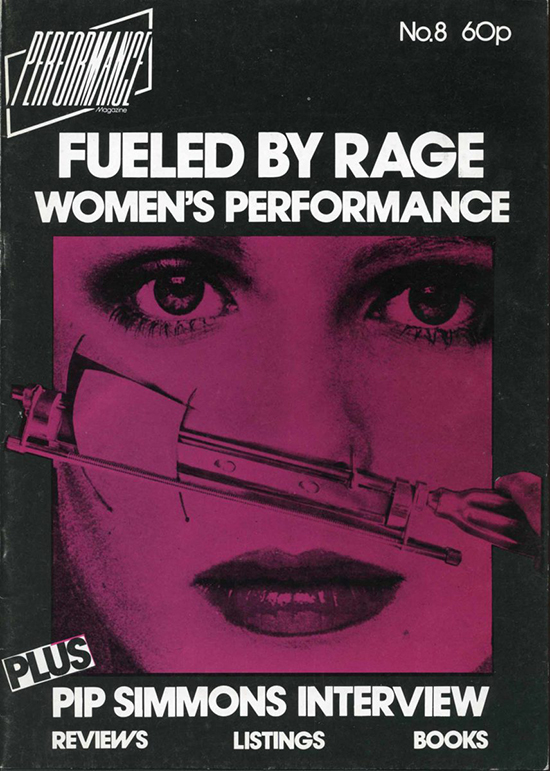
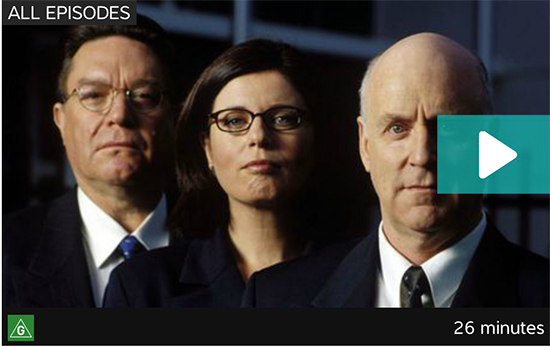
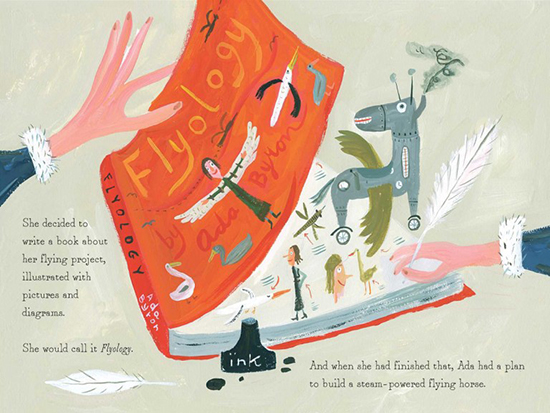
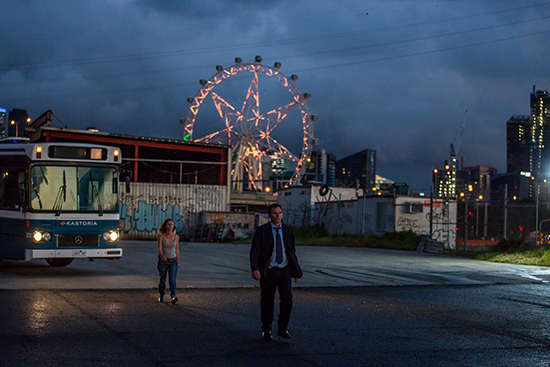
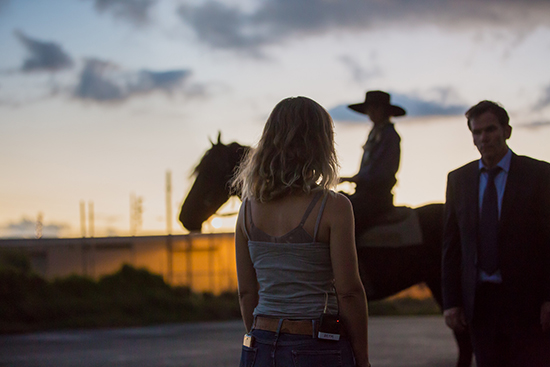
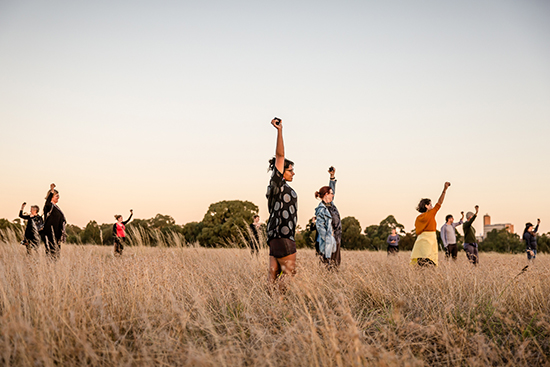
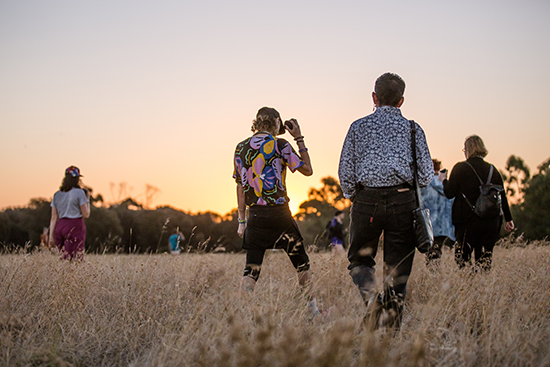
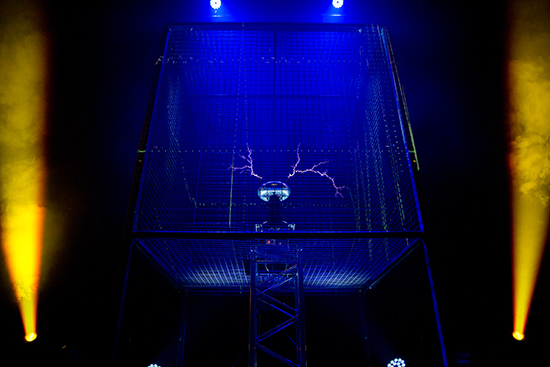
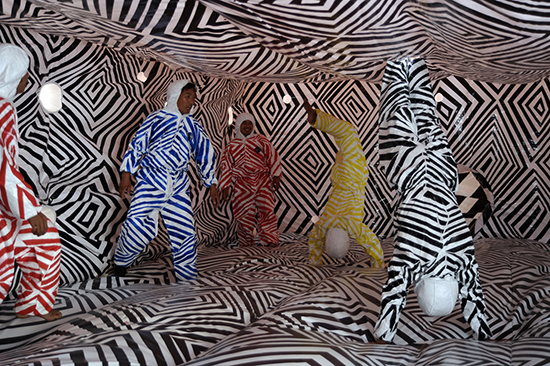
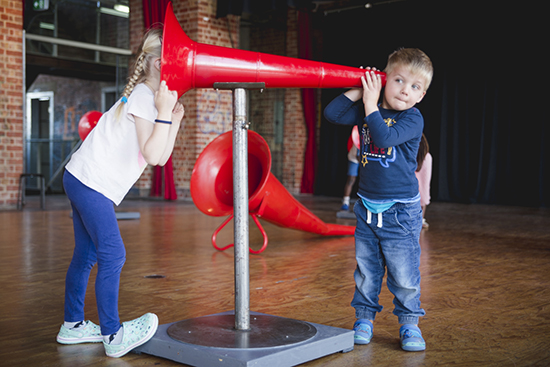
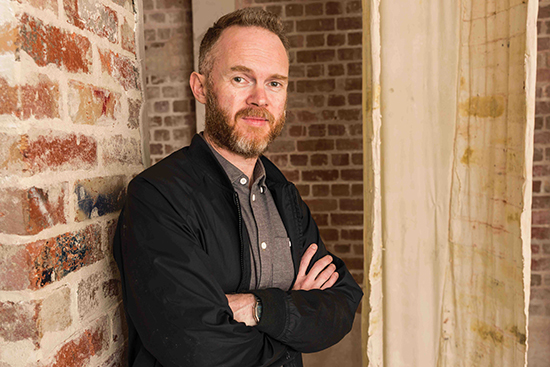
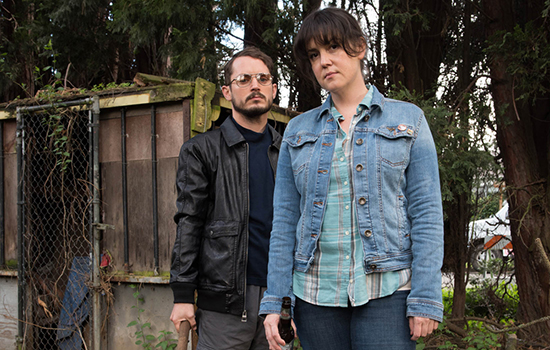
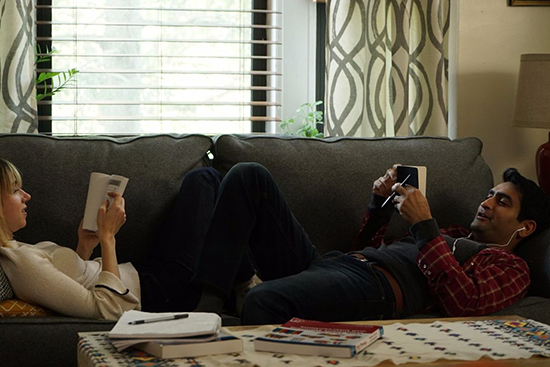
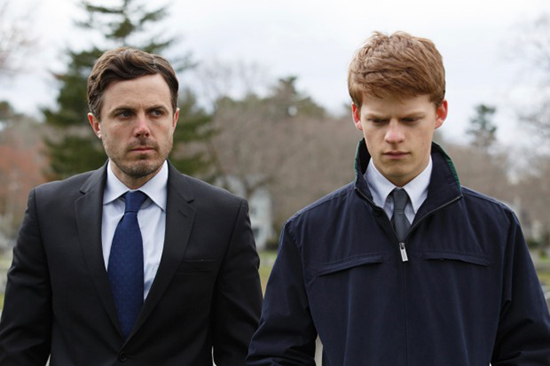
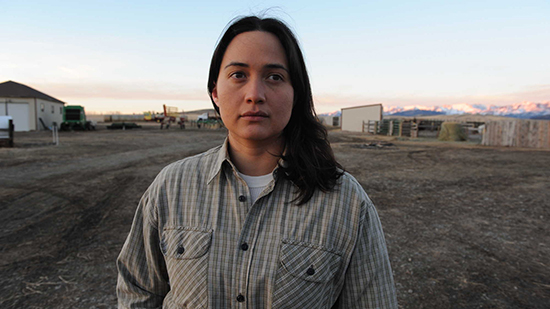
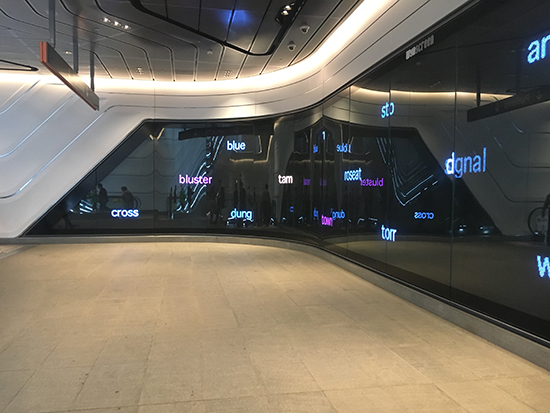
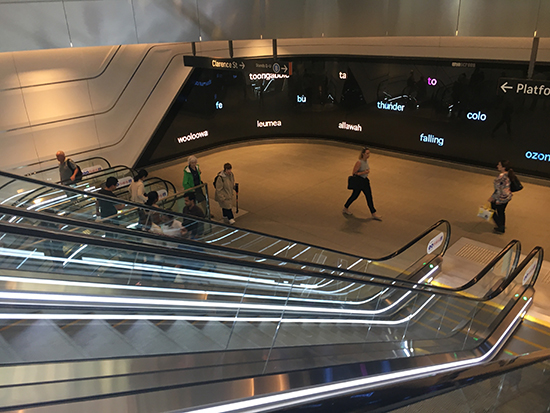
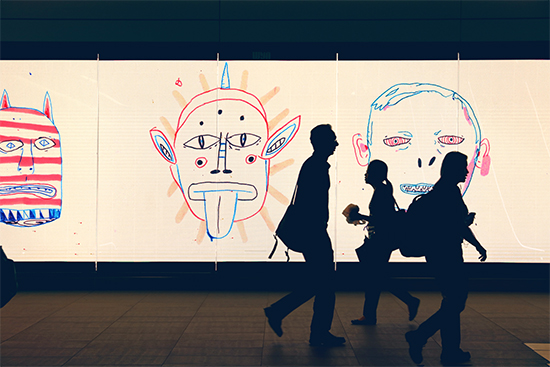
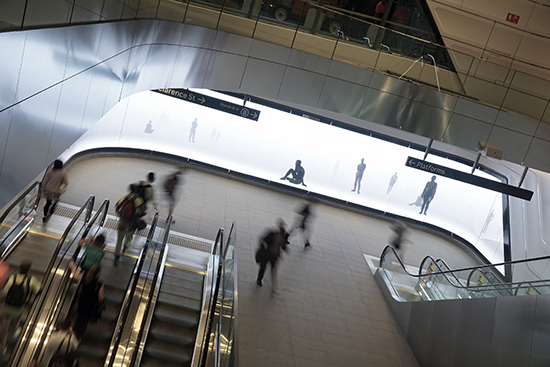
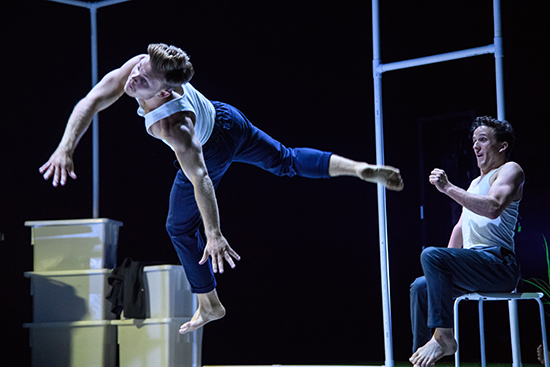
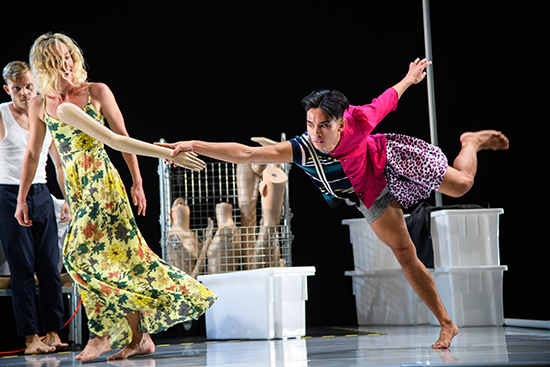
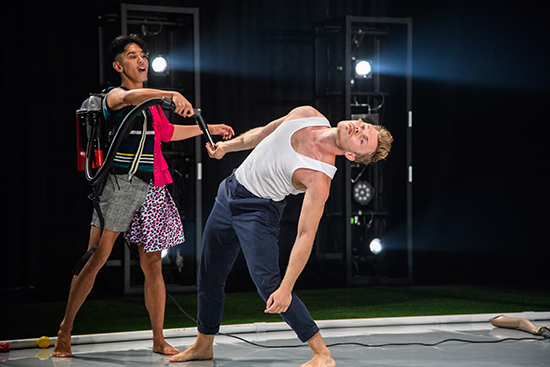
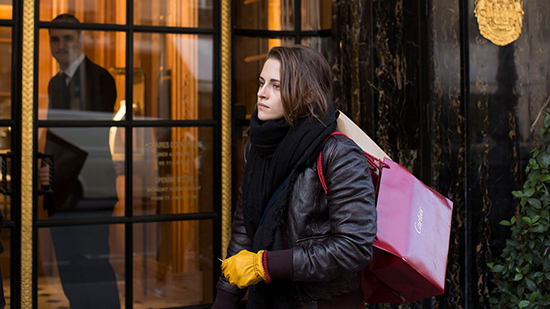
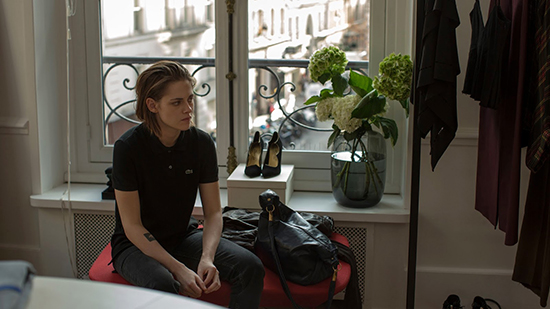
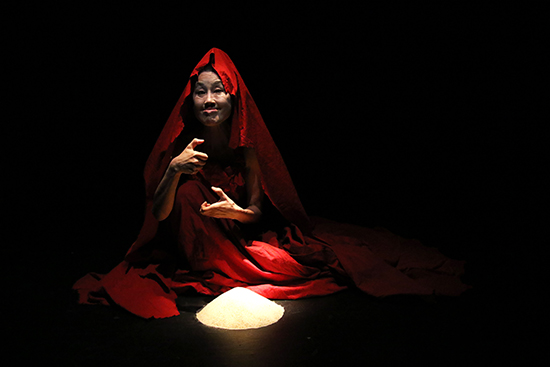
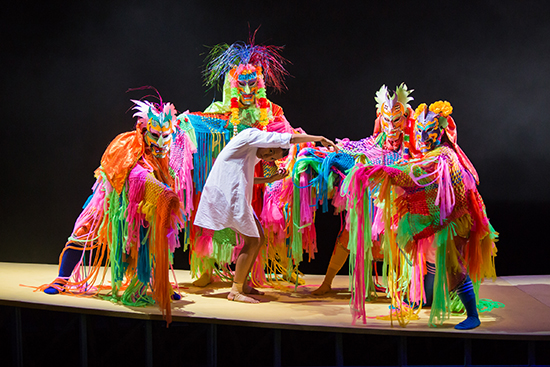
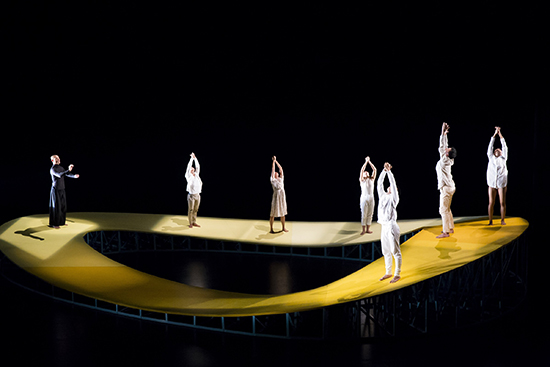
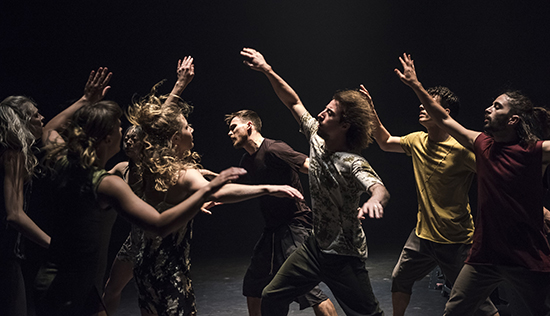
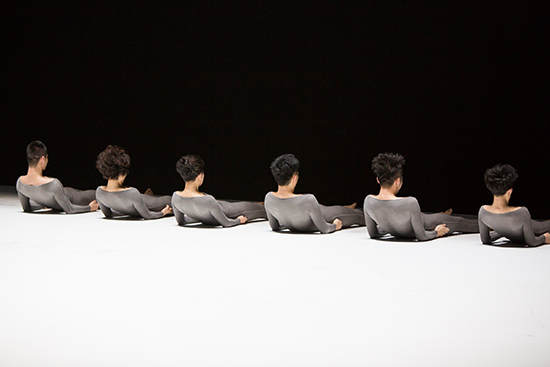
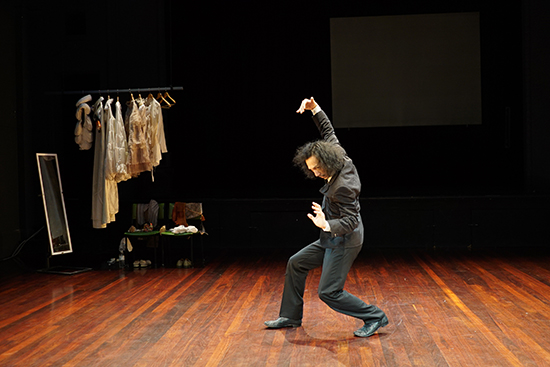
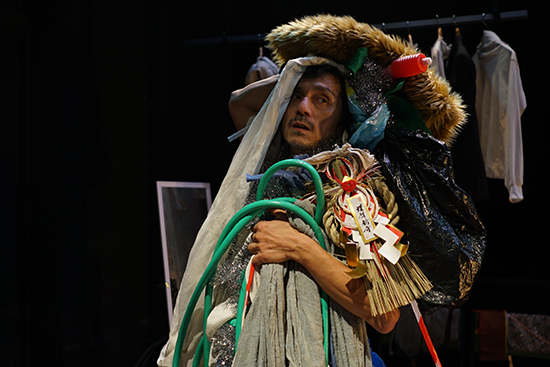
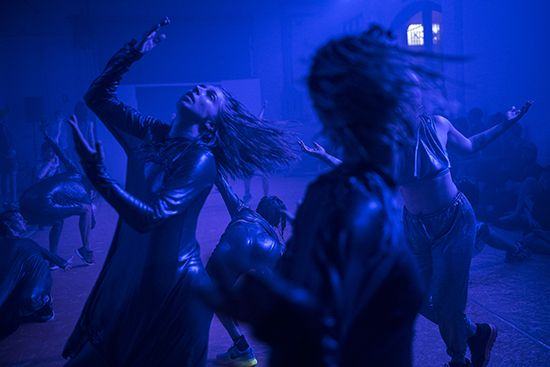
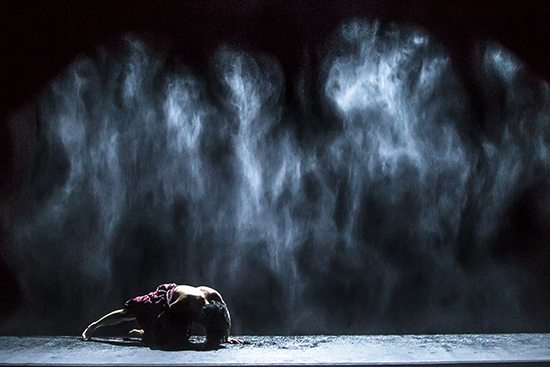
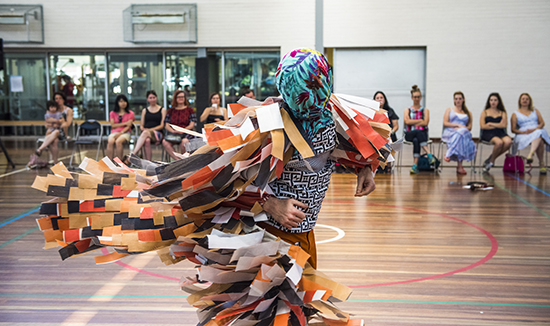
,_in_Rhiannon_Newton's_Bodied_Assemblies,_photo_by_Gregory_Lorenzutti.jpg)
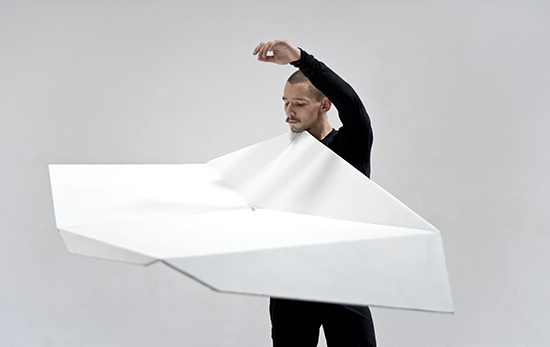
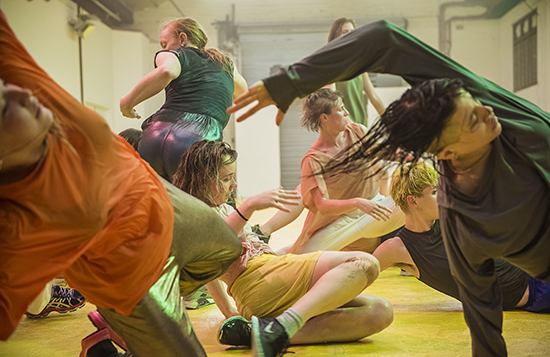
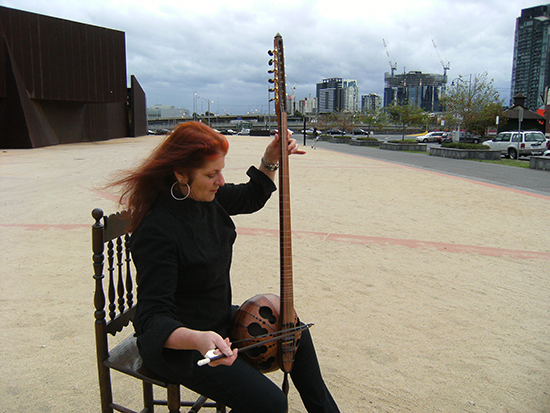
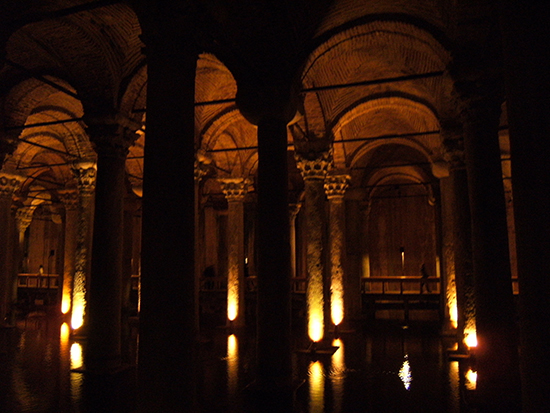
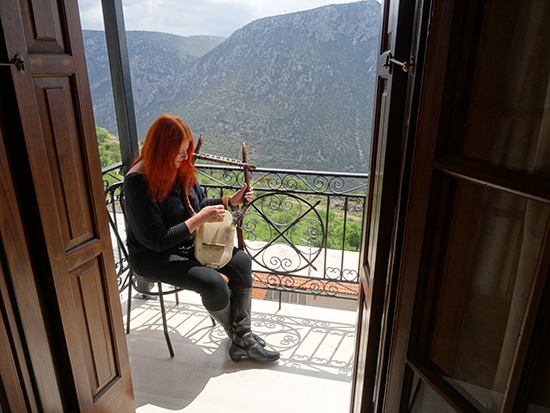
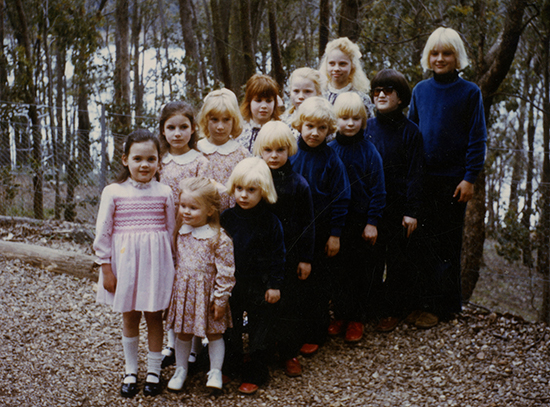
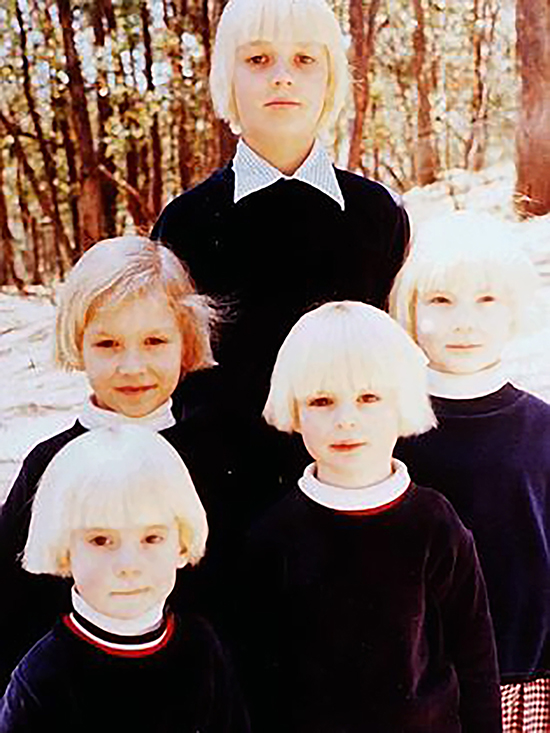
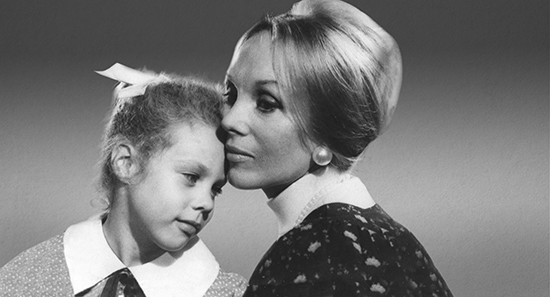
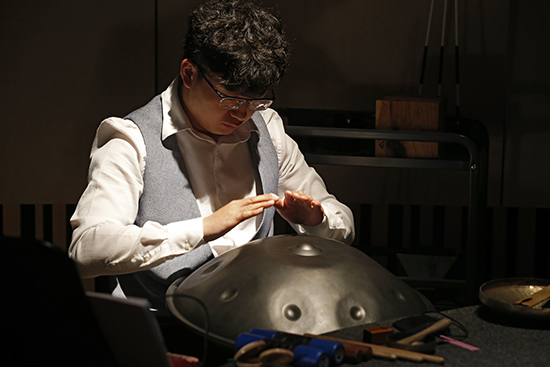
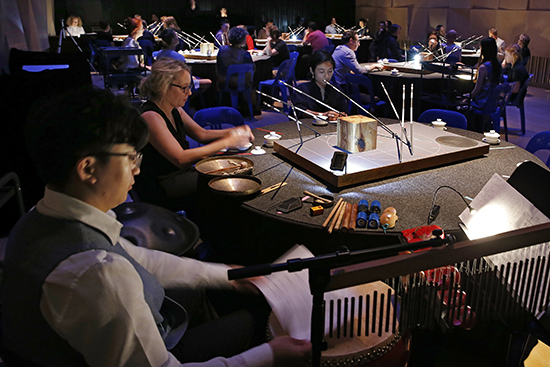
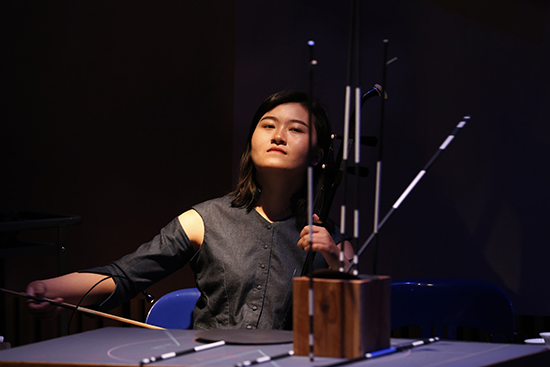
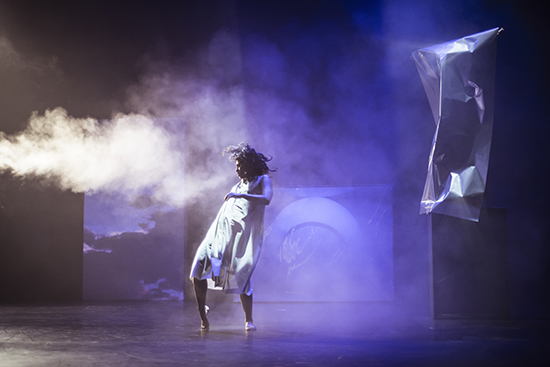
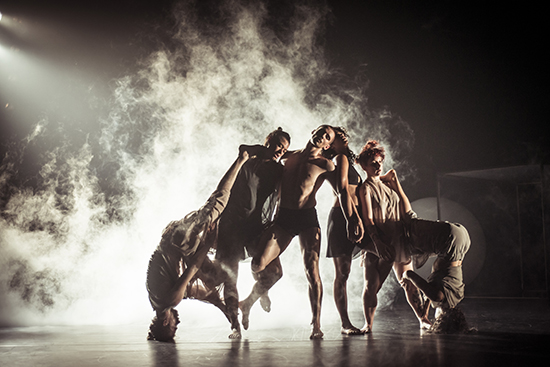
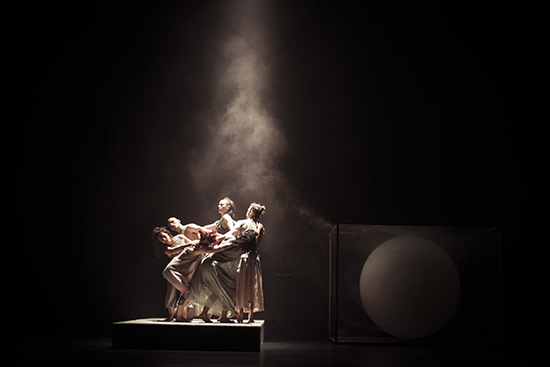
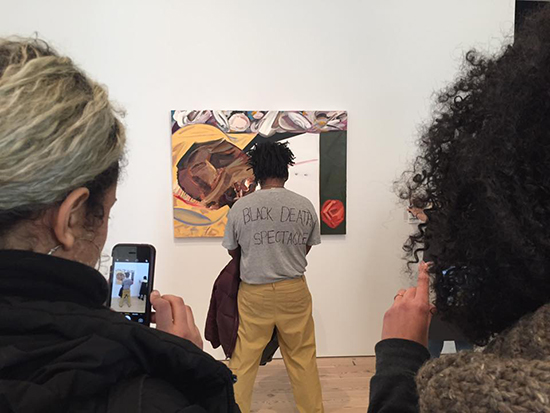
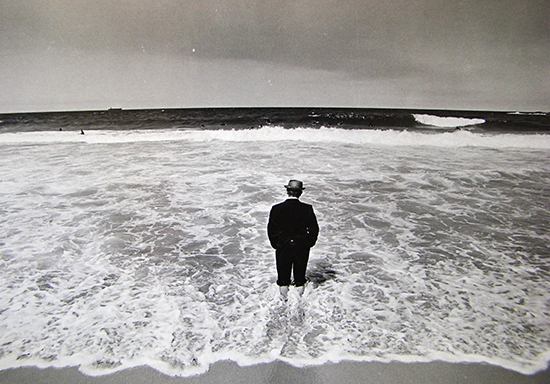
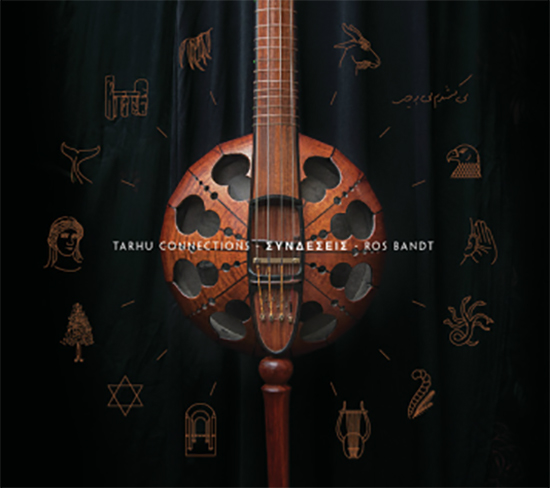
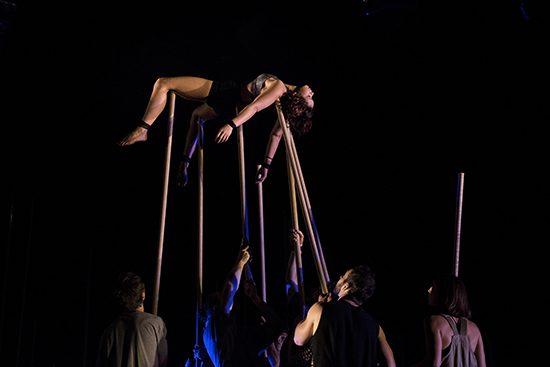
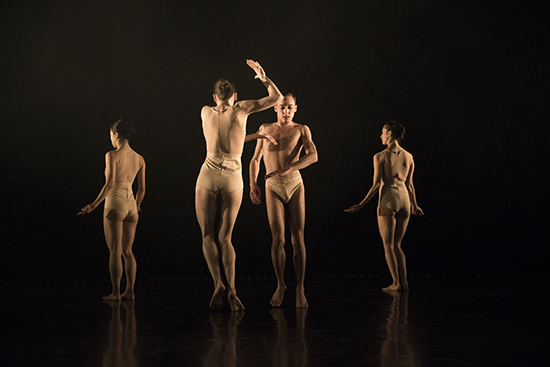
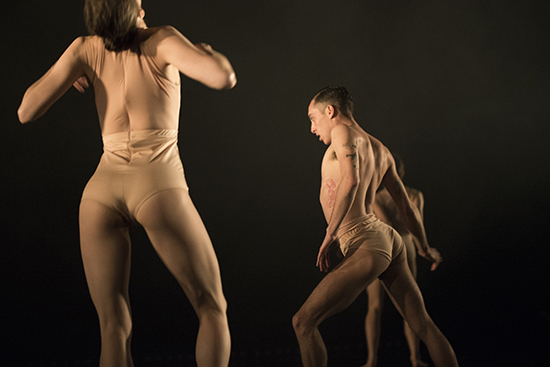
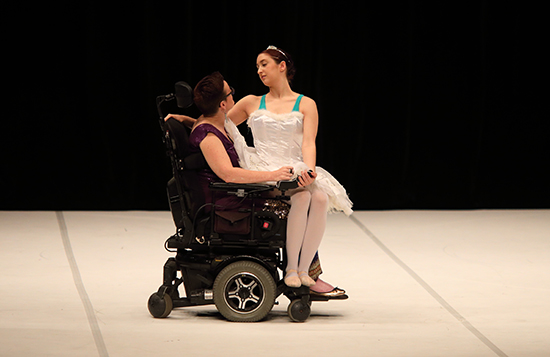
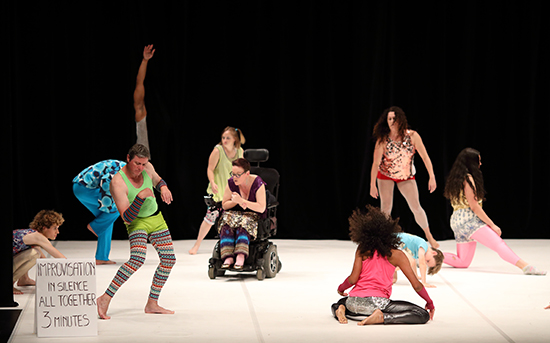
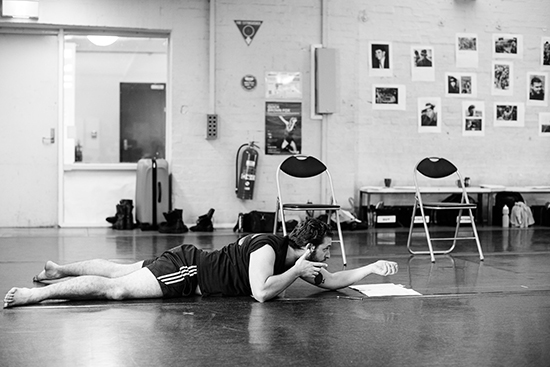
.jpg)
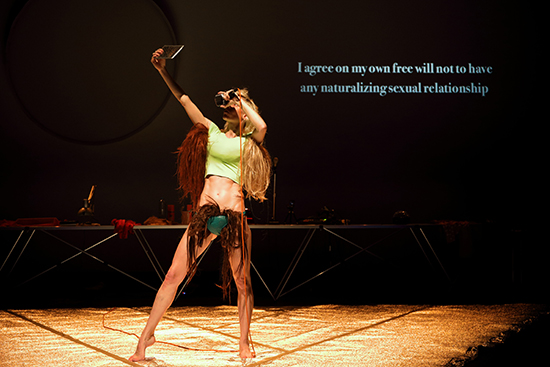
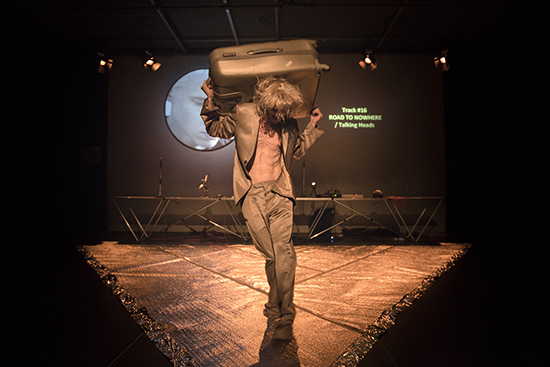
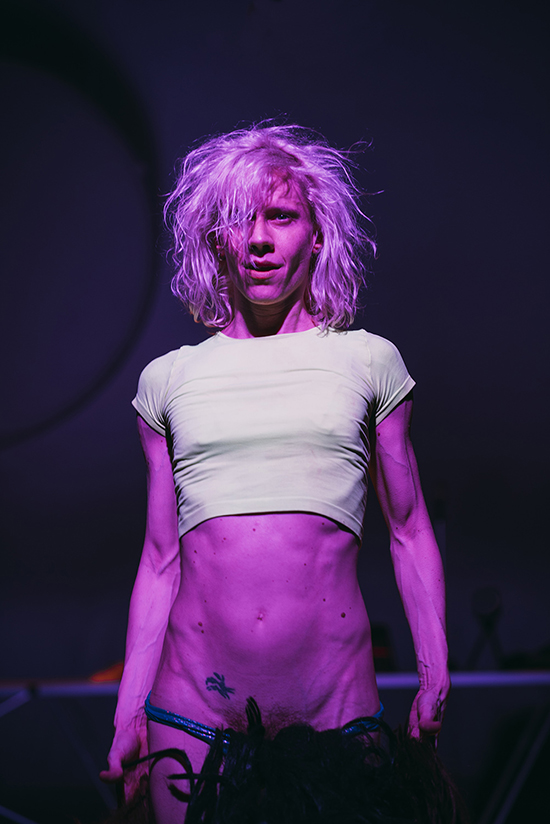
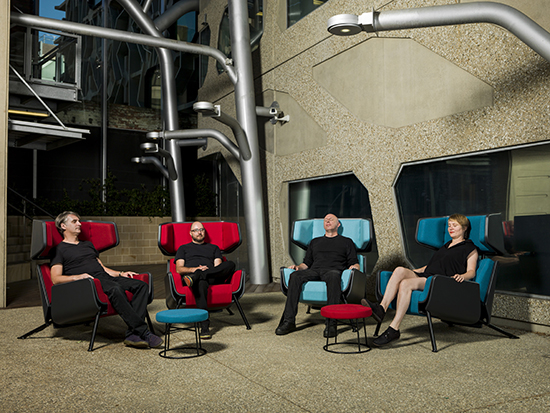
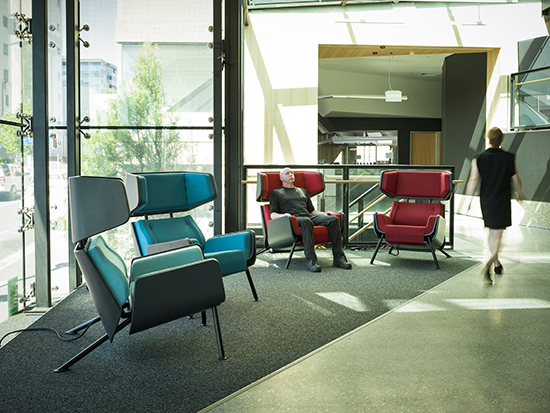
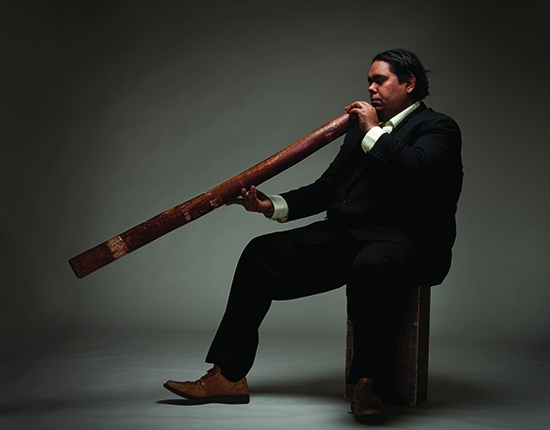
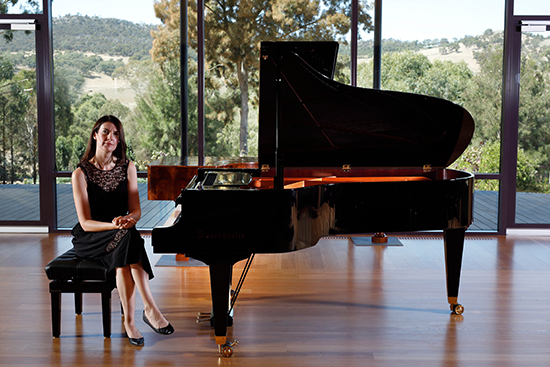
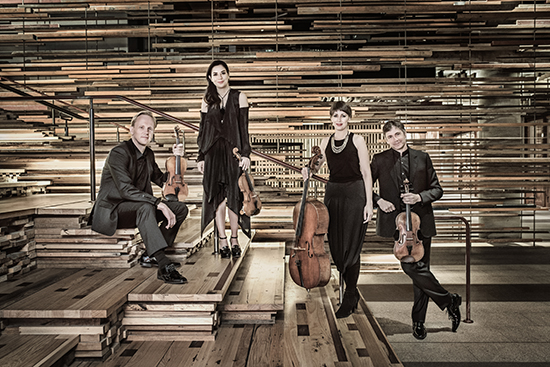
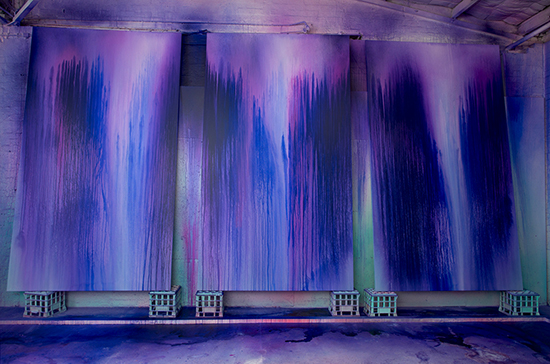
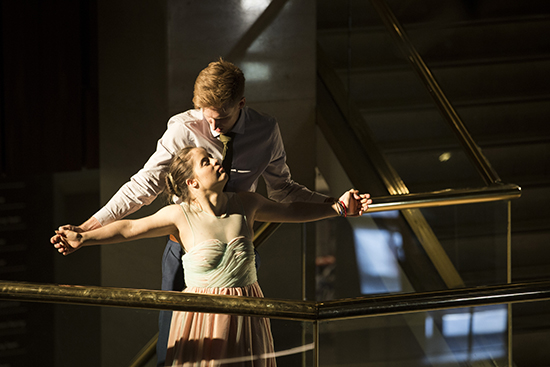
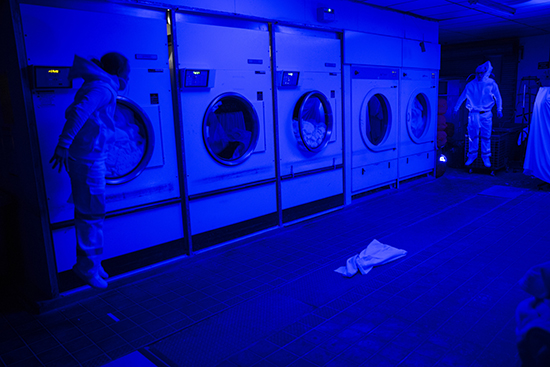
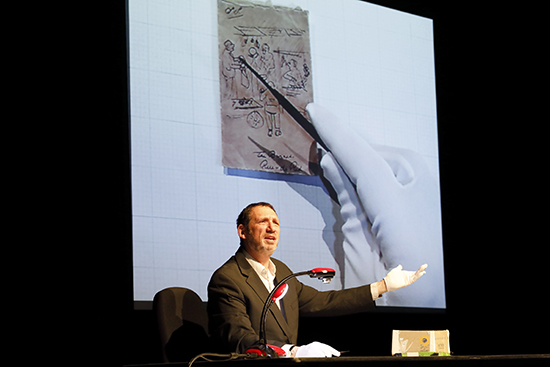
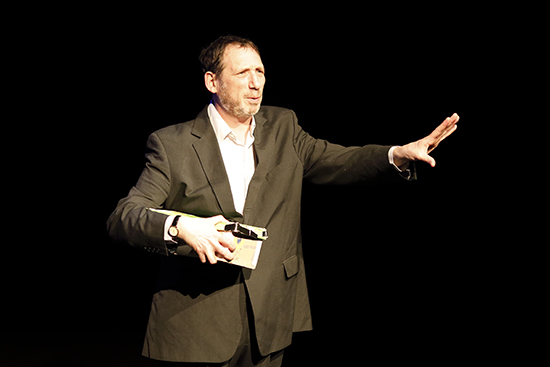
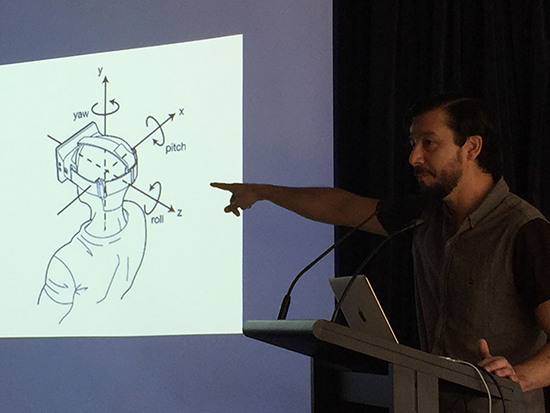
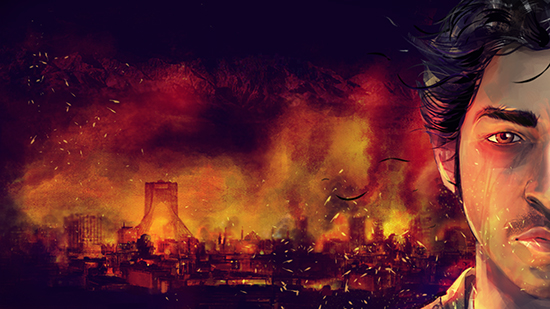
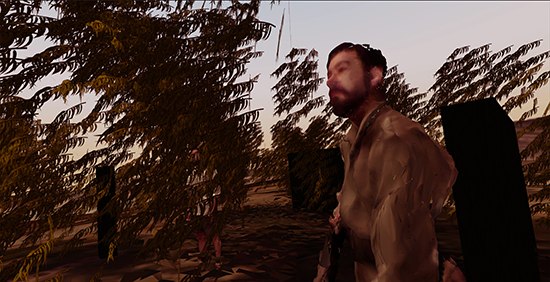
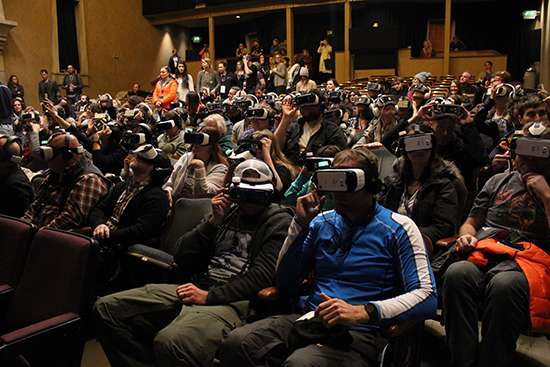
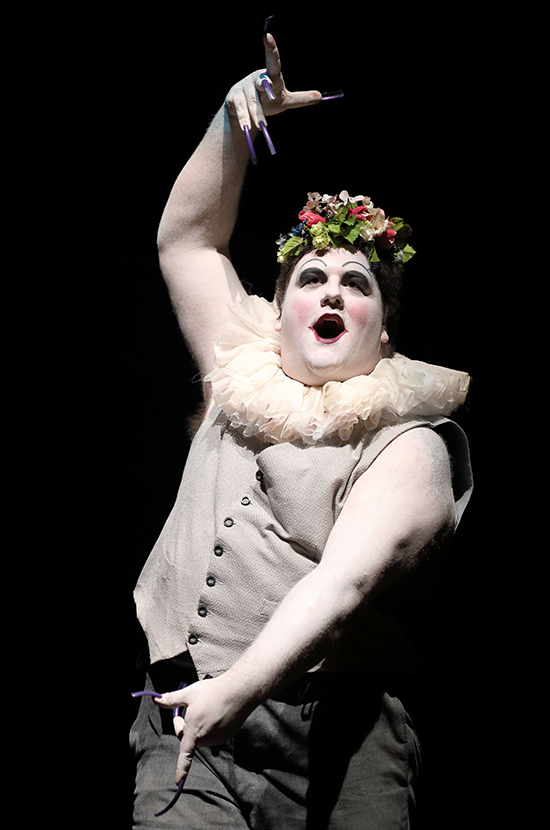
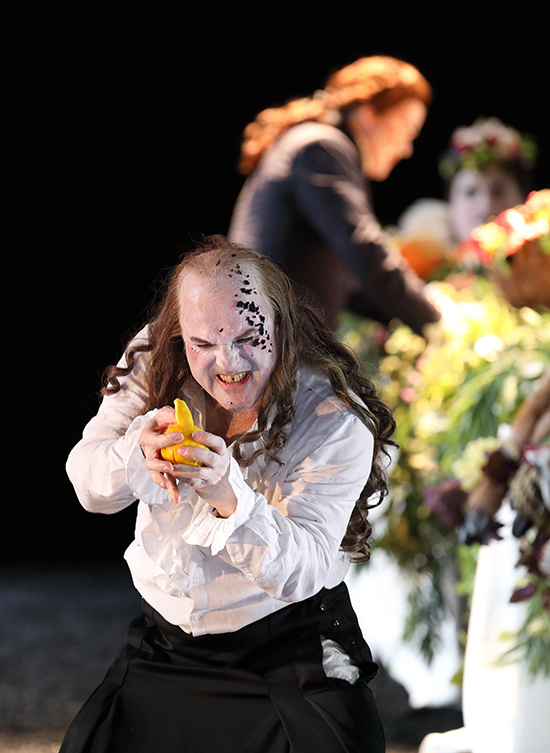
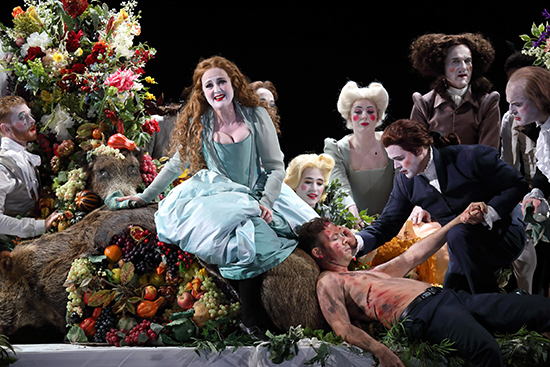
,_Christopher_Lowrey,_Adrian_Strooper_-_05_-_Pic_credit_Tony_Lewis.jpg)
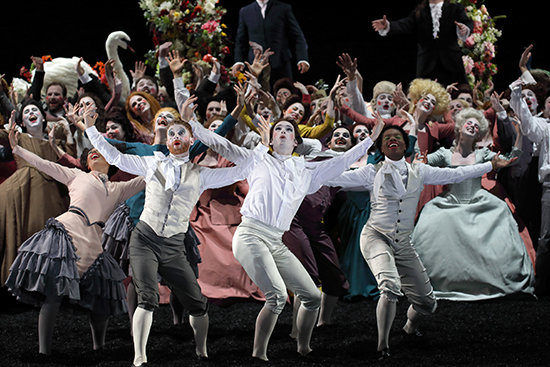
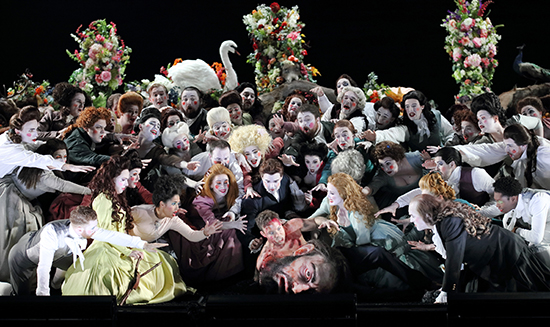
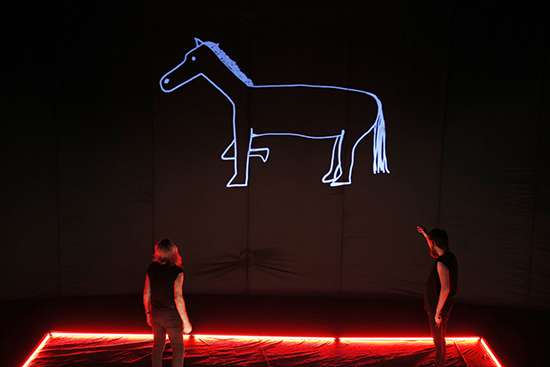
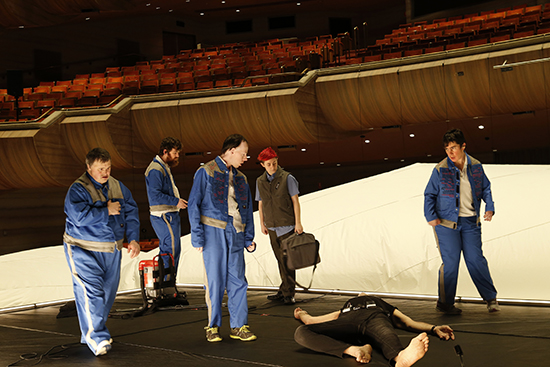
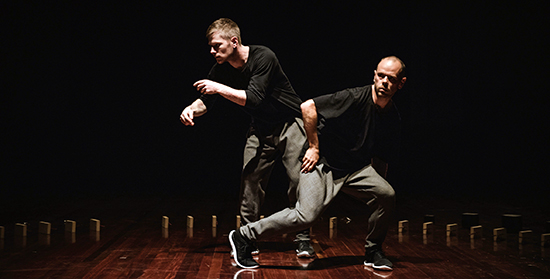
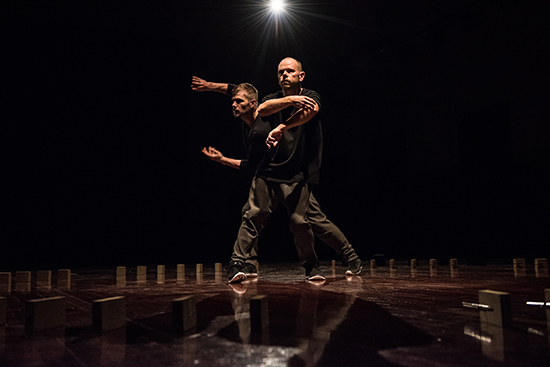
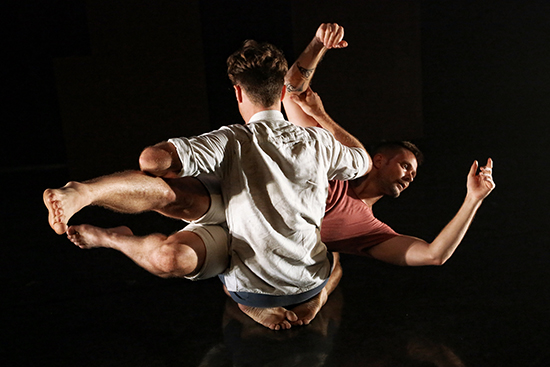
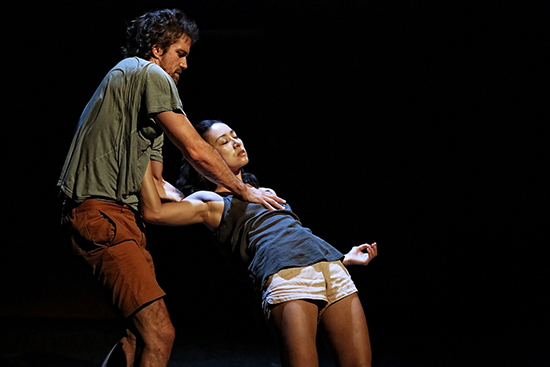
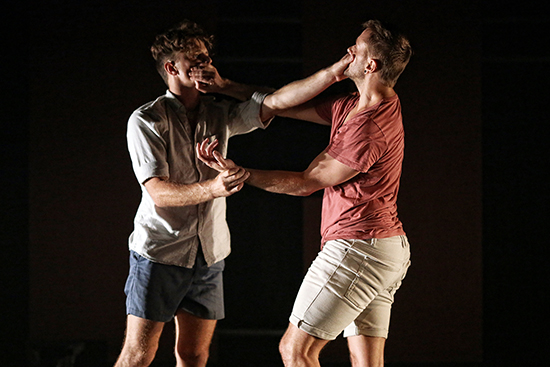
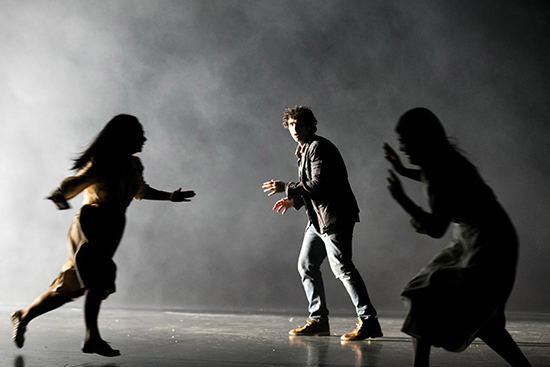
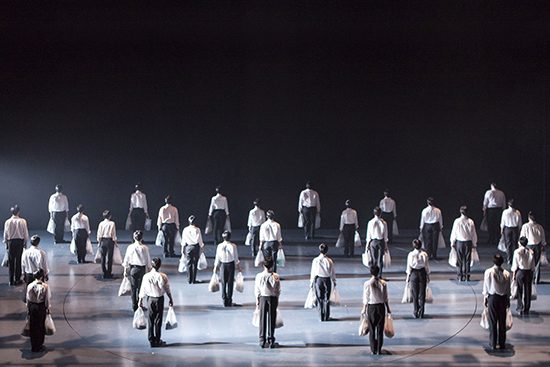
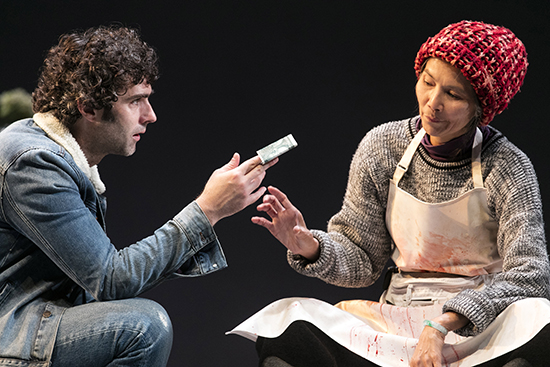
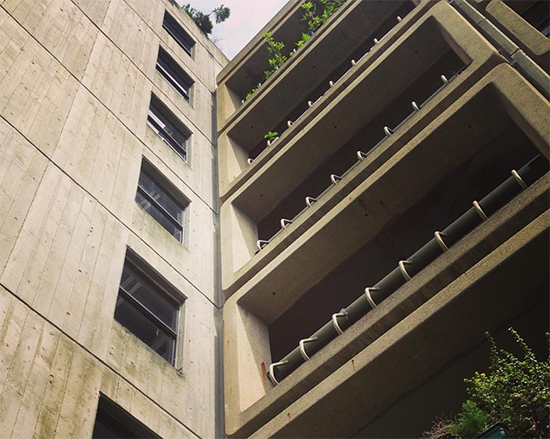
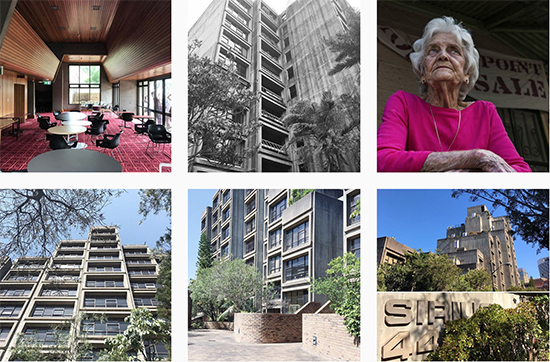
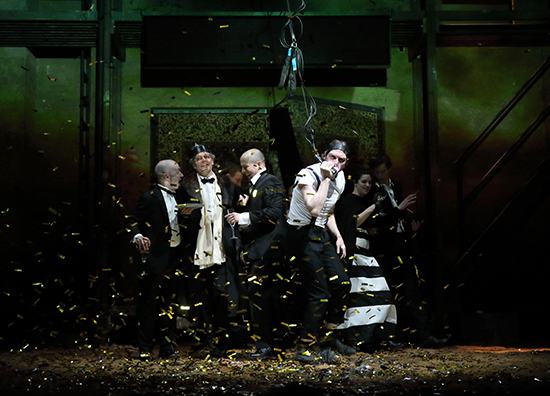
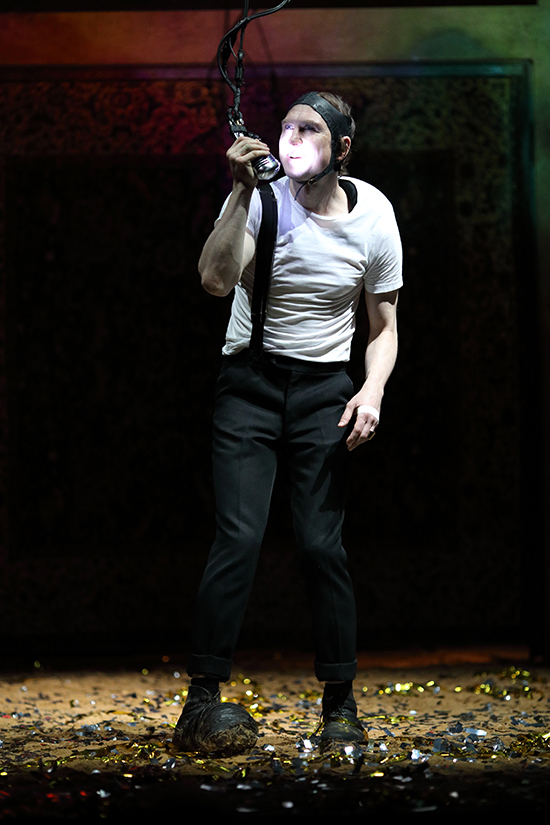
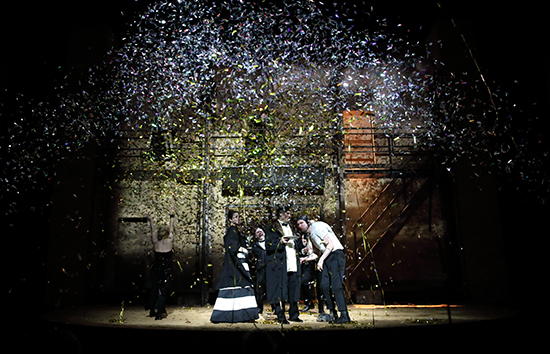
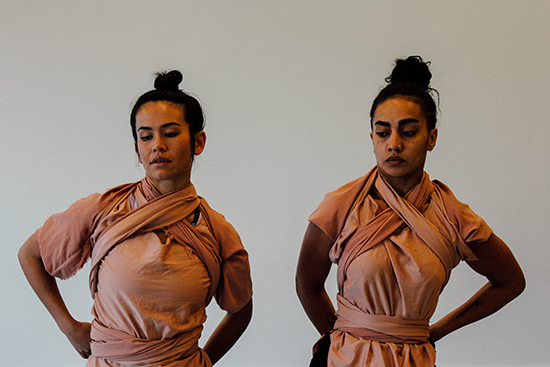
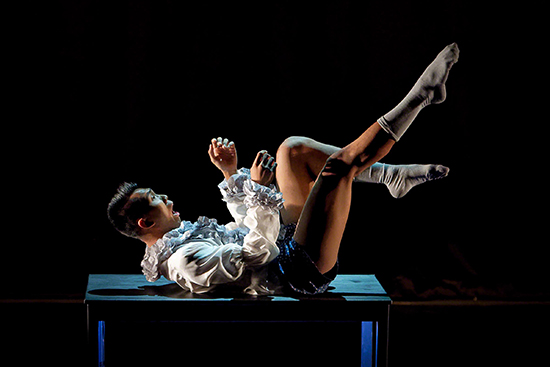
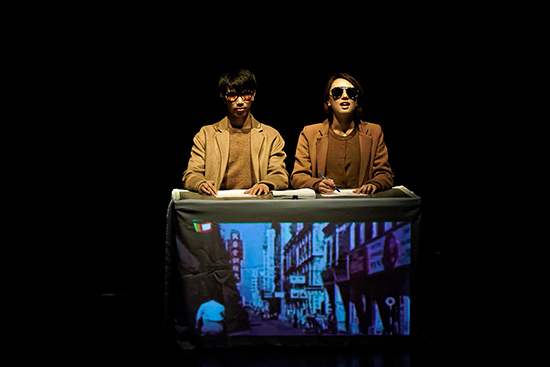
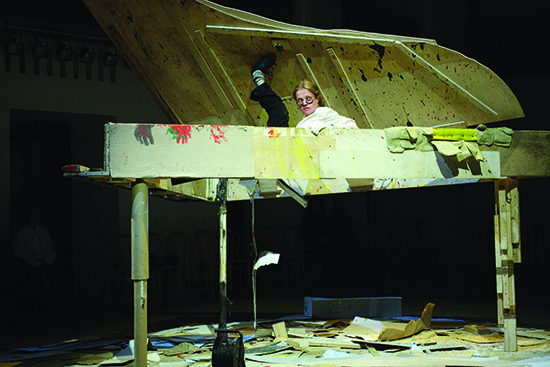
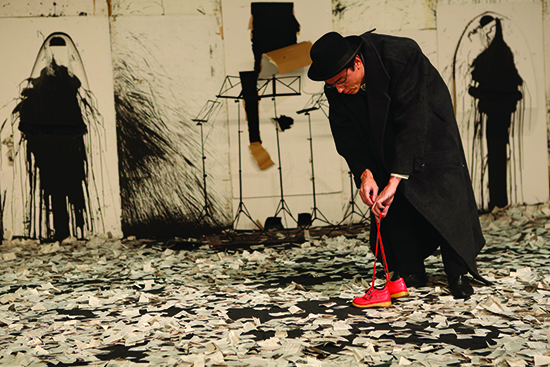
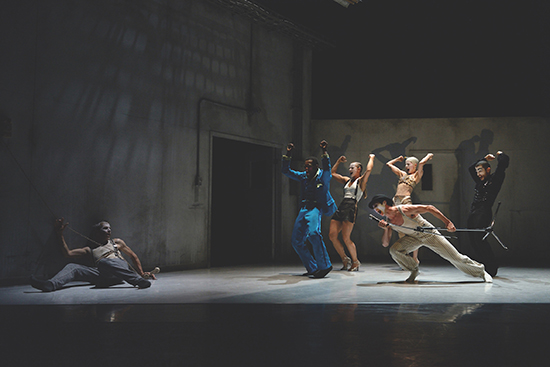
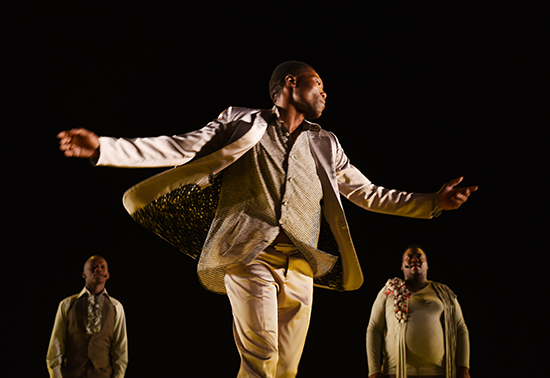
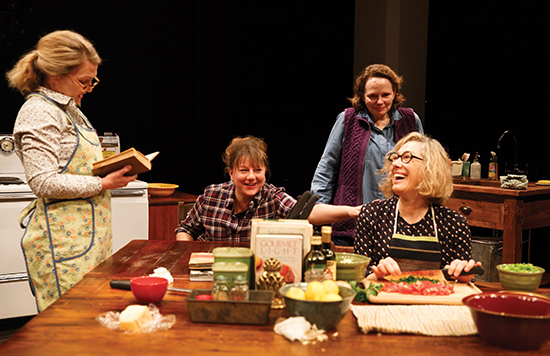
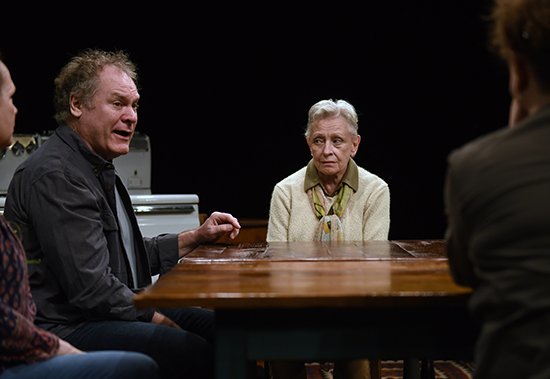
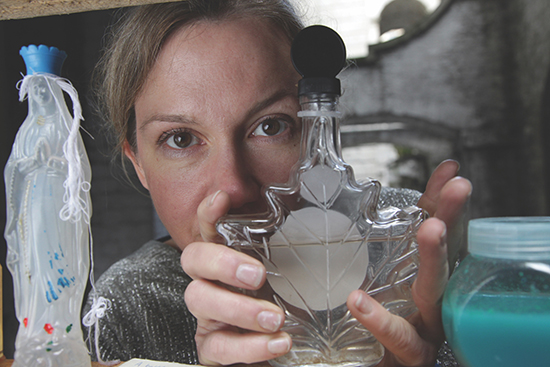
.jpg)
.jpg)
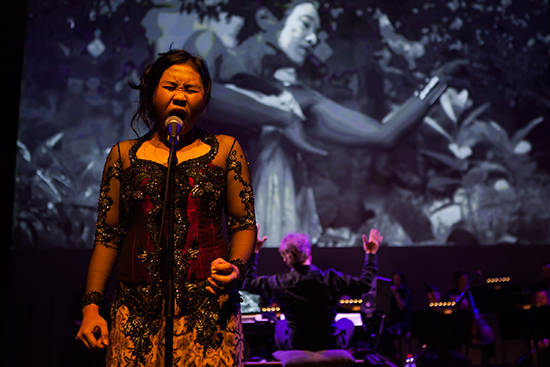
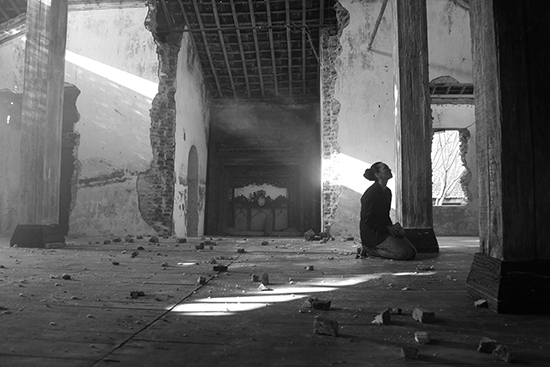
_Lin_photo_credit_Tim_Grey__copy.jpg)
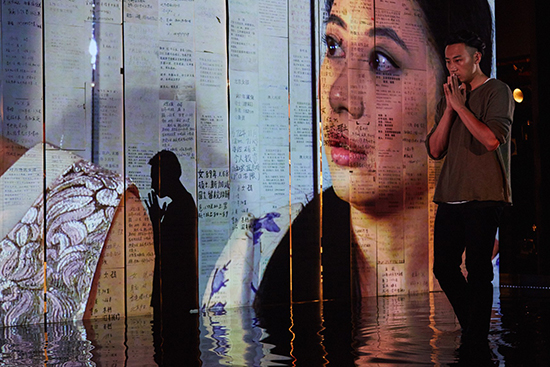
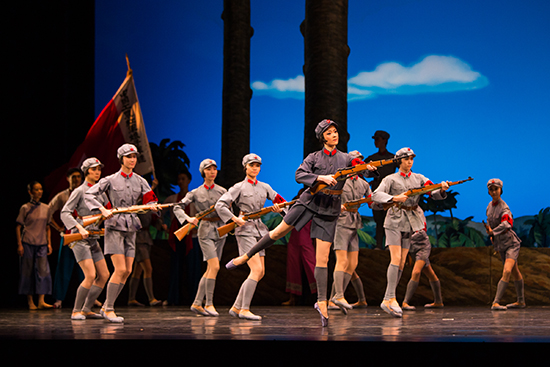
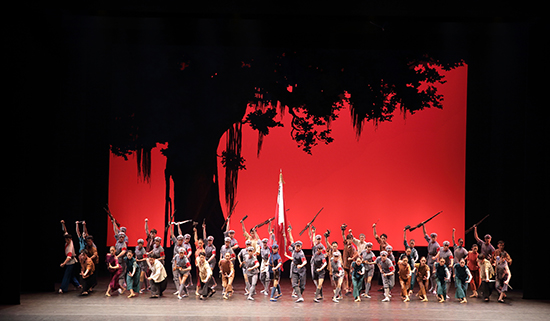
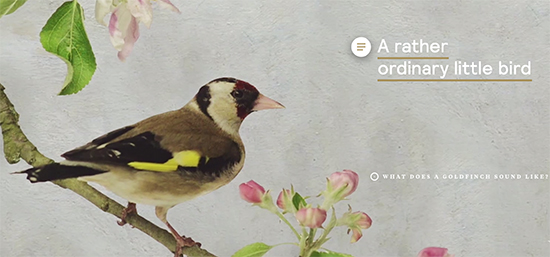

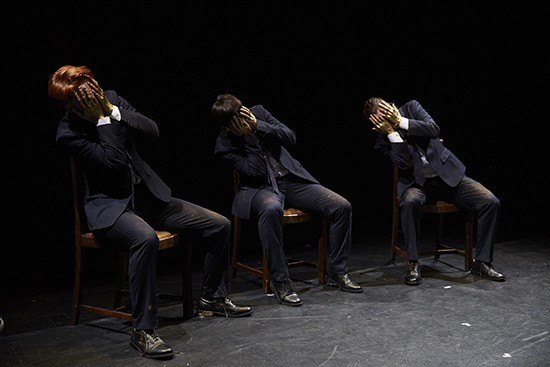
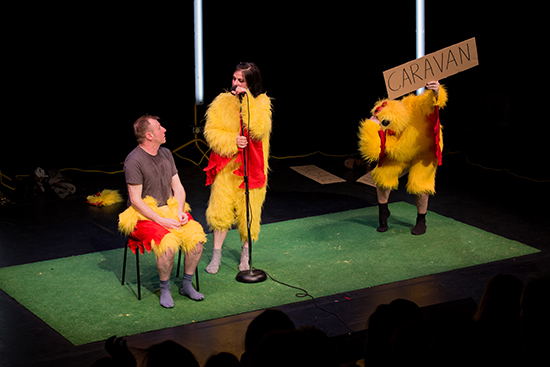
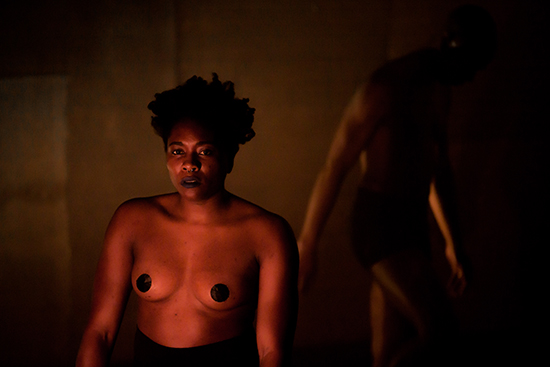
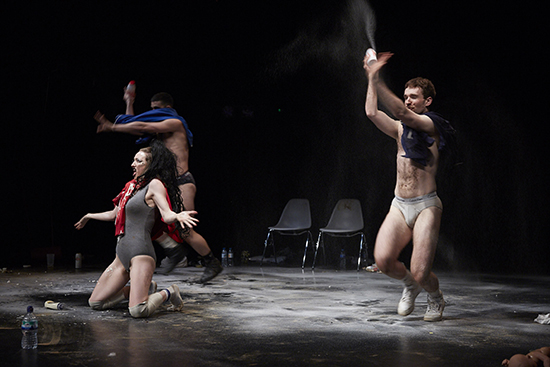
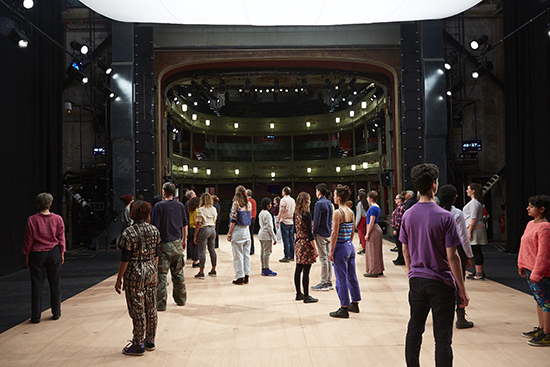
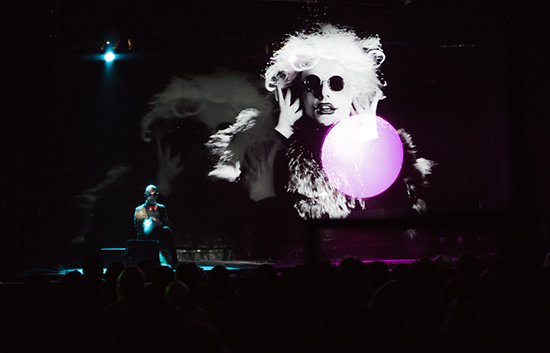
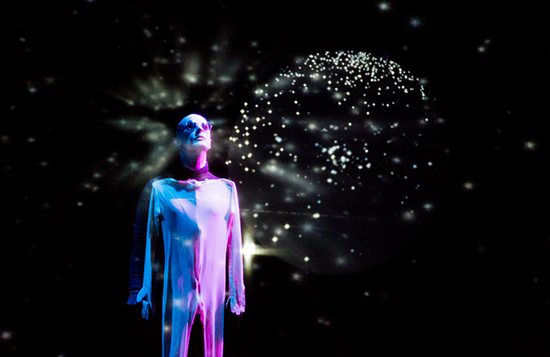
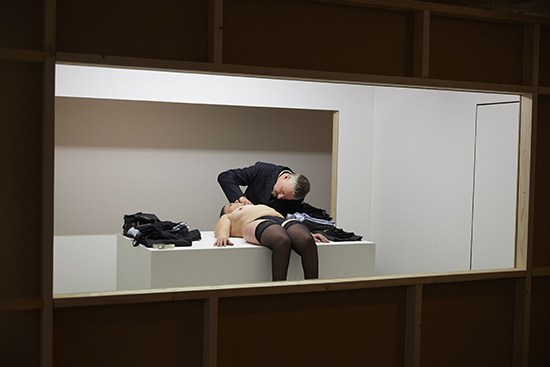
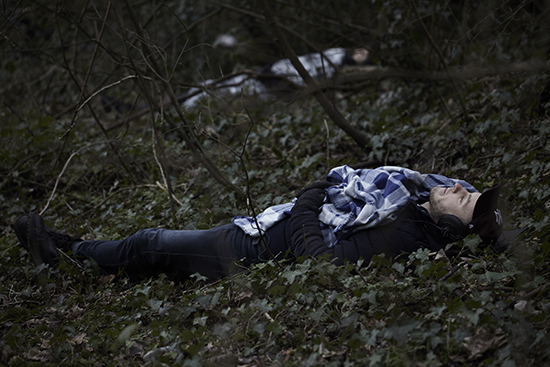
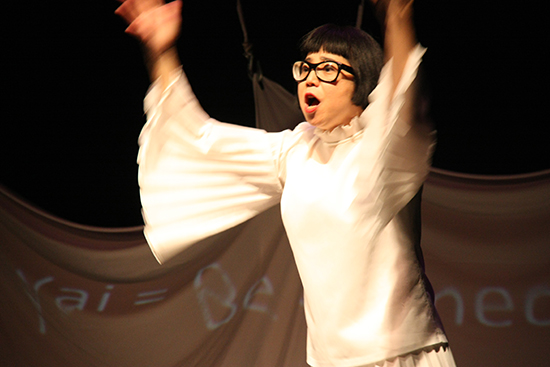
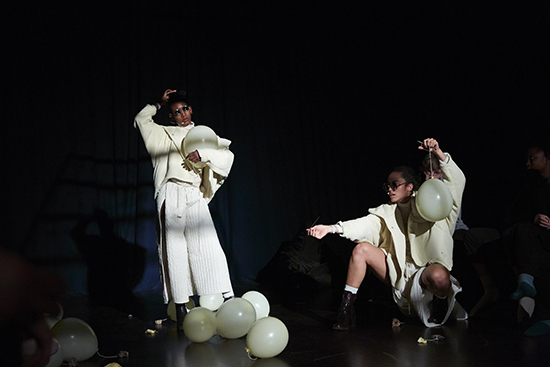
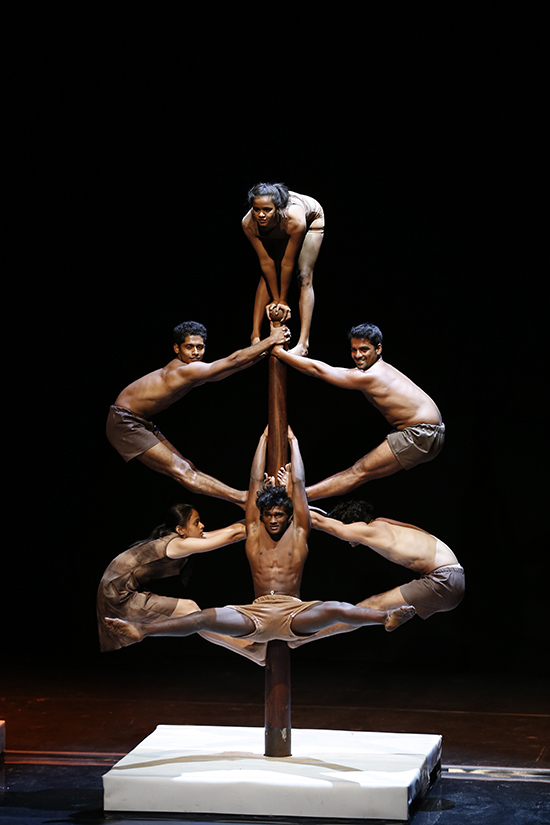
,_Friday_17_February_2017._Presented_by_Next_Wave_at_ACCA_for_AsiaTOPA._Photo_Sarah_Walker_6_copy.jpg)
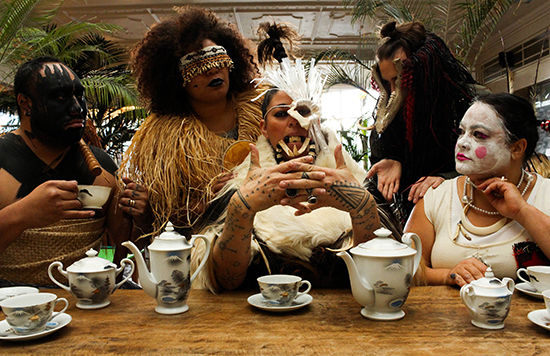
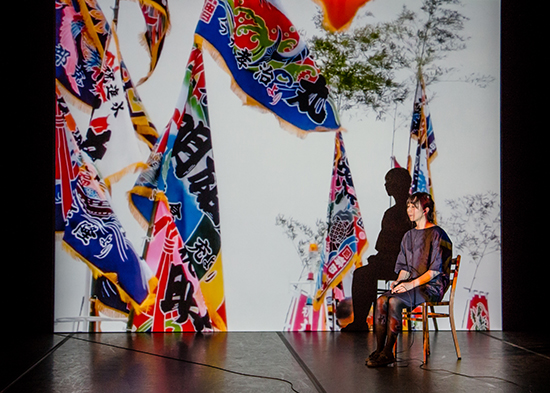
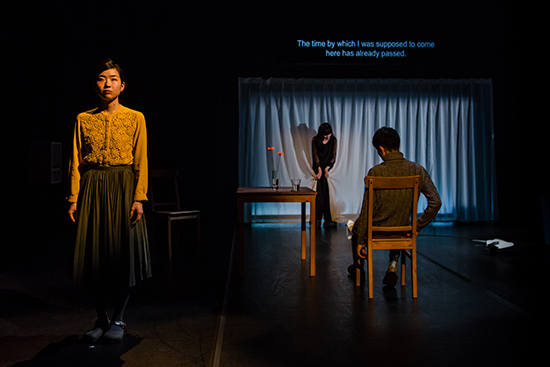
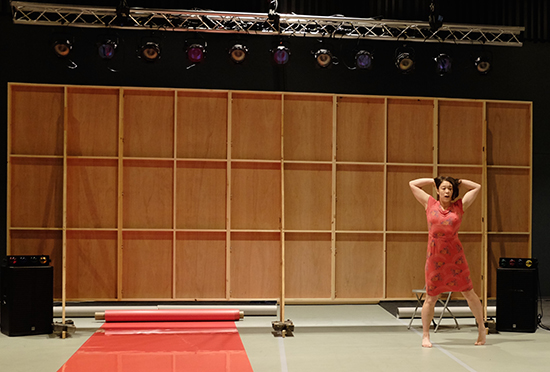
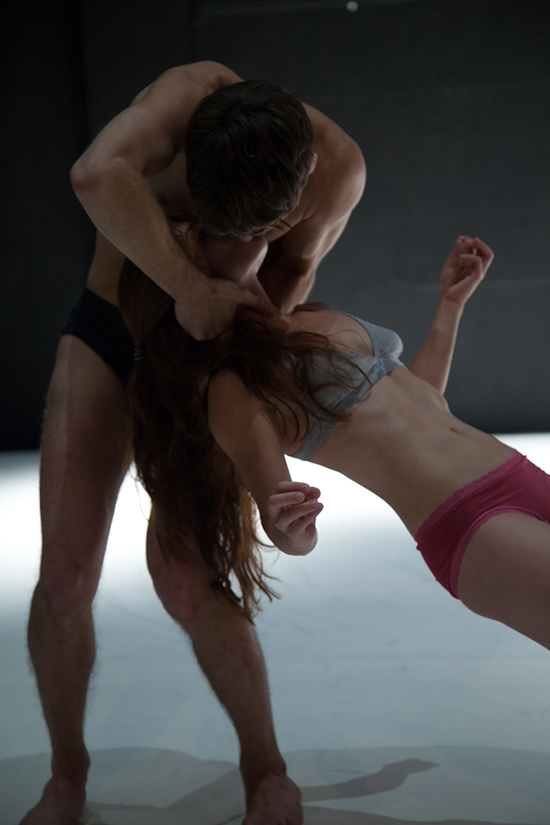
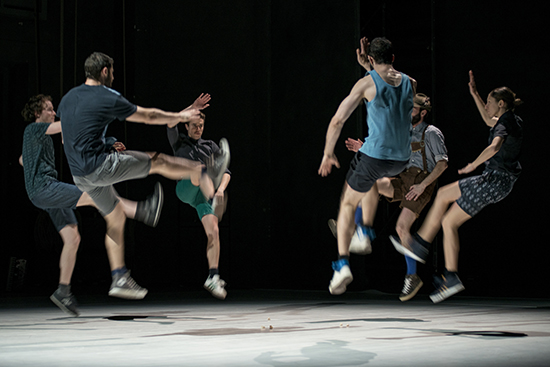
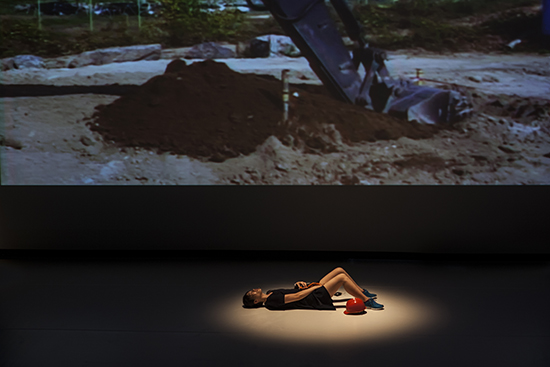
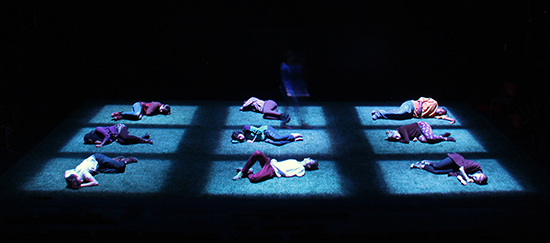
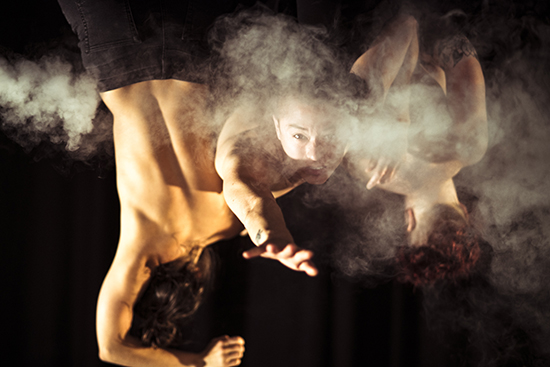
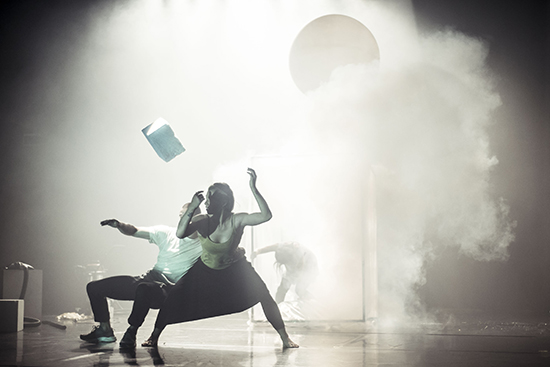
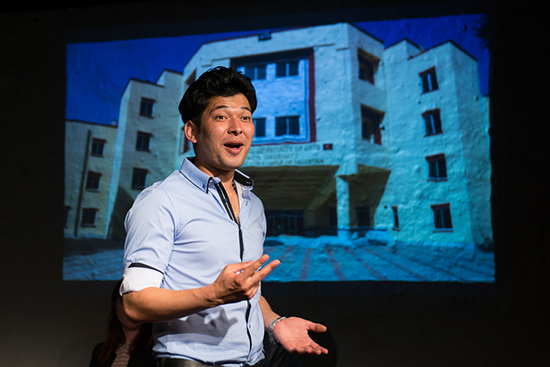
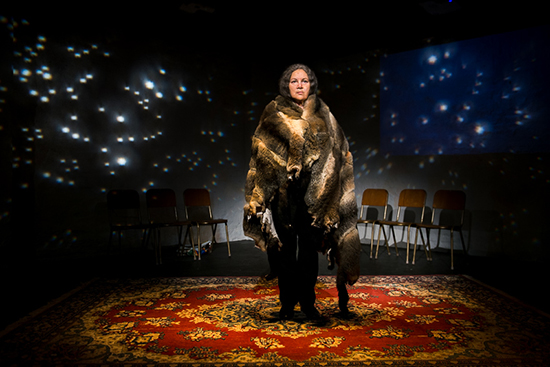
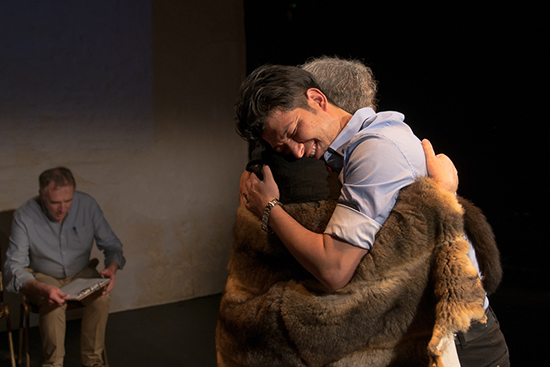
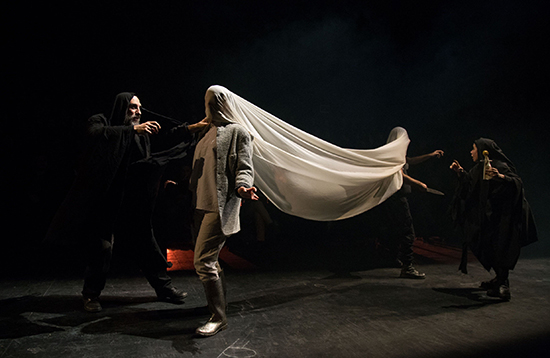
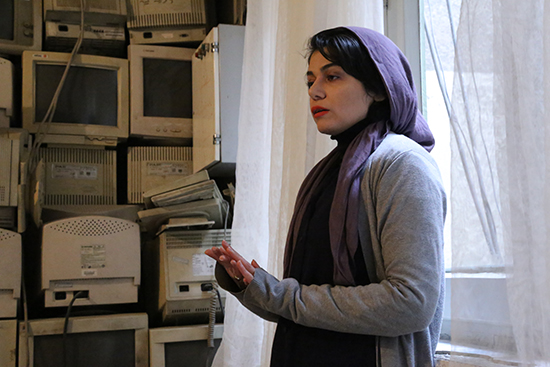
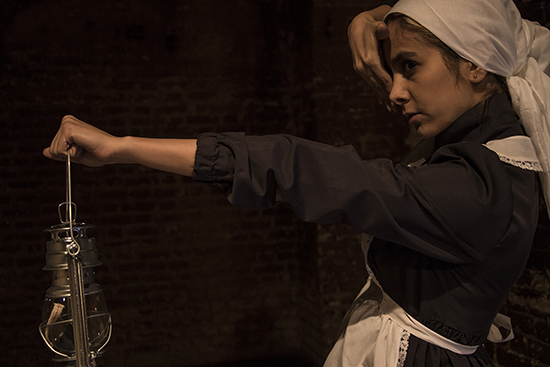
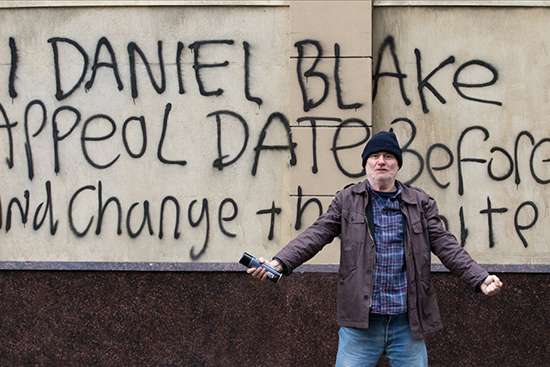
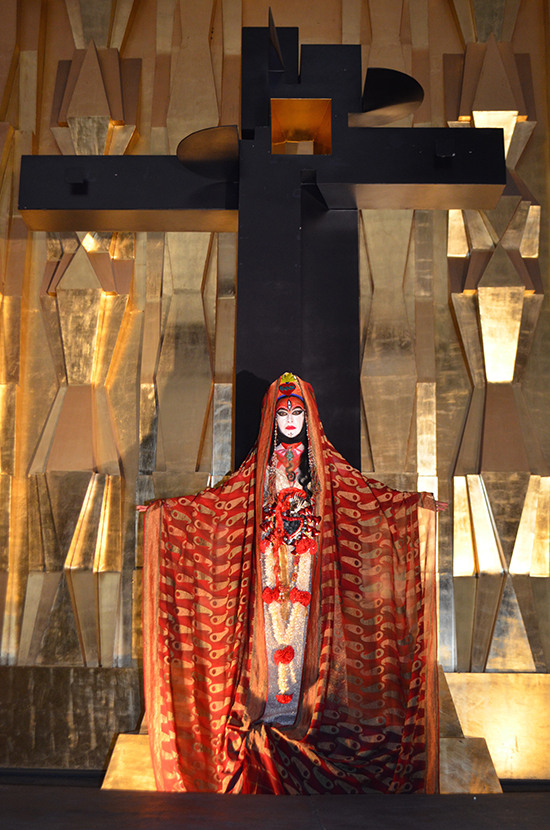
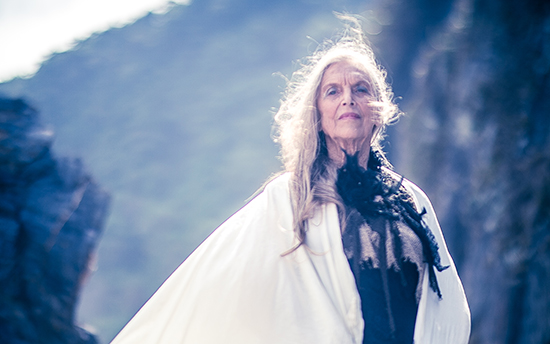
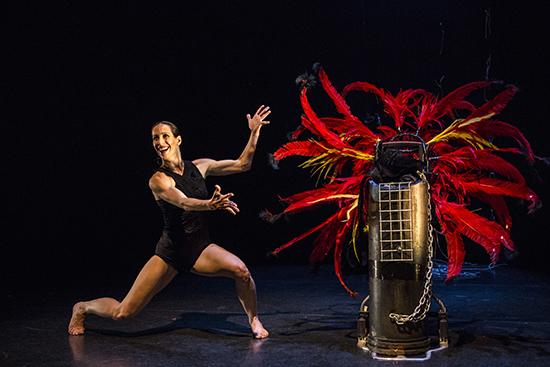
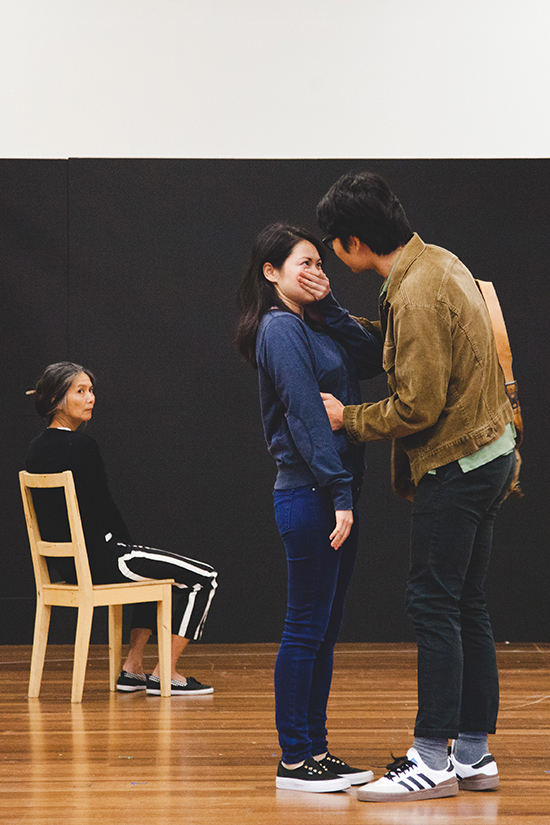
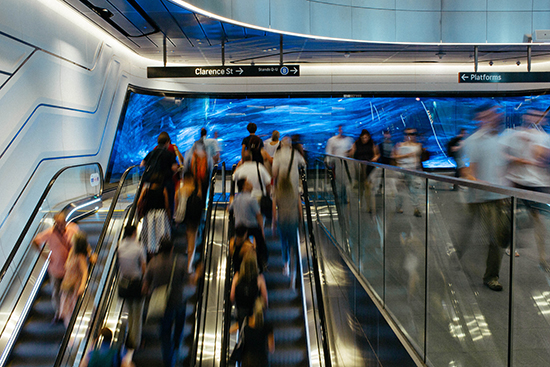
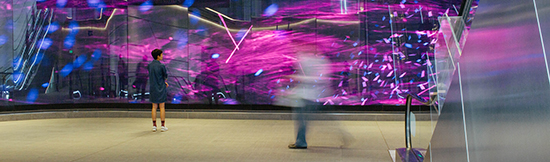
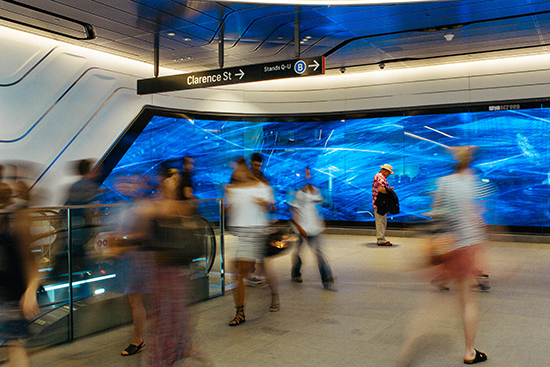
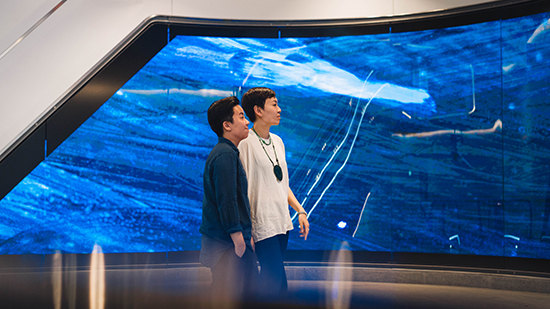
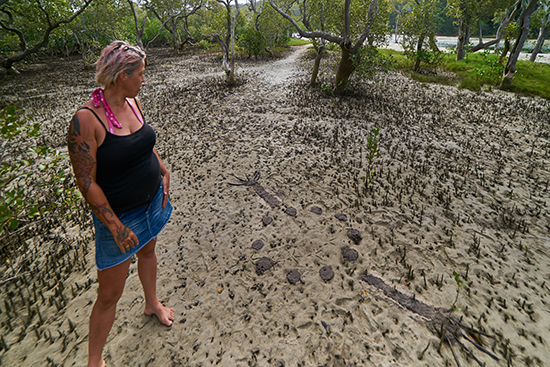
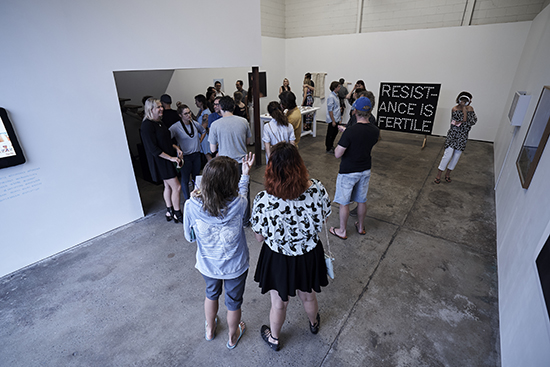
_Part_3-197.jpg)
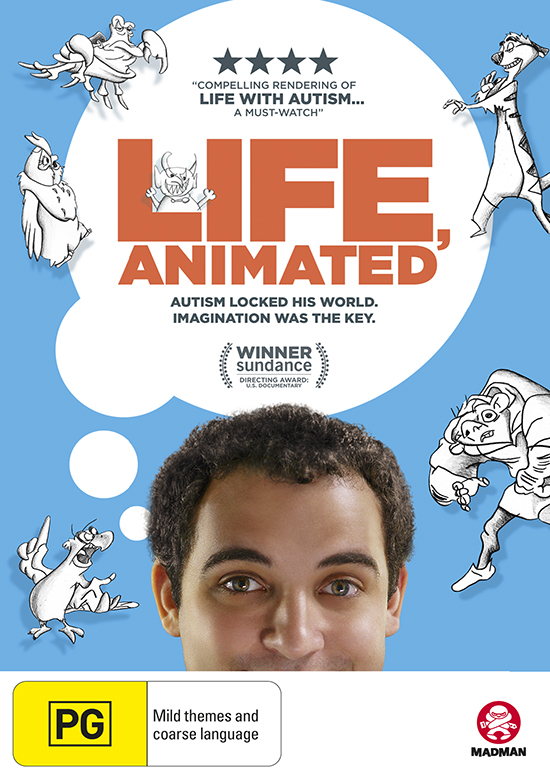
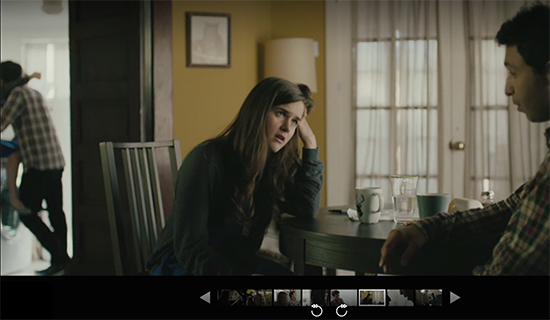
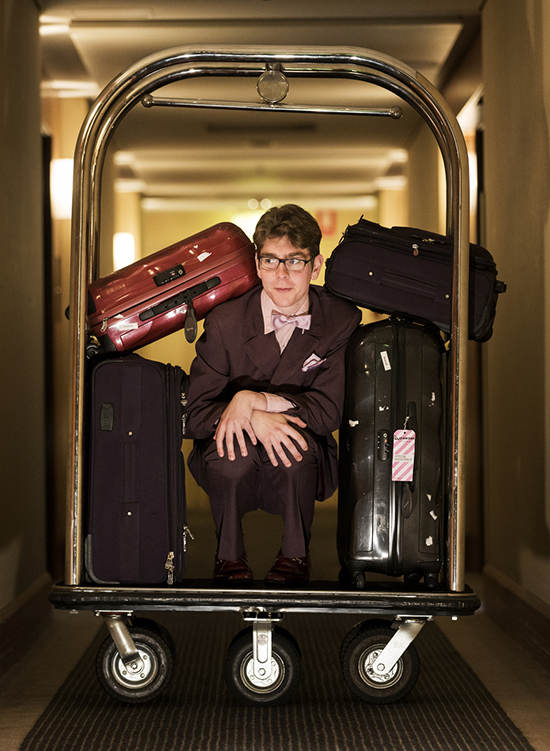

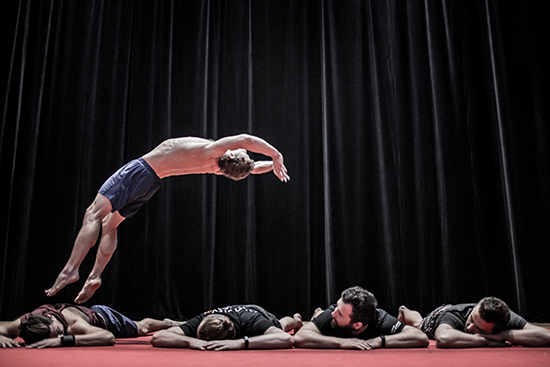
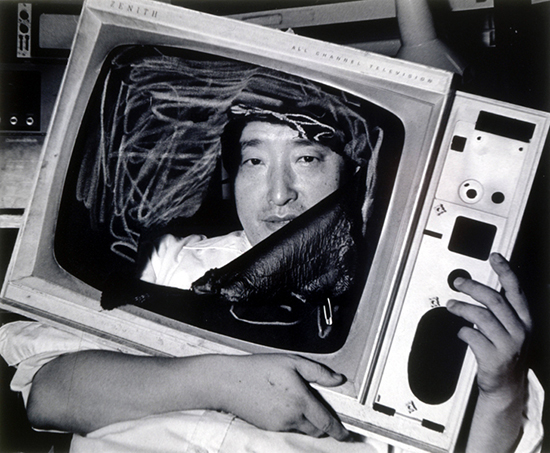
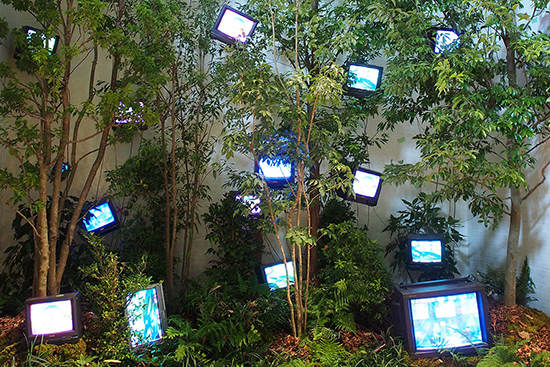
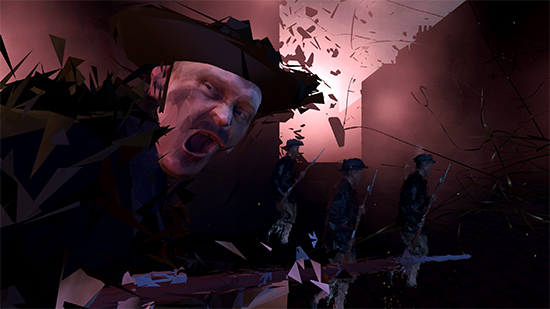
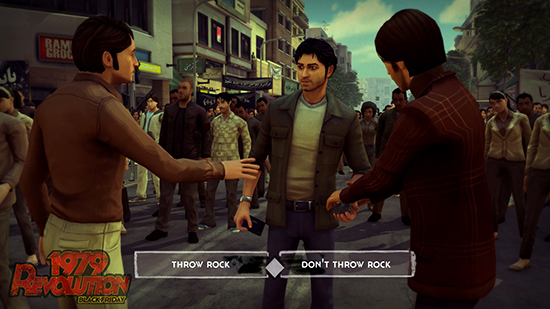
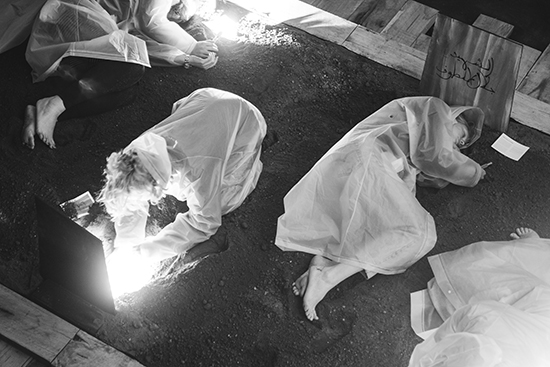
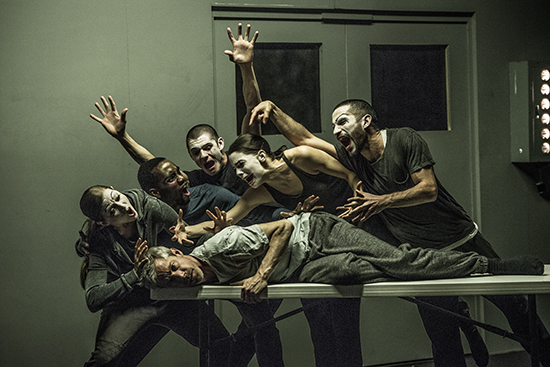
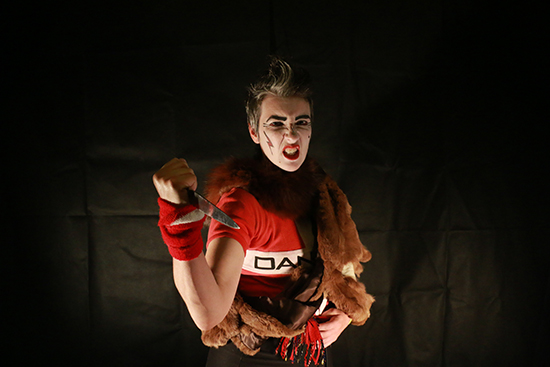

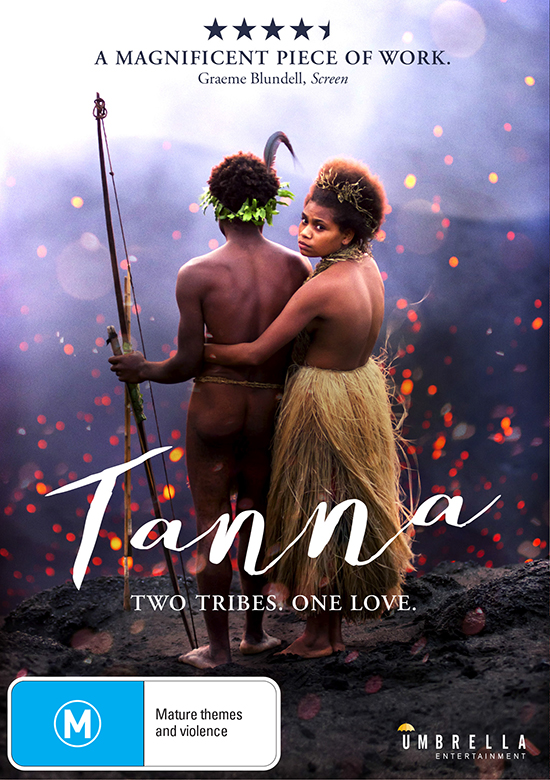
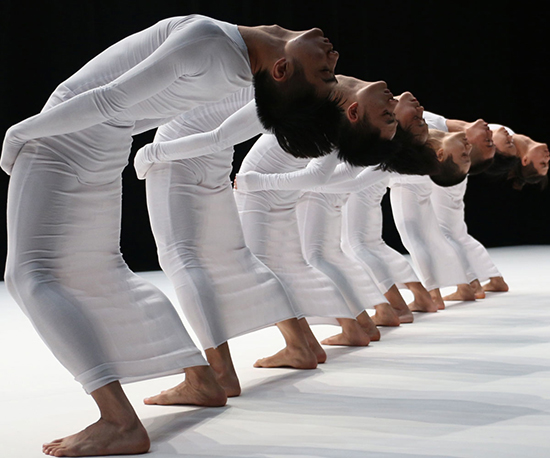
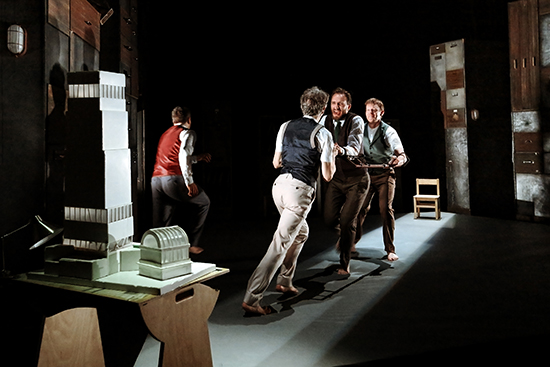
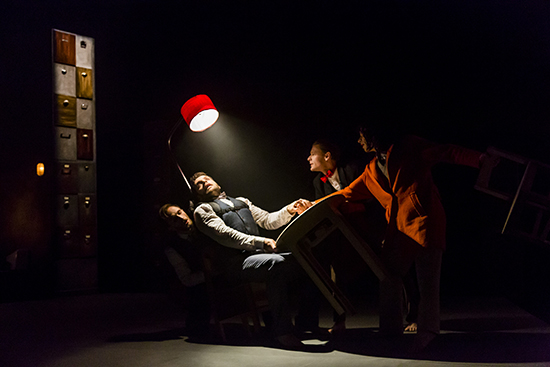
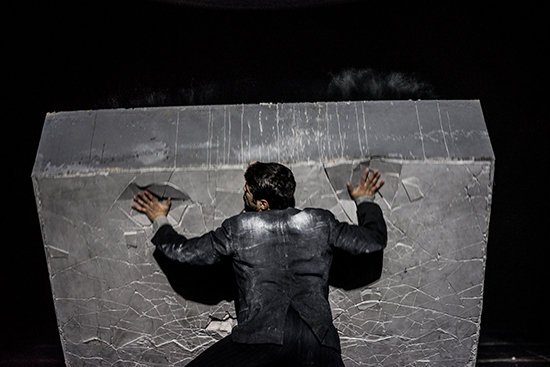
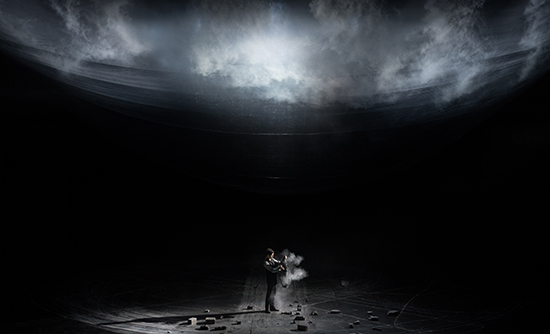
_-_photo_by_Heidrun_Lohr.jpg)
_-_photo_by_Heidrun_Lohr.jpg)
_-_photo_by_Heidrun_Lohr.jpg)
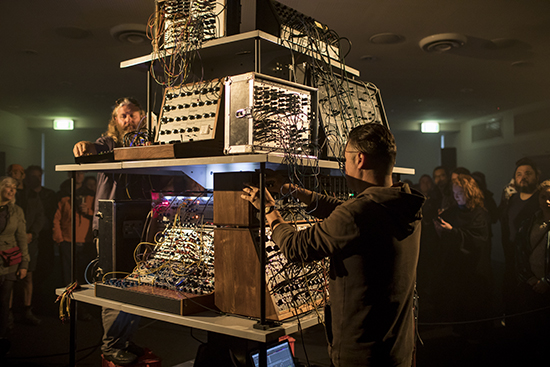
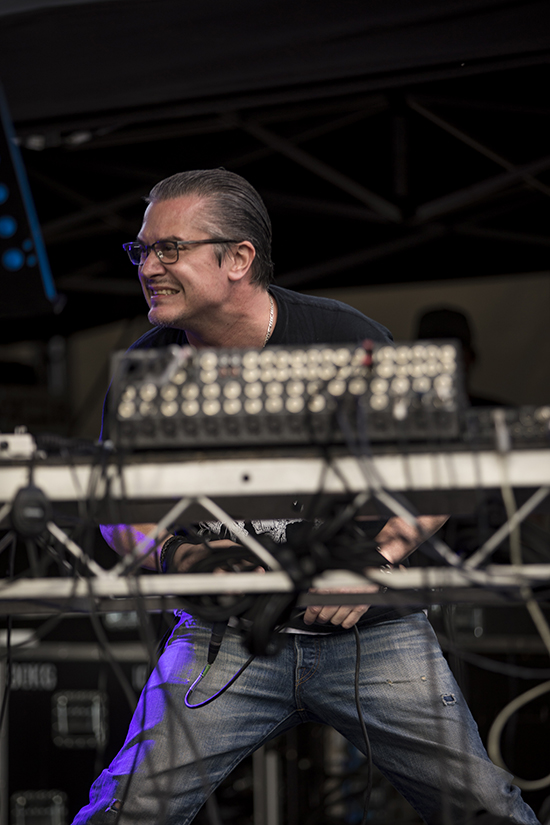
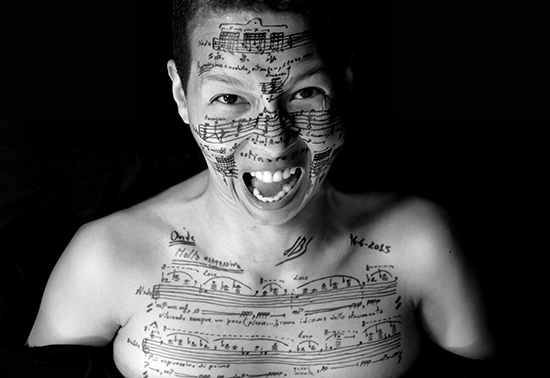
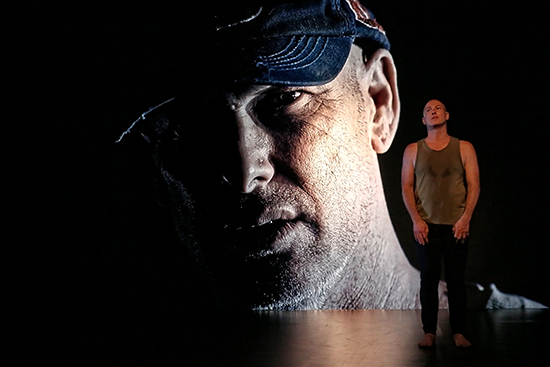

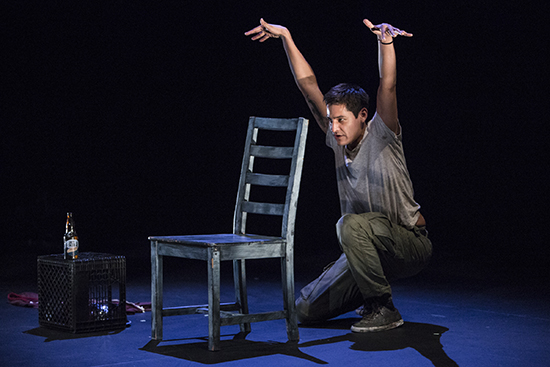
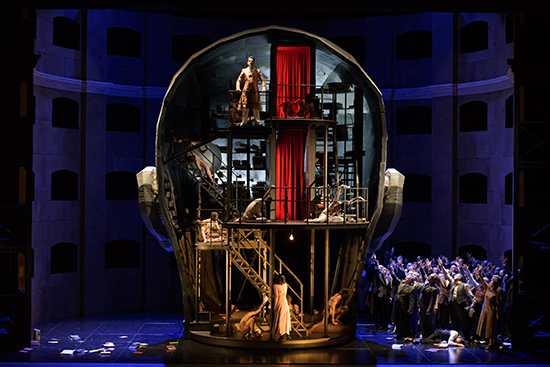
.jpg)
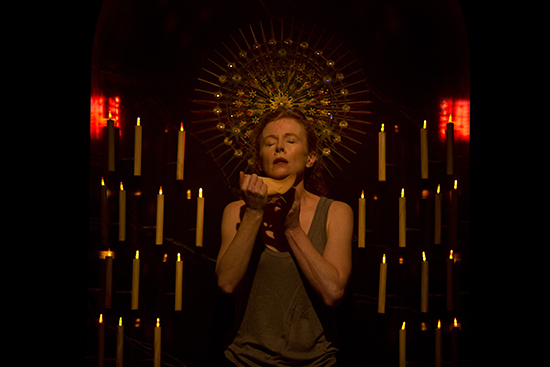
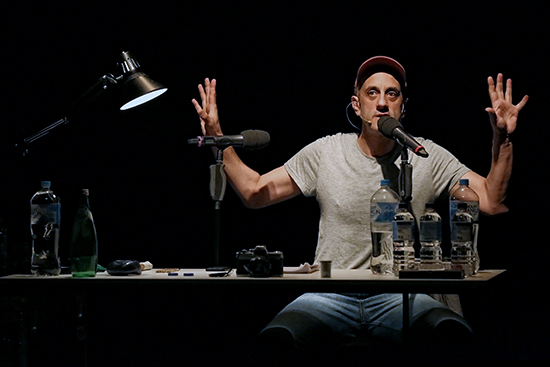
.jpg)
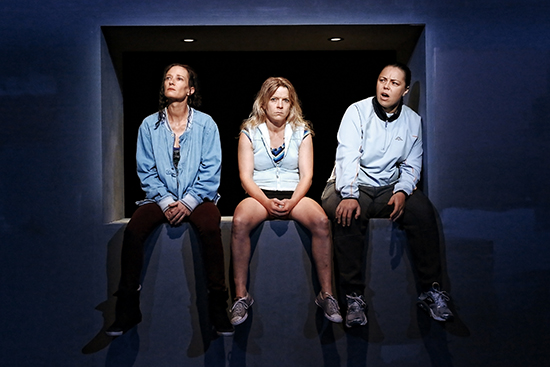
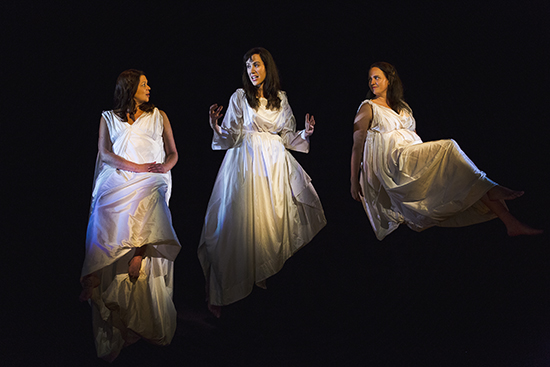
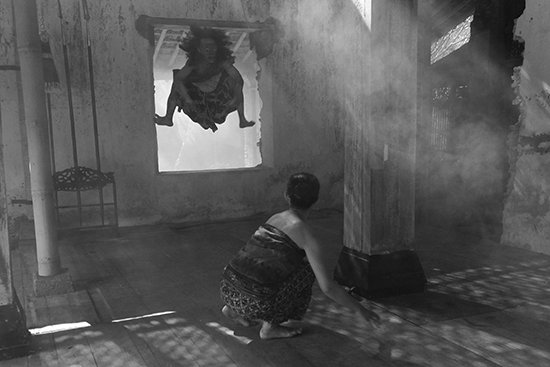
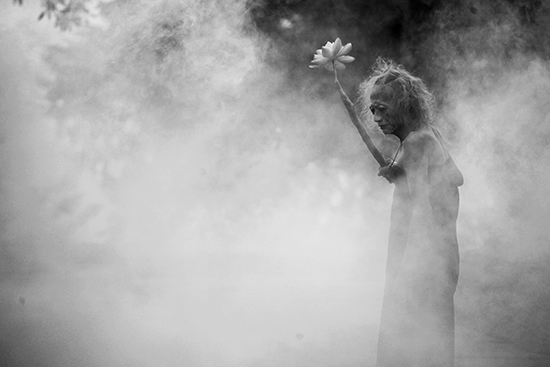
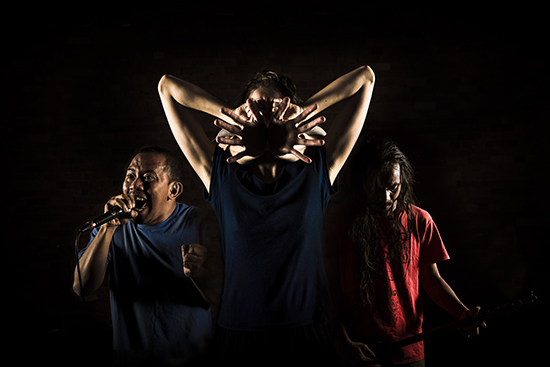
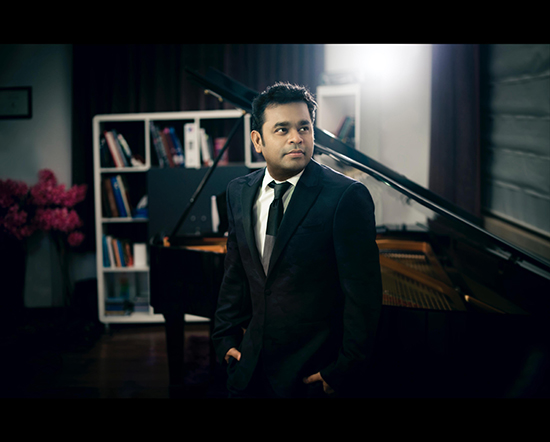
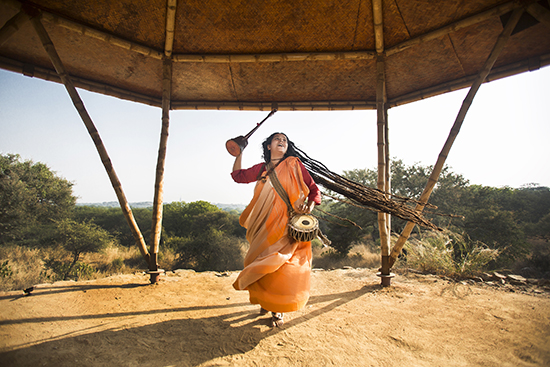
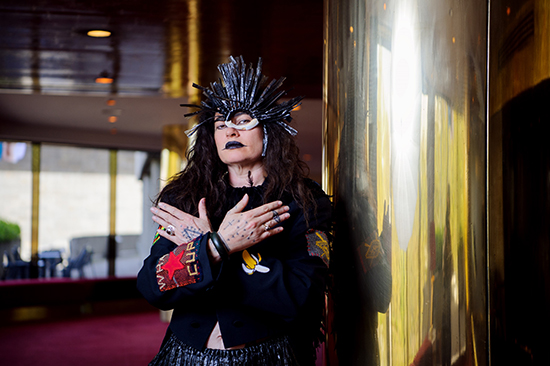
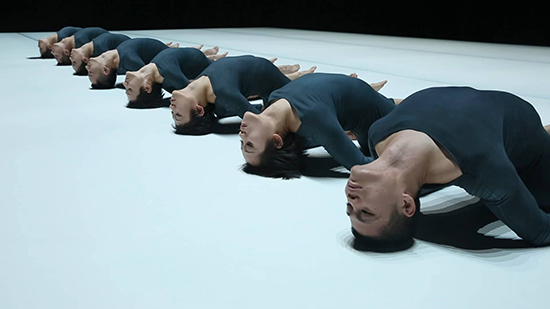

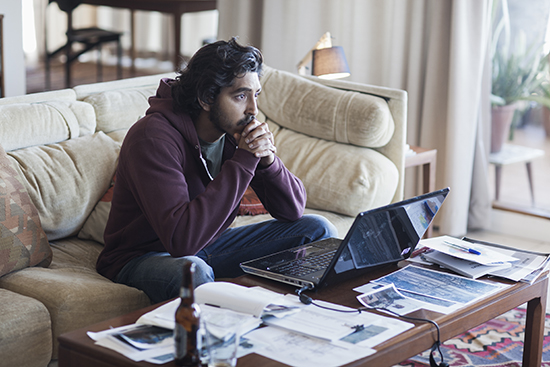
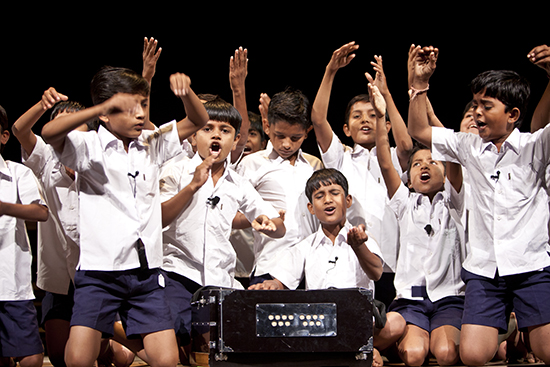
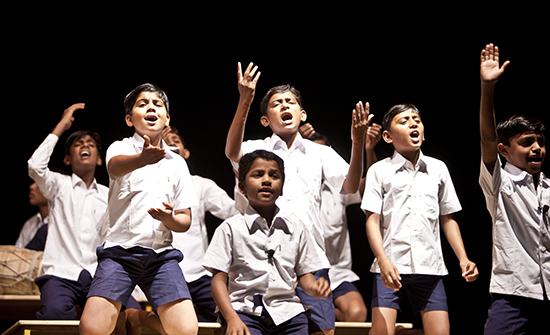
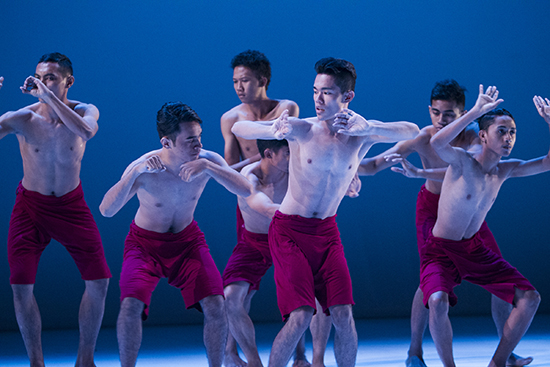
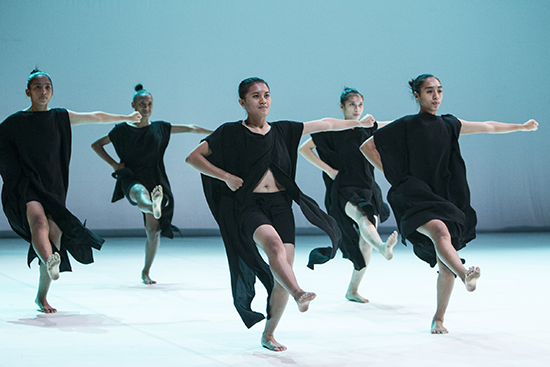
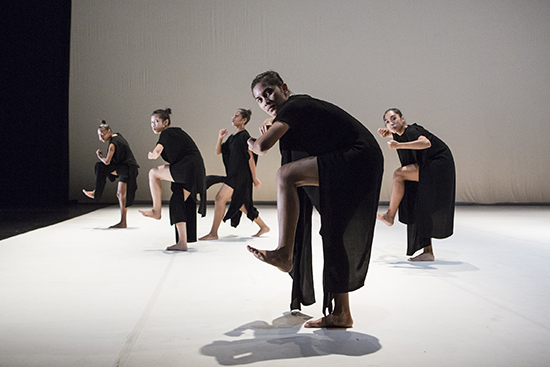
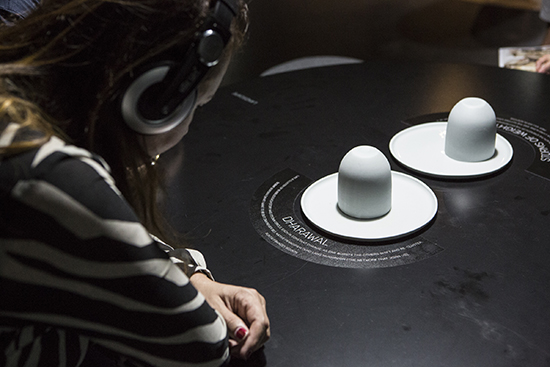
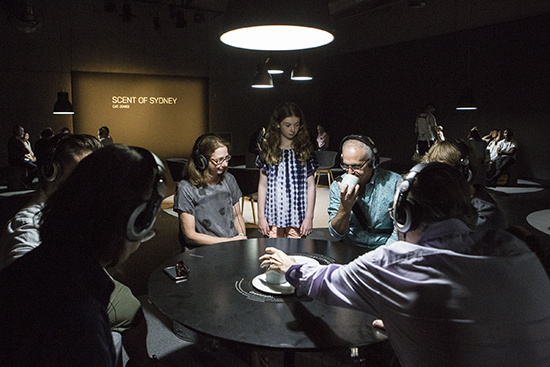
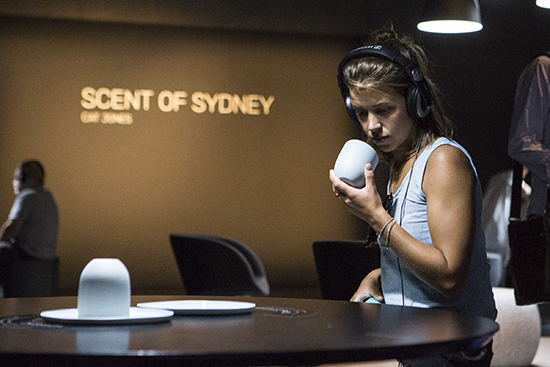
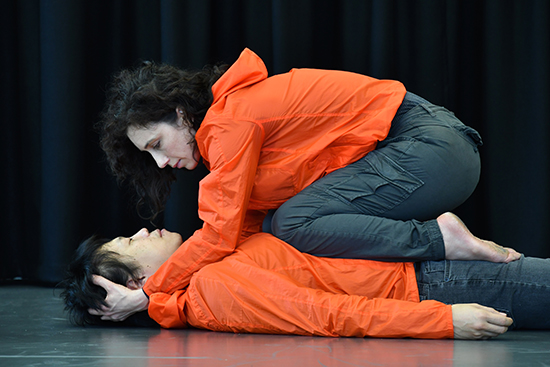
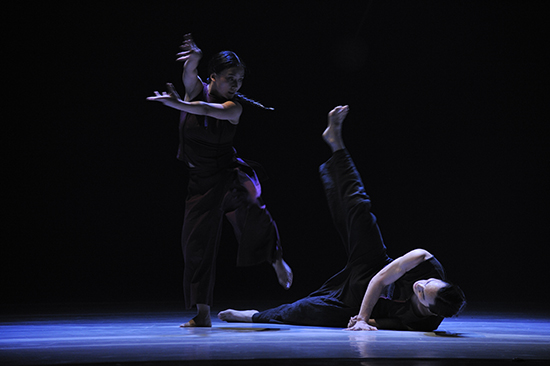
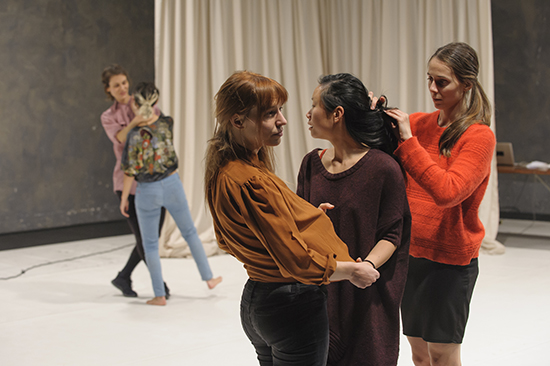
.jpg)