“If you have the ability to create the visual language in which you’re speaking from the ground up, who can say no to that?” asks Denah Johnston, curator of Always Something There to Remind Me, a selection of 16mm experimental shorts from Canyon Cinema that recently screened at ACMI in Melbourne and Revelation Film Festival in Perth. Made by women in the US between 1958 and 2015, the technically, stylistically and thematically diverse films point to the breadth of that period’s avant-garde cinema. Out of this diversity arises Johnston’s interest in the nexus between women and representation, and together the films explore agency, social expectations and the gendered gaze.
Canyon Cinema is a collectively-run distribution company that archives independent films. It started in 1961 with informal screenings projected on a sheet hung in the backyard of the archive’s founder, filmmaker Bruce Baillie, in Canyon, California. Jack Sargeant, Program Director of Revelation, feels the new program of Canyon Cinema shorts “show the importance of the archive and of the curatorial voice, but more than this, they reveal the importance of individual filmmakers who pursue their own visions.”
Kristy Matheson, Senior Film Programmer at ACMI, echoes this motivation to bring rarely seen material to Australian screens. “In terms of a local context, I think it’s essential for female storytellers to be able to access a diverse array of works and this program did just that,” she says. “The range of storytelling devices and techniques shows a great range of work that I would hope inspires female storytellers but most importantly opens up the scope for all viewers to the ambitious and free-ranging scope of female voices.”
New cinematic languages
Johnston explains that she curated this program to highlight how women filmmakers have played with the accepted storytelling language of cinema. “There is such a vast freedom in the form. Obviously they’re not all traditional narratives with three-act structures, and I think that taking a film out of those constraints really works well for a lot of the filmmakers. To make experimental work in the first place you’re already making a conscious and aesthetic decision to step out of the narrative.”
The earliest film is Sara Kathryn Arledge’s What is a Man? (1958), started in 1951 but only completed after her release from psychiatric treatment. It’s a collection of bizarre scenes exploring gender roles, starting with Adam and Eve and moving through to modern mannequins. These are humorous, but also affective, with an emphasis on word play, like the nonsense uttered in the “psy-cry-atrist’s” office.
Sharon Couzin’s Roseblood (1974) illustrates cine-dance, centring on the performance of Carolyn Chave Kaplan. Kaplan’s hypnotic movements are interspersed with a surreal, fragmented series of symbols — flower, knife, eyes, hands. Repetition makes these everyday objects strange, and the kaleidoscopic images, dizzying pace and jarring music produce a mysterious and tense film. This is the most lyrical of the shorts, visually enthralling but also decisively and frustratingly abstruse.
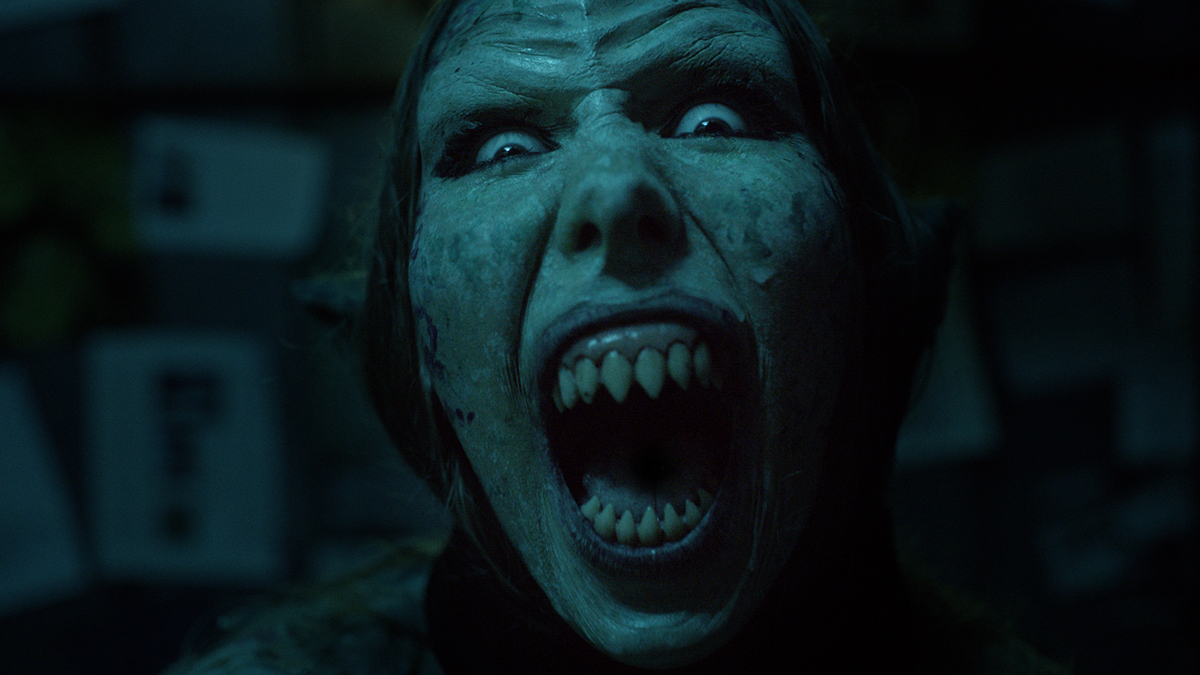
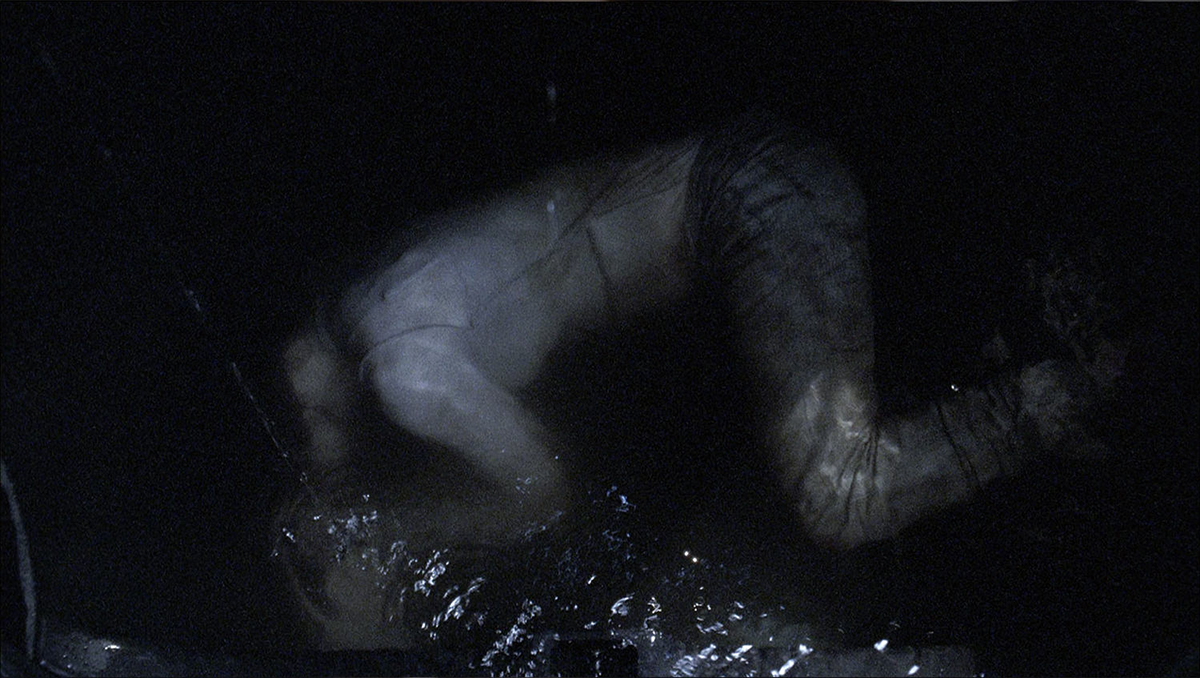
Dorothy Wiley’s Miss Jesus Fries on Grill (1973) invokes a different kind of hypnotic meditation, starting with a newspaper detailing the violent death of Miss Jesus, who was thrown onto a grill when a car ploughed into a restaurant. The narrator muses over this horrifying accident as she tends to her baby, bathing, feeding and watching it fall asleep. Her actions are intimate and also palpably everyday, so different from the very unusual and public accident, and the film is immensely disquieting.
Take Off
Women, through women’s gazes
Three of the films interrogate the idea of women as objects, subverting the scopophilic gaze, a psychoanalytic theory popularised by feminist filmmaker and academic Laura Mulvey in 1976. In a defiantly radical political framework, JoAnn Elam’s Lie Back and Enjoy It (1982) aggressively questions the ways women are represented on screen by men, via a dialogue between a female and a male filmmaker. The dialectic takes priority over image here, which is mostly a flickering close-up of a woman’s face from a black and white pornographic film, distorted through looping, reversing, speed and exposure. In Removed (1999), Naomi Uman also edits a porn film, using nail polish and bleach to erase the female body. The fantasy becomes uncomfortably empty and decisively unerotic. Uman’s film comments on female performativity, in porn and in society, reflecting how identity is manufactured through societal conventions. This is echoed in Gunvor Nelson’s Take Off (1972), which also subverts the male gaze and conventional representations of women. She documents Ellion Ness, a famous burlesque performer, as she stages a striptease, which is conventional until she finishes undressing. When the act should be over, she continues the process in what becomes a surreal disassembling of her body. Ness reduces herself to her parts, as revealed to her expectant audience, but is gleefully in control as she discards the layers.
Chronicles of a Lying Spirit (by Kelly Gabron) (1992), directed by Cauleen Smith, also explores the fabrication of identity, specifically through the lens of her experience as a black woman. An example of Afrofuturism, the film layers time, space and history in following the imagined life of Smith’s alter-ego Kelly Gabron. There is a dual-narration from Gabron and a male voice discussing her in the third person, and the entire story is repeated, prompting a consideration of the instability and unreliability of history.
Removed
Collaborative context
Many of the works were collaboratively made and led to further collective activities. Kate McCabe founded the art collective Kidnap Yourself in the town of Joshua Tree, where she discovered inspiration and a creative community. The apocalyptically themed You and I Remain (2015), by McCabe and the collective, is part of the ACMI program. The filmmaker has remarked elsewhere that “you will find more females here behind the camera directing than in the commercial film world and that’s one of the many reasons that field [of experimental film] is vibrant and lush with ideas. The filmmakers I love from the 60s and 70s were breaking new ground.”
JoAnn Elam was also a founding member of Filmgroup (now Chicago Filmmakers) in 1973, which still holds weekly screenings of experimental work. Also in Chicago, Couzin cofounded the Experimental Film Coalition, of which she was president from 1983 to 1988. Some artists collaborated with friends, notably Nelson and Wiley, who made their award-winning first film Schmeerguntz together in 1965, with Nelson revealing that “Dorothy and I needed each other to dare to do it!”
The works are all shaped by socio-cultural discourse and social and professional opportunities offered by second wave feminism, and Johnston draws a comparison between the political consciousness of women filmmakers in the 1970s and today, saying, “right now, I feel like it’s on.”
You and I Remain
Local parallels
Tracing these films, there emerge parallels in Australian cinema history, where there was a surge of women filmmakers in the 1970s. Significantly, there was structural support for this, including the Women’s Film Fund (1975-1990), the Experimental Film Fund (1970-1978) and the Sydney Filmmakers Cooperative (1970-1986). There were also collectives like the Sydney Women’s Film Group (1971) and the splinter group Feminist Film Workers (1978) and events like the International Women’s Film Festival (1975).
If much of this government funding has ceased, or at least changed significantly, there continues to be critical — and importantly, public — interest in women filmmakers, with film festivals now providing the backbone of structural support. There are dedicated festivals like For Film’s Sake and Stranger With My Face Festival, which provides mentorship for women developing genre features, while OtherFilm has held several exhibitions and festivals of avant-garde work in Brisbane and at Gertrude Contemporary in Melbourne. Jack Sargeant notes, “this isn’t to say that there shouldn’t be more spaces, more funding or whatever, but there are people making and exhibiting works, so, while the situation could always be improved, I don’t see it as entirely bleak either.”
–
Always Something There to Remind Me, Canyon Cinema retrospective, curator, Denah Johnston, presented by ACMI and Revelation Film Festival, ACMI, Melbourne, 5 July; Perth, 9-18 July
Kate Robertson is a cultural critic with a PhD in Art History & Film Studies, and has written about arts and culture for The Atlantic, Vice, Marie Claire, i-D, Junkee, Overland, 4:3 and Senses of Cinema.
Top image credit: Chronicles of a Lying Spirit
We all play roles in our work and home lives and often are assigned these in childhood by our family. We are the ‘bossy one,’ ‘the baby,’ or ‘the black sheep.’ These roles trail us into adulthood and they become our default setting when we are faced with big events — cataclysmic grief, heady love and loss. The roles we are all cast to play both conceal and reveal us.
Enter the self-proclaimed ‘comical woman,’ a part both played and railed against in He Dreamed a Train and Eve, the double bill from inimitable Brisbane theatre maker Margi Brown Ash.
He Dreamed a Train, Margi Brown Ash, photo Stephen Henry Photography
He Dreamed a Train
He Dreamed a Train, directed by Benjamin Knapton, is a paean to a loved brother and an intimate encounter with one family’s experience of loss. The work is inspired by real events — the degenerative neurological disease that prematurely claimed the life of Margi Brown Ash’s brother. We are warmly invited to bear witness to her grief, and share in it too.
The show opens when the bereft narrator, Margi, returns to the family home, to pack up her brother’s belongings and excavate old memories, perhaps in order to make some sense of the tragedy to herself. There are still things she has to say to him.
The brother presents as a dreamer type. He is visionary at times — his idea to revitalise regional communities by linking them with a monorail holds a kind of wacky genius appeal. Yet he infuriates in his refusal to accept treatment or find ways to stymie the onset of his symptoms.
Margi tells us what she cannot say to him: that if it were she who was sick, she would try everything — yoga, Pilates, acupuncture, the works — to stave off illness. This treads the line of the tragicomical, sort of like drinking a green juice to combat cancer; it might help, but it does not address the larger issue. When those you love are dying, there are conversations that are just too difficult to have. Instead we try to fix things through action, in this case with helpful suggestions for alternative therapies.
He Dreamed a Train, Travis Ash, Margi Brown Ash, photo Stephen Henry Photography
The set is comforting; it could be any one of our lounge rooms and we are lulled by its familiarity. Except of course for a lone picture on the wall. A seemingly innocuous sky scene, one might find in an old opp shop, becomes a beautiful digital image, evoking Brown Ash’s emotional landscape. Just as what remains unsaid builds in momentum, the painting is a living artwork throughout: the clouds rain, the heavens open, the sky bleeds down the wall.
Time jumps into the childhood home where the characters are visited by their younger selves, entertaining each other with mythological tales, dragon legends and their own creation stories. The most potent of these are train moments — the children playing chicken in a train tunnel, a family legend which becomes significant later in the work.
But the grieving sister cannot stay silent in the end and refuses to be diverted by these ghosts. At one point Brown Ash demands to speak not with the 25-year-old version of her brother, charmingly rendered by performer and musician Travis Ash, but “the sick old man” who has let them all down by dying too young. Her anger in this moment is palpable and affecting. The ‘comical woman’ has been cast aside. This is the kind of role that floats away like vapour when there is no one left to play with.
Yet all families have creation myths, stories we tell and retell. In them, no one dies, not really. The lost loved one is always there, just behind the clouds in the picture on the wall.
Eve, Margi Brown Ash, Travis Ash, photo Stephen Henry Photography
Eve
Eve, which was first staged in 2012 and is directed by co-devisor Leah Mercer, sees another figure struggling with the roles she is expected to embody. This show is a gloriously exuberant ‘biopic’ of the life of Australian novelist and poet Eve Langley (1904-1974), billed in the program as Australia’s answer to Virginia Woolf. This time, Brown Ash as Eve ricochets between the roles of ‘brilliant writer’ and ‘wife and mother,’ delivering moments of humour and pathos in equal measure.
We first see Eve banging away furiously on her typewriter in an iron tub in a bathroom open to the elements: a kind of a lean-to off her bush hut. She appears to be hiding out from the prosaic demands of her husband and small children, snatching precious moments with the muses where she can.
Margi Brown Ash draws on the artist’s published and unpublished writings to offer us a glimpse into the cosmos that is Langley’s interior world. In this makeshift room of her own, Eve dips deftly in and out of bush poetry, religion, astronomy and mythology. Her mind is nimble, and her ability to weave together these tangents to create vivid and startling imagery, gives us an insight into its dazzling velocity. Brown Ash’s performance of these excerpts matches the verve and wit of Langley’s writing.
As Eve works in the bath, manuscripts tied with string drop with a thud from the ceiling. We are lovingly introduced to these works as if they are her children. However, some of these parcels contain rejection slips. We also learn Langley was a furious correspondent, hilariously advising booksellers that she is happy to accept returned manuscripts only if addressed to Oscar Wilde, since he could ostensibly handle them better than she. Her acerbic sense of humour is highlighted; the ‘comic woman’ is a role Langley evidently both played and downplayed. She wears a topee hat, men’s strides and appears to cultivate a wild bush raconteur’s demeanour. Humour is her way of handling what cuts her to the quick, yet Eve longs to be recognised as more than amusing.
Eve, Margi Brown Ash, photo Stephen Henry Photography
Perhaps it is the rejections that prompt Eve to return to her domestic role and its responsibilities for a time. After a spate of creativity, we see her cross the threshold into her home proper. In this role she is less successful, although she does try. Eve’s mind shrinks, not soars. The detailing of the set, designed by Aaron Barton, is incredible, evoking the sort of household objects and collectibles found in a Margaret Olley painting. But all this is a distraction for Eve, just more stuff crowding her already busy brain. Domestic miscellany is too much in the end, or perhaps not enough. The artist cannot deny her true self and write she must, drink in hand all through the night and even as the sun rises, family be damned. In this retelling, Eve solves her childcare problem by upending her babies on the mantelpiece. By standing them on their heads, she reasons, they cannot fall — genius in its madness. Her husband has her committed to a mental hospital, nonetheless.
After her release, Eve continues to write, though she will struggle with the duality of these roles for the rest of her life. Ironically it is her adult children who, upon their mother’s death, discover a cache of Langley’s writing secreted away under her bed, as Emily Dickinson had done. It is they who marvel at her words, her true essence, concealed for so long and they who vindicate past neglect.
As a woman writing at a time where the roles of ‘wife and mother’ and ‘artist’ were often seen as mutually exclusive, Eve explores the theatre of playing house while needing to create and inhabit other imaginative worlds. The tragedy of Eve Langley’s life was not that she was denying her true self — the artist was fully aware that she needed her writing to ground herself. She had two great loves, her family and her work, but it was demanded that one be chosen at the expense of the other.
Eve and He Dreamed a Train are linked thematically by their bush settings, their artful tapestry of mythology and personal story and by Margi Brown Ash’s disarming impulse to stop for a cup of tea mid-show. We too are invited to pause and consider the roles we play, to look through and break out of them. That is the great, generous gift of Margi Brown Ash in works, crafted with skill and love.
–
Force of Circumstance, Nest Ensemble & Brisbane Powerhouse: He Dreamed a Train, writer, performer Margi Brown Ash, director, set & AV designer Benjamin Knapton, performer, sound designer Travis Ash, A/V content Nathan Sibthorpe, lighting designer Geoff Squires; Eve, writer, co-deviser Margi Brown Ash, director, co-deviser Leah Mercer, co-deviser Daniel Evans, performers Margi Brown Ash, Travis Ash, design Aaron Barton, costume designer Bev Jensen, sound designer Travis Ash, lighting designer Geoff Squires; Brisbane Powerhouse, 2-16 July
Victoria Carless is a writer living in Brisbane. Her first novel, The Dream Walker, was published by Hachette Australia in July.
Top image credit: Margi Brown Ash, Travis Ash, Eve, photo Stephen Henry Photography
Sadly, Tony Woods, a highly inventive Australian visual artist whose films and light-filled paintings we have long admired, died unexpectedly in June. In 2013 we published a review of Tony Woods: Archive in which writer Danni Zuvela described the work of this important Australian artist:
“Invited to muse on the aesthetic and conceptual relations between the artist’s practice across canvas, celluloid, pixels and audio tape, we start to develop insights into how the dialectic of representation and abstraction powers an artist like Tony Woods, finding varied expression across forms, materials and decades.”
The book includes a richly informative 55-minute DVD of the documentary Tony Woods: Work for the eyes to do, which you can see below. Or you can watch a 20-minute summary of Woods’ life and art currently posted as a tribute to the artist on his website.
Virginia & Keith
–
Top image credit: 1994 same chair changed light situation, oil on canvas, Tony Woods: Archive, image courtesy the artist
Thai-Australian playwright Disapol Savetsila’s Australian Graffiti has its moments: flashes of crisp, acerbic dialogue, grim physical comedy, occasional deft character delineation, vivid arguments and some emotionally sensitive exchanges. It’s otherwise underdone — character development is limited, critical motivation unexamined and the tonal shifts in language and mood between the scenes with and without a ghost character are minimal in the play’s easy-going naturalism, despite a press release claim for its “magical realism.” For real magic you need to turn to Apichatpong Weerasethakul’s Uncle Boonmee Who Can Recall His Past Lives, winner of the Palme d’Or at the 2010 Cannes Film Festival, in which ghosts can slip in and out of the world with unnerving effect.
Faults aside, Australian Graffiti warrants attention since Savetsila is another in a number of new culturally diverse voices coming to Australian stages and performance spaces and needs to be heard, not least for the essentially dark vision entailed in his story of Thai-Australian business failure compounded by Australian racism and traditional Thai attitudes to filial duty. For all of its leavening comic moments, the play offers at its end only a sliver of hope for cross-cultural conciliation.
Mason Phoumirath, Airlie Dodds, Australian Graffiti, Sydney Theatre Company, photo Lisa Tomasetti
Amiable chef Loong (Srisacd Sacdpraseuth) has died — his body heartlessly lugged about by the play’s other characters in bouts of black comedy — but visits as a ghost, encouraging those who listen that there is life beyond a failing Thai restaurant in a regional Australian town. The elegantly dictatorial Baa (Gabrielle Chan) continues to run the business with a ruthless work ethic, regardless of the absence of customers. Illegal immigrants — boisterous, despairing Boi (Kenneth Moraleda) and the more hopeful but ill Nam (Monica Sayers) — have become Loong’s replacements, but are not good cooks (they desperately experiment with Vegemite dumplings). Moving the business from town to town has forced home education and separation from his peers on Baa’s lonely, intelligent adolescent son and waiter Ben (Mason Phoumirath). However, a chance meeting by a creek introduces Ben to Gabby (Airlie Dodds), a caustic, tough-minded white Australian of his own age who introduces him to yabbying. This is where the play opens with youthful banter and marked sexual attraction, although Gabby drolly mocks the idea of a relationship tainted “with the stigma of sweatshop labour.”
There’s a bitter edge to joking in Australian Graffiti. Gabby’s father (Peter Kowitz), a nasty character of the bullying Australian “can’t you take a joke” variety grows angry when humour is directed at him: “You speak good English,” he says to Ben, who retorts, “So do you.”
Ben and Gabby’s meeting at the play’s end will be a test whether or not Ben can continue the relationship with the only friend he has ever made (if barely so) and if Gabby can separate herself from the racism of her policeman father and the townspeople. After their first meeting, she’s been resolutely hostile, feeling — because of Thai graffiti appearing on a church altar wall — that Ben and family have turned her private paradise into a hell. It’s not much of a town, but it’s hers, she declares with passionate conviction in one of the play’s stronger moments. But there’s little to indicate in the course of the play that she’s capable of the insights that come at its end. Ben, more convincingly, is determined to develop the friendship and break free from the restaurant and his mother’s insistence on gratitude for her sacrifices (“I’m building an empire for you!”). A girl and a ghost draw him out of a smothering cocoon which he knows has never been ‘home,’ although the options for him to remain in the town seem profoundly limited as his mother moves on.
Australian Graffiti, Sydney Theatre Company, photo Lisa Tomasetti
The executor of the graffiti is finally revealed and the symbols translated, but the meaning is enigmatic and the motivation behind it left infuriatingly unexplained — an opportunity lost to deepen both a character and the possibility for shared understanding between cultures in conflict. Why might someone be driven to commit such an act? It also prompts the question, why Australian Grafitti? Is it ironic? The graffiti in the play is Thai, it spoils and desecrates, but the disproportionate response (Ben accused, the violence, banishment in effect) and unleashed racism could be seen as graffiti writ large on the immigrant body.
One of the strongest images in the play is of a small girl who is sighted recurrently peering into the restaurant until, with her black eyes, she becomes a frightening apparition for the nervy Boi, racism incarnate. A crowd forms, rocks are hurled, windows broken and we learn later Gabby was one of the perpetrators. Other moments linger: Loong’s enticing Ben to relish the freedom inherent in eating fresh mango and his wise discourse on entrapment with the metaphor of dogs happily fattened up to be eaten: “suicide by food,” he quips. His admission, “All I have is hindsight,” is one the play’s best from Srisacd Sacdpraseuth’s engagingly realised ghost character, who grumpily complains to Nam that when he was dying, her over-vigorous CPR broke a rib. His funeral, after days of lying about and ritually held in the restaurant building for fear of alerting authorities to the presence of illegal immigrants, becomes an aptly incendiary affair for a sower of doubt.
Monica Sayers, Srisacd Sacdpraseuth, Australian Graffiti, Sydney Theatre Company, photo Lisa Tomasetti
Australian Graffiti’s limitations were underlined by a large, high-walled greyish, fluoro-lit set (representing a room adjoining the unseen restaurant) that, although amplifying Ben’s sense of homelessness, reduced the sense of intimacy and entrapment felt in the writing and produced, at times, over-projection from some of the performers (a late reference to the room as a former ballet studio didn’t compensate).
Despite its occasional strengths and strong performances, Australian Graffiti’s appearance on an STC stage was clearly premature. It’s not without promise, but Disapol Savetsila deserves dramaturgy that will address the gaps in the work and opportunities to follow through on the complexities he conjures.
–
Sydney Theatre Company, Australian Graffiti, writer Disapol Savetsila, director Paige Rattray, performers Gabrielle Chan, Airlie Dodds, Peter Kowitz, Kenneth Moraleda, Mason Phoumirath, Srisacd Sacdpraseuth, Monica Sayers, designer David Fleischer, lighting designer Sian James-Holland, composer Max Lyandvert, sound designer Michael Toisuta; Wharf 2, Sydney, 7 July-12 Aug
Top image credit: Australian Graffiti, Sydney Theatre Company, photo Lisa Tomasetti
Upon The Babadook’s release in 2014, Katerina Sakkas wrote in RealTime that “the most powerful horror films are underscored by reality, presenting recognisable fears and anxieties in magnified and fantastic form.” Indeed, writer-director Jennifer Kent’s debut is a haunted-house horror film of folkloric dimensions and feminist temperament, in which a family home harbours the unspoken terrors and taboos of parenthood. A small boy’s beloved storybook monster morphs into a far more sinister organism, a long-fingered, top-hatted creature called The Babadook that torments his mother, who is in the throes of grieving her partner’s death.
Three copies courtesy of Umbrella Entertainment.
Email us at giveaways [at] realtimearts.net by 5pm 2 August with your name, postal address and phone number to be in the running.
Include ‘Giveaway’ and the name of the item in the subject line.
Giveaways are open to RealTime subscribers only. By entering this giveaway you consent to receiving our free weekly E-dition. You can unsubscribe at any time.
So much of contemporary life feels as if it’s shattering. In the art ecology, the labour market, the housing sector, media business models and politics, things aren’t working like they used to. But sparks of fresh life are coming from surprising places. Ancient sky spirits speak to us in Warwick Thornton’s documentary, fresh from the festival circuit. Perth theatremakers are breaking apart the very atoms of narrative and putting them back together in weird and inventive ways. In a renovated substation in Melbourne, Angelo Badalamenti’s 25-year-old Twin Peaks soundtrack is remade by an art-rock band. And we continue our series of video essays by Conor Bateman — RealTime is the only publication in Australia to consistently commission such audiovisual works, as part of our effort to find new means to bring words and images together in works of creative criticism. The old ways are gone, but glimpses of the new are all around. LCH
–
Top image credit: We Don’t Need A Map
Warwick Thornton entered cinema’s global attention in 2009 when his debut feature film, Samson and Delilah, won the Camera D’or prize at Cannes Film Festival, but his presence has been long felt in the Australian creative community in many capacities — as cinematographer for Rachel Perkins’ Radiance (1998), as a photographer and conceptual artist exhibiting at such spaces as ACMI and Stills Gallery, and now as a documentary-maker. Earlier this year, Thornton’s We Don’t Need A Map was the bold choice for opening night at Sydney Film Festival (whose program dwelled heavily on issues of race) and this month broadcasts on NITV.
The film takes the Southern Cross as its focus. Unbeknown to those who tattoo it on their shoulders and fly it on their flags as a symbol of nationalist pride, the constellation has its own myriad significances for Indigenous Australians, whose knowledge of astronomy is a form of mapping, ritual, storytelling and moral education, that exist as one with stories of country. Thornton takes us away from the city and into a number of Aboriginal nations, to hear elders tell their culture’s story of the great constellation, which turns out to be a crucial wellspring in creation lore. Along the way, we also hear from academics and artists, offering a 360-degree viewpoint on what the Southern Cross means when stripped of its exclusionary and muddle-headed political connotations.
Press materials describe the film as a punk roadtrip doco, with irreverent sequences involving bushranger puppets and dioramas, but it has much broader implications: Australia has a problem relating to the past, as if history has only recently arrived young and free in this most ancient continent, and Thornton proves himself a forensic dissector of the myths, delusions and rhetoric that dominate the history wars from the Eureka Stockade to the Cronulla riots, to today. His vision is a long-sighted one, grounded in ancient protocol and law and faithful to fact and history in a way that both reveals and respects the secrecy of Indigenous, pre-industrial knowledge, while also showcasing the insights and wisdom of some remarkable non-indigenous Australians.
LCH I learned heaps from this documentary. The image of the Southern Cross constellation reflected in the side mirror of a car door seemed to me to be a great visual symbol of the film’s approach. What’s your impression of the film?
TY That reflected image idea is a big part of the knowledge Thornton is working with. In our cultures Skycamp in many ways is a reflection of the earth, with sites, stories and songlines in an “as above so below” kind of arrangement, stemming from the Turnaround event of creation that separated the material and spirit worlds into earth and sky. They reflect each other, overlapping at sacred sites and through the kind of ritual practice that is depicted in the film. An image of a person or entity is sacred because it holds the spirit of that thing — so the word for spirit and image is often the same in our languages. This is the reason we often avoid images and names of the deceased. It is the same reason the old men in the film erase the Southern Cross symbol following the ritual.
LCH To me the doco spoke to how symbolism can be twisted and mutated. It made me realise that nationalist usage of the Southern Cross in contemporary Australia is the most grotesque form of cultural appropriation. What are your thoughts on this?
TY As the old men said, that image is sacred and cannot be kept; it certainly cannot be marked on the body outside of ceremony. The people who adopted the Southern Cross image for flags and tattoos as a symbol of nationalism based on exclusion and privilege are really cursing themselves and their own people, from this perspective. But it is simplistic to frame this as a “white” thing, or Australian thing, and I think the film explores this in a more nuanced way. I was particularly struck by the switched-on Anglo people who were interviewed — their self-awareness and critical reflection are a credit to them and their community. No denial or defensiveness — their level of awareness and perception in critiquing their own culture is a great strength and does not diminish them — it makes them complete people. They are comfortable with discomfort and committed to truth as a way of life. They set a good example for others to follow. Duane Hamacher, for example, who is interviewed at a stone calendar site at the beginning of the film, has done exciting work in this field.
We Don’t Need A Map
LCH It is fascinating to learn more about Indigenous astronomy, which has an understanding of the negative spaces between stars. Thornton describes it as not just being about navigation, but interviews someone who says, “the night sky, for us, was the whole of philosophy.” As one of the elders says, “all these stars are connected to all these trees,” and all the stars are related, too, rather than being carved into discrete, lonely constellations.
TY The idea of astronomy as a mere navigation tool is very industrial and utilitarian, and our star knowledge goes way beyond that. All the memories are up there in the stars — the night sky is a vast mnemonic device that is used to store terabytes of knowledge. These memory maps are used to navigate mind and memory over deep time, to hold ancestral knowledge so vast that it would be impossible to contain in print. This knowledge is also held in songlines all across the land, and in inner maps held in the mind, so they can be accessed without actually being in the place or even looking at the sky. This is our literature in oral cultures, and it was the same for everybody in the world until very recently in human history. You can see it in the early works of Western literature, like Homer’s epics, which were oral texts initially before being written down. This orientation to knowledge and memory results in a way of knowing that some people call “pattern thinking,” which modern science is now exploring through complexity theory and fractals; it allows us to see the whole as well as the parts and discern patterns in what some see as chaos, to make accurate predictions about weather systems and human behaviour. Some of us are even currently applying this Indigenous reasoning to economic trend analysis (and let me tell you, the outlook for the near future doesn’t look good!).
LCH The film talks about how the Southern Cross connects land and sky stories. Is there any information embedded in the film that an audience member without deep Indigenous knowledge would miss?
TY That information is present, but difficult to see through a Western lens, particularly a perspective based on binary oppositions — male/female, light/dark, land/water, heaven/earth. It is all about the connectedness and transformative overlap between things that some see as opposite, the vast songlines that connect freshwater to saltwater, Skycamp to earth, men to women. The inland stories are connected to coastal stories, and these are stories of transformation and transition. There is also lots of latent information embedded in the film about women’s business and men’s business. With the canoe ritual in the film we see the common overlap between the two — when the old lady is singing we glimpse the power of women’s knowledge and the old matriarchal authority, the edge of it where it overlaps in a common space that can be accessed by all the community. The rest is so secret and so powerful — you’ll notice the women do not share with Thornton beyond this. The power and agency of women in our culture is seldom acknowledged in the mainstream — the Western lens frames us as patriarchal and abusive when it comes to gender relations. That’s the binary thinking again.
LCH I don’t think that mainstream Australia really understands that Indigenous custodianship and care extends from the land through the air to the sky — that’s the extent of colonialism’s theft, too. Do you think We Don’t Need a Map conveys the expanse of Indigenous ecology and thinking, this sense of a galactic robbery?
TY This is not just Indigenous knowledge, but human knowledge that all people had until recently. Industrialised and colonial thought is imposed and kept in place through a kind of cultural brainwashing, disconnecting people from what they really are. It is not as simple as black and white — it is about industrial and non-industrial reasoning. Scratch the surface and you’ll find that all around the world people all call the Seven Sisters constellation the same thing, with a similar story. Orion is always a hunter or warrior. Castor and Pollux are always two brothers. Aquila is always an eagle. All people globally are connected to these songlines in the earth and sky, and have only recently had their knowledge and communities fragmented. Most people in the world are dispossessed from not only their ancestral lands, but also their ancestral thought. All this disconnection and diaspora serves the interests of only a few people in this temporary experiment of industrial civilisation. The good news is, it is only a blip in the vast human story, and will not last. Who knows, maybe your grandkids and mine will one day be sitting under the stars and seeing the same story together again.
LCH At one point, one of the elders greets the black night by saying, “Hey, night.” That’s a pretty unusual thing to hear in film: the treatment or characterisation of an environmental concept as a person or a being. I think that kind of sentience has mostly been seen in science fiction films: I’m thinking of the Russian classic Solaris, followed by Steven Soderbergh’s remake, in which the ocean has a consciousness.
We Don’t Need A Map
TY Science fiction has a solid tradition of exploring the sentience of complex, self-organising systems. In literature, China Mieville probably does it best, although his books have not been made into films yet. It only occurs in fiction because the Western academic requirement of objectivity is a barrier to understanding our true relationship with the sentient universe. This academic view is placeless and seeks a mechanistic and broadly generalisable explanation of all phenomena, while the observer must pretend she or he does not exist while reporting it. The place where the observer stands, the standpoint within a dynamic landscape, must also be invisible. Indigenous knowledge is seen as subjective by the Western academy, but from our viewpoint the cosmos is communicating with us, so the things we see from our personal perspective grounded in our location are part of the story. So in the film you see that old lady singing the star story and including everything that happens in that moment in the song — clouds passing across the sky, birds flying, fish jumping…this is all part of that story of Skycamp and its communication with us in the moment.
LCH There are parts of the film that betrayed its television production origins: I found that the emotional tone and generic registers were not well sustained, and the digressions into rap, punk road trips and bush puppet reenactments were distracting. I think it would have been stronger and more sustained if it was a pure essay film, as the PR material described it. But I really loved the connection between talking heads in the bush, and Professor Ghassan Hage, who talks about how the Southern Cross is embedded in wider discourses of racism and fear that “have made refugees into exterminable objects” and of a “culture of exterminability” whereby we refer to inanimate, sinkable “boats” instead of people.
TY That discourse of exterminability is made possible by the false objectivity I mentioned previously, rendering the observer/speaker unaccountable and as invisible as the victims of their discourse. This is why the academy has historically de-emphasised subjective, supra-rational, diverse and place-based ways of thinking. I think the film does well in privileging these kinds of seemingly irrational and disjointed worldviews. It draws on a punk aesthetic to reflect this in the domain of contemporary film, and as you mentioned earlier it is an act of culture jamming. I don’t see this work as inconsistent; the film is characterised by constant and deliberate code-switching, not just between dialects and social registers but between genres as well. At times this is jarring but it is supposed to be. Warwick Thornton achieves this code-switching effect masterfully, and with a genius and humility that makes him my new favourite filmmaker. And he is never the invisible observer — we often see him in shot while he himself is filming another angle. This visibility makes him accountable for the knowledge he portrays and speaks to his cultural integrity.
LCH Yes — the way that Thornton casts himself as the filmmaker and central character, guiding us through the film, as well as the self-reflexive shots of him beside his cameraperson, is really important in showing that he’s a fallible human. He’s absolutely not playing the role of documentary’s traditional and supposedly objective, onscreen authority figure, like Michael Moore. How did you think the old stories told by elders related to the Western film techniques of talking heads and time-lapse photography? Do you think there’s such a thing as an Indigenous cinematic language?
TY Diversity is one of the few things that Indigenous cultures and languages have in common. As such, there isn’t really a single Indigenous anything, let alone a common cinematic language. Thornton incorporated the same kind of talking heads you see in docos like SBS’s series First Australians, but with the old people out bush in cultural contexts he did something quite new. He brought the viewer into the yarn, sitting alongside the knowledge keepers, and he wove the protocols of Indigenous knowledge transmission into these intimate episodes — something that is glaringly absent in the talking heads sequences filmed in the city. It forces the viewer constantly in and out of a sense of connectedness, so that we experience a sense of loss and separation over and over, instilling a cultural desire for authentic connection that endures long after the film is over.
LCH Another interviewee in the film, Dr Romaine Moreton, says, “I don’t think identity is contained in symbolism.” To me the film spoke to the limits and power of symbolism in personal, community and national identity. What did you think of her take on the relationship between identity and symbolism?
TY The transient cultures of industrial civilisation must constantly be shifting the meanings of symbols and memes to suit the shifting goals of ‘progress,’ which are dictated not by cultural needs but by the requirements of continual economic growth and resource extraction. Identity, meaning, movements and metaphors emerging organically from the demotic in human cultures are constantly co-opted and absorbed, then twisted to suit the needs of the powerful. Note for example the shift in the last 30 years in the meaning of symbols and metaphors pertaining to the idea of freedom. Freedom no longer means escape from tyranny, but the right of business interests to act without accountability for damage done to systems, land and communities. In Indigenous cultures, the symbols and stories that make up our identities endure in our Law, retaining their integrity of meaning over deep time. Our wealth is knowledge, not money and resources. Power for us is about accepting accountability for protecting sacred knowledge. Warwick Thornton honours his accountability to the knowledge that is shared with him in this film, and demands that his audience does the same.
–
We Don’t Need A Map, 2017, director, writer, cameraperson Warwick Thornton, writer, producer, cameraperson Brendan Fletcher, interviewees Adam Briggs, Dr Romaine Moreton, Prof Ghassan Hage, Baluka Maymuru, Bruce Pascoe, executive producer Marcus Bolton, in English, Warlpiri, Wardaman, Dhuwala and Dhuawaya, broadcaster NITV, 23 July
Top image credit: We Don’t Need a Map
With the end nigh, is it more important to take action to save the world or to create happiness for those around us?
Where theatre company Ten Tonne Sparrow’s first show, The Epic, was about creation myths, their new show forms a counter-response. The premise of Tamagotchi Reset and Other Doomsdays isn’t whether a catastrophe is imminent — that’s taken as a given — but the ethical ramifications about what to do while the world burns. Writers-cum-characters Scott Sandwich (sound artist and theatre-maker Tom Hogan’s stage name) and playwright Finn O’Branagáin take us on a tour-de-force through the doomsday myths of previous generations, from the fall of the Mayan empire to the nuclear bomb fears of the Cold War era. Eschewing a conventional narrative arc for an extended storytelling debate, Scott and Finn present their thoughts in a series of abruptly contrasting, thought-provoking and entertaining vignettes.
Introducing themselves as Scott and Finn respectively, Izzy McDonald and Paul Grabovac argue each position in a stream of energetic lectures, bringing a personal dimension to leaven the strongly researched and fact-rich material. It’s an inherently self-reflexive and self-referential production: the actors refer to director Joe Lui, introduce their own characters and establish an engaging ‘odd couple’ rapport that binds the production, with the gender swap emphasising the viewpoint and approach rather than the individual. Scott celebrates the achievements of humanity and the ongoing potential for creating happiness, while Finn succumbs to existential melancholy. They namecheck all manner of Judgement Days in a grab-bag mix: IBM engineers visiting a Tibetan mountaintop to assist a group of Lamas to hasten the end of the universe, the destruction of the Great Barrier Reef, and the death of teenaged Finn’s counterfeit Tamagotchi rat as Y2K hits during New Year’s Eve parties in Darwin. The unprepossessing yet demanding digital pet was hatched, fed, cleaned and played with, and Finn had reached a new month-long record of survival for this incarnation, when the keychain-sized electronic toy found itself unable to cope with the calendar demands of 2000. The recently relaunched Tamagotchi device is far more sophisticated, and Scott’s kind gift to Finn of the new and improved model informs designer Sara Chirichilli’s animated backdrop to the presentations, the cute pixel display responding to each apocalyptic scenario.
Paul Grabovac and Izzy McDonald, photo courtesy of EClaire Photography
Tales escalate at a slick pace as Scott and Finn broach the limits of their power as individuals to arrest environmental and societal collapse. McDonald shares Scott’s wonder at NASA’s Golden Record Voyager and its lonely arc through space; Grabovac rants Finn’s despair at the cycle of worry created though the ethical implications of every choice we make. Their mutual frustration with the other’s perspective grows. A detour to ancient Egypt brings a flurry of terror as benevolent Hathor turns into raging Sekhmet; we learn that what we love can destroy us and redemption is available in the form of beer as Finn and Scott follow the ancient rite to placate the enraged god of the Nile. Paul presents Finn’s deeply mournful elegy to the Bramble Cay melomys, a cute but isolated rodent from a small island on the Great Barrier Reef, using a fishbowl, ice, blowtorch and stuffed toy to evocatively demonstrate the first recorded mammalian extinction from anthropogenic climate change, contrasting with Scott’s playfulness in a roaring tribute to dinosaur existence.
Chirichilli’s brightly coloured, geometrically-styled set features versatile storage solutions from which illustrative props spring. Finn reflects on the escalating cycle of deforestation, competitive head carving and eventual starvation and slavery that led to the Polynesian island of Rapa Nui’s ecological and social collapse, whimsically expressing it all with a tray of Easter confectionery. Scott declaims the mythos of Cthulu, replete with old-timey dramatic foreboding. Scott’s beanies figure prominently and are emblematic of the playful costume design, incorporating Cthulu, alien Carl Sagan and triceratops among other elements of the apocalyptic case studies.
Tamagotchi Reset and Other Doomsdays evokes late 90s nostalgia, entertains through the didactic content and the contrasting of Finn’s earnest activism and Scott’s light-hearted compassion, using humour to offset the sudden and strident bursts of information. Scott and Finn declare their production a modern day version of an Easter Island monumental stone head, and despite the impending doom, we’re brought to a surprisingly upbeat ending that acknowledges the problems in this time and place, inspiring us to pursue our own hearts in the meantime.
–
The Blue Room Theatre & Ten Tonne Sparrow, Tamagotchi Reset and Other Doomsdays, director, dramaturg, lighting designer Joe Lui, writer, producer Finn O’Branagáin, writer Scott Sandwich, performers Izzy McDonald, Paul Grabovac, assistant director Michelle Aitken, designer Sara Chirichilli, sound designer, composer Tom Hogan, stage manager Sean Guastavino, The Blue Room Theatre, Perth, 20 June-8 July
Top image credit: Izzy McDonald plays Scott Sandwich in Tamagotchi Reset and Other Doomsdays, photo courtesy of EClaire Photography
Though it’s known for its mysterious imagery and disquieting phenomena — chevron stripes, inexplicable crying, clairvoyant logs, lessons of adolescence, slowly swishing leaves, red curtains and extra-dimensional rooms — Twin Peaks is a remorselessly sonic television series. Angelo Badalamenti’s compositions are the hooks the show hangs on and any attempt at merely covering these songs would be rather exasperating. Fortunately, Californian ‘art-rock’ band Xiu Xiu has no such desire. Their reinterpretation of the music of Twin Peaks is more like a meeting of two personalities; a metamorphosis where Xiu Xiu and the work of Badalamenti and Twin Peaks co-creator, David Lynch, relentlessly feed into each other.
Last year Xiu Xiu reinterpreted Badalamenti’s compositions with its album, Xiu Xiu Plays the Music of Twin Peaks, released as part of the David Lynch exhibition, Between Two Worlds, at Brisbane’s Gallery of Modern Art. Created in the 1990s, Twin Peaks remains a pivotal piece of Lynch’s oeuvre: an arthouse series that introduced us to both auteurist television and the murder of a small-town, blonde-haired and blue-eyed, homecoming queen. The show works by transforming a seemingly simple detective story — who killed Laura Palmer? — into scenarios that take on difficulties not often well addressed in popular television: domestic violence, abuse, incest, evil spirits and demonic possession. Likewise, Badalamenti evokes the melodrama of soap opera scores and the rhythms of jazz, only to summon something far more obtuse and perverse, the latency of which is intensified by Xiu Xiu’s reinterpretation. Xiu Xiu recently toured the album to Brisbane and Sydney, with two shows at The Substation in Melbourne, the second of which was supported by Canadian musician Sarah Davachi performing her own original work.
Xiu Xiu performs the songs of Twin Peaks, courtesy of The Substation
Sitting alone on stage, surrounded by her minimal equipment, Davachi has a purposefully understated presence. Primarily working with electronic music, Davachi’s performance builds on repetition, overtones and density. Her sustained and droning sounds both compete and interweave, so that no singular sound is allowed to stray from the pack. The darker layers protrude, while the more melodic lines lie buried: prominent enough to be heard, yet doing the trick of withholding melodic catharsis. Instead, Davachi’s music delivers a different joy; the peacefulness of the layered flat line.
Between Davachi’s and Xiu Xiu’s performances, I hear a few people comment upon the “positively Lynchian” qualities of The Substation as a venue. With its working class history, semi-industrial aesthetic and thick red curtains, it contains that conflation of mood and setting that is so pivotal to the Lynchian oeuvre. Xiu Xiu references the Lynchian penchant for dramatics by beginning the performance not with music but an essential and recurring visual from Twin Peaks on the stage’s screen. The camera incites us to look up the Palmer household staircase, briefly focusing on a moving ceiling fan, before resting on Laura Palmer’s open bedroom door. It’s an enigmatic moment that holds both Laura’s absence and presence, mixing banal domesticity with wordless terror. As this scene changes to a spinning fan and the Douglas Fir trees of Twin Peaks (visuals that repeat throughout the show), we’re continuously reminded not only of Laura, but the absence and presence of Lynch and Badalamenti.
While this initial scene holds our attention, Xiu Xiu’s Angela Seo walks on stage and hits ‘play’ on a drum machine. After setting off a repetitious single-hit pulse, she walks off, leaving the beat on loop. It’s a rather cool move and a few minutes later the entire band emerges. Seo sits behind her piano and plays Laura Palmer’s Theme, which contains those two incredibly authoritative opening chords, before further escalating the song’s quasi-soap opera moment, adding dissonant layers to heighten the already-grandiose climax. Shayna Dunkelman takes to the vibraphone (and it’s a pleasure just to watch her nimble grace), while Jamie Stewart initially sets himself behind a drum kit, his snare hits and cymbals eliciting a feeling of stress for the audience, a certain affectation that Stewart builds throughout the show. This dual preoccupation with homage and light theatrics persists throughout the night. While this could be viewed as overly self-conscious, to my mind it speaks to the generosity and emotional investment of the group’s performance.
From here the band sequentially performs the entire album Xiu Xiu Plays the Music of Twin Peaks. The obvious thing to say is that Xiu Xiu makes Badalamenti and Lynch’s compositions more dissonant, layered and darker. Yet this doesn’t nearly explain the relation between Badalamenti and Xiu Xiu, nor the weird and sudden expansions of sounds: the moments where Badalamenti’s melodies are enjoyed, only to be troubled by disparate intrusions. Xiu Xiu holds a clear reverence for pop sensibility (alongside a good sense of humour, found in songs like Audrey’s Theme and Dance of the Dream Man), aligned with a perpetually experimental impulse.
Xiu Xiu performs the songs of Twin Peaks, courtesy of The Substation
Because the band holds competing qualities — dissonance and melody, emotional upheaval alongside detachment — in such rounded and complex ways, watching Xiu Xiu play is like watching a puzzle reveal its logic. Sounds that I thought came from a synth turn out to be Stewart’s electric guitar; clusters of noise I thought were some kind of woodwind instrument stem from Stewart’s own mouth, while his neck tendons enlarge and his entire face goes red from sheer effort; a wash of notes and sustained chords that appear to be layers of piano and synth are, actually, just layers of piano and synth. With so many instruments needed to recreate the album experience (synths, piano, drums, guitar, vibraphone, harmonica), Stewart and Dunkelman spend the evening trading in equipment.
This hour-long accumulation of dramatics, pop sensibility and noise builds to the final song, Josie’s Past, where Dunkelman, in a dramatised teen-girl voice, reads the perverse confessions from Laura Palmer’s diary. After we indulge ourselves in the titillating thrill of secrets made public, Stewart’s voice breaks through in the style of a crooning and demonically possessed Leland Palmer. It slowly peters out to nothing, which seems fitting because it seems Lynchian (and this is both the trap and fun of the evening; seeing everything as somehow Lynchian).
As with any great show, it ends and you wish it didn’t. It’s the kind of performance that lingers for a few days, that makes you go home and play the record that very night, letting you indulge in that remarkable blend of something so unavoidably derivative and so utterly original.
–
Xiu Xiu Plays the Music of Twin Peaks, The Substation, Melbourne, 23 June
Tiarney Miekus is a Melbourne-based writer and musician who has been published by un Magazine, Art Guide, The Lifted Brow and Overland. Tiarney currently plays in post-punk group No Sister.
Top image credit: Xiu Xiu performs the songs of Twin Peaks, courtesy of The Substation
Given its scope, it’s tempting to call this exhibition A Working Model of the Universe, but curators, Dr Lizzie Muller and Holly Williams have humbly limited themselves to “the world.” Covering the top floor of the UNSW Gallery, this is a big exhibition made from more than 32 little things, including historical artefacts and prototypes, architectural maquettes and artistic renderings of the model manifested as painting, photography, sculpture and video. The curators are interested in how the model as microcosm can offer insights — practical, theoretical, spiritual — into the macrocosm. They have structured the exhibition around a number of non-exclusive classifications: the model as ideal, as proof, prediction, simulacrum; the model as an edifice of scale, an expression of a belief system, a step in the creative process or a tool of mastery. These provocations make for rich ruminations on works that concretise the speculative and speculate about the concrete.
Easing us into the exhibition are the kind of models we first expect — those of the built environment. Ten iterations of the Bondi Surf Club made for architects Durbach Block Jaggers show the building’s concept developed within a contemporary and commercial reality. Richard Braddish’s Sydney’s Tallest Buildings 1:1000 (Excluding Spires) 1788–2017, shows us the historical evolution of a city. The centrepiece is Bidjigal artist and elder Esme Timbery’s intricate shell-worked renditions of the iconic Sydney Opera House and Harbour Bridge: a model as a fusion of cultures and a quiet and delicate statement of reclamation.
Esme Timbery’s Shellwork Sydney Opera House (2002), image copyright the artist, licensed by Viscopy
A darkened gallery to the right offers a cornucopia of wondrous and disturbing pieces, beginning with a kinetic work from Ian Burns titled Model Of A Model Of The Spread Of Ignorance. Small baby-monitors show still images of Donald Trump’s pursed lips and raging open mouth. The mechanical action of cogs and motors, adorned with cut-outs of Trump’s eyes, activates vision-switching to create a primitive, glitchy animation of this iconic ever-flapping orifice. The seemingly ad hoc, found materials smack of poverty — a poverty of thought, a poverty inflicted by ignorance — but also, in Burns’ artwork, a poverty that has bred ingenuity.
Jo Law also uses lo-fi kinetics and aesthetics to great effect. Across 10 tiny dioramas she maps out “some useful values” as presented by a high school chemistry textbook of scenes that incorporate what she calls “a set of values denoted by powers of 10.” With homemade electronics and cut-out images, the small boxes illustrate lightning moments of scientific discovery: light refraction, the invention of electricity, putting a man on the moon, the infinitesimal world of blood vessels. These tiny, ostensibly naive handcrafted pieces display a haunting fragility in their endeavour to explain the wonders of an enormous and baffling universe.
Upping the scale somewhat is Brook Andrew’s Tombs Of Thought: Water, reminiscent of a hot air balloon. An inflatable world is turned upside down and anchored by a glass and wooden structure, which at first appears to be a vitrine. Peering in, however, we see a series of nestled, ever-smaller boxes, whose interior angles are obscured by reflections from glass and mirrors. Though our line of sight is blocked, the structure’s Babushka-doll nature becomes apparent when viewed from the outside — the fine blond wood boxes of decreasing size offset by similarly diminishing legs of charred, lumpy timber. It is an obtuse and thought-provoking artefact, meticulous crafted.
In a more brightly-lit gallery to the left, at a scale of 1:1 is Peter Hennessey’s Overlooked (Streetview Capture Apparatus), a plywood replica of a Google Street View camera. A generally invisible technology, Google Street View currently captures almost every corner of our world (except the Faroe Islands where you have to resort to sheepview). Hennessey’s model of the technology’s hardware becomes a world in itself: on closer inspection, we see that it is infested with tiny human figures clambering up its towering structure. Whether they are building this tower Babel-like, or revelling in the great views its heights afford is unclear. What is apparent is that it’s much bigger than us and leaves us without a doubt that, as poet Richard Brautigan has written, we are “all watched over by machines of loving grace.”
David Eastwood’s Assemblage perhaps best exemplifies how the very meta nature of models makes them so fascinating. He has produced a series of paintings based on his own 1:15 model of the studio of the 16th century Italian painter Morandini. The scale of the model reduces the studio to the size of a still life, and the paintings that document the rearrangements of the space take on a curiously hyperreal (or is it a neo-real?) dimension. Assemblage is a replication of a replication of an historical reconstruction, and with each iteration the space takes on more of its own life, while remaining a representation of the thing it is, or was. It’s the hermeticism of this iterative loop that makes it strangely compelling. (The exhibition website also features an illuminating essay by Eastwood.)
Andrea Durbach’s Matchstick Boat, photo courtesy of Museum of Australian Democracy
Deftly placed among the speculative artistic models are a number of museum pieces that are no less artful. The Orrery, a 19th century mechanical model of the solar system, is particularly lovely, but its beauty is surpassed by the Avogadro Project Silicon Sphere, one of the roundest objects on Earth. This glistening ball of almost pure silicone was designed at the CSIRO as part of the international project to redefine the model of a kilogram as a specific number of silicone atoms (currently defined by a cylinder of platinum-iridium kept in Paris that is in a gradual state of decay). It is, without doubt, one of the most beautifully pure objects you can ever lay eyes on. So round and reflective is it that you feel your eyes constantly sliding off it. It is a model of an ideal, an object that defies entropy and seeks a level of perfection that is antithetical to the messy workings of the world — and it is utterly beguiling because of this.
But for me the most affecting model is the Matchstick Boat by The Upington 25 on loan from lawyer and Human Rights campaigner Andrea Durbach. The model boat was created by a group of men and women falsely accused of murdering a policeman in 1988, during Apartheid in South Africa. Painstakingly pieced together from matches, the prisoners presented it to Durbach, their defence lawyer, during the trial. The Matchstick Boat is a deeply moving example of the power of hope that can manifest in a model.
This sense of hope underlies nearly all the works in A Working Model of the World. The model is generally built before the real thing — be it object, building or world — and thus allows for so many possibilities. At the point of making a model we are still gods, or alternately still children tinkering with our doll’s house. Either way the possibilities gradually get shut down as the pressures of the real world take over, as the true scale of the enterprise exerts its power. But it is this sense of inspiration and aspiration, in the face of the harsh practicalities of actualisation, which make A Working Model of the World a thoroughly thought-provoking and quite magical exhibition.
–
A Working Model of the World, curators Dr Lizzie Muller, Holly Williams, UNSW Galleries, Sydney, 5 May-22 July
Top image credit: Silicon sphere from the Avogadro Project, 1991-94, image courtesy CSIRO
A torch light cuts through the darkness. The face of a child grins from the shadows, cocooned in a tunnel of rubbish. “We’ll make a space here to sleep!” he declares, rolling happily in layers of plastic. This evocative opening of Wang Jiuliang’s Plastic China expresses the film’s implicit message in imagistic form: the more affluent we become, the more we are carving out homes built on rubbish. But for all its subtle commentary on a global cycle of production, consumption and waste, Wang’s new documentary is anything but hectoring social comment. His human subjects exude a warmth and aspirational desire that throws the social, economic and environmental complexities of our world into sharp relief.
Wang initially made a name for himself as a documentarian with Beijing Besieged by Waste (2011) (trailer below), an alarming exposé of the numerous unregulated rubbish dumps laying siege to China’s capital as its new wealthy and middle classes embrace a throwaway lifestyle. Plastic China was six years in the making, as Wang furthered his investigation of global waste disposal practices in the wake of his first film’s success. Researching in the US, he was shocked to discover massive shipments of American refuse bound for his homeland. In China, the rubbish is recycled, mostly in tiny plants surviving on wafer-thin profit margins made possible by lax safety and environmental standards. Following the rubbish trail home led Wang to the recycling plant we see in Plastic China, located near Qingdao on China’s north coast.
Although the film is largely observational in style, the filmmaker is an embodied presence, whom the onscreen subjects often address to comment on their lives and situations. They are participants in the telling of this story, rather than the passively observed objects of more fly-on-the-wall approaches to documentary.
The plant we see is run by Kun, a former farmer in his late 20s with a five-year-old son. He explains to camera that although recycling plastic produces minuscule profits, his income is still higher and more consistent than when he worked the land. Kun and his wife labour hard, feeding large piles of plastic into an industrial shredder by hand. The strips are then melted and shaped into tiny reusable pellets. Rather than recycling, this is actually down-cycling, converting cheap plastic goods into lower grade plastics that are then used to produce yet more disposable items. The down cycling process creates a putrid liquid that fouls local waterways and fumes that pollute the air. Kun endures all this so that he can raise the funds to educate his child.
Plastic China
At the other end of the aspirational scale is Peng, a father of five who labours in Kun’s plant for the equivalent of about six dollars a day. The predicament of his 11-year-old daughter, Yi Jie, provides the film’s emotional nexus, her desire for schooling and the chance to transcend her grim surrounds a counterpoint to her father’s wayward alcoholism. Yi Jie is well aware of what her family lacks as she eyes the glossy advertisements from magazines pulled from the imported waste. She and her younger brothers build a “computer” from old boxes, and she gleans a few words of English from a deck of flash-cards rescued from the rubbish. Her family’s poverty heartbreakingly precludes Yi from grasping the opportunities she can see all around her.
Although the situation Wang captures is grim, Plastic China resists the temptation to sermonise or provide smug ‘what we can do to help’ solutions. The film also resists easy finger-pointing regarding the pollution pumped out by Kun’s recycling operation, instead adopting a more emotionally detached tone that shows rather than judges. Yi Jie and her brothers live in atrocious conditions, and Kun’s family is barely one step up the social ladder. They are surrounded by images of the good life on television and, more poignantly, in the rubbish they recycle. They have every right to aspire to improve their situation, and Kun’s family at least appears to be on the way to something better, even as Yi’s family appears mired in a poverty trap. Towards the end of the film, Kun takes his family on a visit to Beijing, where they gaze in wonder at the expanse of Tiananmen Square and the towers stretching to the horizon. “You have to get an education,” Kun urges his son, “so that in the future you can bring your dad to live in Beijing. This is where the rich people live.” Given Kun’s drive and intelligence, he and his son might just pull off this dream.
Plastic China
Yet the implicit question in all of this is where does the aspirational cycle end? The highlife enjoyed by the West and China’s rich and middle classes is supported by the cheap labour of others, even as those labouring scramble to climb over each other to reach the top of the pile. Meanwhile, we all consume more and more, and produce ever more rubbish, in an ever intensifying cycle of environmental degradation. Why do we all aspire to throw away so much? Are any of us willing to lower our material conditions so that those on the bottom can have something comparable without completely destroying the planet? As Plastic China concludes, another load of imported rubbish is unloaded as Yi Jie and her siblings play among the scraps.
Wang’s sophisticated film is one of a number of highly successful works to emerge in recent years produced by CNEX, a non-profit group founded 10 years ago to foster independent documentaries across Taiwan, Hong Kong and mainland China. CNEX has helped filmmakers like Wang tailor their work for a broader global audience. While encouraging the prolonged, empathetic engagement with subjects that has long characterised Chinese documentary, CNEX has urged directors to adopt tighter editing, shorter running times and touches like intertitles to make works more accessible to international viewers.
The result of CNEX’s efforts has been a string of recent titles acclaimed at film festivals around the globe, including A Young Patriot (Du Haibin, 2015), The Road (Zhang Zanbo, 2015) and The Chinese Mayor (Zhou Hao, 2014). Plastic China is one of the first Chinese works to cast its gaze beyond China’s shores and consider the complex relationship between Western lifestyles, Chinese aspirations and lingering, entrenched poverty inside the People’s Republic. If China is plastic, Wang’s film shows us, it’s because we became plastic first. If China is polluting, it’s because she has followed the West’s lead. This is a system that implicates all of us, linking the recycling bins outside our homes to the lives of small children in China. Wang may provide no solutions, but he asks questions addressed to us all.
–
Plastic China, director Wang Jiuliang, producer Ruby Chen, CNEX, People’s Republic of China, 2016, Human Rights Arts and Film Festival, ACMI, Melbourne, 4–18 May
Top image credit: Plastic China
Lights dim, the enclosed stage area fills with smoke, torchlight cuts through the gloom in truncated moving beams, with two shadowy figures calling to each other. A sudden ball of light, shot through with colours, explodes in the smoke behind them, lingering a little longer than lightning and leaving the characters and audience dazed in its wake.
For her new work, Western Australian writer-director Zoe Pepper offers an experimental and eclectic work of constantly criss-crossing plots and characters, played by just two actors. Co-produced by Side Pony Productions and The Last Great Hunt, The Irresistible’s interwoven narratives are realised with tightly coordinated sound design, innovative pitch-manipulation of actors’ voices and a simple yet startling set involving transparent layers within layers that enclose the actors within a strange, self-contained onstage world.
Events unfold in The Irresistible in a way that defies description. We open in the cockpit of an aircraft. Two co-pilots, played by Tim Watts and Adriane Daff, exchange workplace banter; everything runs smoothly until one pilot is gripped by a mysterious force, sending the plane hurtling to a fatal crash landing. This enigmatic energy may also feed new character Bridget’s obsession, confining her to a world of mental illness. Though she insists that she and her sister April were taken somewhere in a childhood memory, April staunchly denies it.
Adriane Daff and Tim Watts in Zoe Pepper’s The Irresistible, photo by Dan Grant
Watts and Daff play the entire array of characters in functional, matching costumes of industrial-styled coveralls: a bickering odd couple, council worker Eric and medical doctor April; Niamh and her regular peep show client Christian; April and Bridget and their young niece Cassie, an evil child whose imaginary friend Abby makes an implied appearance. Watts and Daff both play male and female roles, reversing gendered expectations and sublimating physical appearance. As their cast of characters swiftly come and go, my mind tries to find a common thread, but I’m mainly left with admiration for the versatility and ingenuity of the two actors who manage to create such a crowded stage with a total absence of costume changes or props. Split-second timing allows Daff and Watts to switch between characters with vocal pitch changes captured through their headset microphones. Far from a mere gimmick, these tight, precisely-timed changes enhance the performers’ body language, posture and changes in stance — these characters are believable and compelling to watch, with the scenes and roles often changing between breaths.
While Pepper’s script abruptly shifts between all these human interactions, a recurring motif of torchlight beams cutting through the gloom hints at a greater irresistible force driving them all — and moving us toward an eerie, inconclusive ending. Whether this mysterious light is a deeper shared, connecting imperative or simply a sideshow in the night sky is left to the audience to contemplate.
The show alludes to themes of dominance, gender roles, entitlement, family responsibilities and social expectations, all queried as forms of unconscious bias in our everyday lives. As constructs, these forms of bias clearly necessitated deep research on Pepper’s part, yet the work still functions as an absorbing piece of entertainment, with the grander narratives hinted at in the turn of a shoulder, a trick of the mouth and a slurring of vowels.
Adriane Daff and Tim Watts in Zoe Pepper’s The Irresistible, photo by Dan Grant
The production arrives in a wider context of experimental performance among Perth theatremakers. The Last Great Hunt consistently produces engaging and interesting theatre, pushing theatrical boundaries by integrating performance techniques across genres and reconsidering the narrative imperative. The Last Great Hunt’s recent work, The Advisors, was a peculiar exploration of cultural norms expressed through spoken word and physical theatre, while Pepper’s recent directorial project The Confidence Man also played with character-driven narrative and inventive uses of audio technology. Perth theatremakers are delivering not only intriguing new works but also providing a new take on established pieces: this year, The Last Great Hunt member Jeffrey Jay Fowler’s direction of The Eisteddfod by Lally Katz impressed audiences and critics with the way it embraced ambiguity and entrusted the audience with their own creative interpretation.
Jonathon Oxlade’s innovative design for The Irresistible literally contains the action in a sealed transparent set, in which layers of clear plastic sheeting form transparent boxes. Richard Vabre’s exacting lighting design is closely integrated: the set’s layers within layers fill with smoke effects to create vacuums of cloud, steam and fog in a way, conjuring the ambiguity of human memory and motivation. Phil Downing and Ash Gibson Greig produce a rich and complex soundscape, in which the shifts in character development are deeply embedded. Daff and Watts deserve recognition not just as actors but as collaborators interpreting Pepper’s intelligent and challenging script. The resulting production is disconcerting yet captivating; it fascinates, perplexes and rewards close attention.
–
Side Pony Productions & The Last Great Hunt, The Irresistible, director, writer Zoe Pepper, writers, performers Adriane Daff, Tim Watts, set and costume designer Jonathon Oxlade, composer Ash Gibson Greig, sound design Phil Downing, lighting design Richard Vabre, producer Gemma Pepper, production manager Ben Kontoolas, stage manager Hannah Portwine, gizmo specialist Anthony Watts, PICA Performance Space, Perth, 14-24 June
Top image credit: Adriane Daff and Tim Watts in Zoe Pepper’s The Irresistible, photo by Dan Grant
Objectillogica: a modern wunderkammer, curated by Megan Schlipalius, is an exhibition based on the cabinet of curiosity fetish of the past. This exhibition is thematically anchored in Eurocentric history but looks to the more recent past of Australia’s colonisation and the curiosities of the Holmes à Court collection, presented at Vasse Felix winery, a striking piece of architecture in the rambling countryside of Margaret River. Paintings and objects are clustered across the walls, sculptures adorn the floor and several glass-fronted, custom-built cabinets house a diversity of treasures, from carved animals to woven hair and feathers and bronze sculptures.
The Wunderkammer of the 16th to the 18th centuries was a prodigious source of inspiration for the noble classes. It was a way of knowing the world, an expression of power, as though the collections of taxidermied animals, fossils, relics, shells, artworks and other artefacts could offer a portal into far flung exotic places. It was also an early expression of colonial ideology. As writer Ian McLean observed in 2010, “The taxonomies displayed in its rooms and cabinets were imagined as micro-scenes of the world. They are amongst the first fruits of a new world founded on European colonial expansion and mercantile acumen of global reach, and signal a burgeoning desire to not just re-order the cosmos but to know, own and control it.”
As such, the Wunderkammer was also an early expression of Enlightenment thinking. It projected forwards, as much as it looked back to the past through the collection of ancient objects. Today there are contradictions inherent within the idea of the Wunderkammer, for while it was once taken so seriously, as a method of categorising, understanding and containing otherness, it is presently viewed as an odd and whimsical pastime for those who had too much time on their hands. In another guise it has also infiltrated contemporary art and Wunderkammering, a term dubbed by McLean, is a curatorial and artistic strategy of mixing, matching and clashing together objects from different times. It fits well within a postmodern and post-colonial logic and over the past decade there has been something of a revival of Wunderkammer exhibitions and their critical evaluation within the Australian context, including Curious Colony: a Twenty First Century Wunderkammer at Newcastle Regional Gallery in 2010 and Wunderkammer: The strange and the curious, at UQ Art Museum in 2015.
Installation shot of Objectillogica, photo by Megan Schlipalius
Sourced entirely from the Holmes à Court private collection, Objectillogica subtly unfolds and brings together a selection of Indigenous, non-indigenous, colonial and contemporary works dating from 300BC to 2014. Despite the Wunderkammer originally being a kind of proto-museum of contemporary museums, Schlipalius told me by email that “the arrangement of works was mainly inspired by the notion of an anti-museum. This approach was initially inspired by MONA’s Theatre of the World — although at a much more modest scale! I attempted to put disparate objects next to each other while creating a visual balance throughout the cabinets.” The MONA connection is significant, as David Walsh’s institution is also founded on antagonism to the usual museological conventions of display and curation.
Likewise, Objectillogica is an anti-museum in that it eschews the traditional taxonomic systems of museums and early curiosity cabinets. This exhibition is also in tension with the minimalist hangs of many contemporary art displays, instead pushing to fill all available space and, rather than being arranged according to similitude or taxonomic rigidity, there are thematic currents running through the show that make it compelling as well as cohesive. What is taken from MONA’s Theatre of the World is the Wunderkammering approach of mixing ancient, modern and contemporary, artefact and art and, rather than drawing from all reaches of the globe, it is largely located in the Australian and primarily Western Australian contexts.
Unknown artists from the Kimberley region, Egypt and Papua New Guinea, photo by Robert Frith, Acorn Photography
The show considers a specifically Australian ‘wonder,’ where it is apparent that the collecting process, by Holmes à Court, has been driven by a keen eye for the historically significant, culturally relevant and occasionally obscure. There are exquisite works of art on display here and the obscure has been brought to the forefront in keeping with the traditional Wunderkammer, as a way to reveal and revel in the curious. At the entrance is a linocut by Rew Hanks titled The Hunter and the Collector. It features botanist Joseph Banks surrounded by a plethora of objects that relate specifically to Banks, such as Banksia flowers, May Gibbs’ wicked Banksia Men and the prickly pear weed introduced by Banks. At his feet is an image of the jar containing the head of Pemulwuy, the Indigenous warrior resistant to colonisation whose head was reportedly sent to Banks in England. This image critiques colonial attitudes and makes evident the damage wreaked on ‘new worlds.’
This is where the relevance lies in presenting a Modern Australian Wunderkammer. Like a transhistorical lesson, it offers ways to rethink events of the past and reconsider our place in the world; there is revelatory strength in mixing old and new. This makes it serious business, with biting political commentary, but there are also currents of humour running through this interpretation. There is the obligatory crocodile, in this case Francella Tungaltalum’s Yirrikapai (The Saltwater Crocodile), in a nod to museological tradition. There is a toolkit made entirely of extruded plastic by the artist Eamon O’Toole. The Wunderkammer presented here is still a way of knowing the world, of teasing out the idiosyncrasies of the local and national context with all its inherent layers of meaning and playfulness.
–
Objectillogica – a modern wunderkammer, curator Megan Schlipalius, Holmes à Court Gallery at Vasse Felix, Cowaramup, WA, 21 May-1 Oct
Top image credit: Danie Mellor, Hunter Gatherer, 2008, mixed media with shopping trolley, image courtesy the artist
Reason for Travelling
I first went to Japan in 1980 and I continue to go ever since. The ancient culture lives in the present. Japan throws all our assumptions upside down and makes us review our own culture. It has the best of two worlds being grounded in a strong heritage yet a world leader in innovative technologies. There is widespread belief in excellence and quality in all things and it shows.
I was led to Japan by my love of cinema, having studied Japanese classic cinema in London in 1971. The depictions of Japan by filmmakers like Ozu, Mizoguchi and Kurosawa entranced me, and have stayed with me through the years in my work as a photographer, curator and Creative Producer of Arthere, as well as through my long association with Stills Gallery in Sydney.
It is possible to go to Japan from Australia for short trips and get a complete break. There is minimal jetlag — two hours difference — and if you have time to go for longer you can explore the country from top to bottom.
Why Kyoto?
When I first went to Japan I headed for Tokyo, which has the largest population in the world and where day and night are like two different realities. For the young, your energy meets this city.
However, I recommend going to Kyoto if you have not been to Japan before. It is the most beautiful city in the world. Originally the capital (where the Emperor lived until 1868), it is still regarded as the elite place to live in Japan and has become the country’s cultural and heritage centre. The pleasure of Kyoto is walking the streets day or night and discovering stunning traditional architecture such as bamboo houses. Serendipity is a major factor in Kyoto where delightful things continually present themselves on the way to places in the tourist guidebook.
Walking at dusk in the Gion area you may sight geisha and maiko. You must be in the right place at the right time. Even the locals get excited at seeing geisha. Walk the alleyway leading off Shijo Street (closest to the Kamo River on its western side) and try any of the restaurants that sit alongside the river.
For contemporary arts and culture follow the stylish young people into music and bookshops. They are finely tuned to Western culture. For shopping (be warned, it’s everywhere!) visit Teramachi covered walkways (there are two parallel) and then go to Gokkomachi dori (street) one parallel to the west and see artistic designer and traditional shops and head to Café Independants for a drink and a meal. It’s a young person’s hangout, and there are brochures for art events in Kyoto on the wall.
Vendor selling fish, photo Sandy Edwards
For refreshment…
Food in Japan is wonderful as long as you are adventurous. The diet is hugely different to our own so do not expect rice bubbles for breakfast; rather imagine a riceball with umeboshi in the middle of it (onigiri = riceball, umeboshi = sour plum, ume = plum).
The Japanese are both traditional and incredibly refined gourmets. They choose the best of everything around the world. They love French bakeries for example and do their best to imitate them. Kyoto specialises in a traditional cuisine called kaiseki, a meal of many dishes equivalent to Western haute cuisine. A reasonably priced kaiseki restaurant in Kyoto is Giro Giro Hitoshina, which sits near the Kamo River (Kamogawa) south of Shijo Street in central Kyoto, and should be booked in advance as far as possible.
Head to the Nishiki markets in central Kyoto. It is open daily and a great source of free snacks. It will be crowded but worth it.
The other treat is the food section of any department store. These are mindblowing in their novelty and a great way to get to know the Japanese cuisine. Seek out mocha (rice cakes).
Sake is God’s (Buddhist) gift to humans. It is made of rice and pure water (mizu) with a yeast binder. The sake culture is as refined as wine culture in the west. Explore and sample in department stores.
If you have a food allergy (I am gluten intolerant) you may have problems. Carry a card in Japanese explaining your requirements.
For temples (dera) and shrines (jinja)…
There are two primary religions in Japan: Buddhism (of which Zen Buddhism is part) and Shinto. Temples are Buddhist with a distinctly gracious architecture. Shrines are Shinto and are recognisable by their orange/red toriis (Japanese gates).
The most famous Shinto shrine in the outskirts of Kyoto is Fushimi Inari Jinja. This magnificent heritage site features thousands of toriis closely lined on walkways up the hillside. Each torii is a memorial to a family member who has died. There are teahouses to stop at and resting places with beautiful views of Kyoto.
The Higashiyama hills on the east side of Kyoto are full of temples, teahouses and walks. The Philosopher’s Path extends for two kilometres from Ginkakuji Temple in the north to Nanzenji Temple in the south. A little further south is Kyomizudera. This is usually my first point of call when I arrive in Kyoto. It is an independent Buddhist temple that provides unequalled views of Kyoto from its large wooden platform. The walkways to Kyomizudera are full of craft and food shops creating a delightful experience. The only downside is that this important temple is a major attraction to tourists so crowds can be daunting at times.
Other popular shrines and temples are Kinkakuji and Ginkakuji (the gold and silver pavilions).
photo Sandy Edwards
For culture…
The Kyoto Visitors Guide lists all exhibitions and art events in Kyoto. There is the Kyoto Art Centre and The National Museum of Modern Art, but my personal recommendation is the Kahitsukan Kyoto Museum of Contemporary Art, a privately owned museum on the west end of Shijo Street. It features photography and photography books and pottery. On the top floor a maple tree grows through a circular hole in the roof, turning orange and red in autumn. If you like pottery I recommend the Raku Museum.
Kyoto is distinguished by many Japanese wonders such as zen gardens, the classic one being Ryoanji, and places of historic significance such as the Katsura Imperial Villa which you must apply to visit in advance of your trip.
For day trips from Kyoto…
If you want to see contemporary art museums and galleries go to Osaka for the day and check out The National Museum of Art Osaka, the Habeno Harukas Art Museum located in Japan’s tallest building (great views of Osaka) and the Osaka Culturarium Tempozam designed by Tadao Ando.
The Miho Museum, the original model for Tasmania’s Museum of Old and New Art, is set within total greenery in a hilly area a few hours by train and bus from Kyoto.
For a traditional experience, go to Arashiyama for the bamboo forests. They are beautiful.
To do justice to the art islands (Naoshima, Teshima and Inujima) you need a minimum of three days including travel from Osaka or Kyoto. A visit should not be rushed. There are multiple art locations on each island requiring transport by bus and ferries. There are only a few of these island-to-island each day. The locations are stunning. The art is state of the art contemporary and these islands created by Benesse Holdings Inc and Fukutake Foundation have put Japan on the international art map in much the same way as MONA in Tasmania has. My special recommendations are the Hiroshi Sugimoto installation Go’o Shrine part of the Art House Project, the Teshima Art Museum designed by Tokyo architect Ryue Nishizawa and artist Rei Naito and Teshima Yokoo House, a converted house now museum featuring the psychedelic work of artist and designer Tadanori Yokoo. A bonus if going to Naoshima and Teshima from Takamatsu port in Shikoku (rather than from Uno on Honshu) is a visit to the Isamu Noguchi Museum in Takamatsu.
Teshima Art Museum, photo Sandy Edwards
For the greatest relaxation…
Do not miss the bathhouse experience. Open daily from 3pm to 2am. Take your own soap, small towel and shampoo (you can buy them at the counter). Forget your modesty as you get naked leaving your possessions in a locker. The cost is about 500 yen (about $4). Ask locals where the nearest bathhouse (onsen) is and head there at the end of the day or late before going to bed. The greatest relaxation ever! One famous one in north Kyoto is Funaoka Onsen (which is near my accommodation recommendations).
For accommodation…
Hotel Granvia is located on the first floor in Kyoto Station Building. This is a great soft landing option as a starting point. Kyoto Station Building is like a city within a city, a masterpiece of design by architect Hiroshi Hara.
Then it is good to get out into the city and stay in a Ryokan (Japanese-style guesthouse or Minchuku (homestay). I suggest Shizuki-Kyoto Ryokan run by the delightful Satoe Ikeda. She speaks English and has lived in Australia. It is out of the city centre in the north of Kyoto near Daitokuji Temple (a wonderful Zen temple complex that you can spend a whole day or three exploring). For cheaper accommodation for budget-driven travellers in the same area, aminchuku (a type of homestay predating Airbnb) is Tani House run by the wonderful Mrs Tani and assisted by her daughter Chiaki Tani who has a separate homestay. For short stays in Kyoto you may want to look for something in the central Kyoto area.
Sitting and sleeping on the floor is normal in Japanese-style accommodation so if you find this difficult, seek hotels with Western-style beds.
photo Sandy Edwards
Practicalities…
Before you leave, buy a Japan rail pass, a good guidebook and a language book. For those in Sydney, Kinokuniya Bookshop at The Galeries near Town Hall is an excellent source of anything related to Japan. Look for Old Kyoto by Diane Durston, a guide to artisan shops of traditional art, craft and food such as tofu, tea, hand-made paper.
Once in Kyoto, transportation by bus, train or on foot is easy. The city is flat and surrounded by hills on three sides, so contained. Train to Osaka takes 40 minutes if you want a big city fix.
Practice bowing. Take respectable socks. You need to take your shoes off at every temple. Slip-ons are a good idea.
Sandy Edwards is a leading Australian photographer, curator and Creative Producer for ArtHere.
Top image credit: Kyoto, photo by Sandy Edwards
Insights from artists working in shattered academic institutions, warnings against group-think, dogma and echo chambers, and thoughts on the paradigm shift in Trump’s USA. The week’s necessary art reads, from the RealTime team, to you.
2017 has brought much discussion of the scarcity of spaces for in-depth art criticism in the Australian media. Sydney museum 4A, a place for contemporary Asian art, has an online publication of unusual breadth for the discussion of art, culture and ideas. This piece by Helen Grace, an artist and academic who works in Hong Kong, draws on an incredible depth of research and personal experience to discuss the ravine of difference between academic cultures in Australia and abroad. Her analysis is particularly relevant for those Australian artists and arts writers who increasingly find themselves squeezed into the structures of neoliberal universities:
“The first of the university restructures I experienced in Australia eliminated support jobs, sweeping through administrative levels, while leaving academic jobs untouched. All this was done in the interests of greater rationalisation and efficiency, leaving highly paid academics to do their own administration — an immediate inefficiency, since it reduced the time academics had to perform the highly specialised jobs they were being paid to do — while the management strata pretended that those administrative tasks were simple, or not even jobs, and acted as if they didn’t exist in any real space and hence required no time.”
Identity politics (IdPol) has become a dominant narrative in contemporary art and public discourse. In a thoughtful and sensitive essay in Right Now, Melbourne writer-editor and former IdPol-adherent Adolfo Aranjuez leads us through the shifts in his thinking over the years, warning against group-think, dogma and echo chambers:
“IdPol is an effective framework for diagnosing what’s wrong with society. The many ills it brings to light — hate-based language, continued colonial violence, inequity based on sociopolitical marker — require redress. But it’s not a viable methodology; it is, like religion, a theoretical system that has, at best, iffy implications when put in practice…by designating a person an irrevocable identity label and making immediate judgments about their political viability, their ethical worth, based on such a taxonomy — as IdPol’s devotees do — IdPol undermines its own core motivation to counteract destructive societal forces.”
Is the art world broken? US critic Jerry Saltz thinks so. His recent essay in New York Magazine reviews a new exhibition addressing Trump’s America, and he wonders whether artists are making work that is relevant to the new social order. If the US art market and the ecology around it is in need of repair, feeling dull and fenced off in comparison to a fracturing political landscape, then what about Australia? Saltz’s article is a call to embrace skepticism and forget defensiveness, to talk frankly about what’s working and what’s not in the art community.
“We’re living through a political paradigm shift, which means that the real world feels excruciatingly alive, with everything at stake and in spin. And yet the more I look for signs of similar vitality in the big-picture art world, where I always look for signs of new life, the more frustrated I’ve become. I think of Marianne Moore’s poem on her beloved subject, ‘Poetry,’ which begins, ‘I, too, dislike it.’ I’ve been thinking this way at least since I visited ‘Wrong Side of History’ last month, an edgy group show addressing Trump’s America, its rising white nationalism, nativism, and Republican cruelty. It’s all politics, but there was enough good art and optical agency in ‘Wrong Side of History’ to recommend the show.”
Much has been made of the suburban setting of Rolf de Heer’s classic arthouse film Bad Boy Bubby. But it wasn’t so much the Adelaide’s spaces but its sounds that interested our writer Annemarie Jonson. A lifetime of imprisonment in his family home means that anti-hero Bubby (Nicholas Hope) isn’t the most verbal character ever. While dialogue is sparse, Rolf de Heer and his nine-person-strong sound team aurally plunge us into the mind of a man who has never heard a violin or a choir or a shitty pub band, “who lives trapped in an underworld crawling with crunchy roaches and humming with fluoro light.” Jonson shows us that this vivid, energised soundscape is key to embedding us deeply in Bubby’s strange, subjective view of his tiny world. In the film’s sideways statement about the claustrophobic nature of the Australian suburbs, its twitching aural landscape completely blows apart the myth of the benevolent, tranquil quarter-acre block. Since Jonson’s article, Adelaide has built on its cinematic reputation as a suburban site for depravity and despair (Snowtown and The Babadook), creepy incest-inflected family drama (Beautiful Kate) and at the less horrific end of the spectrum, late-in-life ennui (A Month of Sundays). Bad Boy Bubby remains the template.
This is the fourth instalment in our series The Deep Archive, which selects highlights from RealTime’s rich, 20-plus-years of publishing. LCH
Sound Boy Bubby
RealTime 3, October-November 1994
Annemarie Jonson listens to Rolf de Heer
Rolf de Heer’s Bad Boy Bubby appeared like some perverse teratology in a cinematic landscape strewn with sequins, high camp reprises of Abba and the ‘irrepressible larrikinism’ that passes for the 90s version of 80s Crocodile Dundeeism. The movie emerged from the chthonic underworld of suburban Adelaide more than a year ago, scoring the Grand Jury Special Prize at the 1993 Venice Film Festival before being picked up by Roadshow for local distribution — hence the bizarre juxtaposition at mainscreen cinemas of Bubby’s coming out, Priscilla’s odyssey and Muriel’s wedding.
Bubby is a feral Kaspar Hauser, teleported into the fin de siècle antipodes. He lives, or rather subsists like a virus dependent on his psychotic mother in a putrid, windowless cesspit set in an apocalyptic industrial wasteland. Bubby passes the time by committing unspeakable acts on the family pet and resident vermin. (Has the RSPCA seen this film?) He fears God and mother in equal amounts and regularly ‘services’ the latter. Bubby has never seen the world nor another human being in his 35 years; since mother dons a gas mask each time she leaves, he’s convinced he’d asphyxiate in the noxious outdoors. Like an ancient married couple in a hermetically sealed universe, the two are set in their quaint little quotidian rituals: she washes him, feeds him sugared bread and milk, and thrashes him; he fucks her, fondles her pendulous breasts and applies her lipstick — Princess Pink. (This movie, incidentally, is a psychoanalytic minefield. It scores an A+ for misogyny and rampant breast fetish. Dr Freud, the chaise longue for Mr de Heer please!)
The deeply pathetic ‘comfort’ of Bubby’s subsistence is shattered when his ‘Pop,’ a drunken low-life with a sideline as a cleric who ‘stepped out’ 35 years ago, returns to compete for mother’s affections. This cataclysmic event completes the Oedipal interdiction. Bubby is catapulted into the social order, but not before he improvises a Gladwrap Christo to sever family ties.
Bubby’s pilgrimage through contemporary Australian suburbia is a mix of violent abuse, the kindness of strangers and humanistic empathy. It takes in environmental degradation, disability, institutionalisation, religious fanaticism, pub rock and quantum physics. Norman Kaye appears in bizarre cameo as an atheistic, church-organ playing physicist who initiates Bubby into the chaotic mysteries of existence: “All we are are random arrangements of atoms. We don’t live, but our atoms move about in such a way as to give us identity and consciousness.” But one of the most interesting things in this quite remarkable film is the central role of sound. Bubby is an acoustic tabula rasa: he reflects like an aural mirror all that he hears, memorising and mimicking voices and sounds in a kind of innocent echolalia.
Bubby’s aural disposition is reflected in the film’s sound design by James Currie. The sound was recorded primarily via binaural radio mics attached to Bubby’s wig (a system devised by Fred and Margaret Stahl) through which we get to earwitness Bubby’s life. In the first part of the film the claustrophobia of Bubby’s dungeon is heightened by the incessant hum of the fluorescent lights, whining like the nervous system in an anechoic chamber. Currie ‘magnifies’ the small, inconsequential, normally unheard sounds of the everyday in Bubby’s underworld: the scraping of the shaver on his cheeks, the dripping of the tap as he waits motionless for his mother’s return, mixed into the sound of Bubby’s piss dripping through his chair, the rubbing and swishing of the flannel as mother washes Bubby down. And Bubby’s voice, close mic-ed against the spare, aural backdrop cuts through like a knife as he hisses at the cat, crunches cockroaches and punctuates the near silence with occasional bursts of monosyllabic babytalk.
When Bubby finally sets himself free the aural epiphanies begin in earnest. One of his first encounters is with a celestial Salvo choir mysteriously plonked in the Adelaide docks and reverb-ed to the heavens. Walking past a warehouse after robbing a service station, Bubby is mesmerised by the sound of a violin. When Bubby is thrown in jail, a phalanx of kilted bagpipe players appear out of nowhere and Bubby goes ballistic trying to locate the source of the sound. Once released Bubby is drawn into a cathedral by a brilliant Messiaen-like organ improvisation by Kaye. A member of the band which Bubby joins — yes, he stumbles into a vocation as a spoken word performance artist — performs an Islamic chant as he relates to Bubby a potted history of religious jihads through the millennia.
The aural preoccupation of the film reminds us of the epigraph to Hauser: “Do you not hear the pitiful screams all around us, which are commonly called silence?” But this is a little tragic and portentous for de Heer’s often very funny film. As it happens, Bubby ends up in a perverse kind of marital bliss, gamboling with his progeny in a semi-suburban quarter acre — adumbrated by an industrial plant spewing carcinogens over the pansies.
–
Annemarie Jonson wrote for RealTime and worked on its editorial committee in the 1990s. With Alessio Cavallaro, she co-editedits OnScreen supplement. She has a PhD in art theory from the University of Sydney and is CEO of the Sherman Centre for Culture & Ideas, launching 2018.
Top image credit: Nat Randall and participant, The Second Woman, photo Zan Wimberley
In 1405, the writer Christine de Pizan produced a collection of alternative histories of women from literature and legend, interwoven with everyday observations of womanhood at the time. Unusually educated for a medieval woman, de Pizan was a champion of women’s abilities and The Book of the City of Ladies is widely considered to be the first feminist text. In de Pizan’s version of ancient European myths, women, previously represented as terrible witches by men, are recast as heroes. Through de Pizan’s desire to show women as steady, intelligent and kind, The Book of the City of Ladies shows that history as it might be written by women is very different to the one written by men.
Drawing on de Pizan’s book, Australian artist Zanny Begg and Paris-based Australian filmmaker Elise McLeod have created their own collection of women’s stories in a film titled The City of Ladies. Recently screened at the MCA as part of The National, these stories are performed by a group of seven young Parisian women who play roles that draw on their real lives as activists as well as representing aspects of contemporary feminism. The women are bound by friendship, activism and the film’s central conceit: they are all auditioning for the role of Joan of Arc in an imagined production.
The film is designed to give the audience a fragmented, partial viewing experience. Made up of modular episodes that are configured each time by an algorithm, each viewer sees a different set of events. The episodes include scenes where the women participate in activist projects, a story that follows one of the women as she confronts everyday situations and a casting session where each of them auditions. In addition, several key feminist thinkers, including 20th century powerhouses Hélène Cixous and Silvia Frederici share their knowledge in sections edited to appear as if the young women are receiving a class.
These interviews and the sequences that explore individual stories are, for me, the most engaging aspects of the work. In the stories I’ve seen, themes of race, class and gender fluidity emerge.
A young French-Asian woman helps her mother clean the apartment of a wealthy white woman. Left to finish the work on her own, the girl pretends she is the owner of the apartment. She puts on a leather jacket left hanging over a chair, tests the perfume on the mantelpiece, dances to a song on the stereo and reclines on the sofa with a copy of The Book of the City of Ladies.
A young French-African woman listens to her transgender friend tell a story about a man who agrees to beat his friend’s wife to win a bet. The wife narrowly escapes being murdered and lives the rest of her life as a man. A North African woman wonders where she fits as an African woman living in France and passing for white. Sharon Omankoy discusses afro-feminism.
There are some charming moments in The City of Ladies. The women are endearingly earnest, they face-swap each other into an internet image of Joan of Arc, and there is a lot of dancing. But I struggled to place the film within the context of The National, a survey of contemporary Australian artists held across the MCA, AGNSW and Carriageworks. The National is in part about creating and establishing Australian histories and while there’s something global about all 21st century experience, each place has its own particularities that influence how issues of colonialism, globalism and migration manifest in daily life. Because The City of Ladies explores these issues as they occur in Paris, I felt unable to use them to think through my own position and experience as a young 21st century woman. For example, France’s relationship to colonialism is significantly different from Australia’s, as is the way feminism has been theorised and enacted. Perhaps this response is specific to me, but within the context of the exhibition, I was looking for Australian responses to these questions.
Also difficult to reconcile is the film’s body-oriented image of feminism with my own thinking about how women are imaged. The camera work is empathetic and even-handed and the film attempts to challenge mainstream ideas of feminine beauty, but, by using conventional formal techniques — in particular, continuity editing and the use of coverage that is varied and doesn’t draw attention to the image’s construction — the film fails to address questions of representation as thoughtfully as it might. For me, two key, long-running questions are the objectification of white women and the invisibility of black women. Begg and McLeod’s film engages these to some degree. Black women are present, and white women are active, but all of them are pretty and when the camera roves closely over their young dancing bodies the image is not different enough from the problematically sexualised images of young women made by men to encourage the audience to reflect on how representation influences what women become.
Perhaps the artists imagine the shots as empowered images of young women that are joyfully sexual, or as a playful riff on the notion of putting women on a pedestal — there are sequences where the women actually dance on a pedestal. But the image feels contradictory because the film grammar, in particular the slow-motion close-ups, carries a history of feminist argument that has not yet been resolved. Some of these questions around how women might be represented in a feminist context are concurrently on display in Alex Martinis Roe’s It Was About Opening the Very Notion That There Was a Particular Perspective (2017) in The National at AGNSW and they are questions that still feel pressing. There is also the question of women’s technical roles within film production. One of the most positive feminist actions is to put women behind the camera, but the DOP on The City of Ladies is male.
What stays in my mind are the interviews with feminist theorists. Thoughtful and passionate, they are, like de Pizan’s writing, a sign that things might one day be different.
–
The City of Ladies, Zanny Begg and Elise McLeod, director of photography Laurent Chalet, performers Marie Rosselet Ruiz, Tasmin Jamlaoui, Sonia Amori, Juliette Speck, Coline Beal, Garance Kim, Katia Miran, voice David Seigneur, audio design James Brown, music Mere Women, La Catastrophe, La Parisienne Libérée; The National, curator Blair French; MCA, Sydney, 30 March-18 June
Sarinah Masukor is a writer and moving image maker. Her writing on film and contemporary art has been widely published here and overseas. She has worked as a presenter and critic for ABC Arts and Radio National and currently teaches Media Arts and Production at UTS.
“I think it’s pretty rare for a woman to make a good film, they have to work from behind their oppression, which makes for some bummer movies.” Though these words are fictional — spoken by the titular antagonist of the television adaptation of Chris Kraus’ canonical I Love Dick (director Jill Soloway, 2017) — they ping-ponged around my mind during the three sessions of the Feminism and Film retrospective at the 2017 Sydney Film Festival. Susan Charlton’s finely curated program — Feminism and Film: Sydney Women Filmmakers, 1970s & 1980s — suggests that creating from behind your oppression can make for films that are entertaining, experimental and original, laterally conceptualised, carefully structured and beautifully shot. Comprising short films and documentaries, the Feminism and Film sessions were among the most compelling of the 20-plus screenings I attended at SFF over the course of 12 days.
We Aim to Please (1976)
Though indeed disparate in content and form, the films were united by their spiky, feminist tellings of history and experience, bristling with energy and verve. They all suggested a creative, political phase of feminism in Australia, and while I expected overtly feminist content — daily life, the mess of it, housework, stories of women’s lives — many works contested the very language of film, reaching for new ways to represent women onscreen. We Aim to Please (Robin Laurie and Margot Nash, 1976) was, like the new I Love Dick, all about women’s perspectives on desire that bucks the male gaze and the beauty myth. Satirical and irreverent, We Aim to Please ended up settling on very close-up shots, abstracting one of the filmmaker’s bodies, lying in the earth of a garden patch, pale goosebumps alongside green leaves. This was not an idealised vision: there was body hair and full nakedness without the politeness of a reclining nude or the airbrushed unreality of porn. This concern with finding visual ways for women to be subjects, not objects, even without clothes, recurred in almost all the films that followed.
For Love or Money: a history of women and work in Australia (1983)
For Love or Money (Megan McMurchy, Margot Nash, Margot Oliver and Jeni Thornley, 1983) was a highlight of incredibly dense, intelligent non-fiction storytelling. An essay film, it resurrected a staggering array of archival clips and synthesised the writings of feminist historians to construct a chronology of women at work in Australia. By opening with the equal and vital role of women in Indigenous societies, it slayed the idea that Australian history commences with colonisation, creating the ideal basis for advancing the film’s main thesis that under capitalism, women’s work (raising children, doing the bulk of domestic labour, performing emotional labour that keeps families and their partners afloat) is devalued in a way that lowers the stature of women themselves. In other words, sexism isn’t just a floating prejudice in the uneducated mind, but is anchored and legitimised in an economic reality. The film arcs through the ban on married mothers in the workforce, the campaign for equal pay, the rush of women into paid roles during World War II and the exploitation of migrant women. Though this description of a radical economic analysis probably suggests a super cerebral film, For Love or Money resonated at a deeply felt level. Noni Hazelhurst’s narration refused to engage in documentary cinema’s historical pretensions of objectivity, with constant reference to “our bodies,” “our pain” and “our survival.” For Love or Money stands today as a major work of historical research, a masterclass of montage editing and a classic essay film. It can be streamed from Ronin Films.
My Survival as an Aboriginal (1979)
The retrospective’s vital Indigenous component went further. The first Australian film by an Indigenous woman, My Survival as an Aboriginal (1979) is framed through the experience of Murruwurri matriarch and director Essie Coffey, whose strength and hope and struggle burn through every moment. Superbly structured, the documentary, filmed and co-produced by cinematographer Martha Ansara, tells of Indigenous depression initiated by the trauma of colonialism. A sequence in which Coffey shows Indigenous kids how to find food and medicine in the bush is followed by a blue-tinged, scripted segment in which a fridge door opens repeatedly onto a white-fluoro nightmare of processed foods, a jug of orange juice glowing nuclear. Coffey turns away from the fridge and stares down the camera with an ironic glint in her eyes, and we understand that happiness is an impossibility under Western imposition. We then see shots of drunken Aboriginal alienation — met with police repression — before going back to the bush with Coffey and her family: survival through community is the lasting message.
Carolyn Strachan and community member, Two Laws
Two Laws (1981)
Next was Two Laws, a documentary made collaboratively by the Borroloola Tribal Council and filmmakers Carolyn Strachan and Alessandro Cavadini (see excerpts). It tells of an awful moment of police and judicial brutality in the 1930s in the Northern Territory, with each storytelling decision made collectively by the surviving people of that community. The film has scripted moments and re-enactments but is entirely transparent in its presentation; much of it is shot, wide-angle, from a seated position among a circle of people, in visual sync with Indigenous storytelling traditions. I haven’t seen anything like it in honesty of feel or form, though it’s an obvious precursor to the sleeker fictional drama Ten Canoes (Rolf de Heer, 2006).
The women’s film collectives
A common context emerged over the course of the retrospective: the filmmakers’ collectives that shaped much independent filmmaking in Australia in the 1970s, often involving people who began their creative training as artists. The Sydney Filmmakers’ Cooperative and the Women’s Film Group birthed combinations of art minds who encouraged and worked with each other with an ethos antithetical to today’s neoliberal, self-branding mentality. Many of the films benefited from the Experimental Film Fund, an Australian Film Institute program 1970-1978 for projects orphaned by commercial distributors and production houses. And in 1975, a Women’s Film Fund was created, resulting in films like the fantastical This Woman is Not a Car (Margaret Dodd, 1982), which presents suburban married life as a form of horror.
Consider this context for filmmaking against that of today. Federal support for experimental filmmaking is now zero. And an express vision for correcting rampant workplace discrimination against women in the screen industries has only just begun to form among policymakers, who remain hesitant to suggest concrete targets or quotas for parity in gender participation.
The lost/found paradox
The series performed another function: the revelation of an archive lost to the public imagination. The films are all preserved by the National Film and Sound Archive, but, without more concrete screening opportunities, are a lost legacy. It’s paradoxical to think that cultural objects can be both archived and lost. Though the NFSA’s mission is to collect and share items of audiovisual production, evidently much more collection than sharing takes place, with few options for big-screen or home viewing. The archive seems to be a one-way chute: archived but not circulating or discoverable, films go in and rarely go out, with digitisation, distribution and exhibition the missing links to their life in contemporary film-going.
Projections
The Feminism and Film series is over now but the retrospective highlighted the absence of state and industry structures crucial for the creation and delivery of innovative creative works: an experimental film fund, a better plan for digitising and providing access to archives, exhibition spaces for non-commercial films and the facilitation of discussions around them. Though I’ve heard much lamentation of inequity since the launch of Screen Australia’s rather spineless Gender Matters policy in 2015, I knew almost nothing until now of these women’s films that thrived in a living vein of supported film culture in the 1970s and 80s. To think that the beginnings of a tradition of politically acute, formally daring filmmaking by women in Australia was cut short, and then almost forgotten, says so much about the larger problems of cultural value and memory in Australian culture and screen industries. Despite their retrospective nature, the Feminism and Film screenings played like scenes from a possible future for Australian cinema: a reminder that culture can change, if we’re willing to look back before we look forward.
Other films in the program included Behind Closed Doors (Sarah Gibson, Susan Lambert, 1980), Serious Undertakings (Helen Grace, Erika Addis, 1982), A Song of Ceylon (Laleen Jayamanne, 1985) and Film for Discussion (Sydney Women’s Film Group, including Martha Ansara and Jeni Thornley, 1974).
–
Sydney Film Festival, Feminism and Film: Sydney Women Filmmakers, 1970s & 1980s, curator Susan Charlton, Sydney Film Festival, Event Cinemas and Art Gallery of New South Wales, 10 & 18 June
Top image credit: Archival still, For Love or Money
Manfred Goldfish is a man with a history, but like many of his generation who have lived with horrific memories of war and displacement, he is anxious to shield his daughter from his painful past. Selectively forgetful, he’s not always an easy subject for filmmaker Su Goldfish. Preferring to be known as simply “a citizen of the world,” he says, “I drew a line. I made a decision when you were born to never look back.”
Clearly he didn’t bargain on the determination of his daughter to painstakingly collect the familial threads and tie them together again and film the experience. We follow her as she pieces together a history beginning with her birth in Trinidad, one of the few countries accepting people like her father fleeing persecution in Nazi Germany. Though it involved a period of internment for Manfred, life in Trinidad is happy. He’s involved in the music industry and meets and marries Goldfish’s mother Phyllis who is on her way to somewhere else when she unaccountably disembarks at Port of Spain.
Young Su Goldfish with friend in Trinidad, The Last Goldfish
Faced with a reluctant subject, Goldfish seeks evidence in the generous family archive of photographs and her father’s home movie footage. Visually, the film relies heavily on these images as well as the filmmaker’s narration. Dog-eared black-and-white snaps and grainy film footage document the family’s happy life in Trinidad until their enforced departure following the 1970 Black Power Revolution and eventual migration to Australia, where the young Goldfish has to acknowledge that she’s white. Images change to crisp colour, marking the change from Caribbean to Antipodean light and with increasing candour that familiar distancing as Goldfish forms her own relationships and connections with the theatre and LGBTI communities. Her journey in Manfred’s colourful past is rendered in sepia tones and black and white images of before-and-after Europe extracted from family albums and leaving the marks of their disappearance.
At 80 minutes, attention is occasionally tested though the film largely maintains momentum as we’re caught up in what becomes for Goldfish an almost obsessive project over 10 years of her film’s development. When it’s revealed that Manfred has a previous family, the search becomes more urgent. Video complements the still images as she traces — often in photographs — ancestral footprints, identifying and returning to places once inhabited by relatives, placing pebbles on gravestones, authorising commemorative plaques laid by German authorities now eager to make restitution for past wrongs. Each new contact invites a journey and adds another surprising piece to the puzzle: she learns she’s Jewish. She despairs over a missed connection with another distant relation, now dead: “I could have known her!” Early on, Goldfish is perplexed when her letter to the half-brother she’s discovered goes unanswered. Later she learns of the psychological damage to his abandoned son that her father’s displacement has wrought.
Manfred in Europe, The Last Goldfish
A slower paced element of the film is Goldfish’s understated video interview with her father. Mostly filmed in close-up, Manfred responds cagily to his daughter’s gently probing questions. Later her camera silently observes the aged Manfred and Phyllis moving with difficulty through their home. The footage of Manfred Goldfish stands alone as a poignant portrait.
Connections with the current world refugee crisis are inevitable. Watching The Last Goldfish, we can’t help be reminded of the repercussions of displacement and just what’s involved in putting the pieces back together again.
Premiering at the Sydney Film Festival, The Last Goldfish is one of 10 Australian documentaries funded in part by the Documentary Australia Foundation.
–
The Last Goldfish, 2017, writer, director Su Goldfish, producer Carolyn Johnson, editor Martin Fox, distributor Umbrella Entertainment.
National cinema release, October, 2017
Top image credit: Manfred and Su Goldfish in Trinidad, still, The Last Goldfish
With the luxury of an international festival on my doorstep, I was on the hunt for non-mainstream outlooks, female directors, experimental approaches and films with an eerie edge. I found myself transported to some unexpected places by three striking features, two directed by women and offering insights into Thai and Afghan cultures, the other an affirming documentary about a community built on fictional horror.
Spookers
For cinematic eeriness, the first port of call has to be Richard Kuipers’ regular SFF sub-program Freak Me Out, with its focus on independent horror cinema. New Zealand-Australian co-production Spookers (Florian Habicht, 2017) is notable for being the first documentary to be included in this program. A comprehensive survey of the titular horror theme park, Spookers, gloriously encapsulates everything that draws people to the cult(ure) of fictional horror: Bacchic delight in imaginative excess, the liberating celebration of monstrosity and freakishness, the embrace of misfits and the opportunity to confront personal fears.
Located in the grounds of Kingseat, a former psychiatric hospital in South Auckland, Spookers is a family business whose communal ethos encircles a whole extended tribe of performers working in a variety of ghoulish roles to terrify the paying public. Broad, Tales From the Crypt-like horror archetypes are the meat and potatoes of ghost trains, and Spookers is a ghost train par excellence. The newly risen dead, weddings gone wrong, perversions of the Hippocratic oath (crazed doctors, nurses, dentists, scientists), victim-patients in straitjackets, murderers consigned to the electric chair; all combine to form a lurid tapestry from the very beginning of the film, where zombie-performers loom out of an artful cemetery brandishing tombstones inscribed with the opening credits.
With its horror movie ambience, including shots of contorted, snarling actors elaborately made-up in gore, and ominous solitary walk-throughs of the old institution, Spookers the film becomes a perfect simulacrum of Spookers the theme park experience. But beyond the frightening theatrics is a wealth of personal stories. Through interviews (more often than not in costume) and beautiful tableaux by production designer Teresa Peters, Habicht explores the motivations, fears and literal dreams of the performers and the park’s family proprietors (one of whom, in Jekyll and Hyde fashion, doubles as Mayor of Rangitikei District by day).
Crucially, given horror’s propensity to exploit mental illness as a trope, evidenced in the very direct way the theme park capitalises on Kingseat’s past incarnation, Habicht also interviews a former patient of the institution, Debra Lampshire, about her experience at the site and her thoughts on its current manifestation. She’s diplomatic but clearly unenthused. As the park’s employees reveal their own mental health struggles, however, it becomes difficult to draw a clear line between Spookers’ stigmatisation of the mentally ill as murderous psychos and its significance for staff as a supportive, cathartic outlet. Performers develop particular horror personas that allow them to gain power over their demons by embodying them. They describe Spookers as a family, somewhere they can be themselves without being judged. Huia, the chainsaw-wielding horror clown, compares it to the sense of belonging he gets from the Mormon Church.
Wolf and Sheep
Young Afghan director Shahrbanoo Sadat’s debut feature, Wolf and Sheep (Afghanistan/Denmark, 2016) is an ethnographic drama with elements of magic realism. Set in an unnamed village in Central Afghanistan, it offers an unhurried portrait of rural life, partly based on her own childhood experience. It begins with funeral arrangements for a man who had four young children, and unfolds in unaffected, documentary style. The film was also inspired by the unpublished diaries of Anwar Hashimi, a young shepherd who lived in Sadat’s village in the 70s; and like a diary, it captures the rhythm of events recorded daily, some dramatic, many inconsequential and repetitive, with an absence of emphasis on story arc.
There is a timelessness about the life that goes on in this high, hot, golden place, skilfully shot with hand-held camera by cinematographer Virginie Surdej on the steep mountain passes of Tajikistan, which stood in for Afghanistan for security reasons. Children, on whom the film focuses, drive flocks of sheep and goats up and down the mountainside, pausing to splash in a stream or hone their slingshot technique over the heights. Like their elders, they gossip, joke, trade colourful insults (a Central Afghan specialty, according to Sadat), stories and lore, including tales of the legendary Kashmir Wolf.
The naturalistic sound design emphasises the region’s airy isolation, with echoing goat bells, the whistling of the wind and the distant howling of wolves. Three nocturnal scenes offer a tantalising glimpse of an uncanny folkloric otherworld — yet one that’s inextricably linked to the waking life of this village, where fairytales gain potency through constant retelling.
Sadat explained during the post-screening Q&A that she wanted to make a film about Afghan life that avoided “war clichés.” There is just one hint of a wider threat to the village in the closing scene, but in keeping with the film’s deliberate historical haziness, it could emanate from any phase of the country’s occupations or civil unrest, from the Soviets to the present.
By The Time It Gets Dark
Like Wolf and Sheep, Anocha Suwichakornpong’s By the Time it Gets Dark (Thailand, 2016) is a slow and meditative experimental drama. In the opening scenes, two women arrive at a simple, spacious timber guesthouse in the Thai countryside. They are here to develop a screenplay the younger woman, a filmmaker, is writing about the older woman, a famous author and former student pro-democracy activist in the 1970s. The latter survived an infamous politically motivated atrocity in October 1976 (a real-life massacre of students at Thammasat University, commemorated annually, according to Suwichakornpong, until the military took over three years ago). The spectre of this event hangs in the air as the two conduct their interviews for the camera and otherwise politely interact.
In contrast with the violent upheaval of the author’s youth, the tranquillity is palpable in lingering scenes of the two women in their elegantly minimal dwelling, the sunlit expanse of fields and hills framed in the windows behind them. The sound is softly diegetic, a subtle whirr of crickets forming an undertone to the serenity. It’s as though you can hear the landscape breathing. Beauty is paramount in Suwichakornpong’s many figure-in-landscape passages, which usually focus on one, occasionally two, people moving through a forest in extended shots that pull the viewer into the scene.
There’s a luminous, rather pregnant quality to this first part of the film as we wait for the director-character’s ideas to gestate, and for her companion to reveal more of her past. But as quietly contemplative scenes of the two are increasingly intercut with flashbacks and dream sequences, a sense of ambiguity impinges upon linear narrative, until unexpectedly, yet languidly, we find ourselves inhabiting other characters’ lives altogether, in other locations. One is a young actor, a heartthrob who, it emerges, will take the lead role in the director’s independent film about October 1976. The other is a young woman who appears in a series of largely non-verbal roles throughout the film, sometimes coinciding with other characters.
Her various occupations — as worker at a rural café, cleaner at a city hotel, wait staff on a harbour cruise, night-clubber, Buddhist nun — offer a snapshot of contemporary Thailand, though the girl’s unsmiling presence hints at underlying discontent. Throughout these more abstract passages, the film retains its sumptuous beauty, becoming a travel experience during which you observe a small portion of someone else’s existence and try to discern their unexpressed emotions. It’s mesmerising and intriguing, but it does leave the central theme — the issue of the historic atrocity — dangling somewhat.
While a deliberate open-endedness suited the themes of Sharhbanoo Sadat’s Wolf and Sheep, in Suwichakornpong’s film it seems a decision more in service of style than meaning. Yet I wouldn’t mind stepping into the Thai director’s world again just to experience the subtle imminence she evokes in her film’s initial chapter.
–
Spookers, director Florian Habicht, 2017; Wolf and Sheep, director Shahrbanoo Sadat, 2016; By the Time it Gets Dark, director Anocha Suwichakornpong, 2016; Sydney Film Festival 2017, Festival Director Nashen Moodley, various venues, Sydney, 7-18 June
Top image credit: Wolf and Sheep
The dystopian vision of the ABC TV series Cleverman ratchets up the tension in its second season. In the real world, nervous speculation about property bubbles and a resurgence of the Global Financial Crisis has people consuming Orwellian content by the bucket-load in a frenzy of cathartic dread and vicarious release. To this time of great social and technological uncertainty, Cleverman’s Indigenous writers and producers bring a unique and unsettling perspective.
For a couple of years now, some of our old people have been muttering about apocalyptic rumblings in the landscape and the Dreaming world, of ancient things waking up or descending to leave their tracks in remote locations. Those things are out there, moving, setting things in motion that will radically change the way we live. The warning is clear: when you stop moving with country, then country will move you, in ways that are seldom gentle.
Hunter Page-Lochard as Koen West, Cleverman, promotional image courtesy ABC
These rumblings play on my mind as I struggle to navigate my urbanised Anthropocene environment littered with desperate infrastructure projects pressed like Band-Aids of concrete and steel to staunch the haemorrhaging of a fragile economy. I squeeze daily past work sites populated by an army of bored workers in hi-vis vests taking turns to hold a stop sign at the end of the mining boom, an effort to massage precarious unemployment figures. So it is with a sense of gleeful unease and anticipation that I enter the similarly gritty world of Cleverman’s second season.
As First Nations people, the creative team behind the series is familiar with apocalyptic disruption to culture and community — for them it is not an imagined future scenario, but a non-fictional reality of intergenerational trauma from dispossession. As such, there is a rich vein of lived experience and narrative involving both contemporary interventionism and past policies of genocide and removal, informing an innovative approach to the overworked dystopian genre.
The first season explored segregation and the myths of primitivism and progress through the introduction of the “hairies” of Aboriginal lore, an ancient culture uneasily labelled by the authorities as sub-human, despite their superior strength, cultural complexity and long lifespan. This recalls similarly disingenuous narratives of racial supremacy and primitivism deployed during Australia’s colonisation.
The second season boldly introduces the theme of biological genocide, referencing the many historical policies of breeding out the natives — like the Stolen Generations and the Victorian Half-Caste Act — which were the first order of business at Australia’s Federation. These efforts at extermination live today in custom if not in law, with Aboriginal people constantly being asked by settlers, ‘What percentage Aboriginal are you?’ in daily acts of micro-aggression imposing White limits on Black identity. This experience of past and present threats to Indigenous existence informs the nuanced exploration in Cleverman of a similar ‘final solution’ imposed on the hairies, expedited in the plot through high-tech genetic therapy.
This innovation is developed by a corporate villain (Iain Glen, best known as Jorah Mormont aka Sir Friendzone from Game of Thrones) who is also demanding ‘access to the Dreaming’ to weaponise arcane Indigenous knowledge. This brings to mind the intriguing notion that the psychedelic hippies of Bill Gates’ generation first conceived the idea of cyberspace through the appropriation of Indigenous ritual ‘spirit journeys’ that utilise Native American psychotropic substances like peyote.
Clarence Ryan as Jarli the Bindawu warrior, Cleverman, promotional image courtesy ABC
In comparison to the brightly lit long shots and use of open space employed in the first season, the early episodes of season two are characterised by darker, more internalised settings, close-ups, mid shots and a claustrophobic mise-en-scène. This sense of enclosure emphasises the increasing confinement and restriction imposed on the protagonists by shady corporate and government forces. The tight spaces are relieved and even jarringly juxtaposed with newly introduced wilderness settings showing the hairies’ traditional lands in inaccessible and remote mountains, with some breathtaking drone shots of waterfalls, bushland and panoramic high-ground country.
Even though there has been a discernible change of gears this season, the pace of the show is still painstakingly slow for the genre. Veteran Comic-Con nerds must be wondering, ‘When will this Cleverman Koen get clever already and start kicking some butt like a real superhero?’ Unlike the the supermen of the Marvel and DC franchises, this Indigenous hero is taking his sweet time to grow and acquire meta-human status. Although we see a non-lethal blast skill emerging (reminiscent of the “fus roh dah!” from the popular game Skyrim), it’s a little unimpressive as superpowers go. Koen also has a spirit bird who begins to guide him, and Wolverine-like powers of regeneration. The power of his law-stick is still uncertain, but is likely to end up resembling Thor’s hammer in its magical properties if the highly derivative pattern of Koen’s ability continues to develop as it has.
Cleverman’s essential premise draws on the real-life role of Clever Men within law; I find myself torn between a longing to see the traditional powers of Clever Men represented and a relief that these secrets are being kept out of the public domain.
Koen’s older brother Waruu comes more fully into his role as a “Jacky-Jacky” — a collaborator with colonising forces and institutions against his own community who facilitates exploitation in the name of Indigenous development and national harmony. This is a sensitive and explosive issue in our communities, originating with native mounted police and guides in the early days of exploration, boldly examined in Cleverman. Apart from this Uncle Tom-like transformation of Koen’s nemesis, the character development so far is fairly minimal in the transition to season two.
But black characters have always occupied an awkward space in superhero fiction, from Catwoman to Luke Cage, and I’m sure that over time character complexity will build with the awareness and comfort levels of the wider audience. In the meantime, I will be voraciously consuming every second of Cleverman season two online, and will consider it data well-spent.
–
Cleverman season two, directors Wayne Blair, Leah Purcell, writers Jane Allen, Stuart Page, Justine Juel Gillmer, Ryan Griffen, performers Hunter Lochard-Page, Iain Glen,Tasma Walton, Frances O’Connor, Deborah Mailman; ABC TV, 2017, weekly episodes from June 28
Top image credit: Hunter Page-Lochard, Cleverman, promotional image courtesy ABC
Ochre Contemporary Dance Company is presenting a new production in Perth of Mark Howett’s Good Little Soldier, which premiered at Radialsystem V Berlin in 2013 to appreciative reviews. After working in Berlin for 12 years, Howett, a Nyoongar man, returned to Perth to be appointed Ochre’s Artistic Director. His international career in lighting design, including the Adelaide Festival-Sydney Theatre Company production of The Secret River and Katya Kabanova for Seattle Opera, has expanded into video design and directing. Howett was also a founding member of renowned performance ensemble The Farm, with Gavin Webber and Grayson Millwood who collaborated on the Berlin and Perth productions of Good Little Soldier.
For this his second production with Ochres (the first was Kaya in 2016), Howett is revisiting a very personal subject, Post Traumatic Stress Disorder (PTSD), which was suffered by his soldier father. Howett’s focus on the condition extends to its impact on partners and families and into the broader community. I spoke with him by phone.
What from your knowledge and experience — I understand you’ve had an instance of PTSD in your family — are the interior and exterior manifestations of the condition?
There’s the struggle of the sufferer. They don’t really want to give it out, to live it out and it manifests itself in physical symptoms, like sweating and palpitations. And hysteria is a way of dealing with trauma. We got really interested in the symptoms — like the tendency to shake or to see things as incredibly funny as a way to deal with it. Or they’ll get really remorseful and go completely internal, where they almost roll up into the foetal position.
Did you witness this yourself as a child?
I did, and at the beginning of making Good Little Soldier it was the way we got into some of the improvisations that became scenes and it was pretty cathartic for me to witness them. There were times when I found it difficult to watch. Then we started finding how some of those situations I went through were common to other families. Once we’d done consultations with organisations — like Partners of Veterans — and showings, families could come and have a say and then we fed that back into the piece. So whereas it started out with my experience, what my father’s behaviour was like, it went much more into dealing with the victims from the community’s point of view.
What was your approach to the material?
When I made this work in Berlin and it was after 12 years of living there, working as a designer and learning the German approach and their dramaturgy, I tried to get a lot of that into the way we made the work as well — a certain analytical viewpoint. I’d gone straight for the emotional in pieces I’ve made but the Germans take that away — they see it as embellishment. And they try to get to the heart of it. For example, they’ll use text in a devised work but they like to use text that the audience might know, say, a famous piece of writing about the war. When you hear those words you understand them, then you can go a step further with it in your thinking.
How do you translate the experience of PTSD, whether directly experienced by the subject or observed by family, into a stage language? There must be a leap when you’re no longer working literally?
That’s right. We try to get into it through triggers. We’ll show the incident in real time in a normal domestic scene and then use a trigger the soldier associates with the traumatic incident. That jumps us back with him — even if it’s for a few seconds — into what he’s experiencing and then back out into what is ‘normal.’
Berlin production, Good Little Soldier, photo Derek Kreckler
You’re pushing from a naturalistic scene into a heightened reality?
Yes. You get the context of what it might be like to suffer the repeating of the incident, over and over in the head. When sufferers experience it, they think they’re back there and it’s real — completely real. The trigger can be sound, it can be smell, it can be any of the senses that immediately puts them back there, even if it’s only seconds and then in the context of having to try to live a normal life when they return to be with the family. What would that be like in the middle of a normal day to suddenly be back in one of the most horrific incidents that you were involved in in the war? The family are sort of like good soldiers, ready to carry on and support him or her when they come home. They suffer it as well, because of the stress of that heightened awareness that happens within the home. You’re trying to be one step ahead of the sufferer so that they don’t experience a trigger or that you don’t cause it.
Is the trauma psychologically shared by partners and family?
I think it hits families multi-generationally. I think the suicide rate for children of veterans is higher than for veterans themselves.
You’re a Nyoongar man, you have a fellow Indigenous performer in the production and Ochre is an Indigenous and cross-cultural company. Indigenous soldiers would have suffered PTSD.
The actor Kelton Pell and I were talking about it and he said to me, “Come on, brother, all of us are suffering PTSD; it hasn’t stopped!” And that’s right. The repercussions for each generation are cumulative and really affect a whole community, let alone an individual family. That’s one of the big things we’re trying to say, that people suffering these big things unless we give them all the support we can, [trauma] can spread through the community as well. The repercussions of it, the dysfunctionality and the anguish as well for families. [Nyoongar actor, director and dancer] Ian Wilkes who is playing the ghost of a soldier is really fantastic. A really remarkable performance.
Mark Howett, photo Stefan Gosatti
Is this ghost a friend of the central figure?
Yes, and the incident is really a moral dilemma as well. Modern soldiers often have to go into domestic situations and deal with the public. There’s an even a greater dilemma for the soldier about killing. I was reading an amazing book that says only 10% of soldiers actually aim to kill. The rest aim to miss. It’s not within us to kill other people.
What’s the nature of the stage and sound design of Good Little Soldier?
The design by Bryan Woltjen is of a really isolated place that could be in the country or the city, pretty run-down, pretty dysfunctional — a bit like the family. And in the Subiaco Arts Centre theatre, we have a full 360-degree soundscape. The sound design becomes really important because noises are a very quick way of getting inside the mind of the sufferer. There’s a 21-gun salute, but it’s me doing a 21-gun salute for the innocents in the conflict. I also use video a lot in my work. I just came back from working with the Seattle Opera and filmed the countryside up there and I’m using it to help [convey traumatic] incidents as well.
And what do you hope your production will do for soldiers with PTSD and their families?
Well, obviously, beginning a conversation, building awareness that families can’t wear so much of the social cost and we have to help them in preventative ways. To the best of our ability, we must give them as much support as we can, as early as we can, so that the illness doesn’t become so prevalent and there’s a better chance of ensuring that they’re healthier people. It is about health really.
Is there anything you’d like to add about the production?
There is. The relationship with The Farm: Gavin Webber and Grayson Millwood. We’ve been long-term collaborators and I feel blessed to have worked with them and they’ve really encouraged me to develop myself as well. Part of the reason I’ve started directing is that when we were making work together in Europe, often I was the only person out front and I ended up having to do the notes on the performance. It eventually got to the stage where they’d say, “Mark, that’s enough. You’ve started directing, alright!” So, they encouraged me to go from being a lighting designer to be brave enough to conceive and develop my own work. The relationship I’ve had with them on the shows we’ve made like LAWN, Roadkill and Food Chain has been fantastic, supportive, awesome, funny, and I’m so lucky they’re part of the development of this new work. And in the same way, it’s happening in my work as a designer for Raewyn Hill, the Artistic Director of Perth’s Co3 dance company. It feels really healthy to interact with people that you’ve got history with in developing work. You know how they behave and you know their level of commitment. That they give it to you so generously is awesome.
–
Ochre Contemporary Dance Company with The Farm, Good Little Soldier, concept, direction Mark Howett, choreography, performance Grayson Millwood, Gavin Webber, Raewyn Hill, Otto Kosok, Ian Wilkes, dramaturgy Phil Thomson, designBryan Woltjen, music Dale Couper, Matthew de la Hunty, Laurie Sinagra; Subiaco Arts Centre, Perth, 9-30 July
Top image credit: WA production, Good Little Soldier, photo Stefan Gossati
Wireless is a new self-described “polymedia” work from choreographer Lisa Wilson with co-director Paul Charlier using dance and sound to explore the ominous and intrusive nature of the technology that we carry with us daily in our smart phones. It is a bold move for a choreographer and a composer to share a directorial credit and signals that a distinctive approach to the process is being taken — cutting across discipline boundaries in the same way in which digital disruption is unravelling traditional demarcations in the broader culture. One of the most pleasurable aspects of the show is watching Charlier, a highly respected theatre and film composer and experimental musician score the show, from a table placed right in front of the audience.
Peering over Charlier’s shoulder, I watch with fascination the interplay between his computer and keyboard and the music erupting out of the phones being manipulated by the dancers onstage. The show sets the primacy of this relationship clearly with the opening image of a male dancer swiping a series of smart phones that have been pre-set on gleaming, low-set silver pedestals. This triggers the sensors within the phones onstage and as the directors’ notes indicate, all the technology used in the show is available from apps that can be downloaded onto our phones. These senors are precise enough to measure the finger taps on our screens and the quality of our sleep.
Wireless, photo Dylan Evans Photography
Onstage, the phones augment the dancers’ bodies and intentions. They are activated by the most subtle movements but crescendo with broad arcs of movement, a sonic choreography with resonance akin to a cathedral — a techno-organ that holds some of the dynamism of the performers’ bodies while still sounding like it originated from a smartphone.
The dancers (three men and a woman) move through the space playfully manipulating the phones, strapping them within body stockings on arms and legs so that they can extend and problematise the sonic choreography as they push off one another. This first section of the work mirrors the novelty of that first eager encounter that many of us had with our phones. But this initial pleasure darkens very quickly as the unremarkable rectangular black box, which has been sitting sedately on one side of the stage, only notable really for its height, opens unexpectedly. This is the first of a number of small coups de théâtre that use Bruce McKinven’s elegant set and the media elements to recontextualise how we view the interplay between bodies and technology.
The box is slid and spun across the room, dismantled and rebuilt, clambered over and used as a perch for dancers to surveille each other. In one of the most eerie sequences in the piece, the dancers add and subtract panels to and from the front of the box, their filmed and live bodies almost interchangeable. The joyous freedom of the handheld technology has been replaced by a monolithic and disturbing entrapment.
We are now inside the box, and our agency with these technologies has dissipated. The movement vocabulary darkens as the young woman is handled by the male dancers, security recordings of the city in matrix formation dominate the back screen and the black box is reassembled to become a platform shared by multiple dancers at a time.
Wireless, photo Dylan Evans Photography
Wireless provided moments of intense richness and monochrome sumptuousness that literally took my breath away, and the vernacular dynamism of Lisa Wilson’s choreography was, as always, a pleasure. Yet there was a sense of imbalance — to have only a single young female body to three men in this ominous world, particularly where that female is the focus of stalking and violence was a bleak and frightening prognosis; similarly, there was a sense at times that the technology overwhelmed the choreography, making it almost an afterthought to the central mode through which we understand our technological colonisation.
In the final and most arresting climatic sequence, one of the dancers lies prone atop the box, like a sacrifice. Meanwhile, we see footage of him projected onto the screen from the view of a rising drone while he lies in the carpark outside the theatre. Again our gaze has been distorted by the technology, and inside and outside slip into the ultimate disembodiment that we are facing with this kind of technology. Yet despite the way the body is disempowered, the grandeur and virtuosity of the image is irresistible.
–
Judith Wright Centre of Contemporary Arts, Lisa Wilson Projects, Paul Charlier and Metro Arts, Wireless, director, choreographer Lisa Wilson, director, composer, software designer Paul Charlier, performers Craig Bary, Joshua Thomson, Gabriel Comerford, Storm Helmore, dramaturg Jennifer Flowers, designer Bruce McKinven, video artist Nathan Sibthorpe, lighting designer Ben (Bosco) Shaw, producer for Metro Arts Jo Thomas; Performance Space, Judith Wright Centre, Brisbane, 15-17 June
Top image credit: Wireless, photo Dylan Evans Photography
Entering Occasions is like walking into a party where you don’t know anyone. You’re in a gallery, but there’s no work on the walls. There’s music but you’re supposed to just sit around and have a drink, it seems. Oh dear, how awkward. But hang on. The many small trees and pot-plants arranged in the space are perhaps not merely to create a ‘look.’ There’s a strong scent coming off them, like pine sap mixed with fresh mown grass and something indefinable, perhaps metallic. Then Isabel Lewis, who’s been having a conversation with a few people in the middle of the room, begins to move around with a black box the size of a speaker. As she explains, this is actually the source of the strange odour, not the plants. The aroma has been composed by Lewis and her collaborator, Norwegian chemist Sissel Tolaas, for a specific reason. It’s entirely abstract, intended to encapsulate the idea of “intellectuality” or the “culture of the mind.” It’s a thought experiment that you can contemplate through the nostrils.
Having made sure everyone present has had a decent whiff of intellectuality, Lewis, a small energetic woman wearing a jumpsuit and sneakers and speaking with an American accent, moves around the space, talking into a microphone. Born in the Dominican Republic, Lewis grew up in Florida and now lives in Berlin. She canvasses opinions on the scent. She elaborates on her interest in the science of smell. She points out that there’s something dishonest and disturbing about using a “nice” smell to mask something horrible. From here she begins to riff on ideas around sensitivity and perception. For example, what if we could feel the energy, the ‘vibe’ of inanimate objects, in the same way we can with animals? What if we possess sensory capabilities of which we’re not aware?
Isabel Lewis, Occasion, photo Lou Conboy
In short, Lewis embarks on a 20-minute philosophical filibuster, a lecture of sorts. Just when it begins to seem like this is all the work will be, it changes — mid-sentence. She turns a knob on the audio mixer and an effect causes her voice to repeat, exaggerating her words, making them part of the music. A slow beat takes over and she begins to dance, exploring the space with angular, flowing movements, holding court in a new way that’s also a continuation. After a while, she explores space even with her microphone, directing it into the box that contains the artificial scent. Intellectuality, as it turns out, sounds like a bass hum, and suddenly there’s a buzz going through the floor and up into the wooden boxes we’re sitting on. We are all now together feeling the vibe of inanimate objects. Drawing on her skills in dance, DJing and composition, as well as her studies in philosophy and literary criticism, Isabel Lewis has accomplished a poetic parlour trick of sorts. And she’s not finished yet.
Occasions lasted for three hours on the evening I attended. I didn’t stay for it all, but long enough to get the idea, I think. That’s the danger of performance art, knowing when to stay and when to go. Then again, you could be at the world’s best party and still choose the wrong time to go to the bathroom, so why not relax and go with the flow? Lewis and collaborators (curator Scot Cotterell and designer Juan Chacón) have created a welcoming, accessible and invigorating experience. Worrying too much about how best to partake of it would be missing the point.
What’s most notable is Isabel Lewis’ ability to blur the lines between artist’s talk, performance, installation and social gathering. And after all, why should performance be separated from ordinary life? Or art from its analysis? Lewis explains at one point that children are particularly appreciative of “diversity” in scents. The more rich and layered, the more fascinated the young become. Perhaps it’s only as adults that we learn to prefer things to be simplified, to be put into neat categories so we won’t get confused.
–
Contemporary Art Tasmania & Dark Mofo 2017: Occasions, host Isabel Lewis, curator Scot Cotterell, designer Juan Chacón; Contemporary Art Tasmania, 7-11 June
Top image credit: Isabel Lewis, Occasions, photo Lou Conboy
Anyone who’s been stuck on central traffic arteries like Reforma and Insurgentes in peak hour might attest to Mexico City’s special relationship with sound. Indeed, sound has a distinct place in the city’s creative life and cultural production, which includes festivals of sound art like El Nicho, the sound art collection of the Museo Universitario de Arte Contemporaneo (currently on display until the end of July), and much-loved institutions like the Fonteca Nacional, a patrimonial record of the country’s sound cultures housed in the former home of author Octavio Paz.
In two ongoing projects, Mexico City artists are working with sound, streaming and radio waves to explore questions of curation, performance, political discourse, memory and public assembly. They are Escuchatorio, “a listening act” and #Todas Las Canciones Son Nuestras, “a collective memory exercise.” I spoke with artist and producer Juanpablo Avendaño Avila who is involved in both projects.
“Escuchatorio is a platform that seeks to compile sounds and audio files captured by people,” says Juanpablo. “We make a call to the general public to send us these sounds around a particular theme. Then we collect them and launch them on a symbolic date. With the accumulation of sounds combined with the symbolism of the date, the exercise becomes a kind of sound performance in which many people gather to listen — almost as a kind of meeting, a collective gathering about something that all those people care about.”
Todas las Canciones advertising
EscuchatorioProtesta
The first such event, EscuchatorioProtesta, took place on 26 September, 2015, a date chosen for the first anniversary of the disappearance of 43 students from the teachers’ college of Ayotzinapa in the state of Guerrero. Participants were invited to submit, via the Escuchatorio platform and the WhatsApp messenger app, sound files of social protest. A total of 435 submissions were filed and then played over 43 continuous hours. The signal was boosted by the social media hashtags, but also with the collaboration of 36 radio stations, based all over the world — from Radio IBERO in Mexico City to Phaune Radio in France to Radio Ambulante and Vocalo Radio in the USA. The audiences of these stations were also invited to submit material, adding a multilingual, polyphonic ambience to the event conceived and produced by Juanpablo with Diego Aguirre and Felix Blune, with contributions from many others in the communities around art, sound and radio in Mexico City.
Nearly two years on, the importance of this event seems amplified. Just this week the parents of the missing 43 took their caravan of protest to the state of Quintana Roo (home to popular tourist spots like Cancun and Playa del Carmen), still craving answers in the wake of investigations that have found drug cartel, police and government complicity in the kidnapping, and the remains of two of the students.
Juanpablo Avendaño
The next Escuchatorio event is currently being planned for 16 September this year. This day, known as El Grito de la Independencia, marks the first day of Mexico’s annual independence celebrations. “El Grito” is a cry, or a shout, in this case believed to be delivered by Miguel Hidalgo, who catalysed the revolt against the Spanish colonists in 1810 with a speech on the steps of the church he led in Guanajuato, north of Mexico City.
“We are working with the idea of silence, as a counter-position to that of the shout,” says Juanpablo. “At the same time, we want to consider how the idea of independence itself has been devalued in Mexico — so we will be highlighting a kind of destructive tension between silence and grito, through the silencing of the signals of independence.” To be sure, markers of political independence such as state accountability and electoral oversight are often found wanting in Mexico. The Ayotzinapa case offers a demonstration of this impunity, a particularly potent example of the collapse of the people’s sovereignty.
Listen to the Escuchatorio camina [walk] held 1 May, 2016. In English the words are: “Escuchatorio camina — this is a call to the walkers — to your feet, to your ears; walk to resist, walk to hang out, walk to rediscover, walk to slow down… send your sounds by 30 April.”
TodasLasCancionesSonNuestras
#TodasLasCancionesSonNuestras (“All the songs are ours”) centres on the importance of memory and also functions as a re-routing of the political through the collaborative act of listening. Specifically, in Juanpablo’s words, “this project seeks to compile and generate energy around sound files — mainly music, usually songs — that have affected or formed in some significant part our idea of the political.”
“The call-out for material consists of some simple questions, such as which song you identify with your political stance and which song you identify with a significant historical moment; and then we ask you to share the name of the song [a sound, a melody] and some brief words on why and how you remember it in this way.”
Conceived in 2016 by Maria Cerdá Acebron and produced and implemented by Maria in conjunction with Juanpablo, submissions (via the online platform, or WhatsApp) to #TodasLasCancionesSonNuestras are not always explicitly political; perhaps because participants are invited to consider songs and sounds that invoke, through memory, the development of one’s personal political outlook as opposed to those who might have a specific political agenda. One example is the submission of “La canción de la culebra” (“The song of the snake”), a banda track associated with the assassination of a politician who was a candidate for the presidency in 1994. It is this song that was playing at a public rally for politician Luis Donaldo Colosio when he was shot dead, apparently by a hitman. There is video footage (which had wide public coverage) of the shooting, wherein one can hear the song very clearly, and where the lyrics (eg “beware the snake”) rather spookily keep narrative time with the advance of Colosio’s assassin. As a submission to #TodasLasCancionesSonNuestras, says Juanpablo, “’La canción de la culebra’ is not so much political as representative.” That is, in public memory the song is symbolic of a significant event concerning a prominent politician running for the highest office of leadership in Mexico in a year of particular political turmoil for the country — 1994 was also the year of the Zapatista uprising in Chiapas on January 1, a date that also marked the commencement of the North America Free Trade Agreement between the US and Mexico.
“La canción de la culebra” also has a longer history as a song in the genre of banda, a very prominent musical form in Mexico with varied symbolic and political associations of its own. Regarding those who have submitted this track to #TodasLasCancionesSonNuestras, we know that the song has mattered politically, but, given the dispersed and multi-threaded nature of its associations, indeed much like the nature of memory itself, we can only guess at how.
As projects, Escuchatorio and #TodasLasCancionesSonNuestras sit outside “the circuit” of Mexico City’s long and strong tradition of sound art and culture, Juanpablo says. Indeed, it is clear that these artists and producers are bending the circuits of sound production in this noisy city, where there are plenty of issues and stories in search of amplification and orchestration.
–
Top image credit: Escuchatorio Protesta showing faces of the Ayotzinapa disappeared students
Reason for travelling
I first came to Tokyo by accident on the way to Canada. That was in 2006. Since then I have visited more or less every year — for the culture, the food, the people, the art, the general ‘atmos’ and the ongoing discoveries that this city affords.
A sensory vortex
Before I came, I imagined Tokyo to be teeming with people, hedged in by high-rise buildings, rushing around, packed in like sardines. Many trips later, I find this city to be a sensory vortex, a perceptual oasis in the rush of my own life, affording the opportunity to sample and explore a rich and complex culture. Home to some 20 million, Tokyo consists of many sub-spaces, urban villages, each with its own atmosphere, able to modulate a kind of slowness within. I have been here more than a dozen times, and each time find a new pocket to explore, a new gallery, restaurant, side street, whatever. I could come 100 times and the story would be the same.
Movement, respect, Zen
Movement is carefully mapped here, the body marshalled for exactitude. I really like the fact that people bow to each other. I was at a screening of a dance program, shown as part of the 2017 Multiple Futures exhibition at the Tokyo Metropolitan Museum of Photography (TOP), where the curator of the screening introduced herself; the entire audience bowed in their seats. People bow in shops, to say hello, goodbye, to introduce themselves, to show respect. It’s nice.
Purchases are artfully wrapped, food is exquisitely prepared, details are important in everyday life, at least within the public sphere. There is probably a downside to all this attention to detail, an imperative to conform, perhaps. You can find old coffee shops (kissaten) where brews are made under laboratory conditions. I remarked upon this to a friend once, impressed by the care taken. He suggested that there is a ritual dimension to everyday life, a more or less unbroken feudalism extending into the present that calls for a certain absorption within, and commitment to, action — which we might call Zen.
For refreshment…
Food is a delight in this city. I cannot emphasise this enough! There are small restaurants, where you buy tickets from a machine for any number of noodle variations, fresh soba, delectable stock, all under $10. Or you can have a seasonal, degustation meal (Kaiseki) with 10 courses, each in signature dishes for much more. Every visit I walk into new places off the street, there are countless options. The Japanese love French cooking and there are many French restaurants and patisseries with the names of well-known French chefs. All the department stores have basement food halls (called depatchicka). These offer an amazing array of cooked dishes, food from around the world, raw ingredients and cakes, loads of cakes. The Japanese love a seasonal theme. In Autumn, it’s chestnut, in Spring, it’s cherry blossom. And there’s Halloween and Valentine’s Day. A great deal of attention is paid to the seasons. Exquisite flower arrangements in high-end buildings reflect the seasonal moment. Food embraces the shifting supply of produce.
Moving about…
Getting around is extremely easy. Tokyo Metro has numerous lines, well labelled, that criss-cross the city. Millions of people use public transport here — the trains fill up, move on, new ones immediately arrive, fill up and so on. To observe this from outside the aim to get from A to B is to witness an awesome system at work, that sets a time and sticks to it. Public transport is privatised, like many services and institutions. Consequently, they all stop close to midnight — a major pain in the arse for anyone who likes to stay up late. I have no idea what people do (other than take taxis or hole up in capsule hotels). Maybe that’s why so many people live in the area of Shibuya, home to a great deal of youth culture nightlife.
For culture…
Although there are a few national and city museums, many more are privately owned and therefore have to be researched. A lesser known favourite of mine is the Ota Memorial Museum of Art in Harajuku. It features changing displays of Japanese wood block prints (ukiyo-e). These are wonderful, giving a sense of life during the Edo period in old Tokyo, or of the arts, particularly Kabuki theatre. There are many images of famous Kabuki actors, performing familiar tales. These are superb, fleshed out in indigo, salmon pink and aquamarine, with flowing black lines. Each month will have a different theme, selected from the thousands of woodblocks in the collection.
The Nezu Museum in Aoyama is exquisite, from its modernist Japanese housing to its fine collection of ceramics, to its finely tuned garden. The approach to the museum follows a long pathway, flanked by a wall of bamboo, and a river of stones. Its internal spaciousness creates an aura that enhances the appearance of each individual item.
People often write about the cosplay youth culture that plays out in Harajuku and Yoyogi Park, where people dress up as particular characters or identities and roam the streets together. On the weekend, you will see young men and women rolling suitcases crammed with clothes and makeup, ready for a day’s outing. And yet, I have heard it claimed that this cultural fiesta is ebbing. When I first visited Tokyo more than a decade ago, young women would be immaculately made up, their nails artworks in miniature, complemented by high heels and skirts. Now, female dress codes are much more relaxed, often featuring jeans and sneakers. Times change. The 2020 Olympic Games is bound to institute more change in the social landscape of the city.
People work long hours here. As a tourist, I do not see the ways in which the domestic sphere is organised and the home managed, what sexual politics arise and how personal space is negotiated. Having just started to learn Japanese, however, I am beginning to have a sense of certain differences that are reflected in the arrangement of words, their content and style. Raising these issues, I realise the very particular perspective that tourism affords. Inevitably framed by its limits, I am nonetheless thoroughly indebted to this urban culture for furnishing me with so many delights.
Top image credit: Tokyo, photo by Philipa Rothfield
In 1998, when it seemed like it was just beginning, tech visionary Nicholas Negroponte declared the digital revolution over. This did not mean the end of computational technology, but that in the networked world it had become so pervasive as to cease being remarkable. Perceptions toward technologies had changed as the digital infiltrated so many aspects of everyday life. Since then there has been an increasing intermingling of digital and analogue and tentacle-like extension of the digital into realms beyond the screen. Amy Marjoram, curator of the Warp exhibition at Fremantle Arts Centre, observes some of the effects of this entanglement, writing in the exhibition catalogue, “When we exist so much online, trace residue from this existence is everywhere in our lives.”
Certain pundits describe this condition as “post-digital.” Just as postmodernism was perceived as being not about the absence of modernity, but rather a continuation and splintering of its effects, the post-digital is a reconciling of the effects of the digital with the existing world. Attendant to this, and especially in the arts, is an increasing drive to humanise technologies, a concern with being human in a networked world with technology as integral. Echoing such ideas in the curation of Warp, Marjoram writes, “This exhibition is about the cohabitation of the digital and physical realms, and the reality and mirages within both.” As part of the 20th anniversary of the Revelation Perth International Film Festival, Warp tackles our digital present with works that engage with the complexities of its manifestations, from the mundane to the provocative.
Call of the Wild, 2013, Michael Meneghetti, WARP, Fremantle Arts Centre, photo Jessica Wyld
Across two rooms and a corridor, Warp presents new video works by four Western Australian and four Victorian artists. The first room is dominated by a large scale projection by Michael Meneghetti (VIC) titled Chiamata del Selvaggio/Call of the Wild (2017). Like an awkward seal at the edge of the water, a person clad in a head-to-toe black wetsuit with flippers, flops along a seaside. If not an earnest grasp at transhuman embodiment, this absurd scene is certainly reminiscent of the bizarre expressions of humanity that you might stumble across in online fetish videos.
At the opposite end of the room is Constant Elation (2017) by Tom Blake (WA). A sheer curtain cordons off part of the wall on which videos are screened on a cluster of mobile phones. The scenes playing out all revolve around the theme of plane travel: red wine quivering in a plastic cup, the shadow of a plane glimpsed on the ground, views outside the window and the suggestion of states of jet lag. Over the course of the day the screens gradually die off as phone battery life is exhausted. This is part of the work, a commentary on the tenuousness of mobile technologies, their failings.
Lou Hubbard (VIC) has a curious work in this room titled Tap Me (2008). An elderly woman lady sings in dulcet tones but all we see is her finger repeatedly tapping a touch-sensitive lamp and changing its output. This simple and somehow melancholic gesture is loaded with meanings. It speaks of a gaping generational divide and the reality that for digital natives this gesture is immediately associated with repetitively and mindlessly tapping through screen content.
Video still, Hospital Landscapes, Georgie Mattingley, WARP, courtesy the artist and Fremantle Arts Centre
Part of the lure of the digital is its ability to infinitely distract; beyond fleshy reality precious time dissolves into screens. This idea is implied on a monitor in the hallway screening Georgie Mattingley’s Hospital Landscapes (VIC, 2016). It cycles through still images of paradisiacal scenes as wall murals or on posters in otherwise clinical hospital environments. These landscapes are meaningless distractions like so many of the superficialities encountered online. They silently rupture the homogeneity of the sanitised space, but belie this aim by simply fading into the background, as unremarkable.
The next room is an auditory assault with the sound of a gun being fired ad nauseum. The source is 99 Problems (WASTED) (2014) by Georgie Roxby Smith (VIC). In an online video game intervention into Grand Theft Auto V, a bikini-clad, blood splattered female avatar repeatedly shoots herself in the head in various urban contexts. Marjoram writes that this exhibition will “gently puncture the apparent seamlessness of the networked world,” and while this piece presents a violent puncture in otherwise calm game moments, it is also self-referential to the genre and its gratuitous violence.
99 Problems (WASTED), 2014, Georgie Roxby Smith, WARP, courtesy the artist and Fremantle Arts Centre
It’s a relief, perhaps, to turn to Andrew Varano’s Tracking Shot (Autumn) (WA, 2017). At the end of two parallel bench seats is a screen on the floor, angled upwards and displaying a tracking shot of the ceiling of a room from the perspective of the floor. The camera pans, showing us a lighting track and the underside of couches. This is like a portal into the domestic space beyond the screen and we are reminded of the bench seats on which we sit, embodied.
A similar perspective is granted in Dale Buckley’s From where you’d rather be (WA, 2017). Here the camera gazes up at and smoothly pans along tree foliage; only the vision is filtered and crunchy. It is as though we are granted robot vision and this recalls early computer scientist Alan Turing’s suggestion that artificial intelligence could develop from robots roaming the countryside and learning from the physical environment.
Aptly then, Ellen Broadhurst (WA) suggests the spill of the digital into the physical, or their post-digital hybridisation, in two works where videos are embedded within vomitus, bulging landscapes of expanding foam. In John Oldham’s Phony Waterfall (2016) a log plinth contains the foamy landscape, embellishing it with artificial fern foliage. On the screen we see washed out footage of a hidden waterfall in John Oldham Park in inner city Perth. There’s a suggestion here of a loss of the real; a phony creature swims in the water and although it’s in a real place, it is also housed within an entirely artificial landscape.
In “What is Post-Digital?” media theorist Florian Cramer argues that the post-digital “refers to a state in which the disruption brought upon by digital information technology has already occurred.” Warp makes it look as though we are caught up in the aftermath of this disruption, in tentacles of the digital in a kind of eternal return, like the avatar who keeps shooting herself and coming back, there is no escape.
–
Warp, curator Amy Marjoram, artists Tom Blake, Ellen Broadhurst, Dale Buckley, Lou Hubbard, Georgie Mattingley, Michael Meneghetti, Georgie Roxby Smith, Andrew Varano; Fremantle Arts Centre, 27 May-16 July
Top image credit: Video still, The Ship That Never Sank, 2017, Ellen Broadhurst, WARP, Fremantle Arts Centre
After Julia’s composers — ranging across sound art, experimental, contemporay classical and theatrical scoring — are Gail Priest, Thembi Soddell, Cathy Milliken, Michaela Davies, Kate Moore, Andrée Greenwell (with writer Hilary Bell) and Cat Hope, Decibel’s Artistic Director and commissioner and organiser of the event.
Decibel, After Julia concert, photo Lucy Parakhina
Gillard was present for the premiere with her parents, and although admitting to limited experience of contemporary classical music, clearly enjoyed the empathy and sense of occasion, although hearing herself and the vicious riffing of her opponents made musical might well have been disturbing, as it was for others of us in the audience.
Although Gillard was often embattled in her prime ministership, often the target of crude sexism, she pushed through critical policy reform in education (Gonski) and established the NBN and NDIS. It’s ironic that the Coalition, originally so hostile to these, now ‘own’ them, if without vision. Gillard’s legacy lives on. There was promise too for the arts in the form of the Creative Australia National Cultural Policy of 2013 and a sizeable budget increase, undone by the Abbott Government.
Decibel, After Julia concert, photo Lucy Parakhina
Gillard’s passionate, eloquent attack on Tony Abbot’s misogyny made many women mindful that gender inequalities are still deeply rooted and that feminism still has much to do (it also coincided with an evident resurgence of feminism). With respect to these concerns, Cat Hope, Decibel’s Artistic Director, described her motivation for commissioning the works and staging the concert in “After Julia: Music programming as cultural reflection?” on the ABC Classic FM website.
“Speaking personally, the period that Julia Gillard was Prime Minister of Australia was a turning point for me in many ways. I wouldn’t have called myself a feminist — I thought that work had been done. But as events unfolded during her term, and I heard the words of parliamentarians, journalists and callers on talkback radio I realised I was wrong. That work hadn’t been done.”
After Julia is a most unusual cultural event — a heartfelt artistic tribute to a significant Australian politician, who happened to be a woman.
Read Zsuzsi Soboslay’s review of the first performance of After Julia here.
–
Decibel, After Julia, Music Auditorium, Monash University, Melbourne, 10 July; Decibel & Metro Arts, After Julia, Sue Brenner Theatre, Metro Arts, Brisbane, 13 & 14 July
Top image credit: Decibel, After Julia concert, photo Lucy Parakhina
Hooray! It’s the new annual season of giving, a mid-winter, end of financial year festival of generosity in which the public, awash with choice, donates to arts companies and organisations desperate to boost sorely limited funds. It’s no different for RealTime. Arts journalism, whether in print or online, is suffering: jobs are disappearing, the number of outlets diminishing, long-form reviewing less and less sought and arts advertising declining as social media shorthand becomes the currency of critical evaluation. Can the arts be seriously sustainable without informed, considered criticism? If you think not, then bring us cheer with an all too welcome donation. In this edition of RealTime, like no other Australian arts magazine, we range from Perth to Hobart, Adelaide, Melbourne and Sydney, traversing forms, media, a desert and a suburban creek bed, and in the company of two remarkable bears [image above]. For artists, for you. Keith & Virginia
–
Top image credit: Nancy Denis, Candy Bowers, One the Bear, Black Honey Company, Campbelltown Arts Centre, photo Document Photography
Something in politics shifted the day after my visit to Moving Nations, a new group show of works by young artists personally reflecting on displacement and nationhood, brought together by curator Grace Partridge under the banner of Antidote. A decades-long stalemate in the imprisonment and abuse of asylum seekers finally ruptured, with the country’s largest ever human rights case resulting in the Federal Government and contractors committing to direct $70million in compensation to over 1,900 former Manus Island detainees.
The landmark out-of-court agreement marked a rare moment of progress in a domestic political situation often blighted by voter cynicism and bipartisan incompetence. After all, the refugee issue has come to define Australia’s very status as a fearful, anxious country, and a stranger to its own history of migration, from convict settlement to waves of newcomers prompted by gold rushes and wars, to the more recent internal shifts in the cities as housing prices and gentrification bear down. Moving Nations is like a small collection of migratory portraits, contemplating the lives of asylum seekers directly in Penny Ryan’s Open Hearts (2016), a participatory installation that invites audience members, in a simple gesture of solidarity, to unwrap a sculpture of a terracotta human heart, one for each aspiring Australian in offshore detention.
Moving Nations goes beyond the specifics of mandatory detention, toward a broader sense of splintering displacement. This idea is neatly realised in Justine Youssef’s An Other’s wurud (2017), an installation documenting a performance in which the artist makes traditional Arab rosewater in the gallery. On the floor lies a scattered carpet of drying rose stems alongside a portable stove, saucepans, lids, a steel colander of damp petals and three large glass bottles of the precious liquid. Though Youssef has faithfully followed her grandmother’s recipe, she has used the locally available English David Austin rose in place of the traditional Damask rose. It’s a lovely metaphor for the contradiction between the place where you’ve pragmatically found yourself and the heritage that shaped your arrival. The work strikes the right balance between conceptual sophistication and sensory impact, as the delicate, floral aroma of roses hovers in space. Though much installation art can feel cold and alienating — indifferent to being understood by and affecting the audience member — Youssef appeals directly to the sense of smell, making the work come alive even for those like me who missed the performed element.
New Australians (Yellow Peril, 1980/2015), 2015, Eugenia Lim photo courtesy the artist and Antidote
Eugenia Lim’s Yellow Peril, excerpted from a series (2015; read the RealTime review), also finds ways to deftly express large-scale metaphors using simple materials. Appropriating the visual language of portraiture, Lim has printed two huge photographs in greyscale on gold, unfolded mylar emergency blankets. On the left is Lim herself in a photo styled as if salvaged from the era of the Victorian Gold Rush that brought many Chinese people to Australia. Seated and placid, she holds a large gold nugget. On the right are her parents on their arrival in Melbourne in the 1980s. Despite their big-picture dazzle, the two images evoke a genuine melancholy, the work a captivating and original contemporary take on 19th and 20th century portraiture conventions, connecting Lim’s family’s relatively recent migration within the longer continuum of Chinese people in Australia.
Abdul Abdullah’s the lies we tell to help us sleep (2015) and Olga Cironis’ together we were rich, we had shoes (2013), continue the theme of reclaimed portraiture that reflects the experience of diaspora. Abdullah’s digital photograph is visually arresting in its composition and lighting, but requires a little more context to help the viewer unlock the obviously rich symbolism contained within. Cironis takes an archival family photograph, digitises it and blows it up alongside a second panel of deep shiny black, suggesting a violent and total erasure.
James Nguyen’s Adidas/Converse (2017), in which those words are overlayed in neon signage, neatly points to the ways that the Vietnamese economy relies hugely on sneaker production, and beyond that, the dependent relationship between the developed and developing worlds and the resulting pathways through which migration is triggered. Less lateral, but counterpointing the show’s other viewpoints with an Indigenous perspective, is a video work, Right Land’s (2015) by Dean Cross, documenting the artist walking along the perimeter of his family property: a delineation of arbitrary boundaries imposed on Aboriginal land.
Spotlighting complementary cultural experiences, Moving Nations considers Australia’s unfolding migratory history with curatorial clarity. The show sets aside a singular notion of Australian nationhood for something messier and closer to home. As a small ARI show, it also marks an interesting grassroots counterpoint to the new biennial initiative presented by the MCA, AGNSW and Carriageworks, called The National. The vision presented in Moving Nations is far more refracted than the one encapsulated in the loaded word ‘national’ and the grand, implied association of a single Australian identity that goes with it. Perhaps the more useful uniting concept simmering beneath these works is a simple desire to belong to and understand our history.
–
Moving Nations, curated by Antidote, Artistic Director Grace Partridge, artists Abdul Abdullah, Olga Cironis, Dean Cross, Peter Drew, Eugenia Lim, Penny Ryan, Justine Youssef; Collab Gallery, Chippendale, Sydney, 7-17 June
Top image credit: An Other’s wurud, 2017, Justine Youssef, Moving Nations, photo courtesy the artist and Antidote
In One the Bear, “Teddy” is an insult traded between two bears, One (Candy Bowers) and Ursula (Nancy Denis), to imply the other is an ineffectual ally and sell-out to the cause. Stripped of its fierce, carnivorous connotations, the “Teddy Bear” also derives its affectionate moniker from the first US president, Theodore Roosevelt, who invited prominent African-American activist Booker T Washington to dine with him in the White House, an act that attracted a strident backlash from the segregated South, but nevertheless planted a seed for further momentum in the African-American civil rights movement.
Commitment to portraying the lived experience of those fighting for social inclusion defines the work of the genre-busting Black Honey Company, whose members hail from African, Asian and Polynesian diasporas. Known for its award-winning feminist circus burlesque, the company now aims to play to a younger crowd, without holding back its political punches. Written entirely in verse, One the Bear follows the Icarus-like rise and fall of One who shares her aspiration to reveal the plight of bears with her close pal, Ursula.
Nancy Denis, One the Bear, Black Honey Company, Campbelltown Arts Centre, photo Heidrun Löhr
Both are dumpster-diving bears who spend their days avoiding being captured and harvested for their bile, a reference to a brutal traditional East-Asian medical practice. In this case, bear bile is proxy for the cultural essence the bears desperately try to protect from appropriation. One and Ursula also chase escapist highs in the shape of neon glow-sticks — Kryptonite-like hallucinogenics that simultaneously numb their willpower and fan faraway visions of transcending their situation. Meanwhile, they keep the munchies at bay, snacking from cereal boxes labelled “Captain Cookies” and “Columbus Crunch,” some of many blink-and-you’ll-miss-them postcolonial jabs.
Amid the gloom, One and Ursula find themselves in many a mirthful state, including a vivid demonstration of the consequences of over-indulgence by way of purging bright Silly String from every bear orifice imaginable.
The pair become skilled at fending off various sinister forces of domination — the bear protection authorities and the wily ethnographer-journalists threatening to extract their essence graphically. One, harbouring ambitions to transcend her situation, displays her aptitude for delivering her message in song and dance. Her wish is granted in a chance encounter with a hunter/talent scout — One spits out her empowerment anthem, “Growl with Me,” putting her on the fast track to mainstream exposure, which turns out to be nothing more than a tokenistic lure to cast wider attention on the plight of the bear community.
One the Bear, Black Honey Company, Campbelltown Arts Centre, photo Document Photography
Nancy Denis’ zany versatility is well used beyond her role as One’s more grounded sidekick. She juggles a cavalcade of characters that simultaneously question, provoke, echo and bamboozle One to great comic effect, including nosy journalists, bear hunters and other exploitative characters. As talent scout and eventual manager, Denis plays the enabler to One’s own transformation from raw street talent into celebrity community spokesbear, and eventually into a disturbing slick and passionless pop puppet. Sporting a Groucho Marx nose and other cosmetic enhancements in the final act, One goes through the motions.
Throughout, hip hop artist, sibling and collaborator DJ Kim Busty Beatz Bowers provides infectious tunes and chest-thumping verses, with “All That Fame” and “Furry pride” notable offerings alongside “Growl for me” in One the bear’s cautionary tale.
The penultimate scene which reveals One’s status as expendable celebrity jolts us into accepting the logical yet unthinkable result of the Faustian deal that has been negotiated. A bear staring down the barrel of a loaded gun cuts close to the bone.
Candy Bowers, Nancy Denis, One the Bear, Black Honey Company and Campbelltown Arts Centre, photo Heidrun Löhr
Installation artist Jason Wing has created a dynamic space, populating the stage with urban paraphernalia, garbage skips and rocks, all bearing sacred markings that blend with optikal bloc’s digitally generated constellations of stardust to complement our heroine’s journey to pink-and-green glory. The characters are dressed by Melbourne’s Sarah Seahorse whose neon-augmented urban activewear hammers home the hyper-consumerist explosion.
Pitched as a “fairytale for the hiphop generation,” One the Bear is aimed at but does not talk down to younger audiences. In 2016, Bowers connected with high school students through workshops held at schools around southwest Sydney to build local interest for this quirky partnership between Brisbane’s La Boite and Campbelltown Arts Centre.
If this ambitious hour-long production occasionally feels crowded, it will doubtless refine with time. One the Bear is a stunning gathering of artistic talents and a timely allegorical warning about cultural commodification and its oppressive narratives. And Bowers and Denis’ skilful, iconic buffoonery excites hope for life beyond this production for the artists’ bear alter-egos.
One the Bear will play at Brisbane’s La Boite, 10-21 October.
–
La Boite Theatre Company & Campbelltown Arts Centre, Black Honey Company, One The Bear, writer, concept Candy Bowers, performers Candy Bowers, Nancy Denis, design, composition Kim Busty Beats Bowers, dramaturgs, Claire Christian, Sista Zai Zanda, directorial eye Susie Dee, video design optical bloc, production design Jason Wing, costume design Sarah Seahorse, lighting design Daniel Anderson; Campbelltown Arts Centre, 26 May-3 June 2017
Top image credit: Candy Bowers, One the Bear, Black Honey Company, Campbelltown Arts Centre, photo Document Photography
Australian culture is built on many tales, most of them bogus: white ‘settlement,’ the down-to-earth ‘battler,’ the extracurricular superiority of sport over art; to name but a few. But in recent years it feels like the conversation has shifted, if not to outright militancy then at least to a stronger sense of awareness, as younger generations reject accepted notions and the national dialogue moves from limp apologies to intimations of action. It’s evident in Warwick Thornton’s recent Sydney Film Festival opener, the culture-bombing We Don’t Need a Map (2017) and — in its own small, ecological way — Robert Nugent’s Night Parrot Stories (2016) joins the chorus for the resurrection of endangered mythologies.
Nugent’s essay film opens on a static shot of a tree against a stark desert landscape, recalling the unflappable flora of Chantal Akerman’s No Home Movie (2015). But immediately the illusion is shattered, as a hand, presumably the filmmaker’s, lunges into shot as in some biblical Monty Python gag, revealing the tree to be a miniature (an image shared, not incidentally, by Thornton’s film and its comedic dioramas). All isn’t quite as it seems in Night Parrot Stories, befitting a film that chases an elusive myth and posits it as a wider requiem for the stories and cultures Australia is in danger of losing. “Audiences are warned,” says an Indigenous woman in preamble voiceover, “that the creatures, trees and places appearing in this film may no longer exist at the time of your viewing.”
Night Parrot Stories
As anyone who followed the meme-ready appearance of the fabled bird earlier this year will know, the night parrot — one of the Earth’s rarest creatures — has since been located, and indeed, Nugent’s film ends with a coda that captures the alien-like footage of the creature skipping across infra-red shrubbery in 2013. But as the documentary begins, with Nugent rummaging through the fossil archives of European museums, the night parrot’s whereabouts is still a mystery for the ages. Curators from institutions in Germany and England muse on the disappearance of rare species, while outback talking heads — Indigenous storytellers, white cattle ranchers, sunburnt nutters — speak of unconfirmed, fleeting sightings of the “noyt parrot” that may as well be glimpses of Elvis or the Virgin Mary. “It was just so ugly,” one woman cackles. She wasn’t wrong.
Woven into this is Nugent’s own narration, which eschews documentary’s naturalist technique in favour of the whispered prose of the essay film. It achieves an almost disembodied tone, such as when Nugent wonders if he even exists in the present, but occasionally overplays its poetic-sincere hand: passages on the Voyager spacecraft and extraterrestrials communing with night parrots are too out-there for the filmmaker’s dry Australian vocal delivery. More successful are the stories told by Indigenous elders: fascinating cultural narratives of the ancient bird consigned to the darkness, watching over men and red kangaroos and reporting to geckos like some feathered sentinel of the Dreaming. These stories give the film its lyricism, and align the narrative’s search for the night parrot with a deeper thematic need to preserve a language and culture on the edge of the abyss.
Night Parrot Stories
Our first glimpse of the bird itself is anticlimactic, or at least troubling. An eerie x-ray of a headless female corpse, found hanging from a fence in 2006, is all that remains. Ironically — and before the video footage of 2013 — Nugent’s best opportunity to view the bird was in Europe, where two time-weathered parrots quietly reside in the filing cabinets of British and German museums. It’s disorienting to see this distinctly Australian creature passed down through history to European custodians, just as the stories of the bird — and by inference, the ancient culture of its landscape — have been perverted over time by translation and misinterpretation by generations of white writers.
One parrot specimen, which Nugent films in tactile close-up, is a stark reminder of time’s indifference: it lies on a cold, industrial floor, distinctive green and yellow plumage barely registering against the debris of humanity’s progress. The shot also illustrates Nugent’s particular eye for formal detail, both macro and in widescreen — he sure knows where to point the camera, be it distant smokestacks, rusted sheds or deep-perspective corridors, making for an experience that’s both intimate and curiously cinematic.
Perhaps Robert Nugent’s greatest shot is the one he inserts himself into: framed in silhouette against an empty exhibit case in a British museum, he quietly and pointedly suggests that one day, humans, too, may be at risk of suffering the same fate as the night parrot.
–
Night Parrot Stories, writer, director, cinematographer Robert Nugent, producer Mitzi Goldman, editor Hilary Balmond, sound design Sam Petty, distributor Ronin Films, 2016
Luke Goodsell is an award-winning freelance film critic and writer who has most recently contributed to The Monthly online, ABC’s Final Cut, SBS Movies, 4:3 Film and Senses of Cinema. He is a former editor at Empire and Rotten Tomatoes.
Top image credit: Robert Nugent, director, Night Parrot Stories
American popular culture is a beast that eats itself. At some point late last century its orgy of self-celebration and self-flagellation grew so extravagant that the distinction between the two became nigh impossible to distinguish, and its global encroachment left it increasingly hard to find any position from which to secure what was once, perhaps naively, dubbed a critical perspective. It’s not surprising that Bristol-based provocateurs Action Hero (Gemma Paintin and James Stenhouse) has fallen into a giddy romance with Americana, but sometimes the object of their attention dances a few steps ahead of them.
Action Hero recently enjoyed a residency at Melbourne’s Arts House, presenting a suite of works that each engage with a different corner of US pop iconography. The first, Hoke’s Bluff, channels the tradition of high school sports movies with all of the accompanying clichés of adversity and triumph, team spirit and individual troubles. There’s a thin narrative in which a young sports star must overcome the internalised grief that causes him to choke up at pivotal points during the game, but more prominent are the reminders that this is an ur-narrative that is common across countless tellings. The sport in question keeps shifting and long periods are spent listing fictional gameplays and everytowns that may or may not exist. Characters are types. Story comes pre-ordained. When there are laughs — on the night I attended, there were many — they’re of the variety that stems from familiarity. We’ve seen all this before, again and again.
Hoke’s Bluff is not a dismantling of the sports movie. Somewhere along the way Action Hero has fallen under the spell of its target, and so what’s presented is an homage rather than parody. The challenge is that of three performers trying to match the pleasures provided by a multi-million dollar Hollywood machine, and rather than critique a contemporary myth from without or draw attention to its own internal pressures from within, the work reminds the viewer of the appeal of the thing itself while never able to be more than its faint echo. The effect is a bit like that of children wearing their parents’ clothes — funny but easily dismissed, and the ultimate reveal behind the protagonist’s trauma here is juvenile enough to take the whole work down a few notches.
Hoke’s Bluff, Action Hero, Arts House, photo Gregory Lorenzutti
But Action Hero elsewhere prove that they’re far from kids at play. Wrecking Ball takes cues from the celebrity photoshoot in which a jaded star tries to validate some sense of identity while a potentially sinister snapper maintains control of the shutter. The unfolding relationship between star and image-maker here rapidly spirals into a phantasmagoria of meta-theatrical mayhem.
The photographer and celebrity spout well-trodden clichés — she wants the shots to be her public reinvention, to reveal her real self, but the epistemological nuances of such an idea begin to render unstable the frame around the performance itself. The photographer’s camera becomes a weapon, carving off slices of its subject when she’s not ready — not real enough, or too real? — while her words start to chip away at his autonomy. Words themselves revolt when a script is passed out to the audience and props are revealed as such, so that the notion that there is anything real in any of this takes a battering.
The effect is unexpectedly unsettling. Not that this kind of meta-theatre is new — if anything, it’s a staple of Melbourne performance. But this work isn’t about pulling back the curtain on celebrity culture or the construction of public images or the artifice of theatre. Its self-deconstruction doesn’t leave behind a void but a chaotic fullness. Where Hoke’s Bluff offers little beyond its own patchwork of quotations and allusions, Wrecking Ball suggests that beneath the clichés of the popstar narrative are concerns that are terrifyingly universal, calling into question the existence of the self, the impermanence of the material world, our inability to stare too long at the blind screaming madness of the cosmos.
A pink icecream turns out to be mashed potato with a little food dye. By the end, it’s both at once, and this is an instance of Action Hero’s real genius in Wrecking Ball. Like an intellectual version of those optical illusions that leap between two states — a vase or two faces, for instance — the work is a range of things at once, yet the mind can only contemplate one at a time. It’s a rewarding and playful bit of trickery that keeps picking at the mind’s edges long afterwards.
–
Action Hero, Hoke’s Bluff, co-creators, writers, performers Gemma Paintin, James Stenhouse, co-deviser, performer Laura Dannequin, lighting design Jo Palmer, dramaturgy Deborah Pearson, additional text Nick Walker; Arts House, 24-27 May; Wrecking Ball, co-creators, writers, performers Gemma Paintin, James Stenhouse, lighting design Jo Palmer, dramaturgy Deborah Pearson; Arts House, Melbourne, 31 May – 3 June
Top image credit: Wrecking Ball, Action Hero, Arts House, photo courtesy the artists
“Women, I fear, cannot create the lasting treasures of literature,” an editor writes to teenaged Emily Dickinson (Emma Bell) in British filmmaker Terence Davies’ new biopic of the Amherst poet’s life, A Quiet Passion. Davies’ elegant film is a ferocious rebuttal of this opinion, animated by Dickinson’s desire to be known and seen, and as the older Emily (Cynthia Nixon) says, to have “some approval before I die.”
That approval never came in her lifetime. Dickinson wrote nearly 1,800 poems, of which less than a dozen were published before her death in 1886 from Bright’s kidney disease. Born 55 years earlier, Dickinson never married. She remained sequestered, mostly by choice, within the family homestead, her younger sister Lavinia (known as Vinnie), by her side, her older brother and his family next door. Dickinson rarely ventured out and, as her illness intensified, barely left her bedroom.
A life with so little action might prove challenging to transfer to the screen. But not for Davies, who often sets his films within confined interior spaces and has never failed to make the inner lives of his characters compelling, in part, because his films — all highly stylised period pieces — strive for authenticity of feeling above all else, the opposite of many a staid, frigid period biopic.
While Dickinson’s life appears on the surface to be a quiet one, Davies (who also wrote the script) interprets it as emotionally brutal. He wrings drama from the juxtaposing forces of hope and despair, freedom and dependence, health and illness, and creation and death. He finds expansiveness in a life that Dickinson described, by the measures of her day, as ‘minor.’
Emma Bell, A Quiet Passion
A Quiet Passion is less interested in what Dickinson did and where she went than in what she thought and how she felt. To uncover these mysteries, Davies makes use of the poems which voiced Dickinson’s desires and fears with a unique grammatical form. Nixon’s expressive readings fuse with Davies’ classical and traditional musical choices, and like them, follow an emotional logic. Each note falls in exactly the right place. Dickinson’s was a brilliant mind. By narrowing the action to the spaces in which her mind thrived — her bedroom and her writing — Davies’ precise, compassionate storytelling really comes alive.
You feel that Davies understands Dickinson — her spiritual quest, her grief over change and her complex relationship to home. As Davies’ early, autobiographical films reveal (Distant Voices, Still Lives [1988], The Long Day Closes [1992]), these crises have been his too. He appreciates how seemingly minor slights wounded the poet. Dickinson taking second prize in a baking contest is a near catastrophe. Nixon, her expressive face drawn tight, contains her rage at the news. She appears, just as Dickinson describes life to be like in Poem 601, as “A Still — volcano.” On other occasions, that volcano erupts, “Earthquake Style,” in many of Dickinson’s vicious bouts of criticism of herself and others, usually in the presence of her sympathetic sister Vinnie (an excellent Jennifer Ehle).
Such torrid explosions of feeling, alongside Dickinson’s acute awareness that she is her own worst enemy, allow A Quiet Passion to transcend the clichés of the troubled artist subgenre of biopics. Dickinson is no caricature of furious creativity. She is neither angel nor demon, simply a flawed woman hungry for greatness, stifled by patriarchy and miserable in her anonymity. Importantly, Davies isn’t interested in perpetuating the popular and sexist image of Dickinson as a reclusive scribbling spinster, forced into a life of solitude and letter-writing due to an absence of conventional womanly charms. He understands that in her isolation the stakes were far greater — bound up with her very self-determination.
From its opening scene, A Quiet Passion sees Emily Dickinson as a woman in charge of her own mind, speaking back to authority. “You are alone in your rebellion,” her teacher at Mount Holyoke Seminary cruelly declares. And for much of the film this seems true. Defying her father (Keith Carradine), she refuses to attend church, declaring, “My soul is my own.” When he dies, she skips the funeral and wears white. In an early morning conversation with her sister-in-law, Susan (Jodhi May), Dickinson — who sought and won permission from her father to sit up and write from 3am until dawn — lays out the reality of what she has gained and lost in devoting herself to the writer’s routine.
Cynthia Nixon, A Quiet Passion
Davies views Dickinson’s radical solitude as both blessing and curse. “I can’t imagine myself beyond my family. Amongst strangers,” Dickinson tells her friend, the proto-feminist, wonderfully christened, Vryling Buffam (Catherine Bailey). Davies highlights both the courage and tragedy in Dickinson’s decision to stay — a highly social, witty woman, who becomes more bitter the further she retreats from society. A Quiet Passion is also surprisingly funny, the banter between Dickinson and Buffam often arch but vital to depict these intelligent women as more than decorative drawing-room flowers. When Davies excises that humour from the script, we feel its loss.
Davies builds Dickinson’s yearning into the film’s fabric. It’s there as she waits for a word of praise from Reverend Wadsworth (Eric Loren) as he reads her poetry. And it propels an extraordinary sequence in which Dickinson imagines a man climbing the stairs to her room at night. While her chamber became her prison, Davies suggests it was also the site of her most powerful liberating tool — her imagination.
Moments of rhapsodic beauty like these are contrasted with the horrors that besiege everyday life. This takes the form of Dickinson’s quickening, excruciating illness. The film’s first half is striking for the crisp, clear light flooding through the homestead’s huge windows. But this shifts. Cinematographer Florian Hoffmeister (who also shot The Deep Blue Sea [2011] for Davies) parallels Dickinson’s darkening physical state. He turns the lights down, bringing the sensation of walls closing in and time running out.
Unable to film inside the Dickinson homestead, only on its grounds, Davies built a replica, room for room, in Belgium. In the end, this hardly matters. What the filmmaker erects with the utmost authenticity are the multiple compartments of Dickinson’s soul. It might have been physically confined to the space between four walls while she lived, but in A Quiet Passion it soars free, beyond and above them, and can’t be stopped by death.
–
A Quiet Passion, writer-director Terence Davies, cinematographer Florian Hoffmeister, editor Pia Di Ciaula; distributor Palace Films, 2016
Joanna Di Mattia is a writer and film critic based in Melbourne. She is currently researching a book about Terence Davies’ films.
Top image credit: Cynthia Nixon (centre), A Quiet Passion
Feeling mad as hell, or just baffled and hurt? Like the world is a more tense, less sensical place to live? Like American culture is crazier and more invasive than ever before? Like politics is a reality television program run by a low-IQ sadist plutocrat? Like news is instantly disposable? You’re not alone, and a deep dive into RealTime’s archives reveals the feeling started decades ago, at least. This fascinating interview with globally renowned scholar and critic Adrian Martin, by Mikhali Georgeos (a pseudonym) on the occasion of the 1994 release of Martin’s book Phantasms, evidences a 1990s, pre-social-media perspective on the forced migration of American dreams and desires to Australian imaginations via film and television, and the feeling of a society beyond control and drenched in then emerging “aggro.”
Haunted by popular culture, Mikhali Georgeos encounters Adrian Martin’s Phantasms.
Perhaps the most remarkable aspect of Adrian Martin’s absorbing collection of essays, Phantasms (McPhee Gribble, 1994), subtitled “The dreams and desire at the heart of popular culture,” is how completely we seem to have accommodated essentially American “dreams and desires.” Just how unquestioned is that acceptance, at least at the popular level, can be gauged by the reaction Martin got when he went on the ABC-TV program TVTV to talk about Phantasms: “The presenters there told me they loved my book ‘because it’s all American — we only want to talk about American programs.’ So you get this paradox. There they are working on the ABC and you can’t get the name of a British program out of their lips. They’re sort of my generation, that really did grow up on American TV and it’s all they want to discuss.”
So much for all the effort and legislation brought into the business of television broadcasting by the Australian Broadcasting Tribunal (ABT) and its successor body, the ABA. While the 50% local content guideline for free-to-air broadcasters has been achieved, it’s obvious that it’s the 34% of American programming which is having the most impact on the Australian psyche. “I think it’s pretty much always been that way here,” Martin feels. “Although I think that’s changing. I think Australian TV, particularly as spearheaded by SBS, is becoming a real mixture of things. More and more British shows have appeared on commercial networks, where once they would have been only seen on the ABC.”
However, like many of his generation, Martin has a problem with the concept of ‘quality television’ as espoused by both the ABC and British film and TV producers, seeming to prefer American popular culture. And that, essentially, is what is explored in Phantasms, an admittedly highly selective and subjective look at a number of interrelated themes he sees as “like urgent but repressed messages emanating from the unconscious of our culture.” Those “messages,” as defined by Martin, run from the flippant debate on political correctness to the recognition of mortality by the thirtysomething generation, the complexity of the dysfunctional family as portrayed in Roseanne to the rise of the “aggro” as a legitimate expression of social frustration.
“It’s not a book with a rigid sort of thesis. For me, it’s a more poetic book, a selection of different impressions that I had. I’m fully aware some of the essays contradict others, but for me that’s a very human thing. Contradiction and ambivalence are part of living in a culture. I tried to write the book in the sense of someone stumbling through a culture from day to day trying to make sense of what they’re seeing.”
One of the strongest impressions of what is being seen is the rise and accommodation by mainstream society of aggression. Commenting on the problems the censor had with the film Henry: Portrait of a Serial Killer (1986), Martin points out that one scene that passed unscathed involved the bludgeoning to death with a sparking television of “a fat, instantly unlikeable salesman. The truth may be that the scene got passed…because it is an uninhibited scene of boisterous aggro, which demonstrates that even a psychopathic serial killer can win our secret complicity for a moment by sticking it to one of those loudmouthed, overbearing assholes who tick us off daily.” It is the logical extension of Peter Finch’s cry of frustration in the film Network (1976): “I’m mad as hell and I’m not going to take it anymore!” But it paradoxically also correlates with the sudden celebrity bestowed on mass murderer John Wayne Gacey, his prison art and media execution, the logical extension of which was the prime time screening of an execution “live” on the Phil Donahue program recently.
“I think the whole aggro thing is getting into the mainstream more and it’s a difficult thing to pronounce upon morally. In a way, I think it is a real expression, and if more and more people are expressing in the arts and television great aggression, it’s because the world is getting really difficult to live in. It’s the world that’s getting dysfunctional, not just the families that I discuss in the book. It’s not the unemployed punks of Brixton or disaffected blacks of Los Angeles who are feeling the need to express aggro. It’s an awful lot of the population that can relate to aggro. That film Falling Down (1993) is a prime example of mainstream aggro, where you can have Michael Douglas looking like some demented punk blowing up phone booths and smashing into people on the freeway. It’s got to make you wonder about where we’re going, but I don’t think the response to that should be to censor it. I think you do have to discuss it. Where the aggro stuff gets really scary is when it is totally undirected, when if you just happen to be in the way, too bad.”
The “messages” discovered in Phantasms certainly aren’t all as dark as those discussed in the chapter on aggro or the modern thriller or the films of Martin Scorsese. Much of the “trash” culture is light, humorous and instantly disposable. But even here there is a darker subtext which suggests that perhaps we’re allowing things to go further than we might imagine. On the one hand we can smile at the children in the film version of The Addams Family (1991), “playing at electrocution or decapitation…savoured as good, healthy, imaginative fun — one of pop culture’s wisest philosophical positions” — and wonder how far we could actually follow the prescription of French surrealist Georges Bataille and seek access to the realm of the sacred “via the path of sacrifice, with representations of mutilation, ritual murder.” Is that what people who flocked to see the grotesque cast of self-mutilators that travels the world as the Jim Rose Circus Sideshow were seeking? The general public has always preferred the circus to the cerebral, but now the two may finally merging, and, as Martin points out, who can say if it is wrong or right?
–
Adrian Martin, Phantasms, McPhee Gribble, 1994
Mikhali Georgeos is a pseudonym for a well-known Sydney popular music journalist.
Clap, thump. The camera pans slowly and two performers, one in black, one in white, take turns walking and clapping along an underpass footpath. The sound reverbs. A simple score.
Moving in a single continuous take — right, pause, left, pause — the camera traces the movement of each performer, embodying a familiar action central to walking the suburbs — oscillating as a person would, checking the way is clear of oncoming traffic.
Momentarily everything becomes black and depthless, except for a patch of blue sky and gum tree branches at the top-left of the screen. Nguyen cleverly harnesses late afternoon shadow on one side of the underpass with an analogue fade-out that adds complexity to the continuous take. This patch is so alluring and bowerbird-bright you feel you could almost snip it out, a badge to pin on your chest or a postcard to send home, wherever that is.
With each camera sweep, there is little by way of traffic as such although there are occasionally cars, which offer a surprising sense of comfort when they appear. Other lives going about other kinds of business. The scene would feel creepy without them, the setting too loaded. Too Australian Gothic.
The uncontrolled compositional elements of this video — the cars, the brief flash of another walker with a pram protectively draped in a white shroud — reassure us that this is not a badland, at least in the afternoon. In film we are used to the underpass as a site for ripping bongs, sleeping rough or writing graffiti. Call///Response (C.2) doesn’t ignore or attempt to mask these kinds of narratives — colourful graffiti and the letters FKN hang in the background — even as it meditates on a differently idle and intimate slice of the everyday. Emily Stewart
The dismal statistics around gender inequality within the screen industries are by now well known. Since the launch of Screen Australia’s Gender Matters report and program some 18 months ago, attention to the need for visibility and opportunities for women working in Australia’s film and television industries has increased. But the question of what action to take still longs for answers. While the first round of Screen Australia funding linked to gender-equal and women-led projects might be laying the groundwork for a better future for Australian women’s films, waiting for these outcomes is not enough. There is plenty more to be done right now to highlight the work of Australian women creatives in the screen industries.
Show’em what we’ve got
If Geena Davis is correct about our need for role models — that ‘you need to see it to be it’ — then showcasing and recognising the work of women in cinema in Australia is a key first step in getting more women to make films. Yet, outside of the film festivals, where Australian films of all types traditionally do well, it can be difficult to find opportunities to see the work of Australian women on the big screen.
This is where organisations like the Melbourne Women in Film Festival come in. As part of the team behind this event, I see the need for public screenings to draw attention to Australian women working in film. MWFF is focusing attention on the overlooked history of Australian women’s filmmaking, commencing with a retrospective of the 1975 International Women’s Film Festival program earlier this year. But we’ve also found that we don’t need to look that far back to find examples of films thus far overlooked but deserving of attention — there are plenty of contemporary films that fit the bill.
So in May 2017 MWFF teamed up with the Australian Centre for the Moving Image to present two screenings of a recent Australian film that, despite festival screenings in Sydney, was yet to find an outlet in Melbourne — Sophie Mathisen’s Drama (2016). The screenings, which included a Q&A with the film’s producer, Dominique Mathisen, offered a chance to see and hear about the work of local filmmakers. More than this, the screenings prompted some important questions. What makes Australian female-led film projects unique? How do they get made? And what still needs to change to see more of them?
“End the Sausage Party” protest participants celebrate
Make it any way you can
Looking at Drama, we might deduce that contemporary Australian women’s film can be independent, made with ingenuity and guerrilla filmmaking tactics, and, among other things, French.
In fact, at first glance, Drama doesn’t look all that much like an Australian film. Not funded by Screen Australia or any other government funding agency, shot entirely in Paris with sections in French with English subtitles, and produced as director Sophie Mathisen’s London-based Masters project, the film offers a more global approach to filmmaking, showing off its independent roots. As the producer explained at the film’s Q&A session in May, “Sophie is my younger sister… She was supposed to make a short as her final thesis and she went, bugger it, I’m going to make a feature. So she brought me over to Paris and we had a lot of crowdfunding support but we also had a lot of private investing and lots of family and friends chip in.”
With only a small budget — reportedly under $300,000 — the film came together quickly. “It took eight months from script to shoot, which is pretty quick in terms of everything,” Mathisen explained, “so the fact that we didn’t have any government assistance gave us that little bit of leverage.” While the short turnaround had its advantages, this was a project that was also born out of the reality of not getting projects funded in Australia. “We were never going to be eligible for government funding because we were first-time filmmakers, we were filming in Paris; all of these things were like no, no, no.”
Promotional material, DRAMA
Moving outside the box
As those reliant on subsidy for their work know, money tends to follow money — but getting started without funding can be a challenge. As government funding becomes scarcer for many projects, Australian filmmakers are finding other ways to get the job done. Speaking to Drama’s self-funded, upstart model in the Q&A session with Mathisen, ACMI Film Programmer James Nolen acknowledged, “It certainly is a model that we’re seeing a lot more at ACMI and we’ve screened a lot of films that have been either self-funded or crowd-funded. I think you do need to think outside the box these days, especially with Australian film.”
In this sense, Drama certainly moves outside the box. Looking overseas to tell a story that, centred on the trials of its expat lead, remains recognisably Australian, the film also sought to break conventions in other ways. “We crewed Drama with an intention of having a gender balanced crew — so 50% men, 50% women, we actually ended up with 65 [% women]” says Mathisen, noting the need to support women within the industry in a wider variety of behind-the-camera roles. “The way to give women a hand-up in the industry is to get them into departments that would not necessarily have an easy road. So we had a female gaffer, we had a female grip assist, but we also had a female camera operator who became focus puller. It was all about giving women an opportunity to shine.”
The film sits as an example of what can be done when working outside of the system. While Screen Australia offers some hope for new projects, films like Drama are getting the job done now and putting women in film front and centre without waiting for permission or action from policymakers. Screening these films — showing that they exist and what women filmmakers can do — can only inspire.
Drama, writer, producer, director, Sophie Mathisen, co-producers Dominique Mathisen, Sophie Mathisen, cinematographer Cameron Ford, editors Julie-Anne De Ruvo, Katie Flaxman, composers Jonathan Dreyfus, Louis Gill, Kyle Grenell, Trent Grenell; Little Sure Shots, 2016
Dr Kirsten Stevens teaches in Film and Screen Studies at Monash University in Melbourne. Her research is focused on Australian film festivals and their historical significance as practices in specialist film exhibition.
Top image credit: Sophie Mathisen, DRAMA
The notion of extreme self-improvement for the survival of the individual and the species drives Blueprint, a physical theatre drama devised by recent WAAPA graduates, showcasing a range of skills in an absorbing performance.
Successful in a competitive selection process, three candidates undergo a series of experiments to enable space travel and eradicate all the afflictions that have ever plagued humanity. Volunteering to establish the first colony on Mars, Alex (Jessica Russell), Lewis (Sean Crofton) and Jane (Phoebe Sullivan) maintain strict physical discipline while undergoing enhancements in breathing efficiency, boosted skin resilience and bones made unbreakable. Impatient for the application of genetic modification improvements, bickering and plagued by nightmares and regrets, the rigours of the enforced artificial confinement prove too much for Lewis and Jane, leaving a determined Alex to join candidates trained elsewhere.
Sean Crofton, Jessica Russell, Blueprint, The Blue Room Theatre, photo Marshall Stay
Blueprint melds performance styles, including shaped movement, strenuous exercise montage and conventional theatre. Synchronised subtle movements in response to the force of an imagined wave provide a powerful ensemble opening, the metaphor of an oceanic struggle to survive permeating the narrative. The performers respond to the oncoming storm individually, but share the angle of its impact. Russell reprises this sequence at the end of the play, diminishing the power of the visual impact if emphasising the difficulty of solo survival. This strained, lonely ending reinforces the audience’s sense of misdirected effort. The competitive striving to improve humanity by perfecting the individual comes at the expense of fundamental joys.
In the training sequences, Sullivan transports us away from dry land and gravity to sudden loss of space craft pressure, while Crofton and Russell recite the stages of death resulting from direct exposure to the vacuum of space. Sullivan’s body twists and contorts in slow, deliberate grace, taking us to the darkest reaches of millennia, floating and never decaying in the dream-clear logic of nightmares. Russell brings a dancer’s sinuous interpretation to her bootcamp bodyweight routines and, closely paired with Crofton, balances in tableaux providing visual accompaniment to Sullivan’s monologue contemplating the future. Impressive extended skipping rope sequences feature the performers delivering text without a hint of breathlessness, while vigorous, stylised aerobic workouts immediately precede extended ethical debates, the onslaught of words and scientific concepts mirrored by punishing physical exertion. The ensemble’s careful choreography offers visual impact from all directions.
Phoebe Sullivan, Blueprint, The Blue Room Theatre, photo Marshall Stay
Beyond movement, each actor sensitively depicts their character’s flaws. Sullivan exudes the natural confidence of the loved and supported over-achiever — high maintenance Jane. Crofton’s Lewis fails to make friends as he struggles with emotional distance and baffled impatience. As Alex, Russell demonstrates bemused self-containment, rejecting personal connections to focus on the greater good.
Mentored by WAAPA’s Frances Barbe and Susie Conte, devisers Russell and Sullivan have taken a concept from their student work and developed an intriguing demonstration of skill in scripting, dramatic delivery, strong characterisation and physical expression that takes us beyond the bare stage and into a palpably imagined future.
–
The Blue Room Theatre & Sean Crofton, Jessica Russell and Phoebe Sullivan, Blueprint, devisers, performers Jessica Russell, Phoebe Sullivan, performer Sean Crofton, producer Liz Newell, lighting designer, stage manager Phoebe Pilcher, sound designer, composer Rebecca Riggs-Bennett; The Blue Room Theatre, 6-24 June
Top image credit: Phoebe Sullivan, Jessica Russell, Sean Crofton, Blueprint, The Blue Room Theatre, photo Marshall Stay
The radio serial born before television is back in vogue internationally, despite a plethora of visual streaming options, thanks to the likes of This American Life podcasts S-Town and Serial. Even in the mid-1970s, however, in the cathode-ray TV golden age, US author Garrison Keilor proved audiences would still plunk down their money to sit and watch a live broadcast radio show — A Prairie Home Companion, the best known feature of which was Keilor’s own witty storytelling segment, News from Lake Woebegon. In 2006, the late film director Robert Altman made a feature film inspired by the program which today is still heard by 2.6 million listeners on nearly 600 radio stations and online.
The Tasmanian-based collective Radio Gothic is turning the radio play into a live event too, in intimate settings with a wizard’s full range of technical virtuosity displayed in plain sight. The group employs real-time foley reproductions of everyday sounds such as cigarette lighting, vegetable peeling, water pouring, glass tinkling and cutlery smashing to the floor, combined with sampling of atmosphere and live performance playback variously using analogue means — including reel-to-reel tape players — and digital software on laptop. Each stationed at lecterns, the performers also contribute sounds.
Craig Irons, The Hanniford Tapes, Radio Gothic, Dark Mofo, photo Lucy Parakhina
For Dark Mofo, the annual winter solstice festival that descends on Hobart, Radio Gothic presented two 45-minute “episodes” of their work, each penned by a writer from the collective, in the Peacock Theatre at Salamanca Arts Centre. Episode is perhaps a misnomer; these are self-contained stories, part of an anthology rather than a serialised narrative. “So, for example,” the program reads, “it’s not necessary to have seen episode one to understand episode two, although there are thematic and stylistic connections between all episodes.”
Episode 2: The Hanniford Tapes, follows on from last year’s precursor, The Pit, by Briony Kidd, which also took on the shadowy psychological cloak of Dark Mofo. Written by Carrie McLean, who also performs in the work, it is the story of a psychiatrist, Ann (McLean), who becomes obsessed with a murder allegedly committed by her client, Laura (Katie Robertson). An inner voice gradually consumes Ann, making her suspicious of the behaviour of her husband (Craig Irons) with their child (also played by Robertson). The action is set in 1986, an era when cassette tapes have not yet fully given way to the compact disc: tape unspools before the audience much like Ann’s own mind unravelling.
There’s precise rhythm in McLean’s writing — “She has paper-thin skin that stretches over her cheekbones when she smiles” — and this psychological piece is as much about Ann’s deep-set fear of mortality and her place in the world, which coincides with her daughter’s burgeoning adolescence, as it is an entertaining noir murder mystery. A deeper psychological preoccupation emerges of female visibility when aging: “Laura, look at me. Can you see me?”
Carrie McLean, The Hanniford Tapes, Radio Gothic, Dark Mofo, photo Lucy Parakhina
The three performers stand at their lecterns directly facing the audience, rarely casting glances at one another. (A fourth person on stage, sound designer Heath Brown, sits at an angle at his desk, facing them all.) I found this approach by director Briony Kidd sometimes disadvantageous, sometimes illuminating. I’d like to have seen the performers work off one another more, to complement the vantage we in the audience have in seeing their faces front on. The great impact, though, is that we invest more time engaging our hearing, rather than losing ourselves in the empathetic non-verbal engagement between performers.
With the performers’ eyes cast down, largely reading from their scripts, I’d also have liked them to know their lines, but of course this is the domain of the old-school radio play, in which scripts were read, revised, performed and improvised on at the last minute. There are in The Hanniford Tapes some very clever postmodern plays on the slipperiness of what we are witnessing and hearing: conversations played back, rewound, echoed and slowed down even as performers speak.
Heath Brown, The Hanniford Tapes, Radio Gothic, Dark Mofo, photo Lucy Parakhina
Can we rely on everything we’ve experienced — analogue and digital, real and synthesised? Boundaries collapse and narrative reliability can only be questioned. A possible murderer cannot recall whether she was holding the knife and our own assessment of the evidence defies certainty.
The Hanniford Tapes was presented as a double-bill with Episode 3: The Illustrated Girl, written by Alison Mann and featuring the same performers, exploring the tale of a woman who wakes up to find a sinister tattoo has appeared on her hand.
–
Dark Mofo, Radio Gothic, Episode 2: The Hanniford Tapes, writer Carrie McLean, director Briony Kidd, performers Carrie McLean, Katie Robinson, Craig Irons, sound design Heath Brown, lighting design Jason James; Peacock Theatre, Hobart, 7-11 June
Interested in the connections between art forms and sometimes puzzled by the understatement of the importance of arts in Australian life, Steve Dow is a Melbourne-born, Sydney-based writer across visual arts, stage, screen and music, who also contributes to The Saturday Paper, Guardian Australia, The Australian Financial Review, Art Guide Australia, The Monthly and Limelight magazine.
Top image credit: The Hanniford Tapes, Radio Gothic, Dark Mofo, photo Lucy Parakhina
A small-scale, wonderfully intimate feature-length documentary in which filmmaker, artist and noted eccentric David Lynch sits in his art studio, smokes cigarettes, drinks coffee, chats with his toddler daughter and produces strange, textural paintings emanating from a nightmarish vision. Having toured festivals, this new film by Jon Nguyen bypasses what we already know of Lynch’s film and television repertoire, taking us into the suburban childhood memories and visual art practice that led the auteur toward filmmaking. A must for Lynch addicts and those looking for sideways clues to unravel the new series of Twin Peaks: The Return. LCH
Five copies courtesy of Madman Entertainment.
Email us at giveaways [at] realtimearts.net by 5pm 27 June with your name, postal address and phone number to be in the running.
Include ‘Giveaway’ and the name of the item in the subject line.
Too often we take for granted the waterways that flow through our cities and towns. Artist Laura Wills’ public art project Creek Lore actively addresses this neglect by engaging participants in a guided walk along a short stretch of First Creek in Adelaide’s leafy eastern suburbs to explore its health, history and usage. First Creek is one of five creeks fed by Adelaide Hills rainwater. With around 25 other people, on a sunny Saturday afternoon, I participate in one of the hour-long walks.
Beginning at Marryatville High School through whose grounds First Creek runs, we stumble along the dry, rocky creek bed, duck under bridges, peer into the backyards of adjacent properties and hear several speakers discuss the creek’s environment, ownership and historical significance. There’s been little rain in May and the creek has not flowed for weeks, but last September, following a huge storm on top of a wet winter, creeks and rivers across the Adelaide plain flooded and First Creek was not spared the deluge.
The first speaker, environmental lawyer Dr Peter Burdon, outlines the Indigenous law that governed the use of the creek prior to colonisation and the British-style law that has governed it since. The creek is no longer owned as a single entity and managed as a resource, as it was by the Kaurna people of the Adelaide plain, but is now controlled by various local government bodies and private owners of the land through which it runs. Fragmented ownership and control limits effective management and allows degradation of the ecosystem. Burdon notes that there are moves to recognise the legal rights of waterways to allow them to regenerate, citing New Zealand’s Whanganui River and India’s Ganges River which have been granted legal personhood. The question is how effective legal recognition of Australian waterways might be in improving waterway management and in recognising the traditional owners of the land, and how such recognition might work in practice.
Audience, Creek Lore, photo Janine Peacock
The second speaker, Marryatville High art teacher Maeve O’Hara, tells of students’ engagement with the creek, the local environment and the heritage-listed trees in the area. There is a communal bark-collecting project, and students make artworks on the theme of the creek and its environment. Sensitising students to ecological awareness will hopefully produce a generation better inclined to environmental management than mine has been. The Creek Lore guides encourage us to collect rubbish as we walk, and despite a similar walk and associated rubbish collection having taken place a week earlier, there is still more to be retrieved.
Forager Kel Amity discusses local flora and displays a selection of edible and medicinal plants which can be found around the creek, including wild lettuce and rocket, nasturtium flowers and Moreton Bay figs. Further along the creek, Choral Grief, a community choir, give a performance, and we find ourselves in the backyard of Paula and Richard (surnames not provided), who describe changes to the creek over the 20 years they have lived there. They consider that the 2016 floods could have been mitigated by more frequent clearing of rubbish traps by local government and support the view that creek management should be reconsidered.
Further along, Laura Wills speaks of her childhood near the creek and its history and describes 19th century records of Kaurna camps along its banks. Wills has installed several evocative artworks along the creek bank, including Water, a digitised composite photo of the flooded creek printed on a large rectangle of cloth and suspended between two trees; baby birds assembled from cloth, knitted wool and gumnuts to draw attention to the loss of bird life; pieces of fabric embedded in the bank suggesting clothes and linen; and paintings on rocks lining the bank, depicting trees in the flooding rain and recalling Indigenous rock art. Participating artist William Cheeseman’s fish trap, a woven basket set into a rock barrier that funnels fish into it, shows how the original inhabitants sourced food.
Purple Spotted Gudgeon 2017, Collaborative work with Marryatville High School year 8 students site-specific ephemeral work Creek Lore, photo Chris Reid
Our walk ends at the delightful Tusmore Park, with its barbecues, chlorinated wading pool and lush lawns amid ancient red gums. An old stone footbridge crosses the creek. There’s no trace of the 2016 flooding that inundated the park and filled the pool with mud. We’re directed to artist James Tylor’s simple installation — a metal plate fastened to a large rock in the creek bed stating, “do you know what happened here? you are standing on Kaurna country” — an unobtrusive but articulate reclamation of the site and its history. Tylor tells participants of Kaurna welcoming traditions and the process by which traditional culture and inhabitants were eradicated by colonists in the 19th century. Twenty-five years ago, I used to take my kids to this park but knew little of its history. At the walk’s conclusion, tea and cakes are served and artists, speakers, volunteer helpers and participants mingle.
Laura Wills’ account of her relationship to the creek is a very personal one, as are those of James Tylor, who is of Kaurna as well as Maori and European descent, and Paula and Richard. There is a Creek Lore blog to which people have contributed. These personal accounts prompt us to think of our own connections to place, and this seems the real point of the relational Creek Lore project — to encourage us to reconnect to place and to neighbours. Wills worked with Open Space Community Arts (OSCA) to develop Creek Lore, which is subtitled a “project of the everyday,” one of a series of OSCA projects intended to encourage community engagement.
First Creek is no longer an essential food and water source but a storm-water drain that sometimes clogs up. Community engagement has the potential to recognise the creek as an ecosystem and acknowledge traditional and current proprietors and users. Now that I’m more aware of the history of the area, I feel a greater sense of connection and responsibility. Practical steps beyond this project are unclear, but community engagement and activism at the local level can establish an important foundation in addressing broader social and environmental issues.
–
Laura Wills and OSCA, Creek Lore, Marryatville, Adelaide, 13 & 20 May 2017
Top image credit: Embed, 2017, site-specific ephemeral work, Laura Wills, Creek Lore, photo Juha Vanhakartano – Valo Productions
Editorial image: Machine for Making Sense, Silence Is… (1994), Stephen Jones
Nakkiah Lui has appropriated — or been appropriated by — the bourgeois comedy of manners. Tellingly, she doesn’t satirise the form, though now and then tips it into riotous farce, but uniquely centres Black is the New White on a well-to-do Aboriginal middle class family who come to acknowledge that, like their white peers, they can be oppressors of fellow Indigenous Australians and, when it comes to arguing over the black/white divide, they are sometimes their own and each other’s worst enemies. On the surface, Black is the New White is wickedly funny, infused with Aboriginal humour — blunt, droll, barbed — and, for a middle class family, not at all genteel. Its subjects are anxieties about self, love, community, gender and politics, joked about but indicative of a deeper unifying concern about race. That’s not surprising, even for a family like this at a remove from the grimmer aspects of Aboriginal life in Australia. Their insistent joking is more than communal fun; it’s a political weapon and a collective defence mechanism.
For a white Australian audience, Black is the New White offers potential insights into a class of people rarely portrayed on stage or screen, though increasingly in evidence in the professional characters in Redfern Now (2012-13) and scattered roles in a number of Aboriginal plays and television productions. Ray (Tony Briggs), the father in this family and a community leader, fancies himself as an Aboriginal Martin Luther King, wastes time debating the qualities of lettuce types on Twitter, plays golf, objects to his daughter’s relationship with an unemployed white experimental cellist and, when frustrated, hides in a virtual reality helmet (not turned on). And he’s doggedly racist. It’s beyond him to shake the hand of or offer a drink to the inadvertently naked, feckless Francis (James Bell), the boyfriend of his daughter Charlotte (Shari Sebbens). Ray growls, “How dare you be nude and white in my house.”
The restless gravitational centre of Black is the New White is Charlotte’s challenge to her father: that he acknowledge his isolation from his community, that his wealth is disproportionate and that he let through a clause in a Land Rights case that severely disadvantaged his people. This manifests as a furious outburst in the second act but we witness its gradual escalation in the first. Though successful in cases against mining companies in court, Charlotte nonetheless feels out of her depth and is determined to do an advanced degree in New York, to learn how to change the law, not merely exercise it. Ray thinks that Charlotte should take up his activist legacy, doggedly insisting that she not go to New York, but instead accept a TV offer and become “a black female Waleed Aly.”
In Shari Sebbens’ finely nuanced performance we watch the affectionate Charlotte grow increasingly frustrated, attempting to maintain a smile and lay claim to love, honesty and her own place in the world as her father and sister Rose bluntly lay out their opposition to her relationship with Francis. A successful LA-based designer, Rose (Kylie Bracknell [Kaarljilba Kaardn]) is hostile to the diluting of black blood with white — it’s genocide, she claims, citing a 74% Indigenous marriage rate with whites.
Eruptions of confrontation aside, Lui wraps her play like a Christmas present with perpetual joking, amusing political jibes, Francis’ gaffes, communal hilarity (including song and dance), the playful sexuality of the black couples, and the presence of a “Spirit of Christmas” narrator (Luke Carroll) who, novelist-like, fills in back stories while remaining unseen by his subjects. (It’s a limited, thinly integrated role, though played with verve it aptly compounds a sense of the play as fable.)
Black is the New White could conceivably have been built entirely around a black family and a lone white guest, but Lui ramps up the tension and the fun with the eventual arrival of Francis’ parents. Dennison Smith (Geoff Morrell) is a former 1990s right wing conservative parliamentarian and Ray’s political enemy. Lui briskly reveals a man who cannot express love for the son he is determined to push into work by cutting off his allowance, or for his seemingly dotty wife, Marie (Vanessa Downing), whose loneliness and sexual starvation have propelled her into erotic discovery. The revelation is sadly funny in Marie’s telling and Morrell conveys its impact with palpable anguish and physical collapse.
Lui’s sense of humour and the performers’ engagement with it never obscure depth of feeling, although at the end of the play the sheer scale of change, resolution and conciliation, as so often in classic comedy, can only be sketched. Thwarted lovers Charlotte and Francis are reunited by their now bonded fathers (“Yes, a treaty!”). There is forgiveness, faults are admitted, humility attained and, above all, as Joan (whose considerable role in his successful career is admitted by Ray) argues, the preoccupation with difference between black and white must not be obsessed over. (That theme hits home most palpably with regard to the identity of Rose’s husband, Sonny [Anthony Taufa], ex-champion Aboriginal footballer, role model and banker, when he has a DNA test for an appearance on Celebrity Who Do You Think You Are?)
Nakkiah Lui’s considerable achievement is to have created a propulsive comedy rich in jokes, pointed ironies and serious commentary that simultaneously spring from the lives of the play’s characters, each of whom is deftly portrayed in word and performance, their souls bared and pain felt. Director Paige Rattray and an admirable cast do great justice to Lui’s play.
The production’s brisk pace allows a stream of politically incorrect utterances (from both sides of the fence) and painfully incisive remarks to fly by, many likely forgotten if cumulatively conjuring a nervy cultural and political context. Perhaps the sheer number of themes lightens the play’s focus, leaving behind a warm ‘she’ll be right’ aura, the kind of coziness often associated with bourgeois comedy. But as Lui has expressly stated, she didn’t want this to be another play about death and depredation, and her play introduces a new world to its white audiences and doubtless Aboriginal ones too. Will Lui, an experimenter to date, be “appropriated” by the comedy of manners after her play’s great success and write more in the same vein, or is she honing her craft and enlarging its range and potential?
It’ll be fascinating to learn what Aboriginal audiences make of Black is the New White if the play gains a wider reach, let alone the likes of Andrew Bolt and the much put-upon David Leyonhjelm — would it be a simple-minded, “Black racism; I told you so”? A favourite line in the play asserts that blacks are not passive-aggressive, it’s a white thing; that got a confirming laugh.
–
Sydney Theatre Company: Black is the New White, writer Nakkiah Lui, director Paige Rattray, performers James Bell, Kylie Bracknell [Kaarljilba Kaardn], Tony Briggs, Luke Carroll, Vanessa Downing, Geoff Morrell, Melodie Reynolds-Diarra, Shari Sebbens, Anthony Taufa, designer Renée Mulder, lighting designer Ben Hughes, composer, sound designer Steve Toulmin; Wharf 1, Sydney, 5 May-17 June
Written and directed by Sophie Mathisen, Drama (2016) focuses on a few days in the life of Australian actor Anna (Mathisen), trying to build a successful career in London, as she visits her friend Jean (Jonathan Burteaux) at his home in Paris. It’s a romantic comedy of sorts, and while the two key couples — Anna and her ex, Jean and his boyfriend — hit the rocks, the focus of the film is on the main relationship of two best friends. Inspired by autobiographical detail, Mathisen developed the idea for Drama while studying in London and wrote the script in 10 days. Without any filmmaking experience to her name, the experienced actor was unable to access government funding, so she and her sister, producer Dominique Mathisen, took the independent route. With crowdfunding in Australia, the UK and France in addition to private investment, Drama was produced by Australian company Little Sure Shots; so, despite the international spread it classifies as a film with local roots.
Without attachment to a funding body or distribution company, Drama was released on a platform called FanForce, which aims to generate momentum via social-media groundswell outside of the traditional marketing and publicity framework. FanForce invites interested film fans to curate their own screenings, sell tickets ahead of time and organise the venue. On the day of Drama’s first screening, it was also released on a number of online video-on-demand services. It has screened at festivals locally and internationally and is part of Virgin Australia’s inflight entertainment catalogue. This is a release structure that demands constant work with extremely limited resources, and is a great result for a small production.
DRAMA, Sophie Mathisen
Another Melbourne-based filmmaker working outside the government-funded market is Saara Lamberg, the Finnish-Australian writer, director, producer and star of Innuendo. Also made with crowdfunding and private investment, Innuendo won Best Narrative Feature Film at the Fine Arts Film Festival in Venice, California, and screened recently in the Cannes film market. These examples demonstrate that there are women who are very much making their own way in a male-dominated industry that might otherwise have no place for them.
Using apartments of crew members as sets and shooting on the streets of Paris without permits, the Mathisens made an Australian project that challenges the very construct of our national cinema. Drama contains none of the signifiers that we might expect of an Australian film — no panoramic landscapes, no mythological nation-building and hardly any distinctive antipodean accents. The film sometimes seems more like a pleasant French comedy, considering the perky French music accompanying shots of Gare du Nord train station as Anna arrives from London, and the very attractive Philippe (François Vincentelli) who owns a cheese shop.
Ultimately, Drama fails, partly because Anna demands so much screen time and does not invite empathy, and partly because of its tonally jarring rhythmic pop-aesthetic and an unengaging handheld camera. Any broad engagement with the complexities of gender performance and social roles is lost as Mathisen focuses on a very narrow range of dramatic incentives, and the film struggles to be more than a shallow facsimile of any number of other romantic comedies. It just doesn’t push beyond its mostly generic formula.
Innuendo, Saara Lamberg
Occasionally, Drama seems as though it might present some sharp criticism of men’s proclivity to command public space. For instance, there’s an uncomfortable scene where a stranger forces a woman to have a conversation with him. Anna’s ex-boyfriend, the smug, unfaithful John (Tom Wren), is textbook privileged cad. These men are disrespectful not only towards women, but to any person or societal structure that threatens to moderate their behaviour. And while they’re charmless, no one seems to punish them, a peculiar gap given that standing up to male control is exactly what the Mathisens are doing with their film’s approach to production.
Drama adds little to the cinematic understanding of Paris in its exploration of a foreign space envisioned through Anna’s uncertainty and dislocation. And while this isn’t an impressive first film, it remains essential that the industry continues to allow space for this kind of contribution. In fact, Sophie Mathisen was one of a group of members from the Women in Film and Television committee who staged the “End the Sausage Party” intervention at last year’s AACTA awards in protest at the poor representation of women in the industry. The film’s lasting image for me is of an earring that Anna wears to a nightclub, a gold mask of comedy, an insignia of her profession. It’s nice to think of this, as an indication that women in Australia will continue to perform and grow in number as creators in the film landscape.
–
Drama, writer, producer, director, Sophie Mathisen, co-producers Dominique Mathisen, Sophie Mathisen, cinematographer Cameron Ford, editors Julie-Anne De Ruvo, Katie Flaxman, composers Jonathan Dreyfus, Louis Gill, Kyle Grenell, Trent Grenell; Little Sure Shots, 2016
Eloise Ross is a writer, lecturer and film programmer in Melbourne, with research interests in sound studies, classical Hollywood and women’s art and cinema practices.
Top image credit: detail, Poster, DRAMA, Sophie Mathisen
Although tales are sparely told in Hilary Bell’s poems-cum-lyrics, Ensemble Offspring’s Seven Stories is not a venture into literal storytelling. Each layer of this multimedia concert — instrumental, vocal, poetic and projected — is impressionistic and synched, to varying degrees (or not), with the others. Bell’s fairytales are tautly imagistic, the video metaphorical rather than narratively illustrative, the singing frequently wordless and the scoring, for all of its occasional brilliance, has on first hearing a certain minimalist sameness and aetherial waft.
The notion propounded by Christopher Brooker in The Seven Basic Plots: Why We Tell Stories (2004) that there are only seven story types is contestable, and certainly inadequate for dealing with many creation myths, especially non-Western ones. Good to see, then, Caitlin Yeo’s “Quest” commence with golden egg shakers in the prelude to a musical journey from restlessness to resolution, soprano Jane Sheldon soaring wordlessly. She speaks Bell’s quest story, which is completed in “Transformation,” the last work in the program. On a large screen suspended above the performers, a young (uncredited) woman, robed, almost on all fours, rises in Sarah-Jane Woulahan’s video to dance before a huge Sun and Moon, her body swirling and multiplying. She spins before a roiling rainbow-tinted ocean and a massive eclipse before returning to the ground, earthed, I guess. Woulahan’s video has a life of its own, suggesting inner turmoil and aspiration envisaged on a cosmological scale.
Jodi Phillis’s “Overcoming The Darkness” opens jauntily, colour-saturated flowers bursting open on the screen and Sheldon vocalising joy until a vast green forest is spookily rendered in negative, the music grim and a close-up revealing the girl’s feet pushing forward, we imagine with purpose. The music sweetens, there is new green, the screen fills with spores in flight and mushrooms sprouting fulsomely. Bell’s relatively long poem slips in and out of aural and melodic grasp. Her words are not surtitled and the high soprano singing sometimes elides consonants. I follow the poem in the dark of the auditorium and find that, at its end, music, video and text share a corresponding sense of release.
The visual imagery for Amanda Brown’s “Rags To Riches” is built around the cold inevitability of time passing: there are clocks antique and elderly digital, the woman swaying in snow. The mood darkens via marimba and glockenspiel and accelerates into an aggressive Reichian dance, ocean waves tumbling, bass clarinet roaring until soprano notes float over a soft, faltering piano, incidentally apt for the poem’s ending in which riches come at another’s expense: “As for the woman hiding beneath them /Her black hair matted, her white teeth worn down /She would be cast back into the sea.” The lines recall those of “Quest” — “Each year would rob her/ Of her black hair /White teeth /Power.”
Sally Whitwell’s “Fatal Flaw” is focused, she writes in her program note, on “the inexorable,” and it is fully felt. In the poem, a mother’s pride enrages a childless goddess who locks the woman in a case, tosses her into the sea and murders her children. We see a vast red landscape, a snowbound forest, a heaving ocean viewed through a ship’s window, a cyclone, a collapsing bridge and a distant NASA view of the Earth. The clarinet is shrill, violin forceful, drumming emphatic, but out of a sense of overbearing danger emerges a fully formed, plangent song — from the cello —before a return to anxiety. A seismograph shudders, an iceberg breaks up, the lone young woman lost amid images, Jason Noble on his feet, his bass clarinet at its most powerful. Sheldon vocalises, lava pours. It’s visual overkill, but sounds wonderful, the melody memorable, the score deeply textured.
In a sudden departure from the norm, we leave Woulahan’s video world for Bree Van Reyk’s “Comedy Of Errors.” There is no young woman, no buffeting cosmos. Sheldon turns conductor for a work, its parts detailed on the screen: “Repetiton, Interruption, Overstatement” etc. Page-turning becomes hyper-emphatic, the whole ensemble whistles with the clarinettist who then, refusing to obey the conductor, hangs onto a breathtakingly long note. The second section evokes slapstick, the ensemble awash with honking horns and an inconclusive knock-knock joke. The third section is a brilliantly persuasive Miniature Double Concerto for Woodblocks executed by Claire Edwardes with Sheldon in reserve for the odd knock-on. “Comedy Of Errors” functions as a kind of entr’acte, a relief from the gloom and high drama of the initial pieces. But the absence of the video subject is unsettling; no restorative release for her of the kind comedy offers.
Kyls Burtland’s propulsive “Journey” is paired with Bell’s sketch of a woman warrior who helps a pauper, leaving herself without money, so she and her horse set off to trick a giant out of his gold. On the screen, the Sun looms, railway tracks course by, the ensemble rumbles with dense minimalist intensity, lightning branches across the sky. The girl merges with the cosmos.
For her own piece, “Transformation,” Jane Sheldon writes that she “tried to achieve a sense of ecstatic suspension.” The woman in Bell’s poem having found the lover lost in “Quest,” “his hands bound in seaweed,” cannot embrace him and turns into a golden-scaled fish. The oceanic “expansive, seemingly uniform space quivering with quiet activity and possibility” that Sheldon generates laterally corresponds with the screen image in which rare close-ups of the young woman, suspended horizontally, reveal hands gently shaking, then feet and head as dazzling balls of light hover over and move through her, or as the poem has it: “her entire body gleamed with golden scales /catching the light every time she flicked her tail.” Refracted light drifts by like swathes of gathered silk and singer and ensemble quiver with shimmering rustlings and enduring vibrations. And again, the young woman achieves transcendence.
For all its many pleasures Seven Stories was not altogether satisfying: too much reliance on wordless singing instead of sufficiently committing to Bell’s poems, a critical absence of surtitles, and video art that was at times hyperbolic and its images and dancing sometimes generic. Sally Whitwell’s “Fatal Flaw” proved to be the most compelling of the works; the others certainly warranted further hearings (I’m looking forward to the ABC radio broadcast). Bree Van Reyk’s “Comedy of Errors,” if disengaged with the video layer of Seven Stories, wickedly broke through its otherwise sombre mood and Ensemble Offspring played with their usual commitment, flair and easy sense of theatricality.
–
City Recital Hall, Ensemble Offspring & Creative Music Fund, Seven Stories, composers Amanda Brown, Kyls Burtland, Jodi Phillis, Bree van Reyk, Jane Sheldon, Sally Whitwell, Caitlin Yeo, visuals Sarah-Jane Woulahan, text Hilary Bell; Ensemble Offspring: percussion Claire Edwardes, Bree van Reyk, clarinet Jason Noble, piano Sally Whitwell, violin Veronique Serret, soprano Jane Sheldon, cello Freya Schack-Arnott; City Recital Hall, Sydney, 3 June
Top image credit: Jane Sheldon, Seven Stories, photo Heidrun Löhr
It was eerie to be at The Stables and find myself once again in the grip of the poetry, grotesquery and tragedy of Patrick White’s The Ham Funeral (1948). I’d been entranced and haunted by the 1989 Sydney Theatre Company production and a subsequent ABC TV broadcast, which I’d recorded at the time and watched again recently.
If Neil Armfield’s STC account was hyper-Edwardian Gothic (the coifs of the four stiffly suited, male relatives recalling Split Enz), replete with Alan John’s organ score, Kate Gaul’s production for her Siren Theatre Co is contemporary casual (the Two Ladies — one of them cross-dressing — are Mardi Gras leftovers in chunky heels and sneakers), although the costuming for the play’s central figures, the Young Man and Alma Lusty, hints at an earlier period and a certain timelessness. Instead of a windowless basement, Gaul and designer Jasmine Christie have created a nightmarish dream space — a shiny, black floor thrusts forward from a semi-circle of heavy, dimly lit curtains, suggesting unusual depth for the small Stables stage and exploited in the Young Man’s appalling near strangulation of Alma at the play’s climax.
Cast, The Ham Funeral, Siren Theatre Co and Griffin Independent, photo Lucy Parakhina
One of the relatives at Will Lusty’s wake grandly declares that the boarding house, which Will and wife Alma have run from their basement, once filled and strained with the former wrestler’s breathing. Nate Edmondson’s enveloping sound design conjures that creaking and grinding like a haunting, with distant melodies floating by and the sudden presence of a ticking clock. Alma too listens, hearing the damp and the furniture.
There was a widespread belief in the 60s and 70s that White’s Young Man in his role as character-cum-commentator (“It might not be your kind of play. There’ll be no refund.”), the music hall banter of the The Two Ladies and the vicious choral teamwork of the Four Relatives were out of kilter with naturalism. Worse, the apparent alternation between conversational and poetic dialogue was deemed unmanageable. However, postmodernism’s openness to formal complexity and the brilliance of directors and actors who have trust in the cogency of White’s language, as they might Shakespeare’s or Beckett’s, have granted the plays the success they deserve. What’s critical in The Ham Funeral is that the Young Man is indeed a poet and that he is entranced when Alma and Will unconsciously wax lyrical, glimpsing something profound in people he finds otherwise repulsive. Reflecting later on a sudden outburst from Will (Johnny Nasser), the Young Man declares, “I almost loved him.” We are alert to that poetry before the Young Man (Sebastian Robinson) is. With blowsy relish, Liz Logan delivers Mrs Lusty’s sensual recall of coming out of the theatre after rain and delighting in blossoms, or smelling beer and soap on her young husband, or remembering sex on damp grass: “we was burnt up.”
Early on, the Young Man admits to suffering “the poet’s tragedy” — knowing too much and never enough. What he doesn’t know is that he’s walked into a real tragedy, Alma Lusty’s, and is in danger of becoming part of it. Robinson plays the poet’s naivety and disdain with an eloquent smugness. He’s ill-prepared to face two deaths (Will’s heart attack and a foetus found in a rubbish bin by the scavenging Two Ladies) and for falling into the roles of Jack, Alma’s dead child, and Fred, the child’s father and Alma’s one-time lover. Alma transforms the Young Man into these figures at times consciously and at others as if she’s lost in a dream, Logan deftly traversing the transitions, while Robinson captures the escalating attraction-repulsion in the wild game-playing and final embrace with Alma.
Sebastian Robinson, The Ham Funeral, Siren Theatre Co and Griffin Independent, photo Lucy Parakhina
Spending much of his time in bed, The Young Man, until invited downstairs is dangerously like Will in his stillness. And like Mrs Lusty, he conjures another reality, transforming an unseen neighbour, Phyllis Pither (Jenny Wu, aetherial at first, then probing), into a ghostly presence with whom he longs to merge. He has in fact unleashed his suppressed superego, which ultimately cannot be ignored, forcing him to admit to himself his cruelty to Mrs Lusty and to acknowledge her simplicity and innocence. He can then leave the boarding house and the fantasy Phyllis. Mrs Lusty, however, cannot.
The emotional power of The Ham Funeral resides in Alma Lusty, in her frustrated attempts to draw Will out of his silence, the eagerness with which she invites the Young Man to socialise and to become the loved figures she has lost, her shock at Will’s death (alarm, distraction, reflection spilling out in quick succession) and the determination to provide a ham for Will’s wake (neighbours had only faggots or a leg of mutton), with which to impress his relatives. She is endowed with acute self awareness about her appearance, her moral failures, the instability of her fantasy life, and yet she is brutally punished for them. The relatives aggrandise Will’s character and declare her, in effect, his murderer (“the goodness in him turned to pus”). Kate Gaul deploys the accusing guests in a series of grotesque tableaux, hovering around Alma and clustered on and under the table. And as if to prove their point, Logan’s ever sensual Alma finds her way onto the lap of one them.
Foreground: Eliza Logan, Johnny Nasser, The Ham Funeral, Siren Theatre Co and Griffin Independent, photo Lucy Parakhina
Once the delirious Alma has turned her attention to the Young Man, after he has banished the guests and finds himself playing Jack and Fred, he cruelly confronts her with what he sees as inner ugliness, just as Alma thought Will could look through her skin. The Young Man’s sudden strangling of Alma is profoundly shocking in its twisted motivation and in the intense duration of its staging, bringing home all the poet’s inadequacies and inexperience, above all his deep fear of women. Alma survives, but her tragedy is agonisingly felt, “What have I done to be shut up in this body and no-one to let me out?” The utterance wracks Logan’s Alma. She has been condemned for feeling (“You bitch…you can still feel,” yells Will prior to slapping her), for having memories and for her physical sensuality, which is emphatic in Logan’s performance. Just how Alma will go on is uncertain, but with Will, the Young Man and the Relatives gone, she might be just able to let go of her ghosts.
Kate Gaul’s fine direction is tensely paced and the insistent dark humour well-calibrated as tragedy looms. The ensemble playing is strong with Logan, Robinson and Jack Nasser — as the fearsome, stony baritone Will and then a high-pitched insinuating relative — providing the performance’s centre of gravity. This modest, intensely intimate production is another that reveals the enduring power of The Ham Funeral.
–
Siren Theatre Co & Griffin Independent, The Ham Funeral, writer Patrick White, producer, director Kate Gaul, performers Andy Dexterity, Eliza Logan, Carmen Lysiak, Johnny Nasser, Jane Phegan, Sebastian Robinson, Jenny Wu, designer Jasmine Christie, lighting designer Hartley T A Kemp, composer, sound designer Nate Edmondson; SBW Stables, Sydney, 17 May-10 June
Top image credit: Johnny Nasser, Eliza Logan, The Ham Funeral, Siren Theatre Co and Griffin Independent, photo Lucy Parakhina
In 2003, I interviewed Rik Rue for the ABC Australia Ad Lib website. I asked if he thought of himself as a musician or a sound artist. After inhaling deeply on a cigarette, Rik put it like this: “Certain musicians said, ‘Come on — you are a musician,’ but I adopted the word ‘sound artist,’ and now I’m saying ‘sound collagist.’ There’s been all these terminologies — appropriator, plunderphonics — right up to the current one, bastard pop, where people have combined two artists in pop, riffs and bass guitar from one well-known recording, and they’ve made new combinations.”
Personally, I never thought there was anything wrong with being called a musician — someone who brings music into existence. And since a useful definition of music is well nigh impossible (see the book Rosenberg 3.1 — not violin music for 130 definitions of music in the 21st century), it’s hard to get a grasp on what exactly sound art is. “Privileging sound” or “sound as primary medium” does not really help us; all musicians should be concerned with sound. Many sound artists have had training in the visual arts (but so had many of the rock stars from the 1960s), so that’s not particularly useful either. Someone who had no academic training in the visual arts or music but who I would call a sound artist is Rik Rue. If anybody conjures up the notion of a sound artist, I’d say he does.
Rik has been living with MS for many years now and is no longer active in recording and performing. I thought it would be timely to write about him, because bound up with his life and output is a remarkable history of sonic exploration and performance in Sydney that thrived well below the radar of official music and art practice in the 1970s and 1980s. Despite or because of the internet, I’ve noticed that many practitioners in areas of the sonic arts have no idea what went on then. This unknown history, and some of it (before the gentrification of inner Sydney) was extremely wild and raw — manifested in activities generally beyond the world of academia (notable exceptions being the music department at La Trobe and Martin Wesley-Smith’s electronic music studio at the NSW Conservatorium).
One possible definition of a sound artist might be “someone in touch with, and gifted with the touch to reveal, the sonic culture of their time.”
In the beginning
Richard Banachowicz (he changed his name to Rik Rue) was born in Balmain in 1950, the son of a metal worker. His mother was a seamstress. Rik’s parents had emigrated to Australia in 1948, escaping the ruins of World War II. As a kid, he remembers the joys of tuning the dial of the family’s short wave radio as about the only hands-on musical experience that came his way. Except for the choir, his high school offered little in the way of musical sustenance.
As an adult, with the arrival of quality mobile cassette recording technology, Rik found a medium with which he could listen, learn and create with inquiring ears. Like a DIY 19th century explorer and anthropologist, he discovered and collected many of the sonic elements of Sydney (much of which was considered detritus) and revelled in the results. Armed first with Sony, then with Tascam machines, vari-speed, the use and misuse of a pause button, the intrepid sound artist went to work — unpaid work, that is.
Rik earned his living in those years at Newton’s herbal pharmacy mixing potions of who knows what. Jim Denley, founder of The Machine for Making Sense, also remembers that pharmacy: “I would often go there to exchange cassettes and talk music in the aromatic back room. The conversation would get animated as we discussed recent performances, cassette releases, or general gossip. I often wondered how accurate the measurements of the potions were during these sessions.”
An other Sydney
Prior to his taking up with a Tascam four-track Portastudio, I witnessed Rik perform on a number of occasions — usually on a shrieking saxophone, once punctuated with feet stomping on yelping toy frogs at St Johns’ Church, Paddington, and another time on amplified cauliflower at the (Walter Burley Griffin-designed) Paris Theatre on the corner of Hyde Park, now a tower of apartments for the wealthy. This stunning building was pulled down in 1981, one of many crimes committed by the real estate hoods who run this town. The Paris Theatre was frequented, and in part financed by, Patrick White and housed the experimental theatre of Jim Sharman, among a host of other activities, including improvised music and a gay activist film festival. Rik managed the concerts of ‘other’ music at The Paris. I already saw Rik, however, primarily as a performing recordist — a notion long before it was fashionable to perform field recordings and take sound walks (and before someone gets upset, these are all excellent ecological activities).
Clive James titled his much-loved book Unreliable Memoirs for sound reasons: recollection of places, names and occasions can become jumbled over time. As far as I recall, after my migration to Sydney in 1976, Rik was the second person I met who was enchanted with experimental music (the first was composer David Ahern, by then an alcoholic, who I came across by chance in the pub at the end of our street in Balmain shouting ferociously about Stockhausen at a few nonplussed people propping up the bar).
Apart from the Paris Theatre, Rik was involved with organisation and performance at a number of locations — unlike today, they were all free to use. An incomplete list would have included the ICA (Central Street opposite Hoyts entertainment on George Street), Betty Kelly’s Sculpture Centre, Old Marist Brothers School, Art Industry Empire, Frank Watters Gallery, Darlington School (it was free then), Cell Block Theatre, the old Performance Space (Cleveland Street), Stephen Mori Gallery, ICE run by Ian Hartley (founder of Yellow House, Ice, Spurt magazine documenting Sydney’s punk and new wave scenes), Exiles Book Shop (included a rooftop concert with the audience set up in chairs on the dividing strip and the opposite side of the street. Not all neighbours were so enamoured with improvised music and I remember a loud firecracker being thrown through the window at one concert. Rik recorded events such as these and many more).
Amanda Stewart has commented on this wealth of cultural cache back then: “There was a sense of integration of the arts into the city and there were also heated debates about the ethical and aesthetic merits of the various activities. I saw Rik as being very much at the heart of such activities, as well as being engaged internationally, networking within music, sound art, cassette culture, collage, postal art, radio and other systems of sound and art production and distribution. After I first met him, I remember being invited round to his place in Pyrmont where we’d talk until the wee hours about sound, writing, music, film, visual art, politics, radio, you name it. He’d always have something new to play or show you. He was an autodidact par excellence and a virtuosic networker who, with seemingly boundless magnanimity and energy, linked so many people and their art and musics across the globe.”
In Sydney, there were also jazz clubs where improvised music would be tolerated like the (old) Basement, Pinball Wiz, Jennie’s Wine Bar, The Paradise Club (Kings Cross); commercially viable rock venues like The Trade Union Club in which new and experimental music could be heard. At the same period of time SPK, Severed Heads, Dead Travel Fast, and bands of beautiful incompetence like the Slug Fuckers were to be heard — but that would be another story. Jaimie Leonarder’s Mu Mesons brought the music of artists with disabilities into public awareness and celebration. A secondhand shop like Ashwoods was stocked with obscure albums including those on the Obscure label.
Apart from the klang and twang of urban Sydney, Rik documented the spaces where the suburbs stumbled into the stubborn bush. At the time I lived on Dangar Island on the Hawkesbury, and I remember Rik taking the ‘tinny’ (small metal boat) out to witness how the sound of the river water resonated on the face of the sandstone outcrops.
Beyond Sydney and into cassettes
Jim Denley recalls how Rik nudged him into the big outdoors: “I often accompanied Rik on field recording trips around the outskirts of Sydney — he needed a driver. He encouraged me to bring my flute. At Darkes Forest west of Madden’s Plains on the plateau above Wollongong we were recording one day, and he suggested that I duet with the frogs. I felt uncomfortable playing outdoors and said to him, ‘What am I gonna play?’ He said, exasperatedly, ‘Just play!’ I put that track on my first solo cassette release and I noticed that it got the most comments. We didn’t have ‘likes’ in those days. I’ve been playing and recording outdoors ever since.
“On another excursion in the Royal National Park, Rik was recording around a pond, he wanted me and Stevie Wishart to throw tiny pebbles into the water so he could record that delicate sound. Stevie got hold of a large boulder and took it up the rocks overlooking the pond, launched it in, making a huge wave and lots of noise. Rik with headphones on, and gain high, wasn’t amused. I don’t think she ever came on these trips again.
“When he was recording material for his seminal release ‘Ocean Flows’ we drove up the central coast and did recording around beaches in Bouddi National Park. I was always amazed when we arrived at a beach that he didn’t get the recording gear out, he would often light up a fag and sit down. At first I thought this was part laziness, part nicotine addiction — but I came to realise he was observing and listening to the place. He did that first.
“We’d all got used to Rik’s brilliant use of cassettes in performance, so when he turned digital and started using mini disc players, I guess in the early 90s, we were concerned that something would be lost — it was a very different playback machine. Within months he worked the devices out — exploiting their random shuffle, and pushing them way beyond what they were designed to do.”
Rik on radio
Through this period Rik ran a program at 2MBS FM called Stops, Gaps, and Measures on Tuesday and then Thursday nights — it lasted until the mid-1990s. As with many programs allowed into 2 MBS at that time, the output was contemporary, radical and challenging. Many of Rik’s field recordings (obsessively concerned with water and wind) made it straight into the radio ether within days of the field trip. Stops, Gaps, and Measures was one of a number of programs that pushed the boundary of what radio could be. One program rebroadcast live (illegally) the ramblings of a right wing shock jock with suitable contradicting commentary. Another time, the station was briefly taken over by sex workers, although my source cannot recall the reason as to why. Innovative sound tracks to experimental films filled the airwaves in the slots from midnight to dawn.
“I am the radio!”
So there we all were, assembled at The Goethe Institut in Sydney — an odd mixture of recognized composers, radio producers and complete outsiders. I’m not sure what Klaus Schöning (a high-flying producer and advocate of radio art from WDR Cologne) expected in the Antipodes, but Rik Rue was probably not listed on his agenda. After about an hour of polite conversation about radio, art, the meaning of life, and what a wonderful thing it was that we were all there and talking about it so well, Rik (sitting at one end of a very long table) suddenly leaned forward and without warning sent a cassette tape whizzing, rattling and spinning towards Klaus (who was sitting at the opposite end of this huge table). The room went politely silent and although it could only have taken two seconds for the projectile to reach Klaus, it took minutes of diplomatic embarrassment for the professional radio people in the room to recover.
“Thank you,” said Klaus awkwardly surprised and handling the cassette and the situation with some care. “I am the radio!” announced Rik in a loud voice and with his usual uncensored bluntness. Something real and confrontational had entered the proceedings. “That’s it, that’s it! We are all radio,” a relieved Klaus burst out and, for the first time in the meeting, became his congenial self.
Pedestrian, the label
Rik started his own cassette label in 1981 and, for one who walked around recording for much of his time, wryly named it Pedestrian. I was inspired by this cheap and cheerful possibility and stopped trying to produce vinyl albums for my own label (Fringe Benefits) and moved to cassettes myself. US guitarist Eugene Chadbourne visited for the Relative Band Festival of 1984. Seeing the DIY logic, he went back to the States inspired and started cranking out cassettes. A few years later, on tour there, I discovered Rik had become something of a cassette legend as Eugene spread the word on the antipodean recordist. Pedestrian ended up with 15 releases, three involving Shane Fahey in the collaborative Social Interiors. Others involved experimentalists such as Ernie Althof. Despite the fact that all these sonic artefacts are no longer available, if you put “Rik Rue Pedestrian Cassettes” into Google, there are 239,000 results — there must be some collectors out there. Dub for Saint Rita, Voice Capades, Bend an Ear, Other Voices, Ocean Flows, A Raise of an Eyebrow, Sound Escapes, Rue L’Amour — all classics of the medium.
“An alchemy of understanding”
In the early 1980s, it was still possible, via a slip road, to get within 15 metres of runway Number 1 at Sydney Airport; today you would be arrested. Rik and I spent an afternoon there, me whirling an amplified violin around my head, while Rik recorded the planes taking off. Every few minutes, one by one, the jets wiped out the sound of the violin — strangely appealing to a violinist such as myself. Rik documented many street performers, the more oddball buskers, and the regular soapbox speakers at the Domain, the latter forum providing a fecund mixture of religion, politics and philosophy along with active and abusive heckling as part of the show — a grassroots critical theatre.
Rik found objects of social documentation that others might miss. For example, walking home one day in Sydney (circa 1980) he saw a cassette lying in the gutter. Others might not have bothered with such material but Rik picked it up. It turned out to be The Boomerang Cassette Club, an aural chain letter whereby people (mostly old blokes and non-musicians) around the world, interested in recording their daily activities, kept in contact with each other. Rather like a journalist photographer, a sound artist can simply require timing and curiosity to be pertinent. In an interview with Roger Dean for Sounds Australian in 1991-2, Rik saw himself more in terms of stirring and applying heat to the sonic pot, referring to his approach with improvisation as “an alchemy of understanding.”
I’m trying to think of one event where Rik and I were involved that would encapsulate the urban culture of the early 1980s in Sydney. Louis Burdett is/was one of the most naturally talented of musicians anywhere, but often captured by circumstance. On one occasion, he ended up in hospital after somebody hit him in the head with a crowbar. He was hospitalised with mercury poisoning on another occasion after putting his arm through a television set installation as part of his solo performance at ICE. So no surprise that we were also witness to the notorious concert when he was attacked by a group of outraged women while running around his drum kit naked with a functioning firework displayed in, and being emitted from, his posterior. Later in the concert, one enthusiastic male member of the audience grabbed Louis’ penis as a dancer was being asphyxiated from the smoke in an overhead net (having dropped the knife with which to cut himself free from the net and jump into the hopefully surprised audience at a peak point in the performance — the peak came and went and only weak cries of ‘help, help’ from above alerted us to the near-death experience attached to the ceiling). Somehow it isn’t like this is in Sydney anymore!
Rik in the Machine
In the 1990s Rik became a member of The Machine for Making Sense. Jim Denley remembers: “When we were on tour with MFMS it was often quite exhausting, and we’d arrive tired at some train station or airport to be picked up by promoters or organisers — we could always rely upon Rik to be social. He would get in the front seat and start chatting away, eager to understand the local conditions, so the rest of us could curl up and get some rest in the back. He is intensely interested in people. He had instant radar for pretentiousness in collective playing. Whenever he thought things were getting too self absorbed he’d find some sample to explode the moment, and sniggering while playing it — he saved us so many times.” Amanda Stewart concurs:
“A lot of our tours with Machine For Making Sense were intense and Rik’s resilience was astounding. After travelling and performing long hours, day after day, he’d be ready for yet another all-night-get-together of fervent exchange with local artists and organisers in each city. His warmth, humour and candidness drew people to him. If he wasn’t talking sound, he’d be working on it. I remember waking up in the Austrian mountains one morning to find Rik up and about already, keen to play me a new piece. ‘When did you have time to do that?’ I asked him. Apparently, he’d been out recording in the snow during the night and had then composed and completed this new work while the rest of us were asleep. It was nothing to him; just music as usual.
“In MFMS gigs, Rik would frequently leave me gobsmacked. Some of the things he would do in his playing seemed physically impossible and I still don’t know how he did them. As well as being a master of recording and creating new sound and listening environments, he was a brilliant collagist, reconfiguring all manner of materials he found in the world with deft discernment… playful and often transgressive. In some ways, he is also a poet, of sorts.
“Rik’s insights can be utterly surprising at times. He will frequently say what one is thinking almost before one has thought it. If I wasn’t such a skeptic I’d say he is deeply psychic, both musically and in his understanding of the human condition and its motivations. He can smell a rat a mile off and is extremely streetwise and perceptive. You can’t get away with anything!
“We were both quite verbal people, jostling for space in our different ways. At such times we’d look at each other ironically and repeat, ‘Yes. Words, words, and more words.’ Ruark Lewis actually made Rik an artwork embodying this phrase.”
Rik’s other dimensions
In 1993, I invited Rik into the Violin Music in the Age of Shopping project that premiered at The Eugene Goossens Hall, Sydney — a direct broadcast with musicians, sound effects devices, a choir hooked up from Perth, and a live performing audience (try suggesting that now to ABC management!). To my joy and amazement, Rik had created several hundred sonic items from the iconic Exchange and Mart second-hand shopping magazine — all in alphabetical order – an inventory from the ragged edges of late capitalism before the cavalry arrived to rescue it with the trumpet blasting charge of the internet.
Between 1994 and 2007, Rik worked comprehensively with Alan Schacher, both individually and with his innovative performance group Gravity Feed. Alan recounts the special relationship: “In that time we created over 20 projects: all the ensemble works plus my solos, two dance videos, an installation, a rural research project and an industrial residency in Nuremberg. Rik always mixed live, a maestro on five or six devices both MD and CDs on the desk.
“Rik is a profound listener, passionate about natural and found sounds, industrial as well metropolitan environments, spoken word and the deconstruction of language, with a droll sense of humour and a wealth of artistic references. As a performer I felt enveloped and transported by Rik’s dense, visceral atmospheres and architectural constructions. It was sound to inhabit, not music to perform to. Involvement with Rik has offered me a deep insight into and involvement in the sound art world. His legacy is that every sound plays a part, every environment has its unique resonance.
“We had some great times, some funny experiences and some serious disagreements as the ‘odd couple,’ Rik a chain-smoking night denizen and me the early riser. Rik wanted to grasp the sequences of the choreography as a beginning, middle and an end, trying to catch up through the night with the changes that had occurred during the day’s creation. But in my view, Rik worked not to catch up, but to overtake us, leading us into overpowering landscapes we could never have anticipated.”
A savage world of sound
Rik described his work to me in 2003 for Australia Ad Lib: “You get a photograph of a mountain and a few trees and put it up on your wall and it’s pristine, but if you’re in that field, it’s quite physically and emotionally dangerous, the photo is sterilised, I’ve had a leech crawl into a DAT machine and I could never find it, I once lost a microphone up a pig’s nostril, they were very large show pigs, I crawled into the pen and got what I wanted but the pigs pinned me up against a wall, I had to get the steward’s electric prodder out to get these three pigs off me. Another time in Paris — I was blown out by the sound of the turnstiles in the Metro, the ticket mechanism is loud, I bent over, I had my Walkman earphones on, I felt a tap on my back and it was two policemen saying, ‘What the hell are you doing? And don’t come back!’ Once a snake nearly bit me because it came up right behind me — when I’m in those environments even breathing can affect the recording, you make yourself passive and the environment turns on you — it’s quite savage out there.”
Rik is connected by umbilical cord to this savage world of sound and, in particular, to the sonic history of this country — he is an exemplar of what it means to be a sound artist. Tess de Quincey is another performer who has shared the ‘savage out there’ with Rik: “Fantastically, he showed up at (Lake) Mungo armed with a recorder and a sleeping bag. It was such a huge act of generosity to join us researching out there. He chuffed off independently early mornings and came back with a wealth of sounds we all pored over in the evenings around the fire, whilst he intoned and drawled the details of where each sound came from. It was my first learnings about the Australian bush and Rik was a mad guide. It was one of those effortless collaborations — manna from heaven.
“Rik was engrossed with the Long Grass [in Darwin] and those living there on the margins of existence. He managed to weave this spirit into the sounds of the performance. And while we were sweltering in 50º heat and dripping as we mounted the damn plumb-bobs in the roof above the lighting rig, a concerned phone call came through from the presenters in Alice to say that the press in Alice had just run a headline ‘Butch-master comes to Alice.’ The joys of the automatic spell check: butoh had morphed to butch. Rik didn’t let that one go for some time.
“Rik’s one of the pivotal people in my life in Australia. I love his generosity of spirit, his laconic mode, and his ability to pinpoint the obscure and vibrate this into the immense.”
–
Contributors: Jim Denley, Amanda Stewart, Alan Schacher, Tess de Quincey.
You can see Rik Rue with The Machine for Making Sense in Stephen Jones’ video of the group recorded at the Sydney Opera House in 1994 and produced in 2008 here.
In a frank and entertaining 2012 RealTime TV interview, violinist, composer and instrument maker Jon Rose talks with fellow musician and improviser Jim Denley about his early instruments, his relationship to the Australian landscape and what really makes him play.
Top image credit: Rik Rue at Lake Mungo, 1992, photo Heidrun Lohr
On with the headphones and hit full-screen, full volume. Recorded in 1994 and completed in 2008 — Stephen Jones writes of “a very long process of building a visual analogue of the musical performance” — Machine for Making Sense, Silence is… offers a very special visual and musical experience, and an historically valuable one, capturing Machine for Making Sense relatively early in a career which built an international reputation. It also reveals Jones’ innovative, poetic and playful responsiveness to a collective that famously explores “relations between linguistics, poetry, speech, music, and notions of sound, science and politics.”
I first saw the work (enigmatically prefaced with these words from Karl Marx, “Silence is therefore the only possible means of communication”) in a recent retrospective of the artist’s video works at Sydney’s SNO Gallery. I was immediately taken with the beautiful layering of the new music collective in performance with mutating, impressionistic images of city pedestrians and buildings, all of them radiating surging colours or immersed in reflected, fragmenting light or framed by cascading water — the flow of a fountain turned swirling, lyrical downpour. Then there was the finely recorded music, recalling numerous, deeply engaging performances by Machine for Making Sense in the 1990s and 2000s.
Several weeks before I’d seen the video, Jon Rose had submitted to RealTime his engrossing account of the career of Rik Rue, the sound artist (or collagist, as he prefers) in the Machine for Making Sense team. So, posting the video alongside Rose’s historically rich account seemed a synchronistic given.
Works in Jones’ SNO exhibition also include his ventures with other bands: SPK (Socialist Patients Collective) in 1981, when Jones had built his first video synthesiser, and the internationally renowned Severed Heads (with Tom Ellard and others). Jones writes, “We used video clips…instead of a light show, mixing the music and the images with live electronic sound and another layer of video synth, using my second video synthesiser and Tom Ellard’s graphics and animations made on the Amiga 1000” (Some Video Works by Stephen Jones, Catalogue, 2017).
Jones’ magical explorations of the potential of the medium in itself (the feedback generation of the remarkably organic Mandala [1998-2008]), his collaborations with dancers, including the haunting White Norse, Purple Dress (2008) with Elly Brickhill in which another self struggles out of her body, and Severed Heads’ creations, like A Million Angels (1986) with its ‘dancing’ evangelist, deservedly warrant an exhibition of greater scale and reach. Keith Gallasch
–
Stephen Jones, Machine for Making Sense, Silence is …. voice and text Chris Mann, Amanda Stewart, digital & analog tape manipulations Rik Rue, wind instruments Jim Denley, hurdy gurdy, violin, voice, electronics Stevie Wishart, live audio production Julian Knowles, audio editing Jim Denley, Belinda Webster, 1994-2008
Stephen Jones, SNO 123, Marrickville, Sydney, 13 May-4 June
“We live in a world where there are big films like Alien: Covenant that shine a light into and explain the darkness,” Revelation Perth International Film Festival Program Director Jack Sargeant told RealTime in the lead-up to the festival’s program launch last week. “I grew up with horror films where you didn’t explain the darkness. I find the cultural desire to explain everything really depressing.”
Since its inception in 1997 by founder Richard Sowada, Revelation has maintained a commitment to delineating a space for watching and discussing daring works of independent cinema in counterpoint to the mainstream cinema market. Now, with the festival approaching its 2017 instalment, 6-19 July, both the social and cinema worlds have grown ever-more conservative and difficult to comprehend.
For Sargeant, cinema offers something less than instructive and more interpretive — a place of strange images, sounds and narratives even more fantastical than the real world oddities of President Donald Trump’s tweets, alternative facts and unwinnable wars. “Explaining a truth is overrated in film,” says Sargeant. “I quite like films where nothing is explained. There’s a pleasure in not having a reading of everything.”
Richard Sowada and Jack Sargeant
This approach has produced an eclectic collection of films for the 2017 festival that are “from all kinds of worlds,” and which don’t direct the viewer on how to think. The program encircles what Sargeant calls “weird indie films,” art-house dramas, music and art documentaries, queer films, horror films and children’s films. As well as the continuation of the festival’s academic conference sidebar, there’s “an event called Revel8 that is all about Super 8 film and Super 8 filmmakers; so we have a real love of the living culture of film as a physical medium.”
“All these different kinds of cinema matter,” says Sargeant, despite the fact that most of the films aren’t securing general releases beyond the festival circuit. Notwithstanding their divergences in genre and subject matter, the films Sowada and Sargeant have programmed share the quality of both expressing and contextualising today’s strange feeling of global confusion, and of being part of the “whole world of filmmakers not getting noticed,” despite the popularity and abundance of film festivals.
Women Who Kill
The collision of the horror genre with queer themes is another often-unnoticed realm. Though a highlight of Sydney’s Mardi Gras Film Festival earlier this year, Women Who Kill (2016), will not be securing a general cinema release. Sargeant describes this brilliantly architectured genre film, by debut filmmaker and web-series comedian Ingrid Jungermann, as revelling in “lesbian camp and deadpan” humour. Jungermann’s Morgan is a true-crime podcaster whose rampant commitment-phobia leads her to believe that her new girlfriend, Simone, is not just an eccentric, fallible human but a sociopathic murderer. The film’s central conceit of fear of relationships is transformed into literal horror, the conventions of crime-mystery and slasher films deftly adopted to insert the viewer into Morgan’s paranoid inner world as it grows impossible to know if her fears are real or imagined.
Another curatorial focus is a stream of films in the quasi-documentary mode between fact and fiction. “We live in an era of fake news and virtual existence. I think these hybrid documentary/fiction films expose that,” says Sargeant.” But they also expose our desire for it. It’s that psychological thing of wanting our own confusion to be contextualised. Everything is sort of baffling and strange, and I really want to see films about bafflement. Confusion is a good thing.”
Houston We Have a Problem
The internationally co-produced docufiction, Houston We Have a Problem (Žiga Virc, 2016), runs in this vein. “It’s about the relationship between the USA and Yugoslavia in the space race in the 1960s,” says Sargeant. “It has philosopher Slavoj Žižek in it saying ‘Even if it didn’t happen, it’s true!’ It’s hilarious, with all the touchstones of hybrid documentary cinema today.”
Top Knot Detective
The Western Australian film Top Knot Detective (Aaron McCann and Dominic Pearce, 2016) deploys the mockumentary format to present an homage to “an imaginary cult TV show, and they interview everyone involved in it. You would not know that the TV show is not a thing. It really plays on the audience’s collective experiences and shared cultural memories about half-remembered late night TV. It’s very funny.”
“There is a real sense that both narrative fiction and documentary film aren’t quite enough anymore…[hybrid documentaries] are about how we create, construct, view and examine myth and history. They are just one of the edges of the program, but there are lots of edges.”
A home for the slow-burn film
In its 20th year, Revelation functions at an ironic edge of the film industry, too. The increasingly franchise-soaked film market has led to a growing conservatism and monopolisation of both mainstream and arthouse cinema programming, which has partly led to the space for film festivals to grow and nurture small films squeezed out of general release in cinemas. As such, Sargeant sees Revelation as a unique space in Perth for slow-burn films at the edge of film culture to get a big-screen life.
Cinema: the group experience
Despite the attractions of video-on-demand and home entertainment, “people want to watch films on the big screen,” says Sargeant. “Contrary to popular belief, they don’t just want to watch them on TV. The big screen spectacle is what cinema is all about, the communal experience. My go-to is always Rocky Horror Picture Show. You can’t dance to that by yourself at home. In the cinema it makes sense. When you watch a horror film, you need to be around 200 people. When you’re watching a romance, you want to be crying with everyone. Cinema’s a group experience, and that’s key to our pleasure of cinema.
“There’s a film festival every day of the week. But they all have their own energy and their own identity. Revelation has its own energy. We’re all film nerds, we’re all fans. We have academics and non-academics who are experts in their area. We’re not snobby. I’m not really interested in good film taste. I’m interested in all the different types of culture — music, art — and that feeds into the programming.”
–
Revelation Perth International Film Festival 2017, festival director Richard Sowada, program director Jack Sargeant, Luna Palace, Leederville, Perth, 6-19 July
Top image credit: Women Who Kill
Half an hour’s drive northwest of Adelaide’s CBD, flanked by the Birkenhead Bridge on one side and the recently refurbished Hart’s Mill precinct on the other, is the heritage-listed Waterside Workers Hall in Port Adelaide. Since 1984 the Hall has been home to the contemporary arts organisation Vitalstatistix and its expansive, markedly queer and feminist programs of interdisciplinary performances and developments. It’s often joked, sadly not without foundation, that Port Adelaide is too far for metropolitan-minded Adelaideans to travel. It’s also true that the weather can be bitter as the area’s many alleyways channel the icy Port River winds, especially during the middle months of the year.
And yet Vitals, as it’s usually referred to by locals, is a unique place, neither regional nor exactly urban, a site both for intensely private experimentation and the generous laying bare of artistic process. All the while it feels socially embedded, part of the fabric of the community, in a way that few arts organisations do. When I think of the company I picture happily shivering through the three public days of its annual national hothouse Adhocracy, traditionally held over the June long weekend but lately shifted to early September. In a way, the image seems resonant in its stoicism; Vitals was defunded in the 2014–15 Federal Budgets, determinedly reshaping its 2017 program around an interim, one-year funding agreement struck with the State Government. Perhaps, too, there is something fitting in Adhocracy’s move to the first weekend of Spring, traditionally a time of rebirth and renewal.
In what are lean times for independent artists, Vitalstatistix continues to heavily invest in individual practice — not a funding priority in the 2014–15 Federal Budgets — on both project- and career-focused bases. Its program this year is a rich one: an expanded residency series, six new commissions through the Climate Century project and, in addition to Adhocracy, now in its eighth year, a multiplicity of exhibitions and work-in-progress showings through partnerships with around half a dozen organisations including the Tarnanthi Festival of Contemporary Aboriginal and Torres Strait Islander Art, which will co-present Brad Harkin’s exhibition of visual art and sound work, LOSS. GAIN. REVERB. DELAY. at Waterside in October and November.
For this second of two articles highlighting the range of development opportunities open to South Australian artists, I spoke to Emma Webb, director of Vitalstatistix and Co-director of the newly founded Performance and Art Development Agency (PADA).
Waterside Workers Federation Hall, home of Vitalstatistix
In the aftermath
I began by asking Webb how the loss of operational Australia Council funding — also the fate of four other South Australian arts organisations, Brink, Slingsby, the Contemporary Arts Centre of South Australia (CACSA) and the Australian Experimental Arts Foundation (AEAF), totalling $1.8 million in cuts — affected this year’s program. “The impact of the cut was twofold,” Webb says. “Obviously it had an immediate financial impact but it also has a long-term effect — just as impactful in some ways — around stability and planning and not knowing what resources are ahead. The interim funding agreement enabled us to have a full program this year and we had to think about how best to use those extra resources. And so the combination of that opportunity and the funding cuts, and that question of being able to plan forward, led us to decide that the best use of our resources in all of that context was to seed a whole lot of new projects and development. By the time we select the Adhocracy projects” — this year there will be between seven and nine, plus the residency project Second Hand Emotions — “and finalise the Climate Century program we’re looking at close to 30 projects under development, many of which we hope to present in our programs in future years.”
The art itself
She continues: “Our work has always been artist-focused but this year particularly so while still having substantial public engagement through all the different showings and labs and public talks. When you’re not spending your money on box office risk or all of the marketing you need to do when you’re presenting ticketed shows, you’re able to really just focus on the art itself. We’ve been saying it’s kind of like Adhocracy but expanded throughout the year, and we feel like that’s a unique offer that we’ve been making artists and audiences for some time — to come into the process of experimentation and see how art is made while at the same time artists are receiving feedback from peers as well as the general public.
“This year’s program feels a little bit ‘Festival of Ideas’ as well, because all of these projects we’re commissioning and presenting as works in progress are engaging with a whole lot of important themes and ideas and conversations. So we’re thinking about it as a public dialogue.” One vivid illustration of this is Climate Century, a five-year project begun in 2014 that invites artists to respond to the question of how we, and future generations, will come to understand the climate change tipping points we are currently living through. In development this year, in 2018 the project will culminate in the presentation of six commissioned works, including one regional work produced in partnership with Country Arts SA.
In the Incubator
This year, Vitals’ long-running program of two-week residencies, called Incubator, has been expanded from two projects to three, while a second stream has been added that will see two groups of artists in residence throughout the year. In May there were work-in-progress showings of regional SA theatre-maker and writer Rebecca Meston’s Drive, an intriguing choreographic response (with Adelaide choreographer Larissa McGowan) to a 2007 true crime case in which a female NASA astronaut attacked her partner’s younger lover. In residency this month are Melbourne performance makers Nicola Gunn and Tamara Saulwick who are developing Super Imposition, a fusion of performance, music composition, and video art that is also being supported by Melbourne’s Chamber Made Opera. Finally, in July, musician and composer Cat Hope (ex-Perth and now Melbourne-based) will present showings of an experimental opera, Speechless, produced by Perth’s Tura New Music and inspired by Gillian Triggs’ 2014 Human Rights Commission report on children in immigration detention.
Two additional year-long residencies present a different model of development, one that is not simply about making work. One will see “conversationalist” Emma Beech (SA) installed in the Shopfront Studio at the Waterside Hall where, as well as rethinking her own practice as a theatre-maker, she will act as a sort of ambassador for Vitalstatistix by engaging directly with the Port Adelaide community. The other, called Points in the Plane, will provide three emerging local multidisciplinary artists, Josie Ware, Ashton Malcolm and Meg Wilson, with a mentorship facilitated by Webb that will explore the nature of their collaboration, which began at Adhocracy in 2014.
Emma Webb, Climate Century 2015, photo Tony Kearney
A choice selection
And what criteria, I ask Webb, are employed by Vitals to select the artists the company chooses to work with? “One of the things that we try to do,” Webb explains, “is to work with both emerging and mid-career or established artists. We certainly work more with artists who are well into their career — I don’t feel we’re an emerging artist organisation per se — however, a good example is Adhocracy, where we always try to make sure we select projects by emerging as well as established artists because we find that combination is great for the dynamic kinds of conversations and processes that happen there. I would also say we are certainly interested in projects that have an engagement with the world and with I guess what you could say are progressive ideas. We’ve been doing a lot of work recently around climate change, and historically there’s a feminist and queer eye across a lot of how we think about the organisation and its programming. In the last little while we’ve also supported a lot of work that is to do with economics: the economics of art-making, ideas of resilience, the economic crisis, and so on.”
“We’ve also in recent years,” Webb tells me, “had quite a lot of engagement with dance, which is interesting because we’re not a dance organisation but have just found those kind of expanded dance practices to be really interesting at the moment. I love dance so I think that’s something that’s been noticeable about our program in the last couple of years. The other thing we look for is what the collaborative process within a group is like, who’s proposing to work with who, and why. Take, for instance, Nicola Gunn and Tamara Saulwick’s Incubator residency. We’ve worked with Nicola a lot and I’m a big fan of both those women’s work and this is their first collaborative project, which is exciting for us apart from anything else. So we definitely look for artists who are proposing something new.”
The cash
Webb elaborates: “All of our opportunities come with a cash contribution and artist fees attached as well as quite significant in-kind support, whether it’s through the physical residency at Vitals or working with our staff. I try to spend lots of time with the artists. Also small organisations like Vitals can offer a different kind of place to make work that puts you in a unique context and environment and politic. We feel like artists really appreciate the time and space they get in Port Adelaide and at Waterside. I think also one of the things we’re adept at is finding partnerships — I think pretty much anything we’re doing at the moment is in partnership with other organisations. It’s a really great way to maximise resources and give artists the biggest kinds of opportunities and platforms possible.”
Jo Lloyd, Speech Pattern, co-creator and photo Davis Rosetzky
At work with PADA
One key partnership is with PADA (Performance & Art Development Agency), founded by Webb and Steve Mayhew in 2015 as, in Webb’s words, “a small, city-based, project-based, curatorial project.” It grew out of discussions between the two around curatorial diversity in South Australia, and whether the time was right for a new contemporary arts organisation. They decided it was, and then everything changed — Brandis, the 2015 budget, and all the rest. In 2015 PADA presented its first public project, the exhibition Near and Far [read the RealTime review], at the Queen’s Theatre in Adelaide. “In 2014,” Webb explains, “there was nationally much more a feeling of confidence in the sense that there was going to be an opening up of opportunities, potentially through the Australia Council, but obviously all of that changed. We decided that for this year we would umbrella the projects we had commissioned during the cuts under our respective organisations, Vitals and, in Steve’s case, Country Arts SA. It seemed the smartest way to deal with resources and time if we were going to make sure those artists were able to be supported and carry their works through to the next stage of development.”
Work-in-progress showings of two of these works — Larissa McGowan’s Cher and Melbourne media artist David Rosetzky and choreographer Jo Lloyd’s Speech Pattern — were featured last month in Physical Forces, a program of dance works presented by PADA, Vitals and ACE Open, the new contemporary arts organisation merged from the remains of CACSA and the AEAF. Also under co-development with Vitals and PADA are Rebecca Conroy’s Iron Lady (NSW) and two works by artists with extensive experience in Europe, Daniel Jenatsch’s Enheduanna and Adelaide-born Chris Scherer’s Duncan. The latter was presented as part of the Art Gallery of South Australia’s Versus Rodin exhibition in April. Reflecting on the collaboration, Webb says, “Curator of Contemporary Art Leigh Robb was incredibly generous with Chris, and it’s started conversations between us around what performance art in a gallery looks like.”
Solidarity
Thinking about these kinds of work and Port Adelaide, with its post-industrial, gentrifying but for the moment still ragged air, does suddenly seem distant, half a world away from the Art Gallery’s crisp white walls. And yet it strikes me too that one of the few good things to have come out of the funding crisis has been a refreshed sense of industry solidarity, of people and organisations reaching out across artistic divides — perhaps not as wide as we had first thought — in ways that have not, or only fitfully, happened before. Just before I sat down with Webb I noted that a work developed at Adhocracy in 2015, Applespiel’s Jarrod Duffy is Not Dead (NSW), had gone on to a full presentation [read the RealTime review] at Brisbane’s Metro Arts in April. It must be pleasing, I suggest to Webb, when such projects bear fruit. “It’s incredibly satisfying,” she says, “to see these seeds blowing into all kinds of places.”
–
Vitalstatistix: Incubator residency work-in-progress showings, Nicola Gunn and Tamara Saulwick, Super Imposition, Waterside, Port Adelaide, 30 June-1 July; Cat Hope, Speechless, Waterside, Port Adelaide, 28-29 July; Adhocracy, Waterside, Port Adelaide, 1-3 Sept; Vitalstatistix and PADA, Daniel Jenatsch, Enheduanna, Nexus Arts, Adelaide, 27-28 Oct; Rebecca Conroy, Iron Lady, venue TBC, 13-26 Nov; Vitalstatistix and Tarnanthi, Brad Harkin, LOSS. GAIN. REVERB. DELAY., Waterside, Port Adelaide, 18 Oct-5 Nov
Top image credit: Josephine Were, Meg Wilson, Ashton Malcolm, Points in the Plane, photo courtesy the artists and Vitalstatistix
Art and capital collide in a collection of recommended reads on US art gallery donors’ political contributions, curious reports about documenta 14 and conversations on race and women in Australia.
The Art Newspaper reports on a project by artist and academic Andrea Fraser that will reveal the connections between the powerful supporters of galleries and the conservative political class along with the contradiction between art benefaction and the government’s anti-NSA stance. It feels to Lauren like the Guerilla Girls stepping into 2017 to produce a phone book-sized tome of art-world accountability.
“Andrea Fraser is mapping the connections between major US museums and the political elite in an effort to expose institutions’ ties to the White House. Using information that is publicly available, she is documenting all political donations made in 2016 by museum patrons and trustees, many of whom contributed to Donald Trump’s election campaign. These gifts include the $1m donation to the Trump inauguration committee made by the financier Henry Kravis, whose wife serves as president of the Museum of Modern Art in New York.
“‘For me, the larger question about the relationship between museums, trustees and the political field has to do with plutocracy — the fact that the United States is now a plutocracy and that museums, in their origins, are a product of plutocracy,’ Fraser said in a talk at the Artists Space gallery in New York last month. The artist will present the results of her research in a publication that is planned to resemble a phone book.”
“These socks are bound to start a conversation about capitalism! After opening its sprawling, confounding first section in Athens earlier this year, curator Adam Szymczyk’s documenta 14, dubbed ‘Learning From Athens,’ promises to continue a grand conversation on capitalism, colonialism, indigenous rights, environmental destruction, the nature of art itself and much, much more. The Kassel section of the big, quinquennial art fest won’t be fully open for its first official viewers until later today, so we can’t say how it delivers just yet. What is already available for review, however, is the shop located in the press centre — and after a thorough examination, we can say for sure that documenta 14 does not disappoint in the merch department.”
Another dispatch from documenta 14, this time from Susanne von Falkenhausen in Frieze, reflects on how art can legitimise itself in relation to today’s endless dystopian political turmoil:
“A recurring characteristic of large-scale exhibitions in recent years has been the artwork’s status as a metaphor for whatever the curators diagnose as the world’s condition: neoliberalism, failed states, war, hunger, injustice or ecological disaster. Catherine David’s 1997 documenta X was the first to broaden that exhibition’s horizon to encompass political discussion, showing works of the recent past as antecedents for politically engaged art. It was the last documenta, I think, to successfully balance discourse and art, politics with aesthetic specificity. Since then, this equilibrium has become unbalanced. The pressure on the art system to react to political crises has, in turn, obligated curators to define the task of art increasingly in political terms. So, what are the consequences of this?”
Former leader of the Black Panther party, Elaine Brown in conversation with Alia Gabres features in Jana Perkovic’s Audiostage podcast
“We have wanted to do this for a long time. We wanted to talk about race. We wanted to talk about Australia’s racism. We wanted to talk about dispossession, about family and intergenerational trauma, about micro-aggressions, about what it means to be an artist when your voice, the fact of your voice, is in and of itself a danger to the status quo. We also knew that we wanted to listen, not talk. So here we are. In the next five episodes we are listening in on some huge, important conversations about what it means to belong in a society that perhaps never wanted us in the first place. We record from a country in which so many of us are constantly reminded that we do not belong here.”
Prior to the 1970s few, if any, Australian regional cities could boast their own professional theatre company resident in a dedicated venue and producing ground-breaking experimental work. With The Mill Community Theatre, Geelong in Victoria was one of those few. Meredith Rogers’ book The Mill: Experiments in Theatre and Community, presents a reflection on and close analysis of one of the pioneering community theatre companies in Australia.
The late 1970s was a period of rapid expansion for theatre in Victoria, with the Australian Performing Group, the Melbourne Theatre Company, a thriving live comedy scene and the seeds of the professional community theatre movement beginning to germinate. Around Australia companies such as Sidetrack and the Popular Theatre Troupe developed strategies for engaging and developing new audiences from their local geographical area. In Melbourne this included W.E.S.T., the Murray River Performing Group (MRPG) and Theatre Works, all driven by graduates of the Peter Oyston-led VCA School of Drama, companies that would go on to make important contributions to fringe and alternative theatre in the 1980s.
As the Oyston course was launching in the mid 70s, James McCaughey had been working at Deakin University in Geelong to establish a new drama studies course which included provision for a university-owned and operated theatre space in The Mill building (a decommissioned woollen mill) on Pakington Street. Out of that space, McCaughey launched The Mill Community Theatre and along with an evolving core of theatremakers, worked to make new performance for, about and with the local residents of the Geelong community.
The Burning of Bentley’s Hotel (1979), The Mill Community Theatre Project, photo Ian Fox
Rogers quotes McCaughey: “the great splurge of Australian theatre in the 1960s…had run its course…I was beginning to realise how much very good energy was being created in the new theatre of the 1960s and that a very great deal of Australian society was untouched by anything that happened there. I didn’t feel I wanted to be part of a ghetto art form. So one of the things that took me to Geelong was [a desire] to experiment with how theatre could matter; how it could address and be addressed by a much wider society.” This would form the central ethic of his work with The Mill. To work towards a theatre with local relevance and reaching a wide audience. To use local histories and collected contemporary experiences gathered through research and consultative practice and then given dramatic structure and represented on stage.
Many of the community companies tended to operate in relative isolation, and so each developed individual approaches to the problems of community-based theatre. They introduced new inclusive practices of audience engagement and more transgressive performance interventions, such as inviting the audience to become participating performers in the world and moving performance out of the theatre into the surrounding environment. If theatre was to be vital, it had to engage. It had to mean something personal to those watching.
Rogers’ book recounts the histories and theories that underpinned the work and the ethic of The Mill Company and its approach to community engagement and theatrical intervention. Her participation as one of the company members gives her writing a sense of embodied experience of its practice, as well as bringing a maker’s eye to the analysis of the company’s history and practices. Throughout there are many personal recollections from Rogers and others of particular works and moments of practice that stand out from the drier academic analysis and give a valuable insight into the day-to-day running of the company and its artists as people.
Rogers divides the book into discrete chapters, focusing on aspects of the company in detail. She includes a reflection on the development of community theatre itself in Australia, connecting it with antecedents in the UK, as in the work of Joan Littlewood and Peter Cheeseman; the Mill building itself, the citizens of Geelong and how they impacted on the company; a close description and reflection on the history plays — the traditionally staged performances developed by the company from Geelong’s own history; and a detailed reflection on the Mill’s public workshops series, the legendary Mill Nights.
Fighting the fire at Inverleigh (1979), The Mill Community Theatre Project, photo Ian Fox
Mill Nights were regular open workshops in which the local community were invited to participate in what the company had prepared on a weekly basis. Rogers describes this night as a “simple sounding premise — that the people the company came in contact with would want to make their own theatre and that we could share our resources in order to make this happen.” The workshops initially focused on skills development but gradually gave way to large-scale participatory impromptu performance games, in which the company and the community playfully re-enacted and recreated classic movies, historic events and canonical narratives.
The end of the company, as a result of the wave of funding cuts which began in 1987, is not extensively explored. Rather, Rogers closes on the company’s many heirs and descendants, including the internationally recognised, and still Geelong-based, Back to Back Theatre.
The principles that held communities together only a few decades ago, based on locality and shared experiences, have grown increasingly diffuse and non-locative in the digital age. In response, community theatre models have evolved over time to serve communities of shared interest (such as workplace, gender and cultural identity) rather than geographic proximity.
The Mill: Experiments in Theatre and Community is a vital contribution to the history of Australian theatre, documenting an influential and ground-breaking Australian theatre company. Meredith Rogers’ book is an important unearthing of community engagement and theatremaking practice. In a post-digital age, it may be worth returning to some of these practices of community rooted in locality. Companies like The Mill — and the ethics, aesthetics and practices of the professional community theatre — might offer us a way to better understand what new models of sustainability might be.
–
Meredith Rogers, The Mill: Experiments in Theatre and Community, Australian Scholarly Publications, 2016
Meredith Rogers joined The Mill Community Theatre as actor and General Manager in 1979 and two years later she was a founding member of the Home Cooking Theatre Co, a professional feminist theatre company. She has acted in, designed and directed numerous productions, has taught in the Theatre and Drama Program at La Trobe University and written extensively on performance.
Robert Reid is a playwright, academic and theatremaker. He is Artistic Director of the Melbourne-based New Games collective, Pop Up Playground. He has written about game playing theatre in the UK for RealTime.
Top image credit: Members of The Mill Community Theatre Project working on Chairs, photo Peter Wilson
Chris appreciatively describes an intimate live art walking event that takes him along a suburban Adelaide creek, revealing subtly installed artworks, distinctive flora and recollections of Aboriginal heritage.
Top image credit: Embed, 2017, site-specific ephemeral work, Laura Wills, Creek Lore, commissioned by Open Space Community Arts (OSCA), photo Juha Vanhakartano – Valo Productions
This week Andrew Fuhrmann reviews a major survey of one of RealTime’s very favourite artists, Christian Thompson, seen above. Elsewhere, it’s time to pop on the headphones for excerpts from Philip Samartzis’ Antarctic explorations and human and avian duets from Hollis Taylor’s Absolute Bird CD, as well as Julian Day’s engaging Poles in our Critical Video series. Liquid Architecture is on a roll with two events, Polyphonic Social and Danger Magic, that push listening out of the ordinary. Sadly, art criticism continues to take a battering as newspapers decline and the national broadcaster fails to invest; this week the ABC’s Triple J does it on the cheap. More on the future of criticism soon. Keep calm and carry on. Keith & Virginia
–
Editorial image: Christian Thompson: Ritual intimacy, installation view: Monash University Museum of Art, Melbourne 2017, photo: Andrew Curtis
In Mirrors, Stories of Almost Everyone (2009), Uruguayan writer Eduardo Galeano examines the revolutionary writings of Copernicus, who founded modern astronomy while failing to cite the influence of the Arab scientists who informed his thinking. On this absence of Eastern learning in the Western record, Galeano writes that “Europe looked in the mirror and saw the world. Beyond that lay nothing.”
The exhibition headliner for the 2017 Kunstenfestivaldesarts — a festival with a reputation for innovative, large-scale contemporary work — is The Absent Museum. Its curators call for new grand narratives and new institutions to rewrite the omissions and wrongs of the past. Galeano is quoted in the catalogue essay: “As Europeans, we could simply keep on looking in the mirror and see the whole world… but would we not increasingly have to turn a blind eye, squint, or turn away in order to maintain that pernicious fiction?”
With the catalogue essay in mind, I spent a week sampling works in the festival. Would I find new grand narratives or new ways of telling stories?
Small Tragic Opera of Images and Bodies in the Museum
The implications of the colonising impulse were examined through the lens of the art institution in French installation and performance artist Lili Reynaud-Dewar’s Small Tragic Opera of Images and Bodies in the Museum. In it, a self serving artist has used images of a community oppressed by police violence for his exhibition, without credit or care. We enter the gallery through the crowd of performers who wait and fiddle nervously. Separated into groups, each with their roles printed on full-length satin smocks, we see them become “museum staff,” “critics,” “curator” and “artists.” In song, they begin to outline responses to a fictional museum that has presented an artist’s images of a community oppressed by police violence. Behind the performers, the lyrics are printed on plastic billboards. We’re in Brechtian territory here. Reynaud-Dewar, whose work often considers race, ownership and representation, asks who has the right to tell what story — in fabulous techno style.
Bacchae: Prelude to a Purge, Marlene Monteiro Freitas, photo Filipe Ferreira courtesy Kunstenfestivaldesarts
Bacchae — Prelude to a Purge
A choreographer from Cape Verde, now based in Lisbon, Monteiro Freitas interprets Euripides’ text without any clear narrative form, but rather as a circular series of oppositional tones, taking us from order to chaos and back again. Five trumpeters slowly enter the stage space, joining five dancers already in theatrical poses among microphones densely scattered across a bright yellow carpet. The text is distilled into two urges: rational and irrational, Pentheus and Dionysus. Loud or soft, together or alone. Binaries roar at us through frenetic choreographic sections.
Adena Jacobs’ company Fraught Outfit caused a stir in Australia a few years ago when she handed control of performing the irrational bodies of The Bacchae to a company of teenage girls [see John Bailey’s review]. Here, performers are similarly sexual, ridiculous, melodramatic, competitive. There is slapstick (a microphone stand allows a performer to mime masturbation, musicians spit out fountains of music at a triumphant climax), cabaret (a crooner seduces us with his exuberant wailing), krumping, mime. Freitas insists on new, more complex narratives, screaming at a dying Europe: “We are alive we are alive we are alive!” Two and a half hours later, the dancers and musicians are exhausted and so are we.
Gerhard Richter, une piece pour le théâtre, Mårten Spångberg, photo Anne van Aerschot
Gerhard Richter, une pièce pour le théâtre
Much quieter in its exposition is MårtenSpångberg’s Gerhard Richter, une pièce pour le théâtre. Spångberg, the ‘bad boy’ of contemporary dance, is more of a hero in Brussels (and in Australia) than in his native Sweden. And he is getting old, which is terribly inconvenient for an enfant terrible. Here, he explores his maturation by selecting “older” dancers (the festival website informs us they are all over 40!).
On a set which could be a 3D model of one of German painter Gerhard Richter’s abstract compositions, the dancers hold inane conversations about ageing. As texts are repeated, played out in different configurations of performers, authorship disappears. Slowly sources emerge; I recognise segments from movies — Lost In Translation and Stepmom. I’m embarrassed that Julia Roberts’ goodbye to a dying Susan Sarandon has been stored in my mind: “And my fear is she’ll think: I wish my mom were here.” Spångberg relies on collective unconscious retention of such quotations, using them as bland examples of the universality of existential crisis.
Abstracted from the context of plot or character, the texts become empty gestures. Movements, like the words, are passed from one performer’s body to another. Dancers pick up a sequence — generally slow paced, always elegant in quality — and play with it, only to be joined by a copycat, or two or three. Slowly they drop off, distracted by joining in on a conversation, or exiting the stage to swap clothes. Using anti-spectacle and ennui, Spångberg urges us to contemplate the ways we look forward and back, as though by studying our melancholic musings we might re-examine how and when change actually occurs.
The Baudouin / Boudewijn Experiment
Carsten Höller’s Baudouin / Boudewijn Experiment is a 24-hour show with no stage, no actors, audiences relieved of their phones and not allowed back in if they exit. No documentation of any kind is offered and the piece has an incredibly minimal structure: doors close, the audience is fed three meals, the audience must decide what to do with its time.
This ‘invisible work,’ as it is called in the festival program, is a recreation of a 24-hour ‘sit-in’-style protest at the Palais de la Dynastie, a building constructed to welcome the heads of state during Expo 58. In 1990, 100 people rallied against the King of Belgium who had refused to assent to a new abortion law.
The festival program states, “the experiment will only survive in the accounts given by the participants.” So…
We enter a large room owned by the royal family. “It’s not a palace,” I hear someone whisper, “It’s just a spare building for events.” It’s marble and the room we are standing in could house a three-storey apartment building. There are canteen-style picnic tables, as though a mess hall has been set up. There are bunk beds. No performers seem to be present, no text accompanies us. We are locked in for 24 hours.
We are waiting for some kind of action or instruction, for the appearance of a facilitator or for a conceit to emerge (half the participants are actors and they have started a fight!) or (there isn’t actually any food, you’ll have to cook for yourselves or starve!). Nothing so dramatic happens — there was wine, conversation, boredom… but no activist organisation, no revolution. It seems the masses have no clear imperative with which to revolt.
This absence of a clear direction forward resonated across the festival, despite the opening exhibition’s call for change or works that referred back to the time of singular history. From what I saw, although there was discussion of change and even desire for it, actual revolution is yet to come — it seems Galeano’s “blind eye” continues to dominate.
–
2017 Kunstenfestivaldesarts: Lili Reynaud-Dewar, Small Tragic Opera of Images and Bodies in the Museum, BRASS, 5-7 May; Marlene Monteiro Freitas, Bacantes — Prelúdio para uma purga, Halles de Schaerbeek, 5-8 May; Carsten Höller, The Baudouin / Boudewijn Experiment, Palais de la Dynastie, 8-9 May; Mårten Spångberg, Gerhard Richter, une pièce pour le théâtre, KVS_BOL, 11-14 May; WIELS, The Absent Museum, Brussels, 18 April-13 Aug
Top image credit: Small Tragic Opera of Images and Bodies in the Museum, Lili Reynaud, photo Benjamin Boar courtesy Kunstenfestivaldesarts
There’s an air of mystery and wonder about the work of Christian Thompson. What is it that makes this protean artist and his obsession with self-portraiture such an enduring fascination? We are told that he is exploring the construction of a sense of self, and the play of race, gender, nationality, sexuality and the rest. But what does this really mean? After all, there is no subject that is more conventional than exploring the concept of identity. It is the ‘nature morte’ of the 21st century. What is it that distinguishes Thompson’s work?
Now we have a new survey exhibition curated by Charlotte Day and Hetti Perkins at the Monash University Museum of Art (MUMA), an opportunity to trace Thompson’s shifting approach to questions of ipseity and alterity across more than 15 years of work, and to admire the parade of fantastical caricatures and Indigenous dreams and queer heroes.
It’s a timely exhibition — broad though not comprehensive — as Thompson was recently named as the inaugural recipient of ACMI’s Mordant Family VR commission, worth $80,000. This current survey includes photographic, video, sculptural and audio works; so it is interesting to think that he will soon be working in the hybrid medium of virtual reality technologies. Is there some submerged connection between Thompson’s interest in the movement between identity categories and spaces and the use of multiple art forms?
The exhibition is called Ritual Intimacies, a title which suggests — rather seductively — that Thompson’s real medium is and has always been performance. It’s an invitation to read individual works as a kind of documentation or material trace of some more ephemeral ceremony of self-becoming. This appeal to the performative is obviously part of a broader trend in international contemporary practice, but it does give a neat effect of formal cohesion and focus to this show; and through this optic Thompson’s approach seems somehow less eclectic or quixotic than it might otherwise.
Christian Thompson: Ritual Intimacy, installation view: Monash University Museum of Art, Melbourne, 2017, photo Andrew Curtis
Of course, there are works which already have a documentary aesthetic. For instance, the earliest piece in this exhibition, Kangaroo and boomerang jumper, a machine-knit jumper with extremely long sleeves from the Blaks Palace (2002) series, is presented here in a museum vitrine and with an untitled picture of Marcia Langton wearing the jumper on the opposite wall.
The survey includes the Australian Graffiti (2007) series, the last body of work that Thompson completed before leaving Australia. This work still stands out as a unique aesthetic achievement; but here it resonates in new and interesting ways. Ritual Intimacies includes seven of the “untitled” pictures from that sequence. Each is a head-and-shoulders portrait of Thompson dressed in clothes recalling the New Romantic phase of flamboyant clothing. Around his head, and always partially covering his eyes, he wears a garland of native flora.
When they were first exhibited, these images suggested a sort of distortion or a natural ‘graffito’ of the face, an interruption transforming the body into landscape. In the present context, however, the images seem also to participate in a rite of personal mythmaking. The floral ornaments start to look like sacred headdresses or the paraphernalia of a private cult; the fierce eyes staring out from the shadows, behind the bright flowers, are like those of a zealous new initiate.
Christian Thompson: Ritual intimacy, installation view: Monash University Museum of Art, Melbourne 2017, photo: Andrew Curtis
Another standout piece is Heat, a short three-channel video work from 2010. It features three young women, each on a separate screen and looking down the camera while from below, like heat rising off the ground, a gentle breeze slowly wafts their hair. Like so many of the videos and photographs in this exhibition the framing is head-and-shoulders and the women are bare-shouldered. It’s an outwardly simple work, with its plain orangey background, but compositionally compelling with a strong savour of the sensual, and the memory of sun on skin.
Thompson’s handling of the tension between simplicity of form and complexity of surface and texture is typically effortless. My favourite pieces in this exhibition are Trinity I-III from the Polari (2014) series. Again these are head-and-shoulders portraits of Thompson in character. Here he is made-up in uncanny drag, hunched, hulking and dominating the pictorial space. A thick column of marijuana smoke unspools from his open mouth, mingling with the tousled strands of a long ashy-blonde wig. These are pictures full of rhythmic and textural interest: between the reddened lips and the reddened eyelids; between the white face paint and the white pyramidal pile of flowers sitting on top of the wig; and between the smoky background and the rubbed white body paint, with Thompson’s darker skin showing through.
Thompson has said that he tends to construct his photographs in the way that he would make a sculpture, emphasising the materiality of the figure and surface. This strong sense of three-dimensional presence is something that the Polari series shares with the well-known Billy King (2010) series, of which seven pictures are included in this exhibition: those luridly patterned hoodies with beaded necklaces cascading out of the hoods. Looking at the two groups together it’s impossible not to feel an echo between those massed beads and the massed flowers.
Down Under World from the series We bury our own, 2012, courtesy of the artist, Sarah Scout Presents, Melbourne and Michael Reid, Sydney and Berlin
Pitt Rivers Museum
In 2010, Thompson was one of two students to accept the inaugural Charlie Perkins Trust Scholarship to attend Oxford University. As part of the creative component of his doctorate, Thompson staged an artistic intervention in the Pitt Rivers Museum collection. Pitt Rivers is one of colonialism’s more visible archives, an ethnographic collection second in size only to the British Museum. And, of course, it features a large amount of Aboriginal Australian material.
The result of this intervention is We bury our own (2012). It’s a strange series, which has been widely exhibited (in the dining room at Trinity College, Oxford, among other venues) and is the problematic centre of the current survey. For me, this series recalls something Hal Foster once suggested about the figure of the artist-as-archivist: the way that they are often less interested in critiques of cultural representation and institutional integrity, and more interested in perpetuating or legislating existing archival practices. And I can’t help wondering if Thompson’s collaboration with Pitt Rivers archives might be a missed opportunity for a more substantial interrogation of the efforts of museums with major collections in ethnography and anthropology to sidestep demands for immediate decolonisation.
Thompson describes the process he developed for creating this series as “spiritual repatriation,” proposing a psychical departure from the archive into contemporary creative practice. His methodology is to meditate on the photographs and artefacts in the collection in order to release their spirit in his imagination; and in this way, something intangible but real in these objects is returned to the world.
Christian Thompson: Ritual intimacy, installation view: Monash University Museum of Art, Melbourne 2017, photo: Andrew Curtis
Certainly, this can be read positively in the broader context of attempts by marginalised communities to rewrite cultural histories distorted by colonial intervention. Christopher Morton, the curator of Photograph and Manuscript Collections at Pitt Rivers, suggests that Thompson’s engagement with the collection will help change the archive in terms of its foundational colonial assumptions, but it would be interesting to know precisely how that might happen.
In short: is this really a meaningful contribution to the cultural restitution debate? In an enthusiastic and provocative catalogue essay, British novelist Marina Warner writes:
“Could such acts of spiritual repatriation become a way of letting regimes and institutions, such as colleges and museums, off the hook? […] The question remains unanswered, perhaps unanswerable, as the success of an artist’s claim to spiritually repatriate an object or image must remain subjective.”
Well, partly subjective, but never entirely. There are always shared perspectives and one can advocate for the effectiveness of the art object in itself, something that Warner does not do.
For me, Thompson’s Pitt Rivers pictures — black-and-white self-portraits digitally overlaid with brightly coloured bits and pieces such as crystals and candles and butterflies — are an unexpected visual weak point in this survey. There’s little of that absolute sureness of figure-composition that one can usually rely on with Thompson; the faces are blocked by the awkward placement of the votary objects and his body always seems pasted to the background. They are closed-up and incommunicative, images without breath or movement, and a rare failure of Christian Thompson’s instinct for enchantment.
The Museum of Others (2016) is a follow-up series to We bury our own, and a re-evaluation of Thompson’s engagement with the Pitt Rivers collection. This sequence of doubled portraits features the artist holding placards with likenesses of famous (or infamous) Englishmen such as James Cook, John Ruskin and Augustus Pitt Rivers in front of his own face. Their eyes have been cut out and through the holes we see Thompson’s own eyes peering out, deep in shadow.
Christian Thompson: Ritual Intimacy, installation view: Monash University Museum of Art, Melbourne, 2017, photo Andrew Curtis
Thompson himself explains these pictures in terms of “othering” the Western gaze, but it’s also possible to read them as the acknowledgement of a certain form of capture, as though Christian Thompson, by engaging with the Pitt Rivers Museum were somehow masked or effaced by these personalities, the ideologies they represent and the history of cultural, political and economic entanglements linking colonialism, liberalism and globalisation. As bold as these pictures are, they look rather malevolent, as if the old lords were suddenly reanimated.
But the masks do come off. This is one of the consistently surprising things about Thompson’s practice: that shudder of excitement when he steps out from behind the exotic persona. The newest work featured in this exhibition is Berceuse (2017), a lullaby sung by Thompson in Bidjara and recorded as a three-channel video. It’s a kind of companion to Refuge (2014), also included in the exhibition, another video piece in which Thompson sings in language. In both of these works he presents himself to camera without any costume frippery or flirtiness, without apparent irony or paradox. It is in these moments that the mystery of Thompson’s attraction seems most explicable, pointing to the fundamental honesty which grounds his practice; such a simple thing, and yet the rarest quality in contemporary art.
Finally, speaking of words, it’s worth noting that one of the most rewarding features of Ritual Intimacies is the chance to observe the way Bidjara language has steadily moved toward the centre of Christian Thompson’s practice over the years.
See co-curator Hetti Perkins interview Christian Thompson below:
–
Christian Thompson, Ritual Intimacy, curators Charlotte Day, Hetti Perkins, MUMA, Monash University, Melbourne, 27 April-8 July
Top image credit: Desert melon from the series We bury our own, 2012, Monash University Collection, purchased by the Faculty of Science 2015
There is a knocking coming from the balcony — a rattling, the sound of footsteps, scuffling. It’s a Saturday night at Abbotsford Convent and we are seated in the dark in the pews of the Good Shepherd Chapel for Polyphonic Social, presented by Liquid Architecture. Five minutes earlier, the space was filled with the gloriously dissonant refrains of The Melbourne Georgian Choir. Now the chapel is quiet except for the creaking of chairs, and the knocking. The audience waits. The footsteps grow closer. A hunched figure emerges from the stairwell and scuttles down the aisle, tapping on the pews and floorboards until she reaches the church organ. Here she takes a seat, draws out the clatter as she opens the organ cover and, after a moment’s pause, fills the chapel with a long, low drone.
This magnetic figure is Áine O’Dwyer, an Irish musician who, with this hypnotic site-specific work, seeks to animate and complicate historic spaces. Over the course of her set she will render the chapel a key performer in a dialogue between the space’s acknowledged function and its communicative possibilities. This project of giving voice to the untapped potential of dormant or sacred space is to be carried through the entire two-day event that is Polyphonic Social — a fluid amalgam of happenings with the intention of exploring the many-voiced relationships that the theme of polyphony suggests.
Uncle Bill Nicholson with audience at Dights Falls, Polyphonic Social, Liquid Architecture, 2017, photo Keelan O’Hehir
On Sunday afternoon a sizeable audience follows Wurundjeri Elder Uncle Bill Nicholson on a walk down to Dights Falls. Here Nicholson explains the overlapping Indigenous mythologies and social practices that imbue the landscape with a polyphonic resonance. More than a formality, this welcome to country seeks to sound out the dissonance in concurrent histories that underwrite the area’s more visible narratives, and parallels Áine O’Dwyer’s efforts to reformulate and resurrect notions of the sacred as they pertain to place.
For Rosie Isaac’s “There Will Be A Lot Of Repetition Here” we return to the Good Shepherd Chapel. Again sound reaches us from on high. This time it is Isaac’s voice that captivates the audience within a slow, measured narrative that begins on the balcony and ends with Isaac walking backwards between bodies lying languorously in the aisle. The story washes through the space, like the metaphorical sea that constitutes her allegorical character’s mind. In evoking this drifting, Isaac transcends the specificity of words on the page to touch upon the numinous nature of the unsaid, and the profoundly expressive silence that lies between fact and fiction.
Lin Chi Wei performance, Polyphonic Social, Liquid Architecture, 2017, photo Keelan O’Hehir
As one might expect of a program exploring polyphony, the opportunity for further immersion is repeatedly extended to, and for the most part unreservedly accepted by, the audience. This is indeed the case as Taiwanese artist Lin Chi-Wei facilitates two participatory pieces that involve the audience in collectively creating musical works. The second of these centres on a number of algorithmic instructions designed to have participants swap instruments throughout the work. However, misunderstanding infiltrates the group and the piece winds up shortly after it begins. Far from a disaster, this anti-climax opens up another avenue through which to consider polyphony: that of the potential for failure, for non-event, for the unrealised to be contained within the parameters of any project undertaken.
Bruce Mowson, Aviva Endean, Danae Valenza and Fayen D’Evie next provide participants with the opportunity to access a less performative sense of immersion, as they instigate a series of meditative works with the intention of enacting the concept of “deep listening” that the late Pauline Oliveros theorised. The tasks invoke a blissful state of attention whereby a feeling of wholeness is reached through a focus on the particular. By task’s end I find myself lying in the grass of the cloister, opening my eyes and taking my fingers out of my ears so as to absorb the many sounds that hum beneath the quiet of the evening.
Polyphonic Social concludes with a performance by the Hi-God People. In what is a deranged, all-out hijacking of the convent’s rich imagery, the collective performs a series of ritualistic tasks that require the audience to follow their unhinged antics throughout the building. To attempt to ascribe a plot to this sequence of spatial interventions would be to dull the ecstatic imagery of the work. Suffice it to say that one phase of the performance involves a bout of public bathing that finds members of the group sprawled before the hallway’s imposing crucifix, clutching at the audience’s ankles to shrieks and bellowing groans of “STAY!” It is all truly absurd and intoxicatingly uninhibited — a simultaneous exorcism and act of possession in which the site dictates the nature of the performance, while the performance alleviates the site of any sensible narrative or function.
It has now been more than a week since I experienced Polyphonic Social. The echo of its sonic and visual imagery is still knocking around in my mind; and in the interval between the event and its reverberation a space seems to have been established for thoughts and feelings I’ve not yet managed to apprehend.
–
Liquid Architecture: Polyphonic Social, your voice in my head (and mine in yours), Abbotsford Convent, Melbourne, 13-14 May
Top image credit: Hi God People, Polyphonic Social, Liquid Architecture, 2017, photo Keelan O’Hehir
I caught only several performances in Liquid Architecture’s Negative Volumes Sydney: Danger Magic at Firstdraft. Two of them were acutely memorable. They felt dangerous and, in different ways, magical.
The first, by Hobart artist and RealTime correspondent Andrew Harper, was a danger to Malcolm Turnbull.
Harper performs curses, this one, titled Babel, is directed at the Prime Minister. From within a circle of variously aged ghetto blasters and like machines, Harper opens a folder of cassette tapes and pops a number of them into the players, looping passages with a central footpedal and delivering to his handheld microphone screams of horror and raw anger as an American voice drones verses — many objectionable — from the King James Bible.
As Harper lumbers about the circle, inserting tapes and stabbing with a foot at the pedal, it’s as if he’s trying to manage something not quite within his control, voices and cries accumulating into an unsettling mass incantation, made all the more disturbing by the immediacy of high quality sound. During a climactic surge, Harper rapidly waves the microphone over his body, as if insulating himself from the dark forces he’s unleashed. He gradually withdraws the tapes and a rattled calm ensues. This curse is done, briskly and chillingly.
In an interview with Liquid Architecture, Harper says, “Babel (Azathoth) is a live working of found and hoarded elements (cassette recordings and outdated technology) which it is hoped will reflect the disquiet and horror of the artist/performer at the temper of the times, and send a sonic ripple back to the makers of this horror: the present government of Australia (such as it is) and the forces further afield.”
Danger Music 17, composed by Fluxus artist Dick Higgins, also feels dangerous — for the health of the performer and for an audience confronted with unnameable anguish.
Cellist and teacher Geoffrey Gartner in white bow tie and tails cuts an elegant figure at the top of First Draft’s narrow stairwell, as if ready to commence a classical recital. We crowd at the base, not at all prepared for what ensues. Gartner screams. It’s forceful, unremitting, body-wracking. And this is just the beginning. Silence. He gathers himself and descends several steps. He screams again, this time his arms flail, hands grabbing at his head as if to contain some pain. Silence and further descent. Even more anguished screams. As he moves towards the bottom of the stairs, he sits, head low, body folding in, the voice hollowing out, emitting new husky resonances, but no less anguished or fierce.
Gartner’s screaming is horrifying, at times deafening, always inescapable, given our proximity to him and the amplification provided by the narrow stairwell. At the same time, the structure of the work is evident as is the performer’s superb vocal control, making the performance almost musical. But, unnervingly, the screaming, flailing body constitutes a floating signifier for whatever literal agonies we watchers might attach to it — unwanted images and recollections haunt the mind. This felt dangerous.
What made the performances by Harper and Gartner particularly potent was their sheer strangeness in an informal, minimally staged setting, and a shared sense of possession, such were the demands of the daunting tasks that propelled us too into ‘magical’ realms. Dark magic.
You can see Geoffrey Gartner perform Dick Higgins’ Danger Music 17 in a classroom setting on YouTube. It’s nowhere as powerful as the Firstdraft performance but is a rare chance to experience the work, which could be performed in any number of ways from Higgins’ instructions.
Liquid Architecture, Negative Volumes Sydney: Danger Magic, Andrew Harper, Geoffrey Gartner; other artists Sarah Byrne, Emma Ramsay, Matthew P Hopkins, Mariam Arcilla, Firstdraft, Sydney, 30-31 May
Julian Day must have a good sense of humour. Poles plays out on the unsuspecting viewer almost like a particularly groanworthy Dad joke. Filmed within Alaska Projects’ cold carpark exhibition space, Poles commences with a medium wide shot of three performers from the Synergy Ensemble: Timothy Constable, Bree van Reyk and Joshua Hill. Their bodies divide the screen into careful thirds, with each working in feverish silence to cut a tall metal pole in half with a tube-cutter tool.
This silence is quickly shattered as each pole is severed, the clatter of metal reverberating through the booming concrete space. The performers immediately move to repeat the procedure on the remaining length of pole, diminishing lengths of metal yielding pitches of higher and higher frequencies until further cutting becomes impractical and the performers freeze. The entire operation takes only 30 seconds, videographer Matthew McGuigan complementing the escalating pitch of falling metal with increasingly intimate close-ups of van Reyk’s hands at work or bits of tumbling metal clattering at Constable’s feet.
There are various pleasing clashes at work here; between the meticulous precision of the concept (what could be more exact than the Golden ratio?) and the cheerful cacophony of the execution; between the formal austerity of the cinematic framing and the gleefully deadpan execution of the performers.
If Poles is a joke, however, its punchline is difficult to perceive, with repeated viewings serving to suggest a darker, more violent reading—in the clinical gaze of the camera, in the blank, soulless gaze of the performers as they work, each incision being followed with a further incision, the frenzy of merciless destruction almost suggests massacre. So, maybe not so funny after all. Oliver Downes
“Think you’ve got what it takes?” the call-out on the Triple J website asks. They’re on the hunt for a new film critic after ‘That Movie Guy,’ Marc Fennell, stepped down after 11 years in the role. Fennell created a fine legacy at Triple J and a standard for how the radio station approaches film coverage. On the surface, his vacancy leaves a sweet, coveted gig. The role is changing to include films, TV and streaming. And it pays: $250 per review, once a week. That equates to, roughly, $12,000 a year before tax.
Full-time critics are rare in Australia, so it’s questionable if anyone has ever thrived on their critical output alone without supplementing their income elsewhere. Sure, the Triple J job pays — it’s better than nothing — but not significant enough to empower an emerging critic to have the freedom to hone their craft. Triple J claims to have over two million listeners per week in the five capital cities who will hear one review replayed for a week across various times of the day. Considering the number of new film releases, TV and streaming options available, it’s a job with limitations. If the critic were able to file more often, and be paid accordingly, it would change the nature of the role dramatically.
To make matters worse, Australian films will have to compete with blockbusters and streaming giants for the critic’s attention to be the subject of the review of the week (a universal problem in the arts). Unless there’s a mandate to prioritise local films or TV shows in any given week, as Triple J does with the Australian music on their playlist, the national youth broadcaster is missing the point of a fundamental part of its programming and very existence. Given this is a key arts criticism position with a large audience, serious consideration needs to be made about how the new critic is integrated into the station’s programming.
A lot of writers and broadcasters have the necessary skillset — and that’s just it, criticism is a profession that requires a skillset of film knowledge, analytical skills and the ability to communicate. The real question is: how did we get to a point where the national youth broadcaster isn’t investing properly in professional screen criticism? The answer is partly tied up in budget woes at the ABC, intensified by the new Managing Director, Michelle Guthrie, who seems to be stalking the budget sheets at the national broadcaster like a masked assailant in a slasher movie. But alongside the massive cuts to arts coverage at Fairfax, it also reflects a more profound crisis in critical writing and broadcasting: a falling away of understanding in how elemental arts criticism is in both the media and the arts in Australia.
The call-out was angled as a competition for non-professional critics, with the lure of exposure. One thousand applied and the field narrowed to five before the victor, Amelia Navascues, was announced yesterday. Navascues has experience in community radio, perfect for a role where the presenter must act as a scriptwriter, editor and sound mixer (technical roles which, in other parts of the network, are performed by specialists). Triple J has found a way to crowdsource an emerging broadcaster at a budget price.
Critical evolution
Evidently, Triple J had no interest in looking for more experienced arts critics. Though this approach jives with how Fennell got into the role as a Triple J fan who worked hard and turned a break into one of the longest running film criticism tenures in Australia, it devalues the critic as a trusted, experienced voice. There are many professionals who didn’t train or aspire to be critics who fell into the role because an editor or producer was looking for someone to cover a beat. One of them is famed critic Roger Ebert, who studied to be a journalist, mostly covering sports early in his career, until he was assigned to write film reviews and the rest is history. Margaret Pomeranz was working as a producer at SBS and got paired with David Stratton on The Movie Show after an opportunity to audition came up after all the female critics who tested fizzled. There’s no sign that the incoming Triple J reviewer will be trained or mentored in criticism. How are they meant to navigate their way to becoming an impartial voice?
Devaluing the professional critic
This is just the latest development in a growing trend where editors and producers aren’t looking for experienced critics to provide arts coverage. The effect is a worrying distortion of cultural discourse. Schwartz Publishing, a key company in the cultural landscape, does not utilise professional film critics in either of its major titles, The Monthly or The Saturday Paper. The latter was recently left exposed by a misguided review of Get Out by author Christos Tsiolkas, who couldn’t comprehend the way writer and director Jordan Peele took horror themes and used them to satirise the myth of a post-racial America. Tsiolkas got stuck on a comparative loop with The Stepford Wives, a film Peele acknowledged as an influence on his film in countless interviews ahead of its release. Get Out is one of the most critically acclaimed films of the year so far and still fair game for critical assessment, but Tsiolkas’ comments were widely seen as tone-deaf, culturally unaware and over-opinionated, with the purpose of taking down a well-reviewed film.
The casualised critic
The handling of the Triple J gig is also indicative of the freelancing and casualisation of writing and broadcasting jobs for the professionally trained. A full-time critic I spoke with who did not want to be named noted that Triple J is offering a great opportunity… if you can cobble together five other jobs that pay the same rate and you’re willing to live on choc-tops. This leads to a small group of critics hogging outlets that pay, which narrows the field of voices. Even if you start as an amateur, it takes a few solid years to develop a voice and level of trust with an audience, but it’s doubtful any outlet is going to have the attention span to sustain a new critical voice long enough to develop a level of respect that adds to the conversation about the arts in Australia. In an article published in The Citizen, “Is the Full-Time Critic a Dying Breed?”, it was claimed that there are only two full-time salaried critics left in Australia. Shortly after the article was published, a few full-timers contacted the author, Anders Furze, to add their names to the list. He told RealTime that only one hand was needed to tally the total. The major issue is of job security and stable working conditions for writers and broadcasters — of critics being spread thin and balancing multiple jobs in the pursuit of something that resembles a salary.
Australia has been flooded with local start-ups of huge mastheads like The Huffington Post, The Guardian, Buzzfeed and The New York Times. But to date, only The Guardian Australia has invested extensively in local arts criticism with a group of critics filing on a regular basis. The other outlets are happy with arts coverage from abroad; there is no value for them in financing local criticism. They might as well strike “Australia” from their titles.
Sound bites & click bait
More worrying is the idea that the national broadcaster doesn’t care. The impact of the loss of local, experienced critics curating the public conversation about the arts means that the dialogue is reduced to sound bites and click-bait headlines. Expertise and depth is no longer valued, and audiences for artists are no longer consistently developed. If Australian artists are creating new works and nobody is knowledgeable enough to write or broadcast intelligently about them, they drift into the void. To quote the food critic, Anton Ego from Ratatouille: “The bitter truth we critics must face is that in the grand scheme of things, the average piece of junk is probably more meaningful than our criticism designating it so. But there are times when a critic truly risks something, and that is in the discovery and defence of the new. The world is often unkind to new talent, new creations, the new needs friends.”
While criticism is diminished, made into a sport and reduced to hot takes, there remain plenty of voices and small publications trying hard to make it work, to make it matter. Criticism still matters, to artists and readers. The question is how to ensure it survives and flourishes for a wide audience in a threatened, under-resourced media and arts environment. Now is the time for publishers and broadcasters to create significant opportunities to reverse a trend in which critics become disenfranchised and reclassified as hobbyists.
Cameron Williams is the founder of The Popcorn Junkie https://thepopcornjunkie.com/, is a writer and film critic based in Melbourne and contributes to SBS Movies, Little White Lies and Radio National’s The Final Cut among others.
Looking at the Google Map of Antarctica — an irregular band of white that takes up the whole bottom of the screen — it’s tempting to try to scroll down to see its true shape, but the 2D interpretation gives it a hard rectangular border beyond which there is nothing. Scrolling left or right, the land mass is continuous — no beginning or end.
At the scale of 200km there are no markings, but zooming in to 100km there are five places. One of these to the south west of Australia is Davis Station, the outpost from which most of the material for Philip Samartzis’ book and two-CD set Antarctica: An Absent Presence is gathered. Further material is sampled from Macquarie Island, the sub-Antarctic station to the south-east, below New Zealand, requiring a map scale of 20km in order to register its name. These places are some of the most remote and wild of any on the planet.
This inhospitable remoteness is well captured in Samartzis’ collection of photos, texts and audio pieces, but it is not achieved by purely concentrating on the landscape as such. Differing from the idealistic approach of capturing nature unadulterated, Samartzis is interested in recording the precarious relationship between this harsh natural environment and its human inhabitants — the human battling nature, sheltering from it, all in the quest to study it. The strength and subtlety of the work comes from the fact that he does this obliquely. While focusing on the human, the actual figure is very rarely represented in the sounds. Instead he records the artefacts, the buildings, machinery, the manufactured materials. This offers a strong sense of isolation and loneliness, the “absent presences” of the book’s title.
The journey starts on the icebreaker Aurora Australis. An opening horn blast with a noticeable lack of reverb immediately signals that we are heading into a vast unknown. Slowly, textures are added and over the 22 minutes, divided into roughly three-minute studies, we sonically explore the mechanical workings of the amazingly engineered vessel, from tiny vibrations, creakings, hissings, bubblings, wheezings to the full thrum of the powerful engine and the deep and alarming thunk of ice against hull.
Arriving at Davis Station it’s a relief to hear the shush of wave against shore — land at last — however, far from being a peaceful wilderness, this is a busy outpost. Samartzis captures this with the strong presence of engines — generators, trucks, helicopters — leavened with sounds of metal in contact with other metals, clanking in the wind, or scraping and dragging across rocky surfaces. This is the only piece in which we hear actual people, though disembodied — voices in foreign languages emerging from a static-washed radio. Non-human figures also feature for the only time with the alarming guttural burping and barking of the Weddell Seals, a recording, Samartzis says, he had to forgo his lunch to capture, the incessant industrial activity only ceasing at mealtimes.
The first CD concludes with “At the End of the Night,” offering an electronic sounding palette. High-sine tones and machine emissions from the Medium Frequency Spaced Array (MFSA) radars are mixed with the sonic secretions of the metal structures themselves as they are affected by wind and temperature variations. While knowledge of these origins is interesting, this mesmerising piece can be appreciated as a true musique concrete experience, the sounds exerting their own rich essence, despite or because of the separation from their sources.
The centrepiece of the collection is “Crush Grind,” a 43-minute exploration of the sounds in, around and under the frozen sea. While the material is taken from icy materials, the soundscape is strangely warm and comforting, full of rich mid-range resonances — gurgles, plonks, bobbing, sucking. At 16 minutes there is a chorus of bubbles that comes close to a kind of utter aural joy. Most curious of all are the rising and falling glissandi capturing the creaking stresses and movements of life under the ice.
Davis Station, Antarctica, Philip Samartzis, photo courtesy the artist
Leaving the ice behind for the still-by-no-means hospitable climes of the sub-Antarctic Macquarie Island, Samartzis captures the oppressive sense of the place through a claustrophobic soundscape of unabating wind and waves. There are fewer machines at work here, but still the materials of human invention are in motion — ringing, rattling, flapping — registering the ongoing battle with the elements. We depart the island with relief, listening to the unsettling squelch of the tangled kelp shoals that fill the bay.
The collection of compositions reaches a perfect conclusion with “Aurora Australis.” This piece swaps recording in the field for sonified data taken from magnetic pulsation systems used to monitor the energy emissions from the Aurora — the dancing photons buffeted by solar winds along the Earth’s magnetic field. The magnetic pulsations are waveforms of great length but Samartzis has transposed this data into audible frequencies resulting in squalls of static and sheering digital winds over which flutter whistling streamers. This is a study both of nature and of the human-made interface with which we observe this natural phenomenon.
Accompanying the soundscapes and images is a series of short journal entries which, while not intimate, are personal enough for the reader to sense Samartzis’ reactions to a challenging experience. Evocative and informative, they introduce lovely, rarely read words like “moraine,” “mesosphere,” “isthmus” and “tarn.” Samartzis pays particular attention to the olfactory, documenting his struggle to deal with the pungent industrial aromas. Once again, his task is no idealised nature excursion.
My one quibble is with the placement of pull quotes following each entry. While a good tool with which to draw attention to information within large bodies of texts, the entries themselves are quite brief, so this reiteration feels redundant. It would perhaps have been better to incorporate the larger sized texts into the general flow and design of each diary entry — or to pepper the picture pages with new information.
There can be no faulting the sonic aspects of this publication. The field recordings are perfectly captured and processed to allow us to appreciate remarkable detail. Philip Samartzis’ compositions are highly nuanced, allowing them to maintain variation and momentum over long durations. Overall, Antarctica: An Absent Presence is a richly evocative publication providing a fascinating document of a journey to an extreme landscape that poses questions about human fragility and utility in the face of the awesome and awful power of nature.
Listen to an excerpt of “Davis Station” from the CD here.
–
Philip Samartzis, Antarctica: An Absent Presence, Thames & Hudson, 2016
Top image credit: Philip Samartzis, Antarctica, photo courtesy the artist
Just because it sounds musical, is it music? Composer, musician, ornithologist and Macquarie University research fellow Hollis Taylor argues that birdsong should be classified as music, basing her case on years of studying birdsong, particularly that of the pied butcherbird, cracticus nigrogularis.
Birdsong has delighted humans throughout history but musicologists typically rule out of consideration anything not made by a human. But Taylor points out that there is no universally agreed definition of music, and thus it is technically impossible to decide whether birdsong constitutes music. Describing herself as a zoömusicologist, Taylor has published a book, Is Birdsong Music? (Indiana University Press, Bloomington, 2017) in which she argues persuasively that the concept of music should be broadened to encompass musical sounds made by other species. She has also produced a double CD, Absolute Bird, comprising performances by various musicians, including herself, of her transcriptions and arrangements of pied butcherbird song sourced from her own and other ornithologists’ field recordings. The CD contains detailed notes on the sources of the field recordings and how they have been employed in developing the musical works, and the book and CD are complemented by a web-page that provides samples of her field recordings and photographic records from her field trips. The field recordings are analysed in the book and readers should have the web-page open as they read. Listening, you feel as if you’re in the bush with the birds.
Pied butcher bird, photo Hollis Taylor
The point Taylor makes is that butcherbird song is not only a form of communication but has an aesthetic character, from which it might be inferred that the birds have an aesthetic sensibility analogous to our own. In her book, she details the difficulties of transcribing butcherbird song and her approach to it, and the invited musicians on the CD, all stars in their own musical fields, perform her transcriptions with great insight and virtuosity. Genevieve Lacey (recorders), Jim Denley (flute), Joanna Cannon (bassoon), Mike Majkowski (bass), Claire Edwardes (vibraphone), Ros Dunlop (bass clarinet), The Song Company (human voice), Errki Veltheim (violin) and Taylor herself (violin) make fabulous music and the musicality is obvious regardless of whether the composers’ (the birds’) intentions were musical in any human sense. The performers’ ability to convey the character of butcherbird song is remarkable, and the broad range of instruments used, often in combination with recorded material, demonstrates the wonderful ways in which butcherbird music can be represented. In some pieces, the mix combines the performer’s playing with field recordings of butcherbirds singing, the vocalisations of other species including cane toads, stories of encounters with butcherbirds, and other local sounds such as a cattle auctioneer and a military helicopter flying overhead. The result is not only engaging musically, it also raises our awareness of the birds’ behaviour and environment. The ultimate work on the double CD is a captivating 14-minute string quartet entitled Bird-Esk, performed by James Cuddeford and the author (violins), Veltheim (viola) and Daniel Yeadon (cello), which is based on the songs of an ensemble of 8-10 pied butcherbirds recorded at Esk, Queensland, in 2008.
By transforming birdsong into music as we usually understand it, as have other composers she acknowledges, such as Olivier Messiaen and Ron Nagorcka, Taylor appears to preempt the answer to the question of whether birdsong should be categorised as music — it sounds musical, therefore it is already music. But her broader concern is with the pied butcherbirds’ capacities and not just with our musical awareness. Her analysis of their song, for example the range of possible sounds they can make and the contexts in which they choose to make them, demonstrates their musical inventiveness. She suggests that, “pied butcherbirds’ artful combinatorics… exceed a rigid set of instructions. Such substantial scope for individual variation in this singing tradition, where repertoire can be pulled out of memory and performed in different circumstances and presumably under different motivational conditions and in different seasons, points to a capacity to manipulate to ‘musical’ effect.”
While aware of the possibility of anthropomorphism in her analysis, Taylor considers the musical character of various kinds of solo songs, duets, mimicry and the species call. She listens for timbre, pitch and portamento and hears arpeggiated minor chords and common motifs including one she abbreviates as SLD2: “a short-long articulation on two pitches that are a descending second (major and minor) apart.” She notes particularly that the avian use of mimicry has a parallel in the human tendency to copy or appropriate others’ music and cites the longstanding tradition in Western music of writing variations on borrowed themes. Taylor notes recent neurobiological evidence that songbirds’ imitative powers are linked to what is perceived and are thus not purely mechanical or functional. Finally, she challenges the assumption that cultural activity is restricted to humans, suggesting that “the capacity for vocal learning and copying that we share with songbirds but with no other primates is deeply entwined with our essence, the essence of our music, and the essence of a bird’s song.”
Book cover: Is Birdsong Music
Taylor systematically refutes the various objections to the proposition that birdsong can be music, for example that only humans can make music or create culture, or that birds can’t learn new material or that birdsong does not conform to western musical tuning. Butcherbirds rehearse, they learn new songs and sounds, they create variations on their own themes and they perform where there is no apparent bird audience, that is they appear to perform for themselves. Duetting birds learn to synchronise their song and there can be interspecies cooperation. Intervals in phrases, where unnecessary for breathing and therefore voluntary, create musical form. She cites many other bird species with highly developed song and refutes the idea that birdsong exists only to mark territory or attract mates. “The time has come to abandon our uncritical preference for human achievement—specifically for my purposes, to decentre the human in music—and instead to be open to the possibility of creativity and agency in animals.”
Is Birdsong Music? is an absorbing and delightfully written field diary as much as it is a technical analysis of sound and a philosophical discussion of the concept of music, and it extends her 2008 article “Decoding the song of the pied butcherbird: an initial survey.” Taylor has undertaken many years of dedicated work in the outback trying to find and record butcherbirds, often before dawn in pitch darkness. Venomous snakes, frogs in the campground toilet, dogs and dingoes, the heat, flies, mosquitoes and disruptive locals—the obstacles and dangers facing the ornithologist are manifold. Her research methodology involves the sonic and musicological analysis of field recordings and the documentation of the date, time and location of birds’ singing. She eschews laboratory research and other active intervention, wishing to leave the birds undisturbed. What comes through clearly is Taylor’s utmost respect for the environment generally and for birdsong and butcherbirds particularly.
Why should we dwell on the question of whether the definition of music should be broadened to encompass the music of other species? Firstly, we give inadequate attention to sources of superb sounds which we believe are worth less than our own. Secondly and more importantly, Hollis Taylor’s book encourages us to recognise the importance and interconnectedness of all species. She challenges the dominant view that humans represent the pinnacle of all life and can act independently of the environment. The cultural connection between species is integral to environmental connection. An essential principle behind the recognition of birdsong is the very recognition of birds and her final chapter addresses the biodiversity crisis, highlighting Australia’s appalling record of environmental degradation. The butcherbird ensemble at Esk has now disappeared and butcherbirds are silent in other regions where she has previously recorded them, though she concedes that their absence from these regions could possibly be temporary. We must be alert to the needs and the beauty of birds in all locations.
Enjoy excerpts from the Absolute Bird double CD set, which is also offered as a RealTime Giveaway this week, below.
“Owen Springs Reserve, 2014” by Hollis Taylor and Jon Rose for vibraphone (Claire Edwardes) and field recording.
“Green Lake, Victoria” by Hollis Taylor for soprano recorder (Genevieve Lacey) and field recording.
–
Hollis Taylor, Is Birdsong Music? Outback Encounters with an Australian Songbird, Bloomington: Indiana University Press; Music, Nature, Place series, 2017; Hollis Taylor, Absolute Bird, double CD set, ReR Megacorp, 2017
Top image credit: Hollis Taylor, photo Jon Rose
Reason for travelling
A Croatian person always has a reason to travel to Zagreb, be it for family visits, or to see their dentist.
An art love affair
I come from Rijeka, a smaller and more liberal city on the Croatian coast. However, my love affair with theatre was born in Zagreb. During my high-school years, for reasons to do with my small country’s economy and geography, my mum figured out that it was more expedient to get me an orthodontist in Zagreb, so every fortnight I would miss a Friday of school and trudge to my country’s proud capital, to have my teeth checked and then spend the weekend art-gallivanting with my friends, aspiring theatre-makers (I recount some of the stories in The Critic, my column in The Lifted Brow).
photo Jana Perkovic
About the city
The first written record of Zagreb dates from 1094, when a diocese was established in Kaptol, which would much later, in 1850, unite with the neighbouring merchant town Gradec to form Zagreb.
It is not incorrect to say that Zagreb has always been the capital of Croatia. However, the precise geographical definition of ‘Croatia’ has varied considerably over time, as has the role of the capital city in its governance. Croatia has had a mirthful and variegated history of being split up and reunited, as one or more territories, and with various degrees of autonomy, under the rule of Venice, Hungary, Austria-Hungary, and even sometimes on its own. It has held its current shape since the end of World War II and, so far, so good.
The heritage of this history is still visible today. All of the important political institutions in Zagreb are still located in Kaptol, the hill right above the centre of the city, which is also the tourist mecca with its winding streets and narrow houses. What is considered the city centre, however, is a few square kilometres of tidy streets, pretty parks and ‘mitteleuropean’ architecture, built during the city’s expansion after 1850. It took until the 1950s for the city to spread beyond its central train station, a vast area which today offers an odd mix of residential high-rise towers and intact village architecture.
It might come as a surprise to overseas visitors, but within Croatia, Zagreb is considered neither old nor beautiful, but rather flat, sprawling and lacking in character. Still, the heritage of Austro-Hungarian building codes and careful socialist-era service planning has resulted in a surprisingly liveable city, best experienced in Spring, when all the parks come to life at once, with trees blooming and children playing.
For culture…
Though a city of barely a million people (half the size of neighbouring Vienna), Zagreb has a uniquely vibrant culture, due in no small part to its gravitational pull—a full quarter of the population of tiny Croatia lives here. The city has maintained strong cultural connections to not only the capitals of the former Yugoslavia (such as Ljubljana and Belgrade), but also to former Hapsburg peers (Vienna, Budapest), as well as to new centres of contemporary art, such as Berlin. The mobility of Croatian artists plays a large part in keeping the culture vibrant: we are a diasporic people, easily moving countries, and a large part of the cultural offering in Zagreb is a product of long-standing networks forged with international artists and institutions.
As in the German-speaking countries, since the 19th century theatre in Croatia has been seen as the infrastructure of education and spreading culture, and even small cities each has a dedicated theatre with a full, salaried ensemble. Zagreb has an excellently-funded theatre scene, with nine fully ensembled and housed theatres, and five children’s theatres. My favourite destinations are ZeKaeM and Teatar &TD, the latter associated with the student culture, and presenting much of the independently produced performance. Indispensable are the subsidised but independent artists and companies that produce some of the finest theatre in Zagreb, and in some cases have been making and researching performance since the 1980s—such as Montažstroj, Bacači sjenki (Shadow Casters) and Damir Barol Indoš. Plesni centar is the place to see contemporary dance, and children’s theatre is excellent across the board.
An idiosyncrasy of Zagreb is the number of small, curated festivals around which much of the cultural program is structured. There’s the Dance Week Festival, New Circus Festival, Perforacije (focusing on performance art and experimental performance) and the Queer Festival. The latter two, directed by the indefatigable Zvonimir Dobrović, have lately been touring to New York and Australia, and all are festivals that take a long-term approach to curation, building international links and supporting artists through sustained research. This approach was first developed by Eurokaz, once the most important independent performance festival in this area of Europe, and a paradoxical reaction to modest arts funding available to non-institutional projects. Unable to afford blockbuster theatre performances, festivals aim to forge long-term relationships with artists while they are young and affordable.
Radical art thrived in the communist Yugoslavia (think Marina Abramović, or Sanja Iveković, who has just had a retrospective at MoMA), and there is no better place to get a sense of this rich heritage than MSU, the Museum of Contemporary Art situated across the river Sava in that odd landscape of New Zagreb, as described above. Back in the quaint Kaptol, you should not forget to visit the unforgettable Museum of Broken Relationships. What started as a small project between two members of the local independent art scene, a way to remember their own break-up, has since toured the world, collecting stories and memorabilia of bitter and sweet break-ups. I liked it more in its early, jaded, “Failed Relationships” version, but at least the ex-axe is still on display.
photo Jana Perkovic
For refreshment…
If you can handle smoking indoors, coffee in Croatia is the finest waste of your time: it is customary to spend at least two hours sipping really good coffee, eating really good cake, reading newspapers or simply chatting with friends. The more, the merrier: being seen will be taken as an open invitation for anyone you know to join in. Where to go changes seasonally, with some local favourites being Cafe u dvorištu, Botaničar, or the book cafe Booksa. For nighttime and drinking, Krivi Put is where students go, and those with a bit more cash gravitate towards Tkalčićeva ulica, where you should try some good quality rakija.
Food is harder to recommend, because Croats prefer to eat at home—restaurants are largely reserved for birthdays, weddings and christenings. The same indefatigable Zvonimir Dobrović (see Perforacije & Queer Festival) runs an excellent sushi restaurant, Ginger Sushi, while Carpaccio serves great Mediterranean food. Still, outside eating is best reserved for pastries from some of the numerous (excellent) bakeries and fine patisseries—try burek, the savoury handmade pastry with meat or cheese, or any one of the local cakes.
Other recommendations…
Zagreb’s parks are particularly fine. Maksimir, the biggest and the oldest, is practically a forest in the middle of the city. While it might sound morbid, going for a walk around Mirogoj, the city’s main cemetery, is anything but: designed in the 19th century, with arcades and gardens, the resting place of Croatia’s best citizens is restful, contemplative and worth an outing.
Places to visit
You’ll find links for theatre, festivals, food and parks throughout Jana’s account of Zagreb.
Within seconds of Listening to Davis Station with headphones on, I feel the sheer weight of Antarctic wind activating the symphonic potential of wire and sheet metal. When the blast ceases, I delight in the beauty of the residual rattling.
“Situated on the edge of the Vestfold Hills on the Ingrid Christensen Coast of Princess Elizabeth Land is Davis Station, which is the most southerly and the most temperate of all the Australian bases on the Antarctic continent. Encircling the station are the Vestfold Hills, a series of low relief hills divided by valleys and fjords, and comprising the greatest variety and number of lakes on the continent. Most of the landscape is crystalline, brown or grey, lacerated by igneous dolerite forming black stripes across the bare hinterland.
Numerous islands fringe the coast out to five kilometres, with grounded icebergs beyond them. Founded in 1954 Davis incorporates assorted types of prefabricated buildings and infrastructure used for accommodation, communication, and science, where various atmospheric research projects interrogating variability and change, and weather and climate predictions are undertaken. The average summer temperature is +3 degrees Celsius and -20 degrees Celsius in winter. In summer the sun stays above the horizon for most of December and January and in winter it stays below the horizon for about two months from early June.
Katabatic wind and extreme variations in temperature often create a volatile set of conditions to underscore the vulnerability of this remote settlement. Inside the braced steel framed and insulated panel buildings pervades a silence that imposes a profound sense of isolation from the immediate environment. Outside the volatility is expressed through a variety of resonances emitted by miscellaneous surfaces and materials undergoing tremendous stress.”
Hear more…
You can also listen to excerpts of fieldwork — including the sounds of a blizzard, snow, and wind pushing at cables — undertaken at Casey Station in February 2016 by Philip Samartzis available on Soundcloud.
–
Top image credit: Sound recording, Antarctica, Philip Samartzis, photo courtesy the artist
Surveillance can save, it can enslave, help capture criminals and simultaneously undermine civil liberties. It’s no longer just pervasive CCTVs that can equally reassure and engender anxiety, but the too-smart phones which have become our physical, financial and emotional prostheses. We self-surveil, often willingly, frequently unknowingly via software and apps that locate and identify us — often wrongly, as Sue Halpern scarily recounts in “They Have, Right Now, Another You.”
And then there’s spying on partners, children and friends.
Film and television thrillers and documentaries constantly alert us to the insidious nature of ever increasing public surveillance and a range of theatre directors have inventively appropriated spying by camera, notably Benedict Andrews in his productions of The Season at Sarsaparilla (2007), with its Reality TV invasiveness, and Measure for Measure (2010), which amplified the work’s sense of dictatorial power. But a dance work about surveillance? A fascinating prospect for a form not inclined to the literal, although the likes of Garry Stewart and Lucy Guerin have on occasion brilliantly made issues, concepts and phenomena substantially palpable in dance.
Intrigued, I spoke by phone with choreographer Lisa Wilson (best known for Lake, 2012, and other works for Sydney Dance Company and the Australian Ballet) and composer Paul Charlier (a seminal Australian theatre sound designer) who were in rehearsals at the Judith Wright Centre where their new work Wireless will shortly premiere, after a long gestation. Wilson tells me the idea for the work came from Charlier in 2012.
From the Stasi to the smart phone
The trigger for the work, says Charlier, came from an experience in Leipzig in 1998, when he went to the recently opened Stasi Museum. “When the Stasi had been destroying their files in the last days of the government, some of the shredded files were mixed with flour and water so that they couldn’t be put back together again as had happened in Iran before that and is still going on in Berlin. It’s ‘klump,’ like papier-mâché.” Charlier was given a piece as a thank-you for coming to the museum.
“And then in 2011, I was going through the app store looking for things to do with musical instruments and I noticed that there was an incredible explosion of apps that seemed to be designed for personal surveillance. Some of them were called straight out, like ‘Love Spy.’ Lots of them were disguised as baby monitors but they had pictures of adult bed-rooms indicating they could be used for other reasons. Things have moved on,” said Charlier, “from Foucault’s use of Bentham’s panopticon as a metaphor or descriptor, since that relies on knowing you’re observed, as in the case of the Stasi. Now it’s more of a ‘cryptopticon’,” to use a term coined by Siva Vaidhyanathan — hidden surveillance, such as invisible data collection from your phone.
“So part of the idea I suggested to Lisa was about using these off-the-shelf apps to create a soundtrack to do a piece about surveillance, to actually use personal surveillance apps to do the piece. So all the original apps that we used were off-the-shelf. That was like a rule. I wasn’t going to make any bespoke software, just use what was available.”
Wireless, rehearsal photo FenLan
Apps that intrude
But things have changed. This was before Snowden came out. And a lot of the apps were taken down because people were aware what they were doing. Actually, one of the apps we looked at wasn’t from an app store but one I’d come across; it was the same one that [convicted murderer] Simon Gittany had used to put on [his victim] Lisa Harnum’s phone before killing her. Reading the judgement of his court case in 2016 had a huge effect on the piece as well because it was this absolutely small, personal case of open surveillance of another person. An awful example of surveillance as a means of control, not just digging up information. And that resonated with the the Stasi Museum experience.”
The phone as motion sensor
I ask how Charlier and Wilson are using phones in performance. Charlier explains, “We’re using the 25 or more sensors that don’t ask your permission when you use your phone. Your phone asks if you want to use your camera and your microphone and your GPS but in the phone is a whole collection of motion sensors that have an extraordinary range of uses. So attaching motion sensors to dancers just seems to make sense. These motion sensors are incredibly sensitive and usually when people make games on phones, the first thing they have to do is to get rid of most of the data they make because they are so sensitive. We had a phone on the first floor of the rehearsal room here and it was measuring the vibration of the building! There’s a sensor you use to measure the quality of your sleep in apps, that measure your steps when you’re running. But now they’re so sensitive that there are people who are attempting to measure your blood rate from your pocket using these sensors with the purpose of being able to work out your mood.
“And these sensors are incredible dance critics, Keith. At first, to the eye, the movement of a dancer six times in a row might look exactly the same. The sensors are so precise they know there are very very tiny differences between them.”
Asked how she integrated the technology with the dance, Wilson recalls that “in the very early days, we wanted to play with possibilities and then triggered improvisations, scenes instigated from a purely physical place. We’ve tried to use the equipment in different ways. In some scenes, we’re holding them. Sometimes we’re creating sound with them. There are scenes when no phones are involved and there’s a scene where a performer has three phones attached to him — we see how that evolves and he generates a score. So the phones are used in very different ways — vignettes within a larger context.”
I wonder how literally the subject matter is addressed. Wilson says that in looking at privacy “there’s a reasonably literal piece — well, as literal as abstract dance gets—based on the Lisa Harnum case. We call it the Apartment Scene. It’s not like a direct narrative; it’s based more on the dynamic of that relationship.”
Wireless, rehearsal photo FenLan
Making the phone visible
Charlier comments on the performative use of the phones. “There’s an extraordinary naturalness now in seeing people with phones in their hands. It got to a point in some of the early developments where the phones actually started to become invisible. There’s nothing unusual about someone dancing with a phone. We had to reconfigure the beginning of the show to make the phones almost characters—not quite, we’re not trying to anthropomorphise them.” “They’re a presence,” says Wilson.” “Yes,” adds Charlier, “to make them more of a presence so that when picked up they don’t become ‘dead’ props.” He’s also had the visual interface of the original app found in a store adapted by the maker in California, “so that when a dancer has it attached to them under a Tubigrip compression bandage, you forget it’s a phone. It looks like a glow emanating from a wound. Quite a powerful image.”
I’m curious about Wilson’s mention of the dancers generating sounds as they perform with the score. Charlier explains, “At one extreme there’s a piece of music that’s broken up, the dancer triggering each phrase or part of a phrase. So in a way, the dancer is inserting pauses. The first time we did this it was extraordinary for me, that she danced it back, played it back in a way that I had never actually thought about and inserted pauses that hadn’t occurred to me. It’s a pretty extraordinary thing to give over control of your work to a dancer. The great thing about it is the silence and the pauses. Silence becomes them stopping, becomes part of the music.
At the other extreme we have the dancers generating notes, And that gets into some pretty wild territory because we’re not using it to reproduce electronic music or dance music. It really is its own sound. It is the sound of the dancers moving.”
Wilson says, “I find this choreographically really interesting to get the dancers both instigating but yet responding to the sounds they’re making. So that shifts where I might insert pauses or dynamic shifts. It’s an exchange that works both ways.
I ask what Charlier and Wilson think the likely effect of the work will be. Wilson thinks “it’s very relevant for where we are right now. We started this five years ago and now every day these issues are in the press— issues of privacy and the paradoxes associated with it, how much we want to give over, how much we want to keep closed. It just feels like a very current conversation.” Charlier says, “There’s a sense too in which we’re simply demonstrating what is possible with a completely everyday object, which is one of the reasons we wanted to use off-the-shelf apps. Everything we’re doing onstage, you can pretty much do if you go to the app store and download for yourself.” That in itself suggests Wireless will not only be a potently suggestive work about our relationships as mediated by phones and the rich artistic potential of the interplay of movement, music and technology, but also a worrying reminder of the darker realms of DIY.
–
Judith Wright Centre of Contemporary Arts, Lisa Wilson Projects, Paul Charlier and Metro Arts, Wireless, director, choreographer Lisa Wilson, director, composer, software designer Paul Charlier, performers Craig Bary, Joshua Thomson, Gabriel Comerford, Storm Helmore, dramaturg Jennifer Flowers, designer Bruce McKinvin, video artist Jason Sibthorpe, lighting designer Ben (Bosco) Shaw, producer for Metro Arts Jo Thomas; Performance Space, Judith Wright Centre, Brisbane, 15-17 June
Top image credit: Wireless, rehearsal photo FenLan
In her book Is Birdsong Music? Outback Encounters with an Australian Songbird (read Chris Reid’s review), Hollis Taylor writes that “the capacity for vocal learning and copying that we share with song birds but with no other primates is deeply entwined with our essence, the essence of our music, and the essence of a bird’s song.”
Feel this affinity as you listen to birds and leading innovative Australian musicians come together on Taylor’s double CD set, Absolute Bird, which also includes excellent track notes and photographs.
Enjoy excerpts from Absolute Bird:
“Green Lake, Victoria” by Hollis Taylor for soprano recorder (Genevieve Lacey) and field recording.
“Owen Springs Reserve, 2014” by Hollis Taylor and Jon Rose for vibraphone (Claire Edwardes) and field recording.
We have 2 double sets to give away courtesy of the artist.
Email us at giveaways [at] realtimearts.net by 5pm 14 June with your name, postal address and phone number to be in the running.
Include ‘Giveaway’ and the name of the item in the subject line.
Richard Frankland’s play Conversations With The Dead premiered 11 years after the 1987-91 Royal Commission into Aboriginal Deaths in Custody. The Commission published over 330 recommendations, including the promotion of self-determination through Indigenous representation and land rights. Since then the Mabo and Wik decisions have been watered down, ATSIC abolished, while Indigenous men and women continue to die in custody and by their own hands. On the 15th anniversary of the Commission publishing its findings, the Indigenous Affairs Minister insisted that such matters are up to states — despite the 1967 referendum that specifically empowers the federal government to make legislation applicable to Indigenous peoples.
While staging Conversations in 2002 seemed like a proclamation of angry mourning, watching it today after yet another 15 years of inaction and black deaths is liable to cause one to fall into the pitchest of pitch-black cynicism towards the potential of theatre, art and activism to have purchase on those situations needing intervention.
Alan Little, Conversations with the Dead, photo Jon Green
Yirra Yaakin may be refusing a reading of our sense of impotence, yet the production still prompts such questions. The 2002 premiere (reviewed by RealTime) should have been a wakeup call for a hideously uncaring, violent nation to get its shit together. But that did not happen, and it will not now. In the state where Conversations… is being performed we have Australia’s highest per capita Indigenous incarceration rate, only slightly below that in the US for black people.
In his opening night speech, author and former Royal Commission Investigator Frankland insists that when you have stories, you have hope. But it’s hard to entirely agree. In the play, Frankland’s alias, Jack, offers a seemingly endless series of self-excoriating reflections, repeatedly talking with the helpless, often angry ghosts who surround him. Beer bottles are a constant, and Jack relates how each day he counts the places from which he could hang himself. He is only safe when inebriated, in a corner, back to the wall, having located the exit route and identified all the weapons in the establishment (chairs, glass bottles etc). In one scene, he relates how a racist comment left him standing weeping over a bloodied, unconscious drinker.
Maitland Schnaars, Alan Little, Conversations with the Dead, photo Jon Green
Much of the action is performed in and around a metal car frame, or on an abandoned car seat. The play becomes a metaphorical road-trip performed by a man locked behind mental, historical and social bars as he careens through a landscape of mourning towards violent self-immolation. Jack does indeed find death, rushing into a storm at a seaside cliff, only to be tossed back into a tree, where he loses consciousness. The play is silent as to whether or not he wakes. Although one feels he should, in light of Australia’s never-ending race nightmare, the possibility that he will fall into a deathly coma cannot be ignored.
Two themes confuse this sorrowful reading, the main one being the mobility of the car itself. Australia has a history of road movies in which the protagonists traverse the fault-lines of race (eg Backroads, 1976, Beneath Clouds, 2002). The automobile set design for Conversations… symbolises not only a gaol cell (hung with socks such as those used by one man to hang himself) but also shifting bubbles of calm amid all the deaths invoked.
Jack is played by two actors: Maitland Schnaars and Alan Little. Jack works on a boat, and although the ropes and knots affixed to bars forecast the deathly nooses that blight his existence, in this sea-tossed cage ropes can be comfortably held and mastered. A similar emotional and corporeal ease occurs when Jack (now played by Little) converses with Uncle (Schnaars), who affectionately daubs the bars with a brush. Like the deceased body which both Schnaars and Little later wash clean of blood, the world they inhabit is treated with care.
The bleakness of the production is further countered by the sharing of roles. Schnaars excels at the presentational mode, speaking in third person about himself, while Little is more inward. Schnaars is tall and when his physicality lets go — as when he runs at the cliff — he funnels space, sucking it up and filling the room. Little is firmly grounded; more weighty than expansive. Not only Little and Schnaars speak for Jack. Simone Detourbet, otherwise playing the protagonist’s sympathetic yet exasperated wife, also voices him at one point, entering something like a fugue state beside the others.
Peter Docker, Maitland Schnaars, Simone Detourbet, Conversations with the Dead, photo Jon Green
In short, the performance extends and shares its affects and roles. Jack is not quite Richard Frankland, and nor — obviously — can he be me. I am both a spectator and a gubba. Yet the absent bodies of the dead, ghosted so effectively on stage, do seem spectrally exchanged and embraced in this work, even as they physically fend off the entreaties of the living characters and, by extension, us in the audience. There is no catharsis in Conversations With The Dead. The situation is too dire. And the masculine self-harm dramatised here is genuinely disturbing. The gravelly, DIY aesthetic seems to reflect this jagged, aggressive maleness, which is both Jack’s strength and his weakness. It too can be turned around and shared. The production functions then less as protest, and more as a collective remembering.
–
Yirra Yaakin Theatre, Conversations With the Dead, writer Richard Frankland, director James Taylor, performers Maitland Schnaars, Alan Little, Simone Detourbet, Peter Docker, Calen Tassone, Tornina Torres, design Chris Brain, lighting Chris Donnelly, music Zac James; Subiaco Arts Centre, Perth, 18-27 May
Top image credit: Alan Little, Tornina Torres, Conversations with the Dead, photo Jon Green
What constitutes contemporary Indigenous art? Who gets to answer that question? Who tells stories in this country, and what version of history are they representing?
In 1994 Wesley Enoch was the Artistic Director of Brisbane-based Kooemba Jdarra Indigenous Theatre which was founded in 1993 and finished producing work in 2007. He and actor Deborah Mailman premiered their groundbreaking 7 Stages of Grieving for the company in 1995. Enoch, a director and playwright, went on to become Resident Director with the Sydney Theatre Company, Artistic Director of Melbourne’s Ilbijerri Aboriginal and Torres Strait Islander Theatre Co-Operative, Associate Artistic Director with Company B Belvoir St, Artistic Director of the Queensland Theatre Company and is currently Artistic Director of Sydney Festival and a well-known commentator on Indigenous and other issues. In the 1990s he wrote occasionally for RealTime and was part of a RealTime team of writers commissioned by LIFT (London International Festival of Theatre) to respond to its 1997 program alongside local writers.
In 1994, when he wrote this article, Enoch was directing Kooemba Jdarra’s inaugural production, Indigenous writer and activist Kevin Gilbert’s 1971 classic, The Cherry Pickers. (Gilbert was Chair of the ‘88 Treaty campaign for a treaty enshrining Aboriginal rights and sovereignty.)
The limitations described by Enoch in 1994 on Indigenous access to “meaning-making” in dominant Western culture have been forcefully challenged by Indigenous artists and companies in the two decades since, sometimes reaching large audiences, though not consistently. There are only two Aboriginal theatre companies, Ilbijerri and Perth’s Yirra Yaakin, alongside Sydney’s Moogahlin Performing Arts which operates the Yellamundie National First Peoples Playwriting Festival. Collaboration with the white artistic community, especially through Belvoir and mostly individual artists and dramaturgs, has been vital, though white writers dealing with Aboriginality have mostly learned that appropriation is not on.
Enoch emphasises the totality (everyday, environmental, mythic) that is Indigenous storytelling, which is not an adjunct to life and politics, but an essential part of it. Enoch’s argument for opening up access to the infrastructure of Australian storytelling to diverse Indigenous voices remains as relevant as ever today. But his vision of storytelling goes beyond the theatre to the media, citing cases of “young Murri men breaking the law as a sense of giving yourself to a story; to be awarded public recognition, to get your face in the newspaper; hear your story on the radio or television,” and thus fulfilling negative expectations. He writes, “The obvious need for Indigenous people to control the means of representation is part of the reconstructive process from a culture of resistance to a culture of repair.” In that respect, there’s still a long way to go.
This is the second instalment in our series, The Deep Archive, which brings select stories to light from the recesses of RealTime’s more than 20-year history of publishing intelligent art criticism and commentary. LCH & KG
Cover of RealTime #4, December 1994-January 1995
Contemporary Indigenous Arts Practice?
Kooemba Jdarra director Wesley Enoch battles definitions
RealTime #4, December-January 1994
There is no generic entity labelled Contemporary Indigenous Arts Practice. The word “contemporary” has been called into question; “arts” is regarded as a term defiled through association; “practice” is a sticky point; and “Indigenous” defies classic Anglo definition. Half-caste, migaloo, yellow skinned, douggai, mixed breed, invisible trouble-maker. ‘You’ve done something with your life. You don’t have to be Aboriginal anymore,’ politically correct, fair skinned, pale one, up-market Murri, Myall.
The meaning of ‘contemporary’ without heritage?
What is Contemporary Aboriginal Art? In the modern dilemma of urban Aboriginality there remain many questions of authenticity in terms of the creation and maintenance of traditionally-based social structures devoid (through waves of psychological and physical attack) of the traditionally cultural means to create meaning. The destruction of dance, song, story, language etc through the process of invasion and systematic genocide, has precipitated a new wandering amongst Aboriginal generations who have not experienced the first-hand traditional heritage that we are expected to have in order to claim the mantle ‘Indigenous.’ Nor do we possess the cultural capital to fully analyse the dominant discourse in terms of appropriate change and acknowledgement of culturally specific development throughlines.
Dreaming: tradition and continuity
The character of contemporary Indigenous cultural meaning-making maintains a diversity reflected in traditional experiences. The diversity is exemplified by the sheer numbers of Indigenous languages spoken on the continent, the variance in geographic situation and the degrees of colonial resistance. The basic premise that Indigenous arts and culture are ways of explaining the world we inhabit has much credence when viewing the multiplicity of roles for stories originating from the ‘Dreaming.’ Questions of law, clan morals, geography, genealogy, history, survival information and basic social adhesion can be addressed through explanation of the origins of a region’s topography, flora, fauna or climate. The facility for change is also built into Indigenous traditional meaning-making structures. The Great Horse Gallery at Laura in Far North Queensland shows the first sighting of the horse rendered in what would be called traditional design; similarly a dance from Bathurst Island depicting the gunning turrets stationed on the islands during WWII shows interpretive traditional enacting as a more modern experience; or the creation of explanatory myth-like structured stories for the coming of alcohol or money or AIDS or the Nissan four-wheel drive bespeaks a flexibility to accept and explain environmental changes through a facility of ‘New Dreaming.’ I argue that this ‘New Dreaming’ is legitimated (by Middle Australia) as Indigenous through its continuity of vocabulary and sense of inclusive expansion, in that the obvious bases of language, form and geographic context remain unchanged whereas content is the responsive element.
Regionalism, technologies & control
Lydia Miller, performer and director from Sydney via Cairns, disputes the use of “contemporary.” She argues: “I believe that art is more about regionalism. It’s certainly about the influences brought on urban society, or what we know as urban society which has come to mean the coastal areas as opposed to the more remote areas. But each has had different influences on them, so different styles have evolved geographically in which people cope in different ways. In terms of urban society, we are exposed continually to technologies. When we are talking about theatre and art, I think we are addressing the fact we are dealing with a number of multimedia forms through which we can facilitate ideas and the storytelling process. That’s as old as history.”
There is an inherent need for storytelling and the continuation of oral traditions of explaining the world that we, as Indigenous people, inhabit. This is not a uniquely Indigenous experience. In fact if history read more like an injection of technologies into Indigenous cultures, as opposed to the denial of access coupled with an outlawing of cultural practices, I believe that the more embracing and culturally analytical use of technologies that we are starting to see now would have emerged earlier. Video and telecommunications technologies are now used by family members [to keep in touch with those] in detention as a strategy to combat the high number of Indigenous deaths in custody. First Nations people in North America are starting to use hi-tech virtual reality to create environments depicting ancient stories of creation as teaching tools for their young people.
The imperative to make meaning through story is so intense that it has led to a two-sided manipulation of the media, which has provided the greatest access for Indigenous people to tell their stories. On the one hand, Middle Australia has used the media to maintain its dominance, while on the other, Indigenous Australia has distorted its image to fit into this self-fulfilling projection of negative stereotypes. Many young Murris I’ve worked with talk about an urban initiation based on breaking the law as a sense of giving yourself a story; to be awarded public recognition, to get your face in the newspaper; hear your story on the radio or television. Denial of access to storytelling or meaning-making structures encourages actions such as rallies and marches, and inspires thoughts of civil war or rebellion (where it is fighting for the right to write history in the winner’s image). The obvious need for Indigenous people to control the means of representation is part of the reconstructive process from a culture of resistance to a culture of repair.
Internal cultural analysis
There should not be a sense of reclamation of traditional meaning-making without analysis, but in most cases for urban Murris this is impossible because of the amount of damage sustained in the last 206 years of resistance. I fear that if we try to recapture and appropriate what we interpret traditional cultures to be, we run the risk of denying the experiences we have had throughout the process of invasion. The instigation of internal cultural analysis must be one of our first steps in any form of reconciliation, be that with Middle Australia or with ourselves. Issues such as men’s business and women’s business, gender construction and its impact in areas such as domestic violence and homicide, the pressure to homogenise Indigenous culture (the appropriation of dances, language, songs and images from one clan to fill another’s void), and the need for role model development should all be analysed. In many cases traditional values are appropriated as an excuse not to face opposition or to avoid exposure.
There is no sense in which this work can be seen as inauthentic. Our experience as Indigenous people cannot be devalued because of the colour of our skin, the choice of materials for our art-making, our education backgrounds, geography etc. There are many different performance interpretations of our Indigenous experience based on these factors, but none being more Indigenous than another. The role of contemporary Indigenous meaning-making through arts and cultural endeavour is a continuation of ancient structures of storytelling with an ongoing review of language, form and geographic context as well as content.
The Cherry Pickers
Kooemba Jdarra (which means “Good Ground” or “Sweet Land” in the Turrabul group of languages from South-East Queensland) is a company dedicated to these debates through live performance. Kooemba Jdarra came from a groundswell of support from Indigenous artists and communities for a company to explore that perspective in an all Murri Mura environment. The Cherry Pickers, the company’s inaugural production directed by Lydia Miller and featuring seven professional Queensland Indigenous performers, sets out to tell a specific experience of Indigenous survival. The text has been appropriated and interpreted to reflect a 1994 Indigenous perspective, to play the dual roles of celebration of story and exploration of meaning and historical roots for our Murri Mura community in South-East Queensland. The further appropriation of performance form joined with Kevin Gilbert’s appropriation of English and the conventional playwriting format basically facilitates the storytelling and in no way undermines its credibility as an Indigenous story. The script is used as a vehicle to publicly discuss issues of cultural appropriation, health and mortality, alcohol dependence and economic disempowerment. At the root of this is the acknowledgement that all culture must appropriate symbols, forms, language, stories, etc to create meaning tempered by a specific protocol and respect for our community.
The Cherry Pickers is a process of experimenting with material and perspective, an ongoing dialogue between community and artist about actively shaping our cultures, responding from within not without. The ability to generate and comment on our cultural development is at the heart of contemporary Indigenous arts and at the core of Kooemba Jdarra.
–
Top image credit: Clipping from RealTime #4, December 1994-January 1995
“Tell us a yarn…” Henrietta Baird asks of Ngioka Bunda-Heath as they reel up lengths of duct-tape to reveal the cartographic symbol their movement has mapped across the floor. Over the course of the performance the two dancers have flooded the stage with powdered, coloured dyes that billow from their white cotton dresses. As they haul in the tape, they speak casually, coyly, about fishing trips and misunderstandings. The content of their dialogue is charmingly trivial, but as the act of conversing intersects with that of uncovering the negative space beneath the dust, a notion of greater significance is communicated. In Divercity, choreographer Mariaa Randall addresses the role of individuality as it exists within and through culture.
Though Bunda-Heath and Baird share heritage and identity as Indigenous Australians, each comes from a distinct cultural group and country. Baird has ties to the Kuku-Yalinji, while Bunda-Heath is a descendant of the Wakka Wakka, Biripi and Ngugi people. Consequently their dialogue in Divercity, as it plays out through movement, video projection and speech, involves difference and similarity, mapping points of divergence and transcendence as they exist in and between cultures and individuals.
This idea of mapping is represented literally late in the piece as increasingly distinguishable birds-eye-view representations of cities and intersecting roads are projected onto the dancers and the backdrop. As the dancers perform high-intensity phrases of abrupt isolation of limbs, the projections characterise them as part of a complex network of junctures and deviations: their bodies sites which multiple stories extend across and bisect. For all their symbolic resonance however, these projections flatten the movement, much of which takes place in the back third of the stage. The subsequent distancing between audience and dance seems unnecessarily contrary to the piece’s conversational tone and the encompassing seating arrangement that borders the stage on three sides.
Divercity, Yirramboi, photo Bryony Jackson
This is in part a symptom of a wider problem: the movement lacks focus and clarity. This is apparent as the dancers kneel on the floor, repeating a series of words and phrases, some in English and others in Indigenous dialects. It is the first time the two have engaged each other verbally, and as they dismiss turns of phrase or imagined acquaintances with terms like “big noter,” the audience laugh in acknowledgement of a sardonic sensibility that is understood regardless of the specifics of language or culture. Yet the meaning behind the accompanying movement is less legible, as the dancers perform a series of indistinct sliding motions and grounded extensions that seem to function principally as a means of distributing the powdered dye across the floor. That the movement in an otherwise witty sequence operates primarily as a set-up undermines the piece’s incisive exploration of communication and translation, and gestures towards a sense of the unfinished in a manner that seems accidental rather than a fundamental aspect of the work’s thematic interrogation.
Divercity is more successful when it plays directly and intentionally to the informal and the organic. In a participatory preface, female-identifying attendees are asked to enter the space prior to male audience members, and are let in on a secret. They partake in a learning process that is to be kept to themselves until later when they are called upon to join the conversation. This initiation into the work fosters a quality that is uncommon to many contemporary dance works that keep audiences at a slight remove and privilege bodies before personalities. In eschewing refinement in favour of a sense of genuine interaction between artists and audience, this introduction represents what feels by performance’s end to be the clearest distillation of the dynamics of diversity and unity that Randall is seeking to explore.
As the work draws to a close with Bunda-Heath and Baird removing the lengths of duct-tape, the union of the work’s clumsy physicality and charming wit is particularly striking. There is no graceful or brief way to undertake the task, and consequently the dancers’ conversation meanders from the scripted to a seemingly authentic state of flippancy. When the dancers are able to communicate in this individualistic way, the work is offhandedly perceptive and disarming. Here it is apparent that while Mariaa Randall as an emerging director and choreographer may not yet have realised a movement vocabulary with which to coherently communicate her ideas, her understanding of when and how to allow the personalities of her dancers to carry a concept suggests a potential yet be fully articulated.
–
Yirramboi Festival, Divercity, choreographer Mariaa Randall, performers Henrietta Baird, Ngioka Bunda-Heath; Weelam Ngalut (Art House Meat Market), Melbourne, 11-13 May
Top image credit: Henrietta Baird, Ngioka Bunda-Heath, Divercity, Mariaa Randall, Yirramboi, photo Bryony Jackson
From Gatehouse Street, North Melbourne, we head into Royal Park, up the hill toward the large open space planted with native grasses. There, under a large eucalypt, we find a sign festooned with fairy lights: “Gather here.” The tree is lit from below with spotlights, and the whole park is the most spectacular night-time theatre. There is so much space, so much darkness and so many distant and attractive lights. And in the east, rising through the trees, a gibbous moon, lupine yellow.
The performance begins with a ritualistic procession involving some 20 or so would-be votaries chanting and circling the audience in the dark. Then Emily Johnson, a New York-based writer and choreographer of Alaskan Yup’ik descent, standing on a box under the tree, addresses the crowd. She tells us that once there was another tree behind this one, and she points into the darkness. It’s as if she means somewhere else, not simply over there but on the other side of something profound.
SHORE Community action, Yirramboi, photo courtesy the artists
There are many such slips and wrinkles in this performance, gestures towards other realities, connections and openings between different epochs and cultures. What is it which gathers here, under the tree? People, yes, but also different times and places and traditions, fabrics drawn around a single dreaming point.
Why, for instance, is the work called SHORE? We are meeting on the high ground overlooking the city, a long way from the ocean. Is this the site of a future shore? As we look south, across the ancient Yarra delta, in the direction of Bass Strait, are we looking forward to a time of inundation?
Eventually, we are invited to walk to North Melbourne Town Hall; and it’s hard not to be moved by the invitation, what with the moon and the skyline and the tree so artfully illuminated. So, from Royal Park we follow the course of Williams Creek, an extinct watercourse that is not extinct, we are told, but only dormant, dreaming beneath the asphalt and concrete.
So much for the first, wonder-exciting section of SHORE in NARRM, presented by Arts House as part of the Yirramboi First Nations Arts Festival. Although it’s only a prelude to the main event, the guided walk from the park through the cobbled laneways does much to channel the mysteries of night and to convey a sense of congregation. The second section, however, inside the main hall at the North Melbourne Town Hall, is less compelling.
Again, we have a large cast of performers, including a choir led by Margot Bassett Silver and Indigenous-Australian singer-songwriter Maylene Slater-Burns. And again Johnson is at the centre, supported by dancers Ben Hurly and Jacqueline Aylward. Here the choreography is muscular and clean, with fierce lunges, swinging arms and long strides punctuated by juddering steps. This is authentic American modern dance, complete with bright retro-futurist costumes and stylised references to contemporary popular moves.
SHORE, Emily Johnson, Yirramboi, photo courtesy the artists
And yet there are many other parts to this performance besides dance that Johnson insists are also dance. At one point, for instance, we hear a collage of television commentary from the 1991 NBA play-offs between the Los Angeles Lakers and the Chicago Bulls. Dressed in high school sports kit, a cast member slowly moves centrestage, stands and stares out into the audience. After a few minutes, on a signal from Johnson, the audio cuts out and the cast member drifts back into the crowd. At another moment, Johnson performs a series of handstands off a long run-up. The choir sings, pot plants are shifted around the stage by smiling cast members and snow jackets are distributed.
What do these and other similarly cryptic moments and props signify? On what level are they connected? On what principle are they organised? Again there is the feeling that Johnson is gesturing beyond this time and place, back to her experiences growing up in Alaska or studying in Minnesota or whatever. But as choreography – in the more expansive sense — it feels messy, full of gaps and missed associations.
Nonetheless, there are some impressive images. I particularly like the climactic moment when Johnson announces the arrival of the whale in the room. When we were outside, under the tree, she told us that the whales were gathering out beyond the shore. It seems they have met us halfway, as if the stage were a kind of halfway lodge, a place for meetings and mergers.
SHORE Feast, Yirramboi, photo courtesy the artists
Outside, in the night air, everything seems so huge, gleaming with significance; crammed back into a conventional theatre space, it all seems trivial and confused. For example, on the stage at the back of the room there are some eucalypt saplings in black plastic pots. Compared with the trees in the park, the gesture seems somehow inadequate — a diminution and a misunderstanding.
Still, it should be noted that SHORE in NARRM is a much larger performance installation event, and this performance is only one part of the experience. There’s also a day of volunteerism, a night of storytelling and, finally, a potluck feast. And Johnson insists that all of these, too, are part of the dance.
–
Yirramboi Festival: Emily Johnson / Catalyst, SHORE in NARRM, concept, choreography, writing Emily Johnson, director Ain Gordon, performers Jacqueline Aylward, Margot Bassett Silver, Ben Hurly, Emily Johnson, Maylene Slater-Burns, the Narrm SHORE Choir, lighting design Heidi Eckwall, costume design Angie Vo, scenic design Emily Johnson, Ain Gordon, James Everest; North Melbourne Town Hall, 12-13 May
Top image credit: SHORE, Emily Johnson, Yirramboi, photo courtesy the artists
Japanese theatre group chelfitsch for the past decade has advanced a distinctive form of low-key theatre, centred on the minutiae of everyday life as expressed through the bodily presence and vocalised phraseology of unassuming characters. Far from the heady heights of kabuki’s super-distilled hyper-graphic dramatic mechanics — frozen mie poses, choreographed fights, time-stretched logistics and musically mannered declamation — chelfitsch has consistently sought to observe how people behave in the everyday, and how an actor can embody and channel that observation. In the end, a similarly stylised mode of performance results, with actors extemporising infinitesimal tics and turns to frame a performance of how nobodies do nothing.
An invisible logic
Time’s Journey Through A Room (2016), a work about the impact of the earthquake and subsequent tsunami of March 2011, continues this approach wherein the actors perform with palpable restriction, moving to an invisible logic which delineates their physical presence, their vocal projection and their occupation of the stage. Three characters convene dramaturgically: a man, his new girlfriend and his recently deceased wife. Their interconnection is subtly and gradually revealed through a series of unfolded exchanges similar in tone to the cine-novels of Alain Robbe-Grillet. The trio simultaneously inhabit their past and present, as well as our conjoined present through their act of narration.
Yet, unlike Robbe-Grillet’s spatio-temporal mosaics which continually reassemble the fictive potentialities of a relationship (as in the ghostly memories dissected throughout Hiroshima Mon Amour [1959] and Last Year at Marienbad [1961]), Time’s Journey is anchored in the extended passage of grieving which grips the man, embodies the dead woman and hovers in front of his new girlfriend. He hardly speaks — the ghost vocalising over 80% of the play — and the new girlfriend functions as both book-ending chorus and an occasional device for allowing the man to open up to her and disclose the weight he bears grieving his deceased wife.
Time’s Journey Through a Room, chelfitsch, AsiaTOPA, photo Bryony Jackson
Sound design as quietude
All this could easily be handled by any of our state theatre companies — indeed grieving and mourning has become a millennial trope for ‘serious theatre’ and arthouse cinema desirous of respectability through dramaturgical depth. Mostly I find it tiresome and sappy. Conversely, chelfitsch’s theatre craft demonstrates an almost radical means by which one can handle such material deftly and delicately without resorting to heavy-handed humanism. Crucially, this is done through possibly the most overlooked signifying level in stagecraft: sound design. Now, many would aver that in a glutted epoch of international festivals trumpeting innovation in the live arts, we have abundant creative sound design in contemporary theatre. As my ears hear it, we don’t. We have a surfeit of cheap dark ambient texturing, boringly obvious pop song blasting and look-at-me audiovisual triggering, resulting from excess lighting and projection. How does cheltfitsch’s play avoid this, or provide an antidote to these clichéd modish options?
Firstly, Time’s Journey is an extremely quiet production. It employs soft vocal delivery as a key metric for balancing all other sound. The result is a contra-enunciated mode of theatrical staging. All sense of volume (and consequent spatialisation and dramatisation) is contained within and upon the stage. Counter to a legacy of modernist theatre craft which trades in pseudo-revolutionary wall-breaking and audience-assaulting, Time’s Journey resolutely remains on its stage, forcing the audience (key word here) to audit the action not as something entering the auditorium, but as something irrevocably tied to a zone beyond our grasp.
The symbolism seems clear to me: the story’s thematic drive centres on the new girlfriend straining to hear through the man’s silence to what he doesn’t say but which he hears continually — his deceased wife’s thoughts and voice. Typical of Japanese integrated holistic design (as opposed to European structured hierarchical design) the softness of sound simultaneously springs from the core impulse of theatre’s voicing of narrative onstage and spirals through a circular inversion of those mechanics to intensify their effect. If theatre is essentially about voicing a story, then Time’s Journey materially adheres to this formal stricture.
Secondly, an audiovisual space is grafted and grown like a mimetic ecosystem around the controlled vocal projections of the three actors. A range of lighting sources are distributed on and above the stage, creating a matrix of ‘hot spots’ where light is registered by action or appearance. Various lamps, lights or bulbs will occasionally come on slowly, or an ‘off-stage’ spot or an under-lit background scrim will illuminate an actor. The means for the lighting is unaffected and unshowy: all the stage props are low-level domestic objects (lights as well as a water hose, a pedestal fan, a rotating turntable) while the lighting design is rudimentary and conventional.
Time’s Journey Through a Room, chelfitsch, AsiaTOPA, photo Bryony Jackson
The lives of objects
But the point lies in the rhythm as these objects fade up and fade down, switch on or off, spring into motion or rest. True to Japanese synchronism, their presence constitutes a parallel Animist energy channel where objects breathe of their own accord, cycling through passages and moments which drift into and out of synch with what appears to be narrative direction. Never does the lighting stray into arch dramatic synchrony. Further, the objects’ accompanying sounds synchronise or don’t synchronise to these slow arcs and momentary pulsations of light. They create a sonic cartography of dramatic timing which sets up relations to the lighting, on one hand, and to the narrative action on the other. The transitions between these energy channels is elegant, like a breeze subtly moving a curtain (which actually occurs a few times too). Thus, the stage embodies a conjoined breathing which fuses with the breathing of the actors. Once one perceives this integrating momentum, one can then notice that even the actors’ movements across the stage (especially the man’s strange gestural catatonia with his back often facing the audience) are responsive to this audiovisual ecosystem which the stage articulates and enacts.
Thirdly, the audible sound design follows this spatial logic. Sound textures fade up and down in cycles or pulses, sometimes recognisable as atmospheres, other times readable as abstract tones. It could appear to be affected sound art until one acknowledges the purpose of these lowercase textures: they represent, and activate, the sounds present in a domestic space when speech is halted, repressed, drained. Air-conditioning hum, fridge buzz and TV screen whine are all evoked. Impressively, this aural catalogue returns the hyper-stylised sonics of late 90s onkyokei-related musics (from Otomo Yoshihide and Sachiko M to Toshimaru Nakamura and Ryoji Ikeda) to the originating electro-acoustic fields which inspired those musicians. It makes sense: if Japanese social interaction is based around a comparative reduction in vocalisation, sounds of the enclosing and surrounding spatial environments are bound to become extended, pregnant and foregrounded. Time’s Journey is a play which speaks to this human-environment interaction grounded in cultural specificity.
Trauma’s silence
Following through with an acknowledgement of the play’s Japanese context, Time’s Journey’s core strength resides in its grappling with various private and public approaches to grieving and mourning in the aftershocks of 3/11 Japan. Trauma ultimately silences people. They become catatonic, insular, repressed, incoherent, isolated. Their experience territorialises their separation from those who do not or did not share identical experiences. Many Japanese artists have grappled with the inability to voice perspective following 3/11, questioning the role of artists in such situations, and how artists if at all could reflect upon ongoing states of trauma. It’s a no-brainer to note the dual meaning of “aftershock,” applying equally to ground conditions following an earthquake and the mental disequilibrium suffered following a severe upset to an individual. In earthquakes and similar deafening moments of destruction, the silence that follows is always devastating, but only because it’s the first time maybe you become conscious of the non-sound that surrounded you every day before the destabilising event. Time’s Journey Through a Room threads those two zones together, deliberately stalling closure in order to retain the heightened sensations of feeling which attend trauma. The fact that the play acoustically achieves this is profound.
Watch a trailer (in Japanese) of Time’s Journey Through A Room:
Asia TOPA Festival: chelfitsch, Time’s Journey Through a Room, writer, director Toshiki Okada, performers Izumi Aoyagi, Mari Ando, Yo Yoshida; Arts House, Melbourne, 9-12 Feb
Top image credit: Time’s Journey Through a Room, chelfitsch, AsiaTOPA, photo Bryony Jackson
Presented as a dual channel half-hour video documentary of her 2013 project, Three Teams, Melbourne artist Gabrielle de Vietri captures an affectionate collaboration with a regional Victorian community in devising a three-team footy match, inducing footy-loving Horsham residents to question the principles of binary-driven competition. With its allegorical references to Australian two-party adversarial democracy, the project is cheekily transparent in asking local AFL fans to reimagine the rules and conventions of a sacred sporting tradition to accommodate an extra team per match.
The concept that emerges in Three Teams is “productive disruption.” Derived from pedagogical parlance, it situates knowledge transformation within certain types of activity: participant access to guided learning experiences; facilitator-participant partnership-led project development; and “thinking globally locally.”
In the video documenting the process of making the game, the club presidents express their initial reservations and quiet thrill at shepherding their members into the annals of sporting history—creating the world’s first three-sided footy game. Over six months, Vietri organises pop-up community BBQs for brainstorming sessions in the streets of Horsham, inviting local residents of all ages to pitch governance models for a three-sided game to a steering committee, using models to replicate the field (with its three sets of goalposts) and canvassing the practicalities of collaboration within competition, while remembering to sustain game flow and interest.
Echoes of Christopher Guest’s small-town mockumentary antics emerge in the second video as the game gets underway. Familiar rituals like the banner-run take place while commentary is provided by Richard Higgins (of The Listies) and footy scribe Tony Hardy, who channel Roy and HG, as the three clubs—Taylors Lake, Noradjuha-Quantong and Horsham RSL Diggers—navigate the ensuing chaos, punctuated with expressions of pride and confusion from the crowd—a heartwarming outcome for de Vietri, who clearly relishes her role as understated artistic trickster. Teik Kim Pok
–
Top image credit: From L-R: Nigel Kelly (Noradjuha-Quantongs), Jeames Offer (Taylor’s Lake), Nathan Hayden (Horsham RSL Diggers) prepare for Three Teams Football Match at Dock Lake Reserve, 2013, photo Thea Petrass, Wimmera Mail – Times
With proportionally fewer subsidised small-to-medium arts organisations than the eastern states, South Australia has not traditionally presented its independent performance makers with a strong or steady supply of opportunities for the development and presentation of new work. Too often the work that does get up feels unready; more often still it does not get up at all, stymied by a lack of funds or the industry partnerships vital to bringing work to stage. With no large injection of money, à la the Victorian Government’s recent $115 million arts funding boost, the driving of the state’s crucial development infrastructure has been substantially left to two modestly resourced but impressively enterprising arts organisations.
South Australia’s nurturers
Vitalstatistix, based in the suburb of Port Adelaide, offers a yearly program of residencies, developments and showings with a focus on multidisciplinary work, culminating in their annual hothouse Adhocracy. There’s also the Performance & Art Development Agency (PADA), founded in 2015 by Vitalstatistix Director Emma Webb and creative producer Steve Mayhew — a key player in the reinvigoration of Country Arts SA’s Performance Development Program (formerly the Local Stages Initiative) — to develop and present new interdisciplinary work.
The other major player is the Adelaide Festival Centre’s inSPACE program, established in 2002 to provide South Australia-based artists access to the Centre’s framework of administrative, venue and production support. This will be the first of two articles assaying the range of development opportunities available to both emerging and established South Australian artists and will focus on inSPACE.
A second article will explore Vitalstatistix’s developmental programs and the new opportunities afforded by PADA. In a blog post last year, Steve Mayhew lamented South Australia’s current unconfident, insular style of cultural leadership, contrasting it with Victoria’s: “They relate locally with a national and international perspective,” he wrote, “they have that global/local view, the ability to encourage and gently persuade with vision.” As both an observer and beneficiary of development programs in Adelaide I believe the cultural shift necessary to foment this vision is, incremental though it may be, already underway from the grassroots up.
inSPACE
inSPACE is a flexible program, responsive to the often widely divergent needs of both emerging and mid-career artists usually engaged in innovative, cross-artform practice. Each year, five to eight artists or groups are selected to develop a work over one to four weeks, during which time they are provided with a rehearsal space and sometimes supported through funds for equipment hire and artist wages. A number of additional projects are assisted to full production, either at the Festival Centre’s Space Theatre or a more suitable outside venue.
Angelique, Insite Arts and isthisyours?, promotional image by Cynthia Gemus & Sam Barratt
2017 inSPACE artists
This year inSPACE is supporting the development of eight works across a range of genres including theatre, dance and music. Each will have two public showings at the end of the development process. Three projects, meanwhile, will have full presentations: choreographer Gabrielle Nankivell’s Split Second Heroes, developed through inSPACE in 2015 and 2016; playwright Emily Steel’s confessional solo show Rabbits, the fruit of a 2012 inSPACE Fringe Development Award and presented this year as part of State Theatre Company of South Australia’s State Umbrella program; and, following an inSPACE development last year, Angelique, by all-female independent theatre collective isthisyours?
Art vs attenuation
Adelaide Festival Centre Programming Executive Ben Hambour has overseen 42 inSPACE developments and 13 full productions since taking on the role in 2013. When I ask him about the conversion rate from development to presentation in that time, Hambour paints a picture of attenuation in the wake of the infamous 2014 “Brandis heist” that saw $104.7 million ripped from the budget of the Australia Council. “We did have Australia Council funding for four years of this program,” Hambour says, “which gave us a lot more money to give to artists and freed up our resources to put into other areas of the program. We lost that after the shift to Brandis’ National Program for Excellence in the Arts and then Catalyst. We were unsuccessful in our application for Catalyst funding, so we’re doing it with fewer resources than we had three or four years ago. Our goal is to have three to four presentations a year and around six to eight developments, so on those numbers about 25% hopefully come through and present with us or somewhere else. We just want them to have a presentation outcome.”
Come September, inSPACE will be reapplying for funding through the Australia Council. In the meantime, Hambour and his team have had to make do with less, supporting around half the number of developments they were previously able to while (successfully) approaching the Adelaide Festival Centre for a larger share of their funding pool. A couple of years ago the program lost both its funding and space, a period which saw artists rehearsing in churches and warehouses — anywhere they could find. Things have at least improved since then.
In fact, as Hambour tells me, in some ways these challenges led to an invigorating phase of creativity and industry solidarity: “When we lost our space and funding things weren’t looking good for the program so I reached out to various people and organisations, one of which was the State Theatre Company who came on board to help us develop Rabbits.” Hambour also secured a long-term venue for the program — the old Ausdance studios in Station Arcade, which will most likely remain inSPACE’s home until the conclusion of the major Adelaide Festival Centre and riverbank redevelopment currently underway — and is applying for funding to partner with local management and producing duo Jones MacQueen to provide business support and mentoring for artists.
Opportunities for the development of new work seem often to be skewed towards young and emerging artists, a reflection of the arts industry’s preoccupation with the “next big thing” and, perhaps, an oblique acknowledgment of the sector’s high levels of dropout and burnout. Hambour tells me the average length of developments has in the last couple of years fallen from three to two weeks, partly because of the increasing number of artists engaged in full-time work outside of their creative practices.
Looking at this year’s program, however, it’s far from obvious that inSPACE prioritises emerging over established artists. Says Hambour: “We’ve discussed this a number of times over the years, whether or not we put a line in the sand and say this is only for emerging artists, in the first however many years of their practice and so on but it’s difficult to effectively have those cut-off points. There are a lot of grey areas. Having said that, we do generally lean towards emerging artists while at the same time looking at the strength of each application. We also consider, usually at the start of the process, opportunities for collaboration with other festivals at the Adelaide Festival Centre — DreamBIG Children’s Festival, OzAsia and the Adelaide Cabaret Festival for example — and ask if there’s a potential presentation opportunity there for any of the works at the appropriate time.”
Hilary Kleinig, The Lost Art of Listening
Two artists currently developing works with inSPACE who describe themselves as established or mid-career are Hilary Kleinig and Jamie Harding. Kleinig, composer, cellist and one quarter of adventurous string ensemble Zephyr Quartet, is developing The Lost Art of Listening, which she describes as “a research, development and composition project investigating how we give and receive music and what it means to listen in an age of 24-hour connectedness.” The inSPACE development, following a showing in last year’s Adhocracy, will result in a piece for prepared piano and audience-played smartphone choir. Writing to me by email from Amsterdam, Kleinig observes: “It is very apparent that there are not the same opportunities and venues for artists of all levels in Australia as there are here in Europe. If we don’t have programs like inSPACE how will the next generation of leaders learn their craft, have space to make mistakes and feel part of a society that validates them for their choice of career?”
Cold as Ice, Gener8, inSPACE, photo courtesy the artists
Gener8 Theatre, Cold As Ice
Mount Gambier-based Gener8 Theatre’s Cold As Ice — a grassroots-focused exploration of the effects of crystal meth use in small communities, using Google Cardboard virtual reality technology — represents inSPACE’s first relationship with a regional theatre company. Artistic Director Jamie Harding, who is co-writing, directing and performing in the work, describes the development as a major step forward for the company. “With our work,” Harding tells me, “we aim to diversify from where we’ve been and continually turn the gaze towards new ideas, new models while also making stories that connect universally. As a company we are focussed on the challenge of getting greater diversity into regional and metropolitan theatre and also to get our regional stories on stages state- and nationwide. It is refreshing to be inside a program that respects artists as well as giving us extra support, whether that be financial assistance or help with admin or mailouts leading up to vital showings, that has allowed us to do what we do best, which is focus on making work.”
Gabrielle Nankivell, Split Second Heroes
Having come through inSPACE’s development stream in 2015 and further developed last year at a research lab supported by Australian Dance Theatre and Adelaide College of the Arts, Gabrielle Nankivell’s Split Second Heroes is being fully produced for the first time this year. How critical, I asked Nankivell by email, had the inSPACE development been to the evolution of Split Second Heroes?
“The program has specifically benefited the technical development of my work,” she told me. “It is one of the only residency situations in SA with the resources to support dedicated, potentially in-theatre, technical development as part of creative process. The program creates a platform for the artist and producer (inSPACE) to develop an in-depth understanding around the rigour of a project and the artistic/technical/market requirements for continued development/presentation. Having access to a fully-equipped space (Marion Cultural Centre and the Space Theatre) and gear across two developments in 2015-16 has significantly contributed to Split Second Heroes making it to the stage as a fully-fledged show in 2017.”
Falling thought the cracks
Like Kleinig and Harding, Nankivell falls into the category of what Ben Hambour calls the artists who “fall through the cracks” — that is, those who are neither emerging (usually defined as within the first five years of professional practice) nor sufficiently established to have the weight of a subsidised company behind them. “I’ve been referred to as both ’emerging’ and ‘established’,” Nankivell says, “often within the same time-frame. I think there is an abundance of opportunities for support in the ‘emerging’ category. So what happens to these artists once they have ‘emerged’? Closer consideration needs to be given to the mid-career phase — that long span of time in an artist’s career where potential and ideas become experience and vision. Supporting this somewhat lost zone is important for developing a strong and diverse ecosystem in the arts and ensuring Australian artists have opportunities to pursue sustainable career trajectories.”
Whatever the challenges of the current funding environment, inSPACE seems well placed to continue providing South Australian theatre-makers with such opportunities. Like the artists it supports, it is defined by its resilience and adaptability—not buzzwords in this context, but strategies for survival.
–
inSPACE: Gabrielle Nankivell, Split Second Heroes, concept, direction, text and choreography Gabrielle Nankivell, score, sound design and interactive software Luke Smiles/motion laboratories, Space Theatre, 27-29 July; State Theatre Company, Rabbits, writer, performer Emily Steel, direction Daisy Brown, design Wendy Todd, Plant 1, Bowden, 21 Sept-14 Oct; isthisyours?, Angelique, direction Tessa Leong, writer Duncan Graham, performers Jude Henshall, Louisa Mignone, Nadia Rossi, Ellen Steele, Her Majesty’s Theatre, 13-22 Oct
Top image credit: Split Second Heroes, Gabrielle Nankivell, inSPACE, photo Chris Herzfeld — Camlight Productions
Follow RealTime as we see shows featuring works by inspiring Indigenous artists: Robert Cook, Brenda Croft and the late Robert Campbell Jnr.
Top image credit: Michael Cook, Mother (See Saw), IMPACT, UTS Gallery, photo courtesy the artist, Andrew Baker Art Dealer and THIS IS NO FANTASY + Dianne Tanzer Gallery
Lauren Carroll Harris and Lucy Parakhina talk feminism in film then and now with the filmmaker at the 2017 Stranger With My Face International Film Festival.
Ever committed to adventurous playing and commissioning of new music, Sydney’s Ensemble Offspring has also enlarged the scope of chamber music performance, engaging over the years with experimental film, opera, cutting edge pop and dance and installation. Now the ensemble has teamed with seven composers (Amanda Brown, Kyls Burtland, Jodi Phillis, Bree van Reyk, Jane Sheldon, Sally Whitwell, Caitlin Yeo), video artist Sarah-Jane Woulahan and writer Hilary Bell to venture into the making of a collaborative world governed by seven fundamental stories, but ones told from a distinctly female perspective.
The story types, contentiously delineated by Christopher Booker in The Seven Basic Plots: Why We Tell Stories (2004), comprise The Quest, Overcoming the Darkness (sometimes a monster), Rags to Riches, Fatal Flaw (or Tragedy), Comedy of Errors, Journey and Transformation (sometimes described as rebirth). I spoke by phone with Claire Edwardes, Artistic Director of Ensemble Offspring and director of Seven Stories about the making of an ambitious, highly collaborative multimedia event.
Seven Stories ensemble, photo courtesy City Recital Hall
Where did the idea come from for creating a concert driven by seven fundamental stories? Ensemble Offspring was approached by Jodi Phillis of The Clouds and Amanda Brown of the Go-Betweens. They’d wanted to collaborate with five of their musical colleagues. And we all took it from there.
Given the nature of the concert, which involves composers, musicians, a writer and a filmmaker, was there a creative development stage? Many. In musical terms, we went through a lot more creative development than usual. Usually, the writer writes the words and the composers go off and compose and then maybe, if you are lucky, the video comes after that, kind of reacting to the music. But often, the video is made simultaneously and, as you probably know, videos don’t always synch up and are not always completely related to the music.
But in this case, we had several creative developments with the writer Hilary Bell and the video artist Sarah-Jane Woulahan who were always in the room. Hilary especially was constantly reacting to changes we made in the music, adjusting her text and reacting to feedback from the composers and musicians. Likewise, the composers would keep revising their music based on the musicians’ feedback. So it was like a total everyway stream of feedback. I’ve never really been involved in something so open and fluid in terms of the way this project was developed.
And you enjoyed it? To be honest, it’s a more challenging mode of working for the creatives because we, the performers, are very direct in our feedback. But it’s also hugely rewarding because it became obvious very quickly that it was all in the name of honing the best possible musical outcome and that was self evident in the final works which are simply stunning!
How is the text delivered in the performance?
Sometimes the words appear on the screen with the music or like a silent film still. At other times, they’re spoken or incorporated into the songs. The text is not a narrative that runs through the whole concert—each of the stories is quite separate—but there is the poeticism of Hilary’s words.
Jane Sheldon doesn’t sing a song in every piece; her role is sometimes as narrator and sometimes as singer. For example, in Bree Van Reyk’s piece, Jane’s a conductor/woodblock-player understudy. That’s what Bree has called her. Of the seven story types Bree got Comedy and so she went for slapstick. We have to laugh and do wolf whistles. One of the movements is a woodblock concerto for me, which is hilarious, and she’s got Jane as my understudy.
Tell me about the compositions. Jodi and Amanda are from two quite famous rock bands in the 80s, The Clouds and The Go-Betweens, so as you can imagine their starting point musically is quite different from the composers with whom we usually work, who are generally classically trained. Many of the Seven Stories team hadn’t previously notated detailed music for live instrumentalists before so the process was a new learning curve for them. But it worked out nicely in terms of musical and aesthetic balance. Then we have Sally Whitwell who is a trained classical musician and writes very accessible songs. Kyls Burtland and Caitlin Yeo write a lot of screen music and for television.
For an Ensemble Offspring concert, the scores are quite tonal. And then Jane Sheldon is writing for the first time. Her piece ends the whole show. It’s called “Transformation” and it’s an exquisite piece working on tone-colour variation, which I think is a really great way to end the concert given we’ve had simple, touching songs and then Jane’s takes you up into the aether, sonically speaking.
The compositions might be simpler ones than you usually play but were there challenges for the ensemble? Yes. I guess this was the whole point of the creative development. We really wanted to work with these composers to make the instrumental parts so we’re all really using our skills. We’re really multi-tasking to the max. There’s a huge percussion set-up. It’s definitely not simple for us to perform this show. It’s just that tonally it’s very melodic, very beautiful and I guess that often Ensemble Offspring concerts push boundaries. This is pushing boundaries in different ways and we hope that lots of people will like it.
Did Hilary Bell’s text emerge from the creative development to-and-froing as well? It was very much part of it. She came to the rehearsals, wrote text, sent it to the composers and myself—as the director—and then we’d all feed back and then she’d do another draft. A few months would pass and then she’d send it to us again; we’d reflect, listen to the music and then she’d do another draft. She really changed her text based on everyone’s feedback. She’s been so open to that. It’s been wonderful working with her. No ego there! She’s amazing.
The seven stories, are these micro-stories? Sort of, but it’s slightly more esoteric than that. There are references to fairy tales without each story being a complete narrative. It’s a more suggestive approach, referencing what people remember from their childhoods and throughout their lives and that we know these kinds of stories. Hilary hasn’t been too obvious, which I think is really nice.
How seriously did the collaborators take themes like “the quest” and “overcoming darkness?” Very seriously. They spent a lot of time reflecting on them. The interesting thing about Hilary is that she responded to the composers and their interpretation of the story rather than the other way around.
The video trailer for Seven Stories is very dramatic: roiling waves, turbulent clouds and a young woman foregrounded before them. Tell me about the video. I gave Sarah-Jane a brief that it would never be obvious who this protagonist is or what her story was. She’s more like a person returning in each of the stories. A number of them are linked to the sea and natural elements. There are mermaids with silver tails and so on in stories and all of that is very much picked up in the video.
Christopher Booker’s book The Seven Basic Plots, which drew on the works of Carl Jung and Joseph Campbell, has been very influential, but it has been roundly criticised for being a masculine theory. Is Seven Stories an antidote in some ways?
Yes, we realized there was this guy who was maybe not the most supportive of women [LAUGHS]. So we’ve remade them and taken them in a more feminine direction. It’s absolutely not a feminist work; more like a female take if you will on these ‘universal’ stories.
Watch a preview of Seven Stories below:
–
VIVID Sydney: City Recital Hall, Ensemble Offspring and Creative Music Fund, Seven Stories, composers Amanda Brown, Kyls Burtland, Jodi Phillis, Bree van Reyk, Jane Sheldon, Sally Whitwell, Caitlin Yeo, visuals Sarah-Jane Woulahan, text Hilary Bell; City Recital Hall, Sydney, 3 June
Top image credit: Seven Stories, Bree Van Reyck, Ensemble Offspring, photo courtesy City Recital Hall
“Effective criticism is timely, and alert to the times in which it is made; it forms one strand of a wider public conversation that we are each entitled to join, by virtue of being alive. But in Australia we are all, increasingly, being denied participation in, and exposure to, art and arts criticism. The two go together, never mind the well-worn cliché that artists and critics are sworn enemies.”
Lt. Col. Kent Graham Solheim, U.S. Army. Credit President George W. Bush, source: www.nytimes.com
“In the introduction to his new coffee-table book of oil paintings, Bush readily—perhaps pre-emptively—admits that he’s a ‘novice.’ Three years after leaving the White House, he set out to adopt the pastime of Winston Churchill, who painted to relieve the ‘Black Dog’ of depression. But age 66 is awfully late to achieve proficiency, especially for a man with a famously short attention span. Bush recalls playfully informing his first art instructor, Gail Norfleet, of his objectives. ‘Gail, there’s a Rembrandt trapped in this body,’ he told her. ‘Your job is to liberate him.’”
Louise Zhang, Instagram image courtesy the artist
Don’t panic—get some real art on your phone screen. Sydney artist Louise Zhang’s Instagram is a delightful feed. She conflates Western and Chinese iconography in candy colours on circular, painted surfaces. Horror films contribute more recently to her visual language—but abstracted just beyond the figurative.
Listening to Blade Runner. This brilliant new video essay by Nerdwriter1 goes beyond an analysis of Ridley Scott’s film’s soundscape, including Vangelis’ classic soundtrack, to encompass a wider appreciation of how sci fi has sounded across the decades:
“A movie without its music is not the same movie. [In Blade Runner] the music isn’t laid over the top of the visuals, it’s baked into the DNA of the movie itself. Everything you hear—the score, sound design, dialogue—is tightly integrated with the others. This integration is really what separates Blade Runner from other science fiction films. After all, electronic music had been a staple of science fiction cinema for three decades going back to Bernard Herrmann’s use of the theremin in The Day the Earth Stood Still.”
Top image credit: Nerdwriter 1, video still courtesy the artist
Large, geodesic, candy-pink: at first appearance Future Method Studio’s Buckminster Fuller-inspired dome tent, filled with white pebbles and bits of flint, is a surprising presence in a gallery show about Australia’s long paddock. That phrase—long paddock—is a colloquialism, a settler-colonial buzzword for the travelling stock routes (TSRs) that once traversed and now patchwork the continent. Joni Taylor from the New Landscapes Institute has curated a show situated at the intersection of architecture and art that explores the layered histories of the TSRs at a time when access to public land is more contentious than ever. The exhibition is the first iteration of a long-term project engaging with the uncertain future of this important public resource.
Classified as crown land, today TSRs are liminal zones used for myriad purposes. Farmers, birdwatchers, beekeepers, bushwalkers, ecologists and traditional owners all have a stake in their future. Up on the gallery wall, near the dome, Future Method Studio has created a map that charts the locations across NSW where the TSRs intersect with places of Aboriginal significance. It’s an impressively detailed and important document and to my knowledge no other map like it exists.
Emilqua East, The Bullwhip Effect, 2017, Zanny Begg
As the artists in this show acutely understand, the problem with maps is that they formalise a kind of forgetting. By prioritising one set of concerns, others fade away. Living and working in the Riverina, The Wired Lab (see a 2014 RealTime TV interview with director Sarah Last), are particularly sensitive to this, using two different maps, one historical, one spatial, to contextualise a mesmerising soundscape featuring local activist Peter Beath speaking in Wiradjuri—a language declared extinct in 2007 but which in fact survives—and field recordings from TSRs local to the area, a lively racket of cicadas, birds and insects. It’s The Wired Lab work, Lines of movement, a Wiradjuri history, that feels the most essential; human and non-human occupants are given equal ground from which to speak.
Looking at the TSRs from an economic perspective led artist Zanny Begg to the bullwhip effect, an economic term that describes accelerating unpredictability within complex supply chains. The bullwhip is also a uniquely Australian whip and the first human invention with the capacity to break the sound barrier. Begg’s film, The Bullwhip Effect, features a virtuosic demonstration by 17-year-old Emiliqua East, one of the world’s best whipcrackers. Slowed down to 200 frames per second, she becomes a medusa-like figure, totally focused, barely blinking, two whips writhing and cracking around her with stunning precision. Shot and soundtracked in a manner that playfully engages Western genre tropes, East enters and exits the film walking slowly through a labyrinthine, stainless steel cattleyard.
In Untitled Incognito, Megan Cope and Bill Buckley present a reworked version of an Aboriginal windbreak made from a mix of traditional and non-traditional materials. Its ochre-painted surface is used as a screen, onto which two images are overlaid: rippling water from the Murrumbidgee and a map of local TSR coordinates. The work asks important questions about who the TSRs are for, and what they might become. As of April the NSW TSRs have been placed under formal review. What if this land were to be repatriated to traditional owners?
The Plant, Stock Route Stories, 2017, Grandeza, photo courtesy the artists
Architecture collective Grandeza offers a global perspective in The Plant, presenting a case study on similar stock routes throughout Spain. Alongside this, they have created a portable conversation arena and an adapted version of the cattle crush (a holding stall), programmed with recordings from members of the community telling their stories about the TSRs. The architectural contributions of both Grandeza and Future Method Studio bring a sense of public agency into the gallery and activate the exhibition as a site of political action.
Back to the dome, which on closer inspection represents the concept of “a keeping place” — a place where Aboriginal cultural materials are held safely. Setting aside places as symbolic space where Aboriginal systems can be honoured is a concept that has been written into bureaucratic systems; for example, there are keeping places held on-site at mining locations where artefacts have been incidentally dug up. Cultural items are stored temporarily and then repatriated once the land is no longer being used.
In Future Method Studio’s Future Acts, the keeping place marks an important moment in their research. While they were at a stock route location, artists from the Studio and their Aboriginal collaborators came across a significant number of Aboriginal artefacts sitting in the topsoil. The experience resonated in two ways: it showed just how twinned the relatively recent history of the stock routes is with the long history of Aboriginal land custodianship. And it showed just how bad whitefellas have been at seeing what’s in front of them. The pink dome, a shape that recalls the activist politics of the US counterculture movement, operates recursively, as aura and totem. Presenting and representing the concept of keeping place, a warm ethics of care washes over the gallery as a whole.
—
The Long Paddock, curator Joni Taylor of New Landscapes Institute, artists Zanny Begg, Megan Cope & Bill Buckley, Hayden Fowler, Future Method Studio, Grandeza, Josephine Starrs & Leon Cmielewski and The Wired Lab; Wagga Wagga Art Gallery; 6 May-17 July
Emily Stewart is poetry editor at Giramondo Publishing and a doctoral student in the Writing and Society Research Centre at WSU. She is the author of Knocks (Vagabond Press 2016).
Top image credit: Future Method Studio, Rylestone Travelling Stock Route, fieldwork for The Long Paddock, 2017, photo Rosie Krauss
In early May I flew to Hobart in anticipation of some of the most interesting dark genre programming around, at an atmospheric film festival that’s hugely supportive of women filmmakers. This was my third experience of Stranger With My Face International Film Festival, now in its fifth year (not counting a hiatus in 2015). Founded in 2012 by Tasmanian filmmakers Rebecca Thomson and Briony Kidd, Stranger With My Face focuses on horror and other genre films directed by women. The one festival of its kind in Australia, it not only provides a rare opportunity to see genre cinema from a range of thought-provoking female perspectives, but also acts as an incubator for women’s feature film projects through its intensive Attic Lab workshop for selected participants.
This year was notable for the presence of renowned New Zealand director Gaylene Preston as both featured filmmaker and mentor for the festival’s developmental Attic Lab. One of the most striking features of the two subversive Preston thrillers included in SWMF’s retrospective program—Mr Wrong (1984) and Perfect Strangers (2003)—was how resonant their commentary on sexism and gender roles remained, despite the passage of time. In a post-screening Q&A, Preston remarked on the films’ implicit feminism, “All the things you see in Mr Wrong came from a point of rage.” While there were strong films at the festival that explored themes other than misogyny, those reviewed here—bar one—contain elements of this rage. All are explorations of the perilousness of feminine archetypes: the ingénue, the ‘slut,’ the dead girl, the siren and the saint.
Mr Wrong
As Preston put it, “There’s a whole interrogation of ‘nice’” in Mr Wrong, a film about a good-natured, unworldly young woman, Meg (Heather Bolton), who buys a powder-blue Jaguar from a used-car salesman so she can drive from the city to visit her parents on weekends. Meg has a pleasant, open countenance and an Annie-like shock of red curls that suggests she hasn’t quite reached the level of urban sophistication of her city housemates. She’s softly spoken, a bit of a worrier. Despite initial reluctance to purchase the large car, she takes the wheel with a sense of optimism, underlined by the film’s jaunty opening theme. This cheerful start is disrupted on her first long drive home out of Wellington, when, drawing up for a rest break at dusk, the car silhouetted against the sea, she has a terrifying, inexplicable experience—something that’s depicted simply yet so creepily it sets us, like Meg, on edge for the rest of the journey.
Mr Wrong is gloriously multifaceted. Looked at one way, it’s a suspenseful, not particularly serious thriller, enjoyably goofy at times (as in a scene where Meg gallivants through a field in her loud jumper after romantically reconnecting with a childhood friend). From another angle, it’s artistic Gothic horror, with its vivid nocturnal cinematography and nightmarish conjuring of rain-swept roads and pale apparitions, the heroine’s face appearing half in shadow behind the wheel. What makes the film singularly compelling, however, is the constant dull murmur of sexual aggression Meg endures; something that threatens to escalate if she fails to be sufficiently ‘nice.’
The ideals of freedom and independence represented by Meg’s car and city job are undercut by the recognition that there’s no escaping harassment, be it from corporeal sexists or an increasingly malevolent vehicle. In this way, and particularly for women, Preston quite viscerally aligns Mr Wrong’s supernatural horror with everyday oppression. It’s telling that some contemporaneous reviewers failed to pick up on her subtext. In her introduction to the screening, academic Deb Verhoeven quoted from the Evening Post, which praised Mr Wrong as, “a fine film endowed with feminine intuition but free of feminist cant.” This, despite the cathartic Gothic finale, a repudiation of violence against women and demonstration of female solidarity powerful enough to reach beyond the grave.
Everything that can go wrong in Slapper [Australia, 2017], will go wrong in Luci Schroder’s unflinching portrayal of a day in the life of Taylah (Sapphire Blossom), a teenage single mother who’s desperately in need of the morning-after pill—and is broke. The ensuing race against the clock exposes the harsh, inequitable side of hetero sex, compounded by class inequality and petty indifference; no need for supernatural horror in this short drama. Moving through grey, semi-rural suburbia and various chaotic domestic situations, Taylah attempts to hustle the money in increasingly degrading, dangerous ways, trailing her young daughter in her wake.
Schroder has garnered recognition for her music video work, including for the Alpine track “Hands,” which simultaneously deploys and subverts tropes of frank female sexuality. Slapper does away with the music-video gloss but retains the frankness with Blossom’s raw, aggressive physical performance. The fact that Taylah is capable of nastiness doesn’t lessen the empathy with her situation; it just underlines her fundamental lack of agency. Schroder and co-writer Sam West maintain a constant edge of aggression in their economic, skilfully paced narrative, with the excruciating denouement denoting the hopelessness and self-perpetuating misery of systemic oppression.
The Man Who Caught A Mermaid
The Man Who Caught a Mermaid
With this impressively assured graduate short, Kaitlin Tinker [Australia, 2017] presents another sort of suburban nightmare in her ambiguous account of a retired Australian bloke who dreams of catching a mermaid, and succeeds—perhaps. In a seamless transition from gentle whimsy to stark horror, Tinker upends the traditional myth of the siren luring men to their deaths. In so doing, she exposes the darkly constrictive effect of romantic fantasies on women. The film complements Gaylene Preston’s Perfect Strangers, which also critiques the romantic ideal.
What happened to her?
What Happened to Her?
Perhaps the bizarrely common filmic trope of the submerged female corpse is a successor to the mermaid. Part-video essay, part-creative documentary, Kristy Guevara-Flanagan’s short film What Happened to Her? [USA, 2016] is a startling assemblage of film and TV clips demonstrating the sheer proliferation of nubile female dead bodies on our screens. There’s no identification of individual titles, but the clips derive from serious, artistic drama (Twin Peaks, True Detective) as well as forgettable forensic crime shows. On her back or face down, in the sand, in the water (of course) or exposed to the gaze of some sad-eyed (usually male) detective in the morgue, “the body” is allowed to speak here through a quiet voiceover, as an actor relays her experience playing the naked corpse (or perhaps it’s several actors, talking about several corpses; it’s hard to tell) while a seemingly inexhaustible collection of examples is displayed. To uncanny effect, she details what it’s like to be told to strip naked and float face-down in water playing dead; to have bruises painted on you by a sleazy make-up artist; to feel vulnerable in front of all-male crews; to embody a real victim on a true crime show. The voice prompts thought about all the women—fictional and real—whose murders have become an entertainment fetish.
The Book of Birdie
Not polemical so much as a transportive mood piece, Elizabeth E Schuch’s first feature, The Book of Birdie [UK, 2017], nonetheless explores an historically powerful female entity—the Christian mystic. It begins with a teenage girl placed in a snowbound nunnery by her grandmother. Played expressively by Ilirida Memedovski, Birdie has the idealised appearance of a fairytale orphan with her heavy dark hair, pale skin and enormous eyes, on which the camera dwells in close-up. Quietly watchful, she’s both childlike and otherworldly.
The hushed atmosphere of the cloister in which Birdie finds herself is enhanced by the snow falling outside. A cocoon, it magnifies the usual intensity of adolescent emotions, giving rise to extravagant visions and fancies. Two other films about adolescent girls in female-dominated institutions are brought to mind: Vardis Marinakis’ numinous Black Field (2009), set in a medieval Greek nunnery, and Dario Argento’s Suspiria (1977), with its dreamlike bizarreness and vivid use of colour.
A strikingly visual director, Schuch cleaves to various hallmarks of Gothic Romance: the cavernous stone nunnery with its elaborate spiral staircase, Catholic paraphernalia, wraiths, blood, snow, the heroine’s appearance, her innocence and mysticism. But she pushes into unexpected territory by making Birdie a source of great energy rather than a wan victim. Joy imbues her brilliantly coloured visions/hallucinations; she jokes with ghosts, falls in love with the groundsman’s daughter and moves through the convent beatifically. Seizing all the imagery at hand in this austere environment, she devises idiosyncratic rituals incorporating Catholic iconography, superhero comics, menstrual blood and—most disturbingly—a miscarried foetus. Through her rituals, Birdie can gain power over female bodily pain and possible past trauma by creatively transforming them into something transcendent.
Sadly, though, Catholicism places inevitable limitations on its mystics; Birdie must eventually confront the impossibility of merging spiritual and corporeal worlds—though not before offering a glimpse of an alternative approach.
It was invigorating, as always, to see distinctive filmmakers at Stranger With My Face shining such personal light on female experience, challenging the dominant narrative through captivating, angry, inspired, artistic works from past and present.
–
Stranger With My Face International Film Festival 2017, Director Briony Kidd, Salamanca Arts Centre, Hobart, 4-7 May
Top image credit: What happened to her?
“The history of Tasmania is a dark history,” said Briony Kidd, director of Stranger With My Face International Film Festival, to the tight community of filmmakers and their audience on opening night. “The Tasmanian Gothic is about the suffering of Aboriginal people and women and convicts. Their untold suffering is what we must talk about when we talk about a horror film festival in Hobart.”
Van Diemen’s Land is indeed the ideal, spooky setting for a feminist festival of genre cinema, now in its fifth year. Kidd’s curation is lean with an eye on the past and the forgotten, and early May brings 5.30pm sunsets and long nights of films and discussion at the Peacock Theatre, expanding beyond the strictures of horror to include mystery and suspense filmmaking. It’s an inclusive, chatty festival: a spirit of friendly camaraderie stretches beyond the screenings, aided by the involved presence of international guests (including Roxanne Benjamin, producer of the anthology film XX shown on opening night) and young filmmakers in the Attic Lab development program.
For me the retrospective programming stood out from the contemporary material. Kidd honoured the work of US cinematographer Sandi Sissel on the 1991 horror film The People Under The Stairs, saying that while many people think of it as a “Wes Craven film, it’s also a Sandi Sissel film.” It’s a fantastical genre piece, whose prologue and epilogue frame it as a brilliant satire of capitalism and racism: in a gloomy urban hellscape, white landlords are keeping their black tenants in poverty, biding their time until they can gentrify and sell their property at inflated prices. The centre of the film departs from this reality altogether. Sissel’s camerawork, largely devoid of CGI and instead resting on dynamic movement, hurls us around the haunted house of two demented slaveowner-landlords (played with hyper-theatrical relish by Wendy Robie and Everett McGill, who also both played Nadine and Big Ed in Twin Peaks around the same time), whose sadism finds a parallel in the real-life horror of systemic racism in the USA.
The grey-green slopes of the hillside city of Hobart found a perfect equivalent in the New Zealand settings of the festival’s major retrospective, a two-film stream dedicated to writer-director-producer Gaylene Preston. Coming of age in the 1970s—a time of intense feminist activity—shaped Preston’s trajectory as storyteller with a “consciousness-raising” agenda. “I suppose like a lot of people of my generation, I’d been brought up with the Hitchcock movies,” Preston told RealTime. “I also had a feminist analysis, and I felt that the way thrillers are structured is actually a danger to women. I thought the culture of thriller needed a bit of a shake-up.”
Mr Wrong
Though she’s spent the decades mostly making documentaries, for her first feature Preston flipped a common genre staple. Rather than a haunted house, Mr Wrong (1984) centres on a haunted car. Protagonist Meg thinks she has found the perfect vehicle: a gorgeous used Jaguar in top condition, which will afford her the freedom of long rides around the country and independence from her old-fashioned parents. But the Jag’s second-hand eccentricities give way to full-blown evil as it begins to exert a destructive force on her life. It emits the gasps of a dying man and delivers her human visitors who aren’t who they seem or who vanish into thin air.
Here a couple of themes come together: a satire on the delusion of the perfect man and what Preston described at the festival as “an interrogation of ‘nice.’ Meg is such a nice girl.” Men are forever invading her space and she’s forever accommodating them. When her housemate’s ex-boyfriend casually intrudes into their house, she finds herself making him a cup of tea; when the car salesman insinuates the Jag is too big for her, she’s polite in her insistence; when a strange man jumps into her car at the traffic lights, she asks him how far he’s going. Preston’s screenplay, based on a story by English novelist Elizabeth Jane Howard and co-written with Geoff Murphy and Graeme Tetley, is exquisitely attuned to the ways that sexism manifests in tiny pushes and pulls in the interpersonal spaces between men and women. The casting of Heather Bolton brings Meg’s niceness to vivid life: rather than the wide-eyed waif at the centre of many horror films, Bolton has the charisma and empathy of a regular person onscreen, and her hyper-animated expressions and transparent acting style give the sense of a young woman who’s been overlooked her whole life—who has done all the ‘right’ things, only to be left frustrated and exploited.
Meg’s niceness gives way to a quiet toughness as she comes closer to discovering the truth of her car’s haunting, a backstory that points to the film’s thematic undertow of gendered violence and missing women. Like the films of David Lynch, the true horror is realistically dark, coming not from the loopy or the insane but from the familiar and the domestic. Meg must not become the next victim.
Preston is too subtle a filmmaker to create a frame with brutality squarely in the centre: there’s not a whiff of exploitation. Cinematographer Thomas Burstyn’s camera is always slyly misdirecting our vision: you think a dangerous man is going to loom out of the background, only for him to pop out of a darker, unexpected space in the foreground. Indeed, Mr Wrong struck me as one of the few films of this type—a suspenseful thriller structured around the pursuit and capture of women—that doesn’t objectify women’s bodies in the formal ways that the camera shoots and frames them. Likewise, a sweet, sincere romance for Meg is a subplot rather than a narrative goal and a hinge for happiness, as well as a nice thematic hint that romantic contentment isn’t merely a myth. The final sequence’s message of solidarity between women—beyond the grave, of course—offers a closing flip of “the final girl” (the survivor in slasher films) horror trope and would be impossible in the films of Mr Wrong’s generic precedents by Hitchcock and De Palma.
What was most surprising to me was Mr Wrong’s arrival in 1984 when the NZ film industry was at such a nascent stage. Yet in Preston’s creation, genre knowledge, filmmaking skills and well-formed ideas are all there. This is deeply subversive and innovative filmmaking.
For her second feature, Perfect Strangers (2003), Preston conjured another perverse fairytale—in what she calls a critique of “the Disney version of romance [that] makes us dangerous to ourselves,” and an answer, 20 years later, to the questions raised in Mr Wrong. In a swift series of scenes totalling no more than a few minutes, we’re introduced to Melanie (Rachael Blake), a no-bullshit, independent woman out with her friends for the night. In contrast with Meg in Mr Wrong, Blake appears to be a tough, smart, wry woman familiar to us from her role in the 1990s ABC crime series, Wildside. She has a weird sense of sexual charisma anchored in her opaque approach to performance; she refuses to emotionally telegraph too much, holding back a lot from the audience, which gives her considerable power. At a pub, Melanie meets an unnamed man (Sam Neill), another Mr Right/Wrong who at first seems kind and gentle. When he asks her, “Your place or mine?” she answers, “I’ve been to my place before.” He takes her to an idyllic houseboat, but when Melanie wakes, she finds herself kidnapped to a windswept, gothic island (evoking memories of Jane Campion’s The Piano), where The Man has planned a forcefully romantic getaway involving candles, pearls and a black evening dress and pearls for her. It’s a sinister game in which she’s cast in the two-dimensional role of ingénue. But like Meg, we sense that Melanie is neither passive nor a femme fatale.
The great paradox shared by many genre films is that they tell the same story the same way, which means they fail to thrill. Perfect Strangers sets up a conventional expectation that the narrative will hinge on Melanie’s characterisation as a victim either escaping or dying on the island. Preston throws out this plot forecast and cultural familiarity within the first half hour, speeding up the usual three-act structure to free a further hour of plot twists that are so thrilling that I found them fantastically stressful. Preston shows that innovating a genre involves both knowledge of and non-compliance with convention. Here, the narrative twists are based on Melanie’s realisation that The Man is her only ticket off the island. This gives way to a kind of Stockholm Syndrome that reflects a deeper truth about relationships: that they inevitably involve some level of denial, and that delusion and devotion are closer than we can ever recognise. As with Mr Wrong, the narrative perversities stem from clear-headed psychological insight about what makes us hopeful in love against all logic. After the screening, Preston told festival-goers that she likes “long shots. When you cut, you let the audience out, psychologically.” That was evident. She never let us out of the confined and increasingly mad interior world that Melanie comes to know on the island.
SWMF’s small but considered retrospective of Gaylene Preston’s work convinced me of a few things. First, she is a legitimately legendary yet overlooked figure in genre filmmaking. Fame has eluded her for any number of reasons—she’s not American and commercial distribution precludes many of the most interesting filmmakers from showing on mainstream screens. Second, gender equity in the film industry cannot just be seen as something to be achieved on- and off-screen in the production realm. Change needs to happen at all levels of the industry: distribution, exhibition and festival programming. Small festivals like SWMF do important work in illuminating the blackholes in film history’s canon and providing local, intelligent injections to screen culture and politics outside franchise-drenched multiplexes. And yet there’s no dedicated stream of festival funding through Screen Tasmania, which provided SMFW with only a very small amount of sponsorship.
Gender inequity in film criticism has also contributed to the gaps in appreciation for filmmakers like Preston. Critics originally referred to Rachael Blake’s character in Perfect Strangers as a “lame-brained horror heroine”, and, we were told at the festival, to Mr Wrong as full of “quirks and Kiwi-isms.” Rather than being taken seriously, the films were seen as the whimsy of a mere woman. But the films’ thematic and emotional logic rang true to my experience, despite their outlandish plots. When so many critics have been (sexist) men, criticism begins to coalesce around a singularity of voices and experiences. So does storytelling itself. When it comes to ending gender inequity in cinema, Preston’s work reminded me that there is even more at stake than correcting rampant workplace discrimination in the screen industry. Storytelling changes when the gender of the storyteller changes, and Gaylene Preston has brought a uniquely female and feminist perspective to a male-dominated genre. The prospect of gender equality opens up so many new avenues for cinema: Mr Wrong and Perfect Strangers offer us a momentary, pleasurably perverse glimpse of unexplored directions.
Helen Clark, Gaylene Preston
Australian and New Zealand viewers can see Mr Wrong and Perfect Strangers on the New Zealand Film Commission’s VOD site, NZ Film On Demand.
You can read about Preston’s extensive film career here and here.
Gaylene Preston’s feature documentary, My Year with Helen about former New Zealand Prime Minister Helen Clark screens in the 2017 Sydney Film festival on 10 and 11 June.
–
Stranger With My Face International Film Festival, director, Briony Kidd, Salamanca Arts Theatre, Hobart, 4-7 May
Top image credit: Rachael Blake, Perfect Strangers
Chantal Akerman said that “there is no good documentary without a bit of fiction, and vice versa.” Of the four videos in this Almost Doco collection, Liam O’Brien’s has most in common with cinema in that it’s a sad comedy set in a fictive reality. Early April engages with film laterally, though, in that its narrative has no resolution.
A nameless, emasculated blow-up doll wakes and plods his way through a go-nowhere day, which will be the same as every one that follows. There is a total absence of other people, other lives going about other work. There’s a desire for social interactions: he tries and fails to make a Skype call, his iPhone lockscreen shows a couple kissing and he watches PornHub in bed. Though our protagonist is just a doll, O’Brien’s shaky camerawork and repeated close-ups imbue him with a surprising amount of emotion: he’s thoughtful, he’s concerned, he’s anxious, he’s let down, his brow wrinkles with sensitivity. He’s a real character.
This conflation of people with objects and objects with people takes on a deeper sense of alienation when you consider that the plastic protagonist is a surrogate for the artist, who is currently in residence in New York City. This is his bedroom, his commute, his studio. The Sterling Ruby poster on the wall came with the sublet. The plastic man is not just imaginable as an actual human, he’s modelled on an actual human.
Plentiful philosophical references abound should you care to scour the books on this plastic man’s desk and note the YouTubes he watches to get himself to sleep. You might see Early April as a droll meditation on the diminished status of artists today, a cartoon portrait of failed masculinity, or a quasi-fictional demonstration of Nihilist thought. But I read it as being about the reasons for its own emptiness: as a way of saying that life goes on. Lauren Carroll Harris
You can read about visual artist Liam O’Brien and see excerpts from his video and other works on his website http://www.liamobrien.com.au.
A grim reverie. An unspecified climate of concern. Jacobus Capone trawls a stick through indifferent Arctic snow. He’s a slight figure. Crossing from left to right, he leaves little evidence of a trail. This gruelling labour has an outcome, but it’s only implicit. The subtitle is Fathoming a Circle with a Line, but we never see the giant circle resulting from Capone’s ostensibly straight lines. It’s a visual trick: all circles are made of straight lines, if you zoom in closely enough. I imagine a hidden scene in which we see a birds-eyeview of a giant, spindly circle traced into the bleached-white snow. Another shot might show it being covered by the next gale, the cycle complete.
This isn’t the first time Capone has made a portrait of a wild place, centred on its relationship with his body. Rather than summoning scenes of natural destruction, the artist tends to create images in which humans are made redundant by the hugeness of the wilderness. He generally appears dwarfed by the scale of the landscape, repeating a gesture or staying completely still while a waterfall cascades before him or wind rustles around. They’re humble works, in which people are small and sometimes effortful. This is the first of Capone’s videos I’ve seen in which he is engaging in a form of drawing, performed in slow movements of endurance, in the snow rather than on the page. But the formal sparseness and visual language remains the same as before—a monochromatic palette, an ineffectual silhouetted figure against a vast and careless natural backdrop, adding up to a study of futility or contemplation. Lauren Carroll Harris.
Jacobus Capone is a Perth-based visual artist whose video installation Forgiving Night for Day, in which Fado singers in Lisbon greet the dawn with song, was a featured work in the 2017 Perth International Arts Festival. You can see an excerpt here.
Sydney artist Frazer Bull-Clark has made what he calls a moving postcard of Beverly Hills, Hurstville, and beyond that, what reads as a picture of the oddity of Australian suburbia. Beverly Hills is a suburb with a largely unknown history even to Sydney residents. I can find only a few online mentions of its distinctive cocos palms, which one blogger says were planted in the 1940s to exoticise the area with a Californian vibe in tune with its namesake.
As a portrait of a place, there’s a link between this work and the city symphony genre of films, such as Symphony of a Metropolis (Berlin, 1927) and Man with a Movie Camera (Moscow, Kiev and Odessa, 1929). Bull-Clark uses Super 8, a celluloid format long past its heyday, and a favourite of home-movie enthusiasts. The grain and texture of this format is unusual in moving-image art today, which has historically borrowed heavily from television and now from digital sources. Unlike digital video, celluloid film lives in the black moments between physical frames that your eyes flick over as they form the film image; film lives because of undetectable flashes of absence. In choosing Super 8 to capture the palm trees of Beverly Hills and transform that landscape through moving image (notably, through the central visual motif of zooming in and out on individual trees), Bull-Clark brings the near-deceased materials of film history closer to the vernacular of contemporary art. This bridge between the formal concerns and materials of cinema and art is a key space for Almost Doco.
The irony of Bull-Clark’s work is triple-edged. It’s expressed in its materiality—by using a lo-fi film format to suggest the work could have been made in any era. It’s expressed in the music—an upbeat track with a dreamy 1970s American sound by an Australian band. And it’s in the work’s subject—a modest Australian suburb named after a glitzy Los Angeles one, with introduced species of flora to create a visual resemblance. Long live… America? Lauren Carroll Harris
Frazer Bull-Clark is a Sydney-based filmmaker and artist. You can see his portrait of a Canberra artist and his suburban environment in Leaving Lost on the National Portrait Gallery Vimeo Channel.
There’s an internet community for everything. You haven’t even dreamed of the niches within niches out there, in the muddy depths of unpublicised YouTube channels and discussion forums. Tiyan Baker’s video portraits of loneliness have won major awards. Here, she turns her attention to create a side-glancing portrait of one internet community: people who post and watch videos of other people dying—on Reddit. Some people like to do this—881 people, to be precise. The extremely NSFW forum is highly regulated, populated with threads that must have a descriptive title, along the lines of:
“A couple having a late night kiss on a road are struck and killed by a drunk driver.” “Car sliding sideways takes out a guy, he stays upright while it shoves him into the wall.” “Woman busy texting fails to see water in front of her and drowns.”
There are further rules. “There must be a person—not an animal—actually dying in the link.” From the murk of these video links, Baker creates a guided meditation video in which the viewer is invited to feel their own death—as you imagine life departing the body, tension leaves the muscles, bloodflow slows, your thoughts disconnect from the day’s worries and you slip into a state in which life is felt rather than verbalised or intellectualised. Baker washes her low-res death clips through a soft pink and purple cast, sometimes duplicating and flipping them symmetrically to generate further abstraction, and imprints the comments of Reddit users over the top. It’s their video too.
I don’t really know what death is and I don’t think Western societies are good at understanding it. So I understand the fascination of the r/WatchPeopleDie users, why they post and watch and comment so obsessively, perverse as that seems. To me, Baker’s video is a very sincere work in an era of irony—lateral in the realisation of its themes and oddly, spookily relaxing to engage with. But there are deeper ironies: what are the ethics of distributing footage of a stranger’s death without consent, of making such footage the fodder of art? How is it possible to find catharsis in videos of trauma, and is that okay? Watching an act involves you in it in some way: do the Reddit viewers think about that? Baker herself puts it this way: “Are some engaging in a meditative act by witnessing this content and forcing themselves to be unmoved by it, and therefore unmoved by the inevitability of their own deaths? Is what they do somehow transcendental and important and honourable and brave?”
The video can be listened to without visuals for a purer meditative experience, because once you realise the video’s premise, you begin to pre-empt each death. Intelligently, Baker withholds that moment, instead letting you see seconds of danger in often mundane situations: a person perched on a ladder or a plane sailing overhead becomes a dreadful sight, the implication is everywhere. Lauren Carroll Harris
Tiyan Baker is a Sydney-based video and sound artist. Examples of her work can be found on her website http://tiyanbaker.com.
We haunt and are haunted by spaces. A woman walks purposefully through the halls and stairwells of Melbourne’s Nicholas Building. While the era of the art-deco architecture is echoed in the woman’s attire, the black and white film further situates the work in an imagined past well before the film was shot. For Hine, her medium is spectral, able to project visions of the past into spaces where they once took place, or maybe never happened.
A kind of echo runs through the work, ricocheting off the tiled walls and concrete floors. The sound of brisk footsteps bounces discordantly off shots of empty halls, only to find its source in the parallel image of the other screen. There are prolonged sequences of silence, when the echo is purely architectural. The same stairwell, the same windows, albeit observed, maybe, from a different angle.
The architectural logic of the work is complicated. At times the woman walks from one screen to the other, or appears simultaneously on both screens, waiting and walking away. She may have already walked the same hall a dozen times, we may be watching a replay or a re-enactment, but the divided screens allow the camera to linger on empty spaces and familiar corridors concurrently. The dual composition renders each sequence anew, though not without a lingering sense that we may have been here before.
The void between the screens becomes a site where logic fails and a new dialogue of difference and repetition is formed. It is a space of immateriality through which we must venture so as to make sense of the images we see, and in doing so we invest a place of transience with a sense of purpose. Elyssia Bugg
Reason for travelling
I’ve been to Chiang Mai three times with a couple more visits lined up. The first time was for a printmaking residency, the second time was for a wedding (I wasn’t getting married fortunately), the third time, at the start of 2017, was to scope out bronze and fibreglass fabrication for an exhibition in Chiang Mai.
It’s definitely not a city you need a reason to travel to. I’ve been three times but I’ve spent the majority of the time working on art. I have barely been to any tourist spots, something I normally enjoy; any downtime I’ve had is spent eating, drinking and going for a quick wander (to look for more food). I think it says a lot about the city that I have no desire to visit any of the tourist spots and I keep wanting to come back. However, Chiang Mai does have an abundance of temples, museums and ancient landmarks to keep you busy (refer to the copy of Chiang Mai Lonely Planet you have in your hand).
C.A.P. Studio, photo by Jason Phu
Chiang Mai is like a cheetah that’s ready to pounce but it’s got a turtle on its back. On the surface the city appears slow and easy-going; things take time to get done here. But it’s a city that takes itself seriously and has big ambitions. It’s been pushing itself as the Creative City of Thailand and was once the capital city of the Lan Na Kingdom (1296-1768). The contemporary art scene has been growing as the result of a combination of interest from visiting international curators, young Thai artists looking for a slower pace than Bangkok, senior-career artists setting up their giant studios on the outskirts of the city and new galleries and museums popping up everywhere.
There’s a free Art Map, pop into any gallery or bookstore to pick one up. There’s a ton of galleries on the map to keep you busy.
Gallery Seescape is an artist-run space and cafe that usually has an interesting show on. It also does a good Western style breakfast and is a nice place to have a rest and a coffee. JoJoKoBe Studios is a screen printing studio and shop that sells a combination of Thai and invited international artists’ screen prints. C.A.P. Studio (Chiang Mai Art on Paper) is around the corner, mainly focusing on etchings, but also has lithographs, woodcuts and monoprints. This studio is less an exhibition space and more an invite-only custom printmaking studio. Artists from overseas are invited to do residencies, as are emerging and established Thai artists. Director Kitikong Tilokwattanotai, an established artist himself, started the studio many years ago to foster ties with the international arts community and to push the local printmaking scene further into a contemporary and collaborative practice. Even though it is a workspace, staff are always more than happy to show visitors around the facilities and any sales from prints help keep the studio running.
MAIIAM museum, photo by Jason Phu
Chiang Mai’s Contemporary Spirit
The 31st Century Art Museum of Contemporary Spirit is a project housed in shipping containers by Chiang Mai-based artist Kamin Lertchaiprasert. The museum is a conceptual project that aims to question the nature of art, what contemporary art is and how this all relates to our spirit.
There’s a new museum in Chiang Mai called MAIIAM; you should definitely visit. It’s a beautiful building with strips of mirror on the facade and it has hosted a few conceptually amazing shows so far with invited curators. The museum was founded by the Bunnag-Beurdeley family, who have built an impressive collection over the years. Rumour has it another collector-based art museum is opening in December 2017.
FOR CURATORS! I bet you never see that phrase.
Kittima Chareeprasit is the Assistant Curator at MAIIAM. She also runs the Curators Lab, a hub where visiting curators can meet, collaborate and converse with Thai artists and other Thai curators. What more could you ask for as a curator than an in-depth tour into the studios of emerging and established artists? Kittima recently had a show at Seescape Gallery with Bangkok based artist Tada Hengsapkul. You can hit her up here.
Interesting watering holes
Sudsanan has good food and beers; it stands out because it’s housed in an interesting old wooden building and plays live alternative blues, rock and jazz most nights. It is a little out of the city but worth the trip, especially if you’re with a big group looking to eat, drink and listen to live music.
Tawan-Dang is a Thai-style nightclub some friends took me to. I am used to the crappy clubs I visited in Sydney as a fresh-faced 18-year-old so this was a wonderful surprise. It’s a giant venue with a big band, dancers and singers belting out a variety of Thai pop classics. It felt like a combination club/musical/cabaret/pub/free Jimmy Barnes concert—not a good word combination I know, but how to explain this wonderful creature? You’ll just have to pop in and see.
A Chiang Mai nightclub, photo by Jason Phu
I love food, food is delicious, I love eating everything.
I love noodles. Noodles are everywhere! Bahn Mi Nam! Bahn Mi Heng! One means noodles with soup and one means noodles without soup, I forget which is which (don’t take my shoddy advice on the Thai language). Small noodle shops are everywhere, which also serve Khao Soi, a delicious curry-like soup with chicken and both crispy and boiled egg noodles. There are a lot of Japanese restaurants to choose from as well. P’ Jangs is one in particular that’s a nice place to eat and drink. It’s casual dining Japanese food with beers and cocktails and it also doubles as a gallery. The owner is an artist who runs another restaurant in Japan with his brother, but he says the Chiang Mai branch for him is “an artwork, an experiment.” Whatever it is, it’s cool as beans (restaurant doesn’t serve beans, restaurant has edamame).
For people with iron stomachs
One of my favourite places is a Larb (Lanna-style) Restaurant; the food is a combo of soups and dishes all shared with sticky rice in outdoor raised huts. There is a specialty dish of raw lamb and raw lamb guts. I usually like the various raw meat dishes I’ve had across Asia, which always have a bit of vinegar or lemon squeezed on them. This was really raw and bitter and I was scared I was going to poop myself on the bike ride home. I made it without incident. Ignore those two last sentences, it’s definitely worth coming here.
Another favourite is T-Noiy Noodle, an especially spicy noodle shop and popular lunch spot. It’s located behind Chiangmai University and the same street at night is bustling with street food stands (try the fermented sausage!). I can generally handle spicy but I had three bowls and drank all the soup, which was full of chillis and I didn’t feel too hot, good joke, huh. Don’t try to drink all the soup.
Malls!
I’m gonna get a lot of flak for this, but I love visiting malls in different countries. The malls in Chiang Mai all have really great art stores; this just doesn’t happen in Australia so it’s a really nice surprise. If you’re visiting in the increasingly hot summers the mall also has air-conditioning and each one has a few tacky rooftop bars with really great views of the city. MAYA Lifestyle Shopping Centre is one of these, despite the tacky name.
Smog with a capital S
I’ve spent a lot of time living in smogged-out cities in China so Thailand feels like fresh air year round, but I’m told the pollution does get bad in the crop-burning season and has been getting worse for different reasons. Consider months other that February-April if you have a respiratory illness, it’s also really hot!
I knew he was a boozing, oversized personality in the art world. I knew he gained infamy for his don’t-give-a-fuck approach to painting, slapping fluoro acrylic across the canvas with abandon. I knew he won the Archibald Prize in 2000 for a portrait of David ‘Diver Dan’ Wenham. And I knew he’d shot a journalist on his Blue Mountains property, several years before his premature death at age 47 of abundant, accumulating health problems.
But I didn’t know that badarse painter Adam Cullen had once written for RealTime—in the capacity of film critic. Once. Reviewing, of all things, Hollywood family film Free Willy—a “spineless mollusc of misplaced inspiration” involving a heartwarming cross-species friendship between a “juvenile delinquent” and a “rubbery-skinned lozenge.” Beyond being a sterling contribution to the spite-filled genre of Takedown Criticism, Cullen’s piece contains some brilliantly concise insights, including “most Americans have something wrong with their sense of self-parody.” He can write. Alas, he didn’t write for us again.
In this first installment of our new series, The Deep Archive, we highlight the weirdest, smartest, most luminescent pieces from unexpected and illustrious writers and their artist subjects, largely from undigitised editions of RealTime in the 1990s. Lauren Carroll Harris
Free Willy: or One More Time for Daddy
Adam Cullen takes his critical hacksaw to performing animals.
RealTime #2, August 1994
How long has it been since you’ve seen a movie that makes pancreatic fluid rise and swim gently in the back of your mouth as you rock backwards and forwards humming? I thought Man Bites Dog (1992) was a special offer—up to date, probably one of my favourites—but this spineless mollusc of misplaced inspiration deserves instant applause for vulgarity. Remember Salo? Free Willy makes it look exactly like what it is—an ultra-daggy 70s art design film.
On a purely narrative level, Free Willy is a jaundiced filmic lump held together by a sinewy, but brilliantly sardonic, plot. You may go thinking it’s a mere under-12s film, but be prepared to be sickened to the point of oral satisfaction. Free Willy is an emission into our collective darkness.
Enough of the praise. A filthy rich juvenile delinquent is sent to stay with foster parents. They have longings to be nuclear, but like most Americans have something wrong with their sense of self-parody and, in this case, their reproductive organs. This is the edifice from which relations between rubbery-skinned lozenge Willy and the juvenile delinquent begin. The delinquent lands a job at the poolside, meets the captive orca Willy, realises they share a rare kind of public flux and teaches him to perform a cavalcade of astounding tricks.
On opening day, Willy decides that he’s too smart to perform for this fair, so he starts acting like a dumb whale. As a result, the owners of the centre decide to get rid of Willy and claim the insurance money. Very civil. Very civic. Willy is inevitably released into the bay of a local fishing village by the delinquent, his foster parents with a martyr complex and an Indian man who collects miniature whale sculptures.
Free Willy is a filmic abomination about a squeaking, pumped-up limbless icon and the equipment of fixation and hatred. It’s high-strung, convoluted and you get the feeling your psyche will buckle at any moment. If you’re bored with art-house pretension and artistry or if you don’t feel at home with the bio-mass, go and buy the video for a unique excursion into the distillate of evil.
Adam Cullen (1965-2012) was a leading Australian visual artist and provocateur.
‘Appel à tous. Ceci est notre dernier cri avant notre silence éternel.” The English translation, not quite as poetic as the French, reads, “Calling all, this is our final cry before our eternal silence.” This was the last ever transmission of Morse Code, by the French Navy on 31 January 1997 (so recent!). The dead language and its dying call have risen again, the distress signal now fodder for artist Angelica Mesiti, long interested in capturing on video the songs and sounds of different cultures.
If communication beyond words is the theme of Mesiti’s career, in Relay League she takes the idea of translation and makes it lateral: the French Morse Code is translated into English, then into a sculpture of giant dots and dashes hanging like a mobile, then into percussion, then into dance, then taught by touch to a vision-impaired dancer.
Though the “final cry” might summon a picture of dark waves like shifting mountains, Mesiti has chosen an urban setting for her three-channel video work. On the first screen we encounter a drummer. Mesiti asked musician-composer Uriel Barthélémi to create a percussion score from the last SOS. It’s a fluid creation with a free beat: cymbals are struck on a bass drum, feathered brushes evoke the dashes, flashes of silence create their own dots, and at moments, a more distinct phrase rises out of tiny abstract pulses. Mesiti captures all of this with close shots at first, gradually moving toward a wide shot of Barthélémi on a Parisian rooftop.
The second screen, approached around semi-transparent, curvilinear white paper walls, also starts with close-ups: hands, grasping. Two people sit beside one another, captured in a shallow depth of field that accentuates the tactile nature of what they’re doing: a woman is teaching a sight-impaired man a dance routine by way of touch, guiding him through the movements and tracing her fingertips across his wrists. They have an intimate spoken shorthand, too, with occasional murmurs in some undetermined language. They’re watching something, and though we can’t see what that something is, we can hear Barthélémi’s score in the background, simmering and pulsing away.
It’s the final screen that brings everything together. We realise the couple is in a light-filled studio watching and learning from a dancer, Felipe Lourenço, who has animated Barthélémi’s percussion with his own stuttering choreography of loose gestures—punches, straightened arms, splayed fingers, swinging torso and pattering steps—that made me think of dance as a kind of annotation. Like the first two screens, this one is dominated by a soft blue colour palette, the dancer’s skin providing a warm counterpoint.
With its huge crew (a producer, cinematographer, sound designer, post-production coordinators, camera operators, sound recordists), Relay League is fascinating for what it says about the present state of video art and how it’s changing in the digital era. The discipline began with incredibly lo-fi analogue creations displayed on TV monitors in the 1960s; now works like those of Mesiti, Lynette Wallworth and Hossein Valamanesh are created at a kind of high-definition super-video junction between the art and film industries. The art sector is so industrialised and professionalised that video artists are more akin to creators of short films, with production companies (which often also produce feature films, eg Sydney’s Felix Media, a frequent Mesiti collaborator) in some ways acting as co-creators. Andy Warhol’s Factory is everywhere. While artists like Soda_Jerk will, you suspect, forever lurk in the low-tech world of sampled videos and darkened bedroom edit suites, Angelica Mesiti seems increasingly to be at the forefront of this wave of glossy, highly-produced video work.
This is not a criticism. Aided by the support of half a dozen organisations, the new work retains Mesiti’s artistic DNA. And while Shaun Gladwell, perhaps the most commercially successful video artist in this country, has been the subject of much of his own work, I find it more interesting that Mesiti casts her eye over the identities and cultures of others. A new quality evident in Relay League, compared with her past works, is that it induces a kind of synesthesia: aural and visual components begin to bleed together, gridded apartment windows become dashes of Morse Code, chimneys become the dots, your eyes become your ears. Like her 2012 work Citizen’s Band, the videos are embedded in a thoughtful installation: in Relay League, you can hear the three channels’ audio echoing each other throughout Artspace—they are arranged as three links in a chain.
I like the idea that through video, Mesiti is finding new ways to encompass other disciplines, like dance and music, while retaining what’s unique about video art. From the death knell of Morse Code, Angelica Mesiti has found a new point of departure for collaborative artmaking, for different forms brought together as one.
–
Relay League, writer, director, editor Angelica Mesiti, performers Uriel Barthélémi, Sindri Runudde, Emilia Wibron Vesterlund, Felipe Lourenço, producer Anne Becker/PLATÔ, cinematographer Pierre Jouvion, sound design, mix Liam Egan, curators Alexie Glass-Kantor, Michelle Newton; an Artspace commission; Artspace, Sydney, 4 May-9 July; touring nationally.
Top image credit: Relay League, 2017, Angelica Mesiti, installation view, Artspace, Sydney, photo Zan Wimberley
Nola Farman is a quirky doyenne of Australian interdisciplinary art, whose practice spans from the 1960s to the present. Her work ranges from large-scale environmental installation and media art through to smaller installations, paintings, drawings and artist books, such as those on display in Flight at Gallery East in Sydney’s Clovelly.
A Clovelly resident, Farman has been stealthily upping the neo-Fluxus quotient in the seaside suburb with this exhibition and also her regular experimental poetry and prose readings, Off Track, held at a local restaurant. There’s a sense that Farman, now in her late 70s, is bringing her career as an artist home to roost, and Flight presents itself as an assemblage of various aesthetic curios, accompanied by a series of wall texts that engage the viewer in all manner of absurdist banter while simultaneously giving a conversational coherence to the show.
While wall texts are usually austere and minimal, Flight’s paratexts put language on a level with the art objects, and in his curatorial statement the mysterious Permangelo E Regularis stresses that the key to Farman’s work, “whether she be engaged with electronic installations, digital (media works), painting, drawing, artist books or sculpture from the tiny to the monumental—can be found in her use of language.”
Inertia, Flight, Nola Farman, photo Greg Weight
A banner hanging in the gallery window reads “The Ministry for the Future of Art”—the organisation that ostensibly represents a stable of Permangelo’s artists including Farman. There’s a hint that some of these artists, such as Nora Fleming and Noel Farina who share her initials and also provide the commentary on the works, may be Farman’s alter-egos. Alongside the first oil painting, Inertia (of a rather psychedelic garden snail, not unlike the kind of naïve artwork you may find in the corner of an op shop), Noel Farina free-associates about snails: “the first one now will later be last”—and another commentator, Tiny Bubbles, replies “Nola is a ‘master chef’ who has in my mind re-instated the big, fleshy escargot as simple and marvellous.” With the work’s touches of gold leaf and inflated price of $12,250 it’s clear that this exhibition is playfully tongue-in-cheek.
A conceptual centrepiece of the exhibition is an incomplete canvas, Unfinished and Untitled, a beguiling self-portrait of the artist in sunglasses surrounded by various everyday objects. An elaborate contract titled “A Whiff of the Oily Rag” has been drawn up to allow the work to be either bought outright or borrowed for periods of up to three months. Alternatively, in what seems like an analogue to and possible spoof of crowdfunding, but also perhaps a reference back to the snail and slow art, donations can be made to motivate the artist to finish the work within two years.
On a table at the front of the gallery are Farman’s artist books. Being a poet myself, these are my favourite things in the exhibition and include Kulinaria: Recipes for Disaster with food stains from various meals the artist has eaten—hence a page with balsamic vinegar or one with now rancid whole grain mustard—alongside the tongue-twisting “Parking Places I Could Have Had If I Had Needed a Parking Place in Paris.”
Flight invites us to consider the strange currents and currencies of contemporary art: from framing ripped cardboard in a work titled Artwork Not Made By An Elephant to a gaudy mirror with a small attached plate engraved with the word “Entitled.”
Narcissus, Flight, Nola Farman, photo Greg Weight
Nola Farman, Flight, Gallery East, Sydney, 4-14 May
Top image credit: Ein Ei Fur An Eye, Flight, Nola Farman, photo Greg Weight
Phillip Adams BalletLab was one of eight Victorian companies defunded by the Australia Council in last year’s Black Friday cuts. Undeterred, the company pushed ahead with its plan to establish new headquarters and a new performance venue at Temperance Hall in South Melbourne. It’s inspiring stuff: BalletLab continues to put itself out there with the help of a diverse range of supporters, unafraid of failure; but then that has been the ethos of this sui generis company from the beginning.
The storied venue on Napier Street was built by the Emerald Hill Total Abstinence Society in 1863, and over the years has hosted a range of notable performing arts companies, including Wal Cherry and George Whaley’s Emerald Hill Theatre Company and Jean-Pierre Mignon’s Anthill. You can still see something of the history of the building in the peeling palimpsest of paints on the walls and the ancient grime in the grain of the floorboards.
Reinvented as a presenting company, BalletLab aims to support what it calls queer-orientated practice and performance. What might this mean? Well, so far in 2017 the company has presented a remount of Chad McLachlan and Milo Hyde’s HardQueer DeathPony as part of Midsumma and recently announced Shian Law as artist-in-residence. Now they present their first international guest, New York-based writer, choreographer and director Jack Ferver.
Ferver’s Mon, Ma, Mes (Revisité) is a short but expertly crafted piece of satirical dance theatre which happily confuses or obscures relations between performer and character, confession and fictional monologue. The Jack Ferver we meet in the show is an alternative projection, a persona he can either claim or disown. The work is a fantasy and a confession and something a little bit sly and guileful.
It also hangs together rather beautifully, an achievement of tensions and themes and ambiguities. There is a long tradition of performers enacting characters with a shifting resemblance to autobiography, but Ferver does it with more panache than most.
Mon, Ma, Mes (Revisité), Jack Ferver, photo Scott Shaw
The evening begins with a parody of an audience question-and-answer session in which Ferver plays the part of an ambitious young performance artist with seemingly limitless push. “Really,” he asks himself, “how old am I? I’ve made so much work, it’s like I’m a million years old.” From here we move into a series of confessional and pseudo-confessional fragments interspersed with short routines. Originality, or lack of it, is a recurring problem and an obsession for Ferver and his alter ego.
“We’re gonna do a thing where I’m gonna have him improvise and then I’m gonna say it’s mine,” he says, plucking a guest dancer from the audience. “It’s really in right now.”
The improvisation that ensues, with Luke George, is surprisingly effective, not only because George is a graceful mover, but because of Ferver’s studied intensity. He brings a similar focus and earnestness to his own solo dance routines, where he looks like a lost chorus dancer from a Golden-Age movie musical, briskly marching and lunging.
There is a feeling of where-have-I-seen-this-before familiarity that hangs over the performance. Occasionally this crystallises in a recognisable quote. “When I was 17,” he says, quoting the Gena Rowlands character in John Cassavetes’ Opening Night (1977), “I could do anything. It was so easy. My emotions were so close to the surface.” And yet even as he borrows from others, and exaggerates, there is a kind of submerged sincerity, which is never lost entirely.
It is this basic vulnerability that justifies the performance. At least, we assume it is basic, uncomplicated, unfeigned. Would this piece—which among other things tackles rape, suicide and failure—be tolerable otherwise, if it were inspired by cynicism?
At one point Ferver tells the audience that he cut his friend Reid from the show, ostensibly because that made it easier to tour. This gets a laugh because we recognise it as typical of the kind of ruthless narcissism that some artists feel is necessary in order to succeed. And yet it is true that Ferver’s friend Reid Bartelme has been cut from the show and—whatever the real reason—it is now easier to tour.
His monologue is wide-ranging and, as it goes on, increasingly disjointed. The shiny confidence we see at the beginning shatters almost immediately. Ferver interviews himself, playing both patient and therapist, ending with a comic-sexy-awkward dance. In another scene he cleverly uses a bank of mirrors at the back of the stage to create the impression that he is out for a walk, holding his own hand and chatting amiably with himself. It could be a symbol for the performance as a whole, reaching through the mirror and merging with his own reflection or, more accurately, creating the illusion that this is what he is doing.
In a brief pre-show speech, BalletLab artistic director Phillip Adams stressed the significance of New York as an inspiration and proving ground for so many Australian choreographers over the years. Indeed, New York was where Adams made a home in 1988, living and working there for 10 years.
Jack Ferver’s Mon, Ma, Mes (Revisité) also suggests a certain temperamental connection between Melbourne and the Big Apple. It is a piece in phase with the kind of darkly ironic performance that Melbourne-based performer Nicola Gunn has made her own, albeit with a camp twist, and somehow feels well suited to the city of folded arms.
–
BalletLab, Mon, Ma, Mes (Revisité), choreography, text Jack Ferver, performers Jack Ferver, selected guests; Temperance Hall, South Melbourne, 4 May
Top image credit: Mon, Ma, Mes (Revisité), Jack Ferver, photo Scott Shaw
The Resonant Bodies Festival has run annually as a three-day event in New York since its inception in 2013. Founded and directed by vocalist Lucy Dhegrae, who travelled to Australia for this first international edition, the festival “curates around people” rather than works. As explained by Dhegrae during the course of the concert, this gives vocal performers freedom to choose or develop pieces that “matter” and encourages them to take risks. Australian sopranos Jane Sheldon and Jessica Aszodi curated the scaled-down version of the festival and, adhering to Dhegrae’s ethos, the result was a sizeable and varied program, capturing the spirit of a festival in one evening.
The world premiere of Elliott Gyger’s A Church Made of Glass opened the concert. With imagery of the glass church in Peter Carey’s 1988 novel Oscar and Lucinda, this concise work contemplated both beauty and madness. In line with the overarching ‘old and new’ theme of this year’s pared-back Metropolis New Music Festival, Gyger’s 11-minute composition was a kind of deconstructed and distilled cantata. Recognisable textures, such as chorale, fugue and recitative, were artfully condensed into the nine short fragments which made up the work. Each of the three vocalists brought a unique quality to the performance. Particularly striking were Aszodi’s power in the low registers, Sheldon’s agility and Dhegrae’s narrative ability. When required though, a fine blend and balance was achieved—with clarinettist Aviva Endean sometimes providing a fourth ‘voice.’
The two central works in the first half complemented each other, both playing with ideas of semantics and meaning. American composer Jason Eckardt’s Dithyramb, performed here by Sheldon, is an outburst of nonsensical vocal sounds inspired in part by an ancient Greek hymn. More, a new work by Natasha Anderson receiving its world premiere by Aszodi, used more substantial textual material for a fairly similar musical effect. Anderson has taken text from medieval music, personal accounts of abuse and recollections of a woman who underwent exorcism. These sources were chosen to foreground ideas of the feminine and violence and, in turn, the shortcomings of language to communicate these experiences. The disordered layering made for thrillingly uncomfortable listening, with the performer required to draw on a range of vocal techniques and emotions. Aszodi was masterful in the way she dealt with the competing ‘voices,’ especially in sections with splits between sung and whispered text—truly giving the impression of multiple performers.
Considering Peter Maxwell Davies’ Eight Songs for a Mad King is nearing its 50th anniversary, it’s remarkable that its theatricality can still shock. The intimate space of the Melbourne Recital Centre Salon perhaps enhanced the confronting aspects of the work, given the audience’s proximity to Matthew Thomas’s wailing, snarling, violin-breaking King. Thomas put on a commanding display, acting the part but rarely overdoing it. His performance induced a great deal of empathy, not an easy feat considering the musically exaggerated depiction of madness. The dark humour of Davies’ parodic musical score was captured by the ensemble, providing fleeting relief from the visceral intensity of Thomas’s portrayal. Jack Symond’s thumping rendition of familiar strains from Handel drew muted chuckles, as did the bird-like duet featuring flautist Eric Lamb.
While the first half of the event focused on works that sat firmly within the sphere of contemporary composition, the audience was presented with two longer works in the second half akin to performance art. After the emotionally loaded brevity of each work in the first half, these final compositions perhaps had less impact in their drawing out and ruminating on just a handful of ideas.
Melbourne experimental music stalwart Carolyn Connors opened the half with a new work, Suite for Voice and Keyboard, typical of many of her solo performances. Using an accordion and a bass drum to accompany her vocal explorations, the work was broken into sections by a recurring drone motive—achieved by pressing seemingly random keys on the accordion on her lap and bouncing it on her knees to create miniscule compressions. These slowly unfolding instrumental bridging sections had a trance-like effect, broken by the various vocalisations that made up the Suite.
Odeya Nini’s A Solo Voice is an ongoing work, in which Nini explores the relationship between voice, body and mind. The section presented at Resonant Bodies, New Found Land, mused on Nini’s new experience of motherhood. In broad terms, the work can be considered in two sections: the first using only the voice and movement, and the second adding pre-recorded tape. A particularly effective part of the first section was a burlesque expression of sensuality and pleasure. It was disarming to see a woman gyrating alone on the stage, with no musical backing apart from her own voice, toeing a line between empowerment and vulnerability. But other parts of the work’s structure weren’t as gripping, and perhaps too much time was spent developing short riffs and repetitive breathing patterns. The entrance of the tape track in the darkened room provided a warm and comforting resonance. Nini fitted her live voice within the manipulated instrumental layers to create enjoyable moments.
The first Melbourne edition of the Resonant Bodies Festival was an exciting, thought-provoking and diversely programmed concert. Dhegrae, along with Sheldon and Aszodi, must be commended for their artistic vision—providing a rare space for performers to collaborate and take risks with new vocal music.
–
Metropolis New Music Festival: Resonant Bodies Festival, artists Lucy Dhegrae, Jessica Aszodi, Jane Sheldon, Matthew Thomas, Carolyn Connors, Odeya Nini; Melbourne Recital Centre, 5 May
The wearing of the veil, in its various manifestations in Muslim communities in Western countries, continues to be the subject of rancorous debate. New York-based, Israeli-born and internationally exhibited photographer Lili Almog offers a fresh perspective in a series of images for Sydney’s Head On Photo Festival that constitute a preview of a major exhibition to be mounted in Israel later this year. I met the artist and discussed the show and its other dimensions with her.
Almog’s concern is with the veiling of women in any number of cultures and religions. In a recent visit to Israel she encountered heavily veiled women whom she assumed to be Muslim. They were in fact conservative Israelis who are imposing the same dress code on their daughters. The difference between the women of two quite different cultures was, in effect, erased. Without identity, Almog said, the women “divided the landscape, cutting the horizon in two.” The distance between herself and a veiled woman seems profound: “What is she thinking? What am I thinking?” Hence the title of the show, The Space Within. This particular impact will be captured in the exhibition in Israel when Almog adds a series of landscape images, one of which was on show.
Almog’s focus in this exhibition for the Head On Photo Festival is on veiled bodies in a deep, almost metallic grey life drawing studio in which a mostly totally covered woman (often in black, sometimes in bright prints, eyes showing only once, finger nails painted yellow in one image and a naked leg exposed in another) poses amid sparely spaced easels, sketches, paintings and, strikingly, the stark white statue of the Venus de Milo and, in one image, her male counterpart.
Drawing Room #5, Lili Almog, Martin Browne Contemporary, photo courtesy the artist and Arthere
While the juxtaposition of covered and naked is at once amusing and disturbing, there are subtler ironies at work for the alert observer in terms of posture, the deployment of clothing and references to the history of portraiture. The texture of the photography likewise works from apparent binaries of light and dark with many shades between, yielding a satisfying painterliness which the veiled figure disrupts, like a ghost in black. Lili Almog very effectively lifts the veil on a complex gender and cultural tradition.
With a palpable sense of excitement, Almog revealed other aspects of the exhibition for Israel that she’s working on. They include a video, bumper stickers (revealing the diversity of cultural veiling) and heat sensitive ceramic statuettes—covered on one side, naked on the other as they turn—that utter telling statements as viewers draw near. With an aesthetic at once deadly serious and cheekily provocative, clearly Almog feels that the ideas embodied in her art have to reach beyond the photographic frame.
Top image credit: Drawing Room #5, Lili Almog, Martin Browne Contemporary, photo courtesy the artist and Arthere
Dancenorth’s Tomorrow Makers is a deftly curated opportunity offered by Artistic Director Kyle Page to his Townsville ensemble to stretch their choreographic muscle. The program of five short works performed by five dancers included one by guest choreographer Paea Leach, a performer with Melbourne’s Chunky Move. None of the pieces demanded a single reading; all were deliberately open to interpretation, and the sense of freedom was palpable. “We are being supported to experiment and we might fail,” reads a collective program note from the choreographers.
Paea Leach, Body Like a Neon Sign
Leach’s Body Like a Neon Sign with its red lighting and initially stormy soundtrack (Flume: An Anthology of Noise and Electronic Music, Vol 3 by Fred Szymanski) produces a sense of impending disaster. Despite the large cubic space of the venue, the action is focused to the point of claustrophobia at times. Ashley McLellan, Georgia Rudd and Harrison Hall, dressed simply in androgynous black T-shirts and rusty jeans, relay anxiety as they cluster and stack themselves in co-supported shapes, open-mouthed and struggling to breathe—as though being gassed. Crying like curlews, they open the space in a cohesive trio, repeating turns and elegant extensions before clasping together again, like supplicants. They begin running, seemingly in panic, but the music changes and the heavy mood lifts. They pull their T-shirts over their heads, strip them off and don crowns of flowers and streamers. The warm lighting now suggests a summer festival sunset, but the lyrical, folksy sweetness of a Martha Wainwright song is playfully deceptive and short-lived as the chorus of “Bloody Mother Fucking Asshole” hits, just before the dancers meander offstage.
In her program note Leach writes, “For this work I drew from my current masters degree research into embodiment… the fact that we are multiple; holding, negotiating and provoking hugely divergent energies, states and presences within frameworks of form, lineage, our own personal embodied history and, of course, in relation to the larger (and aching) world.”
The work strongly suggested to me, in its first phase, an indeterminate suffering—a tone of despair and deep confusion permeating the global ether. The second phase seemed initially to embody denial, a flower child ‘turn on, tune in, drop out’ response, but the song choice simultaneously undercuts the love-in with a robust and defiant ‘Fuck you!’ Leach worked my emotions across an unexpectedly broad spectrum. Dancer Ashley McLellan’s capacity to convey vulnerability through eyes and face as well as body was a decided asset to the immediacy and intensity of Leach’s creation.
Harrison Hall, Psycho: Act IV
McLellan also shone in Harrison Hall’s Psycho: Act IV, this time because of her exceptional physical precision and steely control of facial expression. Psycho is a vicarous journey into rave culture and, like a good dance party, builds slowly to controlled frenzy. Hall, McLellan, and Rudd were joined by Mason Kelly and Jenni Large under blue light, all wearing variations of white commercialised sports gear. The disconnected dancers each repeat their own set of gestures robotically and expressionlessly as the tempo increases, and just when the work is on the edge of becoming tedious, they suddenly create a series of crisp formations, smashing out perfectly synchronised semaphore while the bass pumps and the beat reverberates.
Changed positions during sudden brief blackouts keep the eye moving as does vintage footage of a horse seen onscreen galloping on a treadmill and again later in negative. The team marches forward, standing front and then side-on before commencing a series of high-kneed marching formations with sports shoes squeaking in time on the tarkett—an unnerving display of human dressage.
If achieving a bright rhythmic allure, Hall’s creation was coldly compelling, invoking a profoundly uneasy sense of contemporary alienation. Delivering the formidable precision and high energy demanded was a credit to the dancers; each, with gaze turned inward, appearing to not even notice one another.
Mason Kelly, Georgia Rudd, Together Indecision
Mason Kelly and Georgia Rudd’s Together Indecision starts with the duo so entwined and writhing as they move through the space that it’s difficult to know where one body ends and the other begins. Separating to charge towards one another and collide and reconnect, the work suggests something of the universal vagaries of relating.
Ashley McLellan, Free Dive
Ashley McLellan’s austere Free Dive, comprising solos by Hall and Kelly, is danced in silence, to focus attention entirely on the possibilities contained within movement, from minute detail to the full body.
Jenni Large, Baby Heaven Love Voice
Jenni Large’s Baby Heaven Love Voice features Kelly, Rudd, McLellan and Hall, wearing incongruous clothing, in a very likeable work with an unlikely soundtrack (Foreigner’s soft rock anthem, “I Want to Know What Love Is”). Between each repeated sequence the dancers swap items of their clothing, strip to black undies and, finally, each dressed entirely in another’s outfit, they invade and serenade the audience.
Tomorrow Makers was not flawless, but bold and absolutely pinging with potential. Kyle Page’s investigative rigour and insatiable curiosity have set the tone at Dancenorth, and supporting his dancers to take creative risks in these diverse works is a gift to the future of dance.
–
Dancenorth, Tomorrow Makers, direction, choreography Paea Leach, Jenni Large, Ashley McLellan, Georgia Rudd, Mason Kelly, Harrison Hall, dancers, Harrison Hall, Mason Kelly, Jenni Large, Ashley McLellan, Georgia Rudd; lighting design Thomas Roach; Townsville Civic Theatre, 4-6 May
Jude Walton’s Drill Hall Project 2017 is a site-specific performance based on feelings of absence: the absence of men in a time of war, and more generally, the absence of the past in the now. It is posed from the point of view of the women left behind, and from the spectator’s perspective, on times gone by.
This is made possible through enlisting the use of a building that hearkens back to 1937—between two World Wars. Melbourne’s Drill Hall was home to the 6th battalion of the Royal Melbourne Regiment. Its strategically central location would have been ideal for revolutionary takeover. As it turns out, this never happened. The Drill Hall sits quietly in the heart of Melbourne, a Tardis barely noticed. To enter this art deco space is to feel its white walls, polished floor and geometric mouldings as silent witnesses to the past.
A brass quartet angles towards the back of this large room, broken up by a number of female figures in retro dresses who enter and exit throughout. Jo White comes forward, working her way through a plain, repetitive phrase of simple gestures, diagonals, spirals and shifts of weight. She is joined by another dancer, Michaela Pegum, who echoes her established movement pattern. The habitual lull brought about through repetitive motion is interrupted by a plethora of small metal balls rolled across the floor. The noise of their rolling is amplified, suggesting the approach of war planes overhead. The balls introduce an element of danger and instability, of metal versus flesh. The women enter the space to ‘sweep’ the balls, using wooden planks to great acoustic effect.
The delayed entrance of the music strikes a bittersweet note, the pathos of the past perhaps. The resonance of brass instruments is more than musical, flavouring thought with emotion. A large light box is pushed across the floor, offering a further sense of duration, the circulation of memories augmented by the period costumes worn throughout. The two dancers and two performers (Beth and Sarah Rudledge) engage in a series of actions, movement-based, spatial, and with the metal balls. They express a quiet dedication to each task.
Two striking solos by a third dancer, Sally Grage-Moore, interrupt the quiet flow of events. Her face is concealed both times, by a flowered head-covering and later a balaclava. This is at odds with her neo-classical dance palette according to which she rehearses a series of poses: elegant, cross-lateral diagonals, pointed legs, long body. Apart from the mystery of her hidden face, she could be modelling a dated version of 1930s femininity. The cracks in this ideal are revealed as two women perform a series of falls, supporting each other amid grief and loss.
Walton’s choreography has that quality of the once-removed, suggestive yet spacious, allowing for a range of interpretations within a carefully constructed field. It’s elegant, pared back and enhanced by Kym Dillon’s music, a deconstructed and reconstructed set of variations on “Waltzing Matilda.” The Drill Hall Project 2017 ends with a recognisable rendition, evoking the past, yet making room for our own felt perspective.
—
The Drill Hall Project 2017, choreography, direction Jude Walton in collaboration with dancers Michaela Pegum, Jo White, Sally Grage-Moore, performers Beth Rudledge, Sarah Rudledge, composer, conductor Kym Dillon, scenography, design Beth Arnold; The Drill Hall, Melbourne, 29, 30 April
While the politicisation of Russian music in the early part of Soviet rule is well known, work produced after the thawing in cultural policy which followed Khrushchev is less familiar. The program presented by the Moscow Contemporary Music Ensemble during their recent Australian tour featured a diverse and essentially internationalist vision of Russian musical composition and performance culture.
A spectral work by France’s Tristan Murail sat alongside an intense, post-serialist composition by Edison Denisov, while Alexei Sioumak playfully referenced musical history and a work by Dmitri Kourliandski featured droning and textural flourishes. The overall tone was of austere rigor, a set of musical forms requiring close concentration. Comedic or theatrical touches tended to be muted by the uncompromising virtuosity and focus of the ensemble performance. The instrumental combinations, in which violin and piano came together with flute and clarinet, but also bass flute and bass clarinet, produced an intriguing overall sonic palette, including scrapes, buzzes and sharp attacks balanced by extended breathing.
Trio for Flute, Bass-Clarinet and Piano by Denisov (MCME’s patron and one of Russia’s leading composers), opens with layered streams of material producing a strong sense of flow as each stream successively enters and is joined by others as it rises and falls. Moving along with surprising rapidity, the work develops a kind of ecstatic density that embraces the listener. While individual lines sometimes become quite sparse, the overlap and the exchange of material among near complementary lines means that the piece never really relaxes. Not quite an urgent work, it has an engrossing edginess, both rhythmically and in being neither fully dissonant nor harmonically resolved.
Works by Sioumak and Beat Furrer (Austria) are no less rigorous, but their reception depends in part on listening past the musical material and reading their musicological allusions—essentially postmodern strategies with a musical palette otherwise far from that typically associated with postmodernism. Furrer’s Lied For Violin and Piano (1993) takes a micro-fragment from Franz Schubert’s melancholy Winterreisse (1827), looping it in a delicate set of echoes or calls-and-responses between violin and piano, stretching it to breaking point. Pedalling keeps sparse piano strikes floating throughout, while the violin attacks aggressively before each pause, the bow often coming in sideways, yielding scratching and a painful edge to the sounds before each short silence allows the work to again open out. If the work never seems to fully start, it creates a subtle landscape of gorgeous fragments portending emotional decay, just as Schubert does.
Sioumak’s CI.Air and Polka For Flute, Clarinet, Violin and Piano by contrast takes rather vibrant elements from the Eastern European polka and, in the words of MCME’s manager Victoria Korshunova, “dampens the normally joyful mood…using a rubber eraser preparation” in the horn of the clarinet, producing a slightly buzzing, low voice. Stark, long in-and-out breathing leads into the piece, but later the dampener is removed. The emergence of gypsy-ish music delivers a wonderful dancing lightness, the virtuosic tendency of that tradition evoked in a maddeningly complex rhythmic clarinet line. In a work apparently fused by Sioumak from two separate works, the polka does seem to have won out by the finale.
A publicised newly commissioned piece by Sydney’s Michael Smetanin was in fact a reworking of a 1990 composition, Spray. While I was disappointed, it’s always a treat to hear Smetanin’s work performed live. It opens with a series of near canons picked up by each instrument. The piano soon comes to ground the piece, dropping low and offering strong, slightly repetitive lines—although the program notes by Richard Toop seem to suggest that this is the role played by the bass-clarinet. Whatever the case, Spray works via the construction of a series of blocks of material that enter and then eventually repeat or echo each other. The slightly rolling feel of the piece gives it a structural tightness, with local reviewer William Yeoman noting that it offered a “musical architecture perhaps less riven with tension” than the rest of the program.
This need not be a negative observation. I found it very hard to discern structure in Murail’s invigoratingly cacophonous Les Ruines Circulaires, while Sergei Newski’s Rift For Bass Clarinet, Violin and Piano was both intriguing yet baffling. But that is rather the point. The world of art music has grown increasingly diverse since the 1960s, and it is wonderful to be introduced to such fine Russian artists who explore new possibilities without identifying with any particular school. One can only hope such diversity continues to be cherished not only in Russia, but beyond.
Editors’ note. The Moscow Contemporary Music Ensemble is a leading experimenter in digital and theatrical ventures as well as a prominent commissioner of new works and performer of works by Feldman, Lucier and Reich. Read about the ensemble here and see them in a number of performances they’ve posted on YouTube, including Dmitri Kourliandski’s sussurating then turbulent White Concerto, below.
– Moscow Contemporary Music Ensemble, Scale Variable 2017 Concert 1: Moscow Contemporary Music Ensemble, flute Ivan Bushuev, clarinet Oleg Tantsov, piano Mikhail Dubov, violin Vladisal Pesin, Subiaco Arts Centre, Perth, 2 May
Top image credit: Moscow Contemporary Music Ensemble, 2017
Digital media screen works by Japan’s teamLab were a highlight of Adelaide’s 2016 OzAsia Festival. Now four new works are featured at Sydney’s Martin Browne Contemporary.
In Gold Waves, a four-channel continuous loop that simulates a traditional room screen, roiling, curling and crashing waves suggest a Hokusai print come to life. Comprising hundreds of thousands of tiny ‘water’ particles which coalesce into lines of movement, the waves pound hypnotically, and as in a real ocean, unpredictably.
The water in Black Waves, a rivetting single channel loop, appears more blue than black and more suggestively akin to woodblock print colouring.
The exquisite single channel Enso (5 minutes), described by the makers as an exercise in Spatial Calligraphy, mimics the single Zen brushstroke that makes a circle but here adding a remarkable depth of field, shifting perspective and inky detail (fans of the film The Arrival will feel an immediate affinity).
Impermanent Life is a relative of the glorious, perpetually evolving Ever Blossoming Life which appeared in the OzAsia Festival. Across a four channel cluster of what appear to be gnarled tree roots, a mass of tiny blossoms drift and fall as a large circle forms and fades in another of teamLab’s celebrations of the life cycle.
These are engrossing screen works which invite reverie and contemplation, and are best seen on their big screens in a quiet gallery,
For our reviews of teamLab at the 2016 OzAsia Festival, go here and here.
“Do you know who killed JonBenét Ramsey?” asks a little girl of no more than six or seven, dolled up for Australian filmmaker Kitty Green’s new documentary to resemble the murdered beauty queen who has fascinated the public for 20 years. So entrenched is the slain child princess in popular myth, this child may as well be asking for strawberry ice cream. Struck, strangled and probably sexually molested, six-year-old pageant star JonBenét Ramsey was found dead in her family’s Boulder, Colorado home at Christmastime 1996, and a mysterious kidnapping note left inside the house.
It was the perfect all-American tragedy—the ideal McFamily unravelling against the spectre of potential domestic violence. The unsolved case gripped the world, its surreal backdrop of sexualised children proving irresistible to armchair voyeurs. Although the case has been assayed countless times in print and true crime TV, Green (Ukraine Is Not a Brothel, 2013) proposes a new angle: what would the murder look like performed by actors drawn exclusively from the Ramseys’ hometown?
Produced by and distributed on Netflix and developed through Film Victoria, Screen Australia and the Sundance Documentary Institute, Casting JonBenét ostensibly establishes itself as an interrogation of performance. Evoking two decades of small-screen spectatorship with widescreen and 4:3 ratios, the film is structured around talking-head interviews with groups of actors enlisted to play John and Patsy Ramsey, their two children, local police and townspeople in a movie dramatising the events.
Green frames her subjects with ample overhead space, as if to allow their thoughts to escape and mingle with the wallpaper, their clipped soundbites comprising a tapestry of theories that run from obvious conjecture to unexpected personal confession. These interviews are intercut with the finished film—a slickly tasteful recreation suffocating in amber cinematography and a maudlin piano score.
Hannah Cagwin as JonBenet Ramsey
Green’s high-concept gambit recalls her short film The Face of Ukraine: Casting Oksana Baiul (2015), and inevitably Robert Greene’s Kate Plays Christine (2016), a fascinating ficto-documentary that followed actress Kate Lyn Sheil as she prepared for the role of suicidal news anchor Christine Chubbuck. The latter film’s interrogation of performance anxiety and ethical queasiness—tending the desire to re-enact tragedy—remains beyond the reach of Casting JonBenét, though the film seems to set itself up for similar revelations. “In order to act you need to tell the truth,” announces one of the local cast, before calling John and Patsy’s public response “one of the poorest acting jobs I’ve ever seen.” Unlike Sheil, the mostly amateur performers here aren’t self-conscious enough to yield actorly insights on motivation or technique, instead blurring limited craft with the personal in discomfiting ways.
Despite the whiff of condescension towards its subjects, it’s here that Casting JonBenét reveals itself as a compelling portrait of those peripherally affected by the crime. We meet an actor whose brother was murdered, another who experienced sexual harassment and one dealing, as did Patsy, with recently discovered cancer: each experience refracted through memories of and associations with the Ramsey case. The interviews range from unpleasantly exploitative to weirdly amusing: one woman gruesomely imagines the death of her own child to summon showy tears, while a burly, goateed man who bills himself as a “fugitive recovery agent and sex educator” demonstrates his whipping skills before interrupting the interview to take a client’s call. Others cross over into the anecdotally goofy: portraying a Santa in JonBenét’s story, a fat guy in a red suit describes his yuletide vocation as “more addictive than heroin.” Give us a movie about him.
Casting JonBenét riffs on the usual true crime dramatisations and cinema’s wider license to construct whichever reality best serves as entertainment, and Green’s final bravura sequence cleverly transforms her actors’ theories into a mini cacophony of speculation. The overlapping thoughts—“Patsy was definitely involved,” “I think he’s innocent,” “Talk about putting a woman in a box”—eventually blur into a chattering simulacrum of life, as Green’s camera tracks across the various versions of the parents and their kids at home like Wes Anderson fetishising a dollhouse. When the camera pulls back, in an almost Godardian jape, to reveal the sound stage, the sight of multiple actors inhabiting this meretricious diorama is as satisfying as any ultimate “truth”—the film-within-the-film’s supposed realism rendered as pointless and hollow as a slapdash Lifetime movie.
When we finally glimpse JonBenét in her filmic performance—a tiny ballerina with angel wings, pirouetting in a sickly-lit corridor to the sound of Johnny Desmond’s “Miss America”—she’s become an elusive, unknowable icon, born of rote suburban violence but forever enshrined in the pop cosmos. Here, Green’s film finally ascends to a level that does her subject justice, equal parts chintzy and chilling.
–
Casting JonBenét, writer, producer, director Kitty Green, co-producers Scott Macaulay and James Schamus, music Nathan Larson, cinematographer Michael Latham, editor Davis Coombe, distributor Netflix, 2017
Filmmaker Kitty Green
The key to Ambulante is found in its title—it’s a festival that travels, showing films in multiple locations within Mexico City and currently, the states of Oaxaca, Chihuahua, Baja California and Jalisco. Between March 23 and April 6, committed patrons trekked across the megatropolis of Mexico City—Distrito Federal, or DF, for those in the know—to watch documentary films in multiplex cinemas, public parks and plazas, arts centres, university campuses, the historic Cineteca Nacional, museums, a metro station and even the national Senate building.
Founded by Hollywood’s Mexican darlings Gael García Bernal and Diego Luna, 2017’s Ambulante featured a program of hundreds of films from around the world, with a particular focus on content from Latin America. In announcing the dates in October last year, Bernal promised that the program would be organised around social justice themes, to raise awareness and inspire solutions to the struggle against corruption and impunity in his native land. Five months and one Trump win later, at the opening of the festival under the stars at the city’s hallowed Monument to the Revolution, Luna said, “2017 looks to be a difficult year not only for Mexico, but for the whole world and we here have to rethink many things and the documentary can help us do that.
Presunto Culpable
“While we have to rethink our relationship with the United States, it also reminds us that today more than ever we have to see the South. We all have to establish bridges and reconnect with Latin America, because it seems that we forgot that we belong to something bigger.”
The festival programming is extensive, with films grouped under the headings of general programming; Por la justicia, Documentales Mexicanos, Ambulante más allá (documentaries by young directors), Sonidero (music documentaries) and the Ambulantito children’s program.
The cycle Ambulante por la justicia spanned screenings, fora, talks and debates and explored questions of authoritarianism and inequality, ranging across Eastern Europe (The Moscow Trials, Milo Rau, 2013), South Africa (The Gugulethu 7, Lindy Wilson, 2000) and the United States (the classic The Thin Blue Line, Errol Morris, 1998) to shed some light on Mexico’s extensive problems. The program included the highly acclaimed and domestically very popular Presunto Culpable (Presumed Guilty; Roberto Hernández and Geoffrey Smith, 2008), which follows the process of exoneration of a man imprisoned for a crime he didn’t commit. It was produced by his lawyers, Layda Negrete and Roberto Hernández.
Porta Bien
In the Ambulante más allá series, new directors who may lack the tools and opportunities for filmmaking are provided with training and funding by the festival. Portate Bien (Behave Well, Omar Zamudio) tells the story of primary school teacher María Elva Hernández, who after a 37-year career, is forced to leave her profession in the district of Chilpancingo, Guerrero, due to her participation in protests which have raged in rural locations across the country for the past two years against education reform proposed by President Enrique Peña Nieto.
Portate Bien is one of several films in the program set in the state of Guerrero, and there are certainly many stories to tell from this place right now. Guerrero is home to the Ayotzinapa rural teachers’ college from which 43 students went missing on September 26, 2014. Remains of two of the students have since been found and identified and drug cartel, police and government complicity in the kidnapping of the 43 is certain.
Guerrero
The Ayotzinapa case framed the content for the documentary Guerrero, made by French director Ludovic Bonleux and premiering at Ambulante. Through the eyes of three local activists, Bonleux shows the daily struggle against forgetting and complicity for so many in Guerrero where the drug war and state impunity have all but shut down the possibility of systemic justice for those who have lost family members to kidnappings and extrajudicial killings. Communities in the state capital of Chilpancingo have formed their own community policing units as well as expeditions to exhume and identify the human remains that riddle the mountainsides, casualties of the so-called “narcogobierno” which translates roughly as “drug dealer state,” referring to the entwinement of political corruption and drug cartels in the governance of the territory.
Mario, one of Bonleux’s activists, is heard saying to a young boy joining the expedition that he is an “exhumador del futuro,” a future exhumer of bodies. It’s a pedestrian moment, shocking in its ordinariness—as though this is the work of generations, and digging up the bones of murdered countrymen is the brightest honour a young boy can expect.
I went to see Guerrero at a multiplex cinema in the financial heart of the city, where Bonleux held a question-and-answer session after the film had screened. I was attending with a Guerrerense photojournalist, Jorge Dan López.
It felt surreal, as it often does when reminded of Mexico’s endemic violence and impunity, to be watching this story from inside the bubble of the DF, widely considered to be a zone of relative tranquility and prosperity in contrast to the crime and poverty and violence so prevalent in the rest of the country. Jorge felt this more bluntly than I did, saying as we snuck out halfway through the Q&A, “Well, that was just for the Roma-Condesa-Polanco set [in the city’s hip, rich neighbourhoods] to feel edgy and continue to do nothing.”
A mobile film festival may not be able to bridge audience divides like that but, in bringing the most worrying of Mexico’s ills to the heart of the city in the safest possible fashion, it might begin a conversation. In this and many other ways, Ambulante 2017 continues to fulfil its founders’ dreams of awareness-raising and solution-building—the highest callings of documentary film.
“The two dancers make their way to us in a constrained and systematic series of gestures. They wear white quilted, pleated garments and blocky black high-heeled shoes. They demonstrate a confinement, an entanglement and then a birth. Each emerges with a long steel pin in her hair. White balloons are burst and bones are flung on the floor. They play us, singing, touching, chanting at us.” Osunwunmi, Voodoo, RealTime, 1 March, 2017
In an urgent journey through the haunted territories of diaspora, Project O came to Bristol’s InBetween Time Festival with Voodoo, rigorously demanding from their audience either complicity or confrontation. London-based independent dance artists and collaborators Jamila Johnson-Small and Alexandrina Hemsley talked to me about the work and its roots in the sparkly provocations of O, their previous IBT performance.
Project O, O, InBetween Time, 2015, photo Paul Blakemore
JJ I think that O came from quite a fighty place of, like, “Grrrr, we’re here!” And we needed to say these things that weren’t being said. [After] we both went to dance school, I had the idea that I might work for a choreographer. It was horrible, all kinds of fucked up. So for me that was like “Rmph!”
And then people responded [to our work] in lots of ways, but also wanted it. They invited us to spaces, to speak; it seemed like the work was valid to them. And once that happens the fight is different. Now we’re inside, what are we going to say from here?
AH With O, it felt like display. Because, “We’re gonna show you! Because you’re looking at us in the wrong way! We’re going to transform how you look.” Whereas in Voodoo it feels less about showing and more about being or about letting things come: there’s a lot more open improvisation in its current form. Anyway, the work is still in development. It feels like we’ve expanded what we have control over, not just the body but maybe the site that our presence is orientating around. So the world of it feels more considered. It’s quite dystopian: [our] interest in darkening something, darkening the edge of something.
Project O, Voodoo, photo Katarzyna Perlak
We wanted to hold the same questions that brought us together as a collaboration, about how to live, how to create in this world where various structures almost choreograph you out of them. White supremacist patriarchy is a tough space to exist in, for anybody, but particularly for women and people of colour. So we were holding those questions but wanted to answer them in quite a different way than led our first show.
JJ The thing is the trap of racism and racist structures that I live in and that I just thought were natural. Then you’re like, wait a minute, this doesn’t feel quite right cos I thought this, and then people are treating me like this! And then they’re treating me like that! Then it becomes confusing and you can start to feel you’re going crazy. And you can only know you’re not crazy when someone says, “You’re not crazy” or “I feel that too.” And that’s really important, I think solidarity and other people and discussing things is really important in unpacking this systematic racism. I don’t think you can do that alone.
I’m very concerned with assimilation and ways in which I have internalised assimilationist ideals, intellectually but also physically as I move. And the patterns that my body have gone through in conventional dance training. I’m trying to unpattern and let my body have access to all: trying to let my body be unruly and see what that does. But to try and do that, like how can you let go of everything and still be standing?
Project O, Voodoo, photo Katarzyna Perlak
Not only the discipline, but to be free of everything. Like, free of the idea that a woman should sit small on a train. Like, I don’t sit small on a train. I sit like this. Now I think more about these things, I wondered when I started sitting like this and why. How that affects how I hold my upper body and what signals I’m trying to send by doing it. And how can I take space in other ways beyond: “I’m just going to take space and I feel really fine like this even though I’m a woman?” How do I just let myself be weird and [find] what makes me feel well? Or what is necessary in this moment and how can I let my body do that? But also still push—not symbolise. This is what I mean: not represent my position but be my position.
I’m interested in the question of how you can stretch anything, how you can expand anything. What else is there in that space beyond what I initially thought. I’m not interested in the conventional aesthetics of virtuosity—but I am interested in it as a concept of expansion or of pushing to the edges of things. And sometimes something falls into something else. Like doing Voodoo as an eight-hour show. I wonder what it would be to encounter that and whether it will be an eight-hour dance show or something else.
AH I think the thing about the traditional aesthetics of virtuosity is that they just exclude so much and so many. Also I feel like any sort of virtuosity is an impossible ideal and I don’t know if I want to spend my life trying to reach impossibility that way. I think the good thing about something being impossible is that it’s endless, it never ends; so if I’m improvising and I’m imagining, then I can just go on and on and on into impossible places.
Top image credit: Project O, O, InBetween Time, 2015, photo Paul Blakemore
In Pippa Ellams’ The Carousel, an intense portrayal of agonising sibling co-dependency, two sisters work through a kind of madness towards release without abandoning their love for each other. It’s a torturous, illogical process underlined by scene-switching between pre-adolescence and early adulthood and amplified by the years that separate the older Christa (Tasha O’Brien) and younger Jamie (Alex Francis).
Reasons for their co-dependency are not literally delineated. Most patently it’s the absence of parents in their lives—they’re just angry noises off. There’s no-one to counter the misinformation about changes in the female body which preoccupy them early on or, later, to thwart Christa’s cruel mishandling of her well-intentioned efforts to draw the regressive Jamie out into the world, which the youngster fears “is full of sadness.” Christa is isolated too—her affair with a married man is sexual, not social; she explains, “There are no dates” and she’s heard that “sex is the best kind of self-harm.” Ellams’ pared-back reality renders the girls’ naivety frantically comic when they’re not helplessly combative and their behaviour dangerously surreal when there’s a failure of care, the toxicity of the relationship embodied in a pet spider that is as symbolic as it is apparently dangerous when it does bite.
The volatility of the relationship, inherent in Ellams’ pulsing dialogue and taut scene-making, is a powerful driver of the production, with O’Brien and Francis (and director Hannah Goodwin) excelling in realising the characters’ oscillations between stultified stillness and outbursts of teenage exuberance and hurtful anger. Just when we think they’re doomed, we’re reassured by the palpability of their discrete personalities, eruptions of humour and the energy dedicated to perpetually changing clothes or Jamie’s out of the blue song and dance number for her sister, a sign of incipient release.
Alex Francis, Tasha O’Brien, The Carousel, Treats Showcase, photo courtesy Shopfront
Other moments are anxiety-inducing: Jamie’s nigh psychotic killing of the spider or Christa’s protracted, nervy account of stopping traffic to rescue a turtle stranded on a road, but then abandoning it—driving home the ambivalence at the root of her imposed duty of care for her sister.
The play’s drive towards resolution is painfully suspenseful, but keeping track of the narrative is not always easy: a couple of scenes are confusingly repeated with variations, suggesting short-term alternative outcomes—but in whose head in a play that doesn’t otherwise give one consciousness greater sway than the other? Then there’s the melodramatic stringing out of a convoluted plotline built around the spider bite, utilising device rather than psychology. What’s stayed with me is the sheer immediacy of the writing, acting and direction, the physical and emotional palpability of diminished young lives struggling to achieve some kind of wholeness, each sister fundamentally alone, however bound by ties and a love they don’t understand, until they reach the point where the younger can say, “We have to take care of ourselves now.” This modestly staged but imaginatively large work is the creation of recent University of Wollongong performing arts graduates, guided by Shopfront and revealing their substantial potential.
Another UOW graduate, Kirby Medway, created the first work in the Treats program, Unit, in which the audience, wearing headphones, settle back into their seats or on cushions on the stage floor and listen to an unfolding tale of emotional complications and indifference overtaking an anti-development protest in a Sydney suburb. Again the focus is on young people, with Medway at his best when, and too rarely, sardonic about youthful self-interest; one of the protagonists, not keen on attending the protest, makes excuses (he’ll lower his carbon footprint) but worries that he’ll miss a “life changing” event in which he might play a key role. Another point of view is introduced: the developer who has a penchant for standing naked atop his latest, completed project. Wind sweeps away his clothes but he’s eventually rescued by one of the protesters he’d glimpsed weeping and a kind of bonding ensues.
Listening to Unit, Treats Showcase, photo courtesy Shopfront
A sense of pathos pervades Unit and although these voices reside as if inside our heads, so does a feeling of distance, of dominantly third person narration or even where more personal, of a writerly neatness that represses immediacy and formalises vocal delivery. The writing is able, the performances focused and the sound—wisely eschewing overly literal effects—well designed, save for two passages when it disappears from the headphones and is heard through the theatre speakers, presumably to suggest the outdoor space of the protest, but leaving the un-directed listener confused, sound muffled and the narrative flow interrupted. Unit is an interesting experiment, one of a number of recent works that prioritise sound in the theatre, but Medway needs to now reflect more precisely on the potential dynamics of the sound/stage nexus.
–
Shopfront Arts Co-op, Treats: Unit, by Kirby Medway, mentor Miles Merill, sound design mentor James Brown, performers Matt Abotomey, Steve Wilson-Alexander, Sarah Meachan, Dave Molloy, Mara Davis; The Carousel, writer Pippa Ellams, director, designer Hannah Goodwin, performers Tasha O’Brien, Alex Francis, sound design Christine Woodhouse, mentor Anne-Louise Sarks; Belvoir Downstairs, Sydney, 21-30 April
Top image credit: Tasha O’Brien, The Carousel, Treats Showcase, photo courtesy Shopfront
I love films, and I especially love seeing them on a big screen in a dark cinema. I love seeing all sorts of different films: silent films, old films, new films, films from different national cinemas. And while I can find plenty to see, both at the Sydney Film Festival, and the seemingly never-ending stream of national and themed film festivals that crowd the calendar, what I’ve always yearned for is a cinémathèque to provide for Sydney something like the wonderful Melbourne Cinémathèque at ACMI has been doing: a year-round program, a challenging and diverse selection of classic and contemporary films, both retrospectives and thematic series, using archival and new prints sourced from all around the world. I’ve been aware, and jealous of, their program for years; I used to go to Melbourne quite often, and tried to catch a session or two whenever there.
Lost causes
Somehow, however, despite several significant attempts and much talk over the years, Sydney could never achieve anything similar. While it’s often been argued in debates on film culture that not only would audiences profit from such regular screenings of films from other national cinemas, curated seasons of the work of particular directors, screenings of specific genres and of rarely seen gems, but that our own filmmakers and film students could benefit from being exposed to such a rich diversity of filmmaking practice, such ideas have not been enough to make it happen. Suddenly, however, there’s a little ray of hope!
MCA briefly fills gap
Last year I discovered that the Museum of Contemporary Art was having free, curated screenings on Saturday afternoons. I’d already missed some, but I found out in time to see four films by one of my favourite filmmakers, Korean director Hong Sang-Soo, two of which I’d seen but was very happy to see again, and two that I hadn’t—and was delighted with. The next month promised four new Portuguese films curated by film writer and scholar Adrian Martin; the first to screen was Others Will Love the Things I Loved (2014), Manuel Mozos’ loving cinematic essay and tribute to the late João Bénard da Costa, who was apparently a cinephile extraordinaire and one of the most important figures in the history of the Portuguese Cinémathèque (there’s that word again!). I loved this film, even though I knew nothing about either the subject or the filmmaker.
Next in the program were four films by the wonderful Thai filmmaker Apichatpong Weerasethakul. But the MCA did make things difficult—screenings were sometimes changed from the Saturday to the Sunday, or to the next week, sometimes cancelled altogether or perhaps played later (without telling you when). And at the end of the year, they finished; the MCA is now using the screening space for video and electronic artworks, connected to its exhibitions.
A previous try
Ironically, it was the MCA that had spent 10 years from the early 90s trying to achieve a vision of an additional building which would house a cinémathèque, encompassing a national gallery, screening venue and study centre for film, video and computer-based media. But despite many high-powered supporters from the film and performing arts sectora, and many meetings, workshops and architectural competitions, the seemingly interminable negotiations between the many interested parties eventually crashed to a halt. When the additional building finally eventuated, it had only one screening room.
Cinematheque Francaise, building designed by Frank Gehry
A new approach
I had met James Vaughan, the film enthusiast who had been organising the MCA screenings and who was determined to find an alternate venue and some assistance to continue, and when he asked me to join the Sydney Cinémathèque, the volunteer-run film initiative that has now developed a proposal to put to the Sydney City Council for support, I enthusiastically agreed. James had also been inspired by the Melbourne Cinémathèque. As he says, “I lived in Melbourne from 2012 to 2014 and was a regular [there]. There is no debate regarding Melbourne Cinémathèque’s pre-eminence in Australia for the regular screening of rare, experimental and culturally significant cinema.”
Back in Sydney, talking to film friends and colleagues about the lack of any comparable institution here, Vaughan found many lamenting how long Sydney has been bereft of something comparable, and so, working at the MCA, he worked out a way to utilise its theatre space. That experience has led to the current proposal, a weekly guest-curated contemporary cinema program that would build on the success of the MCA initiative.
As Vaughan explains, the regular screenings would provide the Sydney community with access to rare and culturally significant cinema from around the globe. It would also aim to open a dialogue between acclaimed film practitioners, scholars, curators, and the audience. Guest-curated each month by different Australian and international institutions, filmmakers, critics and festival programmers, it should bring some of the most exciting contemporary cinema from around the world to Sydney audiences.
As Vaughan says, “We see this as a rare opportunity to consolidate and expand on what worked so well at the MCA—the creation of a space for the best curators, critics, theorists and practitioners of cinema to be part of an environment where both complementary and contradicting voices are accommodated to affirm, in all its dynamism, the awesome power of cinematic art. If funded we’ll be seeking curatorial partnerships, and we’re also committed to and passionate about everything which would support the screenings—Q&As, panel discussions and live director Skype-ins. We strongly believe that our proposed program which, at its core, is fascinated by the nebulous zone between conventional narrative cinema and long-form video art, has the potential to revitalise screen culture in Sydney.”
Why a cinémathèque?
The name and the model come from the Cinémathèque Française in Paris, which has had a chequered history since it was founded in 1936 through the passion of the legendary Henri Langlois, who started collecting and preserving films in the 1930s. Dedicated to rediscovering, restoring and conserving all sorts of cinema, to make it available for public screenings, it is the first and most famous institution of its kind and is now a cultural icon in France.
After Sydney became the second international City of Film in 2010, joining UNESCO’s Creative Cities Network, a global network of key cities committed to promoting economic development through their creative industries, filmmaker Gillian Armstrong was quoted in the Sydney Morning Herald as saying that you have to feel slightly embarrassed about the fact that “we’ve been given this incredible honour: City of Film, and we don’t have a cinémathèque, we don’t have a film centre.” Surely it’s time we did.



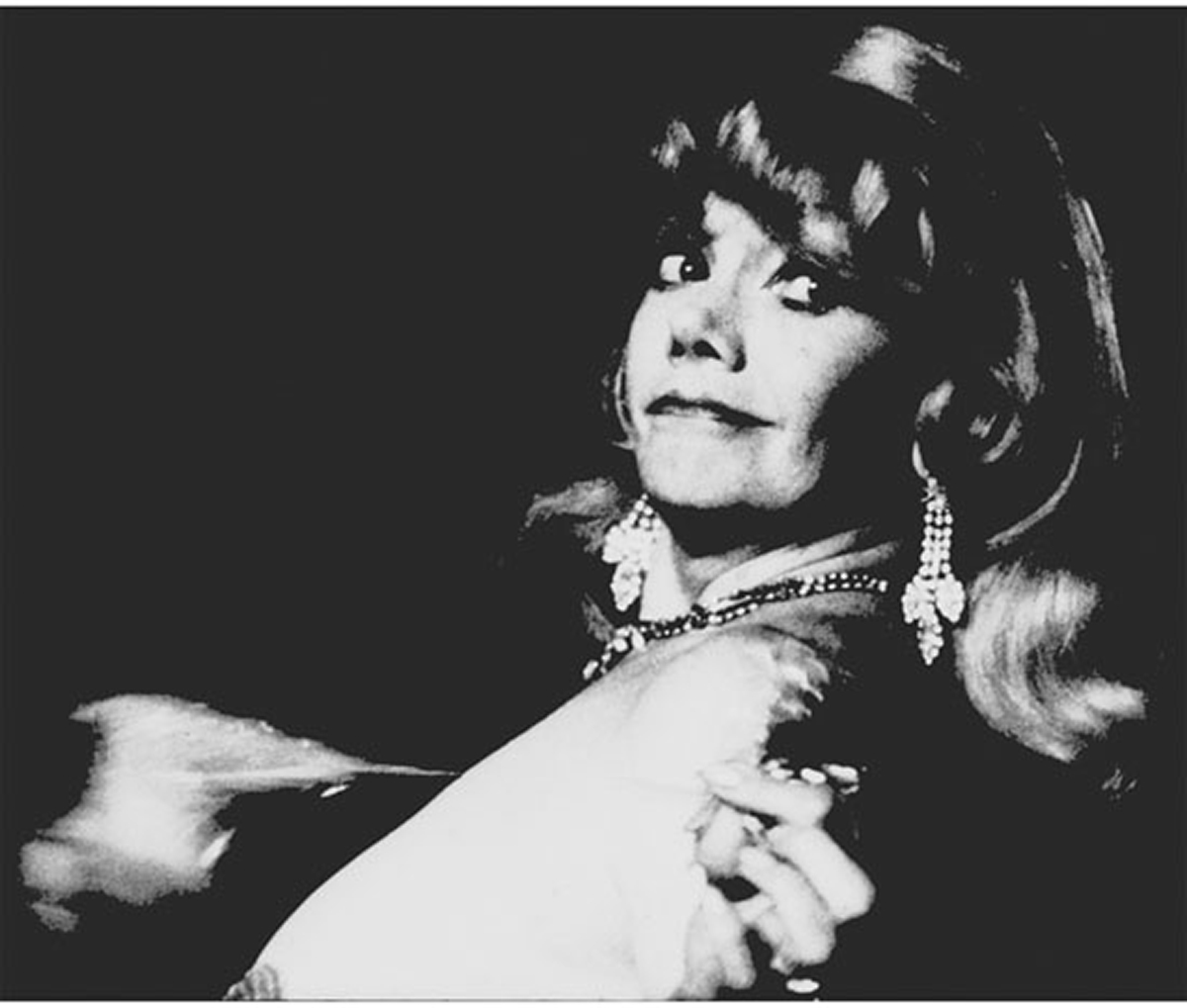
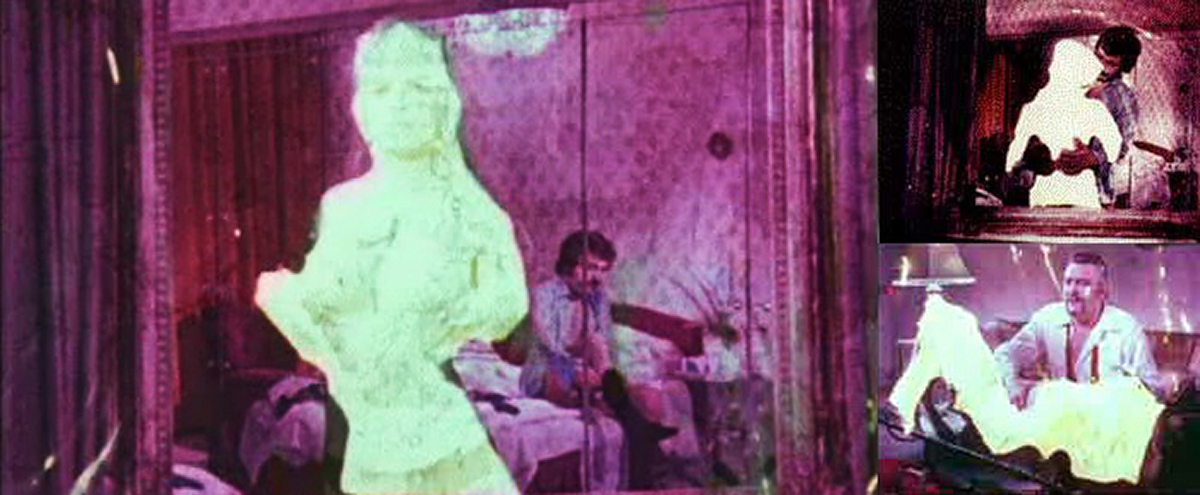
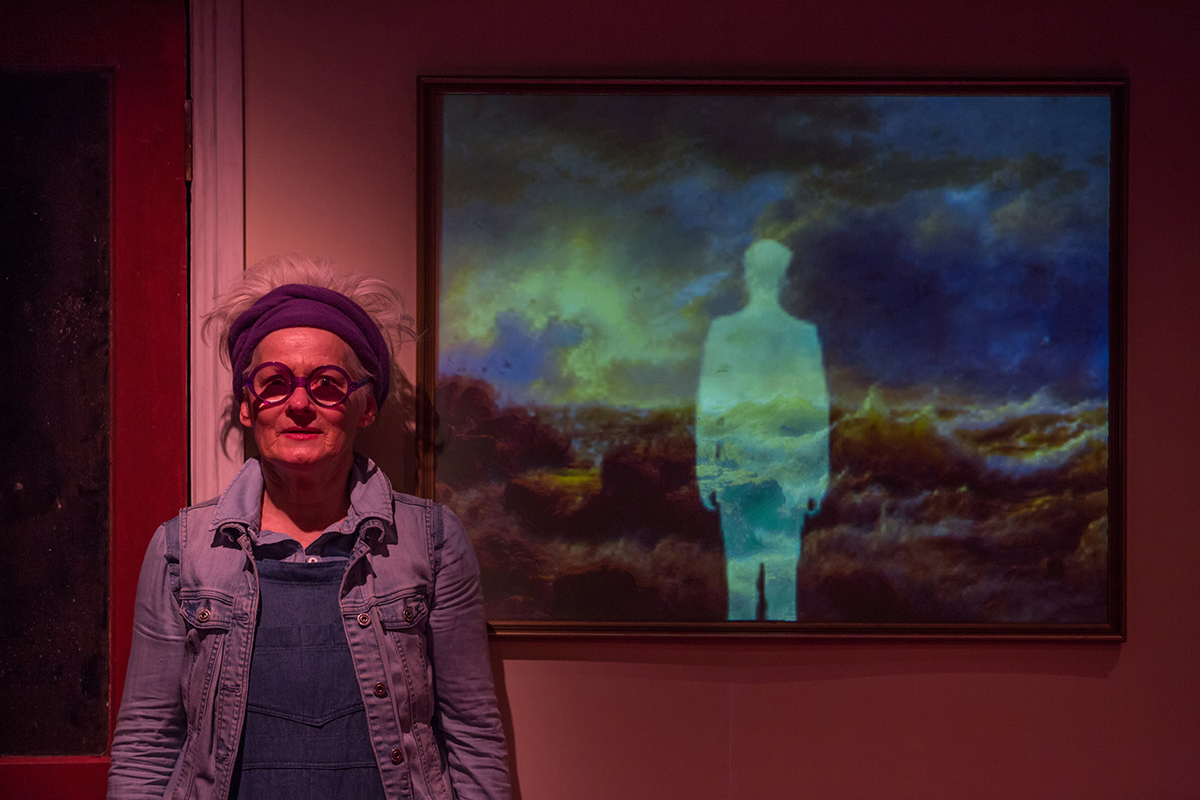
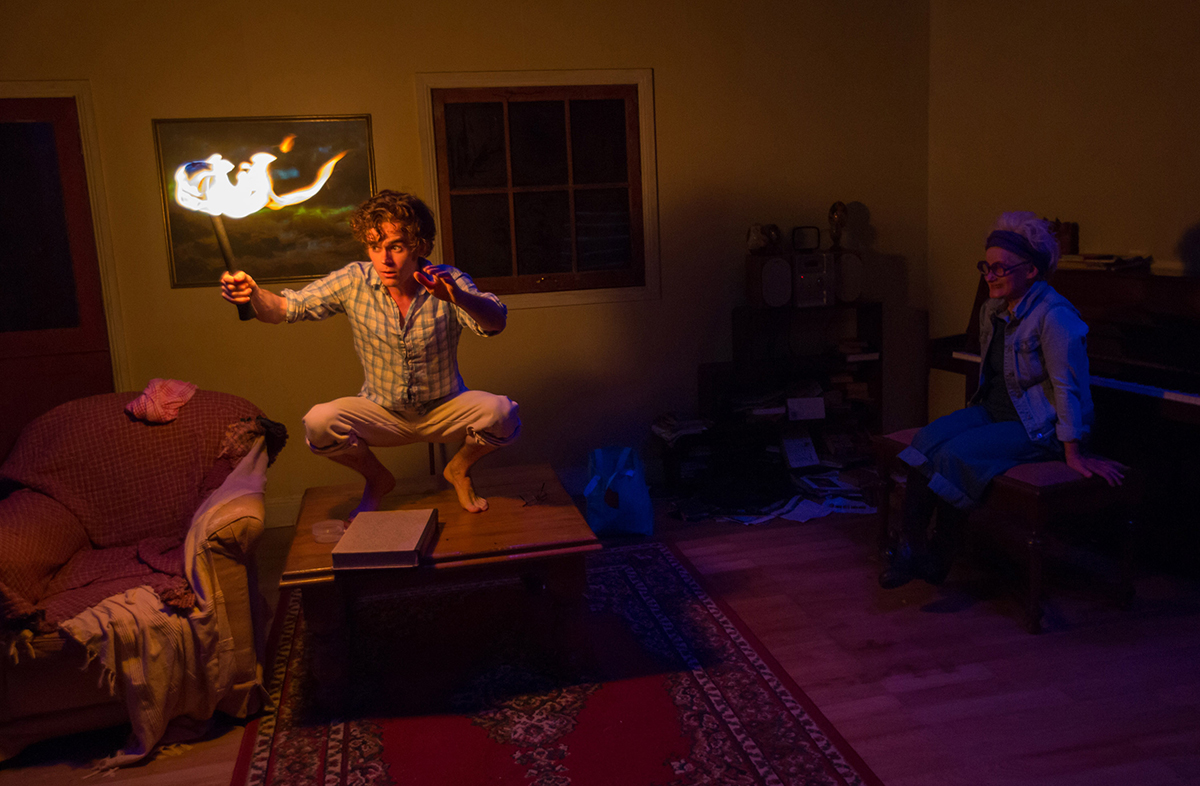
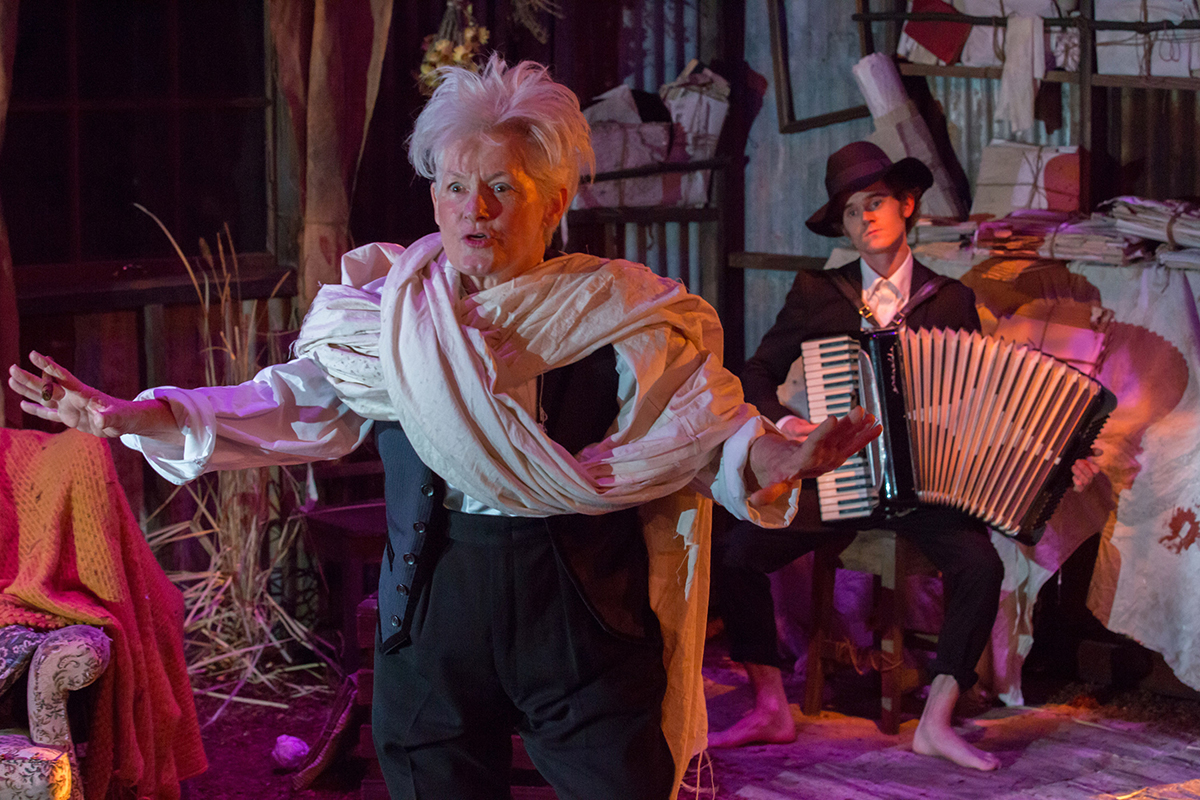
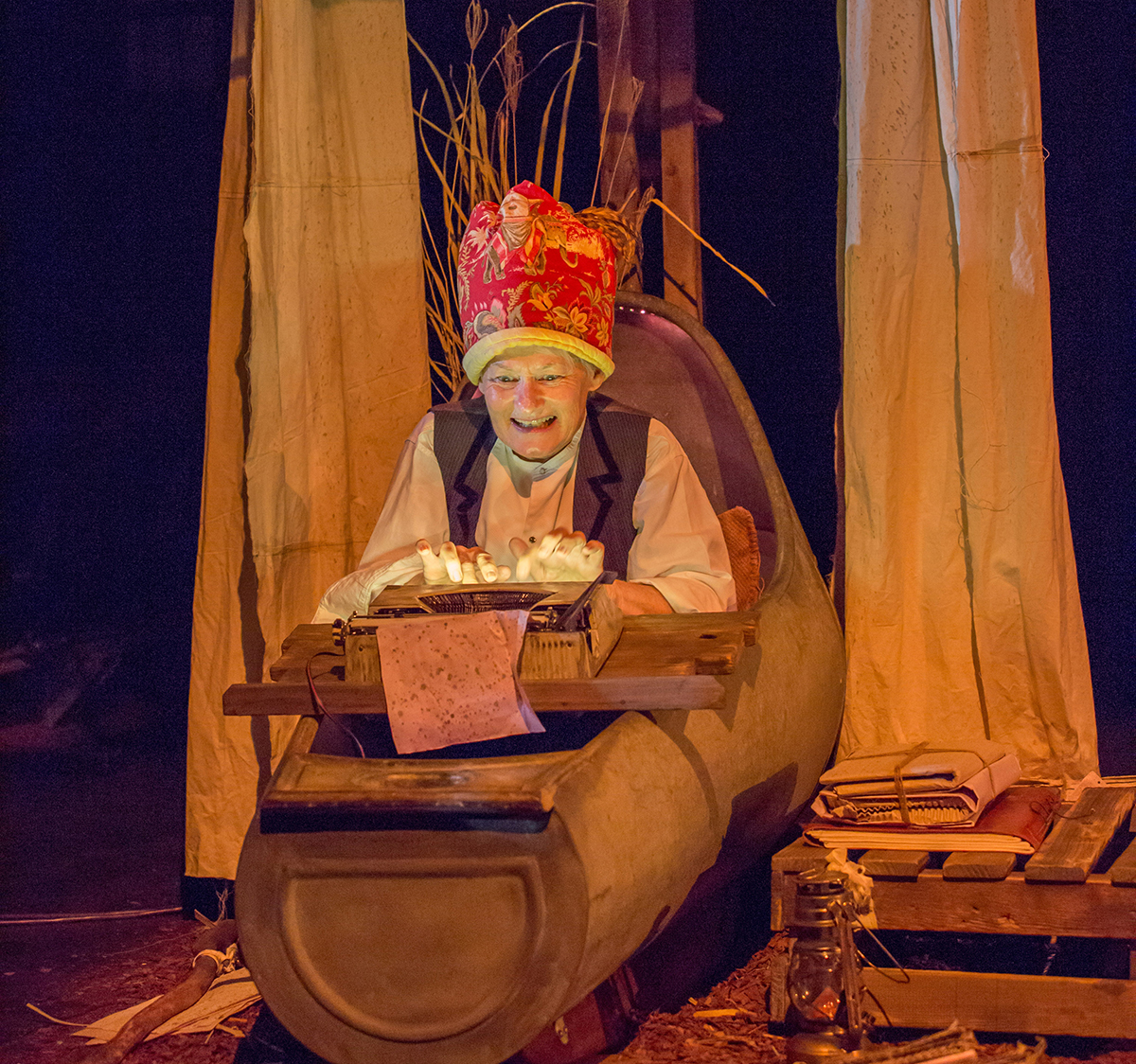
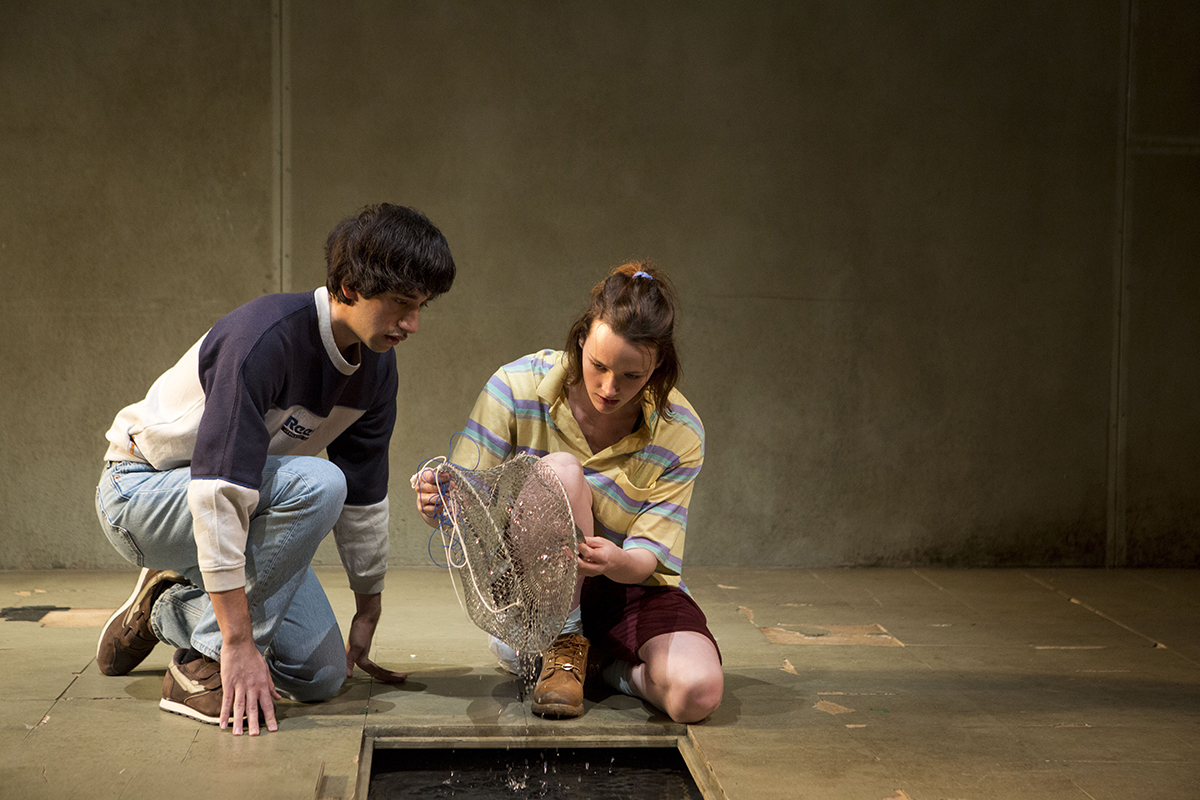
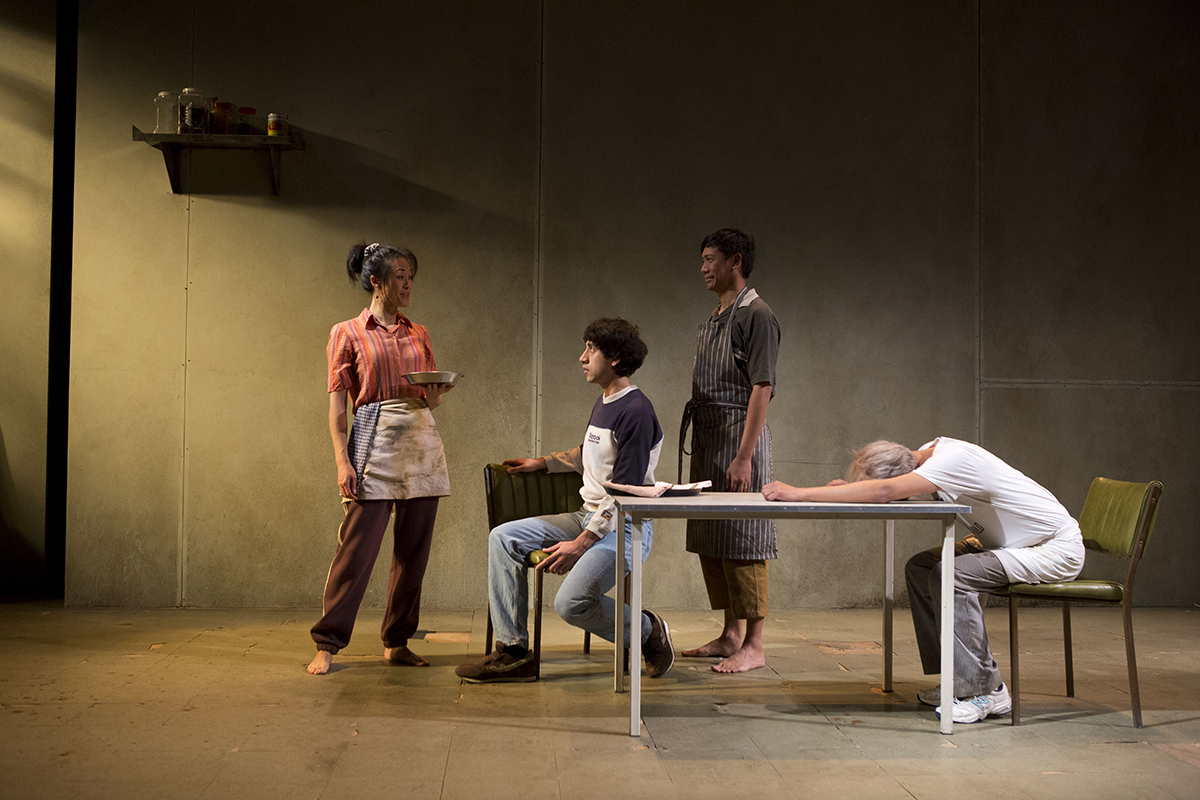
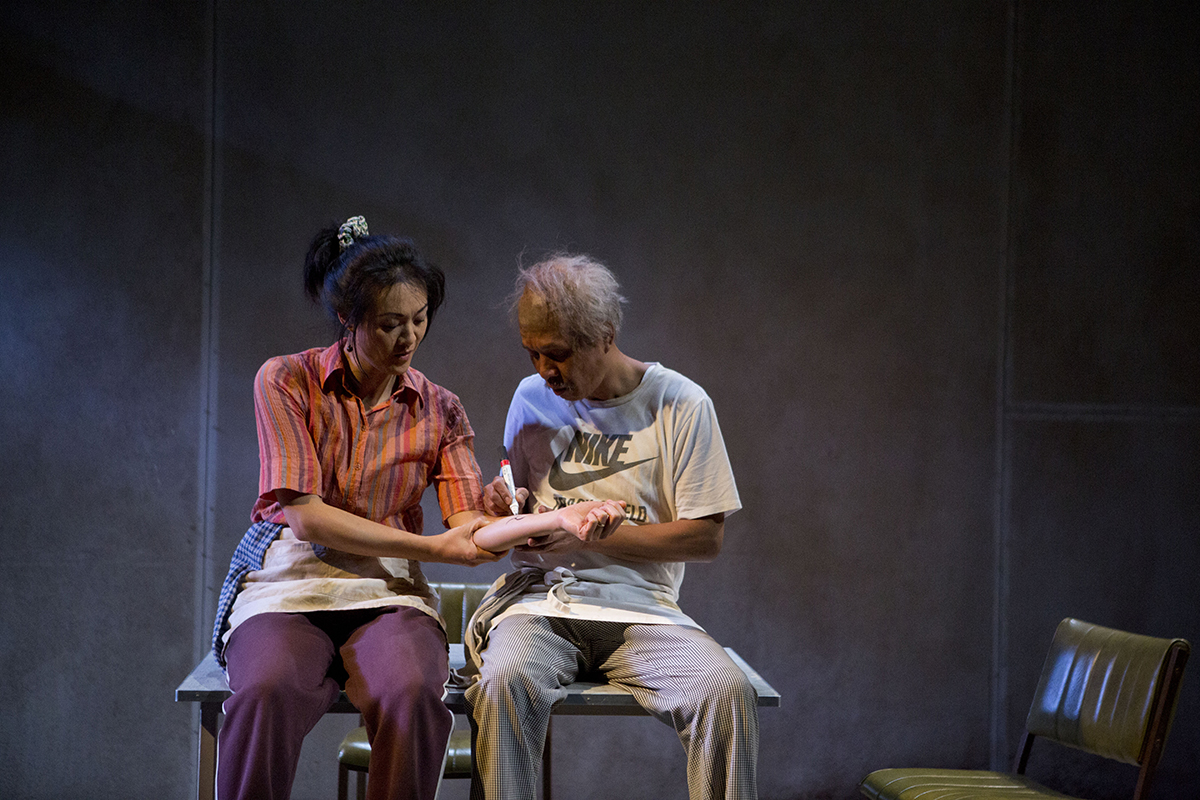
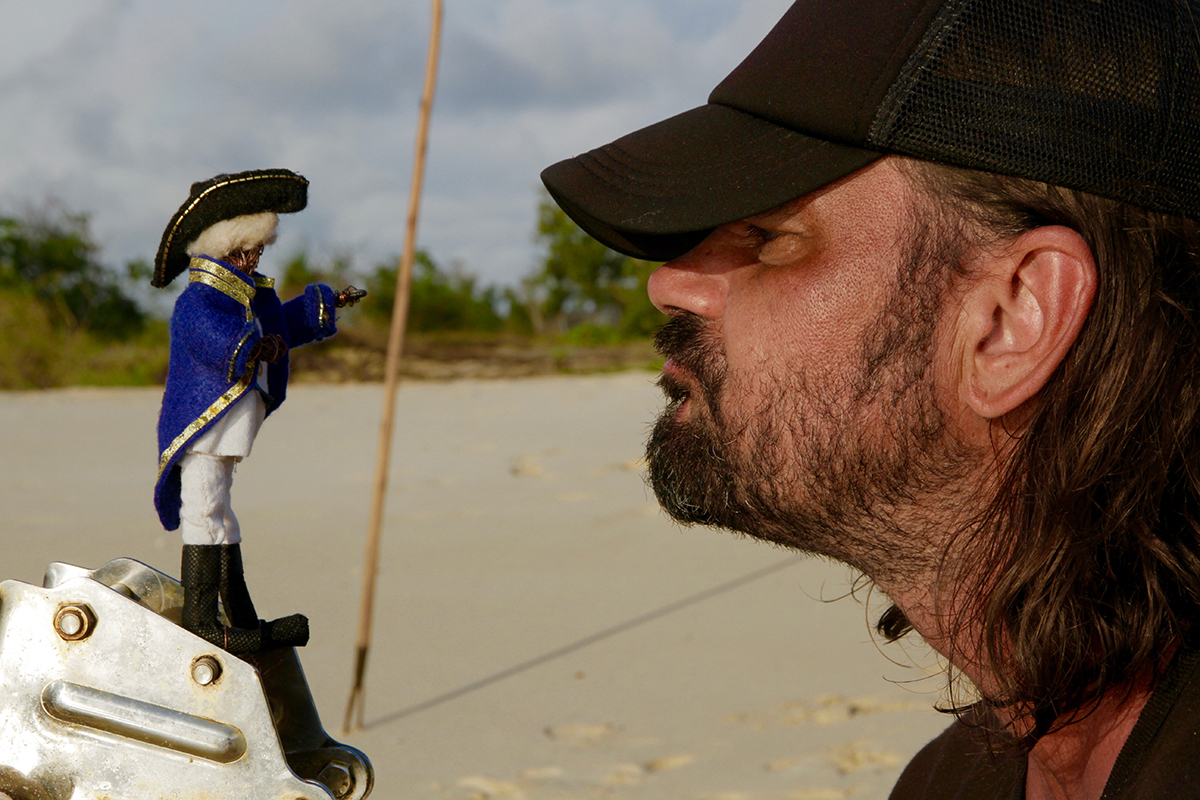
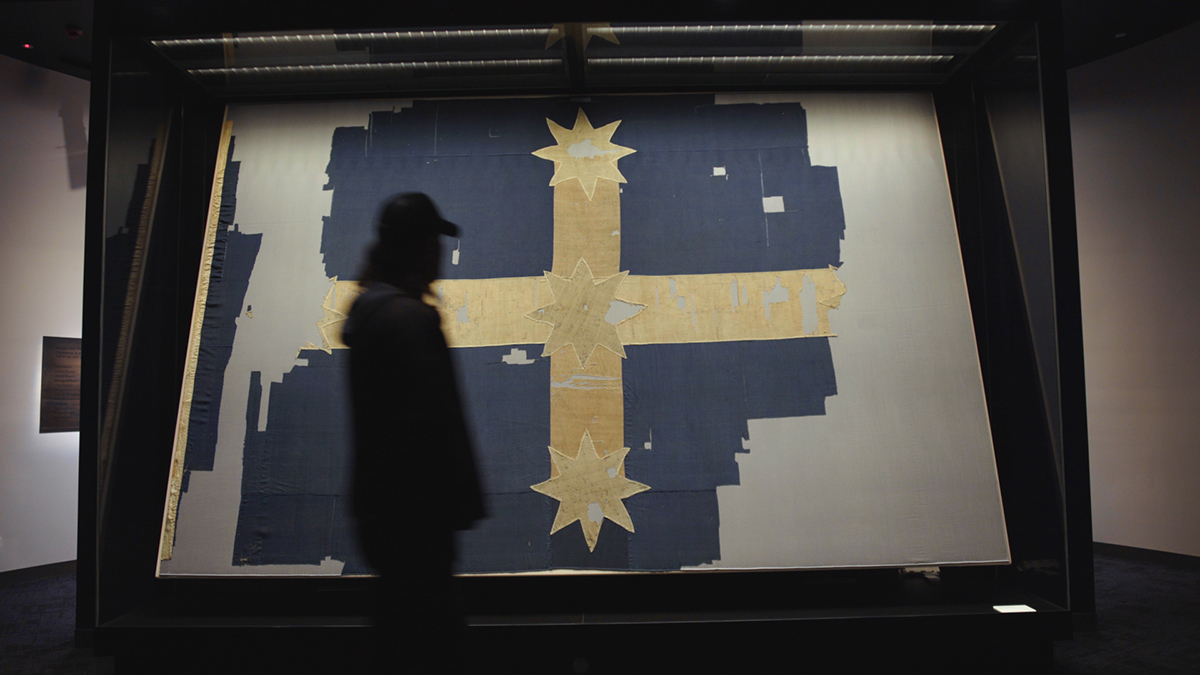
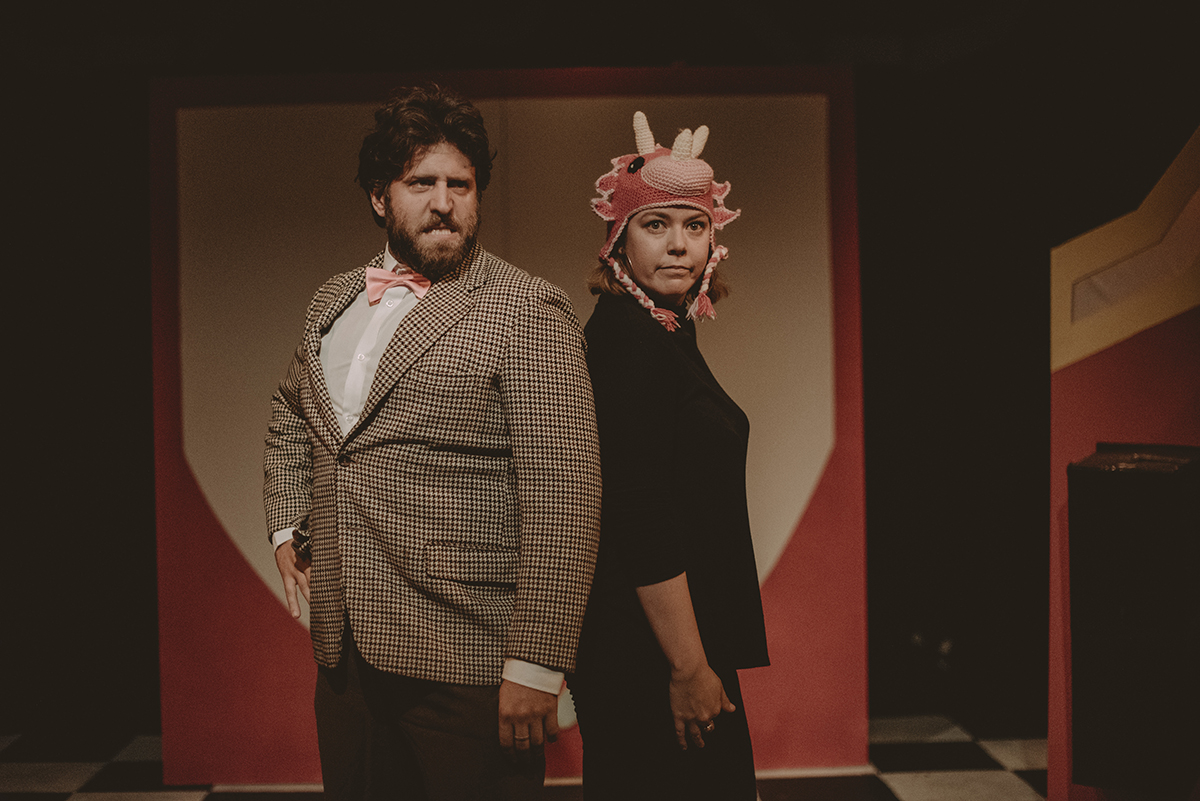
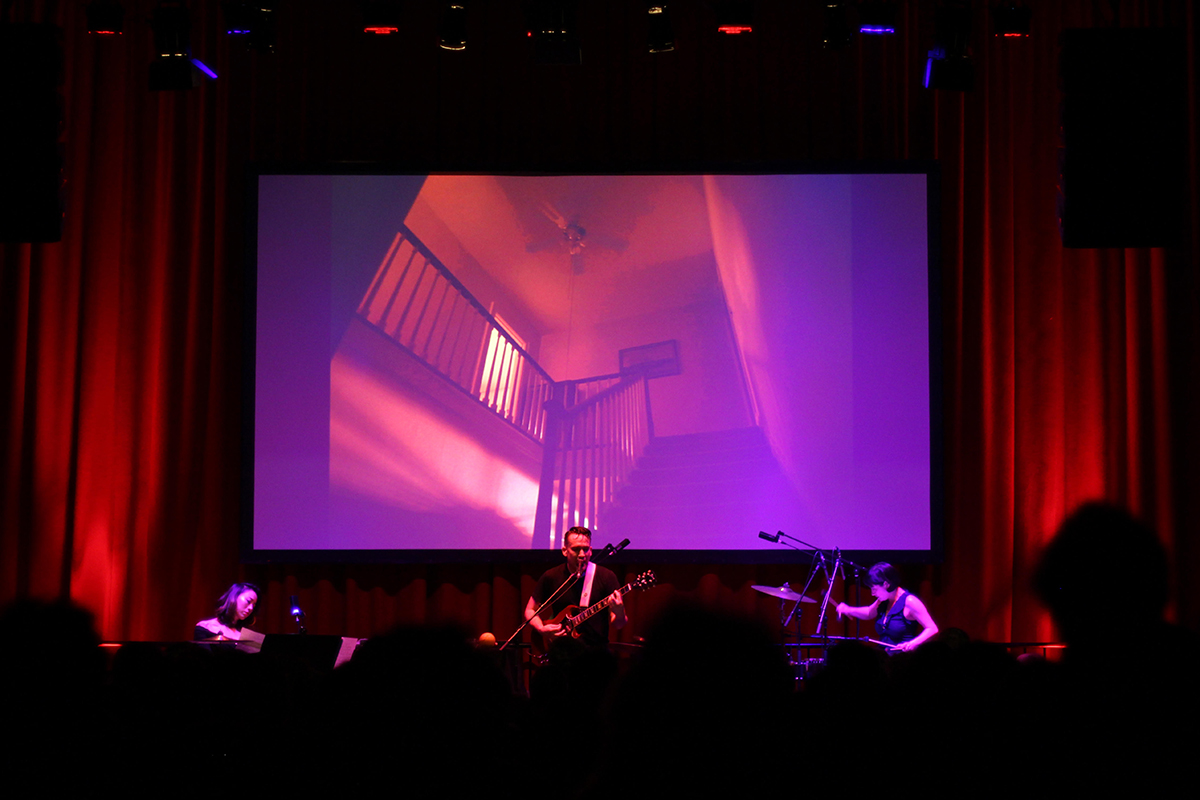
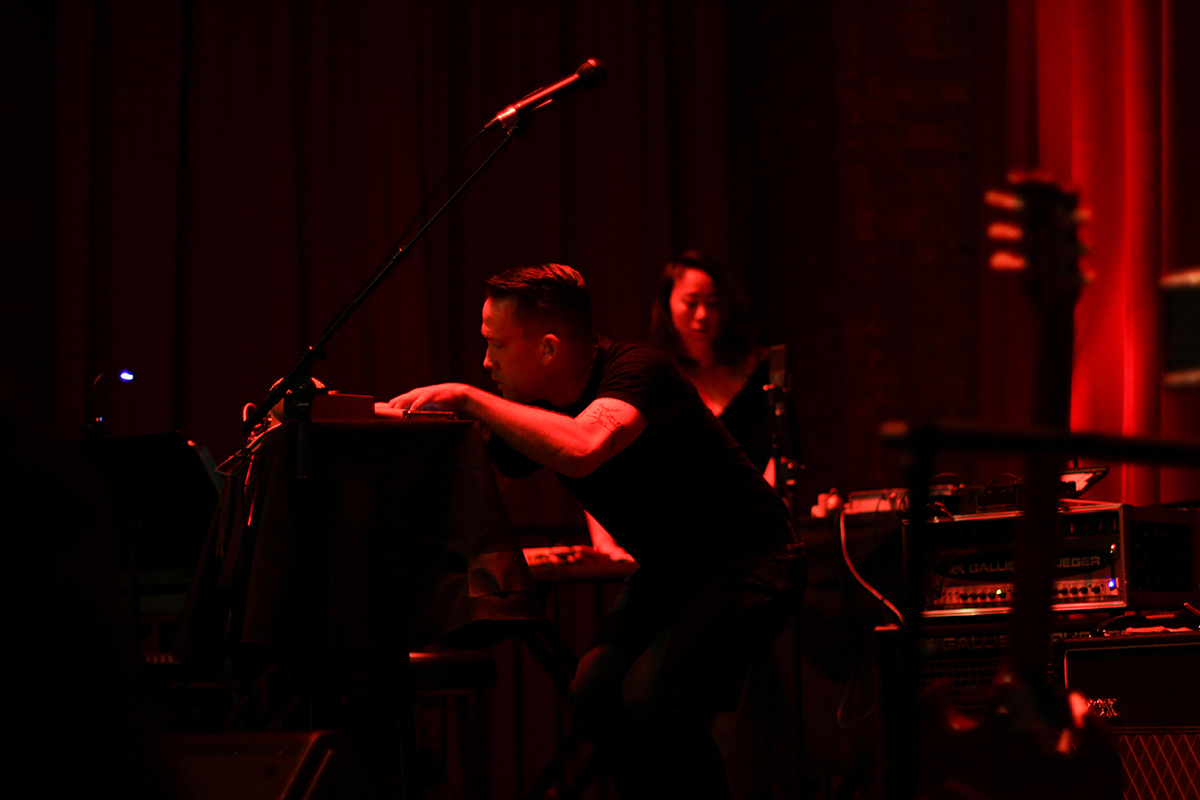
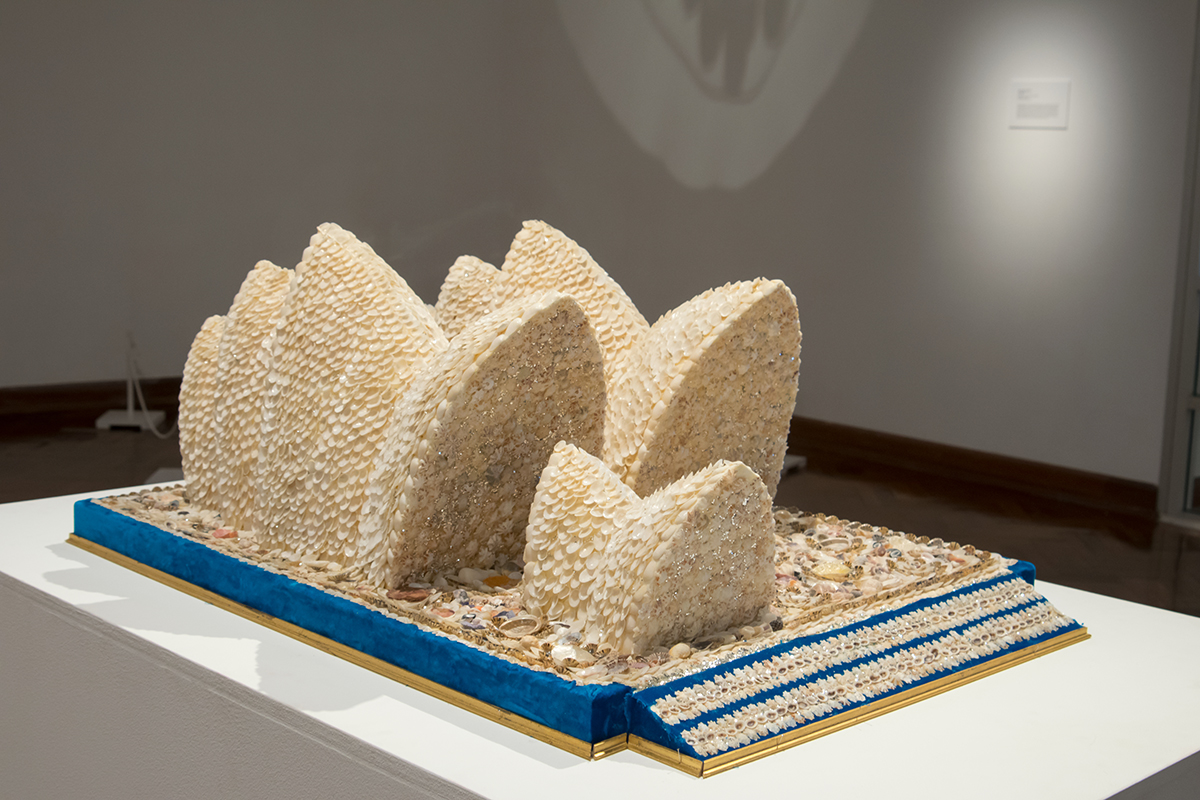
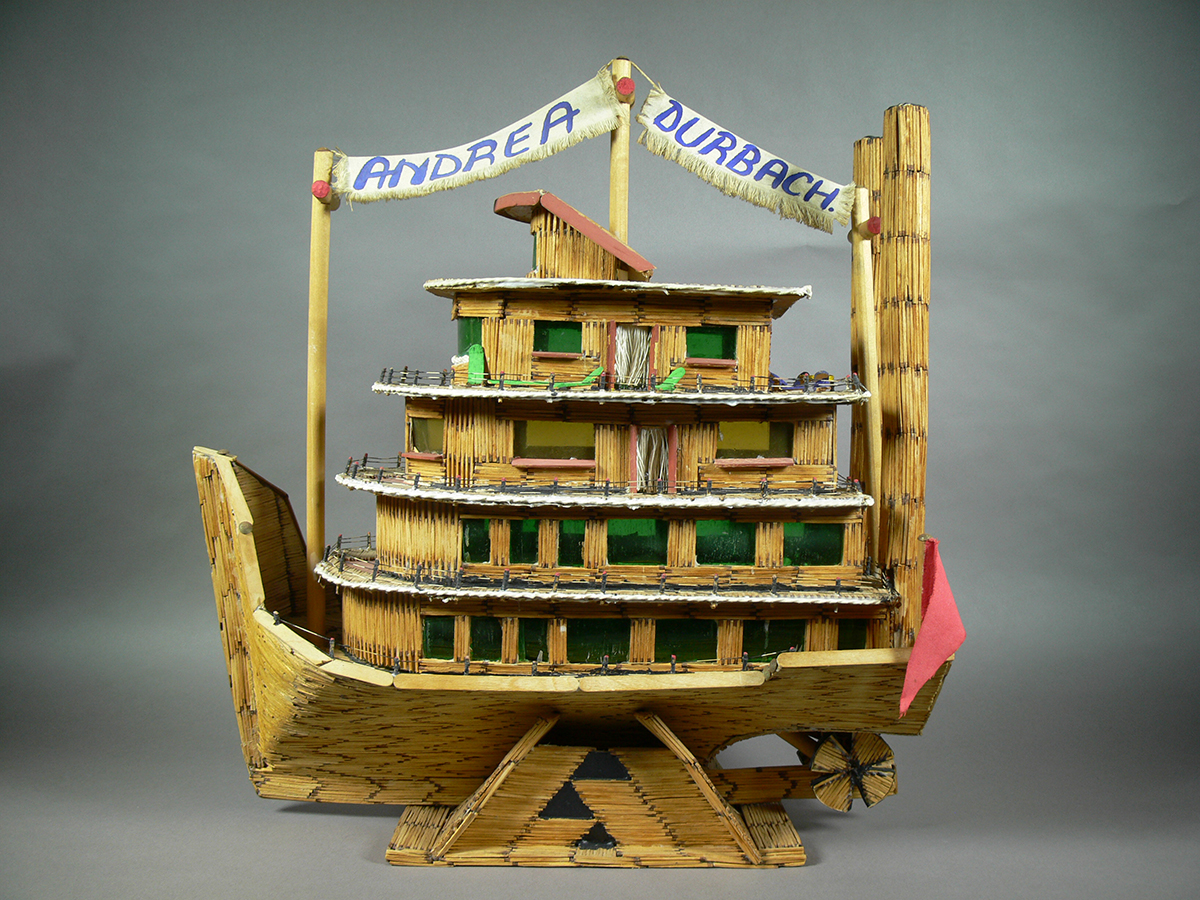
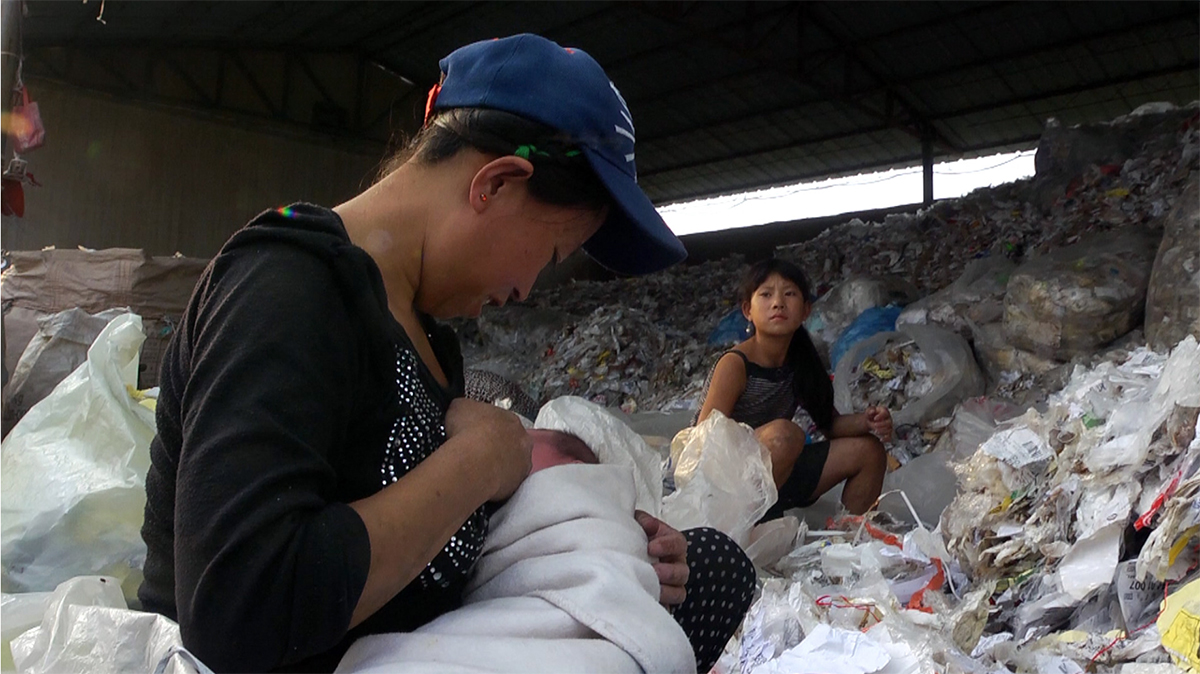
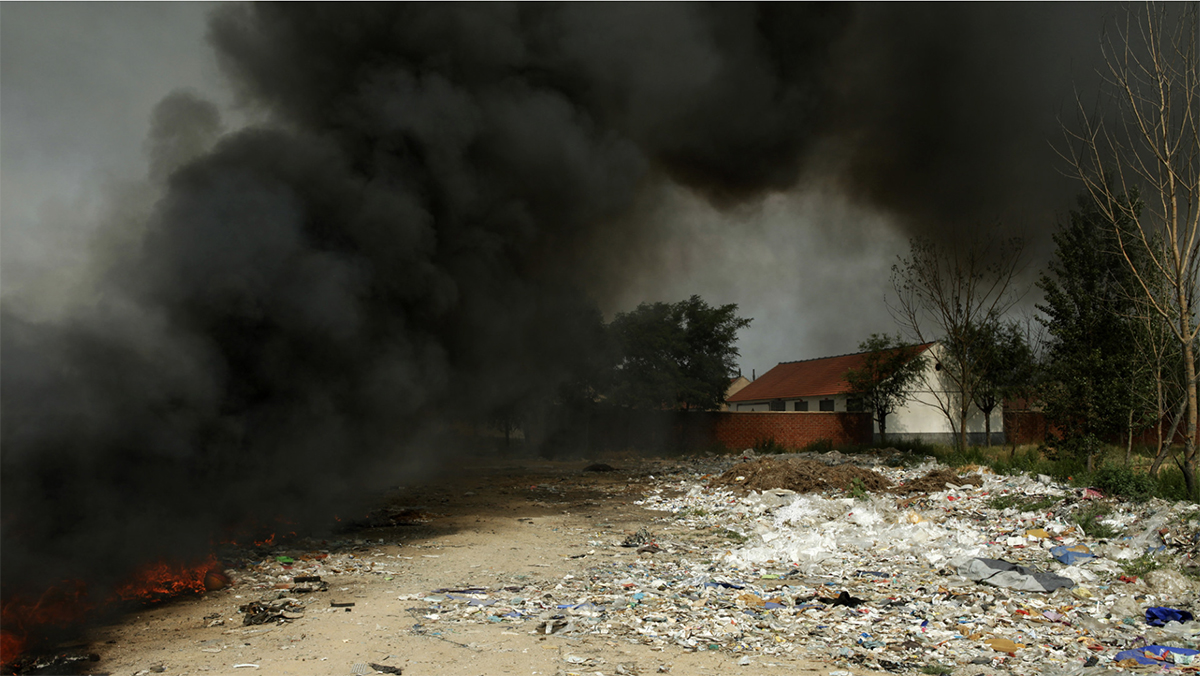
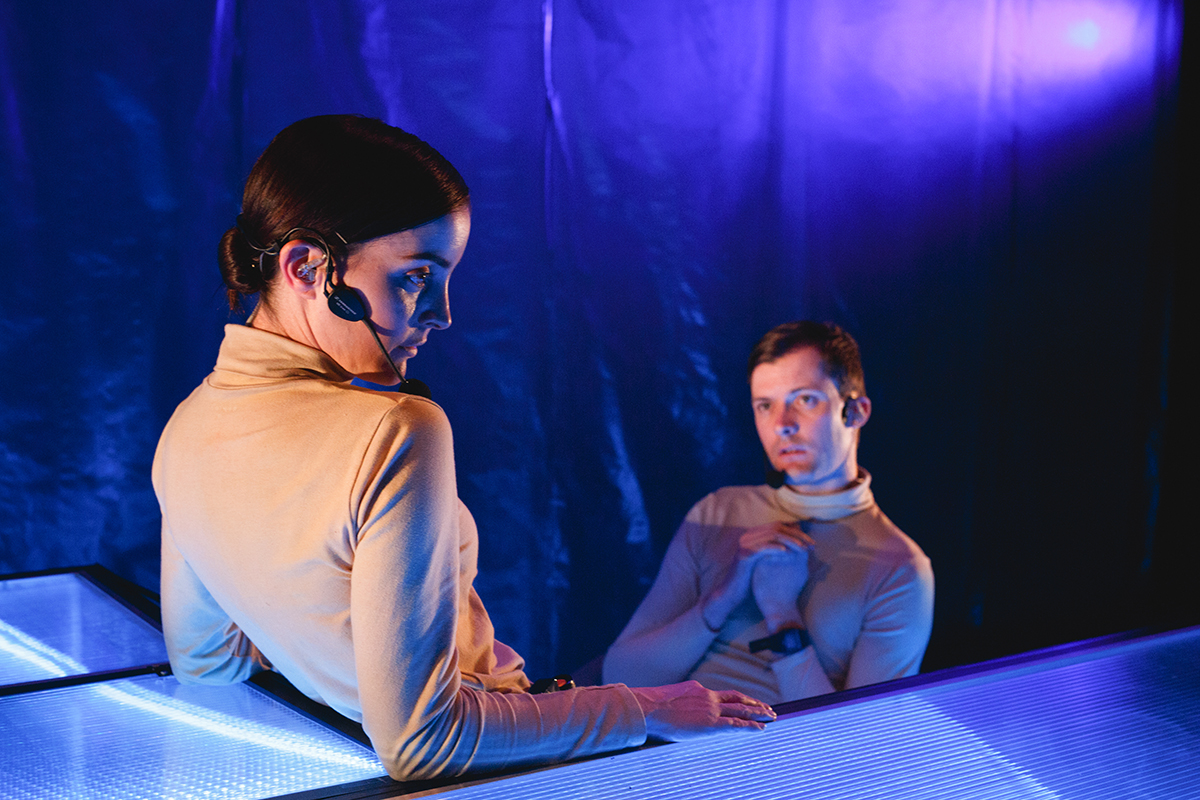
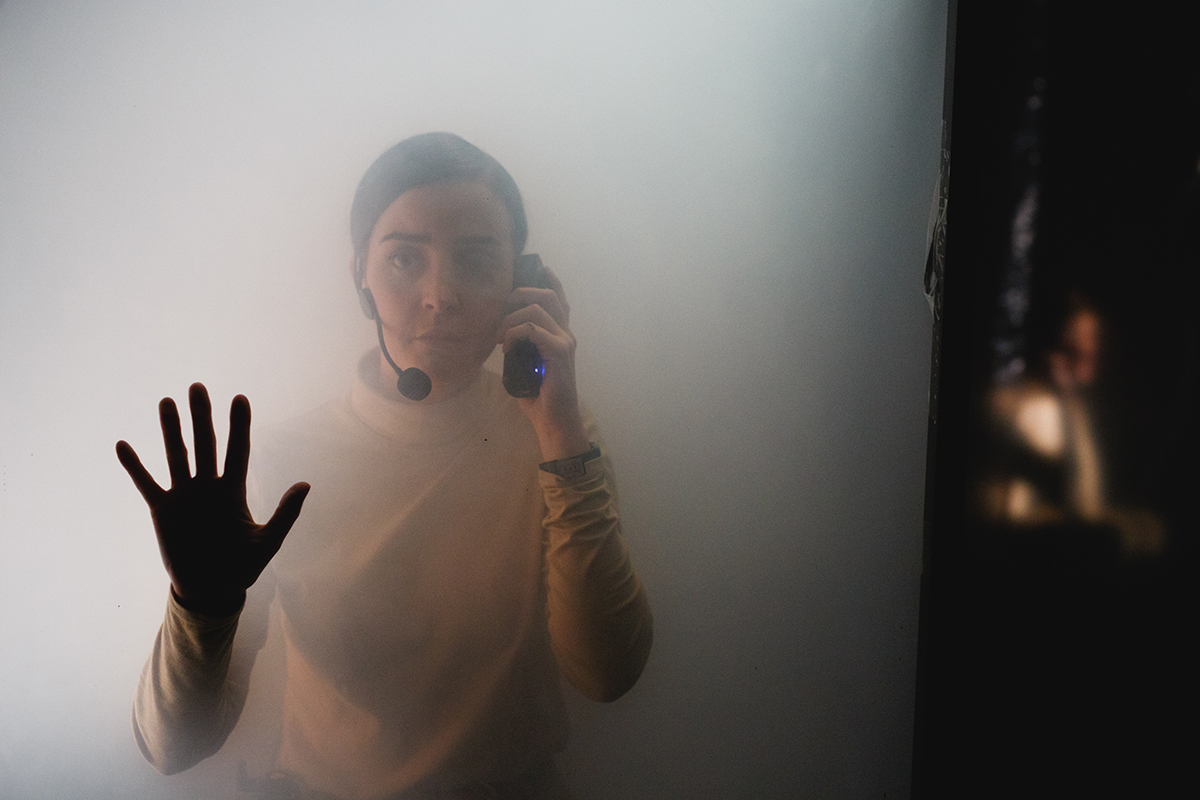
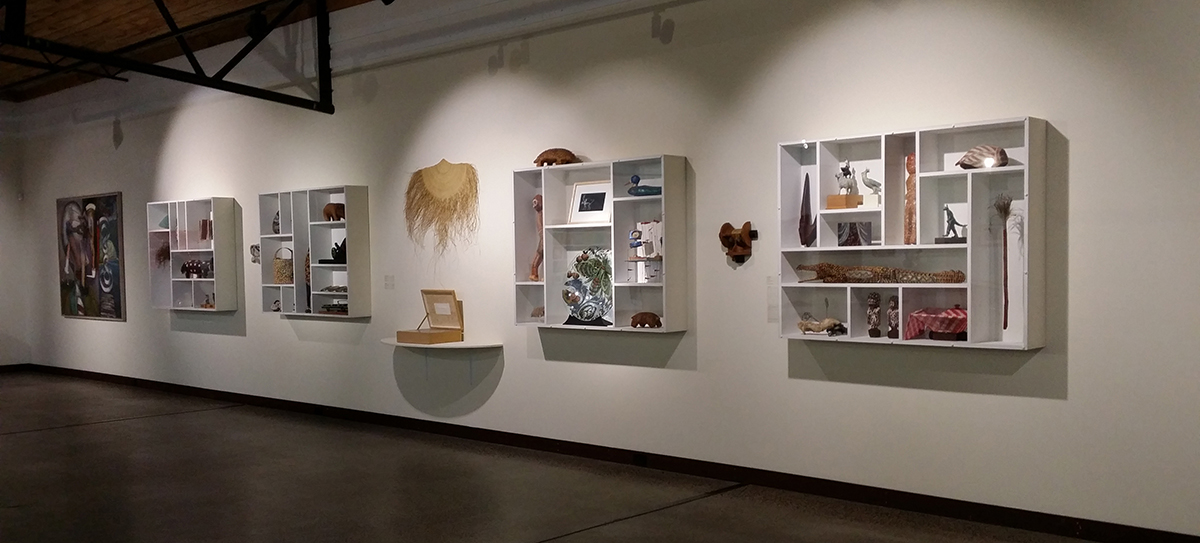
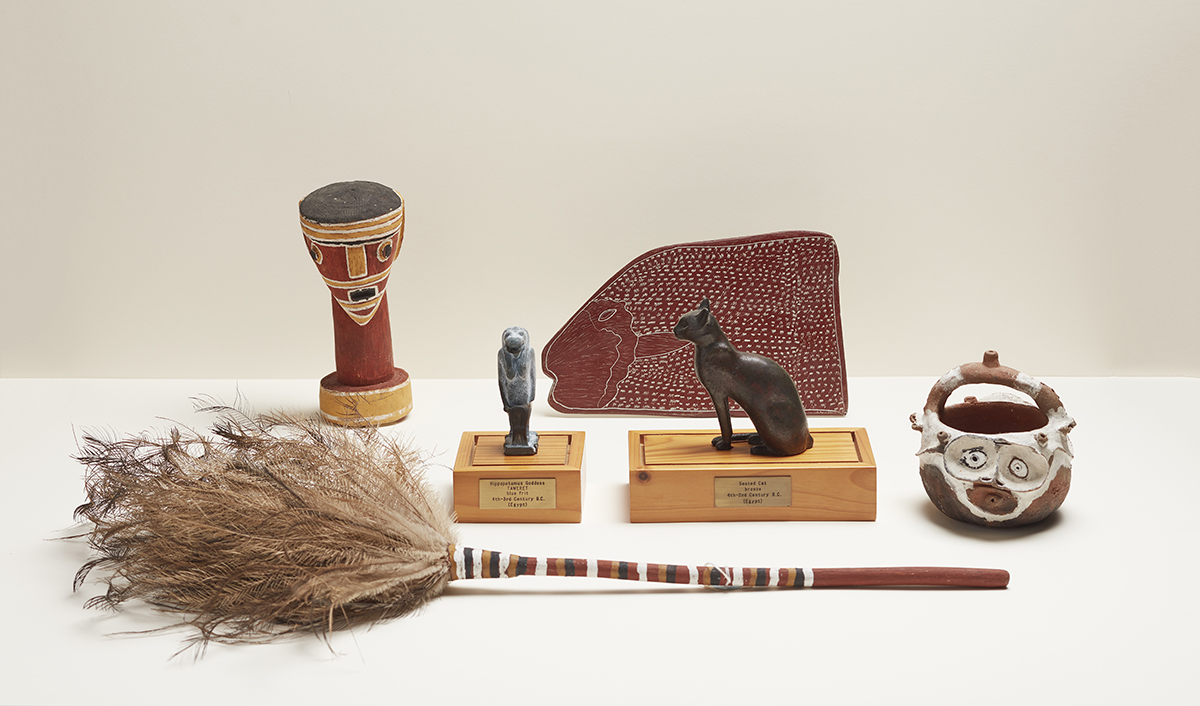


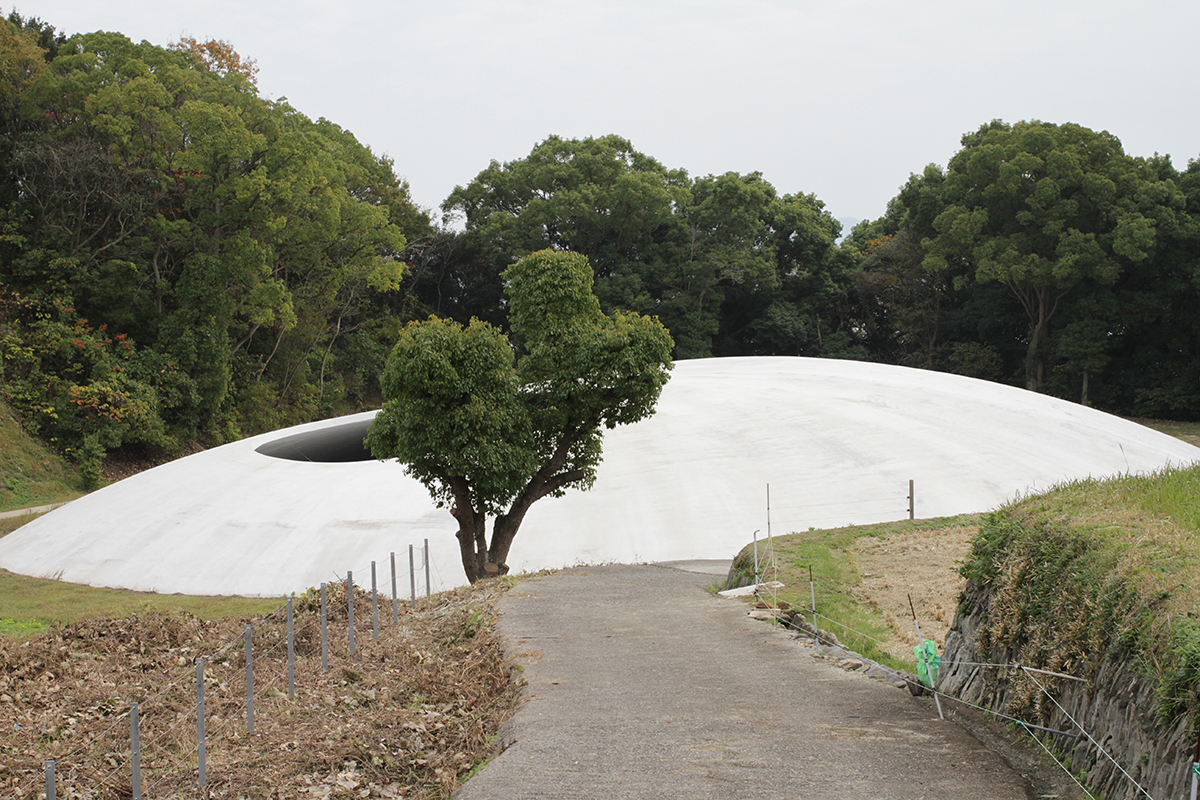
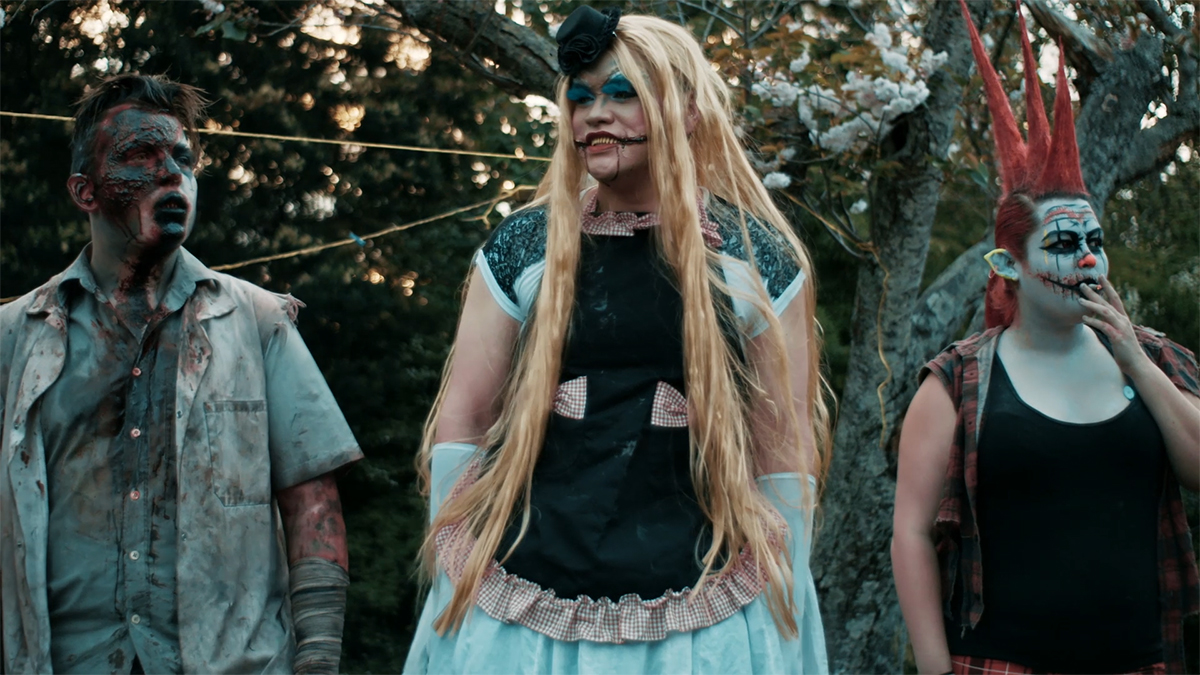 Spookers
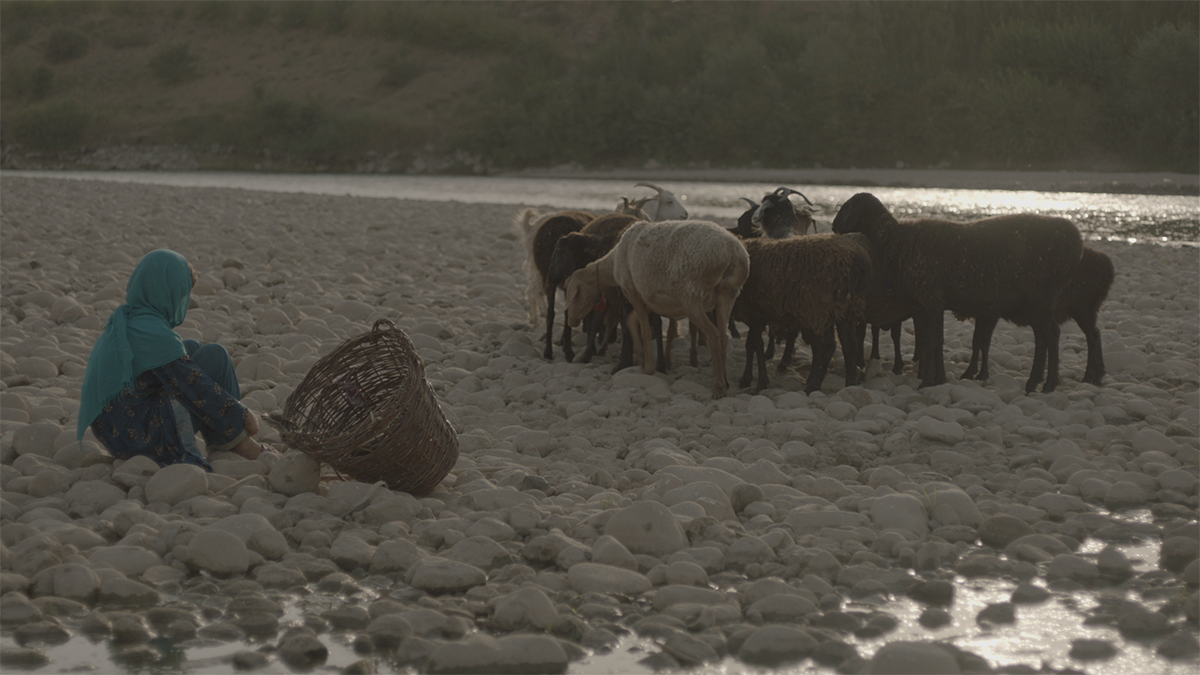 Wolf and Sheep
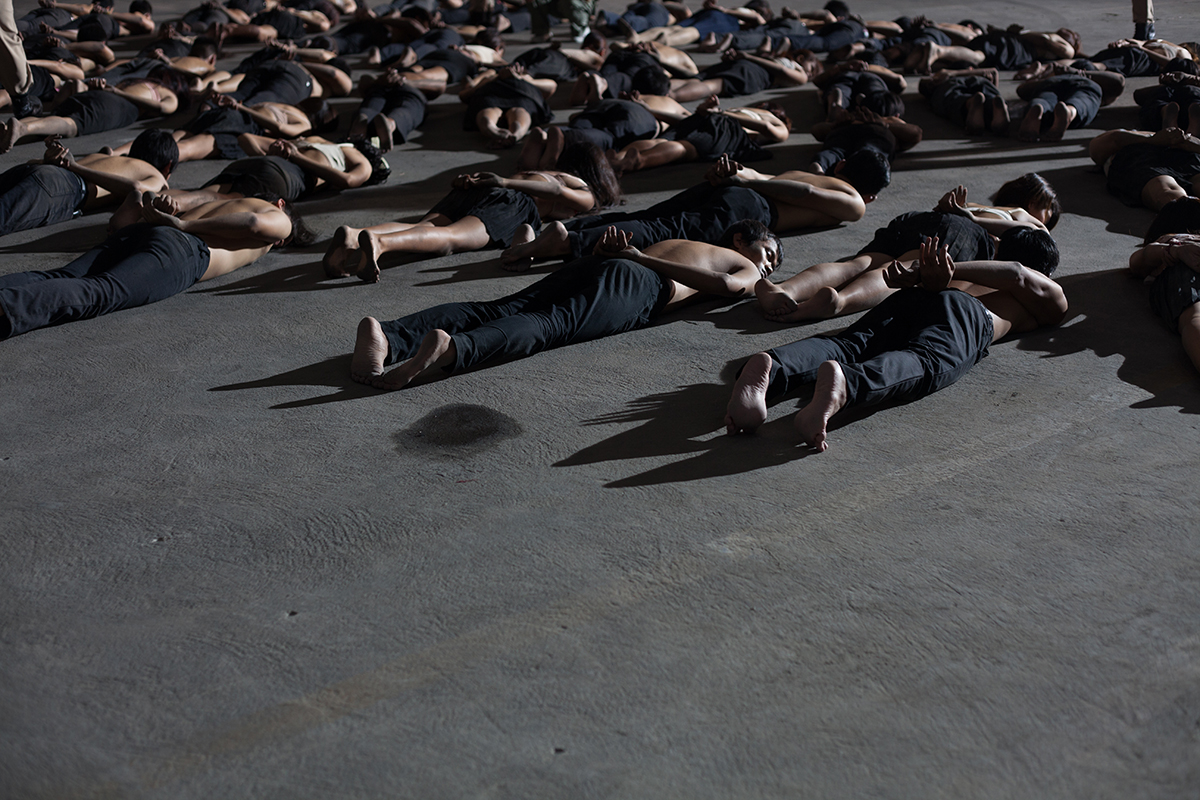 By The Time It Gets Dark
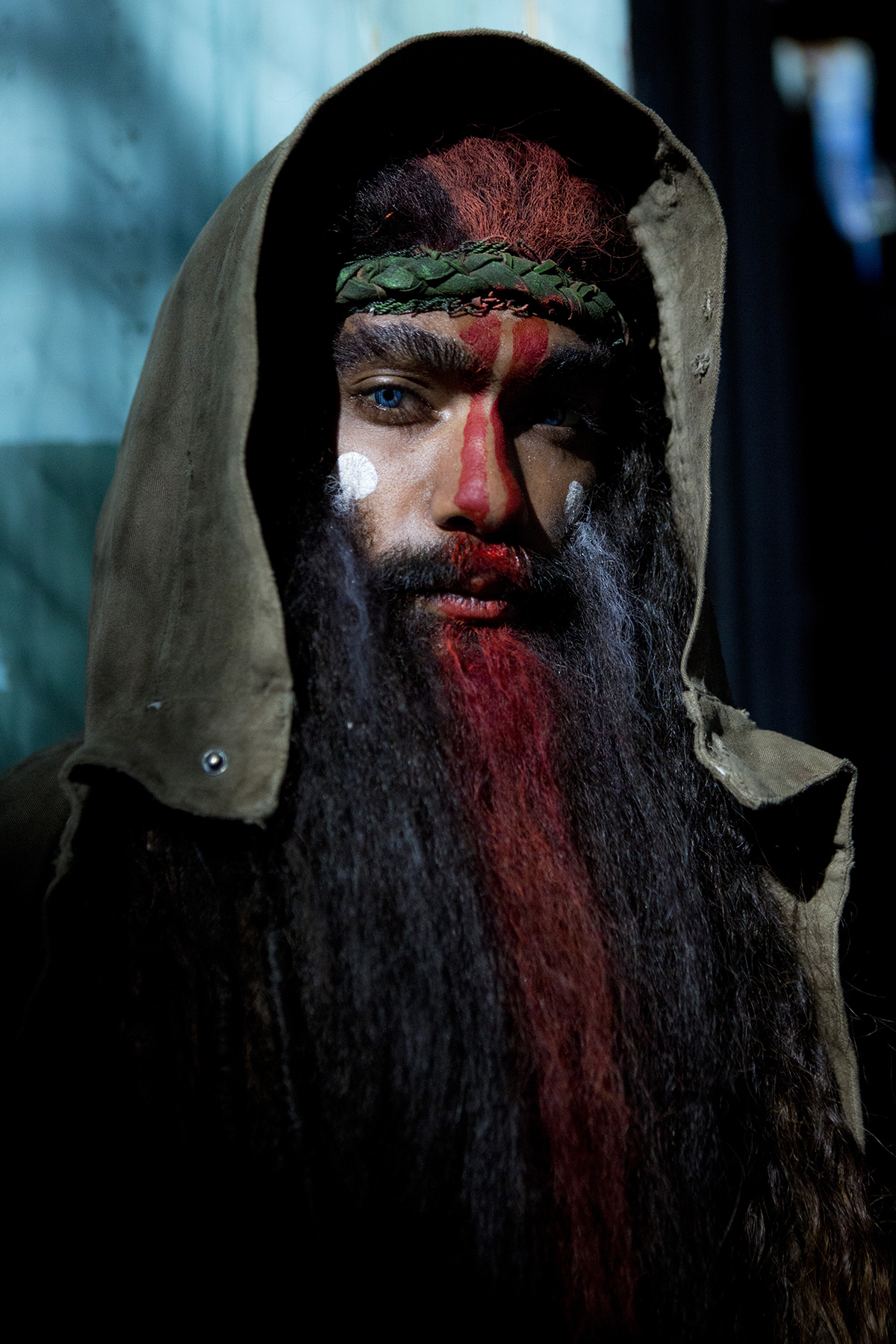
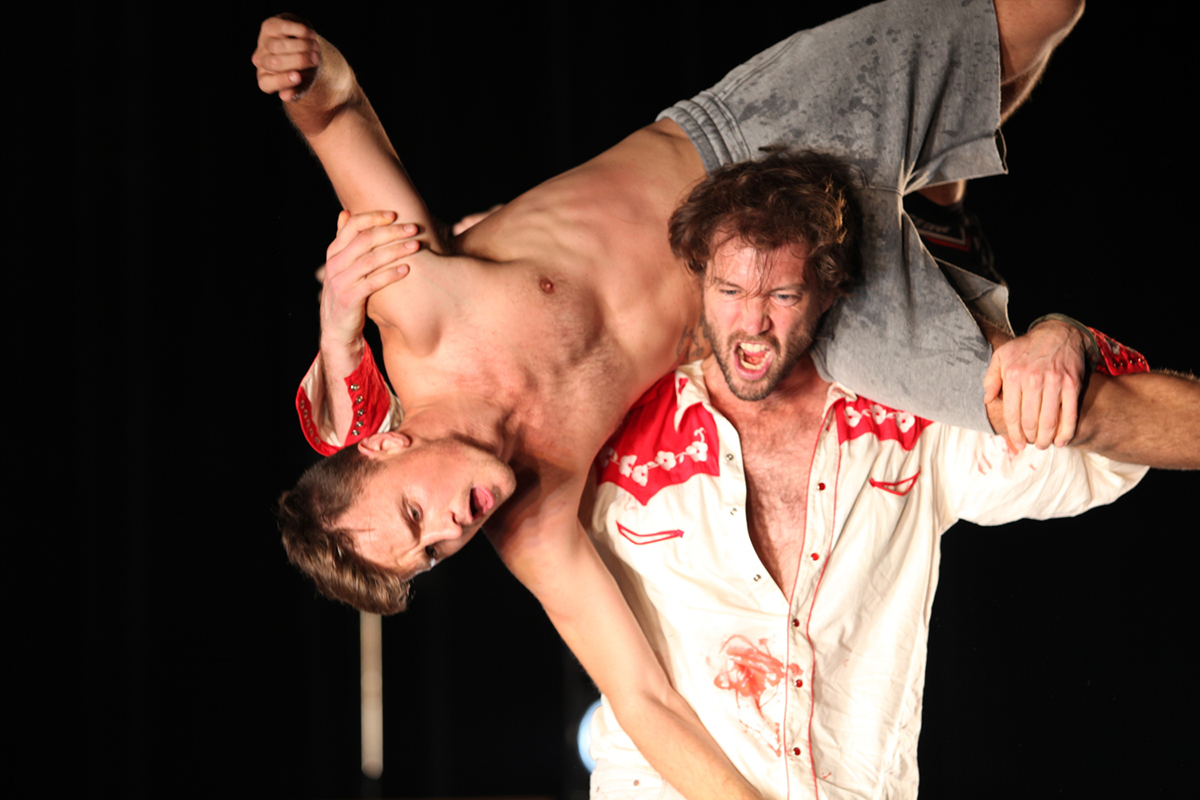
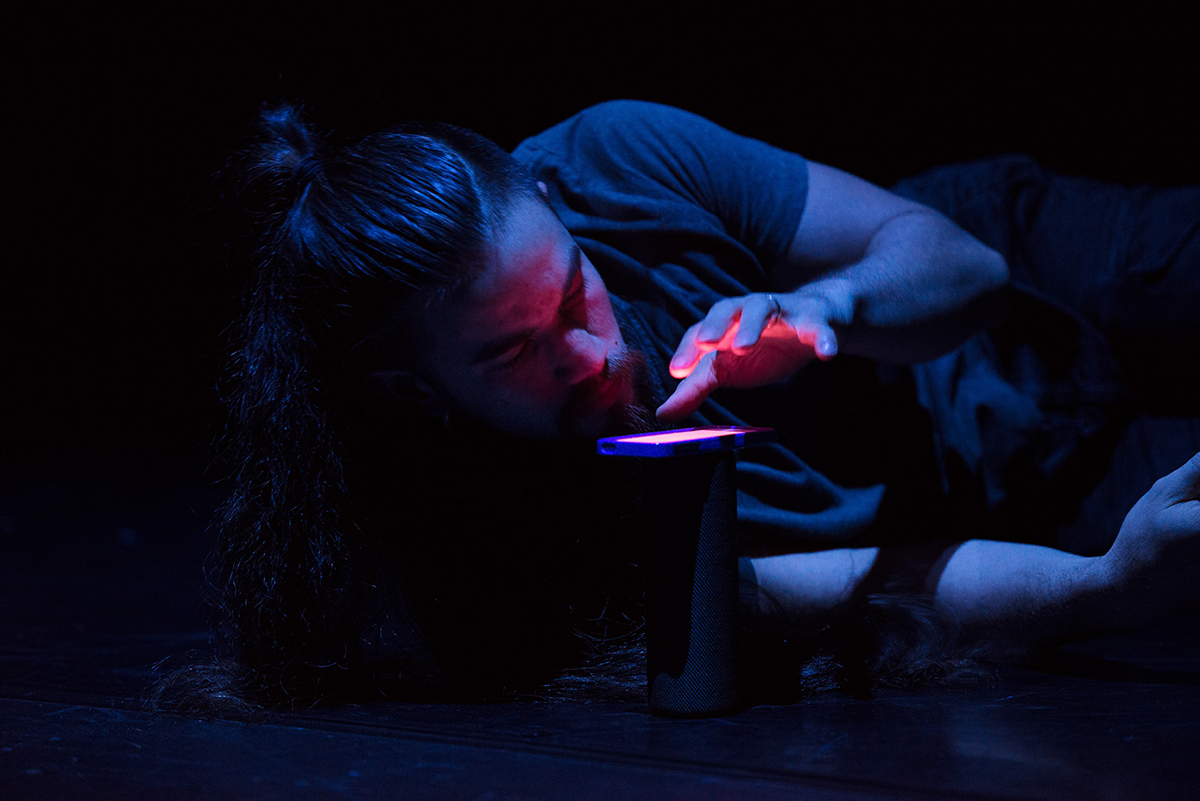
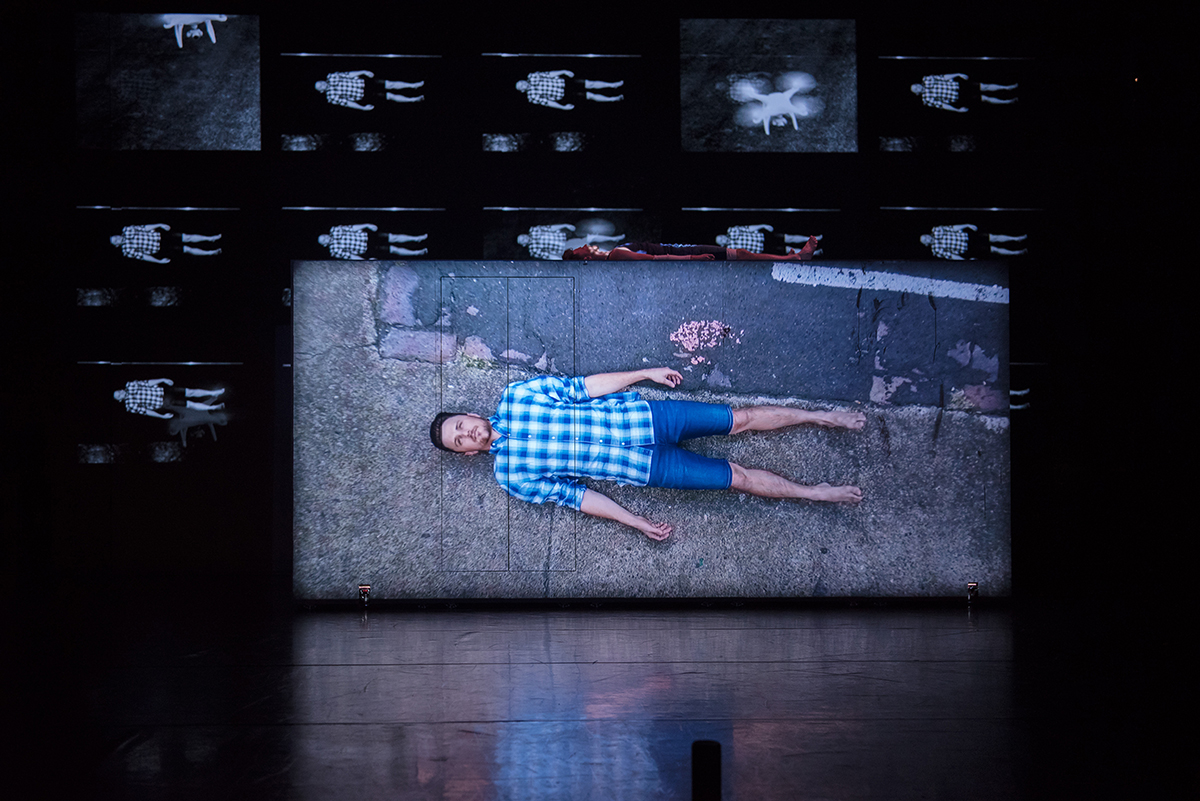
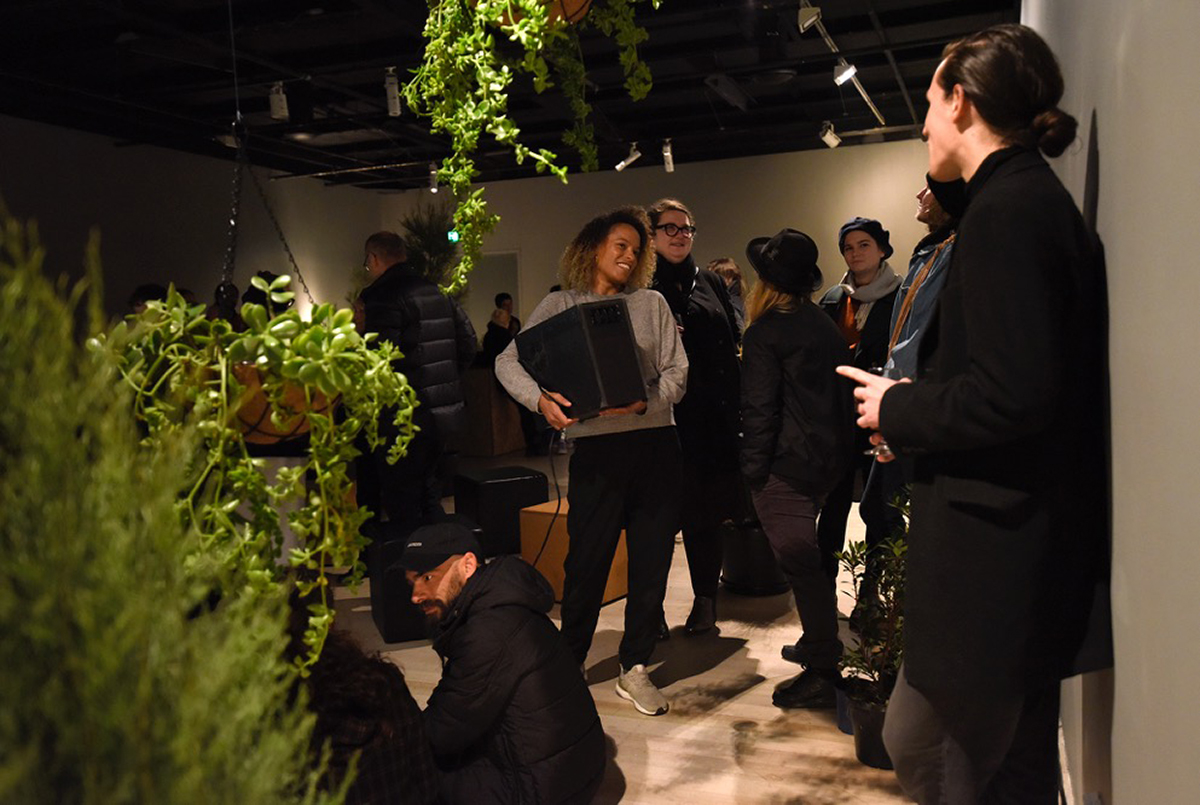
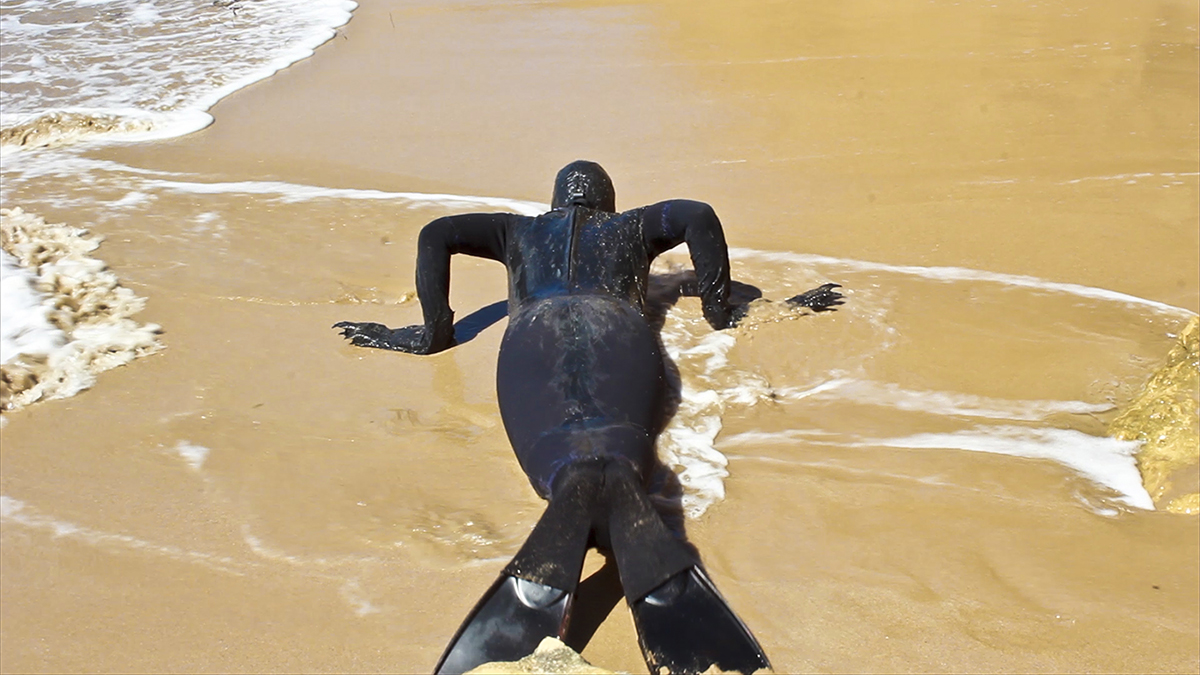
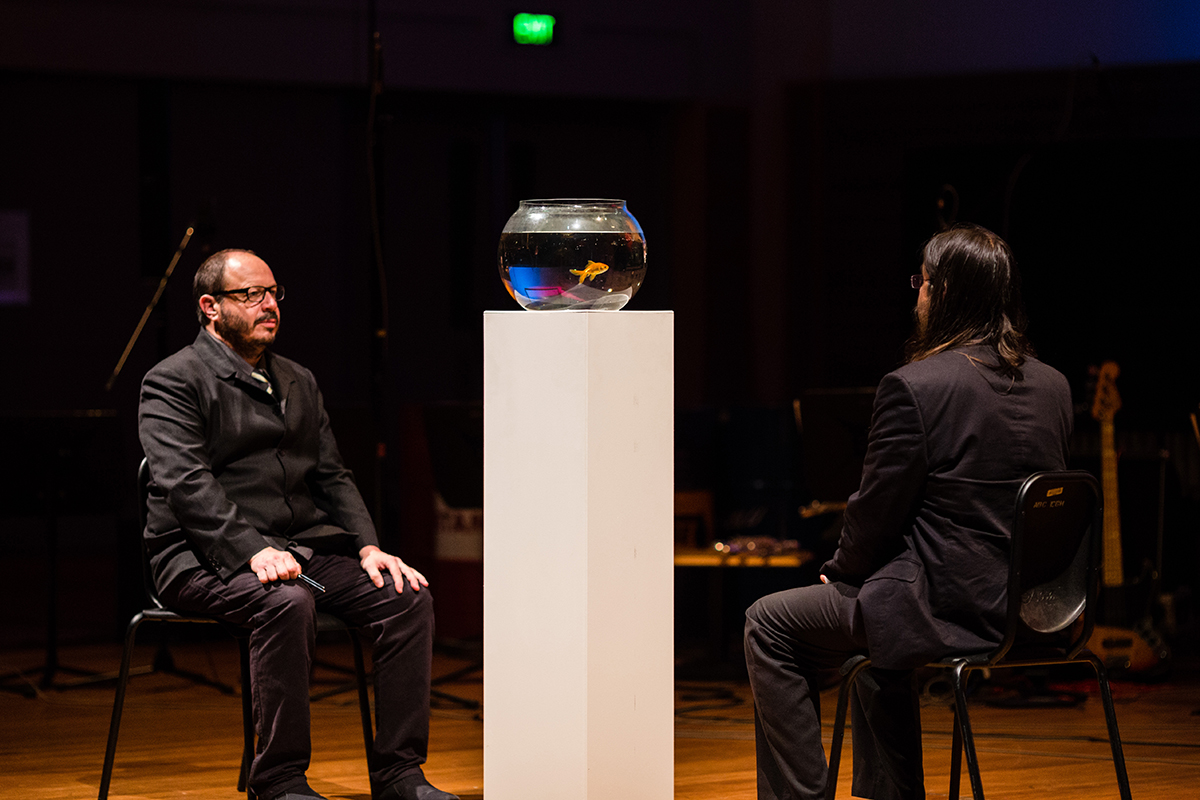
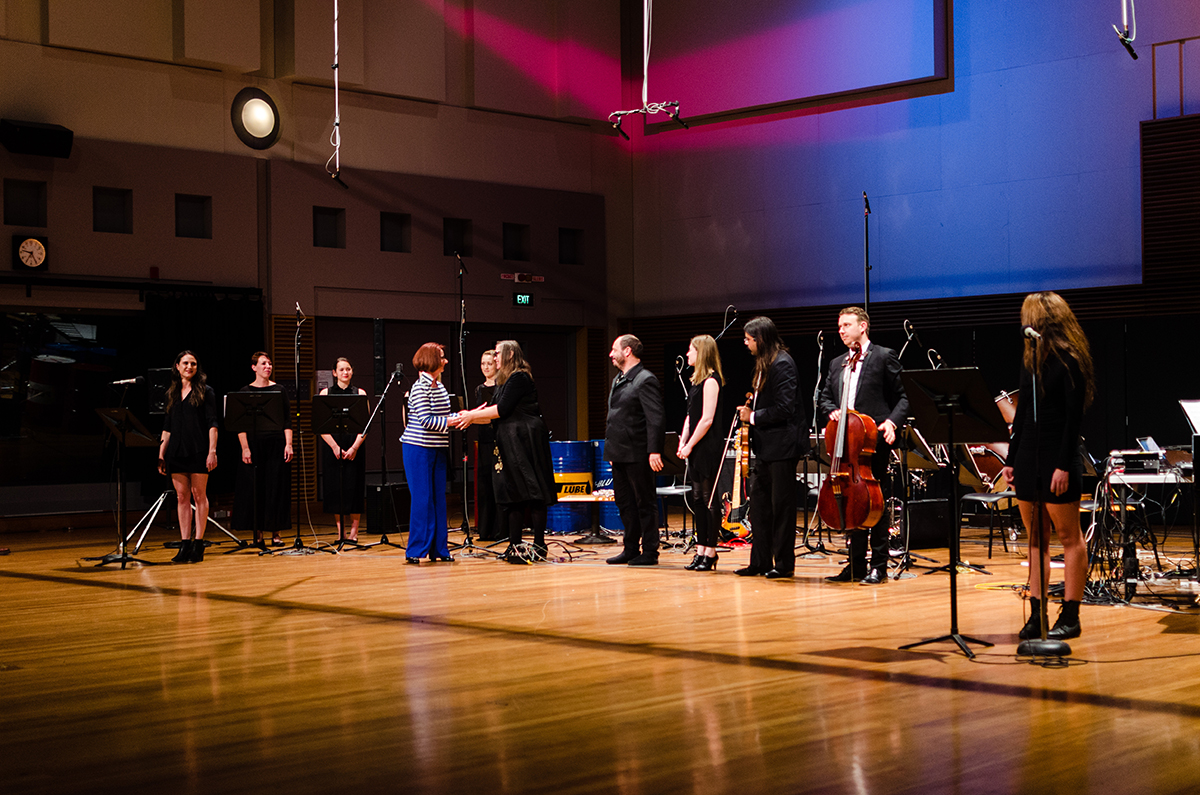
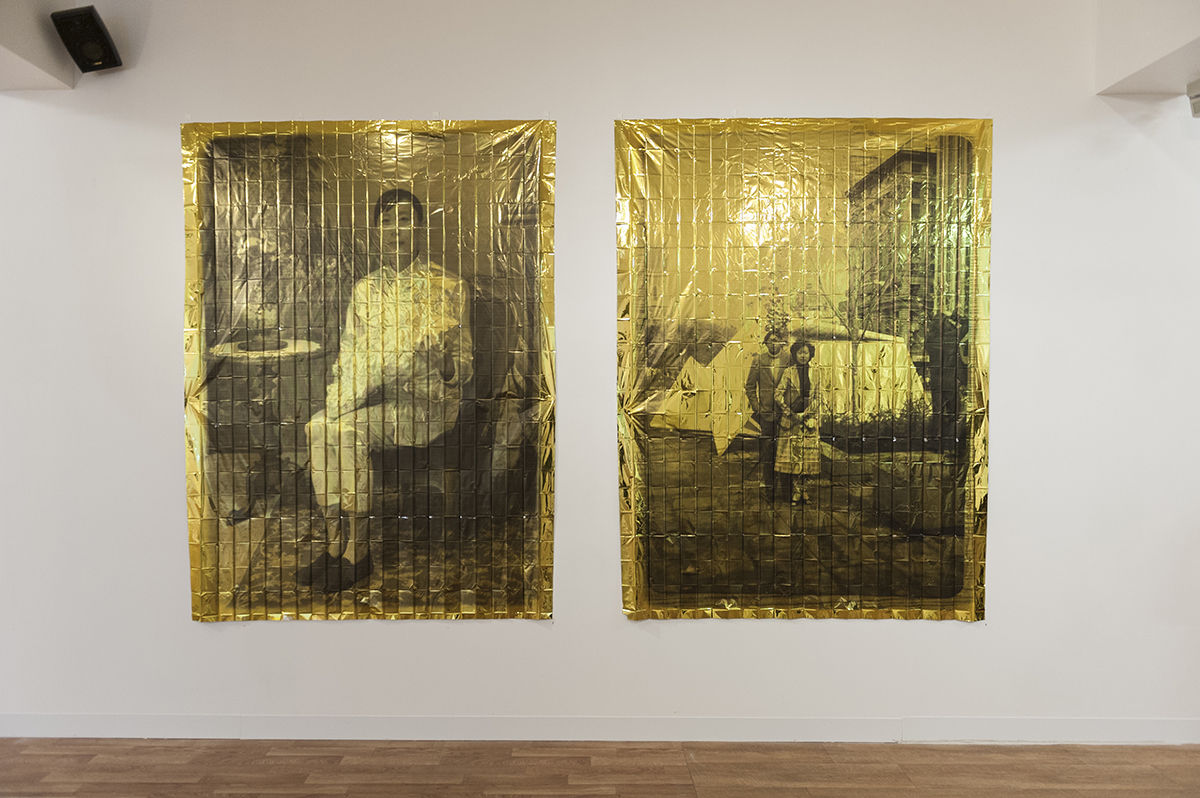
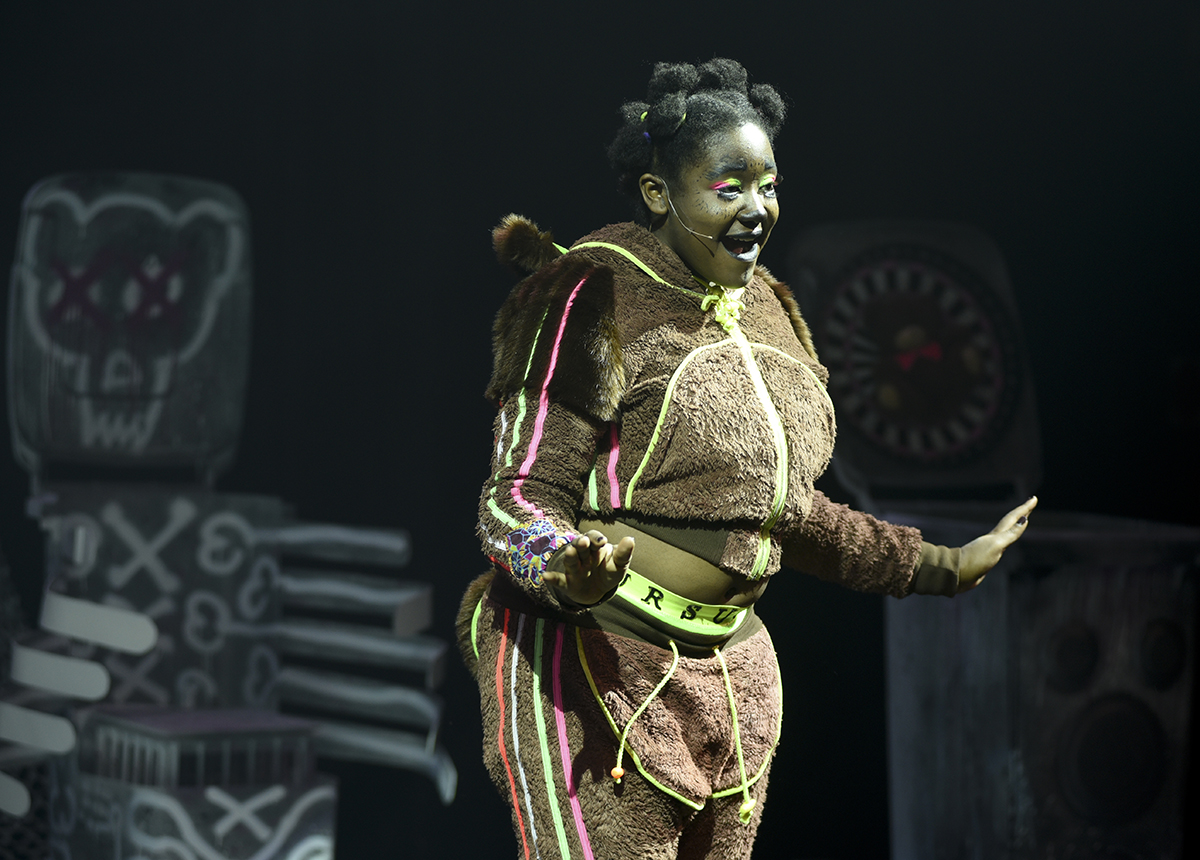
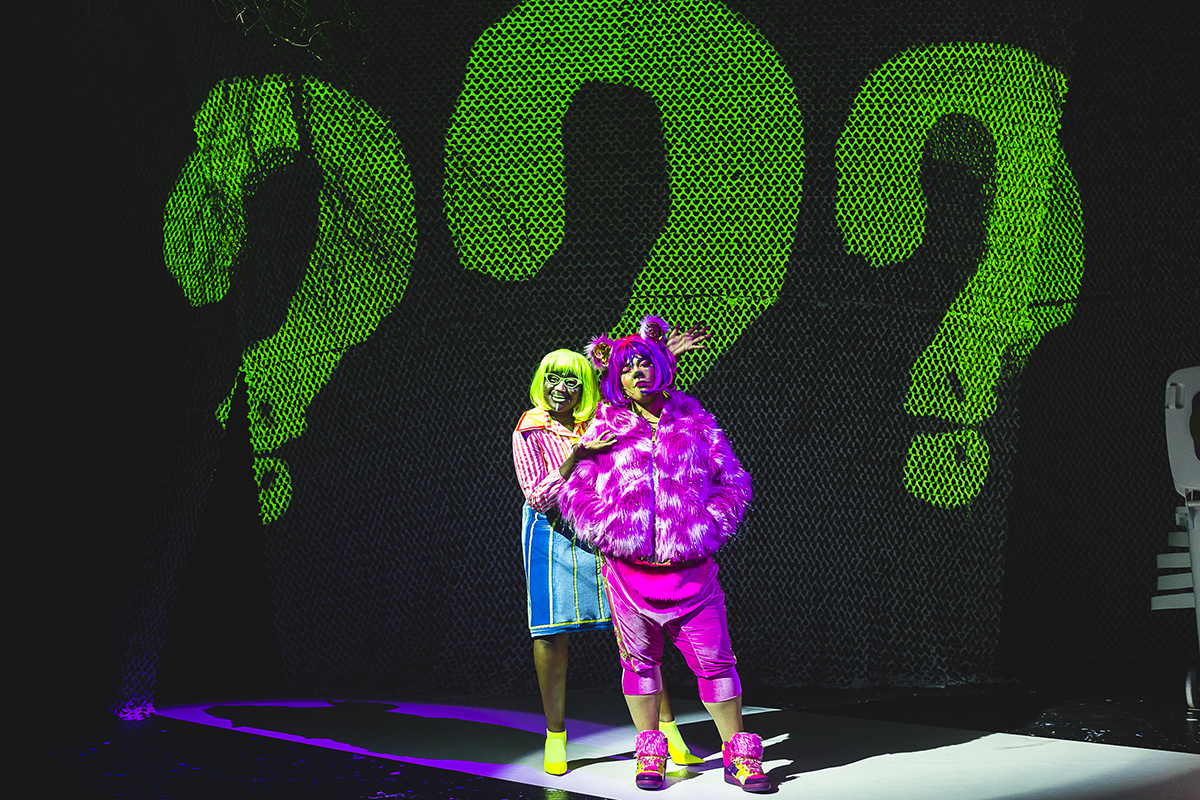
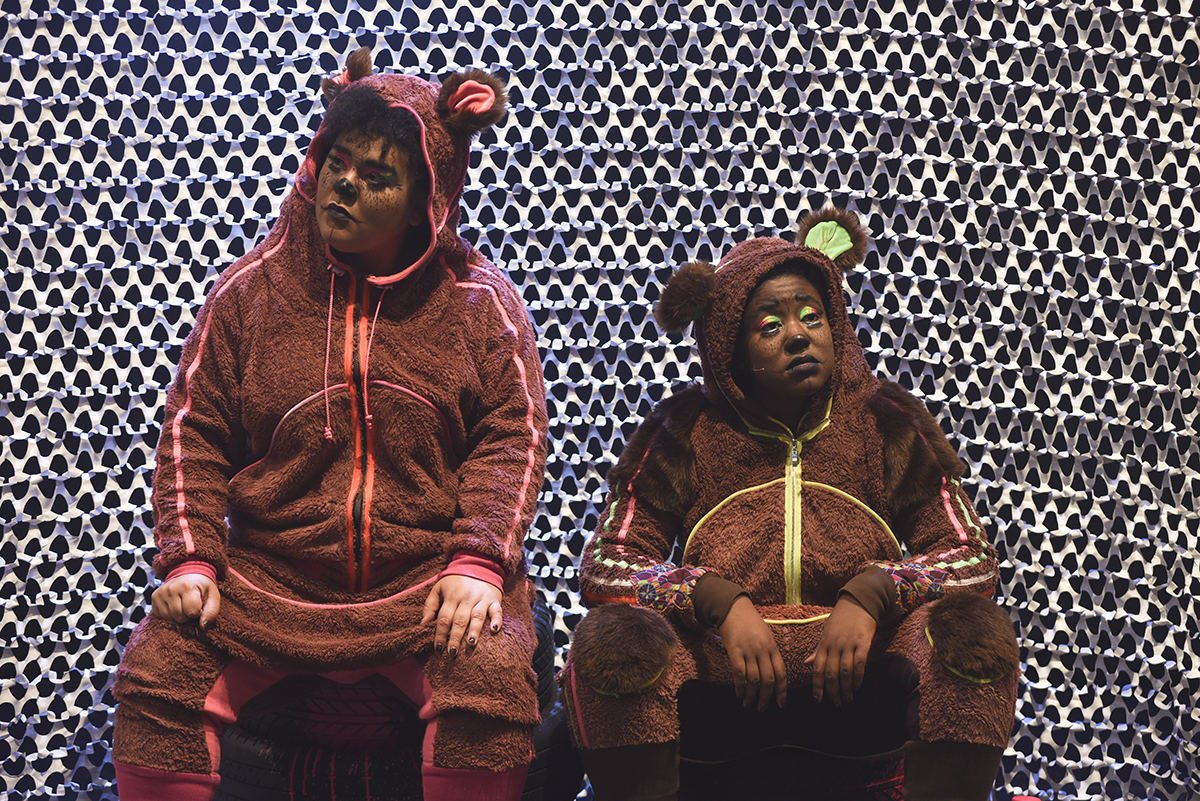
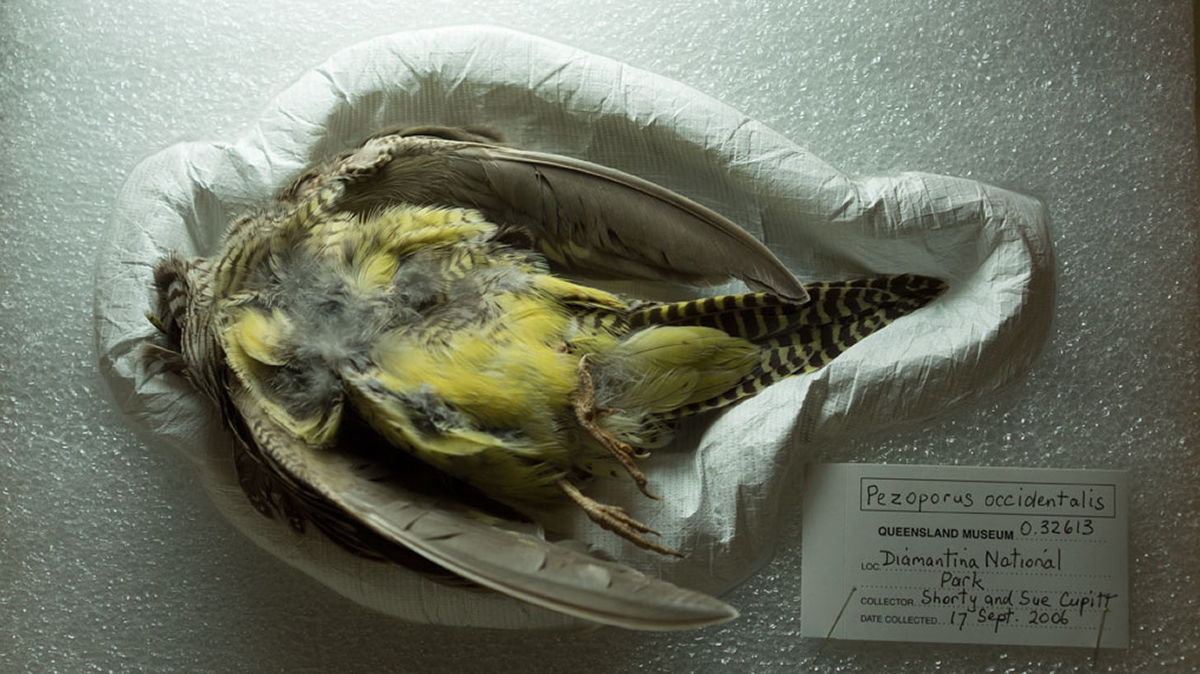
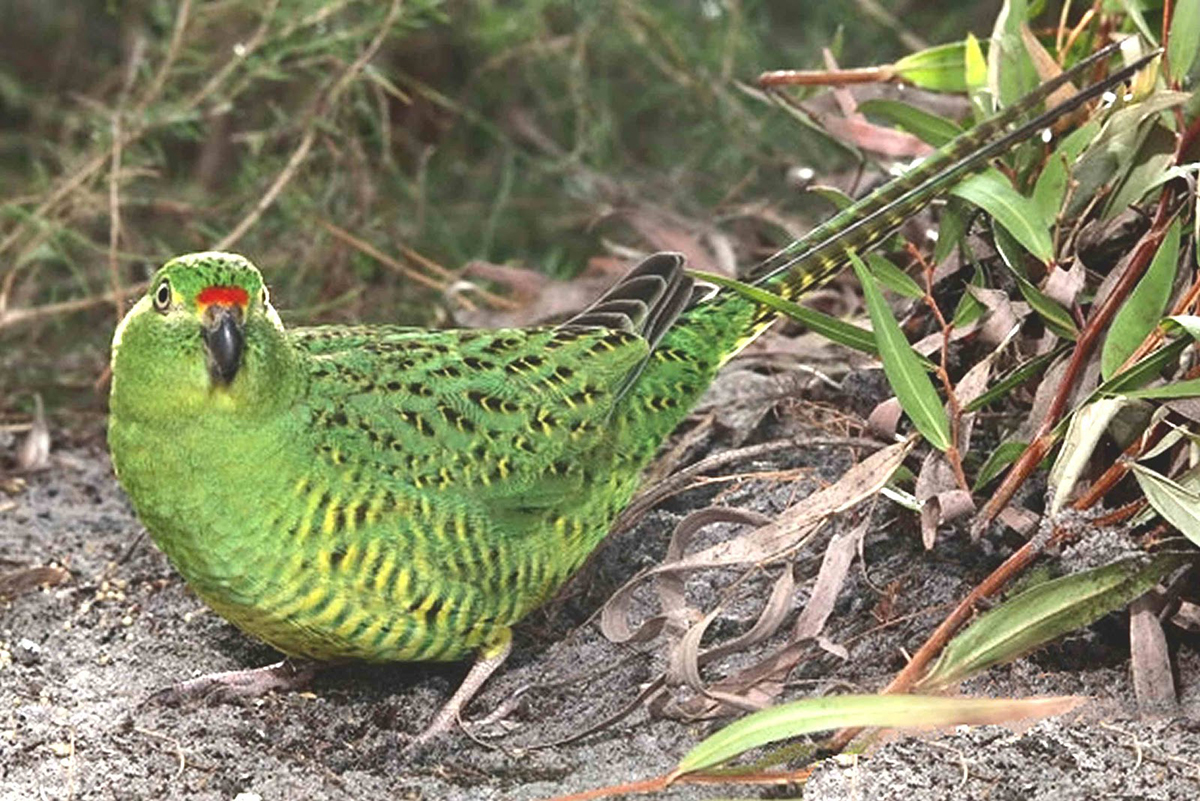
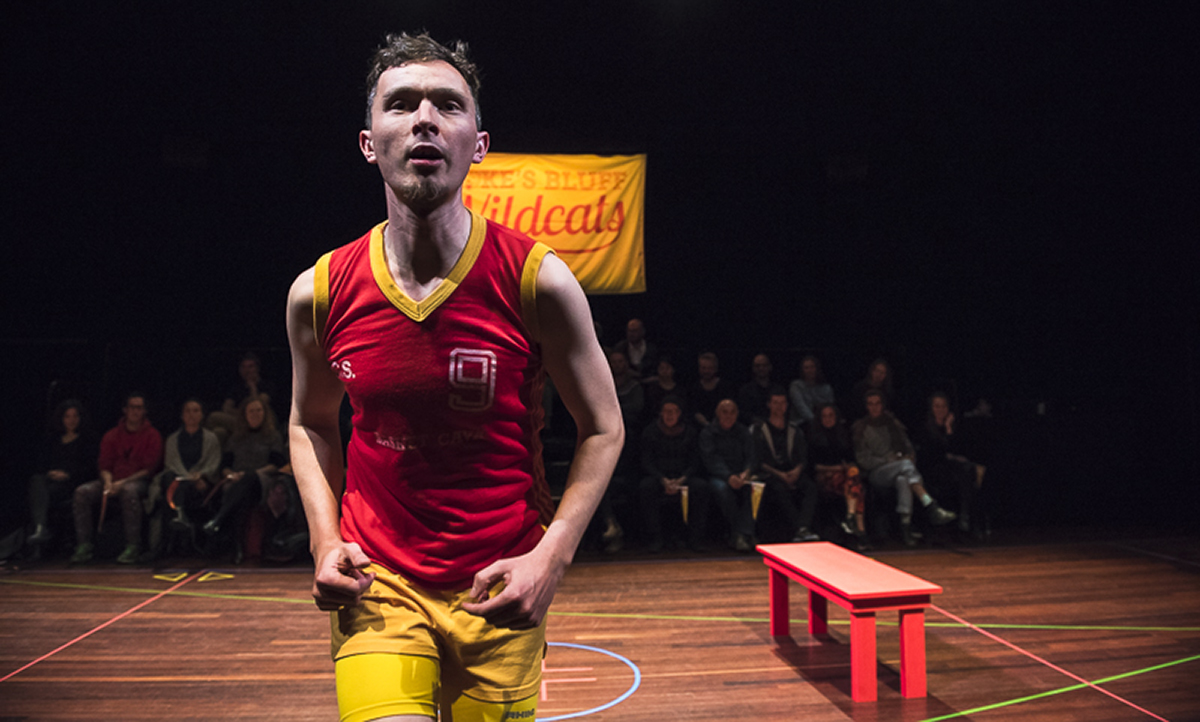
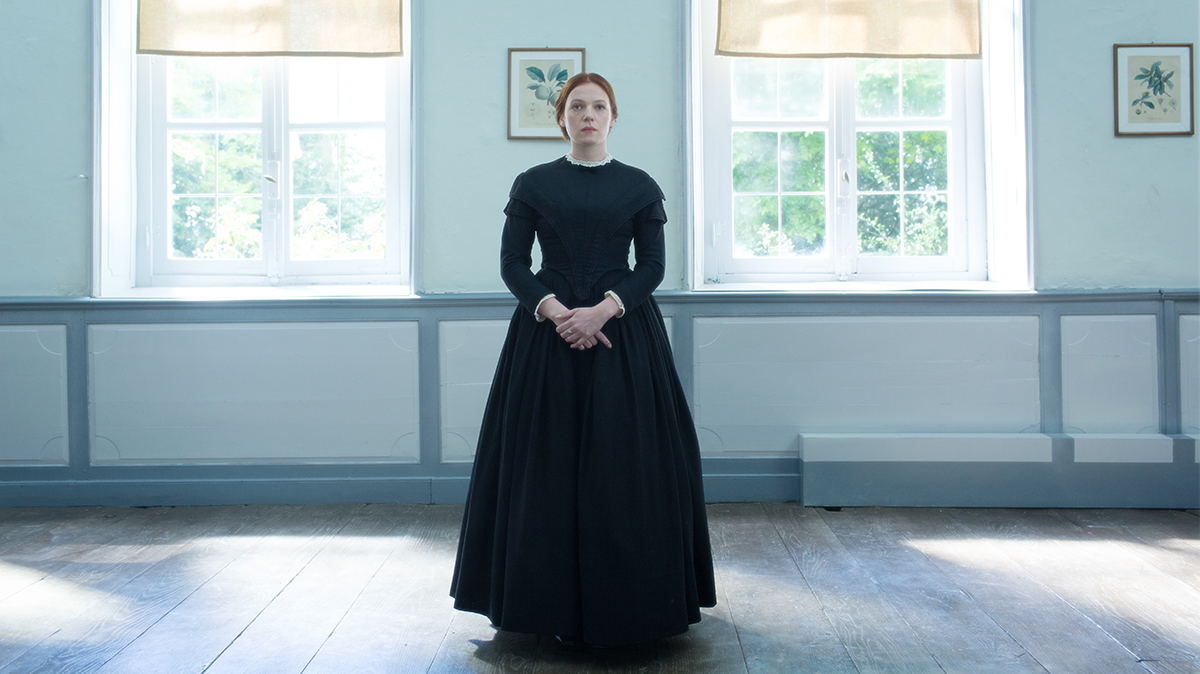


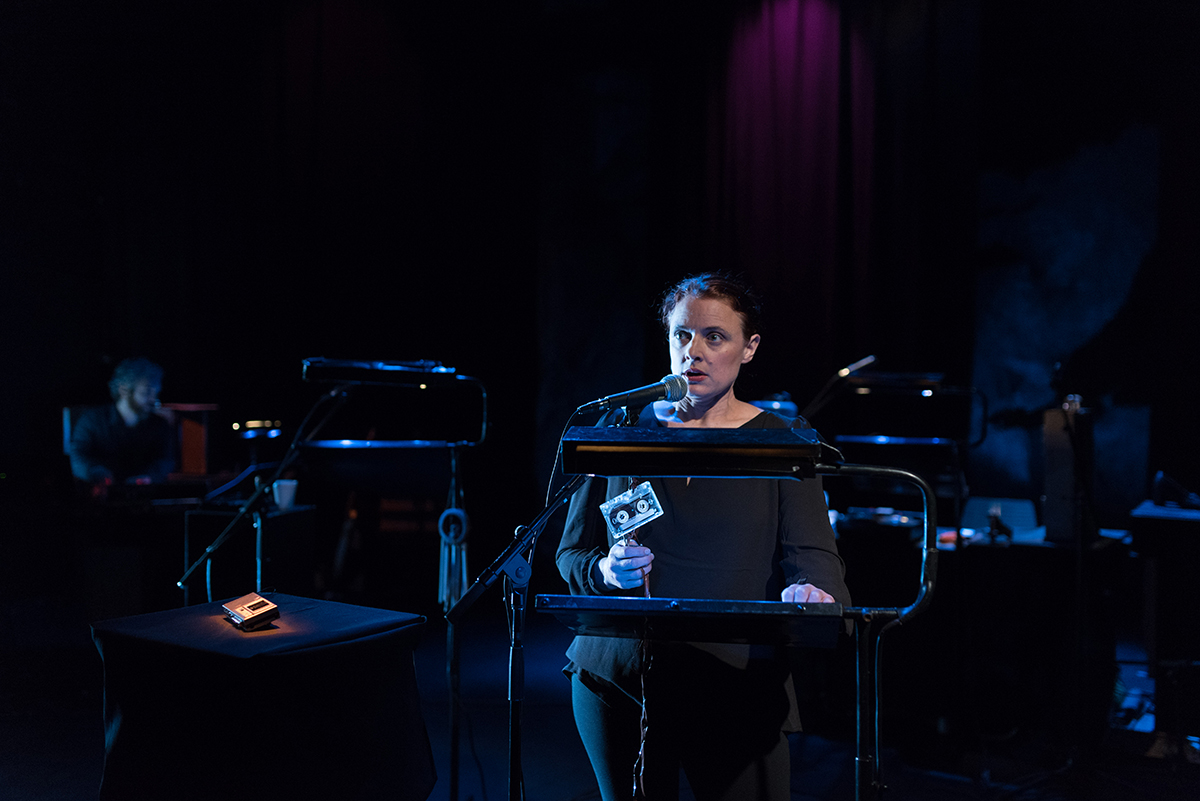
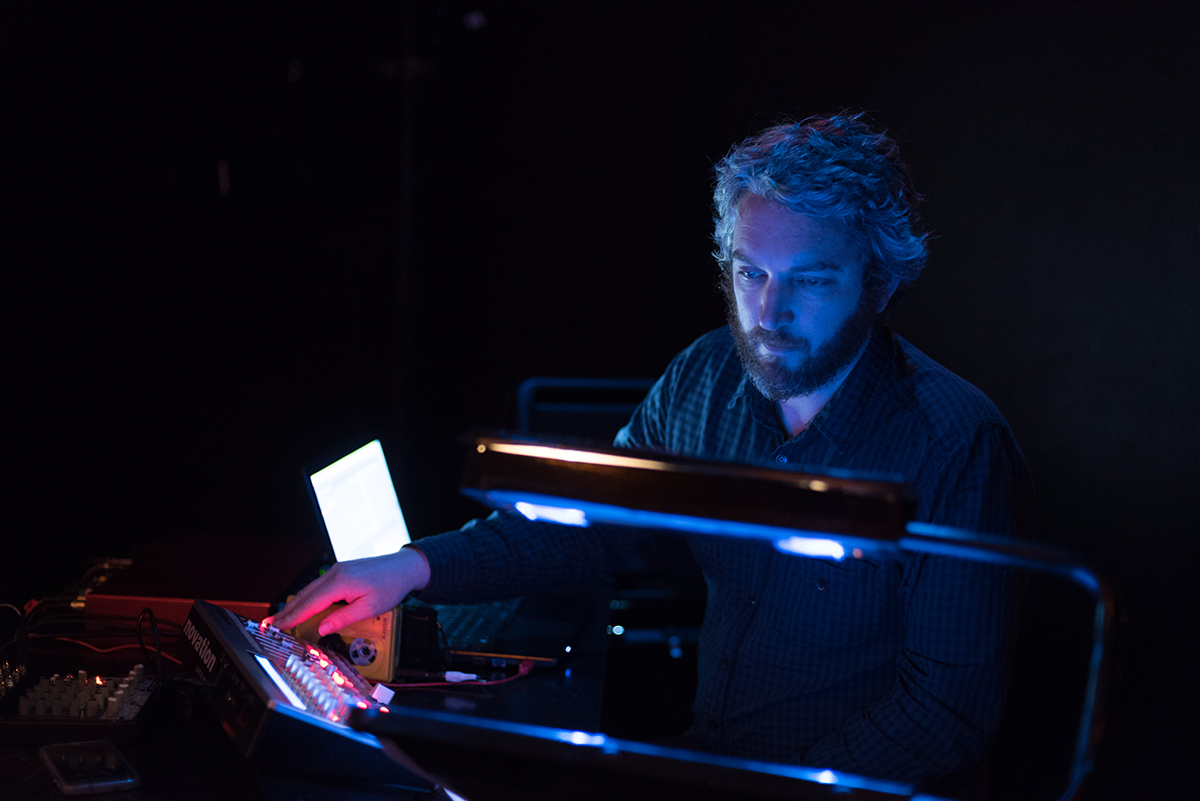
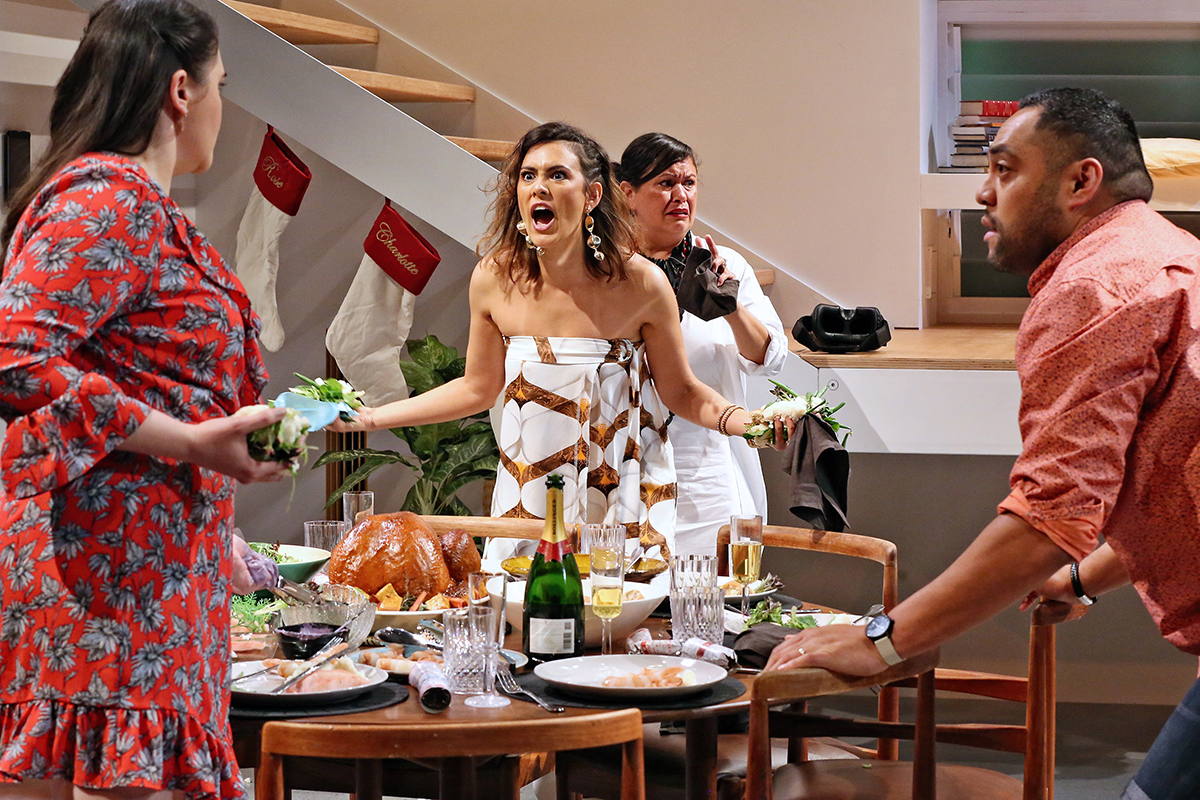
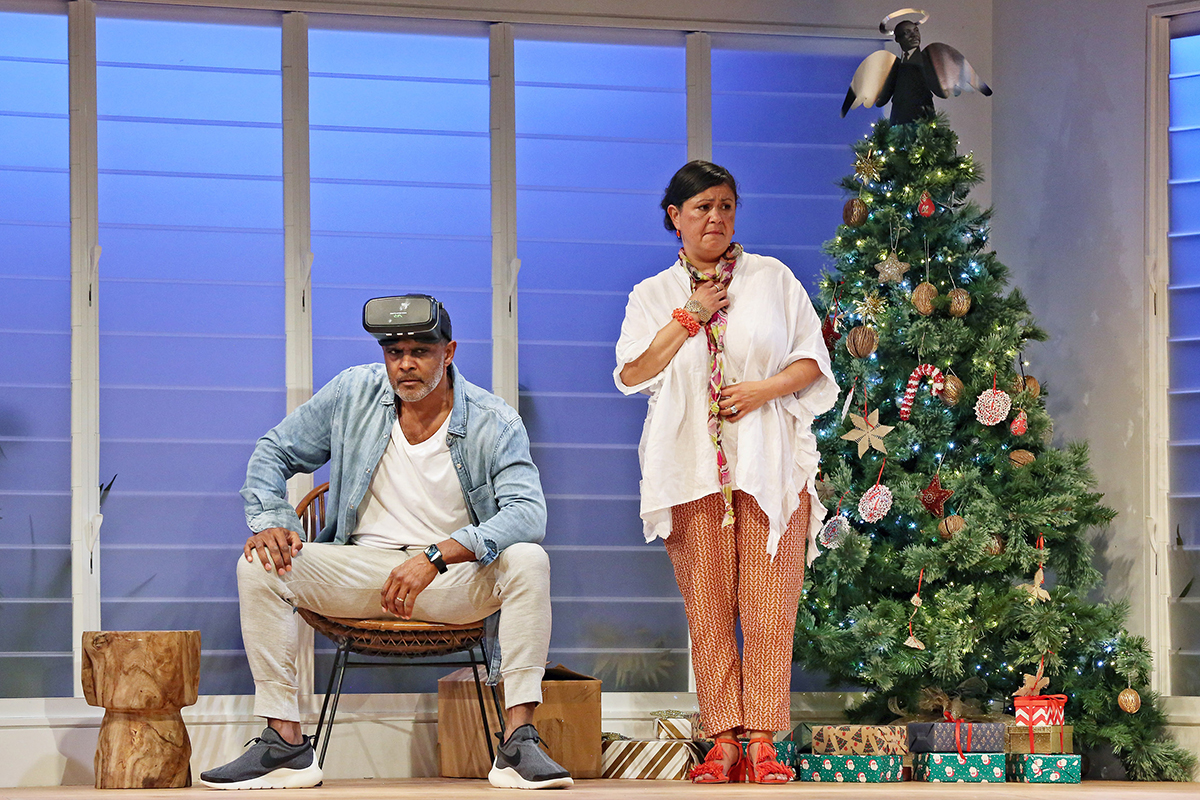
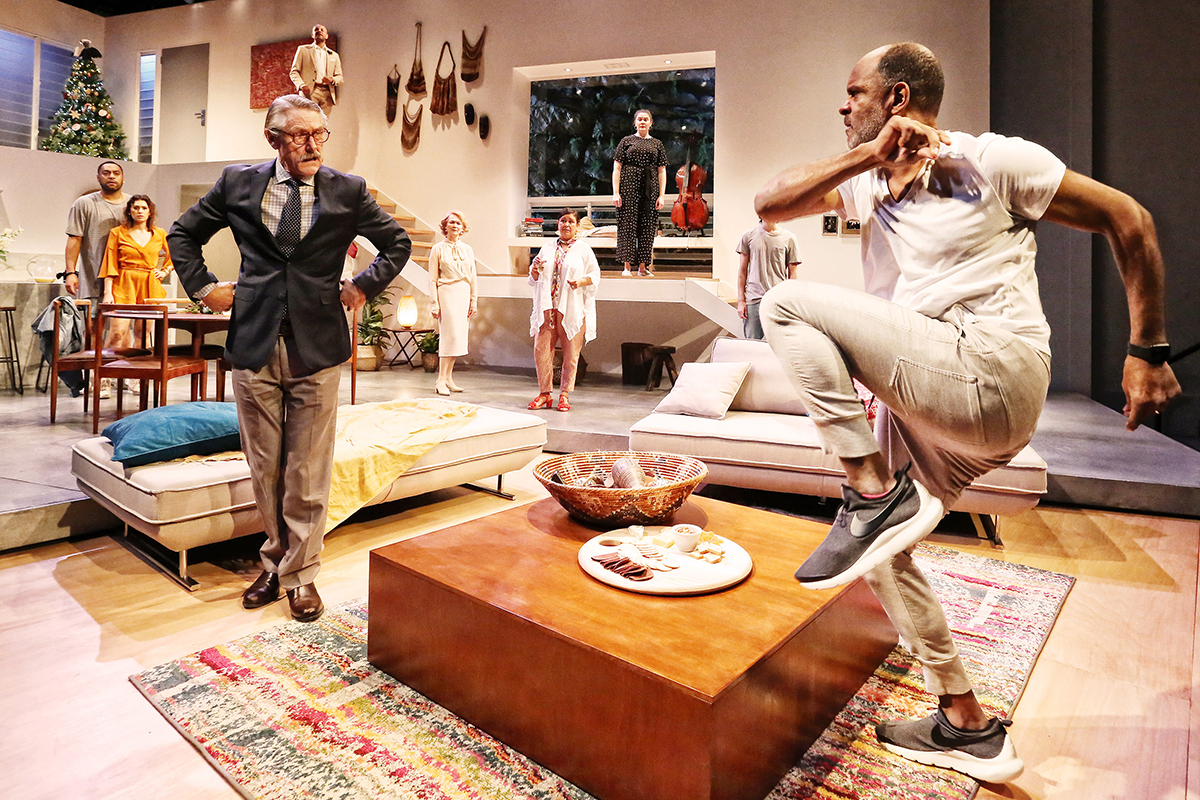
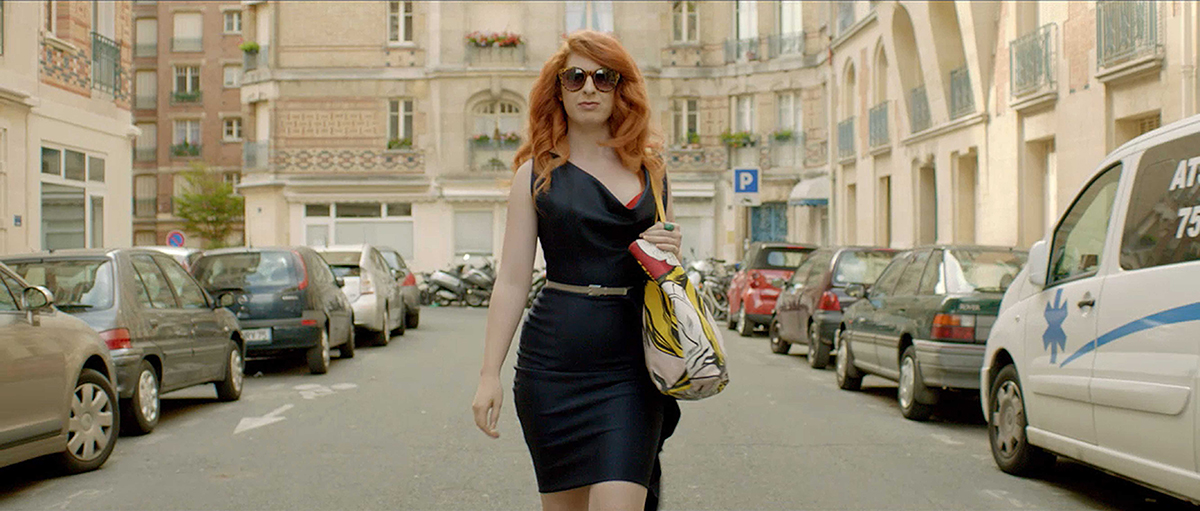
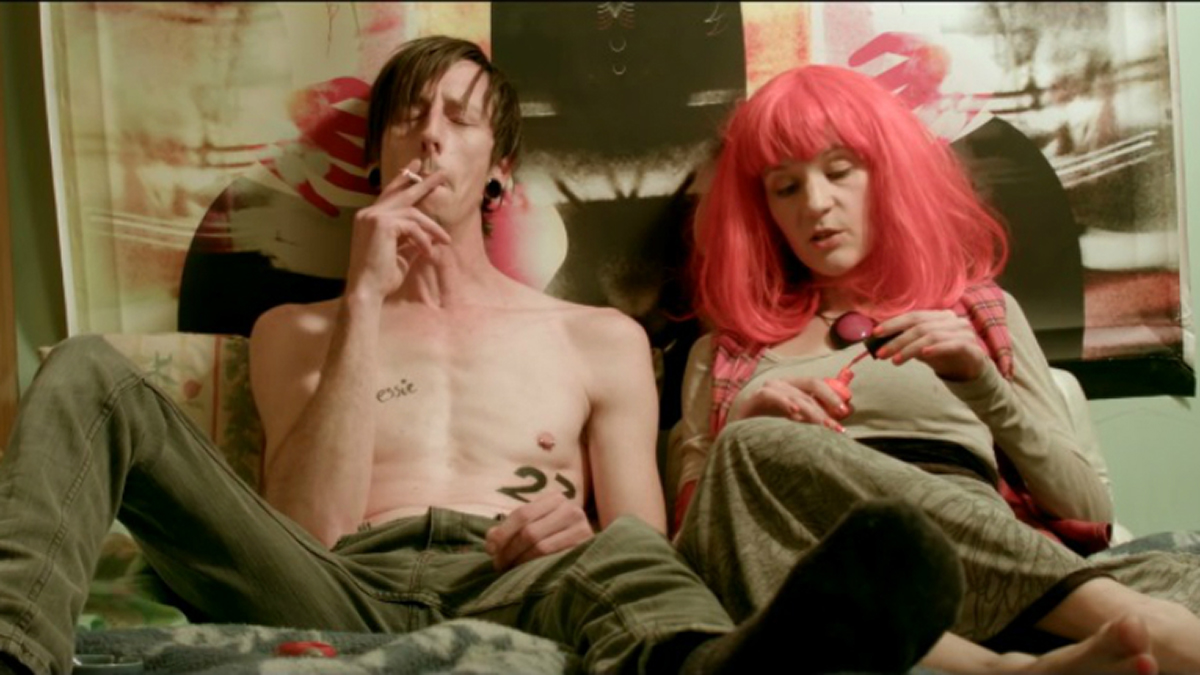
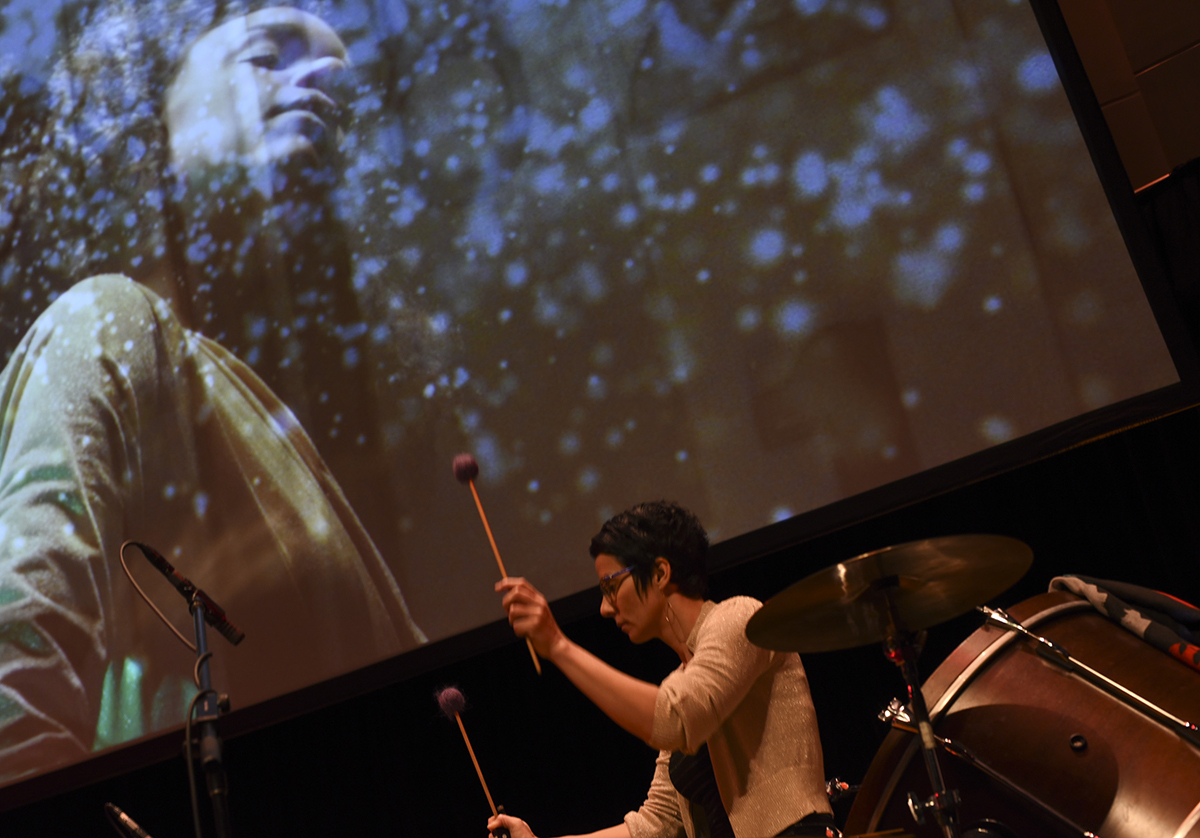
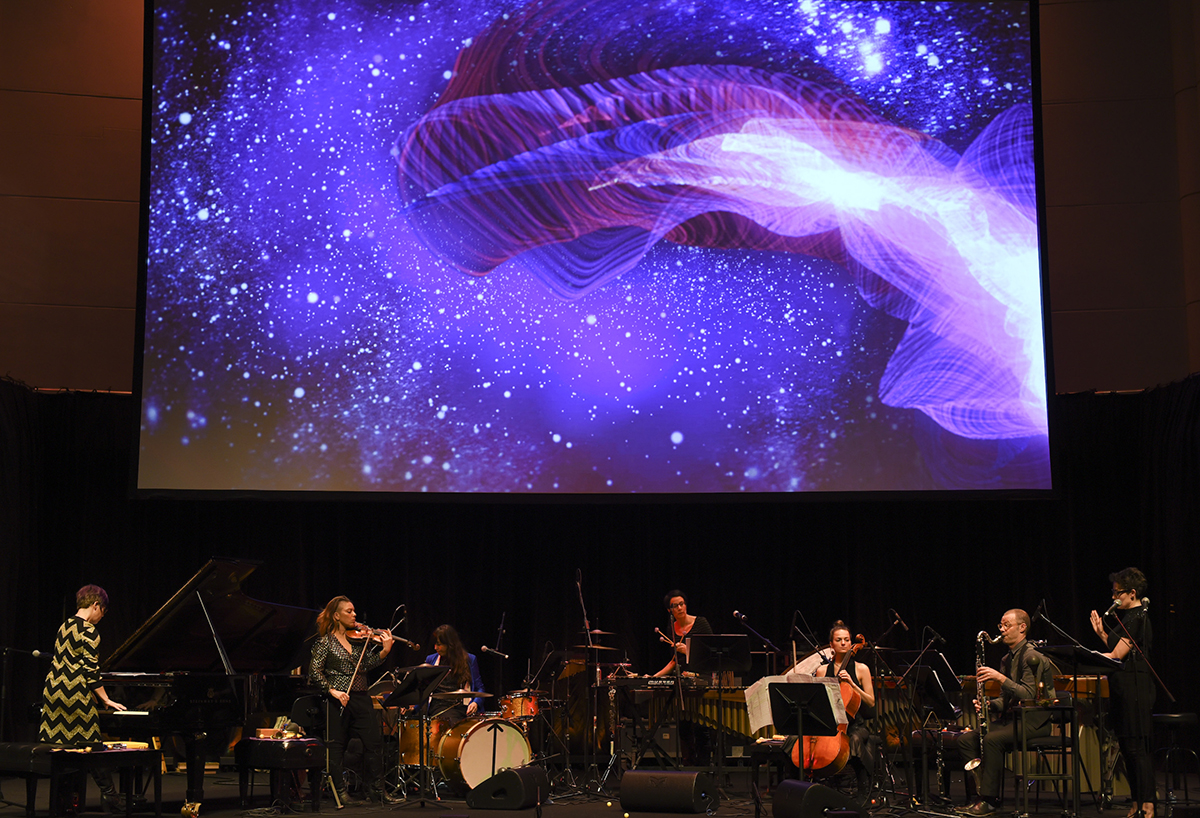
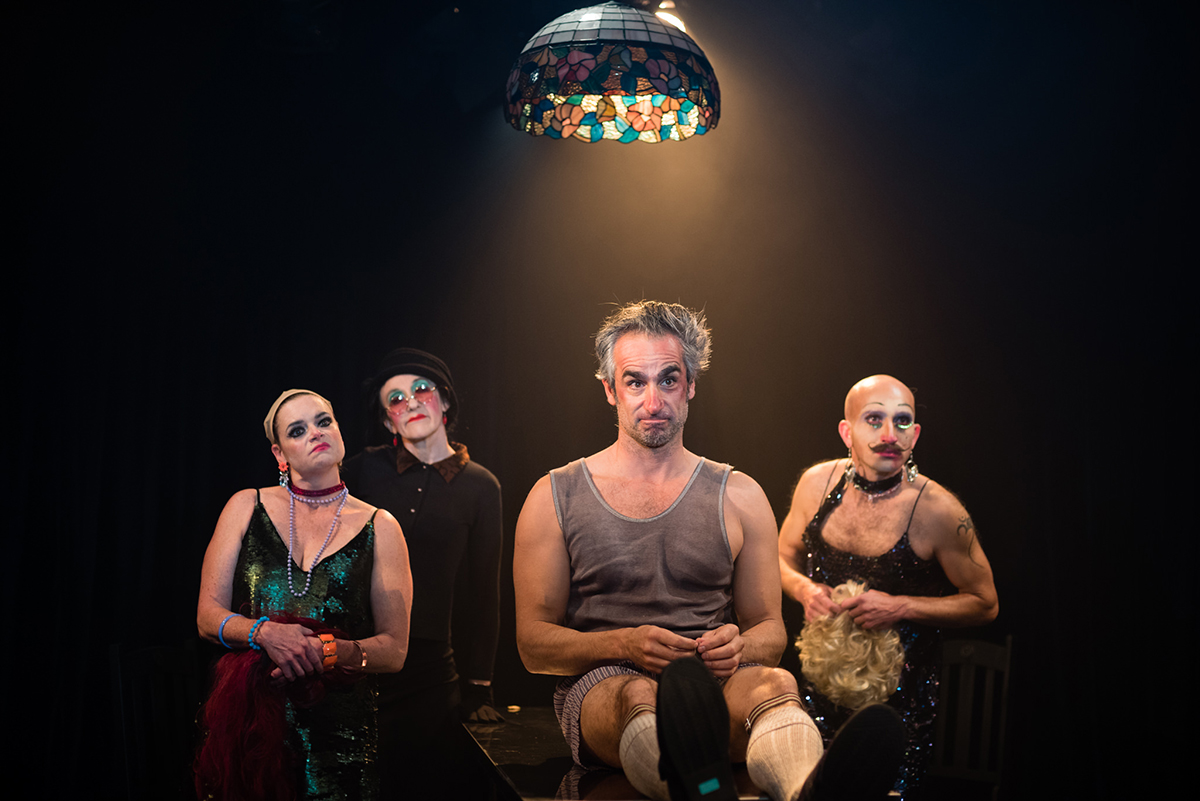
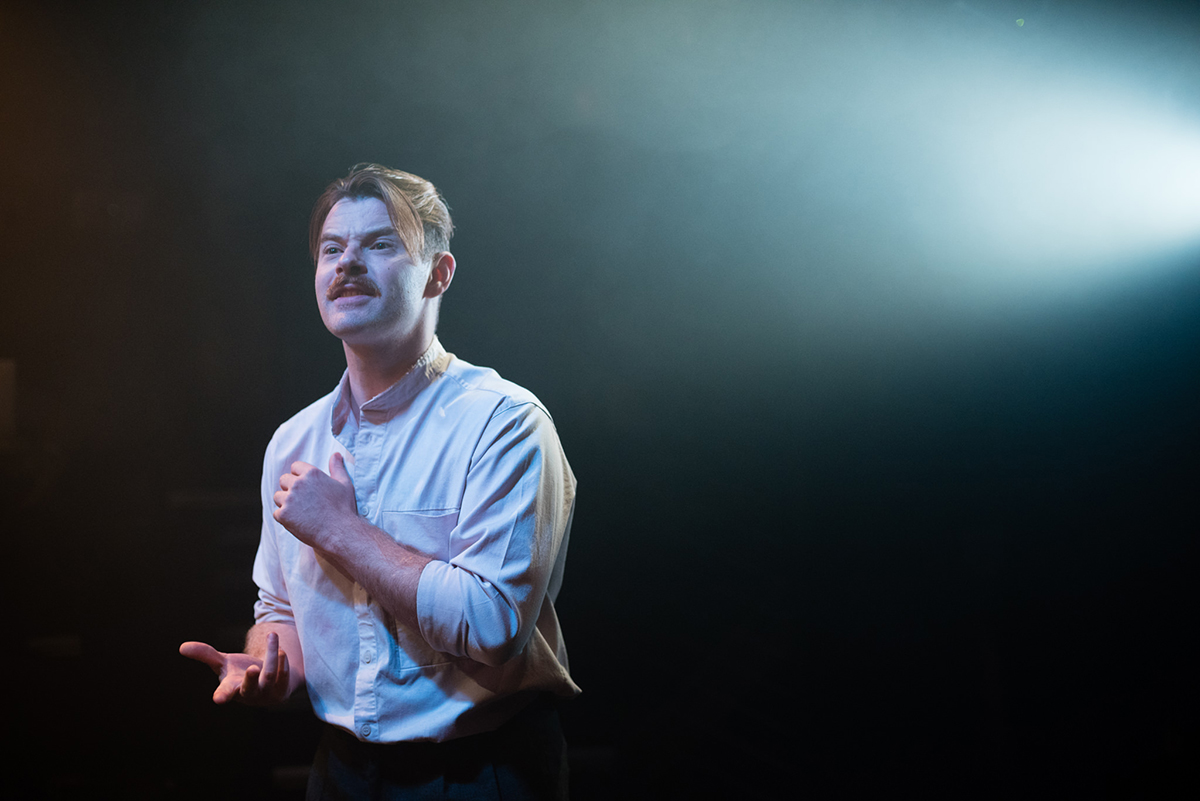
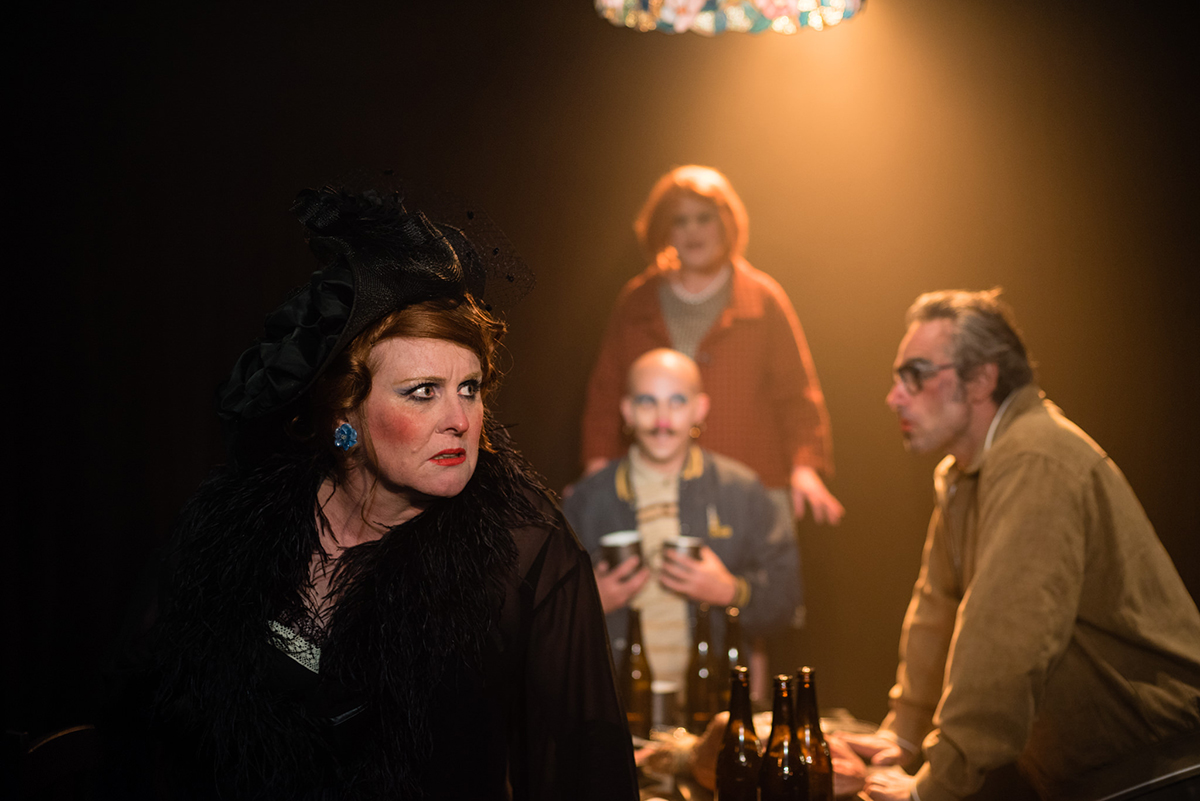
 Top Knot Detective