Following Pink Violin and Violin Music in the Age of Shopping, not violin music presents the latest scholarship from the rarefied field of Rosenbergology. For those who have not had the pleasure of delving into the intellectual humus of their family tree, the Rosenbergs are a clan of physicists, mathematicians and, of course, violinists who all share the same first initial “J.” Their pseudonymous scholars are keen culture critics and dialecticists, ready to lament the decline of Western Civilization while decrying its inherent contradictions. The book revels in collapse and tragedy, beginning with a post-apocalyptic portrait of one Dr Rosenberg reinventing the Doric column and ending with a suicide.
The material form of the book develops this sense of cultural amnesia. It is an unwieldy volume, lacking even that most basic of bibliographic conveniences: page numbers. There is no table of contents, nor even a list of contributors. Book sections can only be distinguished by their idiosyncratic typesetting. Each chapter has a different font, though Comic Sans is sadly absent. The glossy, low-resolution cover betrays its origins in a print-on-demand self-publishing house. It is, in short, a dysfunctional book.
Which is precisely the point. Contributors were briefed to explore dysfunctionalism as a theme. In one chapter Dr Robert Ostertag offers a principle of dysfunctionalism: “a machine performing a task badly is aesthetically superior to a human performing the task wel.” The phrase is clipped because Ostertag’s responses are subject to Twitter’s 140-character limitation. The book is thus a product of the axiom that cheap-and-quick printing and cut-and-paste formatting are aesthetically superior to more manual production values.
Ostertag’s definition of dysfunctionalism only covers cases where automatism is pitted against human agency in the performance of a given task, such as in the construction of a print-on-demand book. But the cases of dysfunctionalism explored by the contributors are usually those in which a machine poorly translates or transmits human intentions. For instance, Ostertag cites an installation where Dr Rosenberg attempts to play a violin using ECG data. Another author relates the dysfunctional scenario of a Maoist TED talk by Judd Rosenberg. Plagiarism, new and old violins, jazz clubs, composition competitions and the instrumental innovations of violin metal are also evaluated as dysfunctional mediums.
The authors explore language itself as a dysfunctional medium. Academic language, theory language, art language, even mathematical language (the book is a pleasure for those on hand-waving terms with pure mathematics) all come under parodic scrutiny. One chapter is shockingly written in “Engrish,” with “l”s and “r”s interchanged. Another frequently drops articles. These caricatures of the language of people from non-English speaking backgrounds are made all the more offensive by the use of pseudonyms as dysfunctional names. The pseudonym does not point the reader to any particular context. It is a reader’s dead-end. This is dangerous when a text hinges on irony, on knowing that an author “doesn’t really mean it.”
Dysfunctional names leads to dysfunctional readings, and here I cannot accept that dysfunction aesthetically trumps function. Only after clarifying with Jon Rose that the two chapters in question were indeed written by a Japanese and a Slovakian contributor respectively and that exploring dysfunctional language was an essential part of their brief was I able to read the contributions with any sort of sympathy.
There is yet the disfunctionality of culture critique that plagues the book. Lazy generalisations mar the contributors’ clever jabs at contemporary culture. One author paints a juvenile caricature of the Australian suburbs as a cultural wasteland devoid of music-making. Rosenberg is driven around the suburb of “Roselands” in a taxi and promises to double the fare if he can find somebody performing music. He resorts to door knocking after failing to find music at pubs and malls, but house after house is devoid of music-making. I call this caricature juvenile because I entertained it myself as a teenager in the southern suburbs of Adelaide. But then again, I was playing the cello every day from the back room of our triple-fronted, cream brick home, as were many other kids making music in the neighbourhood. I lament with the author the steady decline in public musicking since the 19th century, but he could better pose the question of why amateur music making is still largely delineated by class rather than shaming the working class, or indeed the economic middle class, for having apparently given up on violins. The Muslim taxi driver in this chapter is also a caricature, the purpose of which mystifies me.
Several chapters in the book are quite tasteless, which is again part of the book’s design. In response to my inquiries about portrayals of class and religion, Rose stressed the point that he exercised no censorship in curating the contributions. Tasteless, too, is the Violin Museum inspiring the contributions, which features several exhibits that cannot be included among the 31 pages of pictures of the Museum. The museum, which actually exists, was once situated in the town of Violin in Slovakia. Rose has passed a dragnet through contemporary culture, from the high to the low and the experimental, picking up authentic Rosenberg modified violins and art works, as well as violin-themed nick-knacks and smut. After threats to the director’s life, the museum is currently homeless, but will soon be exhibited in Berlin, Bologna and Australia. Whatever the anti-censorship ideals behind the book, the use of dysfunctional names will lead to its being judged at face value. The book’s irony will be flattened out.
As part of Sydney’s Art Month and the Greek Festival, IHOS Opera will present composer-director Constantine Koukias’ chamber opera Kimisis—Falling Asleep. In the Eastern Orthodox Church Kimisis commemorates the Dormition, the ‘falling asleep,’ or death and assumption into Heaven of Mary, mother of Christ.
The company believes that while Kimisis will appeal to Orthodox believers, its “experiential foray into our own ephemerality,” (press release) will have wider appeal.
For many years an integral and influential player in the Tasmanian arts scene, Koukias has moved to Amsterdam, premiering Kimisis at Splendor Amsterdam and the Karavaan Festival in 2014.
The opera features soprano Irene Sarrinikolaou, a trombonist, DJ and award-winning architects Elvio Brianese and Peta Heffernan whose panopticon design will implicate and immerse the audience in the ritual of transcendence.
IHOS Opera, Kimisis—Falling Asleep, Verge Gallery, Jane Foss Russell Building, Sydney University, 25-28 March
Erkki Veltheim, Sabina Maselli, Anthony Pateras, Another Other
photo Nina Gilbert
Erkki Veltheim, Sabina Maselli, Anthony Pateras, Another Other
Chamber Made Opera’s Another Other, produced in collaboration with Punctum and New Music Network, is a new work created and performed by Erkki Veltheim, Sabina Maselli, Natasha Anderson and Anthony Pateras, a stunning audiovisual renewal of filmmaker Ingmar Bergman’s legacy.
In “The Snakeskin,” an essay written in 1965, Bergman sees art as hunger, pessimistically describing it as a dead snakeskin full of ants, eaten from the inside but still moving with systematic, uneasy activity. A year later Bergman released his seminal film Persona, in which he explored the validity of art, authenticity and the transformative aspects of self.
Another Other probes these themes with expertise and loyalty, a contemporary exploration of our digital age, which enables various online selves, our gaming skins and the smiling veneer of busy loneliness that they project.
Entering the ICU performance space—aptly a dark hospital basement—we see an indistinct black plastic sculptural object, inside which is something sonic and kinetic, rhythmic in its disconnection and obscurity. We are seated on opposing banks, projection screens a mask between audience and performers. The performers’ stillness emphasises their geometric positioning. Vocal sighs initiate the score, evoking Persona character Elisabet’s feelings of shock as she spirals into silence. Two clocks loom above the performers, activated simultaneously. One counts down, alluding to anticipation, while the other counts upwards, indicating time yet to come. There is continual, circular referencing of the film, repurposed and displaced.
A phone rings. Echoing footsteps walk slowly to one side of the audience. The lights shift; we are spotlit. Alongside the performers we become Bergman’s ants in the flaking remnant of snakeskin that here is theatre.
Five video projections come into play throughout in front of the audience and on the walls behind. A 16mm projector stands alone, an antiquated sculptural object; it could be a ready-made. Sabina Maselli handles live visual mixing with ease, driving imagery at different speeds, generating abstraction and re-imagining old film footage. Saturated and hallucinogenic, a mixture of processed and real, it’s all a blur.
The acoustic score is both measured and random. Natasha Anderson shifts air through the wooden flaps of an elongated Bavarian recorder, often using the mouthpiece for extended voice work. She plays it as a multipurpose object, hitting, spitting and blowing, her action fractured and magnificent.
Another Other, Chamber Made Opera
photo Christie Stott and Josh Burns
Another Other, Chamber Made Opera
Loops of sound rise and suddenly there are simultaneous projections. A discordant violin twists and turns as a facial close-up is revealed. Colour saturated images shift to black and white and slowly the film disintegrates before our very eyes as it did in Persona (1966). It peels away from the edges, revealing soft white insides. I’m aware of the other half of the audience peering through.
Erkki Veltheim plays remarkable violin, oscillating between exquisitely slow tonal bowing and high-pitched dissonance. He also plays out the most overt reference to the film—the retelling of the sunbaking scene as a spoken word piece. While it doesn’t sit well within the entirety of the work, there is an interesting gender switch as he tells the female story of voyeurism, of sexual experimentation of youth and the violent impact that the experience has on the woman’s identity. The female vocals become a choral undertone and combine with the imagery to intensify the sense of psychosis.
Anthony Pateras is an astonishing improviser. For Another Other he plays electronics and reel-to-reel tape, altering time and voice. Pre-recorded sound and intense processing generates severity in the score. Pateras is masterful and foreboding as always, an embodiment of storm. The resonating bass takes over, travelling through the body with a harshness that relates to the slapping sounds of the recorder.
The lighting of the audience shifts, creating a new perspective. The clocks now tell the same time, becoming a place of sonic and visual rest. There is silence and then a minimalist sound work begins. It has an oceanic quality, perhaps recalling the beach scenes in Persona.
Images of droplets form and Sabina Maselli stands to operate the projector, turning the cogs by hand, forwards and back, place-making in time.
Another Other is a riveting and fragmented series of micro movements, collectively composed to merge filmic and musical elements just as characters’ identities merge in Bergman’s film. This hyper-expanded cinematic experience shows our mental life to be a complicated mesh of meaning, open to interpretation.
Like the ego, Another Other is impossible to unpack methodically; there’s no narrative thread. This courageous and bold artwork feasts on the art of Persona before the clocks stop and finally there is silence inside the self.
Chamber Made Opera with Punctum and New Music Network, Another Other, creators, performers Erkki Veltheim, Sabina Maselli, Natasha Anderson, Anthony Pateras; Punctum’s ICU, Castlemaine, 5, 7 Dec, 2014
RealTime issue #125 Feb-March 2015 pg. 41
game image by Al Thumm, from Music for Strings and iThings
It’s inevitable that experimental music embraces the latest technological developments and that the expansion of art forms to provide ever-increasing audience engagement is also a characteristic of contemporary culture. Now 15 years old, Adelaide’s Zephyr Quartet has built its considerable reputation on innovative programming and collaboration with the widest variety of composers and performers. Music for Strings and iThings is a concert of experimental music that radically challenges the way we think about music and performance and about the pervasive and seductive influence of new technologies.
Zephyr Artistic Director Hilary Kleinig’s composition, For those who’ve come across the seas, epitomises the use of technology in this concert and the capacity of musical performance to raise political awareness. Kleinig’s wistfully evocative piece for string quartet and smart-phone choir is a personal response to media reports concerning Australia’s treatment of asylum seekers. Combining fragments of recordings of Kyrie Eleison settings from the traditional mass, the Morse code signal for SOS and the national anthem, and performed with a video showing the empty, endlessly rolling sea, the work is already conceptually powerful. But rather than passively absorbing the music, each audience member participates not by singing but by downloading and playing out loud on their phone one of three pieces of pre-recorded music, the combined sound of which forms a three-part accompaniment to the quartet’s playing. The audience thus implicitly enjoins Kleinig’s response, and the work demonstrates the potential of the phone for crowd communication and spontaneous action in any setting, musical or otherwise.
Zephyr invited several composers to try out ideas in response to the concert’s technological theme. Brendan Woithe’s Breath involves the quartet playing a notated work out of sight behind a screen, while Woithe sits at a laptop before the audience. The quartet is miked but can only be heard when the audience makes sounds and thereby triggers the necessary amplification. The audience thus unconsciously activates the music, a subtle weave of long, delicate tones. Interaction is also central to Luke Harrald’s Distant Front (2012), written for string quartet and a laptop programmed to respond to the quartet as it plays. Inspired by painter Fred Williams’ landscapes and the dry South Australian countryside, Distant Front was commissioned by the Art Gallery of South Australia to accompany its Williams retrospective. There is some fine writing for strings, evoking the stillness of outback summer heat followed by soothing rain.
Cat Hope’s composition Wall Drawing, inspired by the serial art of US conceptual artist Sol LeWitt, is a graphic score, scrolling across a projection screen, a device visually and conceptually reminiscent of LeWitt’s work and his ideas on narrative. Accompanied by a Theremin, the quartet transforms the visual into the audible while the audience also sees the score projected on a screen as a visual artwork. Composer and graphic designer Al Thumm takes this idea a step further with his Chameleon Wake for string quartet and video game, with Thumm at the laptop. The quartet responds to his collaged, animated illustrations of the Australian landscape and its fauna scrolling across the screen, producing some highly surreal effects. The game is an active graphic score, adding another dimension to the performance.
VoiceROM (Dylan Marshall and Jarrad Payne) concluded the evening with Falconwood Pinblock, a composition again involving the audience reproducing sound over their smart phones while directed from the stage, together with the quartet and a sampler. (The pinblock, that part of a piano frame holding the tuning pins in place, is made of hardwoods such as falconwood—perhaps the title is a metaphor for the foundations of instrumental music.) As with Kleinig’s composition, the audience does not all come in on tempo, resulting in a somewhat chaotic sound. But musical perfection is not the point, rather it is group consciousness and participation through electronic connection, which can indeed be chaotic.
Music for Strings and iThings is highly experimental music. The involvement of the audience through smart phones and the interactive play with a gamer both push notions of composer, performer and musical reception beyond limits. While not always impressive musically, these works are conceptually radical and developmentally significant. Zephyr’s relentless quest for musical and compositional originality and their work with diverse collaborators continues to position them at the forefront of innovation, involving in this concert appropriation, field recording, live processing, pre-processed sound, visual art, aleatoric elements and directed and spontaneous audience participation. The concert is perhaps a wry commentary on the way in which new technologies have invaded our lives and come to dominate communication and thought processes, but it also demonstrates the way in which contemporary culture can condense so many sonic, musical and cultural traditions and ideas into a new paradigm.
–
Zephyr Quartet and collaborators, Music for Strings and iThings, ABC Studio 520, Adelaide, 15 Nov, 2014
Despite usual appearances, it is not written in stone that new music and associated instruments must always be impenetrable to all but a learned few. The responses of curiosity and delight that the Instrument Builders Project inspired in visitors of all ages and backgrounds should give pause to anyone despairing about a lack of audiences for experimental music. This exhibition at the National Gallery of Victoria, and the ongoing project itself, demonstrated that new approaches to instruments, sound and music can reach out to new audiences; not to mention bridge cultural divides between two neighbouring countries.
This was the first time the project had been presented in Australia (two previous iterations have taken place in Indonesia), hosting a number of Indonesian artists in residency alongside their Australian contemporaries. Their works explored recurring themes of site-specific instruments that interact with environmental and meteorological phenomena (exemplified by Michael Candy, Pia van Gelder and Andreas Siagian’s Mountain Operated Synthesiser) and the reclaiming of junk as musical material (as in Dylan Martorell’s use of robotic percussion on discarded tin canisters in Drum Plough, and Peter Blamey’s quietly humming Motherboard Tree).
Visitors to the exhibition were encouraged to play and interact with the instruments; many displaying “Please DO touch” signs. This created a relaxed and playful atmosphere for all ages (kids love to play with things that make funny noises). On a more subtle level, it demonstrated the power of a non-traditional instrument to break down the barriers and cultural baggage associated with an object like a violin or piano. We had no hesitation in climbing inside Dale Gorfinkel’s wonderful Lotek Exercise Machine and stomping on foot pumps connected to an array of horns via tentacles of irrigation hose. It’s hard to imagine the same musically untrained visitors taking to a violin with similar gleeful abandon.
The exhibition also hosted an onsite workshop where the resident artists worked on new instruments. The workshop opened its doors to the public several times throughout the exhibition and artists demonstrated their works-in-progress. Some of these instruments rivalled works in the main exhibition in terms of musicality and sheer fun, such as Lintang Raddittya’s Spinningfields, where many light-hearted moments were spent with spinning tops on an amplified aluminium platform, straddling the divide between game and instrument. Gorfinkel, emerging as the star of the exhibition, had several other exquisite pieces in the workshop space, most notably Nada Laut: As Above So Below, a piece made in collaboration with Siagian where a number of conch shells were suspended over vibraphone bars. A fan coaxed the resonating shells to swing like pendulums over the bars, creating pulses of delicate resonances and harmonics. Each shell had been painstakingly matched with a different bar to achieve the most sympathetic match of resonance and frequency. The resulting timbre of the instrument was flute-like, with the underlying hum of a vibraphone conjuring images of sea and wind.
Lintang Radittya and Andreas Siagian at MPavilion
photo courtesy Instrument Builders Project
Lintang Radittya and Andreas Siagian at MPavilion
Along with Gorfinkel’s Lotek Exercise Machine, Tintin Wulia’s Odong Dangding Prototype attracted the most attention. A modified Indonesian pedicab, its roof was mounted with a bamboo angklung (tuned percussive bamboo pipes) that were struck by pedal-powered beaters. With the vehicle immobilised on blocks throughout the exhibition, we were able to climb in and pedal away to activate the percussive action above. The Odong came into its own at the culmination of the exhibition when it was released from the confines of the gallery and driven down the footpath of Flinders Street at the head of a procession of onlookers to the Federation Bells. The Odong stopped several times to allow different people a turn at pedalling (I was lucky enough to be one of them). Clarinettist, Aviva Endean, perched on the front of the Odong playing sunny melodies that perfectly matched the carefree mood of the Sunday joyride. At Federation Bells, the Odong’s wireless network capability was activated, triggering the bells to ring as it neared.
The Instrument Builders Project continues to construct and maintain lasting ties between artists in Australia and Indonesia, two countries with shaky diplomatic relations in recent times. That such relationships endure while politicians squabble points to the quiet importance of the cultural ties that endeavours like The Instrument Builders Project propagate. Along with mass appeal evident at this exhibition, such strengths show one possible way forward for art practices like experimental music. There is not much difference between the obscure and the delightful after all.
The Instrument Builders Project, curators: Kristi Monfries, Joel Stern, NGV Australia, Federation Square, Melbourne, Nov 1-23, 2014
James Turrell, Bindu shards 2010, Perceptual cell: fiberglass and metal. Light program, 420.8 x 653.1 x 607.1 cm (sphere), National Gallery of Australia, Canberra, purchased 2014
James Turrell is a god among light-as-art gurus, a practitioner concerned with the “secular transcendent.” His exhibition at the National Gallery of Australia is the fourth in a series originally curated for the Los Angeles County Museum of Art, toured to the Museum of Fine Arts, Houston, thence the Guggenheim in New York and now in Canberra.
Each venue has housed projection pieces, holograms, drawings, prints and photographs, along with new site-specific, whole-room experiences utilising a variety of light sources from LED to fluorescent, tungsten, fibre-optic and natural, also requiring false walls, extensive fine plastering by experts, and limited visitor entries per hour, as well as caveats on where to walk and how to behave within the installations.
We could discuss the relationship between Turrell’s Quaker background and whether or not this work is spiritual. He himself cautions, “It’s terrible hubris to say this is a religious art. Nonetheless, it is something that does remind us of that way we are when we are thinking of things beyond us.” Key is Turrell’s indication of the way that an individual experiences each installation. Everyone I talk to has a differing opinion of what elements of the current exhibition affect them most.
The obsessive nature of Turrell’s work has seen him create long-term projects which include the purchase of an extinct volcano in the Arizona Desert to create his magnum opus, the Roden Crater, a pilgrimage place which, like the ancient ziggurats and stupa of Indian, Javanese and Mayan cultures, is where human architecture meets the cosmos via a ritual control and channelling of shape, light and time.
In the 1960s, in Santa Monica, Turrell took over the disused Mendota Hotel for 10 years to observe, document, imitate and finally manipulate an unending play of shafts of light across otherwise blacked-out rooms. The hotel became a theatre of light-corridors, serving as creative fodder for a flicker-book of luminous aquatints and drawings executed long after his eviction, a document of his mind grappling with the passage of time.
On a more public scale, Turrell began to create Ganzfield Rooms, named after the Ganzfield effect. Ganzfield Installations build on the sensory deprivation experiments of the 1960s, testing the ‘snow-blind’ experience of skiers as well as the disequilibria of aeronautic pilots. They are essentially fog-filled rooms into which one ascends via stairs through a demarcated, open portal. An internal, soft-edged proscenium arch, like the edge of the sea, extends ahead into a void. Looking back, the white room from whence one came takes on the colour of the opposites of the colour-wheel playing out before our eyes. Complicit with Itten’s colour-field theory, our eyes cycle through a perpetually adjusting fog of exquisite hues.
James Turrell, Shanta II (blue) 1970, cross-corner construction: fluorescent light, built space, Dimensions variable: 106.6cm (max height of aperture), National Gallery of Australia
Without markers for up, down, left or right, pilots and astronauts suffering a Ganzfield effect could plummet to the ground. But at the gallery’s Ganzfield, we are limited by the demarcation of time (10 minutes per session), overzealous guards directing our gaze (“now…look at the white effect on your hands”) and an orderly coming in and exiting in file, let alone the presence of others clearly embodied, grounded and vertical, beside you in the room.
That said, people have been known to plunge into the receding abyss of the edge or tripped up against the installation’s curved side walls. Still, I long for children to run and dancers to sway here. I would love both multitudes and more isolation in this room.
This central problem—of the self, in relation to others—is solved with the solo experience of the ‘Bindu Shards’ Perceptual Cell, a spheroid not unlike an MRI machine into which one is wheeled, clutching an emergency button, for 15 minutes, having signed a caveat not to sue either Turrell or the gallery in case epilepsy is triggered.
From outside the spheroid, the waiting queue watches flashing lights and changing hues, keen to get in. On the inside, there is a hum of low sounds accompanying a play of light that has one’s eyes sink into their orbs. While relaxed by the experience, it is not more than I have experienced in meditation. Per se I am fine with this, but the ‘scientific’ apparatus—lab-coats; the computerised graphs to which attendants’ eyes remain glued; the atom-splitter shape of the whole—leave me with a sense of involvement in a half-baked experiment where the results are ambiguous and one doesn’t know where the proceeds go. My attendant seemed greatly disappointed when I emerged from the ‘soft option’ experience not particularly moved. I wanted to try the ‘hard option’ but the Cell is booked out for months.
It is here where the relative freedoms of the sky spaces, such as the Roden Crater and the NGA’s own Within Without skyspace (2010) take their hold, because these spaces play not only with space and presence, but with the critical factor of time. Not ‘time’ as in ‘you are now timed out,’ but time as in the panoply of light, cosmogony and atmospheres that occur within and through that momentary frame of place.
And yet, while the video document of the extraordinary project that is Roden Crater enthralls me with Turrell’s vision, persistence and obsession, I worry that the ‘sacred’ experience is strongest because represented on film. Here, we have the building aligned to solstice, equinox and other cosmic alignments that only occur once over several months, or decades, the emotional affect of which is edited to become an experience within a short seven minutes of viewing time.
So, is this what we are? In our secular search for meaning, beings subjected to the manipulated compression of time? I do not begrudge anyone finding their enlightenment, momentary frisson or secular joy in a Ganzfield or the Perceptual Cell. What I do take delight in is discovering the sky space created for Rice University, the Twilight Epiphany (http://skyspace.rice.edu), an open-sided pavilion with a 21-metre square cantilevered roof with a four metre square central oculus or ‘sky-eye’ beneath, before and across which students, teachers and alumni of Rice Campus are allowed uninterrupted passage. It reminds me of the liberating moment in the 1980s when I first experienced three of Rothko’s Seagram Murals, hung in a Perspex, gazebo-like room, with a realisation that it is not the subject of any one, or all three, of them, but the ‘passing strange’ of visitors who make the art, that their motion and attention or dis-attention across the colour fields create the work’s meaning. This embraces those who ignore, reject, or simply can’t handle the paintings’ colour fields, so elegantly hung within the gazebo frame. It is this liberation that I crave; and especially as I find the Ganzfield does not have me giddy in space and crash landing.
Aeronautical experiments since the 1960s after all have been entangled with ideas of conquering space to human ends. Driven by an urge to transcend the human realm, these researches also fuelled paranoia about aliens, that ‘we’re not alone’, a Cold War cock-fight and paved the way to ignore the dirt in our own backyards, for why tidy our own planet when we could potentially emigrate elsewhere in the universe? I am not quite sure Turrell’s work is aloof from such considerations.
That said, perhaps the most pure and grounded experience of the James Turrell exhibition is of Shanta II (blue) 1970, a cross-corner construction of artificial wall and fluorescent light creating a blue box that is both out and in, both penetration and void, ethereal and melancholy, an illusion of a solid filling the corner of the room. I lean into the blue (risking the censure of a guard), dipping my hand in what seems to be both threshold and sea, and find nothing but powdery space. Bliss. So, here we are, one at a time, quiet, standing, viewing, questioning and questing, in the corner. As indeed we all are, grasping for the truth, and the beyond, in each of our small, single lives.
James Turrell: a retrospective, National Gallery of Australia, Canberra, opened Dec 12, 2014. Check website for closing date: www.nga.gov.au/jamesturrell
Enduring Parallels was a weekend live performance exhibition held inside the historic sandstone edifice of The Lock-Up, Newcastle: a police lock-up from 1861-1982 that has since been decommissioned for use as a contemporary arts space. It’s a strange marriage arising from utility, not unlike Sydney College of the Arts housed in Callan Park, and is similarly impossible to sanitise.
The stench of urine still pervades the outdoor exercise yard where Adam Geczy (Big Arms) flexed his pecs and then religiously recorded his sets on chalkboards; Nicholas Shearer performed Boots in the disquieting portal of the padded cell; and Jacobus Capone enacted Silent Elegy in the old women’s lock-up, surrounded by walls covered in graffiti, including “Give Frazer The Razor Not Women’s Services.” written in what I imagine is red nail polish.
I arrived early on opening night, avoiding the crowd that had gathered at Civic Park to see Patricia Piccinini’s Skywhale (which unfortunately was dubbed #Skyfail as it remained only partly inflated and ‘beached az’). The first performance I encountered was co-curator Lottie Consalvo’s Near your sorrow, which was the perfect entrée: in a small single cell a woman in jeans and a T-shirt was singing along with a looped recording of another woman’s voice (which she would continue to do for the 17 hours the exhibition was open). The recorded voice belonged to the artist’s sister who committed suicide in 2010 and the audio was later discovered on her sister’s phone. This mournful and elegiac echo became a subliminal soundtrack to the rest of the exhibition as the noise of the opening night crowd had yet to permeate the space. I’d seen live art at The Lock-Up before as part of a few This Is Not Art programs, including Sarah-Jane Norman’s campy Surabaya Johnny and Fiona MacGregor’s starkly confrontational You Have the Body, but the simplicity of Lottie Consalvo’s work was equally immersive and exquisitely immanent as a futile attempt to cleave past and present.
Michaela Gleave,Doing Time, Time Doing, 2014
photo Jamieson Moore
Michaela Gleave,Doing Time, Time Doing, 2014
The heavy iron door of an adjacent cell was locked and a small surveillance monitor displayed the artist Michaela Gleave, who would remain self-incarcerated for 48 hours, with only a single bed, toilet and basic supplies. As you observed Gleave on the screen—sitting on the bed, doing some basic yoga stretches—she would also intermittently manually adjust a clock to reflect her perception of the passing time. Impressively, when I returned to the gallery on Sunday afternoon, Gleave was only 25 minutes behind the actual time (quite a feat when you also account for sleep). Doing Time/Time Doing was probably the most extreme of the endurance works and even a mediated sense of the claustrophobia was enough to give me heart palpitations.
Nicholas Shearer’s Boots drew on repetition as its modus-operandi as he sat on a chair surrounded by the worn leather cushioning of the padded cell, pulling his black Baxters off and on. This performance really encapsulated one of the difficulties of aestheticising such an historically loaded space (I know from discussions with past curators that inmates have committed suicide in this cell, and it still has a very foreboding 19th century feel). The soothing simplicity of Shearer’s performance, however, also reminded me of the recent phenomenon of autonomous sensory meridian response videos (Google it!), without the whispering. Another performance that had the act of labour at its core, was Rowena Fong’s With strings attached which had a Rumpelstiltskin motif, as the local clothing designer (from High Tea With Mrs Woo) spun “material waste into infinite cocoons of precious string” (program note). This struck a more craftily redemptive note, as drop spindles hung from the ceiling and Fong turned colourful material offcuts into twine.
On opening night I didn’t make it in for a consultation with Anastasia Klose, Your drunken fortune, but when I returned on Sunday afternoon I was able to sit down and seek her prescience. I told her a recent tale of woe, and she left me with words of wisdom from Morrissey, “I’ve seen it happen in other people’s lives, and now it’s happening in mine,” as she sipped red wine from a water tumbler. I was never one for drinking, or late nights—the wellsprings of this performance—but I can instinctively tap into these kinds of speculative conversations between women even though I remain stone cold sober. Klose brought the aesthetic of hand-drawn signs and lo-fi immediacy to the gallery, and the audience interaction gave this performance a private and unpredictable narrative element.
The only performance that I had conflicting feelings about was Jodie Whalen’s Between husband and wife, which involved Whalen and her husband writing long declarations of love to each other while sitting at a table in a far cell and then reading them out publically every 15 minutes in another space. Perhaps the intention was partly to make the audience uncomfortable, and god knows a marriage is as much a durational performance as any other—as the artists’ parents had often noted: “you don’t get this many years for murder.” Interpersonal relationships were also explored in Todd McMillan and Sarah Mosca’s You are as hopeless as me (study), which had a wonderful soundtrack by The Cocteau Twins.
Enduring Parallels co-curators Ineke Dane and Lottie Consalvo (who have both moved to Newcastle in the last few years) did a stellar job putting this exhibition together, which was as much a testimony to the indelible coherence of the 10 artists’ work in response to the physicality of the site, as it was the individual pieces (unfortunately, Sarah-Jane Norman, who was intending to do a telephonic work from Berlin, was a late withdrawal from the program due to technical issues, leading to a lack of contemporary Indigenous presence in the show). As romantic as the whole enterprise of art may be, especially in this context—where the site acts as a palimpsest for not only counter-discourses such as graffiti, but silhouettes of colonial forbears ghosted on the windows—the exhibition wasn’t overawed by its architecture, instead creating a live ‘event horizon.’ By definition The Lock-Up, as a kind of half-way house of detention, almost begs an engagement with endurance performance and, as the curators note, “Parallels with the past and present, infinity and the measurable, distance and time, value and immateriality, enduring love and memory, resonate in the performances” (program). The calibre of the artists involved in Enduring Parallels and the networks the curators tapped into bode well for The Lock-Up’s continued programming as a multi-disciplinary contemporary art space and I’m looking forward to their 2015 program.
There are many users of the waters of the Murray-Darling basin and Adelaide is a major one, having long been dependent on water piped from the Murray River to supplement its meagre rainfall. Two large pipes convey water to Adelaide, one of them originating in the town of Murray Bridge, 75 km southeast.
The river basin has also long been home to numerous communities, preceding and since European colonisation. Same River Twice, a joint exhibition mounted by the Murray Bridge Regional Gallery (MBRG) and the Australian Experimental Art Foundation (AEAF) in Adelaide, is an essay in two forms: a collection of artworks by past and present artists and a catalogue detailing the history of the river and its pivotal role not only in Australia’s economy but in its culture, including artists’ essays focused on the river and the broader environment.
Curators Melinda Rankin (MBRG) and Fulvia Mantelli (AEAF) chose the exhibition title to allude to the river’s ever-changing nature. The catalogue includes a transcript of a 2012 speech by late Ngarrindjeri elder Tom Trevorrow on the relationship of his community with the river. Writer Ken Orchard’s essay outlines the importance of artistic and photographic depictions of the river in tracing pre- and post-colonial settlement and in informing debate on its usage and management, thus establishing an historical context for the artwork in the exhibition.
Each gallery’s exhibition opening was preceded by a ceremonial welcome to country from the local Indigenous community. AEAF exhibition openings now routinely include a welcome ceremony from the Kaurna community, inviting recognition and appreciation of the region’s Indigenous culture, as well as signifying openness to dialogue and reconciliation.
Central to the exhibition is a selection of work by Ian Abdulla (1956-2011) who grew up on the river’s banks near Murray Bridge and whose paintings and screen prints give unparalleled insights into what such life was like and how abundant the river once was. Nici Cumpston, of the Barkindji community of the Darling region, exhibits her well-known hand-coloured photos of the Murray wetlands and discusses her search for evidence of Indigenous occupation and her documentation of significant sites.
Wiradjuri/Kamilaroi artist Jonathan Jones (NSW) shows Untitled (Murray-Darling River Catchment), a set of graphite rubbings mapping the Murray-Darling’s catchment areas as defined by the Australian Department of Environment. He notes in his essay how the river system was home to 40 Aboriginal nations, over which catchment management has been superimposed. He suggests the system’s recovery requires acknowledging the cultural values of the Murray Lower Darling Rivers Indigenous Nations and Northern Basin Aboriginal Nations groups. Ellen Trevorrow (SA) shows Seven Sisters Mats (2009), traditional items woven from sedges and housed in the Camp Coorong museum established by the Ngarrindjeri community to record and teach Ngarrindjeri history and culture.
Heidi Kenyon, Liz Butler, Same River Twice, AEAF + MBRG 2014-15, installation view Murray Bridge Regional Gallery
photo James Field
Heidi Kenyon, Liz Butler, Same River Twice, AEAF + MBRG 2014-15, installation view Murray Bridge Regional Gallery
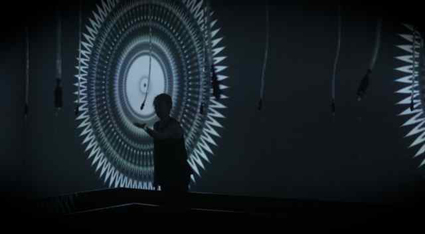
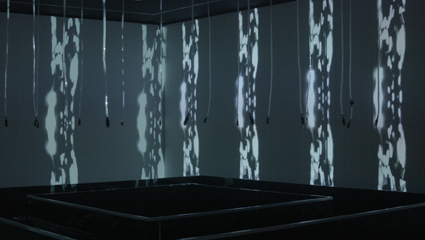
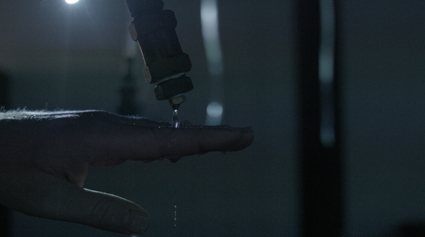
In Heidi Kenyon’s (SA) Everything Flows, Nothing Remains (I & II) (2014) dark, curtained rooms house small, backlit jars of ‘transposed’ water—cleansed Adelaide water at MBRG and muddy Murray water at the AEAF. Images projected through the jars show dripping taps, as if connected to the pipeline, accompanied by the sound of water endlessly dripping away. The crucial importance of water management is further highlighted in Dryland base 2 (2008) by Pamela Kouwenhoven (1944-2014, SA. It’s the base of an old rainwater tank covered with degraded malthoid, a protective coating applied to the underside of iron tanks to prevent corrosion. Hung like a painting, it symbolises the constant need to collect water.
Josephine Starrs and Leon Cmielewski (NSW) show works from their Incompatible Elements series, including A living body, a scrolling aerial photograph of the Coorong, the long lagoon adjoining the Murray mouth that is so endangered because of the reduced flow of water through it. The title refers to Tom Trevorrow’s description of the river as a living body. They also show And the river was dust, an aerial map of the Murray-Darling’s winding streams photo-shopped to spell out the work’s title, a quotation from Judith Wright, poet and environmentalist who characterised the Australian imaginary so acutely. Kay Lawrence’s (SA) No Words for the River is a series of small watercolours bearing phrases used by European explorers to describe the river, betraying their ignorance of its nature.
At the AEAF, Fiona McGregor (NSW) shows a video documenting a 2011 performance entitled Water #1 Descent in which she lies motionless on a table for several hours, covered in salt, while rainwater drips onto her forehead from a bladder above her head. The bladder contains her own body weight in water, collected from various sites between Lake Eyre and Sydney following a flood. Her gathering of water suggests homage. She writes, “The image is one of torture and wastage, the performance an extended study of stillness and thirst” (catalogue). Performance art like McGregor’s dramatically focuses our attention and it’s a pity Water #1 Descent could not have been re-enacted here.
The physical presence of salt is taken to extreme levels in Liz Butler’s (SA) two works—at MBRG, she shows Lunar Flow (2014), in which mounds of salt crystals, laid out like a dried lake-bed, lie on the gallery floor surrounding three rusted metal tubes engraved with images of aquatic fossils. At the AEAF she shows Detritus (2014), a bed of salt crystals arrayed like a grave with rusted steel plates lying across it and dotted with containers looking like discarded drink cans but made from architectural film bearing designs for housing. Above the salt-bed is a video of salt pouring from her cupped hands—she urges that we understand the land before building on it.
Jonathan Jones worked with Tom Nicholson (Vic) to produce an artist’s book, Murray-Darling Views—Evening Shadows. Bound tête-bêche as a single volume, Jones contributes a collection of images of paintings selected from the Art Gallery of SA’s extensive collection relating to the Murray, and Nicholson provides an account of the Yorta Yorta protest at Cummeragunja in 1939 with a parallel account of the historical and cultural importance of Henry James Johnstone’s well-known painting Evening shadows, backwater of the Murray (1880, SA), the first painting ever acquired by AGSA.
Same River Twice is not overtly activist but it forcefully reminds us of crucial issues to which solutions are long overdue and implicitly asks how a complex community can act collectively to restore the environment. The Murray Bridge-Adelaide pipeline graphically illustrates the dependence of the city on rural provisioning, but supporting cities with both water and farm produce can deplete rural areas catastrophically. Rather than proposing solutions, the exhibition explores the personal dimension of the river’s life and history, especially the idea of the river as a multicultural home. The exhibition also demonstrates the power of the curator-historian in highlighting a political issue by assembling a collective of otherwise unconnected voices. Indigenous and European stories are intertwined and the curators open a new, discursive connection between metropolitan and regional centres, challenging the validity of binaries.
In his opening address, incoming AEAF Board Chair Professor Ted Snell said that artists are at the edge of change and spoke of the role of art in reflecting, critiquing and shaping society, indicating that this exhibition is about how our survival has to be built on partnership. It is perhaps optimistic to think that cooperation between the communities represented in this exhibition might encourage restoration. But if the condition of the river is the result of the ‘tyranny of small decisions,’ a concept applicable to many environmental and social issues, then this exhibition is a collection of highly articulate responses, and perhaps the solution will emerge from the aggregate of such small, corrective actions.
Same River Twice, Australian Experimental Art Foundation, Adelaide, and Murray Bridge Regional Gallery, 5 Dec 2014-7 Feb 2015
Terry Williams, Stereo 2011, vinyl fabric, cotton, stuffing and fibre-tipped pen, private collection, Melbourne
While inside/outside might seem a pretty straightforward binary, Outsider Art is far from being a clear-cut category. Not only does the term embrace the art of makers variously perceived as untrained, self-taught, intellectually or physically disabled, or otherwise marginalised from either mainstream society and/or the mainstream art world, it also contains a neat paradox.
As Sarah Boxer put it in The Atlantic (“The Rise of Self-Taught Artists”): to be an ‘outsider’ requires identification from an ‘insider’—and immediately, the outsider becomes an insider. Everyday Imagining: New Perspectives on Outsider Art, at Melbourne’s Ian Potter Museum of Art, offered a welcome opportunity both to reflect on the assumptions that have underpinned Outsider Art, and to experience the work of seven Australian and New Zealand “outsider artists.”
As curator Joanna Bosse outlines in her catalogue essay, the antecedent to Outsider Art is generally acknowledged to be the classification ‘art brut,’ coined in the mid-1940s by French artist Jean Dubuffet. For him, art brut described a kind of primal, unsullied creativity; he was especially interested in the mentally ill, seeing them as being beyond societal and cultural influence. Bosse is keen to debunk this view, and has selected artists for this exhibition whose work, she says, “convincingly argues against the idea that interiority lies at the heart of their practice.” These seven artists, she points out, are very actively engaged with the external world, and their work, far from displaying a romantically-conceived solipsism, expresses their deep interest in everyday objects and experiences.
Terry Williams, Telephone
Indeed, what inspires the works in Everyday Imagining is recognisably the same everyday world that we all live in: a world of things, people, obsessions, doodlings, abstractions, patterns and geographies. On entering the gallery, the fabric sculptures of Terry Williams issue a haptic invitation (alas, one can’t actually touch them): there are various cameras, a fridge complete with opened door and constructed food items inside, a teapot, a ghetto blaster—all replicated in forensic detail, sometimes life-size, sometimes uncannily out of scale. Their lumpy forms are reminiscent of some of Louise Bourgeois’ works—versions of things that should be hard, their rough seams exuding puffs of Dacron stuffing, like well-loved stuffed toys. There’s a feeling of leakage, of porosity between objects and world—but no lack of skill in the making. Anyone who has ever wielded needle and thread will be able to imagine the trials of attaining the near-perfect proportions, achieving the three-dimensional construction and patiently persisting with details (you can look right through the camera viewfinders). The objects crumple and strain against pressure, their seams give. And their fuzzy disarray suggests the archaeological—they are like a leaking history of the familiar, crumpling and straining against time: shrouded and stitched.
Jonathan Griffin has posed the question: is Outsider Art “a reactionary throwback to anachronistic ideas of artistic genius, suffering and dysfunction?” Similar tropes include that of the ‘unwell’ or disabled artist for whom art-making is a form of ‘medicine’ or ‘therapy.’ Sarah Boxer mentions the case of Adolf Wölfli, a late 19th century Swiss ‘outsider’ whose compulsive drawing “calmed him down.” In Everyday Imaginings, Bosse points—without didacticism—to the possibility of such a motivation in the work of New Zealander Martin Thompson, whose intricate, patterned works in felt-tipped pen, created by filling in 1mm squares on large sheets of graph paper, are so flawlessly executed that at first glance they appear digitally created.
Thompson’s symmetrical, monochromatic designs shimmer like snowflakes or starfields. Different impressions emerge from them like magic-eye pictures, or appear cross-hatched like thick embroidery. They map out planes of not only obsessive, perhaps meditative markings, but of myriad subtleties as well—fine deepenings or lightenings of colour that betray the hand of the artist, his body and his attention in the moment of making. One work seems to have been excavated for the viewer, with one broad edge of the page left uncoloured and finger-smudged.
Like Williams’ fabric sculptures, Thompson’s intricate grids remind me of the notion of ‘women’s work’—that of sewing, crafting, embroidery; in Thompson’s, a pixellated crafting that precedes the digital. Indeed, in the USA, Outsider Art has at times been classified alongside or within ‘folk art,’ and it’s tempting to wonder whether these tactile, intimate engagements, privileging the domestic or the introspective over grand themes, unwittingly undergo some subtle conflation with the feminine, that other great ‘outsider’ category. I’m reminded too of Ann Cvetkovich’s writings on crafting as habitual counter to the insanity of Western modernity, in her book Depression: A Public Feeling.
Equally, it seems that these artists just do what artists always do: shaping form out of chaos (see Elizabeth Grosz’s Chaos, Territory, Art); exploring representation, abstraction, topography. Both Thompson’s patternings and Andrew Blythe’s paintings on paper map out distinct landscapes, two-dimensional architectures whose regularities and inconsistencies play off one another. Blythe’s paintings, created entirely from repetitions of the X symbol and the word ‘no,’ seem to deliver a message, up close, but at a distance have the simultaneously 2D/3D shimmer seen and felt in some Aboriginal dot paintings. Lisa Reid and Jack Napthine both depict bodies and objects: Reid in stripped-down life drawings that relay the character of her models with cartoonish accuracy; and Napthine in a long and colourful mural, both map and narrative, that includes the names of places and events woven around bright drawings of light globes and locks. Where Reid and Napthine bring ‘reality’ into sharp, lean focus, Julian Martin and Kellie Greaves move in the opposite direction, abstracting familiar objects to create colourful paintings that leave the ‘thing’ behind, or obscured, focusing instead on colour and form.
Whether or not there is really an ‘inside’ or an ‘outside,’ Everyday Imagining shines a well-focused light on the work of these seven artists and opens up a productive space for exploring the edges and conflicts of the notion of Outsider Art. Perhaps, as Museum of Everything founder James Brett has suggested, we are all in any case on one ‘spectrum’ or another and creativity is “a version of dysfunction.” Personally, I’m partial to Louise Bourgeois’ famous words: “Art is a guaranty [sic] of sanity”.
Everyday Imagining: New Perspectives on Outsider Art, Ian Potter Museum of Art, University of Melbourne, 1 Oct, 2014-18 Jan, 2015
Australian director Hugh Sullivan’s sci-fi rom-com was generally regarded by local critics as a very interesting if flawed first feature. However, the film was nominated for Best Film, Best Screenplay and Best Supporting Actor (Alex Dimitriadis) by the Australian Film Critics Association. Meanwhile SXSW Film Festival (Austin, Texas) deemed it “Indie time travel mayhem at its best…the kind of movie you are going to want to watch time and time again. And time again…And time again… And time again…” Decide for yourself. 5 copies courtesy of Madman Entertainment
DVD: What We Do in the Shadows
Comically melding vampire folklore with life’s more mundane concerns, this engaging horror mockumentary from the director of Boy, Taika Waititi, and Flight of the Conchords’ Jemaine Clement charts the trials and tribulations of vampires in a New Zealand share-house. Squabbles over the washing-up are soon forgotten when 8000-year-old housemate Petyr accidentally brings a new vampire into the fold. It’s a heart-warming tale, despite all the blood that’s spilt. 5 copies courtesy of Madman Entertainment
Book: Bodies of Thought: 12 Australian Choreographers
From RealTime and Wakefield Press, a groundbreaking new book for lovers of Australian contemporary dance, focused on innovative choreographers, concentrating on a work by each with an accessible interview and an insightful essay by a leading dance writer. Edited by Erin Brannigan and Virginia Baxter.
(If you miss out head to www.wakefieldpress.com.au
RRP: $34.95 inc GST; purchase in bookshops) 3 copies courtesy of RealTime
Please note you can nominate for ONLY ONE GIVEAWAY.
Email us at giveaways@realtimearts.net with your name, postal address and phone number. Include ‘Giveaway’ and the name of the item in the subject line.
Gail Priest in front of artwork by Dran, part of the exhibition INSIDE, Palais de Tokyo, Paris, 20 Oct, 2014-10 Jan, 2015
photo Sam James
Gail Priest in front of artwork by Dran, part of the exhibition INSIDE, Palais de Tokyo, Paris, 20 Oct, 2014-10 Jan, 2015
After 15 and half years of service, frequently above and beyond the call of duty, our much loved Associate Editor, Online Producer, writer and layout artist Gail Priest has surrendered her 7/10th position with RealTime to transform her 3/10 life as an artist into a full-time career with the help of a well-deserved Australia Council Fellowship. Her intelligence, creativity, humour, sense of team work, her generosity and commitment to the artists and writers who fill our pages have made life at RealTime an enduring pleasure, whether in the office or ‘on the road,’ writing and mentoring in Bristol, Melbourne, Adelaide, Singapore, Perth, Hobart and Vancouver. We congratulate Gail for taking the plunge and wish her all the best for her career in writing and experimental music. An inspiring companion on our journey, there is no substitute for Gail.
Virginia & Keith
Workshop, Asian Producers’ Platform Camp (APPCAMP), courtesy APPCAMP
In a recent report to the federal government Pricewaterhouse Coopers predicted that Australia would significantly slip down the ladder of economic wealth over coming decades because of a fixation on a mining monoculture and a failure to innovate or properly support new approaches in information technology, bio-technology, nanotechnology and responses to climate change. As if we didn’t know. But without equally good investment in education and the arts, the break from a monocultural mindset will be impossible.
Inequitable re-distribution
Just before Xmas, the Abbott Government snatched $6m (over three years) from an already slashed Australia Council budget for the mysterious new Australian Book Council to be administered by the Minister of the Arts, George Brandis, in another assault on peer assessment. Clearly, after his foray into determining the outcomes of the Prime Minister’s Literary Prizes, presumably the PM feels that the Culture Wars are best fought on the publishing front or Brandis is looking to fill his bookcase. The money is for the publishing industry (promotion, data collection, distribution) not for writers. Susan Wyndham in the Sydney Morning Herald Spectrum (31 Jan-1 Feb) writes that to compensate the Council “plans to use money from across its new grants program and strategic projects in all artforms.” This has exacerbated anxiety among artists already concerned about the new grants program, in which six-year funding to key organisations, while granting (the catchcry) ‘certainty,’ could well lock Australian arts into a period of cultural fixity. Let’s hope not. The innovators of the small to medium sector who succeed in attaining six-year funding will doubtless keep us on our toes, although some say six-year planning is not as easy as it is for large companies that already operate long-term. And what will the value of money granted from 2016 be in 2021? As for project and other grants, what will be the effect of the budget cut and the $6m robbery?
RT125 feature Modes of Production—referring to Karl Marx’s inextricable linking of productivity and social relations (reinforced by an ideological superstructure that includes the arts)—reports on a range of activities that attempt to position, promote and develop the arts in Australia and Asia. Some of these are familiar and going through new phases, some are new, some problematic, some creatively liberating.
The producers
In the first of our new series The Producers, Kathryn Kelly interviews Brisbane-based Dave Sleswick. At the 2013 Australian Theatre Forum, David Pledger, concerned about the rise of a producer and managerial class with power and money and lodged parasitically between bureaucrats and artists, provocatively declared, “a producer can never be an artist” (noplainjane.wordpress.com, 29 May, 2013 – site no longer active). Sleswick, as you’ll read, certainly is producer and artist, while others, like Harley Stumm (see RT126) and the indefatigable Marguerite Pepper, also serve the small-to-medium sector admirably and with the invaluable ‘outside eye’ of a sensitive producer. These and their like may be the exception to Pledger’s rule. They make life easier for artists, allowing more time to create, and they know and have access to the networks that artists are often unaware of or lack time or the personalities to engage with. For those of us who performed in the 1980s and 90s and struggled to tour, the current mobility of groups across Australia and beyond, with the support of various federal and state networks, a former Theatre Board producer scheme and artists’ own duly emboldened initiatives, looks miraculous.
Organisation as producer
We look at producing from another perspective in an interview with Performance Space Artistic Director Jeff Khan, who delineates the various ways the organisation develops, produces and co-produces new work with attention to experimentation, Indigenous, queer and site-specific art. For 2015 Performance Space has restructured its program, drawing all of its productions into one season in which it takes over Carriageworks with a LIVEWORKS festival. As a producer Khan believes this will benefit artists above all, as well as Performance Space’s profile in an increasingly competitive market.
Asia-Australia, again
Over two decades we’ve watched attempts to establish a market for Australian art in Asia and then exchanges that might underpin such a market. While Asialink has been fruitful, especially at the individual level, many an event and exchange have been short-term successes but without long-term pay-offs. It’s hoped that a producer network-led initiative will change this. As Urszula Dawkins writes of her APPCAMP experience in Seoul, this involves producers really getting to know each other’s cultures and increasing their personal contact. It’s also a four-year plan with annual meetings to ensure continuity.
Camps and lab
Malcolm Whittaker has also been camping. After reporting on the Performance Space-Arts House initiative Time_Place_Space: NOMAD for us in RealTime 124), in this issue he reflects on his experience of another in the growing number of arts laboratories, Arts House’s Live Art Camp. Whittaker values labs for “creating safe places for temporary micro-communities to reflect, share practice and generate work by dipping into an array of practices…” By producing such gatherings, Performance Space and Arts House and their like nurture their communities and fuel potential works for their own programming and networks.
Greening production
Going directly at the role of artist as producer of their own work, Arts House’s part-lab, part-forum Going Nowhere vigorously explored the possibilities of reducing the scale of art’s globe-trotting carbon footprint. Emma Webb reports on the gathering’s diverse activities: personal carbon footprint audits; international collaborations in development minus jet fuel; conversations with green designers and writers; a fantastical greening event with Tristan Meecham; and the conjuring of possible projects.
Museum & galleries: the framing of experience
The production of knowledge is highly institutionalised. In museums it is increasingly ‘packaged.’ In the first part of a two-part article, Jane Goodall takes a look at the post-museum—an institution constrained by its commitment to educate and entertain (and generate funds as government support diminishes) at the expense of a sense of mystery. She contrasts it with gambler David Walsh’s “success with MONA [which] has much to do with his fundamental respect for the role of chance and speculation in human life.” Elsewhere in RT124, Mike Leggett and I ponder the relationship between the contemporary art gallery and screen works and other digital art it exhibits. Philip Brophy at the Tokyo Art Meeting addresses the nexus between the performing body, East and West, and the gallery. Curation is more than presentation; it’s another layer of production, shaping our reception of the work. In a Kings Cross car park, Ilana Cohn witnesses Atlanta Eke’s performance with motor vehicle.
“Don’t simply aim to please”
In the social media era of an astonishingly heightened desire to belong, much art is likewise packaged to improve reception: a theatre subscription might come with all kinds of benefits (parties, meet the actors, talks, discounts) but also a sense of Facebooked and Tweeted community. It takes more than art these days to please an audience. It’s not surprising that Malcolm Whittaker reports from the 2015 Australian National Theatre Forum that keynote speaker, Belgian festival director Frie Leysen urged that artists “don’t simply aim to please everyone, but dare to be disturbers,” and that we should “valorise the risk, the adventure, the ephemeralness, the uniqueness of the experience and the temporary community that is created through theatre.”
Regionally yours
In recent years, we’ve admired the exponential growth of innovative art in regional Australia, focussing principally on the Riverina and, in RT124, productions in regional Victoria (see reviews of Rebel Elders in Ballarat and Packed in Wodonga). In RT125 Murray Arts General Manager and Regional Arts Development Officer Karen Gardner tells us how work is produced across a vast territory with five councils, and about nurturing local artists and the desire to attract innovative artists to the region.
Ideology laid bare
The authoritarianism of the Abbott Government and the totally unnecessary cruelty of its austerity budget, its censoriousness while demanding free speech, the doubtless Captain’s Call of snatching back $6m from the Australia Council, its desire to sell off public assets for short-term profit for itself and developers, its inhuman treatment of refugees and its failure to address Indigenous disadvantage, have outed it as ideological. A lot of us have known this of the Coalition for a long time, but the Government’s gross misbehaviour has made it clear to all and sundry, just as has the Tea Party-Republican ‘coalition’ in the US—but here the counter-reaction, as seen in the Queensland election, has been incisive (Campbell Newman’s first Captain’s Call was to eliminate the Premier’s Literary Awards).
As David Pledger argued in Platform Paper 41, August 2013: “Re-valuing the artist in the new world order,” Western democracy is in the grip of Neo-liberal ideology with its goals of privatisation (its eye on the ABC and public space like national parks and gardens), deregulation (freedom for developers), globalisation (for corporations bigger than nations) and tax cuts that require the defunding of health, science, education, research, social welfare and the arts. It’s a totalising ideology in which all human activity is perceived as and manipulated to be simply a matter of economics. The state capitalism of China and Putin’s Russia—dictatorial leaders and the free flow of money—is very appealing to Neo-liberals. The un-mandated Abbott-Hockey budget is a clear indication of like-minded, un-consultative, anti-social thinking.
The intrusion of Neoliberalism into the arts in Australia has been evident in the appointment of managers and administrators rather than artists to head performing arts organisations and events, as Ralph Myers argued in his Phillip Parsons Lecture (The Australian, 1 Dec, 2014): “Our theatre and dance companies, our festivals and orchestras are what we have left. We cannot surrender them to the markets. We can’t let the businesspeople and their managers take charge. They’ve got their hands on pretty much everything else in our lives, but we must fight to keep the dreamers in charge of the arts.”
The modes of production I’ve outlined in this introduction represent a small part of the activities of an increasingly networked arts community in which participation ranks high through co-productions, forums and labs, as it does in the growing participatory art movement for audiences in all fields. Art in itself, didactic or not, can be a form of protest, but beyond that our consciousness must be alert to the mode of production that governs our lives as citizens and artists. Just as we should audit our carbon footprint, we might ask how much of Neoliberal ideology have we less than consciously taken on in art and everyday life?
Reason for travelling From Oct 2014-Jan 2015 I was in residence in Bourges hosted by the media arts organisation Bandits-Mages in association with La Box, Ecole nationale supérieure d’arts de Bourges (ENSA) as part of the European Media Arts Residency Exchange program.*
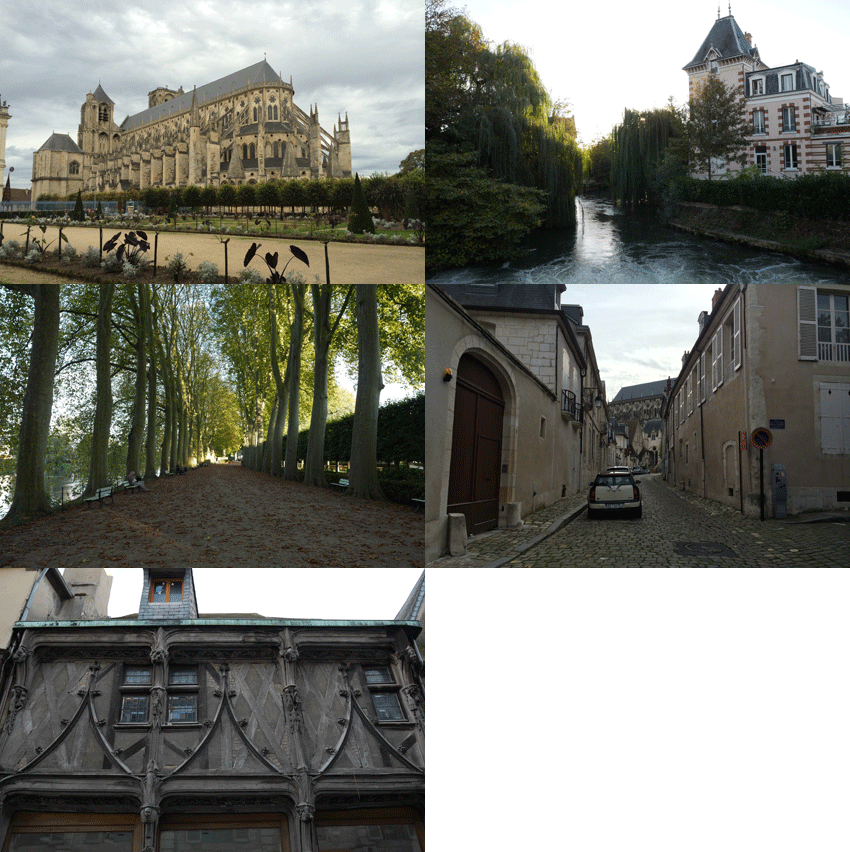
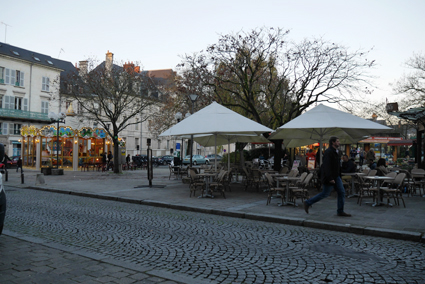
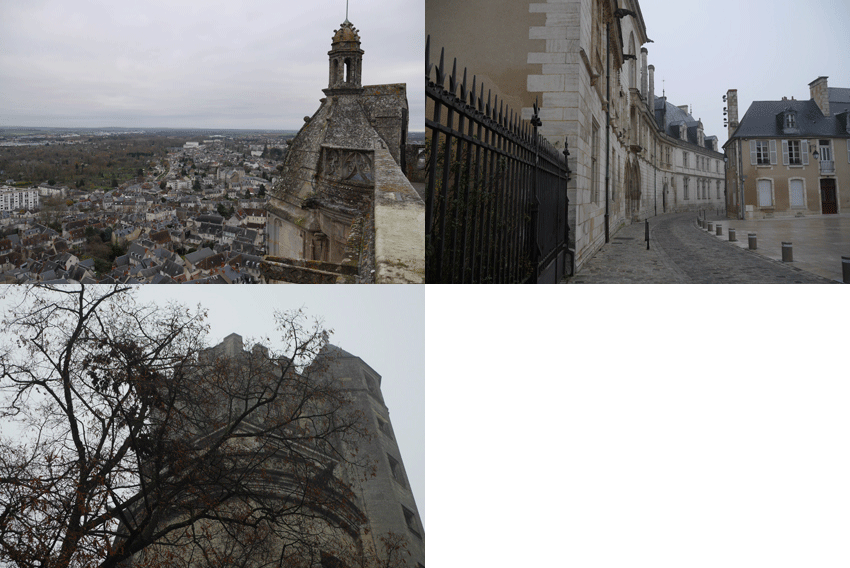
Ancient alchemies and future fantasies Bourges is situated in central France, two hours south of Paris by train. It’s an old, old town inhabited back in the BC by the Romans under the name Avaricum, surviving the invading Gauls due to its strong walls and surrounding marshland. It still boasts the remains of a fourth century Gallo-Roman wall or rampart hidden beneath modern wood and stonework. The end of the Middle Ages saw the town extend beyond the ancient walls with grand constructions such as the awe inspiring cathedral, Saint-Étienne de Bourges, begun in the 12th century, the Palais Jacques Coeur and the Hotel Lallement built in the 15th century and the former 16th century Jesuit seminary which is now the art school. There are of course the requisite sprawling modern suburbs (Bourges has a population of around 70,000), but the centre of Bourges is utterly magical, with cobbled streets, winding lanes and vertiginously tilting Tudor-style houses replete with carved woodwork often still intact. Given its age it’s not surprising that the town that has a strong association with things alchemical and feels a little haunted.
However I was in residence to think about the future, working on a project exploring science fiction and sound art, so in some ways I was living in parallel worlds, in a zone of cognitive dissonance. This disjunction was happily reinforced by the fact that this ancient city has a thriving contemporary culture particularly in the areas of media and video art, sound and experimental music.
Culture: connectivities, collectives and cooperation While it’s not always the case that smaller towns breed closer connections, the intimate size of Bourges and its mix of proactive and passionate artists and arts workers results in good relationships between organisations which gives it an immediately tangible sense of community—one with an experimental, queer and underground bent.
My host organisation, Bandits-Mages was founded in 1991 by graduates from the local art school, Ecole nationale supérieure d’arts de Bourges (ENSA). It offers an annual program of workshops and projects particularly focussed on video, multimedia and digital art and also runs a festival, which since 2013 has become annual. The 2014 manifestation, Rencontres Bandits-Mages took place in November and I was a guest. Highlights from the eight day program included an impressive exhibition developed with Galerie Kapelica from Ljubljana, Slovenia comprising the ‘remains’ of performance art pieces that had been performed at the gallery by leading body artists such as Franco B and Kira O’Reilly. Also presented by Kapelica was Maja Smrekar who created a performance piece, K-9_topology: I Hunt Nature, and Culture Hunts Me (see video), with three wolf hybrids (in association of the Jacana Wildlife Studios which we also got to visit—I did not think I would be looking at lions and tigers in central France). Spanish duo Quimera Rosa offered an electro-kinky performance and workshop using Arduino circuits and body piercing to make the body a playable instrument; the exhibition Hall Noir presented risqué and high-camp video and performance installations in the impressive architecture of the old water tower, the Chateau D’eau; and there was a workshop conducted by writer/producer Pacôme Thiellement and actress Hermine Karagheuz with local students from ENSA making radiophonic pieces themed around alchemy which were broadcast on a temporary radio station.
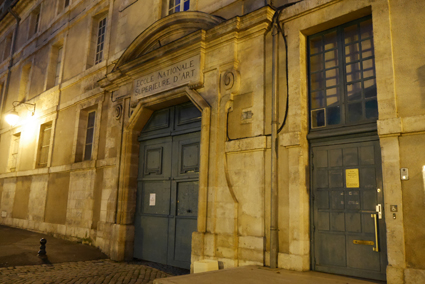
As evident in the above, the association between Bandits-Mages and the art school remains strong and is mutually beneficial. ENSA is one of the seven nationally run art schools and is housed in an amazing 16th century building offering an enviable amount of hands on studio space. I was attached as a mentor to the Post-diploma in sound (something after a Masters and before a PhD). The students attend one week a month for lectures and to work on projects for a concluding exhibition. My residency was also attached to the La Box program which offers a number of three month residencies to artists (national and international) often with exhibitions in the school’s professional gallery.
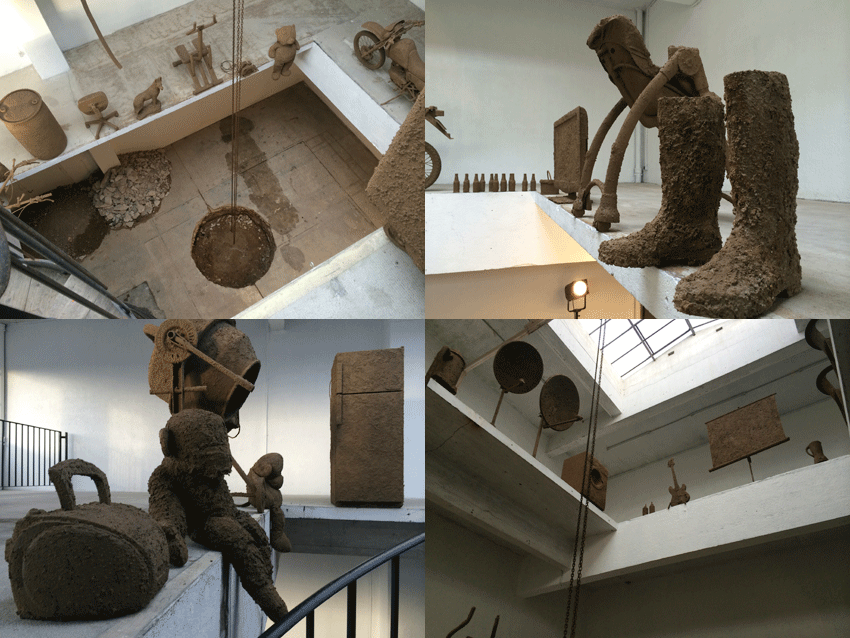
Bandits-Mages is but one of the organisations in the arts complex La Friche L’Antre-Peaux which is just outside of the old town in a former industrial complex. Along with rehearsal studios, a circus and theatre company there is also Emmetrop which presents theatre, dance, music and exhibitions with a strong underground and queer agenda. The whole complex is fetchingly feral but is about to be renovated. This meant that Laurent Faulon, the artist presenting the last exhibition in the Transpalette space—a three story tower-like building—was given free rein. For his exhibition, Mon Ciel, Faulon excavated the central area of floor using the clay to coat a large number of everyday objects—ranging from oversized teddy bears to gumboots, to cement mixers to washing machines and even a motorcycle. These objects sat on the edge of the mezzanine levels of the tower that opened vertiginously into the void in the middle. Viewers ascend via a spiral staircase which always shifts the perspective of the whole. On the opening night the derelict roof allowed a misty shower to grace the inside of the building, pooling in the open cavity of the floor—a breathtaking integration of art and site.
Elsewhere around town are two venues for experimental music offering a truly underground experience; both are cellars, or ‘caves,’ in established old share houses. On my second night in town I was taken to the aptly named Odeur de Cave (ODC), the waft of centuries of mould and clouds of cigarette smoke offering the true scent of Europe. I was scheduled to play there at some stage but even in Bourges there are pesky neighbours: ODC had to cease activities for a while. However, the other venue, Cave 40, in collegiate Bourges style, put on the remaining shows. These artist-run venues present local, national and international artists doing all manner of things, mainly with electronic tools, to a dedicated and engaged audience there for the listening, the drinking, then later, sometimes, the dancing. These venues confirmed to me that whether it’s a warehouse in Marrickville in sweltering 40 degree heat or a cellar in France at a freezing four degrees, there’s a strong and vital community for noise and sonic experiment—and it always feels like home.
The overground cultural scene in Bourges, centred around the Maison de la Culture de Bourges (MCB), is currently homeless. The centre was in the process of being renovated when ancient archeological ruins were discovered and the site subsequently quarantined. At the moment the activities happen around the town with most of the dance and performance presented at the auditorium attached to the local Conservatory of Music. MCB produces a few of its own shows as well as forming part of an active regional touring circuit. I was very happy to catch the lovely life-affirming dance work of Christian Rizzo, D’après Une Histoire Vraie (see RT122).
For refreshment… Bourges drinking and dining is in keeping with its ancient surroundings—traditional. A favourite place of those I often dined with is Le Guillotin on Rue Bourbonnoux near the Place Gordaine which offers an impressive array of grilled meats and their lamb and duck are pretty delectable. While I couldn’t bring myself to try to the horse steak tartare it was a favourite with one of my dining companions. At the other end of the Rue Bourbonnoux is La Gargouille which has a similar menu but with a slightly more modern interpretation and offers very nice desserts. I also spent a lot of time at Le Cujas in the centre of the old town because it was well appointed for someone hanging out alone—ie has small tables in corners with windows—and the waiters learned to put up with stumbling, incorrectly gendered French. Their Irish Coffees, with more than a healthy shot of whiskey and topped with cream, are just the thing on a cold afternoon.
The local wine regions of the area are Sancerre and Menetou-Salon and I prefer the white of the first and the red of the second. They seemed much lighter than my experience of French wines imported to Australia. Chinon is also nearby (closer to Tours) and wine from here offers a bit more oomph and that old mould taste (technical terms) while still being on the lighter side. But don’t be surprised when your half-carafe (a very civilised idea) comes with some bubbles from its extrication from a cask as this Australian invention has been well and truly embraced in France.
One of the most pleasant food related activities is going to the markets (open on Thurs/Sat/Sun at various locations), each big enough to feel rich and plentiful yet small enough to not be completely overwhelming. My favourite products are the wonderful local honeys made by bees that have supped on lavender and acacia; crottins de chevre (small goats cheeses of varying maturity and smelliness); big pears which, after you peel off their not so attractive tough brown skins, are like ambrosia; and the most perfectly packaged fruits, the clementine. Originating from Algeria it’s a neat little citrus related to but oh so much better than a mandarin.
And for the wanderer… If feeling touristic, the climb up to the top of the bell tower of Saint-Étienne cathedral is worth the wheezy 396 steps offering a full 360-degree vista of the town and surrounding region. However be warned that the crypt tour takes 45 minutes (in French, and could be done in 10), making it feel like medieval torture. The Palais Jacques Coeur is particularly impressive. This local 15th century merchant and friend of King Charles VII was at one point the richest man in France. When charged with counterfeiting and fraud he tried to claim his wealth came from alchemy. His house is seriously weird and wonderful—a maze-like affair with ceilings like boat keels, an amazingly ornate personal chapel and what is possibly the first sauna in France.
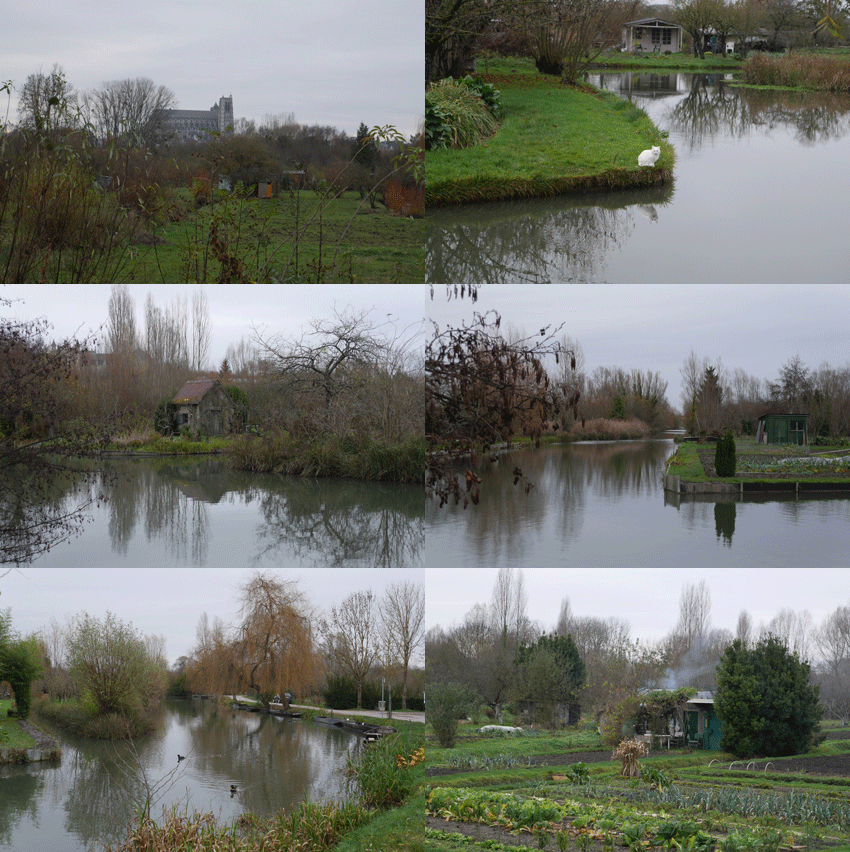
Finally you can’t go to Bourges and not take a walk through the Marais—the marshland only 10 minutes walk to the northeast of the old town. Between snaking creeks and canals are nestled over 1,000 gardens, allotments and summer houses. Even in the dead of winter, the Marais is beautiful, in a spooky, melancholic way. And you can never really get lost because you can always see the towering Saint-Étienne cathedral to guide you back to the light.
*The residency was part of the European Media Arts Network: European Media Arts Residency Exchange (EMAN#EMARE) program which in 2014-2015 offers residencies to Australian and Canadian artists, with European artists hosted by Experimenta (see RT124), UTS Creativity and Cognition Studio and QUT’s The Cube. The project is supported by the Culture 2013 Programme of the European Commission and the Goethe Institut.
Thanks to the lovely people who hosted me and showed me around: Sandra Émonet, Isabelle Carlier, David Legrand, Julien Pauthier, Marta Jonville & Thomas, Ewen Chadronnet, Caroline Delaporte & Chris, Éric Grimault, Jean-Michel Ponty, Roger Cochini, Alexandre Castante, Chloé Nicholas, Véronique Frémiot, Manon Chavigny.
Co-conceiver and choreographer Dalisa Pigram and storyteller/dream catcher Edwin Lee Mulligan discuss the process of creating Cut the Sky, premiering at the Perth International Arts Festival (27 Feb-1 March, 2015), followed by WOMADelaide (7-8 March, 2015).
Tētēma is the new duo by Australian composer/musician Anthony Pateras (currently based in Berlin) and US rock vocalist Mike Patton (singer for Faith No More, Mr. Bungle, Fantômas). Geocidal is their first release on Patton’s Ipecac label. Following is the full version of Oliver Downes’ email interview with Pateras about the collaboration, the compositional process and the complexities of “chrono-diversity.”
tētēma– where did the name come from?
It comes from Artaud, who I’d been researching a lot due to my involvement in Sylvère Lotringer’s film The Man Who Disappeared (which is loosely based on Artaud’s trip to Ireland in the 30s). We were looking for a band name and it made sense to me to evoke something physical, sensual and unnameable, so of course Artaud’s great for that. There is a part of Fragmentations when he talks about cauterising a wound with a flame, twice over and the word refers to that.
How did you first come in contact Mike Patton? What sort of mutual familiarity with each other’s work was there beforehand? Was there an initial spark to collaborate or did the project germinate more gradually?
Mike became aware of my work through me sending some PIVIXKI stuff to Ipecac to consider for release. I sent my second Tzadik record with the demo also. I really didn’t expect him to listen to either, but as it turned out something on both of those recordings resonated with him (PIVIXKI and he did a show together in 2011). Ultimately the spark really came from Mike—he was on tour with Fantômas in 2009, called me for a beer out of the blue.
Of course I was familiar with his work—Faith No More were huge when I was in high school. After that I was always into the more exploratory side of it—I went to see Maldoror at Joey’s, a duo with DJ Schizo at The Punter’s Club and all ages Bungle shows at the Corner Hotel. I really respected the fact that there was this guy who could basically just cruise on major label royalties if he wanted to, but instead chose a path of interrogation.
How was collaborating with Patton different from previous collaborations you’ve been a part of?
It was unnerving to us both how natural it felt. For me it was just great to see someone in that position to still be asking questions, still be curious, still be respectful of colleagues and 100% committed to making great music. I’ve dealt with a lot less famous people who are all about food anecdotes and career monologues and its incredibly tedious.
What did you enjoy the most?
Recording wise, I think my favourite part was Mike screaming directly into my ear acoustically to demonstrate the different upper harmonics he could achieve by varying throat positions.
There’s some extraordinary textures on the record, both in the electronics and in Patton’s vocals—what was the recording process? How do you think that process influenced the final work? To what extent was material pre-conceived rather than emerging through the process of recording?
Basically it panned out that I took care of the instrumental parts and Mike took care of the vocals (although he contributed some excellent Moog). The recording process for the instrumentals was long and multi-faceted and then we did most of the vocals in 2014. There was really no deadline for this and I learnt a lot about how that can affect one’s compositional decisions. For example, if you’re trying to squeeze out a certain amount of music for a commission in a certain amount of time, you’re already dealing with a prescribed length of time and I’ve found that can mess with your structural thinking. If you don’t really know what something is, or when it should be done by, anything can happen, right? The sounds, the duration, the intensity—it’s all up for grabs.
As the press blurb states (and has been widely misconstrued), I locked myself away for a couple of weeks with just pen and paper and my record collection. This was in a really shitty part of France, in Picardie to be precise—depressed rural community, lots of drunk soldiers, middle of nowhere. I was in an ex-convent which is kind of like an arts residency (except you gotta pay). I then went to Paris and met with Will Guthrie. I had about 26-28 solid notated ideas that I either sung to him or played on prepared piano for him to articulate on the drum kit. He didn’t have to learn entire songs or anything, so we just went rapid fire through this list in bursts, riffing on variations of the core ideas together, recording the drums and prepared piano simultaneously. I intentionally ran the session to generate the most flexible material possible—things which could be stitched together in unorthodox ways. Ultimately they were just rhythmic cells recorded for maximum elasticity.
Over the next few months, I added synths at WORM and Piethopraxis, editing the drums and cutting sounds in over the top. Songs began to drop off, till I had about 15. I then began to orchestrate the synth lines, first with strings, clarinets, revox, trumpet, then proceeded with orchestral percussion, acoustic guitar and recorders. By the end I whittled it all down to 12 and then sent everything to Mike. He spent ages (almost a year) absorbing the music; then I went to San Francisco for a 48 hour rapid scratch session for the vocals. This was insane not only because we found how easy it was to work together, but how much great work we got done. He then kept elaborating on the vocals over the next six months, sending [them] to me over email, for mixing and comments.
Once we had it all down I returned to Bruxelles, which is where I started the whole thing, and did a lock down at Ateliers Claus for two weeks to mix it. Bruxelles is pretty bleak, Anderlecht even bleaker. Being the “capital of Europe” the place has a sense of doom and disarray, given what a mess the EU is in. You have people in the Berlaymont building trying to run the place while sex trafficking is going on no more than a few blocks away. I guess what I’m trying to say is, this kind of energy, this dissonant theatre of things supposedly working but clearly not, fed into the album.
How does the process of making electronic music differ for you from writing for an ensemble for instance, or creating a piano work? Is a different brainspace demanded or are there more similarities than differences?
This album was very much about creating a sound world from scratch—every sound on it is recorded and edited. Early in, I had the idea to make a “sampler record without a sampler” (or specifically, Dilla’s Donuts, but without vinyl)—to record every single element in the real world and manipulate/edit it electronically. It was a very specific mindset with a very specific goal. I’m sure my ensemble or piano thinking played into that and I’m sure it would’ve impacted on my process of selection, in terms of what sounds came alive to me.
Composition is amophous across the board, all of your experiences in playing, listening and reading feed into everything you do. Its counterproductive to distinguish, because then you get involved with stuff like “this is a classical piece, I can’t do that” or “this is a song, I can’t do that”—when its probably precisely the thing you need to do to give something a life.
A diverse array of musicians were brought together for this project—what were you looking for in collaborators? To what extent were parts improvised by the musicians or pre-composed?
I basically hired people who I think sound great. Will and I collaborated on some of the drum parts, in the sense that his kit has a very specific sound and he has a very personal feel, but ultimately most of the grooves were shaped around the prepared piano and edited in post production. In some cases I muted the prepared piano, so you just have the drums playing along to it without being able to hear it in the mix, which got some pretty odd feels or particularly idiosyncratic rhythmic emphases.
For the rest, everything is orchestration of the ARPs [synthesisers] I used at WORM and the various bits and pieces I used at Piethopraxis. For example, musicians were told to mimic or ornament the synth parts which I had already played in, so there’s always this hybrid electro-acoustic thing going on.
In many cases this approach was informed by Feldman’s observation on what makes Xenakis’ music interesting: taking conventional instruments and bringing them into a world of hallucination, rather than using hallucinatory instrumentation, and bringing it into a world of convention. For example, even though Xenakis used an orchestra with orchestral instruments in something like Hiketides or Synaphaï, the way he organises it in relation to itself recontextualises those instrumental forces into a whole new thing, He succeeds getting the orchestra out of the orchestra (and Feldman does too, for that matter.)
So for me, this record was about trying to timbrally get the song out of the song and to do that, its wasn’t about getting a didgeridoo, or a sheng or some interface to create unique sound palettes, it was about canalising the tools I had into finding a unique constellation and because I was always moving around, those tools were always changing.
The last thing I added, which was Jessica Azsodi’s voice on the track “Irundi,” was extant from this process to some degree, as that material grew out of a solo piece I wrote for her called “Prayer For Nil.” I was working on both things simultaneously and somehow the wires got crossed in a great way.
The album is at times fiercely kinetic and there are many sections that are almost danceable—to what extent were you consciously commenting on or riffing off, I suppose, more ‘commercial’ uses of rhythm?
Rhythm is one of the only fundamental parameters of music that comes to me naturally and I would say timbre runs a close second. So when I was doing something like this, ostensibly writing songs, which normally prioritise pitch and form, I was coming at it from a different angle. Maybe to some people that’s danceable, but to me, it was about creating something physical and not in the macho noise sense of the word, nor the superficial-buzz-word ‘psychoacoustic’ sense, it was about trying to make something which reflects what I love about sound and which has a physical affect on me and that was it. I can’t get involved with what’s ‘commercial’ or what’s ‘experimental’—how do you deal with something like Spring Breakers [Harmony Korine, 2012] when you’re thinking like that? Immediately you’re in trouble, because the reason why a film like that is so powerful, is because it completely sidesteps that whole distinction to make something which exists in its own space and still manages to clearly communicate.
“Geocidal” seems to suggest to me a death or erasure of place, almost having a synonymous quality with the idea of ‘sacrifice zones’—areas of land or communities ruined through corporate practices. Was there an intention for the record to hold those kinds of environmental and political resonances?
Its not about politics, I’m not qualified for that and anyway there’s nothing more sick-making than an artist using the political zeitgeist as a platform for their self-aggrandisement. Sure, its important to be aware of your environment and you do what you can, but for me, what I was more interested in was exploring the idea of the finisterre, or always being on the edge of known territory (my edge, at least). I moved country twice while making this and I was totally castrated. I was constantly insecure and decentralised because I was in a permanent state of adjustment. And that is really amazing place to make music in, because you really have nothing but the material that’s coming out to guide you. And in my experience making this, that always gave a stronger, truer, more vital orientation than sticking to some construct or macrostructure, or trying to fulfill some kind of artist’s statement. I feel that’s what’s wrong with a lot of music—it becomes about filling a brief rather than simply using what one has at your disposal to see what happens.
You say in the press blurb that: “the whole geocidal thing is about coming from no place, re-birthing, watching the place you are from be altered beyond recognition that you have nothing to do with it anymore”—what are your feelings towards Australia at present?
The Pulp Fiction soundtrack plays to an empty beer garden.
Are Patton’s lyrics his own or were they also collaboratively crafted?
Mostly his, but there was one instance on “Kid Has Got The Bomb” where I sat down and translated the glossolalia from the SF scratch session into words, because I suddenly started hearing phrases within all of these abstracted mouth sounds. I was afraid of giving it to him, because it was the first time I had written lyrics, and you know, its ‘Mike Patton’ and I’ve never written lyrics in my life, but he was totally into it and was like (North Cali accent) “Man these are great, this is what we used to do in the old days in Bungle!” So he’s very open to ideas and through that experience, seeing that he was prepared to trust me on that level, made me see how creatively stubborn I can be, to be honest. We all get caught up in our own head and making work for me is a constant oscillation between letting things in and keeping things out and I find that balance very difficult to judge.
One aspect of the album that really appealed to me was the ritualistic, almost incantationary, quality that seems to hover over it—even a title like “Invocation of the Swarm” suggests an entering into some sacred, alien space. Was this something you envisaged from the outset? Is there any link to Zerzan’s idea of the ‘future primitive’?
I was not aware of the work of Zerzan, thank you, I’ll check it out! If anything theoretically specific, Virilio’s ideas were very important to this music, I mean, the second track “Pure War” is named after his 1983 interview with Sylvère [Lotringer]. I was really into his stuff while making this music, particularly his ideas on chrono-diversity.
I wasn’t aware of Virilio or the idea of ‘chrono-diversity’—perhaps you could flesh out the idea a bit as it applies in your mind to the record?
Virillo’s ideas revolve around the science of speed, or to use his term, dromology. They are, compositionally speaking, very useful when understanding the environment in which we make music now. Basically I found that when I read The Adminstration of Fear [Semiotext(e), 2012], there were passages in there which lucidly articulated what had been bothering me about making music that I couldn’t effectively formulate myself and I was just relieved to find that someone else had to clarity to say them like he has.
Its difficult of course to summarise without doing it some kind of disservice, but in brief, he argues that, largely due to technology, we as a species are losing rhythmic diversity. Our emotions are becoming synchronised, interactions destabilised, we are becoming “de-realised”—we lose our place and our body on a daily basis. A thing I love is that he equates instanaeity with immobility and I think what he means is something like—if you need to know something, you look it up and bang, there it is. But in that process, you don’t actually learn and retain something, you just get shown something and then its most likely gone. Speaking for myself here, but I can feel my memory is compromised now. I can feel my concentration is shot. I feel I could be much smarter but my discipline to commit to knowledge has eroded. Its becoming very fashionable to talk about this and you can even book tech-detox retreats, but Virillo is quick to point out its not an ancients vs moderns debate. In fact, he has been dealing with it since the 1970s and he shows that speed, tempo and our relationship with them largely dictates how we experience and make a life and by extension, how we experience and make art.
So when it comes to music, you see the affects of speed everywhere. Its all geared towards acceleration. New gear and operating systems are not made for musicians, they’re made for the market. Or as Virilio puts it, “accumulation is left behind in favour of acceleration”—instead of accumulating skills, which takes time and focus, we just want to go fast. And I think something dies in that, some inherent energy or level of craft which makes records from 30 or 40 years ago sound a lot different to the ones made today, not just on the level of sound quality, but in the depth of musicianship itself.
So in terms of what I did, how I approached this problem, I was very conscious of somehow magnifying rhythmic and timbral nuance in the music when I could. Preserving as many live takes as I could, coaxing the most idiosyncratic performances I could. I wanted to de-quantise everything, deny instantaneity, create a space where going the long way around didn’t matter, because you find important ideas that way. The idea you open your computer, pull up a few presets…it’s death, but that’s what gets taught as composition these days. We teach musicians how to die before they even start.
Will there be any live performances of the Geocidal material? How will they work?
We don’t know how they will work, but it will definitely be in duo format and possibly with a cinematic element. We’re already working on the next record and won’t be able to play live until 2016 because of Mike’s commitments, so both of those things have a big impact on how it’ll be on stage.
What does 2015 hold for you? What will you be working on next?
I’m working on my fourth large improvising ensemble piece for a group in Lille, writing an extended electro-acosutic piece for the Audible festival in Paris and releasing a ton of vinyl on my Immediata label. I’ll also be working on the next tētēma album and trying not to be yet another Australian in Berlin who speaks shitty German!
Vic McEwan, the artistic director of the Birrego-based CAD Factory, is no stranger to water. His 2013 work Yenda Rain looked at the devastating impact of floodwater on a small, rural community and in the same year, Tipping Point explored the politics of water in relation to the Murray-Darling basin. But with his interactive, multimedia installation Almost an embrace, McEwan is happy to look beyond the destructive and political aspects of water and focus on its pleasurable and playful sides.
One senses Almost an embrace well before entering the upstairs space at Wagga Wagga Art Gallery. There is a freshness in the air and the sound of running water—an alluring and unusual mix considering we are indoors. Stepping into the space we are quickly won over by what is on offer, and on a fundamental level, our response may well be driven by the fact that 50-75% of our own body mass is made up of water.
Vic McEwan, Almost an embrace (video still)
courtesy the artist
Vic McEwan, Almost an embrace (video still)
What we encounter are 20 hoses suspended from the gallery’s ceiling in the outline of a perfect square, each hose yielding a gentle stream of water into a raised, square pool on the floor. The gallery’s walls complement this movement with 12 column-like projections of glistening, running water. The sense that we glean—within the construct of it all—is of order, beauty and peace. Significantly, the hardware driving the installation is nowhere to be seen; McEwan and his curator, Drew Halyday, have ensured that the purity of the work’s focus is never compromised.
Vic McEwan, Almost an embrace
photo Jacob Rapauch
Vic McEwan, Almost an embrace
Beyond its quiet mode the installation has much more to offer—it is, after all, an interactive work. By placing one hand on the metal rim of the pool and another into the stream from one of the hoses, things quickly begin to shift. Water, electricity and outstretched hands—the “near embrace” of the work’s title—may sound like a dubious combination, but in this instance our safety is guaranteed and by becoming a conductor we effectively close the circuit and push the installation into active mode. Accordingly, the movement of one’s hand up and down the stream, or in and out of it, triggers a percussive soundscape and a more frenetic response from the projectors—psychedelic, even—and the more people ‘playing’ the installation, the busier and more diverse its response becomes.
From my perspective, the value of the installation’s active mode has less to do with the sense of play that it offers in the moment and more to do with the contrast that emerges when one steps away from the work and it returns to the Zen-like atmosphere of its quiet mode. This is when the work is at its strongest, a testament to the Modernist maxim that less can indeed be more. But beyond this personal preference it is usually the sum of a work’s parts that defines it and generates its appeal. Based on the enthusiasm with which Almost an embrace is currently being received—by locals and visitors alike—McEwan has every reason to believe that with this work, he is genuinely hitting the mark.
The CAD Factory/Vic McEwan, Almost an embrace, curator Drew Halyday, Wagga Wagga Art Gallery; 6 Dec 2014 -1 March 2015
Drums pound in ceremonial commencement; a lone throat singer issues a deep incantatory note; a choir of male voices loom in warning, their mordant harmony blending with a metallic wash of strings, the sound rent by a wailing clarinet; a savage muttering appears, half-formed echolalia cut with madness; the texture rises to a peak, a voice calling out in almost snarled lament, then suddenly cut off, leaving the buzz of a lone insect scuttering over the deep hum of industrial machinery. Then all hell breaks loose.
Thus opens Geocidal, the debut record of tētēma, a new collaboration between Australian composer, pianist and electronic wunderkind Anthony Pateras and maverick vocalist Mike Patton, demi-god of 1990s alternative rock outfits Faith No More and Mr Bungle, high-priest in the church of John Zorn and most recently dapper interpreter of 1950s-60s Italian pop. With Geocidal they have produced a densely visceral offering that endeavours to “create a sound world from scratch.”
The pair became acquainted after Pateras sent recordings of his grindcore duo PIVIXKI to Patton’s label, Ipecac. Something must have clicked, as Patton got in touch while touring Australia with experimental metalheads and miners of pop-culture Fantômas in 2009. “I’ve dealt with a lot less famous people who are all about food anecdotes and career monologues and it’s incredibly tedious,” says Pateras. “It was unnerving to us both how natural it [working together] felt. I really respected the fact that there was this guy who could basically just cruise on major label royalties if he wanted to, but instead chose a path of interrogation.”
Anthony Pateras, live in Lille, 2014
photo Philo Lenglet
Anthony Pateras, live in Lille, 2014
A path most certainly shared by Pateras, whose extensive back catalogue of works for solo piano, small ensembles, percussion and electronics regularly pushes into the underexplored sonic terrain that lies between notation, improvisation and electronic programming. Moreover, he cleaves boundaries between the ‘culturally sanctioned’ sphere of traditional composition, offering commissioned works such as most recently A Reality In Which Everything Is Substitution (2014) for solo amplified flutes and electronics or the forty-minute piano solo Blood Stretched Out (2014), while also pursuing more avant-garde projects such as PIVIXKI or Kayfabe, a glitch spattered collaboration of experimental electronica with Natasha Anderson. “Composition is amorphous across the board,” Pateras comments, “all of your experiences in playing, listening and reading feed into everything you do. It’s counterproductive to distinguish.”
From the ritualistic opening of “Invocation Of The Swarm,” Geocidal chews its way through an at times unsettling and often vicious exploration of rhythm and timbre. Patton, who absorbed Pateras’ musical tracks over a year before contributing vocals, uses his extraordinarily versatile voice as much for atmospheric or textural effect as for delivering lyrics. A song such as the seven and a half minute centrepiece “Ten Years Tricked” contains sections of eerie quasi-Gregorian chorus but also deep droning, spitting, gurgling, girlish sighs, imaginary words and other timbral effects. Other songs such as “Irundi” or “Tenz” are built around pulsating rhythms, Pateras’ orchestration providing touches of colour in framing Patton’s voice. “When I was doing this, ostensibly writing songs, which normally prioritise pitch and form, I was coming at it from a different angle,” says Pateras. “Maybe to some people it’s danceable, but to me it was about creating something physical—not in the macho noise sense of the word, nor the superficial-buzz-word ‘psychoacoustic’ sense—[but] trying to make something which reflects what I love about sound and which has a physical affect on me.”
An important undercurrent to this prioritisation of rhythm over other musical elements came about in his response to the ideas of French cultural theorist Paul Virilio, who argues that the accelerated development of technology has disrupted humanity’s natural rhythms. Pateras was particularly drawn to Virilio’s equation of the instanaeity that modern technology provides with human immobility and paralysis—“even when immobile we are in motion” chants Patton on “Tenz.” “Instead of accumulating skills, which takes time and focus, we just want to go fast,” explains Pateras. “I was very conscious of somehow magnifying rhythmic and timbral nuance in the music when I could…I wanted to de-quantise everything, deny instantaneity, create a space where going the long way around didn’t matter, because you find important ideas that way. The idea [that] you open your computer, pull up a few presets … it’s death, but that’s what gets taught as composition these days. We teach musicians how to die before they even start.”
Having developed the seed of the record over a couple of weeks staying in “a really shitty part of France—depressed rural community, lots of drunk soldiers, middle of nowhere,” Pateras enlisted drummer and percussionist Will Guthrie to assist in fleshing out the lacerating rhythms that propel many of the songs. “[We] riff[ed] on variations of the core ideas together, recording the drums and prepared piano simultaneously,” he explains. “I intentionally ran the session to generate the most flexible material possible—things which could be stitched together in unorthodox ways. Ultimately they were just rhythmic cells recorded for maximum elasticity.”
From there, the material was edited and wittled down, synthesisers added and parts written for the diverse array of instrumentalists, strings, clarinet, trumpet, percussion, acoustic guitar and recorders, whose contributions lend the record its dizzyingly multi-faceted texture. “I had the idea to…record every single element in the real world and manipulate/edit it electronically,” Pateras says, “encouraging [the musicians] to mimic or ornament the synth parts…so there’s always this hybrid electro-acoustic thing going on.” As he explains, this approach was informed by “[Morton] Feldman’s observation on what makes Xenakis’ music interesting: taking conventional instruments and bringing them into a world of hallucination, rather than using hallucinatory instrumentation, and bringing it into a world of convention. This record…was about canalising the tools I had to find a unique constellation.”
For a record so preoccupied with the collapse of boundaries – even the word “Geocidal” suggests the death or erasure of place—this concern grew less from any desire to make a broader political point, but emerged from a desire to explore both “the idea of the finisterre, or always being on the edge of known territory” as well as the practical circumstances from which the recording emerged. “I moved country twice while making this,” says Pateras, “I was constantly insecure and decentralised because I was in a permanent state of adjustment. And that is a really amazing place to make music in, because you have nothing but the material that’s coming out to guide you. I feel that’s what’s wrong with a lot of music—it becomes about filling a brief rather than simply using what you have at your disposal to see what happens.”
To kick off 2015 we’ve asked RealTime contributors for a little recap of 2014—what, thrilled, challenged, inspired or knocked their critical socks off. They also let us know what they are hoping to see in the upcoming Year of the Sheep (or Goat) which the ever reputable internet tells us is a symbol for the arts!
I’d like to say that UK performance artist Bryony Kimmings’ Credible Likeable Superstar Role Model was one of the most stirring experiences of 2014, but that would be wrong. The 2014 bit, I mean. I’m far from alone in nominating it as a work that will alter my theatre-going expectations for years to come, and I know of a range of artists and audience members who have already said the same. It was impassioned, outraged, hilarious and heartfelt; a Quixotic attempt to wage war on the culture industry that sells young girls an image of themselves as commodities (see RT120).
Bryony Kimmings, Taylor Houchen, Credible Likeable Superstar Role Model
photo Richard Davenport
Bryony Kimmings, Taylor Houchen, Credible Likeable Superstar Role Model
Kimmings’ earlier autobiographical work Sex Idiot was also a favourite among many Melburnians last year but Credible… is to me more compelling in the way it sees its maker shifting from a solipsistic practice of self-interrogation to one that scrutinises that self’s place within a larger context, and tries to find some agency through which to change that environment. I’m excited by Kimmings’ next venture here, Fake It ‘Til You Make It (http://www.bryonyandtim.com), in which she collaborates with partner Tim Grayburn to do battle with taboos surrounding male depression. I can’t think of a more capable warrior. (John interviews Kimmings in RT125.)
Red Stitch’s production of George Brant’s Grounded took the theatre of a more literal war as the starting point for something approaching the sublime (see RT122). Kate Cole’s depiction of a fighter pilot landed with a desk job controlling a military drone evoked the heightened electricity of the combat-addict and the soul-crushing alienation of high-tech state-sponsored terror. Far from a ripped-from-the-news-pages war drama, its unfolding was more like a visitation from the beyond.
Mary Hellen Sassman, Frankenstein, courtesy Malthouse
The Rabble’s Frankenstein was a more cosmic kind of horror, and one bereft of any hope of transcendence. It offered some of the most viscerally upsetting imagery the company has yet dreamt up. While it’s not a world I’d ever want to live in, it suggests at least that there are those among us willing to venture deeper into the darkness than most of us are able (see RT120).
If there’s a common thread apparent in these three works it’s one I’ll be hunting for more earnestly in the year to come: an engagement with issues personal, political or philosophical that doesn’t ‘explore’ so much as push through, taking its audience to a place that hasn’t yet been articulated, leaving them with the task of finding their own way back. Or not. Maybe there’s no way home.
Dark mothering
John Bailey: Katie Warner’s Dropped; The Rabble’s Frankenstein
RealTime issue #120 April-May 2014 p41
Ben Brooker
Ben Brooker
How to hold in the mind a total image of live performance in Australia in the year behind us? Not possible. Better to try for a single impression, a freeze-frame that speaks of what preceded it and what must, we imagine in hope or despair, surely follow.
The Shadow King
photo Prudence Upton
The Shadow King
Perhaps more than anything else, 2014 saw Shakespeare, ever our contemporary, revitalised once again. My year was bookended by two flawed but ambitious and important productions, Malthouse’s King Lear retelling The Shadow King (creators Michael Kantor and Tom E. Lewis, see Stephen Carleton review RT124 & Keith Gallasch review RT119) and the State Theatre Company of SA’s Othello (director Nescha Jelk). Holding up lenses of, respectively, indigeneity and feminism, both productions violently transposed Shakespeare’s canonical texts to the here and now, illuminating the individual and social costs of institutionalised prejudice and subjugation.
Chris Nietvelt, Hans Kesting, Roman Tragedies
photo Jan Versweyveld
Chris Nietvelt, Hans Kesting, Roman Tragedies
In contrast, Toneelgroep’s Roman Tragedies (director Ivo Van Hove, see RT120) eschewed critique, paring back the poetry of Shakespeare’s Roman histories to plain, contemporary English (via Dutch) and rendering the plays with the urgent, pummeling aesthetic of the 24-hour news media. Audience members will recall for a long time performances, especially those by Gijs Scholten van Aschat, Frieda Pittoors and Hans Kesting, of a rare intensity—Shakespeare given back to us by way of nothing more alchemical than the actor’s craft in unencumbered motion.
“If there is a sphere whose very nature precludes all prognostication, it is that of culture, and especially of the arts and humanities.” With Creative Australia shelved and funding for the non-elite arts gutted by the Coalition, Vaclav Havel’s cautionary words resonate freshly. The only certainty looking ahead into 2015 is likely to be uncertainty as our artists and arts facilitators continue to attempt more with less. It is ominous that, judging by reports, the mood at this year’s Australian Theatre Forum was siege-like, culminating in a statement aimed at the Abbott Government and signed by 52 delegates: “… we are compelled to respond by our urgent concerns about the ideologically-driven erosion of our collective social fabric, which, unless checked, will radically reduce our capacity to hope, dream, imagine, build and share.”
While the forum was on, an independent two-week season of readings of new Australian plays was happening in Adelaide.* Eleven of the 14 playwrights were women, many of whom travelled from interstate to share the dreams—bold, angry, messy, beautiful—that they had each built on a shoestring. Perhaps we will always find ways of restaging Shakespeare as though the centuries that separate us are an illusion. This is one kind of vitality that sustains our stages. Another is predicated on the living playwright and it is to her that I hope 2015 will belong.
*One of my own plays was presented as part of these readings.
The imagination writ large
Benjamin Brooker: 2014 Adelaide Festival—theatre
RealTime issue #120 April-May 2014 p22
Urszula Dawkins
Urszula Dawkins
courtesy the writer
Urszula Dawkins
2014 felt like a year of individual triumphs and collective headway. I loved seeing events like the Festival of Live Art create critical mass for such a physically, viscerally and psychically engaging form (see Gail Priest review RT120). My 2014 live art highlight was one step at a time like this’s profound and intimate piece, nowhere, which felt like ‘active philosophy,’ setting off deep intellectual and spiritual resonances.
Roslyn Oades Hello, Goodbye and Happy Birthday
photo Jeff Busby
Roslyn Oades Hello, Goodbye and Happy Birthday
Works that privileged the emotional, without sentimentality, also thrilled me—Roslyn Oades’s Hello Goodbye & Happy Birthday was one. I saw younger artists acknowledging history and making it new (see John Bailey review RT124): James Welsby’s dance work Hex achieved this beautifully re the past and present history of AIDS. It’s been great too to see feminism’s renewal in incisive works by artists like Mish Grigor or I’m Trying To Kiss You (see Jana Perkovic’s review RT121).
Madonna Arms
photo Sarah Walker
Madonna Arms
I sense growing collectivity and togetherness within the performing arts especially, both in emerging/experimental arts, and across the established/emerging hierarchy. More flagship companies seem to be finding resources to create development opportunities and ‘emerging’ seasons for younger artists. At the same time, I sense ‘emerging/experimental’ artists themselves are collaborating more ambitiously to produce successful, larger-scale independent events. Perhaps there’s a politics of resistance at play, a sense of urgency that if artists don’t get together and do it themselves, things just won’t happen.
In 2015 I’d like to see more of all of this. More togetherness, more art as social intervention, more DIY and more support for the risky, the devised, the collective and the hard-to-define. A busting open of the divides between visual arts, performing arts and literature. More chances for great new work to further develop and tour. More small and medium-scale philanthropy, including creatively interactive crowd-funding. And for arts/non-arts collaborations to burgeon, loosening ‘the arts’ from its categories and letting creativity roam wider in a world where it’s sorely needed.
Festivals brought the Perth cultural scene to life in early 2014 with eruptions of performance bookending the year. The summer madness of FringeWorld saw an expansion into suburban hubs and an explosion of diversity and number of acts. Perth International Arts Festival kept standards high and brought new modes of theatre to audiences, with immersive pieces from Punchdrunk Theatre (The House Where Winter Lives) and Rimini Protokoll (Situation Rooms, see Keith Gallasch review RT120), as well as showcasing music in the Festival Gardens. Proximity Festival celebrated the magic of one-on-one performance, expanding horizons of participating artists as well as audiences (see preview RT123 & review RT124. Also pushing artists to the edge of their practice and beyond, the MoveMe Improvisation Festival explored the potential of spontaneous creative performance (see reports in RT125).
Situation Rooms, Rimini Protokoll
photo Jorg Baumann
Situation Rooms, Rimini Protokoll
Beyond festivals have been steady productions from the Perth Theatre Company and Black Swan, who delivered a range of exciting and provocative new works—including 8 Gigabytes of Hardcore Pornography—and solid straight theatre—A Streetcar Named Desire. Independent productions had a good year at The Blue Room Theatre, the highlight being the debut of Finegan Kruckemeyer’s Those Who Fall In Love Like Anchors Dropped Upon The Ocean Floor, and also at PICA Performance Space, where The Last Great Hunt’s Falling Through Clouds impressed on many levels (see RT124). Barking Gecko Theatre Company constantly inspires, with onefivezeroseven pushing theatrical boundaries beyond its nominal teen audience. STRUT Dance Company provided opportunities to see dance creativity in development, from SHORT CUTS, to IN SHORT and PRIME CUTS (see interview RT121). Touring dance companies provided inspiration—Chunky Moves with Keep Everything and Sydney Dance Company’s explosive 2 One Another stood out.
Adriane Daff in Falling Through Clouds
photo Jarrad Seng
Adriane Daff in Falling Through Clouds
In 2015 if these festivals, venues and companies continue to thrive, they will provide the infrastructure for talent to work in Perth, as well as create new opportunities for artists to develop creative practice. In broader terms there should be plenty of opportunities for audiences to experience new things, feeding back into a vigorous local creative culture. Of particular interest in the next 12 months will be the development of politically charged intimate performance from Toyi-Toyi Theatre, who have been tackling topical issues of social justice and immigration policy (see my review of their The Queue in the Proximity Festival).
Nerida Dickinson joined the RT team in 2014 writing about theatre and dance.
Related articles
Five days in other worlds
Keith Gallasch: 2014 Perth International Arts Festival
RealTime issue #120 April-May 2014 p17-19
What’s big about being small?
Nerida Dickinson: 2014 Proximity Festival preview
RealTime issue #123 Oct-Nov 2014 p13
Flight from extinction
Nerida Dickinson: The Last Great Hunt, Falling Through Clouds
RealTime issue #124 Dec-Jan 2014 p45
Choreographic boom for WA
Erin Brannigan: Interview, Paul Selwyn Norton, Director, STRUT
RealTime issue #121 June-July 2014 p30
Kathryn Kelly
Kathryn Kelly
I spent a lot of last year trying to understand the impact of the rise of TV and the decline of film on Gen-Y and millennial performance. LaBoite Indie, home of hipster zeitgeist was a case in point: three of the four shows by terrific new playwrights displayed experimentation in form and plot but a curious flatness in the naturalistic dialogue (see RT123). This is TV reshaping the cadences of our performance texts.
Screen culture as framed by film has long been old fashioned in mediatised work but last year we went organic with media experimentation in performance: a fluid psychological interiority that echoes the bell chamber of screen culture in darkened media rooms or tunnels of concentration with i-Phones. Highlights for me included Circa Associate Ben Knapton’s projection work in Margi Brown Ash’s He Dreamed of Trains which began with the most subtle distortions within a picture frame that gradually colonised the entire naturalistic interior of the set, as if we were inside the mind of the dead man who owned the home.
Hedonism’s Second Album, La Boite Indie
Look out for a monograph by academic Sandra Gattenhof in 2015 all about how under 16s go to the theatre for each other, not for the content. Liveness is all. So cause for optimism perhaps? While joyful about the potential of performance as experience in the coming age, I couldn’t shake the feeling last year that we were the New Edwardians and that like them, we have lost the ability to predict the future based on the past.
Australian theatre has finally woken up with a start to its whiteness and maleness and the resulting initiatives are like water in the desert. Big highlights include Future Fidel’s autobiographical show at LaBoite: a live boxing match as Fidel recounts the experience of being a child soldier in the Sudan. Rather than a centre giving way to a margin, this seems to me the way forward: authentic cultural collaboration, artist to artist in rooms of our own, live or digital.
Degrees of risk and violence
Kathryn Kelly: Finding the Silence; Hedonism’s Second Album
RealTime issue #123 Oct-Nov 2014 p35
Matthew Lorenzon
Matthew Lorenzon
courtesy the writer
Matthew Lorenzon
Last year was one of goodbyes. If I can stretch the year to include December 2013, then the year included Margaret Cameron’s Opera for a Small Mammal, directed by David Young (see RT119). An imagination like Cameron’s is rare, a team like Cameron and Young even rarer. When Cameron passed away in October, Australia lost a medium listening at the threshold of theatre and music (see RT’s obituary and archive)
Margaret Cameron, Opera for a Small Mammal
photo Daisy Noyes
Margaret Cameron, Opera for a Small Mammal
We bid farewell to Australia’s only national contemporary music radio programme, Julian Day’s New Music Up Late, along with the ABC’s live broadcasts for Sunday Live. Without these shows, Australia’s contemporary music scene will become more fragmented and disparate. We were deprived (temporarily, this time) of two excellent ensembles who have contributed so much to our musical life. James Rushford and Judith Hamann from Golden Fur joined their band mate Samuel Dunscombe on the sunny shores of California. The power couple behind Brisbane’s Kupka’s Piano, Liam Flenady and Hannah Reardon-Smith, moved to Brussels.
The year was also one of returning. ELISION made a much-anticipated tour of Australia and Liza Lim returned from Huddersfield. I look forward to hearing more of Lim’s detailed and enchanting music in 2015. Richard Barrett’s visit with Speak Percussion showed that the complex and virtuosic textures of Lim and Barrett’s generation have reached an almost classical maturity.
Eine Brise, Maurice Kagel
photo Jason Tavener
Eine Brise, Maurice Kagel
The Bendigo International Festival of Exploratory Music was my standout experience last year (see RT123). Under David Chisholm’s careful curation, the intensive three-day festival explored some of the most daring works of the 20th century alongside commission-fresh new music. I might not go to hear Stockhausen’s opera Sirius at midnight in the dome of a 19th century library again, but I probably won’t have the chance either. I certainly will be going to hear more music by Claude Vivier and performances by guitarist Mauricio Carrasco.
In 2015, Chamber Made Opera will wake up from a year of development and mount several new shows. Keep an eye out for a new Liza Lim and anything by the emerging composer Samuel Smith, who recently accepted a commission from Adelaide’s Soundstream Collective with his fascinating piece BUTTERFLY 3. Check in with Melbourne’s quiet achiever the Medley Hall Concert Series, especially for the musical responses to Heather Swann’s “Nervous” exhibition.
From Oct 2014-Jan 2015 I was in residence in Bourges hosted by the media arts organisation Bandits-Mages in association with La Box, Ecole nationale supérieure d’arts de Bourges (ENSA) as part of the European Media Arts Residency Exchange program.*
Ancient alchemies and future fantasies
Bourges is situated in central France, two hours south of Paris by train. It’s an old, old town inhabited back in the BC by the Romans under the name Avaricum, surviving the invading Gauls due to its strong walls and surrounding marshland. It still boasts the remains of a fourth century Gallo-Roman wall or rampart hidden beneath modern wood and stonework. The end of the Middle Ages saw the town extend beyond the ancient walls with grand constructions such as the awe inspiring cathedral, Saint-Étienne de Bourges, begun in the 12th century, the Palais Jacques Coeur and the Hotel Lallement built in the 15th century and the former 16th century Jesuit seminary which is now the art school. There are of course the requisite sprawling modern suburbs (Bourges has a population of around 70,000), but the centre of Bourges is utterly magical, with cobbled streets, winding lanes and vertiginously tilting Tudor-style houses replete with carved woodwork often still intact. Given its age it’s not surprising that the town that has a strong association with things alchemical and feels a little haunted.
However I was in residence to think about the future, working on a project exploring science fiction and sound art, so in some ways I was living in parallel worlds, in a zone of cognitive dissonance. This disjunction was happily reinforced by the fact that this ancient city has a thriving contemporary culture particularly in the areas of media and video art, sound and experimental music.
Ecole nationale supérieure d’arts de Bourges (ENSA)
photo Gail Priest
Ecole nationale supérieure d’arts de Bourges (ENSA)
Culture: connectivities, collectives and cooperation
While it’s not always the case that smaller towns breed closer connections, the intimate size of Bourges and its mix of proactive and passionate artists and arts workers results in good relationships between organisations which gives it an immediately tangible sense of community—one with an experimental, queer and underground bent.
My host organisation, Bandits-Mages was founded in 1991 by graduates from the local art school, Ecole nationale supérieure d’arts de Bourges (ENSA). It offers an annual program of workshops and projects particularly focussed on video, multimedia and digital art and also runs a festival, which since 2013 has become annual. The 2014 manifestation, Rencontres Bandits-Mages took place in November and I was a guest. Highlights from the eight day program included an impressive exhibition developed with Galerie Kapelica from Ljubljana, Slovenia comprising the ‘remains’ of performance art pieces that had been performed at the gallery by leading body artists such as Franco B and Kira O’Reilly. Also presented by Kapelica was Maja Smrekar who created a performance piece, K-9_topology: I Hunt Nature, and Culture Hunts Me (see video), with three wolf hybrids (in association of the Jacana Wildlife Studios which we also got to visit—I did not think I would be looking at lions and tigers in central France). Spanish duo Quimera Rosa offered an electro-kinky performance and workshop using Arduino circuits and body piercing to make the body a playable instrument; the exhibition Hall Noir presented risqué and high-camp video and performance installations in the impressive architecture of the old water tower, the Chateau D’eau; and there was a workshop conducted by writer/producer Pacôme Thiellement and actress Hermine Karagheuz with local students from ENSA making radiophonic pieces themed around alchemy which were broadcast on a temporary radio station.
As evident in the above, the association between Bandits-Mages and the art school remains strong and is mutually beneficial. ENSA is one of the seven nationally run art schools and is housed in an amazing 16th century building offering an enviable amount of hands on studio space. I was attached as a mentor to the Post-diploma in sound (something after a Masters and before a PhD). The students attend one week a month for lectures and to work on projects for a concluding exhibition. My residency was also attached to the La Box program which offers a number of three month residencies to artists (national and international) often with exhibitions in the school’s professional gallery.
Laurent Faulon, Mon Ciel, Transpalette – Emmetrop
photos Gail Priest
Laurent Faulon, Mon Ciel, Transpalette – Emmetrop
Bandits-Mages is but one of the organisations in the arts complex La Friche L’Antre-Peaux which is just outside of the old town in a former industrial complex. Along with rehearsal studios, a circus and theatre company there is also Emmetrop which presents theatre, dance, music and exhibitions with a strong underground and queer agenda. The whole complex is fetchingly feral but is about to be renovated. This meant that Laurent Faulon, the artist presenting the last exhibition in the Transpalette space—a three story tower-like building—was given free rein. For his exhibition, Mon Ciel, Faulon excavated the central area of floor using the clay to coat a large number of everyday objects—ranging from oversized teddy bears to gumboots, to cement mixers to washing machines and even a motorcycle. These objects sat on the edge of the mezzanine levels of the tower that opened vertiginously into the void in the middle. Viewers ascend via a spiral staircase which always shifts the perspective of the whole. On the opening night the derelict roof allowed a misty shower to grace the inside of the building, pooling in the open cavity of the floor—a breathtaking integration of art and site.
Elsewhere around town are two venues for experimental music offering a truly underground experience; both are cellars, or ‘caves,’ in established old share houses. On my second night in town I was taken to the aptly named Odeur de Cave (ODC), the waft of centuries of mould and clouds of cigarette smoke offering the true scent of Europe. I was scheduled to play there at some stage but even in Bourges there are pesky neighbours: ODC had to cease activities for a while. However, the other venue, Cave 40, in collegiate Bourges style, put on the remaining shows. These artist-run venues present local, national and international artists doing all manner of things, mainly with electronic tools, to a dedicated and engaged audience there for the listening, the drinking, then later, sometimes, the dancing. These venues confirmed to me that whether it’s a warehouse in Marrickville in sweltering 40 degree heat or a cellar in France at a freezing four degrees, there’s a strong and vital community for noise and sonic experiment—and it always feels like home.
The overground cultural scene in Bourges, centred around the Maison de la Culture de Bourges (MCB), is currently homeless. The centre was in the process of being renovated when ancient archeological ruins were discovered and the site subsequently quarantined. At the moment the activities happen around the town with most of the dance and performance presented at the auditorium attached to the local Conservatory of Music. MCB produces a few of its own shows as well as forming part of an active regional touring circuit. I was very happy to catch the lovely life-affirming dance work of Christian Rizzo, D’après Une Histoire Vraie (see RT122).
Le Cujas, Bourges
photo Gail Priest
Le Cujas, Bourges
For refreshment…
Bourges drinking and dining is in keeping with its ancient surroundings—traditional. A favourite place of those I often dined with is Le Guillotin on Rue Bourbonnoux near the Place Gordaine which offers an impressive array of grilled meats and their lamb and duck are pretty delectable. While I couldn’t bring myself to try to the horse steak tartare it was a favourite with one of my dining companions. At the other end of the Rue Bourbonnoux is La Gargouille which has a similar menu but with a slightly more modern interpretation and offers very nice desserts. I also spent a lot of time at Le Cujas in the centre of the old town because it was well appointed for someone hanging out alone—ie has small tables in corners with windows—and the waiters learned to put up with stumbling, incorrectly gendered French. Their Irish Coffees, with more than a healthy shot of whiskey and topped with cream, are just the thing on a cold afternoon.
The local wine regions of the area are Sancerre and Menetou-Salon and I prefer the white of the first and the red of the second. They seemed much lighter than my experience of French wines imported to Australia. Chinon is also nearby (closer to Tours) and wine from here offers a bit more oomph and that old mould taste (technical terms) while still being on the lighter side. But don’t be surprised when your half-carafe (a very civilised idea) comes with some bubbles from its extrication from a cask as this Australian invention has been well and truly embraced in France.
One of the most pleasant food related activities is going to the markets (open on Thurs/Sat/Sun at various locations), each big enough to feel rich and plentiful yet small enough to not be completely overwhelming. My favourite products are the wonderful local honeys made by bees that have supped on lavender and acacia; crottins de chevre (small goats cheeses of varying maturity and smelliness); big pears which, after you peel off their not so attractive tough brown skins, are like ambrosia; and the most perfectly packaged fruits, the clementine. Originating from Algeria it’s a neat little citrus related to but oh so much better than a mandarin.
Bourges
photos Gail Priest
Bourges
And for the wanderer…
If feeling touristic, the climb up to the top of the bell tower of Saint-Étienne cathedral is worth the wheezy 396 steps offering a full 360-degree vista of the town and surrounding region. However be warned that the crypt tour takes 45 minutes (in French, and could be done in 10), making it feel like medieval torture. The Palais Jacques Coeur is particularly impressive. This local 15th century merchant and friend of King Charles VII was at one point the richest man in France. When charged with counterfeiting and fraud he tried to claim his wealth came from alchemy. His house is seriously weird and wonderful—a maze-like affair with ceilings like boat keels, an amazingly ornate personal chapel and what is possibly the first sauna in France.
The Marais, Bourges
photos Gail Priest
The Marais, Bourges
Finally you can’t go to Bourges and not take a walk through the Marais—the marshland only 10 minutes walk to the northeast of the old town. Between snaking creeks and canals are nestled over 1,000 gardens, allotments and summer houses. Even in the dead of winter, the Marais is beautiful, in a spooky, melancholic way. And you can never really get lost because you can always see the towering Saint-Étienne cathedral to guide you back to the light.
*The residency was part of the European Media Arts Network: European Media Arts Residency Exchange (EMAN#EMARE) program which in 2014-2015 offers residencies to Australian and Canadian artists, with European artists hosted by Experimenta (see RT124), UTS Creativity and Cognition Studio and QUT’s The Cube. The project is supported by the Culture 2013 Programme of the European Commission and the Goethe Institut.
Thanks to the lovely people who hosted me and showed me around: Sandra Émonet, Isabelle Carlier, David Legrand, Julien Pauthier, Marta Jonville & Thomas, Ewen Chadronnet, Caroline Delaporte & Chris, Éric Grimault, Jean-Michel Ponty, Roger Cochini, Alexandre Castante, Chloé Nicholas, Véronique Frémiot, Manon Chavigny.
——————————–
Gail Priest is a sound artist, writer and curator. She has worked for RealTime since 1998 in various roles, currently as the Online Producer & Associate Editor. In 2015-2016 she is the Australia Council for the Arts Emerging and Experimental Arts Fellow.



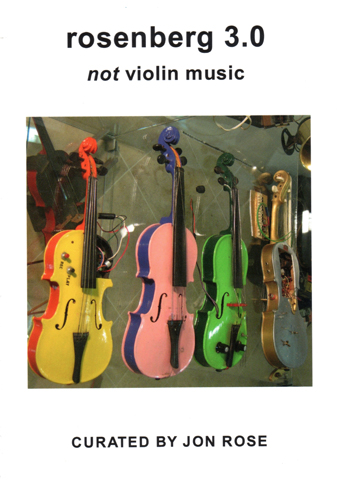 Following Pink Violin and Violin Music in the Age of Shopping, not violin music presents the latest scholarship from the rarefied field of Rosenbergology. For those who have not had the pleasure of delving into the intellectual humus of their family tree, the Rosenbergs are a clan of physicists, mathematicians and, of course, violinists who all share the same first initial “J.” Their pseudonymous scholars are keen culture critics and dialecticists, ready to lament the decline of Western Civilization while decrying its inherent contradictions. The book revels in collapse and tragedy, beginning with a post-apocalyptic portrait of one Dr Rosenberg reinventing the Doric column and ending with a suicide.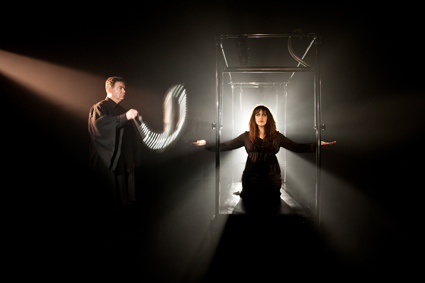
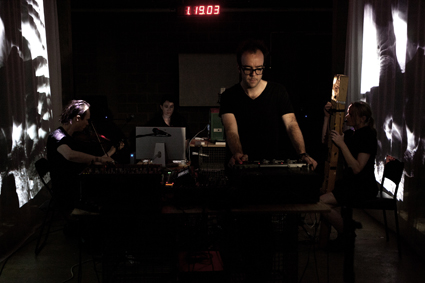
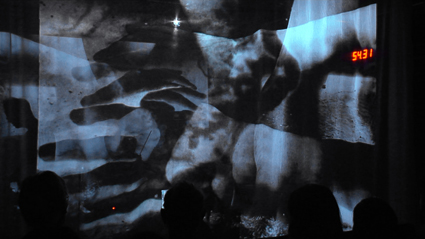
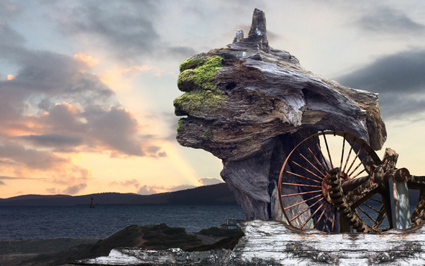
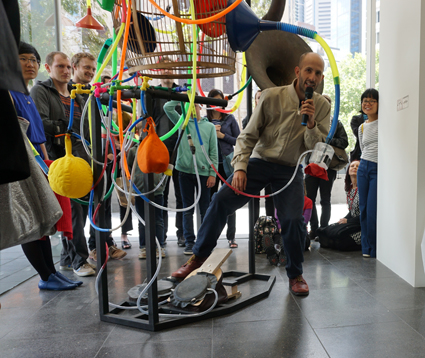
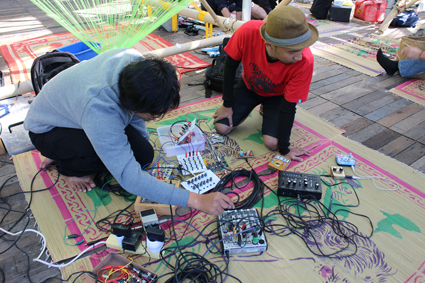
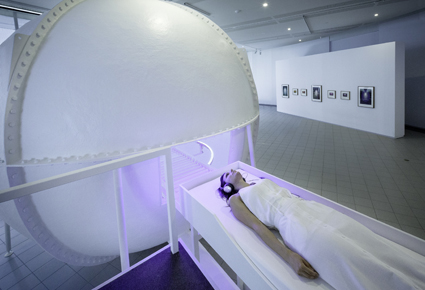
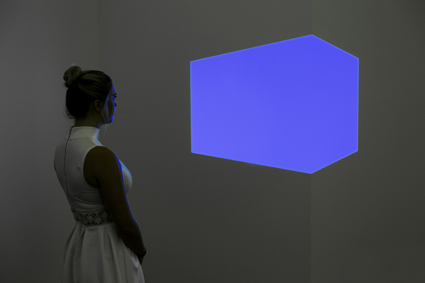
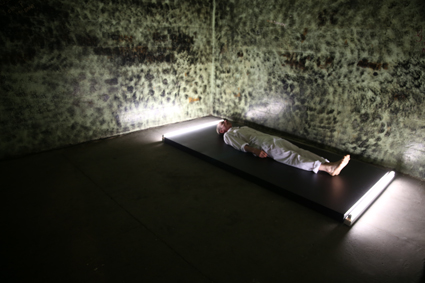
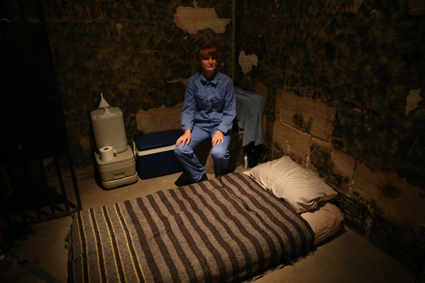

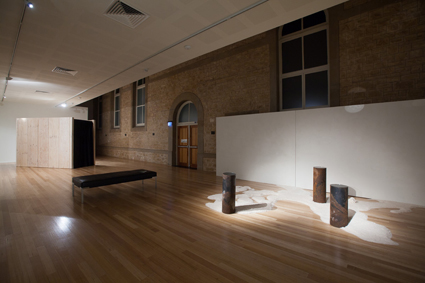
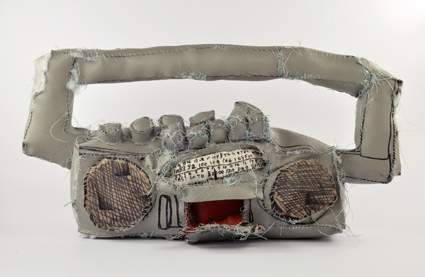
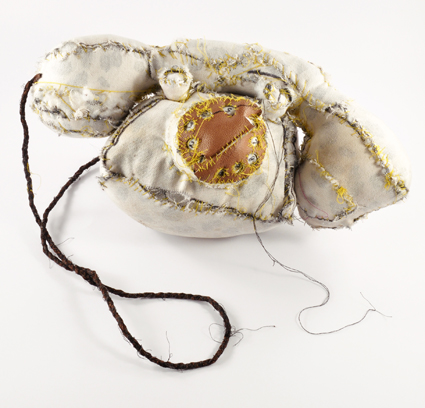

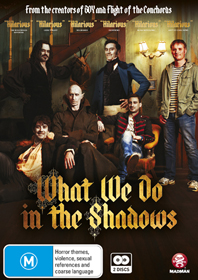
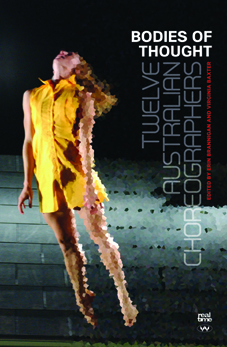
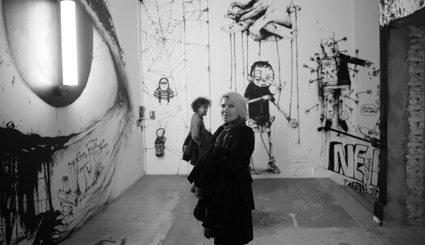
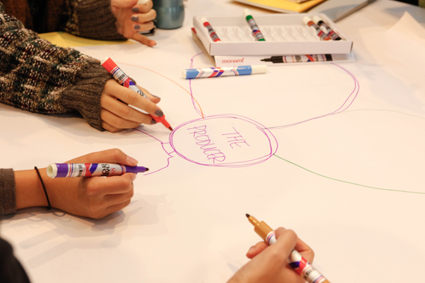
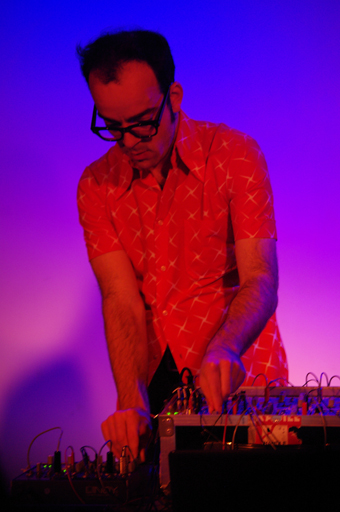
 The album is at times fiercely kinetic and there are many sections that are almost danceable—to what extent were you consciously commenting on or riffing off, I suppose, more ‘commercial’ uses of rhythm?